How Organ Meats Improve Recovery Between Training Sessions
Athletes spend thousands on supplements, recovery drinks, and performance nutrition. Most of it's waste. The single most powerful recovery nutrient is in organ meats, specifically beef liver, which is cheaper than most supplements and contains more usable nutrients.
By Niall Kiddle, Founder, Organised

Reviewed by Pedro Rodrigues, Agronomist (farming and sourcing only) ·
5 min read · Published · Updated · 2 cited sources
Makers of the Organised Daily blend, a grass-fed beef organ supplement from regenerative UK farms
Training breaks your muscles down. Recovery builds them back up stronger. That process requires specific nutrients in specific bioavailable forms. Organ meats, particularly liver, provide more of these nutrients per gram than any supplement you can buy.
What makes recovery happen at the cellular level
When you train intensely, you create micro-tears in muscle fibres. This is intentional. Your body then repairs these tears by building new muscle protein, hoping to build it slightly stronger than before so the same stimulus is less damaging next time. This repair process requires amino acids (from protein), minerals (iron, zinc, copper, magnesium), and cofactors (vitamins). Miss any of them and recovery is incomplete. You'll feel sore longer. Strength gains slow. Muscle soreness persists.
Recovery also requires three specific adaptations: restoring glycogen (muscle fuel, which depletes during intense training), restoring neurotransmitter production (your nervous system takes a beating too), and reducing inflammation (training-induced inflammation is necessary for the adaptation signal, but chronic elevation slows healing). Each of these has specific nutrient requirements. Most supplements address one, maybe two. Organ meats, particularly beef liver, address all of them in bioavailable form.
Iron and oxygen transport
Your muscles need oxygen to function and recover from the damage of training. Haemoglobin is the protein in your red blood cells that carries oxygen. Haemoglobin is built primarily from iron (plus globin protein). If you're iron-depleted, your muscles aren't getting enough oxygen delivery even if you're breathing fine and your cardiovascular fitness is good. Recovery stalls. Your aerobic capacity drops. Fatigue creeps in. You don't recover between sessions the way you should.
Beef liver is a dense source of heme iron and copper. Heme iron from animal sources is absorbed more efficiently than non-heme iron from plants, and the NIH ODS reports overall mixed-diet iron absorption around 14–18%.1
Copper, also abundant in liver at 10-13 milligrams per 100 grams, supports iron metabolism and helps your body use iron to build haemoglobin and other iron-dependent enzymes. Without adequate copper, iron you consume sits in your blood partly unusable. Liver provides both iron and copper together, solving the problem.
Muscle recovery requires adequate oxygen. Adequate oxygen requires adequate iron. Beef liver is the most bioavailable source of iron available.
CoQ10 and energy production
CoQ10 is a molecule involved in the energy production pathway (ATP synthesis) in every cell. Your muscles, particularly during recovery when they're rebuilding, require enormous amounts of ATP. Your heart also requires CoQ10 for function.
CoQ10 is found in red meat and organ meats, particularly in organs that do high amounts of work (heart, liver). Beef liver contains significant CoQ10, more than most supplements provide.
Recovery without adequate CoQ10 is slower because your cells are energy-limited. Add liver and you're providing the cofactors your cells need to produce energy efficiently. Recovery accelerates.
B vitamins and nervous system recovery
B vitamins are involved in almost every step of energy metabolism and neurotransmitter synthesis. They're cofactors in dozens of enzymes your body relies on daily. Your nervous system takes a significant beating during intense training (both peripheral nerves and central nervous system). B vitamins support repair of that nervous system damage and replenish depleted neurotransmitters (serotonin, dopamine, GABA, acetylcholine).
Beef liver is one of the densest dietary sources of B vitamins, including vitamin B12, riboflavin, niacin, vitamin B6 and folate. The B12 in animal foods occurs naturally as methylcobalamin and adenosylcobalamin.2
Training chronically depletes B vitamins through increased metabolism. Without aggressive replacement, your nervous system recovery lags. Your recovery-promoting sleep suffers. Your energy crashes between sessions. Your mood destabilises. Mood problems post-training often indicate B vitamin depletion, not overtraining. Liver replaces what training takes, efficiently and cost-effectively.
Get life-stage nutrition guides, free
Two short reads a week on eating well through pregnancy, childhood and older age.
By signing up you agree to receive emails from us. No spam, unsubscribe anytime.
Copper and other synergistic minerals
Copper supports iron metabolism, collagen formation, and energy production. It's often overlooked because it's needed in small amounts. But those small amounts are critical. Liver provides copper alongside the other nutrients, so it's all present together.
Selenium, another mineral in liver, supports immune function and acts as an antioxidant. Training creates oxidative stress. Selenium helps neutralise that stress.
Zinc, present in beef liver at 4-5 milligrams per 100 grams, supports protein synthesis directly. It's involved in muscle building and immune function after training.
1 of 9
Daily blend
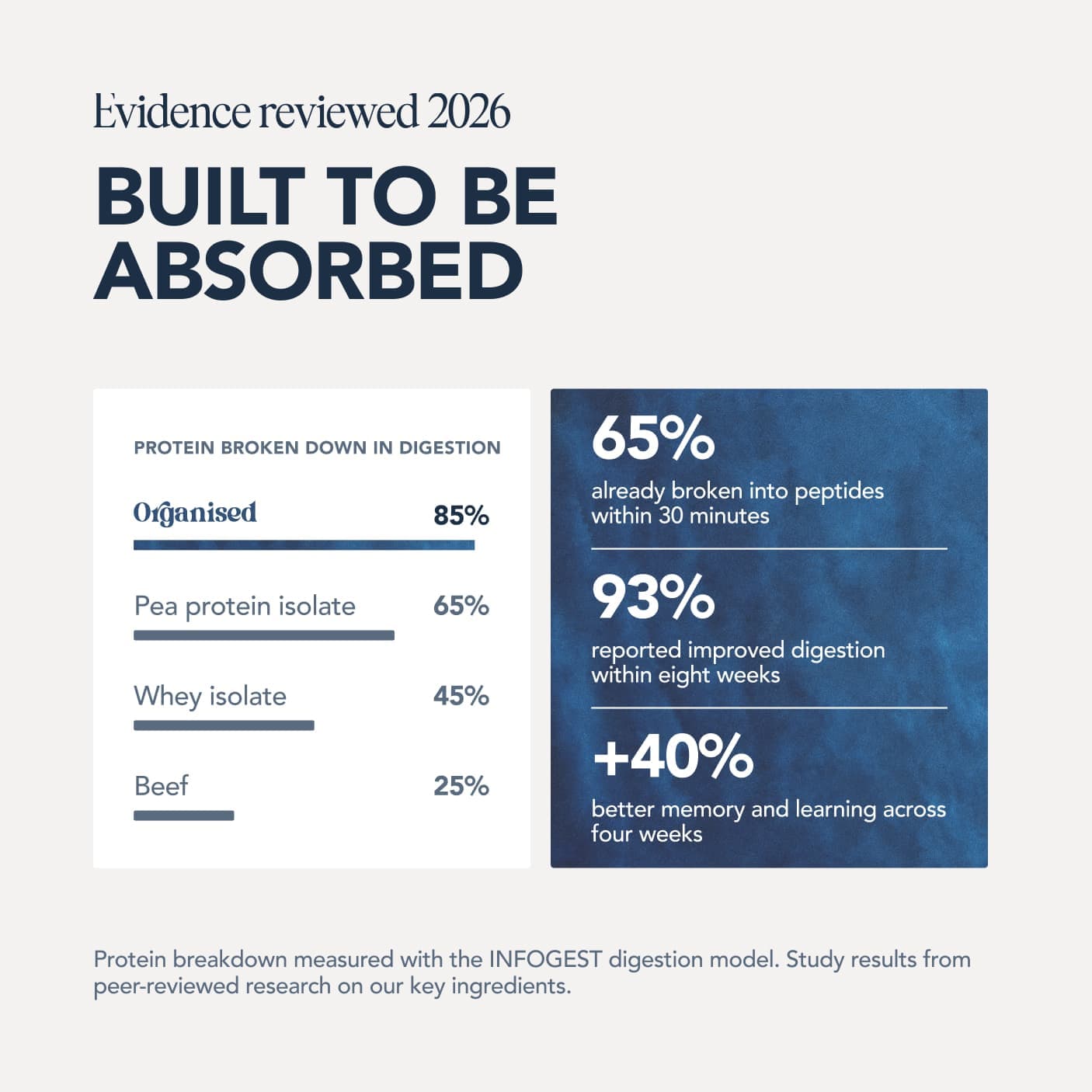
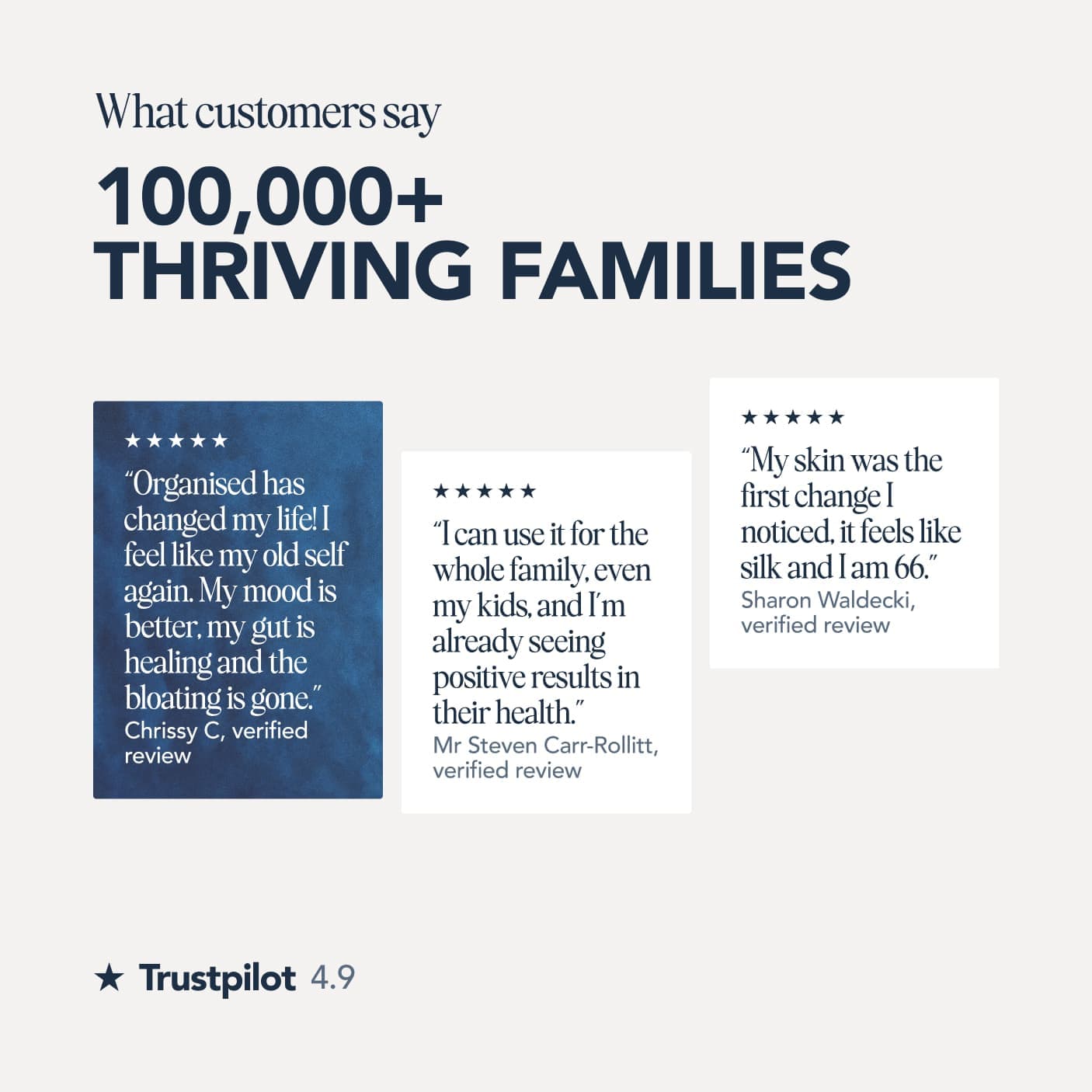
100,000+ thriving families4.9 on Trustpilot
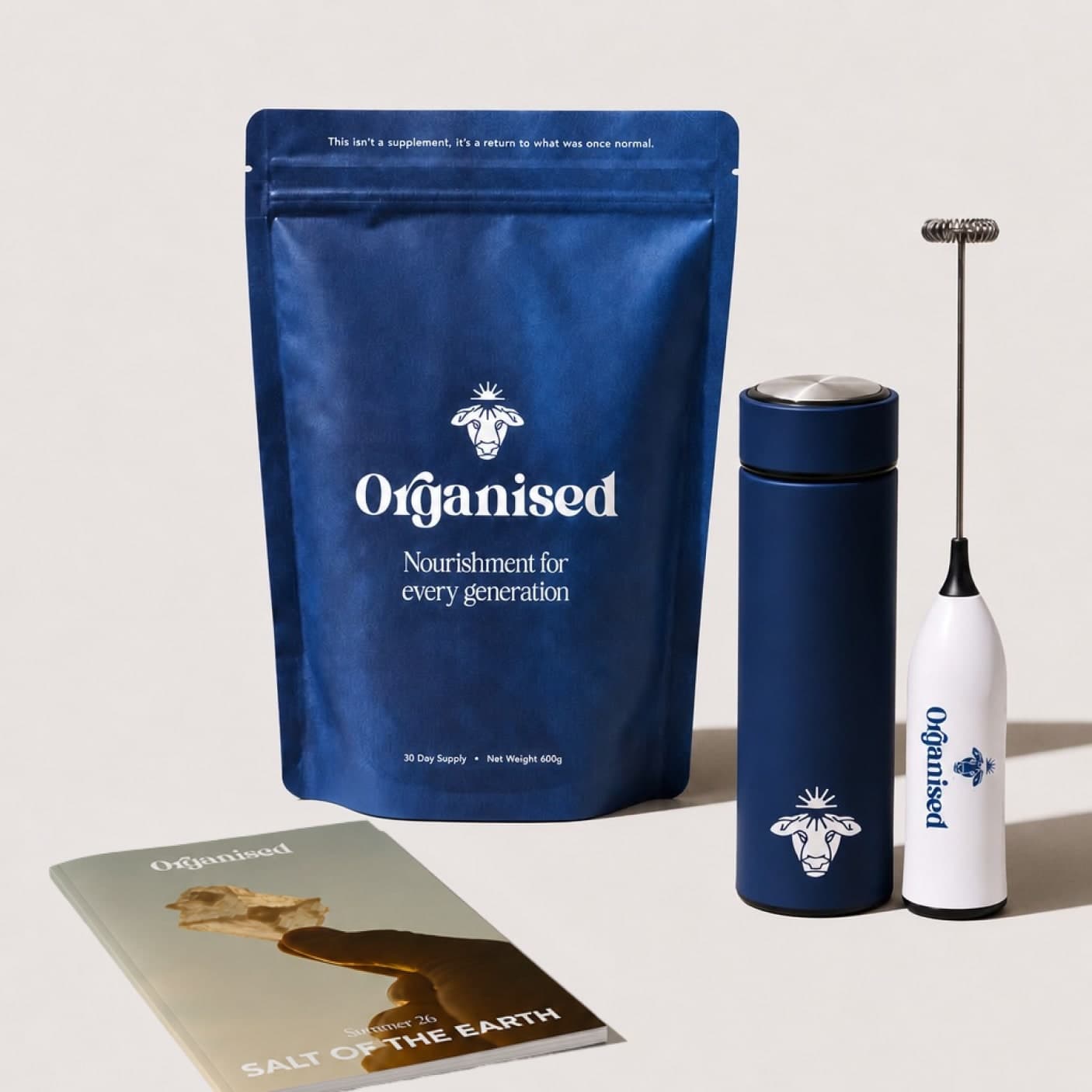
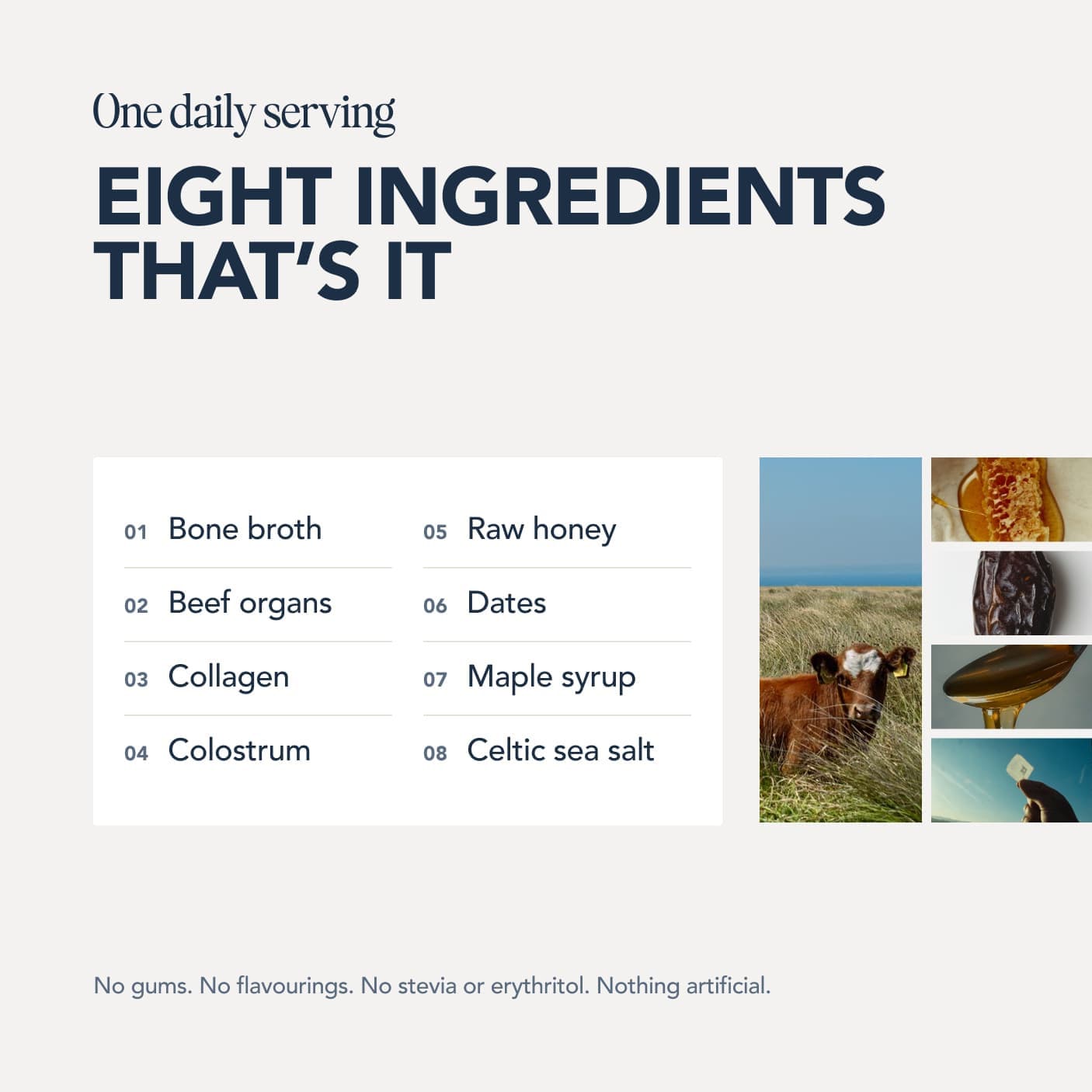
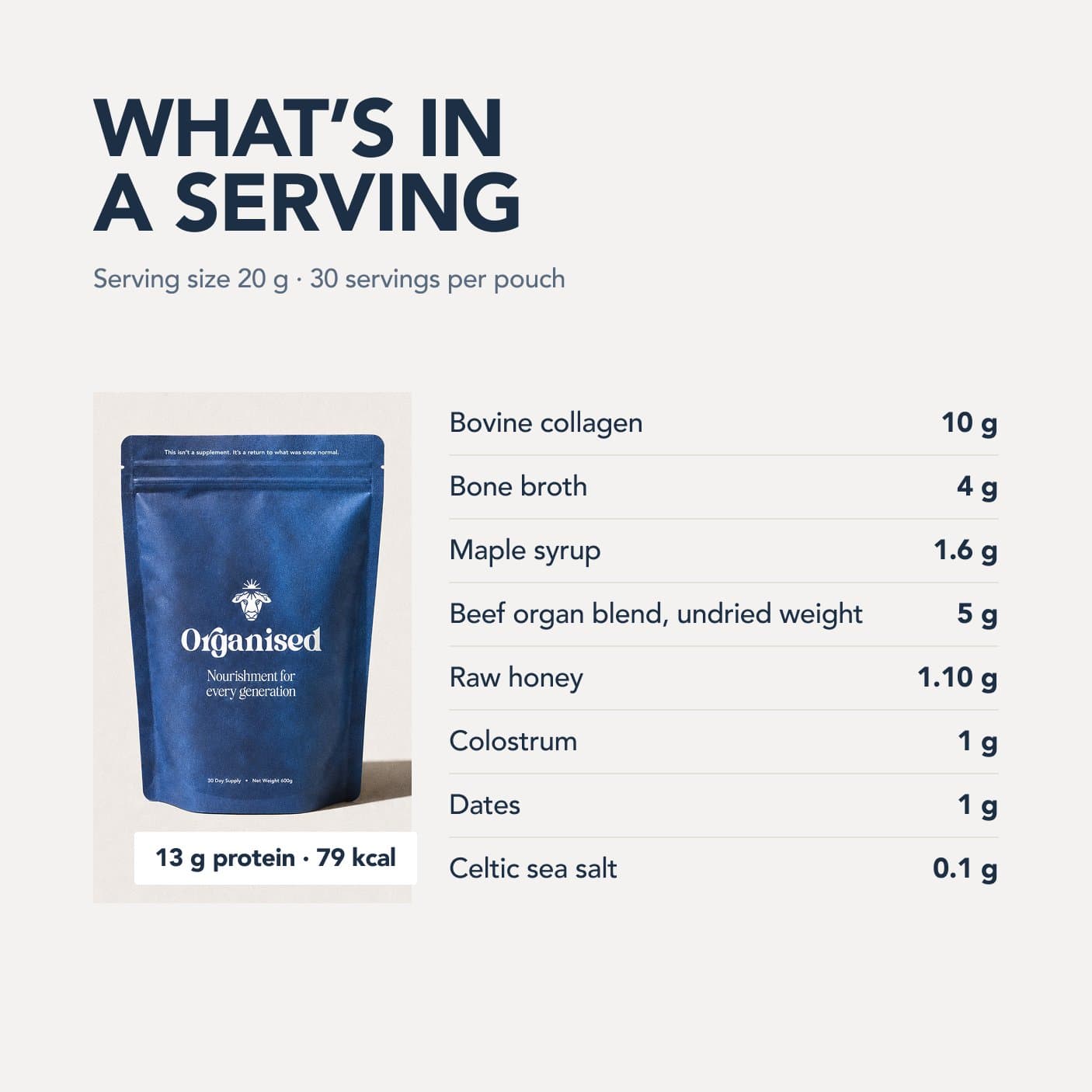
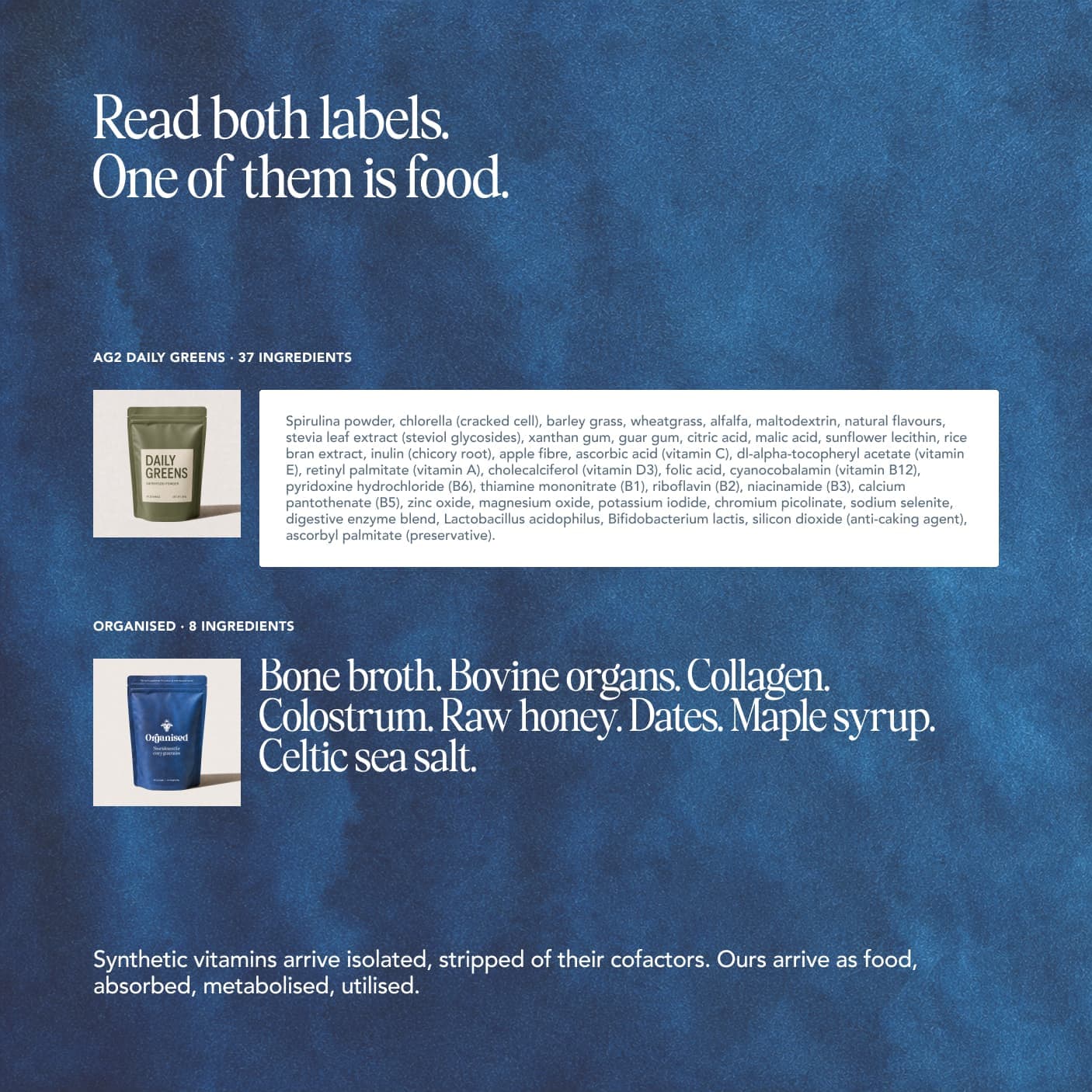
Eight real ingredients built around grass-fed beef organs, collagen and colostrum. Nothing synthetic added.
Free with your first order, worth £38. Plus £10 off the pouch with a subscription.

Free UK shipping · Made in England · 100 day money back guarantee on your first pouch · Skip, pause or cancel anytime
A practical protocol
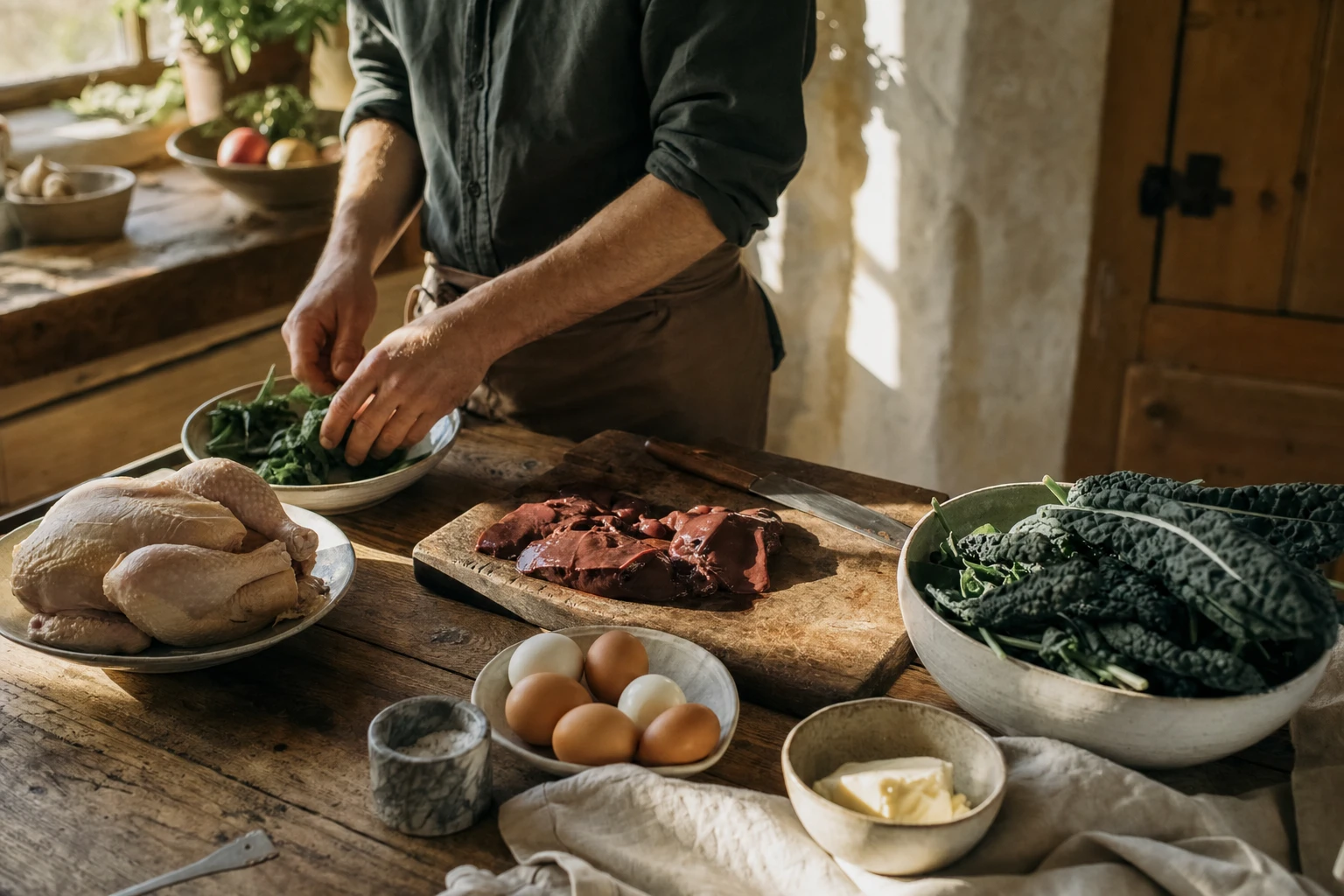
Eat beef liver weekly. 50-100 grams once weekly is enough. More is fine if you tolerate it. Liver tastes strong to many people. Start small. A liver pâté spread thin on sourdough. Finely minced and mixed into burgers. Cooked in a stew where it disappears into the sauce.
Pair liver with other recovery nutrients. Consume it alongside carbohydrates (which replenish glycogen) and other protein. A post-training meal with liver pâté on toast with a glass of whole milk provides iron, B vitamins, carbohydrates, and protein in an integrated meal that drives recovery.
If liver is truly inaccessible or repugnant, beef heart is the next option. It has less iron but similar B vitamins and CoQ10. Or beef spleen, which has even more iron than liver but a stronger taste.
- Beef liver, 50-100g, once weekly, in any form you'll actually eat
- If liver is inaccessible: beef heart, 100-150g, once weekly
- Or beef spleen, 50g, once weekly if very high iron is needed
- Pair with carbohydrates and other protein in the same meal
- Consume in recovery window (within 2-4 hours of training) when possible
This single addition to your diet, done consistently, improves recovery more measurably than most supplements athletes spend hundreds on. It's cheaper, it's more bioavailable, and it works.
Recovery nutrients from whole food are absorbed and utilised better than the same nutrients from supplements. Organ meats are the ultimate recovery food.
The bottom line
Athletes recovering between training sessions need iron (for oxygen), CoQ10 (for energy), B vitamins (for nervous system recovery), and supporting minerals. Beef liver provides all of these in forms your body readily absorbs. A single 50-100 gram serving weekly improves recovery more than most expensive supplements. Eat liver consistently and you'll recover faster, feel more energetic, and build strength more reliably. It's that simple.
References
Every source below was checked on 27 August 2026. Each link was requested and read. Where a citation and its identifier disagreed, the citation was corrected to the record or the reference was deleted along with the sentence marker that pointed at it, and where the resolved paper turned out not to support the sentence, the sentence was cut back to what it does support. Borrowed authority is worse than none, because it looks like rigour.
- National Institutes of Health, Office of Dietary Supplements. Iron — Health Professional Fact Sheet. https://ods.od.nih.gov/factsheets/Iron-HealthProfessional/
- National Institutes of Health, Office of Dietary Supplements. Vitamin B12 — Health Professional Fact Sheet. https://ods.od.nih.gov/factsheets/VitaminB12-HealthProfessional/
Who wrote and reviewed this guide
Niall Kiddle
Author · Founder, Organised
Niall is the founder of Organised. He started the company in 2024 after fixing his own health the slow way: in 2022 he swapped a cupboard of synthetic supplements for real food, raw milk, organ meats, bone broth and honey, and felt the difference within months.
Areas of expertise: Ancestral nutrition, Organ meats, Whole-food supplementation, Gut health, Regenerative sourcing
Read Niall's full profile
Pedro Rodrigues
Reviewer · Agronomist (farming and sourcing only)
Pedro is the agronomist Organised works with on farming and sourcing. His job on the guides is to keep the science honest: he reviews what we publish about soil health, regenerative agriculture, grazing and the way food is actually produced.
Areas of expertise: Regenerative agriculture, Agronomy, Soil health, Grass-fed farming, Food sourcing
Reviewed this guide on
Read Pedro's full profileMore on athletes
View allBrowse the guides library
All guidesKeep reading
Life stage
The Athlete's Guide to Whole Food Performance Nutrition
Athletes need more than calories. Master protein timing, carb quality, creatine, electrolytes, sleep, and organ meat density for genuine performance gains.

Life stage
Endometriosis and Nutrition: An Evidence-Based Approach
Nutrition cannot cure endometriosis, but it can reduce pain and inflammation. Master anti-inflammatory fats, reduce seed oils, and eliminate xenoestrogens.

Life stage
How One Serving Replaces 6+ Supplements for the Whole Family
A single serving of organ meat can deliver more real micronutrients than a handful of supplements. See exactly what beef liver replaces for the whole family.
Real food, made effortless
Find my daily blendA few ways to use it
All recipes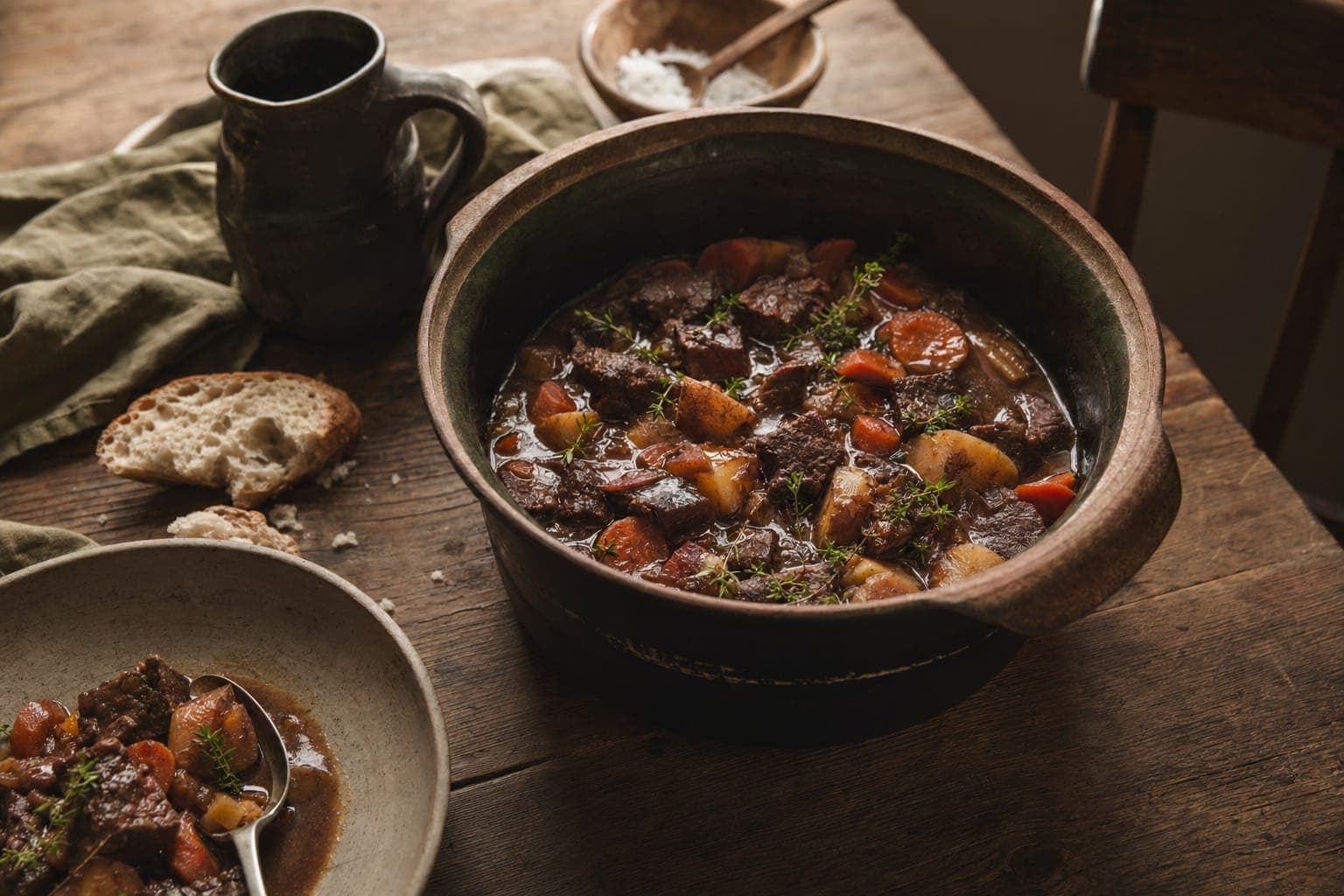
Collagen-Rich Beef Stew: Slow-Cooked Nourishment
Beef stew that delivers collagen from connective tissue and bone broth. Winter comfort food that actually nourishes. Simple slow cooker recipe.
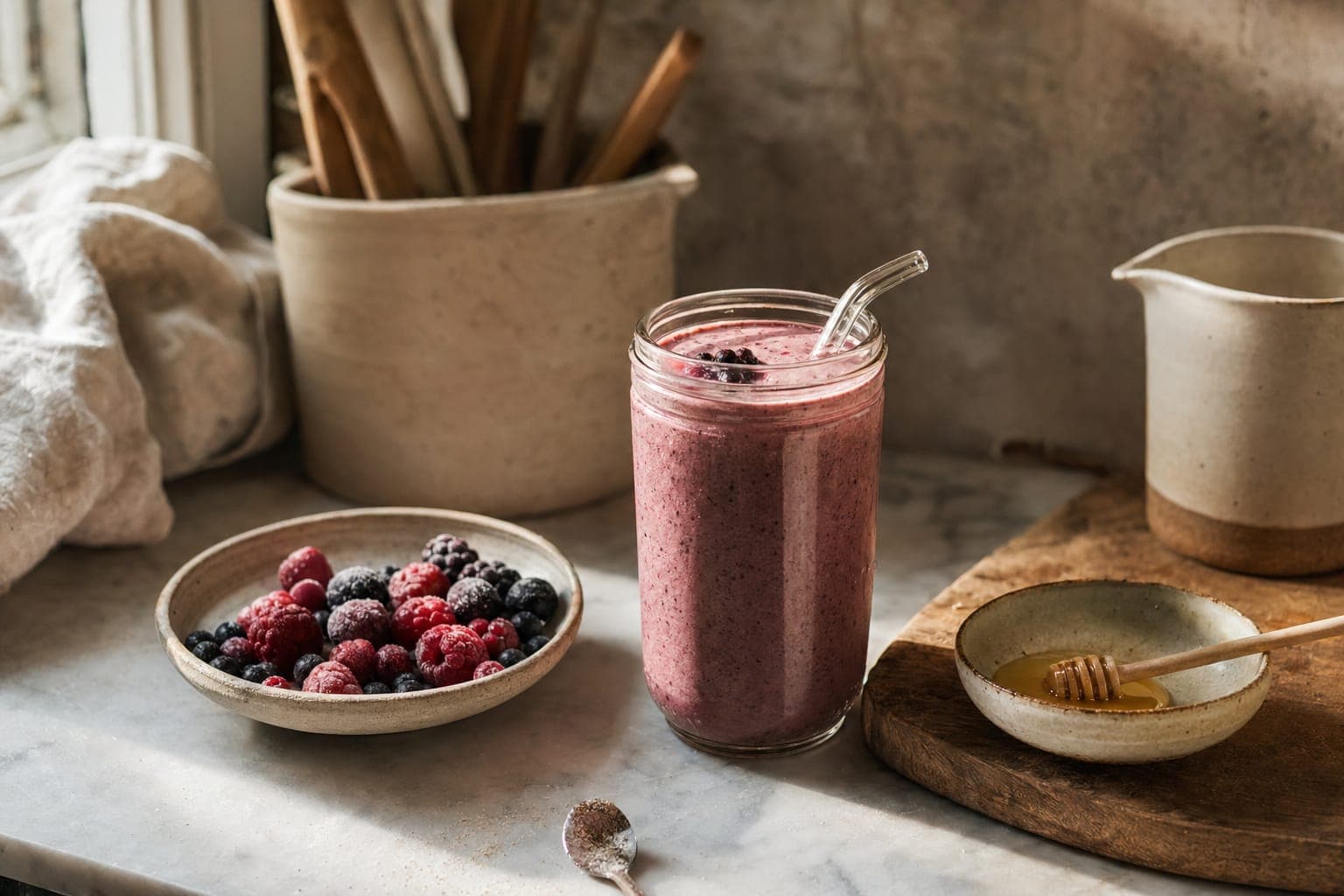
The Organised Recovery Smoothie for After Exercise
A recovery smoothie made with beef protein, raw milk, frozen berries, collagen, and honey. Optimal nutrition in the 30-minute window after exercise.

Organised Smoothie Bowl Recipes for Every Season
Four seasonal smoothie bowl recipes using Organised. Berry in summer, apple-cinnamon in autumn, tropical in spring, warming chocolate in winter.


 Join over 100,000+ members
Build a better food system with us
The Organised community is thousands of people choosing real food and backing the farmers who grow it, all of us trying to leave the world a little better than we found it. If that is what you care about too, you belong here.