Iron and Energy: Why So Many Women Feel Exhausted
You're tired. Bone-deep, can't-drag-yourself-out-of-bed tired. You've been told it's your schedule, your stress, maybe your sleep. Nobody's mentioned iron. But iron deficiency is the single most common micronutrient deficiency in women, and it's silently stealing your energy.
By Niall Kiddle, Founder, Organised

Reviewed by Pedro Rodrigues, Agronomist (farming and sourcing only) ·
5 min read · Published · Updated · 2 cited sources
Makers of the Organised Daily blend, a grass-fed beef organ supplement from regenerative UK farms
Why iron matters so much
Iron is required for haemoglobin (which carries oxygen in red blood cells) and for components of the mitochondrial electron transport chain. Iron deficiency reduces oxygen delivery and impairs cellular energy production.1
Iron deficiency doesn't just affect energy. It affects cognition, mood, temperature regulation, and immune function. Women with low iron are more prone to depression, brain fog, cold hands and feet, and getting sick. You can have all three of these symptoms and still test "normal" on a standard blood test.
Women lose blood monthly. If you've had heavy periods, given birth, or donated blood, you've lost iron you haven't replaced. If your diet is low in bioavailable iron, you're running a deficit. Month after month. Year after year. Until you hit a wall and suddenly everything feels impossible.
How iron deficiency develops in women
Women lose blood monthly. If you're menstruating, you're losing iron every single month. If your cycle is heavy, you're losing more. If your diet is low in bioavailable iron (meat, organs, seafood) and high in processed foods, you're losing more than you're replacing. Over months, iron stores deplete. Over years, you're running on fumes.
Vegetarian and vegan women are at higher risk for iron deficiency because non-heme iron from plants is less bioavailable than heme iron from animal sources; the NIH ODS notes mixed-diet absorption around 14–18% versus 5–12% for vegetarian diets.1
Pregnancy depletes iron dramatically. Your body needs more iron to support the pregnancy. Postpartum haemorrhage (even minor) depletes it further. Many women emerge from pregnancy with dangerously low stores and spend years replenishing.
Birth control pills can increase iron loss, especially if you have heavy periods. Stress suppresses iron absorption. Intense exercise increases iron loss through sweat. Digestive issues (IBS, coeliac, Crohn's) reduce absorption. It's not just diet. It's the whole picture.
After menopause, iron needs actually decline, which is why postmenopausal women are less likely to be iron deficient than women of reproductive age. Menopause arrives and suddenly you have energy again. This isn't coincidence. It's iron.
The hidden symptoms nobody connects
Doctors are trained to look for obvious signs: pale skin, shortness of breath, dizziness. But low iron presents in ways that get medicalised separately and never connected back to iron.
Restless legs syndrome (RLS) has been associated with low iron stores; current guidelines recommend checking serum ferritin in patients with RLS and considering iron supplementation when ferritin is below 75 ng/mL.2
Hair loss? Low iron. Nails that are thin, flat, or spoon-shaped? Low iron. Brittle nails that break constantly? Often iron (though also sometimes B12).
Brain fog that feels like early dementia? Low iron. You can't think clearly. You walk into a room and forget why. You read the same sentence five times. It feels like your brain is broken. It's not. It's underfed.
Insomnia that gets treated with sleeping pills? Paradoxically, low iron causes insomnia. Your body tries to conserve oxygen at night. You can't relax. You can't sleep. The GP prescribes a benzodiazepine. The real problem is iron.
These symptoms get treated separately, with supplements and medication that don't work, because nobody looked at iron.
What deficiency feels like
Early deficiency: fatigue that coffee can't fix, brain fog, difficulty concentrating, cold hands and feet, hair loss or brittle hair, restless legs at night.
More advanced deficiency: shortness of breath with minor exertion, pale skin, difficulty sleeping (paradoxically), irregular periods or very heavy periods, intense cravings for non-food items (ice, dirt, starch), difficulty exercising.
Severe deficiency: you can barely get out of bed. Normal daily tasks feel impossible. You've been to every specialist. Nothing works. This is when women often get diagnosed with chronic fatigue syndrome or depression, when the actual problem is iron.
If you're exhausted and your tests come back "normal", ask specifically for iron studies. Serum iron, ferritin, TIBC, transferrin saturation. Normal complete blood count doesn't rule out iron deficiency.
Get life-stage nutrition guides, free
Two short reads a week on eating well through pregnancy, childhood and older age.
By signing up you agree to receive emails from us. No spam, unsubscribe anytime.
Getting tested properly
Your GP can order iron studies: ferritin, serum iron, total iron-binding capacity (TIBC), transferrin saturation. Ferritin is the most useful, it reflects your iron stores.
Normal range for ferritin is often listed as 30-300 ng/mL. But functional iron range is higher. Many women don't feel energetic until ferritin is above 70. You can be "normal" and still deficient in a functional sense.
Optimal for premenopausal women is ferritin around 100-150 ng/mL. If your ferritin is 35 and you're exhausted, you're below functional range even though you're technically "normal."
Ask for the specific numbers, not just "normal" or "abnormal." If testing confirms low iron, the cause matters. Heavy periods? Dietary insufficiency? Malabsorption? The treatment depends on the cause.
Fixing it with food
Liver is the most bioavailable source. One serving per week dramatically improves iron status over months. Beef, shellfish, and eggs are also excellent sources.
Pair iron-rich foods with vitamin C (citrus, tomatoes, peppers) to enhance absorption. Eat them with fat (butter, olive oil, avocado) to further improve absorption. Avoid tea and coffee with meals, as they inhibit iron absorption through tannins.
Cook in cast iron if possible. Small amounts of iron leach from the pan into food, especially when cooking acidic foods like tomatoes. It's not massive, but it adds up over time.
If your diet has been very low in iron, food repletion takes months. If testing shows severe deficiency, iron supplementation speeds repletion. But food remains the foundation.
Once you've repleted iron, eating meat regularly (several times a week) maintains levels and keeps energy and mood steady. This isn't optional for most women. It's the difference between thriving and surviving.
1 of 9
Daily blend
100,000+ thriving families4.9 on Trustpilot
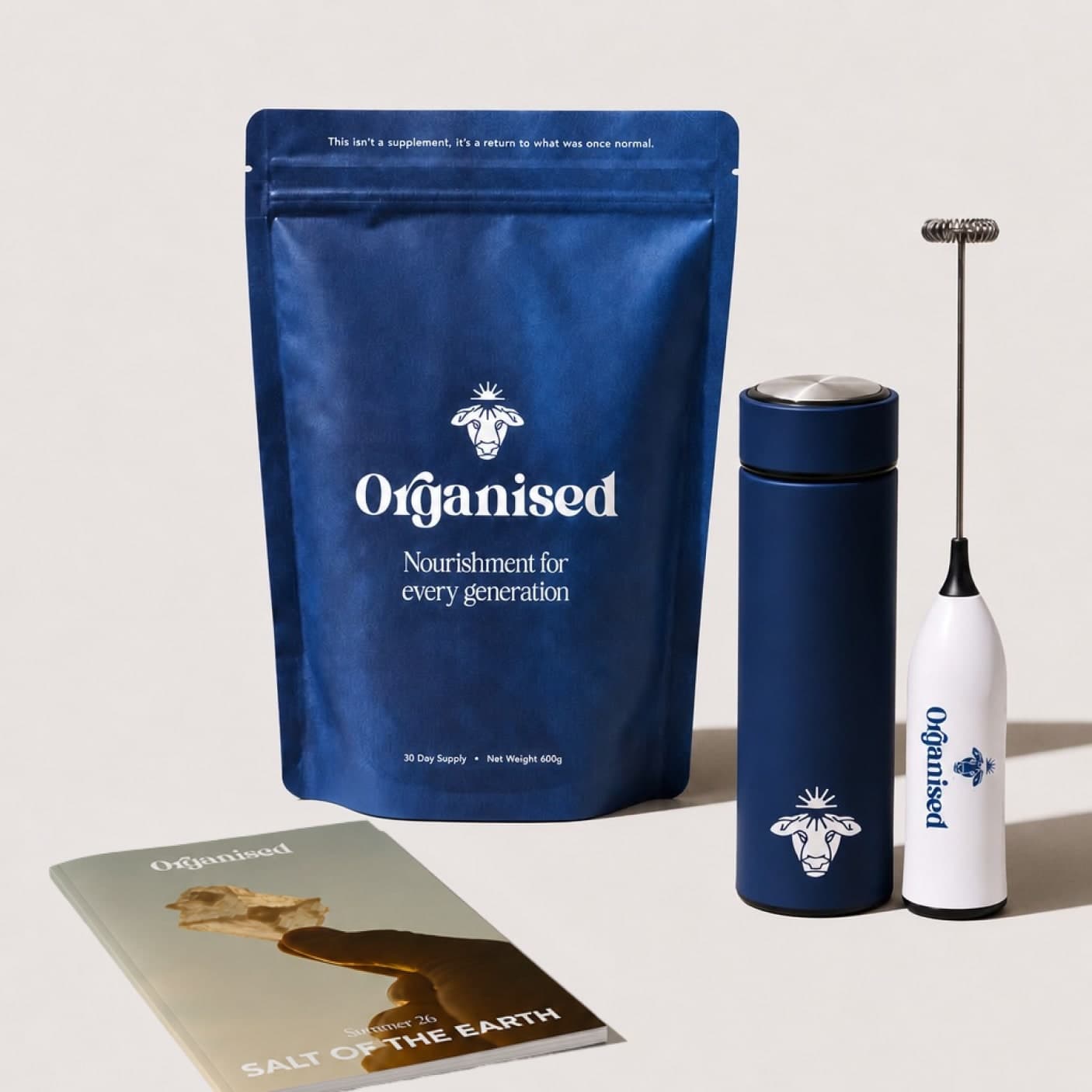
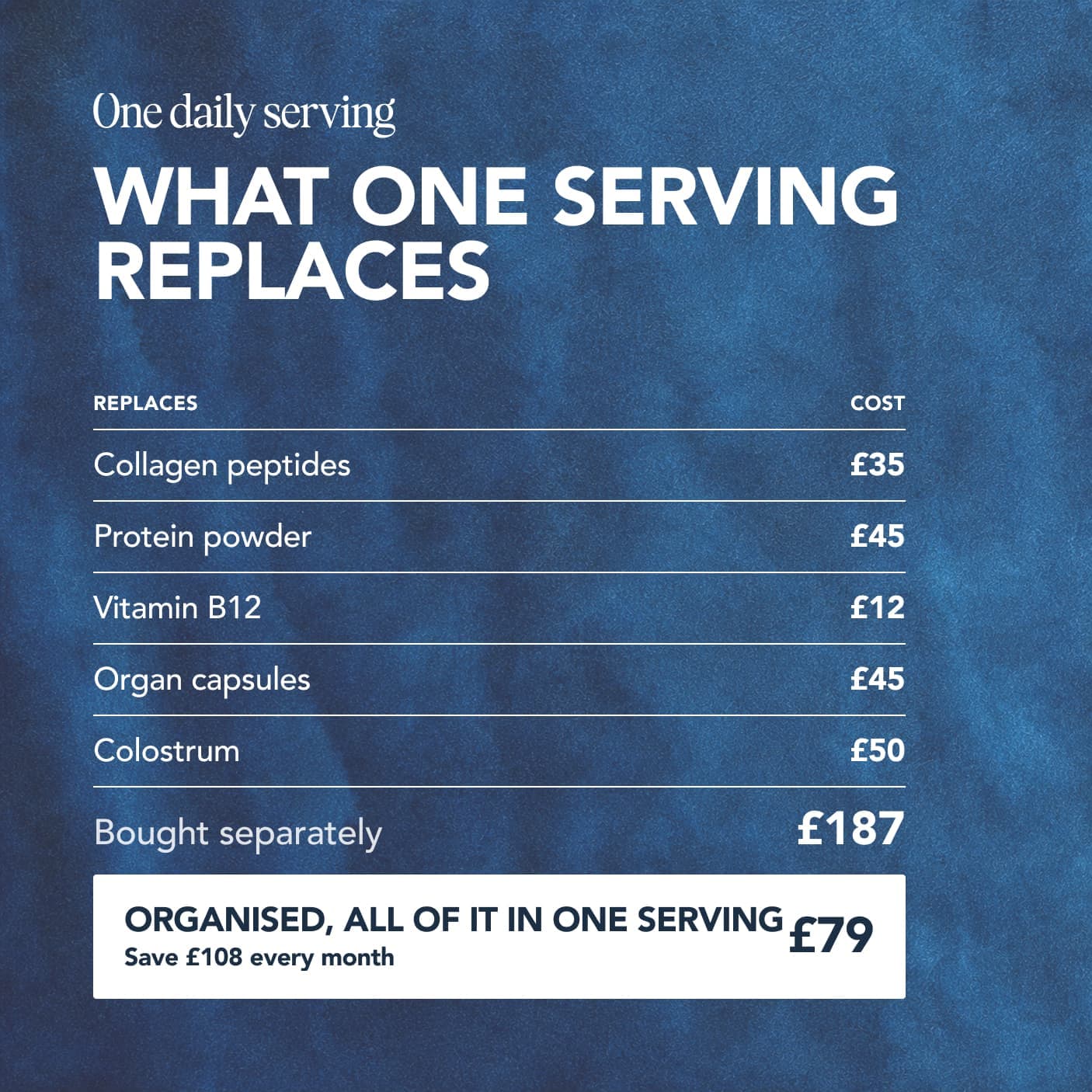
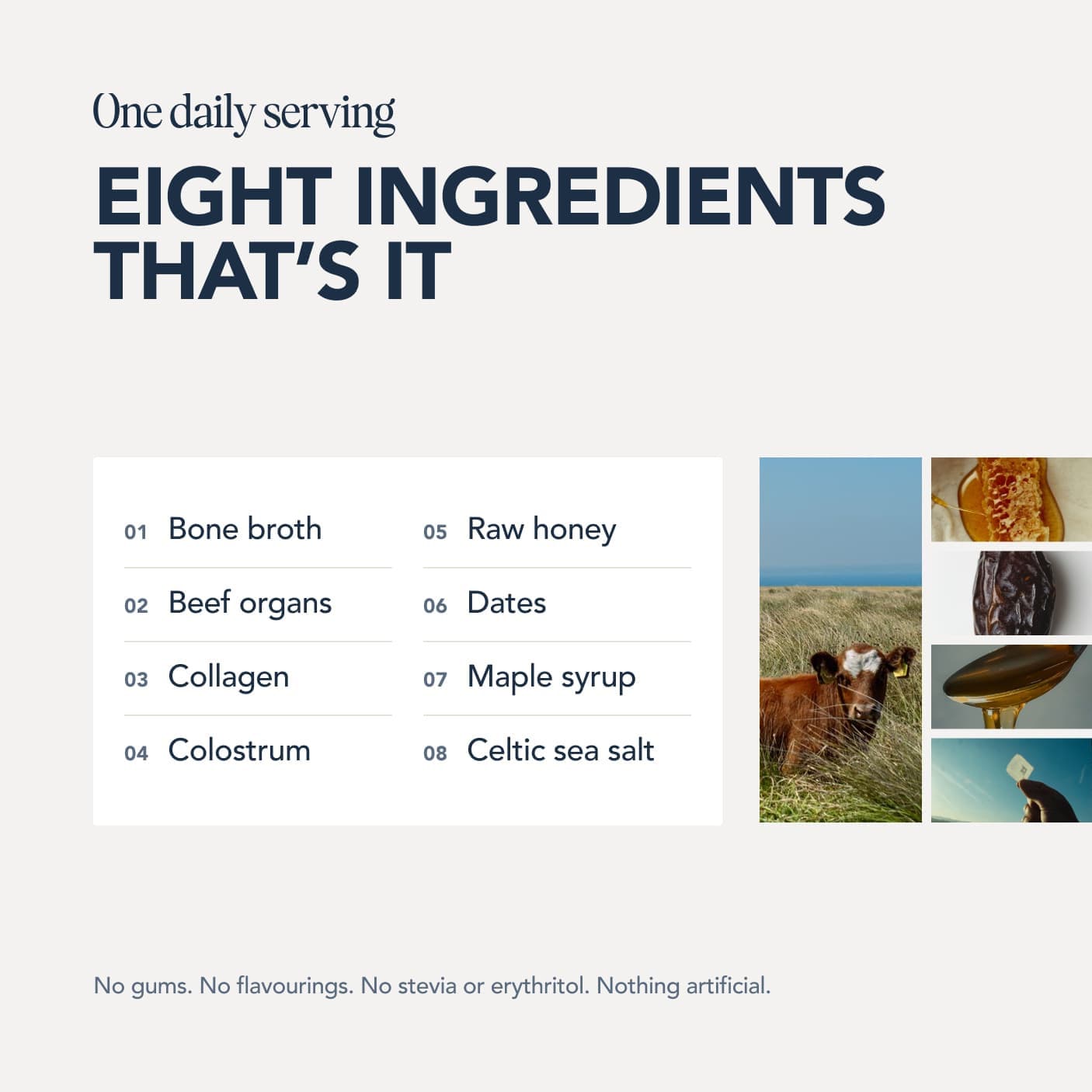
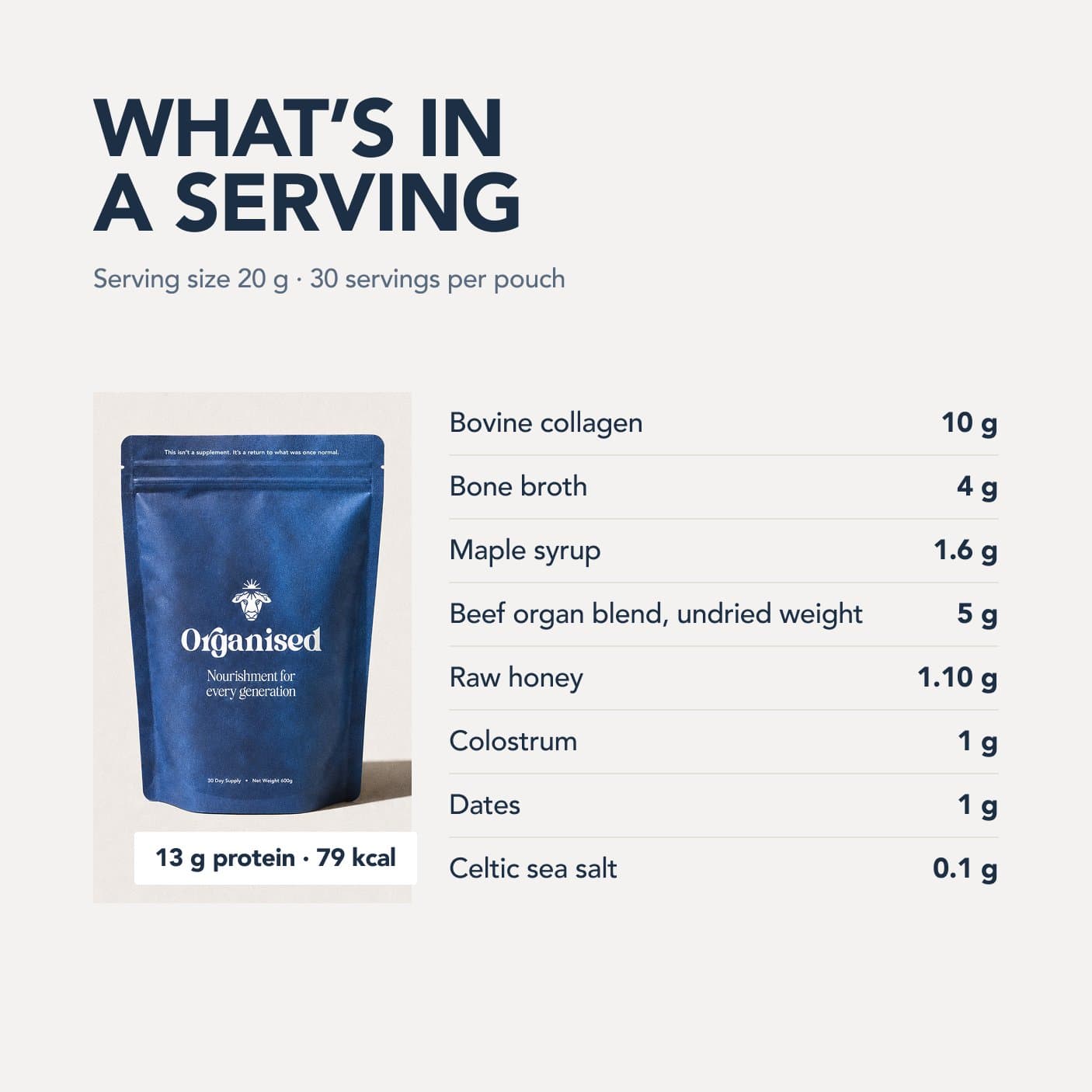
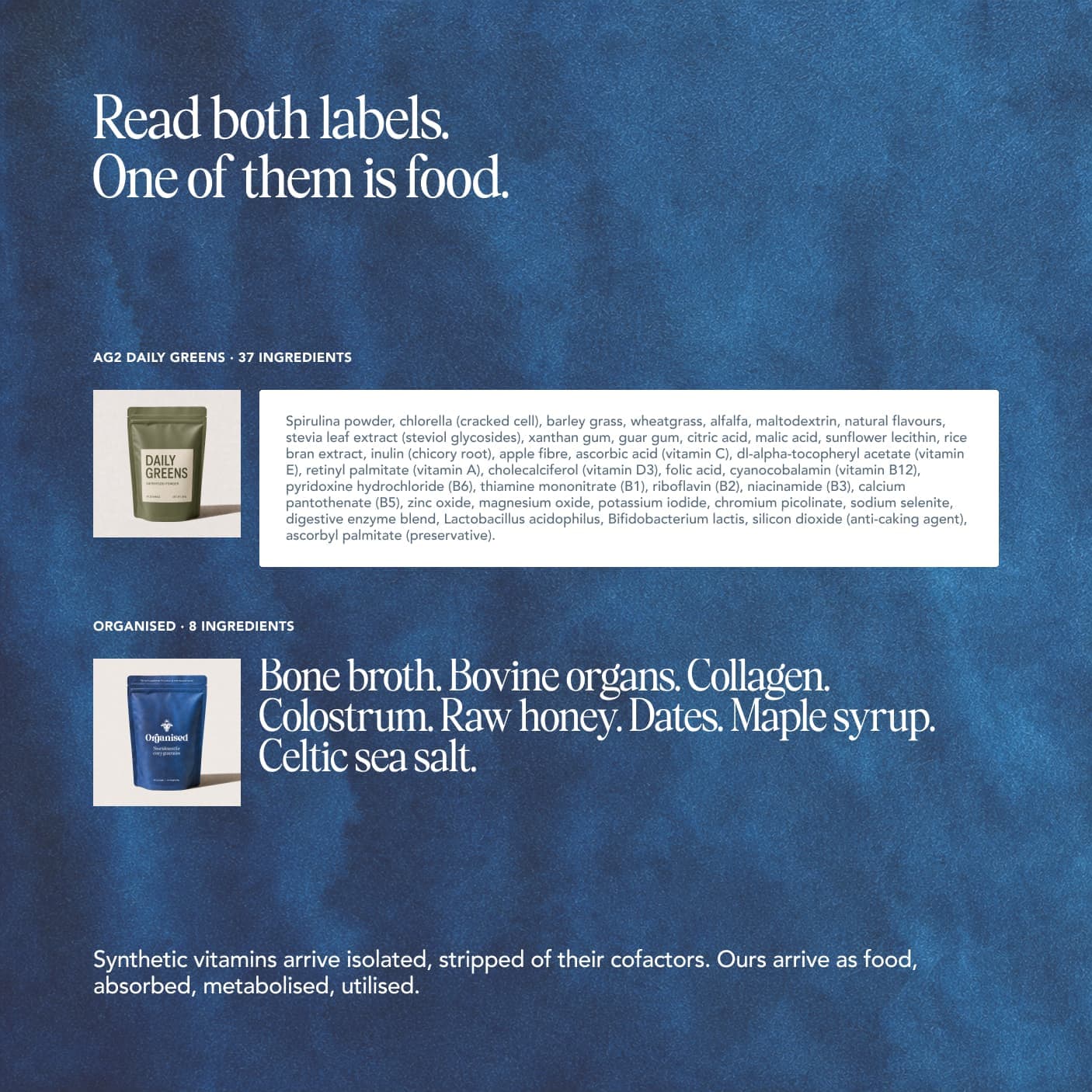
Eight real ingredients built around grass-fed beef organs, collagen and colostrum. Nothing synthetic added.
Free with your first order, worth £38. Plus £10 off the pouch with a subscription.
Free UK shipping · Made in England · 100 day money back guarantee on your first pouch · Skip, pause or cancel anytime
When supplementation is necessary
If ferritin is below 20, food alone usually isn't fast enough. Iron supplements (particularly ferrous forms) accelerate repletion.
Take iron on an empty stomach with vitamin C to enhance absorption. It will make you constipated. Deal with it with magnesium or fibre, not by skipping doses. The constipation is temporary. The iron deficiency is not if you stop taking it.
Retest ferritin after 8-12 weeks of supplementation. Once you're above 50, you can likely drop the supplement and maintain with food. This isn't permanent dependency. It's a temporary tool to get you back to normal range.
Some women need ongoing iron because of heavy periods. If your period is genuinely heavy (changing a pad/tampon more than hourly, bleeding for more than 7 days), talk to your GP about options to reduce bleeding rather than supplementing forever.
The bottom line
You're not lazy or broken. Iron deficiency is common, fixable, and the cause of so much unexplained exhaustion in women. Get tested properly (ask for ferritin levels). Eat meat several times weekly, prioritising liver. Feel the difference. Your energy returns. Your mood lifts. Your brain clears. This is not subtle. This is your life changing because your body finally has the iron it needed all along.
References
Every source below was checked on 27 August 2026. Each PubMed, PMC and DOI identifier was resolved against NCBI or Crossref, and what it opens is printed under the citation, so you can see the link goes where the citation says without leaving the page. Where a citation and its identifier disagreed, the citation was corrected to the record or the reference was deleted along with the sentence marker that pointed at it, and where the resolved paper turned out not to support the sentence, the sentence was cut back to what it does support. Borrowed authority is worse than none, because it looks like rigour.
- National Institutes of Health, Office of Dietary Supplements. Iron — Health Professional Fact Sheet. https://ods.od.nih.gov/factsheets/Iron-HealthProfessional/
- Allen RP, Picchietti DL, Auerbach M, et al. Evidence-based and consensus clinical practice guidelines for the iron treatment of restless legs syndrome/Willis-Ekbom disease in adults and children. Sleep Medicine. 2018. https://pubmed.ncbi.nlm.nih.gov/29425576/Checked 27 August 2026: PMID 29425576 opens Allen RP, Picchietti DL, Auerbach M et al, Evidence-based and consensus clinical practice guidelines for the iron treatment of restless legs syndrome/Willis-Ekbom disease in adults and children: an IRLSSG task force report. Sleep Med 2018;41:27-44.
Who wrote and reviewed this guide
Niall Kiddle
Author · Founder, Organised
Niall is the founder of Organised. He started the company in 2024 after fixing his own health the slow way: in 2022 he swapped a cupboard of synthetic supplements for real food, raw milk, organ meats, bone broth and honey, and felt the difference within months.
Areas of expertise: Ancestral nutrition, Organ meats, Whole-food supplementation, Gut health, Regenerative sourcing
Read Niall's full profile
Pedro Rodrigues
Reviewer · Agronomist (farming and sourcing only)
Pedro is the agronomist Organised works with on farming and sourcing. His job on the guides is to keep the science honest: he reviews what we publish about soil health, regenerative agriculture, grazing and the way food is actually produced.
Areas of expertise: Regenerative agriculture, Agronomy, Soil health, Grass-fed farming, Food sourcing
Reviewed this guide on
Read Pedro's full profileMore on women's health
View allBrowse the guides library
All guidesKeep reading
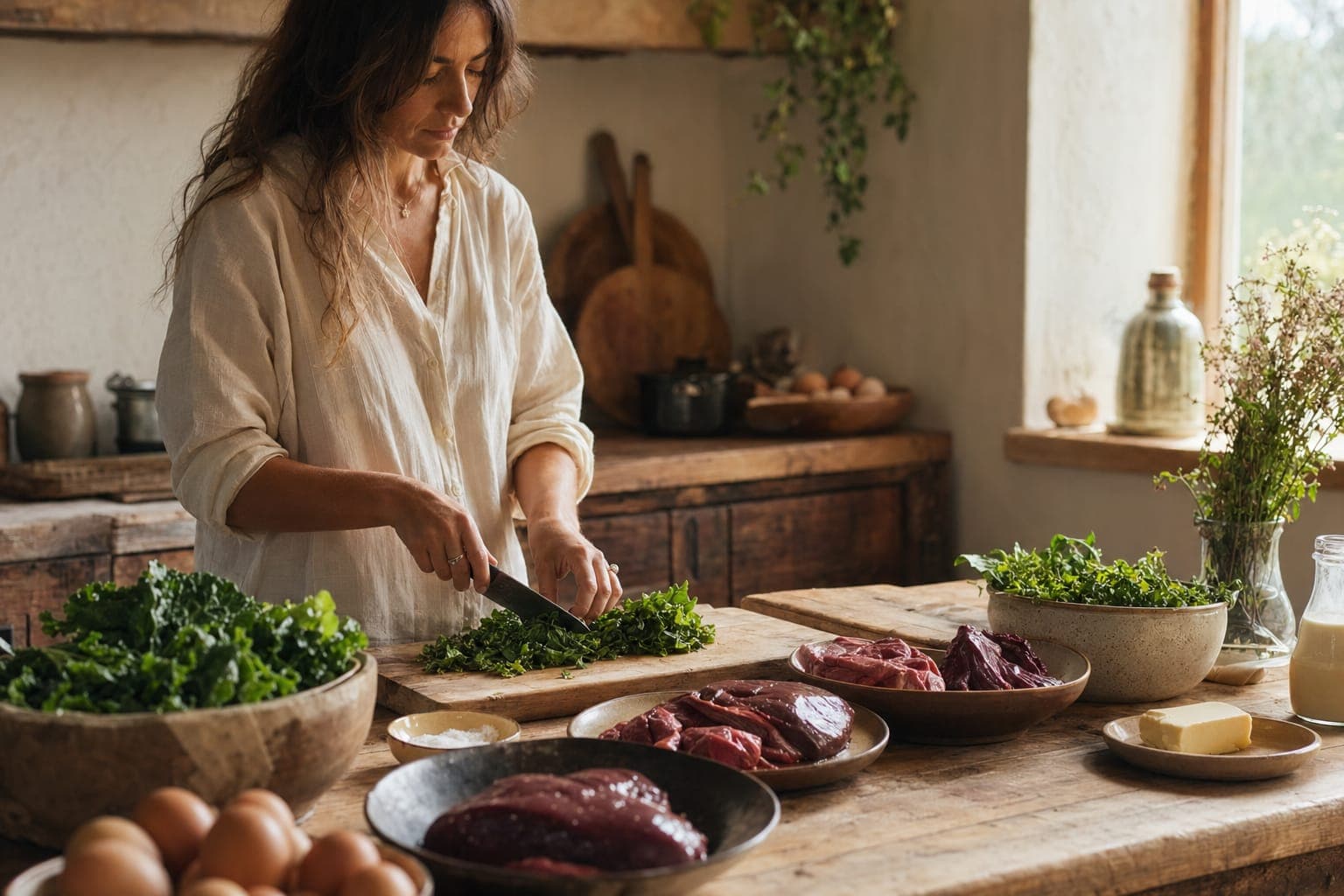
Life stage
A Woman's Nutritional Guide: From Periods to Menopause
Nutritional needs change across a woman's life. Master iron, B vitamins, and fat-soluble vitamins to support your hormones from periods through menopause.
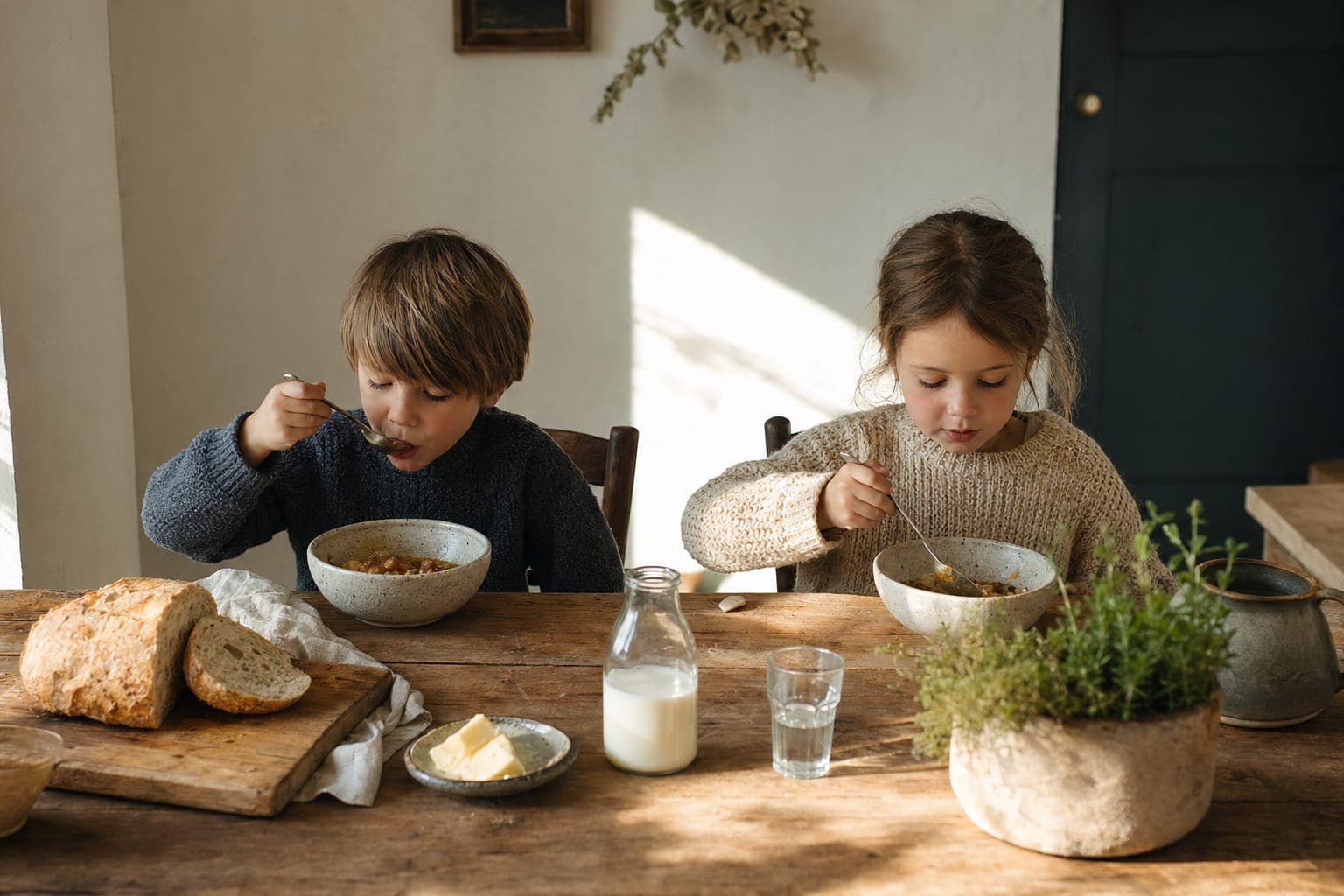
Life stage
Can Children Take Beef Organ Supplements?
Can children safely take beef organ supplements? Dosage, age-appropriateness, and practical tips for giving organs to kids without resistance.
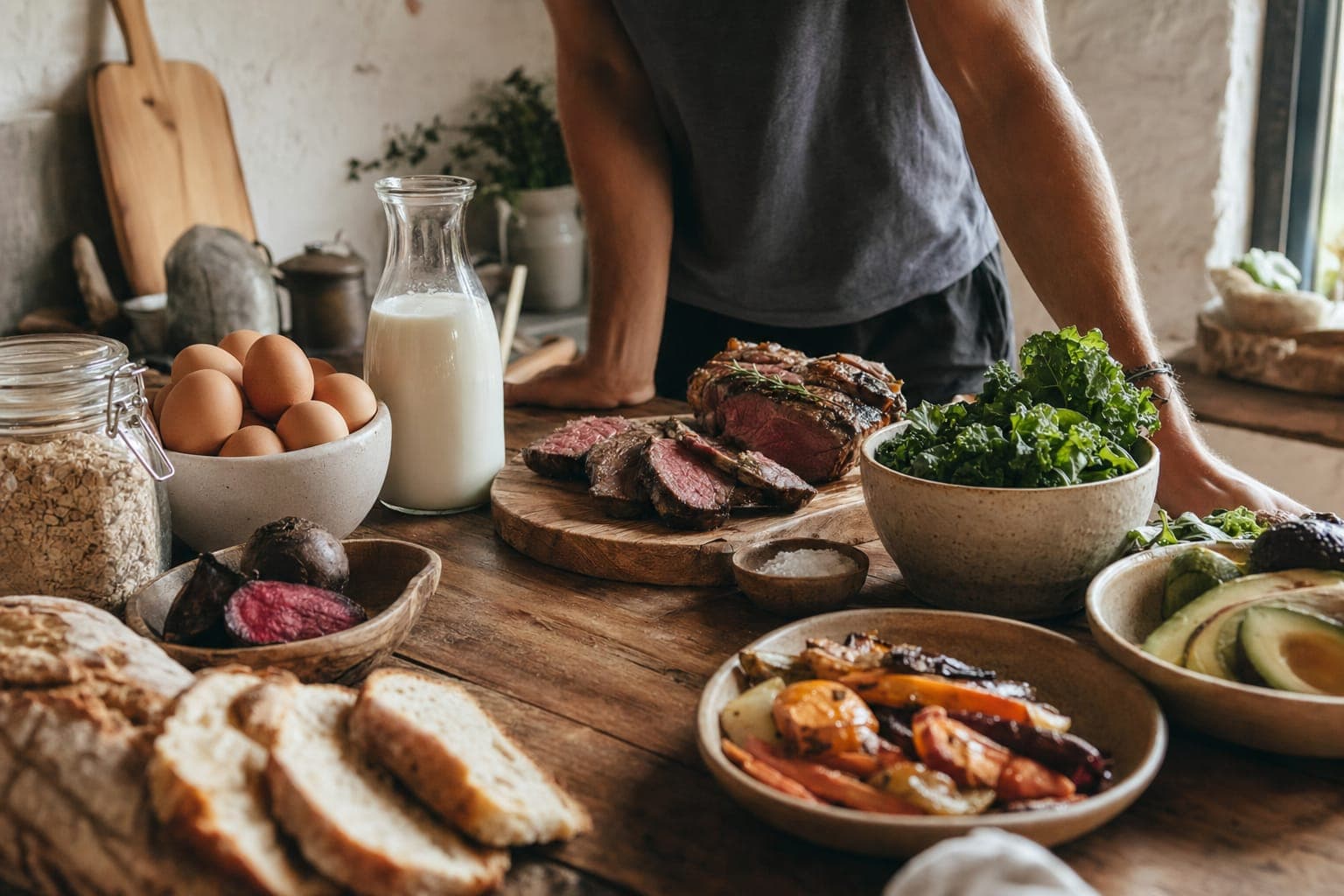
Life stage
Why Whole Food Beats Synthetic Sports Nutrition
Isolated supplements lack cofactors real athletes need. Discover why whole food outperforms synthetic sports nutrition for lasting performance.
Real food, made effortless
Find my daily blendA few ways to use it
All recipes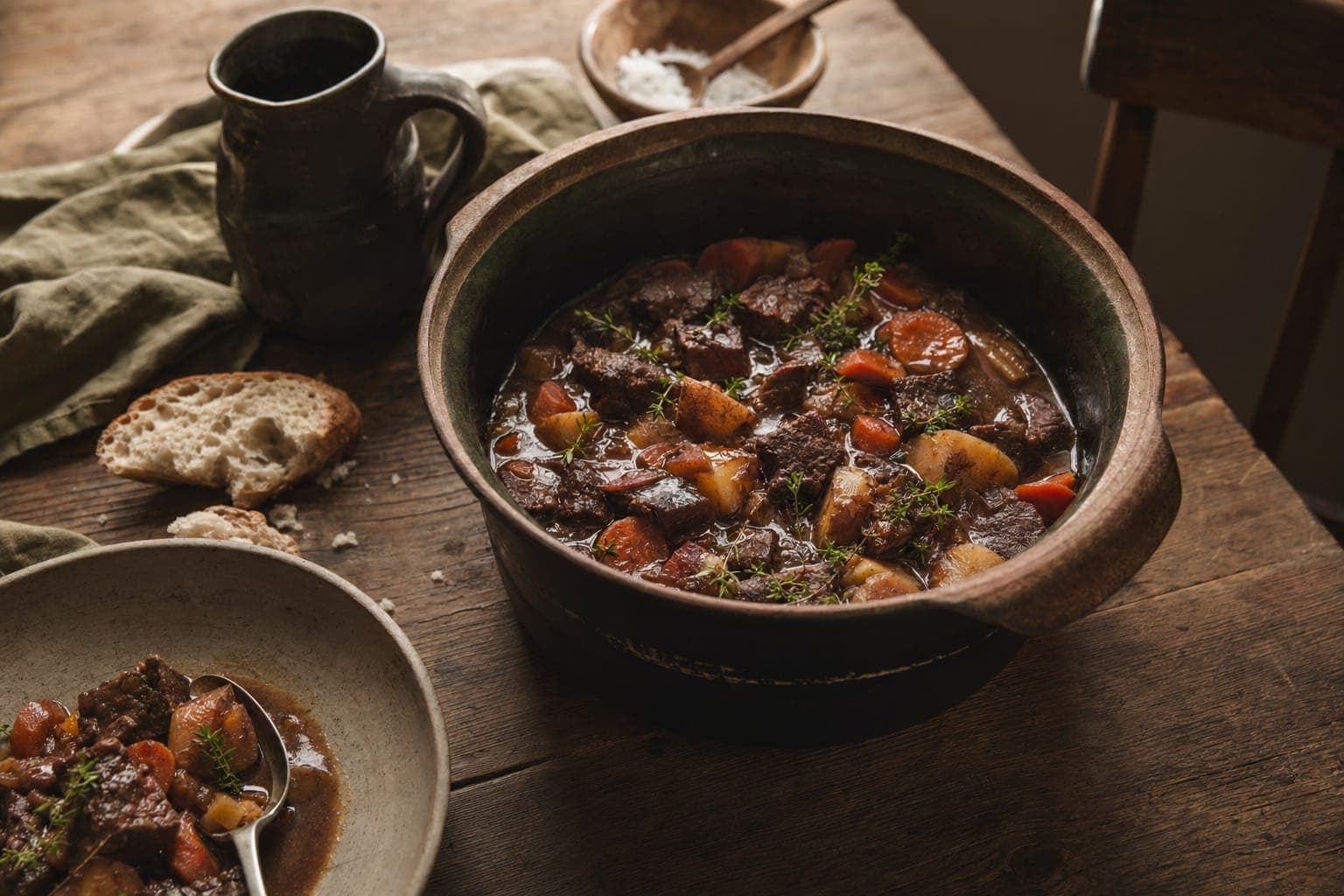
Collagen-Rich Beef Stew: Slow-Cooked Nourishment
Beef stew that delivers collagen from connective tissue and bone broth. Winter comfort food that actually nourishes. Simple slow cooker recipe.
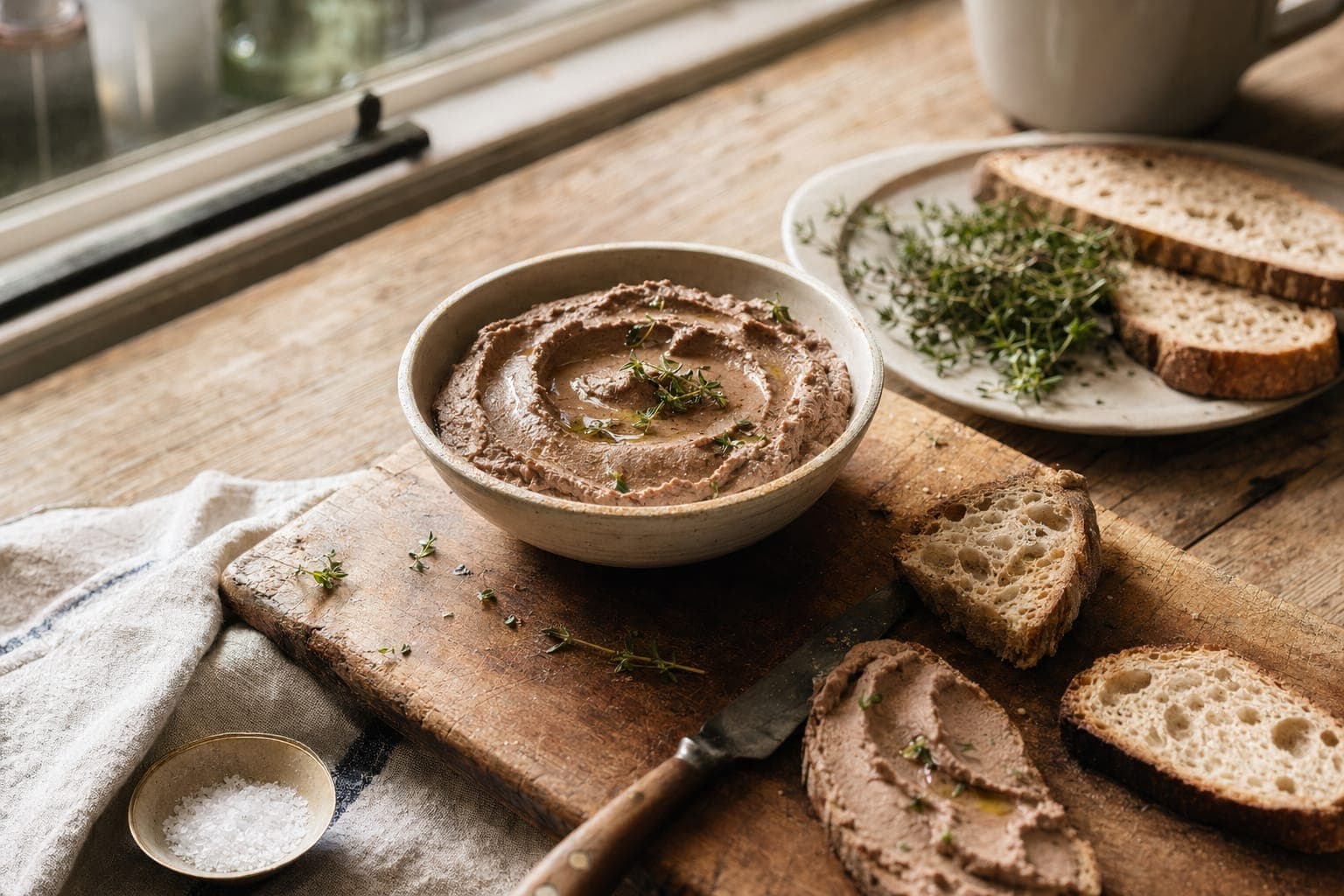
Liver Pate for Beginners: A Gentle Introduction to Organ Meats
Simple liver pate recipe to start eating organ meats. Chicken liver, butter, and herbs. Gentle introduction to nutrient-dense whole foods.
Gut-Healing Marshmallows with Collagen and Raw Honey
Learn to make gut-healing marshmallows with collagen and raw honey. A shareable treat that sneaks nutrition into every bite. Easy recipe with video tips.


 Join over 100,000+ members
Build a better food system with us
The Organised community is thousands of people choosing real food and backing the farmers who grow it, all of us trying to leave the world a little better than we found it. If that is what you care about too, you belong here.