The Nutrients Children Need Most (And Aren't Getting)
Modern children are more likely to be overweight and undernourished at the same time. They're eating plenty. They're not getting the nutrients they need. Five nutrients in particular are chronically absent from children's diets, and the consequences show up as poor growth, poor immunity, poor focus, and poor behaviour.
By Niall Kiddle, Founder, Organised

Reviewed by Pedro Rodrigues, Agronomist (farming and sourcing only) ·
7 min read · Published · Updated · 6 cited sources
Makers of the Organised Daily blend, a grass-fed beef organ supplement from regenerative UK farms
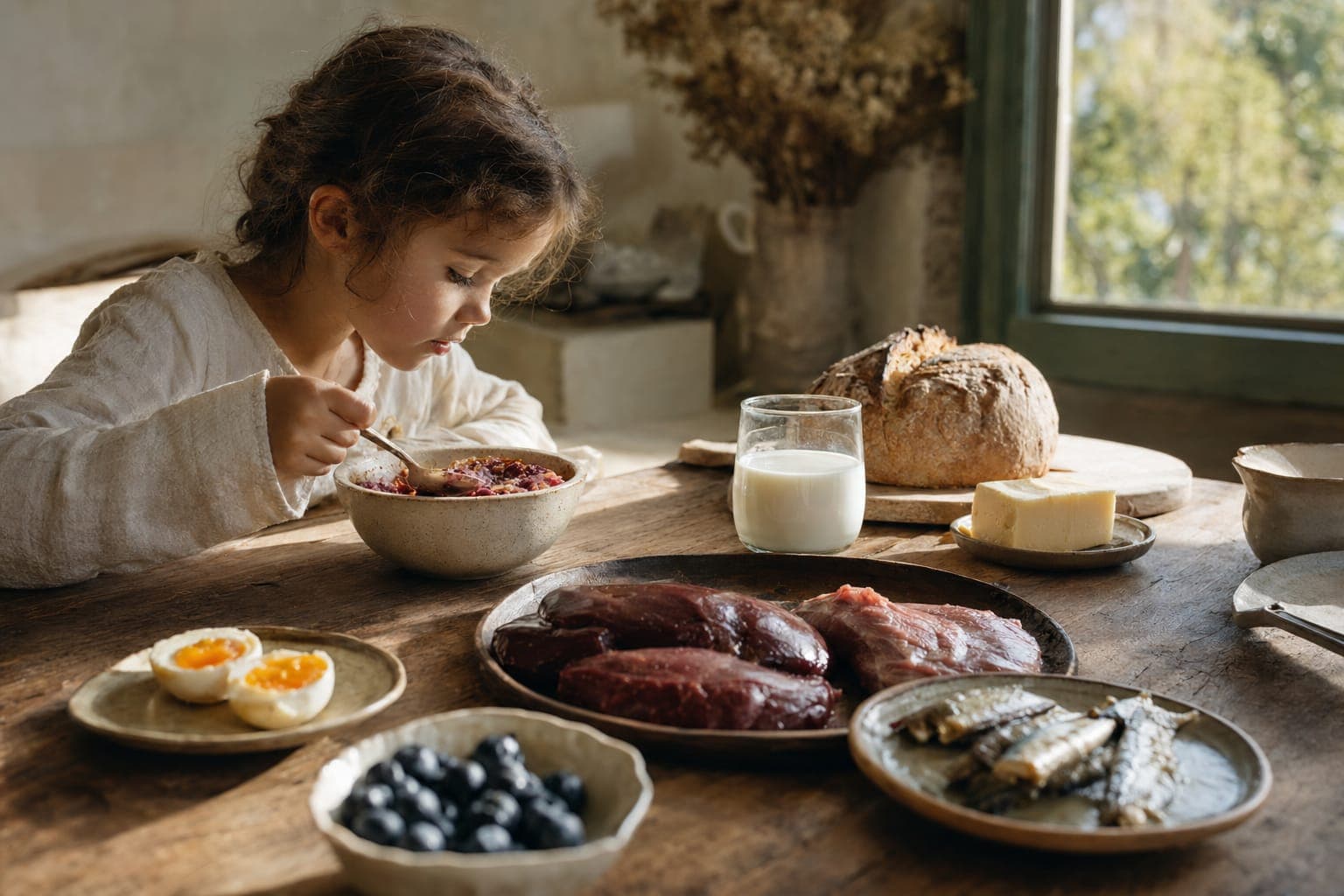
It sounds dramatic. It's not. It's the direct consequence of eating processed foods that provide calories and little else. Your child can eat 2,000 calories of crisps, biscuits, and sugary drinks and still be deficient in iron, zinc, B12, choline, and DHA. The calorie density is fine. The nutrient density is catastrophic.
The paradox of overweight and undernourished
A child eating primarily processed foods is overfed in calories and underfed in nutrients. The processed foods are engineered to override satiety signals, so the child eats more. The food is calorie-dense and nutrient-poor. The result is excess body weight and nutrient deficiency.
This paradox shows up clinically. A heavy child is tested for anaemia and found to be iron-deficient. A tall child has weak bones and frequent fractures. A smart child struggles at school and is labelled as having attention issues. In many cases, the underlying problem is nutrient deficiency, not genetics or neurotype.
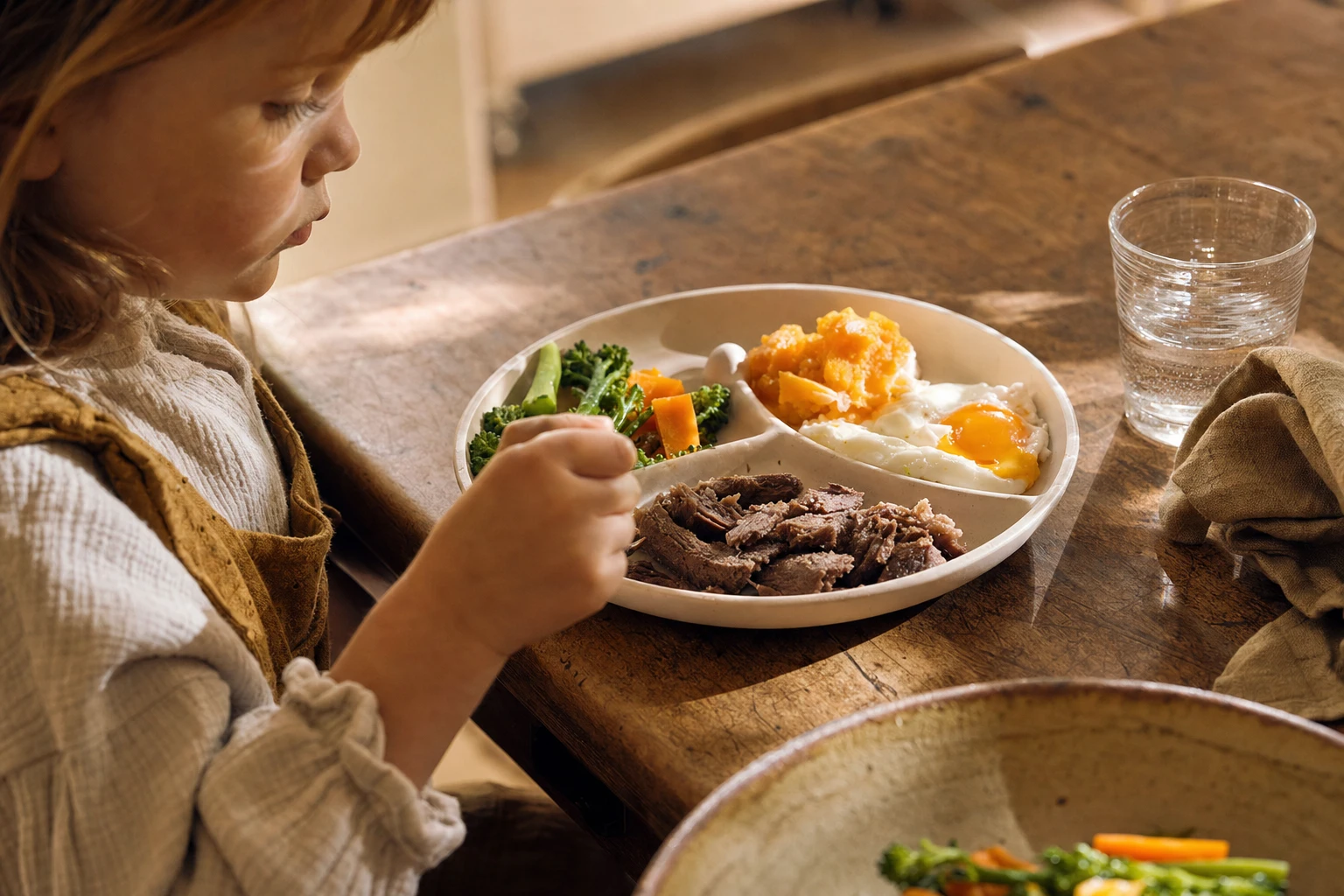
The solution is not restriction. It's not calorie counting. It's swapping the foods the child eats for more nutrient-dense versions. Replace biscuits with nuts and fruit. Replace sugary breakfast cereal with eggs. Replace processed snacks with cheese and meat. The calories might be similar. The nutrients are not.
Iron and the fatigue problem
Iron carries oxygen throughout the body. If your child is low on iron, their entire system is oxygen-starved.1 They feel tired. Bone-deep, overwhelming tired. They can't focus at school. They're moody and irritable. Teachers report that they can't concentrate. All of this from iron deficiency.
Children need iron to grow, to develop, and to function. The recommended daily intake is roughly 7-10 milligrams for children aged 1-13. This sounds modest until you realise that most processed foods contain almost no iron, and when they do, it's added as iron fortification, which your child's body absorbs poorly.
The richest sources are red meat and organ meats. A 50-gram portion of red meat contains roughly 2-3 milligrams of iron in a form your child's body absorbs and uses. Poultry contains less. Beans contain iron but in a form that's harder to absorb. Eggs contain moderate amounts.
If your child eats red meat several times weekly, iron deficiency is unlikely. If your child rarely eats meat, iron deficiency is probable. A simple blood test (full blood count and iron studies) can determine if your child is deficient. If they are, supplementation is one option. Dietary change is another. Both work together.
If your child is fatigued and struggling at school, check iron levels before assuming a behavioural or learning issue. Iron deficiency is common, fixable, and often the root cause.
Zinc and immunity
Zinc is essential for immune system function and for growth. Children low on zinc get sick more frequently. They have slower wound healing.2 They're shorter than their genetic potential. Zinc is not optional.
The richest sources are meat and organ meats. Oysters contain extraordinary amounts but are not foods most children eat regularly. Red meat, chicken, and eggs all contain zinc. Beans and nuts contain zinc but in forms that are less absorbable.
A child eating meat regularly and some dairy has adequate zinc. A vegetarian child eating legumes, nuts, and seeds can meet zinc needs but needs to eat more total volume because the absorption is less efficient. A vegan child might benefit from supplementation or concentrated sources like pumpkin seeds.
Zinc deficiency is less common than iron deficiency in developed countries because animal foods are still accessible to most. But in children eating primarily processed foods, zinc deficiency does occur. The result is frequent infections, poor growth, and slow wound healing.
B12 and mood
Vitamin B12 is essential for nervous system function. It's involved in neurotransmitter synthesis, mood regulation, energy production, and cognitive function.3 B12 deficiency in children causes fatigue, poor mood, poor focus, and cognitive delays. It's serious.
B12 is found almost exclusively in animal foods. Meat, fish, eggs, and dairy all contain B12. Vegetarian children eating eggs and dairy can meet B12 needs. Vegan children cannot and require supplementation or fortified foods.
A child eating animal foods regularly has adequate B12. A vegetarian child eating eggs and dairy has adequate B12. A vegan child needs supplementation. There is no getting around this. B12 is not available in significant quantities in plant foods.
If your child is vegan, supplementation is not optional. It's essential. A simple blood test can determine if your child is deficient. If they are and they're not supplementing, supplementation should begin immediately.
Choline and brain development
Choline is a nutrient that's essential for brain development and for the synthesis of acetylcholine, a neurotransmitter crucial for learning and memory.4 Choline deficiency in children is associated with cognitive delays, poor learning, and mood issues.
The richest sources are egg yolks and liver. A single egg yolk contains approximately 150 milligrams of choline. Beef liver contains around 430 milligrams per 100 grams. These foods should be staples for growing children.
The recommended intake for children is roughly 250-375 milligrams daily, depending on age. If your child eats eggs regularly and some liver, choline needs are met. If your child eats neither, choline deficiency is likely.
Choline deficiency is not tested routinely, so most parents don't know their child is deficient. But the cognitive consequences are real. A child struggling at school who starts eating eggs and liver regularly often shows marked improvement in focus and learning. The difference is choline.
Get life-stage nutrition guides, free
Two short reads a week on eating well through pregnancy, childhood and older age.
By signing up you agree to receive emails from us. No spam, unsubscribe anytime.
DHA and attention
DHA (docosahexaenoic acid) is a long-chain omega-3 fatty acid that comprises a significant portion of the brain and is essential for cognitive function.5 Children low on DHA show poor attention, poor learning, poor mood regulation, and poor impulse control. Some research suggests that DHA supplementation helps children with ADHD.
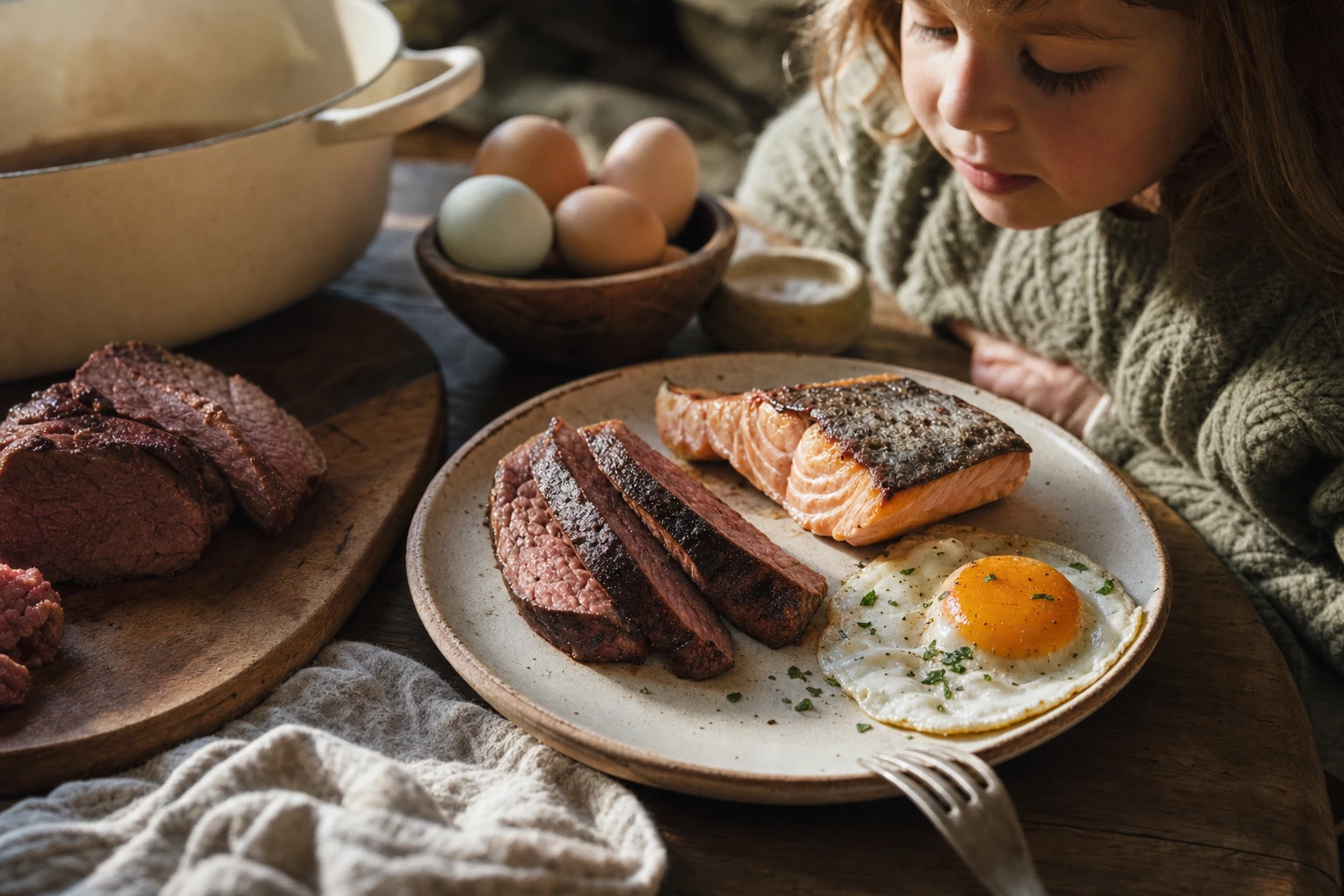
The richest sources are fatty fish: salmon, mackerel, sardines, and anchovies. A 100-gram serving of wild salmon contains around 2,500 milligrams of DHA. Tinned mackerel contains similar amounts. Eggs and beef, particularly from grass-fed animals, contain smaller amounts but some.
The recommended intake for children is roughly 100-250 milligrams daily, depending on age. If your child eats fatty fish twice weekly, DHA needs are likely met. If your child rarely eats fish, supplementation with fish oil or algae-derived DHA is worth considering, particularly if your child struggles with attention or mood.
A child with attention issues who starts eating fatty fish regularly or takes DHA supplementation often shows marked improvement in focus and behaviour. It's not a cure for ADHD, but it's a foundational nutrient that many children lack.
K2 and bone
Vitamin K2 is the nutrient that tells calcium where to go. It activates proteins that deposit calcium into bones and teeth, and it prevents calcium from depositing in soft tissues.6 K2 is essential for bone development and dental health in children.
The richest sources are grass-fed butter, full-fat cheese from pastured cows, and natto (fermented soy). Most children eating standard butter and cheese from grain-fed cows get very little K2. Children eating butter and cheese from grass-fed cows get substantial amounts.
Grass-fed butter and cheese are more expensive than conventional versions, but the difference in K2 content is significant. For a growing child, whose bones are developing rapidly, K2 matters. A child eating grass-fed butter and cheese from pastured cows, along with adequate calcium from dairy and leafy greens, and adequate vitamin D from sun and fish, builds strong bones. A child eating conventional versions with low K2 builds weaker bones.

1 of 9
Daily blend
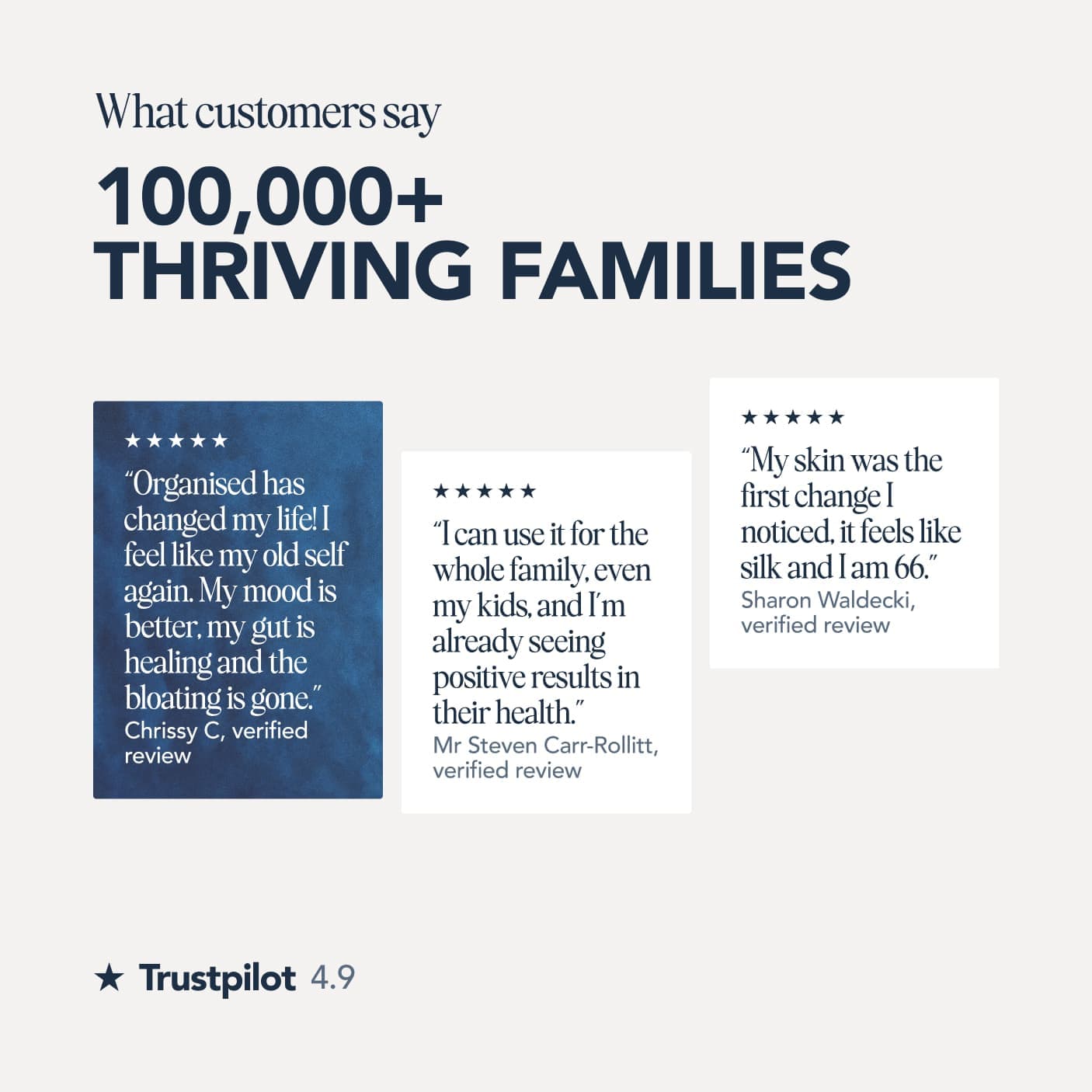
100,000+ thriving families4.9 on Trustpilot
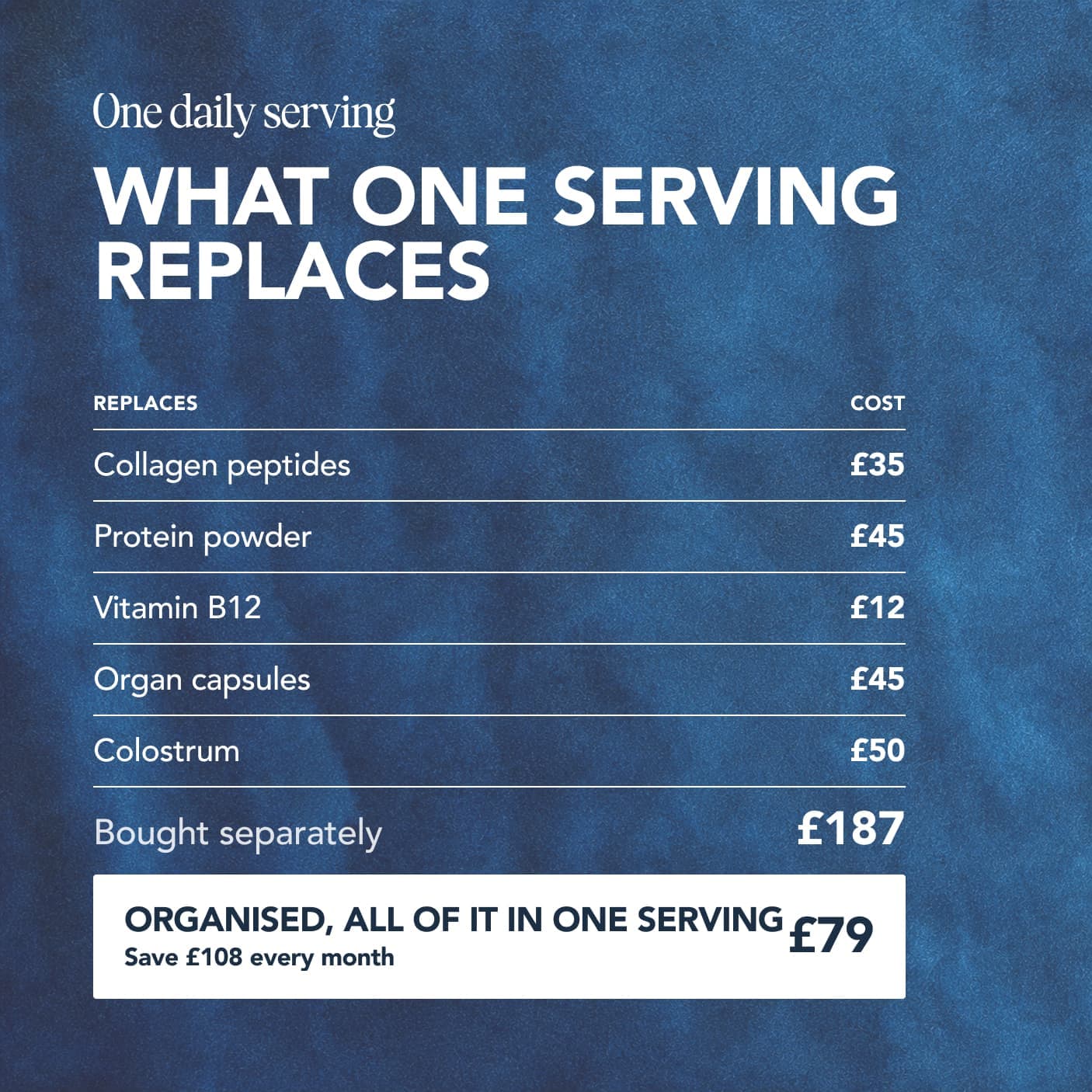
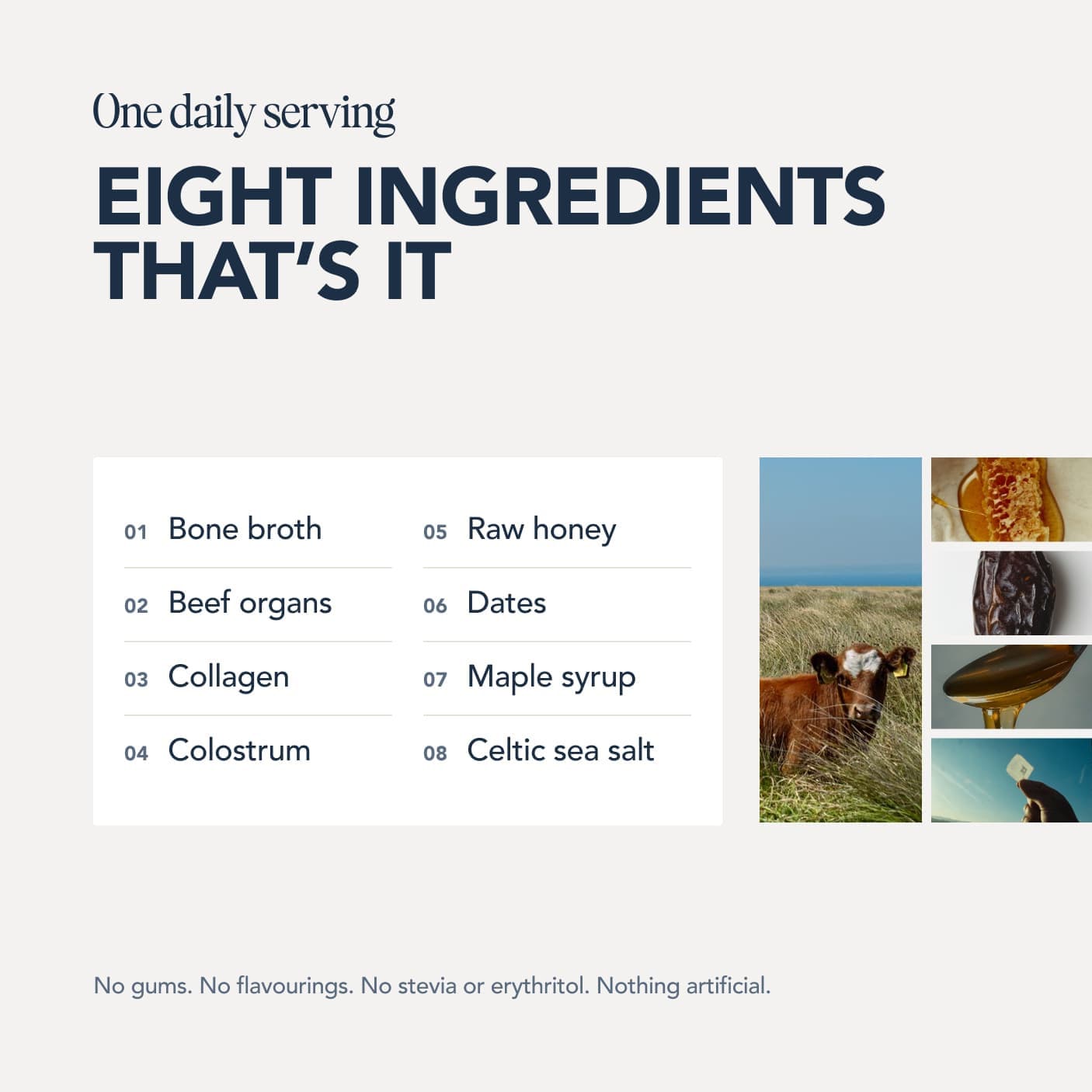
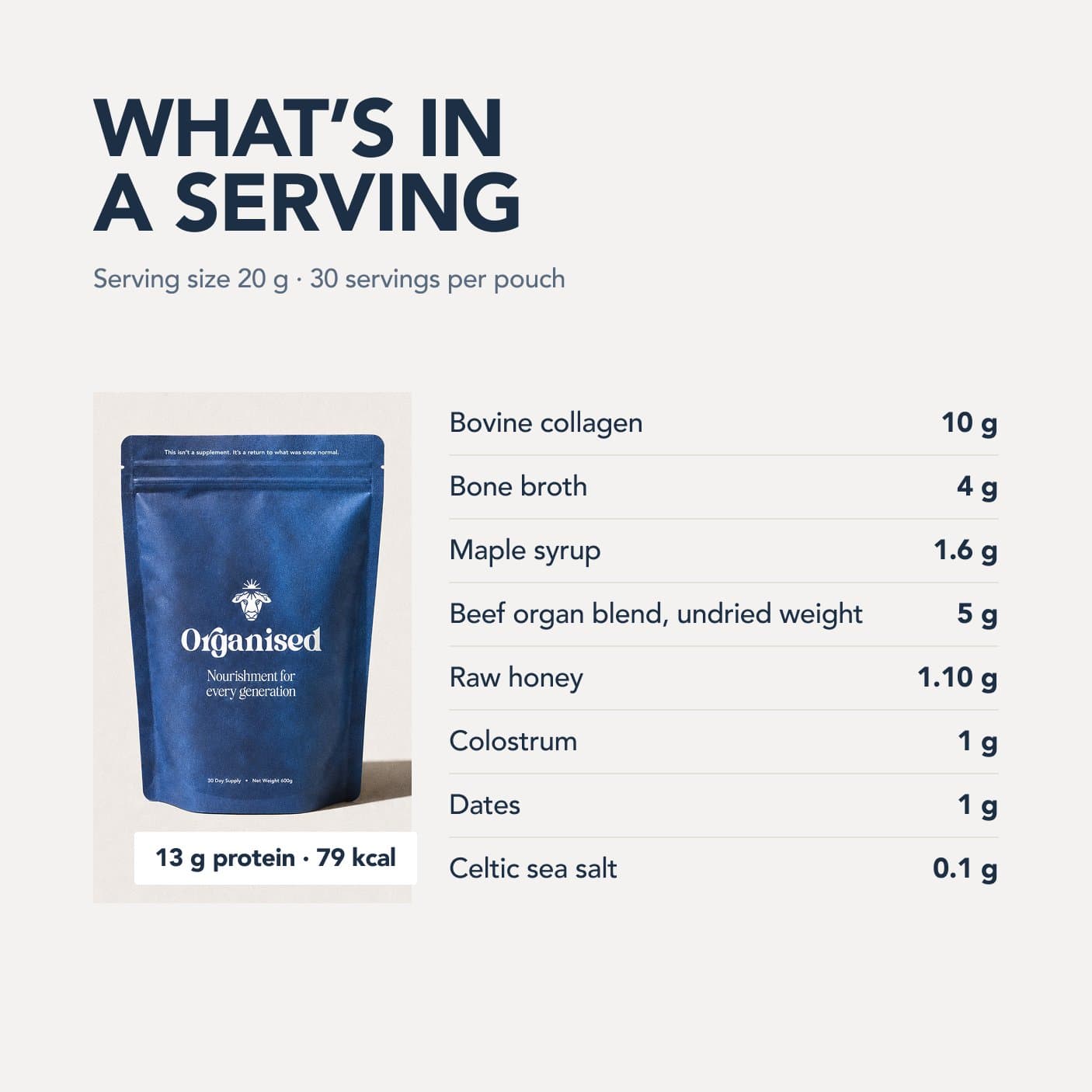
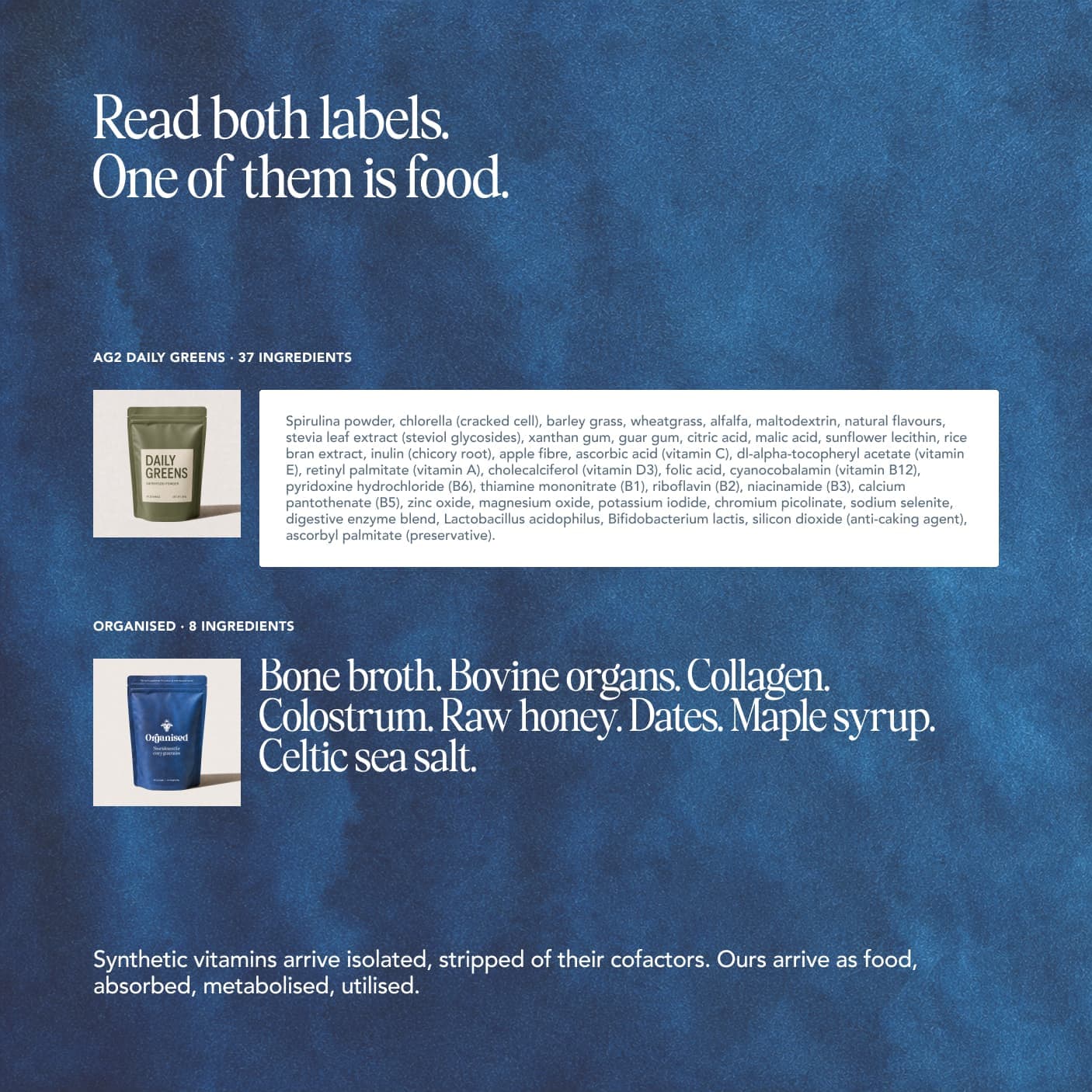
Eight real ingredients built around grass-fed beef organs, collagen and colostrum. Nothing synthetic added.
Free with your first order, worth £38. Plus £10 off the pouch with a subscription.


Free UK shipping · Made in England · 100 day money back guarantee on your first pouch · Skip, pause or cancel anytime
Where modern diets miss them
Modern processed foods are engineered for shelf stability, not nutrition. They're made from refined grains, seed oils, sugar, and artificial ingredients. These foods are cheap and convenient. They're also nutrient-poor.
A breakfast of breakfast cereal with milk (fortified cereals, but fortified with synthetic, less-absorbable forms of nutrients) and orange juice contains no iron, limited zinc, no B12 unless the milk is from dairy, no choline, no DHA. Lunch of a processed sandwich with crisps contains similar deficiencies. Dinner of pasta with jarred sauce contains calories but minimal nutrient density.
A modern child eating this standard diet all day every day is chronically deficient in the nutrients that matter most. Swap the foods for whole foods and the nutrient density changes immediately. Eggs instead of cereal. Meat and vegetables instead of processed sandwiches. Real food instead of processed. The nutrient density becomes extraordinary.
The bottom line
Children are not small adults. They're growing people who need extraordinary nutrition to develop properly. Five nutrients in particular, iron, zinc, B12, choline, and DHA, are chronically absent from modern diets and directly impact growth, immunity, mood, focus, and behaviour. Include meat, fish, eggs, organ meats, full-fat dairy, and vegetables in your child's diet, and these nutrients are present. Leave them out, and deficiency is probable. Your child's development depends on it. Test if you're concerned. Supplement if needed. But prioritise real food first. It works.
References
Every source below was checked on 27 August 2026. Each link was requested and read. Where a citation and its identifier disagreed, the citation was corrected to the record or the reference was deleted along with the sentence marker that pointed at it, and where the resolved paper turned out not to support the sentence, the sentence was cut back to what it does support. Borrowed authority is worse than none, because it looks like rigour.
- National Institutes of Health, Office of Dietary Supplements. Iron - Health Professional Fact Sheet. https://ods.od.nih.gov/factsheets/Iron-HealthProfessional/ [accessed May 2026].
- National Institutes of Health, Office of Dietary Supplements. Zinc - Health Professional Fact Sheet. https://ods.od.nih.gov/factsheets/Zinc-HealthProfessional/ [accessed May 2026].
- National Institutes of Health, Office of Dietary Supplements. Vitamin B12 - Health Professional Fact Sheet. https://ods.od.nih.gov/factsheets/VitaminB12-HealthProfessional/ [accessed May 2026].
- National Institutes of Health, Office of Dietary Supplements. Choline - Health Professional Fact Sheet. https://ods.od.nih.gov/factsheets/Choline-HealthProfessional/ [accessed May 2026].
- National Institutes of Health, Office of Dietary Supplements. Omega-3 Fatty Acids - Health Professional Fact Sheet. https://ods.od.nih.gov/factsheets/Omega3FattyAcids-HealthProfessional/ [accessed May 2026].
- National Institutes of Health, Office of Dietary Supplements. Vitamin K - Health Professional Fact Sheet. https://ods.od.nih.gov/factsheets/VitaminK-HealthProfessional/ [accessed May 2026].
Who wrote and reviewed this guide
Niall Kiddle
Author · Founder, Organised
Niall is the founder of Organised. He started the company in 2024 after fixing his own health the slow way: in 2022 he swapped a cupboard of synthetic supplements for real food, raw milk, organ meats, bone broth and honey, and felt the difference within months.
Areas of expertise: Ancestral nutrition, Organ meats, Whole-food supplementation, Gut health, Regenerative sourcing
Read Niall's full profile
Pedro Rodrigues
Reviewer · Agronomist (farming and sourcing only)
Pedro is the agronomist Organised works with on farming and sourcing. His job on the guides is to keep the science honest: he reviews what we publish about soil health, regenerative agriculture, grazing and the way food is actually produced.
Areas of expertise: Regenerative agriculture, Agronomy, Soil health, Grass-fed farming, Food sourcing
Reviewed this guide on
Read Pedro's full profileMore on children & teens
View all- Feeding Children for Optimal Growth and Development
- Teenage Nutrition: Fuelling Growth Spurts and Brain Development
- Building Strong Bones in Childhood: Beyond Just Milk
- Can Children Take Beef Organ Supplements?
- How to Introduce Organ Meats to Children
- Picky Eaters: How to Sneak Nutrient-Dense Foods Into Family Meals
- Protein for Young Athletes: How Much Do Teenagers Actually Need?
- Screen Time, Sleep and Nutrition: The Triangle That Affects Every Child
- Sugar, Screens and Soil: Raising Healthy Children in a Modern World
- Teenage Athletes: Protein and Nutrient Needs for Growing Bodies
- Why Children Need More Nutrient-Dense Food (Not More Vitamins)
- Why Teenage Girls Are at the Highest Risk of Iron Deficiency
Browse the guides library
All guidesKeep reading

Life stage
Feeding Children for Optimal Growth and Development
Optimal nutrition for children's growth and development: protein, fats, fat-soluble vitamins, minerals. Whole food approach without shame or perfection.

Life stage
Can Children Take Beef Organ Supplements?
Can children safely take beef organ supplements? Dosage, age-appropriateness, and practical tips for giving organs to kids without resistance.
Life stage
Teenage Athletes: Protein and Nutrient Needs for Growing Bodies
Protein, calories, iron, B12: what teenage athletes actually need. Why bars and shakes miss the mark. Real food for growing bodies.
Real food, made effortless
Find my daily blendA few ways to use it
All recipes
Raw Milk Hot Chocolate with Collagen
A nourishing evening hot chocolate made with raw milk, grass-fed collagen, raw cacao, and honey. A nighttime ritual that supports sleep and gut health.

Energy Balls with Organised, Dates and Raw Honey
Make no-bake energy balls with Organised, dates, and raw honey. Perfect lunch box, pre-workout, or on-the-go snack. Simple recipe.
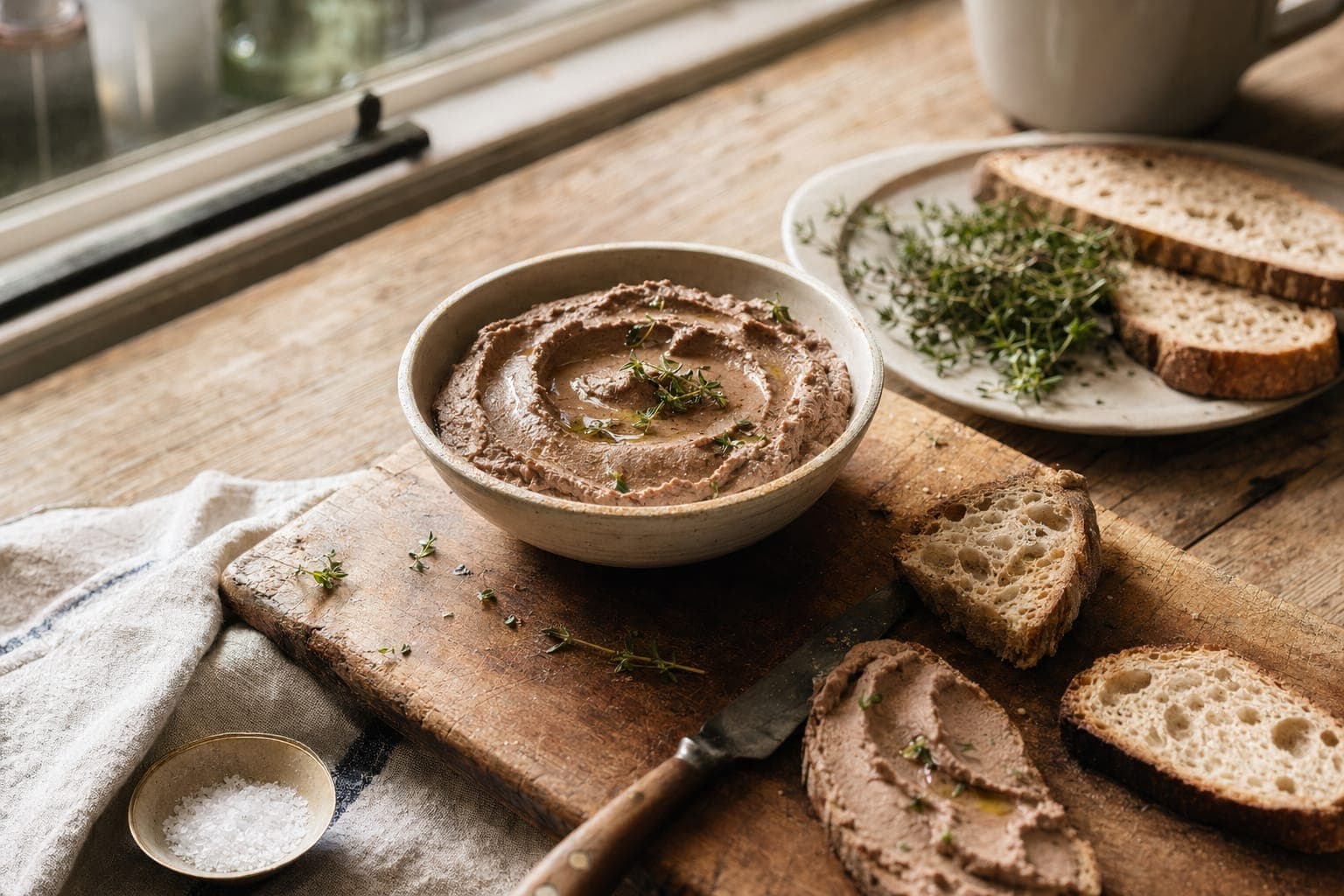
Liver Pate for Beginners: A Gentle Introduction to Organ Meats
Simple liver pate recipe to start eating organ meats. Chicken liver, butter, and herbs. Gentle introduction to nutrient-dense whole foods.


 Join over 100,000+ members
Build a better food system with us
The Organised community is thousands of people choosing real food and backing the farmers who grow it, all of us trying to leave the world a little better than we found it. If that is what you care about too, you belong here.