Sarcopenia: The Silent Muscle Loss Epidemic
Age-related muscle loss is largely preventable. Learn how nutrition and resistance training help stop sarcopenia and protect strength as you get older.
 Niall Kiddle · Founder, OrganisedReviewed by Pedro Rodrigues7 min read · Updated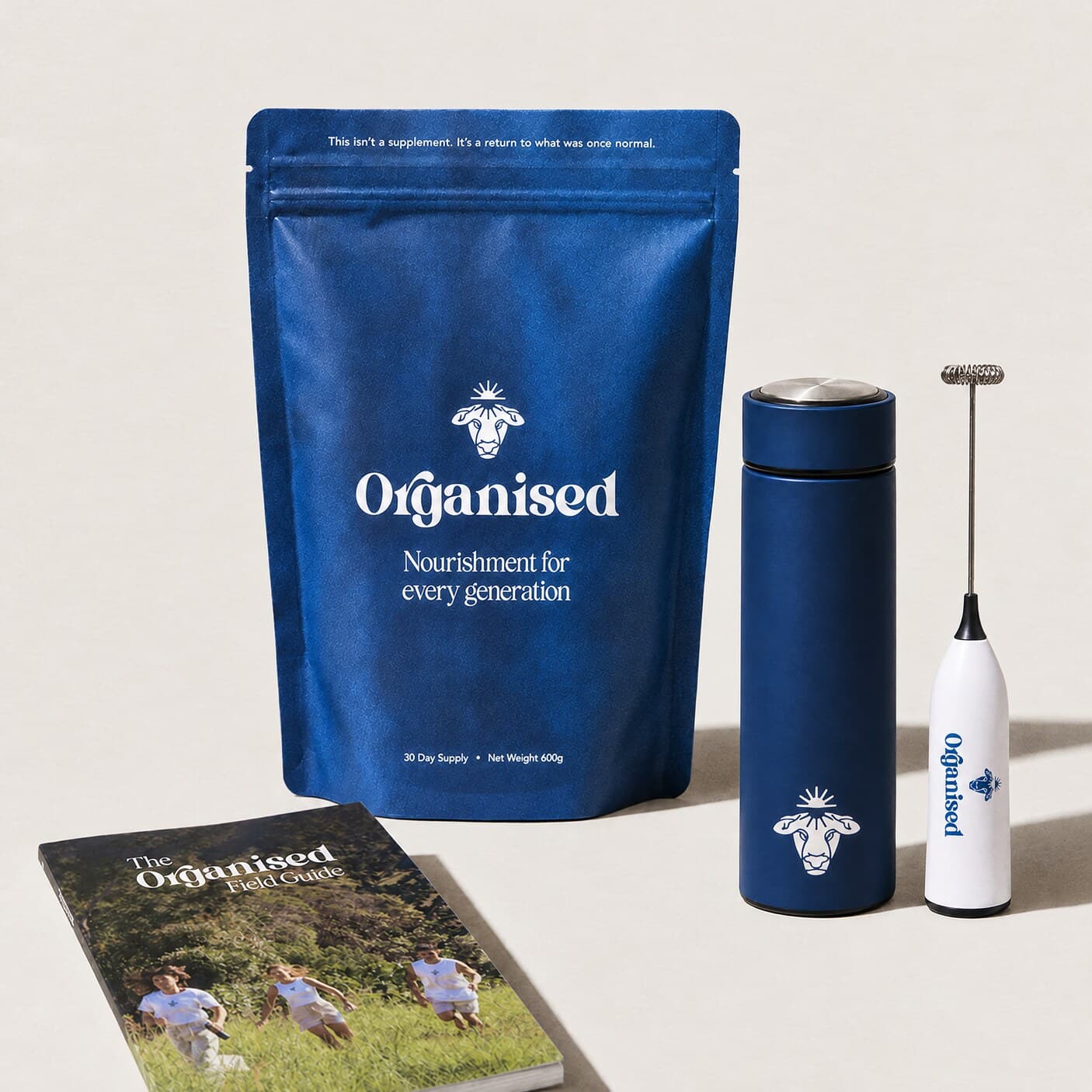
Daily blend
Bone broth. Premium grass-fed bone broth protein providing complete amino acids for muscle repair and sustained energy.
4.9 on Trustpilot · 200,000+ thriving familiesAt 50, you're losing muscle quietly. Without intervention, adults typically lose roughly 3 to 8% of muscle mass per decade after age 30, with accelerated loss after 60.1 By 70, you've lost significant strength. By 80, ordinary tasks become impossible. This isn't inevitable. It's preventable.
Sarcopenia is the medical term for age-related muscle loss. It's not ageing. It's the particular kind of muscle wasting that comes from inadequate protein, insufficient training stimulus, and declining hormone support. All three are addressable.
What sarcopenia is and why it matters
Your muscles aren't just for looking good. They're your organ of metabolic flexibility. Muscle tissue is metabolically active. It burns calories at rest. It stores glucose as glycogen, which prevents blood sugar spikes. It produces force needed for daily life. Lose muscle and your metabolism crashes, your blood sugar control worsens, and simple tasks become difficult.
Sarcopenia is associated with increased risk of falls, fractures, hospitalisation, and loss of independence in older adults.2 A person with adequate muscle at 70 can live independently. A person with severe sarcopenia at 70 becomes dependent on others for basic tasks. It's not a minor issue. It's the difference between autonomy and dependence.
Most older adults don't recognise sarcopenia until it's already compromised their quality of life. The woman who can no longer carry her own shopping. The man who needs help climbing stairs. The grandparent who can't play on the floor with grandchildren. These aren't acceptable milestones of ageing. They're signs of preventable muscle loss.
The tragedy is that sarcopenia is largely preventable. You don't have to lose muscle as you age. Most people who do simply aren't eating and training to preserve it.
The muscle loss you see in ageing isn't inevitable ageing. It's the result of inadequate protein and insufficient training stimulus.
Why muscle loss accelerates with age
Three factors drive sarcopenia. First, muscle protein synthesis becomes less efficient. Your body's ability to build new muscle from amino acids declines with age. A 25-year-old builds muscle readily. A 65-year-old builds muscle more slowly. This doesn't mean it's impossible. It means you have to be more intentional.
Second, hormone output declines. Testosterone, growth hormone, and IGF-1 all support muscle building and preservation. As these decline with age, your body's drive to maintain muscle decreases. This is addressable through nutrition and training, which stimulate hormone production naturally.
Third, you probably move less. A 25-year-old might be training regularly. A 65-year-old often isn't. Without training stimulus, your body has no reason to maintain muscle. It costs calories to maintain muscle. If your body isn't being signalled to use that muscle, it sheds it. A desk job, a comfortable car, and streaming services all conspire to keep you sitting. Sitting is the opposite of the signal your muscles need.
Compound these three factors and muscle loss accelerates. By 70, you've lost perhaps 20 to 25% of your peak muscle mass. By 80, you've lost 30 to 40%. Once you're dependent on others, reversing sarcopenia becomes much harder. Prevention is infinitely easier than reversal.
Protein: the foundation of muscle preservation
Protein requirements increase with age. The standard recommendation of 0.8 grams per kilogram of body weight is designed for young adults. Expert consensus (PROT-AGE) recommends 1.0 to 1.2 g/kg/day of protein for healthy older adults, increasing to 1.2 to 1.5 g/kg/day with illness or sarcopenia risk.3
A 70-kilogram person over 50 should be aiming for 84 to 112 grams of protein daily to preserve muscle. Most people eating a typical modern diet get 50 to 60 grams, roughly half what they need.
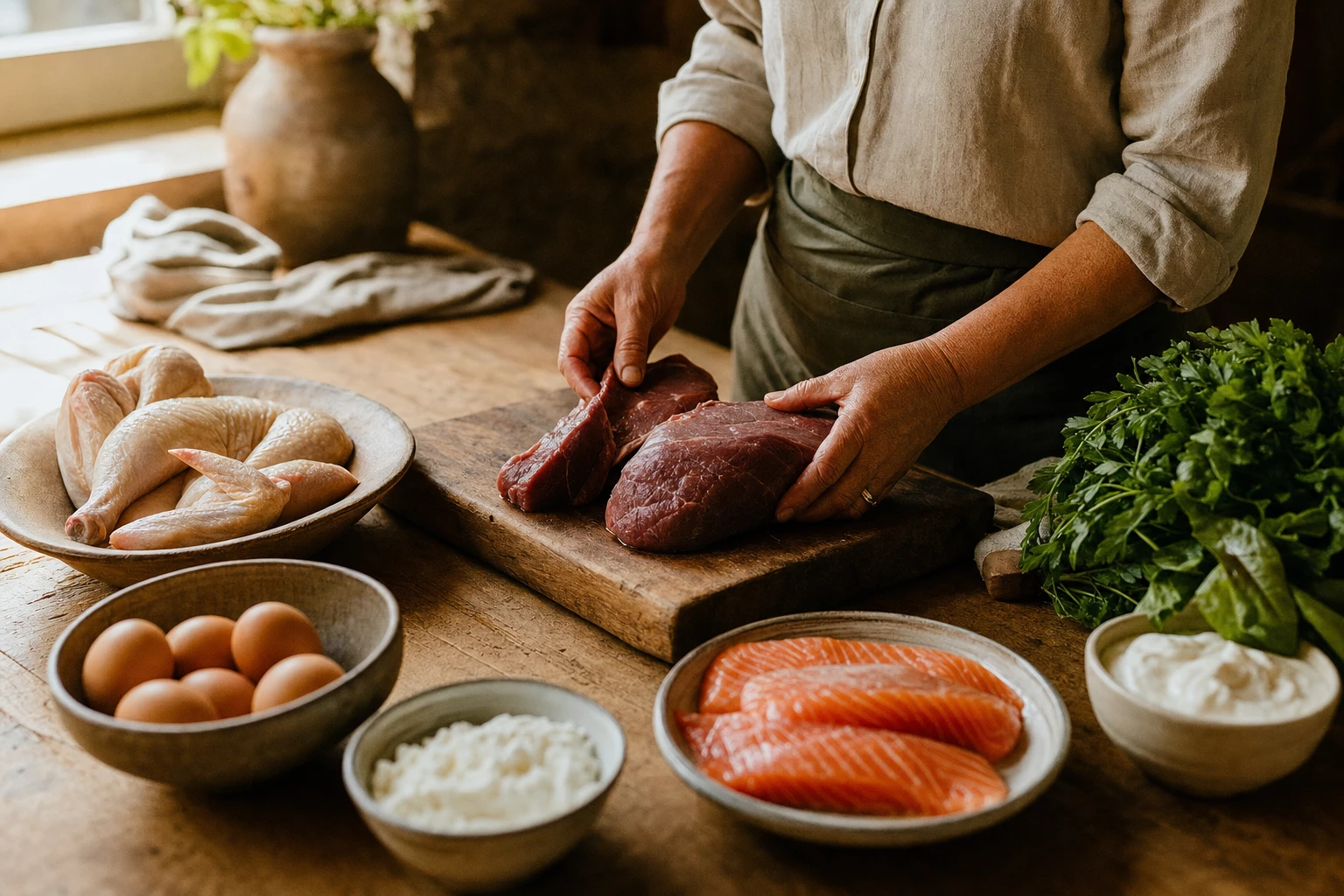
The protein needs to be high-quality. Complete protein with all nine essential amino acids. Animal proteins (meat, fish, eggs, dairy) are complete. Plant proteins are incomplete or require combining to form completeness. An older person eating primarily plant proteins is at higher risk of sarcopenia despite adequate protein quantity.
The branched-chain amino acid leucine is a key trigger for muscle protein synthesis, with a higher leucine threshold per meal often needed in older adults.4 Leucine is highest in animal proteins, whey, and a few plant sources. Eating leucine-rich foods with each meal supports muscle preservation better than spreading adequate total protein unevenly across the day.
Distributing 25 to 40 g of high-quality protein across main meals is supported by muscle protein synthesis literature in older adults.4 (breakfast, lunch, and dinner). A 150-gram steak provides roughly 40 grams of complete protein. Three large eggs provide 18 grams. A 150-gram serving of salmon provides 25 grams. With this pattern, you'll hit your daily target without effort.
- Red meat, 150 to 200g, at least twice daily, for complete protein, creatine, iron, and B12
- Organ meats, liver or kidney, 100g weekly, for the highest micronutrient density
- Fish, 150g, twice weekly, for omega-3s and complete protein
- Eggs, three to four daily, for complete protein and choline
- Dairy, full-fat cheese and milk, daily, for leucine, calcium, and minerals
- Bone broth, daily in cooking or as a drink, for collagen and minerals
Get life-stage nutrition guides, free
Two short reads a week on eating well through pregnancy, childhood and older age.
Unsubscribe anytime.
Resistance training: the signal
Protein alone doesn't prevent sarcopenia. You need to send your body a signal that muscle is important. That signal comes from resistance training.
You don't have to be a bodybuilder. You don't have to train hard. But you have to train with progressive resistance three times weekly. Lift weights that challenge you. Your muscles need to be stressed slightly beyond what they can easily handle. That stress tells your body to preserve and build muscle.
Examples include bodyweight squats, holding dumbbells whilst walking, resistance bands, or traditional weights at a gym. The mechanism is the same. Your muscles contract against resistance, incurring microscopic damage. Your body repairs that damage and rebuilds muscle slightly stronger. Do this three times weekly and you preserve and even build muscle in your 60s, 70s, and beyond.
Without training stimulus, your body sheds muscle despite adequate protein. Training without adequate protein leaves your body without the building blocks to actually build muscle. Both are necessary.
Eating protein without training stimulus is like buying building materials and not constructing anything. Train without adequate protein and you're building but without materials. Both together create muscle preservation.
Nutrient synergies for muscle maintenance
Beyond protein, specific nutrients support muscle preservation and recovery. Creatine is produced in your body from amino acids. Your muscles use it for rapid energy production during exercise. Supplemental creatine (particularly in older adults not eating sufficient meat) supports muscle strength and preservation consistently. Fish and red meat are natural creatine sources. A typical 150g serving of beef provides 300 to 500mg of creatine.
Magnesium supports muscle function, contraction, recovery, and energy production. Research suggests older adults chronically run low. Seeds, nuts, leafy greens, and bone broth are sources. Zinc is involved in protein synthesis, muscle repair, and immune function. Red meat, shellfish like oysters and crab, and organ meats are the richest sources. Vitamin D supports calcium absorption and muscle function. Sunlight exposure (15 to 30 minutes daily) and fatty fish provide it naturally. Iron supports oxygen delivery to muscles during exertion, critical for anyone over 50. Red meat, particularly organ meats like liver, provides highly absorbable iron. A 100g portion of beef liver provides 8mg of iron, far more absorbable than plant sources.
Collagen and gelatin support joint health and connective tissue integrity. Bone broth simmered for 12 to 24 hours extracts these compounds. Collagen peptides (added to coffee or broth) and gelatinous cuts of meat (oxtail, chicken feet, beef shank) provide these building blocks essential for injury prevention in anyone doing resistance training.
Omega-3 fatty acids reduce inflammation and support muscle protein synthesis. Fatty fish (salmon, mackerel, sardines, herring), grass-fed meat, and shellfish provide these. Seed oils provide omega-6s, which compete with omega-3s and promote inflammation. Minimising vegetable oils and maximising fish and grass-fed meats optimises this ratio.
The bottom line
Sarcopenia is silent muscle loss that progresses until you suddenly can't do basic tasks. It's preventable through adequate protein (1.2 to 1.6 grams per kilogram daily), resistance training three times weekly, and nutrient-dense whole foods. A 65-year-old woman eating red meat twice daily, lifting weights three times weekly, and maintaining adequate sleep will preserve muscle and strength well into old age. Ignore these three factors and muscle loss is inevitable. The choice is yours. Choose muscle. Choose independence. Choose to stay strong.
References
Every source below was checked on 27 August 2026. Each PubMed, PMC and DOI identifier was resolved against NCBI or Crossref, and what it opens is printed under the citation, so you can see the link goes where the citation says without leaving the page. Where a citation and its identifier disagreed, the citation was corrected to the record or the reference was deleted along with the sentence marker that pointed at it, and where the resolved paper turned out not to support the sentence, the sentence was cut back to what it does support. Borrowed authority is worse than none, because it looks like rigour.
- Volpi E, et al. Muscle tissue changes with aging. Curr Opin Clin Nutr Metab Care. 2004;7(4):405-10. PMID 15192443Checked 27 August 2026: PMID 15192443 opens Volpi E, Nazemi R, Fujita S, Muscle tissue changes with aging. Curr Opin Clin Nutr Metab Care 2004;7(4):405-10. PubMed indexes it as: Review.
- Cruz-Jentoft AJ, et al. Sarcopenia: revised European consensus on definition and diagnosis. Age Ageing. 2019;48(1):16-31. PMID 30312372Checked 27 August 2026: PMID 30312372 opens Cruz-Jentoft AJ, Bahat G, Bauer J et al, Sarcopenia: revised European consensus on definition and diagnosis. Age Ageing 2019;48(1):16-31. PubMed indexes it as: Consensus Statement.
- Bauer J, et al. Evidence-based recommendations for optimal dietary protein intake in older people: a position paper from the PROT-AGE Study Group. J Am Med Dir Assoc. 2013;14(8):542-59. PMID 23867520Checked 27 August 2026: PMID 23867520 opens Bauer J, Biolo G, Cederholm T et al, Evidence-based recommendations for optimal dietary protein intake in older people: a position paper from the PROT-AGE Study Group. J Am Med Dir Assoc 2013;14(8):542-59. PubMed indexes it as: Consensus Statement, Review.
- Phillips SM, et al. Protein "requirements" beyond the RDA: implications for optimizing health. Appl Physiol Nutr Metab. 2016;41(5):565-72. PMID 26960445Checked 27 August 2026: PMID 26960445 opens Phillips SM, Chevalier S, Leidy HJ, Protein "requirements" beyond the RDA: implications for optimizing health. Appl Physiol Nutr Metab 2016;41(5):565-72. PubMed indexes it as: Review.
Who wrote and reviewed this guide
Niall Kiddle
Author · Founder, Organised
Niall is the founder of Organised. He started the company in 2024 after fixing his own health the slow way: in 2022 he swapped a cupboard of synthetic supplements for real food, raw milk, organ meats, bone broth and honey, and felt the difference within months.
Areas of expertise: Ancestral nutrition, Organ meats, Whole-food supplementation, Gut health, Regenerative sourcing
Read Niall's full profile
Pedro Rodrigues
Reviewer · Agronomist (farming and sourcing only)
Pedro is the agronomist Organised works with on farming and sourcing. His job on the guides is to keep the science honest: he reviews what we publish about soil health, regenerative agriculture, grazing and the way food is actually produced.
Areas of expertise: Regenerative agriculture, Agronomy, Soil health, Grass-fed farming, Food sourcing
Reviewed this guide on
Read Pedro's full profilePublished · Updated
4 cited sourcesMakers of the Organised Daily blend, a grass-fed beef organ supplement from regenerative UK farms

Daily blend
Read next