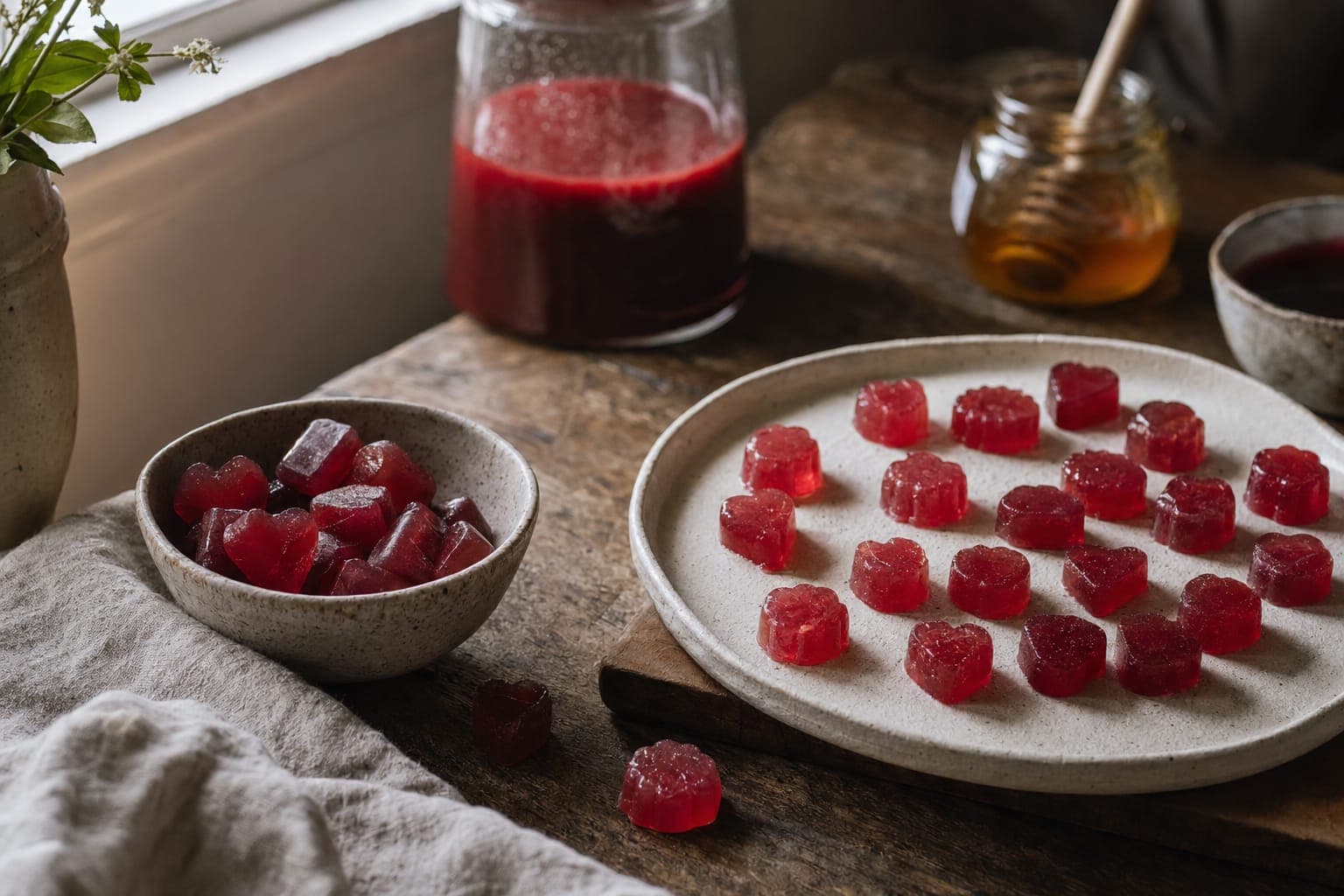
Why Children Need More Nutrient-Dense Food (Not More Vitamins)
Gummy vitamins and supplements can't compete with whole food. Here's why nutrient density matters more than multivitamins for children.
 Niall Kiddle · Founder, OrganisedReviewed by Pedro Rodrigues6 min read · Updated
Daily blend
Beef organs. Liver, kidney, heart, lung and spleen from grass-fed, pasture raised cattle. The most nutrient dense foods on the planet, rich in vitamin A, B vitamins, iron, copper and choline.
4.9 on Trustpilot · 200,000+ thriving familiesEvery parent has stood in the supplement aisle holding a bottle of gummy vitamins, wondering if they're doing enough. The truth is simpler than the industry wants you to know: a child eating consistently nutrient-dense whole food doesn't need a multivitamin.
That doesn't mean most children are eating consistently nutrient-dense food. Many aren't. But the solution isn't more supplements. It's understanding what nutrient density actually is and how to build it into daily meals.

The multivitamin industry is built on parental anxiety
Children's multivitamins are marketed as nutritional insurance. As a safety net. As peace of mind. What they actually deliver is sugar, artificial colours, and maybe 30 to 50% of a child's daily requirement of a handful of nutrients. In pill form. Which bypasses actual digestion.
Gummy vitamins contain more sugar than a chocolate bar. Liquid supplements are filled with fillers and emulsifiers. Chewable tablets often contain artificial sweeteners. And yet parents buy them by the million, believing they're protecting their children.
A vitamin from a supplement is metabolised differently than the same nutrient from food, where it arrives alongside hundreds of supporting compounds that enhance absorption and use.
The vitamin industry tells you children are deficient. They're often right about deficiency rates. But they're wrong about the cure. You don't fix a nutrient deficiency with isolated synthetic nutrients. You fix it with whole food.
What makes a food nutrient-dense
Nutrient density means the amount of essential nutrients per calorie of food. Think of it like nutrient per millilitre. Some foods are packed. Others are nearly empty.
A glass of whole milk contains calcium, phosphorus, vitamin A, vitamin D, B12, selenium, and a dozen other nutrients in biologically available forms. A glass of orange-coloured drink with added vitamins contains synthetic vitamin C and added sugar. One is food. The other is a commodity.
Beef liver contains 5 to 7 milligrams of iron per 100 grams, plus copper, folate, selenium, B12, and vitamin A. An iron supplement contains iron. Full stop. Your body has to then hunt for copper to use the iron, fold the iron into the right shape, and move it where it's needed. With liver, it all arrives together.

Why synthetic vitamins fall short
Your body is incredibly sophisticated at breaking down whole food and extracting what it needs. It's terrible at processing isolated synthetic nutrients that arrive alone, without context.
Take iron. Heme iron from meat is absorbed at 15 to 35% depending on your body's current needs. Non-heme iron from supplements is absorbed at 2 to 20%1, and even that is blocked by coffee, tea, calcium, and a dozen other common foods. But heme iron absorption isn't blocked because your body recognises it, pulls it in, and uses it immediately.
Vitamin A from synthetic supplements can cause toxicity problems at high doses. Vitamin A from liver (retinol, the active form) comes with built-in regulation.2 Your body takes what it needs and stores the rest safely. Carrots contain beta-carotene, which your body converts to vitamin A only as needed, making overdose literally impossible.
A multivitamin is a poor substitute for eating the foods that contain what children actually need.
The biggest problem with supplements is this: they let parents feel they've done something, even if the child is eating processed snacks all day. A gummy vitamin doesn't fix an underlying diet of ultra-processed foods.
Get life-stage nutrition guides, free
Two short reads a week on eating well through pregnancy, childhood and older age.
Unsubscribe anytime.
The foods that genuinely matter for children
If you could feed your child only five foods and had to make them nutrient-dense, what would they be? Eggs. Whole milk. Red meat. Liver. And bone broth.
These five foods contain more bioavailable nutrients than any supplement shelf. An egg supplies choline (crucial for brain development), lutein and zeaxanthin (for eyes), selenium, iodine, and complete protein.3 Whole milk supplies calcium, vitamin D, vitamin A, vitamin B12, and fat for hormone development. Red meat supplies iron, zinc, B vitamins, and carnitine.
Liver is the single most nutrient-dense food on the planet. A 50-gram serving of beef liver weekly provides iron, copper, folate, B12, vitamin A, and selenium in amounts that would take a handful of supplements to match.
- Beef liver, 50g once a week, as a pâté, in a meatball, or finely minced into bolognese (provides more iron, B vitamins, and selenium than a month of supplements)
- Eggs, two to three daily if possible, boiled, scrambled, fried in butter, or baked into muffins (provides choline for brain development, lutein for eyes, complete protein)
- Whole milk, full-fat only, one to two glasses daily, or full-fat yoghurt and cheese if milk isn't tolerated (provides calcium, vitamin D, vitamin A, protein)
- Beef, lamb, or pork, 150g portions, three to four times a week, prioritising fattier cuts like chuck, shoulder, and ribs (provides iron, zinc, carnitine, complete protein)
- Bone broth, homemade by simmering bones 18 to 24 hours, as a base for soups and sauces and sipped warm (provides minerals, collagen, amino acids for gut healing)
- Oily fish, 100 to 150g, once a week if tolerated, for selenium and omega-3 fats (wild salmon, mackerel, sardines are best)
- Butter and other animal fats (ghee, lard, tallow), on everything, for fat-soluble nutrient absorption (vitamins A, D, E, K all require dietary fat)

How to build nutrient density into every meal
Start with protein. Every meal should have protein, and ideally that protein should come from animal sources where the nutrient density is highest. Breakfast with eggs (2 to 3 eggs). Lunch with leftover roasted chicken or beef. Dinner with minced beef or lamb. Snacks with cheese or a handful of nuts. Each of these is nutrient-dense and supports growth and development.
Add fat deliberately. Children need fat for brain development (myelination of the nervous system), for hormone production, for the absorption of vitamins A, D, E, and K (which are fat-soluble and can't be absorbed without fat).4 Use butter on vegetables. Use animal fat rendered from cooking meat. Use whole milk with meals. Low-fat food for children is almost always a nutritional mistake that undermines their development.
Add something fermented or traditionally prepared if possible. Sauerkraut, a small amount of sourdough bread, a bit of raw cheese (if tolerated). These foods prepare the gut for better nutrient absorption through increased stomach acid production and support the microbiota that helps your child extract and utilise nutrients from everything else they eat.
Vegetables are fine. Root vegetables especially (carrots, parsnips, beets). But they're not the centrepiece of the plate. The centrepiece is the nutrient-dense animal food (the protein and fat). Vegetables are the supporting addition, not the main event.
Your child's body is building a brain, growing bones, forming muscles. That requires nutrient density, not convenience.
The bottom line
Children don't need supplements if they're eating consistently nutrient-dense food. They need eggs and meat and whole milk and organ meats. They need fat for brain development and hormonal function. They need foods that their bodies recognise and can process efficiently, that arrive with all their supporting compounds intact, that can be digested and absorbed without a pharmaceutical shopping list of isolated enzymes and co-factors.
Stop buying gummy vitamins. Start feeding your child real food. One egg daily. Red meat twice weekly. Whole milk with meals. Liver once a month. These simple additions transform a child's resilience, energy, growth, and development more reliably than any supplement ever could. That's how you build actual physiological resilience and health that persists into adulthood.
References
Every source below was checked on 27 August 2026. Each PubMed, PMC and DOI identifier was resolved against NCBI or Crossref, and what it opens is printed under the citation, so you can see the link goes where the citation says without leaving the page. Where a citation and its identifier disagreed, the citation was corrected to the record or the reference was deleted along with the sentence marker that pointed at it, and where the resolved paper turned out not to support the sentence, the sentence was cut back to what it does support. Borrowed authority is worse than none, because it looks like rigour.
- National Institutes of Health Office of Dietary Supplements. Iron (Health Professional Fact Sheet). NIH ODS Iron.
- National Institutes of Health Office of Dietary Supplements. Vitamin A and Carotenoids (Health Professional Fact Sheet). NIH ODS Vitamin A.
- National Institutes of Health Office of Dietary Supplements. Choline (Health Professional Fact Sheet). NIH ODS Choline.
- Maqbool A, Stallings VA. Update on fat-soluble vitamins in cystic fibrosis. Curr Opin Pulm Med. PubMed PMID: 18812835.Checked 27 August 2026: PMID 18812835 opens Maqbool A, Stallings VA, Update on fat-soluble vitamins in cystic fibrosis. Curr Opin Pulm Med 2008;14(6):574-81. PubMed indexes it as: Review.
Who wrote and reviewed this guide
Niall Kiddle
Author · Founder, Organised
Niall is the founder of Organised. He started the company in 2024 after fixing his own health the slow way: in 2022 he swapped a cupboard of synthetic supplements for real food, raw milk, organ meats, bone broth and honey, and felt the difference within months.
Areas of expertise: Ancestral nutrition, Organ meats, Whole-food supplementation, Gut health, Regenerative sourcing
Read Niall's full profile
Pedro Rodrigues
Reviewer · Agronomist (farming and sourcing only)
Pedro is the agronomist Organised works with on farming and sourcing. His job on the guides is to keep the science honest: he reviews what we publish about soil health, regenerative agriculture, grazing and the way food is actually produced.
Areas of expertise: Regenerative agriculture, Agronomy, Soil health, Grass-fed farming, Food sourcing
Reviewed this guide on
Read Pedro's full profilePublished · Updated
4 cited sourcesMakers of the Organised Daily blend, a grass-fed beef organ supplement from regenerative UK farms

Daily blend
Read next
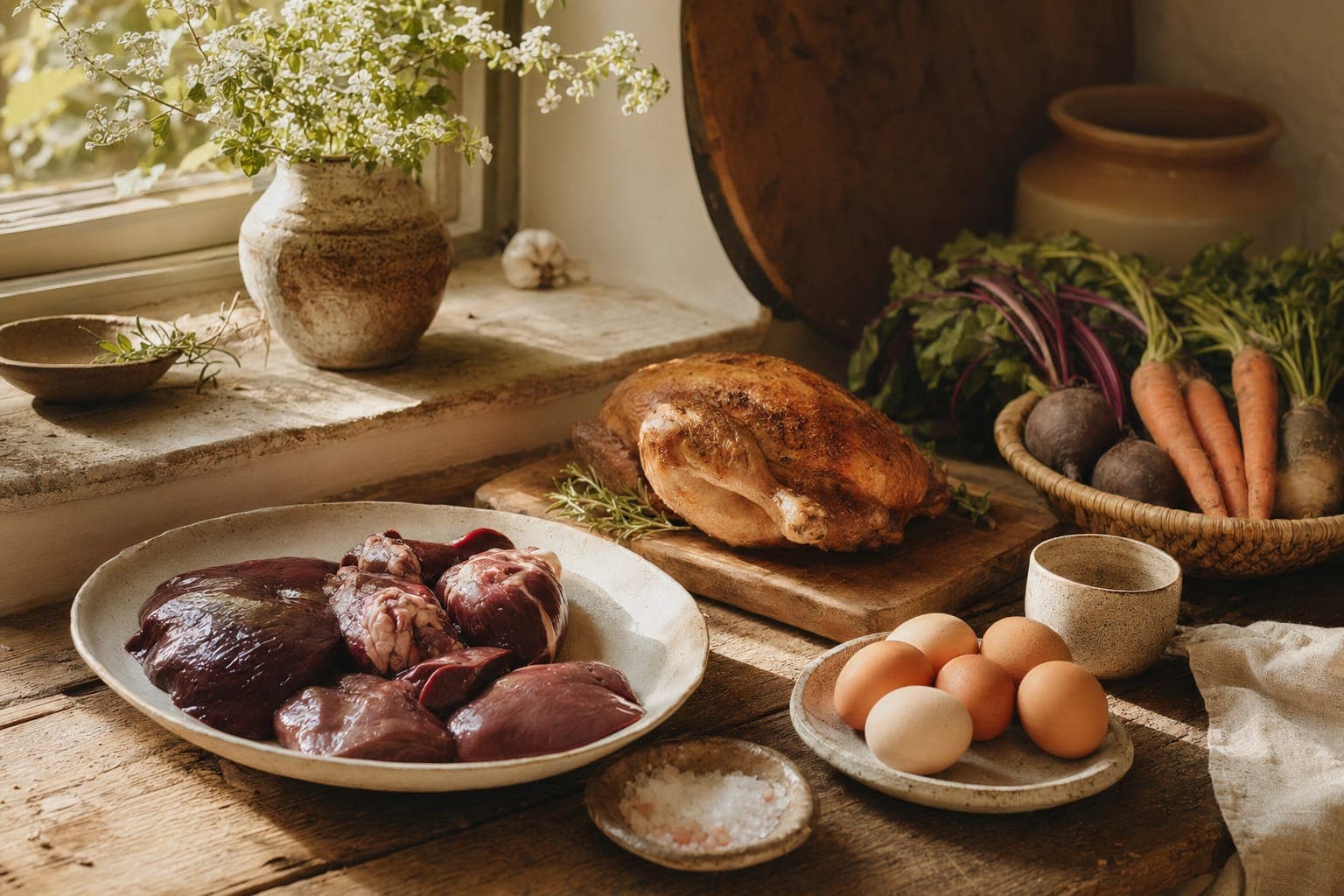
The Fourth Trimester: Why Mothers Need Organ Nutrition
Life stageThe fourth trimester is when mothers face severe nutrient depletion. Learn why organ nutrition is critical for recovery and what to eat.
How to Introduce Organ Meats to Children
Life stage