Why Women Need More Iron Than Men
The recommended daily allowance for iron is 18 mg for women, 8 mg for men. That number difference isn't arbitrary. Every month, you lose blood. Every month, you lose iron. And almost every woman is flying on fumes without realising it.
By Niall Kiddle, Founder, Organised

Reviewed by Pedro Rodrigues, Agronomist (farming and sourcing only) ·
6 min read · Published · Updated · 3 cited sources
Makers of the Organised Daily blend, a grass-fed beef organ supplement from regenerative UK farms
The recommended daily allowance for iron is 18 mg for women, 8 mg for men.1 That number difference isn't arbitrary. Every month, you lose blood. Every month, you lose iron. And almost every woman is flying on fumes without realising it.
You might not feel dramatically anaemic. You might just feel perpetually tired, brain fog so thick you can't think, mood swinging on a dime, your hair thinning, your nails brittle. All of those can be iron. And most of them go undiagnosed because your GP won't check ferritin levels unless you specifically ask.
The biology of blood loss and iron depletion
Menstruation is literally losing blood. During an average period, a woman loses between 30 and 40 mL of blood.2 That sounds small. It's not. Every 1 mL of blood contains roughly 0.5 mg of iron. Do the maths: a normal period costs you 15-20 mg of iron. You're trying to replace that from food while simultaneously needing 18 mg total daily. Most women fall short.
The body doesn't have a valve for iron conservation the way it does for some other minerals. Iron losses happen through sweat, skin shedding, gut turnover, and menstruation. There's no elegant feedback mechanism that says "right, stop losing iron, we're running low." Your body will happily deplete iron stores until you're genuinely anaemic, at which point symptoms become obvious and help is easier to get.
But there's a painful middle ground. Borderline deficiency. When your ferritin is low but your haemoglobin looks passable on a standard blood test. This state can persist for months or years before anyone calls it a problem.
You lose blood every month. That blood contains iron. Until you replace it deliberately, you're running a deficit. And a years-long deficit looks like chronic fatigue.
What ferritin actually is and why it matters
Ferritin is the storage form of iron. When iron levels are adequate, ferritin sits in your cells, ready to release iron when demand spikes. When iron is low, ferritin drops first. Your body will maintain haemoglobin (the protein that carries oxygen in blood) at the expense of ferritin stores. This is why you can feel exhausted while your doctor tells you your blood work looks fine.
For optimal energy, mood, and hair and nail health, ferritin should ideally sit above 70 ng/mL. Most labs will tell you that anything above 15 is "normal." That's technically true but clinically insufficient. A ferritin of 20 is not anaemic. It's not normal either. You will feel it.
Symptoms of low ferritin include chronic fatigue that doesn't improve with rest, brain fog, mood instability, hair thinning, brittle nails, restless legs, poor exercise recovery, and concentration problems. If you have three or more of these and nobody has checked your ferritin, push for the test.
The test itself is simple. It's a single blood marker. But it's often not done unless you specifically ask, because standard haemoglobin and haematocrit checks can appear normal even when iron stores are depleted.
Subclinical deficiency: the invisible drain
This is the state most menstruating women are in. Your haemoglobin measures 12.5 g/dL and the lab says "normal." Your ferritin is 22 ng/mL and they say "within range." But within range is not the same as optimal. And within range is not the same as where you feel good.
Subclinical deficiency is invisible because it doesn't trigger the alarm bells of clinical anaemia. But it's persistent. It erodes your energy day after day, month after month. It makes recovery from exercise slow. It makes your mood harder to stabilise. It makes you feel like you're just fundamentally tired and that's just how your body is.
The worst part is that subclinical deficiency compounds. If you're menstruating, losing iron monthly, and not replenishing aggressively, ferritin drops further. Over years, it can tip into clinical anaemia. But even before that point, the daily cost is real.
This is not in your head. Your iron is low. Your body is telling you the truth. You're just not being believed because the test didn't trigger the medical threshold.
Get life-stage nutrition guides, free
Two short reads a week on eating well through pregnancy, childhood and older age.
By signing up you agree to receive emails from us. No spam, unsubscribe anytime.
Heme iron versus non-heme iron
There are two forms of dietary iron. Heme iron comes from animal sources: meat, fish, organ meats. Your body absorbs between 15 and 35 per cent of heme iron. Non-heme iron comes from plant sources: spinach, lentils, pumpkin seeds, fortified cereals. Your body absorbs between 2 and 20 per cent of non-heme iron, and that's with optimal conditions like vitamin C present to enhance absorption.
This is not a moral or ethical judgment. It's biochemistry. If you need to raise ferritin, heme iron is simply more efficient. A 100g serving of beef liver contains 5-7 mg of bioavailable iron. Spinach has more total iron but most of it binds to oxalates and phytates, making it unavailable. You'd need to eat enormous quantities of spinach to match a small portion of liver.
If you're vegetarian or vegan, iron is more challenging. You can optimise non-heme absorption by pairing plant iron with vitamin C (citrus, tomatoes, peppers), avoiding calcium and caffeine at the same meal (they inhibit absorption), and possibly using cast iron cookware, which leaches small amounts of iron into acidic foods. But even optimally absorbed, plant iron cannot compete with heme iron on an intake-to-absorption basis.
If you're menstruating and iron-deficient, animal sources are not optional. They're the most efficient path to recovery.
1 of 9
Daily blend
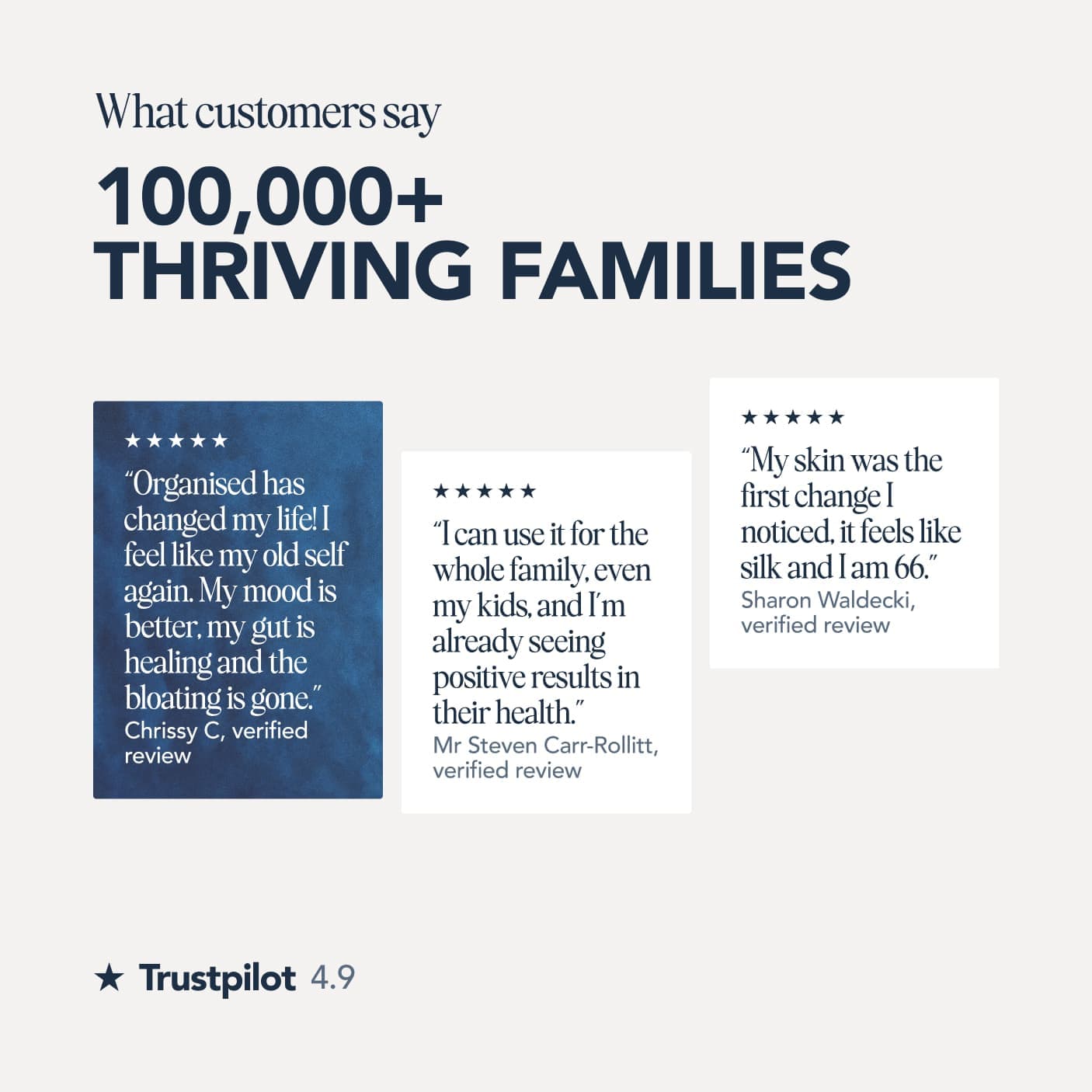
100,000+ thriving families4.9 on Trustpilot
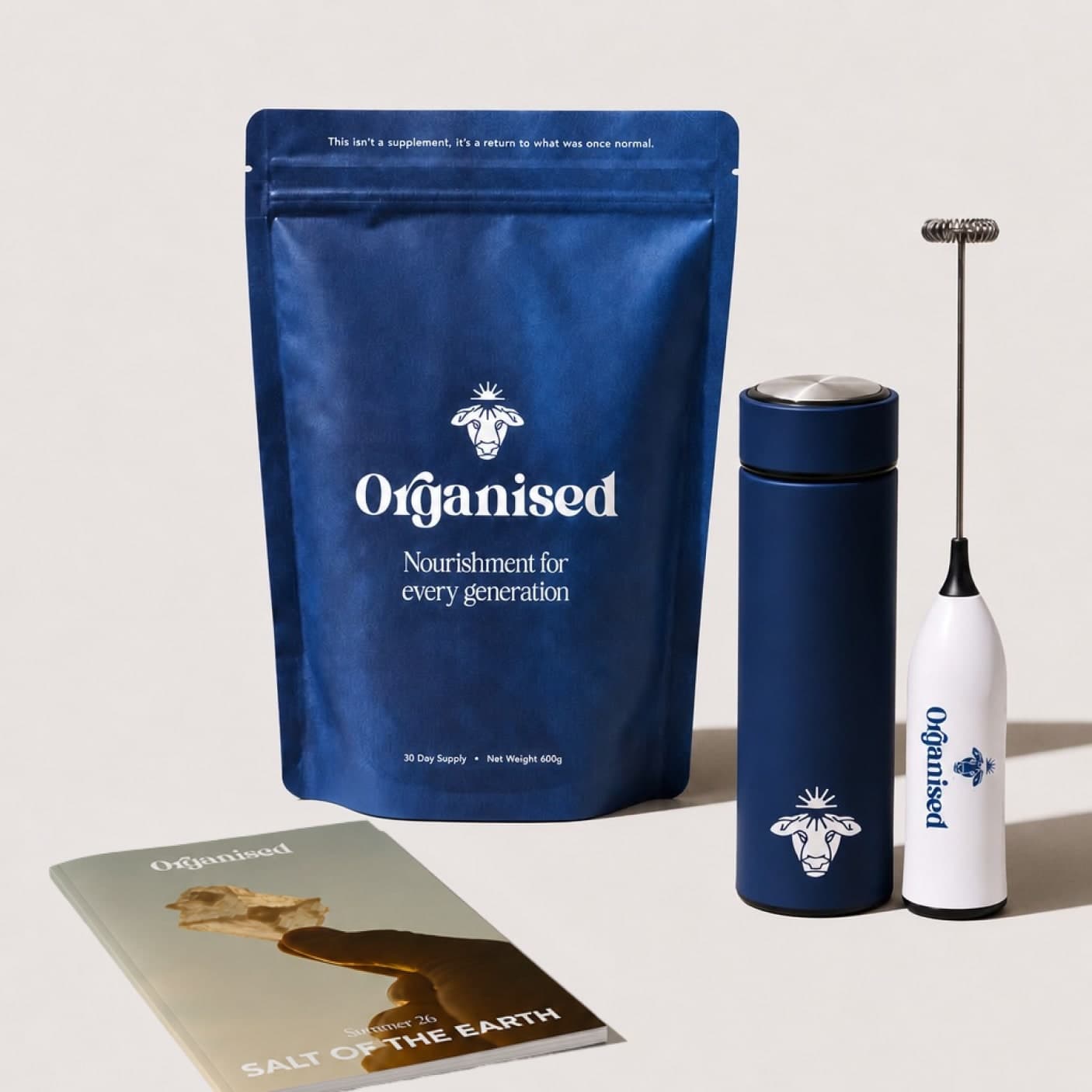
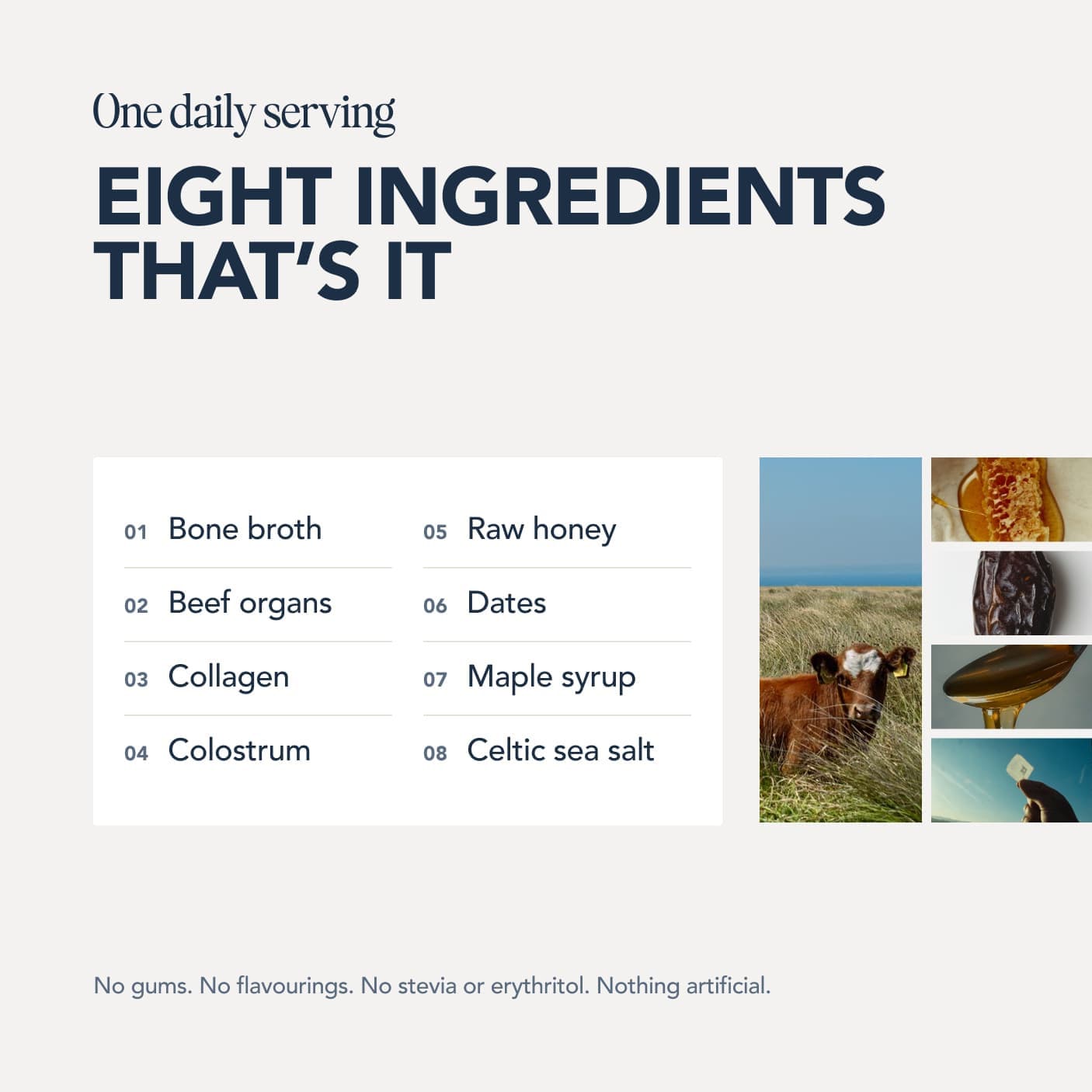
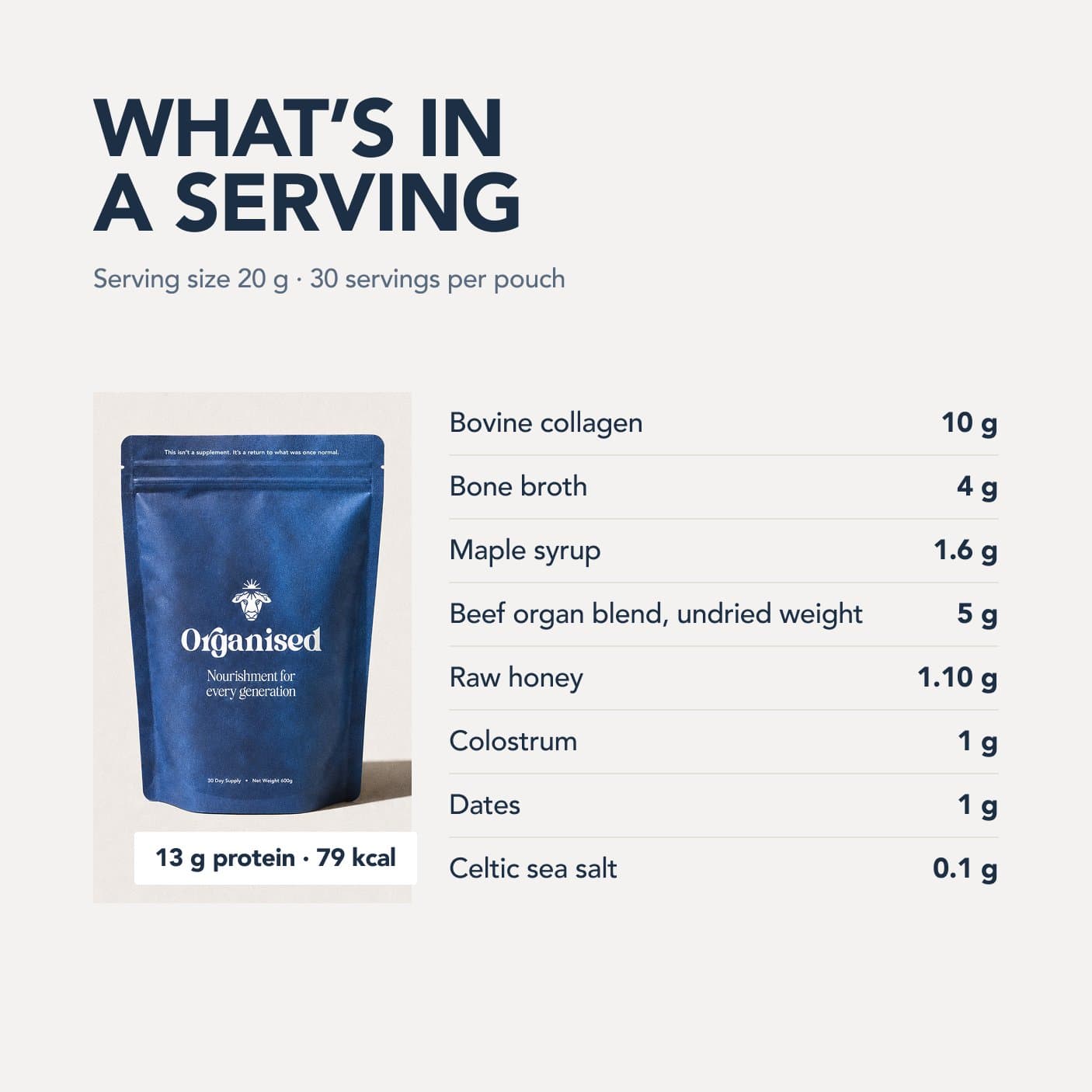
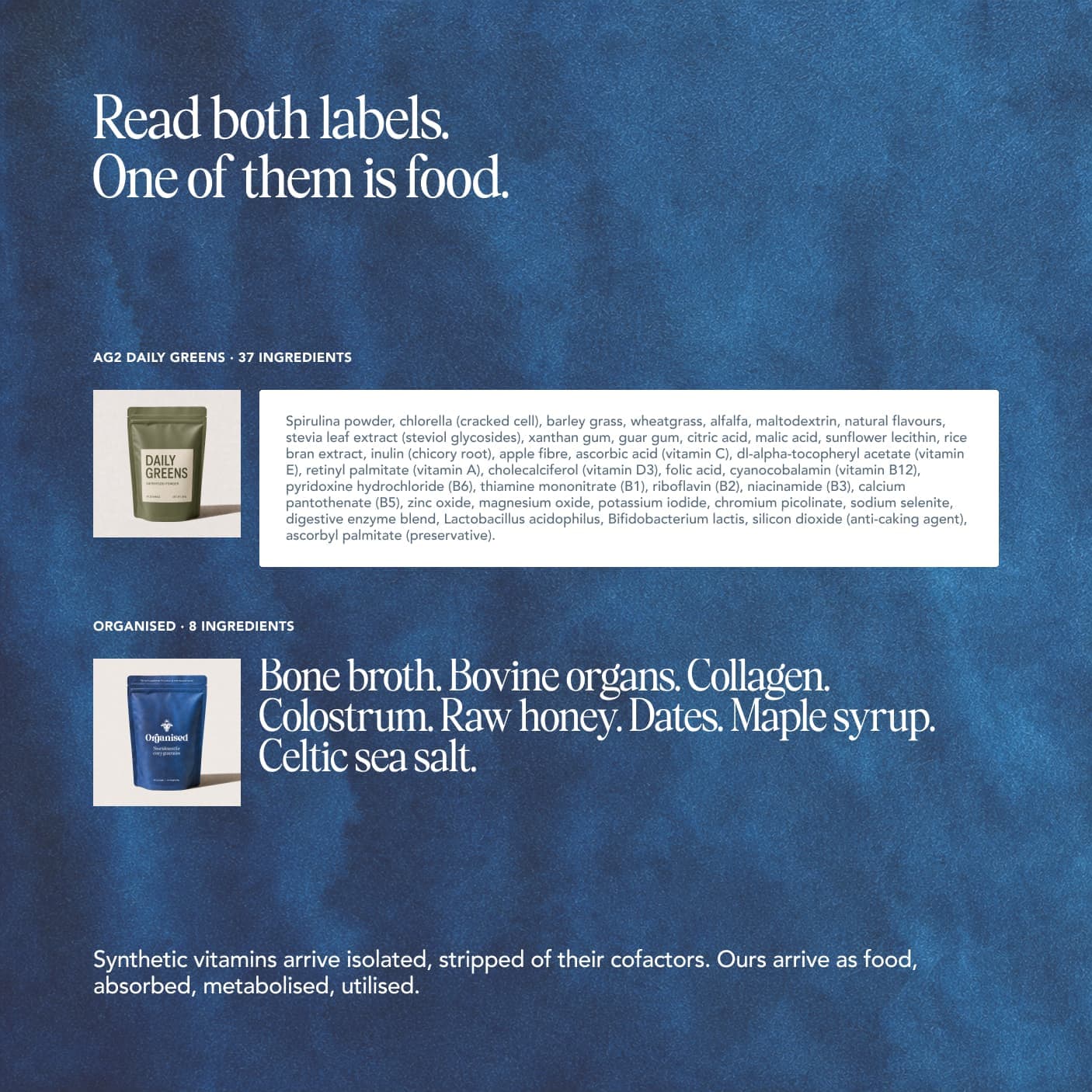
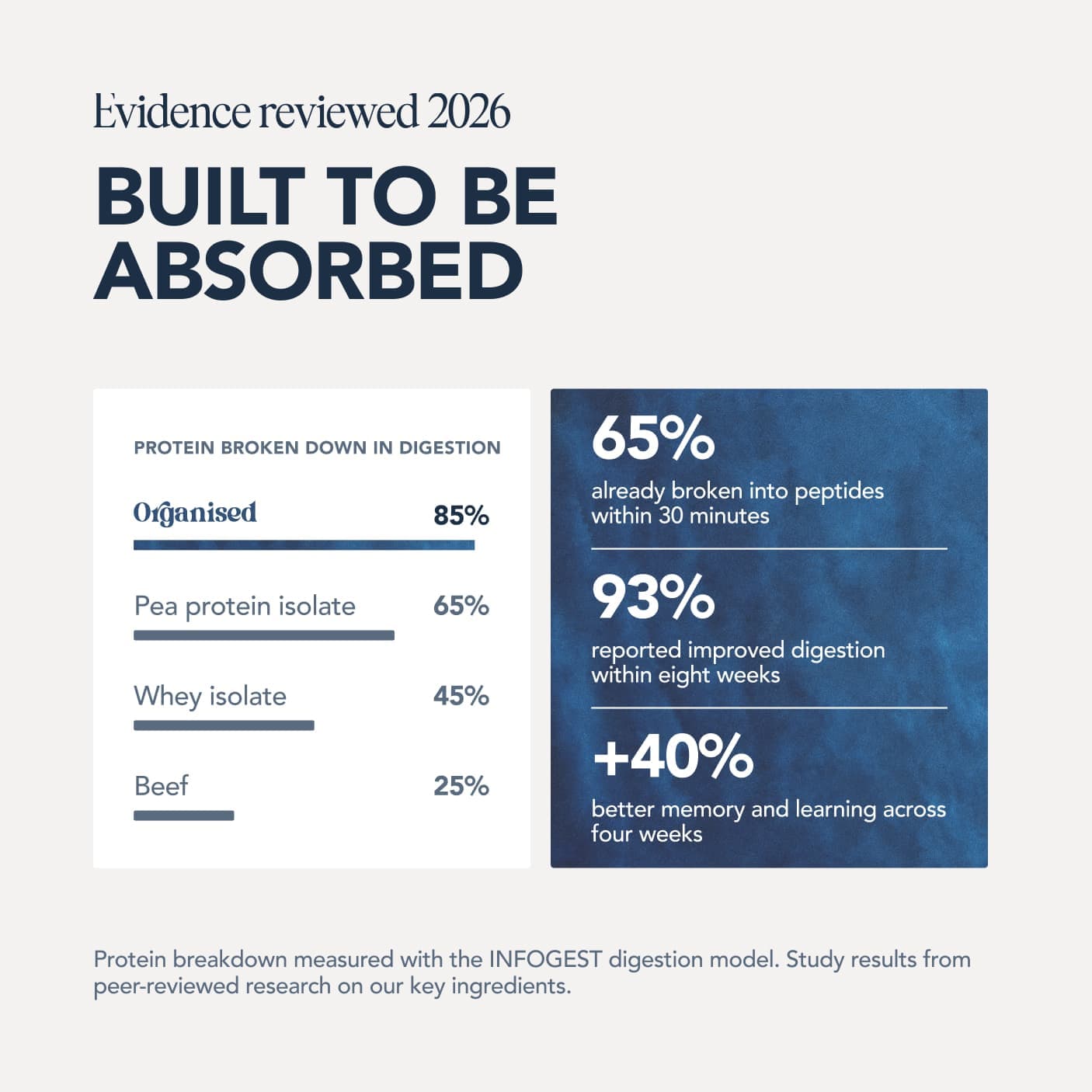
Eight real ingredients built around grass-fed beef organs, collagen and colostrum. Nothing synthetic added.
Free with your first order, worth £38. Plus £10 off the pouch with a subscription.
Free UK shipping · Made in England · 100 day money back guarantee on your first pouch · Skip, pause or cancel anytime
Where to find usable iron
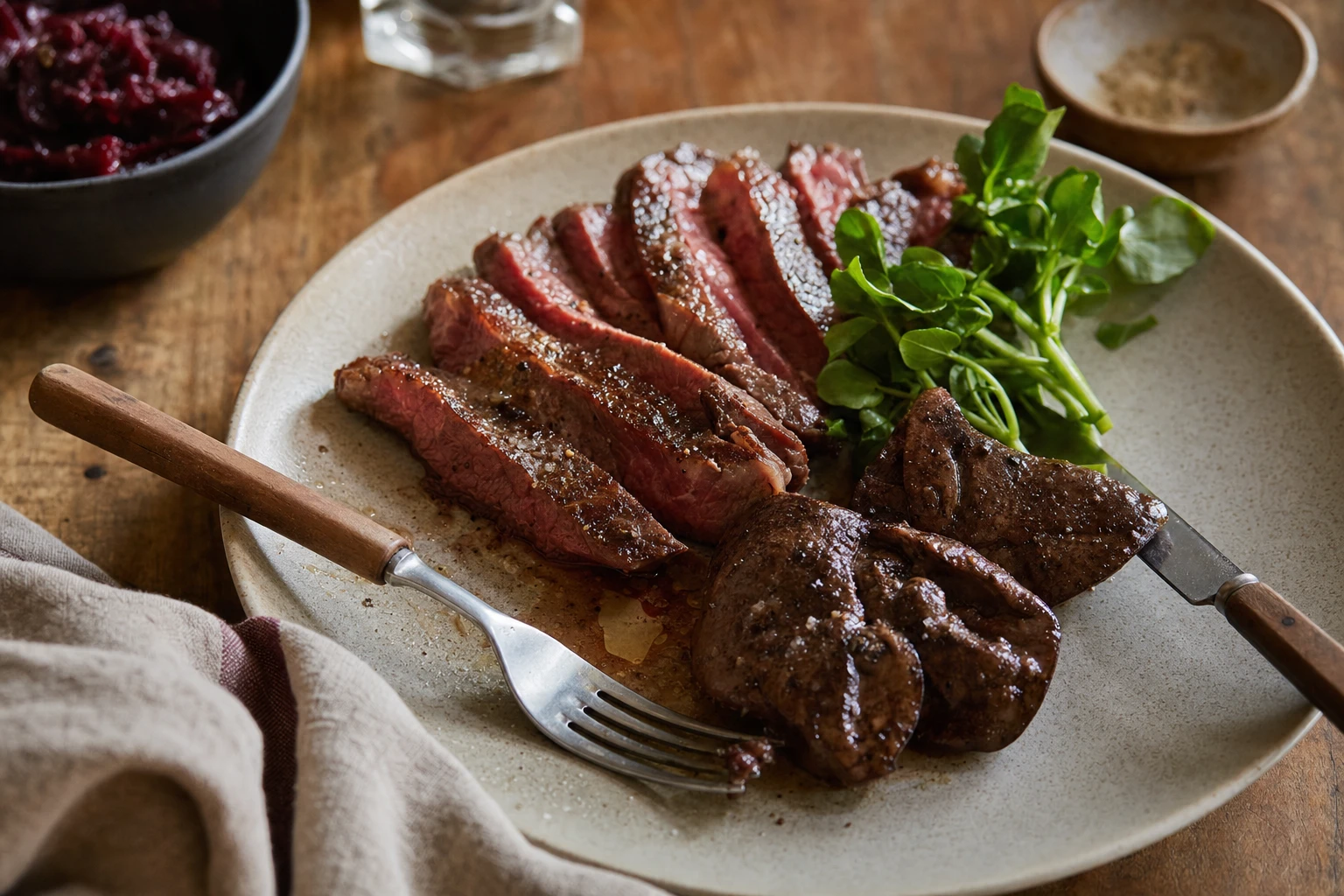
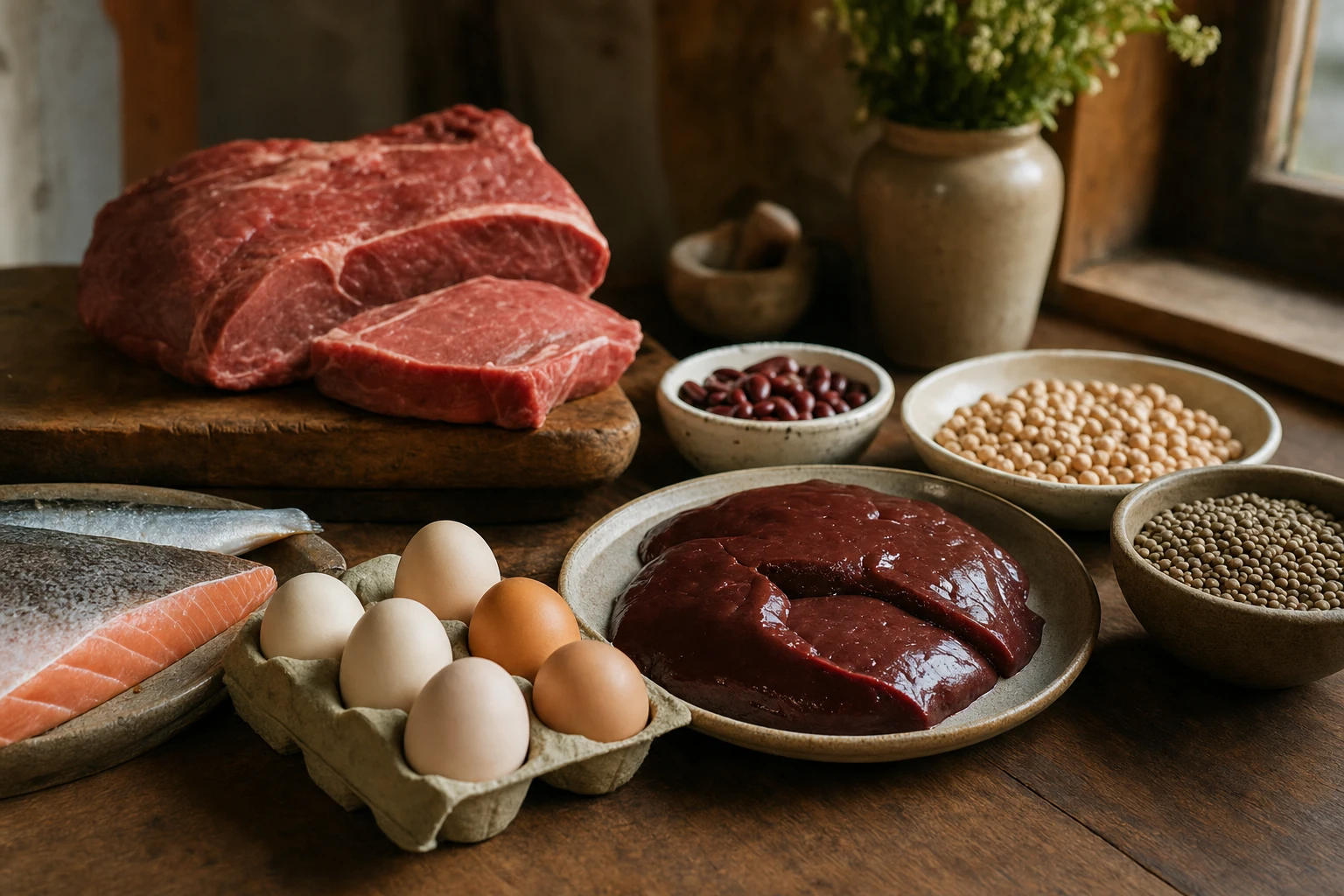
Start with organ meats. Beef liver contains 5-7 mg per 100g. Lamb liver is similar. Chicken liver is slightly lower but still excellent. If organ meats feel intimidating, start with liver pâté, which is easier to eat in quantity and has a smoother flavour.
Red meat follows. Beef, lamb, venison all contain 2-3 mg per 100g and are highly absorbable. A 150g serving of steak gives you most of your daily iron need from one meal.
Fish and shellfish are good supporting sources. Oysters and clams are particularly high. Salmon and sardines add iron alongside omega-3 fats.
Eggs contain modest amounts (1-2 mg per egg) but the yolk contains iron and other nutrients that support absorption, making them a useful everyday source.
Whole food plant sources (beans, lentils, seeds) can contribute but should not be your primary source if you're trying to reverse deficiency. They're useful supporting foods once your ferritin is restored.
If you want to raise your ferritin, hunt liver deliberately. Every week, eat liver or red meat consciously. Not as an afterthought. Not as part of a balanced meal. As the point of the meal.
Why plant-based iron strategies fail women
You will hear advice about pairing iron-rich plants with vitamin C to enhance absorption. Spinach with orange juice. Lentils with tomatoes. This sounds helpful. It's not helpful enough.
Even with vitamin C and optimal conditions, you're absorbing 2-20% of plant iron. You're absorbing 15-35% of heme iron. That's not a small difference. That's the difference between adequate and deficient.
A vegan or vegetarian woman managing menstrual iron loss faces a genuine challenge. Plant iron is insufficient. Most vegetarian women eating plant iron are deficient whether they realise it or not. The supplementation they need then comes with side effects and absorption barriers that whole food heme iron doesn't have.
If you're menstruating and need to raise ferritin, animal sources aren't optional. They're the most efficient solution. Liver, red meat, fish, shellfish. You can layer in plant iron as support, but the foundation must be heme iron.
The bottom line
You need more iron than men because you lose blood every month and your body cannot conserve it. Most women are deficient without knowing. If you're tired, foggy, or moody in ways that don't improve with rest and sleep, ask your GP to check your ferritin level.3 If it's below 70, increase your intake deliberately. Eat liver, red meat, fish. Skip the spinach salad as your primary iron strategy. Your body needs heme iron, and that comes from animals. Give it what it's asking for.
References
Every source below was checked on 27 August 2026. Each link was requested and read. Where a citation and its identifier disagreed, the citation was corrected to the record or the reference was deleted along with the sentence marker that pointed at it, and where the resolved paper turned out not to support the sentence, the sentence was cut back to what it does support. Borrowed authority is worse than none, because it looks like rigour.
- NIH Office of Dietary Supplements. Iron fact sheet for health professionals. ods.od.nih.gov/factsheets/Iron-HealthProfessional.
- NHS. Heavy periods (menorrhagia). nhs.uk/conditions/heavy-periods.
- NHS. Iron deficiency anaemia: overview. nhs.uk/conditions/iron-deficiency-anaemia.
Who wrote and reviewed this guide
Niall Kiddle
Author · Founder, Organised
Niall is the founder of Organised. He started the company in 2024 after fixing his own health the slow way: in 2022 he swapped a cupboard of synthetic supplements for real food, raw milk, organ meats, bone broth and honey, and felt the difference within months.
Areas of expertise: Ancestral nutrition, Organ meats, Whole-food supplementation, Gut health, Regenerative sourcing
Read Niall's full profile
Pedro Rodrigues
Reviewer · Agronomist (farming and sourcing only)
Pedro is the agronomist Organised works with on farming and sourcing. His job on the guides is to keep the science honest: he reviews what we publish about soil health, regenerative agriculture, grazing and the way food is actually produced.
Areas of expertise: Regenerative agriculture, Agronomy, Soil health, Grass-fed farming, Food sourcing
Reviewed this guide on
Read Pedro's full profileMore on women's health
View allBrowse the guides library
All guidesKeep reading
Life stage
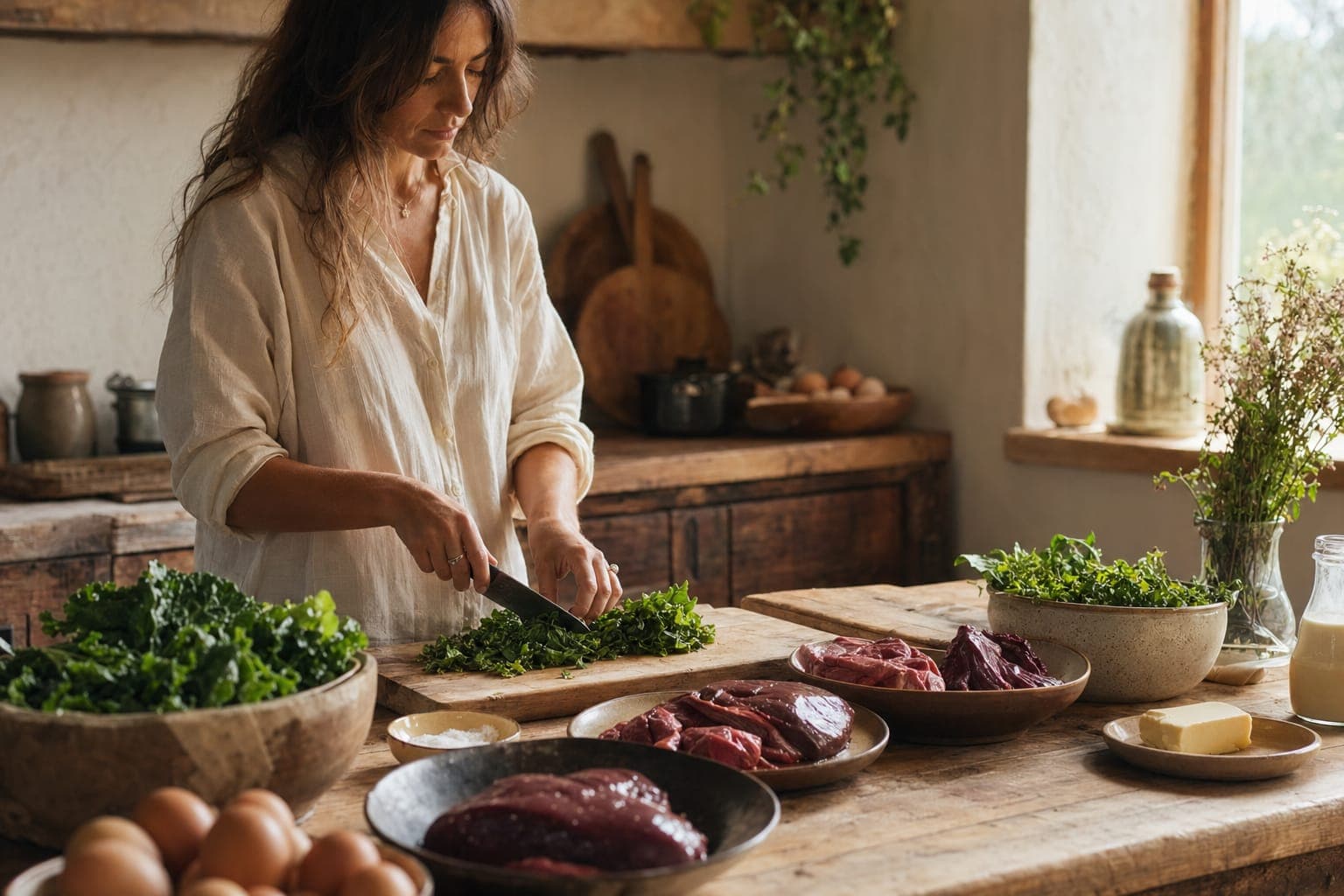
A Woman's Nutritional Guide: From Periods to Menopause
Nutritional needs change across a woman's life. Master iron, B vitamins, and fat-soluble vitamins to support your hormones from periods through menopause.
Life stage
Iron Needs During Pregnancy: Why Heme Iron Makes a Difference
Discover why your iron needs double in pregnancy and why heme iron from meat is far more absorbable than plant sources. A practical guide.
Life stage
Protein for Young Athletes: How Much Do Teenagers Actually Need?
Learn how much protein teenage athletes need, when to eat it, and which whole foods deliver it best for performance and recovery.
Real food, made effortless
Find my daily blendA few ways to use it
All recipes
How to Make Bone Marrow Butter
Roast grass-fed marrow bones, scoop the marrow, and mix with butter and herbs. A nutrient-dense spread with fat-soluble vitamins.
Matcha Latte Gummies with Collagen and Gelatine
Make visually stunning matcha latte gummies infused with collagen and gelatine. Simple recipe for gut-healing sweets you'll actually want to eat.
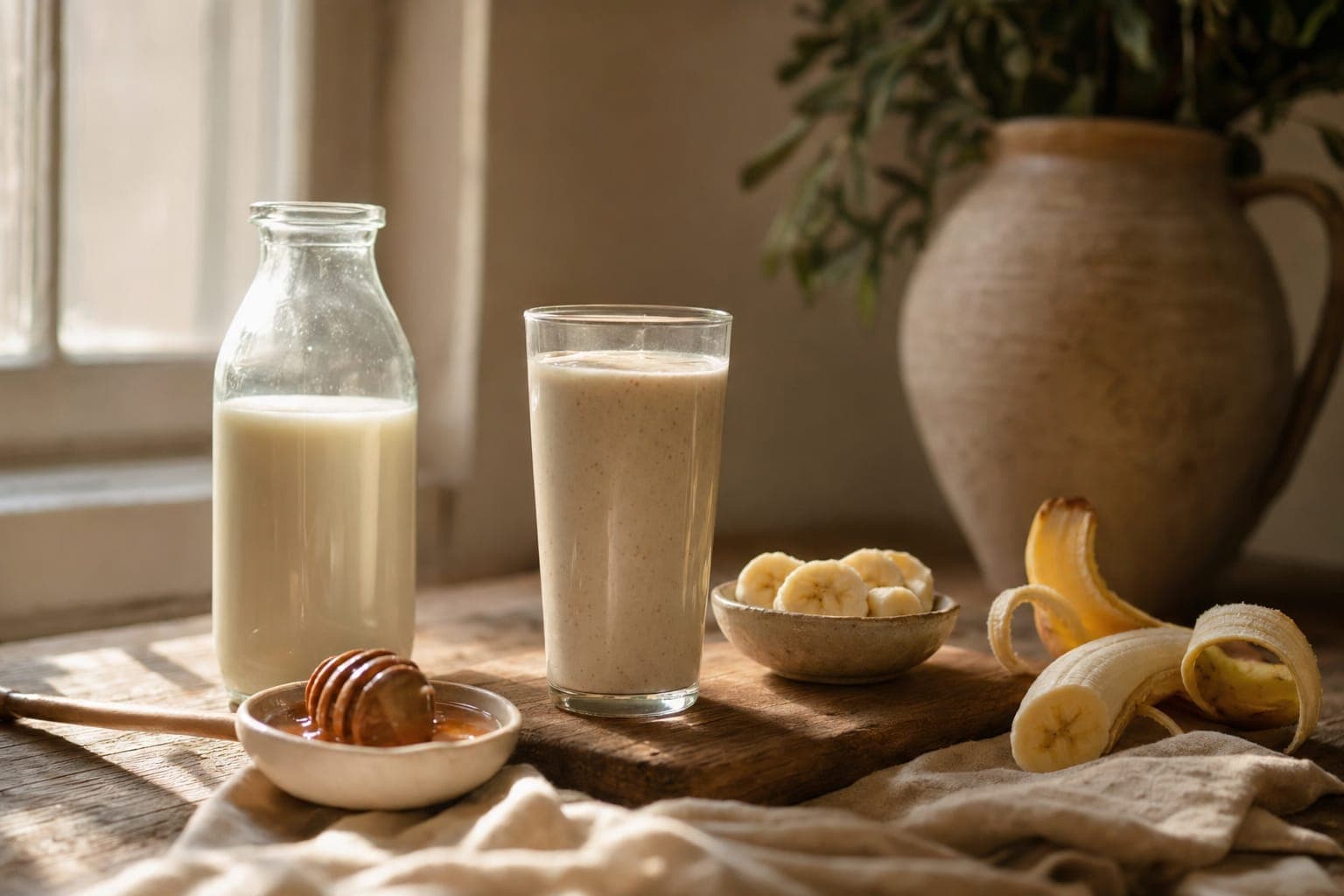
The Perfect Organised Morning Shake: Our Favourite Recipe
Our signature morning shake: Organised, raw milk, banana, honey. Simple, nourishing, and optimised for an empty stomach.


 Join over 100,000+ members
Build a better food system with us
The Organised community is thousands of people choosing real food and backing the farmers who grow it, all of us trying to leave the world a little better than we found it. If that is what you care about too, you belong here.