Zinc, Testosterone and Whole Food Nutrition for Men
Zinc is critical for testosterone synthesis. Discover the richest whole food sources and why bioavailability matters more than quantity.
 Niall Kiddle · Founder, OrganisedReviewed by Pedro Rodrigues6 min read · Updated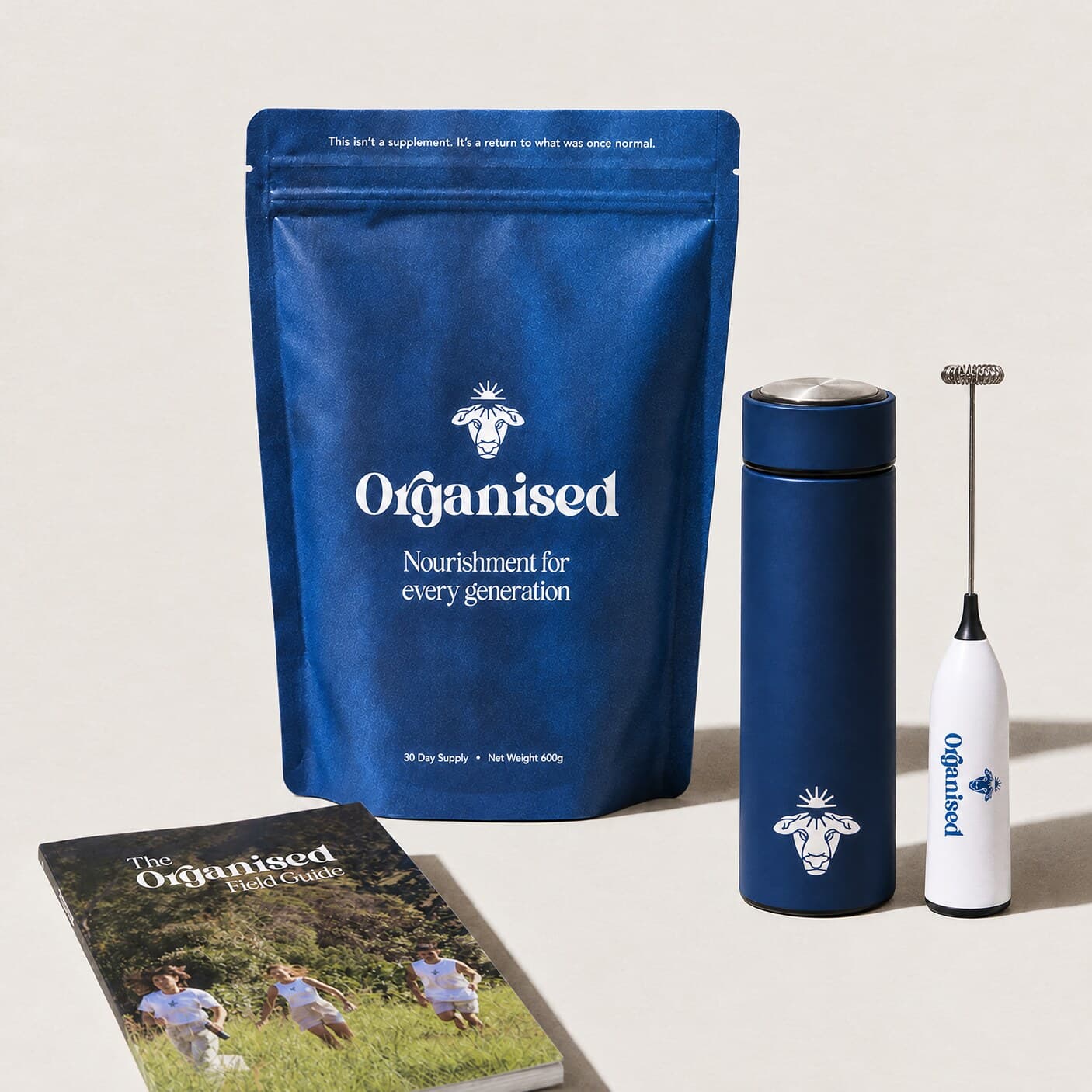
Daily blend
Beef organs. Liver, kidney, heart, lung and spleen from grass-fed, pasture raised cattle. The most nutrient dense foods on the planet, rich in vitamin A, B vitamins, iron, copper and choline.
4.9 on Trustpilot · 200,000+ thriving familiesYou've probably heard that zinc matters for testosterone. What you might not know is that most men aren't getting enough of it, and the sources they're relying on aren't delivering what they think.
The mineral crisis quietly affecting male health has less to do with what men are eating and more to do with what their bodies can actually absorb from modern food.
Why zinc matters more than you think
Zinc isn't just another mineral. It's foundational to male physiology in ways most men never consider. This mineral sits at the centre of over 300 enzymatic reactions in the body, but its role in testosterone synthesis is what makes it critical for male health.1
Without adequate zinc, the body cannot produce testosterone efficiently. It's not optional. It's not a nice-to-have. Testosterone production literally stalls when zinc levels drop below a certain threshold.
Beyond testosterone, zinc controls immune function, wound healing, protein synthesis, and DNA creation. It's required for sperm production, fertility, and sexual function. It influences how your brain processes emotions and decision-making.
Zinc deficiency doesn't announce itself loudly. It whispers. Fatigue. Slow recovery. Declining libido. Mood that feels flat or irritable. These are the signs most men miss until the damage is significant.
The zinc-testosterone connection
Here's the mechanism. Testosterone synthesis happens in the Leydig cells of the testes through a series of enzymatic steps. Every one of those steps requires zinc.2 Without it, the pathway stalls. T production drops. It's biochemistry, not theory.
The evidence is stark. Research consistently shows that men with low zinc have lower testosterone levels, and men with optimised zinc intake show improved testosterone production and sexual function.3 This isn't subtle. It's measurable.
But it doesn't stop there. Zinc also protects testosterone from aromatisation, the process where testosterone gets converted into oestrogen. Low zinc means more oestrogen dominance, the exact opposite of what you want.
Add to this that zinc also regulates the pituitary gland, which controls the hormone signalling that tells the body to make more testosterone in the first place, and you're looking at a mineral that controls testosterone through multiple pathways simultaneously.
Where modern men are falling short
The recommended daily intake for zinc is 11 mg for adult men.1 Sounds achievable. In reality, most modern diets fall short, and the gap is larger than you'd expect.
The problem isn't just quantity. It's the quality of the sources men are relying on. Zinc from processed foods, fortified cereals, and vegetable sources is poorly absorbed. The body doesn't use it efficiently. You can meet the numbers on paper and still be deficient at the cellular level.
Phytic acid, found in grains, legumes, and nuts, binds to zinc and prevents absorption.4 Men who are eating what they think is healthy (whole grains, beans, lots of vegetables) can actually be blocking their own zinc absorption without realising it.
Add poor digestive health, chronic stress, and alcohol consumption (all deplete zinc), and you've got a recipe for a deficiency that compounds over time.
A man can eat zinc and still not get it. Absorption is everything. A single oyster has more bioavailable zinc than a bowl of fortified cereal.
The richest whole food sources
If you want to optimise zinc intake, you need to know where it lives and why some sources work better than others.
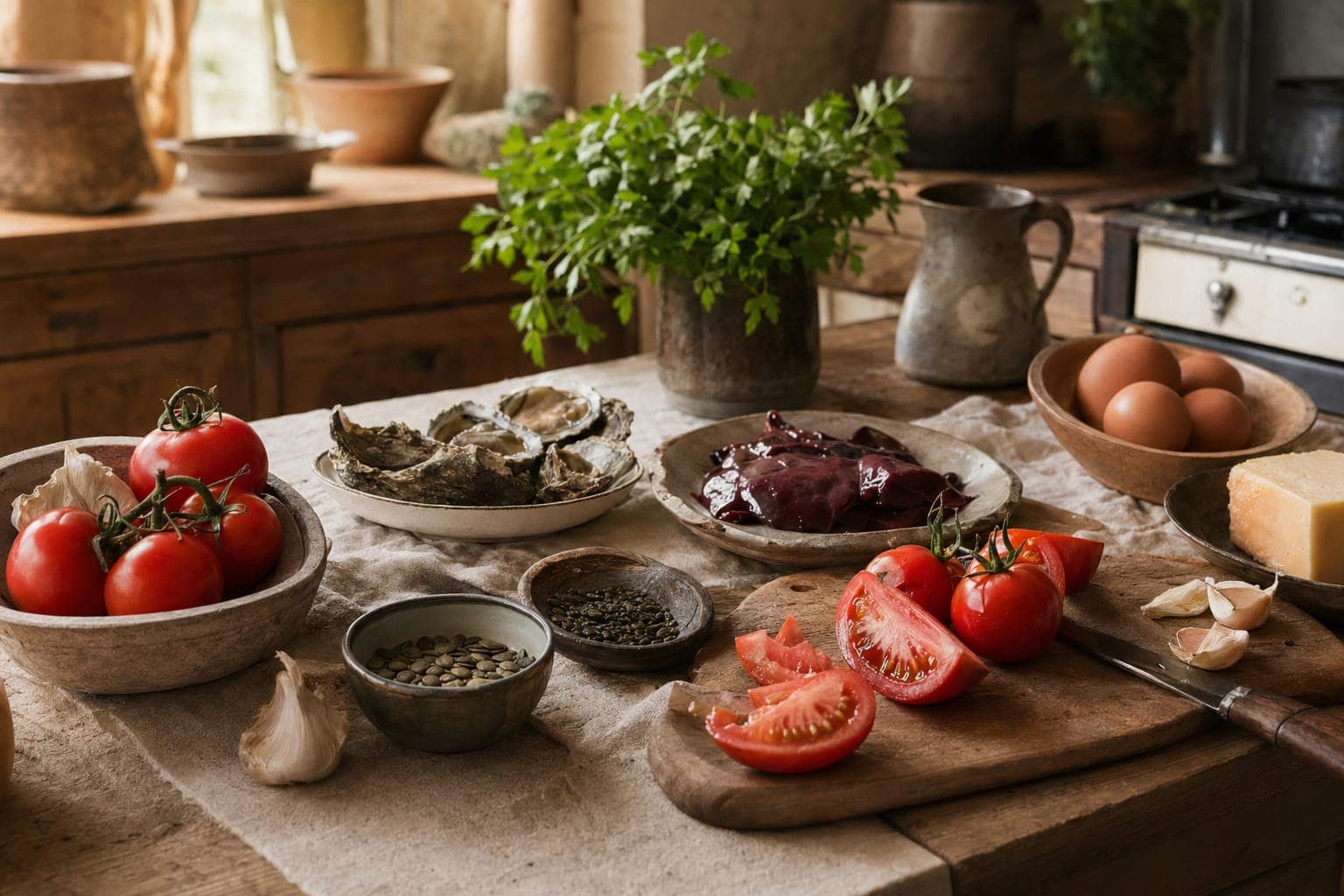
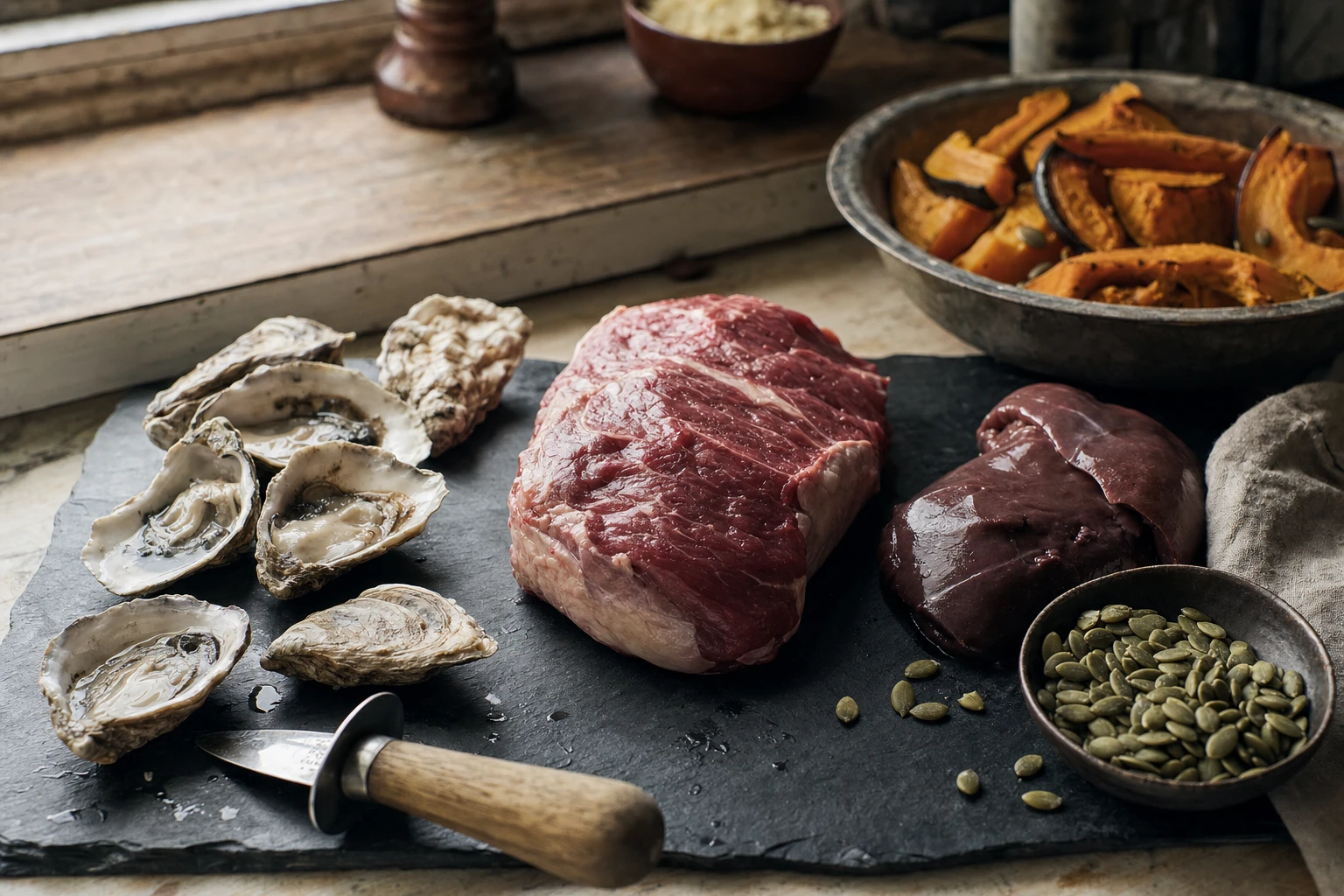
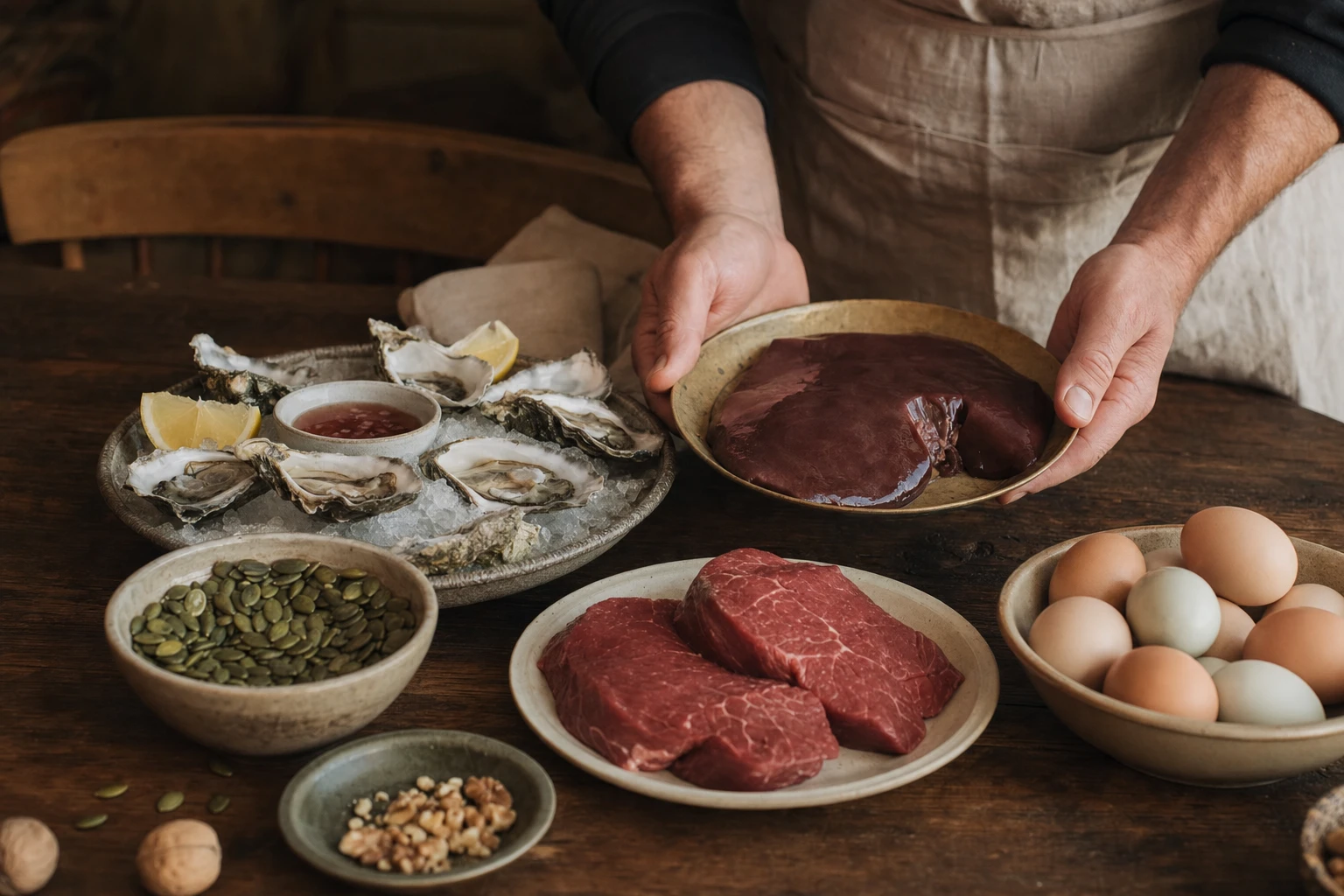
Oysters are the heavyweight champion. Six oysters can contain 30 mg of zinc, nearly triple the daily requirement in a single meal.1 The bioavailability is exceptional. This isn't about quantity alone. It's about how readily your body can use what you're consuming.
Red meat, particularly beef and lamb, contains zinc in a form your body recognises and absorbs efficiently. A 100-gram serving of beef provides around 8 mg. It's reliable, consistent, and highly bioavailable.
Organ meats are where zinc density becomes extraordinary. Beef liver, beef kidney, and lamb liver all contain significant zinc alongside other minerals that support its absorption. If you're serious about zinc status, organ meats should be a regular part of your diet.
Pumpkin seeds are the plant-based option, but understand what you're getting. A serving has zinc, but the phytic acid content means absorption is lower than animal sources. They're useful as part of a varied diet, not as a primary source.
- Oysters (6): 30 mg zinc, exceptional bioavailability
- Beef (100g): 8 to 10 mg zinc, highly absorbable
- Lamb liver (100g): 6 to 7 mg zinc, plus copper for balance
- Crab (100g): 6 to 7 mg zinc, marine mineral profile
- Pumpkin seeds (30g): 3 mg zinc, lower absorption due to phytic acid
- Cheese (30g): 0.5 to 1 mg zinc, useful addition to other sources
Get life-stage nutrition guides, free
Two short reads a week on eating well through pregnancy, childhood and older age.
Unsubscribe anytime.
Bioavailability is everything
This is where most nutrition advice falls apart. The mineral content on a label doesn't tell you what your body will actually absorb and use.
Animal sources consistently outperform plant sources for zinc absorption. This isn't opinion. It's measurable. The human digestive system is optimised for extracting and utilising zinc from animal products. The protein structure, the amino acids, the nutrient profile all work together to enhance absorption.
Plant sources are complicated by anti-nutrients, compounds that actually prevent mineral absorption. Phytic acid, tannins, and oxalates all bind to zinc and reduce how much gets into your bloodstream. Soaking, sprouting, and fermenting can help, but the bioavailability still lags behind animal sources.
This means a man relying on vegetable-based zinc sources might need to consume considerably more mineral just to match what he'd get from smaller portions of animal foods. It's inefficient.
The quality of your stomach acid and digestive enzymes also matters. Chronic stress, poor digestion, and low stomach acid all reduce zinc absorption, regardless of the source. A man with perfect zinc intake but compromised digestion is still deficient.
You can't supplement your way out of a poor diet. Whole food zinc, consumed as part of adequate protein and mineral intake, is the foundation. Everything else is just noise.
Testosterone production is not inevitable decline. A man's testosterone at 60 can be nearly identical to his testosterone at 40 if he eats adequate zinc, maintains healthy body composition, sleeps well, and manages stress. The difference between a man with vibrant energy and a man feeling depleted often comes down to zinc status and the hormonal consequences that follow.
Most men don't know their testosterone is low until they notice changes: loss of muscle despite training, reduced libido, fatigue that sleep doesn't fix, difficulty concentrating, mood flatness. By that point, it's often been declining for years. The prevention is simple: eat the foods that support testosterone production consistently. Oysters. Red meat. Pumpkin seeds. Eggs. These aren't exotic or expensive. They're the foods men have eaten for millennia to maintain strength and vitality.
The bottom line
Zinc matters for testosterone, but only the zinc your body can actually use. Focus on whole food sources, prioritise animal products where possible, and build a diet around foods that are zinc-rich and highly bioavailable.
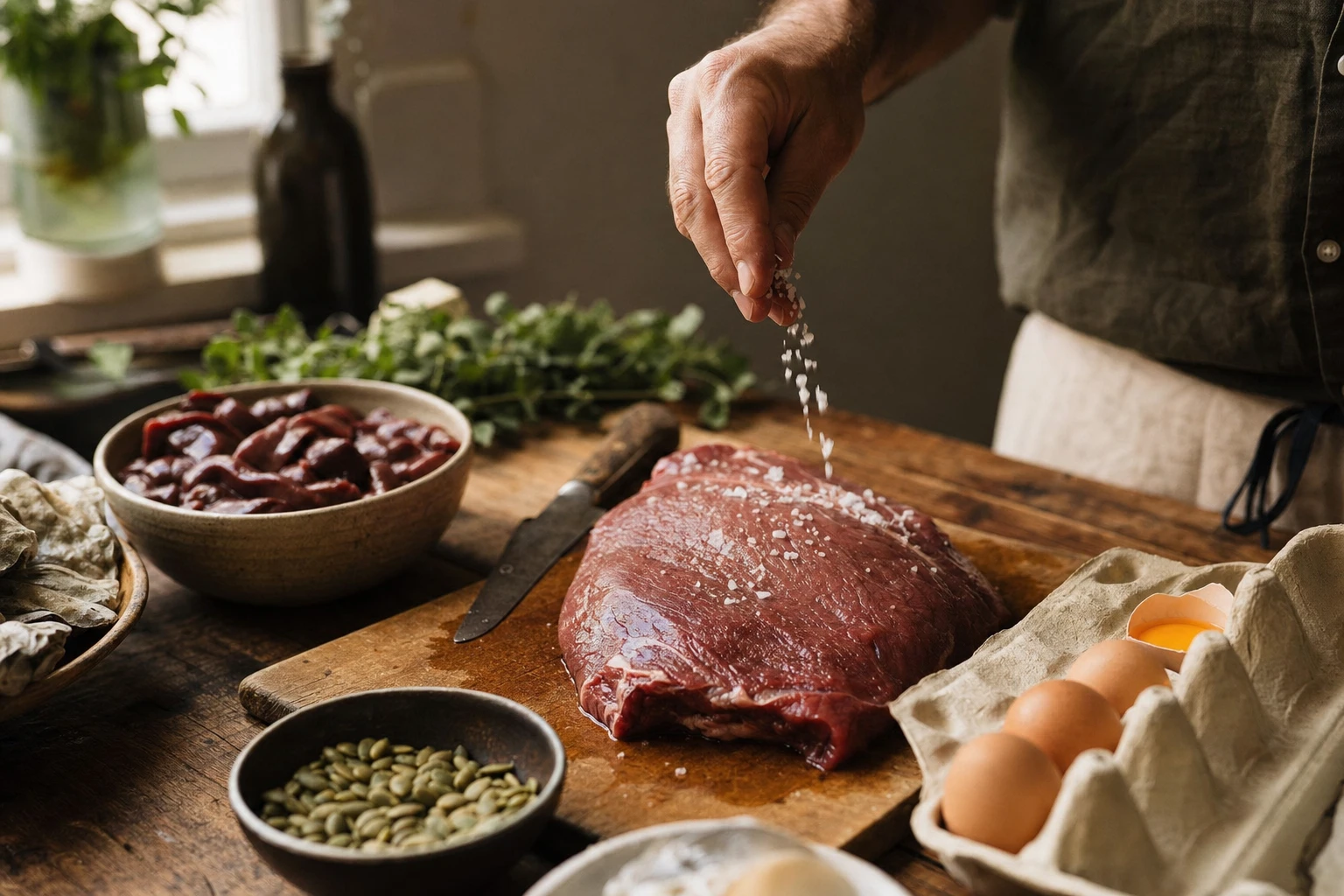
Oysters, red meat, and organ meats should be regular features in a man's diet. Not as supplements. As food. The mineral is just one benefit. The protein, the other micronutrients, and the nutrient density of these foods all contribute to hormonal health and male vitality.
Get the basics right. Eat real food. Let your body do the work.
References
Every source below was checked on 27 August 2026. Each PubMed, PMC and DOI identifier was resolved against NCBI or Crossref, and what it opens is printed under the citation, so you can see the link goes where the citation says without leaving the page. Where a citation and its identifier disagreed, the citation was corrected to the record or the reference was deleted along with the sentence marker that pointed at it, and where the resolved paper turned out not to support the sentence, the sentence was cut back to what it does support. Borrowed authority is worse than none, because it looks like rigour.
- National Institutes of Health Office of Dietary Supplements. Zinc (Health Professional Fact Sheet). NIH ODS Zinc.
- Fallah A et al. Zinc is an Essential Element for Male Fertility: A Review of Zn Roles in Men's Health, Germination, Sperm Quality, and Fertilization. J Reprod Infertil. PMC6010824.Checked 27 August 2026: PMC6010824 opens Fallah A, Mohammad-Hasani A, Colagar AH, Zinc is an Essential Element for Male Fertility: A Review of Zn Roles in Men's Health, Germination, Sperm Quality, and Fertilization. J Reprod Infertil 2018;19(2):69-81. PubMed indexes it as: Review.The authors' own declaration, from the record: Conflict of Interest The authors have declared that no competing interests exist. Financial Disclosure: The authors declared no conflicts of interests.
- Te L et al. Correlation between serum zinc and testosterone: A systematic review. J Trace Elem Med Biol. PubMed PMID: 36577241.Checked 27 August 2026: PMID 36577241 opens Te L, Liu J, Ma J et al, Correlation between serum zinc and testosterone: A systematic review. J Trace Elem Med Biol 2023;76:127124. PubMed indexes it as: Systematic Review.The authors' own declaration, from the record: Conflict of interest The authors have no relevant financial or non-financial interests to disclose.
- Gibson RS et al. A review of phytate, iron, zinc, and calcium concentrations in plant-based complementary foods. Food Nutr Bull. PubMed PMID: 20715598.Checked 27 August 2026: PMID 20715598 opens Gibson RS, Bailey KB, Gibbs M et al, A review of phytate, iron, zinc, and calcium concentrations in plant-based complementary foods used in low-income countries and implications for bioavailability. Food Nutr Bull 2010;31(2 Suppl):S134-46. PubMed indexes it as: Review.
Corrections
What this page used to say, and why it no longer says it. Corrections are dated and are never removed, because deleting the record of an error is a second error. Every guide we have corrected is listed at our corrections log.
- 27 August 2026. Reference 2 linked a paper by Allouche-Fitoussi and Breitbart under Fallah's name. It now links Fallah's own record.
- 27 August 2026. “Every one of those steps requires zinc” was removed. The cited review is about male fertility and does not describe the steroid synthesis pathway step by step. The sentence now says what the review and the systematic review beside it support.
Who wrote and reviewed this guide
Niall Kiddle
Author · Founder, Organised
Niall is the founder of Organised. He started the company in 2024 after fixing his own health the slow way: in 2022 he swapped a cupboard of synthetic supplements for real food, raw milk, organ meats, bone broth and honey, and felt the difference within months.
Areas of expertise: Ancestral nutrition, Organ meats, Whole-food supplementation, Gut health, Regenerative sourcing
Read Niall's full profile
Pedro Rodrigues
Reviewer · Agronomist (farming and sourcing only)
Pedro is the agronomist Organised works with on farming and sourcing. His job on the guides is to keep the science honest: he reviews what we publish about soil health, regenerative agriculture, grazing and the way food is actually produced.
Areas of expertise: Regenerative agriculture, Agronomy, Soil health, Grass-fed farming, Food sourcing
Reviewed this guide on
Read Pedro's full profilePublished · Updated
4 cited sourcesMakers of the Organised Daily blend, a grass-fed beef organ supplement from regenerative UK farms

Daily blend
Read next