Colostrum vs Glutamine for Gut Health
Colostrum and glutamine both have reputations for healing the gut. But they're doing completely different jobs. One feeds the cells lining your intestine. The other defends them. They're not competing. They're complementary.

By Niall Kiddle, Founder, Organised

Reviewed by Pedro Rodrigues, Agronomist (farming and sourcing only) ·
4 min read · Published · Updated · 3 cited sources
Makers of the Organised Daily blend, a grass-fed beef organ supplement from regenerative UK farms
The confusion happens because both are amino acid products marketed for gut health. But amino acid profiles and immune compounds are not the same thing. Understanding the difference changes how you approach gut repair.
They work through different mechanisms
Glutamine is a conditionally essential amino acid. Your body produces it normally, but during illness, stress, or intense training, demand exceeds supply. Your intestinal cells, particularly the enterocytes that line your gut, depend heavily on glutamine as their primary fuel source.1 They prefer glutamine over glucose.
Colostrum is a food fraction containing antibodies, growth factors, and immune compounds. It doesn't fuel enterocytes. It defends them. It tells your immune system to calm down, it provides antibodies that neutralise pathogens, and it triggers repair signalling in damaged tissue.
The mechanisms are fundamentally different. Glutamine is cellular fuel. Colostrum is immune signalling and growth stimulus.
Glutamine fuels intestinal cells. Colostrum signals repair and provides immune protection. Different mechanisms, different outcomes.
What glutamine actually does
When your intestinal barrier is damaged or permeability is high, enterocytes need energy to repair tight junctions and rebuild the barrier. Glutamine provides that energy more efficiently than other amino acids. It crosses the blood-brain barrier. It supports both gut and immune function.
If you have a leaky gut from food sensitivities, dysbiosis, or chronic inflammation, supplementing glutamine gives intestinal cells the fuel they need to rebuild. It works best when inflammation is being addressed elsewhere. If you're still eating foods that trigger inflammation, glutamine alone won't fix the problem.
Glutamine also promotes the growth of beneficial bacteria. It's a fuel source for Bifidobacterium and other short-chain fatty acid producing bacteria. When you supplement glutamine, you're not just feeding your gut cells. You're feeding the bacteria that support your immune system.
The drawback is that glutamine alone doesn't reduce inflammation or directly repair immune function. If you have active infections or pathogenic bacteria dominating your microbiome, glutamine fuels them too. It's the basic building block, not the targeted immune intervention.
What colostrum actually does
Colostrum contains immunoglobulin G (IgG) and growth factors like insulin-like growth factor 1 (IGF-1) and transforming growth factor beta (TGF-beta).2 IgG antibodies tag pathogens and damaged intestinal cells for removal. Growth factors signal to intestinal cells to proliferate and repair.
If you have dysbiosis or an active infection compromising your intestinal barrier, colostrum provides direct immune defence. The antibodies in colostrum are specifically designed to protect a newborn calf against pathogens in its environment. Humans aren't calves, but the immune principles transfer. IgG antibodies provide broad-spectrum immune recognition.
Colostrum also contains lactoferrin, which sequestres iron and suppresses pathogenic bacteria.3 Combined with IgG, this creates an environment where beneficial bacteria thrive and pathogens struggle.
The growth factors in colostrum directly stimulate intestinal repair. Unlike glutamine, which is a passive fuel source, growth factors actively signal tissue to rebuild. If your intestine is severely damaged, colostrum's growth factors directly address that.
Glutamine fuels repair. Colostrum signals repair. You might need both if damage is severe.
Get guides like this, free
Two short reads a week on real food, nutrition, and the farms behind it.
By signing up you agree to receive emails from us. No spam, unsubscribe anytime.
Why both matter
A truly compromised gut needs both inputs. The immune defence from colostrum keeps pathogenic bacteria in check. The fuel from glutamine allows enterocytes to actually rebuild. The growth factors from colostrum tell cells to replicate. Together, they address the complete problem.
If you only use glutamine without addressing the pathogenic burden or chronic inflammation, you're feeding a damaged system without defending it. If you only use colostrum without providing the fuel for actual repair, you're signalling rebuilding without providing the raw materials.
A complete gut healing programme includes colostrum for immune defence and repair signalling, glutamine for cellular fuel, and actual dietary change to remove the inflammatory triggers. Supplements amplify healing that's already being supported by food choices and lifestyle change.


1 of 9
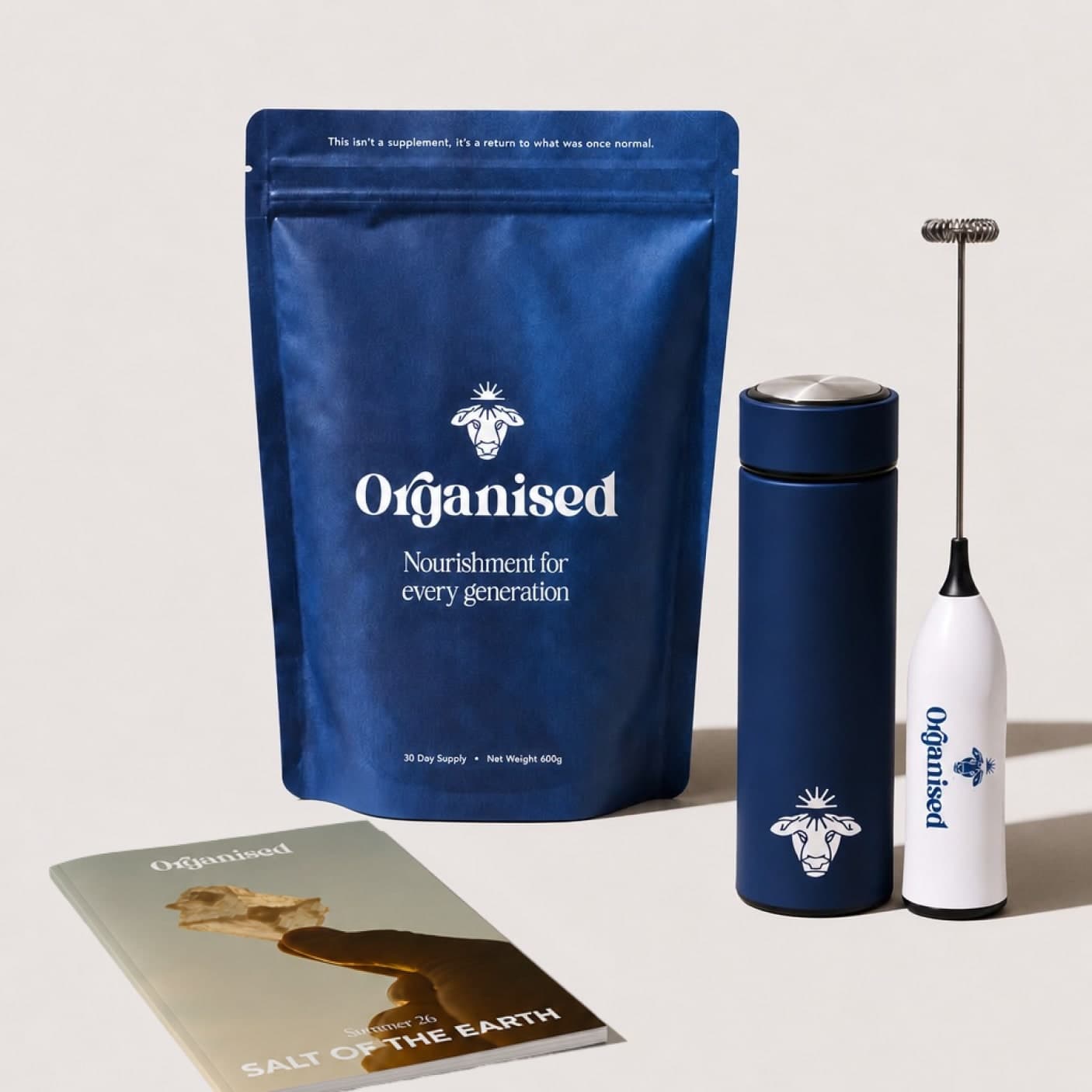
Daily blend
100,000+ thriving families4.9 on Trustpilot
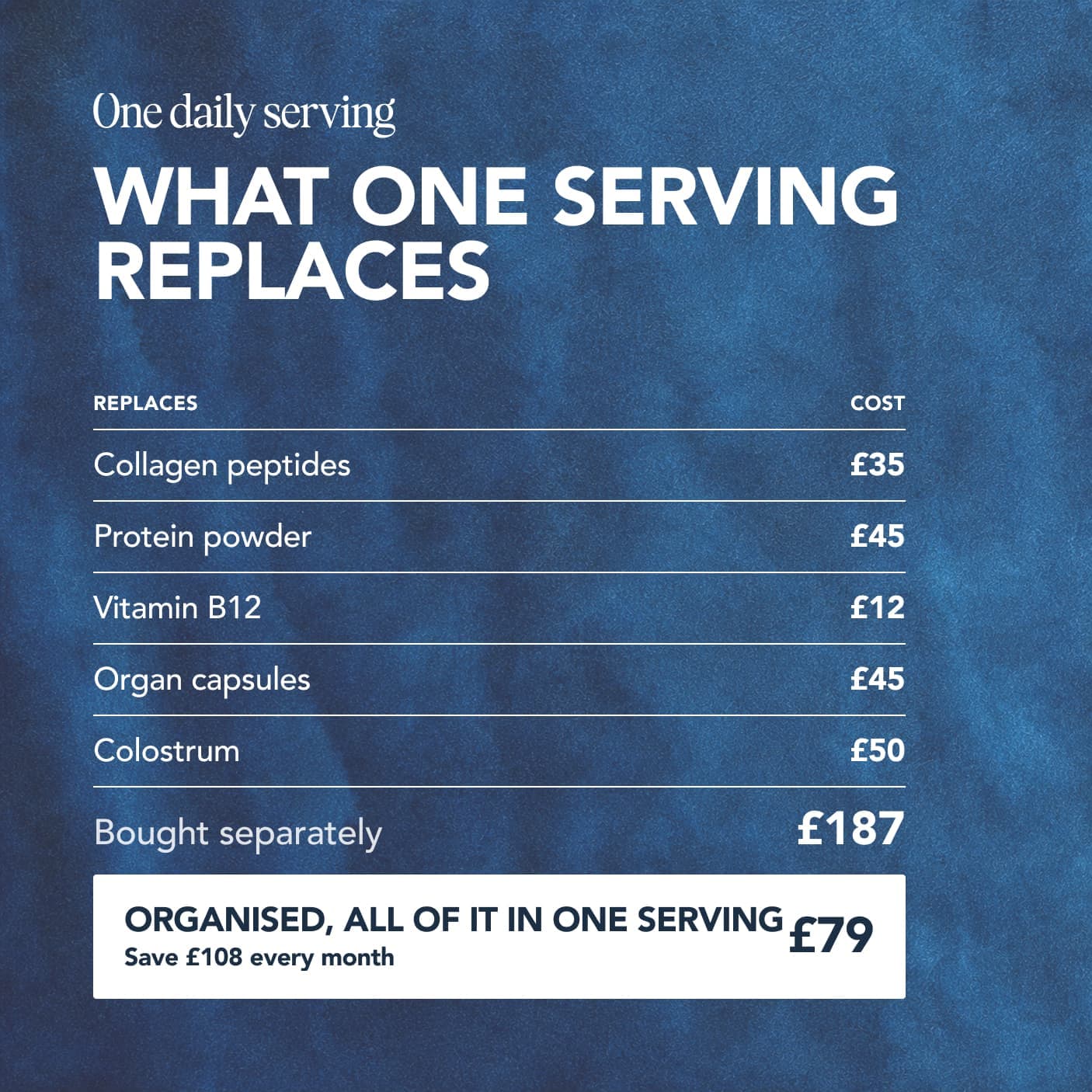
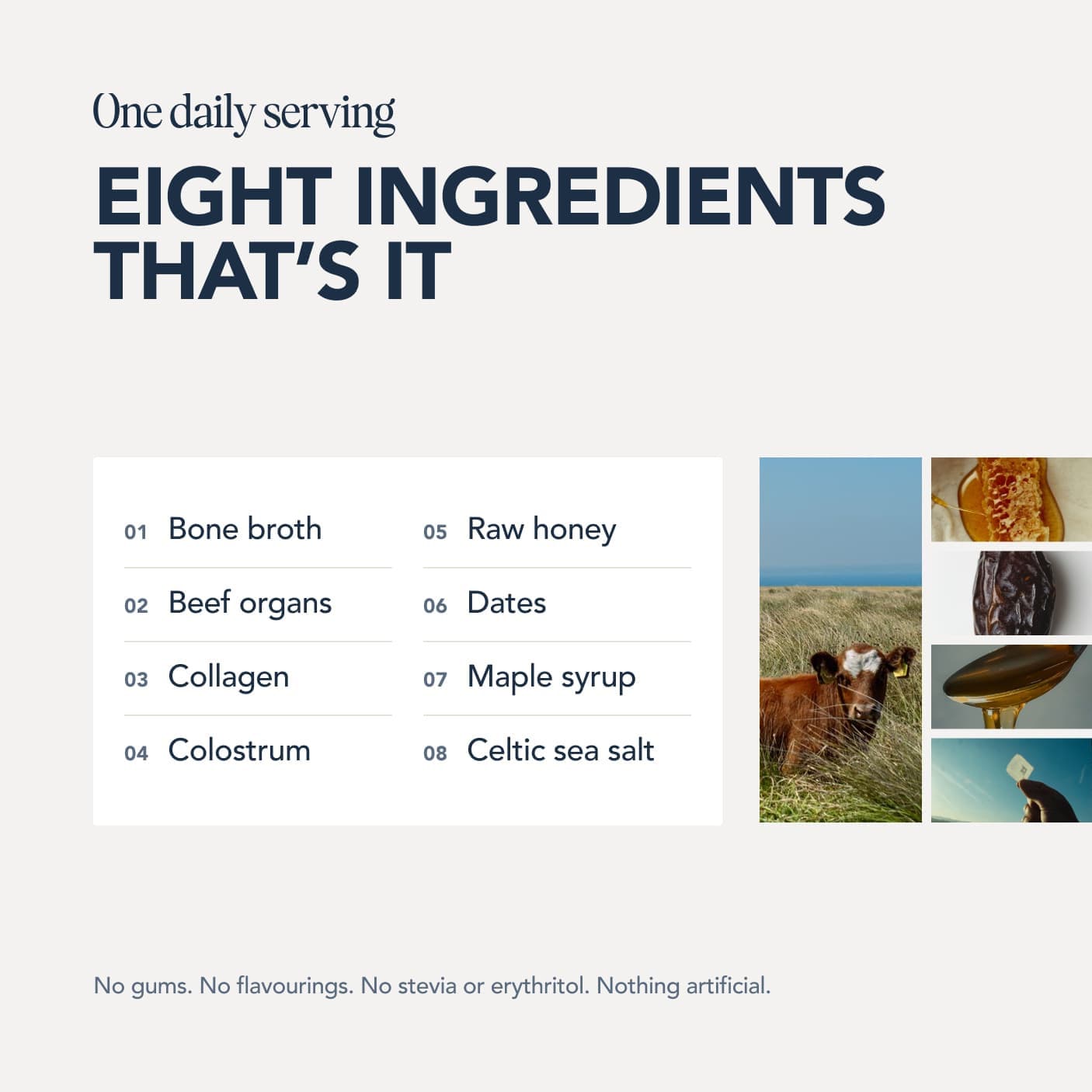
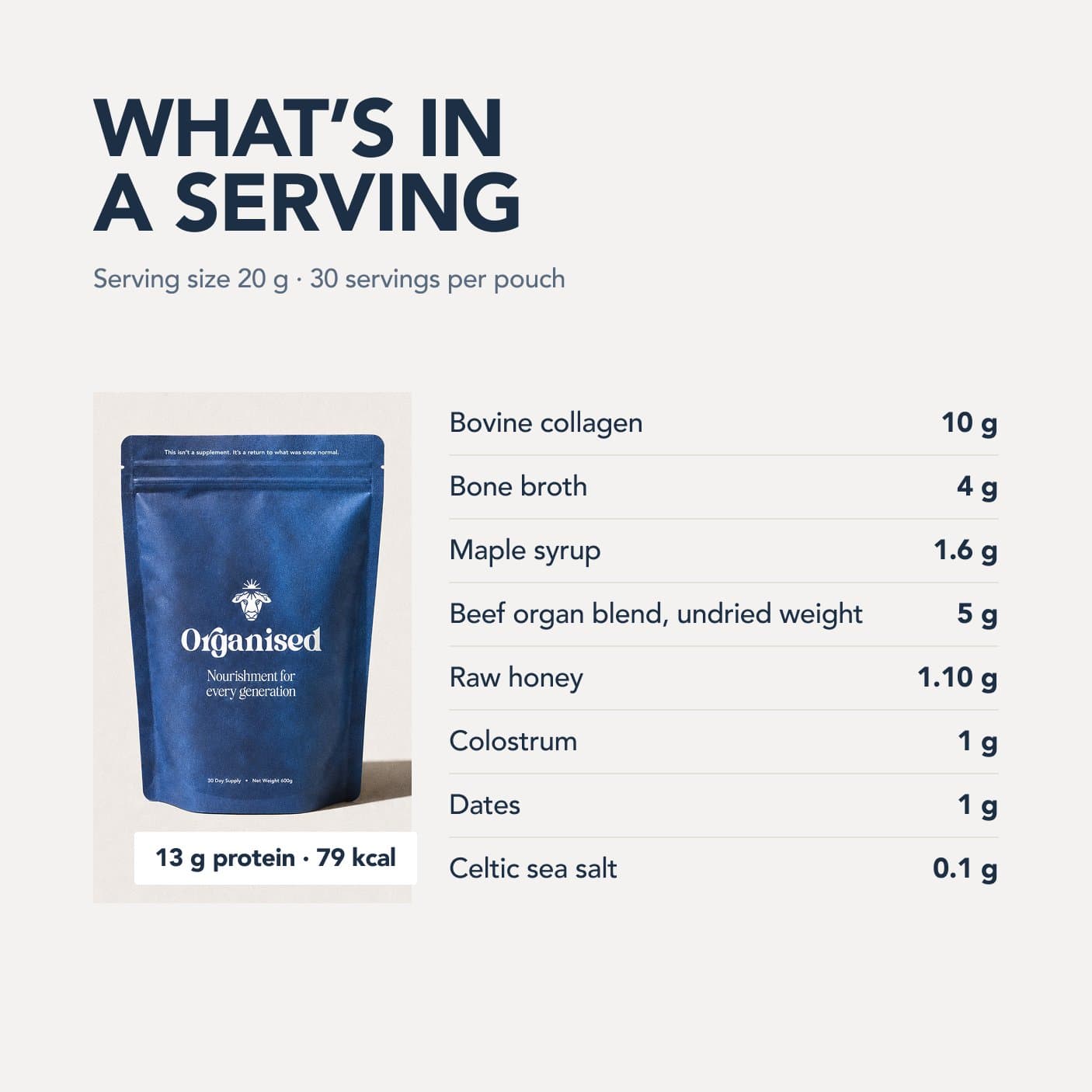
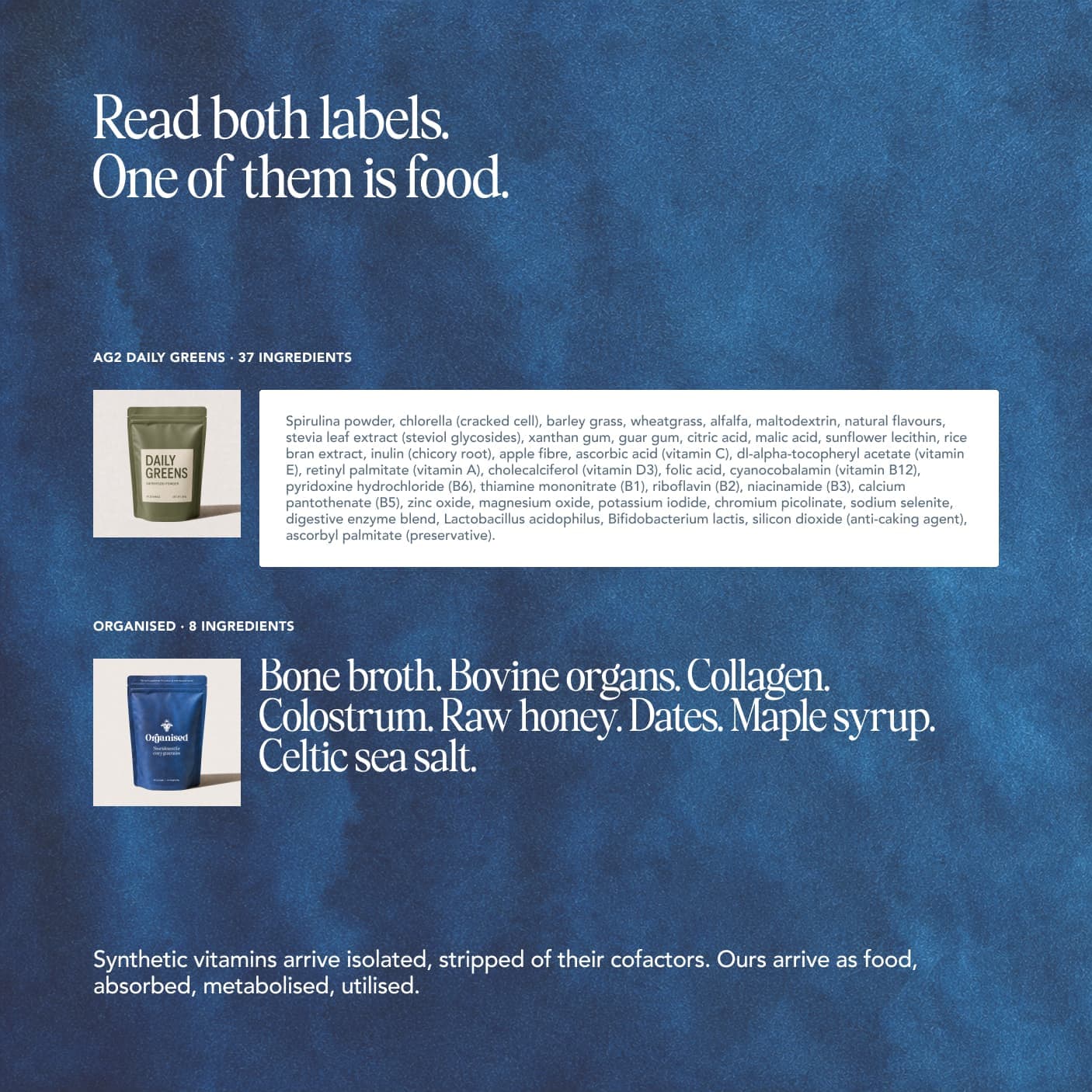
Eight real ingredients built around grass-fed beef organs, collagen and colostrum. Nothing synthetic added.
Free with your first order, worth £38. Plus £10 off the pouch with a subscription.
Free UK shipping · Made in England · 100 day money back guarantee on your first pouch · Skip, pause or cancel anytime
When to use each
Use glutamine if your primary problem is intestinal cell energy and fuel. You've removed inflammatory foods, your dysbiosis is being addressed through diet, and your gut cells need support rebuilding tight junctions. Glutamine is the right tool.
Use colostrum if you have active immune dysregulation, high pathogenic burden, or severe intestinal damage. You need immune defence and growth signalling. The IgG and growth factors in colostrum directly address that.
Use both if you're dealing with severe leaky gut or chronic inflammatory gut disease. Start with colostrum for 4 to 6 weeks to reduce pathogenic load and inflammation, then add glutamine as you shift focus toward cellular rebuilding.
Immune defence compromised? Colostrum. Cell energy depleted? Glutamine. Both failing? Use them together, alongside dietary change.
The uncomfortable truth is that neither supplement alone fixes a broken gut. You also need to remove foods that trigger inflammation, restore stomach acid, and eat nutrient-dense whole foods that support tissue repair. Colostrum and glutamine work best when they're supporting a solid foundation.
Colostrum and glutamine aren't competing options. They're complementary tools addressing different aspects of gut healing. Choose based on your primary problem. Better yet, use both if your gut is genuinely damaged, in a strategic sequence that first establishes immune defence, then supports cellular rebuilding.
References
Every source below was checked on 27 August 2026. Each PubMed, PMC and DOI identifier was resolved against NCBI or Crossref, and what it opens is printed under the citation, so you can see the link goes where the citation says without leaving the page. Where a citation and its identifier disagreed, the citation was corrected to the record or the reference was deleted along with the sentence marker that pointed at it, and where the resolved paper turned out not to support the sentence, the sentence was cut back to what it does support. Borrowed authority is worse than none, because it looks like rigour.
- Kim H. Glutamine as an immunonutrient. Yonsei Medical Journal, 2011. PMID 22028151.Checked 27 August 2026: PMID 22028151 opens Kim H, Glutamine as an immunonutrient. Yonsei Med J 2011;52(6):892-7. PubMed indexes it as: Review.The authors' own declaration, from the record: The authors have no financial conflicts of interest.
- Playford RJ, Weiser MJ. Bovine Colostrum: Its Constituents and Uses. Nutrients, 2021. PMID 33477653.Checked 27 August 2026: PMID 33477653 opens Playford RJ, Weiser MJ, Bovine Colostrum: Its Constituents and Uses. Nutrients 2021;13(1). PubMed indexes it as: Review.The authors' own declaration, from the record: PanTheryx Inc supply BC to U.S., European, and Asia-Pacific markets. This does not affect our adherence to the Nutrients policies regarding sharing data and materials.
- Wang B et al. Lactoferrin: structure, function, denaturation and digestion. Critical Reviews in Food Science and Nutrition, 2019. PMID 28933602.Checked 27 August 2026: PMID 28933602 opens Wang B, Timilsena YP, Blanch E et al, Lactoferrin: Structure, function, denaturation and digestion. Crit Rev Food Sci Nutr 2019;59(4):580-596. PubMed indexes it as: Review.
Who wrote and reviewed this guide
Niall Kiddle
Author · Founder, Organised
Niall is the founder of Organised. He started the company in 2024 after fixing his own health the slow way: in 2022 he swapped a cupboard of synthetic supplements for real food, raw milk, organ meats, bone broth and honey, and felt the difference within months.
Areas of expertise: Ancestral nutrition, Organ meats, Whole-food supplementation, Gut health, Regenerative sourcing
Read Niall's full profile
Pedro Rodrigues
Reviewer · Agronomist (farming and sourcing only)
Pedro is the agronomist Organised works with on farming and sourcing. His job on the guides is to keep the science honest: he reviews what we publish about soil health, regenerative agriculture, grazing and the way food is actually produced.
Areas of expertise: Regenerative agriculture, Agronomy, Soil health, Grass-fed farming, Food sourcing
Reviewed this guide on
Read Pedro's full profileMore on vs & comparisons
View allBrowse the guides library
All guidesKeep reading
Organised
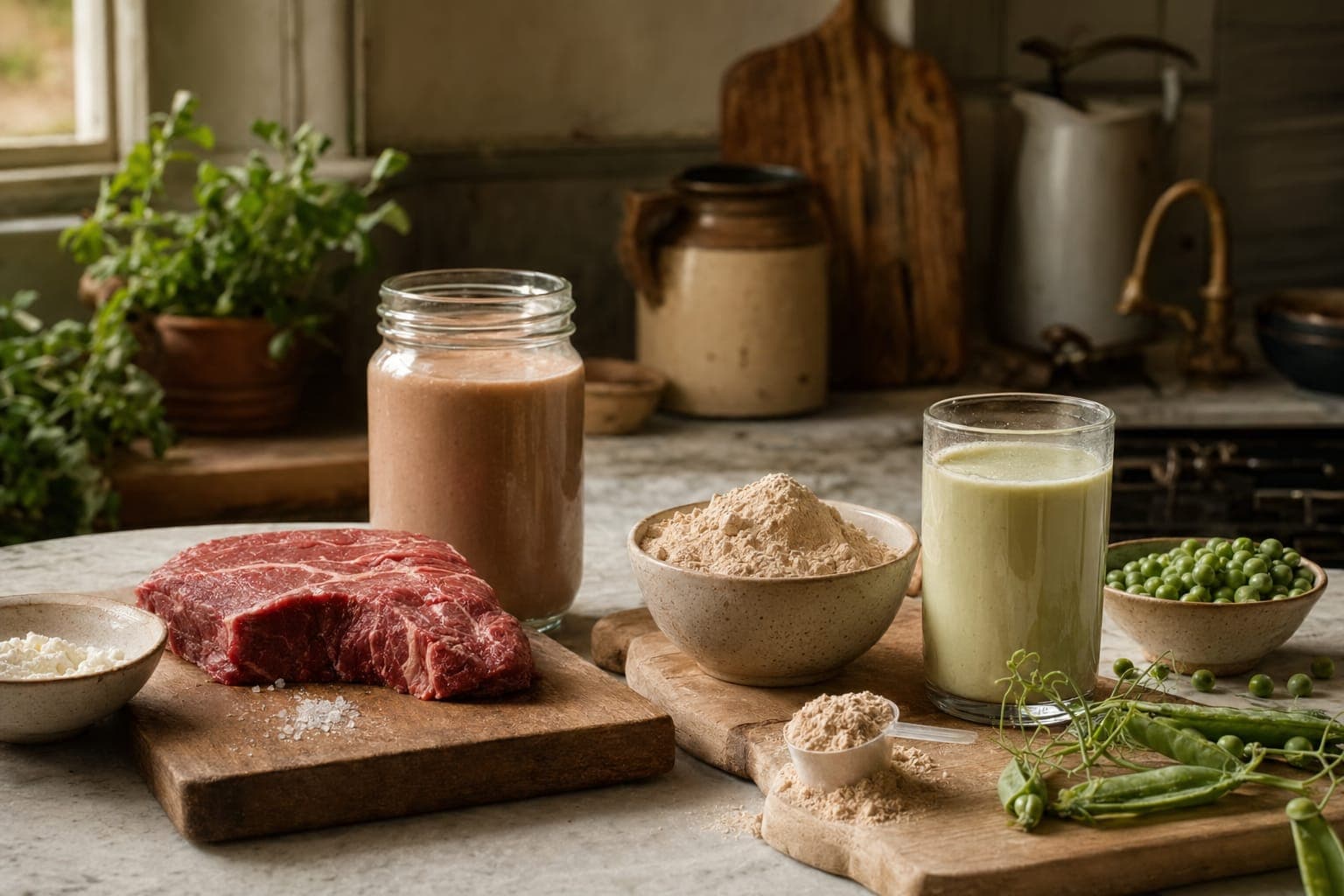
Grass-Fed Beef Protein vs Pea Protein: A Complete Comparison
Compare grass-fed beef protein vs pea protein fairly. Beef has complete amino acids and a 1.23 DIAAS, while pea lacks methionine at 0.7. See the full picture.
Organised
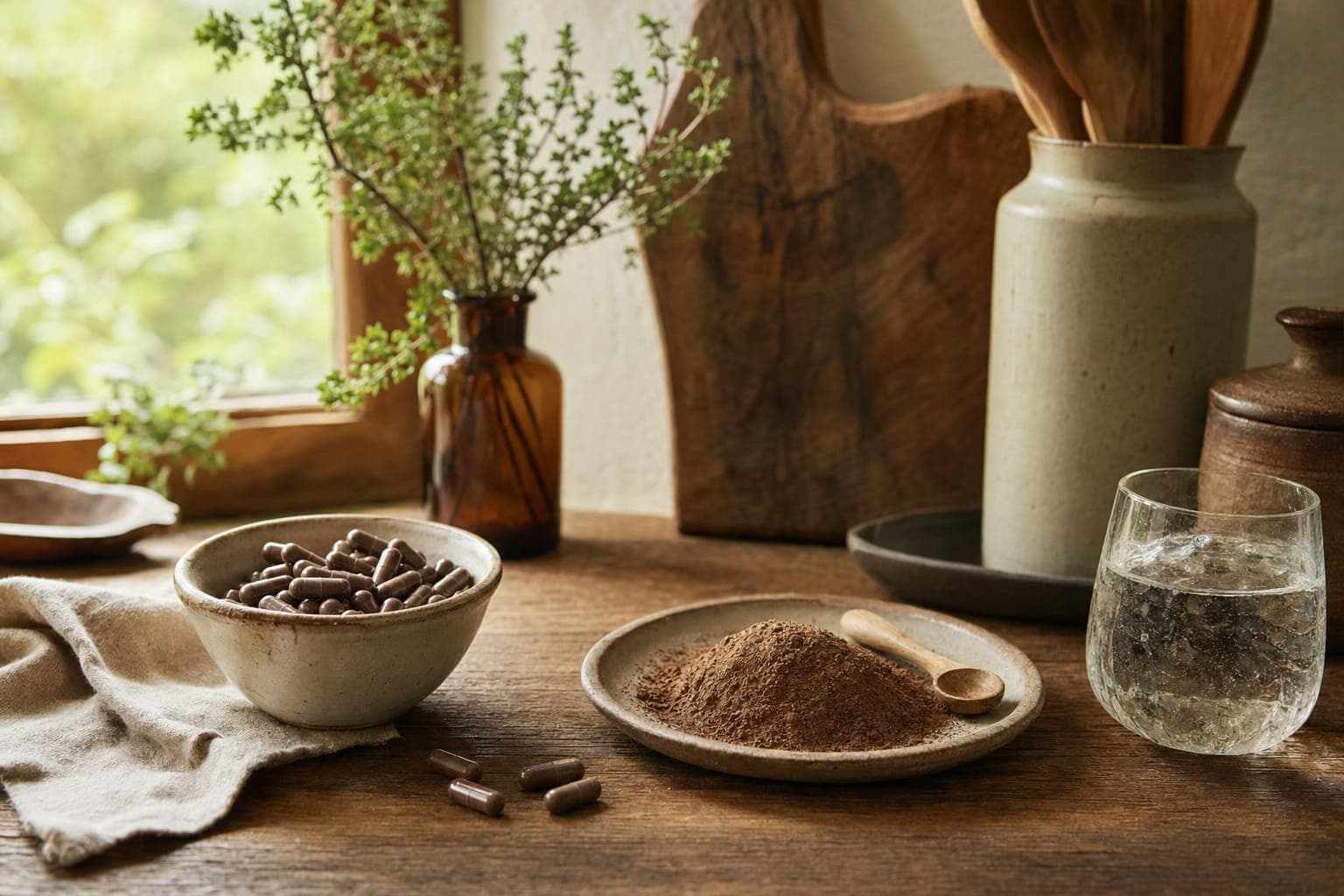
Organ Meat Capsules vs Organ Meat Powder: What's More Effective?
Compare organ meat capsules vs powder: capsules are convenient and shelf-stable, powder offers flexible dosing at lower cost, and bioavailability is similar.
Organised
Is Colostrum Better Than Whey for Gut Health?
Compare colostrum vs whey for gut health. Colostrum brings IgG and growth factors for the gut lining, whey builds muscle. Here is the honest breakdown.
Real food, made effortless
Try OrganisedA few ways to use it
All recipes
Raw Milk Hot Chocolate with Collagen
A nourishing evening hot chocolate made with raw milk, grass-fed collagen, raw cacao, and honey. A nighttime ritual that supports sleep and gut health.

Ancestral Breakfast Ideas from Around the World
Traditional breakfast recipes from cultures that got nutrition right. Japanese, Turkish, Scottish, and more. Whole-food breakfast inspiration.
Gut-Healing Marshmallows with Collagen and Raw Honey
Learn to make gut-healing marshmallows with collagen and raw honey. A shareable treat that sneaks nutrition into every bite. Easy recipe with video tips.


 Join over 100,000+ members
Build a better food system with us
The Organised community is thousands of people choosing real food and backing the farmers who grow it, all of us trying to leave the world a little better than we found it. If that is what you care about too, you belong here.