Organ Meat Capsules vs Organ Meat Powder: What's More Effective?
You could eat liver. You probably won't. So the question becomes which supplement form actually delivers the nutrients without the taste. The choice comes down to convenience, cost, and whether you need to adjust your dose.

By Niall Kiddle, Founder, Organised

Reviewed by Pedro Rodrigues, Agronomist (farming and sourcing only) ·
4 min read · Published · Updated · 2 cited sources
Makers of the Organised Daily blend, a grass-fed beef organ supplement from regenerative UK farms
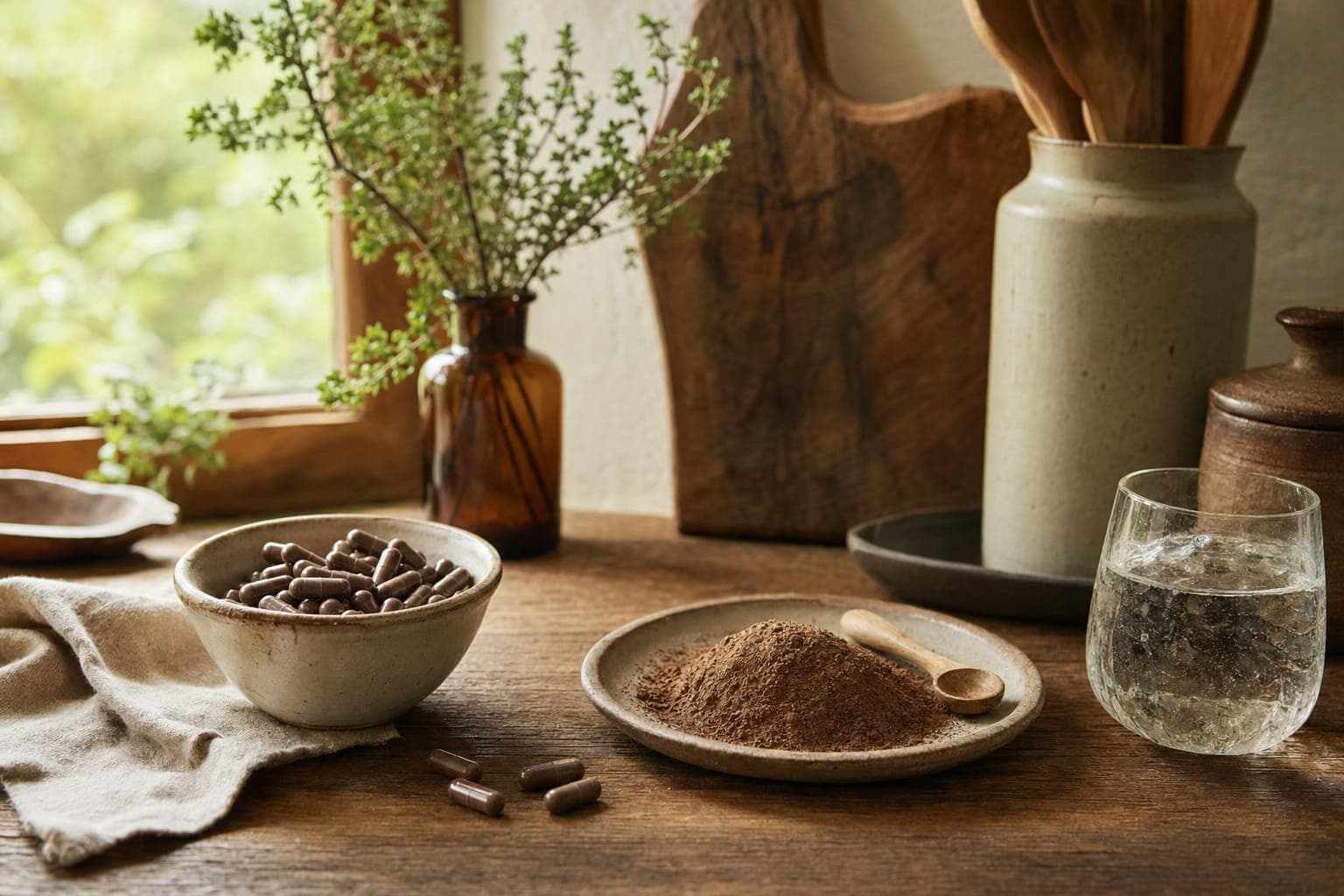
Organ meat supplements exist because most people have a psychological barrier to eating raw or cooked organ meat. The texture, the smell, the history of the food all create resistance. Capsules and powders solve that problem by packaging the nutrient content without the sensory experience. But they're not the same thing, and which one works better depends on what you're trying to achieve.
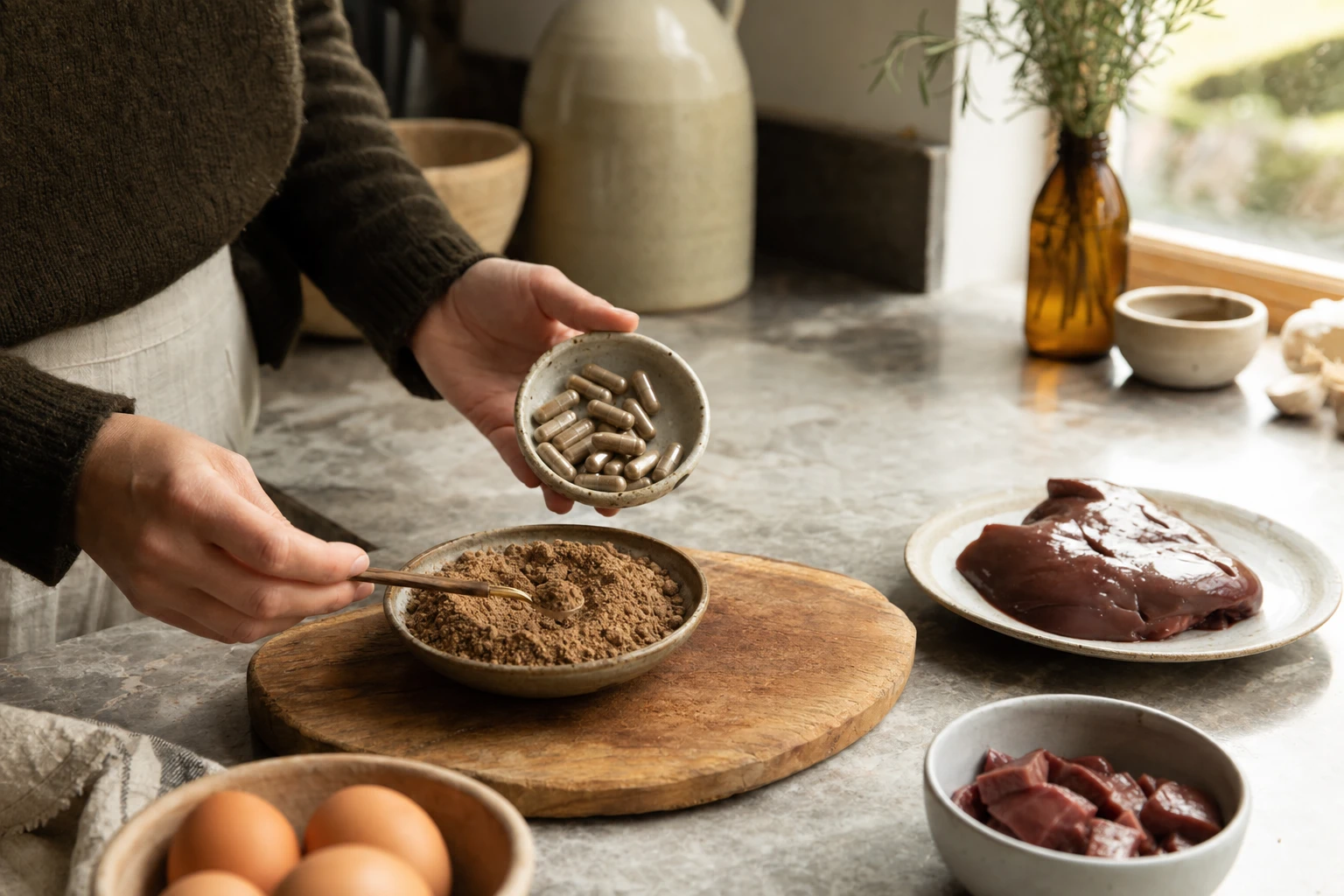
Why organ supplements exist
Organ meats are nutrient-dense. A 100-gram serving of beef liver delivers more bioavailable iron, copper, choline, and B vitamins than almost any other food.1 But organ meat tastes like organ meat. It has a strong flavour, a distinctive texture, and a heavy mouthfeel.
For most modern people, this is an obstacle. You can eat liver once a week and tick the nutritional box, but you can't eat it three times a day. Supplements allow you to get concentrated organ meat nutrients without the palatability barrier.
The question is which format delivers that more effectively, more affordably, and more reliably.
Both capsules and powder deliver organ meat nutrients without the taste. The difference is in dosing flexibility and cost per gram.
Bioavailability differences
Bioavailability is similar between capsules and powder, if they're made from the same source material. Both are freeze-dried whole organ meat or concentrated extracts. Your digestive system breaks down the same nutrients whether they're inside a capsule or mixed into water.
Some argue that capsule fillers, like cellulose or silica, might slightly reduce absorption. In practice, the difference is negligible. A dose of liver powder in a capsule versus loose powder delivers roughly the same amount of usable nutrients.
The real bioavailability difference comes from what you consume with the supplement, not the format. Taking liver powder with vitamin C enhances iron absorption.2 Taking it with food fat enhances fat-soluble vitamin absorption. Taking it on an empty stomach with coffee suppresses iron absorption. The capsule versus powder question is secondary to these factors.
If you're comparing two products made from identical source material, capsule versus powder makes almost no difference to the nutrient you actually absorb.
Dosing flexibility and cost
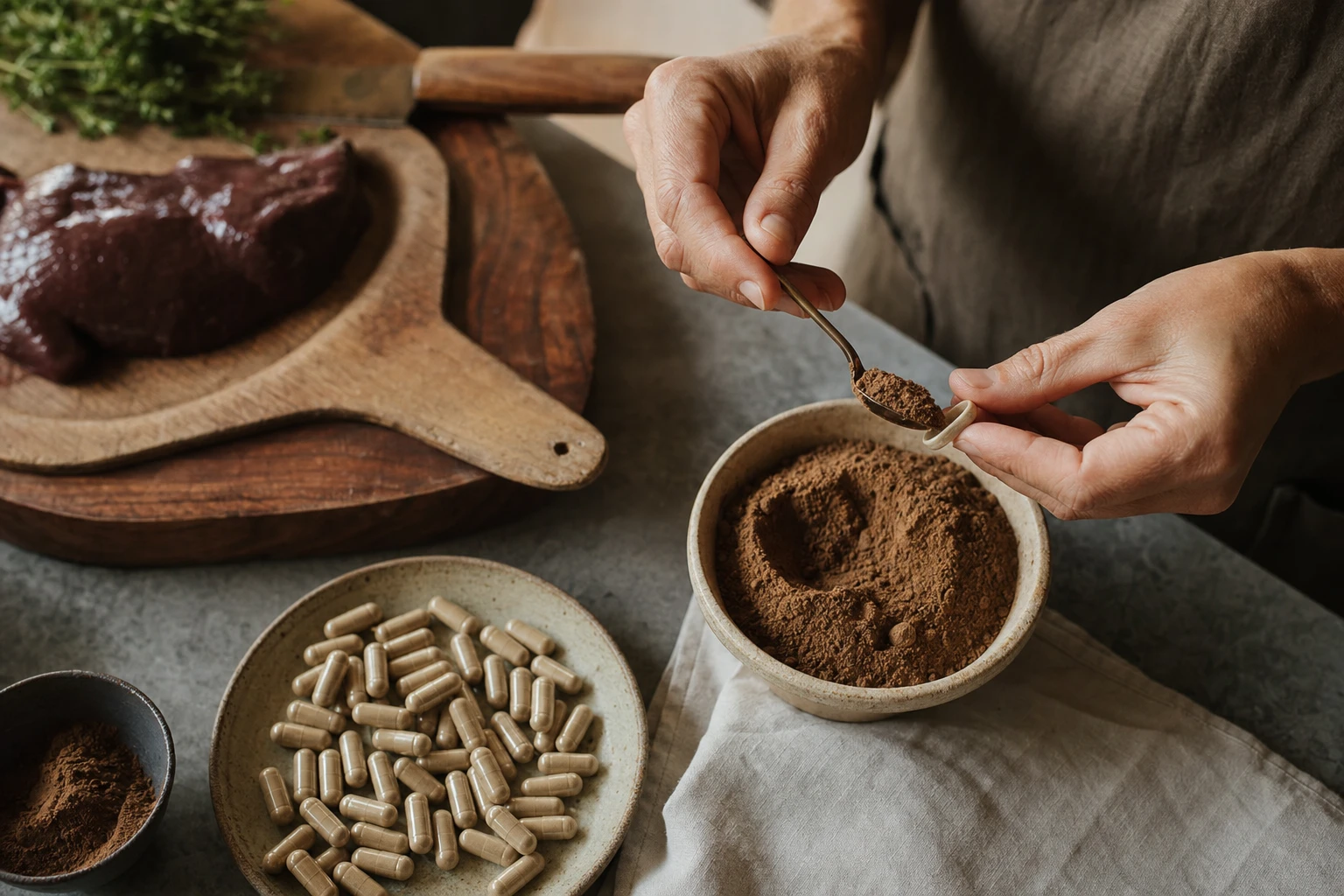
This is where they genuinely diverge. Powder allows you to adjust your dose easily. If you want 3 grams of liver one day and 6 grams another, you scoop accordingly. Capsules lock you into fixed doses.
If you're correcting a deficiency, dose flexibility matters. You might start with a small dose to assess tolerance, then increase as your symptoms improve. Powder lets you do this. Capsules require buying different strength products or taking multiple capsules.
Cost per gram favours powder significantly. Capsule products cost roughly 20 to 40 percent more per gram of actual organ meat. You're paying for the convenience of pre-dosed capsules, the gelatin or cellulose capsules themselves, and the additional packaging.
If you're on a tight budget and willing to mix powder with water or food, powder is more cost-effective. If you want the absolute easiest consumption method, capsules justify the premium.
Powder offers dosing flexibility and lower cost. Capsules offer convenience and fixed dosing.
Get guides like this, free
Two short reads a week on real food, nutrition, and the farms behind it.
By signing up you agree to receive emails from us. No spam, unsubscribe anytime.
Convenience and palatability
Capsules win on convenience. You swallow them with water. No taste, no texture, no mixing. If you're busy or travelling, capsules are effortless. You can take them at breakfast without disrupting your routine.
Powder requires mixing. You stir it into water, juice, smoothies, or food. Some organ meat powders taste relatively neutral, especially liver. Others are stronger. If the powder is high-quality, the taste is bearable. If it's lower quality or heavily processed, it can be unpleasant.
For someone with gag reflex sensitivity or genuine food aversion, capsules are the only realistic option. For someone willing to mix powder into a drink, powder offers better cost and flexibility.
Shelf stability and packaging are roughly equivalent. Both are shelf-stable when stored properly. Capsules come in individual bottles, powder often comes in bulk containers. Neither is obviously superior from a storage perspective.
1 of 9
Daily blend
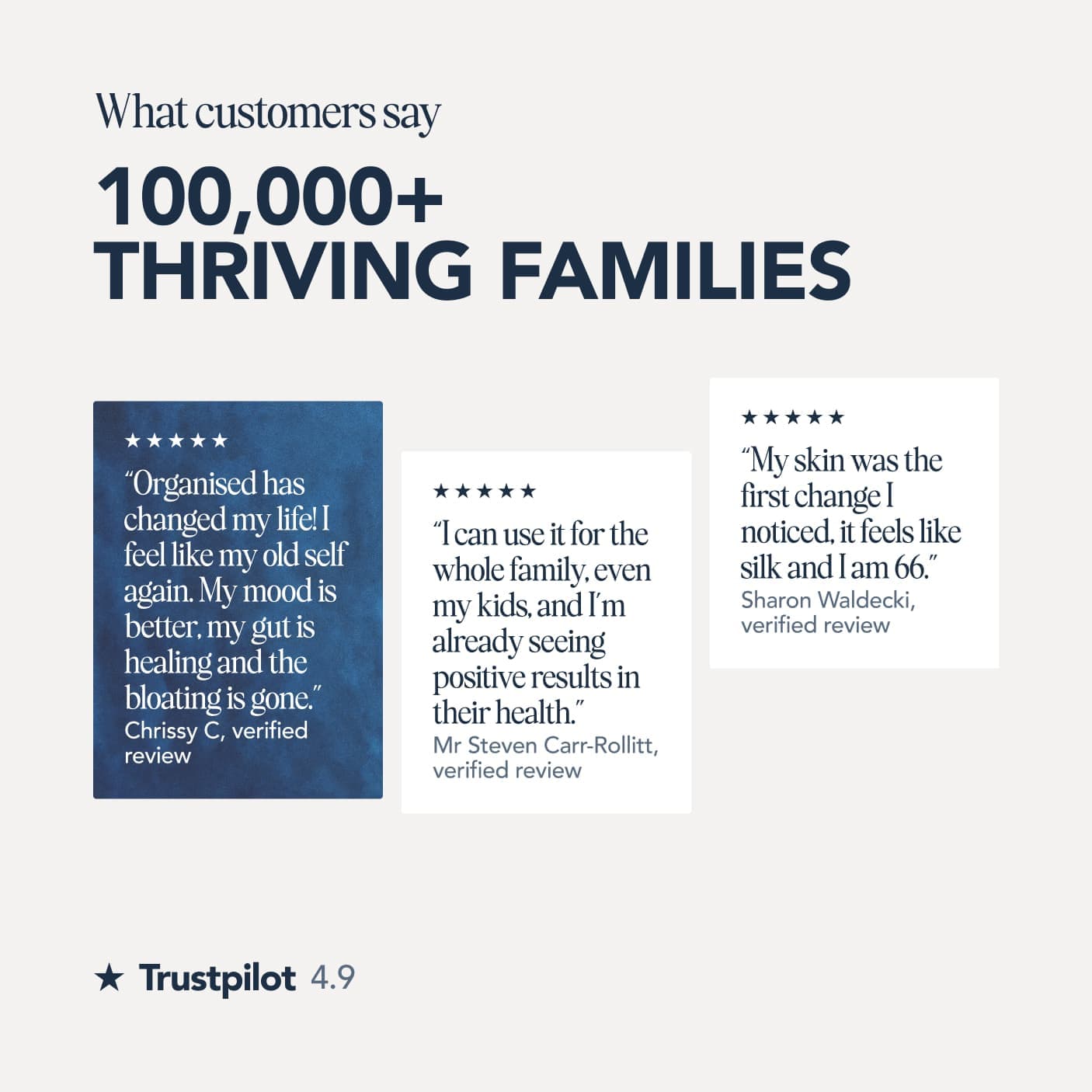
100,000+ thriving families4.9 on Trustpilot
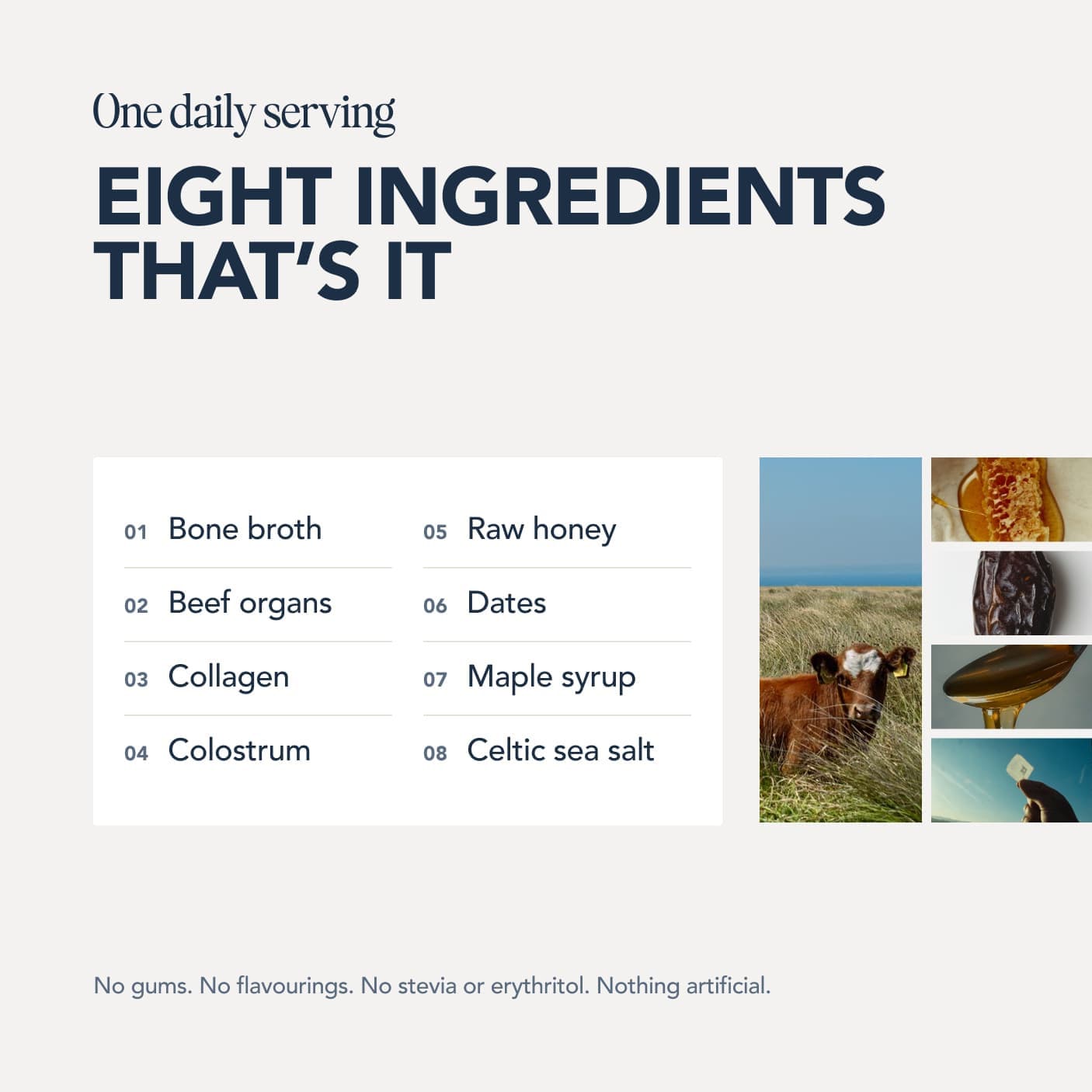
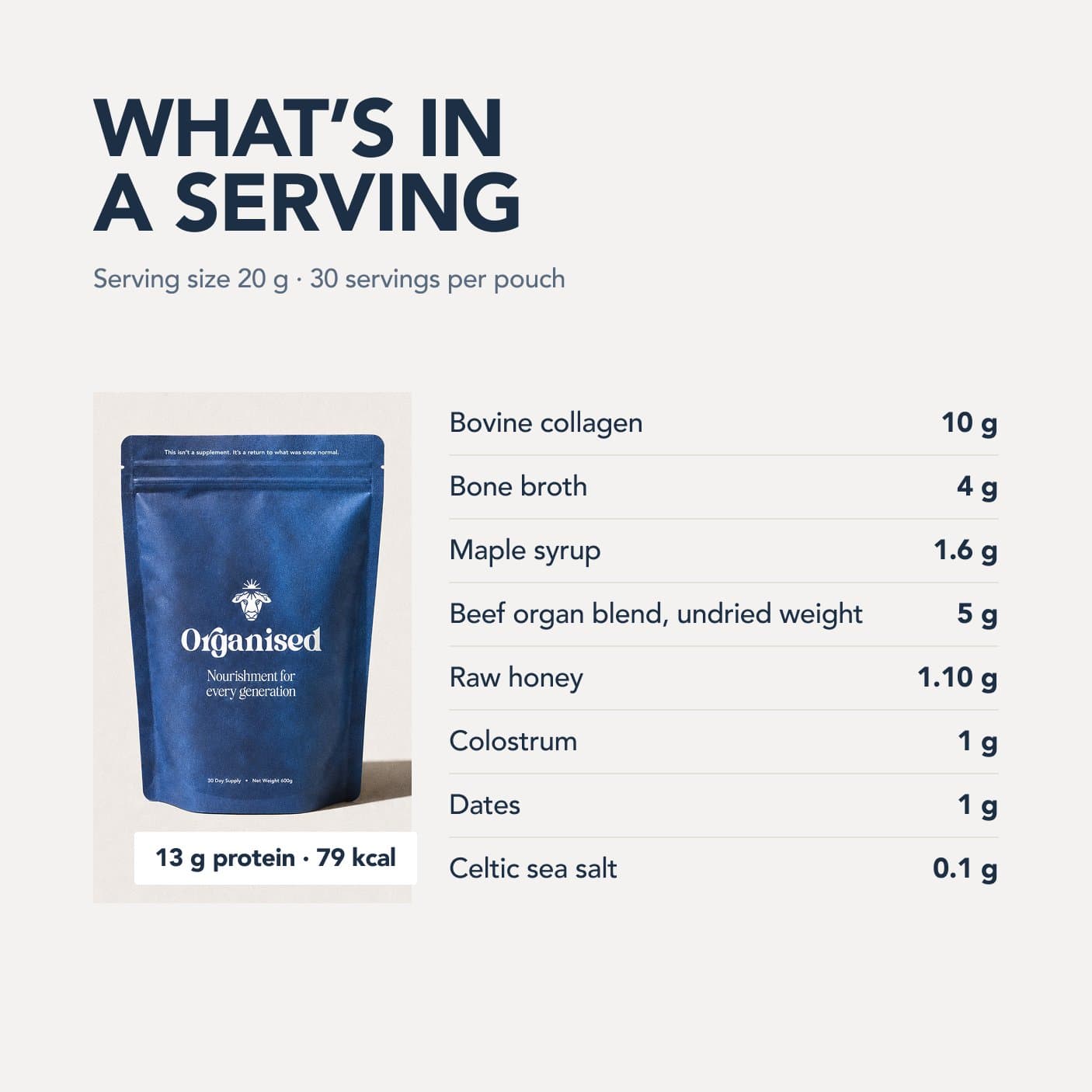
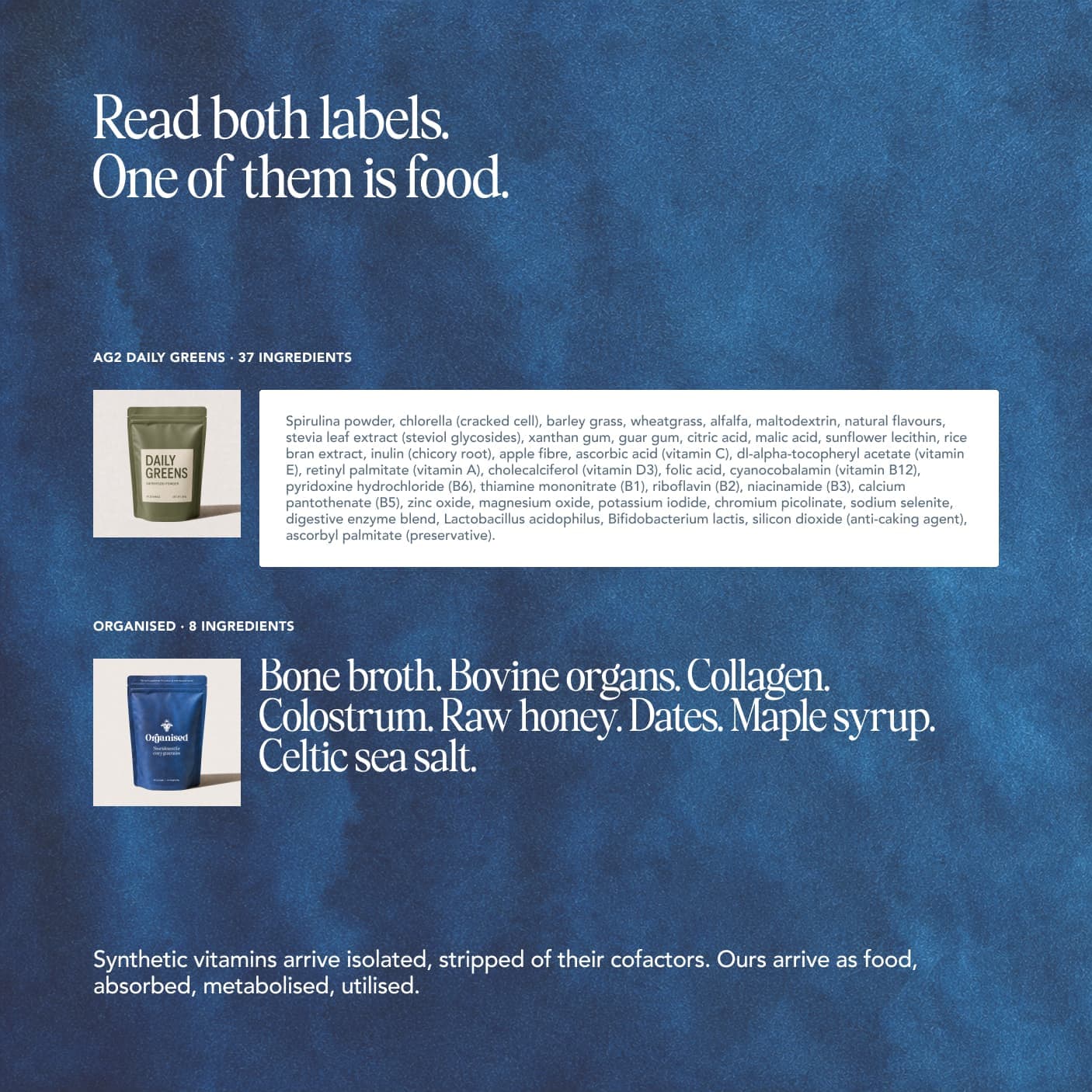
Eight real ingredients built around grass-fed beef organs, collagen and colostrum. Nothing synthetic added.
Free with your first order, worth £38. Plus £10 off the pouch with a subscription.
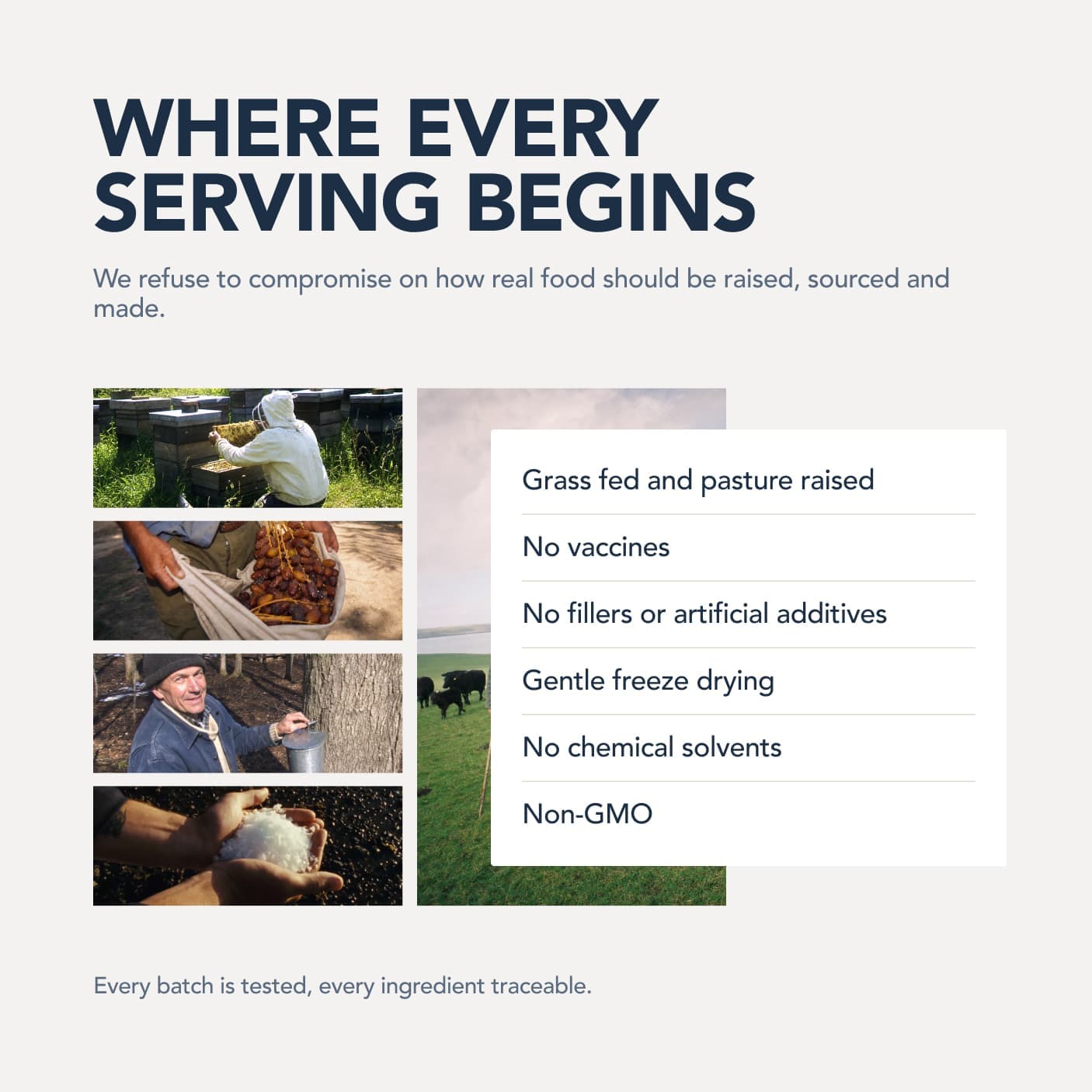
Free UK shipping · Made in England · 100 day money back guarantee on your first pouch · Skip, pause or cancel anytime
Which form to choose
Choose capsules if you're prioritising convenience above all else. You're busy, you travel frequently, or you have strong taste aversion. The premium cost is worth it for simplicity.
Choose powder if you want dosing flexibility and cost savings. You're comfortable mixing supplements, you might need to adjust your dose, or you're on a budget and want maximum value per pound. Powder is the more economical choice.
If you're correcting a deficiency, powder is better. You can start low, assess tolerance, and increase as needed. Once your levels normalise and you're on a maintenance dose, you could switch to capsules for simplicity.
Deficiency correction? Powder. Ongoing maintenance? Capsules. Both work. Choose based on what actually fits your life.
Quality matters more than format. A high-quality powder from whole organ meat beats a low-quality powder. A capsule from a poor source is less useful than a premium powder. When choosing, check the source material first, then decide whether capsules or powder fits your lifestyle better.
Neither form is objectively better. They're different tools for different constraints. The best organ supplement is the one you actually take consistently. If that's capsules because powder feels like too much effort, capsules are the right choice. If powder saves you money and lets you customise your dose, powder is better. Pick the format that removes your biggest barrier to consistency.
References
Every source below was checked on 27 August 2026. Each PubMed, PMC and DOI identifier was resolved against NCBI or Crossref, and what it opens is printed under the citation, so you can see the link goes where the citation says without leaving the page. Where a citation and its identifier disagreed, the citation was corrected to the record or the reference was deleted along with the sentence marker that pointed at it, and where the resolved paper turned out not to support the sentence, the sentence was cut back to what it does support. Borrowed authority is worse than none, because it looks like rigour.
- National Institutes of Health, Office of Dietary Supplements. Vitamin A and Carotenoids: Fact Sheet for Health Professionals. https://ods.od.nih.gov/factsheets/VitaminA-HealthProfessional/ See also Iron, B12, Copper, and Choline fact sheets [accessed May 2026].
- Hallberg L, Brune M, Rossander L. The role of vitamin C in iron absorption. International Journal for Vitamin and Nutrition Research. Supplement. 1989;30:103-108. https://pubmed.ncbi.nlm.nih.gov/2507689/Checked 27 August 2026: PMID 2507689 opens Hallberg L, Brune M, Rossander L, The role of vitamin C in iron absorption. Int J Vitam Nutr Res Suppl 1989;30:103-8.
Who wrote and reviewed this guide
Niall Kiddle
Author · Founder, Organised
Niall is the founder of Organised. He started the company in 2024 after fixing his own health the slow way: in 2022 he swapped a cupboard of synthetic supplements for real food, raw milk, organ meats, bone broth and honey, and felt the difference within months.
Areas of expertise: Ancestral nutrition, Organ meats, Whole-food supplementation, Gut health, Regenerative sourcing
Read Niall's full profile
Pedro Rodrigues
Reviewer · Agronomist (farming and sourcing only)
Pedro is the agronomist Organised works with on farming and sourcing. His job on the guides is to keep the science honest: he reviews what we publish about soil health, regenerative agriculture, grazing and the way food is actually produced.
Areas of expertise: Regenerative agriculture, Agronomy, Soil health, Grass-fed farming, Food sourcing
Reviewed this guide on
Read Pedro's full profileMore on vs & comparisons
View allBrowse the guides library
All guidesKeep reading
Organised
Heme Iron Supplements vs Whole Food Iron: Absorption Compared
Heme iron supplements absorb 2-3x better than non-heme iron, but whole food liver builds ferritin sustainably. Comparing absorption, cost, and real results.
Organised
Is Colostrum Better Than Whey for Gut Health?
Compare colostrum vs whey for gut health. Colostrum brings IgG and growth factors for the gut lining, whey builds muscle. Here is the honest breakdown.
Organised
Colostrum vs Glutamine for Gut Health
Colostrum contains IgG and growth factors. Glutamine fuels enterocytes. They work through different mechanisms. Here's the honest comparison.
Real food, made effortless
Try OrganisedA few ways to use it
All recipes
Raw Milk Hot Chocolate with Collagen
A nourishing evening hot chocolate made with raw milk, grass-fed collagen, raw cacao, and honey. A nighttime ritual that supports sleep and gut health.

Organ Bolognese: The Family Dinner That Heals
Practical organ meat recipe using fresh beef liver and heart. Family-friendly bolognese that bridges supplements to whole food.
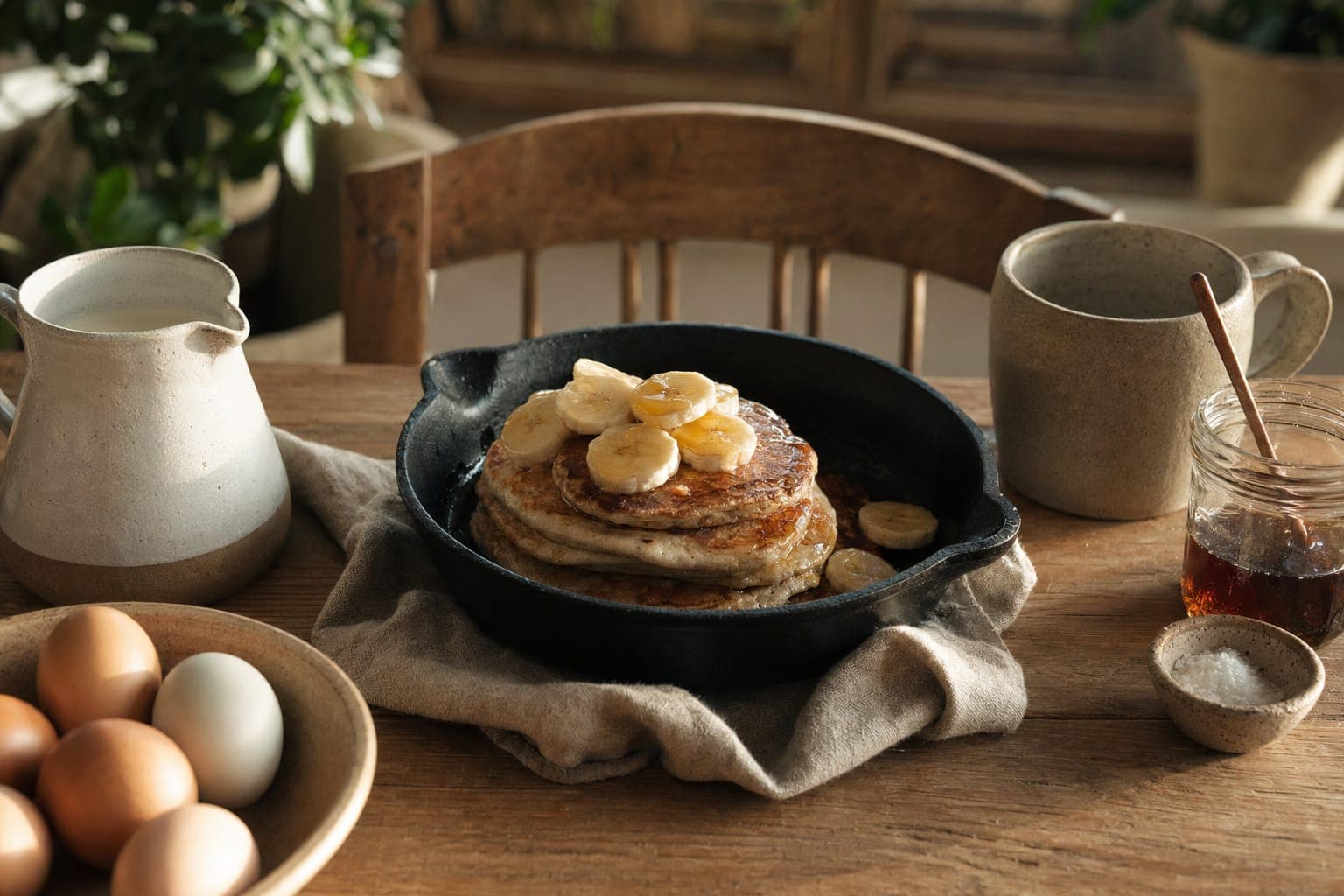
Organised Protein Pancakes: A Weekend Favourite
A high-protein pancake recipe using beef protein, eggs, and raw milk. Cooked in cast iron, naturally sweetened with banana and honey. Real food breakfast.


 Join over 100,000+ members
Build a better food system with us
The Organised community is thousands of people choosing real food and backing the farmers who grow it, all of us trying to leave the world a little better than we found it. If that is what you care about too, you belong here.