A Day of Eating for Optimal Skin Health
Your skin isn't screaming for serums. It's hungry. It's been starved of the nutrients it needs to repair itself, retain moisture, and build collagen. Here's what feeding it actually looks like, from wake-up to bedtime.
By Niall Kiddle, Founder, Organised

Reviewed by Pedro Rodrigues, Agronomist (farming and sourcing only) ·
5 min read · Published · Updated · 3 cited sources
Makers of the Organised Daily blend, a grass-fed beef organ supplement from regenerative UK farms
Why skin health starts in the kitchen
You can apply creams and serums until your bathroom looks like a pharmacy. But if your body doesn't have the raw materials it needs, nothing topical will compensate. Skin is built from collagen, elastin, and lipids. These are made from amino acids, fat-soluble vitamins, and minerals. They come from food.
The skin is also your body's inflammatory thermostat. Eat inflammatory food and your skin will be first to show it. Eat anti-inflammatory real food and your skin will be last to age.
Optimal skin health requires three things: consistent nutrient intake, adequate hydration, and the absence of foods that damage the skin barrier. Do these three things and you won't need much else.
The nutrients your skin needs
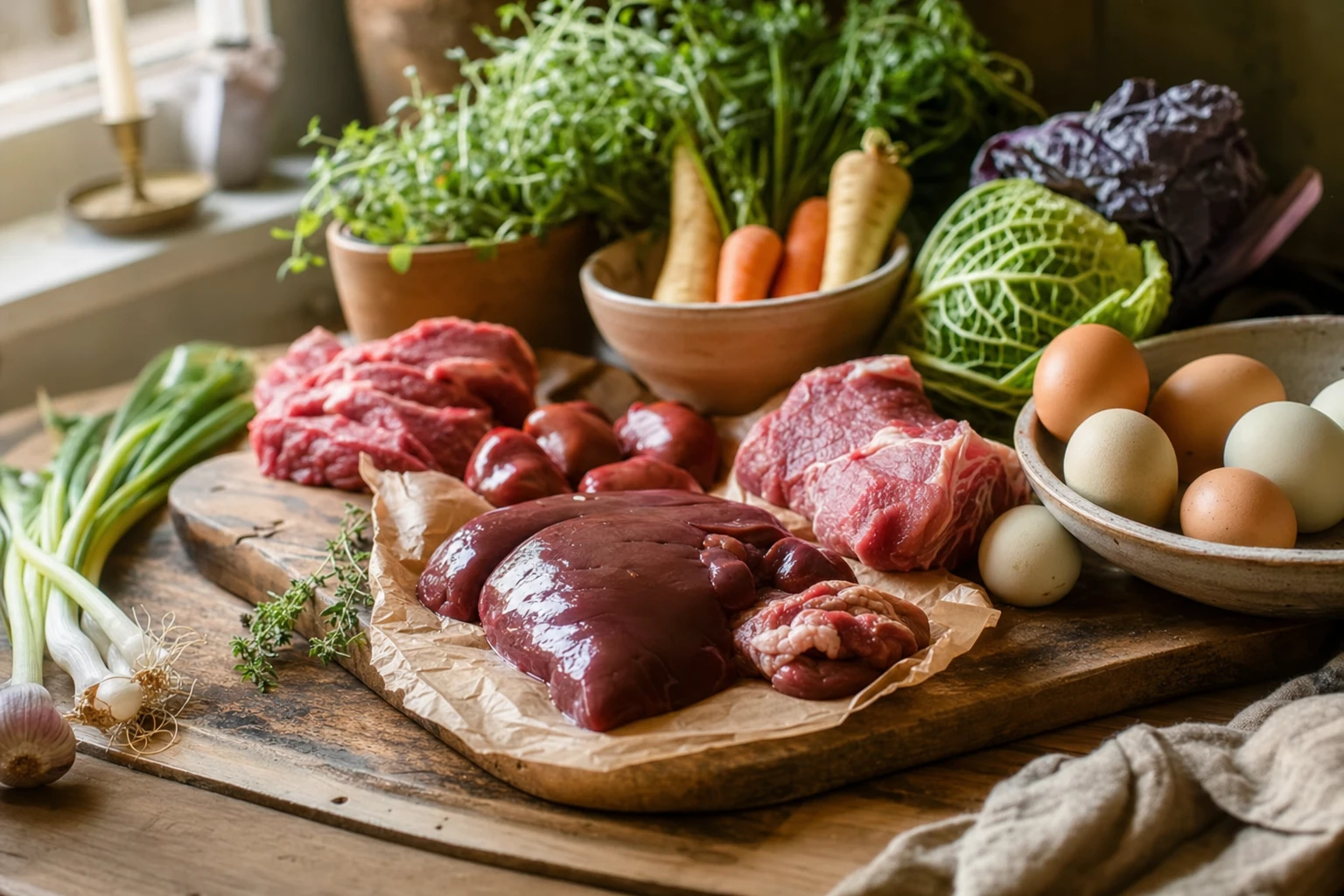
Vitamin A (retinol). Required for normal epithelial cell differentiation and integrity, and found primarily in animal-source foods such as liver, eggs and dairy fat. The body absorbs 70–90% of preformed retinol from food.1
Collagen and gelatin. The structural protein of skin. Found in bone broth, collagen supplements, the gelatin in slowly-cooked meats with bones, and connective tissue. Your skin is literally made from this.
Silicon and minerals. Found in bone broth, seafood, green vegetables. Required to cross-link collagen and keep skin firm and elastic.
Vitamin C. Required as a cofactor for prolyl and lysyl hydroxylases that hydroxylate collagen residues during synthesis; found in fresh vegetables, berries, and citrus, and heat-sensitive.2
Fat-soluble vitamins D, E, and K2. These regulate skin cell turnover and inflammation. Found in pastured dairy, egg yolks, and quality oils.
Breakfast: loading with retinol
Breakfast should be your highest-retinol meal of the day. Skin cells repair most actively in the morning, and starting your day with liver, eggs, or both gives your skin what it needs before anything else.
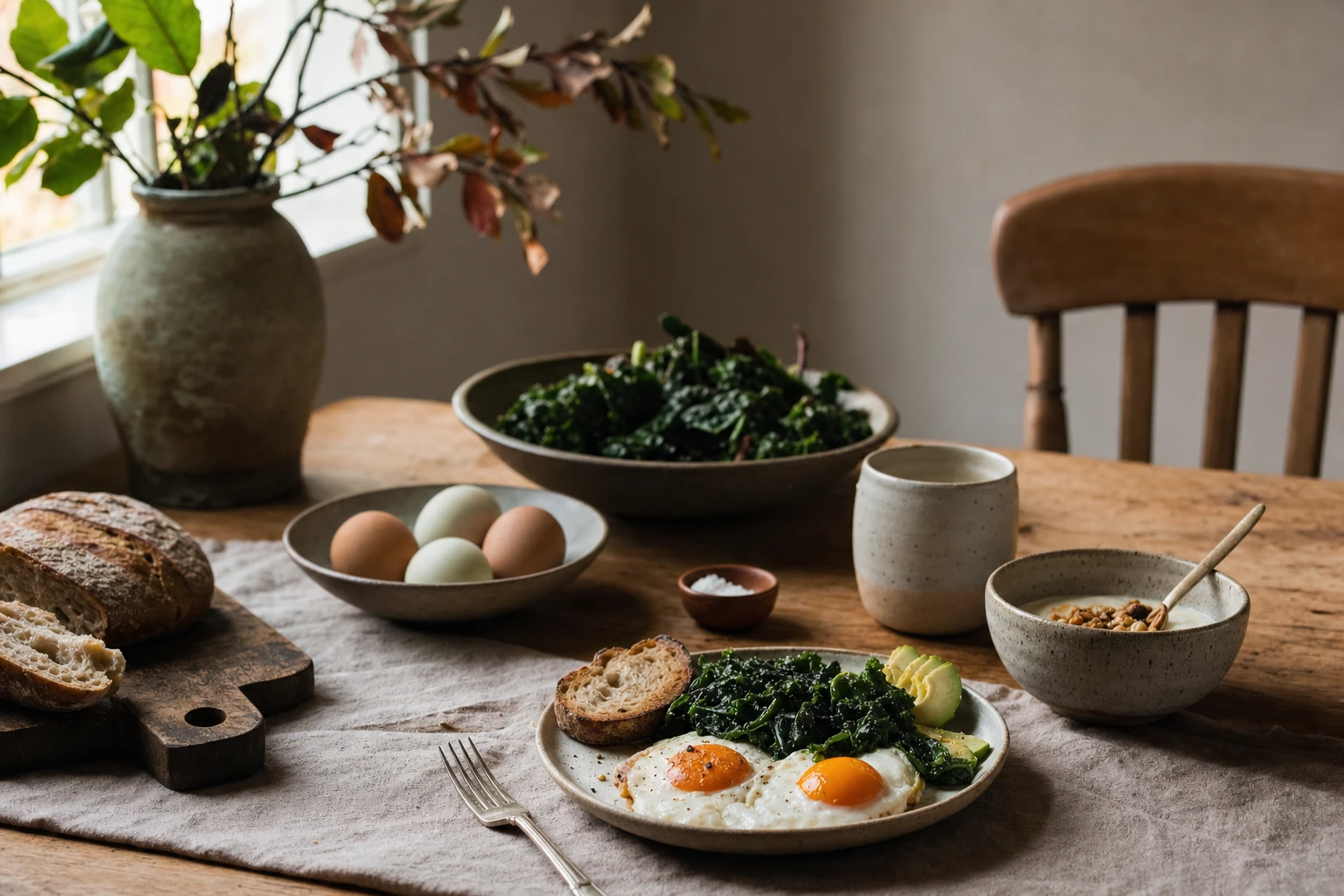
Best option: Organised mixed with raw milk, plus 2-3 soft-boiled eggs from pastured hens, plus a side of sauteed spinach in butter. The liver in Organised provides retinol. The eggs add more retinol, selenium, and choline. The spinach provides raw vitamin C and minerals. The butter is fat-soluble vitamin delivery.
If you don't fancy Organised and eggs, swap for 100g of fresh beef liver pan-fried in butter with onions and thyme. Add a slice of sourdough. The result is identical nutrition to Organised, different vehicle.
Make breakfast your retinol meal. This single meal delivers more vitamin A than most people eat in a week. Your skin notices.
Mid-morning snack
Eat something that stabilises blood sugar and provides vitamin C. A handful of berries with a square of dark chocolate. Or an apple with a tablespoon of almond butter. The carbohydrate plus fat prevents the energy crash that ages you.
Lunch: collagen and minerals
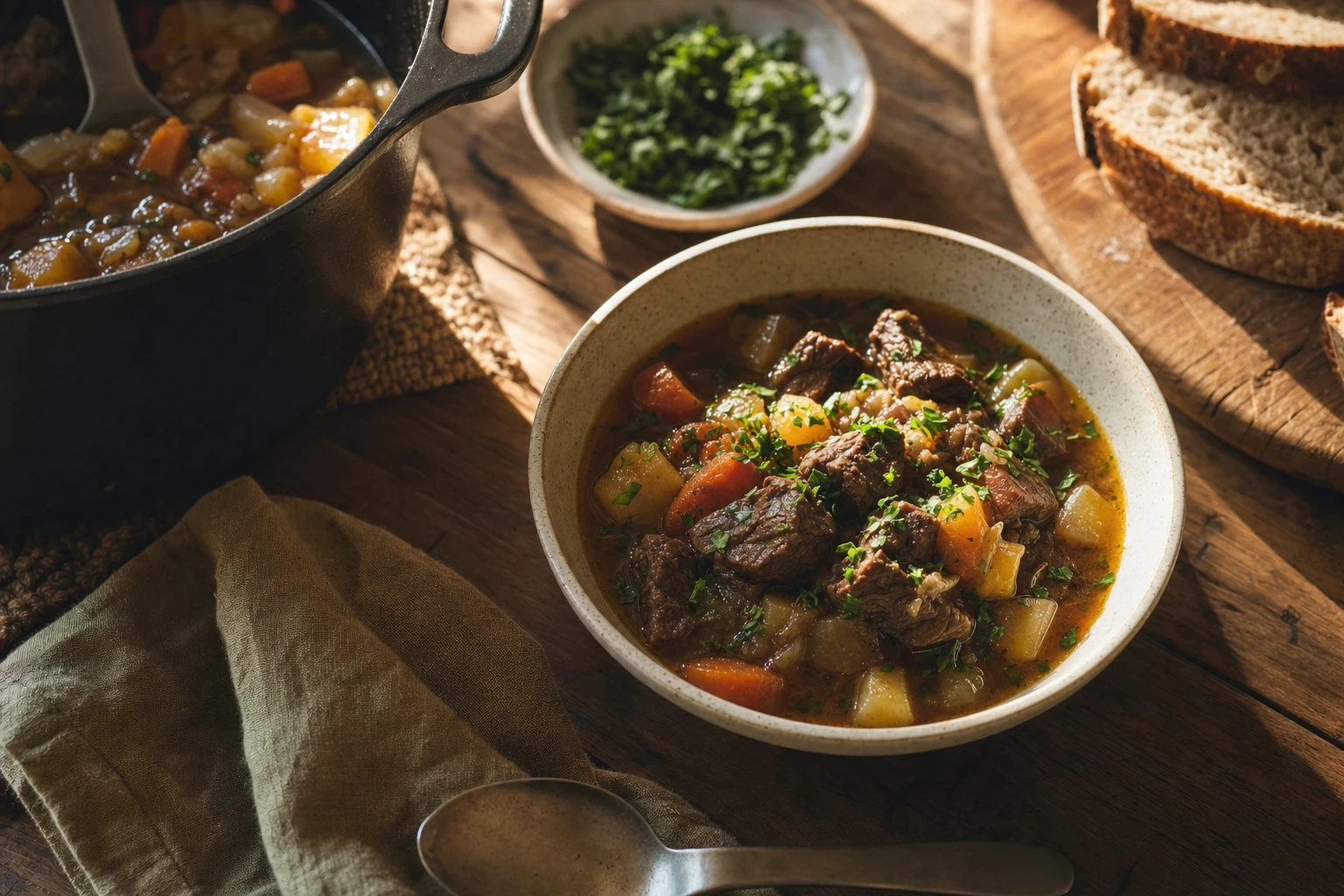
Your skin needs bone broth or collagen-rich foods by lunchtime. A bowl of slow-cooked beef stew made with bone broth as the base hits all the marks. Beef provides amino acids and iron. Root vegetables provide minerals and vitamin C. Bone broth provides collagen, gelatin, and silicon. Herbs add phytonutrients and flavour.
Or make it simpler: a large bowl of bone broth with poached fish, wilted greens, and a sprinkle of sea salt. The collagen in the broth is doing the work. The fish adds omega-3s which support skin barrier function. The greens provide raw vitamin C and minerals. This meal is explicitly designed for skin repair.
Why this timing matters. Collagen synthesis is most active in the middle of the day. Eating collagen-rich foods at lunch means your body has maximum access to these building blocks when synthesis is highest. This is not coincidence; ancestral eating patterns align with biological timing.
Collagen intake directly supports your skin's structural integrity. A lunch built around bone broth or collagen-rich foods is not optional if you care about skin health.
Get recipes and routines, free
Two short reads a week of simple, nutrient-dense recipes and daily routines.
By signing up you agree to receive emails from us. No spam, unsubscribe anytime.
Afternoon pick-me-up
Eat something that won't spike blood sugar. A small piece of cheese. A handful of macadamia nuts. Some raw crudites with a dollop of butter or bone marrow if you have it. The point is fat and protein, not carbohydrate. This snack should feel like nourishment, not entertainment.
This afternoon meal is crucial for skin health because it prevents the blood sugar crash that promotes inflammation. Stable blood sugar means stable cortisol, which means your skin isn't spending the afternoon fighting inflammation.
Dinner: amino acids and fat
Your skin repairs most actively at night, so dinner should support this with complete amino acids and fat-soluble vitamins. Grilled salmon or grass-fed beef with a large salad, drizzled with olive oil and finished with a squeeze of lemon.
The fish or meat provides all nine essential amino acids. The salad provides raw vitamin C and minerals. The olive oil provides fat that helps fat-soluble vitamin absorption and supports the skin barrier itself.
Add something organ-based if you can. A small portion of calf's liver on the side, or a spoonful of pate if you've made some. By the end of the day, your skin has had three organ meat servings.

1 of 9
Daily blend
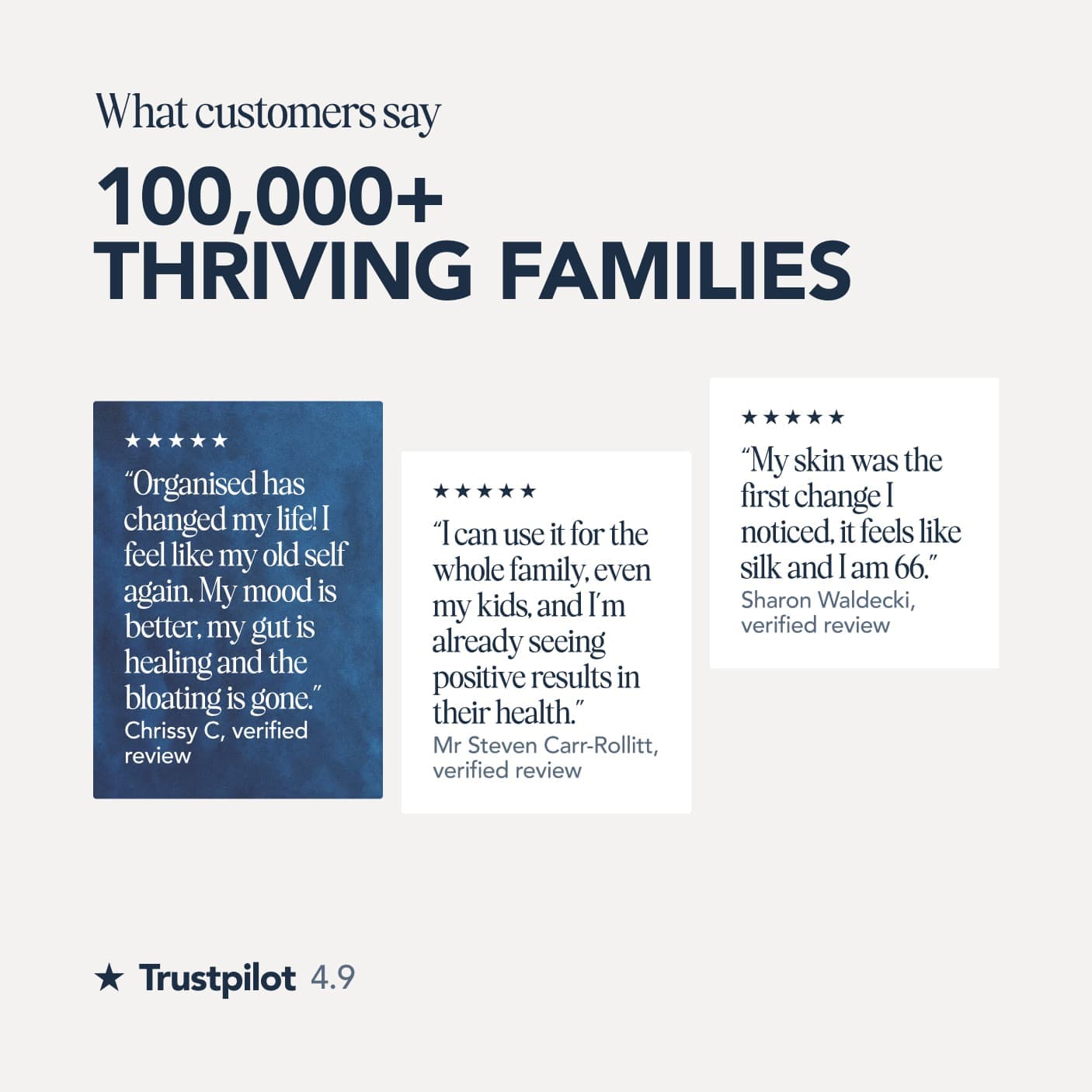
100,000+ thriving families4.9 on Trustpilot
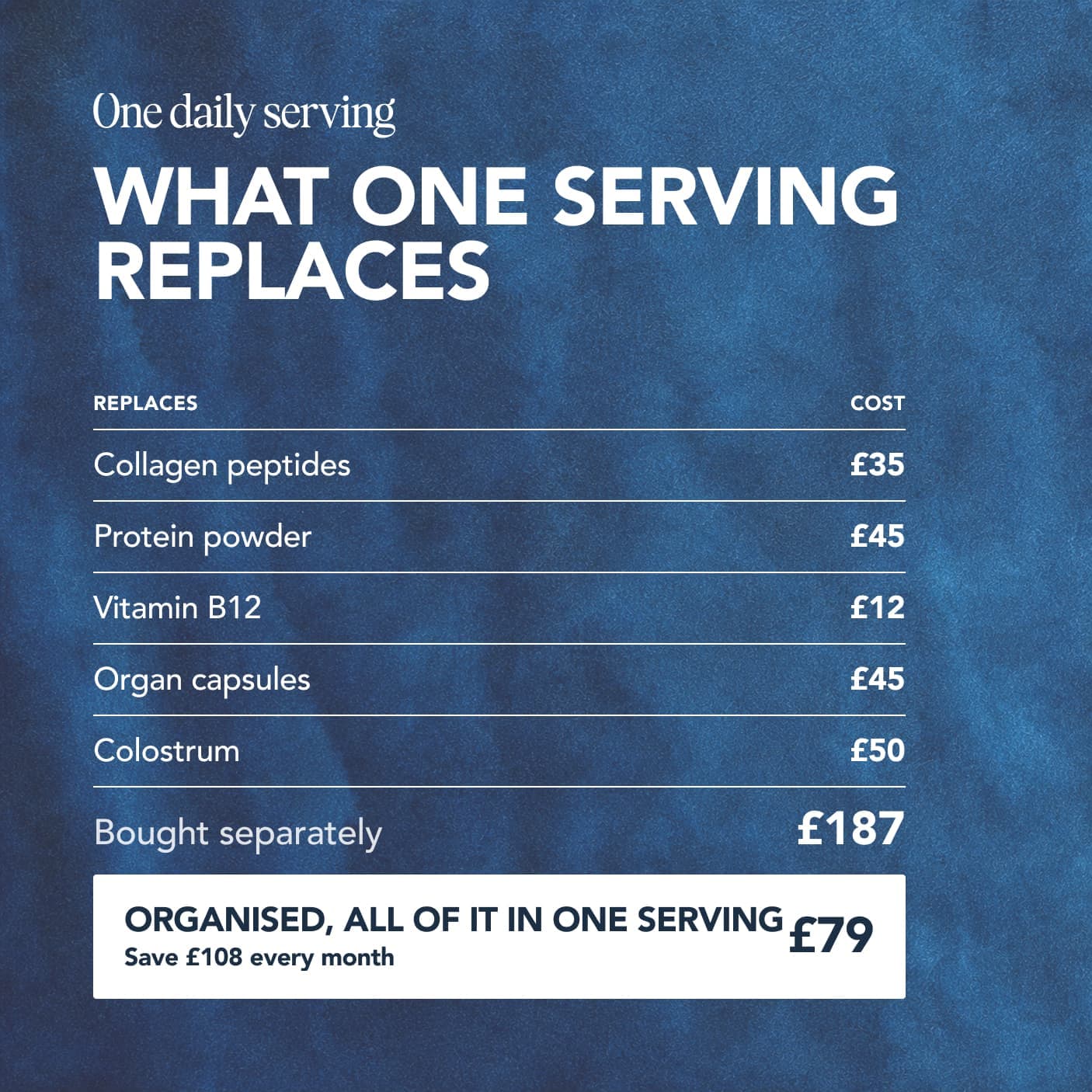
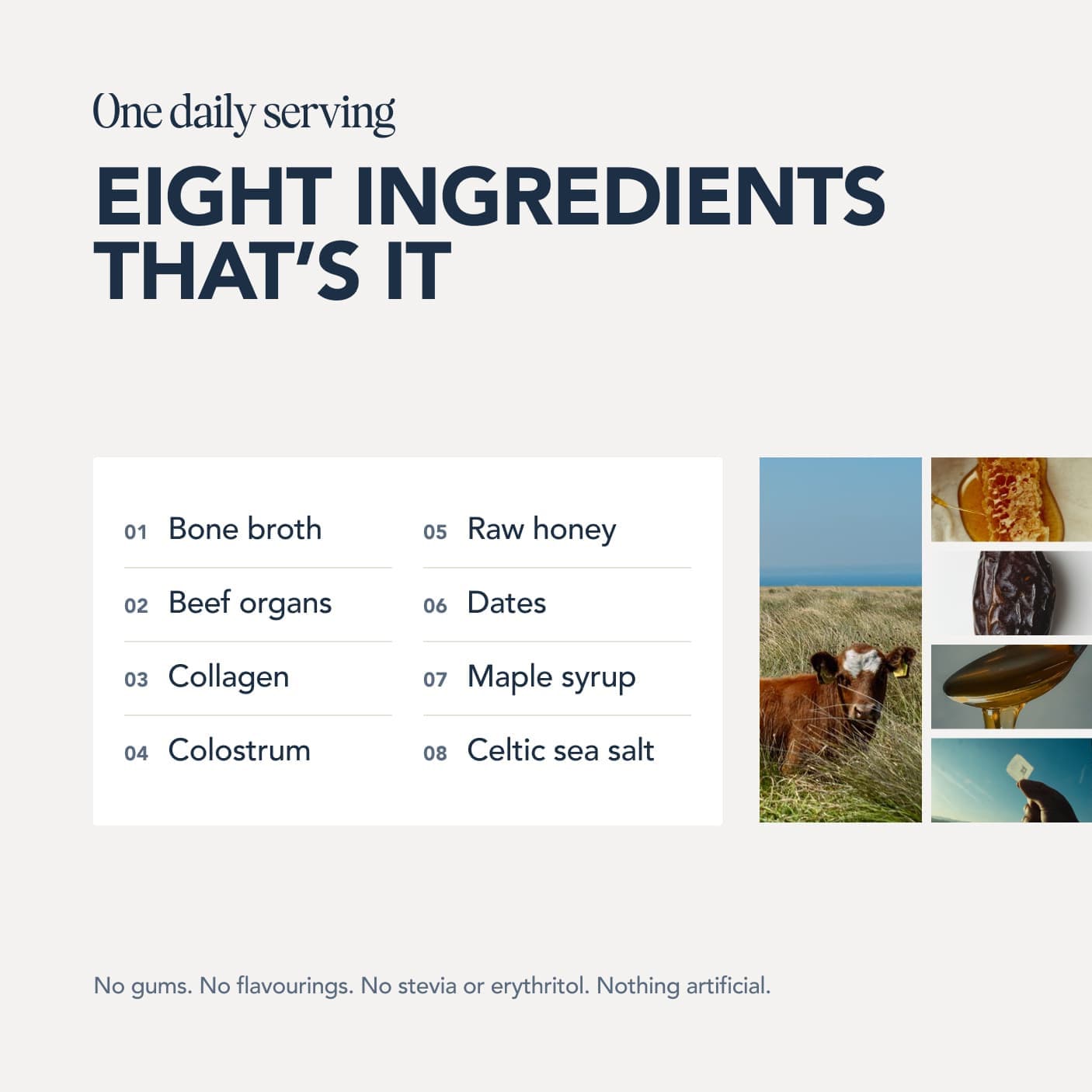
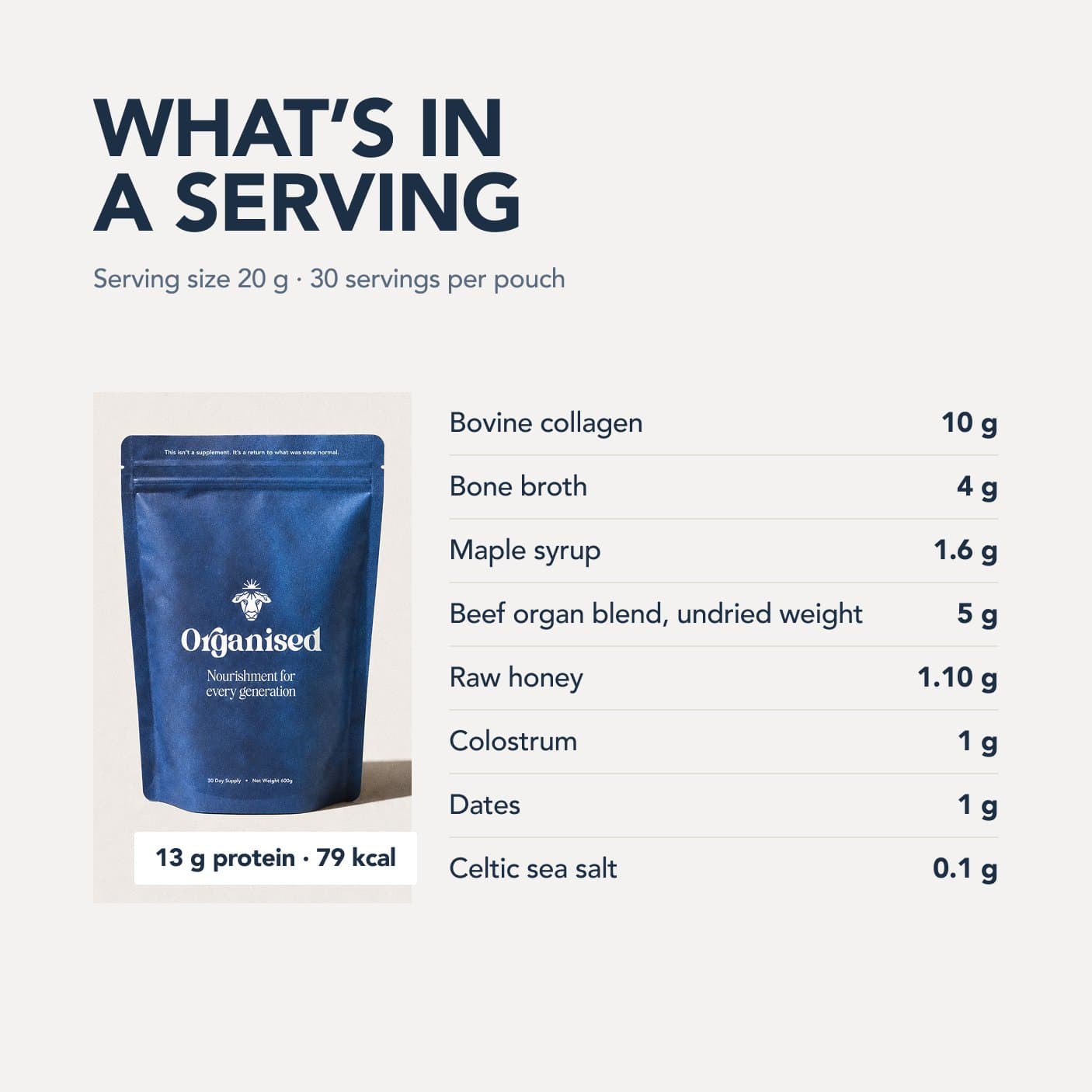
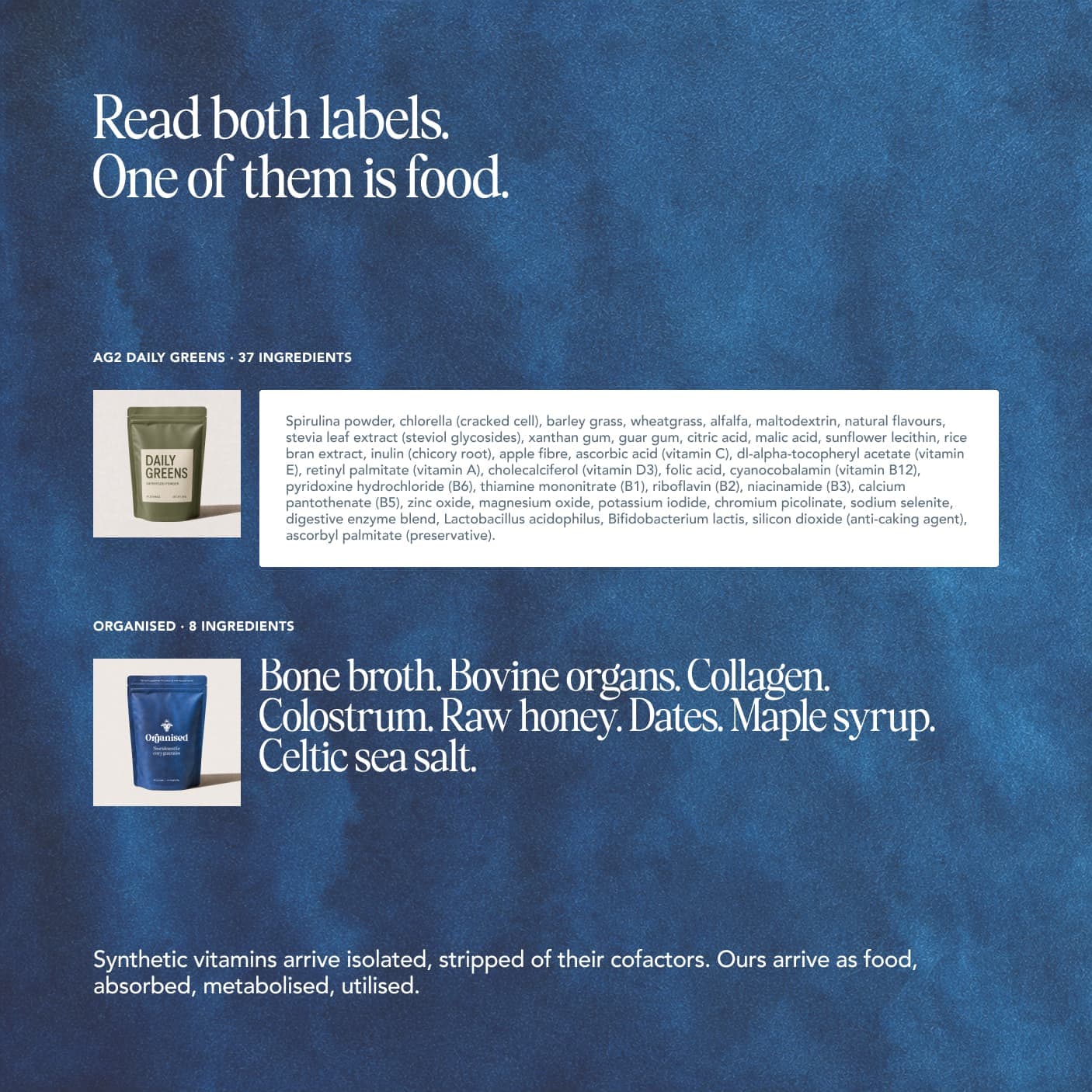
Eight real ingredients built around grass-fed beef organs, collagen and colostrum. Nothing synthetic added.
Free with your first order, worth £38. Plus £10 off the pouch with a subscription.

Free UK shipping · Made in England · 100 day money back guarantee on your first pouch · Skip, pause or cancel anytime
What not to eat
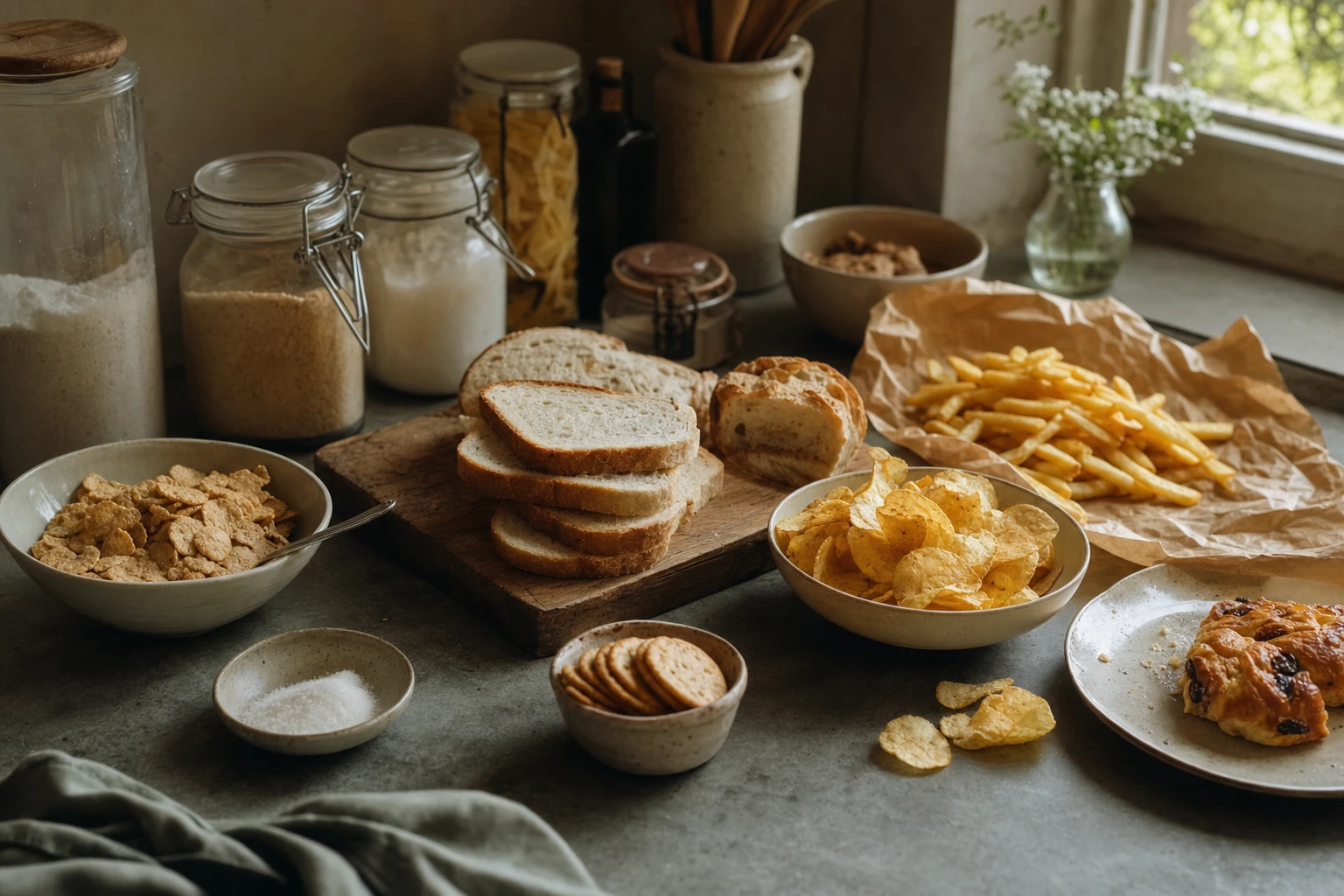
Avoid anything with refined carbohydrates or seed oils. White bread spikes blood sugar and promotes inflammation. Seed oils (canola, sunflower, vegetable oil) are oxidised and inflammatory. These damage the skin barrier and accelerate ageing more directly than almost anything else. Your skin can detect seed oils and responds by becoming inflamed.
Excess glucose can react with proteins through non-enzymatic glycation, producing advanced glycation end-products (AGEs) that accumulate in long-lived proteins like collagen and have been associated with skin stiffness and signs of ageing.3
Avoid alcohol if you're serious about skin health. It's dehydrating and inflammatory, and it depletes the nutrients your skin needs. A single night of drinking depletes your skin of water and micronutrients it took weeks to accumulate.
Avoid processed foods, convenience meals, and anything marketed as healthy but made with industrial ingredients. Your skin reflects what you eat at the ingredient level, not the macronutrient level.
The foods that age your skin are not the ones you love. They're the ones you didn't choose: the seed oils hidden in restaurant food, the refined carbohydrates in convenience meals, the inflammatory ingredients in processed foods.
The bottom line
Optimal skin health is not complicated. It's three organ meats a day, collagen-rich foods, raw vegetables, good fats, and the absence of inflammatory foods. Follow this eating pattern consistently and your skin will change noticeably within four weeks. Within three months, the difference will be impossible to ignore.
You don't need expensive skincare. You need to eat like your skin matters.
References
Every source below was checked on 27 August 2026. Each PubMed, PMC and DOI identifier was resolved against NCBI or Crossref, and what it opens is printed under the citation, so you can see the link goes where the citation says without leaving the page. Where a citation and its identifier disagreed, the citation was corrected to the record or the reference was deleted along with the sentence marker that pointed at it, and where the resolved paper turned out not to support the sentence, the sentence was cut back to what it does support. Borrowed authority is worse than none, because it looks like rigour.
- National Institutes of Health, Office of Dietary Supplements. Vitamin A and Carotenoids — Health Professional Fact Sheet. https://ods.od.nih.gov/factsheets/VitaminA-HealthProfessional/
- Pullar JM, Carr AC, Vissers MCM. The Roles of Vitamin C in Skin Health. Nutrients. 2017. https://pmc.ncbi.nlm.nih.gov/articles/PMC5579659/Checked 27 August 2026: PMC5579659 opens Pullar JM, Carr AC, Vissers MCM, The Roles of Vitamin C in Skin Health. Nutrients 2017;9(8). PubMed indexes it as: Review.The authors' own declaration, from the record: The authors declare no conflict of interest. Zespri International, a partial funder, had no influence on the selection of material to cover, nor on the focus and interpretation of the studies reviewed.
- Gkogkolou P, Bohm M. Advanced glycation end products: Key players in skin aging? Dermatoendocrinology. 2012. https://pmc.ncbi.nlm.nih.gov/articles/PMC3583887/Checked 27 August 2026: PMC3583887 opens Gkogkolou P, Böhm M, Advanced glycation end products: Key players in skin aging? Dermatoendocrinol 2012;4(3):259-70.
Who wrote and reviewed this guide
Niall Kiddle
Author · Founder, Organised
Niall is the founder of Organised. He started the company in 2024 after fixing his own health the slow way: in 2022 he swapped a cupboard of synthetic supplements for real food, raw milk, organ meats, bone broth and honey, and felt the difference within months.
Areas of expertise: Ancestral nutrition, Organ meats, Whole-food supplementation, Gut health, Regenerative sourcing
Read Niall's full profile
Pedro Rodrigues
Reviewer · Agronomist (farming and sourcing only)
Pedro is the agronomist Organised works with on farming and sourcing. His job on the guides is to keep the science honest: he reviews what we publish about soil health, regenerative agriculture, grazing and the way food is actually produced.
Areas of expertise: Regenerative agriculture, Agronomy, Soil health, Grass-fed farming, Food sourcing
Reviewed this guide on
Read Pedro's full profileMore on routines
View all- The Busy Parent's Guide to Whole Food Nutrition
- The Morning Routine That Changed My Health
- Evening Wind-Down: A Nutrition Protocol for Better Sleep
- How to Build a Supplement-Free Daily Routine
- How to Meal Prep for a Week of Whole Food Nutrition
- Shift Workers: How to Eat for Energy When Your Schedule Is Upside Down
- The Healthy Morning Routine Reddit Swears By: An Honest Breakdown
- The Weekend Reset: A 2-Day Whole Food Protocol
- Travel Nutrition: How to Stay Nourished on the Go
Browse the guides library
All guidesKeep reading

Recipes & routines
Evening Wind-Down: A Nutrition Protocol for Better Sleep
A science-backed evening nutrition protocol for deeper sleep. Timing, glycine-rich foods, magnesium, and how to reduce blue light exposure.
Health goals
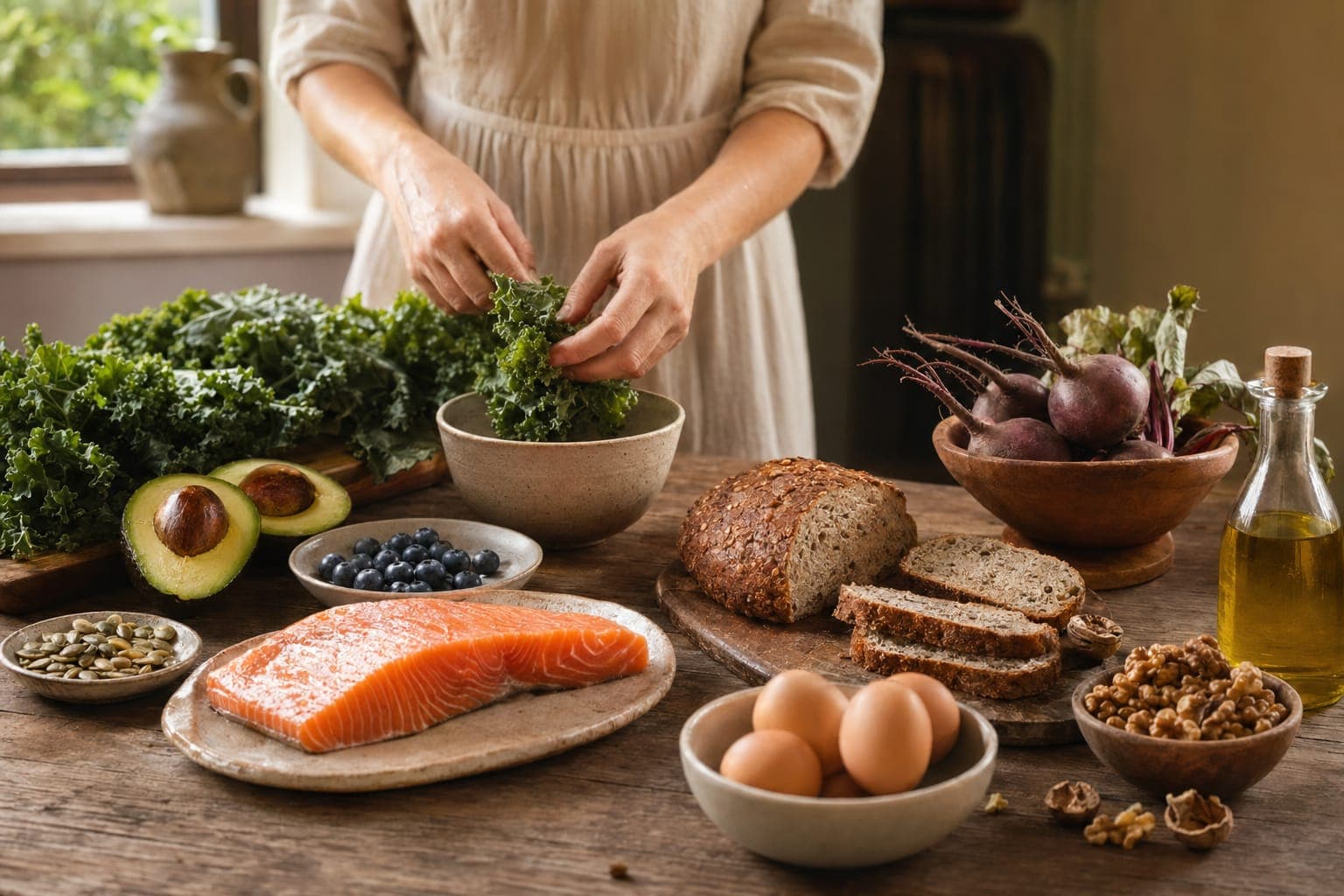
How to Feed Your Skin from the Inside Out
The complete guide to skin nutrition. Learn which nutrients transform your skin and the specific food sources to eat them from.
Recipes & routines
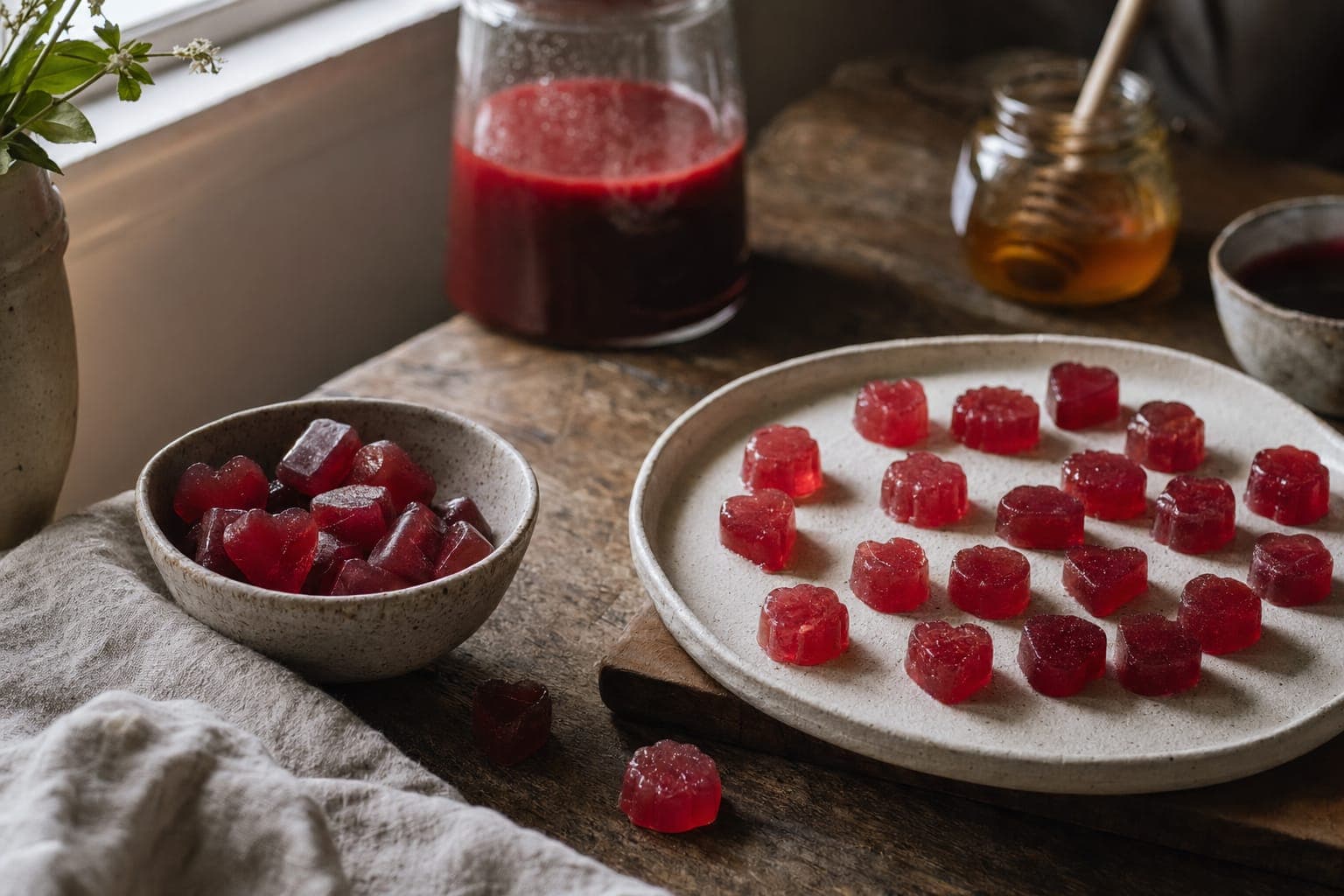
How to Make Your Own Gelatine Gummies
A simple recipe for homemade gelatine gummies using grass-fed gelatine, fresh juice, and raw honey. Better than shop-bought, kids love them.
Real food, made effortless
Add it to my routineA few ways to use it
All recipesHow to Make Your Own Gelatine Gummies
A simple recipe for homemade gelatine gummies using grass-fed gelatine, fresh juice, and raw honey. Better than shop-bought, kids love them.

Organised Protein Pancakes: A Weekend Favourite
A high-protein pancake recipe using beef protein, eggs, and raw milk. Cooked in cast iron, naturally sweetened with banana and honey. Real food breakfast.
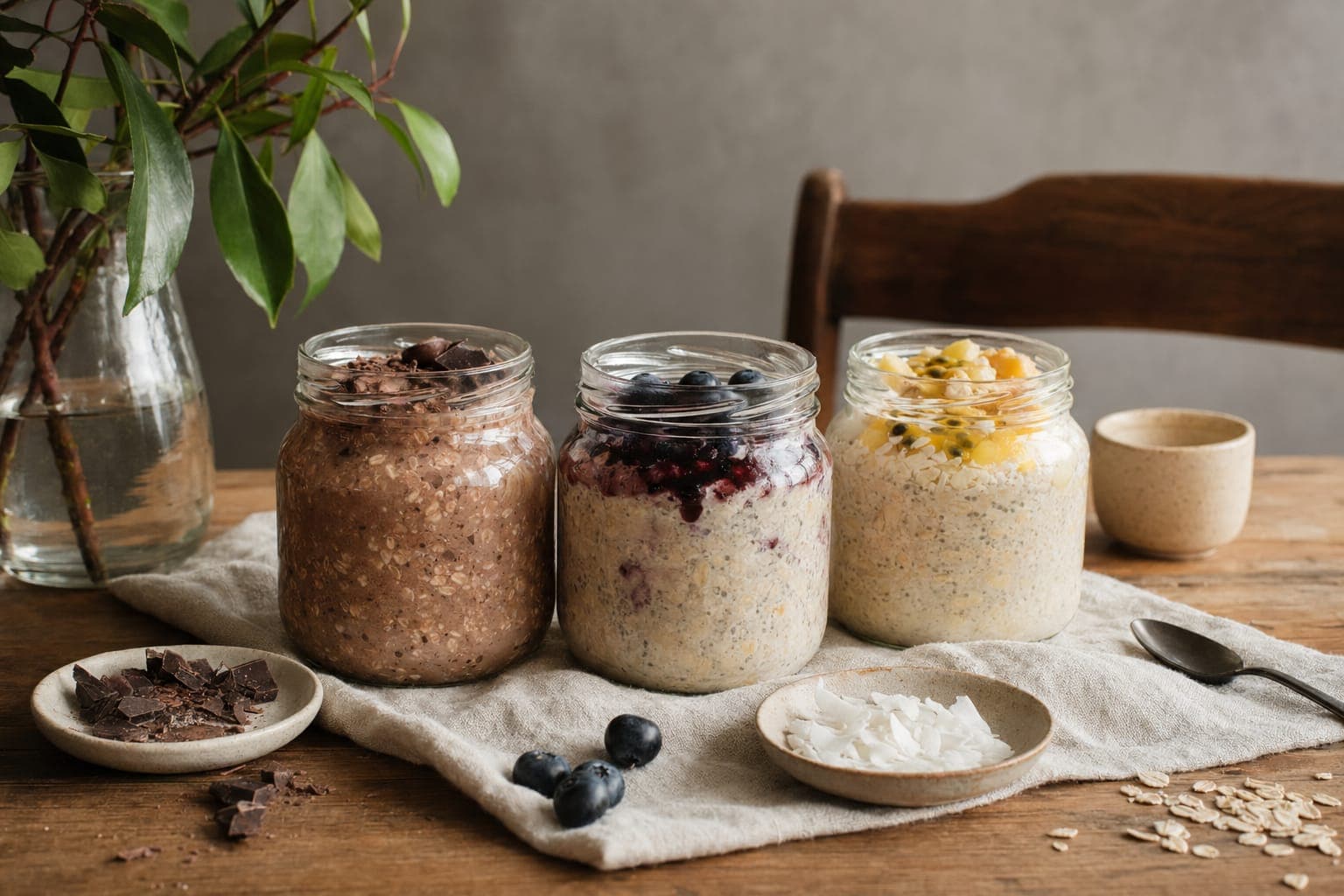
Organised Overnight Oats: 3 Variations
Three delicious overnight oats variations with Organised. Chocolate, berry, tropical flavours. Make them Sunday, eat them all week.


 Join over 100,000+ members
Build a better food system with us
The Organised community is thousands of people choosing real food and backing the farmers who grow it, all of us trying to leave the world a little better than we found it. If that is what you care about too, you belong here.