How to Build a Supplement-Free Daily Routine
Open your bathroom cabinet. Count the bottles. Vitamins, minerals, probiotics, adaptogenic powders, omega-3 capsules, magnesium before bed. Most of them cost money you'd rather spend on something else. Better news: you don't need them. Your food can do the work.

By Niall Kiddle, Founder, Organised

Reviewed by Pedro Rodrigues, Agronomist (farming and sourcing only) ·
6 min read · Published · Updated · 3 cited sources
Makers of the Organised Daily blend, a grass-fed beef organ supplement from regenerative UK farms

This isn't anti-supplement rhetoric. It's biology. Real food contains nutrients in forms your body recognises and uses. Supplements are imitations, often incomplete. Build your day around nutrient-dense whole foods and your supplement shelf becomes optional.
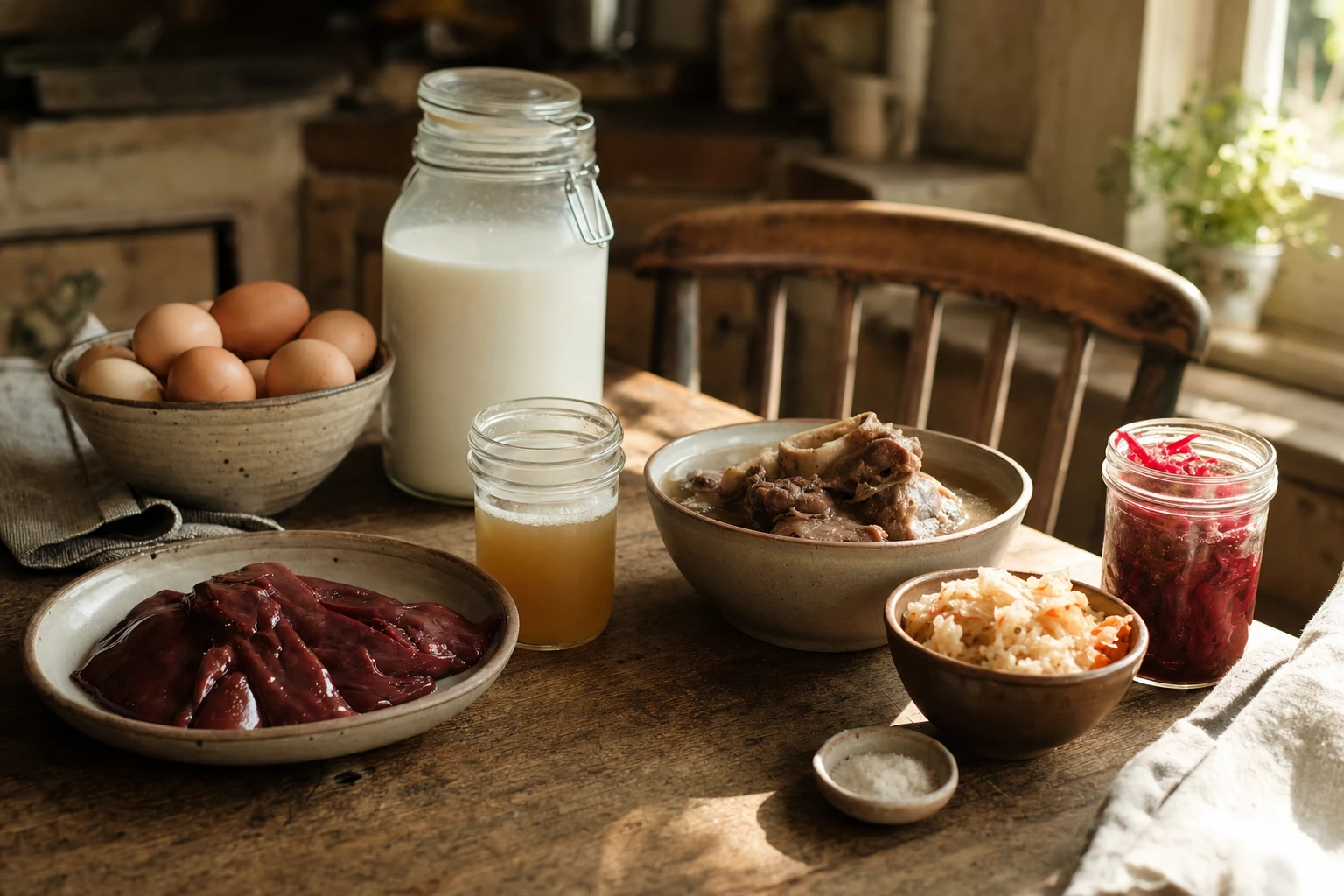
Why real food beats supplements
A supplement gives you a single nutrient in isolation.1 Your body processes it, then moves on. Real food gives you hundreds of compounds working together. Vitamin C with copper, with bioflavonoids, with the compounds that help your body absorb it.
Supplements are also expensive. A decent multivitamin runs fifteen pounds a month.2 That's one hundred eighty pounds a year. You could buy excellent beef liver, raw milk, fresh eggs, and high-quality bone broth for that money, and you'd be better off.
Your body evolved eating whole foods. It still works best that way. Build your routine around food, and supplements become a rare exception, not a daily habit.
6 AM: Start with minerals
Wake up. Drink a glass of water with a pinch of sea salt and a squeeze of lemon. This is your first mineral hit of the day. Sea salt provides sodium, potassium, magnesium. Lemon provides vitamin C and helps your body absorb minerals from the water.
Skip the coffee for now. Let your water work first. Your nervous system is coming online. Give it minerals before you demand energy.
Some people add a teaspoon of grass-fed gelatine or a small glass of bone broth to this morning drink. Gelatine provides glycine, which most modern diets are severely deficient in. Bone broth provides the same, plus minerals your bones need.
Minerals at waking means you don't need a magnesium supplement at bedtime. Your whole system will be better regulated throughout the day.
9 AM: Breakfast with complete protein
Two eggs fried in grass-fed butter, a slice of sourdough with butter, a small glass of raw milk. Or yoghurt with berries and a serving of Organised. Or leftover bone broth with soft-cooked eggs and fermented vegetables.
Eggs provide choline for brain health and lutein for your eyes. Both of these are nutrients most supplements ignore because they're not in the standard vitamin formula. Butter provides butyric acid, which heals your gut lining. Sourdough provides enzymes and fermentation makes the grain easier to digest. Raw milk provides A2 casein, which is gentler on the digestive system than A1.
This breakfast is complete. It has protein, fat, carbohydrate if you want it, and dozens of micronutrients your body recognises. You don't need a B-complex tablet.
A breakfast of eggs, butter, and real food is more bioavailable than a morning vitamins taken with cereal and coffee.

1 PM: Lunch with organ meat
Beef liver, chicken liver, or kidney with vegetables cooked in good fat. If you're not ready for straight organ meat, start with a liver pate on sourdough crackers, or organ meat mixed into ground beef.
Organ meats are the most nutrient-dense foods available to humans. Liver provides vitamin A, B vitamins, iron, copper, and choline. Kidney provides selenium and coenzyme Q10. Heart provides taurine and carnitine. One serving of organ meat replaces ten supplements.
Serve with fermented vegetables. Sauerkraut, kimchi, or fermented cabbage add probiotics and enzymes that help you digest and absorb the minerals in the organ meat.
One meal of organ meat a week replaces your entire supplement cabinet. Make it twice a week and your energy becomes stable.
4 PM: A savoury snack
Macadamia nuts and a small piece of cheddar cheese. Or a handful of olives. Or a few slices of salami. Or a piece of dark chocolate with at least 85 per cent cacao.
This snack stabilises your blood glucose before dinner. Nuts and cheese provide fat and salt. Olives and salami do the same. Dark chocolate provides magnesium and polyphenols.
The goal is to arrive at dinner not ravenous. If you're starving, you'll overeat. If you're satisfied, you'll eat what you need and stop.
Get recipes and routines, free
Two short reads a week of simple, nutrient-dense recipes and daily routines.
By signing up you agree to receive emails from us. No spam, unsubscribe anytime.
7 PM: Dinner with fermented food
Beef stew with carrots, celery, and onions, simmered for hours. Or roasted chicken with root vegetables. Or fish with asparagus. Whatever you choose, serve it with a forkful of fermented vegetables on the side.
The long, slow cooking of stew breaks down collagen into gelatine, which your joints, skin, and gut lining need. The roasted vegetables provide antioxidants and fibre. The fish provides omega-3 fatty acids and selenium. The fermented vegetables provide enzymes and beneficial bacteria.
This is where most people reach for their probiotic supplement. You don't need it. Real fermented food contains far more diverse bacteria than any supplement can provide.
Dinner built around real protein, cooked vegetables, and fermented foods is your probiotic supplement. Real bacteria, doing real work in your gut.

The bottom line
Your supplement shelf exists because your diet isn't complete. Fix your diet and the supplements disappear. This routine is the template: minerals at waking, complete protein at breakfast, organ meat at lunch, a stabilising snack, and fermented food at dinner.
Repeat this pattern and notice what happens. Your energy steadies. Your skin clears. Your sleep improves. Your digestion normalises. These are the things people reach for supplements to achieve. Real food does them better, faster, and costs less money.
Your body doesn't need vitamins and minerals in bottles. It needs them in the form it evolved to use. Real food. That's all.
How to know if you're eating enough
The real test is how you feel. Do you have energy that lasts from breakfast to lunch? Does your mood stay stable? Are you thinking clearly through the afternoon? These aren't exciting metrics, but they're the ones that matter. If you're wired in the morning and crashed by 3 PM, something in your eating pattern isn't working.
Specifically, if you're eating real food but still feeling depleted, you might not be eating enough of it. Real food is more nutrient-dense, so you eat less volume, but you still need adequate quantities. A palm-sized piece of meat, a fist of vegetables, a thumb of fat, these aren't random suggestions. They're portions that have worked across cultures for generations.
Feeling good on real food is the signal that you're doing it right. Not a number on a scale, not a macronutrient ratio, not a supplement label. Just: do you feel like yourself?

1 of 9
Daily blend
100,000+ thriving families4.9 on Trustpilot
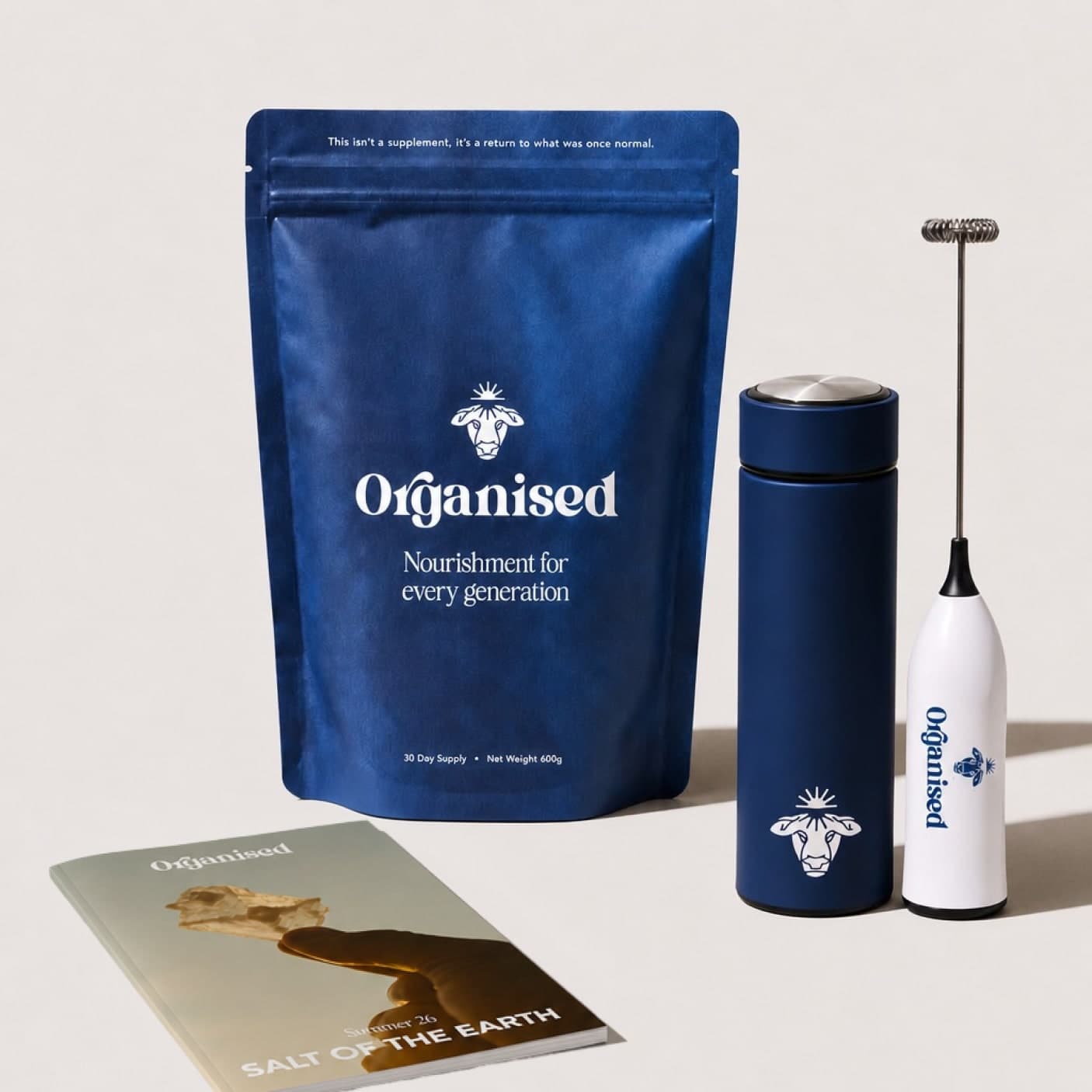
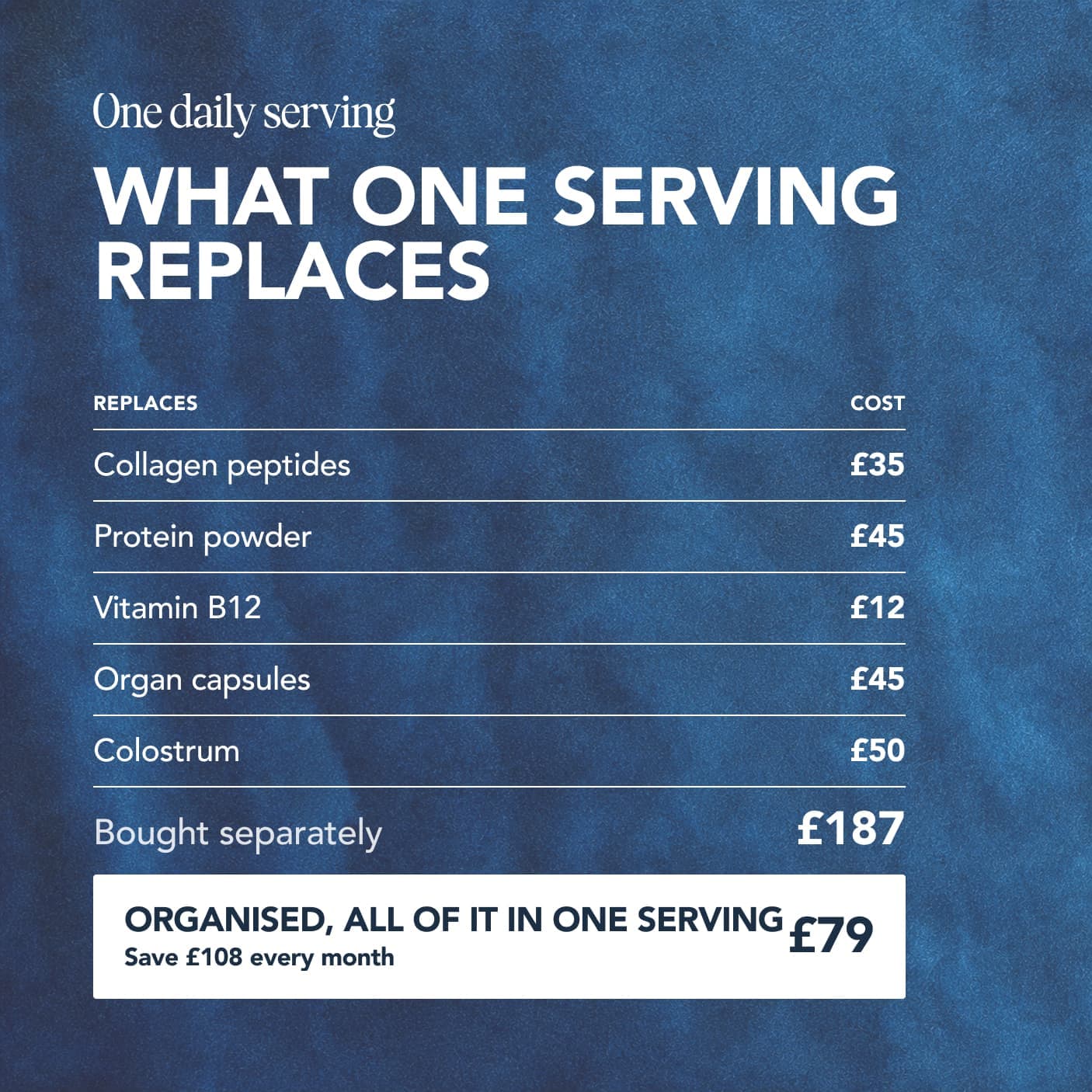
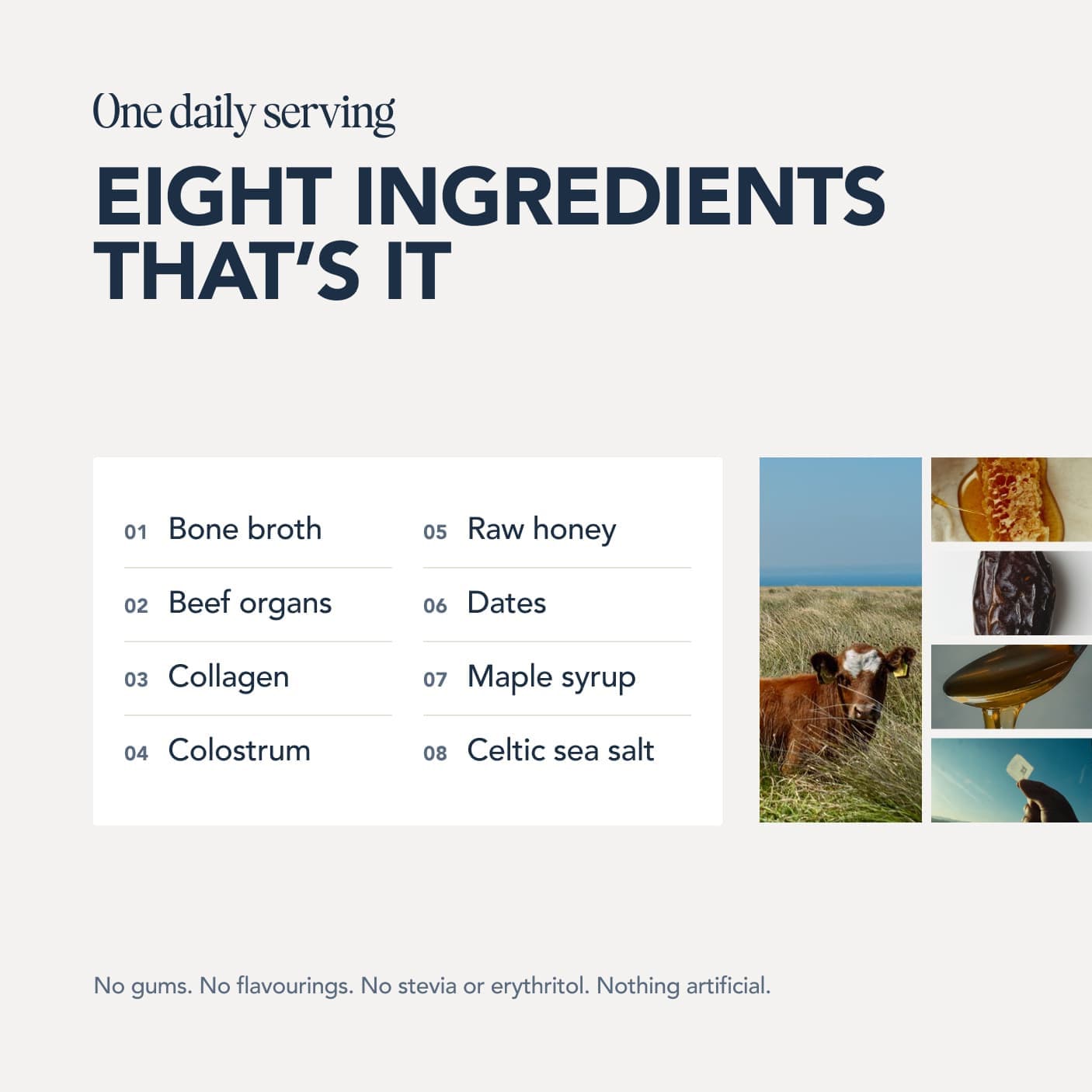
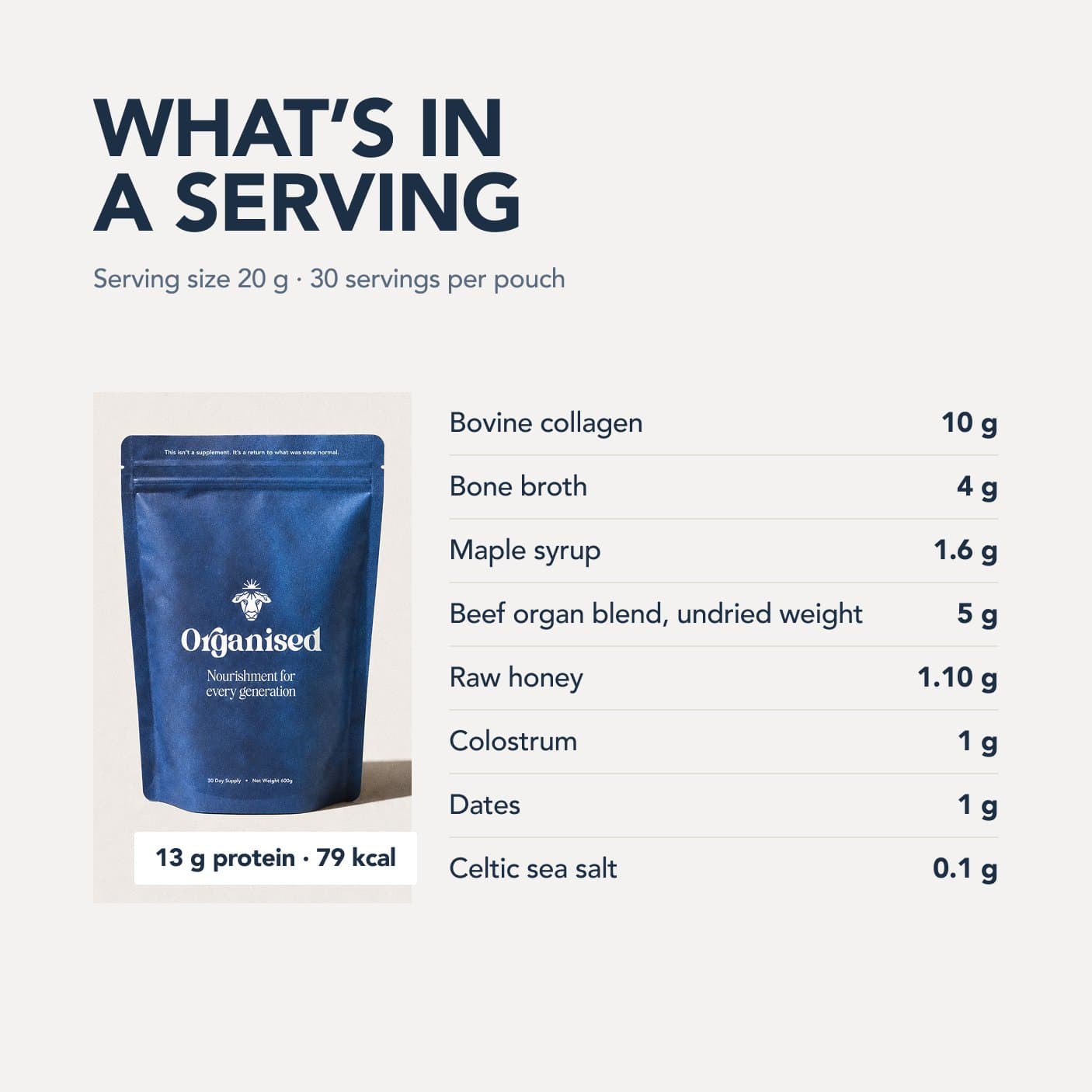
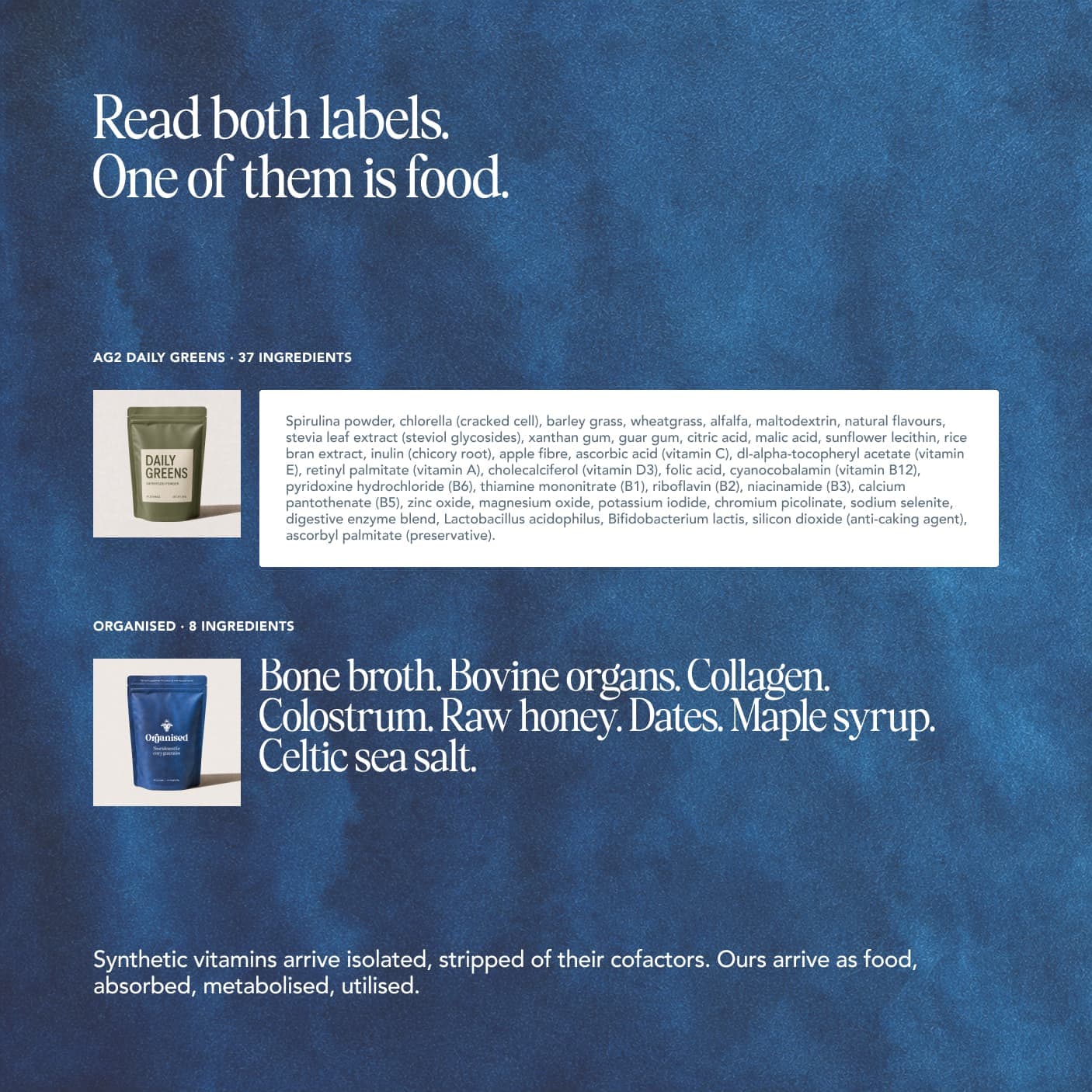
Eight real ingredients built around grass-fed beef organs, collagen and colostrum. Nothing synthetic added.
Free with your first order, worth £38. Plus £10 off the pouch with a subscription.

Free UK shipping · Made in England · 100 day money back guarantee on your first pouch · Skip, pause or cancel anytime
Seasonal eating and real food
One advantage of eating real food is that it changes with the season. Winter root vegetables, spring greens, summer stone fruit, autumn squashes, your body naturally gets different nutrients depending on what's available. This built-in rotation is part of why real food works so well. You're not stuck eating the same thing year-round.
If you're trying to build a supplement-free life, paying attention to seasons isn't a luxury, it's practical. Eat what's in season, what's local to you if you can, what's been stored properly. Your digestion recognises these foods in a way it doesn't recognise a capsule.
What happens in the first month
Many people report feeling better surprisingly quickly. Within two weeks, sleep often improves.3 Within three weeks, digestion settles. Skin clears up. Moods stabilise. Energy becomes less spiky.
But some people feel worse before they feel better. Headaches, fatigue, mild nausea. This is often your body detoxifying from whatever wasn't working before. Drink more water with salt. Give it time. By week four, most people who push through are feeling noticeably better than they did on a supplement-heavy diet.
References
Every source below was checked on 27 August 2026. Each PubMed, PMC and DOI identifier was resolved against NCBI or Crossref, and what it opens is printed under the citation, so you can see the link goes where the citation says without leaving the page. Where a citation and its identifier disagreed, the citation was corrected to the record or the reference was deleted along with the sentence marker that pointed at it, and where the resolved paper turned out not to support the sentence, the sentence was cut back to what it does support. Borrowed authority is worse than none, because it looks like rigour.
- Liu RH. Health-promoting components of fruits and vegetables in the diet. Adv Nutr. 2013. PMID 23674808.Checked 27 August 2026: PMID 23674808 opens Liu RH, Health-promoting components of fruits and vegetables in the diet. Adv Nutr 2013;4(3):384S-92S. PubMed indexes it as: Review.The authors' own declaration, from the record: Author disclosure: R. H. Liu, no conflicts of interest.
- National Institutes of Health. Dietary supplements: what you need to know. ods.od.nih.gov/factsheets/WYNTK-Consumer.
- St-Onge MP, et al. Effects of diet on sleep quality. Adv Nutr. 2016. PMC5015038.Checked 27 August 2026: PMC5015038 opens St-Onge MP, Mikic A, Pietrolungo CE, Effects of Diet on Sleep Quality. Adv Nutr 2016;7(5):938-49. PubMed indexes it as: Review.The authors' own declaration, from the record: 2 Author disclosures: M-P St-Onge, A Mikic, and CE Pietrolungo, no conflicts of interest.
Who wrote and reviewed this guide
Niall Kiddle
Author · Founder, Organised
Niall is the founder of Organised. He started the company in 2024 after fixing his own health the slow way: in 2022 he swapped a cupboard of synthetic supplements for real food, raw milk, organ meats, bone broth and honey, and felt the difference within months.
Areas of expertise: Ancestral nutrition, Organ meats, Whole-food supplementation, Gut health, Regenerative sourcing
Read Niall's full profile
Pedro Rodrigues
Reviewer · Agronomist (farming and sourcing only)
Pedro is the agronomist Organised works with on farming and sourcing. His job on the guides is to keep the science honest: he reviews what we publish about soil health, regenerative agriculture, grazing and the way food is actually produced.
Areas of expertise: Regenerative agriculture, Agronomy, Soil health, Grass-fed farming, Food sourcing
Reviewed this guide on
Read Pedro's full profileMore on routines
View all- The Busy Parent's Guide to Whole Food Nutrition
- The Morning Routine That Changed My Health
- A Day of Eating for Optimal Skin Health
- Evening Wind-Down: A Nutrition Protocol for Better Sleep
- How to Meal Prep for a Week of Whole Food Nutrition
- Shift Workers: How to Eat for Energy When Your Schedule Is Upside Down
- The Healthy Morning Routine Reddit Swears By: An Honest Breakdown
- The Weekend Reset: A 2-Day Whole Food Protocol
- Travel Nutrition: How to Stay Nourished on the Go
Browse the guides library
All guidesKeep reading

Recipes & routines
Evening Wind-Down: A Nutrition Protocol for Better Sleep
A science-backed evening nutrition protocol for deeper sleep. Timing, glycine-rich foods, magnesium, and how to reduce blue light exposure.

Recipes & routines
The Morning Routine That Changed My Health
Build a healthy morning routine that supports your nutrition: sunlight, hydration, an Organised shake, movement, and mindset, all in one daily protocol.

Recipes & routines
How to Make Your Own Gelatine Gummies
A simple recipe for homemade gelatine gummies using grass-fed gelatine, fresh juice, and raw honey. Better than shop-bought, kids love them.
Real food, made effortless
Add it to my routineA few ways to use it
All recipesHow to Make Your Own Gelatine Gummies
A simple recipe for homemade gelatine gummies using grass-fed gelatine, fresh juice, and raw honey. Better than shop-bought, kids love them.
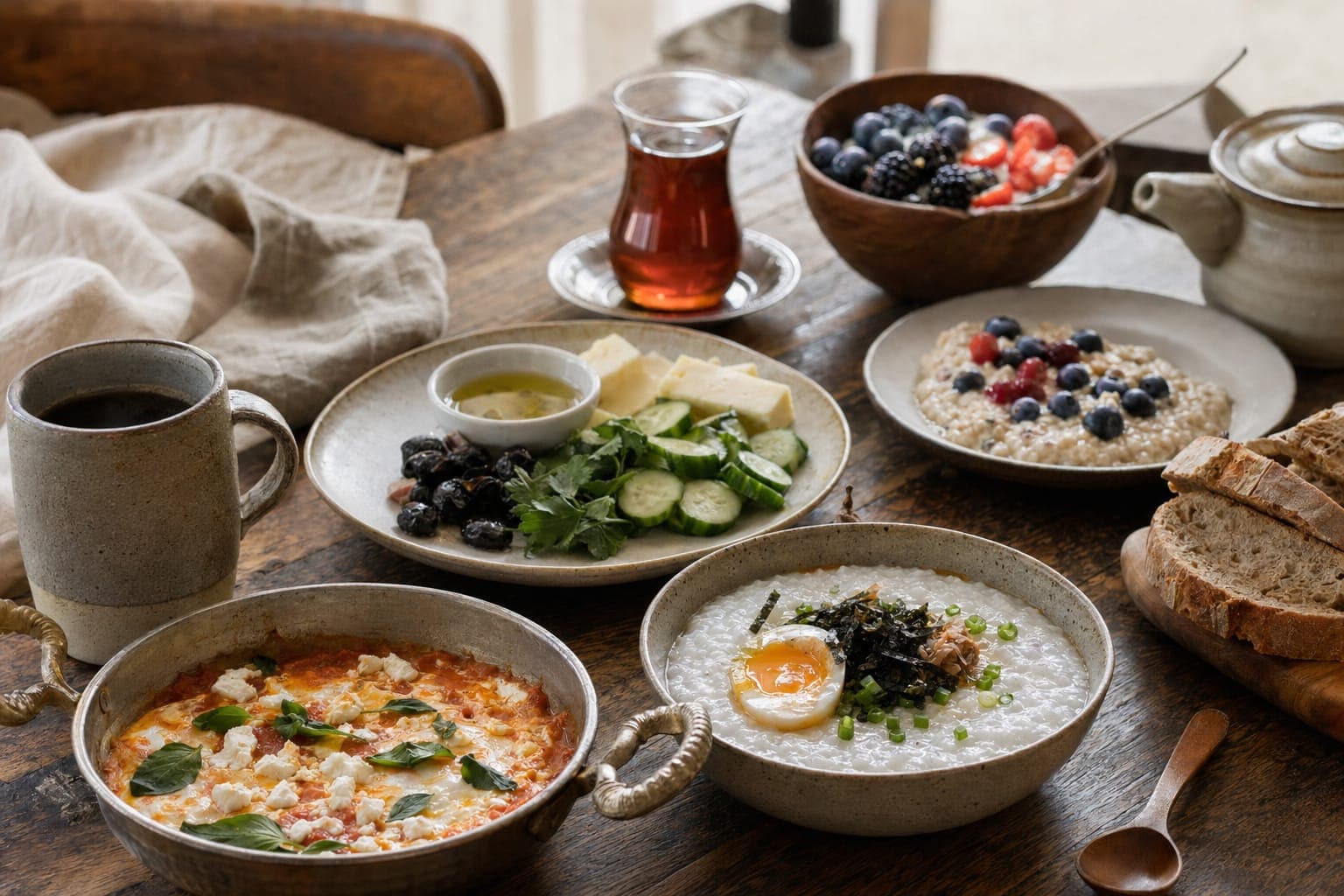
Ancestral Breakfast Ideas from Around the World
Traditional breakfast recipes from cultures that got nutrition right. Japanese, Turkish, Scottish, and more. Whole-food breakfast inspiration.
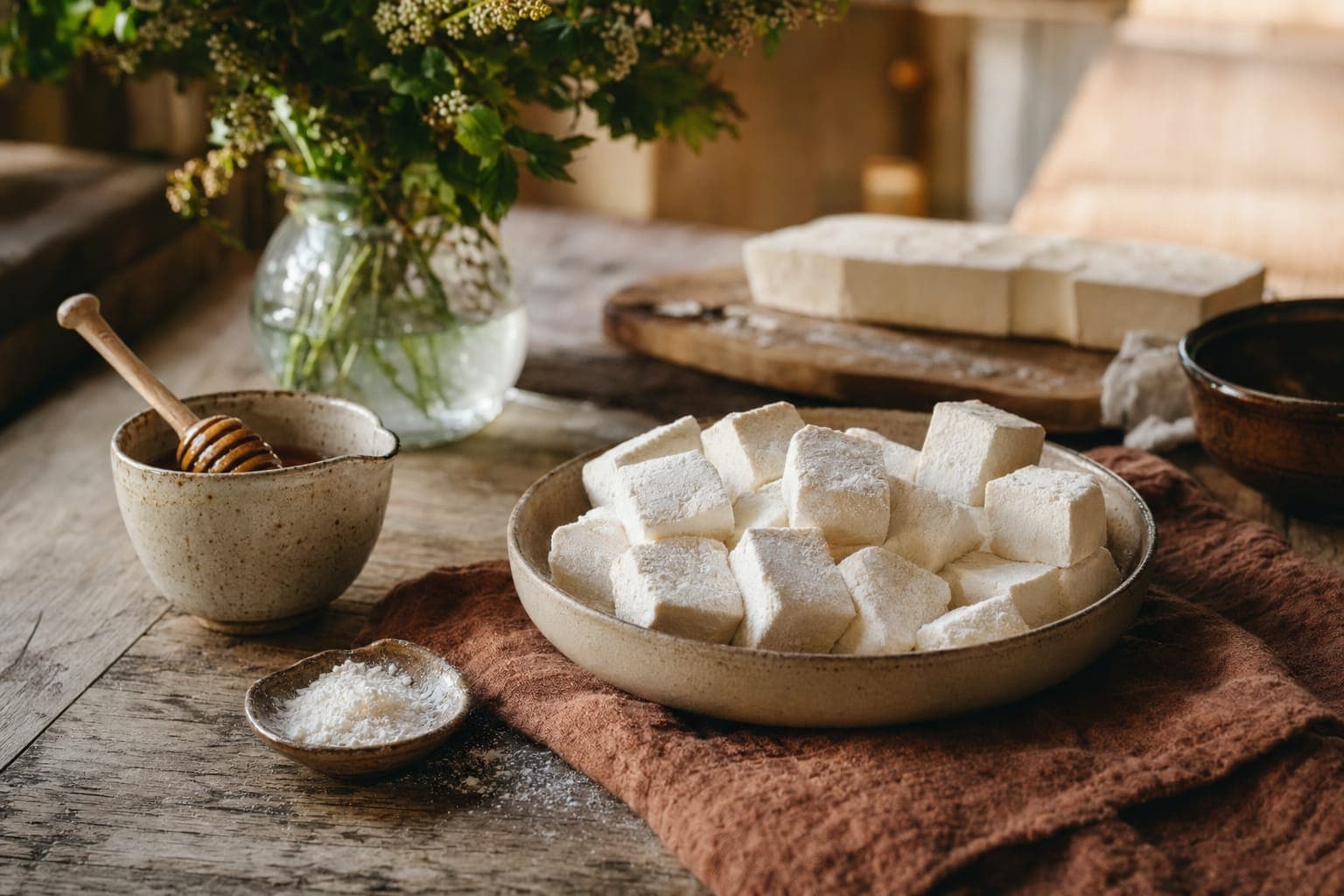
Gut-Healing Marshmallows with Collagen and Raw Honey
Learn to make gut-healing marshmallows with collagen and raw honey. A shareable treat that sneaks nutrition into every bite. Easy recipe with video tips.


 Join over 100,000+ members
Build a better food system with us
The Organised community is thousands of people choosing real food and backing the farmers who grow it, all of us trying to leave the world a little better than we found it. If that is what you care about too, you belong here.