How to Make Bone Marrow Butter
Bone marrow is one of the most nutrient-dense foods on the planet. It's also terrifying to most people. You can change that. Roast marrow bones until soft, scoop out the marrow, mix it with butter, and you've created something that tastes luxurious and happens to be medicine.
By Niall Kiddle, Founder, Organised

Reviewed by Pedro Rodrigues, Agronomist (farming and sourcing only) ·
5 min read · Published · Updated · 3 cited sources
Makers of the Organised Daily blend, a grass-fed beef organ supplement from regenerative UK farms
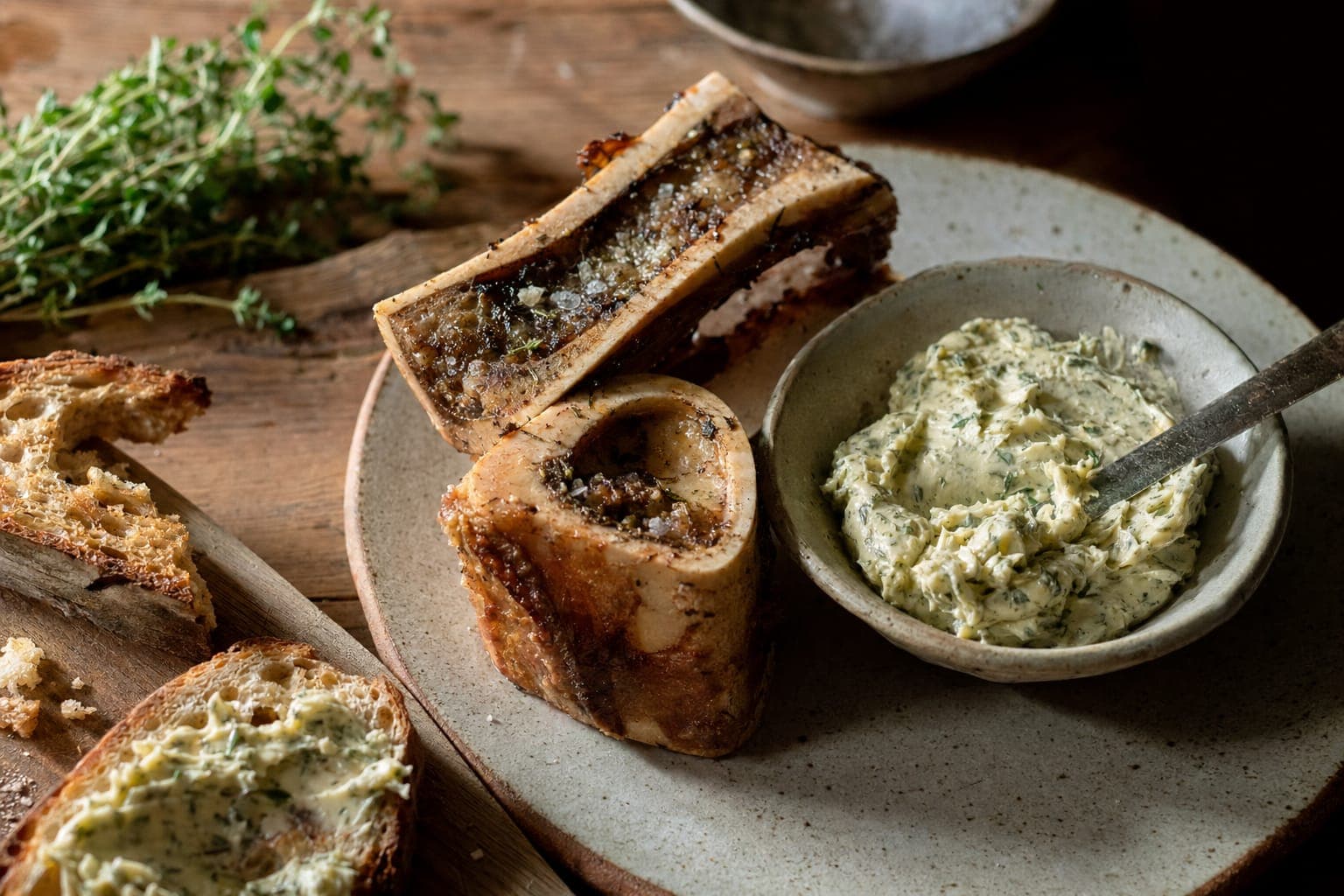
Bone marrow is the fatty tissue inside bones. In grass-fed animals raised properly, this marrow is rich in fat-soluble vitamins (A, D, K2, E)1, cholesterol for hormone production, and compounds that support brain function and immune health. When mixed with butter, it becomes a spread that tastes decadent and carries more micronutrients than most vegetables.
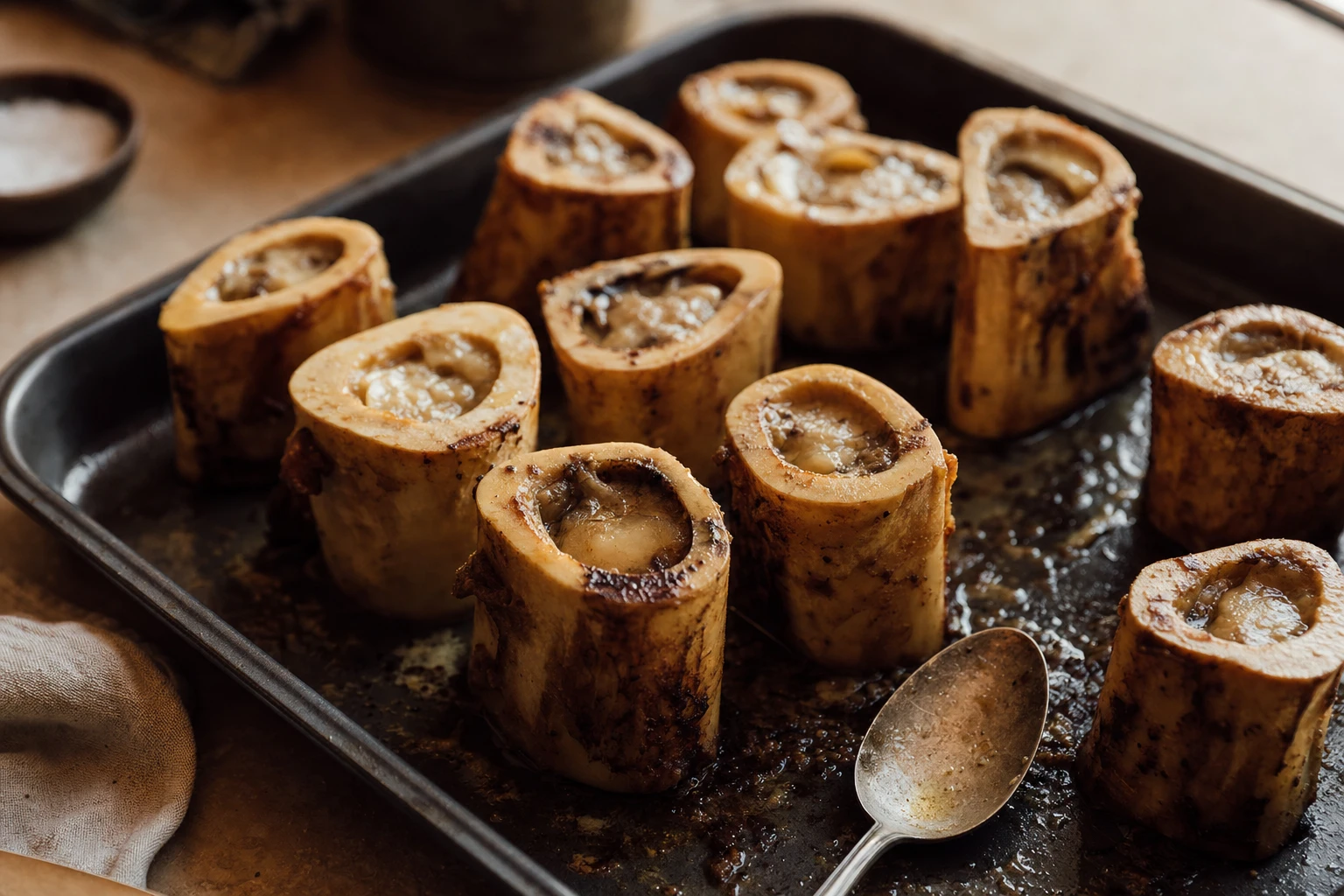
What bone marrow actually is
Bone marrow serves two functions. Red marrow produces blood cells and immune cells. Yellow marrow is mostly fat, and that's what you're after for eating.
When an animal is young, most of its marrow is red. As it ages, more converts to yellow. Grass-fed cattle tend to have nutrient-dense, golden-coloured marrow. Grain-fed cattle produce whiter, less nutrient-concentrated marrow. This is worth knowing when sourcing.
Your ancestors ate marrow. Regularly. Not as a delicacy. As a staple. The best parts of an animal were the organ meats and the marrow. The muscle meat was sometimes a side dish.
Modern culture has flipped that hierarchy on its head. We've made muscle meat the prized cut and thrown away the organs and bones. That's a recent development. For most of human history, if you killed an animal, you ate every nutrient-dense part. Marrow was a treasured source of calories and fat-soluble vitamins.
Why you should eat it
Fat-soluble vitamins: A, D, K2, and E. Most people are deficient in these. They live in fat, not in water, so eating fat from well-fed animals is how you obtain them. Marrow from grass-fed animals is concentrated in these.
Cholesterol: Your brain is 25 percent cholesterol.2 Your hormones are built from cholesterol. Your immune system uses cholesterol. The anti-cholesterol propaganda of the last 40 years has left people needlessly deficient. Marrow is one of the richest sources.
Bone health: The marrow doesn't directly strengthen bones, but the nutrients it contains (especially K2) direct calcium into the bones and away from soft tissue calcification (a major driver of heart disease).3
Brain function: Marrow carries compounds that cross the blood-brain barrier and support cognitive function. If you have brain fog, poor memory, or difficulty concentrating, marrow butter is worth trying.
- Rich in conjugated linoleic acid (CLA), which supports body composition and immune function.
- Contains stem cells and growth factors that may support healing (though research is ongoing).
- Tastes absolutely luxurious on sourdough bread or melted over steak.
Sourcing and preparing bones
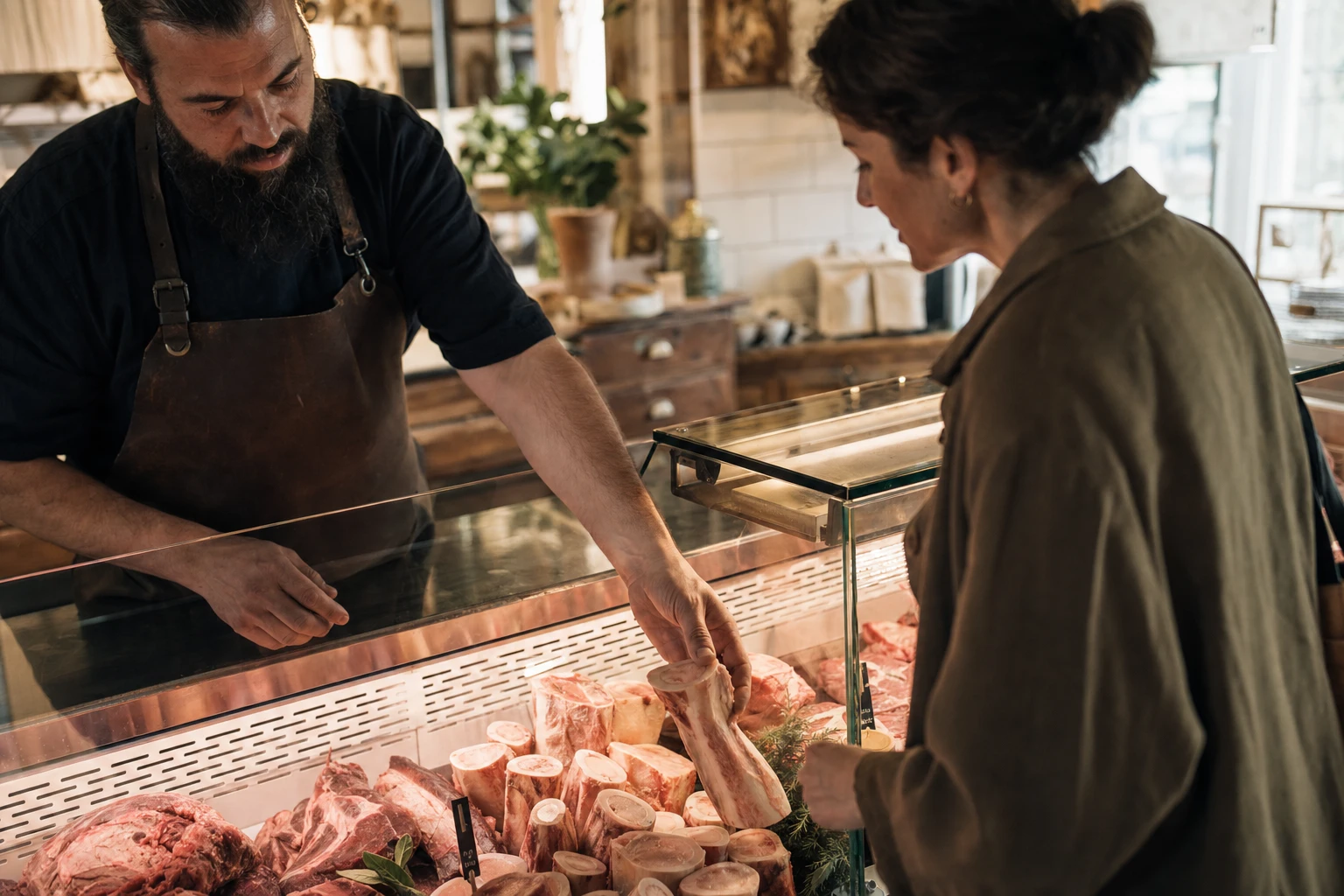
Head to a butcher counter. Ask for grass-fed beef marrow bones. Not frozen from the supermarket. A real butcher. Tell them you're going to roast them. They'll probably slit them lengthwise (called "frenching") to make scooping easier.
Ask about the animal's diet. If they don't know, try another butcher. You want grass-fed, ideally finished on pasture. If the butcher says "grass-fed and grain-finished", that's still better than grain-fed, but not ideal. The final diet matters significantly for nutrient density.
Buy 2-3 bones per person. They're inexpensive (often given away or sold for a few pounds). Transport them home in a bag. Refrigerate if using within two days. Freeze if keeping longer (they'll last frozen for months).
Get recipes and routines, free
Two short reads a week of simple, nutrient-dense recipes and daily routines.
By signing up you agree to receive emails from us. No spam, unsubscribe anytime.
Method
Makes roughly 100 grams of bone marrow butter. Takes 30 minutes active time, plus cooling.
- Preheat your oven to 200°C. Line a baking tray with parchment paper or foil.
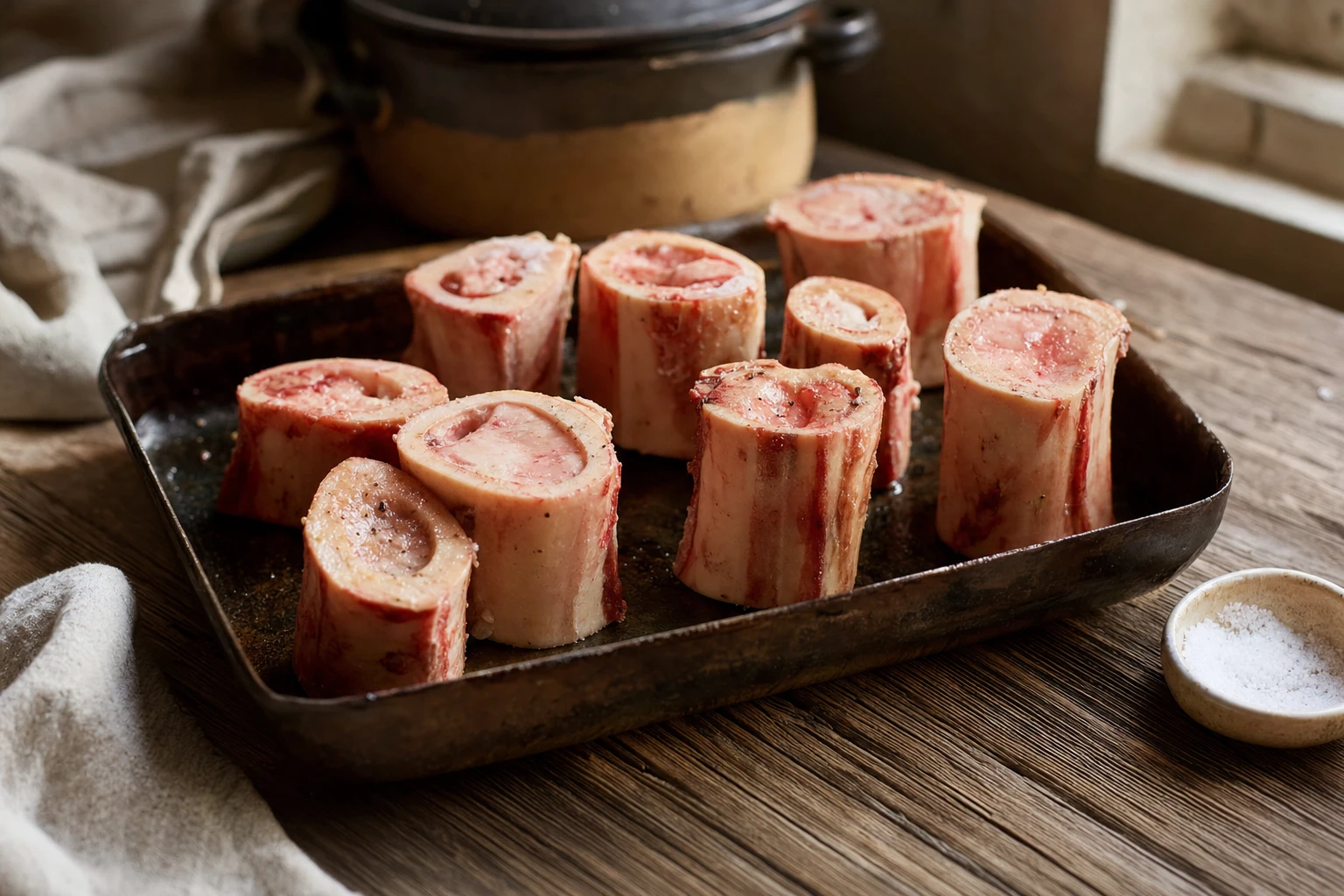
- Place the marrow bones on the tray, cut-side facing upward if they've been split. If they're whole bones, you can roast them as is. You'll scoop from the end.
- Roast for 15-20 minutes. The marrow will soften and may start to leak slightly from the ends. Don't panic. That's correct. You're looking for the marrow to be soft enough that a spoon or small knife can easily scoop it out, but not so hot that it's liquefied.
- Remove from the oven and allow to cool for 5 minutes. The bones will be very hot.
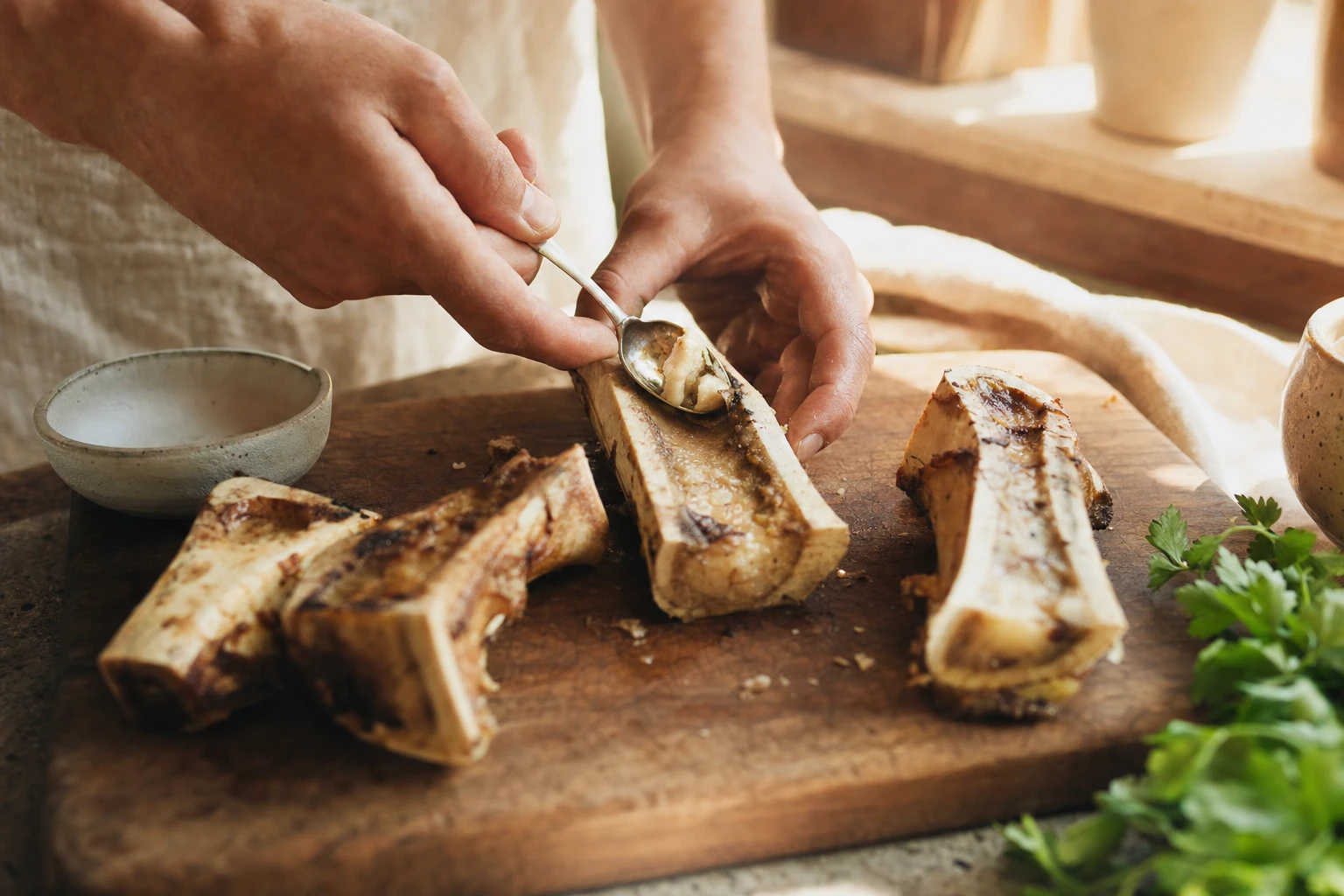
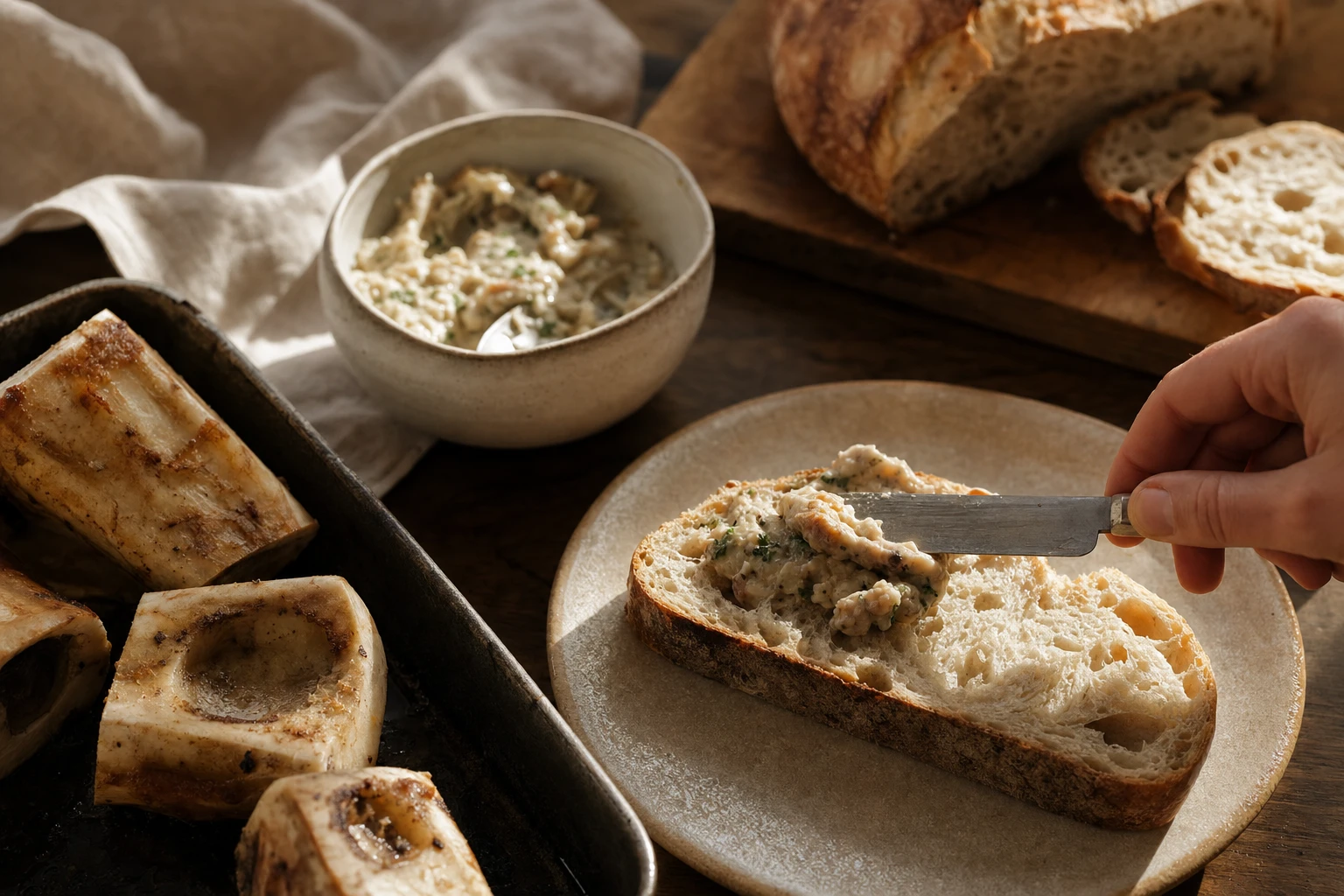
- Using a small spoon (a grapefruit spoon works perfectly), scoop the soft marrow from inside the bone. If the bone was split, the marrow will come away easily. If whole, scoop from the exposed end.
- Place the scooped marrow in a small bowl. It should have the texture of soft butter.
- Add 100 grams of soft grass-fed butter (unsalted) and mix thoroughly with a fork until combined. The mixture should be uniform and creamy.
- Optional additions: a small pinch of sea salt, a few drops of lemon juice, finely chopped fresh parsley or thyme, a crack of black pepper. Mix if adding.
- Spoon the marrow butter into a small jar or directly onto a piece of parchment to cool and solidify. Refrigerate for up to two weeks, or freeze for months.
The roasting time varies with bone size. Smaller bones take 12-15 minutes. Large beef femurs can take 20-25. You're looking for soft, not liquid. Err on the side of less time. You can always return them to the oven.
1 of 9
Daily blend
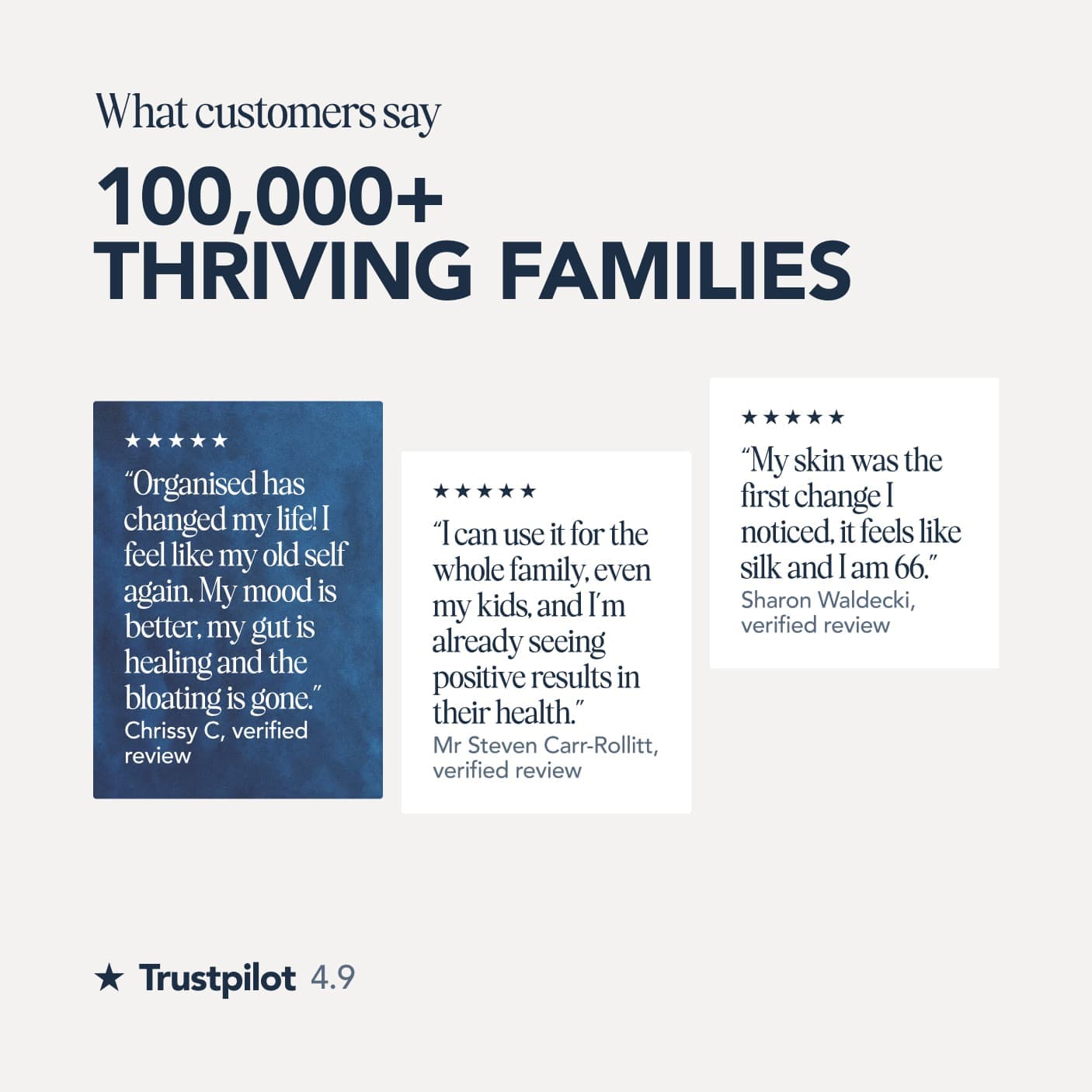
100,000+ thriving families4.9 on Trustpilot
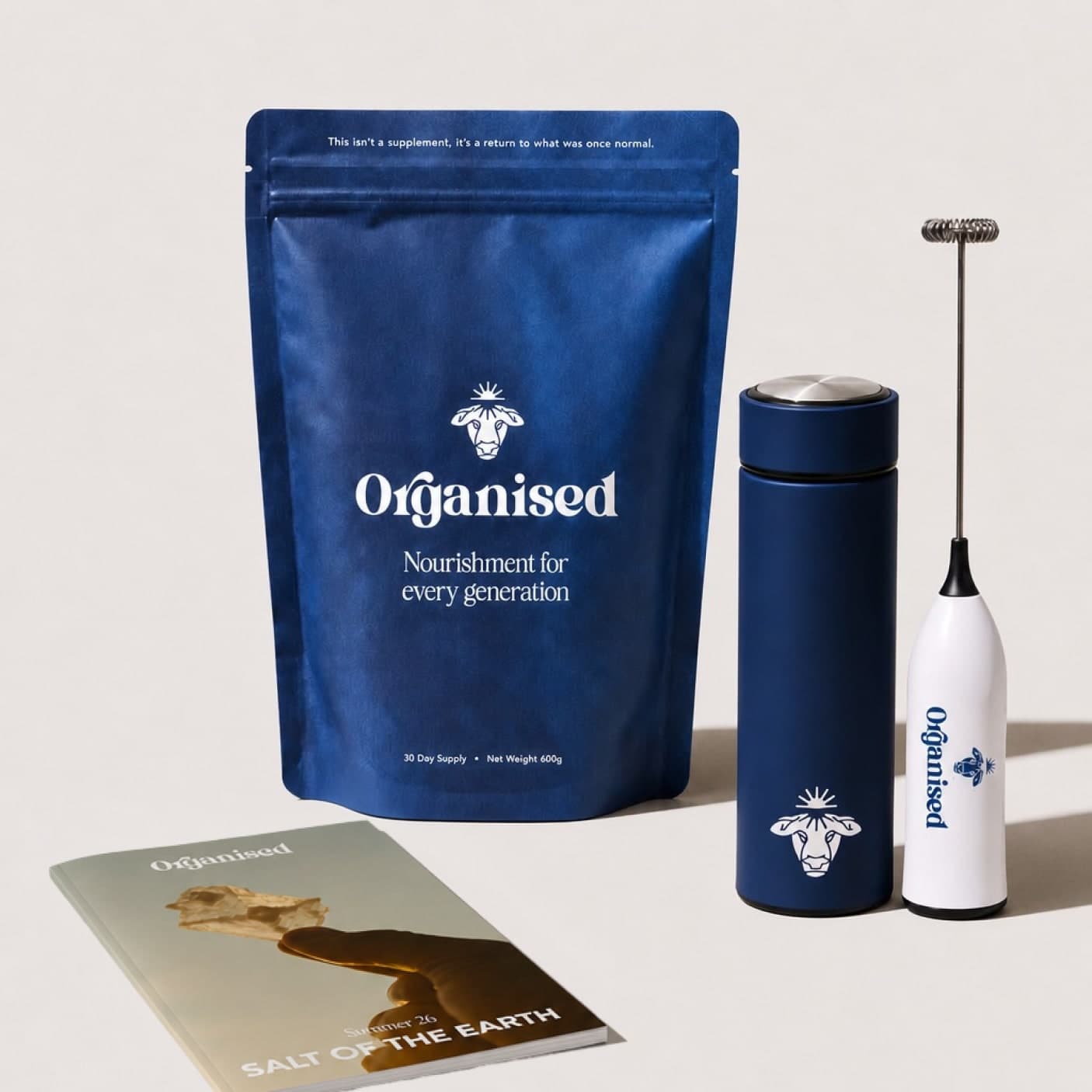
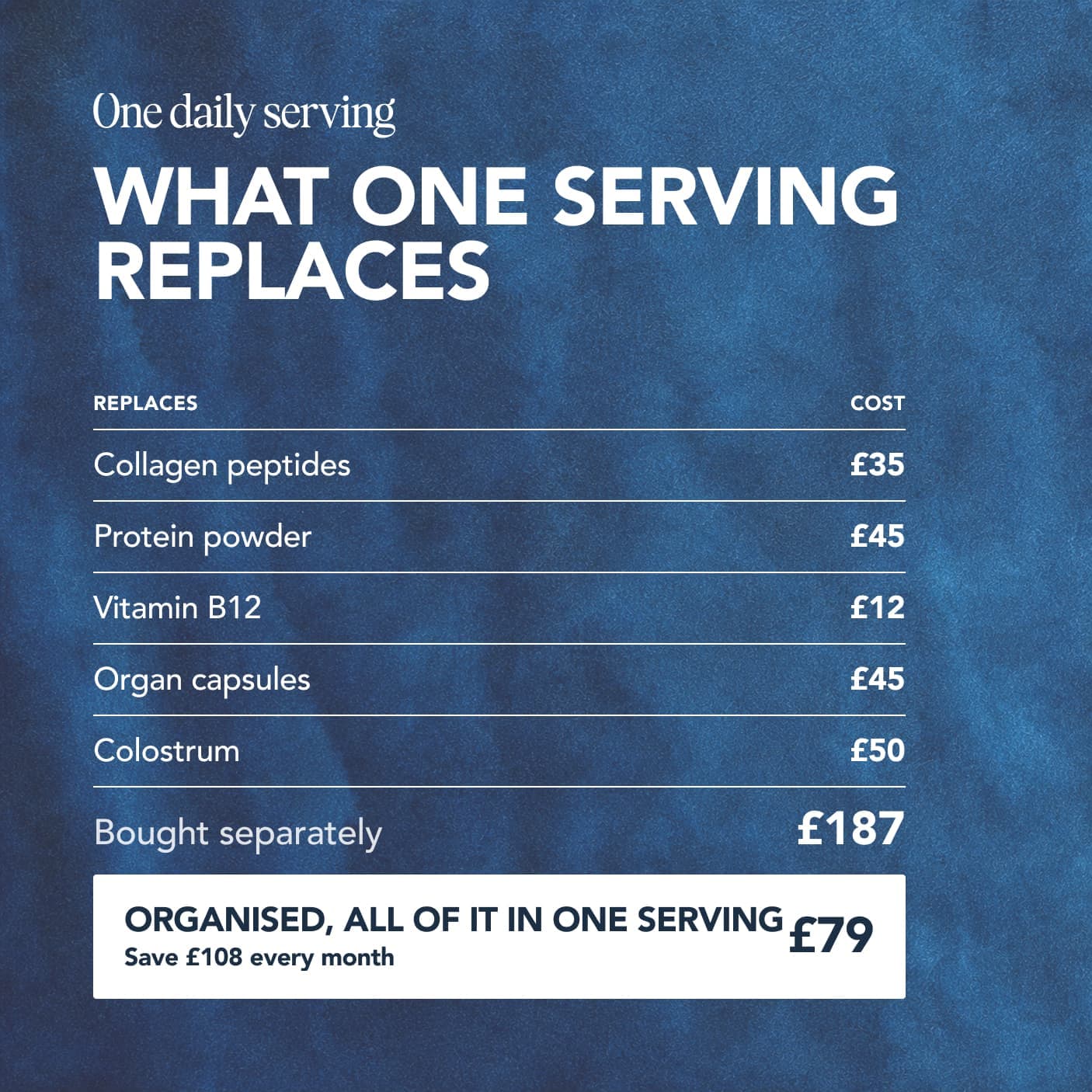
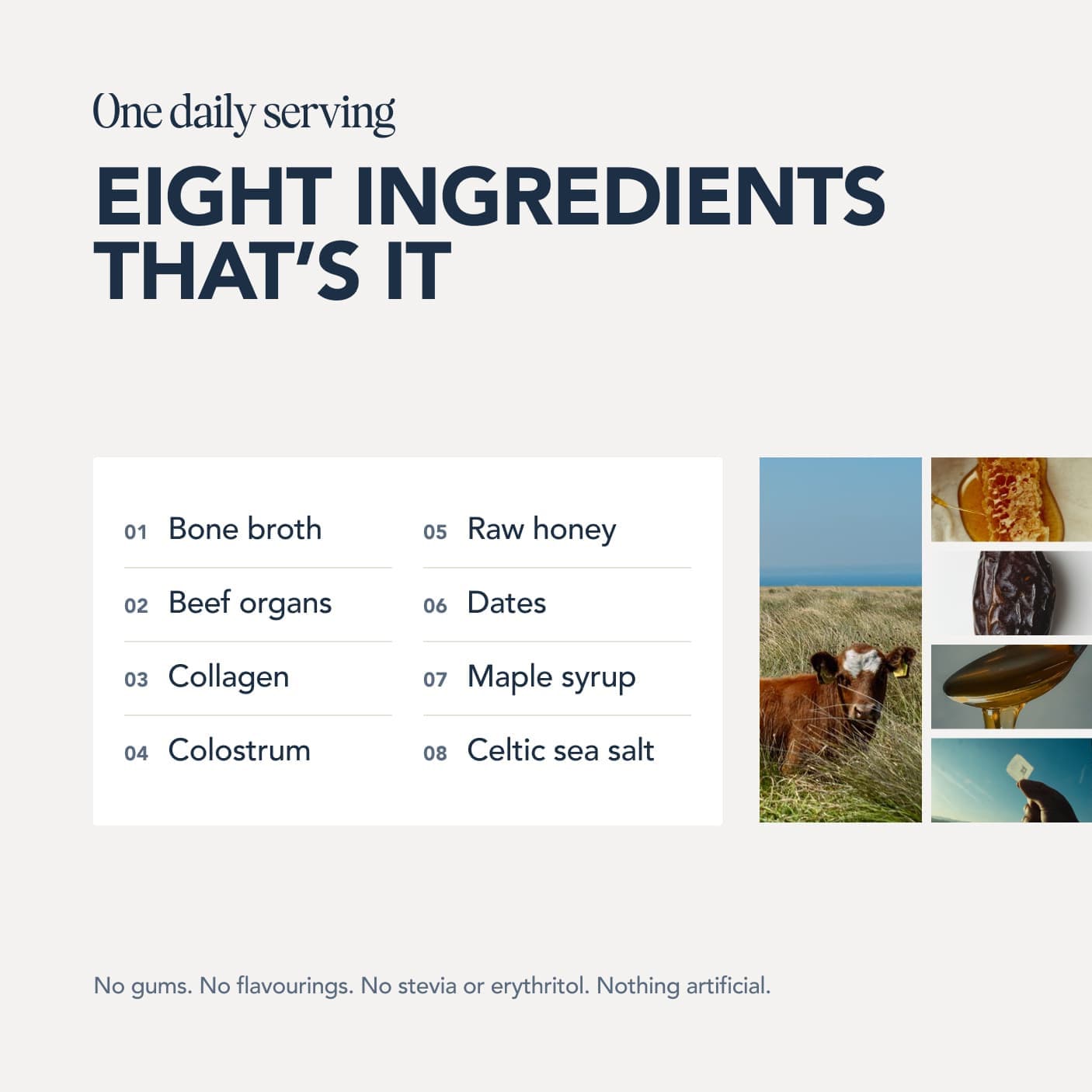
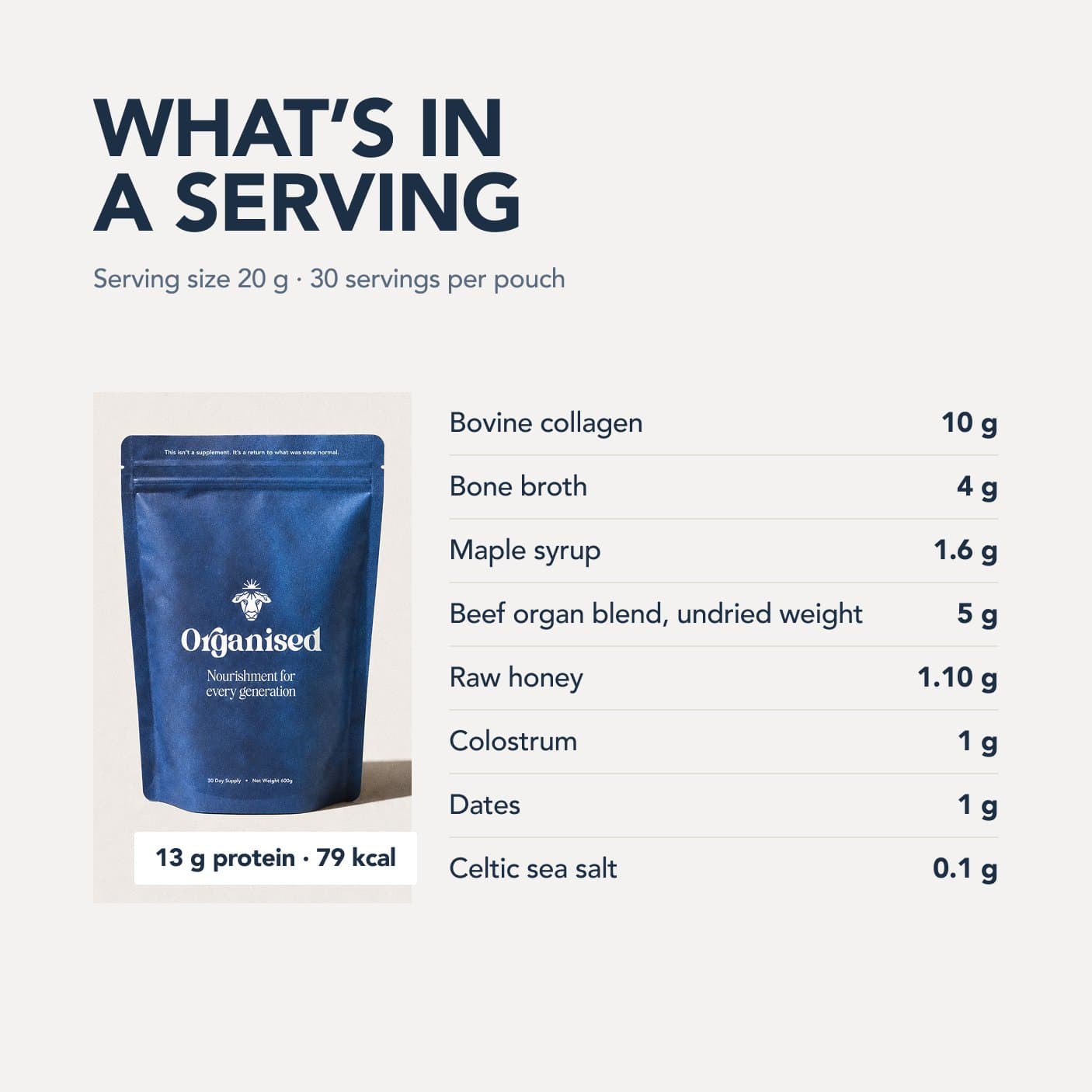
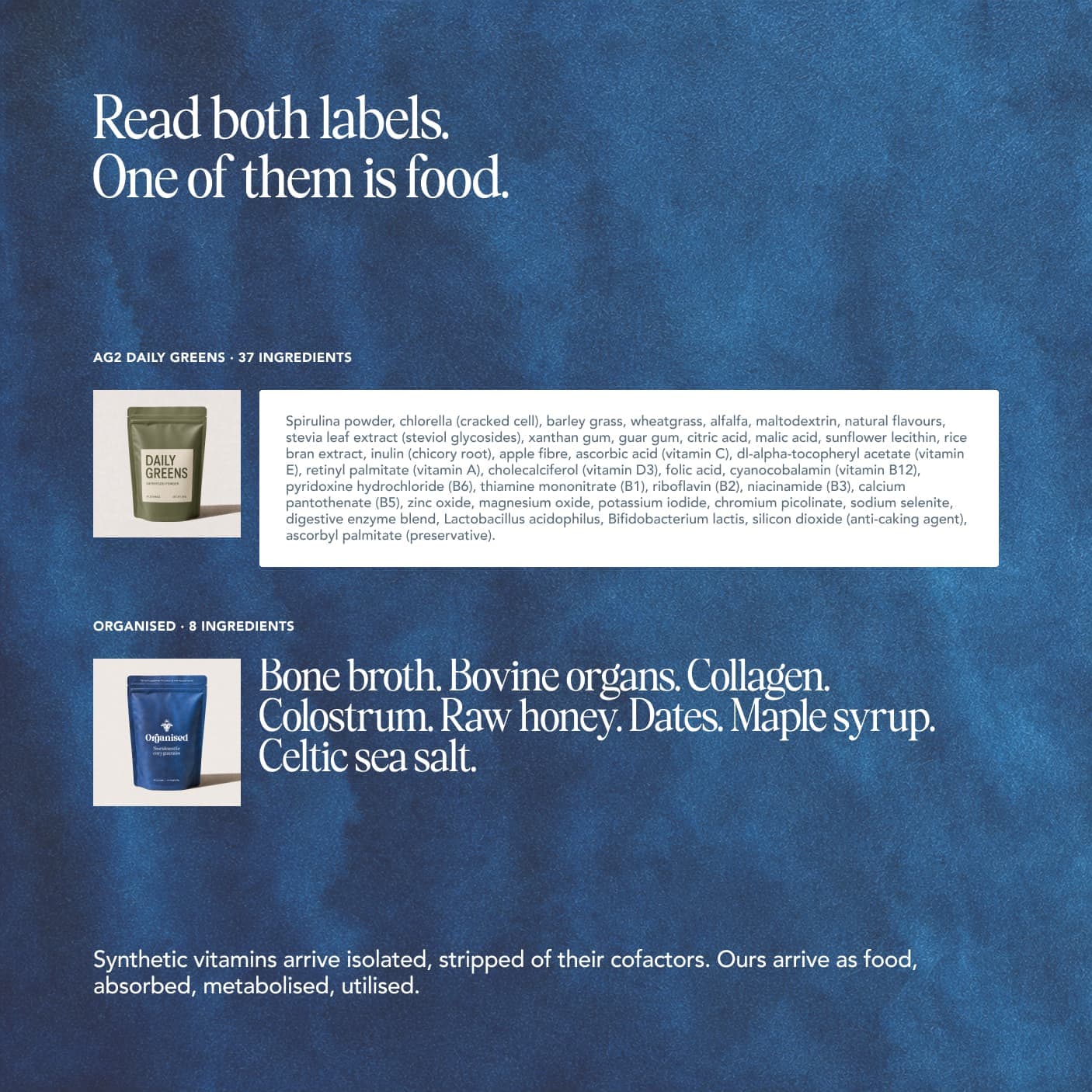
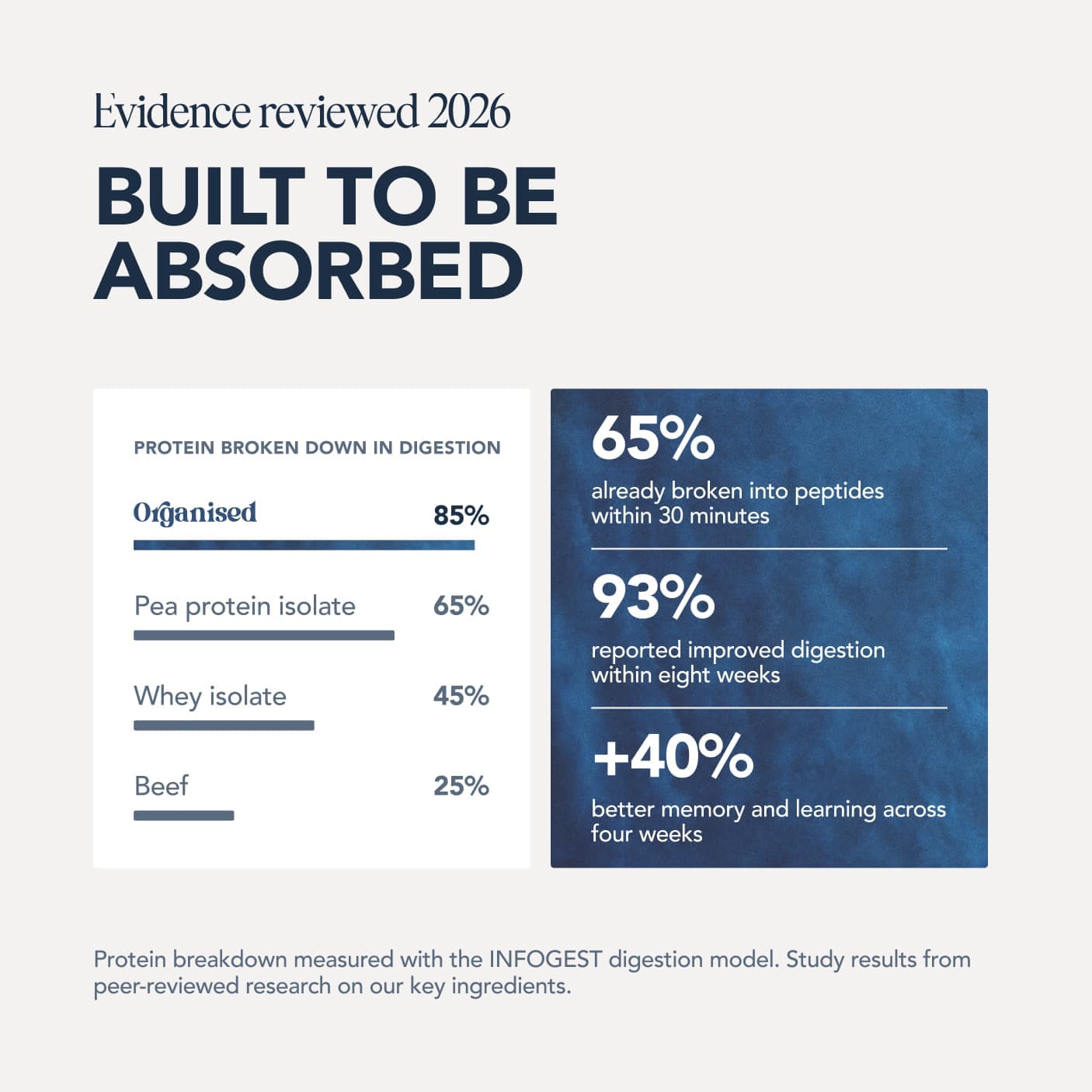
Eight real ingredients built around grass-fed beef organs, collagen and colostrum. Nothing synthetic added.
Free with your first order, worth £38. Plus £10 off the pouch with a subscription.
Free UK shipping · Made in England · 100 day money back guarantee on your first pouch · Skip, pause or cancel anytime
Ways to use it
- On sourdough bread: This is the classic. Thick slice of sourdough, generous dollop of marrow butter, small pinch of sea salt. That's the entire meal.
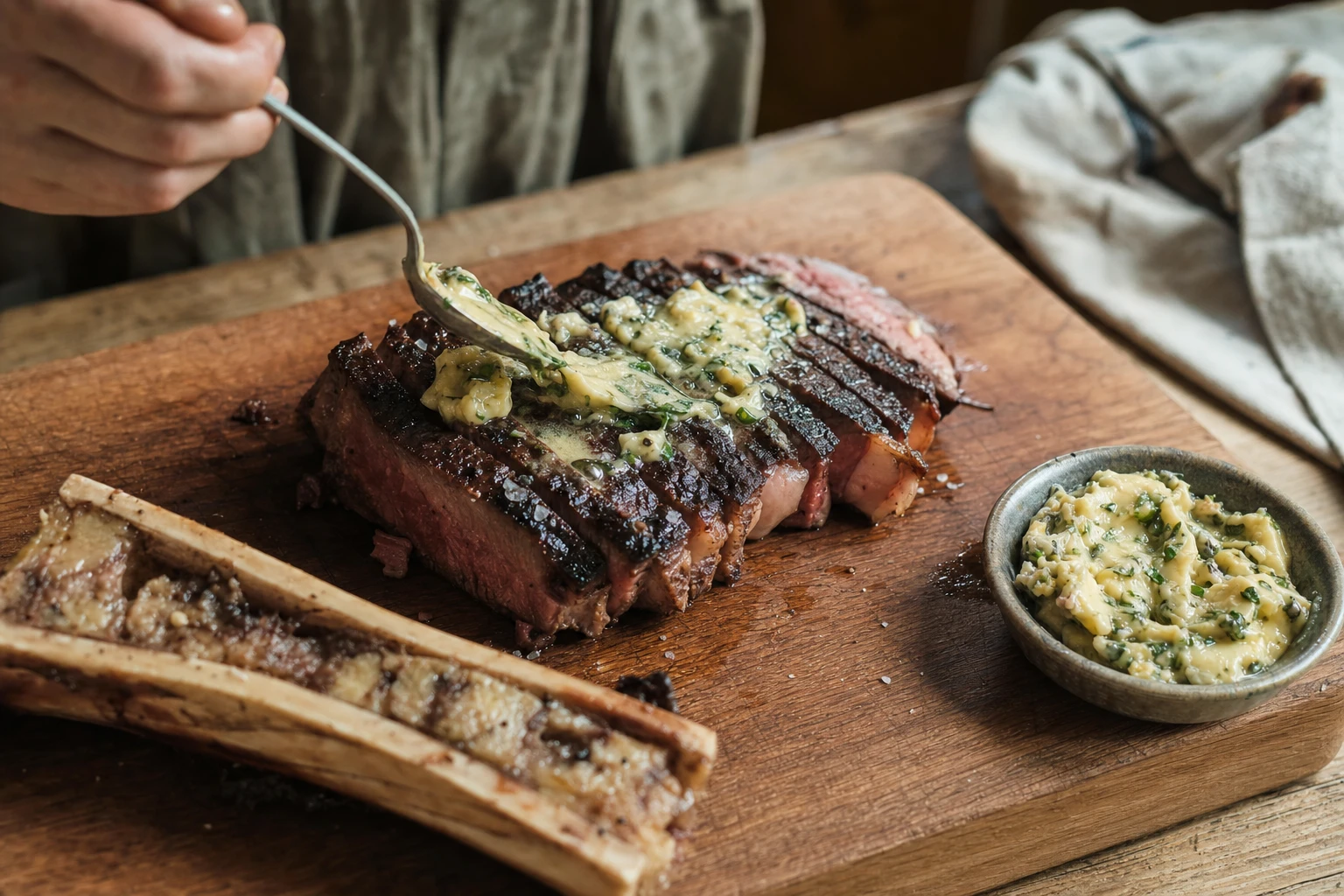
- Melted over steak: The marrow butter melts over hot meat and creates a rich sauce. No cream needed.
- Mixed into mashed vegetables: Mashed potatoes, mashed parsnips, mashed butternut squash. The marrow butter makes them taste decadent.
- Swirled into bone broth: A teaspoon of marrow butter in hot bone broth transforms it into something luxurious.
- On roasted vegetables: Whilst hot vegetables are still steaming, dollop marrow butter on top and let it melt.
- In pastry: If you make pie crust or shortbread, marrow butter can replace some of the regular butter. The result is incredibly tender.
The bottom line
Bone marrow is ancestral food that most people have abandoned out of unfamiliarity rather than genuine aversion. Roast some bones, scoop the marrow, mix it with butter, and taste it on good bread. You'll understand immediately why your ancestors prized it. It tastes luxurious, it makes you feel deeply satisfied, and your body recognises it as medicine. That combination is rare.
References
Every source below was checked on 27 August 2026. Each PubMed, PMC and DOI identifier was resolved against NCBI or Crossref, and what it opens is printed under the citation, so you can see the link goes where the citation says without leaving the page. Where a citation and its identifier disagreed, the citation was corrected to the record or the reference was deleted along with the sentence marker that pointed at it, and where the resolved paper turned out not to support the sentence, the sentence was cut back to what it does support. Borrowed authority is worse than none, because it looks like rigour.
- National Institutes of Health, Office of Dietary Supplements. Vitamin K: Fact Sheet for Health Professionals. https://ods.od.nih.gov/factsheets/VitaminK-HealthProfessional/ See also Vitamin A, D, and E fact sheets [accessed May 2026].
- Dietschy JM, Turley SD. Cholesterol metabolism in the brain. Current Opinion in Lipidology. 2001;12(2):105-112. https://pubmed.ncbi.nlm.nih.gov/11264981/Checked 27 August 2026: PMID 11264981 opens Dietschy JM, Turley SD, Cholesterol metabolism in the brain. Curr Opin Lipidol 2001;12(2):105-12. PubMed indexes it as: Review.
- Maresz K. Proper calcium use: vitamin K2 as a promoter of bone and cardiovascular health. Integrative Medicine. 2015;14(1):34-39. https://pmc.ncbi.nlm.nih.gov/articles/PMC4566462/Checked 27 August 2026: PMC4566462 opens Maresz K, Proper Calcium Use: Vitamin K2 as a Promoter of Bone and Cardiovascular Health. Integr Med (Encinitas) 2015;14(1):34-9. PubMed indexes it as: Review.
Who wrote and reviewed this guide
Niall Kiddle
Author · Founder, Organised
Niall is the founder of Organised. He started the company in 2024 after fixing his own health the slow way: in 2022 he swapped a cupboard of synthetic supplements for real food, raw milk, organ meats, bone broth and honey, and felt the difference within months.
Areas of expertise: Ancestral nutrition, Organ meats, Whole-food supplementation, Gut health, Regenerative sourcing
Read Niall's full profile
Pedro Rodrigues
Reviewer · Agronomist (farming and sourcing only)
Pedro is the agronomist Organised works with on farming and sourcing. His job on the guides is to keep the science honest: he reviews what we publish about soil health, regenerative agriculture, grazing and the way food is actually produced.
Areas of expertise: Regenerative agriculture, Agronomy, Soil health, Grass-fed farming, Food sourcing
Reviewed this guide on
Read Pedro's full profileMore on recipes
View all- 10 Ways to Use Organised That Aren't Just a Shake
- 5-Minute High-Protein Breakfasts Using Organised
- Ancestral Breakfast Ideas from Around the World
- Bone Broth from Scratch: A Step-by-Step Guide
- Collagen-Rich Beef Stew: Slow-Cooked Nourishment
- Energy Balls with Organised, Dates and Raw Honey
- Gut-Healing Marshmallows with Collagen and Raw Honey
- How to Make Your Own Gelatine Gummies
- Liver Pate for Beginners: A Gentle Introduction to Organ Meats
- Matcha Latte Gummies with Collagen and Gelatine
- Organ Bolognese: The Family Dinner That Heals
- Organised Chia Pudding with Raw Honey and Berries
Browse the guides library
All guidesKeep reading
Recipes & routines
The Busy Parent's Guide to Whole Food Nutrition
Batch cooking, freezer meals, bone broth routines. Real food nutrition that doesn't require three hours of cooking every night.
Recipes & routines
Raw Milk Ice Cream with Organised
Make raw milk ice cream at home with Organised for a seasonal, nutrient-dense treat. Three simple flavours to try whenever the craving strikes.
Recipes & routines
How to Make Your Own Gelatine Gummies
A simple recipe for homemade gelatine gummies using grass-fed gelatine, fresh juice, and raw honey. Better than shop-bought, kids love them.
Real food, made effortless
Add it to my routineA few ways to use it
All recipesRaw Milk Ice Cream with Organised
Make raw milk ice cream at home with Organised for a seasonal, nutrient-dense treat. Three simple flavours to try whenever the craving strikes.
How to Make Your Own Gelatine Gummies
A simple recipe for homemade gelatine gummies using grass-fed gelatine, fresh juice, and raw honey. Better than shop-bought, kids love them.
Energy Balls with Organised, Dates and Raw Honey
Make no-bake energy balls with Organised, dates, and raw honey. Perfect lunch box, pre-workout, or on-the-go snack. Simple recipe.


 Join over 100,000+ members
Build a better food system with us
The Organised community is thousands of people choosing real food and backing the farmers who grow it, all of us trying to leave the world a little better than we found it. If that is what you care about too, you belong here.