The Organised Recovery Smoothie for After Exercise
There's a window after exercise when your muscles are primed to receive nutrients and your body is ready to recover properly. Most people miss it entirely, or fill it with processed shake powder and artificial sweeteners. This smoothie is real food that works with your biology.
By Niall Kiddle, Founder, Organised

Reviewed by Pedro Rodrigues, Agronomist (farming and sourcing only) ·
5 min read · Published · Updated · 3 cited sources
Makers of the Organised Daily blend, a grass-fed beef organ supplement from regenerative UK farms
- Prep
- 2 min
- Total
- 2 min
- Makes
- Serves 1
- Type
- Drink
After exercise, your muscles have microscopic damage. That damage is where adaptation happens. Your body signals for protein and carbohydrates to repair those fibres and build them back stronger. You have roughly 30-60 minutes for this to be maximally effective. After that, the window closes. The nutrients still matter, but the recovery response is dampened.
Why post-exercise nutrition matters
Your muscle tissue is broken down during exercise. That's not damage in the harmful sense. That's necessary stimulus. But that stimulus only leads to adaptation if you provide the building blocks for repair.
Protein: Your muscles need amino acids to rebuild larger and stronger than before. Without protein in this window, you're signalling your body that food is scarce, so preserve muscle. That's the exact opposite of what you want.
Carbohydrates: Exercise depletes muscle glycogen, and post-exercise carbohydrate intake supports glycogen replenishment.1 You need carbs here to create the hormonal environment for protein to work effectively.
Protein and carbohydrates together create an anabolic (muscle-building) environment. Protein alone won't do it. Carbs alone won't do it. Together, they work.
Micronutrients: Collagen and berries bring vitamins and minerals that support inflammation resolution and tissue repair. Your body is in repair mode. Give it actual nutrients, not empty calories.
The recovery window and timing
Many studies suggest the post-exercise period (commonly cited as 30-60 minutes) is when muscle protein synthesis is most receptive to nutrient intake.2 Not 3 hours later. Not "whenever you get around to it". Within an hour of finishing your exercise.
This is why you make this smoothie before you shower. Exercise, drink this, then shower. By the time you're clean and dressed, the nutrients are already being absorbed and put to work.
If you can't drink it immediately, make it at home before your workout and bring it with you (in an insulated bag with ice if needed). The timing matters more than the convenience of making it at home. Plan accordingly.
The ingredients and their role
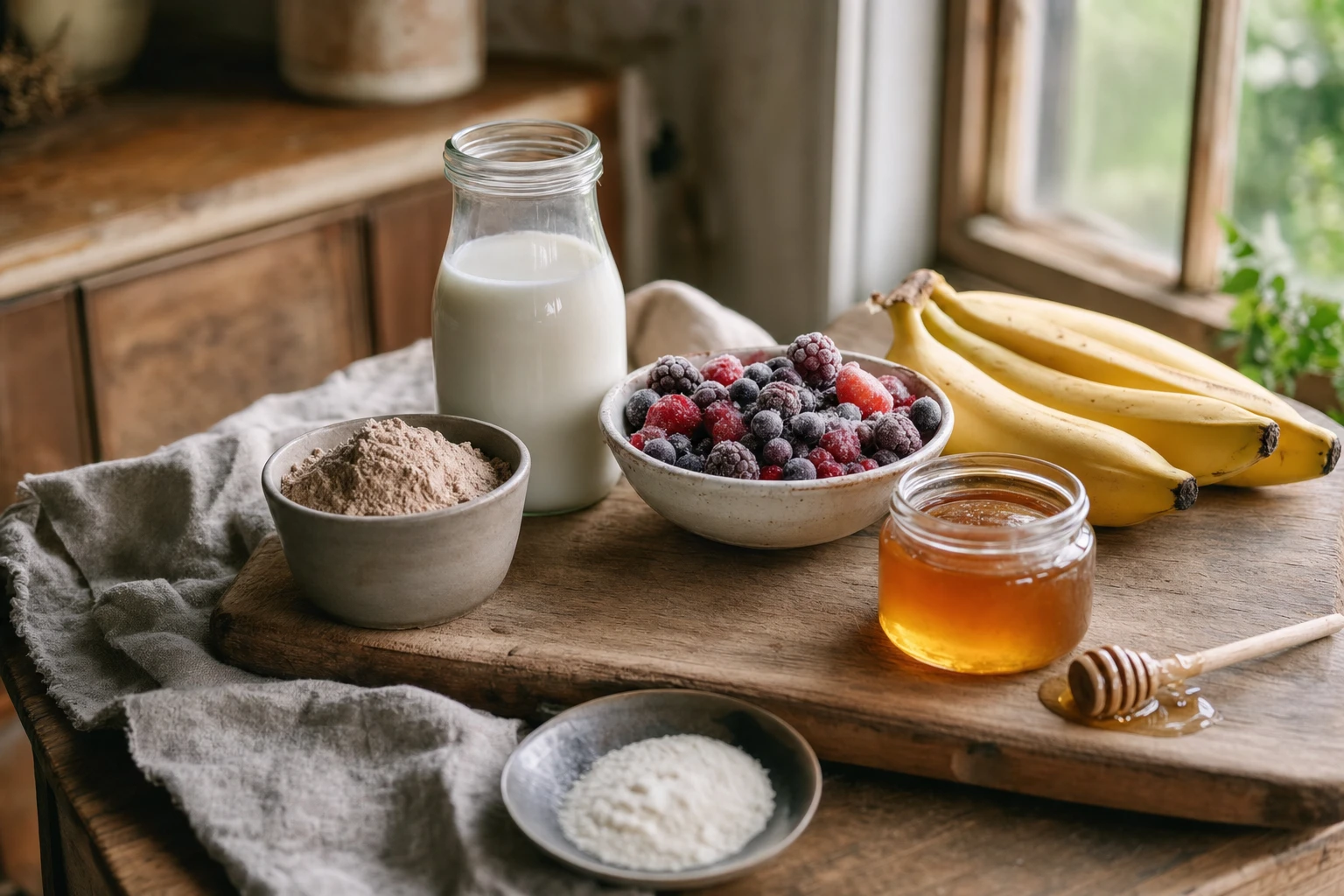
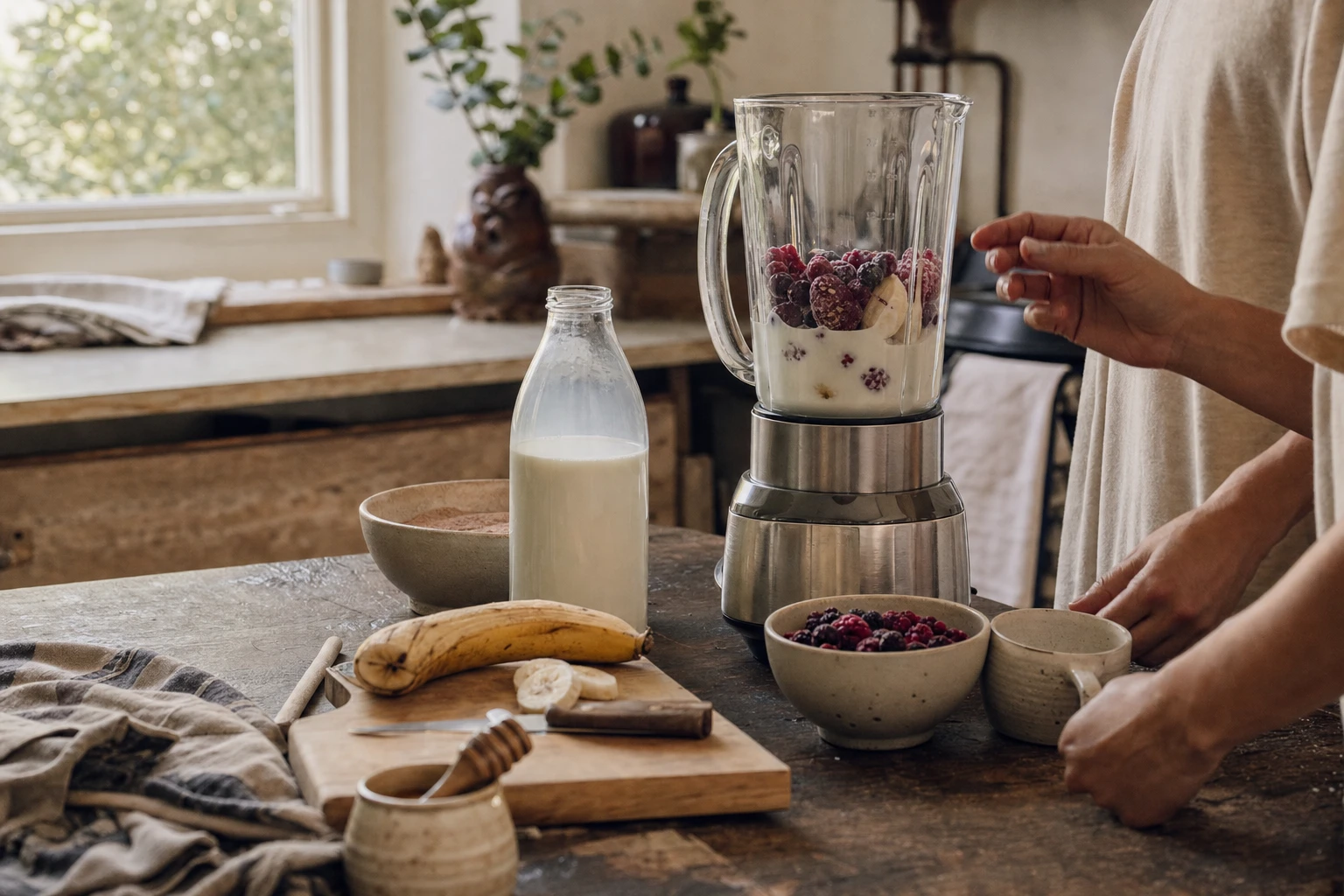
Serves 1. Around 500-600 calories, 35-40 grams protein, 40-50 grams carbohydrate.
- Bone broth protein: 30 grams (roughly 2 heaped tablespoons). Beef protein carries a complete amino acid profile3 without dairy. Choose unflavoured versions without added sweeteners or maltodextrin.
- Raw milk or full-fat coconut milk - 200 millilitres (roughly 3/4 cup). The liquid base and additional protein (if using milk). Raw milk carries enzymes and minerals. Coconut milk works if you're dairy-free.
- Frozen berries - 100 grams (a large handful). Blueberries, raspberries, blackberries, or a mix. Frozen berries are as nutrient-dense as fresh and won't dilute your smoothie with ice. They also work as part of your carbohydrate target.
- Banana - 1 small, fresh or frozen. This is your additional carbohydrate. Bananas are simple, fast-digesting carbs that quickly replenish muscle glycogen. They're also rich in potassium, which muscles need for recovery.
- Grass-fed collagen powder - 10 grams (1.5 teaspoons). Adds glycine and other amino acids. Supports joint and connective tissue recovery from exercise.
- Raw honey - 1 tablespoon. Additional carbohydrate for glycogen replenishment. Raw honey carries minerals (particularly potassium and magnesium) your muscles have lost through sweat.
- Pinch of sea salt - roughly 1/8 teaspoon. Replaces electrolytes lost during exercise. This matters more than most people realise. Salt supports fluid retention and muscle recovery.
- Optional: vanilla extract - 1/4 teaspoon. Adds depth without sugar.
Get recipes and routines, free
Two short reads a week of simple, nutrient-dense recipes and daily routines.
By signing up you agree to receive emails from us. No spam, unsubscribe anytime.
Method
Active time: 2 minutes.
- Add milk to the blender first (wet ingredients first prevents the powder from clumping to the bottom).
- Add the frozen berries and banana. If using a regular blender, chop the banana roughly first so it blends faster.
- Add beef protein powder, collagen powder, honey, and sea salt.
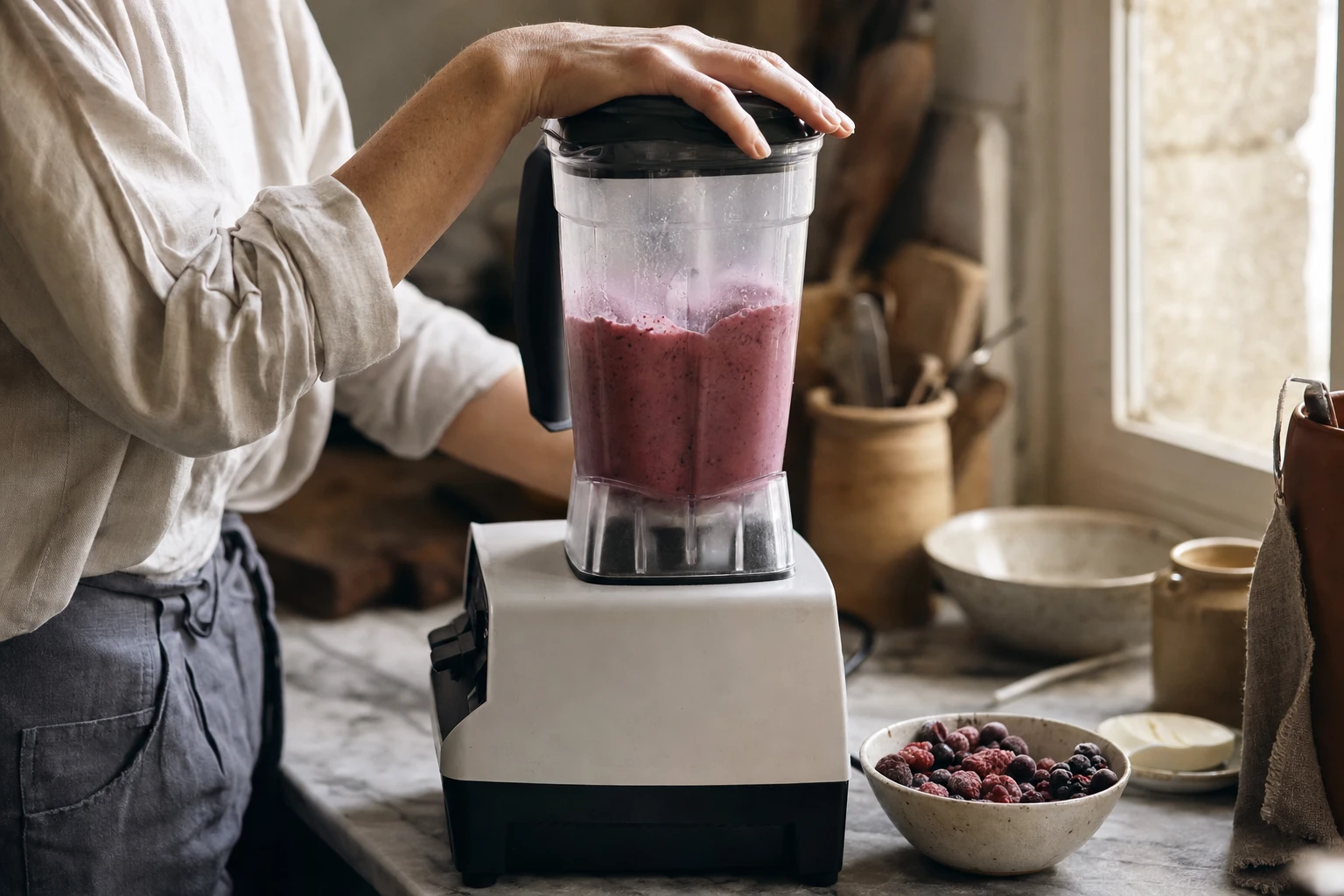
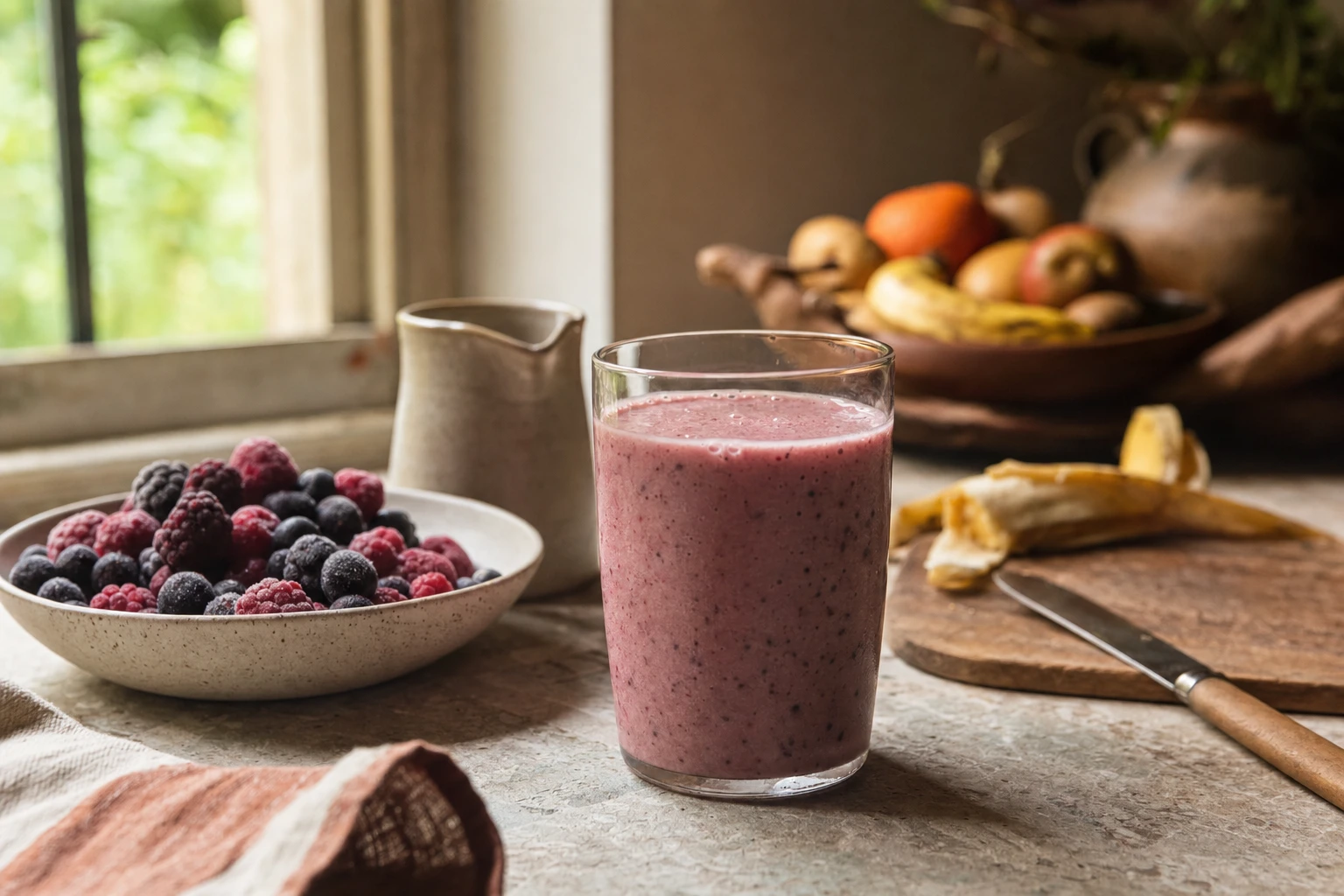
- Blend on high for 45-60 seconds until completely smooth. There should be no powder grittiness and no visible lumps of banana. A smooth, pourable consistency.
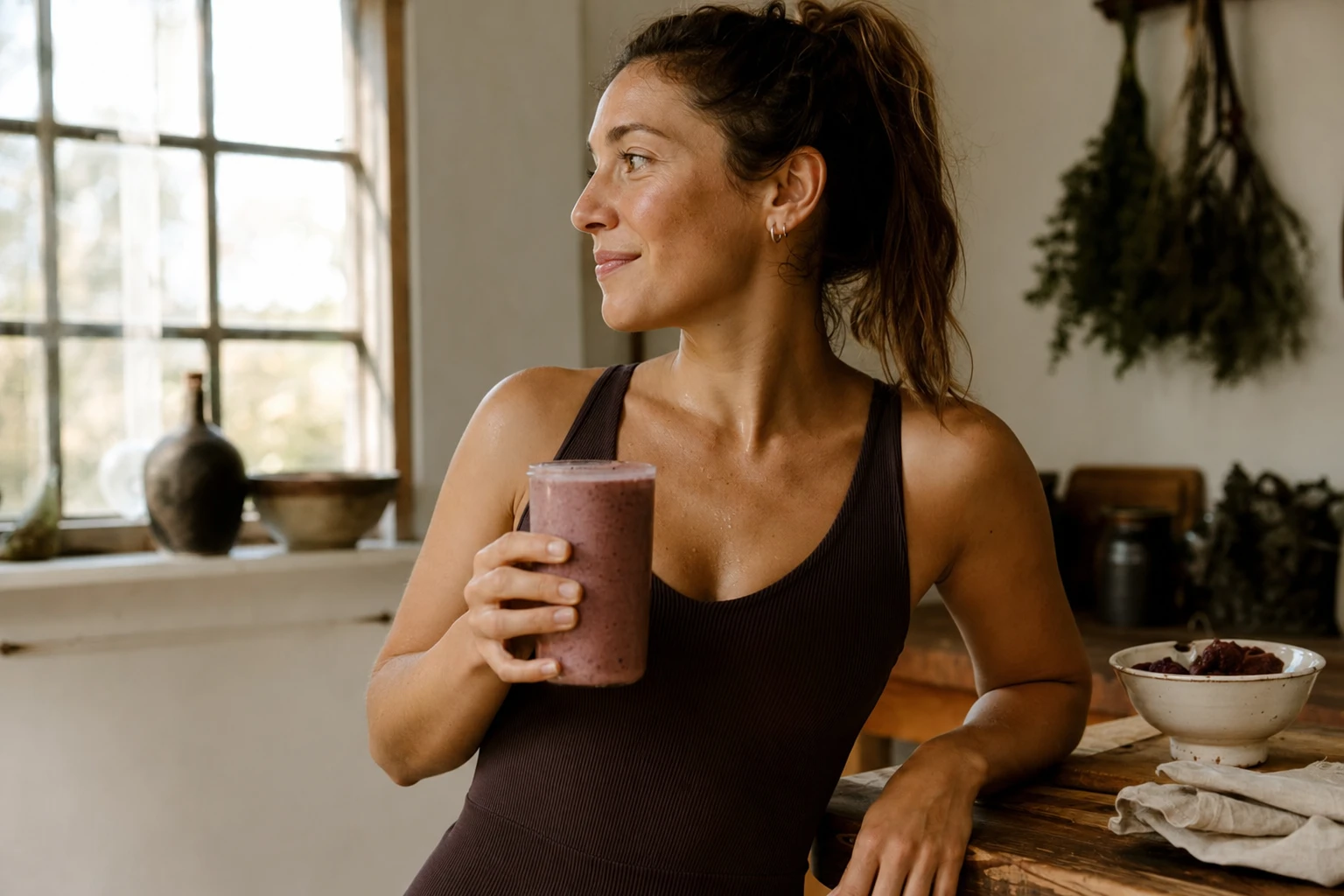
- Pour immediately into a tall glass and drink. Ideally within 5 minutes of finishing exercise. The faster the absorption, the better the recovery response.
Don't overthink this. Wet ingredients first, then powder, then blend thoroughly. Two minutes from finish to drink. That's the entire point.
When to drink it
Timing varies slightly based on exercise type.
After resistance training (weights): Within 30-45 minutes. Your muscles are most receptive to this timing. Resistance training creates the most significant demand for protein and carbohydrate.
After endurance exercise (running, cycling, sustained cardio): Within 60 minutes. Endurance work depletes glycogen primarily. The carbohydrate aspect becomes even more critical. But you still need protein to prevent muscle breakdown.
After mixed training (HIIT, crossfit-style): Within 30 minutes. You're creating both glycogen depletion and muscle damage. Get nutrients in quickly.
Distance matters too. A 20-minute run is minimally demanding nutritionally. You don't need this smoothie. A 60-minute run, a hard weights session, or an hour-long HIIT class, you do. Use common sense. If you're genuinely fatigued and your muscles feel worked, your body is signalling for recovery nutrition.

1 of 9
Daily blend
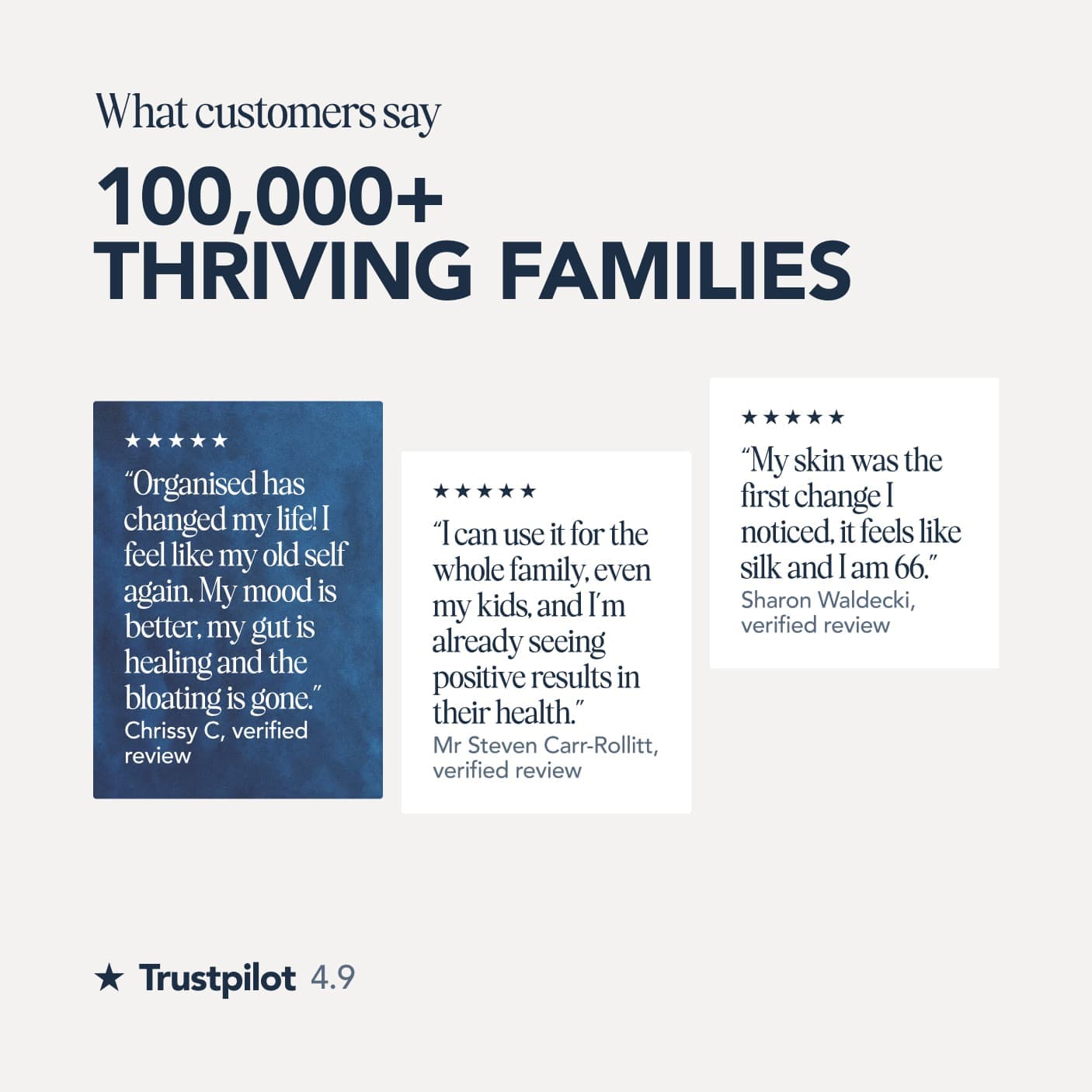
100,000+ thriving families4.9 on Trustpilot
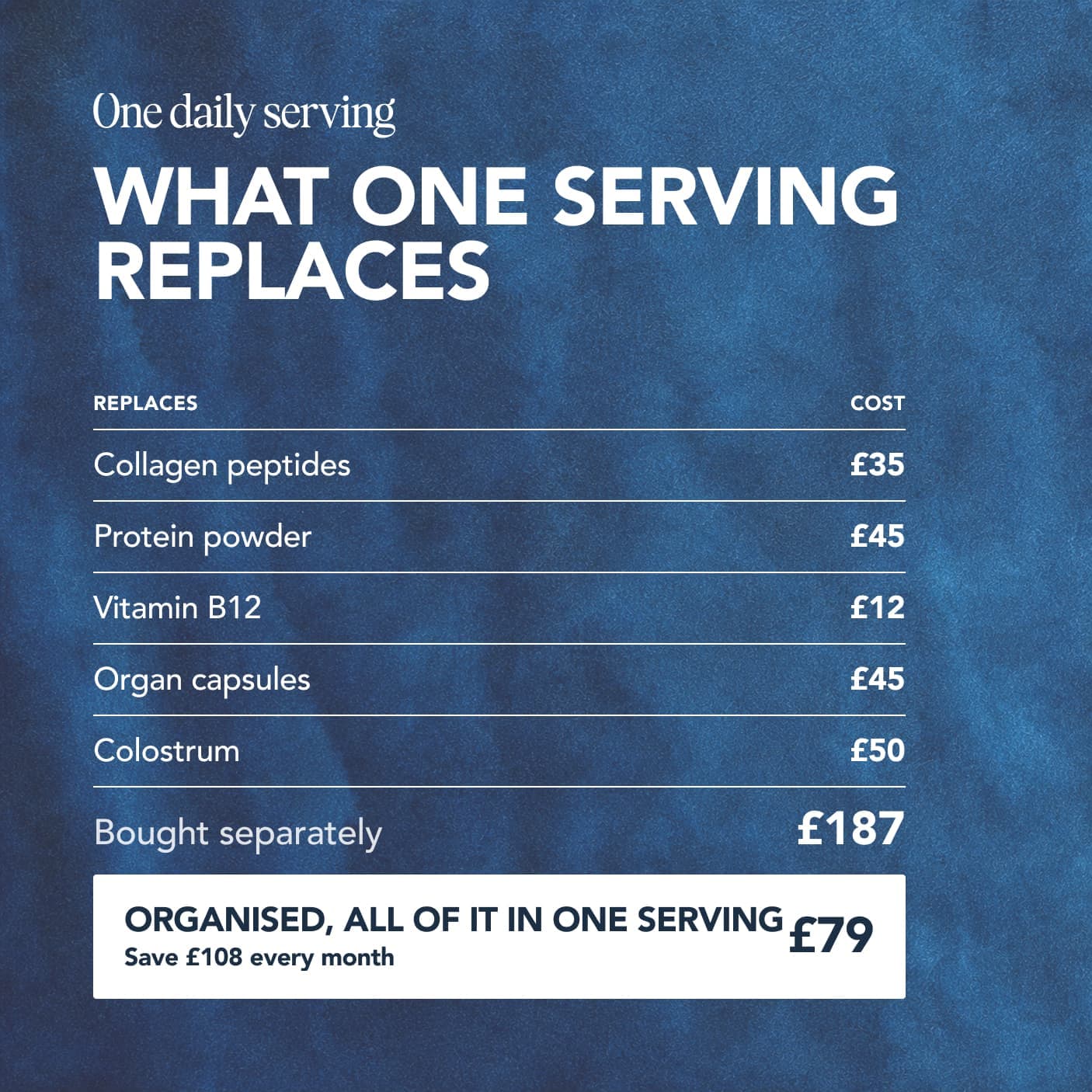
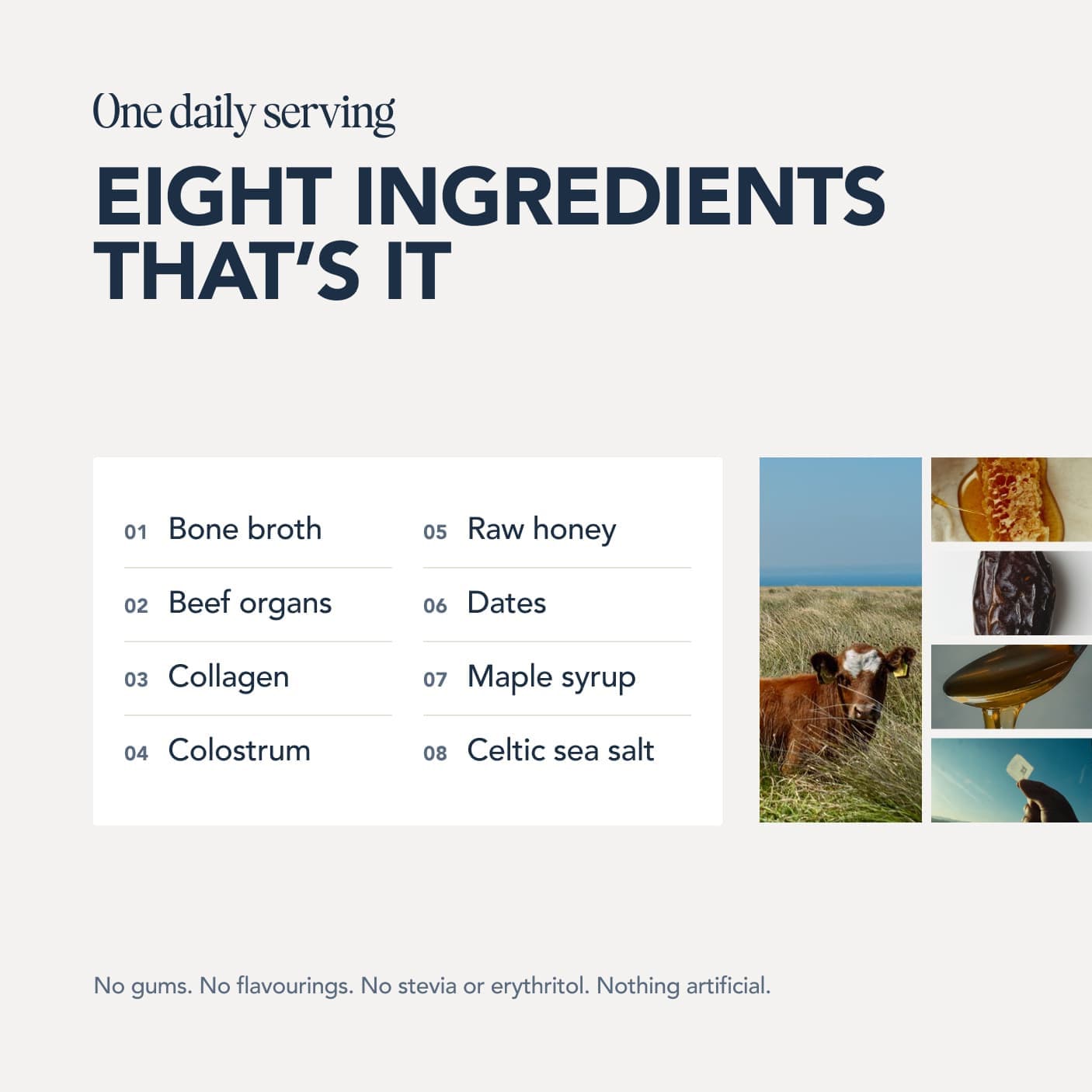
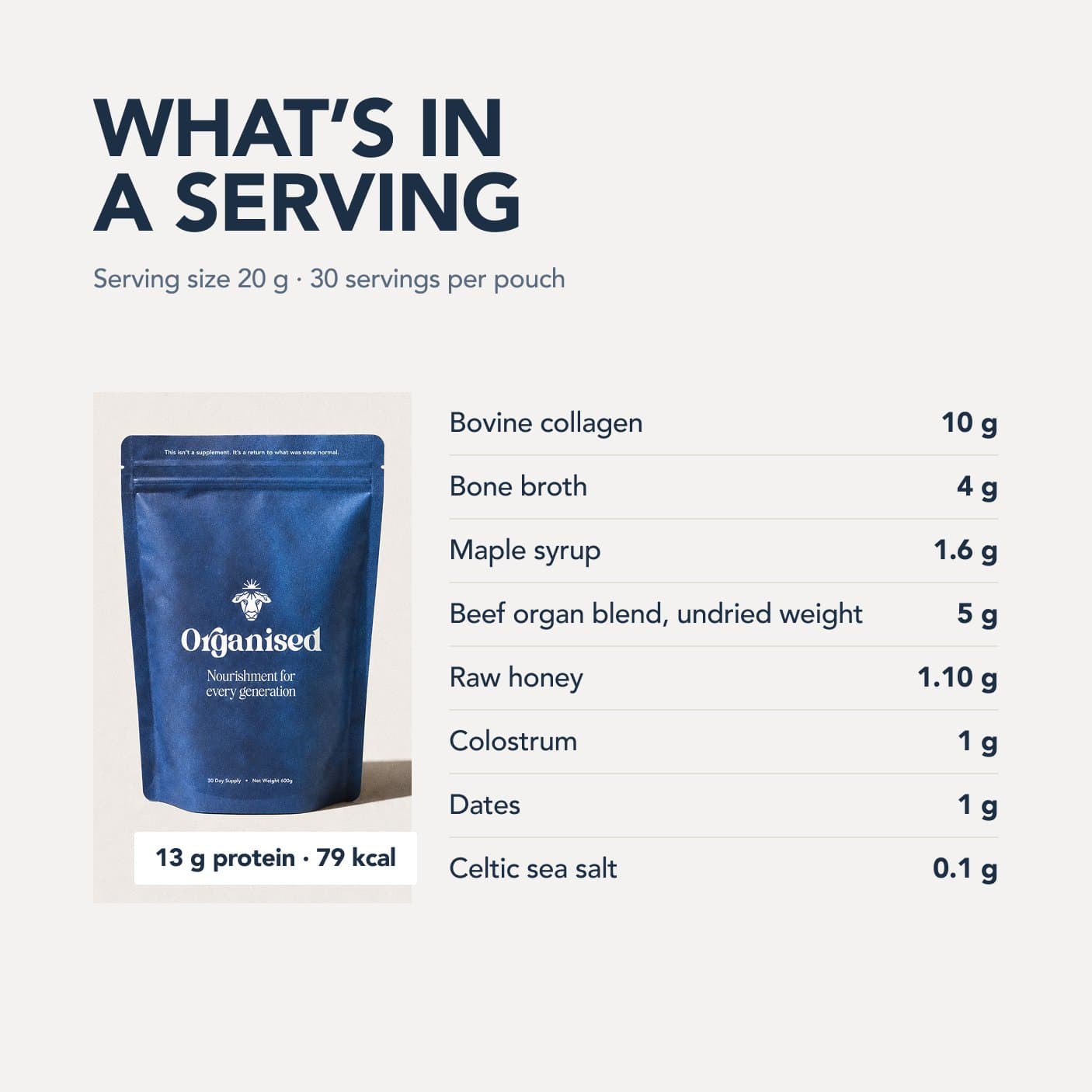
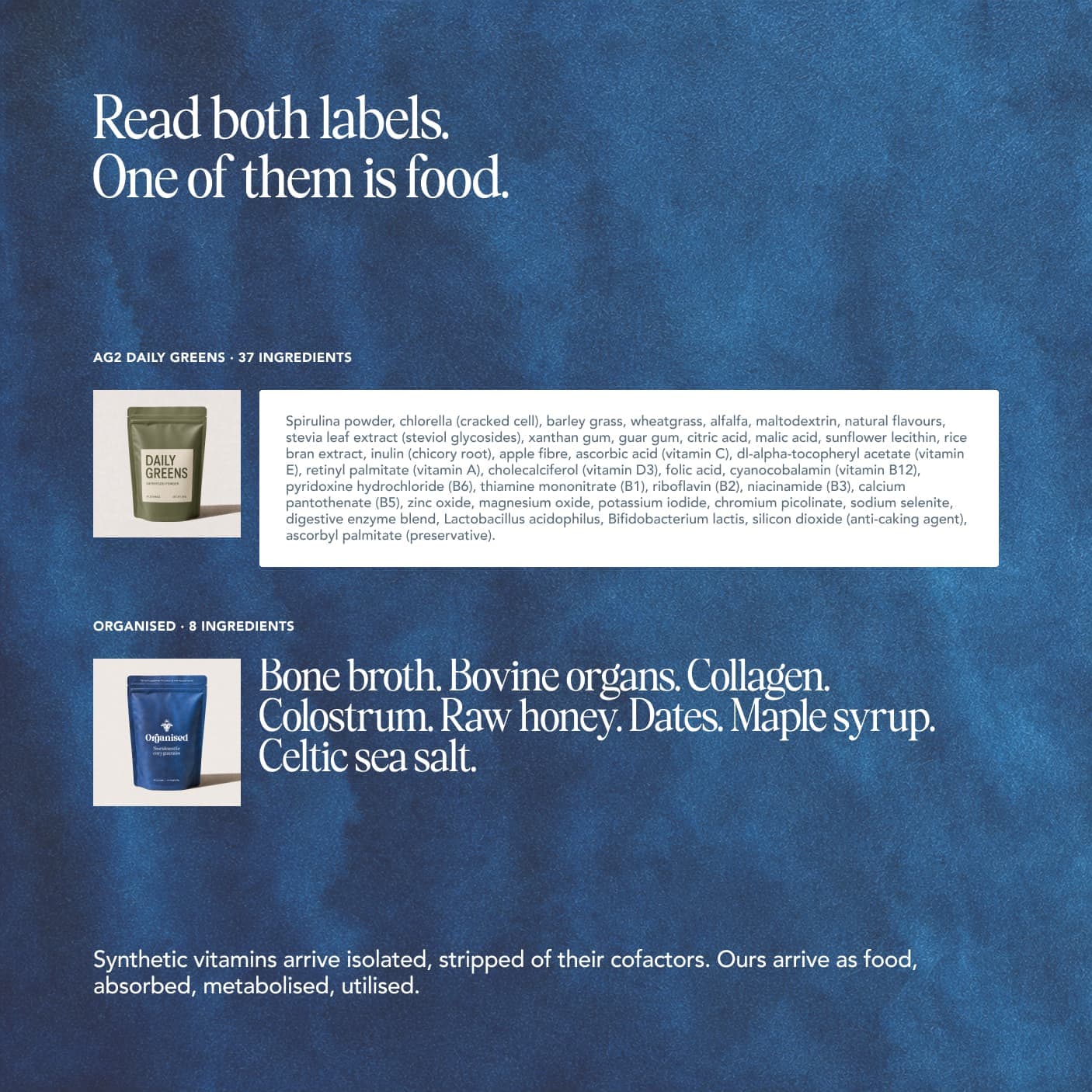
Eight real ingredients built around grass-fed beef organs, collagen and colostrum. Nothing synthetic added.
Free with your first order, worth £38. Plus £10 off the pouch with a subscription.

Free UK shipping · Made in England · 100 day money back guarantee on your first pouch · Skip, pause or cancel anytime
Variations for different exercise types
For strength athletes (weightlifting, powerlifting): Add an extra tablespoon of honey and slightly increase the banana. You need more carbohydrates to replenish glycogen depleted by heavy lifting.
For endurance athletes (marathoners, cyclists): This smoothie is fine as is, but consider adding a pinch of sodium chloride beyond the basic salt (sports nutrition calls this hyponatremia prevention). Your body has lost significant electrolytes through extended sweating.
For body composition goals (trying to lose fat): Reduce the honey to half a tablespoon and the banana to half. You still need carbohydrates post-exercise, but if you're in a caloric deficit for fat loss, you can reduce this slightly. Just don't eliminate it entirely. Your recovery still needs fuel.
For joint health or age 40+: Use 15 grams of collagen instead of 10. Your connective tissue recovery becomes more critical. The additional glycine is worth it.
The bottom line
Post-exercise nutrition isn't optional if you want your training to result in actual adaptation. You're not eating because you're hungry. You're eating because your body is signalling, very loudly, that it needs specific nutrients to recover properly. Protein and carbohydrates together, delivered quickly, make that recovery maximally efficient. This smoothie does exactly that. Beef protein, raw milk, berries, collagen, honey. Real food that works with your biology. Make it within an hour of finishing your workout, drink it immediately, and then get about your day knowing you've optimised your recovery.
References
Every source below was checked on 27 August 2026. Each PubMed, PMC and DOI identifier was resolved against NCBI or Crossref, and what it opens is printed under the citation, so you can see the link goes where the citation says without leaving the page. Where a citation and its identifier disagreed, the citation was corrected to the record or the reference was deleted along with the sentence marker that pointed at it, and where the resolved paper turned out not to support the sentence, the sentence was cut back to what it does support. Borrowed authority is worse than none, because it looks like rigour.
- Burke LM et al. Carbohydrates for training and competition. J Sports Sci. 2011;29 Suppl 1:S17-27. PMID: 21660838.Checked 27 August 2026: PMID 21660838 opens Burke LM, Hawley JA, Wong SH et al, Carbohydrates for training and competition. J Sports Sci 2011;29 Suppl 1:S17-27. PubMed indexes it as: Review.
- Schoenfeld BJ, Aragon AA. How much protein can the body use in a single meal for muscle-building? J Int Soc Sports Nutr. 2018;15:10. PMID: 29497353.Checked 27 August 2026: PMID 29497353 opens Schoenfeld BJ, Aragon AA, How much protein can the body use in a single meal for muscle-building? Implications for daily protein distribution. J Int Soc Sports Nutr 2018;15:10. PubMed indexes it as: Review.The authors' own declaration, from the record: N/AN/ABrad Schoenfeld serves on the scientific advisory board for Dymatize Nutrition. The authors declare no other conflicts of interest.Springer Nature remains neutral with regard to jurisdictional claims in published maps and institutional affiliations.
- U.S. Department of Agriculture, FoodData Central. Beef, ground — amino acid profile.
Who wrote and reviewed this guide
Niall Kiddle
Author · Founder, Organised
Niall is the founder of Organised. He started the company in 2024 after fixing his own health the slow way: in 2022 he swapped a cupboard of synthetic supplements for real food, raw milk, organ meats, bone broth and honey, and felt the difference within months.
Areas of expertise: Ancestral nutrition, Organ meats, Whole-food supplementation, Gut health, Regenerative sourcing
Read Niall's full profile
Pedro Rodrigues
Reviewer · Agronomist (farming and sourcing only)
Pedro is the agronomist Organised works with on farming and sourcing. His job on the guides is to keep the science honest: he reviews what we publish about soil health, regenerative agriculture, grazing and the way food is actually produced.
Areas of expertise: Regenerative agriculture, Agronomy, Soil health, Grass-fed farming, Food sourcing
Reviewed this guide on
Read Pedro's full profileMore on recipes
View all- 10 Ways to Use Organised That Aren't Just a Shake
- 5-Minute High-Protein Breakfasts Using Organised
- Ancestral Breakfast Ideas from Around the World
- Bone Broth from Scratch: A Step-by-Step Guide
- Collagen-Rich Beef Stew: Slow-Cooked Nourishment
- Energy Balls with Organised, Dates and Raw Honey
- Gut-Healing Marshmallows with Collagen and Raw Honey
- How to Make Bone Marrow Butter
- How to Make Your Own Gelatine Gummies
- Liver Pate for Beginners: A Gentle Introduction to Organ Meats
- Matcha Latte Gummies with Collagen and Gelatine
- Organ Bolognese: The Family Dinner That Heals
Browse the guides library
All guidesKeep reading

Recipes & routines
The Busy Parent's Guide to Whole Food Nutrition
Batch cooking, freezer meals, bone broth routines. Real food nutrition that doesn't require three hours of cooking every night.
Recipes & routines
Liver Pate for Beginners: A Gentle Introduction to Organ Meats
Simple liver pate recipe to start eating organ meats. Chicken liver, butter, and herbs. Gentle introduction to nutrient-dense whole foods.
Recipes & routines
A Day of Eating for Optimal Skin Health
Complete day of eating optimised for clear, youthful skin. Breakfast through dinner with specific nutrients for skin repair and health.
Real food, made effortless
Add it to my routineA few ways to use it
All recipesLiver Pate for Beginners: A Gentle Introduction to Organ Meats
Simple liver pate recipe to start eating organ meats. Chicken liver, butter, and herbs. Gentle introduction to nutrient-dense whole foods.
Matcha Latte Gummies with Collagen and Gelatine
Make visually stunning matcha latte gummies infused with collagen and gelatine. Simple recipe for gut-healing sweets you'll actually want to eat.
Ancestral Breakfast Ideas from Around the World
Traditional breakfast recipes from cultures that got nutrition right. Japanese, Turkish, Scottish, and more. Whole-food breakfast inspiration.


 Join over 100,000+ members
Build a better food system with us
The Organised community is thousands of people choosing real food and backing the farmers who grow it, all of us trying to leave the world a little better than we found it. If that is what you care about too, you belong here.