Shift Workers: How to Eat for Energy When Your Schedule Is Upside Down
Your circadian rhythm doesn't care about your work schedule. Your body expects food, light, and rest at specific times of day. When you work nights, your biology is fighting you. Eating strategically doesn't fix the underlying contradiction, but it can keep you from destroying your health in the process.

By Niall Kiddle, Founder, Organised

Reviewed by Pedro Rodrigues, Agronomist (farming and sourcing only) ·
6 min read · Published · Updated · 4 cited sources
Makers of the Organised Daily blend, a grass-fed beef organ supplement from regenerative UK farms

Most shift workers eat whatever's available at whatever time they happen to get hungry. That's usually vending machine food, takeaway, or whatever survives in the staff room. The result is blood sugar chaos, energy crashes, and the slow accumulation of weight and inflammation that comes with feeding your body garbage on an inverted schedule.
You can do better. Not perfectly. Better. The strategy here is protein-first eating, strategic caffeine, and melatonin-supporting foods timed to when you're actually trying to sleep.
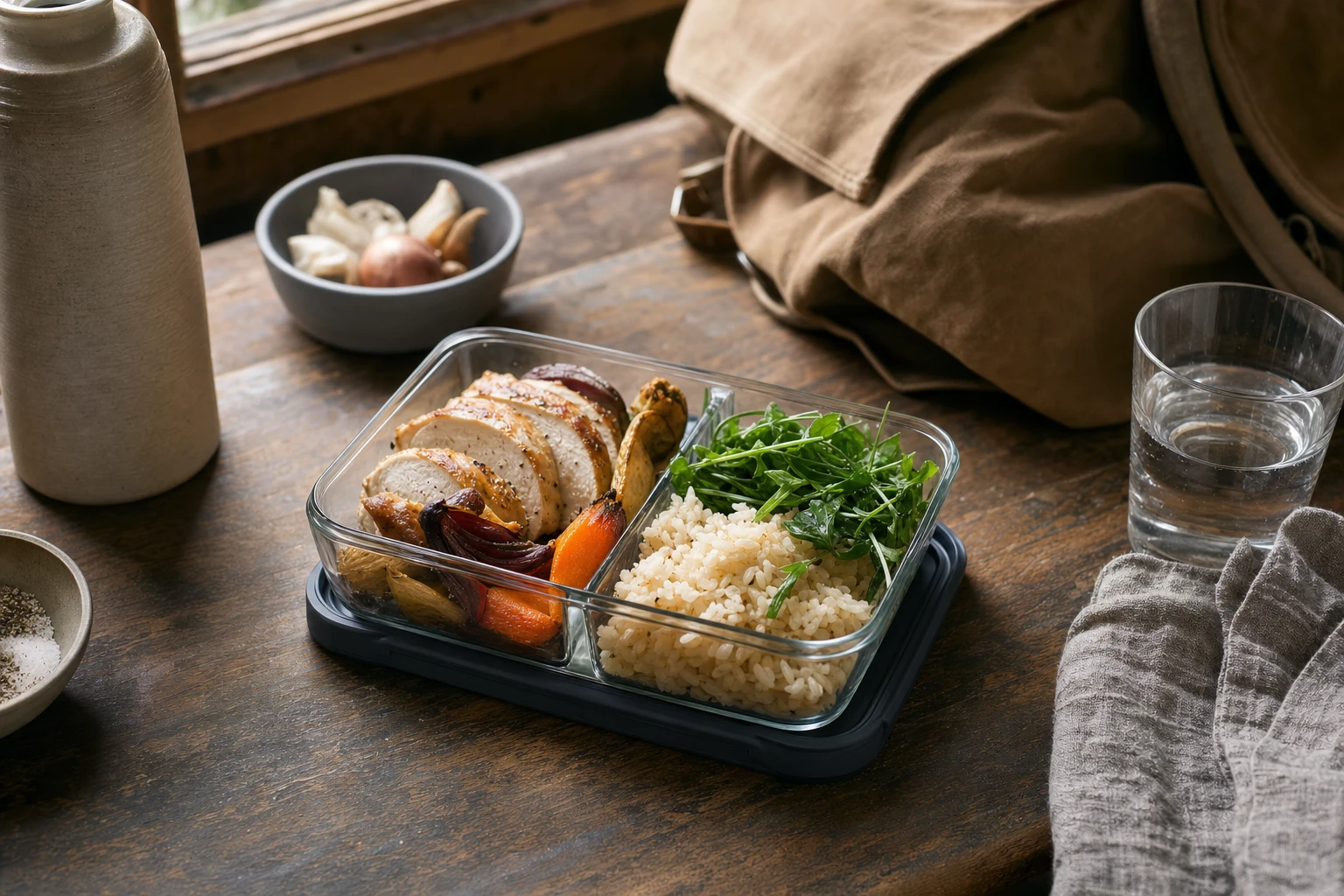
Your circadian rhythm versus shift work
Your body runs on a 24-hour clock. Melatonin production rises when light drops. Cortisol peaks when you wake. Digestive enzymes are secreted at specific times. Insulin sensitivity fluctuates. This entire machinery is tuned to a day-waking, night-sleeping pattern that humans have evolved with for millennia.
When you work nights, you're asking your body to produce cortisol and digestive enzymes at 2 AM when it's preparing for sleep. You're asking your body to wind down at 9 AM when the sun is up and your cortisol should be rising. Your metabolism suffers. Your immune system suffers. Your weight gain risk skyrockets.
You cannot permanently override your circadian rhythm with willpower. But you can use food and timing to reduce the damage. The goal is stability, not optimization.
The research is sobering. Shift workers have higher rates of obesity, type 2 diabetes, cardiovascular disease, and certain cancers than day workers.1 But much of this risk comes not from shift work itself, but from how shift workers eat. Chaotic meal timing, high sugar, high ultra-processed food. That's changeable.

Protein first: the foundation
Every single meal on shift work should start with protein. Not carbohydrates. Not coffee. Protein.
Protein stabilises blood sugar better than any other macronutrient. When your blood sugar is stable, your energy is stable, your mood is stable, and your food cravings disappear. Protein also requires more energy to digest (thermogenic effect), which increases your metabolic rate slightly during the shift when your body is trying to shut down.4
Aim for 30-40 grams of protein per meal. That's roughly the size of a palm-sized serving of meat, fish, or dairy. With that as your foundation, add vegetables for minerals and fibre, then carbohydrates. Not the reverse.
- Meat options: roasted chicken thighs (more nutrient-dense than breast), beef, pork, lamb. Cook these on your days off and portion them for the week.
- Fish: tinned mackerel or sardines are portable and need no cooking. Salmon if you have fridge access.
- Eggs: hard-boiled eggs are portable, complete protein, and travel well. Cook a batch on your day off.
- Dairy: Greek yoghurt, cottage cheese, or mature cheese. Full-fat versions carry fat-soluble vitamins.
- Offal: liver pâté or beef heart. If you can tolerate them, these are the most nutrient-dense options. Dramatically higher in iron, B vitamins, and minerals than muscle meat.
Your shift work meal should look like a dinner plate. Protein, vegetables, carbohydrate. Not a snack plate. Not a sad salad. An actual meal.
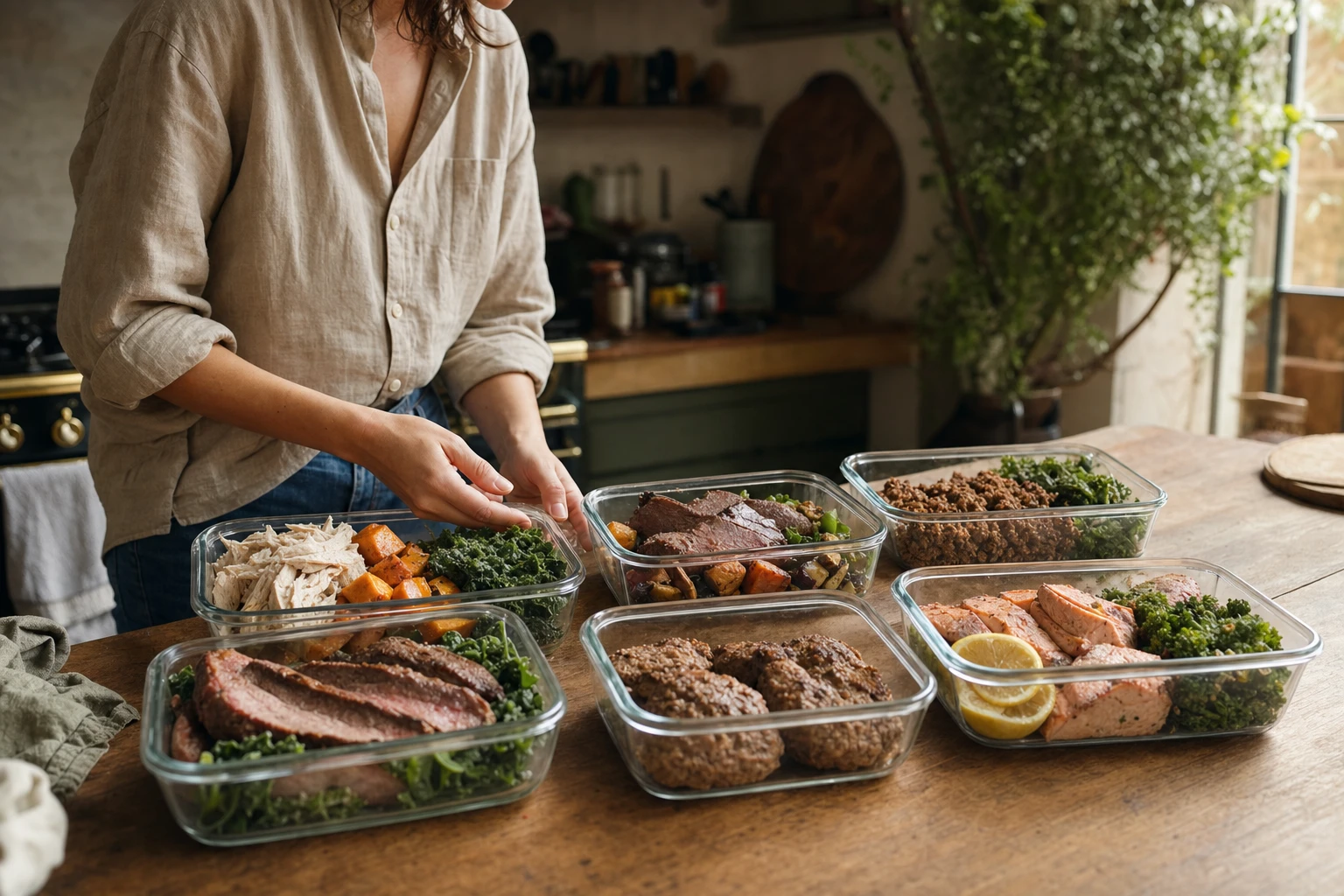
Meal timing on shift work
The ideal is to eat before your shift starts or within the first hour of arriving at work. Eating after 4-5 hours into your shift means you're eating when your body is primed for rest, not digestion. That meal will sit poorly and convert more readily to fat storage.
If you work an 8-hour night shift (10 PM to 6 AM), your eating window should look like this:
- Before shift (9 PM): a light protein-based snack or small meal. Nothing heavy. You're preparing your body to function, not fuelling movement.
- Early shift (10:30 PM-midnight): your main meal. This is when your digestive system still has capacity. Protein, vegetables, carbohydrate.
- Mid-shift (2-3 AM): a protein-based snack if you're genuinely hungry. Not because you're bored. A hard-boiled egg, some cheese, beef jerky. Something that takes effort to eat (so you're not mindlessly consuming).
- Late shift (4-5 AM): nothing unless you're actually hungry. Your body is preparing to wake. Eating now is fighting that signal.
The key is frontloading. Eat your substantial calories in the first half of your shift when your body can still process them efficiently. Taper as the shift progresses.

Get recipes and routines, free
Two short reads a week of simple, nutrient-dense recipes and daily routines.
By signing up you agree to receive emails from us. No spam, unsubscribe anytime.
Caffeine cutoff strategy
Caffeine is necessary on shift work. It's also the reason many shift workers sleep terribly. The trick is using it strategically and with a hard cutoff.
Caffeine has a half-life of 5-6 hours, meaning half of what you consume is still in your system that many hours later.2 If you drink coffee at 3 AM, a quarter of that caffeine is still firing your nervous system at 9 AM when you're trying to sleep.
Strategy: caffeine only in the first 4 hours of your shift. If you start at 10 PM, stop caffeine by 2 AM. If you start at midnight, stop by 4 AM. This gives your body enough time to process it before sleep.
- Best options: real coffee or strong tea. Single espressos if you need it quick. Avoid energy drinks (the additive load is unnecessary and they cause worse crashes).
- Amount: one good cup early. A second if you genuinely need it. Not four cups spaced throughout your shift. That's just keeping you in a state of agitation.
- Water first: dehydration mimics fatigue. Before your second coffee, drink a full glass of water. Often that's enough to restore energy.
Caffeine doesn't create energy. It borrows energy from later in your shift and repays it with interest. Use it strategically, not habitually.

Melatonin-supporting foods before rest
You're not going to sleep at night. But you do need to sleep. Your brain needs a signal that rest is coming. Melatonin-supporting foods help create that signal.
Tryptophan is the amino acid your body uses to build serotonin and melatonin.3 When you eat protein-rich foods containing tryptophan, alongside carbohydrates (which help tryptophan cross the blood-brain barrier), you're giving your body the building blocks for sleep.
- Turkey and chicken - the stereotype exists because it's true. High tryptophan.
- Eggs - complete protein, contains tryptophan, cholesterol for hormone production.
- Cheese - full-fat versions are best. Tryptophan content is concentrated through aging.
- Nuts and seeds - almonds, pumpkin seeds. Portable and tryptophan-rich.
- Carbohydrates with it - sweet potato, oats, rice. These aren't the enemy here. They help tryptophan get to your brain.
Eat a tryptophan-rich meal 30-60 minutes before you're going to attempt sleep. Your body recognises this pattern and melatonin production rises accordingly.


1 of 9
Daily blend
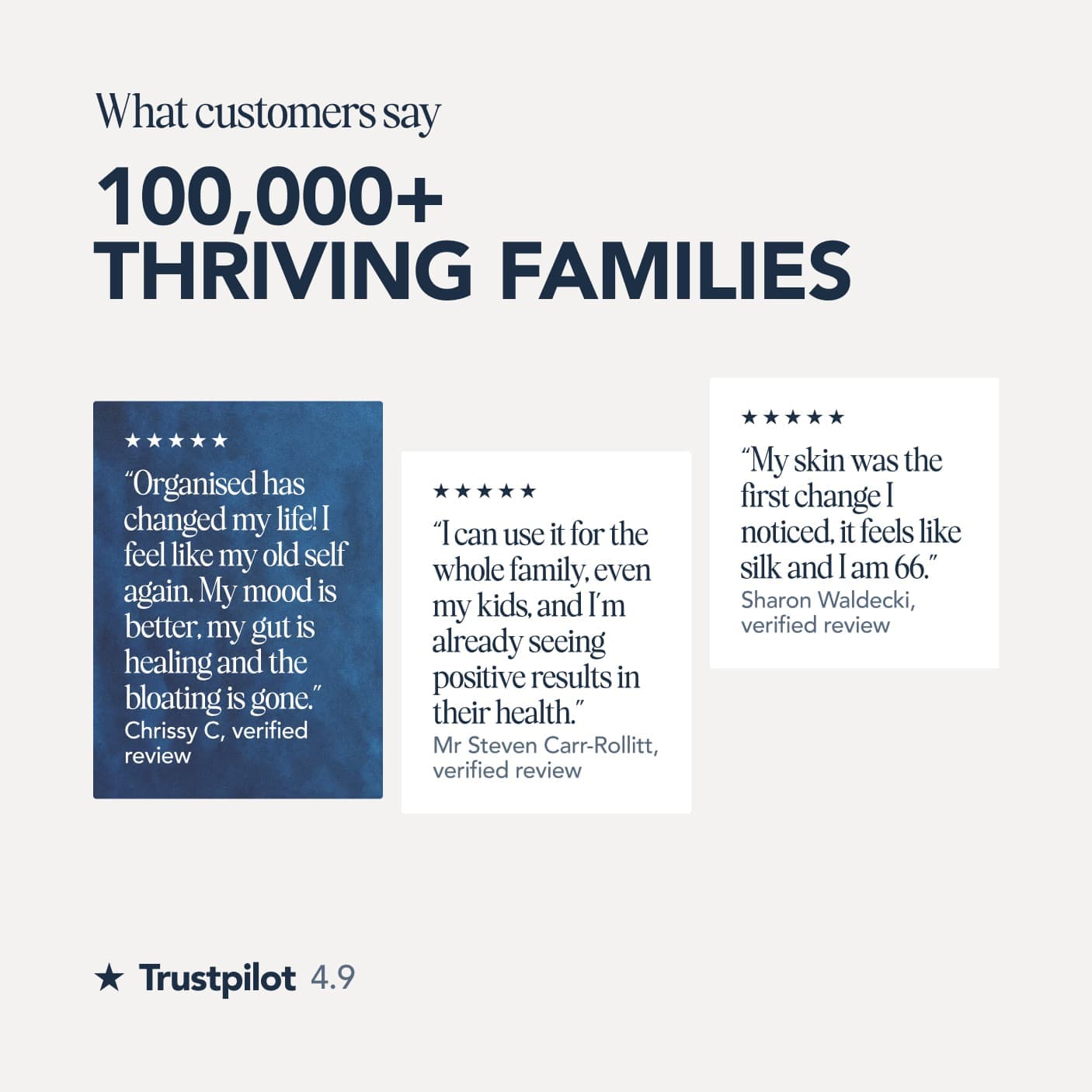
100,000+ thriving families4.9 on Trustpilot
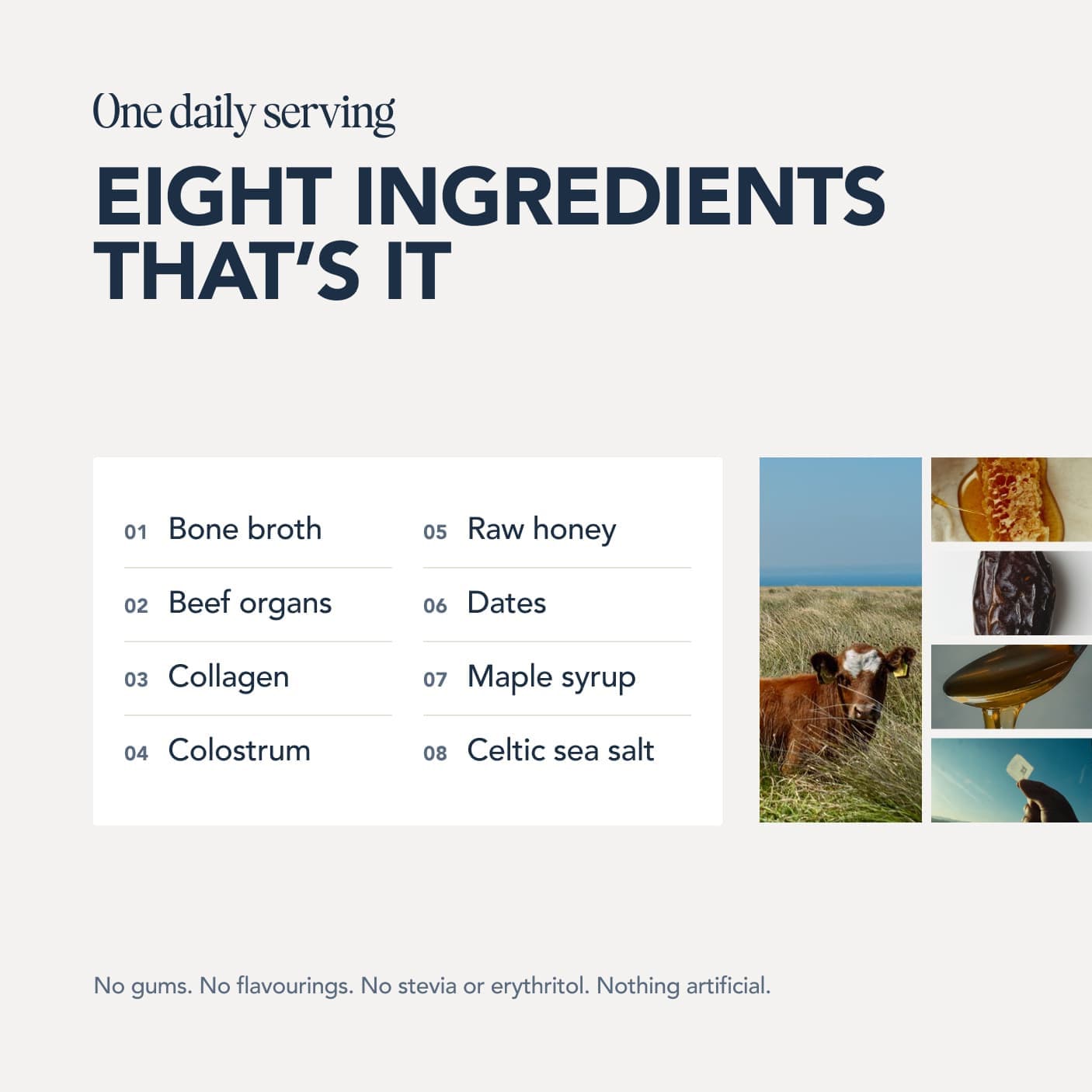
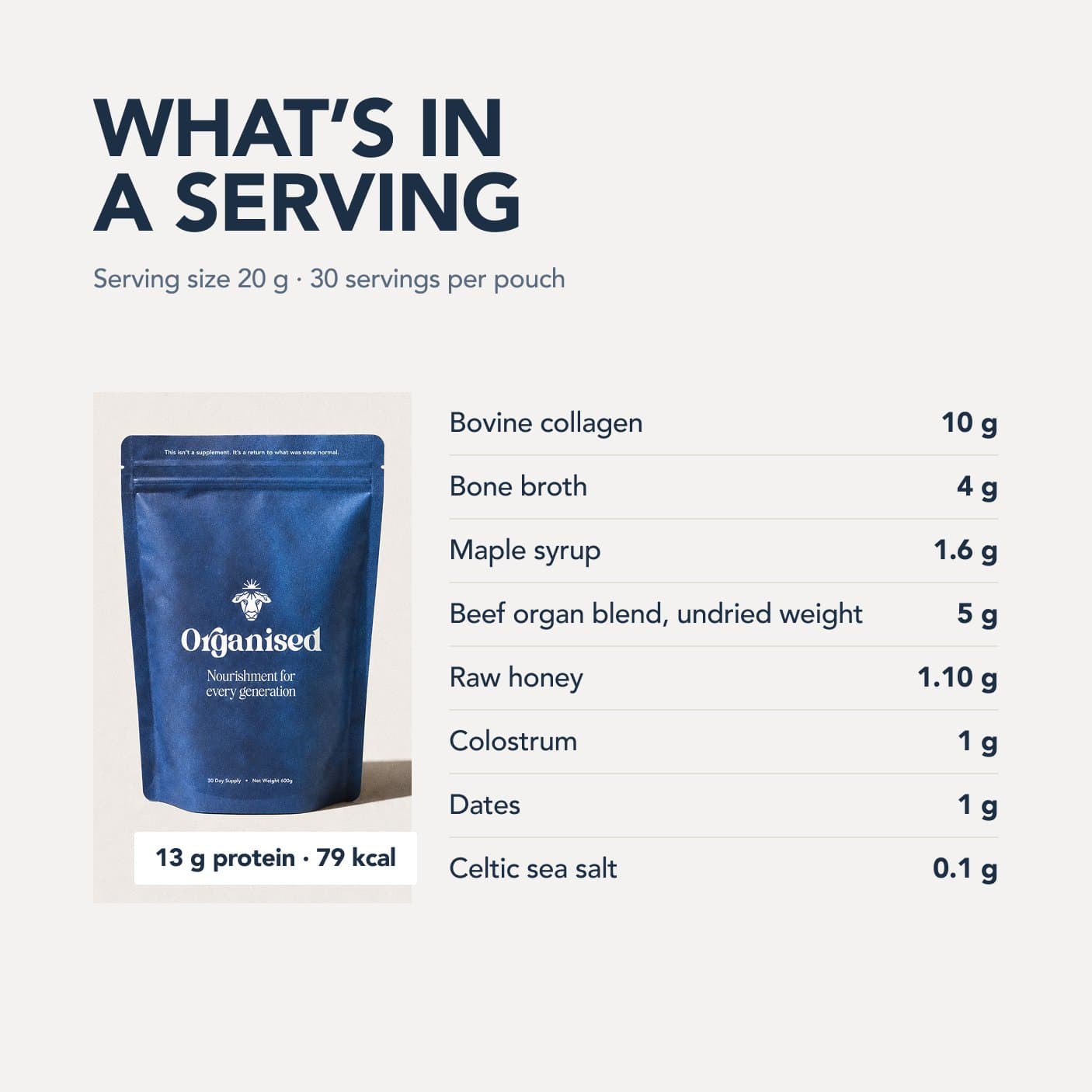
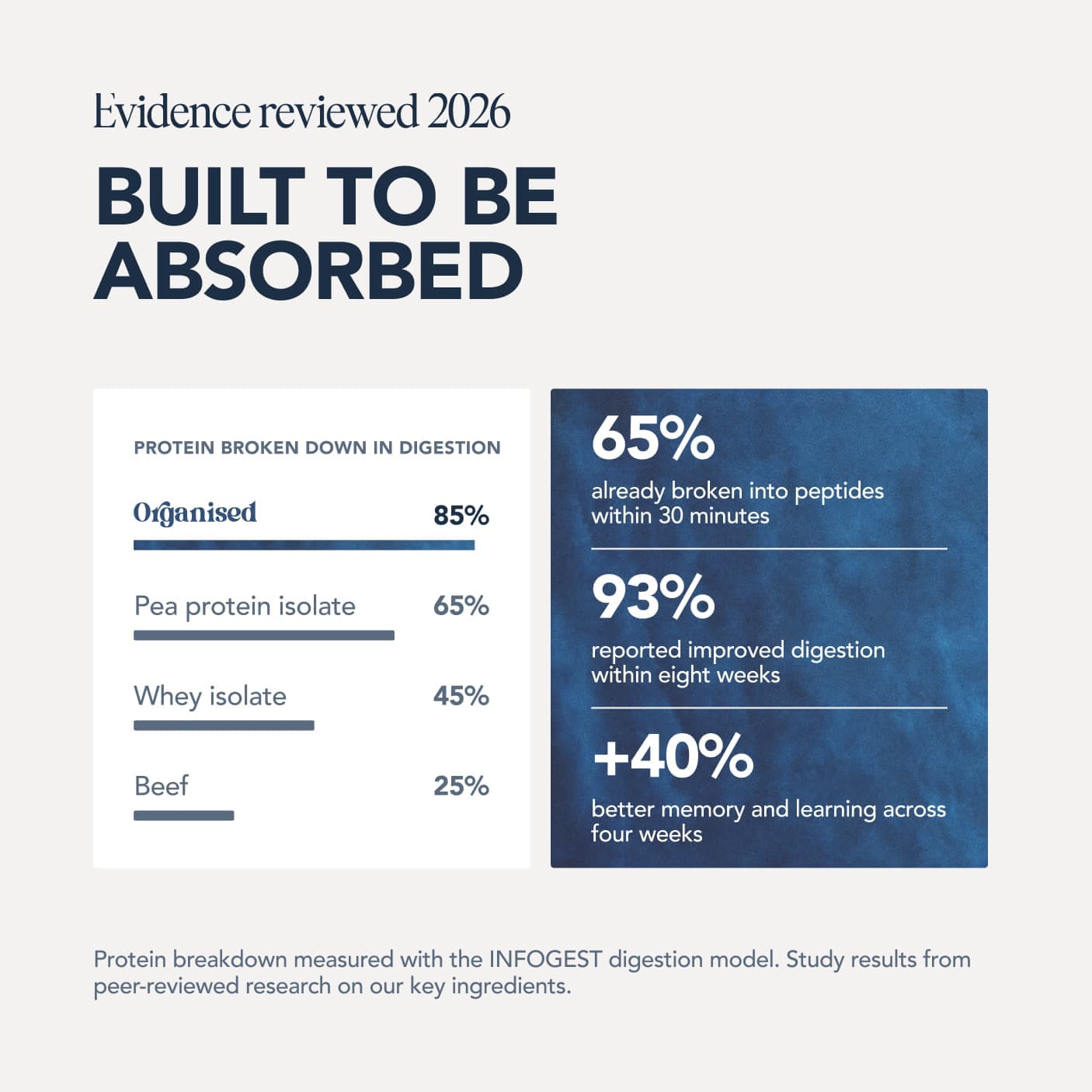
Eight real ingredients built around grass-fed beef organs, collagen and colostrum. Nothing synthetic added.
Free with your first order, worth £38. Plus £10 off the pouch with a subscription.

Free UK shipping · Made in England · 100 day money back guarantee on your first pouch · Skip, pause or cancel anytime
Sample shift day eating pattern
10 PM shift start, 6 AM finish.
- 9 PM (before shift): 2 hard-boiled eggs, slice of sourdough bread, apple. Light but complete.
- 11 PM (30 mins into shift): grilled chicken breast, roasted sweet potato, steamed broccoli. 350 calories, 35g protein.
- 2 AM (mid-shift): strong black coffee. One cup only. If still hungry after 20 minutes, eat an apple and a handful of almonds.
- 5 AM (approaching end): nothing unless absolutely starving. Your body is preparing to wake.
- 6:30 AM (after arriving home): light breakfast if you're hungry. Egg and cheese. Not a heavy meal. You're not trying to eat again. You're signalling to your body that work is done.
- 7:30 AM (preparing to sleep): warm milk with a pinch of honey and cinnamon. Your signal to wind down. Sleep 8-10 hours.
This pattern is stable. Your blood sugar never spikes. Your energy never crashes. Your circadian rhythm is still fighting you, but you've stopped fighting it back.
The bottom line
Shift work is biologically unnatural and you won't fix that with nutrition alone. But protein-first eating, strategic meal timing, and melatonin-supporting foods before rest can keep you functioning without slowly poisoning yourself with blood sugar chaos and processed food. Meal prep on your days off. Know your caffeine cutoff. Eat substantial food early in your shift and taper as it progresses. Your health is worth that small amount of planning.
References
Every source below was checked on 27 August 2026. Each PubMed, PMC and DOI identifier was resolved against NCBI or Crossref, and what it opens is printed under the citation, so you can see the link goes where the citation says without leaving the page. Where a citation and its identifier disagreed, the citation was corrected to the record or the reference was deleted along with the sentence marker that pointed at it, and where the resolved paper turned out not to support the sentence, the sentence was cut back to what it does support. Borrowed authority is worse than none, because it looks like rigour.
- Kervezee L et al. Metabolic and cardiovascular consequences of shift work: The role of circadian disruption and sleep disturbances. Eur J Neurosci. European Journal of Neuroscience.Checked 27 August 2026: doi:10.1111/ejn.14216 opens Kervezee L, Kosmadopoulos A, Boivin DB, Metabolic and cardiovascular consequences of shift work: The role of circadian disruption and sleep disturbances European Journal of Neuroscience 2018;51(1):396-412.
- Institute of Medicine. Caffeine for the Sustainment of Mental Task Performance. NCBI Bookshelf NBK223808.
- Peuhkuri K et al. Diet promotes sleep duration and quality. Nutr Res. PubMed PMID: 22652369.Checked 27 August 2026: PMID 22652369 opens Peuhkuri K, Sihvola N, Korpela R, Diet promotes sleep duration and quality. Nutr Res 2012;32(5):309-19. PubMed indexes it as: Review.
- Westerterp KR. Diet induced thermogenesis. Nutr Metab (Lond). PMC524030.Checked 27 August 2026: PMC524030 opens Westerterp KR, Diet induced thermogenesis. Nutr Metab (Lond) 2004;1(1):5.
Who wrote and reviewed this guide
Niall Kiddle
Author · Founder, Organised
Niall is the founder of Organised. He started the company in 2024 after fixing his own health the slow way: in 2022 he swapped a cupboard of synthetic supplements for real food, raw milk, organ meats, bone broth and honey, and felt the difference within months.
Areas of expertise: Ancestral nutrition, Organ meats, Whole-food supplementation, Gut health, Regenerative sourcing
Read Niall's full profile
Pedro Rodrigues
Reviewer · Agronomist (farming and sourcing only)
Pedro is the agronomist Organised works with on farming and sourcing. His job on the guides is to keep the science honest: he reviews what we publish about soil health, regenerative agriculture, grazing and the way food is actually produced.
Areas of expertise: Regenerative agriculture, Agronomy, Soil health, Grass-fed farming, Food sourcing
Reviewed this guide on
Read Pedro's full profileMore on routines
View all- The Busy Parent's Guide to Whole Food Nutrition
- The Morning Routine That Changed My Health
- A Day of Eating for Optimal Skin Health
- Evening Wind-Down: A Nutrition Protocol for Better Sleep
- How to Build a Supplement-Free Daily Routine
- How to Meal Prep for a Week of Whole Food Nutrition
- The Healthy Morning Routine Reddit Swears By: An Honest Breakdown
- The Weekend Reset: A 2-Day Whole Food Protocol
- Travel Nutrition: How to Stay Nourished on the Go
Browse the guides library
All guidesKeep reading

Recipes & routines
The Busy Parent's Guide to Whole Food Nutrition
Batch cooking, freezer meals, bone broth routines. Real food nutrition that doesn't require three hours of cooking every night.
Recipes & routines
A Day of Eating for Optimal Skin Health
Complete day of eating optimised for clear, youthful skin. Breakfast through dinner with specific nutrients for skin repair and health.

Recipes & routines
Liver Pate for Beginners: A Gentle Introduction to Organ Meats
Simple liver pate recipe to start eating organ meats. Chicken liver, butter, and herbs. Gentle introduction to nutrient-dense whole foods.
Real food, made effortless
Add it to my routineA few ways to use it
All recipesLiver Pate for Beginners: A Gentle Introduction to Organ Meats
Simple liver pate recipe to start eating organ meats. Chicken liver, butter, and herbs. Gentle introduction to nutrient-dense whole foods.

Matcha Latte Gummies with Collagen and Gelatine
Make visually stunning matcha latte gummies infused with collagen and gelatine. Simple recipe for gut-healing sweets you'll actually want to eat.
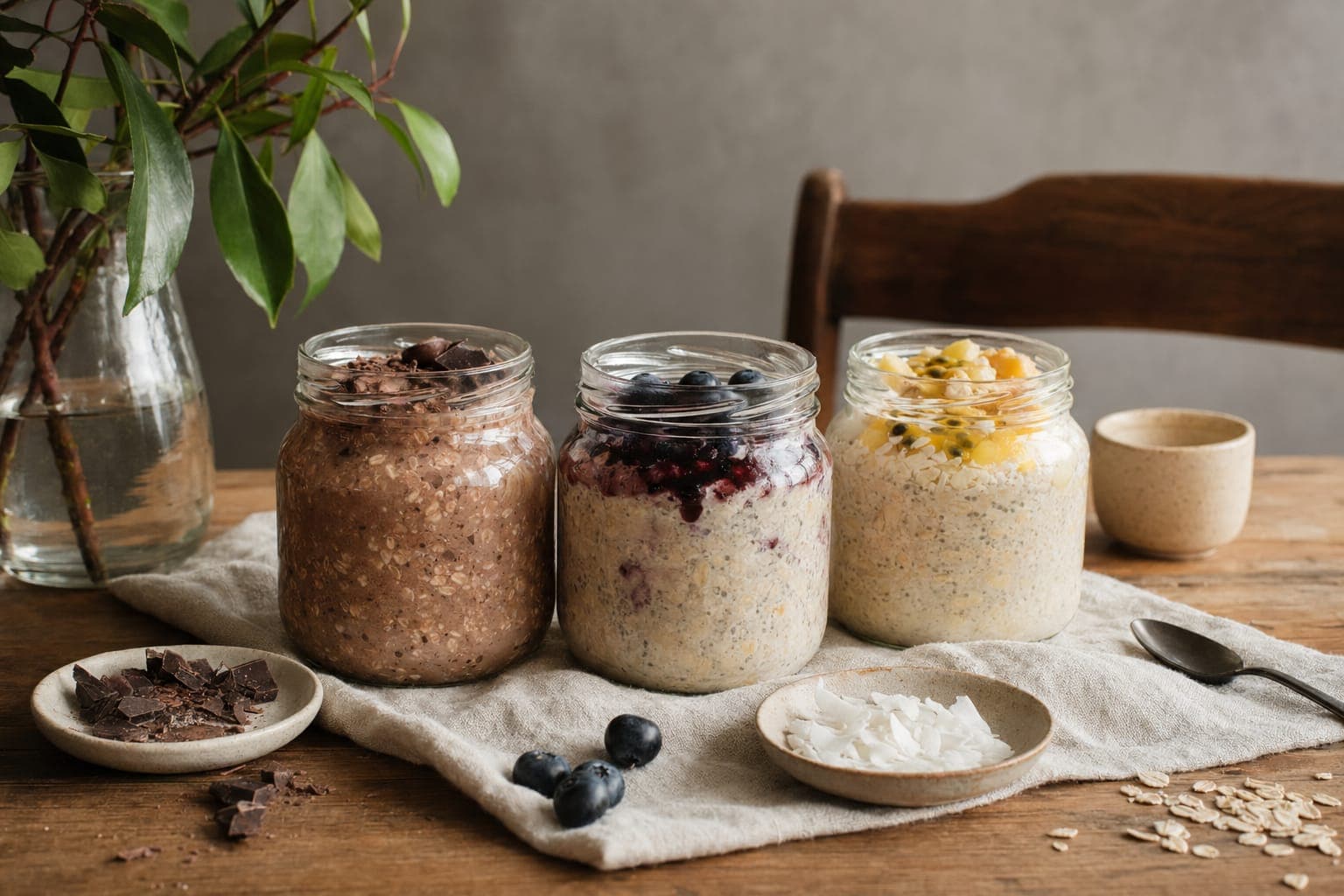
Organised Overnight Oats: 3 Variations
Three delicious overnight oats variations with Organised. Chocolate, berry, tropical flavours. Make them Sunday, eat them all week.


 Join over 100,000+ members
Build a better food system with us
The Organised community is thousands of people choosing real food and backing the farmers who grow it, all of us trying to leave the world a little better than we found it. If that is what you care about too, you belong here.