The Real Reason Your Doctor Says 'Eat Less Red Meat'
Your doctor says eat less red meat. It causes heart disease. It causes cancer. It's making you fat. And yet traditional cultures thrived on red meat. The Masai ate cattle. The Inuit ate seal. Ancestral humans were apex predators. How did we get from hunting large animals to being told to fear them? The answer isn't the science. The answer is bad science being misinterpreted.

By Niall Kiddle, Founder, Organised

Reviewed by Pedro Rodrigues, Agronomist (farming and sourcing only) ·
6 min read · Published · Updated · 3 cited sources
Makers of the Organised Daily blend, a grass-fed beef organ supplement from regenerative UK farms
This is perhaps the most consequential nutritional misunderstanding of the modern era. Millions of people have eliminated or drastically reduced red meat consumption based on medical advice that, when you actually examine the underlying evidence, is not nearly as solid as people believe.3

Why doctors say what they say
Your doctor isn't being malicious. They're trained to give guidelines that come from major health organisations. WHO, American Heart Association, NHS. All of them recommend limiting red meat consumption.1 This advice is backed by research. But here's the catch: the research is almost entirely observational.
Observational studies show associations.2 They do not show causation. They show that people who eat more red meat also tend to have higher rates of heart disease. But people who eat more red meat also tend to do dozens of other things differently. And those other things might be what's actually causing the disease.
Doctors aren't trained to critique epidemiological methods. They're taught to implement guidelines. So when guidelines say reduce red meat, they tell patients to reduce red meat. The guidance filters down from researcher to physician to patient, and at each step, the nuance gets lost. What was originally a weak observational association becomes unquestioned medical fact.
The observational study problem
Here's how observational studies work. You recruit thousands of people. You ask them what they eat. You follow them for years. You track who develops disease. You look for patterns. If people eating more red meat develop more heart disease, you conclude red meat causes heart disease.
The problem is that this method cannot separate cause from confounding. A confounder is a variable that predicts both red meat consumption and disease outcome, but doesn't actually involve a causal link between them.
People who eat a lot of red meat also tend to: smoke more, exercise less, eat more seed oils, eat fewer vegetables, have higher stress, sleep poorly, drink more alcohol, and generally have lower health consciousness. Any one of these factors could be causing the heart disease. The meat might be completely innocent.
Observational studies can show that people who eat red meat have more heart disease. They cannot show that the meat caused the disease. Confounders are invisible in observational data.
Randomised controlled trials, the gold standard of evidence, would resolve this. You'd take people, randomise them to either eat red meat or not eat red meat, and track outcomes. But these trials haven't been done on a large scale, because they're expensive and because it would be unethical to randomise people to diets for years.
Confounding variables that nobody talks about
The most obvious confounder: people who eat a lot of red meat and are health-conscious are different from people who eat a lot of red meat and are not. The health-conscious meat-eater is eating grass-fed beef, exercising regularly, not smoking, managing stress. The unconscious meat-eater is eating processed fast food burgers, not exercising, smoking, stressed. Same meat. Completely different contexts.
Processed meat is different. Hamburgers with seed oils, high sodium, additives, and refined grain buns are not the same as a steak. But epidemiological studies rarely distinguish between them. They lump all red meat together.
Seed oil consumption is a massive confounder that nobody controls for adequately. People eating the most red meat in modern studies also tend to be eating the most fried foods, the most processed foods, the most seed oils. Seed oils are genuinely inflammatory. They could easily be the culprit. But if seed oil consumption isn't controlled for in the analysis, red meat gets blamed instead.
Vegetable intake is another. People eating very high amounts of red meat are often eating low amounts of vegetables and whole plant foods. Nutrient deficiency could be driving disease. But if the analysis doesn't control for the absence of plant foods, it blames the presence of meat.
Processed meat versus unprocessed meat
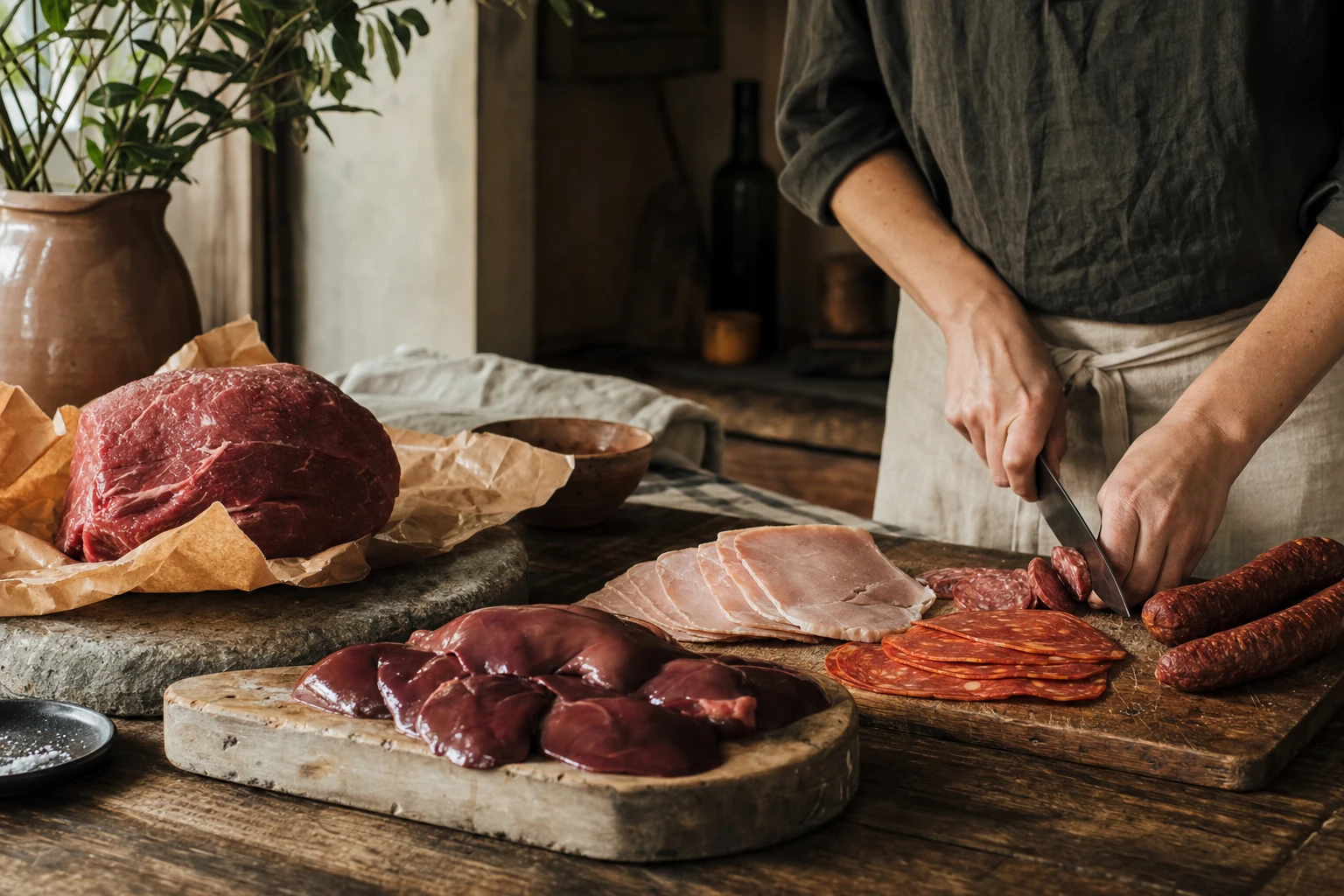
Here's where the evidence actually does distinguish. Processed meat, defined as meat preserved by smoking, curing, or additives, shows clearer associations with disease than unprocessed meat. Bacon, sausage, cured ham, processed deli meats. These are different biochemically from fresh beef or lamb.
But even this distinction gets muddied. A processed meat eater is often also a seed oil consumer, a sugar consumer, a sedentary person. An unprocessed meat eater is often someone who has already made significant dietary shifts.
The honest conclusion: processed meat probably isn't optimal. Unprocessed red meat, eaten in the context of a health-conscious diet, exercise, stress management, and vegetable consumption, shows no clear association with disease in high-quality analysis. The idea that unprocessed red meat inherently causes disease isn't supported by evidence when confounders are adequately controlled.
Processed red meat deserves scrutiny. Unprocessed red meat, eaten by people who exercise and manage stress, has no proven causal link to disease.
Get the science, plainly, free
Two short reads a week on what the research actually says about nutrition.
By signing up you agree to receive emails from us. No spam, unsubscribe anytime.
What the actual research shows
The Nurse's Health Study, one of the largest epidemiological studies, shows that women eating more red meat have higher disease risk. But when you look at the specific women in that study who eat red meat and also exercise regularly, don't smoke, eat vegetables, and have low stress, their disease risk is not elevated. The disease association was in the subset eating red meat in a unhealthy context, not in the subset eating red meat in a health-conscious context.
A meta-analysis of controlled trials on red meat consumption found minimal effects on cardiovascular risk factors when processed foods, seed oils, and sugar were controlled for. The effect of red meat itself was small to negligible.
This isn't to say eat unlimited red meat. It's to say the evidence for absolute avoidance or severe restriction is weak. The evidence for avoiding processed red meat and processed foods generally is much stronger. But your doctor probably didn't present it that way.
The cultural narrative around meat
There's a cultural shift happening toward plant-based diets, vegetarianism, and veganism. This is philosophically defensible. But using weak epidemiological evidence as the scientific justification is not intellectually honest.
The narrative has become: meat is dangerous. This is convenient for plant-based food companies. It's convenient for healthcare systems promoting cheaper plant-based interventions. It's convenient for the environmental movement. But it's not well-supported by the evidence when confounders are properly considered.
Traditional cultures ate meat. Not exclusively, but regularly and unapologetically. They didn't have epidemic heart disease. They didn't have epidemic obesity. They didn't have epidemic autoimmunity. This doesn't prove meat is protective. But it does suggest that meat in the context of overall health consciousness isn't inherently dangerous.

1 of 9
Daily blend
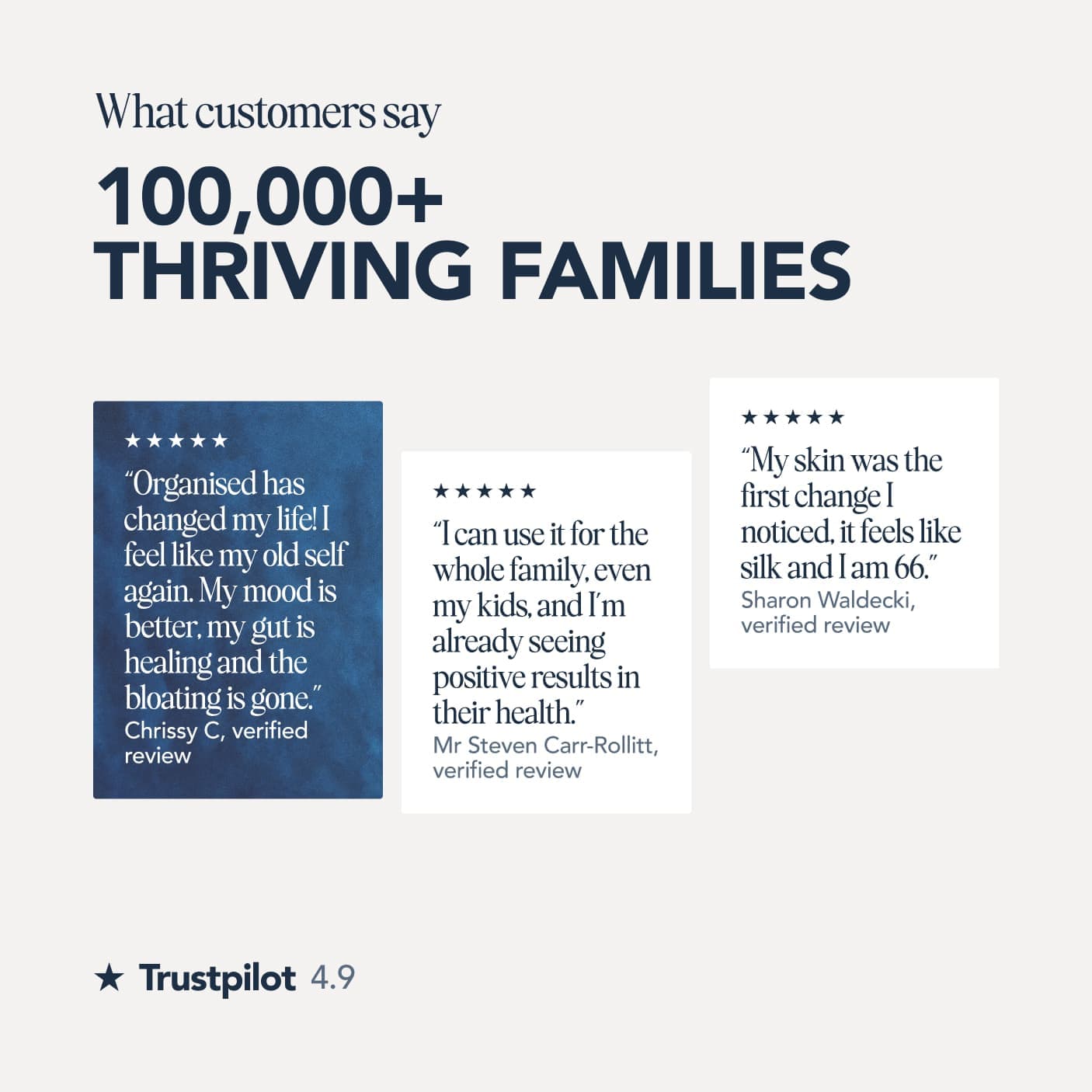
100,000+ thriving families4.9 on Trustpilot
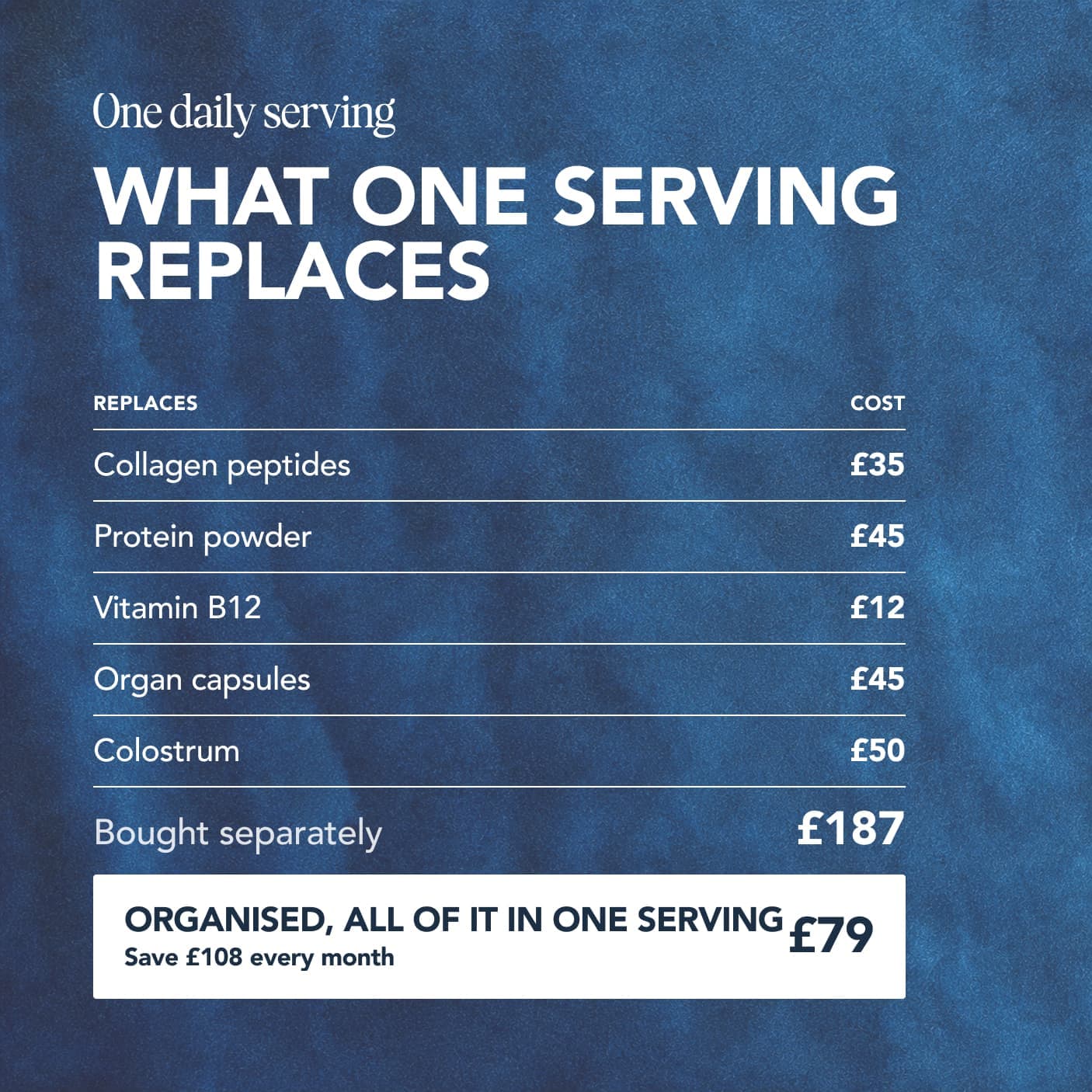
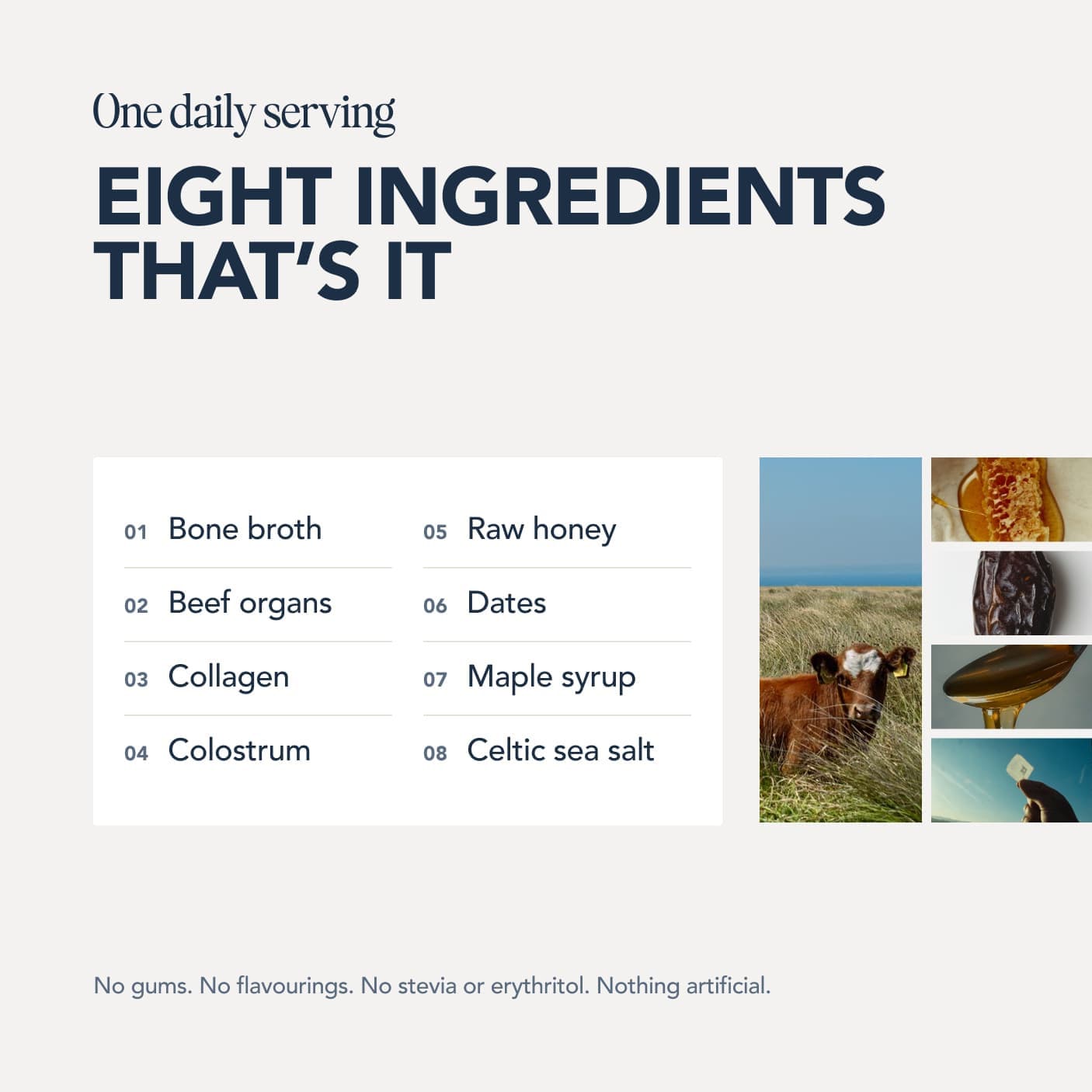
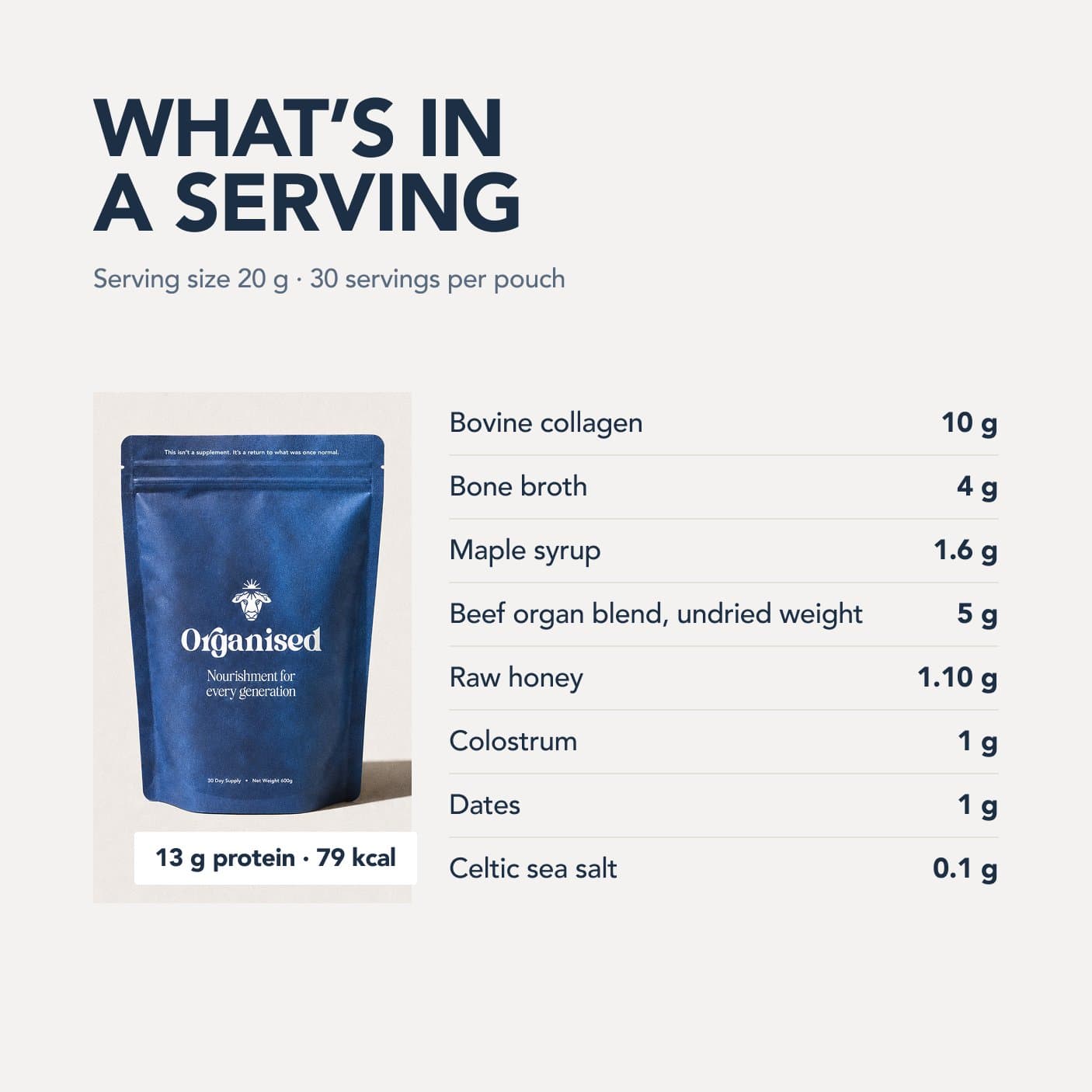
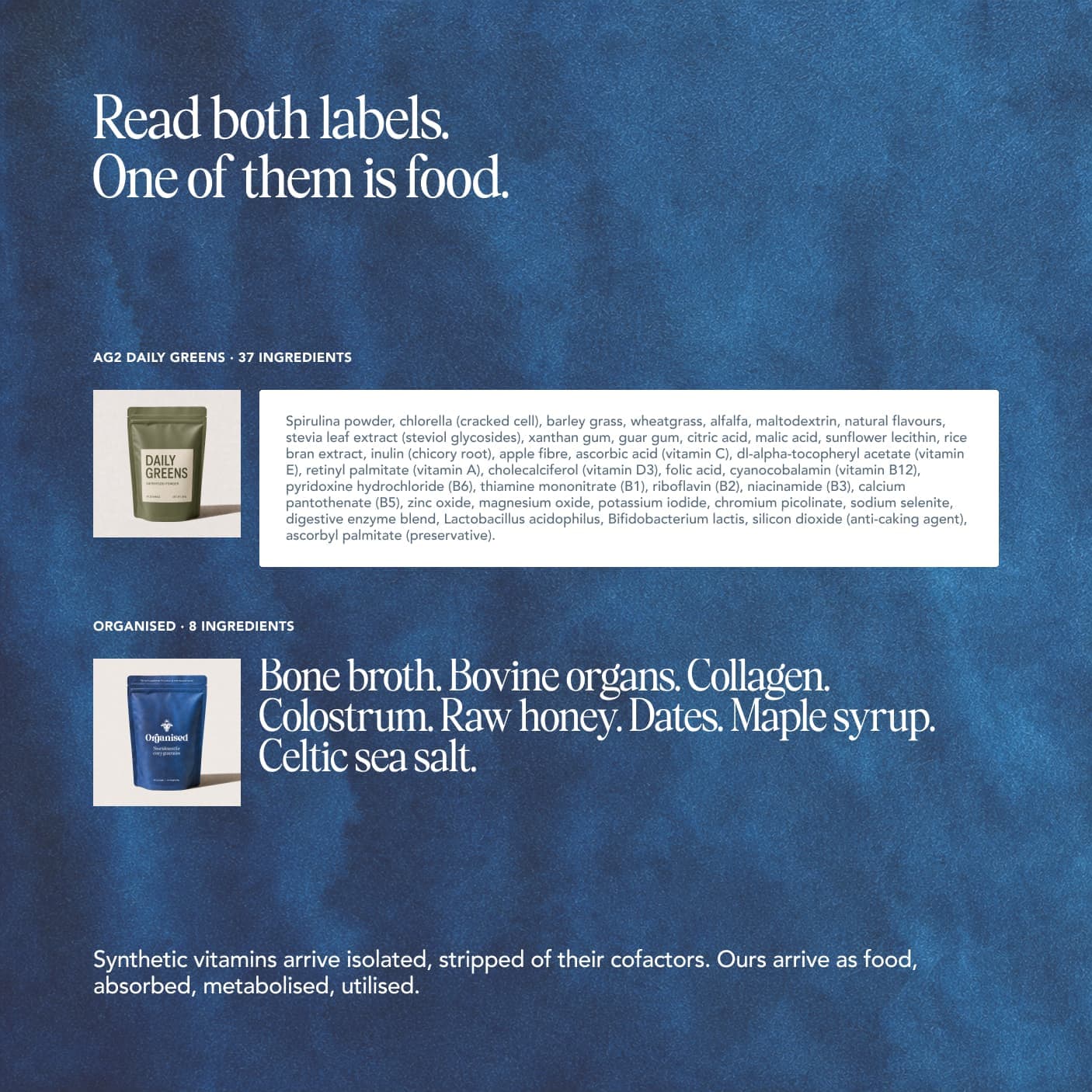
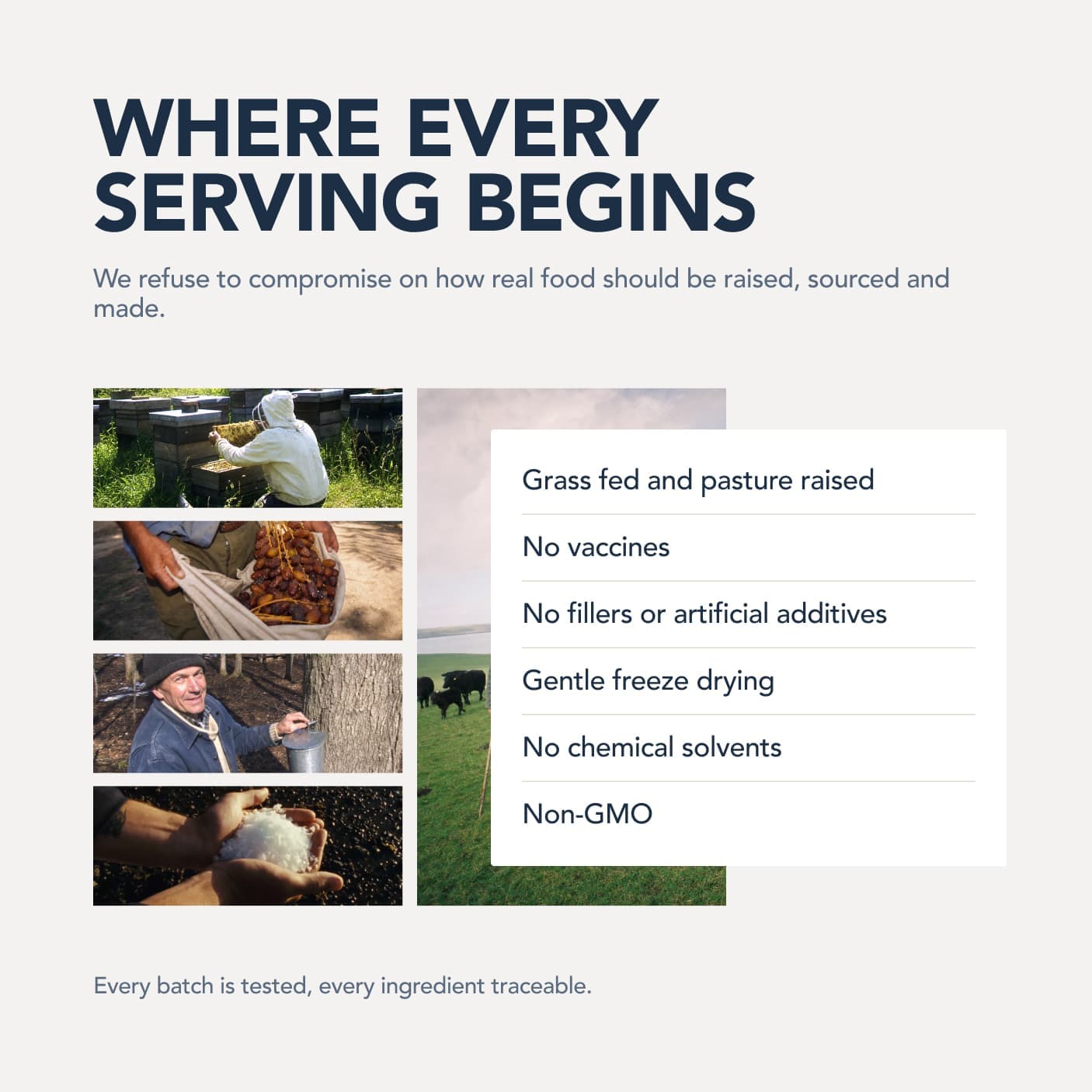
Eight real ingredients built around grass-fed beef organs, collagen and colostrum. Nothing synthetic added.
Free with your first order, worth £38. Plus £10 off the pouch with a subscription.


Free UK shipping · Made in England · 100 day money back guarantee on your first pouch · Skip, pause or cancel anytime
What to actually do
The intelligent approach is nuance. Processed red meat, eaten regularly alongside processed foods, likely contributes to disease. Not because of the meat, but because of the overall pattern. Unprocessed red meat, eaten as part of a health-conscious diet, is not harmful and is nutritionally superior to most plant alternatives for certain nutrients like B12, iron, and carnosine.
If you enjoy red meat, eat it. Eat grass-fed or pasture-raised where possible. Eat unprocessed cuts. Avoid the processed deli meats and processed red meat products. Pair it with vegetables. Exercise regularly. Manage stress. Sleep well. These behaviours matter more than whether you eat beef.
And be sceptical of guidelines based on observational evidence. Your doctor is following established guidance. But established guidance is only as good as the evidence supporting it. And the evidence supporting red meat avoidance, when scrutinised carefully, is shakier than headlines suggest.
References
Every source below was checked on 27 August 2026. Each PubMed, PMC and DOI identifier was resolved against NCBI or Crossref, and what it opens is printed under the citation, so you can see the link goes where the citation says without leaving the page. Where a citation and its identifier disagreed, the citation was corrected to the record or the reference was deleted along with the sentence marker that pointed at it, and where the resolved paper turned out not to support the sentence, the sentence was cut back to what it does support. Borrowed authority is worse than none, because it looks like rigour.
- NHS. Red meat and the risk of bowel cancer. nhs.uk/live-well/eat-well/red-meat-and-the-risk-of-bowel-cancer.
- Johnston BC, et al. Unprocessed red meat and processed meat consumption: dietary guideline recommendations from the NutriRECS Consortium. Ann Intern Med. 2019. PMID 31569235.Checked 27 August 2026: PMID 31569235 opens Johnston BC, Zeraatkar D, Han MA et al, Unprocessed Red Meat and Processed Meat Consumption: Dietary Guideline Recommendations From the Nutritional Recommendations (NutriRECS) Consortium. Ann Intern Med 2019;171(10):756-764. PubMed indexes it as: Practice Guideline, Systematic Review.
- Chowdhury R, et al. Association of dietary, circulating, and supplement fatty acids with coronary risk: a systematic review and meta-analysis. Ann Intern Med. 2014. PMID 24723079.Checked 27 August 2026: PMID 24723079 opens Chowdhury R, Warnakula S, Kunutsor S et al, Association of dietary, circulating, and supplement fatty acids with coronary risk: a systematic review and meta-analysis. Ann Intern Med 2014;160(6):398-406. PubMed indexes it as: Meta-Analysis, Systematic Review.
Who wrote and reviewed this guide
Niall Kiddle
Author · Founder, Organised
Niall is the founder of Organised. He started the company in 2024 after fixing his own health the slow way: in 2022 he swapped a cupboard of synthetic supplements for real food, raw milk, organ meats, bone broth and honey, and felt the difference within months.
Areas of expertise: Ancestral nutrition, Organ meats, Whole-food supplementation, Gut health, Regenerative sourcing
Read Niall's full profile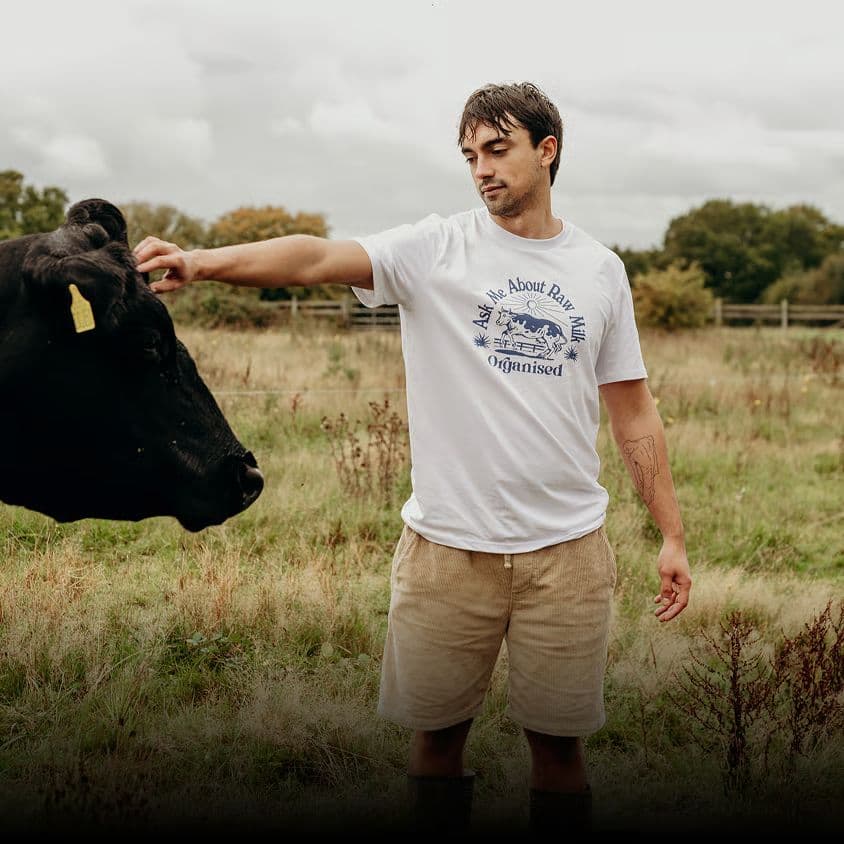
Pedro Rodrigues
Reviewer · Agronomist (farming and sourcing only)
Pedro is the agronomist Organised works with on farming and sourcing. His job on the guides is to keep the science honest: he reviews what we publish about soil health, regenerative agriculture, grazing and the way food is actually produced.
Areas of expertise: Regenerative agriculture, Agronomy, Soil health, Grass-fed farming, Food sourcing
Reviewed this guide on
Read Pedro's full profileMore on debunking
View all- Are Organ Meats High in Purines? What Gout Sufferers Need to Know
- Cholesterol in Organ Meats: Should You Be Worried?
- Do You Really Need 5 a Day? What the Evidence Says
- Does Red Meat Cause Cancer? A Nuanced Look at the Evidence
- Is Too Much Protein Bad for Your Kidneys? Separating Fact from Fear
- Liver Doesn't Store Toxins: Debunking the Biggest Organ Meat Myth
- The Saturated Fat Myth: What Modern Research Actually Shows
Browse the guides library
All guidesKeep reading

Science
Liver Doesn't Store Toxins: Debunking the Biggest Organ Meat Myth
The liver filters toxins, it doesn't store them. Here's the science behind the biggest organ meat myth, and why liver is one of the safest foods you can eat.
Science
Does Red Meat Cause Cancer? A Nuanced Look at the Evidence
The WHO warning, processed vs unprocessed meat, confounders, and what the real research says about red meat consumption.
Science
What Is Oxidative Stress and How Does Nutrition Help?
Understand oxidative stress and how your body's antioxidant systems work. Learn which nutrients support glutathione and SOD, and where to find them in food.
Real food, made effortless
See the blendA few ways to use it
All recipes
Organised Smoothie Bowl Recipes for Every Season
Four seasonal smoothie bowl recipes using Organised. Berry in summer, apple-cinnamon in autumn, tropical in spring, warming chocolate in winter.

How to Make Your Own Gelatine Gummies
A simple recipe for homemade gelatine gummies using grass-fed gelatine, fresh juice, and raw honey. Better than shop-bought, kids love them.

Organised Protein Pancakes: A Weekend Favourite
A high-protein pancake recipe using beef protein, eggs, and raw milk. Cooked in cast iron, naturally sweetened with banana and honey. Real food breakfast.


 Join over 100,000+ members
Build a better food system with us
The Organised community is thousands of people choosing real food and backing the farmers who grow it, all of us trying to leave the world a little better than we found it. If that is what you care about too, you belong here.