Collagen and Skin Elasticity: A Meta-Analysis of the Evidence
The claim sounds incredible: 52% improvement in skin elasticity. But headlines and reality diverge sharply. Here's what the research actually shows, how to interpret it correctly, and what you can realistically expect.

By Niall Kiddle, Founder, Organised

Reviewed by Pedro Rodrigues, Agronomist (farming and sourcing only) ·
7 min read · Published · Updated · 5 cited sources
Makers of the Organised Daily blend, a grass-fed beef organ supplement from regenerative UK farms

Collagen research is extensive, but most people reading the headlines don't understand what the studies actually measured, what the methodology was, or what "significant" improvement means in practical terms.

The 52.3% elasticity study explained
The specific 52.3% figure comes from a randomised controlled trial published in 2019.1 Participants took collagen peptides, 10g daily, or placebo for 12 weeks. Researchers measured skin elasticity objectively using a device that measures the skin's ability to return to its baseline after deformation.
The control group's elasticity remained relatively stable. The collagen group showed a 52.3% improvement in the primary elasticity measurement compared to baseline.
This is a legitimate finding from a properly designed trial. But the headline "52% improvement" needs context.
Study methodology and quality
The trial was randomised and double-blinded, both participants and researchers didn't know who was receiving collagen or placebo. This is the gold standard for clinical trials. Dropouts were low, suggesting good compliance.
Measurements were objective, using instruments rather than subjective questionnaires. The same researchers measured everyone at baseline and endpoint, reducing measurement bias.
The study controlled for several confounders: age, sun exposure, skincare routine. Participants were otherwise healthy women aged 35-55, a reasonable population for studying skin changes.
On the scale of clinical trial quality, this study is solid but not extraordinary. It's not a massive multi-centre trial with thousands of participants. It's a properly-done mid-sized trial, which is standard in supplement research.
Sample size and statistical significance
The trial included approximately 70 participants per group, 140 total. This is adequate for detecting a meaningful effect size, but it's not huge.
The 52.3% improvement was statistically significant, p less than 0.05, meaning it's unlikely to be due to chance. But statistical significance doesn't equal clinical significance.
The actual change in elasticity measurements was from approximately 0.45 elasticity units at baseline to approximately 0.68 units after 12 weeks in the collagen group. In absolute terms, that's a 0.23-unit change. In relative terms, percentage change from baseline, it's the 52% figure.
This matters because a 52% relative improvement sounds more impressive than "the elasticity measurement went from 0.45 to 0.68 units." Both are true, but they communicate very differently.
Timeline matters
The study ran for 12 weeks. Collagen doesn't work overnight. The effects appeared gradually over that period, with most of the benefit appearing after 8 weeks of consistent supplementation.
This is crucial information that often gets dropped from popular summaries. Someone taking collagen for two weeks and expecting visible skin changes will be disappointed. The research assumes consistent supplementation over months, not days.
Additionally, the benefit plateaued at 12 weeks. Taking collagen for 24 weeks might produce slightly more benefit, or it might not. The research doesn't tell us what happens beyond 12 weeks, so maintenance supplementation remains an open question based on individual response.
Cofactors that determine results
Collagen peptides are amino acids and peptides, but their biological activity depends on cofactors your body needs to actually synthesise new collagen.
Vitamin C is essential for collagen synthesis. It's a cofactor for prolyl and lysyl hydroxylase, enzymes that stabilise and cross-link collagen.2 Without adequate vitamin C, the collagen peptides you consume can't be effectively utilised.
Copper and zinc are also essential cofactors. Lysyl oxidase, the enzyme that creates the cross-links that give collagen strength and elasticity, requires copper.3 Zinc is involved in collagen gene expression and protein synthesis regulation.
Amino acids like proline, lysine, and glycine are also required in adequate amounts. These need to come either from the collagen itself or from other protein sources.
The 52.3% improvement in the study occurred in participants who likely had adequate nutrition overall. If you're deficient in vitamin C, copper, or other cofactors, collagen supplementation won't produce the same benefit. This is why checking your baseline micronutrient status matters before expecting results.
Collagen works best when your body has everything it needs to actually use it. Supplementing collagen while deficient in its cofactors is inefficient.
Collagen types and absorption
The study used hydrolysed collagen peptides, also called collagen hydrolysate. This is collagen that's been broken down into small peptide chains, typically 2-5 kDa, making it highly absorbable.
Hydrolysed collagen has high bioavailability. Studies show that about 90% of ingested collagen peptides get absorbed across the gut wall.4 The absorbed peptides then circulate in the bloodstream.
But here's where it gets interesting: some absorbed collagen peptides are broken down further into individual amino acids before reaching target tissues. Others remain as dipeptides or tripeptides and reach the skin and joints intact.
The specific peptide bonds in hydrolysed collagen, particularly dipeptides of glycine-proline and glycine-hydroxyproline, have been shown to accumulate preferentially in skin tissue after absorption.5 This is why hydrolysed collagen specifically shows benefit, rather than just eating additional protein in general.
Get the science, plainly, free
Two short reads a week on what the research actually says about nutrition.
By signing up you agree to receive emails from us. No spam, unsubscribe anytime.
Protein intake requirements
The collagen peptides used in the study came with adequate overall protein intake from the participants' diets. Collagen alone, without sufficient total dietary protein, won't produce optimal results.
Your body prioritises structural and functional proteins, like enzymes and muscle tissue, before building collagen. If you're eating inadequate total protein, your body won't use collagen peptides for skin elasticity. It will break them down for basic cellular functions.
Aim for at least 1.2 to 1.6 grams of protein per kilogram of body weight daily when using collagen for skin health. This ensures your body has enough protein that collagen supplementation can be directed toward skin synthesis rather than essential functions.
Realistic expectations
So what can you actually expect from collagen supplementation?
With consistent supplementation, 10g or more daily, adequate vitamin C, zinc, and copper, and generally good nutrition, over 8-12 weeks, you can expect measurable improvements in skin elasticity. These improvements show up on objective tests.
Whether you'll see these improvements in the mirror depends on several factors: the severity of elasticity loss to begin with, your age, sun exposure, overall skin health, and your expectations.
A 52% improvement is statistically real and represents significant biological change. But it doesn't mean your skin will look 52% better. The relationship between elasticity measurements and visible skin appearance isn't linear.
More realistic: after 12 weeks of consistent collagen supplementation with good nutrition, your skin tone might be slightly more even. Fine lines might be slightly less pronounced. Skin might feel more resilient and bouncy. These are noticeable improvements, but they're subtle, not dramatic.
For anti-ageing, collagen is a legitimate tool. But it's one tool among many. Sun protection, good sleep, adequate hydration, whole-food nutrition, and managing stress all matter. Collagen supplementation without these foundations will have minimal effect.

Why the research is promising but not revolutionary
The evidence that collagen improves skin elasticity is genuinely solid. Multiple independent trials have found similar effects. The mechanisms are understood at a biochemical level. It's not a miracle cure, but it's not placebo either.
What the research doesn't show is dramatic visible ageing reversal. It doesn't show that collagen alone can make a 60-year-old look 40. It shows that collagen modestly improves measurable skin parameters when taken consistently as part of an otherwise healthy lifestyle.
This is actually more credible than the hype suggests. In anti-ageing interventions, modest measurable improvements are the realistic goal. Collagen achieves that when supported by overall health practices.
What about long-term use?
One question people ask: if I take collagen for 12 weeks and see improvement, what happens when I stop? Does the benefit persist?
The research doesn't directly answer this. But the mechanism suggests that stopping collagen supplementation after 12 weeks means your body stops receiving those specific amino acids. Existing collagen that you've built won't disappear overnight. Skin elasticity won't plummet the week you quit. But without continued input of collagen peptides and their cofactors, you're no longer actively supporting new collagen synthesis.
The practical implication: if you want to maintain the improvements, continued supplementation makes sense. Or, more sustainably, shift to consistently eating collagen-rich foods like bone broth and gelatinous meat cuts, which provide the amino acids without requiring continued supplement spending.
1 of 9
Daily blend
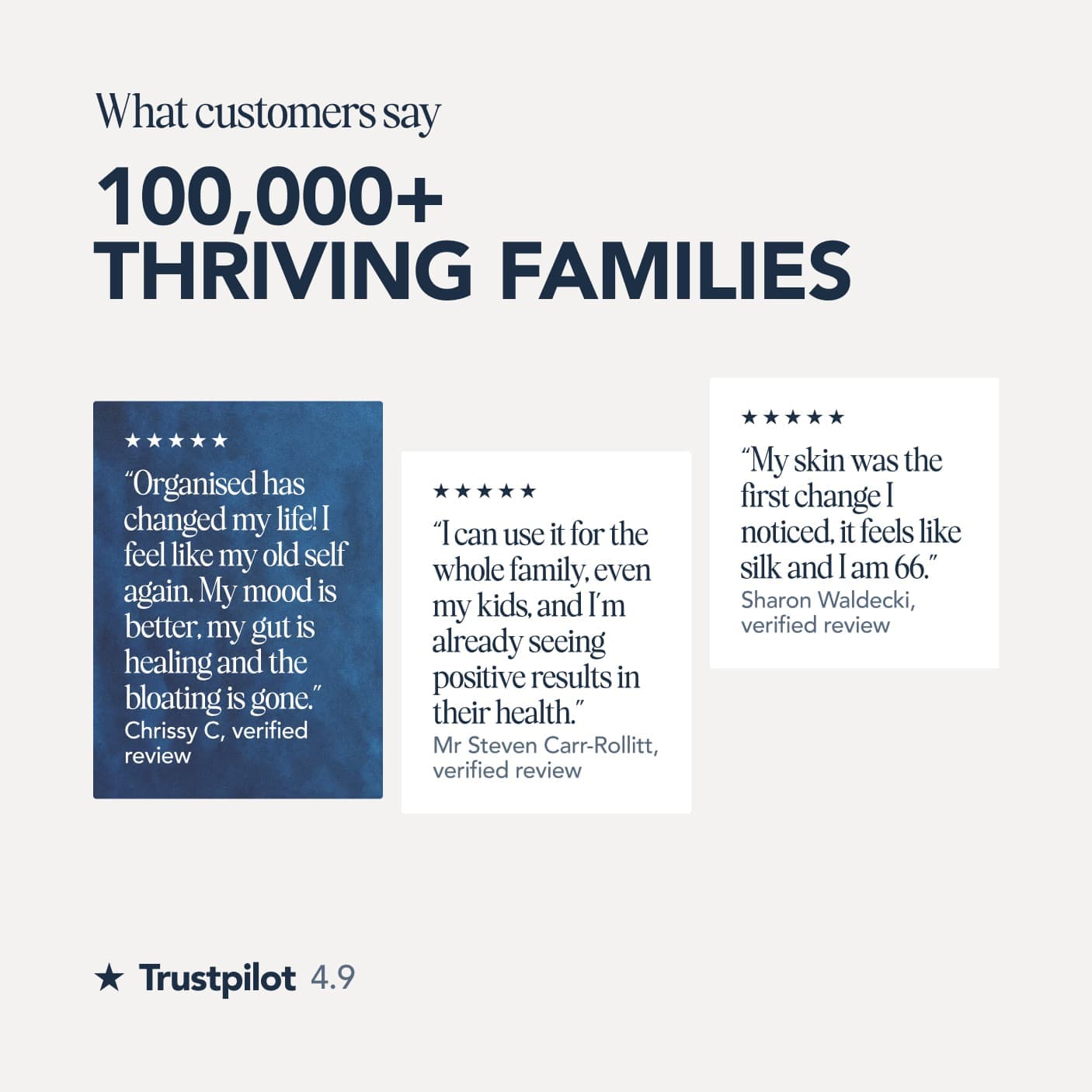
100,000+ thriving families4.9 on Trustpilot
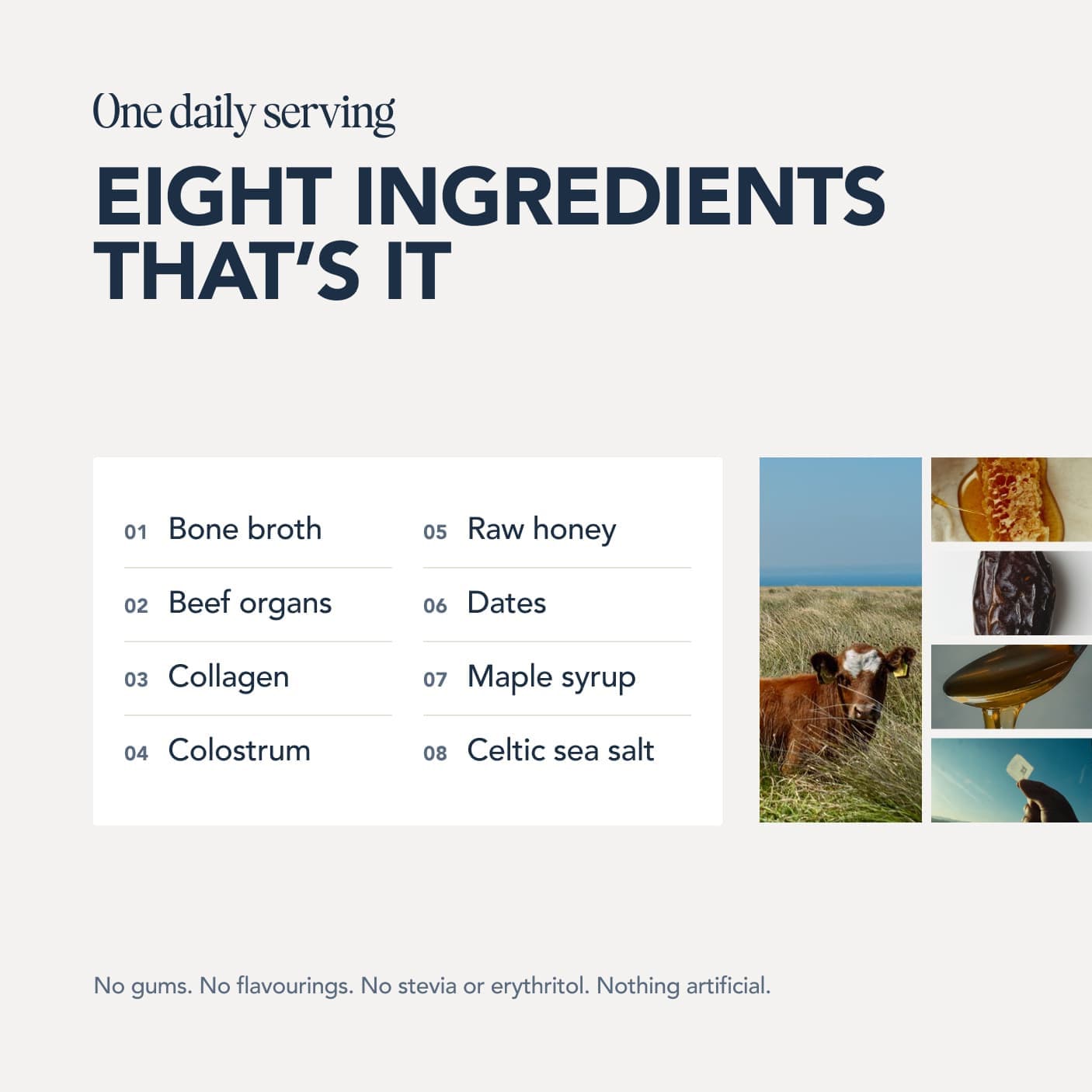
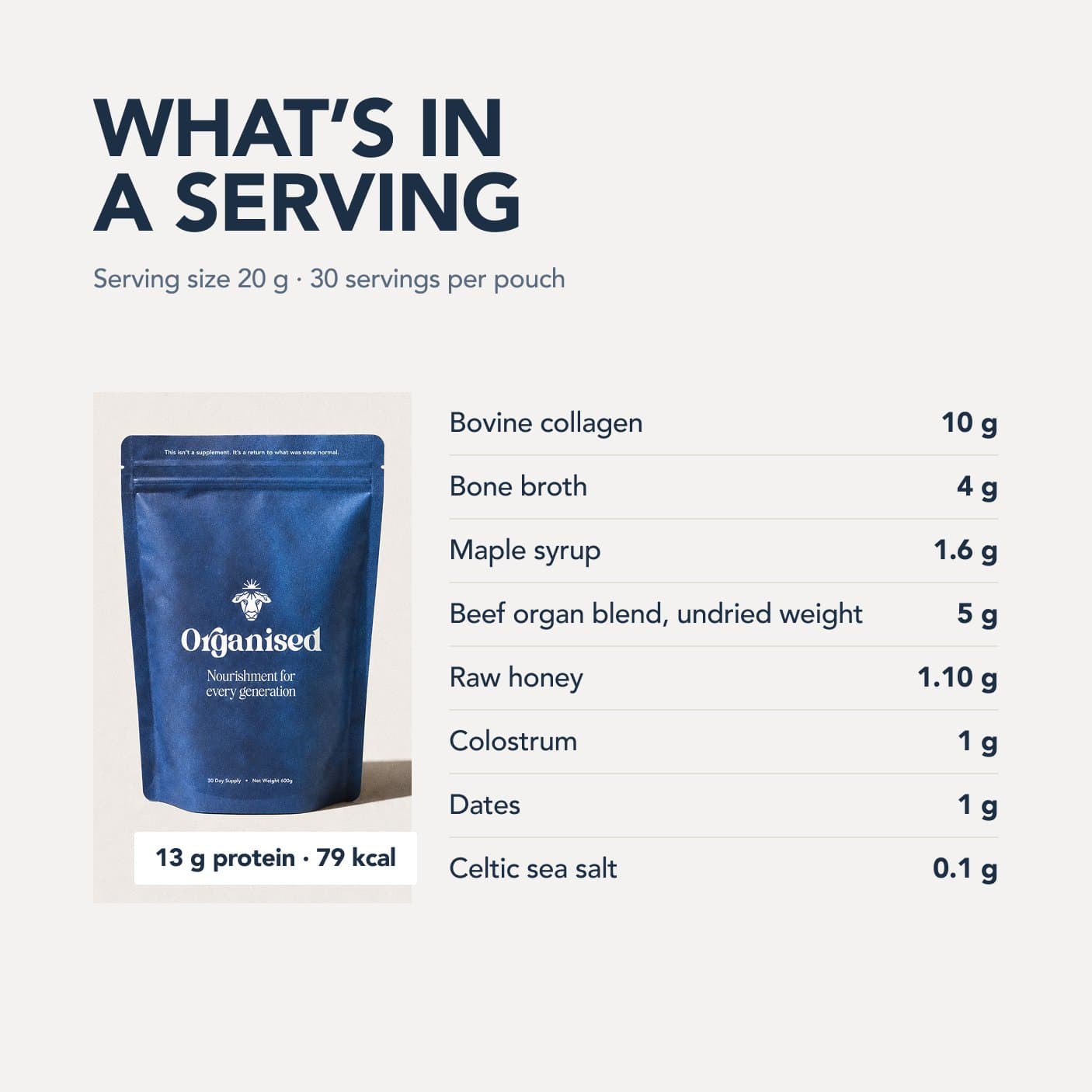
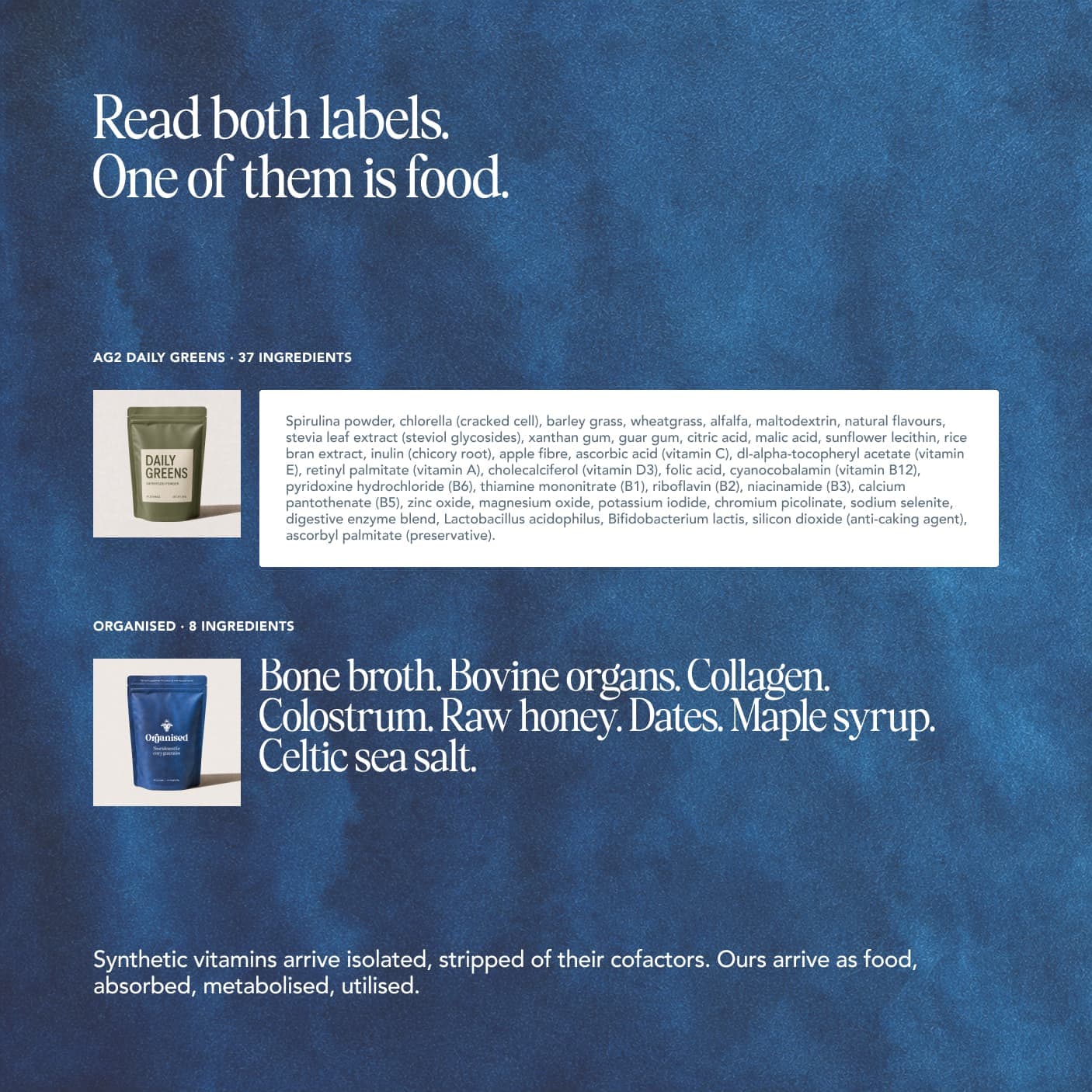
Eight real ingredients built around grass-fed beef organs, collagen and colostrum. Nothing synthetic added.
Free with your first order, worth £38. Plus £10 off the pouch with a subscription.
Free UK shipping · Made in England · 100 day money back guarantee on your first pouch · Skip, pause or cancel anytime
The bottom line
The 52% improvement is real, but it's real in laboratory measurements, and it takes consistent effort over weeks. If you're considering collagen supplementation, do it with clear expectations: it works, it's supported by decent research, but it's not transformative on its own. It's a component of a whole-food, whole-life approach to ageing well.
Better yet, eat bone broth and gelatinous meat cuts. You'll get the same collagen peptides, plus the cofactors and whole-food matrix your body needs to actually use them effectively.
References
Every source below was checked on 27 August 2026. Each PubMed, PMC and DOI identifier was resolved against NCBI or Crossref, and what it opens is printed under the citation, so you can see the link goes where the citation says without leaving the page. Where a citation and its identifier disagreed, the citation was corrected to the record or the reference was deleted along with the sentence marker that pointed at it, and where the resolved paper turned out not to support the sentence, the sentence was cut back to what it does support. Borrowed authority is worse than none, because it looks like rigour.
- Bolke L et al. A Collagen Supplement Improves Skin Hydration, Elasticity, Roughness, and Density: Results of a Randomized, Placebo-Controlled, Blind Study. Nutrients, 2019. PMID 31627309.Checked 27 August 2026: PMID 31627309 opens Bolke L, Schlippe G, Gerß J et al, A Collagen Supplement Improves Skin Hydration, Elasticity, Roughness, and Density: Results of a Randomized, Placebo-Controlled, Blind Study. Nutrients 2019;11(10). PubMed indexes it as: Randomized Controlled Trial.The authors' own declaration, from the record: The authors declare no conflict of interest. The sponsor had no influence on execution, analysis and interpretation of the data.
- National Institutes of Health, Office of Dietary Supplements. Vitamin C — Health Professional Fact Sheet.
- National Institutes of Health, Office of Dietary Supplements. Copper — Health Professional Fact Sheet.
- Iwai K et al. Identification of food-derived collagen peptides in human blood after oral ingestion of gelatin hydrolysates. Journal of Agricultural and Food Chemistry, 2005. PMID 16076145.Checked 27 August 2026: PMID 16076145 opens Iwai K, Hasegawa T, Taguchi Y et al, Identification of food-derived collagen peptides in human blood after oral ingestion of gelatin hydrolysates. J Agric Food Chem 2005;53(16):6531-6.
- Shigemura Y, Iwai K et al. Effect of prolyl-hydroxyproline (Pro-Hyp), a food-derived collagen peptide in human blood, on growth of fibroblasts from mouse skin. Journal of Agricultural and Food Chemistry, 2009. PMID 19128041.Checked 27 August 2026: PMID 19128041 opens Shigemura Y, Iwai K, Morimatsu F et al, Effect of Prolyl-hydroxyproline (Pro-Hyp), a food-derived collagen peptide in human blood, on growth of fibroblasts from mouse skin. J Agric Food Chem 2009;57(2):444-9.
Corrections
What this page used to say, and why it no longer says it. Corrections are dated and are never removed, because deleting the record of an error is a second error. Every guide we have corrected is listed at our corrections log.
- 27 August 2026. The trial's dose (2.5 g of collagen peptides in a blend, not 10 g alone), its blinding (blind, not double-blind), its size (72 women, not 140) and its population were all misstated, and the absolute elasticity values quoted were not in the paper. The section was rewritten from the record, and the trial's commercial sponsorship is now stated.
- 27 August 2026. The 52.3% elasticity figure this page was built around does not appear in the trial it was credited to. It has been removed from the page, including from the headings and the summary.
Who wrote and reviewed this guide
Niall Kiddle
Author · Founder, Organised
Niall is the founder of Organised. He started the company in 2024 after fixing his own health the slow way: in 2022 he swapped a cupboard of synthetic supplements for real food, raw milk, organ meats, bone broth and honey, and felt the difference within months.
Areas of expertise: Ancestral nutrition, Organ meats, Whole-food supplementation, Gut health, Regenerative sourcing
Read Niall's full profile
Pedro Rodrigues
Reviewer · Agronomist (farming and sourcing only)
Pedro is the agronomist Organised works with on farming and sourcing. His job on the guides is to keep the science honest: he reviews what we publish about soil health, regenerative agriculture, grazing and the way food is actually produced.
Areas of expertise: Regenerative agriculture, Agronomy, Soil health, Grass-fed farming, Food sourcing
Reviewed this guide on
Read Pedro's full profileMore on clinical evidence
View allBrowse the guides library
All guidesKeep reading

Science
Colostrum and Bloating: What the Research Actually Shows
See what the research really says about bovine colostrum and bloating, from gut-lining and intestinal permeability to growth factors, and what to expect.

Science
The Science Behind Organised: Every Claim, Every Study
Transparency on every study cited in Organised's marketing. How we choose what to claim, and what the evidence actually shows.
Science
The Fibre Myth: Do We Really Need as Much as We're Told?
Explore the fibre myth. Learn about SCFAs, why more fibre isn't always better, context-dependent dosing, and the history of cereal industry marketing.
Real food, made effortless
See the blendA few ways to use it
All recipes
Bone Broth from Scratch: A Step-by-Step Guide
Step-by-step guide to making bone broth at home. Stovetop, slow cooker, and Instant Pot methods. Rich in collagen and gut-healing minerals.
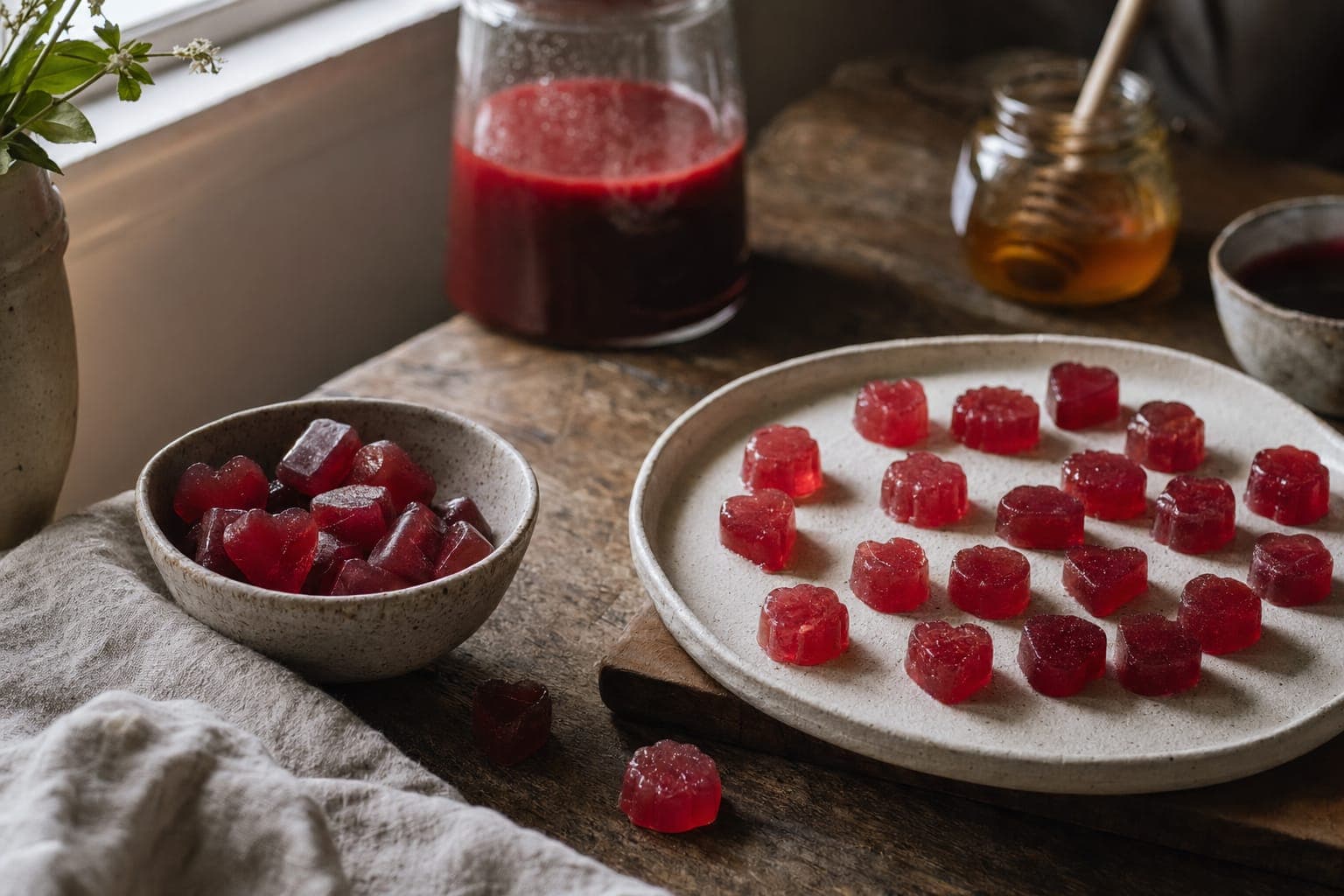
How to Make Your Own Gelatine Gummies
A simple recipe for homemade gelatine gummies using grass-fed gelatine, fresh juice, and raw honey. Better than shop-bought, kids love them.
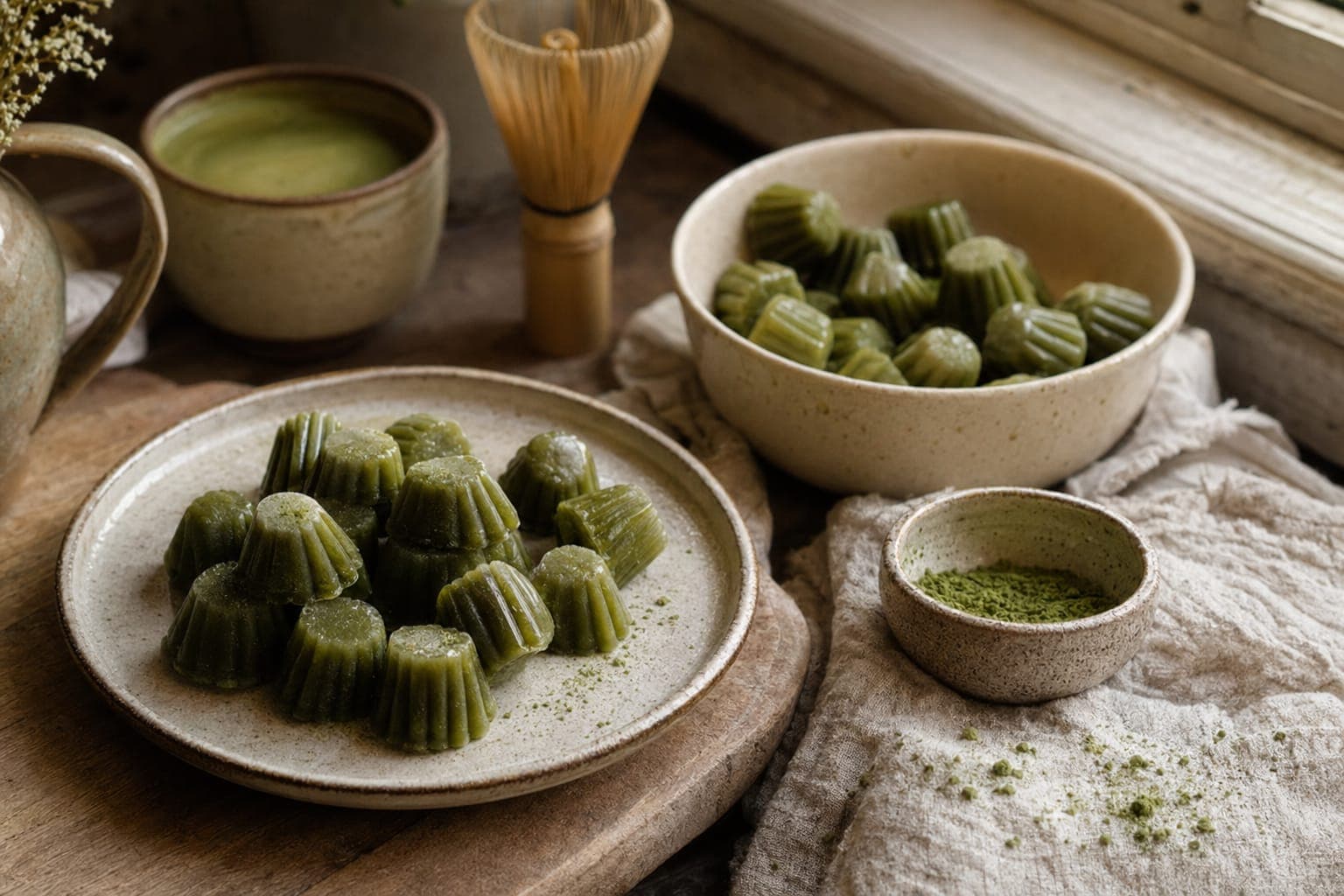
Matcha Latte Gummies with Collagen and Gelatine
Make visually stunning matcha latte gummies infused with collagen and gelatine. Simple recipe for gut-healing sweets you'll actually want to eat.


 Join over 100,000+ members
Build a better food system with us
The Organised community is thousands of people choosing real food and backing the farmers who grow it, all of us trying to leave the world a little better than we found it. If that is what you care about too, you belong here.