The Protein Leverage Hypothesis: Why We Overeat
You eat when you're hungry. You stop when you're full. That's what we've been told about appetite. But what if it's not quite that simple? What if your body doesn't actually care about calories or carbohydrates. What if it cares about protein. And what if it keeps driving you to eat until it gets enough of it. This is the protein leverage hypothesis, and it might explain why modern diets lead to overconsumption.
By Niall Kiddle, Founder, Organised

Reviewed by Pedro Rodrigues, Agronomist (farming and sourcing only) ·
6 min read · Published · Updated · 3 cited sources
Makers of the Organised Daily blend, a grass-fed beef organ supplement from regenerative UK farms


The protein leverage hypothesis explained
The protein leverage hypothesis, developed by researchers Stephen Simpson and David Raubenheimer, proposes that your body has a protein target.1 Like temperature homeostasis, where your body works to maintain a specific internal temperature, you have a protein target. Your brain and body track protein intake and adjust appetite and behaviour to meet that target.
If you're consuming food that's low in protein relative to calories, your body senses a protein shortfall. It keeps hunger signals active. It keeps driving you to eat. You continue eating, consuming more and more calories, trying to hit your protein target. But if the food is low in protein, you overshoot on calories.
Conversely, if you eat food that's high in protein relative to calories, you hit your protein target with fewer total calories consumed. Satiety signals activate. You stop eating. You're satisfied with less.
This explains a phenomenon that doesn't fit the simple calorie model. People eating ultraprocessed food, which is high in calories but very low in protein, consistently overeat. People eating whole food, particularly animal foods high in protein, tend to eat less and feel more satisfied.
How protein targets work
Your body has amino acid sensors, particularly in the gut and in the brain. These sensors detect the amino acid profile of the food you've eaten. They measure not just quantity but the specific amino acids, particularly the branched-chain amino acids (leucine, isoleucine, valine) and the ratio of amino acids to other macronutrients.
Your brain uses this information to calculate whether you've met your protein target. The target isn't a conscious calculation. It's a set point, similar to how you have a set point for body temperature. Your body works to maintain it automatically.
If sensors detect inadequate amino acid intake, several things happen. Neuropeptide Y, an appetite hormone, increases. Dopamine, which drives food-seeking behaviour, is modulated. Fullness signals like GLP-1 and peptide YY remain suppressed. The net effect is sustained hunger and continued eating.
If sensors detect adequate amino acid intake, the reverse happens. Appetite hormones drop. Satiety hormones increase. The motivation to eat diminishes.
Your body has a protein target, like a thermostat for protein. When you eat low-protein food, you stay hungry and keep eating until you hit that target. When you eat high-protein food, you hit the target with fewer calories and naturally stop eating.

Why protein-poor diets drive overconsumption
Modern ultraprocessed food is engineered to be hyper-palatable and extremely calorie-dense. But it's almost uniformly low in protein relative to carbohydrate and fat. A serving of processed snack food might be 500 calories with only 5 to 10 grams of protein.
From your body's perspective, this is a catastrophe. It's receiving a huge calorie load but a minimal protein signal. Your protein target hasn't been met. The sensors register a protein shortfall. Hunger persists.
You eat another serving. And another. You've now consumed 1500 calories trying to hit a 50 to 60 gram protein target that you still haven't reached. Your body is operating the only logic it knows. Keep eating until protein is adequate.
This pattern repeats across a population. People eating protein-poor diets eat more. They gain weight despite not consciously overeating. They're responding to a legitimate physiological signal, a protein shortfall, but because the food is hyper-palatable and calorically dense, they overshoot.
Contrast this with eating a steak, eggs, or roasted chicken. These foods are 25 to 35 percent protein by calories. You eat a serving, hit your protein target quickly, and satiety signals activate. You feel satisfied with 500 to 600 calories.
Simpson and Raubenheimer's research
Simpson and Raubenheimer tested the protein leverage hypothesis across multiple domains, from insects to humans. Their research showed a consistent pattern: across species, organisms eat to a consistent protein target.2 When food is protein-poor, they overeat. When food is protein-rich, they eat less total volume.
Human studies showed the same effect. When people consumed low-protein diets, they ate significantly more calories to try to reach their protein target. When fed higher-protein diets, they spontaneously reduced calorie intake without consciously restricting.
Importantly, this was true across different dietary frameworks. Low-fat, high-carb diets work when protein is high. Low-carb diets work when protein is high. The protein level matters more than the macro split.
Their research also showed that protein leverage extends to nutrient density more broadly. But protein is the strongest target. Your body will prioritise hitting a protein target over hitting a calorie target.
Get the science, plainly, free
Two short reads a week on what the research actually says about nutrition.
By signing up you agree to receive emails from us. No spam, unsubscribe anytime.
Why this matters for appetite control
The protein leverage hypothesis reframes the entire obesity conversation. For decades, weight gain has been moralised. You're overweight because you lack willpower. You eat too much because you're undisciplined. Calorie counting was presented as the solution, eat less, move more.
But the protein leverage hypothesis suggests something else entirely. You're eating too much because your body hasn't received adequate protein signal. The appetite isn't moral failure. It's physiology responding to a nutritional shortfall. The solution isn't willpower. It's feeding your body what it's asking for.
This is profoundly different. It shifts responsibility from blame to environment. You're not broken. The food environment is broken. Ultraprocessed food is engineered to be low in protein but high in palatability and calories. Your body responds exactly as it should, by keeping you hungry.
Research from the University of Sydney has compared weight loss outcomes across diets. When protein is held constant and high (around 30 percent of calories), low-fat and low-carbohydrate approaches show similar outcomes.3 Compliance improved. Hunger decreased. Weight loss occurred. The macronutrient split didn't matter. The protein level did.
Obesity isn't about moral failure or eating too much. It's about eating too much low-protein food in an attempt to hit a protein target that never gets met.

Practical application for weight and satiety
If the protein leverage hypothesis is correct, the practical implication is straightforward: stop obsessing over calories and macronutrient ratios, and simply prioritise protein. Not in a restrictive way. Just as the primary focus of each meal.
Start breakfast with eggs or meat. Make lunch a proper protein source, beef, fish, chicken, organ meats. Dinner the same. The portions will naturally adjust. Because you're hitting your protein target, satiety hormones activate. You stop eating without trying.
This also explains why low-protein diets fail so spectacularly. Vegan diets heavy on grains and legumes (lower protein density than animal foods). Low-fat diets that replace fat and protein with carbohydrate. Both leave people perpetually hungry because they never hit their protein target, no matter how much they eat.
The flip side explains why carnivore and very-high-protein diets work so well for appetite control. They hit the protein target almost immediately. People report eating less without hunger. Not because they're restricted. Because they're satisfied.

1 of 9
Daily blend
100,000+ thriving families4.9 on Trustpilot
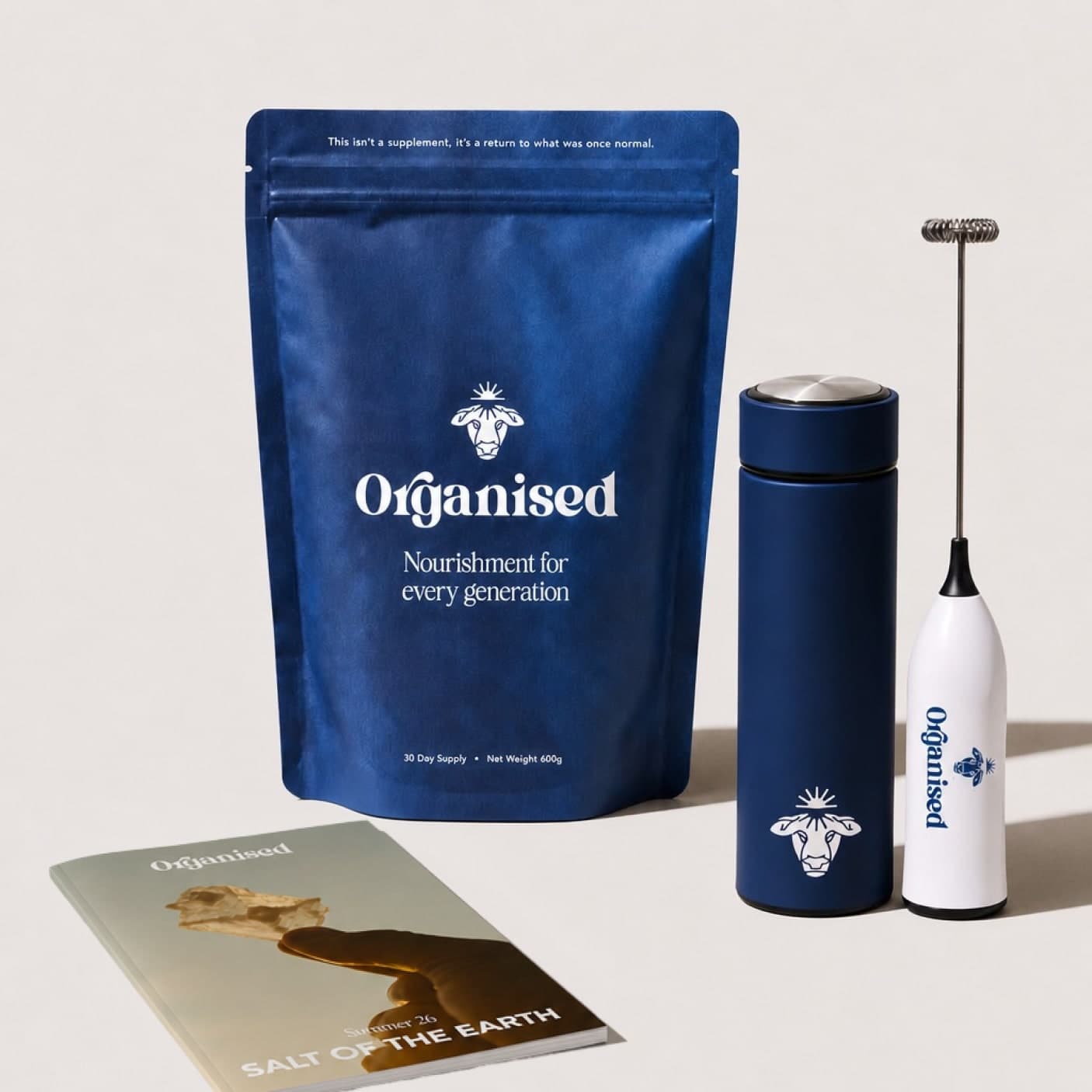
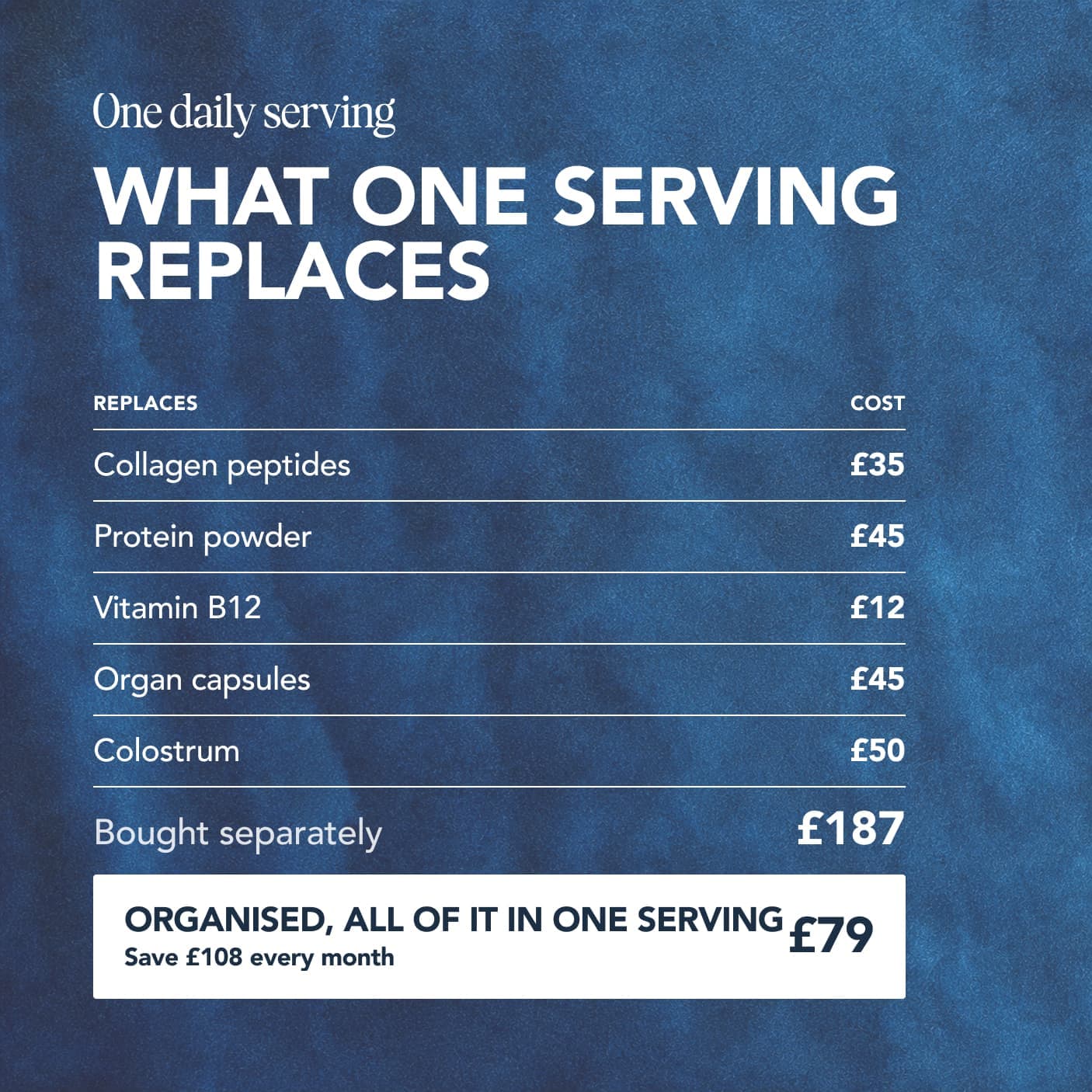
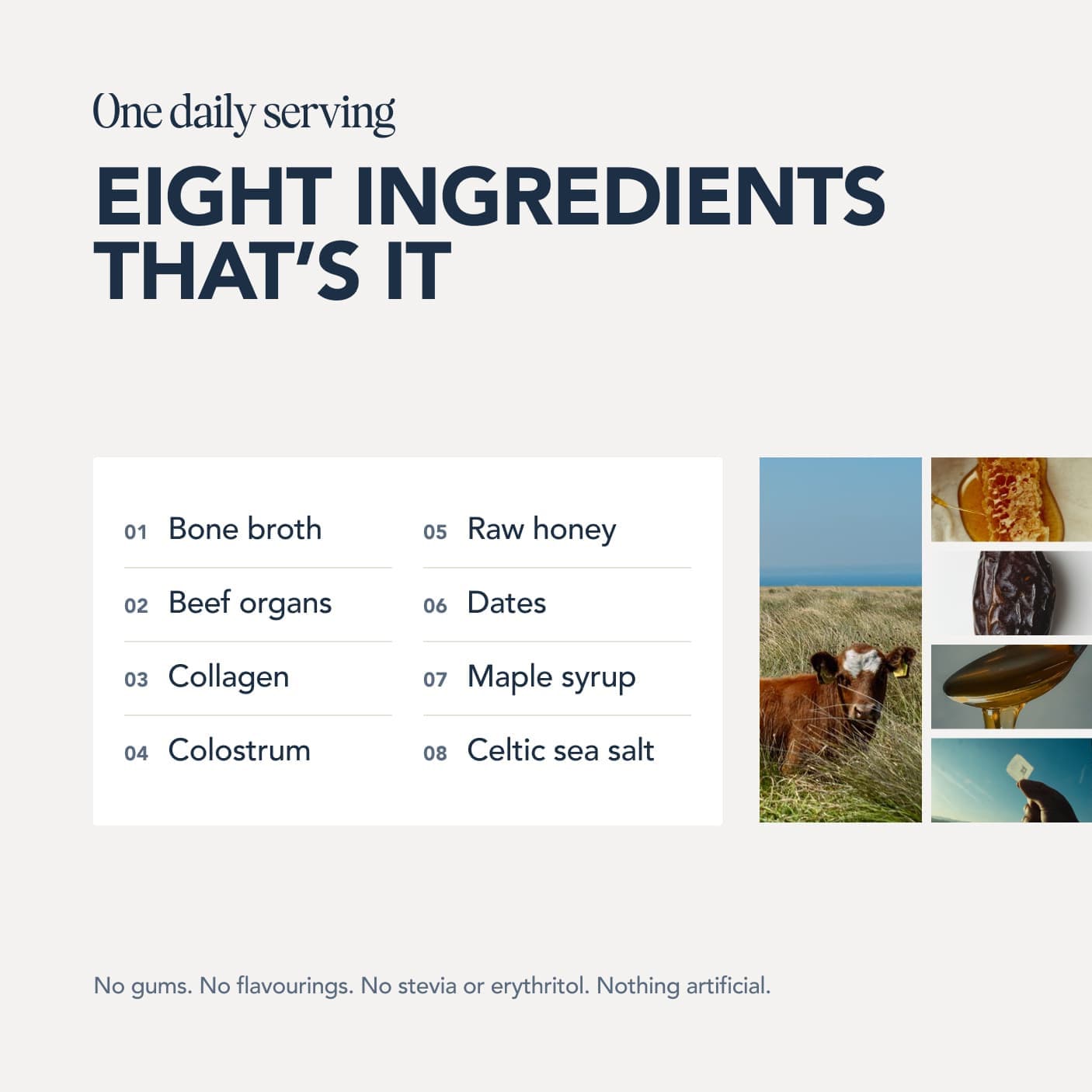
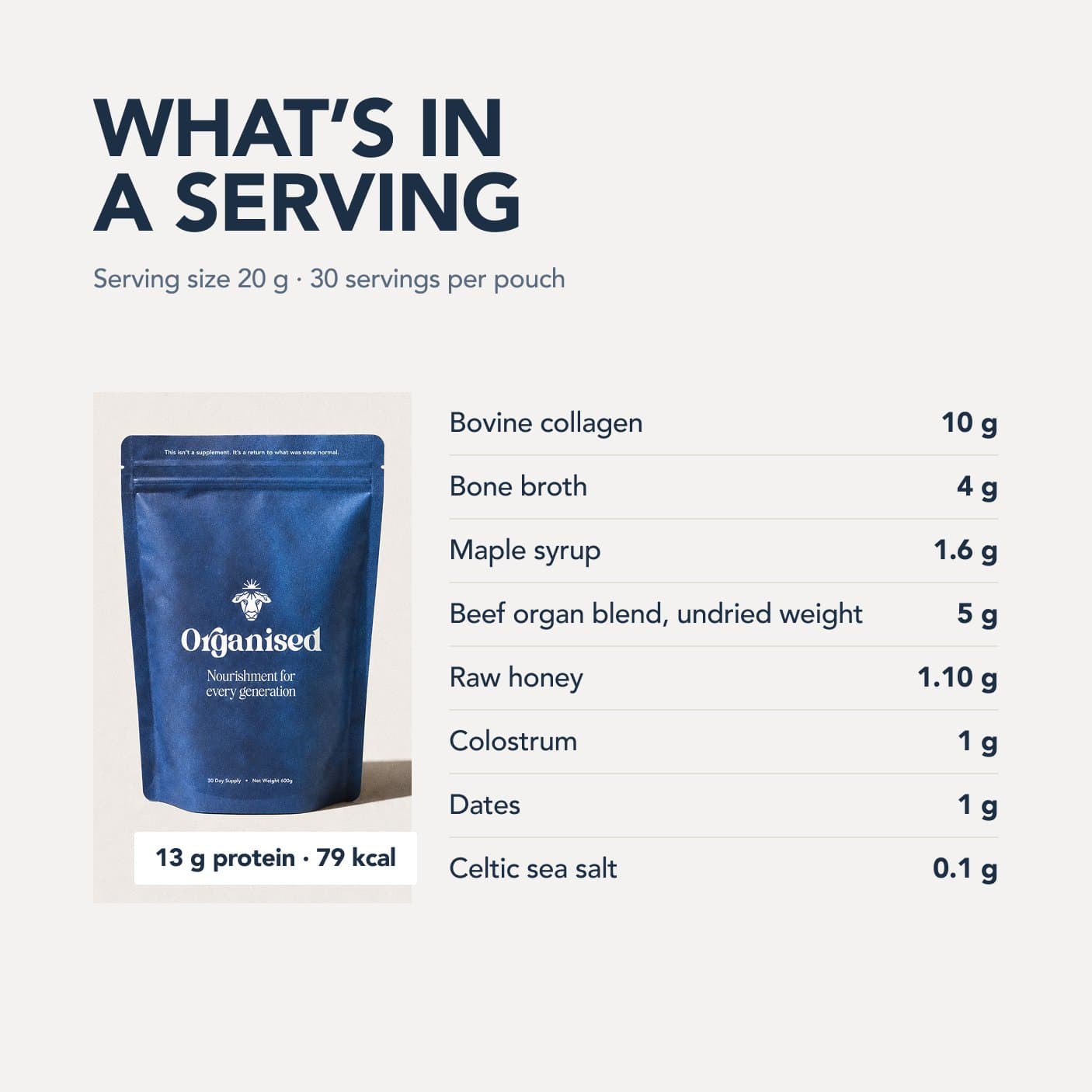
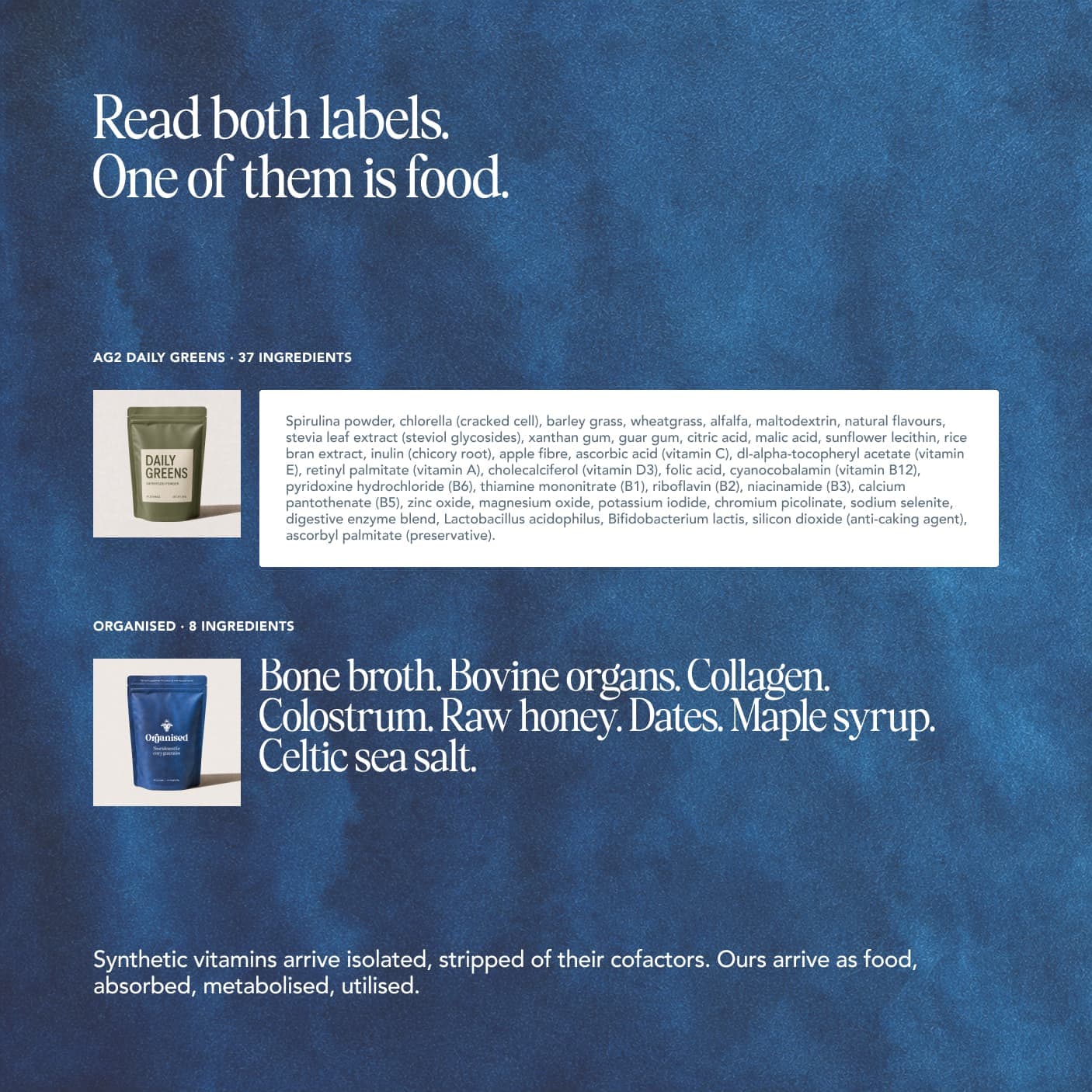
Eight real ingredients built around grass-fed beef organs, collagen and colostrum. Nothing synthetic added.
Free with your first order, worth £38. Plus £10 off the pouch with a subscription.

Free UK shipping · Made in England · 100 day money back guarantee on your first pouch · Skip, pause or cancel anytime
The bottom line
The protein leverage hypothesis explains much of modern obesity and overeating without requiring willpower failure or caloric obsession. It simply proposes that your body has a protein target and will drive eating behaviour until it's met.
If you're consuming low-protein ultraprocessed food, your body will keep driving you to eat. You're not failing at restraint. You're responding to a legitimate physiological signal. The food is simply failing to provide the nutritional signal your body needs.
Practical implications are straightforward. Prioritise protein in every meal. Aim for 30 to 40 percent of calories from protein, which aligns with ancestral diets and with human satiety patterns. Eat whole foods, particularly animal foods, which are naturally protein-rich.
When you do this, hunger becomes easier to manage. You eat less without trying. You feel more satisfied with smaller portions. That's not willpower. That's your body operating the way it evolved to, responding to a food environment where protein is abundant and calories are reasonable.
The protein leverage hypothesis is a reminder that appetite isn't simple or moral. It's a physiological system designed to protect you. When you align your diet with what your body actually needs, managing weight and food intake becomes easier.
References
Every source below was checked on 27 August 2026. Each PubMed, PMC and DOI identifier was resolved against NCBI or Crossref, and what it opens is printed under the citation, so you can see the link goes where the citation says without leaving the page. Where a citation and its identifier disagreed, the citation was corrected to the record or the reference was deleted along with the sentence marker that pointed at it, and where the resolved paper turned out not to support the sentence, the sentence was cut back to what it does support. Borrowed authority is worse than none, because it looks like rigour.
- Simpson SJ, Raubenheimer D. Obesity: the protein leverage hypothesis. Obes Rev. https://pubmed.ncbi.nlm.nih.gov/15836464/ [accessed May 2026].Checked 27 August 2026: PMID 15836464 opens Simpson SJ, Raubenheimer D, Obesity: the protein leverage hypothesis. Obes Rev 2005;6(2):133-42. PubMed indexes it as: Review.
- Raubenheimer D, Simpson SJ. Protein Leverage: Theoretical Foundations and Ten Points of Clarification. Obesity (Silver Spring). https://pubmed.ncbi.nlm.nih.gov/31339001/ [accessed May 2026].Checked 27 August 2026: PMID 31339001 opens Raubenheimer D, Simpson SJ, Protein Leverage: Theoretical Foundations and Ten Points of Clarification. Obesity (Silver Spring) 2019;27(8):1225-1238. PubMed indexes it as: Review.
- Gosby AK, Conigrave AD, Lau NS, et al. Testing protein leverage in lean humans: a randomised controlled experimental study. PLoS One. https://pmc.ncbi.nlm.nih.gov/articles/PMC3192127/ [accessed May 2026].Checked 27 August 2026: PMC3192127 opens Gosby AK, Conigrave AD, Lau NS et al, Testing protein leverage in lean humans: a randomised controlled experimental study. PLoS One 2011;6(10):e25929. PubMed indexes it as: Randomized Controlled Trial.The authors' own declaration, from the record: Competing Interests: SAJ receives a fee from the Rosemary Conley Diet and Fitness Company for nutrition-related articles and lectures. This does not alter the authors' adherence to all the PLoS ONE policies on sharing data and materials. The authors have declared that no other competing interests exist.
Who wrote and reviewed this guide
Niall Kiddle
Author · Founder, Organised
Niall is the founder of Organised. He started the company in 2024 after fixing his own health the slow way: in 2022 he swapped a cupboard of synthetic supplements for real food, raw milk, organ meats, bone broth and honey, and felt the difference within months.
Areas of expertise: Ancestral nutrition, Organ meats, Whole-food supplementation, Gut health, Regenerative sourcing
Read Niall's full profile
Pedro Rodrigues
Reviewer · Agronomist (farming and sourcing only)
Pedro is the agronomist Organised works with on farming and sourcing. His job on the guides is to keep the science honest: he reviews what we publish about soil health, regenerative agriculture, grazing and the way food is actually produced.
Areas of expertise: Regenerative agriculture, Agronomy, Soil health, Grass-fed farming, Food sourcing
Reviewed this guide on
Read Pedro's full profileMore on emerging research
View allBrowse the guides library
All guidesKeep reading

Science
Is Too Much Protein Bad for Your Kidneys? Separating Fact from Fear
Is high protein bad for your kidneys? We unpack the protein and kidneys myth and what the research actually shows for people with healthy kidneys.

Science
How to Read a Nutritional Study Without Being Misled
Learn how to read nutritional studies without being misled. Tell apart observational and RCT research, and spot confounders, funding and healthy user bias.

Science
The Connection Between Nutrition and Autoimmune Disease
Autoimmune disease is not just genetic. Nutrition affects gut barrier integrity, molecular mimicry, and immune tolerance. Learn the mechanisms.
Real food, made effortless
See the blendA few ways to use it
All recipes
10 Ways to Use Organised That Aren't Just a Shake
Move beyond the basic shake. Discover 10 creative ways to use Organised in smoothie bowls, oats, yoghurt, baking, and more.

5-Minute High-Protein Breakfasts Using Organised
Quick, high-protein breakfast ideas using Organised. Five recipes you can make in minutes with real food. No fussing around.

How to Make Your Own Gelatine Gummies
A simple recipe for homemade gelatine gummies using grass-fed gelatine, fresh juice, and raw honey. Better than shop-bought, kids love them.


 Join over 100,000+ members
Build a better food system with us
The Organised community is thousands of people choosing real food and backing the farmers who grow it, all of us trying to leave the world a little better than we found it. If that is what you care about too, you belong here.