Retinol vs Beta-Carotene: Why Preformed Vitamin A Matters
You've been told to eat your carrots for vitamin A. But there's a genetic lottery at play. Some people convert beta-carotene to retinol beautifully. Others convert so little that carrots are nearly useless for vitamin A, and nobody's told them.
By Niall Kiddle, Founder, Organised

Reviewed by Pedro Rodrigues, Agronomist (farming and sourcing only) ·
6 min read · Published · Updated · 4 cited sources
Makers of the Organised Daily blend, a grass-fed beef organ supplement from regenerative UK farms
Retinol and beta-carotene are not the same thing
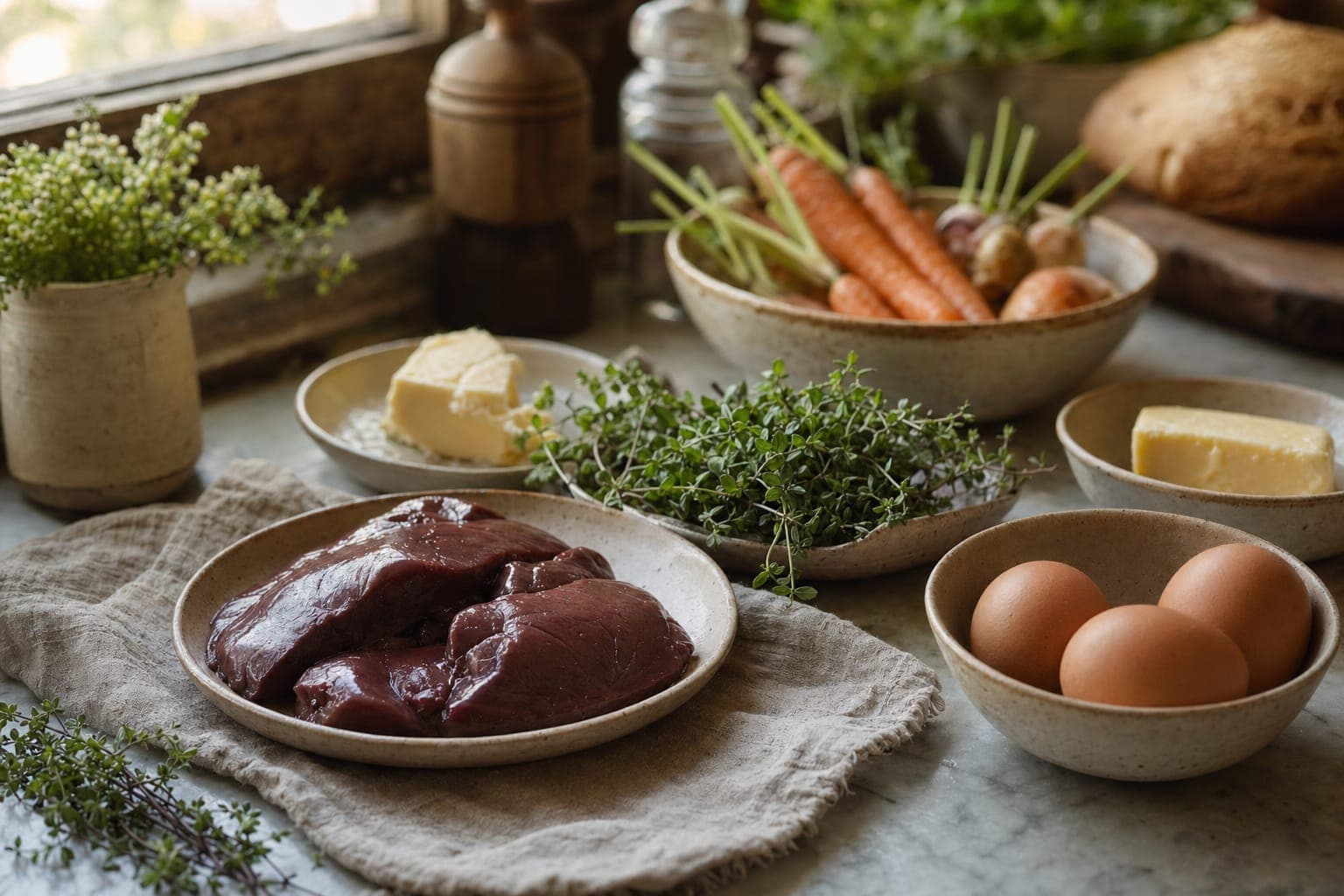
Vitamin A is not one thing. It's a category. Preformed vitamin A is retinol, the actual active form your body uses. It's found exclusively in animal products. Your liver stores it. Your immune system uses it. Your eyes, your skin, your reproductive system all run on retinol.
Beta-carotene is a plant pigment, found in orange and red vegetables. It's called a provitamin A because your body is supposed to convert it into retinol. But that conversion is not automatic. It's not guaranteed. And for some people, it barely happens at all.
The conversion happens via an enzyme called beta-carotene monooxygenase 1. BCMO1.1 Your genes code for how much BCMO1 you produce, how efficiently it works, and whether you have common variants that hobble its function.
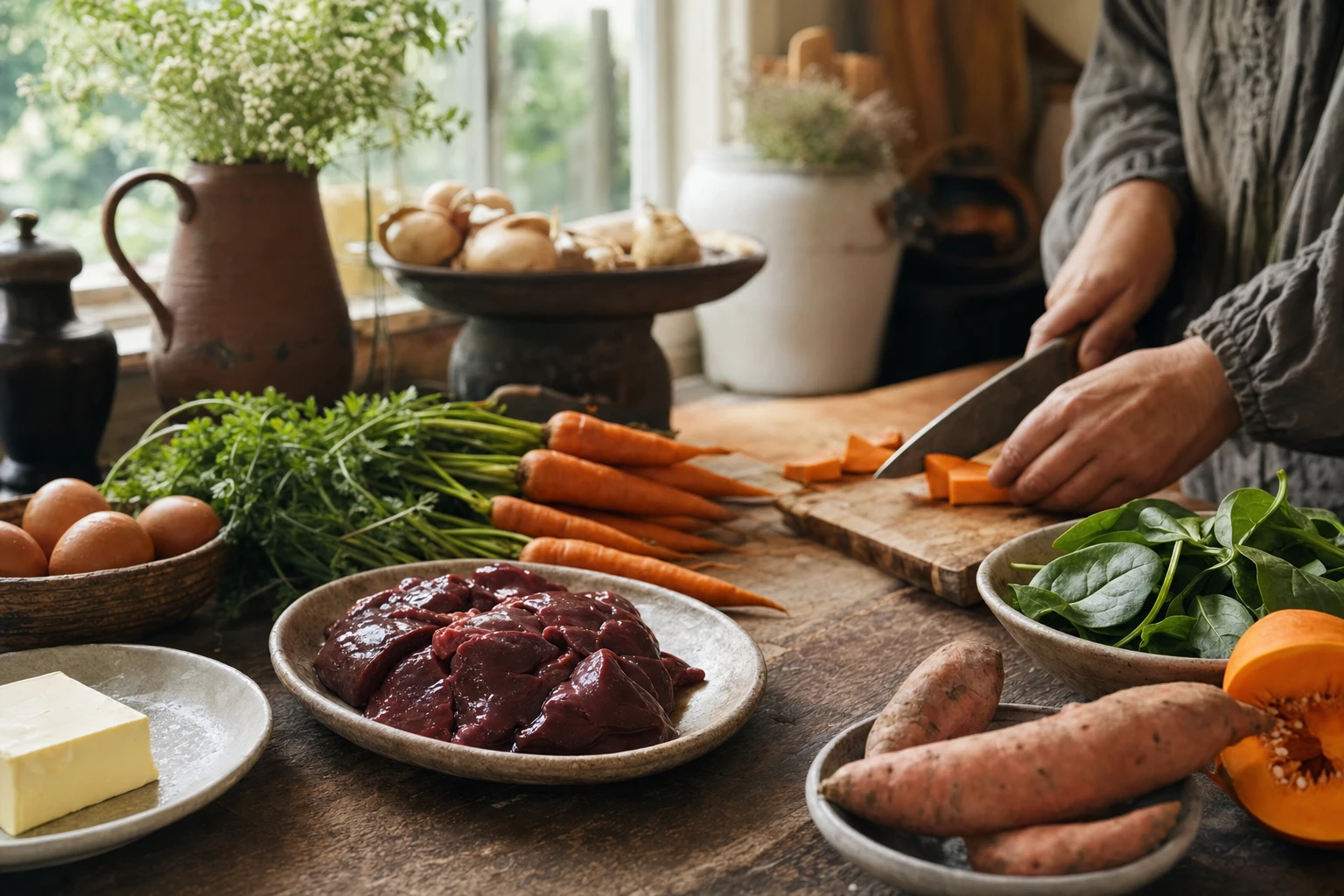
Eating carrots is not the same as eating liver. Beta-carotene conversion is genetically determined and unreliable.
The BCMO1 gene and the conversion problem
The BCMO1 gene has several variants. The most common is a single nucleotide polymorphism called rs12934922. People with two copies of the T allele (TT genotype) convert beta-carotene efficiently into retinol. People with two copies of the A allele (AA genotype) do not. Their conversion rate is severely impaired.
Research from Tufts University found that AA carriers converted as little as 3 to 6 per cent of the beta-carotene they consumed into usable retinol.2 TT carriers converted roughly 10 times more. In one study, AA carriers eating a beta-carotene-rich diet still ended up with measurably lower retinol status than TT carriers eating the same food.
The prevalence of the AA genotype varies by ethnicity. Approximately 45 to 50 per cent of European-descended populations carry at least one A allele, with about 15 to 25 per cent carrying AA. In some populations, the prevalence is higher. If you're in that AA group, supplementing beta-carotene or eating carrots is, frankly, a waste.
Why some people are very poor converters
The reason this matters is simple. You cannot feel a vitamin A deficiency until it's severe. Vitamin A deficiency develops silently. Your immunity weakens before you notice. Your eyesight dims before you see symptoms. Your skin ages faster before you realise what's happening. By the time symptoms show, the deficiency is already deep.
If you're an AA carrier eating a plant-forward diet heavy on carrots and sweet potatoes and light on animal foods, you could be walking around with borderline vitamin A deficiency without knowing it. Your immunity isn't what it should be. Your eyes aren't as sharp. Your recovery from illness is slower. And the cause is invisible.
The cruel part is that mainstream nutrition advice assumes everyone converts beta-carotene equally. The food guidelines say eat your vegetables, get your vitamin A. They work for half the population. For the other half, particularly AA carriers, they're incomplete advice.
Your BCMO1 genetic status isn't the only factor affecting conversion. Bile production influences how well you absorb beta-carotene (you need fat for absorption). Gut inflammation impairs absorption and conversion. Thyroid function affects conversion efficiency. Zinc status matters, your body needs zinc to synthesise BCMO1. So if you're an AA carrier with poor fat digestion, low zinc, or thyroid issues, your conversion rate drops further.
This creates a compounding problem for certain people. They're genetically predisposed to poor conversion, and their health status worsens the situation further. It's not just beta-carotene. It's a convergence of factors making reliable vitamin A status nearly impossible without preformed sources.
If you're a poor converter, eating a kilogram of carrots will not raise your retinol status the way a single serving of liver will.
The best food sources of preformed retinol
If you want reliable vitamin A status, you need preformed retinol. Not promises. Not conversions. Direct sources that don't require enzymatic translation.
- Beef liver - 28,000 IU per 100 grams. One small serving covers your daily requirement several times over.3
- Lamb liver - 28,000 IU per 100 grams. Equally rich.
- Chicken liver - 11,000 IU per 100 grams. Still substantial.
- Egg yolks - 245 IU per yolk, but with other fat-soluble vitamins that support retinol absorption and function.
- Butter and full-fat dairy - From grass-fed cows especially, roughly 350 IU per tablespoon. Adds up across the day.
- Cod liver oil - 4,000 IU per teaspoon, though whole food is preferable.
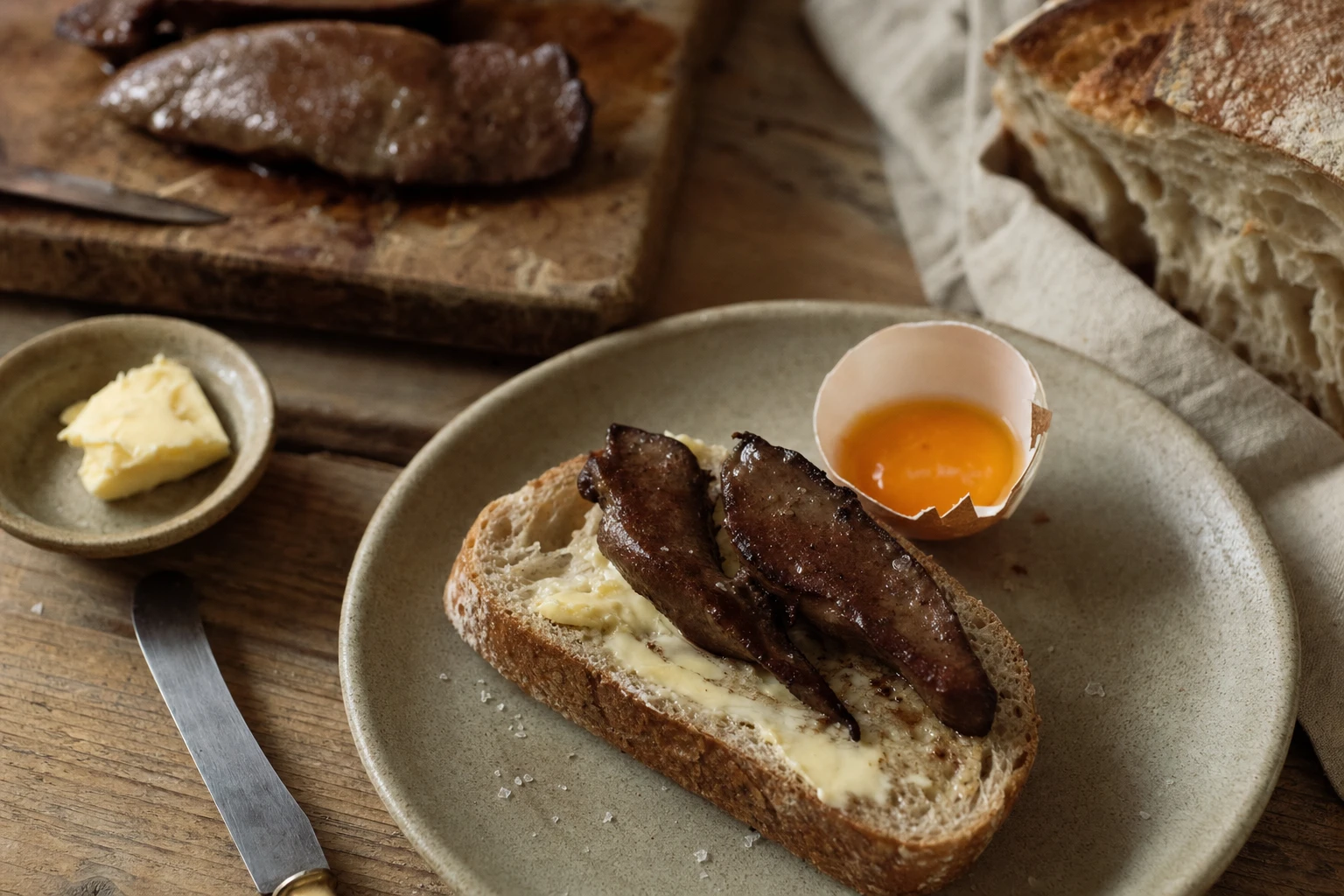
If you're an AA carrier or if you suspect your conversion is poor, aim for liver once per week and eggs most days. The amount of preformed retinol this delivers is incomparable to any amount of plants you could realistically eat.
Get the science, plainly, free
Two short reads a week on what the research actually says about nutrition.
By signing up you agree to receive emails from us. No spam, unsubscribe anytime.
How much vitamin A do you actually need?
The recommended daily allowance for vitamin A is 700 to 900 micrograms RAE (retinol activity equivalents) for adults.3 This translates roughly to 2,300 to 3,000 IU of preformed retinol. A single serving of beef liver (100 grams) provides roughly 28,000 IU. That's 10 times the daily requirement.
This sounds excessive, and it's worth addressing. Vitamin A is fat-soluble, meaning your body stores it. You don't need 2,800 IU daily if you're eating liver. Eating liver once or twice weekly provides a substantial store. Your liver actually stores weeks of vitamin A, releasing it as needed.
The danger zone for vitamin A toxicity is extraordinarily high, well over 10,000 IU daily for extended periods. A single liver serving won't cause toxicity. Regular liver consumption won't either. But if you're taking a multivitamin, a separate retinol supplement, and eating liver, you could approach problematic levels. The key is knowing what you're taking.
For contrast, beta-carotene is water-soluble (technically, fat-soluble in how it's absorbed, but your body excretes excess). You can eat enormous quantities of carrots and sweet potatoes without toxicity risk. But as we've established, that doesn't translate to adequate retinol if you're a poor converter.
The conversion question in pregnancy and childhood
Vitamin A is absolutely critical during pregnancy and early childhood. It drives cell differentiation, immune development, and vision development. Deficiency during these periods can cause permanent damage, blindness, immune dysfunction, developmental delays.
In developing countries where vitamin A deficiency is endemic, supplementation programmes have been transformative.4 But those programmes provide preformed retinol, not beta-carotene, precisely because conversion is unreliable.
If you're pregnant, breastfeeding, or have young children, relying on beta-carotene conversion is unnecessarily risky. The stakes are too high. Eat liver. Include egg yolks. Use full-fat dairy. Don't gamble with your child's visual development or immune system on the hope that your BCMO1 gene is working efficiently.
1 of 9
Daily blend
100,000+ thriving families4.9 on Trustpilot
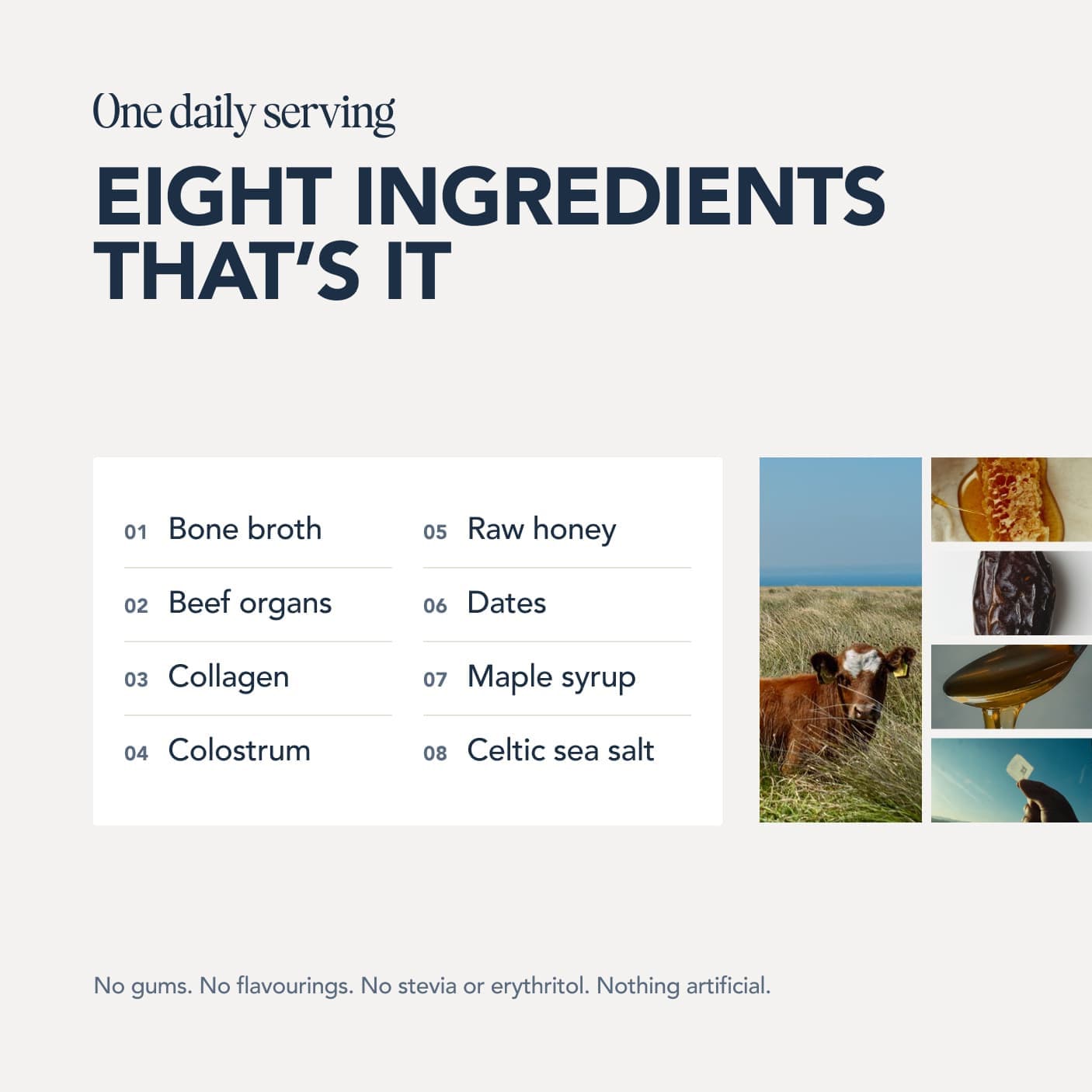
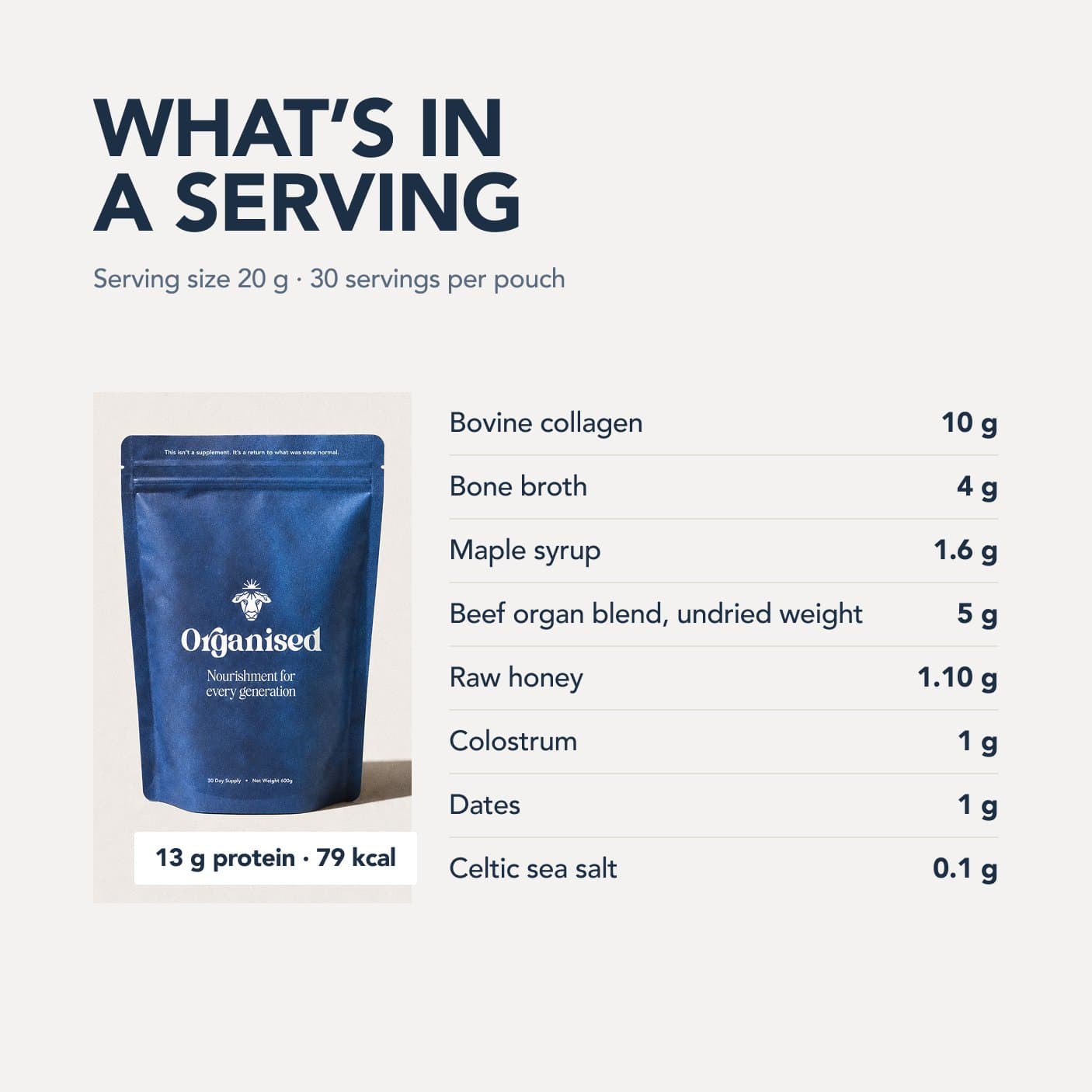
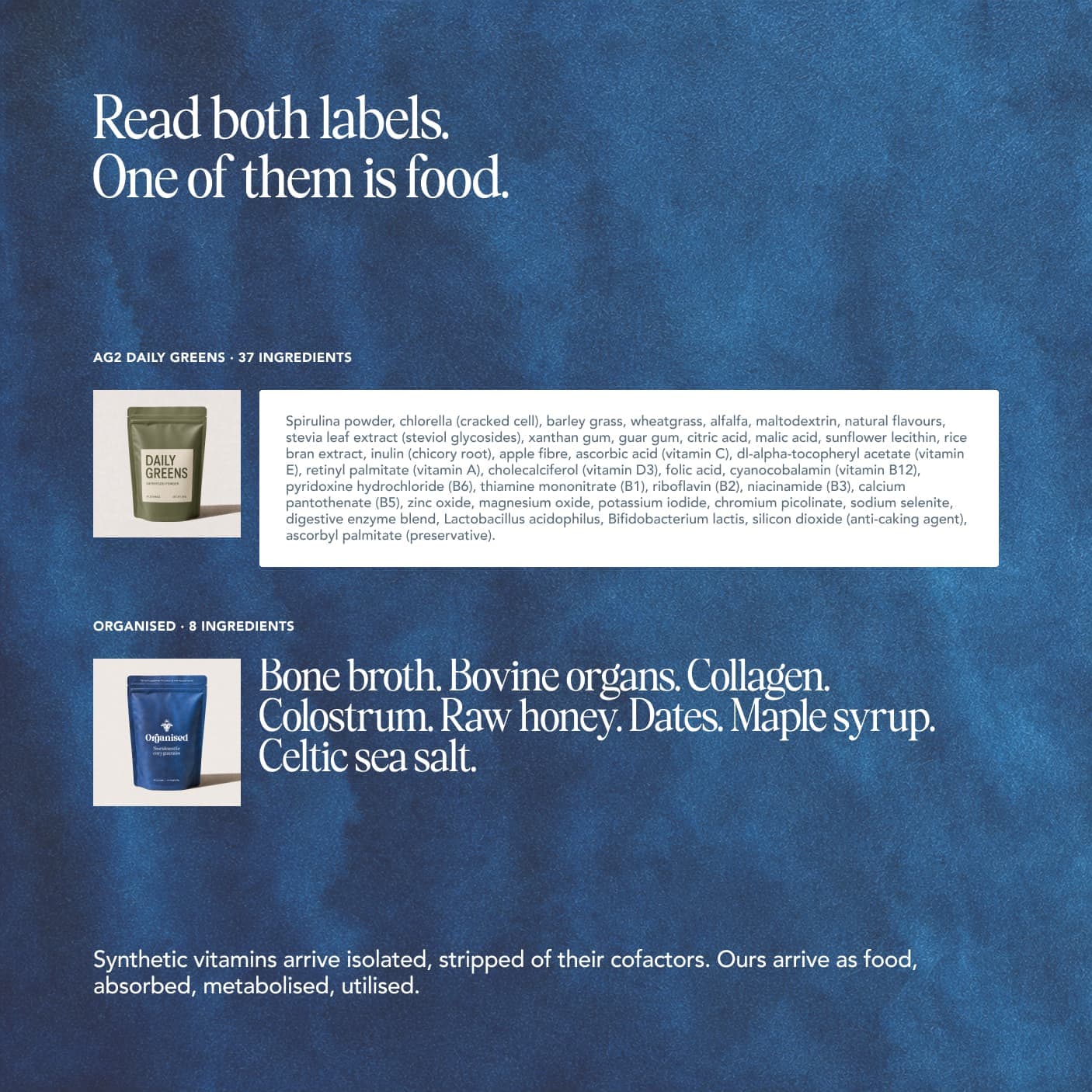
Eight real ingredients built around grass-fed beef organs, collagen and colostrum. Nothing synthetic added.
Free with your first order, worth £38. Plus £10 off the pouch with a subscription.
Free UK shipping · Made in England · 100 day money back guarantee on your first pouch · Skip, pause or cancel anytime
The bottom line
If you know you're a poor BCMO1 converter, or if you're simply eating a diet light on animal products, relying on beta-carotene for vitamin A is a gamble you're likely losing. Preformed retinol from liver, eggs, and dairy is reliable, efficient, and exactly what your body needs. Carrots are fine. But they're not enough. If you care about immunity, skin quality, eyesight, and reproductive health, you need direct sources of retinol, not the promise of conversion.
Make liver a habit, not an aspiration. A 100-gram serving once or twice weekly provides abundant retinol. Eat it with butter or olive oil for fat-soluble vitamin absorption. Include egg yolks with most meals. These are the practical foundations of reliable vitamin A status, particularly if you're unfortunate enough to carry the AA genotype. The science is clear. The food is available. The choice is yours.
References
Every source below was checked on 27 August 2026. Each PubMed, PMC and DOI identifier was resolved against NCBI or Crossref, and what it opens is printed under the citation, so you can see the link goes where the citation says without leaving the page. Where a citation and its identifier disagreed, the citation was corrected to the record or the reference was deleted along with the sentence marker that pointed at it, and where the resolved paper turned out not to support the sentence, the sentence was cut back to what it does support. Borrowed authority is worse than none, because it looks like rigour.
- Tang G. Bioconversion of dietary provitamin A carotenoids to vitamin A in humans. American Journal of Clinical Nutrition. 2010;91(5):1468S-1473S. https://pmc.ncbi.nlm.nih.gov/articles/PMC2854912/Checked 27 August 2026: PMC2854912 opens Tang G, Bioconversion of dietary provitamin A carotenoids to vitamin A in humans. Am J Clin Nutr 2010;91(5):1468S-1473S.
- Lietz G, Oxley A, Leung W, Hesketh J. Single nucleotide polymorphisms upstream from the beta-carotene 15,15'-monoxygenase gene influence provitamin A conversion efficiency in female volunteers. Journal of Nutrition. 2012;142(1):161S-165S. https://pubmed.ncbi.nlm.nih.gov/22113863/Checked 27 August 2026: PMID 22113863 opens Lietz G, Oxley A, Leung W et al, Single nucleotide polymorphisms upstream from the β-carotene 15,15'-monoxygenase gene influence provitamin A conversion efficiency in female volunteers. J Nutr 2012;142(1):161S-5S.
- National Institutes of Health, Office of Dietary Supplements. Vitamin A and Carotenoids: Fact Sheet for Health Professionals. https://ods.od.nih.gov/factsheets/VitaminA-HealthProfessional/ [accessed May 2026].
- World Health Organization. Vitamin A deficiency. https://www.who.int/data/nutrition/nlis/info/vitamin-a-deficiency [accessed May 2026].
Who wrote and reviewed this guide
Niall Kiddle
Author · Founder, Organised
Niall is the founder of Organised. He started the company in 2024 after fixing his own health the slow way: in 2022 he swapped a cupboard of synthetic supplements for real food, raw milk, organ meats, bone broth and honey, and felt the difference within months.
Areas of expertise: Ancestral nutrition, Organ meats, Whole-food supplementation, Gut health, Regenerative sourcing
Read Niall's full profile
Pedro Rodrigues
Reviewer · Agronomist (farming and sourcing only)
Pedro is the agronomist Organised works with on farming and sourcing. His job on the guides is to keep the science honest: he reviews what we publish about soil health, regenerative agriculture, grazing and the way food is actually produced.
Areas of expertise: Regenerative agriculture, Agronomy, Soil health, Grass-fed farming, Food sourcing
Reviewed this guide on
Read Pedro's full profileMore on nutrient deep-dives
View allBrowse the guides library
All guidesKeep reading
Ancestral
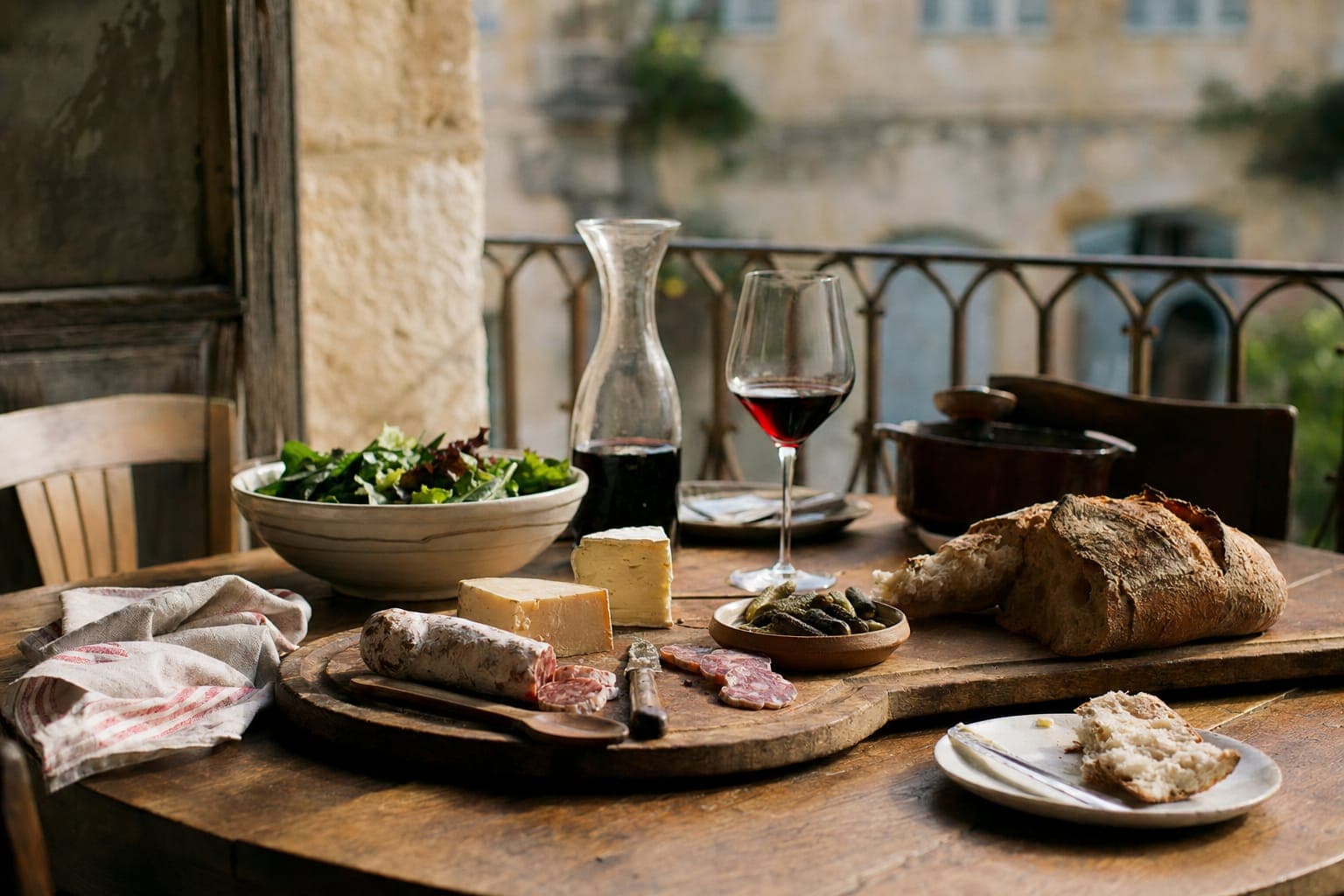
The French Paradox: Real Food, Real Health
Explore the French paradox: high saturated fat, low heart disease and long lives. It is not just the wine, but the food, the meals and the eating culture.
Life stage
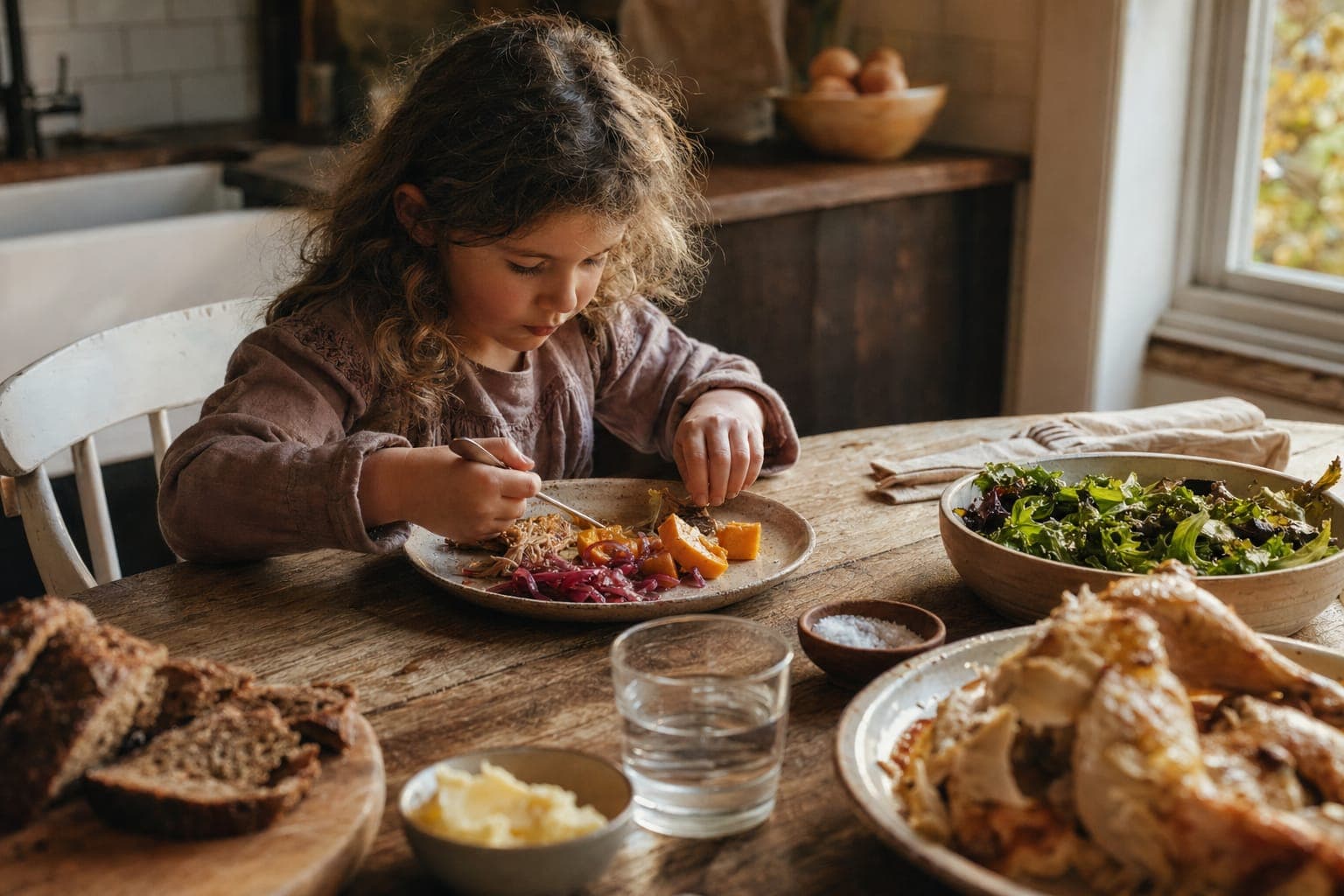
Why Children Need More Nutrient-Dense Food (Not More Vitamins)
Gummy vitamins and supplements can't compete with whole food. Here's why nutrient density matters more than multivitamins for children.
Science
The Fibre Myth: Do We Really Need as Much as We're Told?
Explore the fibre myth. Learn about SCFAs, why more fibre isn't always better, context-dependent dosing, and the history of cereal industry marketing.
Real food, made effortless
See the blendA few ways to use it
All recipes
Ancestral Breakfast Ideas from Around the World
Traditional breakfast recipes from cultures that got nutrition right. Japanese, Turkish, Scottish, and more. Whole-food breakfast inspiration.
Raw Milk Hot Chocolate with Collagen
A nourishing evening hot chocolate made with raw milk, grass-fed collagen, raw cacao, and honey. A nighttime ritual that supports sleep and gut health.
How to Make Your Own Gelatine Gummies
A simple recipe for homemade gelatine gummies using grass-fed gelatine, fresh juice, and raw honey. Better than shop-bought, kids love them.


 Join over 100,000+ members
Build a better food system with us
The Organised community is thousands of people choosing real food and backing the farmers who grow it, all of us trying to leave the world a little better than we found it. If that is what you care about too, you belong here.