The Microbiome and Weight: What New Research Reveals
You're not gaining weight because you're weak or lazy. You might be gaining it because your gut bacteria have gone to war with your metabolism, and you're on the losing side.

By Niall Kiddle, Founder, Organised

Reviewed by Pedro Rodrigues, Agronomist (farming and sourcing only) ·
6 min read · Published · Updated · 3 cited sources
Makers of the Organised Daily blend, a grass-fed beef organ supplement from regenerative UK farms

The bacteria living in your gut are making weight decisions for you
There are trillions of bacteria in your gut. These aren't freeloaders. They're metabolically active, producing compounds that affect everything from how you store fat to how hungry you feel to how efficiently your body burns calories.
A person with a lean microbiome and a person with a dysfunctional one can eat the same meal and experience completely different metabolic outcomes. One person's bacteria ferment the fibre and produce compounds that signal satiety. The other person's bacteria ferment it into compounds that promote fat storage and hunger.
The research is surprisingly clear on this. When scientists have transplanted the faecal microbiota from obese humans into mice, those mice gain weight on standard diets.1 When they transplant bacteria from lean humans, the mice stay lean. The bacteria literally code for weight gain or weight stability.

Your gut bacteria are not passengers in your body. They're active participants in deciding whether you stay lean or accumulate fat.
The Firmicutes to Bacteroidetes ratio that nobody measures
Your gut is dominated by two major phyla: Firmicutes and Bacteroidetes. They're not equally interested in your weight.2 Firmicutes are better at extracting energy from your food. They're like financial advisors who squeeze every calorie out of your meals. Bacteroidetes are different. They're less efficient at calorie extraction.
People carrying excess weight tend to have higher Firmicutes to Bacteroidetes ratios. A ratio skewed toward Firmicutes means your bacteria are efficient at wringing energy out of food, and that excess energy gets stored as fat. A ratio skewed toward Bacteroidetes means you're getting fewer calories from the same amount of food.
Lose weight through diet and exercise, and your Firmicutes to Bacteroidetes ratio shifts toward the lean pattern. It's not the weight loss driving the bacterial change. It's the bacterial change supporting the weight loss.

Short-chain fatty acids and why your gut bacteria are chemists
When you eat fibre, your bacteria ferment it. That fermentation produces short-chain fatty acids, primarily butyrate, propionate, and acetate. These aren't waste products. They're signalling molecules. They talk to your gut, your immune system, and your brain.
Butyrate, in particular, is a master regulator. It feeds the cells lining your intestine, strengthens the gut barrier, reduces inflammation, and tells your brain you're full.3 People with robust short-chain fatty acid production feel more satisfied on less food. Their hunger hormones are more stable. Their fat storage is more moderate.
But here's the catch. You only produce short-chain fatty acids if your bacteria have the right fuel. Processed carbohydrates, refined sugars, and seed oils don't produce them. Resistant starch, fibre-rich foods, and fermented foods do.
Short-chain fatty acids are the bridge between the food you eat and the decisions your body makes about hunger, satiety, and fat storage.
Which foods feed the bacteria that keep you lean
If you want to shift your microbiota toward a lean phenotype, you need to feed bacteria that produce beneficial short-chain fatty acids. The foods that do this are not complex. They're the foods your great-grandmother ate.
- Fermented foods - Sauerkraut, kimchi, miso, tempeh, kefir, and aged cheeses directly populate your gut with beneficial bacteria and feed the ones already living there.
- Resistant starch - Cooled potatoes, cooled white rice, green banana, and legumes contain starch that survives digestion and feeds Bacteroidetes preferentially.
- Soluble fibre - Bone broth, well-cooked vegetables, and ground flaxseed provide the substrate bacteria need to produce butyrate.
- Whole foods - Any food with intact plant cell walls, from apple skin to pumpkin flesh to carrot, provides food for bacteria that lean people tend to carry.
What you're avoiding matters equally. Seed oils, artificial sweeteners, ultra-processed carbohydrates, and aggressive antibiotics all shift the ratio toward Firmicutes and away from the bacteria that support leanness.

Get the science, plainly, free
Two short reads a week on what the research actually says about nutrition.
By signing up you agree to receive emails from us. No spam, unsubscribe anytime.
The bottom line
Weight management isn't just a matter of calories in, calories out. Your microbiota are co-authors of your body composition. Eating fermented foods, resistant starch, and whole foods while avoiding seed oils and ultra-processed carbohydrates doesn't just fill your stomach. It feeds the bacteria that keep you lean and signals your body that it's safe to stop storing fat. You're not just feeding yourself. You're feeding a trillion allies that either support your leanness or work against it. Choose wisely.
The time factor: how long until changes show
One of the most asked questions is: how long before my weight shifts once I start feeding my microbiota better foods? The answer is frustratingly varied, but the research gives some guidance.
Microbiota composition can shift in as little as 24 to 48 hours. When you eat a meal high in resistant starch, you're immediately feeding bacteria that prefer that fuel. But meaningful shifts in microbiota diversity and dominance take weeks.
Weight loss, the actual pounds, often lags behind metabolic shifts by two to four weeks. You can be fixing your metabolism for three weeks, feeling better, having clearer skin and better energy, and the scale hasn't moved. This is not failure. This is the sequence. Metabolism heals first. The scale follows.
Most people need to commit to microbiota-friendly eating for 6 to 12 weeks before they see meaningful sustained weight loss. This isn't because weight loss is slow. It's because you're not dieting. You're rebuilding. Your body has to trust that the food environment has changed before it gives up defending stored fat.
The antibiotic problem
If you've taken antibiotics in the past five years, your microbiota are still recovering. Antibiotics don't just kill bad bacteria. They're a scorched-earth approach, devastating your entire bacterial ecosystem. Some bacteria never return after a single course.
This is why people sometimes gain weight mysteriously after antibiotics. Not because they're eating differently. Because their microbiota composition has shifted toward Firmicutes dominance. The bacteria that are most resistant to antibiotics are often the bacteria least beneficial to metabolic health.
If you've taken antibiotics recently and you're struggling with weight, extra focus on fermented foods and resistant starch is warranted. You're not just managing weight. You're rebuilding an ecosystem that was chemically destroyed. It takes time. But it's completely recoverable.
Your microbiota shape your metabolism more directly than your will power ever could. Feed them correctly, and weight management becomes almost effortless.





1 of 9
Daily blend
100,000+ thriving families4.9 on Trustpilot
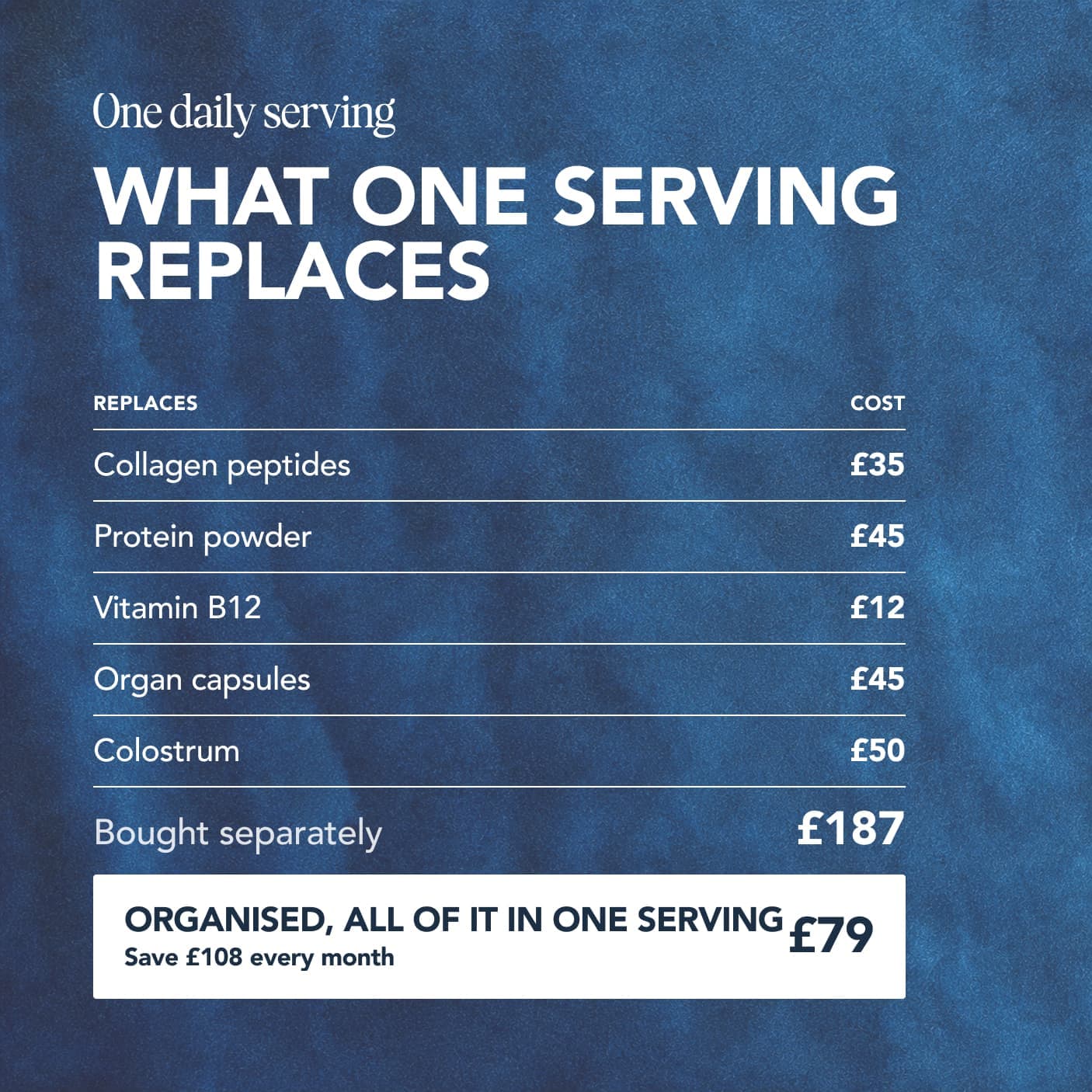
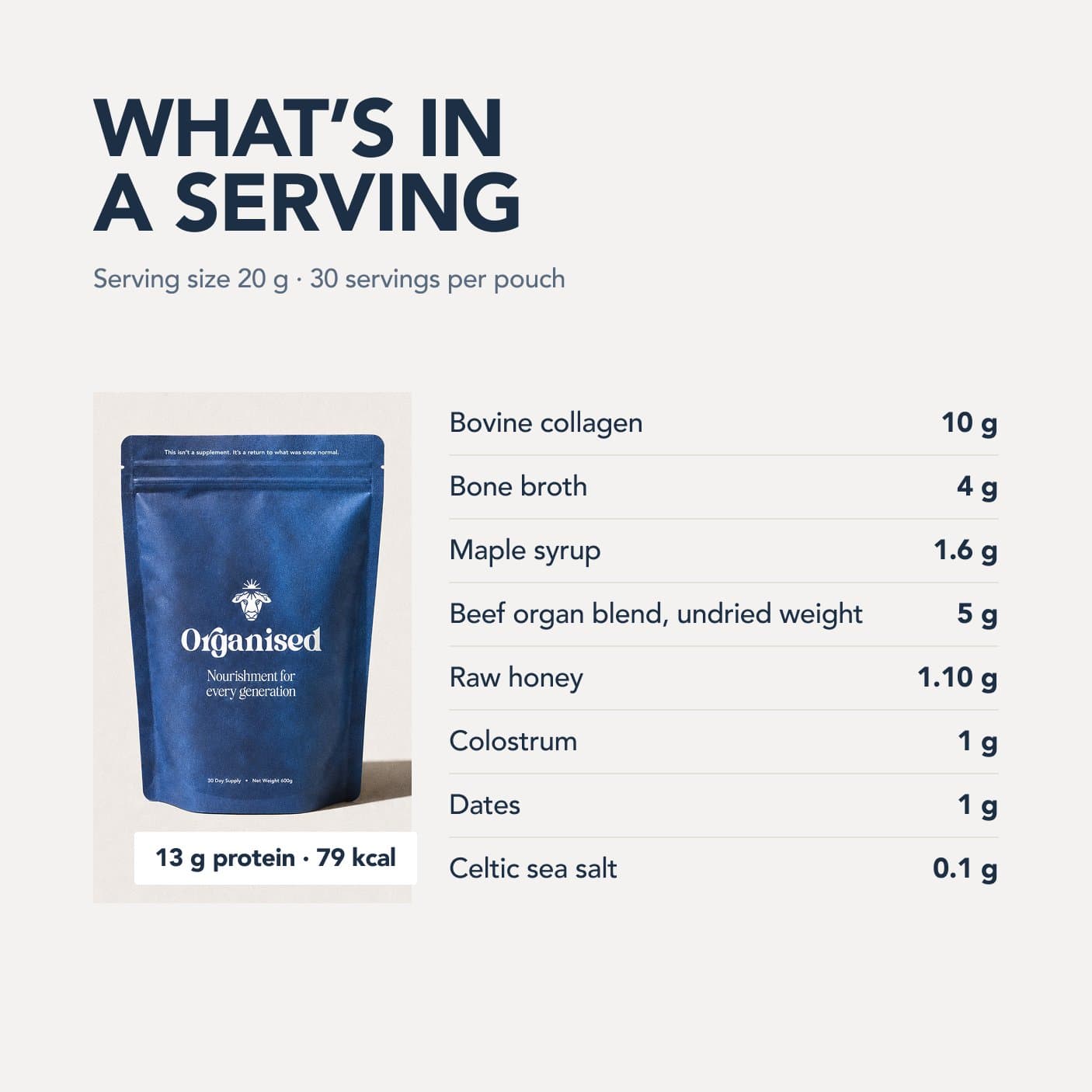
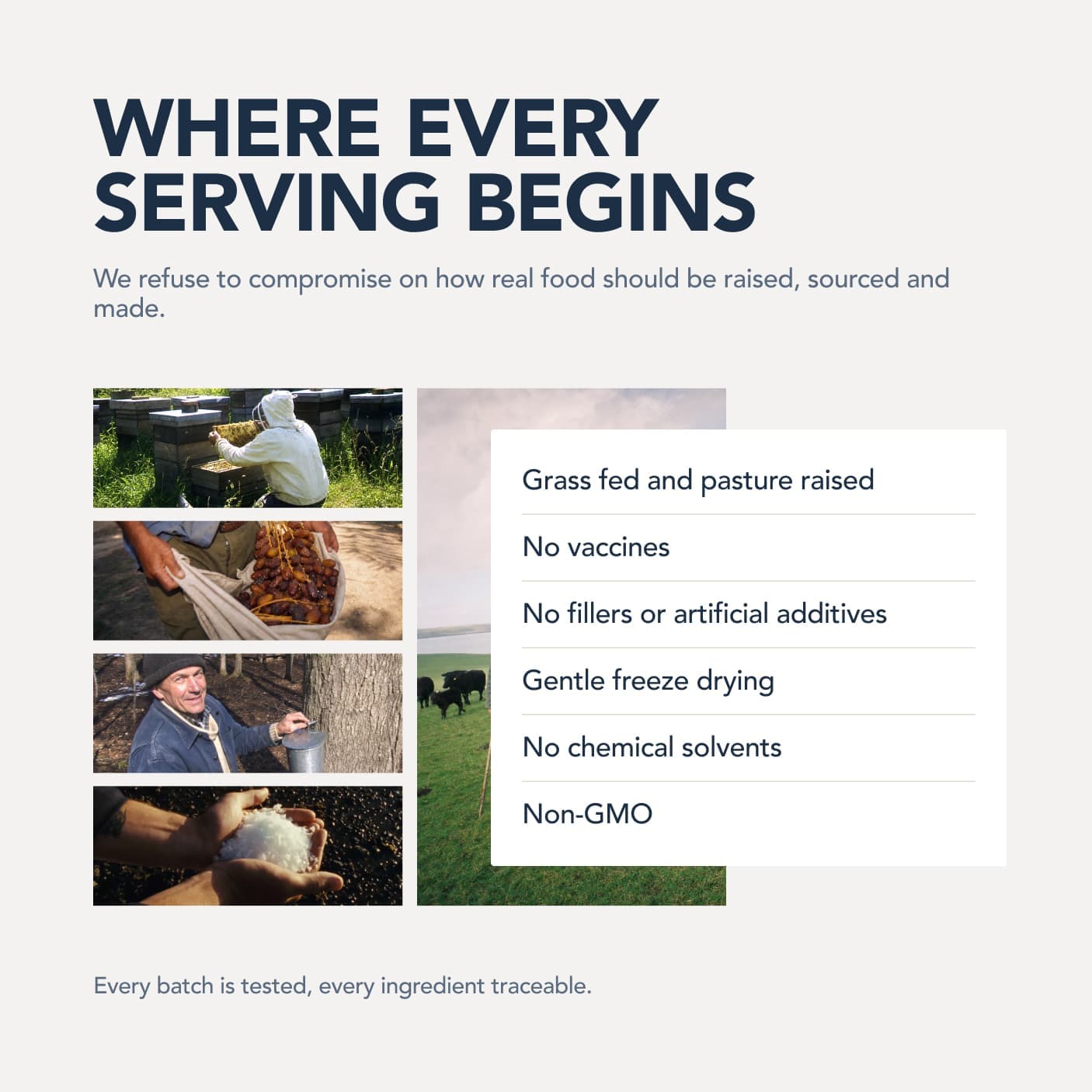
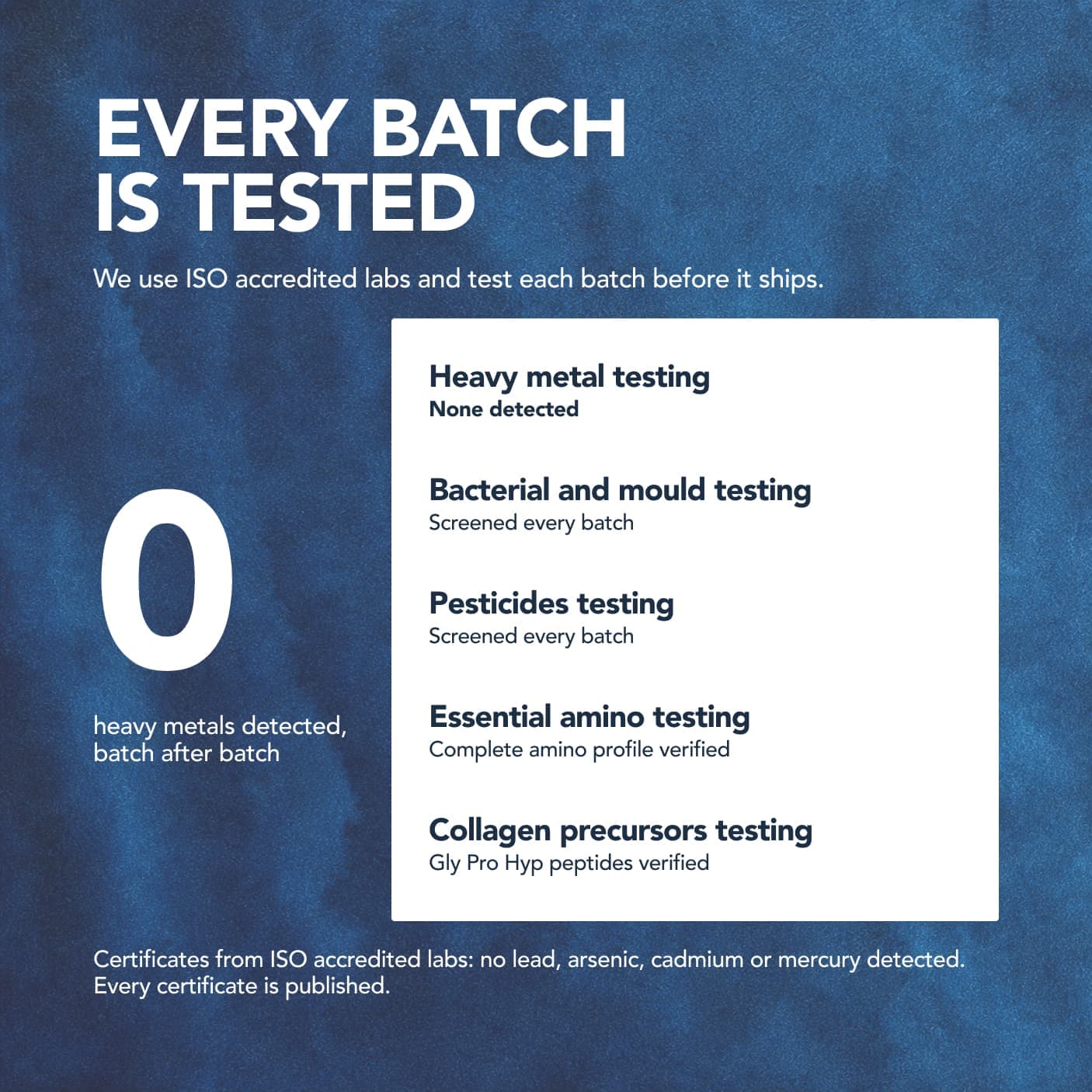
Eight real ingredients built around grass-fed beef organs, collagen and colostrum. Nothing synthetic added.
Free with your first order, worth £38. Plus £10 off the pouch with a subscription.



Free UK shipping · Made in England · 100 day money back guarantee on your first pouch · Skip, pause or cancel anytime
The stress and sleep connection
Microbiota composition is also exquisitely sensitive to stress and sleep. Chronic stress shifts the Firmicutes to Bacteroidetes ratio toward the obesity-prone pattern. Poor sleep does the same. You can be eating perfectly, but if you're stressed and sleep-deprived, your bacteria are still pushing you toward weight gain.
This is why sustainable weight management requires addressing sleep and stress alongside diet. A person who eats fermented foods and resistant starch but sleeps five hours nightly will struggle. A person who eats well, sleeps eight hours, and manages stress will see weight shift naturally.
The good news is these systems potentiate each other. Better sleep improves microbiota health, which reduces cravings and improves stress resilience. Better fermented foods improve microbiota health, which improves sleep quality and reduces cortisol. You're not fighting three separate battles. You're leveraging a single system from multiple angles.
References
Every source below was checked on 27 August 2026. Each PubMed, PMC and DOI identifier was resolved against NCBI or Crossref, and what it opens is printed under the citation, so you can see the link goes where the citation says without leaving the page. Where a citation and its identifier disagreed, the citation was corrected to the record or the reference was deleted along with the sentence marker that pointed at it, and where the resolved paper turned out not to support the sentence, the sentence was cut back to what it does support. Borrowed authority is worse than none, because it looks like rigour.
- Ridaura VK, Faith JJ, Rey FE, et al. Gut microbiota from twins discordant for obesity modulate metabolism in mice. Science. https://pmc.ncbi.nlm.nih.gov/articles/PMC3829625/ [accessed May 2026].Checked 27 August 2026: PMC3829625 opens Ridaura VK, Faith JJ, Rey FE et al, Gut microbiota from twins discordant for obesity modulate metabolism in mice. Science 2013;341(6150):1241214. PubMed indexes it as: Twin Study.
- Magne F, Gotteland M, Gauthier L, et al. The Firmicutes/Bacteroidetes Ratio: A Relevant Marker of Gut Dysbiosis in Obese Patients? Nutrients. https://pmc.ncbi.nlm.nih.gov/articles/PMC7285218/ [accessed May 2026].Checked 27 August 2026: PMC7285218 opens Magne F, Gotteland M, Gauthier L et al, The Firmicutes/Bacteroidetes Ratio: A Relevant Marker of Gut Dysbiosis in Obese Patients? Nutrients 2020;12(5). PubMed indexes it as: Review.The authors' own declaration, from the record: The authors declare no conflict of interest.
- Liu H, Wang J, He T, et al. Butyrate: A Double-Edged Sword for Health? Adv Nutr. https://pmc.ncbi.nlm.nih.gov/articles/PMC6333934/ [accessed May 2026].Checked 27 August 2026: PMC6333934 opens Liu H, Wang J, He T et al, Butyrate: A Double-Edged Sword for Health? Adv Nutr 2018;9(1):21-29. PubMed indexes it as: Review.
Who wrote and reviewed this guide
Niall Kiddle
Author · Founder, Organised
Niall is the founder of Organised. He started the company in 2024 after fixing his own health the slow way: in 2022 he swapped a cupboard of synthetic supplements for real food, raw milk, organ meats, bone broth and honey, and felt the difference within months.
Areas of expertise: Ancestral nutrition, Organ meats, Whole-food supplementation, Gut health, Regenerative sourcing
Read Niall's full profile
Pedro Rodrigues
Reviewer · Agronomist (farming and sourcing only)
Pedro is the agronomist Organised works with on farming and sourcing. His job on the guides is to keep the science honest: he reviews what we publish about soil health, regenerative agriculture, grazing and the way food is actually produced.
Areas of expertise: Regenerative agriculture, Agronomy, Soil health, Grass-fed farming, Food sourcing
Reviewed this guide on
Read Pedro's full profileMore on nutrient deep-dives
View allBrowse the guides library
All guidesKeep reading
Organised
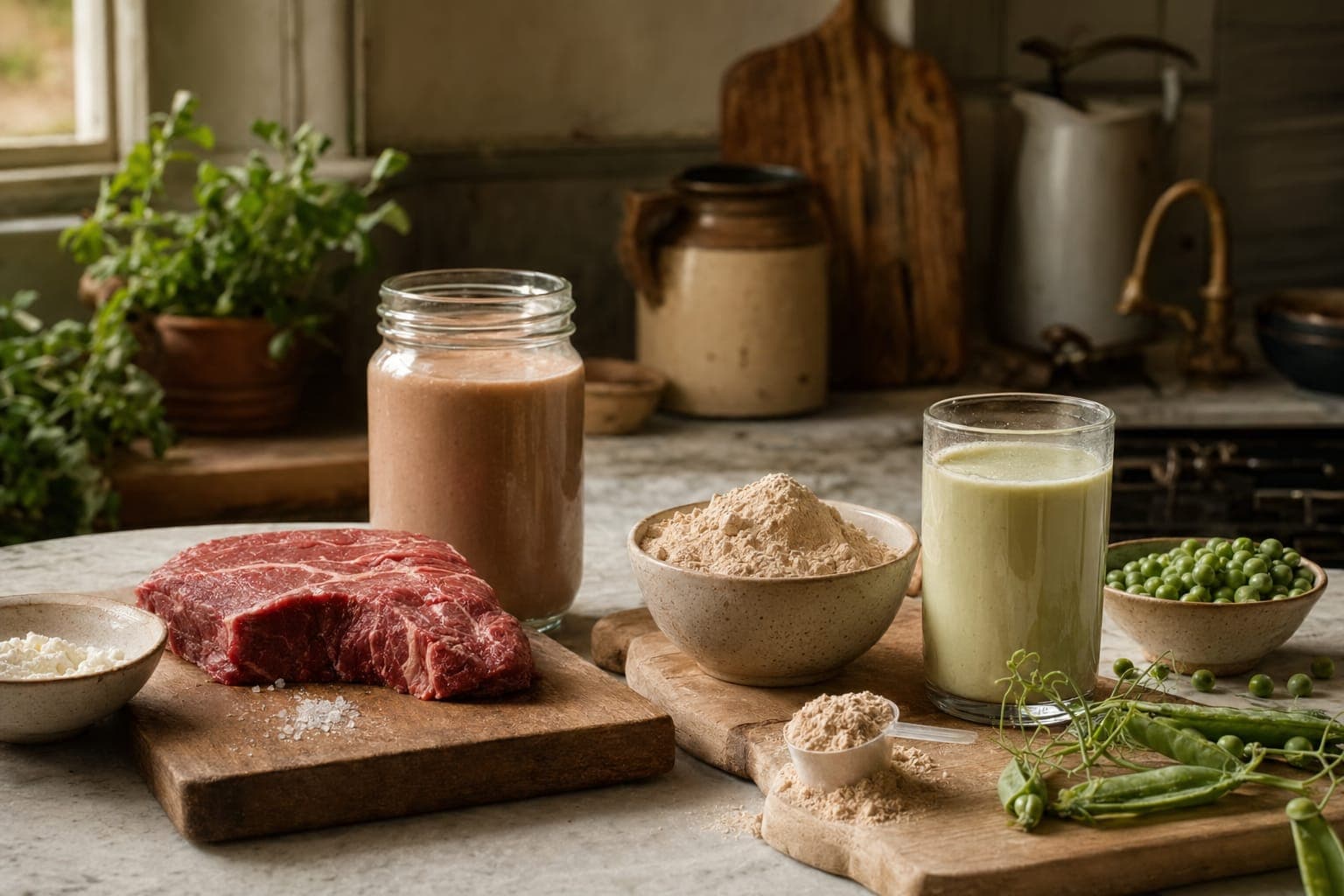
Grass-Fed Beef Protein vs Pea Protein: A Complete Comparison
Compare grass-fed beef protein vs pea protein fairly. Beef has complete amino acids and a 1.23 DIAAS, while pea lacks methionine at 0.7. See the full picture.

Life stage
The Nutrients That Support Foetal Brain Development
Essential nutrients for foetal brain development: choline, DHA, iodine, B12, iron, and folate. What your unborn baby's brain needs to thrive.
Science
The Fibre Myth: Do We Really Need as Much as We're Told?
Explore the fibre myth. Learn about SCFAs, why more fibre isn't always better, context-dependent dosing, and the history of cereal industry marketing.
Real food, made effortless
See the blendA few ways to use it
All recipes
Whole Food Snacks for Busy Days
Practical whole food snacks that travel well and sustain energy. No refined carbs, no seed oils. Real food options for when you're busy.

How to Make Your Own Gelatine Gummies
A simple recipe for homemade gelatine gummies using grass-fed gelatine, fresh juice, and raw honey. Better than shop-bought, kids love them.

The Organised Recovery Smoothie for After Exercise
A recovery smoothie made with beef protein, raw milk, frozen berries, collagen, and honey. Optimal nutrition in the 30-minute window after exercise.


 Join over 100,000+ members
Build a better food system with us
The Organised community is thousands of people choosing real food and backing the farmers who grow it, all of us trying to leave the world a little better than we found it. If that is what you care about too, you belong here.