Beef Liver vs Cod Liver Oil: Which Has More Vitamin A?
Beef liver has more vitamin A by weight. Cod liver oil has vitamin D and omega-3s. Neither replaces the other. But understanding what each actually provides changes how you stack your supplement strategy.

By Niall Kiddle, Founder, Organised

Reviewed by Pedro Rodrigues, Agronomist (farming and sourcing only) ·
6 min read · Published · Updated · 3 cited sources
Makers of the Organised Daily blend, a grass-fed beef organ supplement from regenerative UK farms
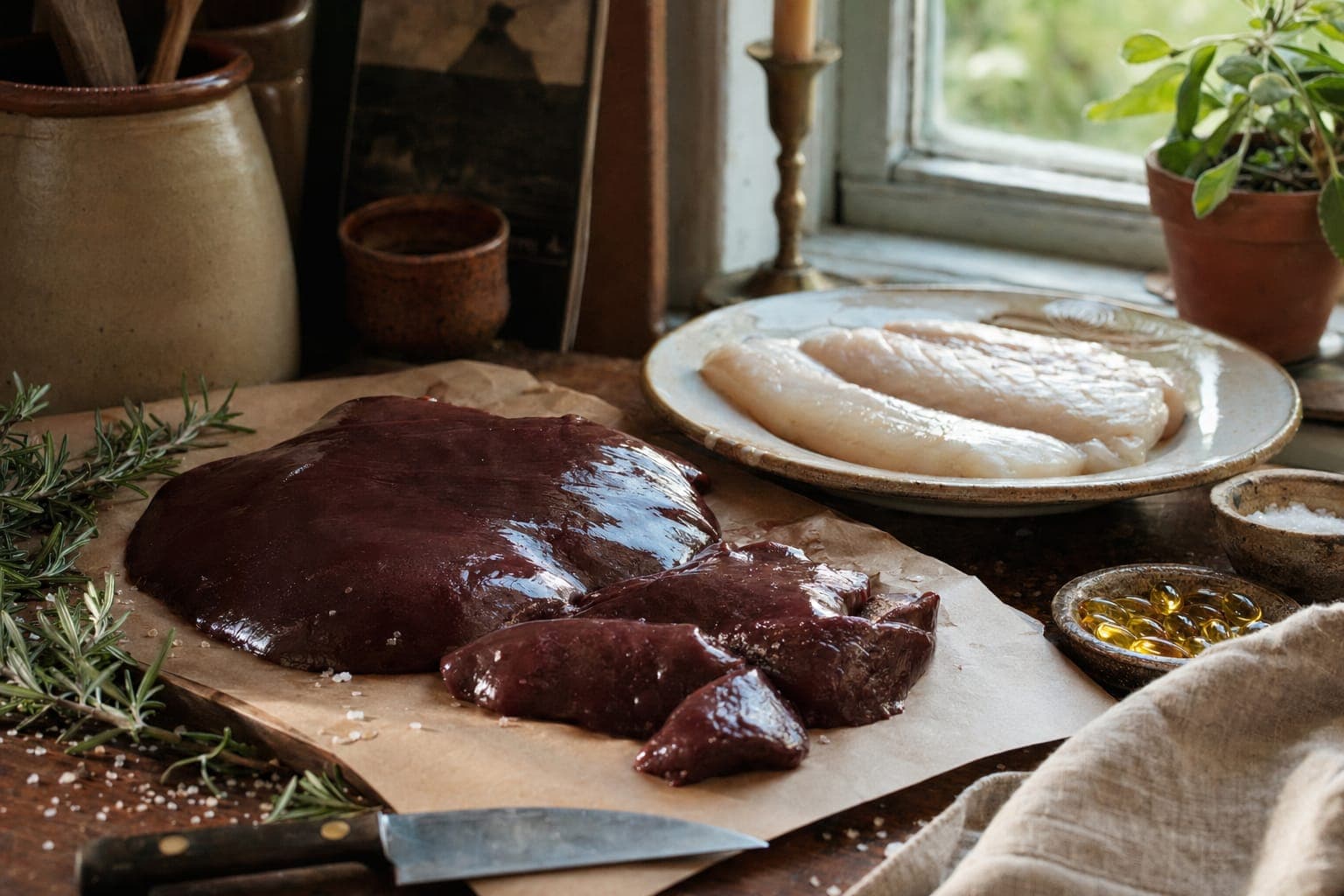
Beef liver has more vitamin A by weight. Cod liver oil has vitamin D and omega-3s.2 Neither replaces the other. But understanding what each actually provides changes how you stack your supplement strategy.
The health world tends to pit these against each other. Beef liver advocates dismiss fish oil. Fish oil advocates suggest beef liver is outdated. In reality, they're solving different nutritional problems, and most people benefit from both.
Which has more vitamin A
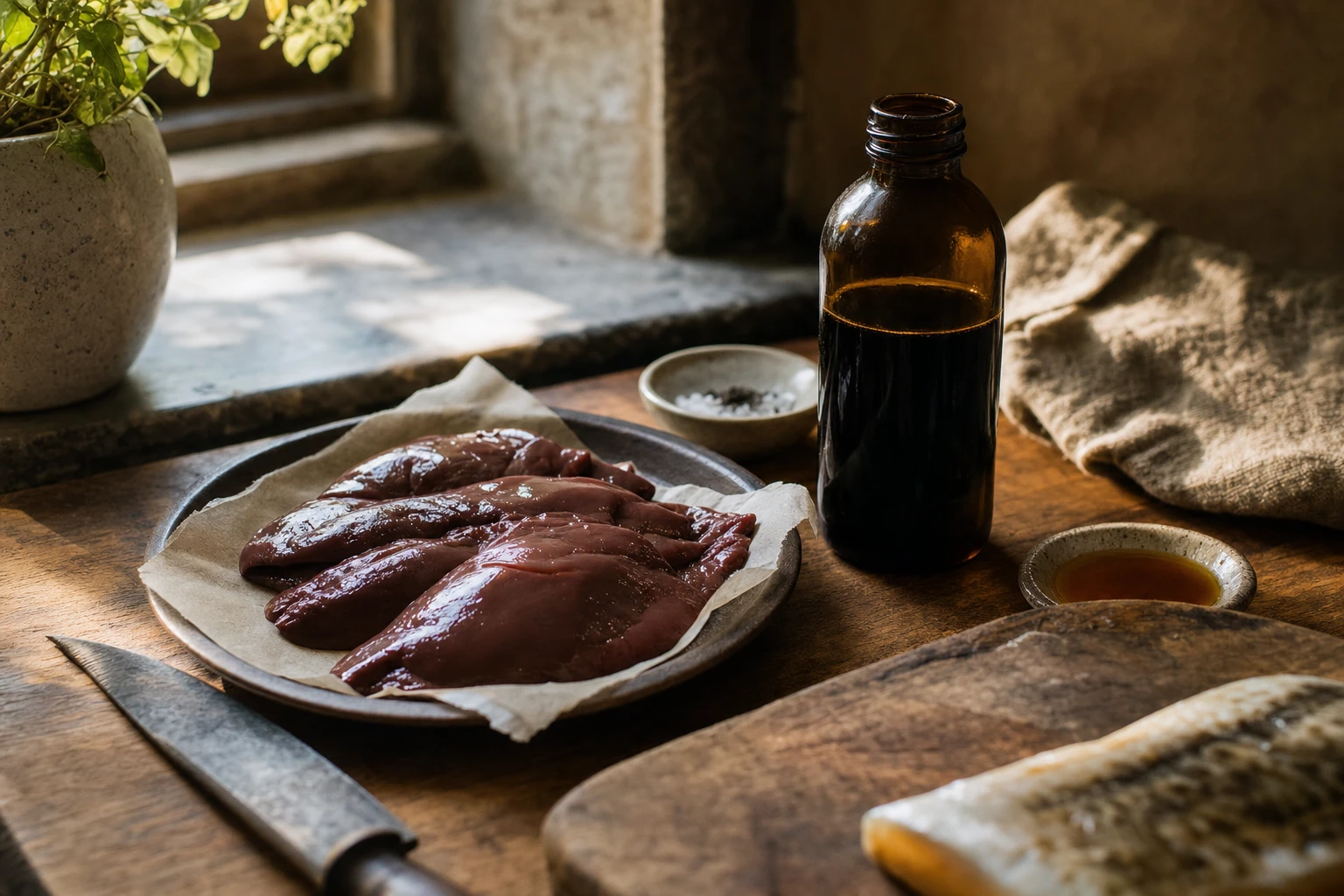
Raw beef liver, gram for gram, contains more vitamin A than cod liver oil.
100 grams of raw beef liver provides roughly 20,000-30,000 IU of preformed retinol, depending on the animal's diet, age, and season.1 Dried beef liver concentrate (which is what you'd use as a supplement) is roughly 5-8 times more concentrated, so you're looking at 100,000+ IU per 15-gram serving.
100 grams of cod liver oil contains roughly 10,000 IU of vitamin A.1 A standard 5-millilitre (teaspoon) serving of cod liver oil contains about 4,000-5,000 IU.
So yes, beef liver wins on raw vitamin A content. A serving of beef liver supplement provides 20-25 times more vitamin A than a serving of cod liver oil.
If the goal is vitamin A alone, beef liver is the obvious choice. The question is whether vitamin A is the only goal.
This matters because vitamin A toxicity is real if you overdose on synthetic or concentrated sources. Getting 100,000 IU daily from food is how humans did it for millennia. Getting it from supplementation is more dangerous if you're not careful with dosing.
But there's more to the story
The vitamin A comparison is technically correct but practically misleading.
Nobody takes cod liver oil primarily for vitamin A. They take it for the other nutrients inside. Comparing them on vitamin A alone is like comparing a steak to a multivitamin on protein content. You're missing the entire context.
Beef liver excels at: vitamin A, B12, copper, iron, folate, and general micronutrient density. It's the most nutrient-dense food on the planet, and no argument.
Cod liver oil excels at: vitamin D3, EPA and DHA (the long-chain omega-3 fatty acids). These are things beef liver provides almost nothing of.
So the real question isn't "which has more vitamin A?" It's "what do I actually need?" And the answer, for most people, is both, because they fill different nutritional gaps.
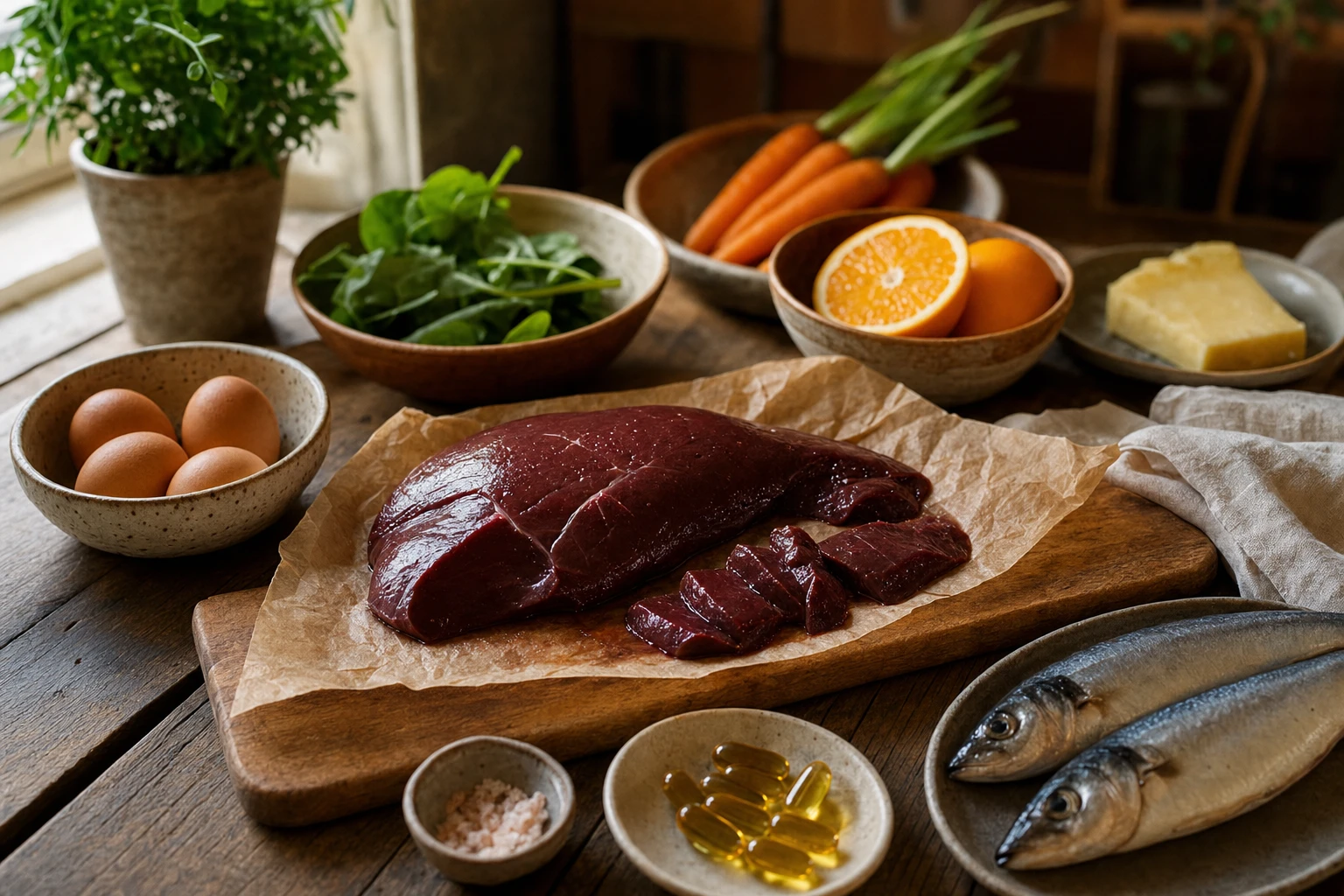
Beef liver fills gaps in minerals and fat-soluble vitamins. Cod liver oil fills gaps in vitamin D and omega-3s. They don't compete. They complement.
Vitamin D: where cod liver wins
Beef liver contains almost no vitamin D.
A 100-gram serving of beef liver provides roughly 0-5 IU of vitamin D, depending on the animal's sun exposure and diet. That's essentially nothing. The recommended daily intake is 600-800 IU for most adults, and studies suggest you need 1,000-2,000 IU to maintain optimal levels.
Cod liver oil provides roughly 400-1,000 IU of vitamin D per teaspoon, depending on the brand. That's meaningful. Not quite optimal on its own, but significant enough to move the needle.
If vitamin D status is a concern (and for most people in the UK, it is), cod liver oil is a practical supplement. Beef liver is useless for this purpose.
Beef liver has vitamin A. Cod liver oil has vitamin D. If you're deficient in both, you need both supplements.
This is why the smartest nutritional protocols include both. Beef liver for minerals and fat-soluble vitamins (A, K2, E). Cod liver oil for vitamin D and omega-3s. Between the two, you close most major nutritional gaps.
EPA and DHA: the omega-3 question
Beef liver contains virtually no EPA and DHA.
EPA and DHA are long-chain omega-3 fatty acids found almost exclusively in fish and fish oil. They're critical for brain function, heart health, and inflammation regulation. Your body can technically convert ALA (from plants) into EPA and DHA, but the conversion is catastrophically inefficient - around 5-10% for EPA, less than 1% for DHA.
A serving of cod liver oil provides roughly 300-500mg of combined EPA and DHA. That's meaningful. Regular consumption actually improves brain function, reduces inflammation, and supports cardiovascular health.
Beef liver provides zero. If you don't eat fish regularly, you need omega-3 supplementation. Beef liver won't provide it.
This is actually the strongest argument for taking fish oil. Not for vitamin A or D (though those are nice). But for EPA and DHA that you can't get from beef liver, grass-fed beef, eggs, or any land animal.
Someone eating beef-only (carnivore diet) is missing EPA and DHA unless they add fish or fish oil. This matters for brain health, and it matters for long-term metabolic health.

If you don't eat fish, take vitamin D directly and don't worry about omega-3 capsules. Long-chain omega-3 fats are highly peroxidation-prone. They oxidise on the shelf, in the bottle, and in storage. The case for daily multi-gram fish oil capsules is much weaker than the marketing suggests, and the evidence on cardiovascular outcomes from supplemental EPA and DHA has been mixed at best. Get vitamin D from sunlight or a measured cholecalciferol supplement, eat liver weekly, and the rest of the picture takes care of itself.
Get honest comparisons, free
Two short reads a week cutting through supplement marketing with what the evidence says.
By signing up you agree to receive emails from us. No spam, unsubscribe anytime.
Micronutrient density beyond vitamins
Beef liver wins decisively here.
Beef liver provides: B12, copper, iron (in the most bioavailable form), zinc, selenium, choline, carnosine, CoQ10. It's a complete micronutrient package.
Cod liver oil provides: mostly fat and the three nutrients we've discussed (vitamins A and D, EPA and DHA). It's specialised.
For building a foundation of micronutrient status, beef liver is unmatched. It's a whole-food foundation. Cod liver oil is a supplement to fix specific gaps that whole food doesn't address.
This matters for how you structure your protocol. Start with beef liver as your base. Add cod liver oil to fix the vitamin D and omega-3 gaps. You've now covered virtually everything.


1 of 9
Daily blend
100,000+ thriving families4.9 on Trustpilot
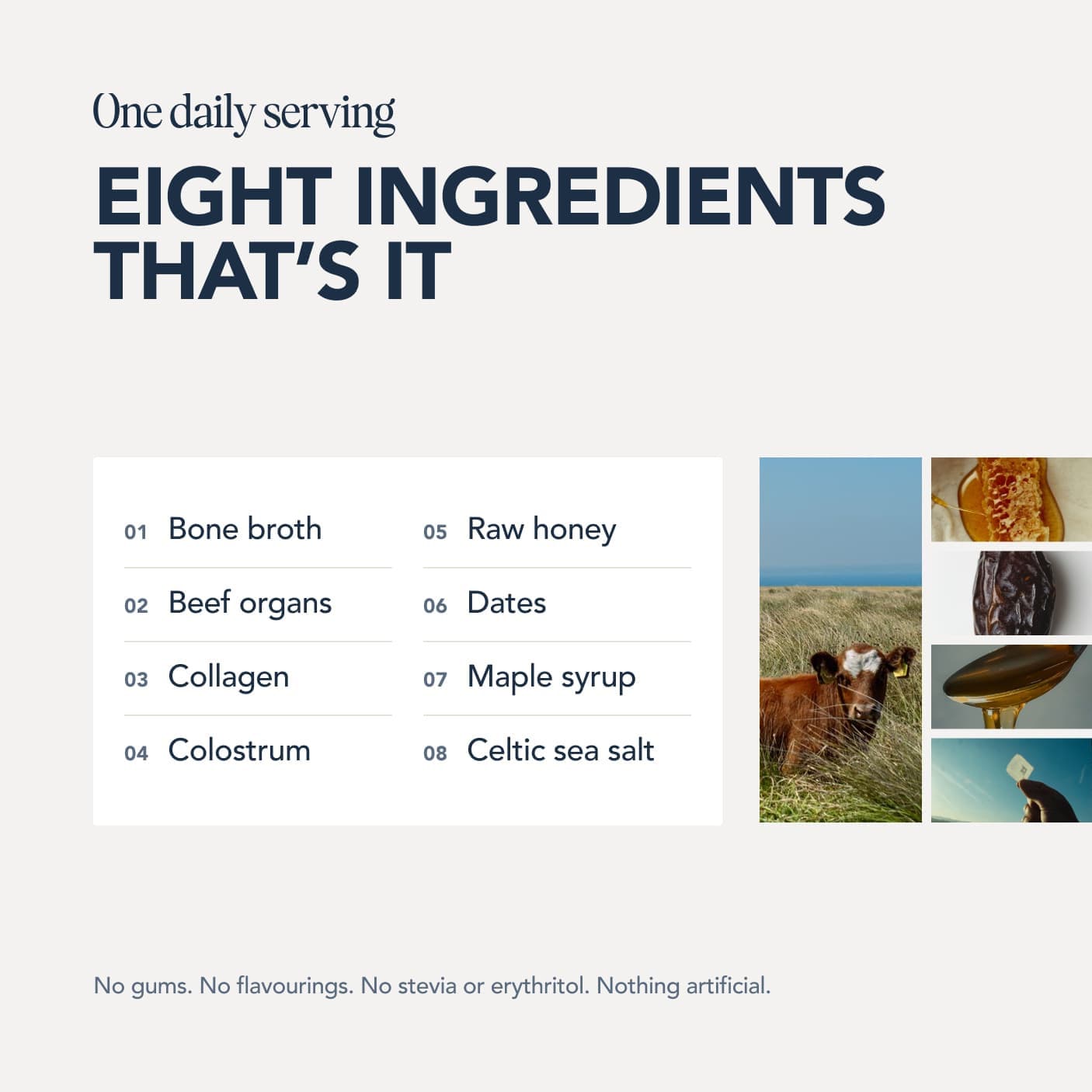
Eight real ingredients built around grass-fed beef organs, collagen and colostrum. Nothing synthetic added.
Free with your first order, worth £38. Plus £10 off the pouch with a subscription.

Free UK shipping · Made in England · 100 day money back guarantee on your first pouch · Skip, pause or cancel anytime
Which should you actually use
This is simple if you stop thinking of them as competitors.
If you eat fish 2-3 times a week, you probably don't need fish oil. You're getting EPA and DHA from food. Add beef liver supplement and you're nutrient-dense.
If you don't eat fish, you need fish oil. And you still need beef liver. The two supplements solve different problems.
If you live in the UK and it's winter, you almost certainly need vitamin D supplementation. Beef liver won't provide it. Fish oil helps. Or take a dedicated vitamin D supplement (which is cheaper than cod liver oil if D is your only goal).
If your mineral status is poor - if you're iron deficient, copper deficient, or selenium deficient - beef liver is the answer. Cod liver oil won't help.
Use beef liver as your nutritional foundation. Use fish oil to fill the gaps fish and liver don't cover. Don't choose between them. Use both.
A practical monthly protocol: beef liver supplement daily or every other day (enough to get 15,000+ IU of vitamin A, plus copper, B12, iron). If you specifically want both fat-soluble vitamins together in their ancestral form, a small daily teaspoon of traditional fermented cod liver oil, the way it was actually taken historically, not multi-gram fish-oil capsules. If your only goal is vitamin D, take vitamin D directly. Between liver weekly and one of those vitamin D options, you've solved most of the nutritional gaps modern diets create.
The bottom line
Beef liver has more vitamin A. Cod liver oil has vitamin D and omega-3s. They're not competitors. They're complementary. If your goal is comprehensive nutrition, use both. Beef liver closes mineral gaps and provides concentrated micronutrients. Cod liver oil fills the specific gaps beef liver doesn't cover: vitamin D and long-chain omega-3s.3 Use them together and you stop needing multivitamins.
References
Every source below was checked on 27 August 2026. Each link was requested and read. Where a citation and its identifier disagreed, the citation was corrected to the record or the reference was deleted along with the sentence marker that pointed at it, and where the resolved paper turned out not to support the sentence, the sentence was cut back to what it does support. Borrowed authority is worse than none, because it looks like rigour.
- USDA FoodData Central. Beef liver, raw and cod liver oil. fdc.nal.usda.gov.
- NIH Office of Dietary Supplements. Vitamin D fact sheet for health professionals. ods.od.nih.gov/factsheets/VitaminD-HealthProfessional.
- NIH Office of Dietary Supplements. Omega-3 fatty acids fact sheet. ods.od.nih.gov/factsheets/Omega3FattyAcids-HealthProfessional.
Who wrote and reviewed this guide
Niall Kiddle
Author · Founder, Organised
Niall is the founder of Organised. He started the company in 2024 after fixing his own health the slow way: in 2022 he swapped a cupboard of synthetic supplements for real food, raw milk, organ meats, bone broth and honey, and felt the difference within months.
Areas of expertise: Ancestral nutrition, Organ meats, Whole-food supplementation, Gut health, Regenerative sourcing
Read Niall's full profile
Pedro Rodrigues
Reviewer · Agronomist (farming and sourcing only)
Pedro is the agronomist Organised works with on farming and sourcing. His job on the guides is to keep the science honest: he reviews what we publish about soil health, regenerative agriculture, grazing and the way food is actually produced.
Areas of expertise: Regenerative agriculture, Agronomy, Soil health, Grass-fed farming, Food sourcing
Reviewed this guide on
Read Pedro's full profileBrowse the guides library
All guidesKeep reading

Recipes & routines
Ancestral Breakfast Ideas from Around the World
Traditional breakfast recipes from cultures that got nutrition right. Japanese, Turkish, Scottish, and more. Whole-food breakfast inspiration.

Recipes & routines
The Complete Guide to Mixing Organised into Anything
Every way to take Organised that actually tastes good: thick yoghurt, smoothies, porridge, milk, cooking and coffee, plus why we skip plain water.
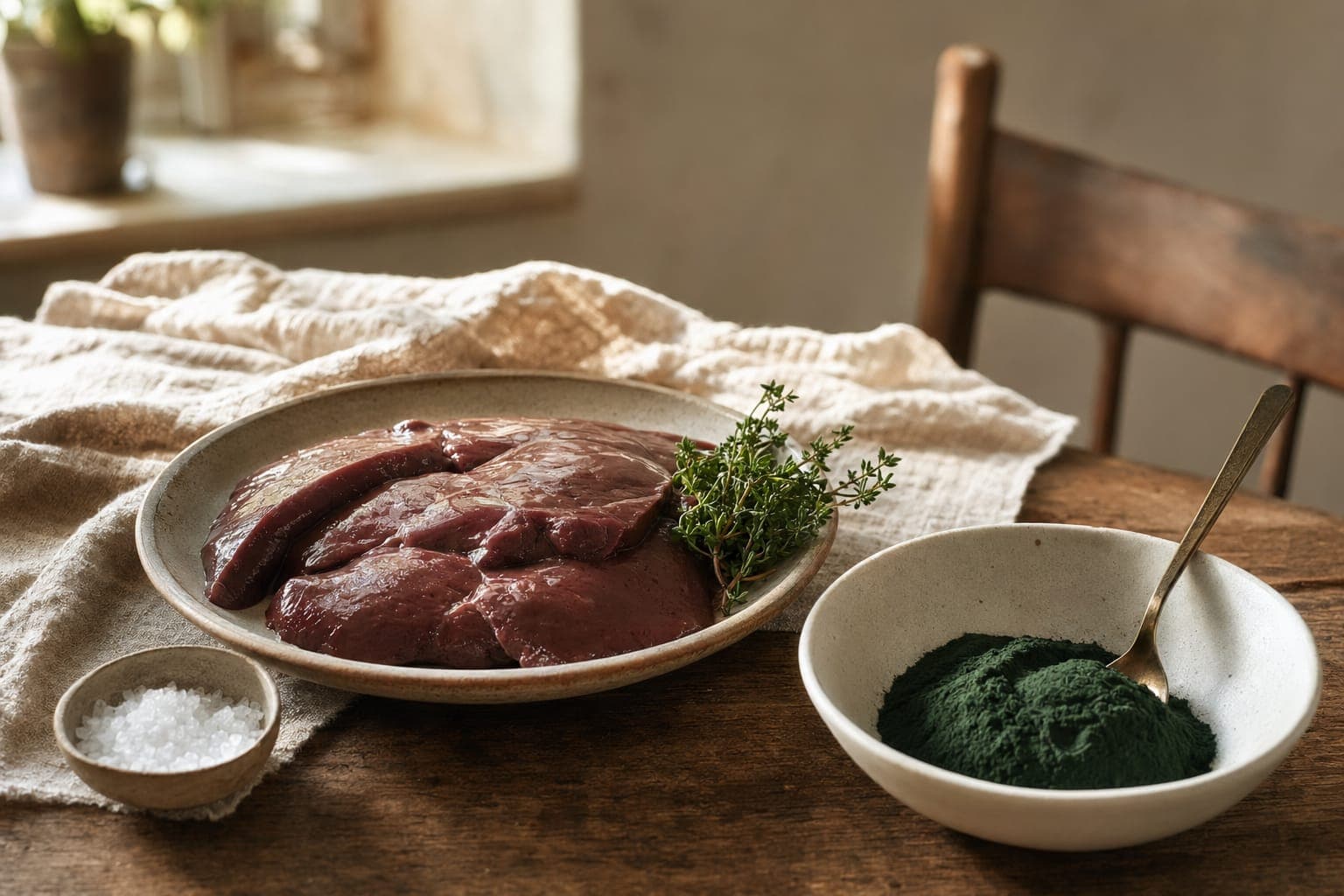
Comparisons
Beef Liver vs Spirulina: Which Is Really the Superfood?
Which is truly nutrient-dense? Compare beef liver and spirulina nutrient for nutrient, including retinol, B12, and contamination risk. You might be surprised.
Real food, made effortless
Try the blendA few ways to use it
All recipes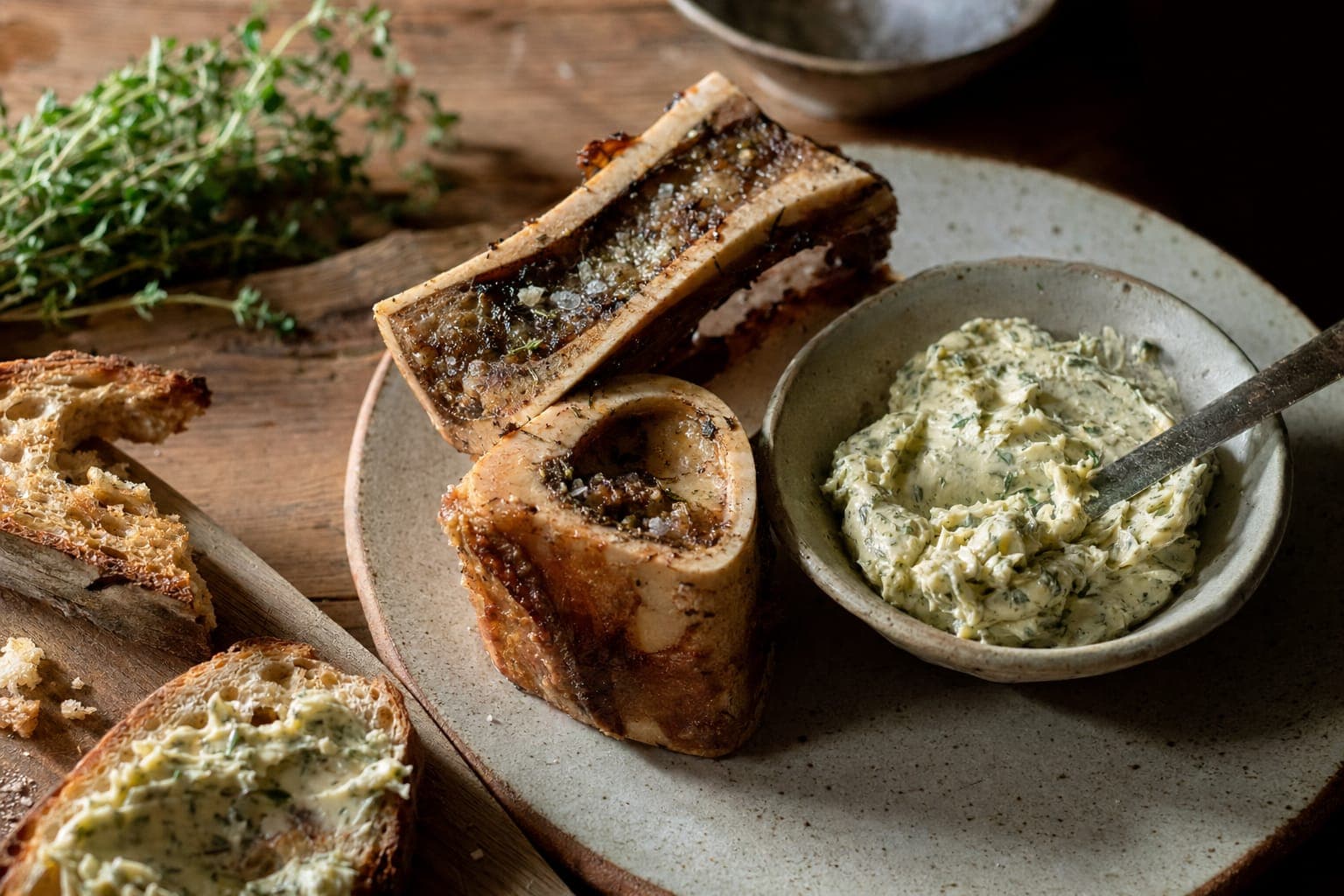
How to Make Bone Marrow Butter
Roast grass-fed marrow bones, scoop the marrow, and mix with butter and herbs. A nutrient-dense spread with fat-soluble vitamins.

Bone Broth from Scratch: A Step-by-Step Guide
Step-by-step guide to making bone broth at home. Stovetop, slow cooker, and Instant Pot methods. Rich in collagen and gut-healing minerals.

Organised Overnight Oats: 3 Variations
Three delicious overnight oats variations with Organised. Chocolate, berry, tropical flavours. Make them Sunday, eat them all week.


 Join over 100,000+ members
Build a better food system with us
The Organised community is thousands of people choosing real food and backing the farmers who grow it, all of us trying to leave the world a little better than we found it. If that is what you care about too, you belong here.