Retinol from Food vs Retinol in Supplements: Bioavailability Compared
Your body needs vitamin A, specifically the preformed kind called retinol. Your skin needs it. Your immune system needs it. But getting it from a liver supplement doesn't work the same way as getting it from actual liver. The dose matters. The form matters. The safety ceiling is real.
By Niall Kiddle, Founder, Organised

Reviewed by Pedro Rodrigues, Agronomist (farming and sourcing only) ·
5 min read · Published · Updated · 3 cited sources
Makers of the Organised Daily blend, a grass-fed beef organ supplement from regenerative UK farms
What preformed retinol actually is
Retinol is the active form of vitamin A your body can use directly. It supports vision, immune function, skin cell turnover, and reproductive health. Your body can't make it from scratch. You have to get it from food or supplements.
Animal foods contain retinol already made. Plant foods contain beta-carotene, which your body has to convert to retinol. The conversion is inefficient. Most people only convert 3 to 6% of the beta-carotene they eat into usable retinol. So if you're trying to meet your retinol needs through orange vegetables, you're fighting an uphill battle. You'd need to eat pounds of carrots to match the retinol in a single serving of liver.
This is why preformed retinol, from animal sources, is so much more bioavailable. Your body doesn't have to do any work. The retinol is ready to use.
How your body absorbs retinol from food
When you eat liver, the retinol is packaged in fat and bound to protein. Your digestive system recognises it, extracts it, and absorbs it through your intestinal wall into the bloodstream. The process is efficient. Retinol from food is absorbed efficiently when consumed with dietary fat, with absorption rates typically reported in the 70-90% range.1
The retinol from liver isn't just absorbed efficiently. It's also delivered in the dose nature packaged it in. A 100-gram serving of cooked beef liver contains roughly 6,000-9,000 mcg RAE of vitamin A.2 That's a substantial amount, but it's not toxic because liver itself regulates the dose through the context of the whole food.
Your body is adapted to get retinol from whole foods. The packaging, the dose, the cofactors like vitamin D and selenium that come alongside it, are all optimised by evolution.
Supplement forms: retinyl palmitate and retinyl acetate
Most synthetic vitamin A supplements don't contain retinol itself. They contain retinyl palmitate or retinyl acetate, synthetic forms that your body has to convert into retinol before using it.
This conversion step matters. Your body absorbs retinyl palmitate at rates around 40 to 60%. It's not as efficient as retinol from food. And the synthetic forms are usually more concentrated. A single capsule can contain 2,000 to 10,000 micrograms of retinol activity, which is several days worth of your actual needs in one dose. Your body doesn't have a natural brake on synthetic vitamins.
The bioavailability difference
Retinol from food: 70 to 90% absorbed, natural dose, packaged with cofactors.
Synthetic retinyl palmitate: 40 to 60% absorbed, requires conversion, often excessive dose.
Some supplement companies have started using actual retinol in their formulations, not retinyl palmitate. These are absorbed more efficiently. But they're more expensive and less stable, so they're less common in the marketplace.
The bioavailability advantage goes decisively to food. Your body evolved to absorb and regulate retinol from liver, eggs, and fatty fish. Synthetic supplements are a poorer imitation. This isn't just about absorption percentage. It's about your body's ability to regulate and use the nutrient.
Upper limits and toxicity risk
Retinol has an upper limit. Your body can only use so much. Beyond that, it accumulates in your fat stores and liver. Excess retinol is toxic. It can cause headaches, joint pain, skin peeling, birth defects if you're pregnant, and in severe cases, liver damage. Chronic toxicity from retinol is rare in modern times, but it's real.
The Tolerable Upper Intake Level for preformed vitamin A is 3,000 mcg/day for adults.1 A single high-dose supplement can exceed that. Eating liver regularly will not. Your body regulates the dose through absorption. You can't overdose on retinol from food.
This is the safety envelope that matters. Supplements give you concentrated doses. Your body has no natural brake. Food gives you doses your body was designed to handle.
Get honest comparisons, free
Two short reads a week cutting through supplement marketing with what the evidence says.
By signing up you agree to receive emails from us. No spam, unsubscribe anytime.
The practical approach
Eat liver. Aim for a palm-sized portion once or twice a week. This alone will meet your retinol needs and keep you well within the safety envelope. You'll absorb it efficiently. You'll get cofactors like selenium and B vitamins alongside the retinol. You'll benefit from the whole nutrient package. This is the simplest and most effective approach.
If you supplement, choose a product that uses actual retinol (rare and more expensive) rather than retinyl palmitate. Or choose a desiccated liver product, which delivers retinol the way nature packaged it. Avoid high-dose synthetic vitamin A supplements. They're a blunt instrument. The bioavailability is lower and the toxicity risk is higher than with real food sources.
Preformed Retinol Bioavailability
Beef liver provides roughly 20,000-30,000 IU of vitamin A per 100g serving (about 6,000-9,000 mcg RAE).2 But consuming 100g weekly gives 36,000 IU weekly or roughly 5,000 IU daily averaged. This is well within safe limits (10,000 IU daily maximum).
Your body naturally regulates retinol absorption from food. You cannot overdose on liver from normal consumption patterns.
Synthetic Retinyl Palmitate Concerns
Fortified foods and supplements use retinyl palmitate, synthetic preformed retinol. High doses can accumulate in tissue without the natural absorption regulation found in food sources.
Real food retinol self-regulates through absorption mechanisms your body evolved with.
1 of 9
Daily blend
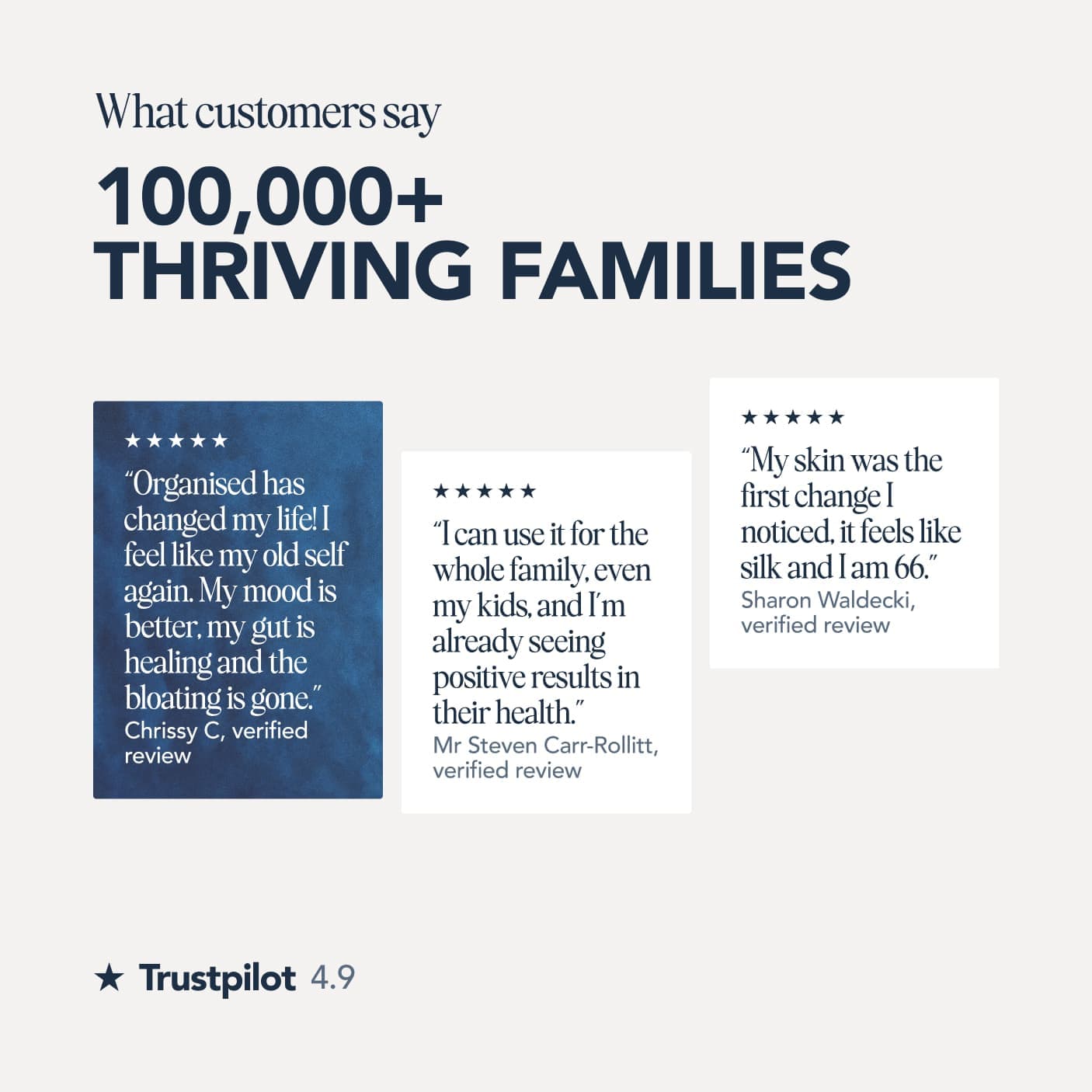
100,000+ thriving families4.9 on Trustpilot
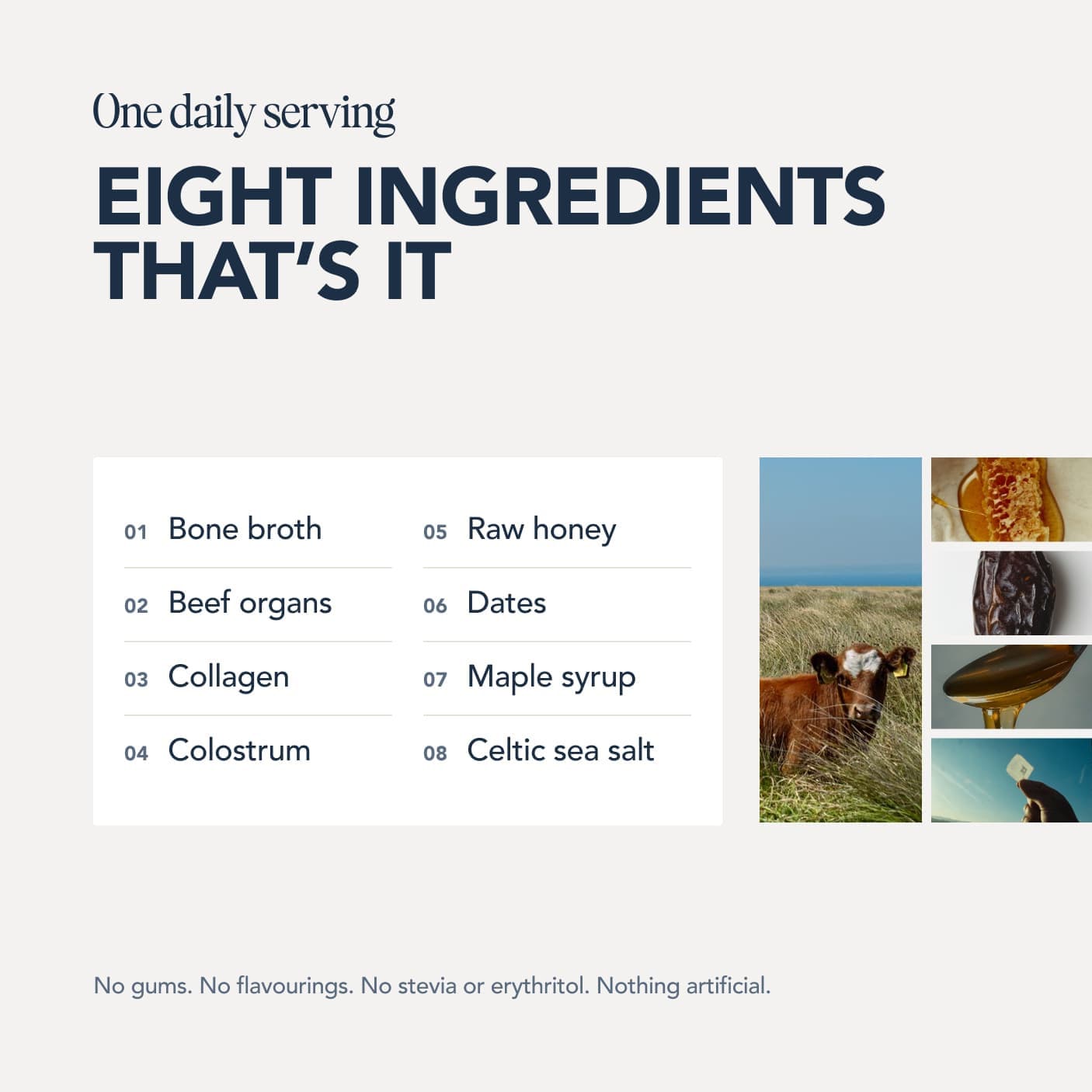
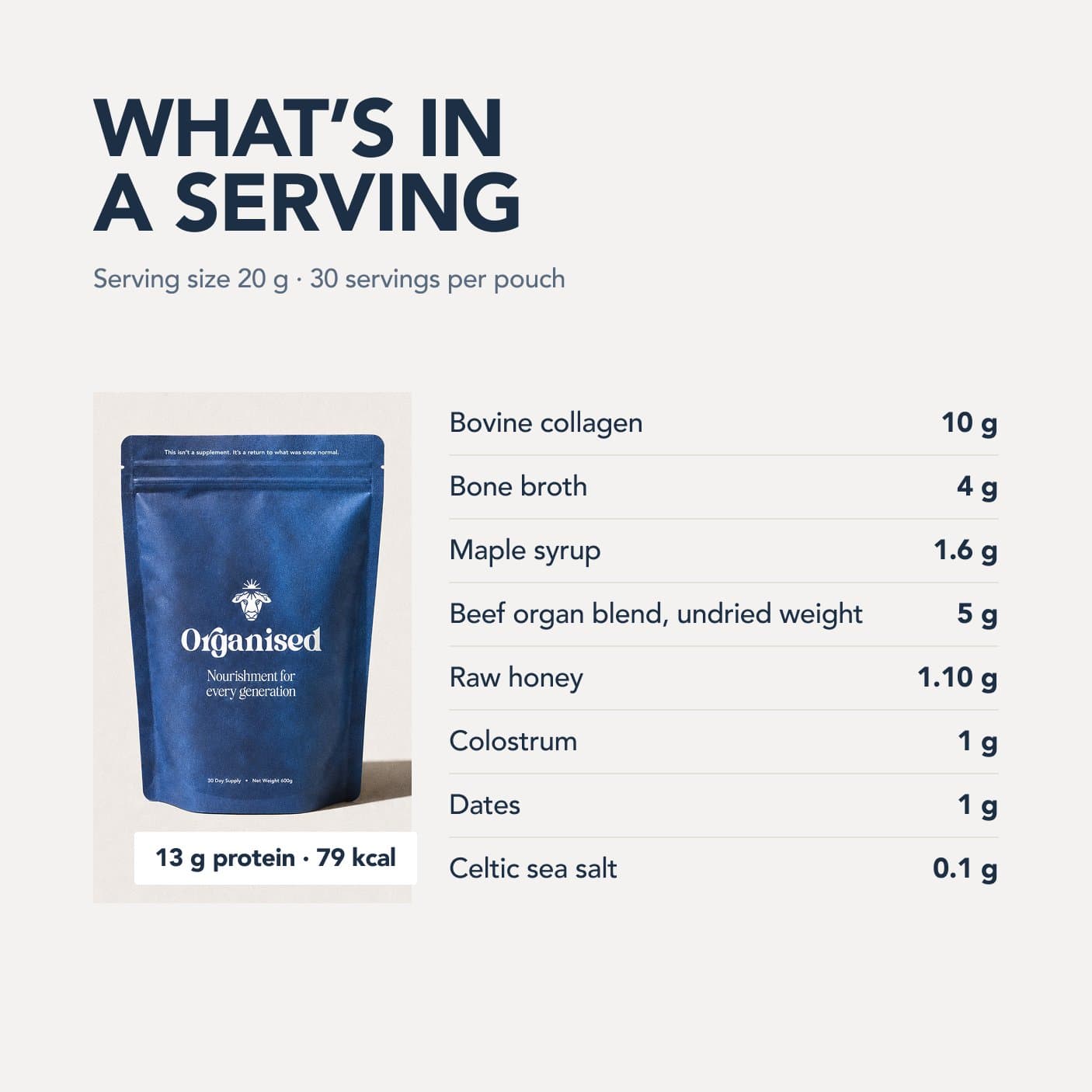
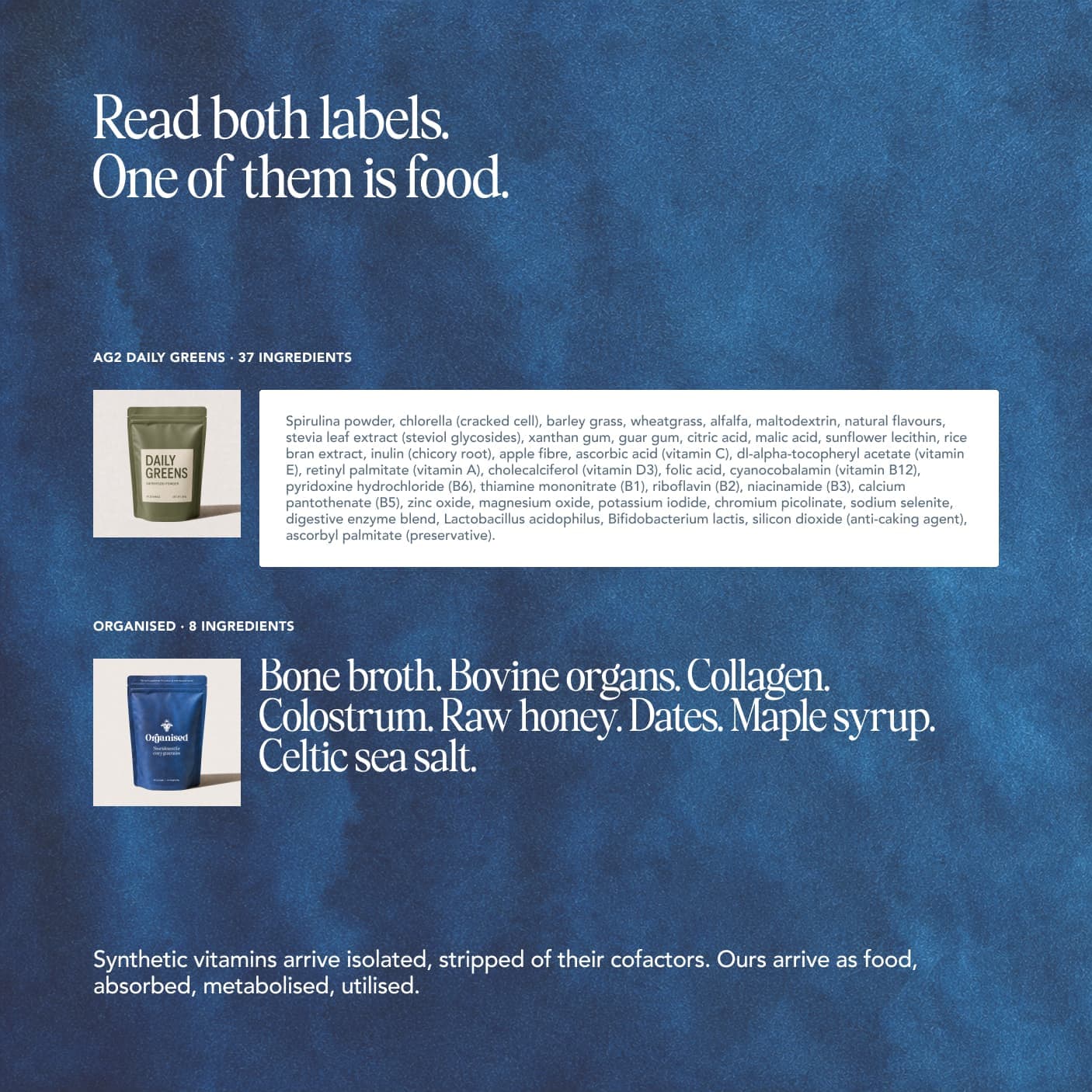
Eight real ingredients built around grass-fed beef organs, collagen and colostrum. Nothing synthetic added.
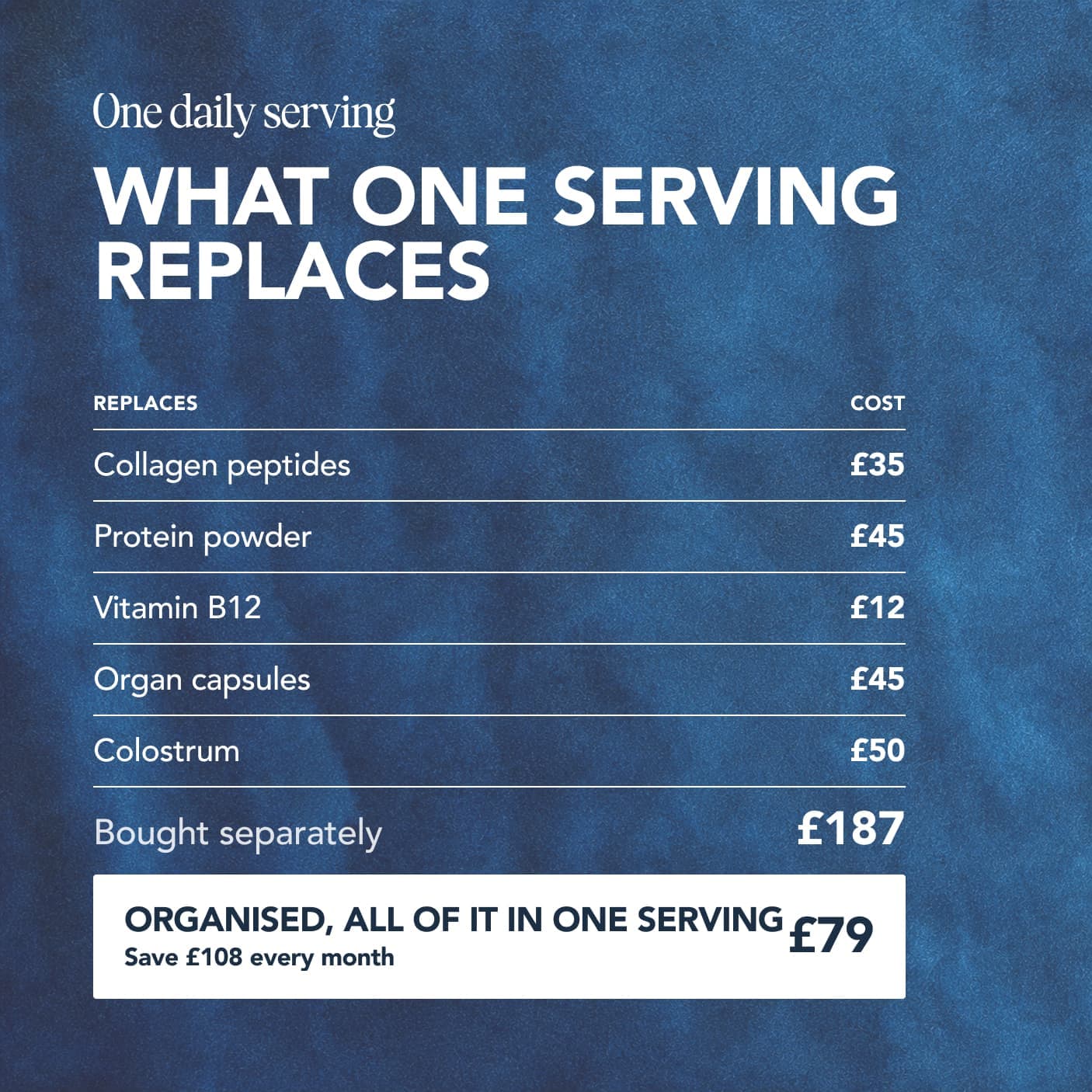
Free with your first order, worth £38. Plus £10 off the pouch with a subscription.
Free UK shipping · Made in England · 100 day money back guarantee on your first pouch · Skip, pause or cancel anytime
Beta-Carotene Conversion Failure
NIH ODS uses a conversion ratio of 12 mcg of dietary beta-carotene per 1 mcg of retinol activity equivalent.1 You need 20-50 grams of carrot to equal 1,000 IU retinol. This is impractical.
Plant-based vitamin A sufficiency is nearly impossible without supplementation.
Fat Requirement for Absorption
Vitamin A is fat-soluble. Liver naturally comes with fat enabling absorption. Supplements require dietary fat for absorption. This is another advantage of food sources.
BCMO1 Gene Variation Impact
A substantial proportion of the population carries BCMO1 polymorphisms that reduce beta-carotene conversion efficiency.3 For these individuals, preformed retinol from organs is essential. Relying on plants won't work regardless of consumption quantity.
Pregnancy Supplementation Safety
Pregnant women are advised to limit high-dose vitamin A supplements due to teratogenicity risk. But food-based liver retinol is safe in normal amounts. This distinction matters for pregnant women optimising nutrition safely.
Individual Testing Recommendations
Vitamin A status can be tested through retinol serum levels. Most people get adequate intake. But if you don't eat organs or orange vegetables regularly, testing before supplementing makes sense.
The bottom line
Retinol from liver is more bioavailable, safer, and better packaged than synthetic supplements. Your body absorbs it more efficiently, the dose is naturally regulated, and you get supporting nutrients alongside it. This is one of the few areas where food is objectively superior to a supplement. Eat the liver. Skip the synthetic vitamin A pills.
References
Every source below was checked on 27 August 2026. Each PubMed, PMC and DOI identifier was resolved against NCBI or Crossref, and what it opens is printed under the citation, so you can see the link goes where the citation says without leaving the page. Where a citation and its identifier disagreed, the citation was corrected to the record or the reference was deleted along with the sentence marker that pointed at it, and where the resolved paper turned out not to support the sentence, the sentence was cut back to what it does support. Borrowed authority is worse than none, because it looks like rigour.
- National Institutes of Health, Office of Dietary Supplements. Vitamin A and Carotenoids - Health Professional Fact Sheet. ods.od.nih.gov
- USDA FoodData Central. Beef, variety meats and by-products, liver, cooked. FoodData Central
- Leung WC, et al. Two common single nucleotide polymorphisms in the gene encoding beta-carotene 15,15'-monoxygenase alter beta-carotene metabolism. FASEB J. 2009;23(4):1041-53. PMID 19103647Checked 27 August 2026: PMID 19103647 opens Leung WC, Hessel S, Méplan C et al, Two common single nucleotide polymorphisms in the gene encoding beta-carotene 15,15'-monoxygenase alter beta-carotene metabolism in female volunteers. FASEB J 2009;23(4):1041-53.
Who wrote and reviewed this guide
Niall Kiddle
Author · Founder, Organised
Niall is the founder of Organised. He started the company in 2024 after fixing his own health the slow way: in 2022 he swapped a cupboard of synthetic supplements for real food, raw milk, organ meats, bone broth and honey, and felt the difference within months.
Areas of expertise: Ancestral nutrition, Organ meats, Whole-food supplementation, Gut health, Regenerative sourcing
Read Niall's full profile
Pedro Rodrigues
Reviewer · Agronomist (farming and sourcing only)
Pedro is the agronomist Organised works with on farming and sourcing. His job on the guides is to keep the science honest: he reviews what we publish about soil health, regenerative agriculture, grazing and the way food is actually produced.
Areas of expertise: Regenerative agriculture, Agronomy, Soil health, Grass-fed farming, Food sourcing
Reviewed this guide on
Read Pedro's full profileMore on nutrient comparisons
View all- Beef Liver vs Multivitamin: A Side-by-Side Nutrient Comparison
- Beef Organs vs Desiccated Liver: Why a Blend Is Better
- Beef Protein vs Plant Protein: A Nutritional Reality Check
- Bone Broth vs Collagen Supplements: Do You Need Both?
- Bone Broth vs Collagen: What Reddit Says You Actually Need
- Bovine Colostrum vs Goat Colostrum: Does the Source Matter?
- Celtic Sea Salt vs Table Salt: A Mineral Analysis
- Collagen vs Hyaluronic Acid: What Actually Works for Skin?
- Folate from Liver vs Folic Acid from Supplements
- Grass-Fed Collagen vs Marine Collagen vs Vegan Collagen
- Methylcobalamin vs Cyanocobalamin: Which B12 Is Better?
Browse the guides library
All guidesKeep reading
Comparisons
Beef Organs vs Desiccated Liver: Why a Blend Is Better
Liver is nutrient-dense, but beef organs as a blend deliver broader nutrition. Here's why five organs beat one liver alone.
Comparisons
Bone Broth vs Collagen Supplements: Do You Need Both?
Both give you collagen and glycine. But the nutrient profile is completely different. Here's what each actually provides.
Comparisons
Organ Supplements vs Synthetic Multivitamins: A Nutrient-by-Nutrient Comparison
Compare organ supplements vs multivitamins nutrient by nutrient, from naturally-occurring forms to synthesised ones, and see why absorption can differ a lot.
Real food, made effortless
Try the blendA few ways to use it
All recipes
How to Make Your Own Gelatine Gummies
A simple recipe for homemade gelatine gummies using grass-fed gelatine, fresh juice, and raw honey. Better than shop-bought, kids love them.

Organised Protein Pancakes: A Weekend Favourite
A high-protein pancake recipe using beef protein, eggs, and raw milk. Cooked in cast iron, naturally sweetened with banana and honey. Real food breakfast.
5-Minute High-Protein Breakfasts Using Organised
Quick, high-protein breakfast ideas using Organised. Five recipes you can make in minutes with real food. No fussing around.


 Join over 100,000+ members
Build a better food system with us
The Organised community is thousands of people choosing real food and backing the farmers who grow it, all of us trying to leave the world a little better than we found it. If that is what you care about too, you belong here.