Grass-Fed Whey vs Grass-Fed Beef Protein: Which Absorbs Better?
Whey absorbs faster. Beef absorbs slower. But which one actually builds more muscle? The answer isn't about speed. It's about what you do with the amino acids once they arrive.

By Niall Kiddle, Founder, Organised

Reviewed by Pedro Rodrigues, Agronomist (farming and sourcing only) ·
6 min read · Published · Updated · 4 cited sources
Makers of the Organised Daily blend, a grass-fed beef organ supplement from regenerative UK farms

The supplement industry built its whey empire on the idea that speed is everything. That you need rapid amino acid spiking post-workout. That faster absorption equals better results. The research says something different, and it's reshaping what smart athletes are actually using.

Why absorption speed matters less than you think
This is the foundational myth that needs dismantling.
For decades, fitness coaches taught the "anabolic window" - the idea that you had roughly 30 minutes post-workout to consume fast-absorbing protein or your muscles would miss out. Muscle protein synthesis would peak and then close. You'd lose the gains.
Research in the last five years has largely debunked this. Muscle protein synthesis stays elevated for 24-48 hours post-workout.1 It's not a window. It's a door that stays open most of the day. Getting amino acids in that 30-minute window might offer a small advantage - maybe 5% at best. But it's not the difference between building muscle and not building muscle.
What actually matters is total daily amino acid availability and the consistency of intake. A person eating 30 grams of protein five times a day (150 grams total) will build more muscle than someone eating zero grams, then 100 grams in a shake post-workout.
Total daily protein and consistent intake matter far more than which protein source you use or how fast it absorbs. Speed is a bonus, not a requirement.
This changes the entire logic of protein selection. You don't need whey because it's fast. You might choose it for convenience or because you don't tolerate it well. But speed itself isn't the limiting factor in muscle building.
DIAAS scores and amino acid profiles
This is where whey and beef perform almost identically.
DIAAS (Digestible Indispensable Amino Acid Score) is the modern standard for measuring protein quality. It accounts for digestibility and bioavailability, not just amino acid content. A score above 0.75 is considered excellent. Scores above 1.0 mean you're getting more usable amino acids than the reference standard (whole egg).
Grass-fed whey isolate scores around 1.0-1.1. Grass-fed beef scores around 0.95-1.0.2 They're essentially equivalent. Your body gets essentially the same amount of usable amino acids from either.
The amino acid profiles are slightly different. Whey is higher in leucine, which triggers mTOR signalling (the mechanism that tells your muscles to grow).3 Beef is lower in leucine but higher in creatine, carnitine, and carnosine - compounds that support energy production and muscle function.
In practice, this means whey gives you a slightly stronger growth signal. Beef gives you compounds that support sustained performance. For muscle building, whey has a theoretical advantage of maybe 10%. For athlete recovery and sustained performance, beef might be superior.
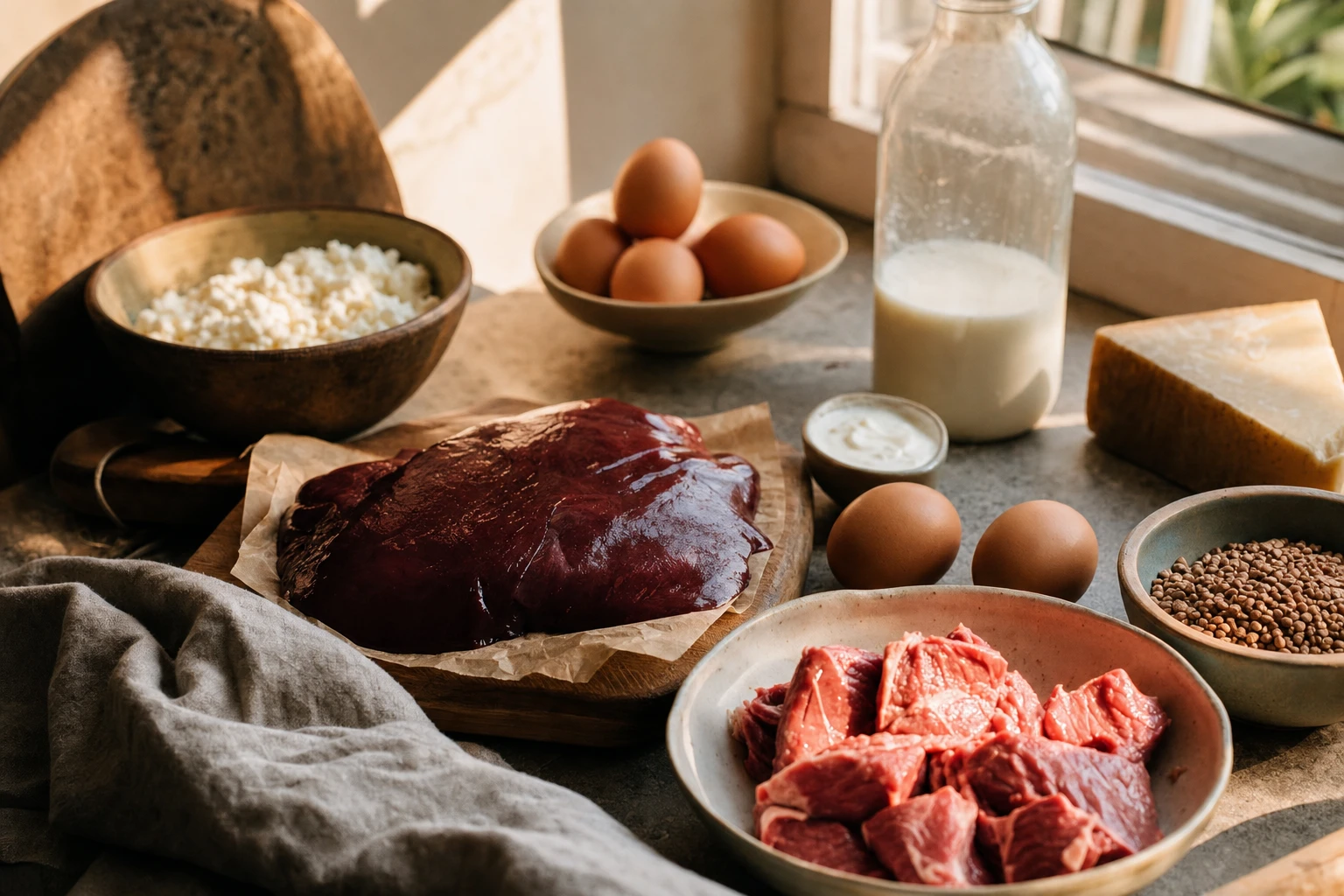
But we're splitting hairs. If your total protein intake is adequate and your training is consistent, the difference between whey and beef protein is small.
Whey: fast and convenient
Grass-fed whey has legitimate advantages if you use it correctly.
It absorbs in 30-60 minutes, peaking amino acids in your bloodstream quickly. For someone who just finished a hard workout and can't stomach solid food, this is genuinely useful. You get amino acids in your system fast enough that your muscles are primed to use them.
It's also convenient. You don't need to cook it. You don't need to buy and store meat. You powder up, mix with water or milk, drink, and you're done. For busy people, this is a real advantage. Convenience means you actually take it consistently.
Grass-fed whey is also lower in lactose than conventional whey (though not dairy-free). If you're sensitive to lactose but not to whey proteins themselves, it's a viable option.
The downsides: it's still a processed food. It lacks the micronutrients and cofactors that come with whole food. And it doesn't trigger satiety the way whole protein does. You can drink a whey shake and feel hungry within an hour.
Use whey strategically - post-workout, when convenience is critical, when whole food isn't available. Don't use it as a meal replacement unless you're supplementing with vegetables, fat, and other nutrients.
Get honest comparisons, free
Two short reads a week cutting through supplement marketing with what the evidence says.
By signing up you agree to receive emails from us. No spam, unsubscribe anytime.
Beef: slow and complete
Grass-fed beef protein (whole beef, beef jerky, or beef protein powder) has different advantages.
It absorbs slowly - peak amino acids in 3-4 hours instead of 1 hour. This sounds bad until you realise that slow absorption is actually closer to what your body needs for day-to-day protein synthesis and repair. Instead of spiking then crashing, amino acids trickle in steadily.
Beef also comes with micronutrients. B12, iron, zinc, selenium, carnitine, creatine. These aren't just nice-to-haves. They're part of the system that actually uses protein for muscle building and recovery.
And beef triggers satiety. A 200-gram serving of beef and you're full for 4-6 hours. A 30-gram whey shake and you're fine for 1-2 hours. For body composition goals, satiety is huge because it affects how much total food you eat.
Beef is slower, but it's complete. Whey is faster, but it's isolated. For building sustainable muscle, complete beats fast almost every time.
The downsides: beef requires more preparation. You have to cook it. It's higher in calories per gram of protein (which can be an advantage or a disadvantage depending on your goals). And not everyone tolerates red meat well, particularly if they have low stomach acid or poor gut health.
Dairy sensitivity and whey
This is the practical limiter for many people.
Lactose intolerance is one thing. Whey isolate is low in lactose, so most people handle it fine even if they can't tolerate milk. But whey protein sensitivity is different - it's an actual immune response to whey proteins themselves, not the lactose.
About 10% of people have some form of dairy sensitivity beyond just lactose.4 For them, whey is problematic no matter how clean the source or how well it's processed. The protein itself triggers inflammation, bloating, or skin reactions.
If that's you, beef is your answer. You skip the whole dairy category and get proteins your body recognises without question.
There's also the question of A1 versus A2 casein. Grass-fed whey comes from grass-fed cows, which produce higher levels of A2 casein (the less inflammatory variant). But it's still a cow's milk protein. If your body is rejecting dairy, grass-fed status doesn't fix the fundamental issue.


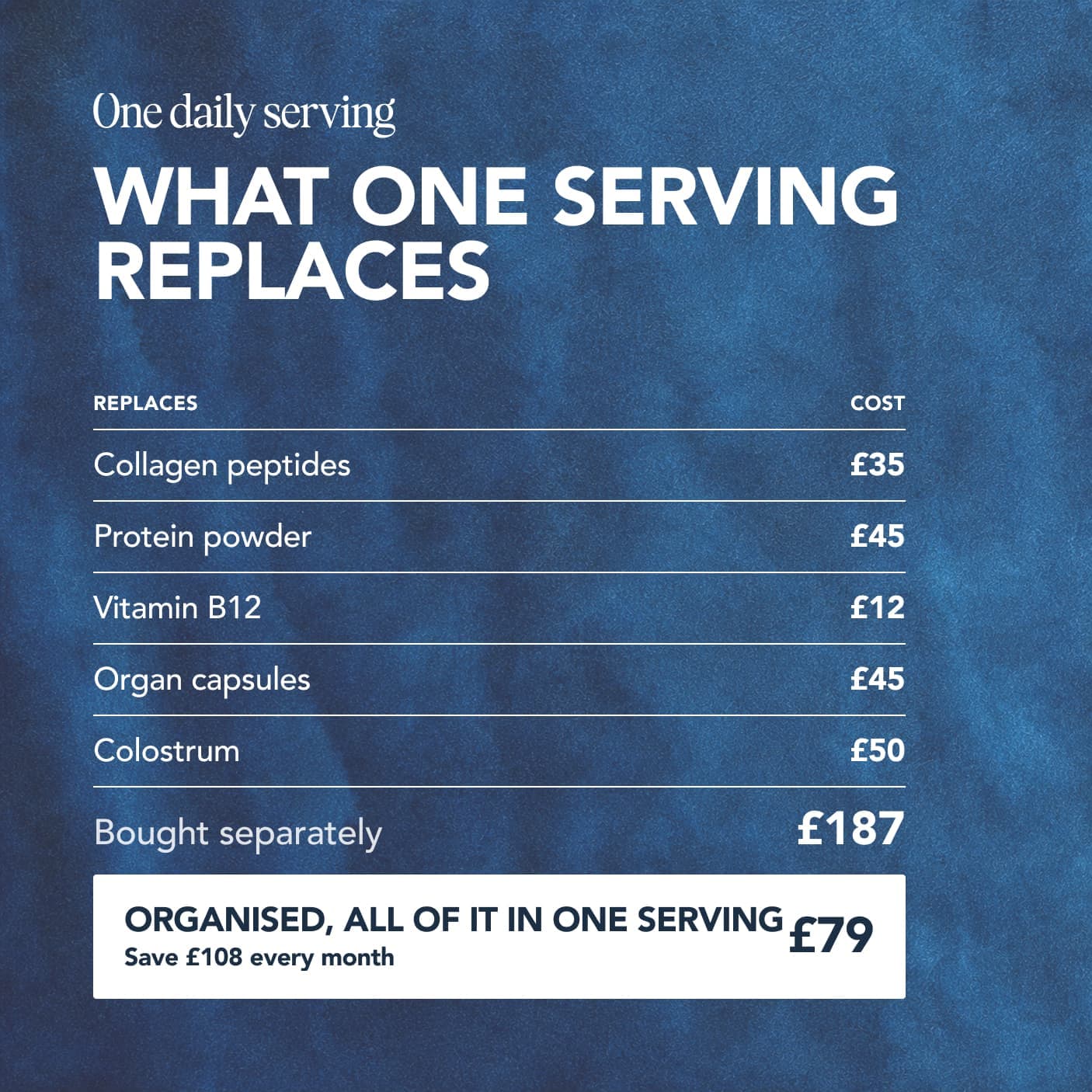
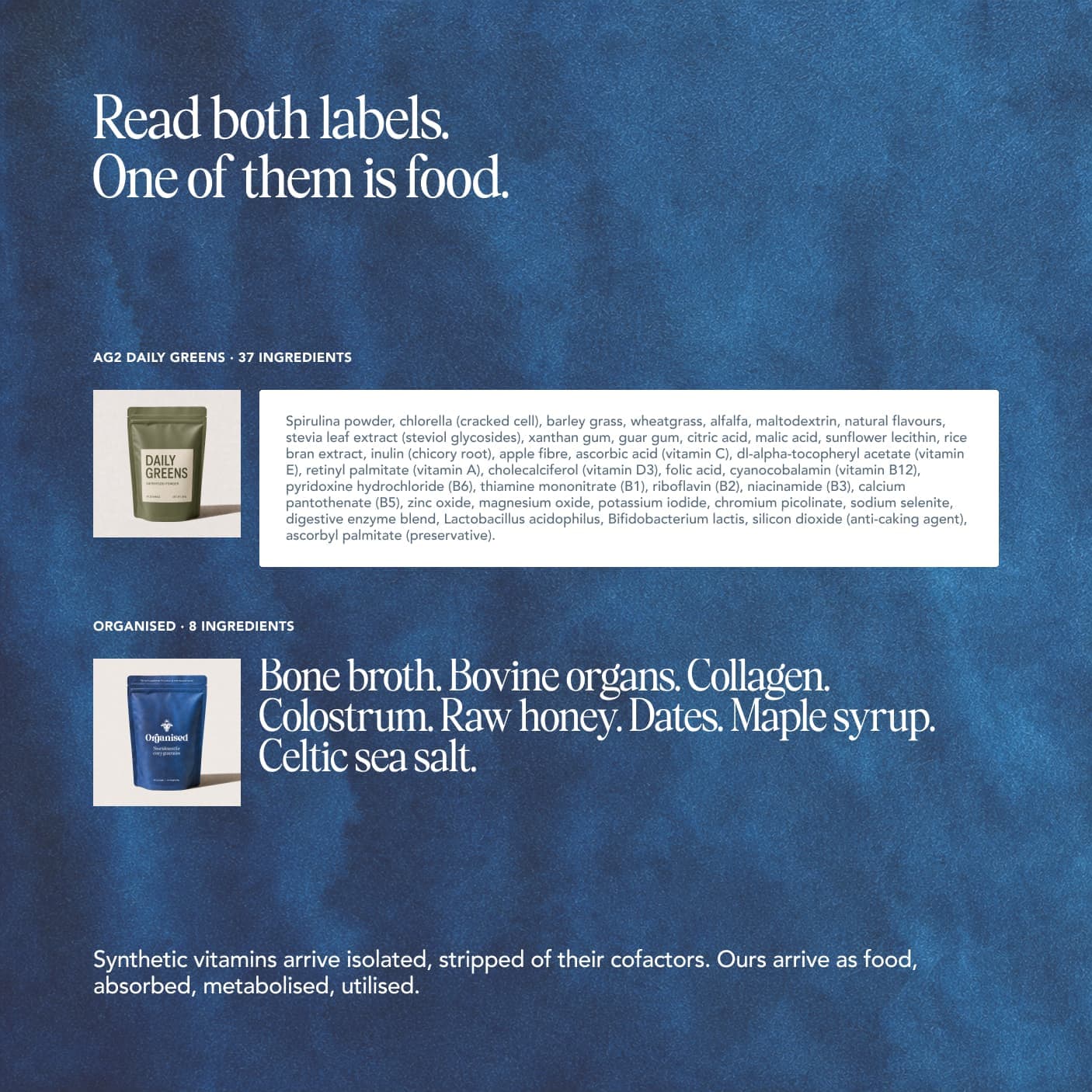
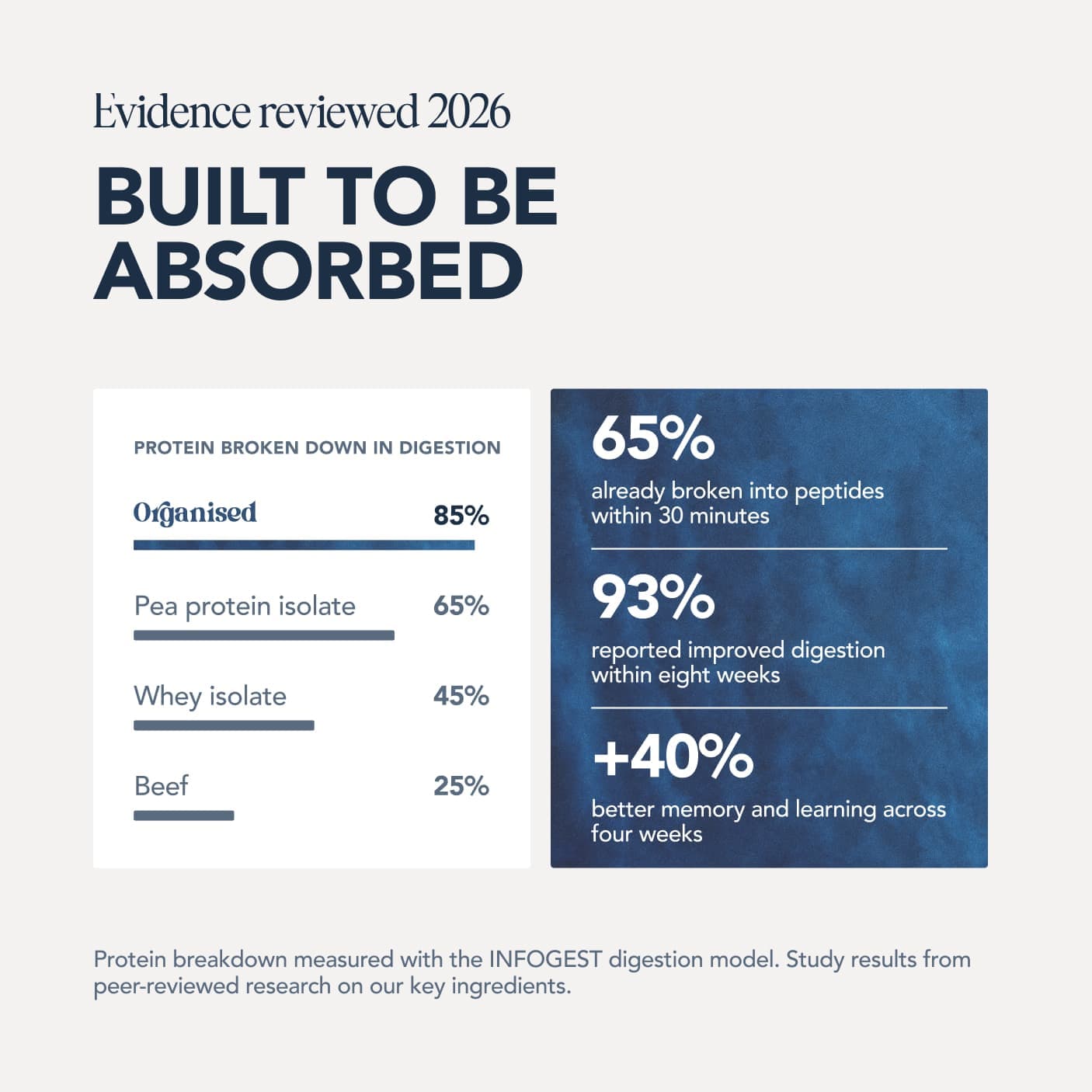

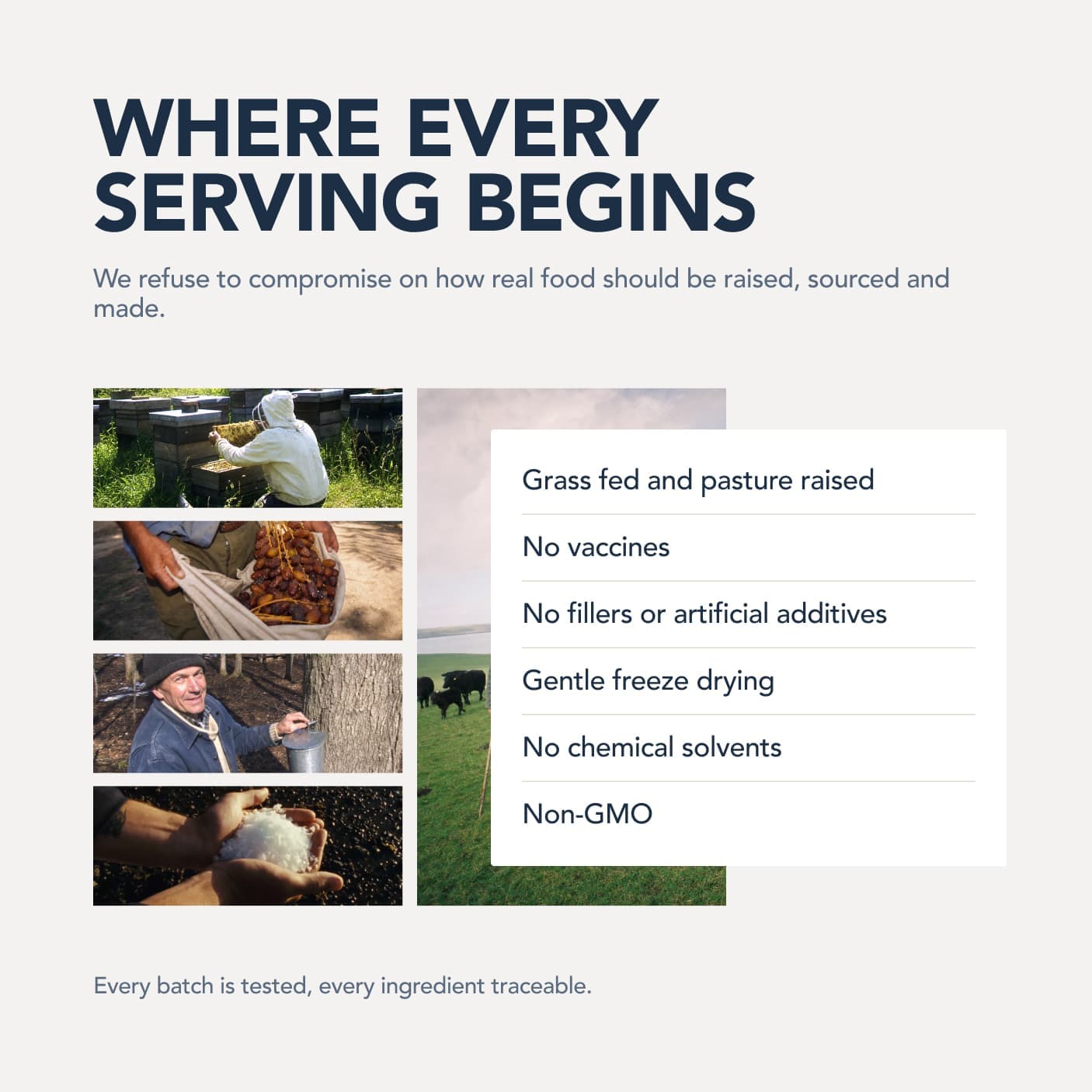
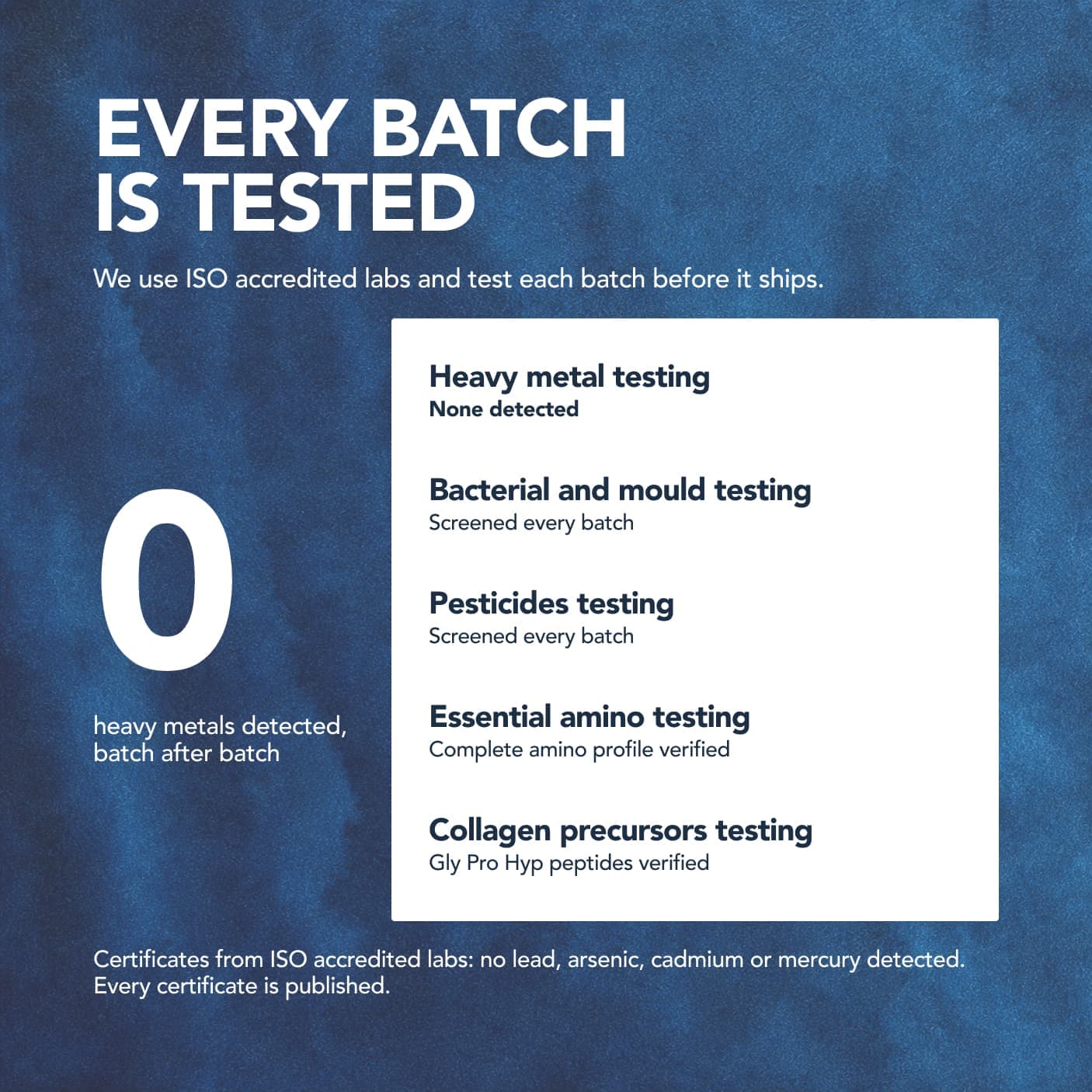
1 of 9
Daily blend
100,000+ thriving families4.9 on Trustpilot
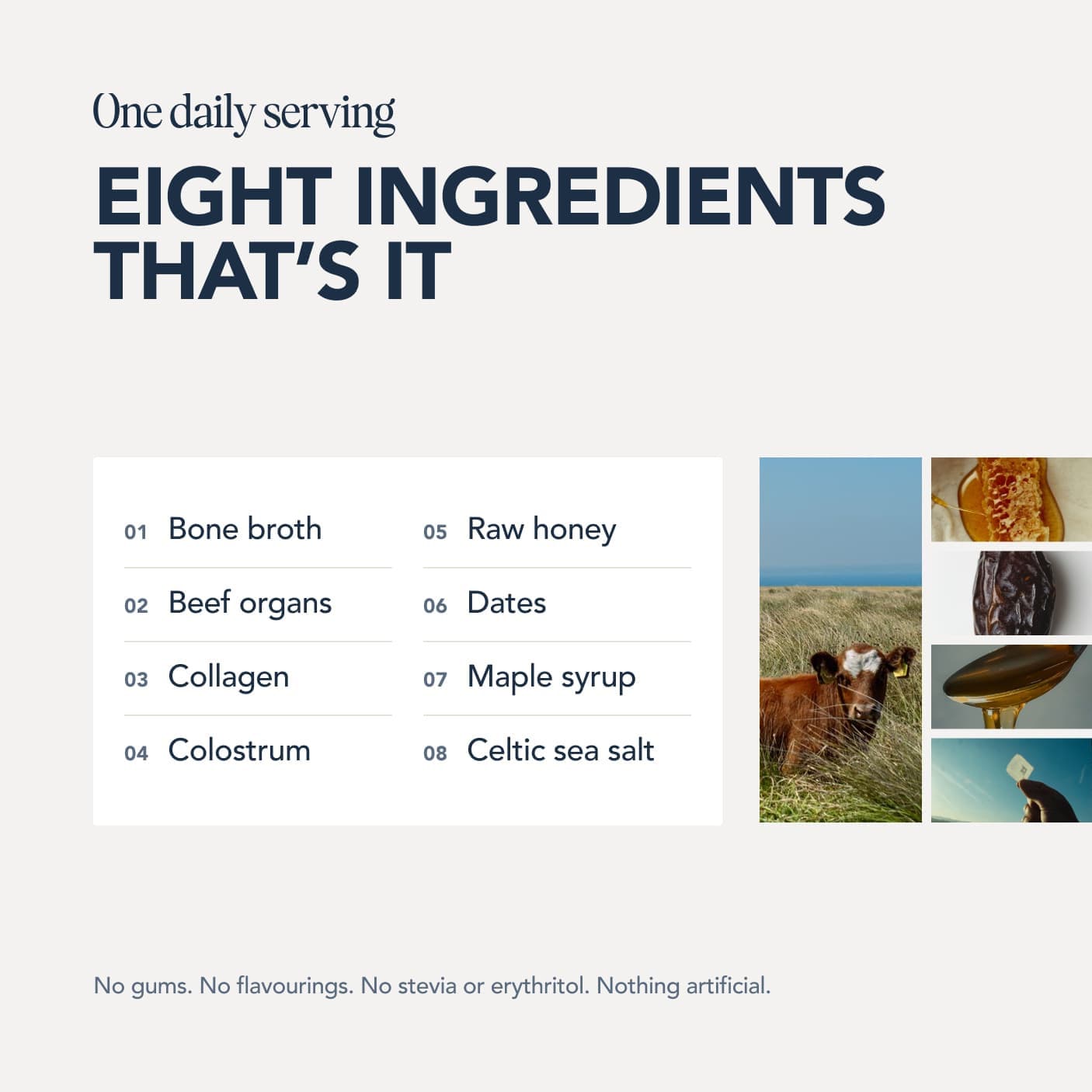
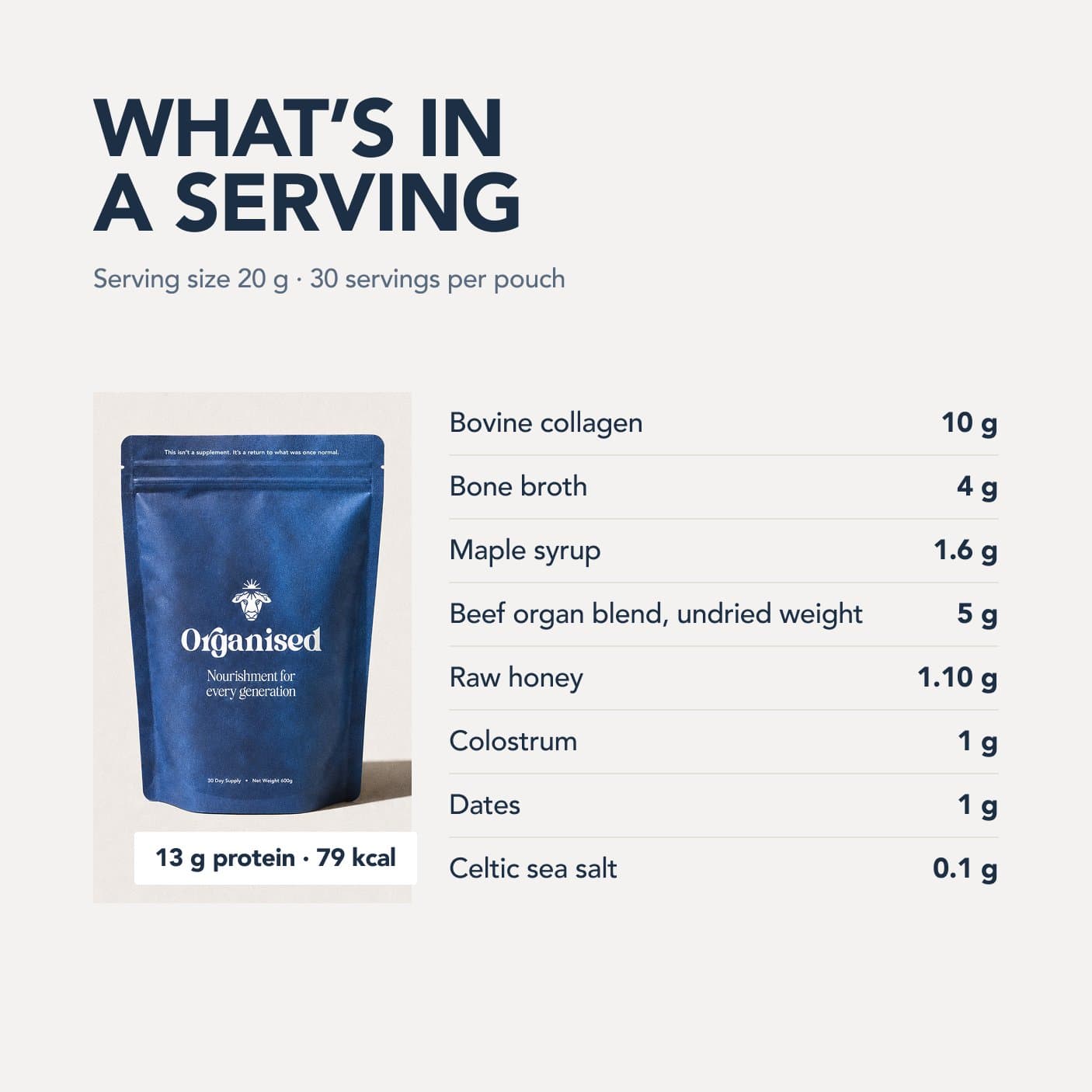
Eight real ingredients built around grass-fed beef organs, collagen and colostrum. Nothing synthetic added.
Free with your first order, worth £38. Plus £10 off the pouch with a subscription.



Free UK shipping · Made in England · 100 day money back guarantee on your first pouch · Skip, pause or cancel anytime
The practical protocol
Here's what actually works for most people trying to build muscle and stay healthy.
Make beef your base. This is your primary protein source because it's complete, it's whole food, and it comes with everything your body needs to actually use the protein. Aim for 100-150 grams of beef daily (or equivalent in fish, eggs, dairy).
Use whey strategically. Post-workout or in a pinch when whole food isn't available. Don't try to make it your main protein source. Use it to round out days when you fall short on whole food protein.
If you have dairy sensitivity, replace whey with beef collagen peptides or beef protein powder. Same convenience, none of the dairy inflammation.
Track for four weeks on this protocol, then assess results. Most people see better recovery, better satiety, and faster body composition changes than they did on a whey-based approach, even though the total protein is identical.
Whole food protein supports the entire system. Whey supplements it. Build the foundation on food, not on powder.
The bottom line
Both whey and beef score exceptionally well on DIAAS. Both build muscle. But beef is a complete nutritional package, while whey is an isolated convenience tool. For most people, beef should be the foundation and whey the supplement. The moment you flip that logic, results suffer.
References
Every source below was checked on 27 August 2026. Each PubMed, PMC and DOI identifier was resolved against NCBI or Crossref, and what it opens is printed under the citation, so you can see the link goes where the citation says without leaving the page. Where a citation and its identifier disagreed, the citation was corrected to the record or the reference was deleted along with the sentence marker that pointed at it, and where the resolved paper turned out not to support the sentence, the sentence was cut back to what it does support. Borrowed authority is worse than none, because it looks like rigour.
- Phillips SM. The impact of protein quality on the promotion of resistance exercise-induced changes in muscle mass. Nutrition & Metabolism, 2016. PMID 27708684.Checked 27 August 2026: PMID 27708684 opens Phillips SM, The impact of protein quality on the promotion of resistance exercise-induced changes in muscle mass. Nutr Metab (Lond) 2016;13:64. PubMed indexes it as: Review.
- FAO. Dietary protein quality evaluation in human nutrition: report of an FAO Expert Consultation. FAO Food and Nutrition Paper 92, 2013. FAO publication.
- Drummond MJ, Rasmussen BB. Leucine-Enriched Nutrients and the Regulation of mTOR Signalling and Human Skeletal Muscle Protein Synthesis. Current Opinion in Clinical Nutrition, 2008. PMID 18403916.Checked 27 August 2026: PMID 18403916 opens Drummond MJ, Rasmussen BB, Leucine-enriched nutrients and the regulation of mammalian target of rapamycin signalling and human skeletal muscle protein synthesis. Curr Opin Clin Nutr Metab Care 2008;11(3):222-6. PubMed indexes it as: Review.
- NHS. Lactose intolerance.
Who wrote and reviewed this guide
Niall Kiddle
Author · Founder, Organised
Niall is the founder of Organised. He started the company in 2024 after fixing his own health the slow way: in 2022 he swapped a cupboard of synthetic supplements for real food, raw milk, organ meats, bone broth and honey, and felt the difference within months.
Areas of expertise: Ancestral nutrition, Organ meats, Whole-food supplementation, Gut health, Regenerative sourcing
Read Niall's full profile
Pedro Rodrigues
Reviewer · Agronomist (farming and sourcing only)
Pedro is the agronomist Organised works with on farming and sourcing. His job on the guides is to keep the science honest: he reviews what we publish about soil health, regenerative agriculture, grazing and the way food is actually produced.
Areas of expertise: Regenerative agriculture, Agronomy, Soil health, Grass-fed farming, Food sourcing
Reviewed this guide on
Read Pedro's full profileBrowse the guides library
All guidesKeep reading

Science
Is Collagen Just Expensive Protein? What the Science Says
Collagen is not just protein. Its unique amino acid profile, rich in glycine and lacking tryptophan, makes it metabolically distinct.

Science
The Connection Between Nutrition and Autoimmune Disease
Autoimmune disease is not just genetic. Nutrition affects gut barrier integrity, molecular mimicry, and immune tolerance. Learn the mechanisms.

Comparisons
Bone Broth vs Collagen Supplements: Do You Need Both?
Both give you collagen and glycine. But the nutrient profile is completely different. Here's what each actually provides.
Real food, made effortless
Try the blendA few ways to use it
All recipes
The Perfect Organised Morning Shake: Our Favourite Recipe
Our signature morning shake: Organised, raw milk, banana, honey. Simple, nourishing, and optimised for an empty stomach.

Gut-Healing Marshmallows with Collagen and Raw Honey
Learn to make gut-healing marshmallows with collagen and raw honey. A shareable treat that sneaks nutrition into every bite. Easy recipe with video tips.

Whole Food Snacks for Busy Days
Practical whole food snacks that travel well and sustain energy. No refined carbs, no seed oils. Real food options for when you're busy.


 Join over 100,000+ members
Build a better food system with us
The Organised community is thousands of people choosing real food and backing the farmers who grow it, all of us trying to leave the world a little better than we found it. If that is what you care about too, you belong here.