Bone Broth: The Original Superfood
Bone broth isn't a modern trend. For thousands of years, across every continent, the first thing people did with an animal after eating the meat was to simmer the bones. Not because they understood amino acids or collagen peptides. Because they knew something your body needs it.
By Niall Kiddle, Founder, Organised

Reviewed by Pedro Rodrigues, Agronomist (farming and sourcing only) ·
7 min read · Published · Updated · 3 cited sources
Makers of the Organised Daily blend, a grass-fed beef organ supplement from regenerative UK farms
That intuition was correct. And the science now confirms why.
What bone broth actually is
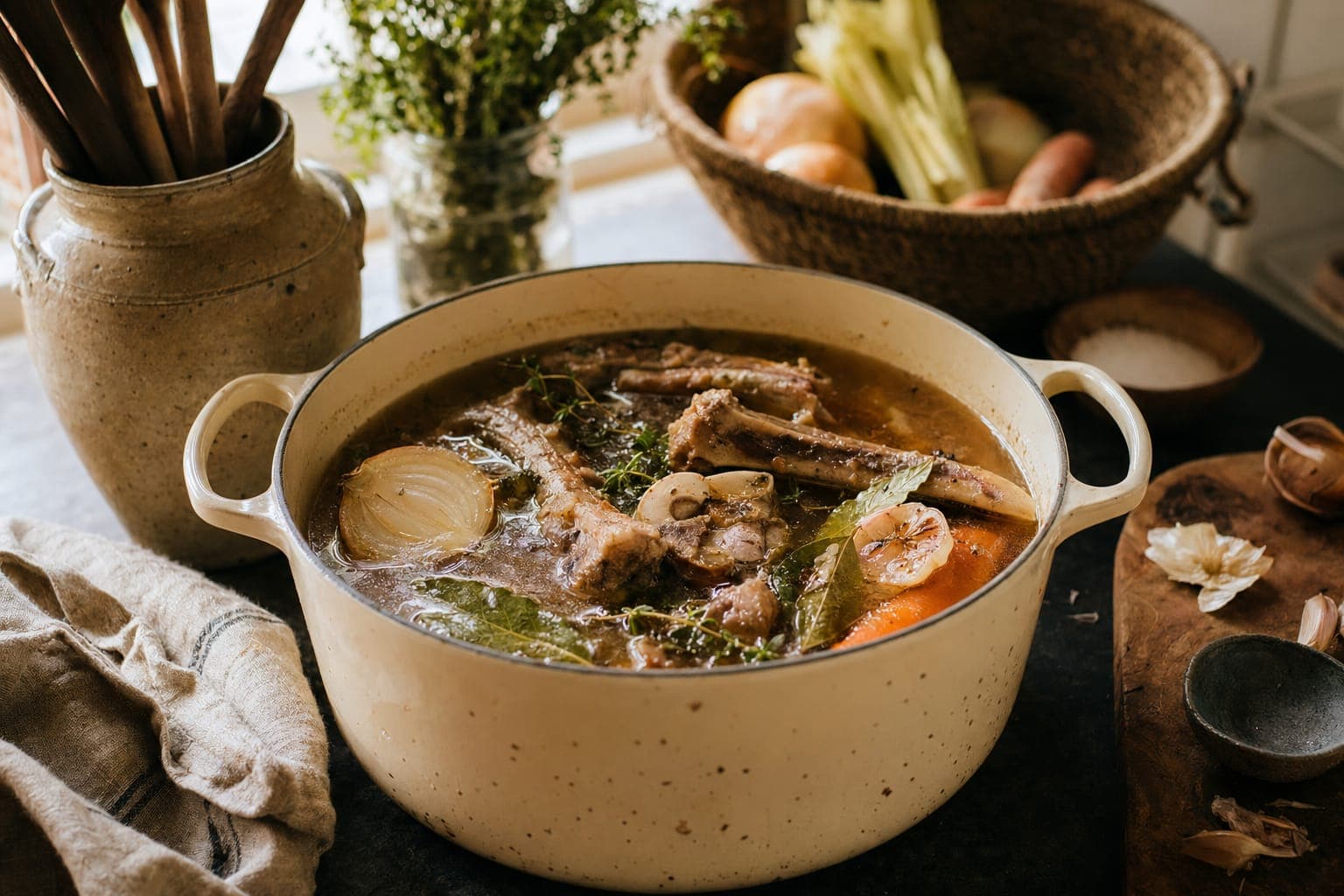
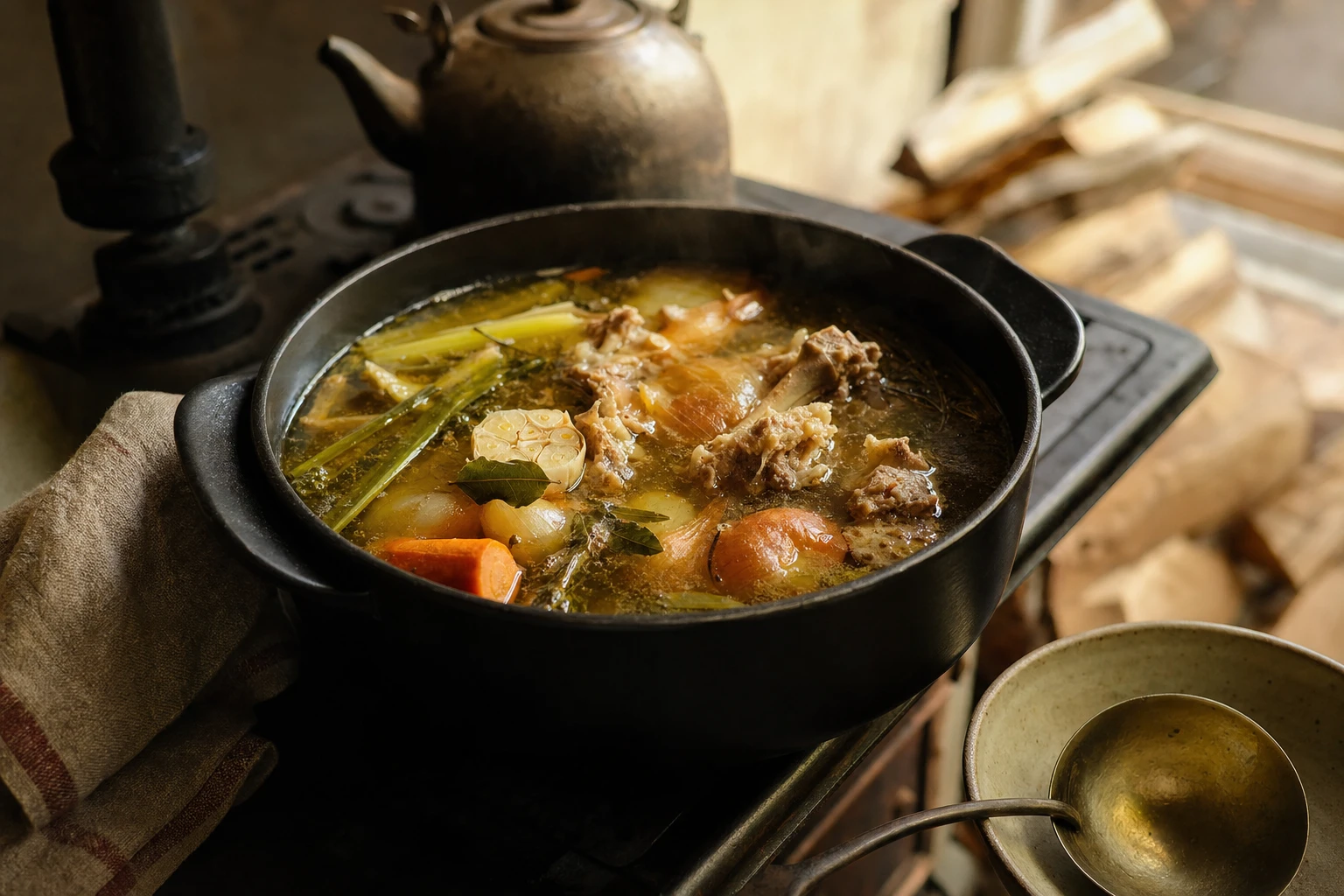
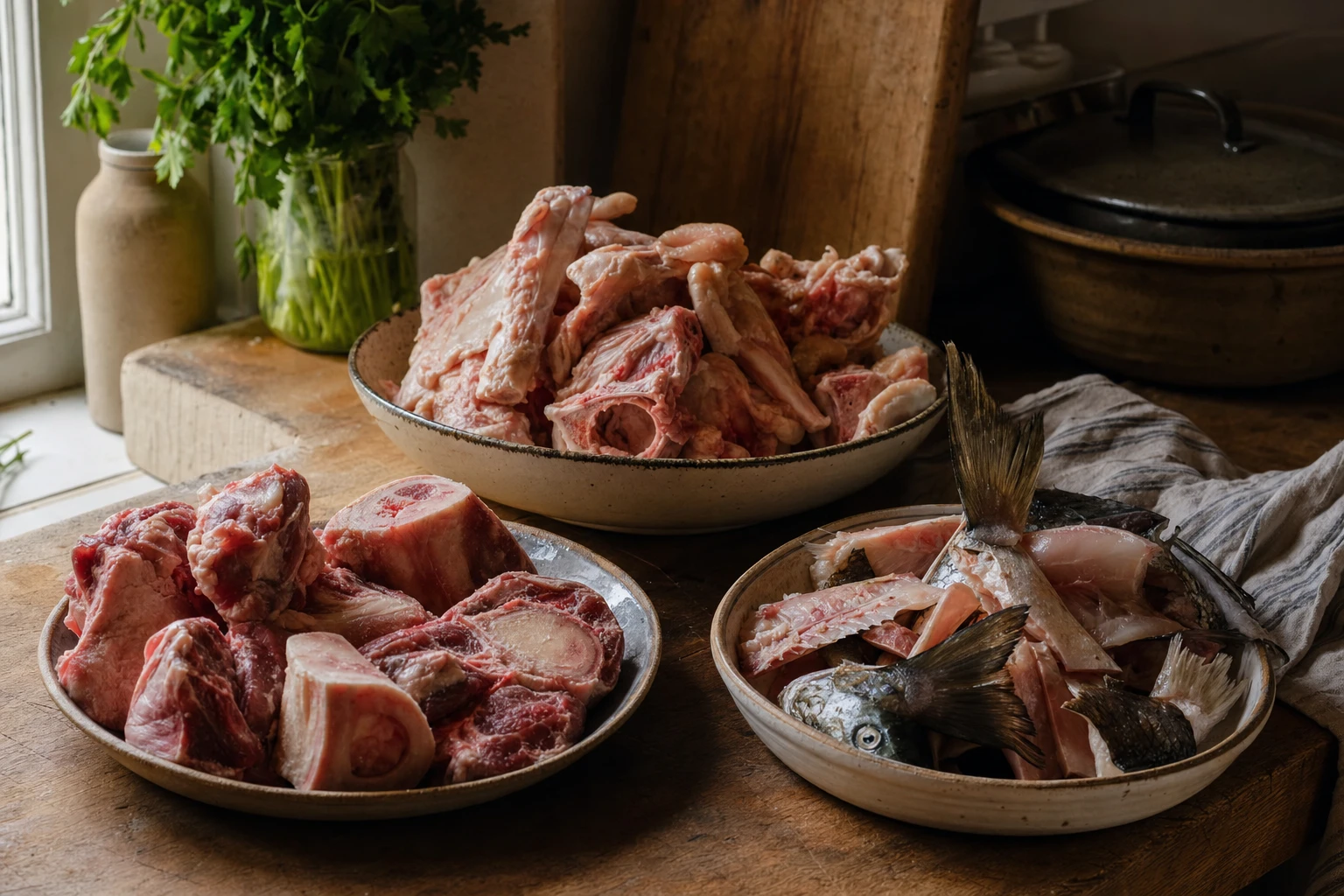
Bone broth is the result of simmering animal bones, connective tissue, and sometimes vegetables in water for an extended period. Usually 12 to 48 hours. The low, gentle heat breaks down collagen in the bones into gelatin and individual amino acids. Minerals leach from the bone matrix into the liquid. Compounds from the bone marrow and connective tissue dissolve into solution.
What you end up with isn't just flavoured water. It's a concentrate of bioavailable nutrients that your body can use immediately.
Real bone broth sets in the fridge. It gels. That gel is collagen that's been broken down into gelatin, and it carries with it glycine, proline, glutamine, and dozens of other compounds that your body recognises and uses for tissue repair, immune function, and inflammation management.
Bone broth is liquid nutrient density. It's what happens when you take the most mineral-rich, connective tissue-rich parts of an animal and extract everything valuable into a form your body can absorb and use.
Why every culture understood this
Chinese medicine has used bone broth as medicine for over 2,000 years. Jewish cultures have used bone marrow broth for centuries. In French culinary tradition, stock made from bones is the foundation of every sauce. In Korea, broth is as essential to a meal as rice. In traditional German and English cooking, meat was roasted and the bones were simmered for broth. This wasn't accident or culture preference. It was nutritional necessity.
Across traditional diets where modern diseases were rare, bone broth appeared consistently. Not as an afterthought. As a staple. That pattern matters.
Every culture that valued health understood that you don't waste the bones. You extract their nutrition into a form the body can use. And then you consume that broth regularly.
That's the opposite of modern food culture, which simmers bones briefly, strains them out, and throws them away. Modern food culture sees bones as waste. Ancestral food culture saw them as medicine.
The nutrient profile that changed how we heal
When you simmer bones properly, you extract compounds that your body uses for specific purposes. Let's name them clearly.
Collagen and gelatin. Collagen is the most abundant protein in your body. It's found in your skin, joints, connective tissue, and the lining of your digestive system. When you break collagen down into gelatin through heat, you create a form your body can absorb and use to rebuild collagen in those same tissues. A cup of bone broth delivers more bioavailable collagen than a bottle of collagen supplement ever will.
Glycine. One of the amino acids that makes up collagen. Glycine is essential for the synthesis of glutathione, an important intracellular antioxidant.1 It's needed for immune function, sleep quality, and joint repair. Most people are deficient in glycine because modern diets exclude the foods that carry it: gelatinous meats, bone broth, skin.
Proline. Another collagen amino acid. Proline supports skin elasticity, joint function, and vascular health. It works alongside vitamin C, a required cofactor for prolyl and lysyl hydroxylase enzymes in collagen synthesis.2 If you're supplementing vitamin C but not consuming proline-rich foods, you're missing half the equation.
Glutamine. Glutamine is a major fuel source for enterocytes lining the small intestine.3 A damaged gut lining, whether from infection, chronic stress, or inflammatory food, needs glutamine to repair. Bone broth is one of the few whole food sources of meaningful glutamine quantities.
Minerals. Calcium, magnesium, phosphorus, and dozens of trace minerals leach into the broth water. But here's what matters: they're not just present. They're in a ratio and form that your body recognises. That bioavailability is why traditional peoples relied on bone broth for mineral intake, not mineral supplements.
A single cup of bone broth delivers compounds that your body is actively trying to source from food. You don't need to understand the biochemistry. You just need to consume it regularly.
What breaks down in the broth
The longer you simmer bones, the more compounds dissolve into the liquid. At 12 hours, you've extracted substantial gelatin and minerals. At 24 hours, you've released more amino acids and compounds from the marrow. At 48 hours, the broth becomes increasingly nutrient-dense.
Different bones carry different nutritional profiles. Beef knuckle bones and marrow bones are rich in collagen and marrow fat. Chicken bones carry more of certain minerals. Fish bones provide iodine and selenium that land animals don't. A rotating variety of bone broths gives you the broadest spectrum of nutrition.
The vegetables and herbs you add aren't just for flavour. Onion, carrot, celery, and bay leaf add their own minerals and compounds to the broth. A mirepoix of these vegetables, simmered with bones, creates a broth that's greater than the sum of its parts.
Get ancestral nutrition guides, free
Two short reads a week on traditional ways of eating, examined with modern evidence.
By signing up you agree to receive emails from us. No spam, unsubscribe anytime.
How to make it properly
Place bones (or a mix of bones) in a large pot. Cover with cold water. Add a splash of vinegar to help extract minerals. Bring to a boil, then immediately reduce to the lowest simmer.
Skim the grey foam that rises in the first few minutes. This is just denatured protein and won't hurt you, but removing it gives a cleaner broth. After 30 minutes, add roughly chopped vegetables: onion, carrot, celery, and a bay leaf or two.
Let it simmer gently for 12 to 48 hours, depending on your schedule. The longer the better. Taste it periodically. When it tastes rich and full, it's ready. Strain out the solids through a fine sieve or cloth, and you're left with liquid nutrition.
Store in glass jars. Real bone broth will gel in the fridge due to the collagen content. That gel is a visible sign that you've extracted something valuable. The fat that rises to the top is nutrient-dense lard you can cook with.
The most common mistake is not simmering long enough, not using enough bones, or adding too much water. A good broth should taste meaty and rich, not watered down. If you're in doubt, you haven't simmered long enough.
The cost and the quality
One of the most striking things about bone broth is the cost-benefit ratio. A kilogram of bones costs almost nothing. Often, if you ask a butcher, they'll give them to you free. Those bones, simmered for 24 hours, yield weeks of nutrition. A single batch can produce 3 to 4 litres of broth.
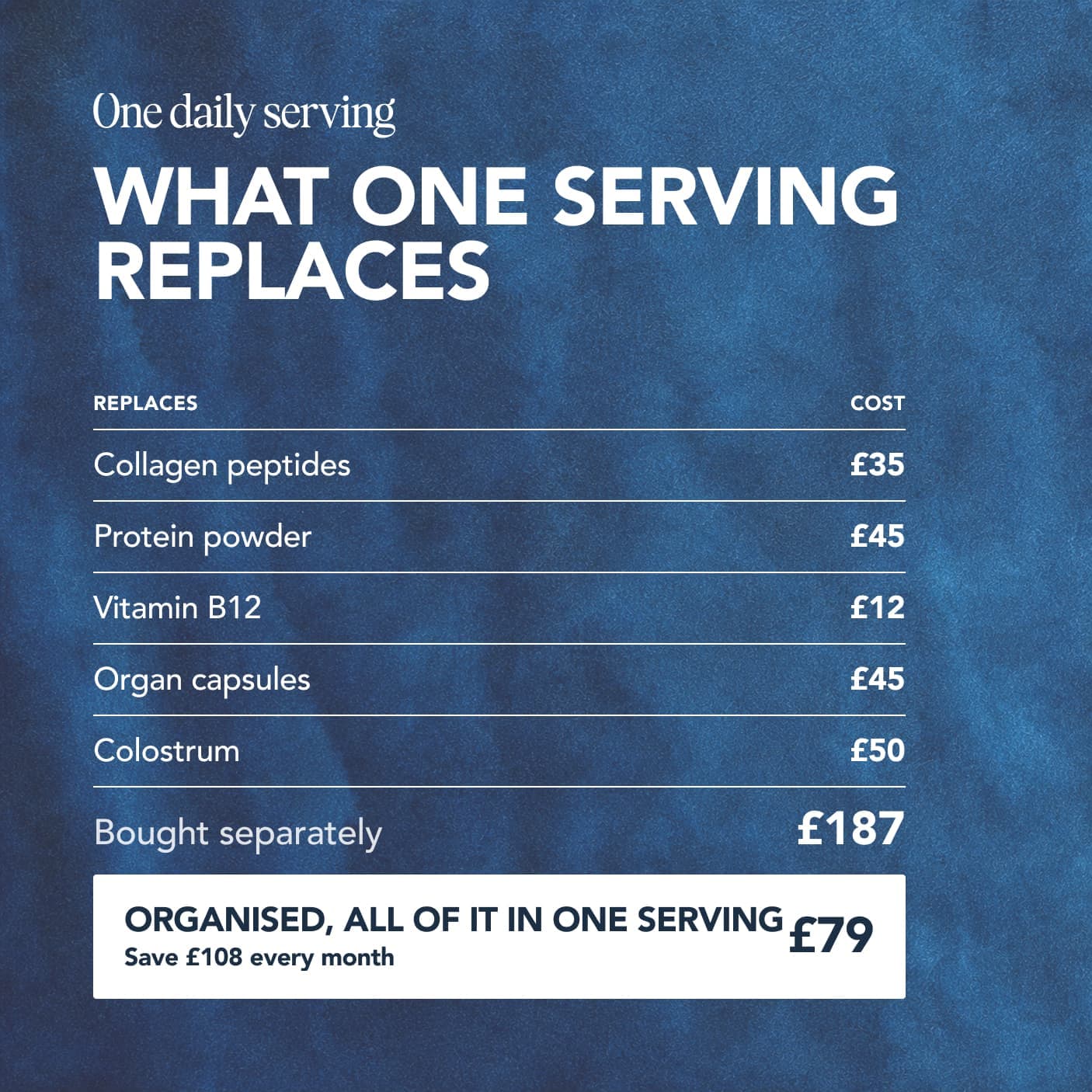
Compare that to collagen supplements, which run £20-40 per month and deliver a fraction of the nutritional complexity of real broth. Or to joint supplements that attempt to replicate what bone broth does naturally. Or to the dozens of foods and powders people buy trying to support skin, gut, and connective tissue health when one thing would do it all.
This is why bone broth was the foundation of traditional nutrition. Not because it was trendy or expensive, but because it was cheap, accessible, and more effective than anything modern science can synthesise.


1 of 9
Daily blend
100,000+ thriving families4.9 on Trustpilot
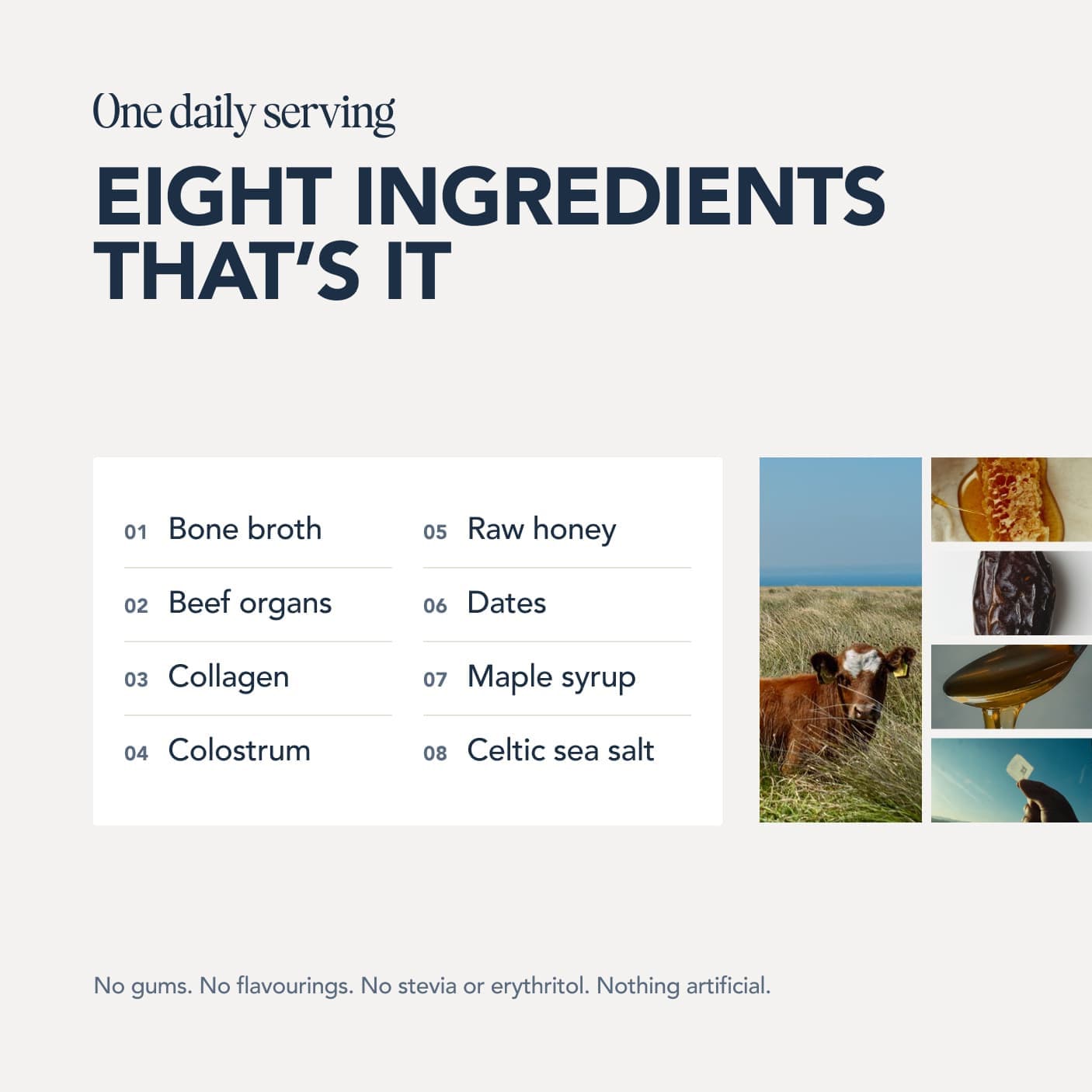
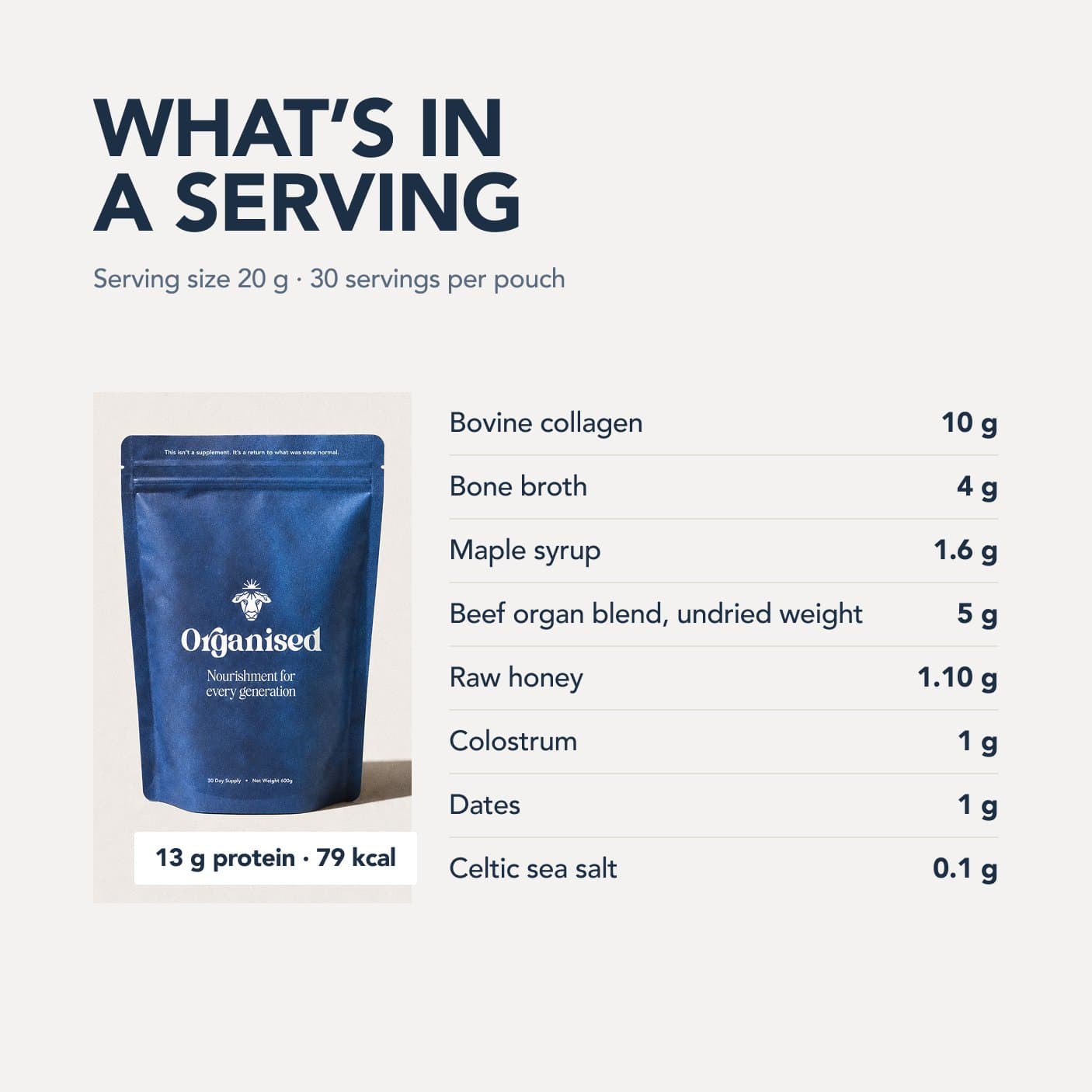
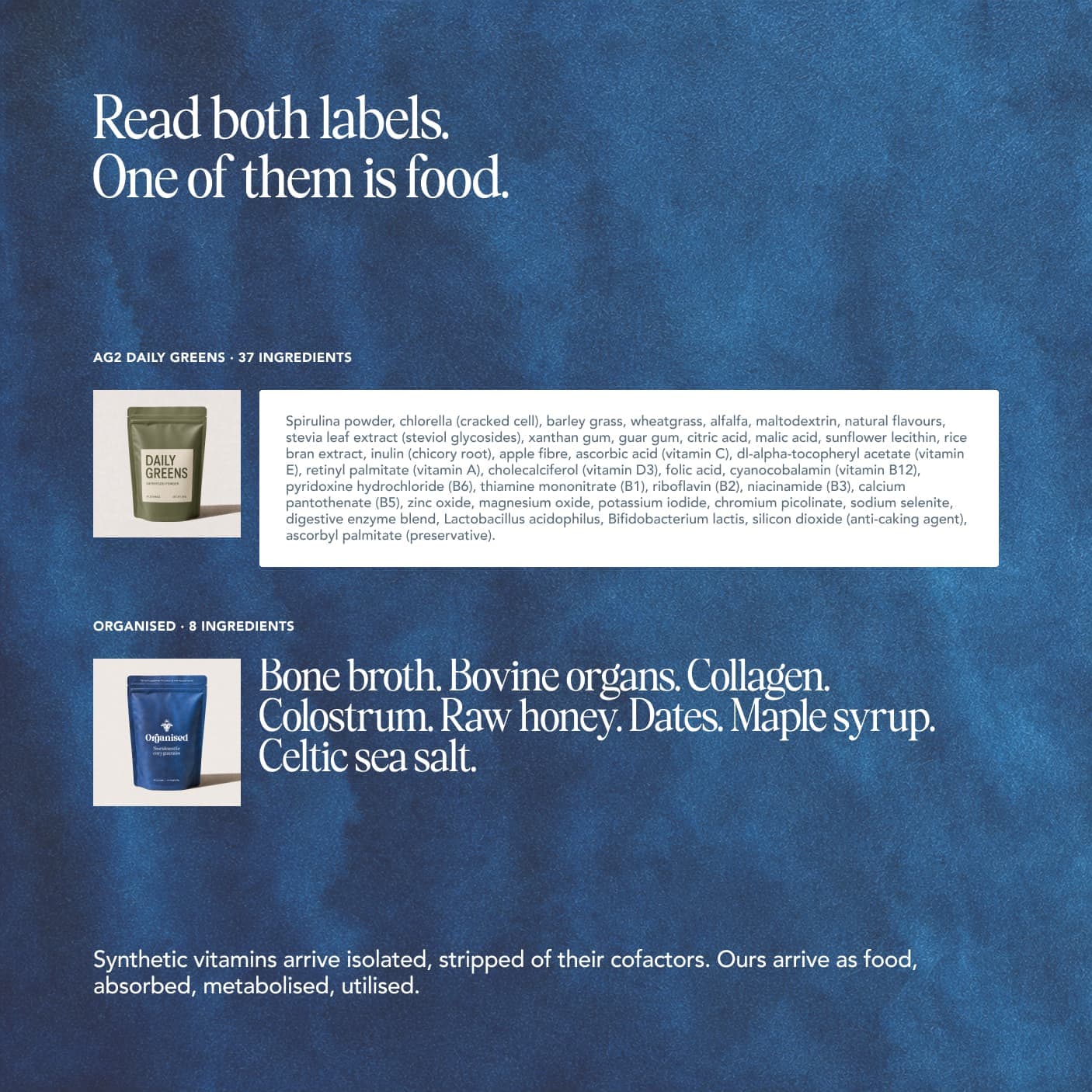
Eight real ingredients built around grass-fed beef organs, collagen and colostrum. Nothing synthetic added.
Free with your first order, worth £38. Plus £10 off the pouch with a subscription.

Free UK shipping · Made in England · 100 day money back guarantee on your first pouch · Skip, pause or cancel anytime
The ritual of making it
There's something valuable about making bone broth yourself. You see the bones. You smell them simmering. You watch the liquid turn golden. You feel the gel set in the fridge. That sensory engagement connects you to the food in a way that buying pre-made broth never will.
You remember that this came from an animal. That the bones you're using supported a living creature. That you're extracting nutrition that was always meant to be used. That's not sentimental. That's the opposite of how modern food culture works, where everything is pre-packaged and disconnected from its source.
Making broth is simple enough for a child but requires patience. You can't rush it. You can't buy it in a pill. You have to commit to the time and the process. In a world obsessed with quick fixes, that commitment is itself medicine.
The bottom line
Bone broth is called a superfood because the label is earned. It delivers collagen, amino acids, minerals, and compounds in forms your body recognises and uses. Every traditional culture that lived well understood this. Modern food culture forgot it and replaced it with supplements that deliver a fraction of what real broth does.
If you're struggling with joint pain, skin quality, gut healing, or just want to optimise your nutrient intake, a cup of bone broth daily is one of the single most powerful nutritional interventions available to you. It costs almost nothing, tastes like comfort, and delivers nutrition that science is still catching up with.
Start making it this week. Your joints will thank you.
References
Every source below was checked on 27 August 2026. Each PubMed, PMC and DOI identifier was resolved against NCBI or Crossref, and what it opens is printed under the citation, so you can see the link goes where the citation says without leaving the page. Where a citation and its identifier disagreed, the citation was corrected to the record or the reference was deleted along with the sentence marker that pointed at it, and where the resolved paper turned out not to support the sentence, the sentence was cut back to what it does support. Borrowed authority is worse than none, because it looks like rigour.
- Wu G, et al. Glutathione metabolism and its implications for health. J Nutr. 2004;134(3):489-92. PMID 14988435Checked 27 August 2026: PMID 14988435 opens Wu G, Fang YZ, Yang S et al, Glutathione metabolism and its implications for health. J Nutr 2004;134(3):489-92. PubMed indexes it as: Review.
- National Institutes of Health, Office of Dietary Supplements. Vitamin C - Health Professional Fact Sheet. ods.od.nih.gov
- Kim MH, Kim H. The Roles of Glutamine in the Intestine and Its Implication in Intestinal Diseases. Int J Mol Sci. 2017;18(5):1051. PMC5454963Checked 27 August 2026: PMC5454963 opens Kim MH, Kim H, The Roles of Glutamine in the Intestine and Its Implication in Intestinal Diseases. Int J Mol Sci 2017;18(5). PubMed indexes it as: Review.The authors' own declaration, from the record: The authors declare no conflict of interest.
Who wrote and reviewed this guide
Niall Kiddle
Author · Founder, Organised
Niall is the founder of Organised. He started the company in 2024 after fixing his own health the slow way: in 2022 he swapped a cupboard of synthetic supplements for real food, raw milk, organ meats, bone broth and honey, and felt the difference within months.
Areas of expertise: Ancestral nutrition, Organ meats, Whole-food supplementation, Gut health, Regenerative sourcing
Read Niall's full profile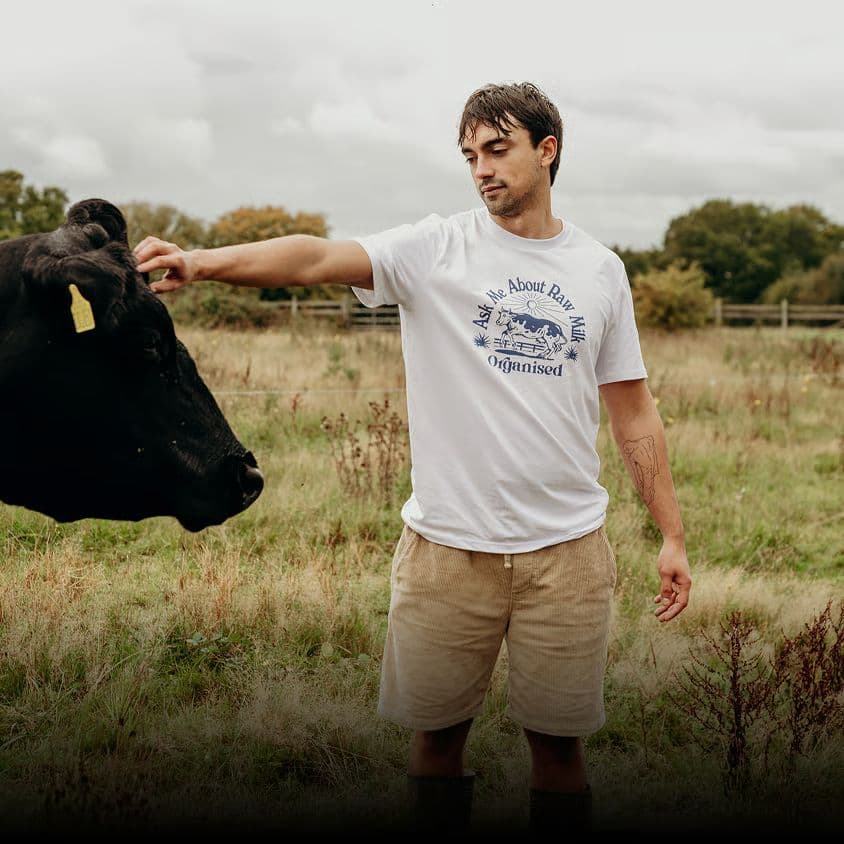
Pedro Rodrigues
Reviewer · Agronomist (farming and sourcing only)
Pedro is the agronomist Organised works with on farming and sourcing. His job on the guides is to keep the science honest: he reviews what we publish about soil health, regenerative agriculture, grazing and the way food is actually produced.
Areas of expertise: Regenerative agriculture, Agronomy, Soil health, Grass-fed farming, Food sourcing
Reviewed this guide on
Read Pedro's full profileMore on ancestral wisdom
View all- Fermented Foods: A Tradition Worth Reviving
- Ghee, Tallow and Lard: The Traditional Cooking Fats Making a Comeback
- How Fat Became the Enemy (And Why That Was Wrong)
- How Traditional Cultures Prepared for Winter
- Raw Milk: What It Is, Why It Matters, and Where to Find It
- What Your Irish Grandmother Knew About Nutrition
Browse the guides library
All guidesKeep reading
Ancestral
The Problem with Synthetic Multivitamins
Synthetic multivitamins often lack cofactors, absorb poorly, and carry fillers. See why whole food nutrients suit your body better, and what to look for.
Ancestral
Cod Liver Oil: What Your Great-Grandmother Got Right
Cod liver oil prevented rickets. It provided vitamin A and D when food was scarce. Modern versions miss the point. Here's what actually matters.
Ancestral
8 Ingredients. Nothing Else. The Organised Approach.
See why Organised is built from just 8 whole food ingredients, with no fillers, no synthetics and no compromise. A simpler approach to nutrition.
Real food, made effortless
Bring it into my routineA few ways to use it
All recipes
Energy Balls with Organised, Dates and Raw Honey
Make no-bake energy balls with Organised, dates, and raw honey. Perfect lunch box, pre-workout, or on-the-go snack. Simple recipe.
Whole Food Snacks for Busy Days
Practical whole food snacks that travel well and sustain energy. No refined carbs, no seed oils. Real food options for when you're busy.
Gut-Healing Marshmallows with Collagen and Raw Honey
Learn to make gut-healing marshmallows with collagen and raw honey. A shareable treat that sneaks nutrition into every bite. Easy recipe with video tips.


 Join over 100,000+ members
Build a better food system with us
The Organised community is thousands of people choosing real food and backing the farmers who grow it, all of us trying to leave the world a little better than we found it. If that is what you care about too, you belong here.