The Problem with Synthetic Multivitamins
You open your kitchen cupboard and see a bottle of multivitamins. You take one every morning, believing you're covering your nutritional bases. But your body is barely absorbing them.

By Niall Kiddle, Founder, Organised

Reviewed by Pedro Rodrigues, Agronomist (farming and sourcing only) ·
7 min read · Published · Updated · 5 cited sources
Makers of the Organised Daily blend, a grass-fed beef organ supplement from regenerative UK farms

This isn't because you chose the wrong brand. It's because the whole category is flawed.

Why synthetic vitamins look different under a microscope
A vitamin in food isn't a vitamin in isolation. It's part of a constellation of compounds. When you eat a carrot, you don't get just beta-carotene. You get beta-carotene alongside alpha-carotene, luteolin, falcarinol, fibre, enzymes, and dozens of other compounds that work together to nourish you.
A synthetic multivitamin tablet contains isolated molecules: ascorbic acid for vitamin C, tocopherol for vitamin E, cyanocobalamin for B12. These are chemically identical to vitamins found in nature. But they're stripped of the cofactors, enzymes, and companion compounds that make them work.
Your body knows the difference. It evolved to extract nutrients from food, not tablets. The moment you isolate a vitamin from its natural context, you've changed the problem. Now your body has to work harder to make use of it.
A vitamin in isolation isn't the same as a vitamin in food, even if the chemical formula is identical.
The isolation problem
Vitamin C in an orange comes with bioflavonoids, which enhance absorption and reduce oxidative stress. Vitamin C in a tablet comes alone. Your body extracts the vitamin. The bioflavonoids never arrive.
Vitamin A in liver comes with B vitamins, iron, copper, and other nutrients that work synergistically to support vision and immune function. Vitamin A in a tablet is just retinol, isolated from its context.
Magnesium in leafy greens comes with calcium, phosphorus, and dozens of minerals in balanced ratios. Your body knows how to use this. Magnesium in a tablet comes with whatever binder the manufacturer used and microcrystalline cellulose to keep it stable on the shelf.
Isolation creates two problems. First, your body doesn't absorb isolated vitamins as efficiently as it absorbs vitamins in food. Second, isolated vitamins can create imbalances. Taking high-dose isolated vitamin E can interfere with vitamin K absorption. Taking isolated calcium without magnesium can pull magnesium out of bone. A multivitamin that contains too much iron can block zinc absorption.
Food doesn't create these imbalances because nutrients come in balanced ratios developed over millions of years of evolution. A synthetic pill can't replicate that balance.
Cofactors and bioavailability
Bioavailability is the fraction of an ingested dose that actually gets absorbed and used by your body. It's where the rubber meets the road.
Beta-carotene from a carrot has high bioavailability, especially when eaten with fat (which carrots often are, in salads with olive oil). Beta-carotene from a synthetic supplement has lower bioavailability because it lacks the structural context that helps your digestive system recognise and extract it.
Your body converts beta-carotene to vitamin A using enzymes and cofactors. This process works better when you're also consuming the other compounds that normally travel alongside beta-carotene in nature.
Iron from red meat comes with copper and B12, which your body needs to actually use the iron. Iron from a multivitamin comes alone. Your absorption rate drops. Or your body has to allocate resources to compensate. Or the iron accumulates because your body can't use it all.
Every vitamin and mineral has this dynamic. Food comes pre-packaged with the cofactors that make absorption efficient. Tablets come in isolation and hope for the best.
Your body absorbs nutrients from food better because food comes with instructions on how to use them.
The oxidative forms issue
Vitamin E comes in eight natural forms: four tocopherols and four tocotrienols.5 Your body preferentially uses alpha-tocopherol. Yet most synthetic multivitamins contain only alpha-tocopherol. The other seven forms are missing.
Vitamin B12 comes in several forms in food: methylcobalamin, adenosylcobalamin, and cyanocobalamin. Most synthetic supplements contain cyanocobalamin, which your body has to convert to the other forms.1 Some people (especially those with genetic polymorphisms affecting methylation) don't convert efficiently. They absorb less B12 despite taking a higher dose.
Folate is similar. Synthetic folic acid has to be converted to the active form (5-methyltetrahydrofolate) in your liver. If your MTHFR gene has certain variants, you're an inefficient converter.2 You're paying for a supplement you can't use. Some brands now use methylfolate instead, which is better, but it's still isolated from the companion nutrients in real food.
Iron oxidises into different forms during storage. If the tablet has been sitting on a shelf for months, the iron may have oxidised into a form your body can't absorb well. Food iron stays bioavailable far longer.
Fillers and binders matter
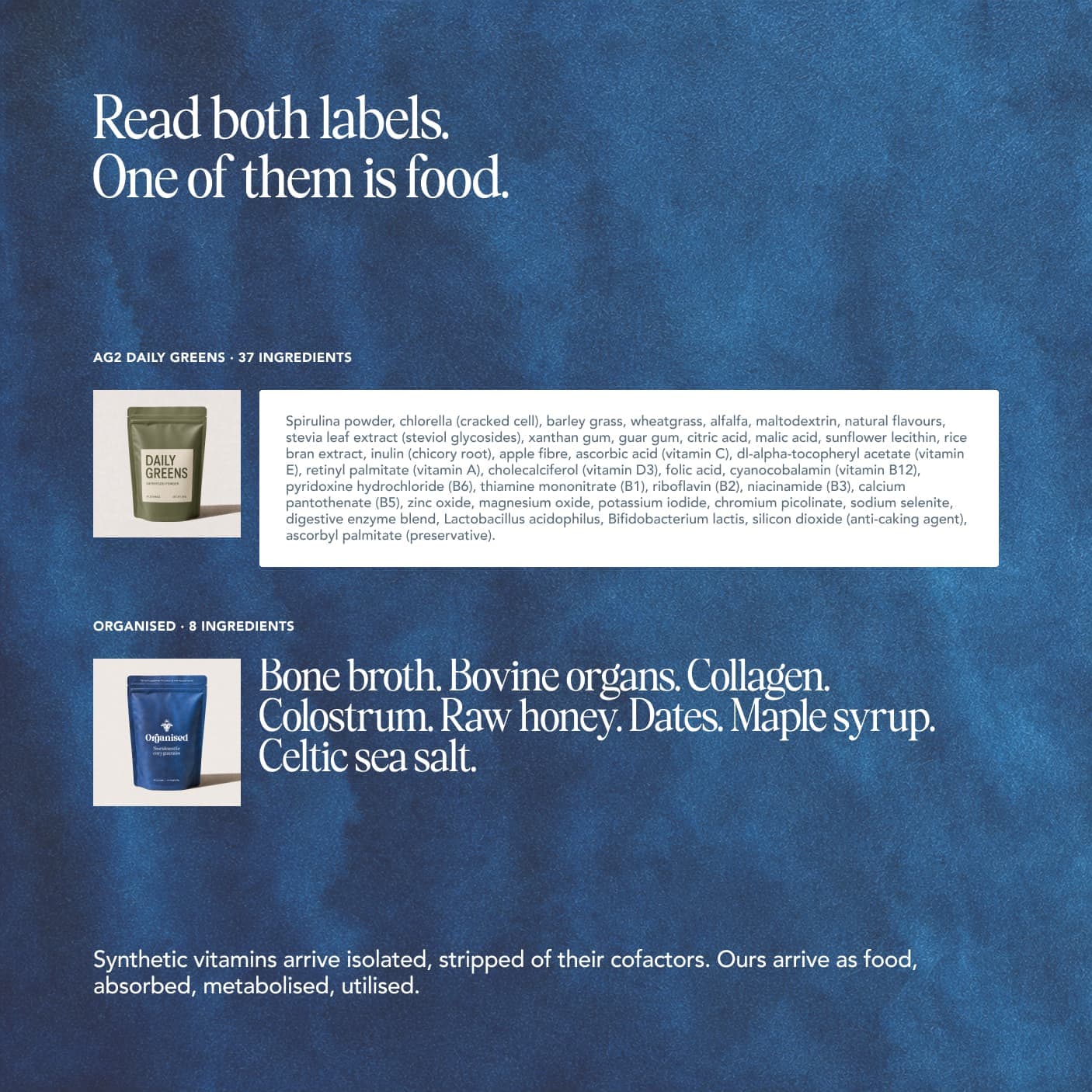
A multivitamin tablet is mostly not vitamin. It's filler, binder, and flow agent. Microcrystalline cellulose, magnesium stearate, silica, titanium dioxide. Your body has to process these compounds, then extract the actual nutrients.
Some of these fillers are inert enough that they probably don't matter. Others are more problematic. Titanium dioxide is used for whiteness. It's the same compound used in sunscreen and paint. Is it a problem in a tablet you take once a day? Probably not. But it's not nutrition. It's filler.
The real issue is that these fillers take up space in the tablet. The manufacturer could include more nutrient density, more bioavailable forms, more cofactors. Instead, they include fillers because that's cheaper and it allows them to make claims about containing "a full day's worth" of twenty different nutrients in a single tablet.
In reality, fitting useful amounts of twenty different nutrients into a single tablet is nearly impossible. The tablet is necessarily a compromise. It contains some of each nutrient, none in optimal forms, all alongside compounds your body doesn't need.

Get ancestral nutrition guides, free
Two short reads a week on traditional ways of eating, examined with modern evidence.
By signing up you agree to receive emails from us. No spam, unsubscribe anytime.
Absorption and intestinal competition
Vitamins and minerals compete for absorption. Calcium blocks iron absorption. Zinc blocks copper absorption.4 When you pack twenty different nutrients into a single tablet, they're all competing for the same intestinal transport mechanisms. The result is reduced absorption across the board.
In food, nutrients are spread throughout the meal and consumed over time as you digest. The body absorbs each according to need and availability. In a tablet, everything hits your intestines at once, creating a bottleneck where most nutrients can't be absorbed.
This is why taking a multivitamin with food helps (the food slows absorption), but it's still inferior to getting nutrients from actual food.

1 of 9
Daily blend
100,000+ thriving families4.9 on Trustpilot
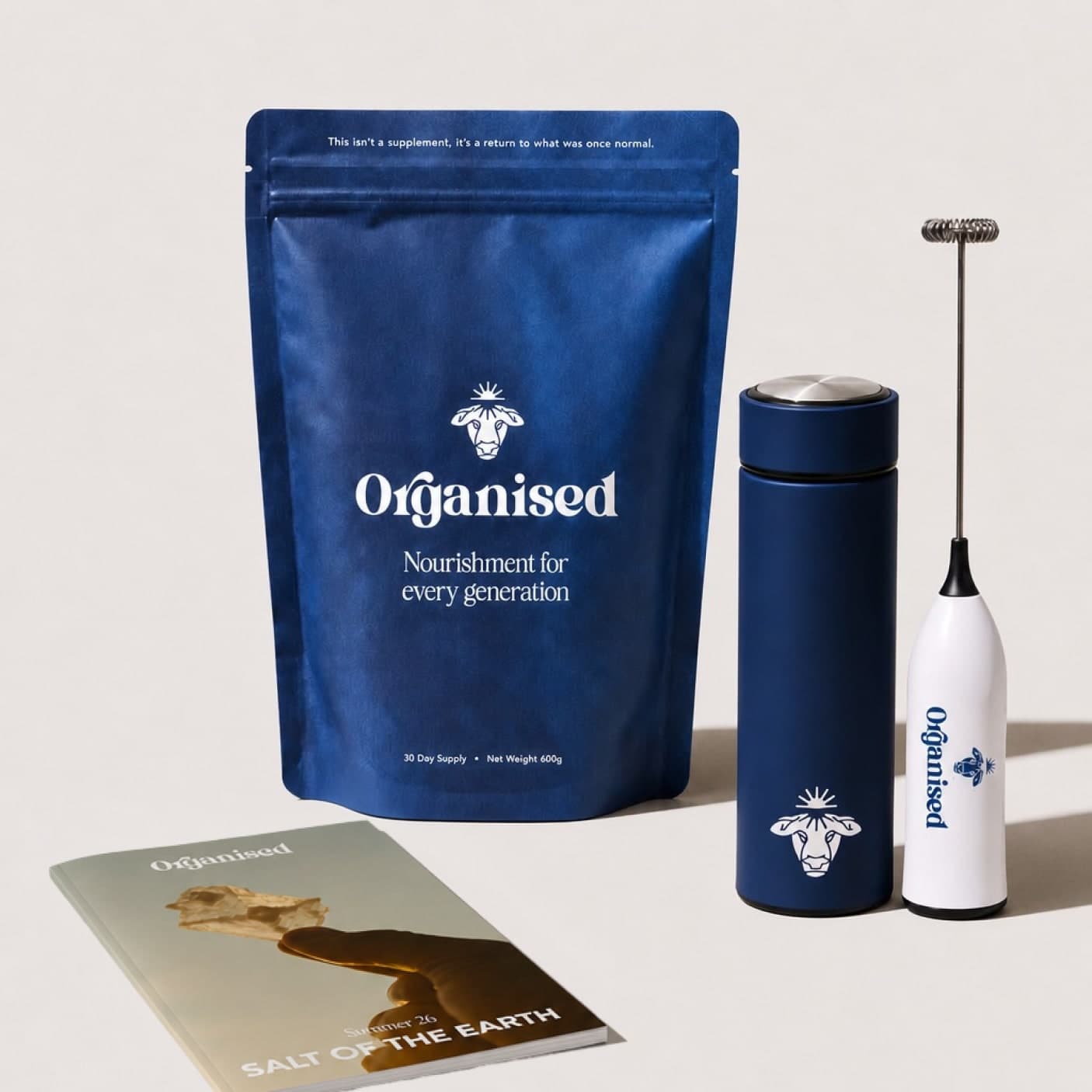
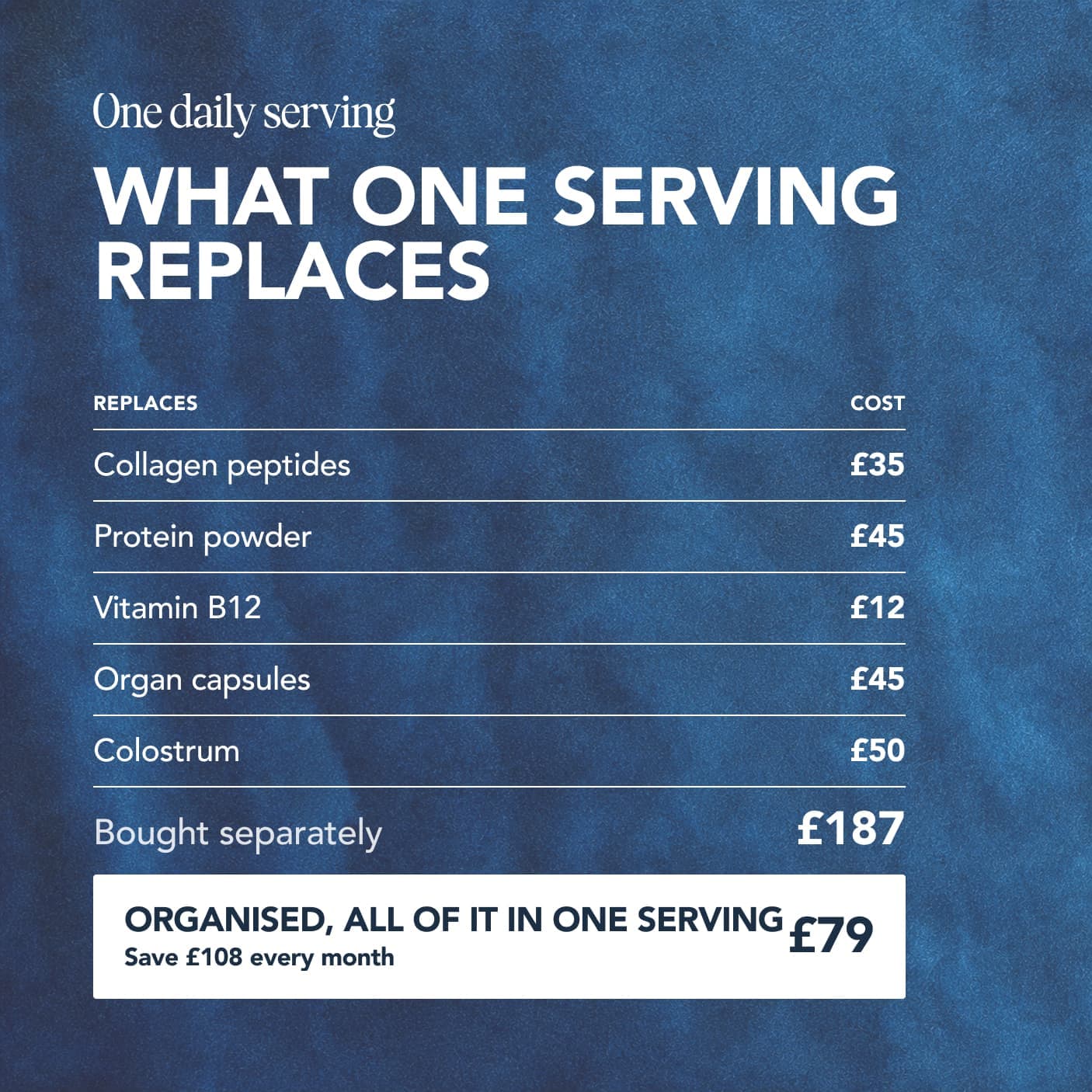
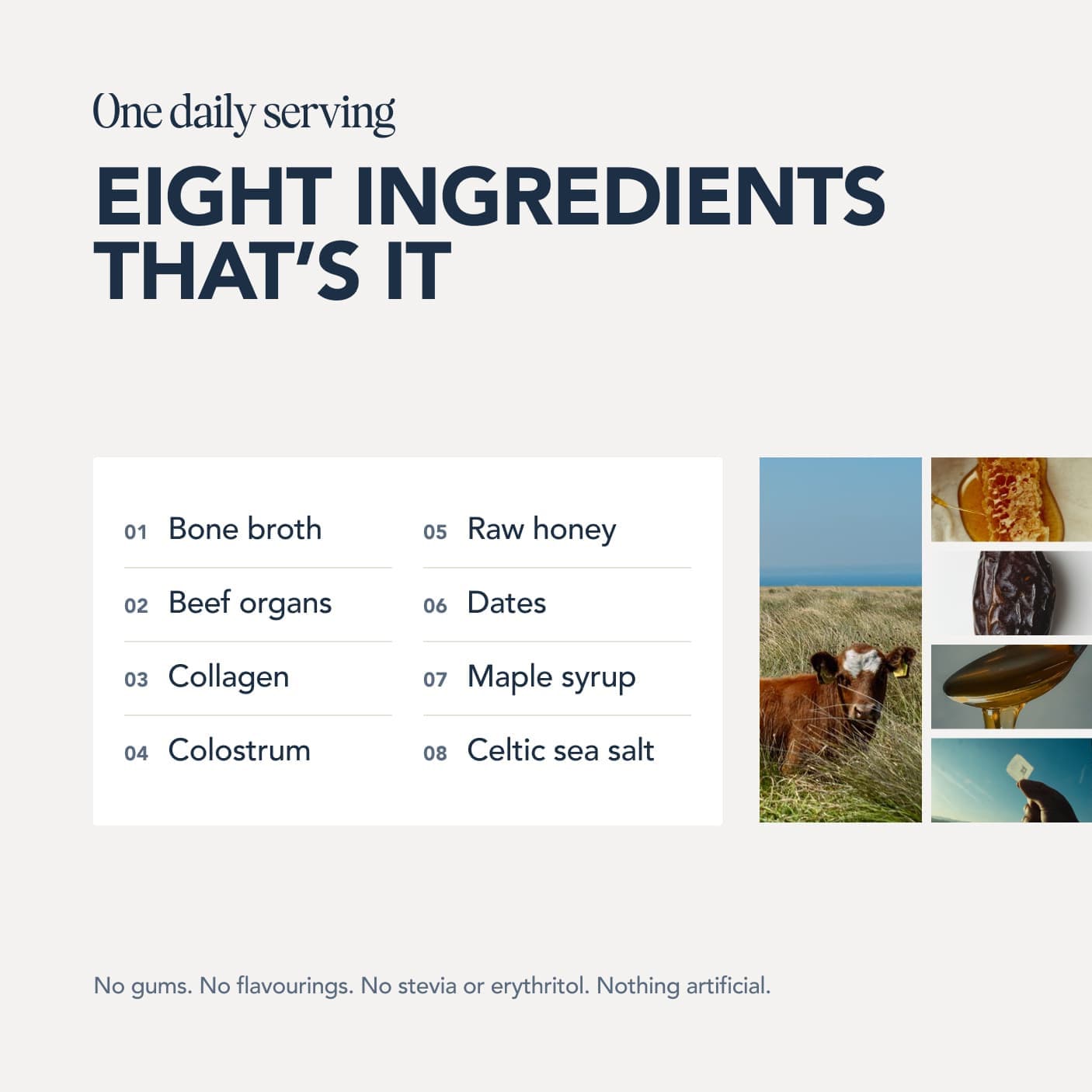
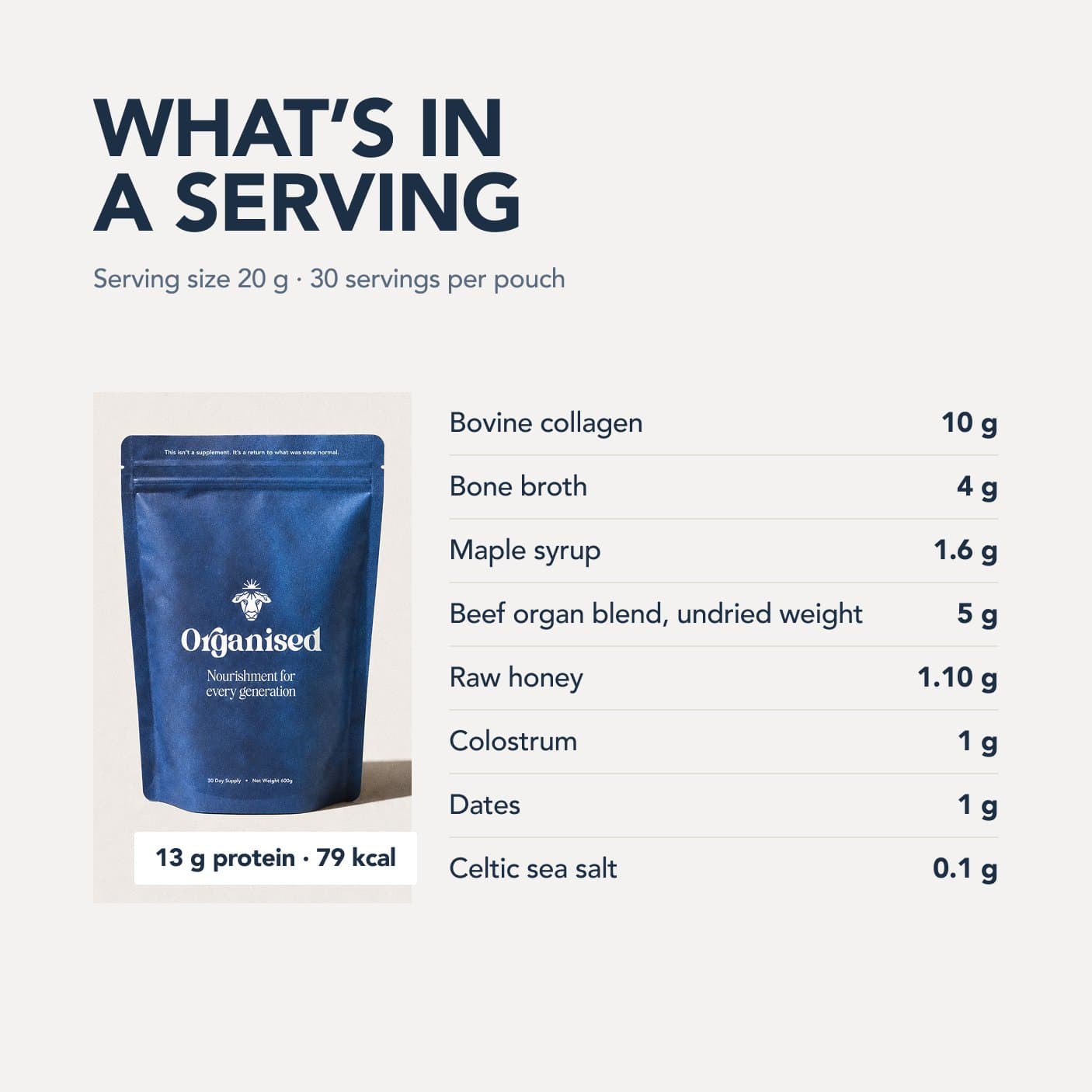
Eight real ingredients built around grass-fed beef organs, collagen and colostrum. Nothing synthetic added.
Free with your first order, worth £38. Plus £10 off the pouch with a subscription.


Free UK shipping · Made in England · 100 day money back guarantee on your first pouch · Skip, pause or cancel anytime
When supplementation actually makes sense
This doesn't mean supplementation is useless. It means that multivitamins are a crude tool. Single-nutrient supplementation, in bioavailable forms, when there's a demonstrated deficiency, works.
If you're deficient in vitamin D (which is common in Britain), taking vitamin D3 (cholecalciferol, the more bioavailable form) actually helps.3 You have a specific deficit. You're addressing it with a single nutrient in a highly absorbable form.
If you're deficient in iron, taking well-absorbed iron (ferrous forms are better than ferric) with vitamin C to enhance absorption, separately from calcium or coffee which block absorption, makes sense.
But taking a multivitamin assumes that you're deficient in multiple nutrients, that they're all equally important to address at once, and that putting them in a tablet will solve your problem. The first assumption might be true. The second is dubious. The third is almost certainly false.
If you need supplementation, a single targeted nutrient in a bioavailable form works better than a shotgun multivitamin.
The whole food advantage
Food contains thousands of compounds beyond just vitamins and minerals. Polyphenols from plants. Cofactors from animal products. Enzymes that assist digestion. Fibre that feeds beneficial gut bacteria. A tablet contains none of this.
When you eat liver, you get not just vitamin A, but vitamin A alongside copper, selenium, iron, B vitamins, choline, and dozens of other compounds in ratios that support each other's absorption and utilisation. This synergy is impossible to replicate in a supplement.
The food industry spent decades convincing you that nutrition is about isolated nutrients. It's not. Nutrition is about complex systems. Food works because it's a system. Supplements work much less well because they're simplified.
The bottom line
Synthetic multivitamins are less bioavailable than food, lack the cofactors that make vitamins work, come in oxidative forms your body has to convert, are loaded with fillers that take up space better used for actual nutrition, and feature multiple nutrients competing for absorption.
The solution isn't to buy a more expensive multivitamin. It's to prioritise real food: organs like liver (which contain virtually all vitamins in highly bioavailable forms), bone broth, vegetables, fruits, quality dairy, eggs. If you need supplementation, work with someone who understands bioavailability and tests for actual deficiencies. And if you're going to supplement, do it specifically, not as a shotgun approach.
Your body isn't designed to get nutrients from tablets. It's designed to get them from food. Work with your biology, not against it.
References
Every source below was checked on 27 August 2026. Each link was requested and read. Where a citation and its identifier disagreed, the citation was corrected to the record or the reference was deleted along with the sentence marker that pointed at it, and where the resolved paper turned out not to support the sentence, the sentence was cut back to what it does support. Borrowed authority is worse than none, because it looks like rigour.
- National Institutes of Health, Office of Dietary Supplements. Vitamin B12 — Health Professional Fact Sheet.
- National Institutes of Health, Office of Dietary Supplements. Folate — Health Professional Fact Sheet.
- NHS. Vitamin D.
- National Institutes of Health, Office of Dietary Supplements. Copper — Health Professional Fact Sheet.
- National Institutes of Health, Office of Dietary Supplements. Vitamin E — Health Professional Fact Sheet.
Who wrote and reviewed this guide
Niall Kiddle
Author · Founder, Organised
Niall is the founder of Organised. He started the company in 2024 after fixing his own health the slow way: in 2022 he swapped a cupboard of synthetic supplements for real food, raw milk, organ meats, bone broth and honey, and felt the difference within months.
Areas of expertise: Ancestral nutrition, Organ meats, Whole-food supplementation, Gut health, Regenerative sourcing
Read Niall's full profile
Pedro Rodrigues
Reviewer · Agronomist (farming and sourcing only)
Pedro is the agronomist Organised works with on farming and sourcing. His job on the guides is to keep the science honest: he reviews what we publish about soil health, regenerative agriculture, grazing and the way food is actually produced.
Areas of expertise: Regenerative agriculture, Agronomy, Soil health, Grass-fed farming, Food sourcing
Reviewed this guide on
Read Pedro's full profileBrowse the guides library
All guidesKeep reading

Ancestral
Why Modern Food Is Less Nutritious Than It Was 50 Years Ago
Soil depletion, selective breeding, and industrial agriculture have made modern produce less nutritious. Here's the evidence.

Ancestral
Nose-to-Tail for Beginners: Where to Start
New to nose-to-tail eating? Start with liver, then heart, in small amounts. Get simple freezing tips and easy ways to soften the taste as you build up.

Ancestral
This Is Not a Supplement. It's Whole Food Nutrition.
Why whole foods work better than supplements. Understanding food matrix, nutrient synergy, and why isolated nutrients fall short.
Real food, made effortless
Bring it into my routineA few ways to use it
All recipes
How to Make Bone Marrow Butter
Roast grass-fed marrow bones, scoop the marrow, and mix with butter and herbs. A nutrient-dense spread with fat-soluble vitamins.

Collagen-Rich Beef Stew: Slow-Cooked Nourishment
Beef stew that delivers collagen from connective tissue and bone broth. Winter comfort food that actually nourishes. Simple slow cooker recipe.

Whole Food Snacks for Busy Days
Practical whole food snacks that travel well and sustain energy. No refined carbs, no seed oils. Real food options for when you're busy.


 Join over 100,000+ members
Build a better food system with us
The Organised community is thousands of people choosing real food and backing the farmers who grow it, all of us trying to leave the world a little better than we found it. If that is what you care about too, you belong here.