8 Ingredients. Nothing Else. The Organised Approach.
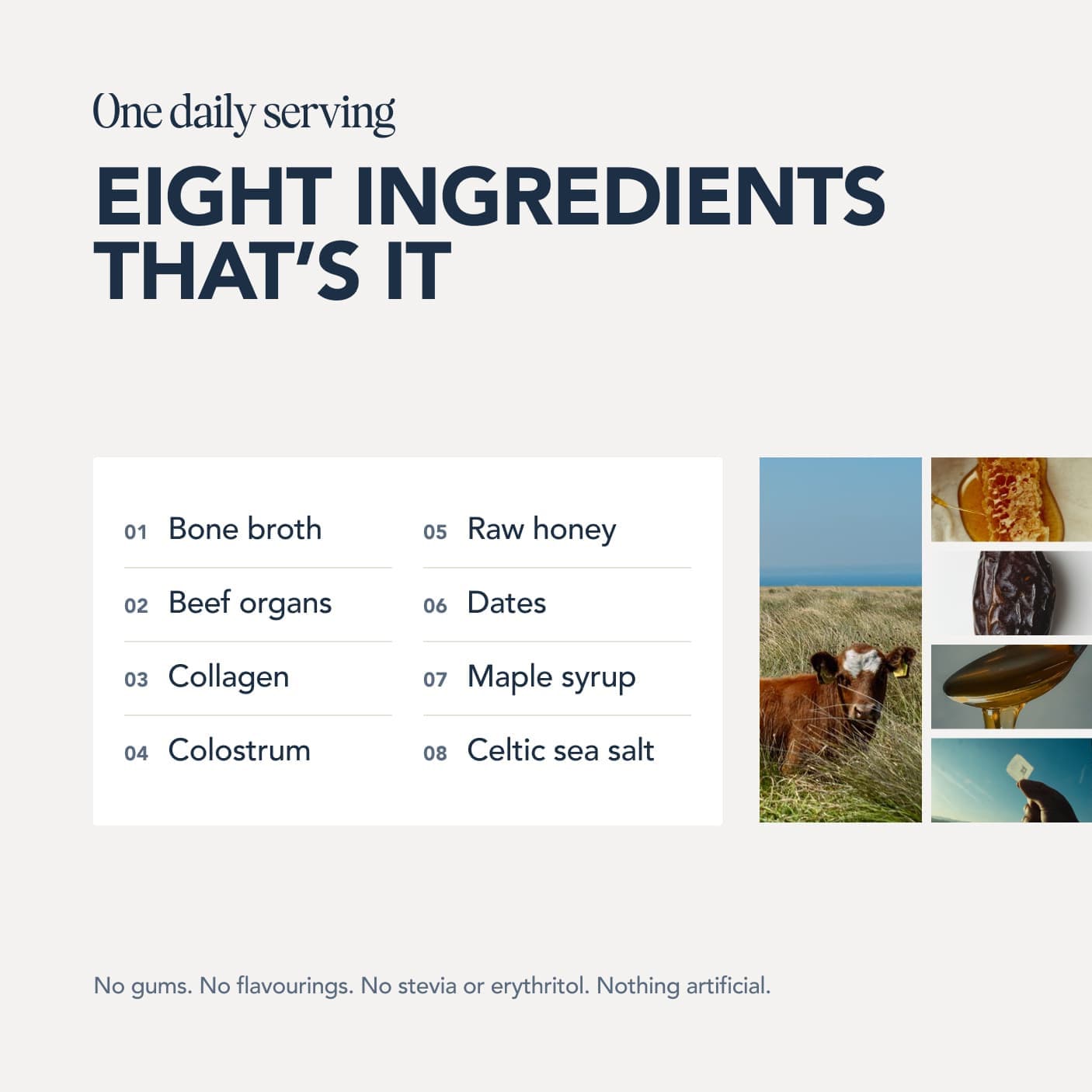
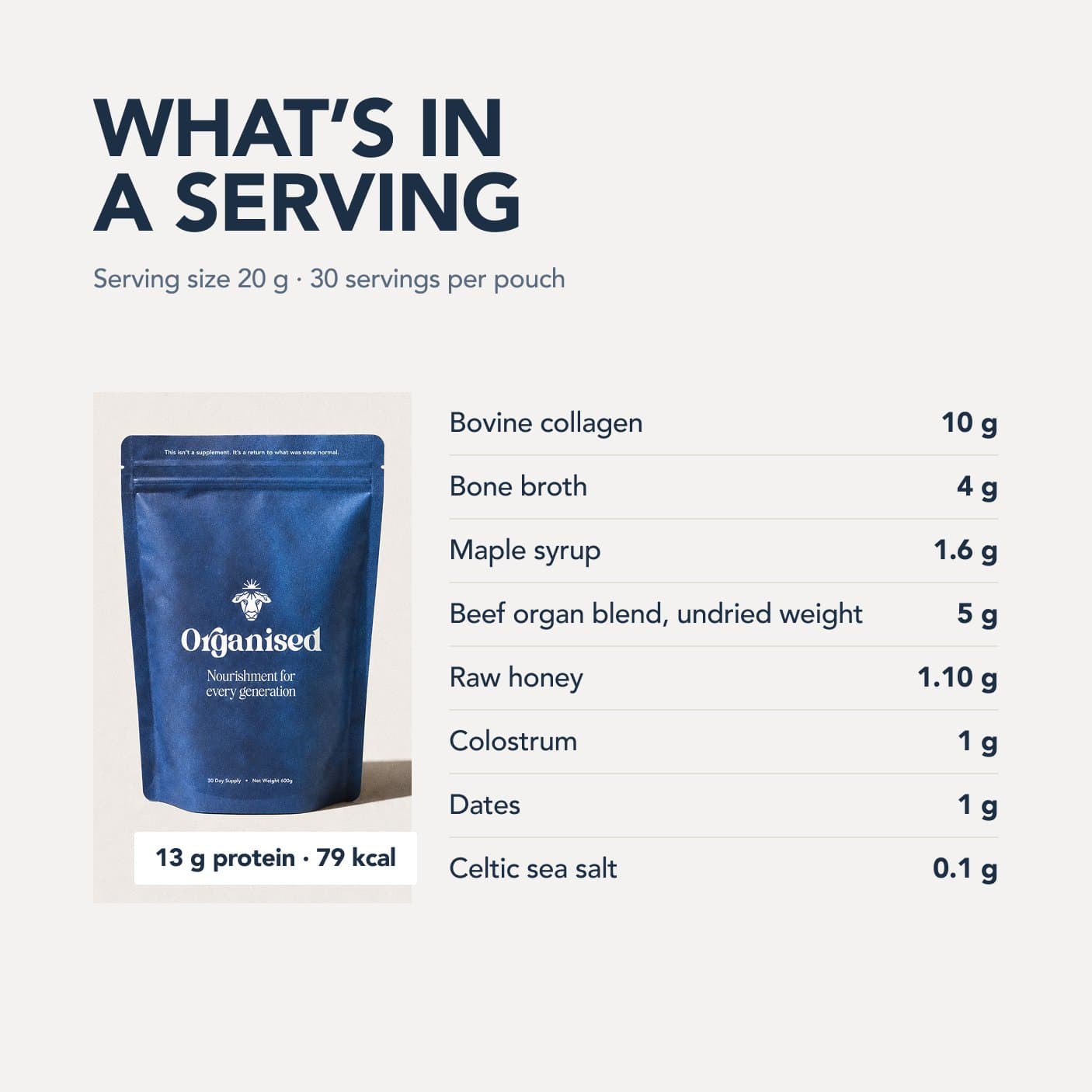
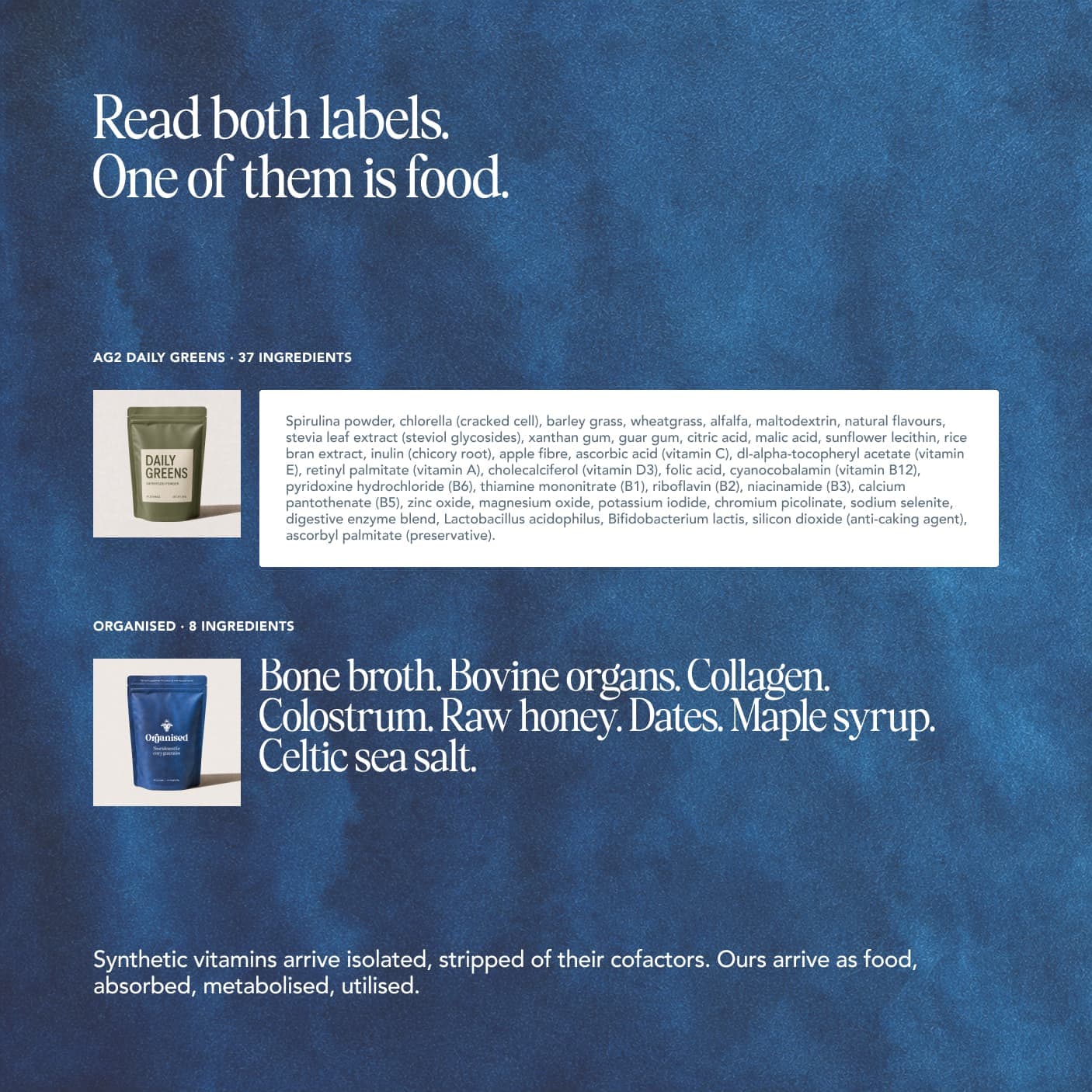
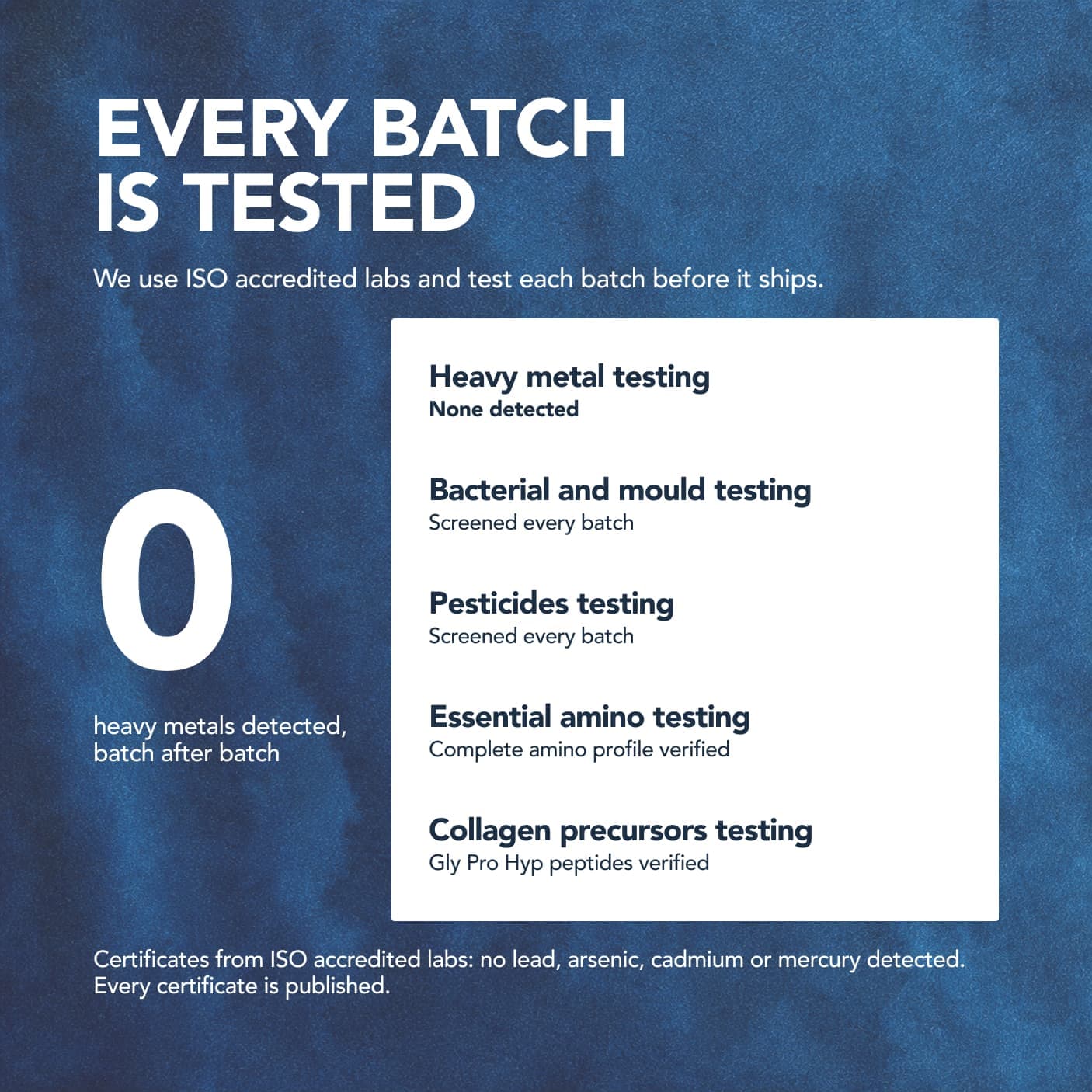
Open a competitor's bottle. Read the ingredient list. Colours, thickeners, gums, preservatives, synthetic vitamins. Thirty items you've never heard of. Now open ours. Grass-fed bone broth. Grass-fed beef organs. Collagen peptides. Bovine colostrum. Raw honey. Dates. Canadian maple syrup. Celtic sea salt. Nothing else. This is the difference between a product designed for profit and a product designed for health.
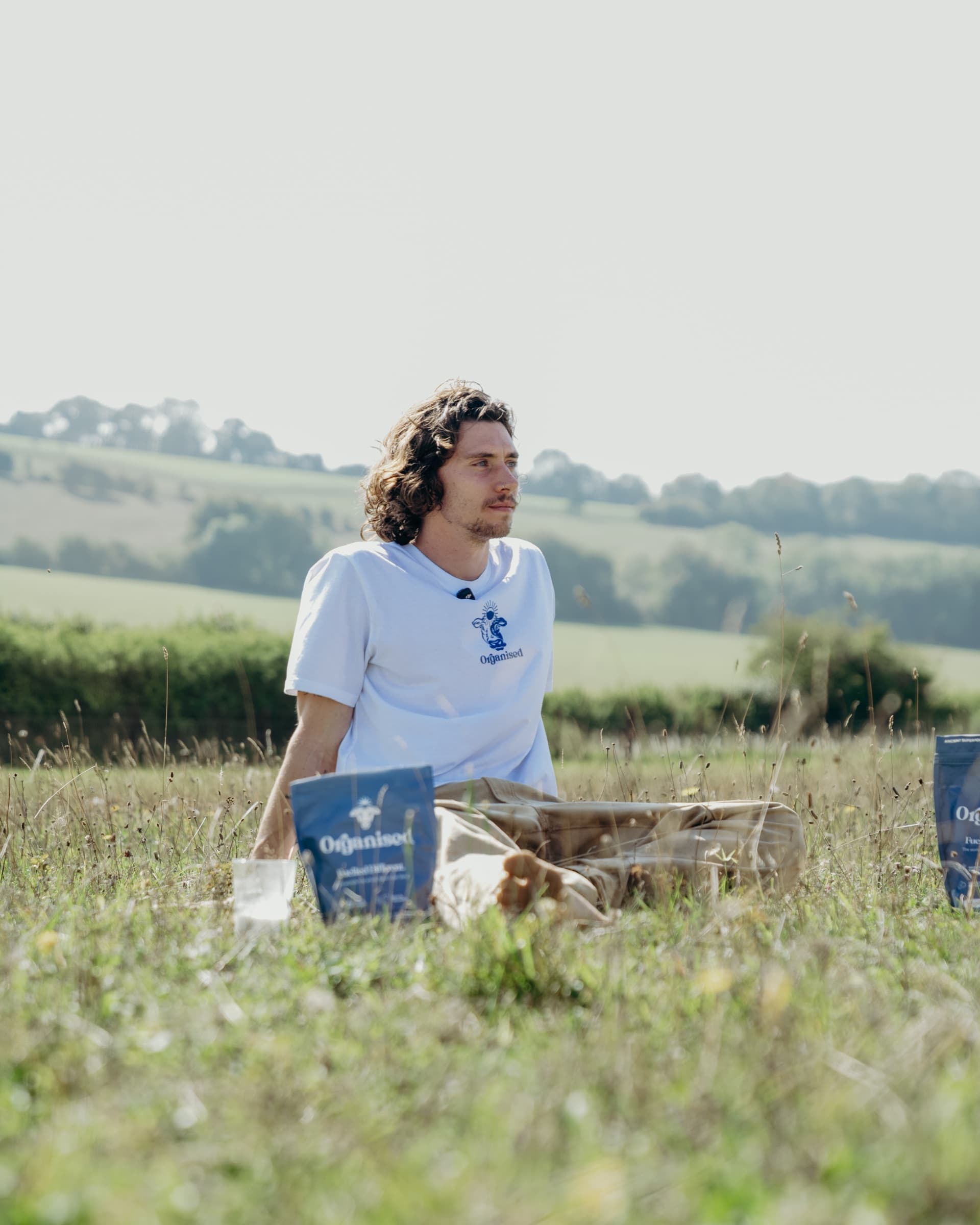
By Niall Kiddle, Founder, Organised

Reviewed by Pedro Rodrigues, Agronomist (farming and sourcing only) ·
5 min read · Published · Updated · 3 cited sources
Makers of the Organised Daily blend, a grass-fed beef organ supplement from regenerative UK farms
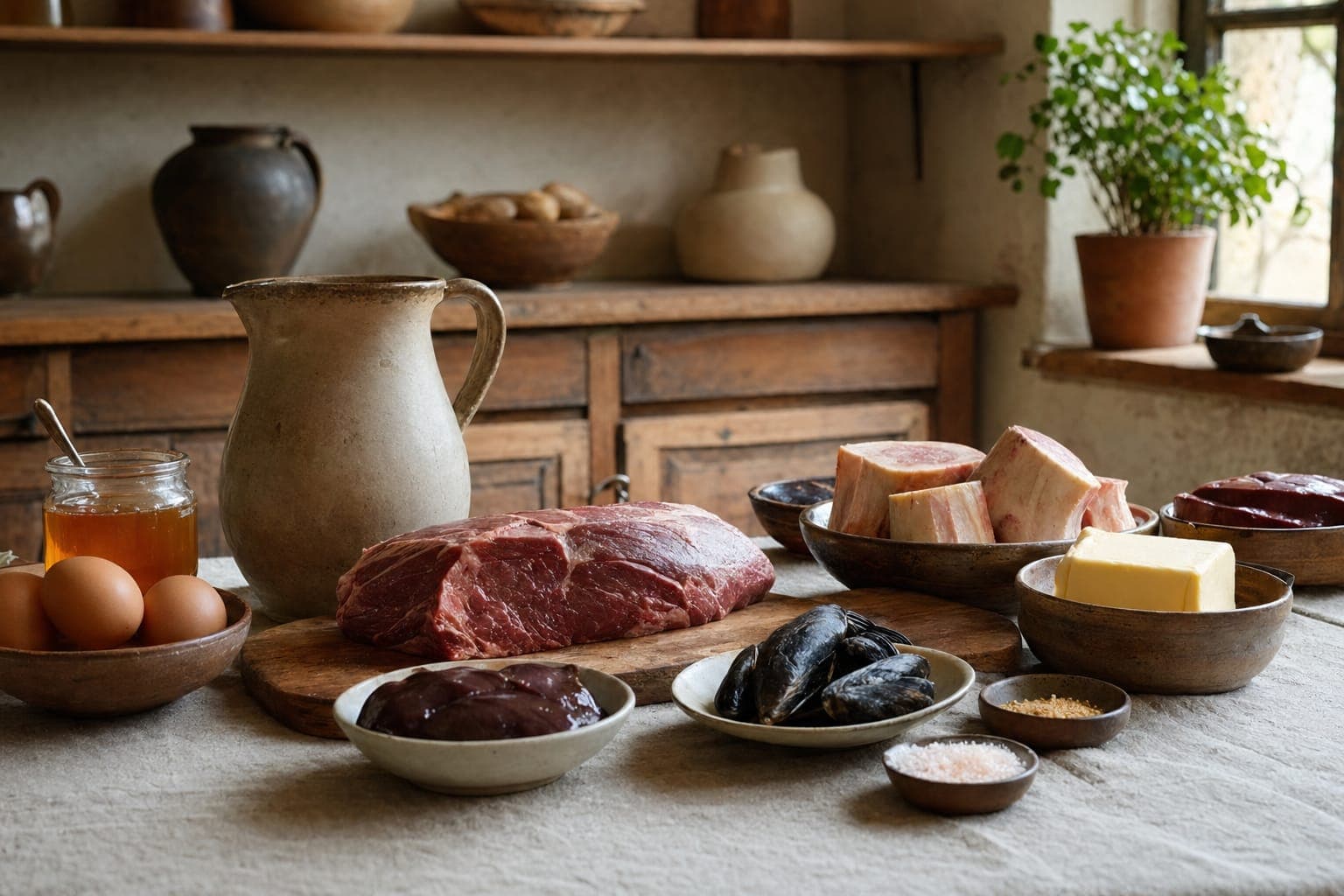
This isn't marketing. This is philosophy. We made a choice: every ingredient earns its place. If it doesn't strengthen the product, it doesn't go in.
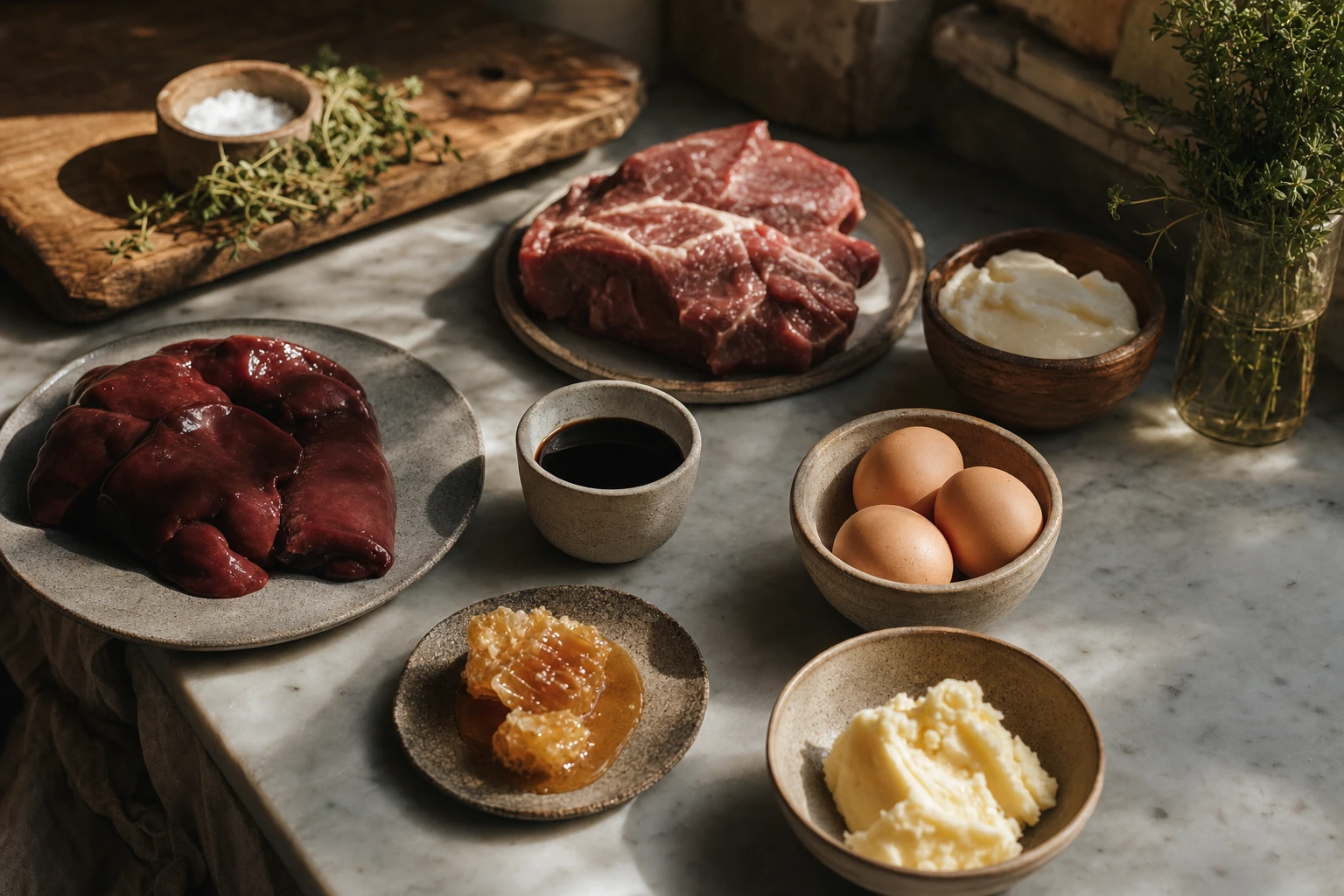
Why we stopped at 8
We could have added more. Fillers for bulk. Gums for texture. Preservatives for shelf-life. Artificial sweeteners to fake a dessert. Synthetic vitamins to bump up the label claims.
We didn't. Because each addition would dilute the core product. Each addition is made for convenience, our convenience or yours. Not for your health.
Eight ingredients because each one serves a function. Fewer would mean removing something valuable. More would mean adding something unnecessary.
Simplicity in ingredients is not a limitation. It's clarity. It says: this is whole food, nothing masked.
Grass-fed bone broth: the foundation
The base of the blend is bone broth protein from grass-fed cattle. It's the quiet workhorse: a full spectrum of amino acids for muscle, repair, and satiety, absorbed at a steady pace that keeps you full through the morning rather than spiking and crashing.
The five organs: nature's multivitamin
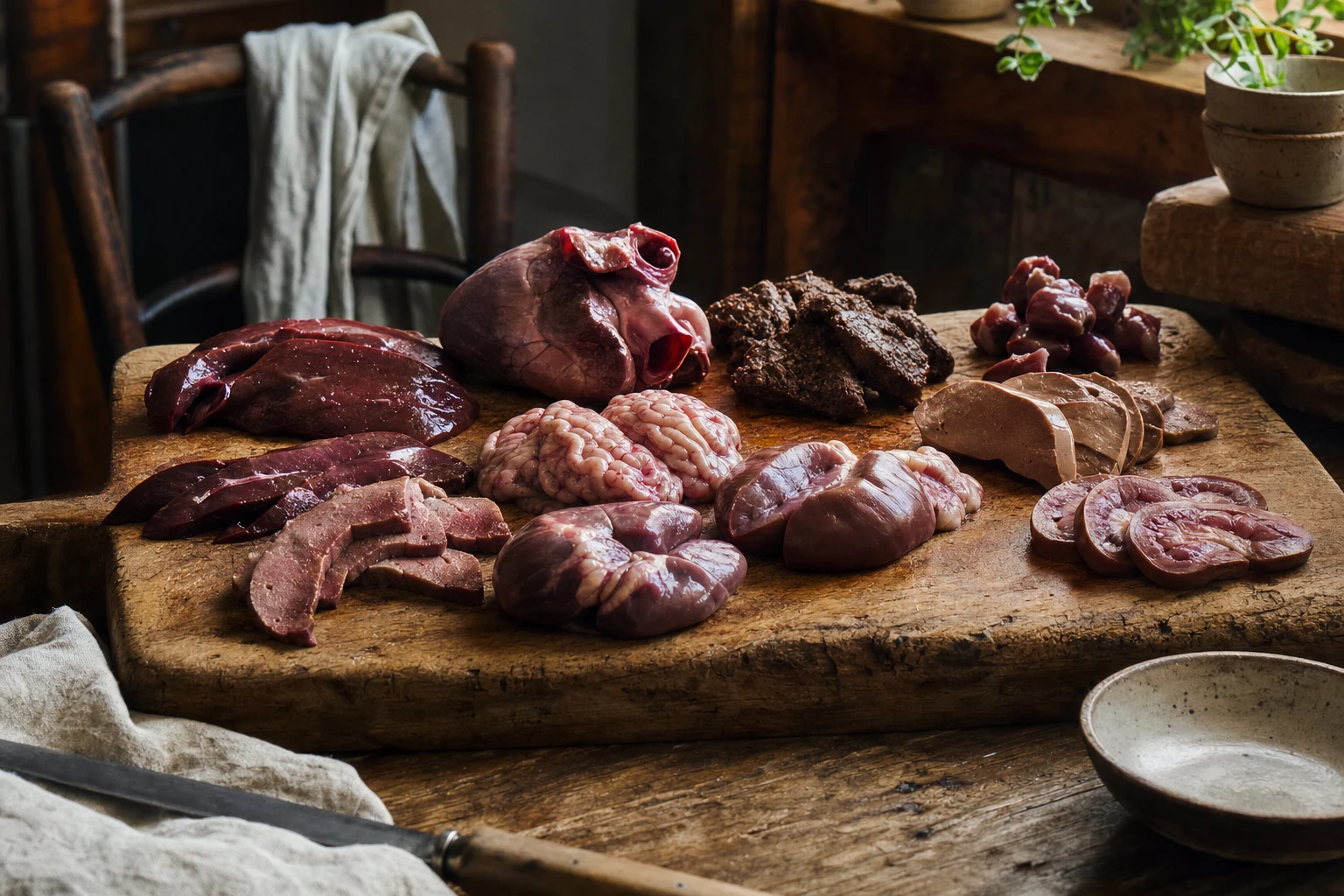
Liver, heart, kidney, lung, and spleen, freeze-dried from grass-fed cattle. Liver is the most nutrient-dense food on the planet: retinol, B12, folate, iron, copper, selenium.1 Heart brings CoQ10 alongside B vitamins.2 Kidney is dense in selenium and the minerals that support thyroid and immune function.3 Spleen is one of the richest food sources of heme iron. Lung adds collagen-building amino acids and more iron again.
Traditional cultures prized every one of these organs. Not because they guessed. Because thousands of years of human experience selected for them.
Every organ we include exists because traditional cultures prized it. Not because we guessed. Because thousands of years of human experience selected for it.
Collagen peptides: the structure
Collagen is the protein your skin, joints, gut lining, and connective tissue are built from, and it's almost absent from a modern diet of lean muscle meat. The collagen peptides in Organised bring glycine and proline back to the table, the way bone broth and slow-cooked cuts once did.
Bovine colostrum: nature's first food
Colostrum is the first milk, the food designed to build an immune system and line a gut from day one. It carries immunoglobulins and growth factors nothing else in the food supply matches. It's also why we say it plainly: Organised contains milk, and it isn't dairy-free.
Raw honey, dates and maple: the real sweetness
Organised is naturally sweet, and this is where the sweetness comes from: raw honey, whole dates, and Canadian maple syrup. Real foods that bring their own minerals and antioxidants, not a sweetener engineered in a lab. It's why the blend tastes rich and gently sweet in yoghurt, a smoothie, or porridge, with nothing to disguise and nothing to mask.
Sweetness from food is honest. Your body recognises honey, dates, and maple. It has no idea what to do with sucralose.
Celtic sea salt: the necessity
Celtic sea salt isn't there for flavour alone. It's for electrolyte balance, trace minerals, and proper cellular function. The quality matters: unrefined sea salt carries trace minerals that refined table salt doesn't.
Get ancestral nutrition guides, free
Two short reads a week on traditional ways of eating, examined with modern evidence.
By signing up you agree to receive emails from us. No spam, unsubscribe anytime.
What we didn't add (and why)
Let's be specific about what's not in Organised, because the absence is as important as the presence.
No synthetic vitamins. Some companies isolate single vitamins (beta-carotene, synthetic B12, ascorbic acid) and add them back. We don't. The vitamins in Organised come from the ingredients themselves, in their natural context with cofactors and synergists that support absorption and utilisation.
No fillers or flow agents. Many powders add silicon dioxide, magnesium stearate, or maltodextrin to improve flow and prevent clumping. These aren't toxic in small amounts, but they're not food. Organised is the eight ingredients, and nothing else.
No artificial sweeteners. Not aspartame, not sucralose, not an engineered substitute wearing a "natural" label. The sweetness in Organised comes from raw honey, dates, and maple syrup, which is to say, from food.
No colouring or flavouring agents. The colour comes from the ingredients. The flavour comes from the ingredients. Transparency means you taste what you're eating.
Simplicity costs more because it means trusting that the food itself is enough. Most supplement companies don't trust their ingredients that much.
The sourcing that made this possible
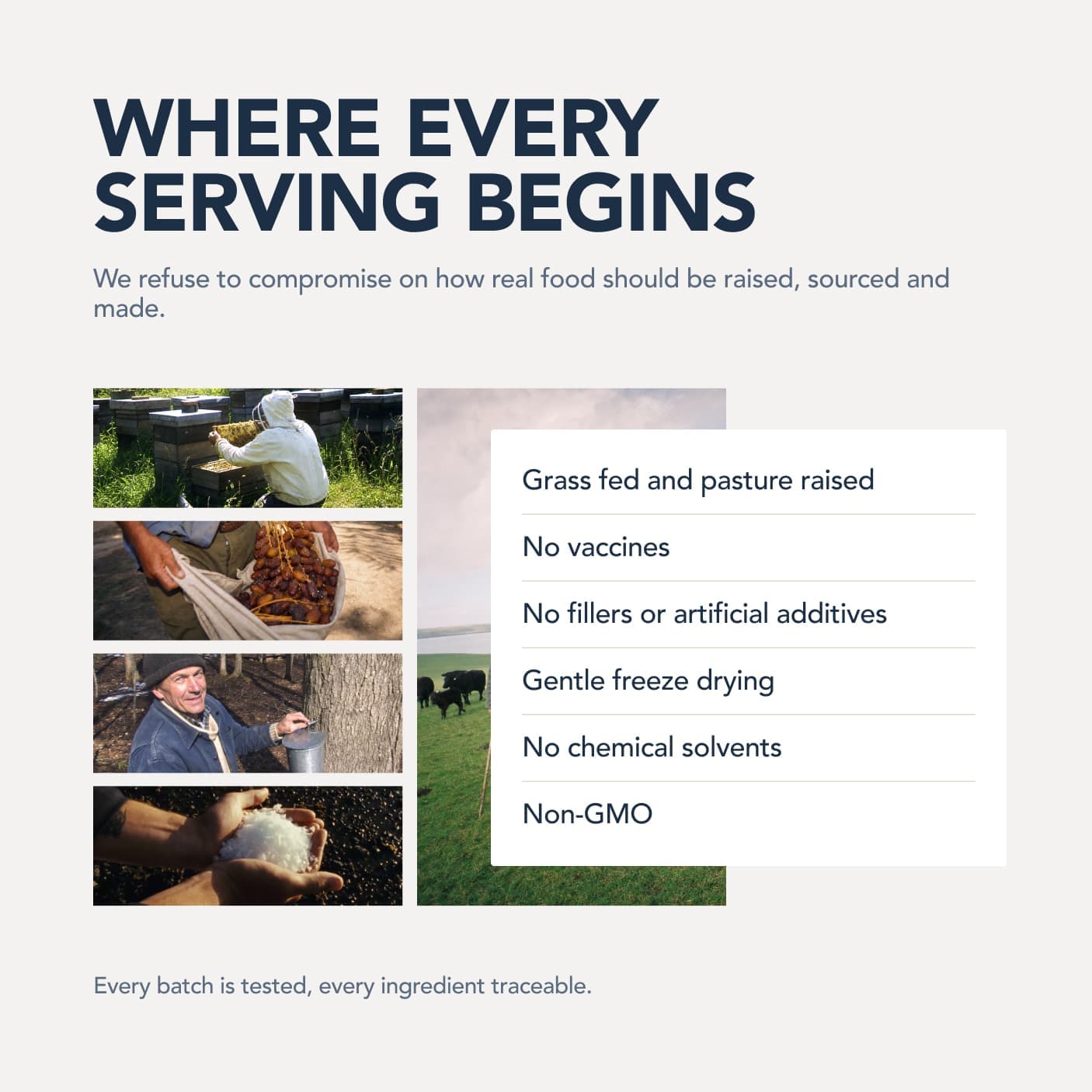
Eight ingredients is only possible because of relationships with specific farms. Not all grass-fed beef is the same. The organs need to come from cattle raised on mineral-rich pasture, slaughtered at the optimal age, processed with care to preserve nutrient density.
Working with named farm suppliers means traceability. It means knowing the soil conditions the cattle are raised on. It means understanding how the herd is managed. It means visiting the farms, not just ordering from a distributor.
This level of sourcing precision is expensive. It's also what makes eight ingredients viable. We're not trying to supplement the world with a generic product. We're making a product for people who care about what goes into their body.
Why we didn't compromise
Building a product like this is a series of temptations. Add an artificial sweetener, the product tastes like dessert and sells more. Add a filler, the product flows better and costs less to produce. Add synthetic vitamins, the label looks more impressive.
Each compromise is defensible on its own. "Just a little sucralose won't hurt." "Just a small amount of flow agent." "Just one synthetic vitamin to round out the profile."
We made none of these compromises. Every decision was: does this add value to the person taking it, or does it add value to our margins? If it adds value to our margins but not to you, it doesn't go in.
This is the philosophy. Not "good enough." Not "pretty good." Good.
1 of 9
Daily blend
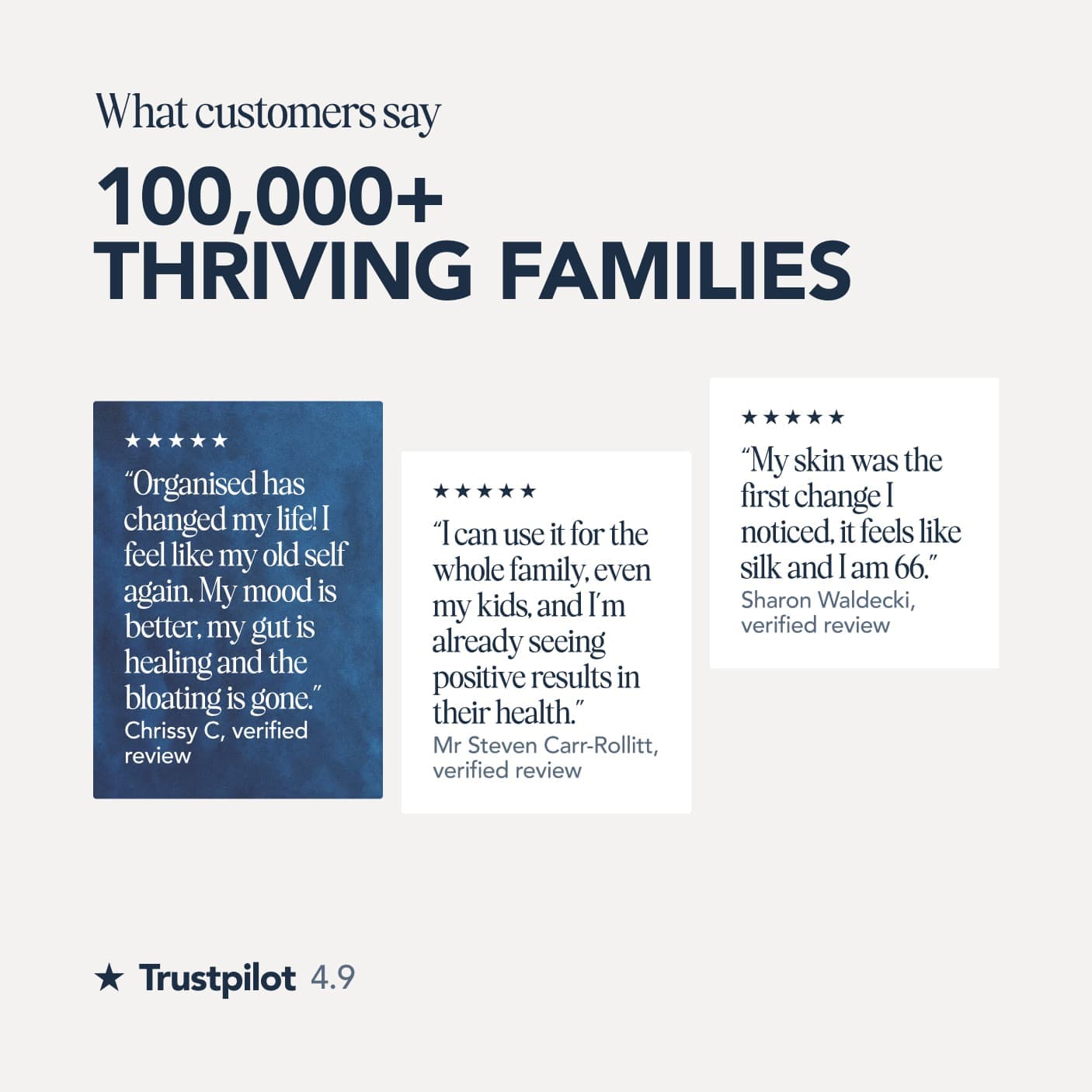
100,000+ thriving families4.9 on Trustpilot
Eight real ingredients built around grass-fed beef organs, collagen and colostrum. Nothing synthetic added.
Free with your first order, worth £38. Plus £10 off the pouch with a subscription.
Free UK shipping · Made in England · 100 day money back guarantee on your first pouch · Skip, pause or cancel anytime
The cost of transparency
Eight ingredients costs more to produce than thirty. Fewer ingredients means less buying power. Less buying power means higher per-unit costs. Higher costs mean a higher price.
But that cost is the guarantee. If you see eight ingredients on a label and you know each one is valuable, you know the company is serious about quality. A company committed to profit margins over product quality would have found a way to add fillers by now.
We haven't. That's not virtue signalling. That's commitment to what works.
The bottom line
Eight ingredients because each one is valuable. Remove any one, and you lose something important. Add anything more, and you're diluting what works.
This is transparency. This is integrity. This is what a whole food product looks like when it's designed for your health, not for profit margins.
References
Every source below was checked on 27 August 2026. Each PubMed, PMC and DOI identifier was resolved against NCBI or Crossref, and what it opens is printed under the citation, so you can see the link goes where the citation says without leaving the page. Where a citation and its identifier disagreed, the citation was corrected to the record or the reference was deleted along with the sentence marker that pointed at it, and where the resolved paper turned out not to support the sentence, the sentence was cut back to what it does support. Borrowed authority is worse than none, because it looks like rigour.
- National Institutes of Health, Office of Dietary Supplements. Vitamin A and Carotenoids: Fact Sheet for Health Professionals. https://ods.od.nih.gov/factsheets/VitaminA-HealthProfessional/ See also Vitamin B12 (link), Folate (link), Iron (link), Copper (link) and Selenium (link) fact sheets [accessed May 2026].
- Pravst I, Zmitek K, Zmitek J. Coenzyme Q10 contents in foods and fortification strategies. Critical Reviews in Food Science and Nutrition. 2010;50(4):269-280. https://pubmed.ncbi.nlm.nih.gov/20301015/Checked 27 August 2026: PMID 20301015 opens Pravst I, Zmitek K, Zmitek J, Coenzyme Q10 contents in foods and fortification strategies. Crit Rev Food Sci Nutr 2010;50(4):269-80. PubMed indexes it as: Review.
- National Institutes of Health, Office of Dietary Supplements. Selenium: Fact Sheet for Health Professionals. https://ods.od.nih.gov/factsheets/Selenium-HealthProfessional/ See also Iodine fact sheet: https://ods.od.nih.gov/factsheets/Iodine-HealthProfessional/
Who wrote and reviewed this guide
Niall Kiddle
Author · Founder, Organised
Niall is the founder of Organised. He started the company in 2024 after fixing his own health the slow way: in 2022 he swapped a cupboard of synthetic supplements for real food, raw milk, organ meats, bone broth and honey, and felt the difference within months.
Areas of expertise: Ancestral nutrition, Organ meats, Whole-food supplementation, Gut health, Regenerative sourcing
Read Niall's full profile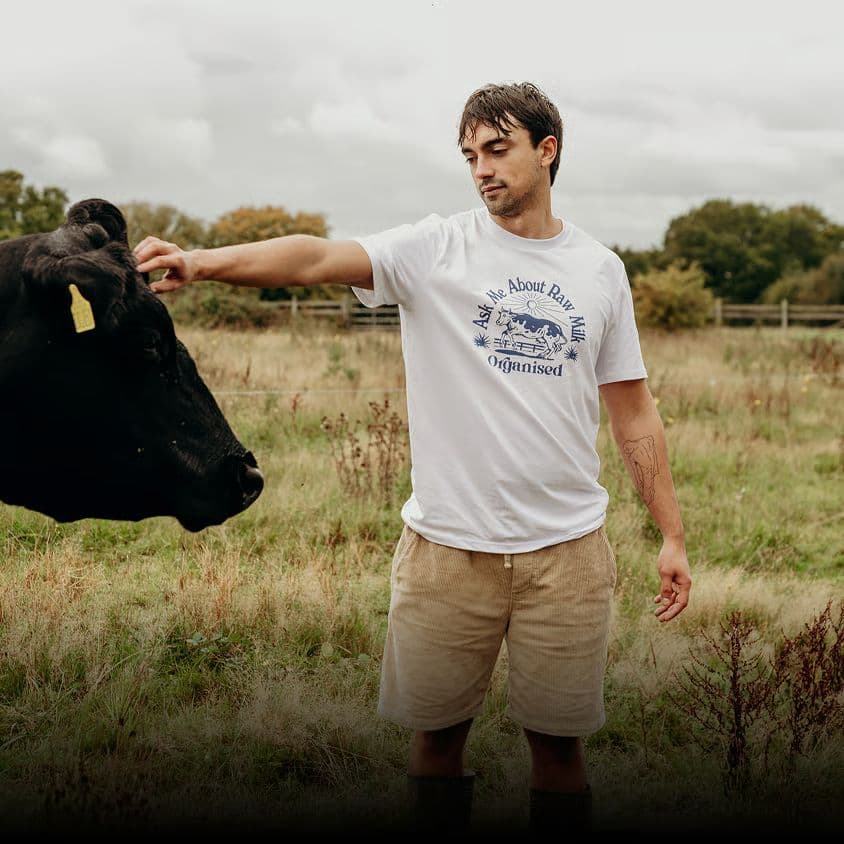
Pedro Rodrigues
Reviewer · Agronomist (farming and sourcing only)
Pedro is the agronomist Organised works with on farming and sourcing. His job on the guides is to keep the science honest: he reviews what we publish about soil health, regenerative agriculture, grazing and the way food is actually produced.
Areas of expertise: Regenerative agriculture, Agronomy, Soil health, Grass-fed farming, Food sourcing
Reviewed this guide on
Read Pedro's full profileMore on whole food philosophy
View allBrowse the guides library
All guidesKeep reading
Ancestral
Why We Believe Whole Food Is the Future of Nutrition
Why whole food nutrition works better than supplements. Bioavailability, cofactors, and the science of nutrient synergy explained.
Ancestral
Nose-to-Tail for Beginners: Where to Start
New to nose-to-tail eating? Start with liver, then heart, in small amounts. Get simple freezing tips and easy ways to soften the taste as you build up.
Ancestral
Ghee, Tallow and Lard: The Traditional Cooking Fats Making a Comeback
Ghee, tallow, and lard are making a comeback. Here's why traditional cooking fats outperform seed oils at high temperatures and support your health.
Real food, made effortless
Bring it into my routineA few ways to use it
All recipes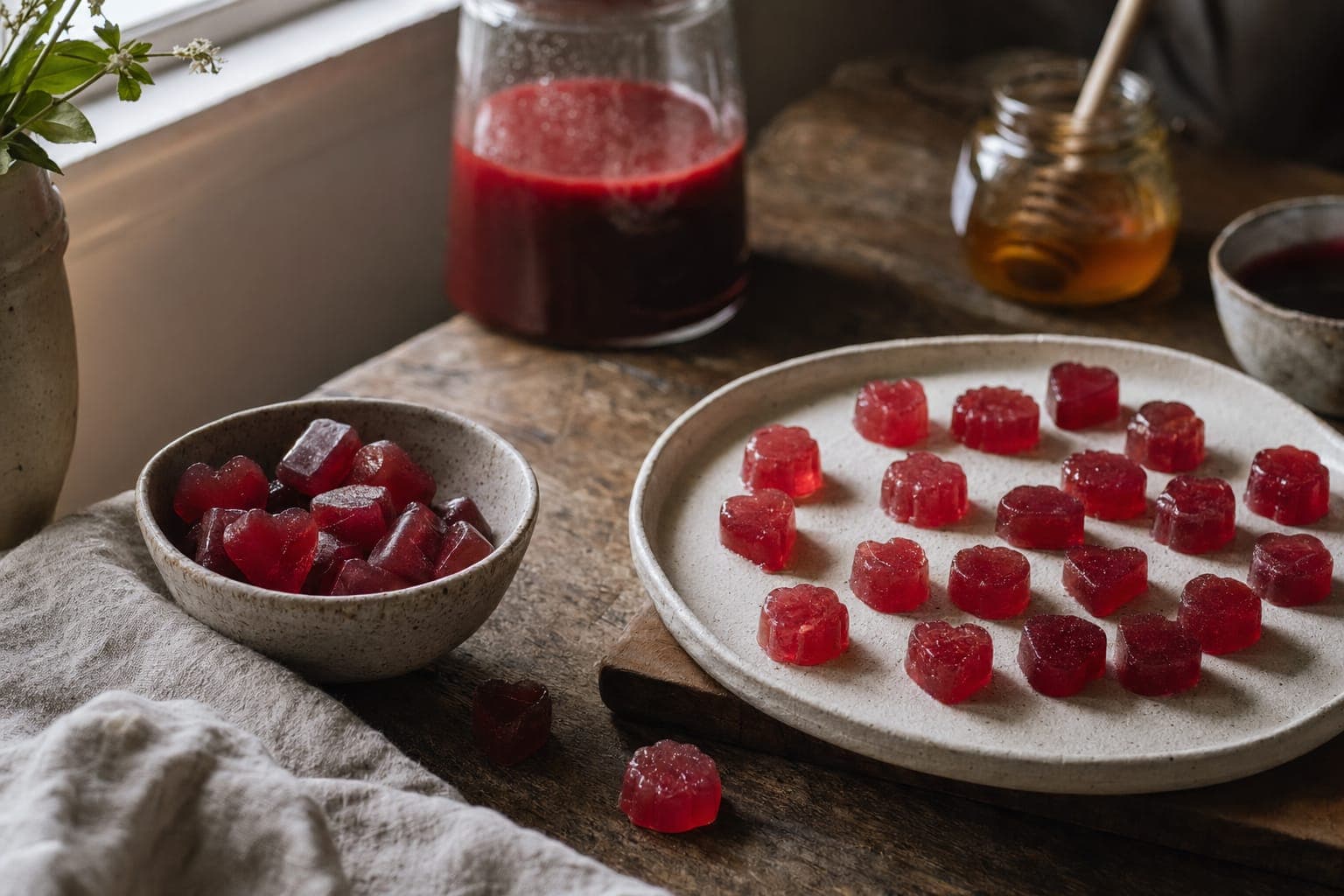
How to Make Your Own Gelatine Gummies
A simple recipe for homemade gelatine gummies using grass-fed gelatine, fresh juice, and raw honey. Better than shop-bought, kids love them.
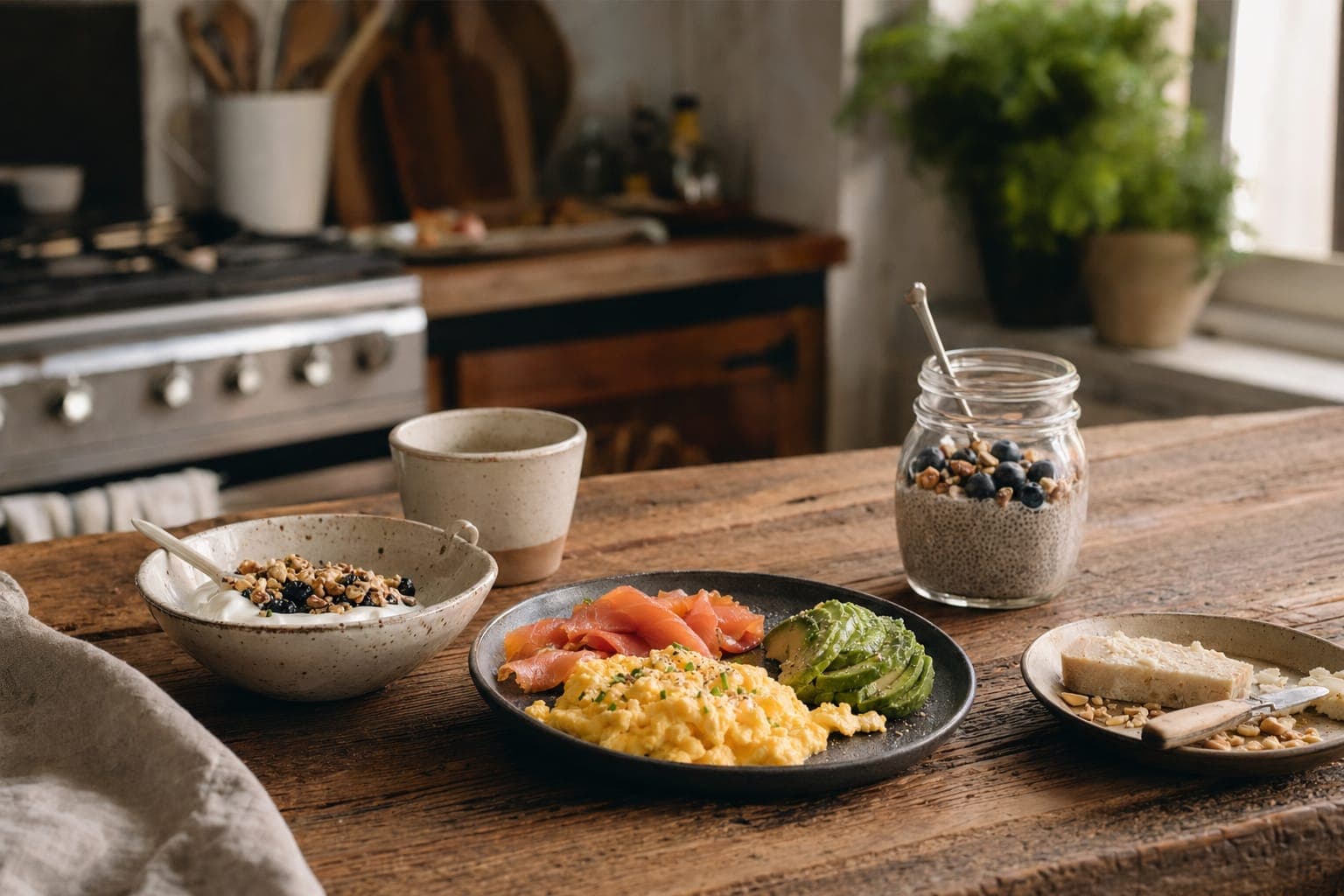
5-Minute High-Protein Breakfasts Using Organised
Quick, high-protein breakfast ideas using Organised. Five recipes you can make in minutes with real food. No fussing around.

Organised Protein Pancakes: A Weekend Favourite
A high-protein pancake recipe using beef protein, eggs, and raw milk. Cooked in cast iron, naturally sweetened with banana and honey. Real food breakfast.


 Join over 100,000+ members
Build a better food system with us
The Organised community is thousands of people choosing real food and backing the farmers who grow it, all of us trying to leave the world a little better than we found it. If that is what you care about too, you belong here.