The Carnivore Diet: An Honest Assessment
The carnivore diet is gaining real momentum. People are reporting genuine improvements in health, energy, and cognitive function. But the conversation around it has become tribal. Let's look at what's actually happening.

By Niall Kiddle, Founder, Organised

Reviewed by Pedro Rodrigues, Agronomist (farming and sourcing only) ·
7 min read · Published · Updated · 2 cited sources
Makers of the Organised Daily blend, a grass-fed beef organ supplement from regenerative UK farms

You'll find the carnivore diet online in two extreme forms. On one side, enthusiasts who claim it cured every malady from autoimmune disease to ADHD. On the other, nutritionists who insist it's nutritionally incomplete and dangerous. Both are oversimplifying.
The truth is messier, more interesting, and more useful. The carnivore diet works for some people, doesn't work for others, and for some works brilliantly but only for a limited time. Understanding which is which requires stepping outside the tribal camps and looking at what the actual evidence and lived experience tell us.
What the carnivore diet actually is
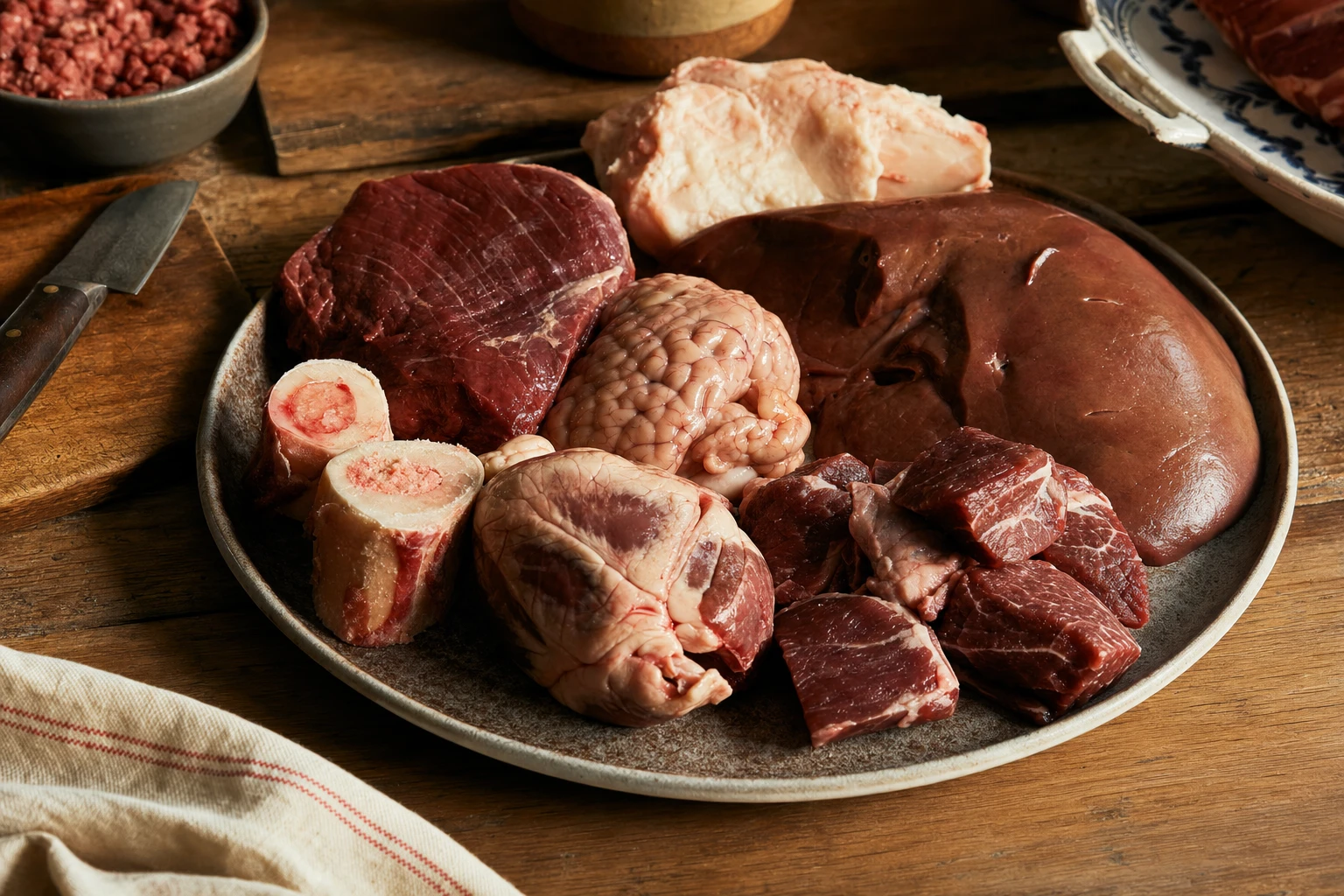
The carnivore diet is straightforward in principle: you eat animal products, nothing else. Meat, organs, bone broth, dairy. Everything else is eliminated. No plants, no carbohydrates, no plant-based foods of any kind.
In practice, most people eating a carnivore diet include muscle meat (beef, pork, lamb, chicken), organs (liver, heart, kidney), eggs, dairy (cheese, butter, yoghurt), and bone broth. Some add salt and spices. Some keep it more austere.
The diet is a subset of animal-based eating, but stricter. It's also fundamentally an elimination diet. The power of carnivore comes not from the presence of something magical in meat, but from the absence of everything else.
Understanding carnivore as an elimination diet is crucial. It's not the meat that's healing. It's what's being removed.
The genuine benefits people are experiencing
There's no point dismissing what people report. Thousands of people have experienced significant health improvements on a carnivore diet. The improvements cluster around specific areas and are worth examining.
Autoimmune symptoms often diminish rapidly. People with inflammatory bowel disease, coeliac disease, and rheumatoid arthritis have reported profound improvement or complete resolution of symptoms. This makes sense. You've eliminated every plant food that might trigger an immune response. You've also eliminated processed foods, vegetable oils, refined carbohydrates, and plant lectins that some people react to intensely.
Mental health improvements are commonly reported. Anxiety decreases. Depression lifts. Cognitive function sharpens. This correlates with stable blood sugar, improved nutrient status, reduced inflammation, and the gut-brain axis normalising after the elimination of foods that were damaging the intestinal lining.
Energy frequently improves. Bloating and digestive distress disappear. Sleep becomes deeper. Skin clears. These changes typically happen within weeks, suggesting something significant is shifting at the metabolic level.
What's crucial to understand is that many of these benefits might result from removing foods that were problematic, not from something unique about meat. If you had undiagnosed food sensitivities to gluten, to seed oils, to nightshade plants, to certain plant fibres, eliminating everything removes the trigger. You don't know if you'd have healed faster on an elimination diet that included safe vegetables.
The fibre question nobody wants to address
This is where the carnivore discussion becomes tribal. Fibre is painted as either essential or completely irrelevant depending which camp you're in.
The mainstream nutrition position is that fibre is universally necessary, full stop. The carnivore position is that fibre is irrelevant or even harmful. Reality is more nuanced.
Humans can survive without plant fibre. You are not going to die without it. Your ancestors didn't always have access to plant foods in quantities that modern Western diets provide. Some populations historically consumed minimal plant fibre. Your digestive system can function without it.
However, fibre does specific things that aren't replicated by meat alone. Fermentable fibres are substrates for colonic bacteria that produce short-chain fatty acids such as butyrate, which is the preferred energy source for colonocytes and supports gut barrier integrity.1
Fibre also affects bowel transit time, nutrient absorption patterns, and lipid metabolism. Removing all fibre removes all of these effects. For some people, this removal is therapeutic. For others, it eventually creates problems. The honest position is: we don't fully understand the long-term implications of permanent zero-fibre diets.
Saying "fibre is unnecessary" isn't wrong. Saying "fibre is irrelevant long-term" is more complicated. You can survive without it. Whether you thrive without it is an individual question.
When carnivore might be legitimate medicine
There are genuine scenarios where carnivore works as medicine, not just as a diet. These are specific, not universal.
If you have untreated coeliac disease and haven't realised it yet, going carnivore will likely make you feel dramatically better very quickly. You've removed gluten and all cross-reactive plant proteins. This is healing, but healing from damage that wouldn't have happened if you'd identified coeliac earlier.
If you have severe dysbiosis from chronic antibiotic use or food sensitivities that damage your gut lining, an elimination diet including carnivore can give your intestinal barrier time to repair whilst being incredibly simple to follow. You're removing all potential triggers and all foods that might physically irritate a damaged gut lining.
If you have FODMAP sensitivities (poorly absorbed carbohydrates that ferment in your gut and cause distension, gas, and pain), meat contains zero FODMAPs. For the subset of people with genuine FODMAP sensitivity, carnivore can be profoundly therapeutic. Again, this isn't the meat being special. It's the absence of the trigger.
If you have late-stage metabolic dysfunction, carnivore simplicity can help. No decisions, no variable carbohydrate timing, no macro calculations. Eat meat, stabilise blood sugar, recover insulin sensitivity. For some people, that simplicity matters more than optimisation.
Get ancestral nutrition guides, free
Two short reads a week on traditional ways of eating, examined with modern evidence.
By signing up you agree to receive emails from us. No spam, unsubscribe anytime.
The concerns worth taking seriously
None of this means carnivore is risk-free, and pretending it is does a disservice to people considering it.
The micronutrient profile of a meat-only diet is incomplete if you're not careful. You can get mineral deficiencies if you're not eating organs, salt, and electrolytes intentionally. You can lose copper, which you need for iron utilisation. You can become depleted in certain nutrients that plant foods supply, even if you're eating organs.
Carnivore-style diets can substantially raise LDL cholesterol in some individuals (sometimes called "lean mass hyper-responders"). Whether elevated LDL on a low-carbohydrate, high-saturated-fat diet carries the same cardiovascular risk as elevated LDL in mixed-diet populations is actively debated.2
The long-term effects on the microbiome are unknown. You might feel brilliant for six months and then experience problems you didn't anticipate. People report this happening. Rebalancing the microbiota after months of zero fibre can take time.
Your ability to digest and handle plant foods might actually decline. After months of zero plants, some people find they can't tolerate plant foods when they try to reintroduce them. Your gut bacteria adapt to your diet. If you eliminate all plants, you lose the bacteria that digest plants. Getting them back takes time.





1 of 9
Daily blend
100,000+ thriving families4.9 on Trustpilot
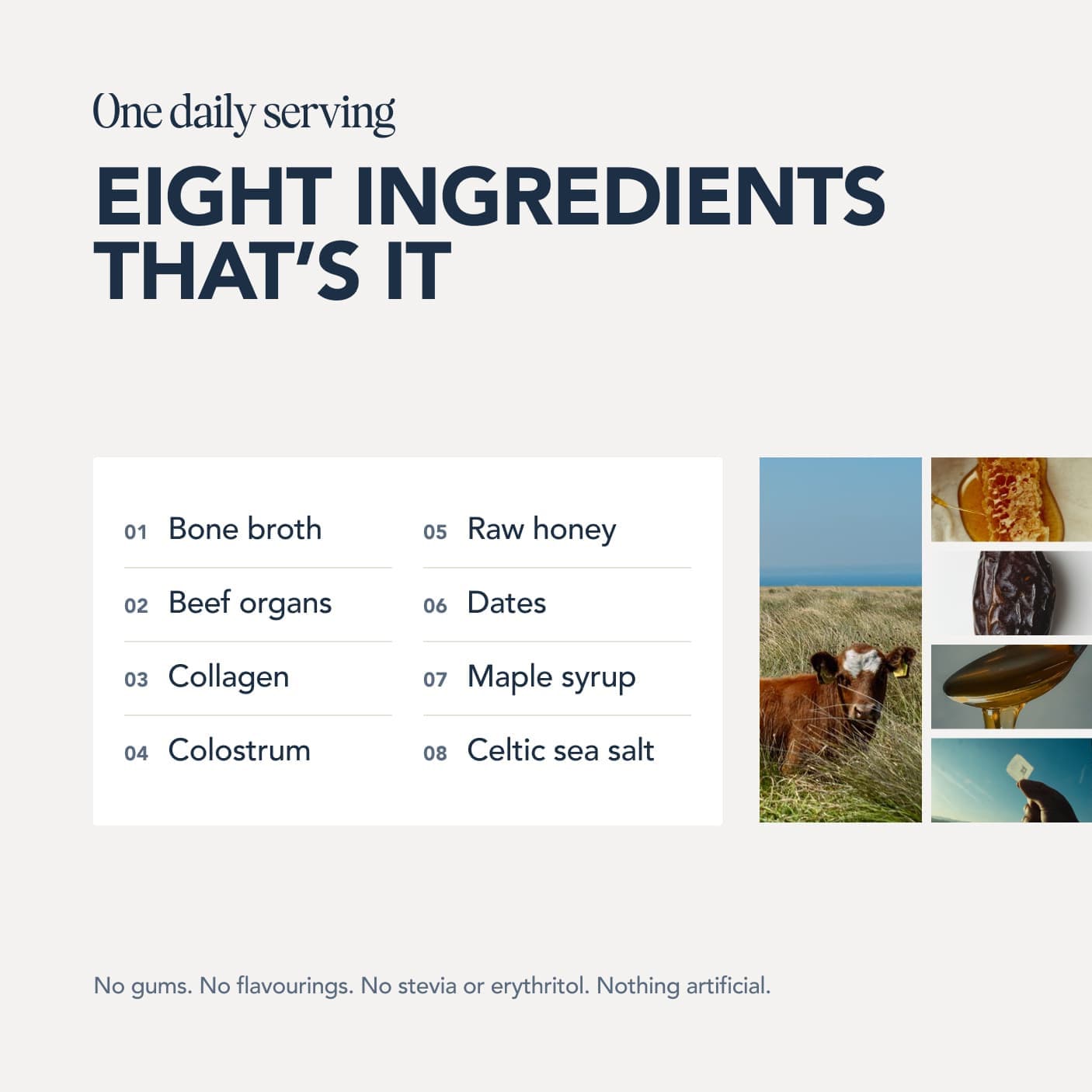
Eight real ingredients built around grass-fed beef organs, collagen and colostrum. Nothing synthetic added.
Free with your first order, worth £38. Plus £10 off the pouch with a subscription.



Free UK shipping · Made in England · 100 day money back guarantee on your first pouch · Skip, pause or cancel anytime
Who might not thrive on this approach
Carnivore is being marketed as a universal solution. It's not. Some people genuinely feel worse on carnivore.
If you're already healthy and don't have autoimmune disease, dysbiosis, or food sensitivities, carnivore might not improve your health. You might actually feel worse: lower energy, worse sleep, mood changes, hormonal disruption. If you're already fine, adding nothing but meat might be a step backwards.
If you enjoy plants, if you crave vegetables and fruit, if you feel satiated by salads and find meat-heavy meals unpleasant, forcing yourself into carnivore is not a sound strategy. Dietary compliance matters. If you're fighting your appetite constantly, you won't stick with it, and the stress of fighting it counteracts the benefits.
If you have a history of orthorexia or restrictive eating patterns, carnivore can become psychologically problematic. The simplicity can slide into obsession. The restriction can activate disordered patterns you thought you'd left behind. This is real, and it needs to be taken seriously.
If you have high exercise volume, particularly high-intensity training or endurance work, sustained carnivore without carbohydrates makes recovery harder and performance typically declines. Some athletes thrive on meat-based diets with carbs added around training. Pure zero-carb carnivore usually isn't optimal for serious performance.
The most honest assessment of carnivore is this: it's a legitimate elimination diet for specific health problems. It's not a universal optimal diet for all humans. Treating it as one misses the point.
The framing that actually helps
Carnivore works best when framed as an elimination protocol, not a permanent diet. You do carnivore for three months. You identify what's actually happening. You notice which symptoms disappear. Then you carefully reintroduce foods, starting with the least likely to be problematic, and you observe what triggers what.
This approach reveals information that's incredibly valuable. You might discover you have a dairy sensitivity you'd never have spotted. You might realise that adding back white rice causes no problems but reintroducing grains causes inflammation within hours. You might discover that certain vegetables are fine but others aren't.
After three months on carnivore, you know your body's vulnerabilities. You can then build a diet that works for you specifically, not a diet that works for the internet's loudest carnivore advocates.
Some people discover that they genuinely feel best on permanent carnivore, or something very close to it. That's fine. Honour what your body tells you. Others discover they feel better with the addition of specific vegetables, fruit, and carbohydrates. That's equally fine.
The framework that helps is empirical and individual: try it, measure what changes, decide what works for your body, and build from there. The tribal insistence that carnivore is universally healing or universally dangerous misses the actual usefulness of the approach.
References
Every source below was checked on 27 August 2026. Each PubMed, PMC and DOI identifier was resolved against NCBI or Crossref, and what it opens is printed under the citation, so you can see the link goes where the citation says without leaving the page. Where a citation and its identifier disagreed, the citation was corrected to the record or the reference was deleted along with the sentence marker that pointed at it, and where the resolved paper turned out not to support the sentence, the sentence was cut back to what it does support. Borrowed authority is worse than none, because it looks like rigour.
- Holscher HD. Dietary fiber and prebiotics and the gastrointestinal microbiota. Gut Microbes. 2017. https://pmc.ncbi.nlm.nih.gov/articles/PMC5390821/Checked 27 August 2026: PMC5390821 opens Holscher HD, Dietary fiber and prebiotics and the gastrointestinal microbiota. Gut Microbes 2017;8(2):172-184. PubMed indexes it as: Review.
- Lennerz BS, Mey JT, Henn OH, Ludwig DS. Behavioral Characteristics and Self-Reported Health Status among 2029 Adults Consuming a "Carnivore Diet". Curr Dev Nutr. 2021. https://pmc.ncbi.nlm.nih.gov/articles/PMC8684475/Checked 27 August 2026: PMC8684475 opens Lennerz BS, Mey JT, Henn OH et al, Behavioral Characteristics and Self-Reported Health Status among 2029 Adults Consuming a "Carnivore Diet". Curr Dev Nutr 2021;5(12):nzab133.
Who wrote and reviewed this guide
Niall Kiddle
Author · Founder, Organised
Niall is the founder of Organised. He started the company in 2024 after fixing his own health the slow way: in 2022 he swapped a cupboard of synthetic supplements for real food, raw milk, organ meats, bone broth and honey, and felt the difference within months.
Areas of expertise: Ancestral nutrition, Organ meats, Whole-food supplementation, Gut health, Regenerative sourcing
Read Niall's full profile
Pedro Rodrigues
Reviewer · Agronomist (farming and sourcing only)
Pedro is the agronomist Organised works with on farming and sourcing. His job on the guides is to keep the science honest: he reviews what we publish about soil health, regenerative agriculture, grazing and the way food is actually produced.
Areas of expertise: Regenerative agriculture, Agronomy, Soil health, Grass-fed farming, Food sourcing
Reviewed this guide on
Read Pedro's full profileBrowse the guides library
All guidesKeep reading
Ancestral
Animal-Based Eating: What It Is and Why It's Growing
What is animal-based eating? A guide to nose-to-tail nutrition, why it's gaining traction, and how it differs from pure carnivore.

Ancestral
Paleo, Primal, Carnivore, Animal-Based: What's the Difference?
What's the difference between paleo, primal, carnivore, and animal-based eating? A clear breakdown of each framework and when to use them.

Ancestral
Cofactors: Why Isolated Nutrients Don't Work as Well
What are cofactors? How nutrients work together, why isolated supplements fail, and which foods provide the complete nutritional picture.
Real food, made effortless
Bring it into my routineA few ways to use it
All recipes
Organised Protein Pancakes: A Weekend Favourite
A high-protein pancake recipe using beef protein, eggs, and raw milk. Cooked in cast iron, naturally sweetened with banana and honey. Real food breakfast.

Ancestral Breakfast Ideas from Around the World
Traditional breakfast recipes from cultures that got nutrition right. Japanese, Turkish, Scottish, and more. Whole-food breakfast inspiration.

Organ Bolognese: The Family Dinner That Heals
Practical organ meat recipe using fresh beef liver and heart. Family-friendly bolognese that bridges supplements to whole food.


 Join over 100,000+ members
Build a better food system with us
The Organised community is thousands of people choosing real food and backing the farmers who grow it, all of us trying to leave the world a little better than we found it. If that is what you care about too, you belong here.