Paleo, Primal, Carnivore, Animal-Based: What's the Difference?
These diets are often lumped together, but they're distinctly different frameworks. Understanding the differences helps you choose the approach that fits your health goals.
By Niall Kiddle, Founder, Organised

Reviewed by Pedro Rodrigues, Agronomist (farming and sourcing only) ·
6 min read · Published · Updated · 2 cited sources
Makers of the Organised Daily blend, a grass-fed beef organ supplement from regenerative UK farms
When someone mentions eating ancestrally, you'll hear four frameworks discussed almost interchangeably. Paleo, primal, carnivore, animal-based. They're related. They're not the same. Understanding what separates them is crucial if you're going to choose an approach that actually fits your life and your health needs.
Each framework is rooted in sound nutritional thinking. Each has a specific purpose and a specific moment where it works best. None of them are universal solutions, and pretending they are misses the actual value each one provides.
Why these frameworks matter
These aren't just marketing categories or tribal labels. Each framework emerged from a specific insight about human nutrition and ancestral eating patterns. Each attracts people for different reasons.
Paleo emerged from anthropological observation. Primal evolved from paleo to address some of its stricter limitations. Animal-based emerged as a response to the success people experienced prioritising animal foods. Carnivore emerged as an elimination approach to remove potential food sensitivities entirely.
Think of them as tools in a toolbox, not as ideologies to defend. Your job is to understand which tool fits your situation and use it without attachment to the label.
Paleo: the original ancestral framework
Paleo is based on simple logic: eat foods available to your ancestral hunter-gatherer populations. Don't eat foods invented by agriculture. No grains, no legumes, no dairy, no refined seed oils, no processed foods.1
What you do eat: meat, fish, vegetables, fruit, nuts, seeds, healthy fats (olive oil, avocado oil), and foods like honey when available. Some paleo frameworks include white potatoes, others exclude them.
The appeal of paleo is that it's ancestrally grounded and nutritionally complete. You get animal products (protein, micronutrients), plant foods (vegetables, fruit, nuts), and you avoid the foods most likely to cause inflammation or digestive problems (grains, legumes, seed oils).
The limitation of paleo is that it requires constant vigilance. You're checking ingredients on everything. You're explaining your food choices in social situations. You're managing macros across multiple food groups. It works as a long-term framework for people willing to live intentionally about food, but it's cognitively demanding.
Paleo is ancestrally informed but not ancestrally accurate. Your hunter-gatherer ancestors ate what was available, not according to a philosophical framework. Paleo is the framework we built to approximate what they ate.
Primal: paleo's permissive cousin
Primal takes paleo as a foundation and adds strategic flexibility. The core is the same: no grains, no legumes, no processed foods. But primal explicitly includes dairy (particularly full-fat dairy), allows for occasional white potatoes, and is more relaxed about fruit intake.
Primal also emphasises movement and lifestyle factors more heavily than paleo does. It's not just about food. It's about sleep, sunlight, play, and recovery as essential parts of health.
The appeal of primal is that it's more sustainable than strict paleo. You're not cutting out entire food groups arbitrarily. You're simply avoiding industrial foods and prioritising whole foods. If dairy doesn't cause you problems, you keep it. If white potatoes don't spike your blood sugar, you eat them.
The limitation is that it requires the same self-experimentation and iteration that paleo does. There's no standard "primal diet". It's a framework you customise to your body and circumstances.
Animal-based: the nutrient hierarchy
Animal-based eating starts from a different first principle than paleo. Instead of asking "what would my ancestors eat?", it asks "what's nutritionally densest and most bioavailable?" The answer is animal foods.
Animal-based prioritises animal foods as the foundation of the diet: meat, organs, dairy, eggs. Then strategically adds plant foods where they contribute value. Honey, fruit, and select vegetables. But plants are supplementary, not central.
What you don't eat: grains, legumes, processed foods. What you do eat is nutrient density above all else. If it doesn't contribute micronutrients that matter, it probably isn't included.
The appeal of animal-based eating is philosophical coherence. You're eating for one purpose: maximal micronutrient intake. You're not managing multiple food groups or balancing competing nutritional needs. You're optimising for nutrient density and calling it done.
The limitation is sourcing and cost. If you're eating nose-to-tail, you're shopping differently than most people. You're paying more. You're having conversations about where organs come from. This is worth it, but it's a material change in lifestyle.
Get ancestral nutrition guides, free
Two short reads a week on traditional ways of eating, examined with modern evidence.
By signing up you agree to receive emails from us. No spam, unsubscribe anytime.
Carnivore: the elimination endpoint
Carnivore is the most restrictive framework: you eat animal products and nothing else. Meat, organs, dairy, eggs, bone broth. No plants whatsoever.2
Carnivore is explicitly a clinical elimination diet. Its purpose is diagnostic. You remove everything that might be problematic and identify what's actually causing your symptoms. It's a tool, not a permanent diet for most people.
The appeal of carnivore is its radical simplicity and the fact that it works as medicine for specific people. If you have severe dysbiosis, if you have multiple food sensitivities, if you have autoimmune disease, carnivore can reset your gut and your immune system in ways more complex diets can't.
The limitation is sustainability and nutritional completeness. You lose the prebiotic fibre that feeds beneficial bacteria. You lose the phytochemical diversity of plants. Over time, the long-term implications of permanent zero-fibre eating are unknown. For this reason, carnivore works best as a three-to-six month intervention, not a forever diet for most people.
Carnivore isn't ancestral. No human population ate this way long-term. It's a modern elimination diet that happens to have powerful effects for specific health problems.
Quick comparison table
- Paleo: Meat, fish, vegetables, fruit, nuts, healthy fats. No grains, legumes, dairy, seed oils.
- Primal: Paleo plus dairy and white potatoes. More flexible, lifestyle-focused.
- Animal-based: Primarily animal foods (meat, organs, eggs, dairy). Strategic plant additions (honey, fruit, select vegetables).
- Carnivore: Animal products only. No plants. Primarily used as elimination protocol.


1 of 9
Daily blend
100,000+ thriving families4.9 on Trustpilot
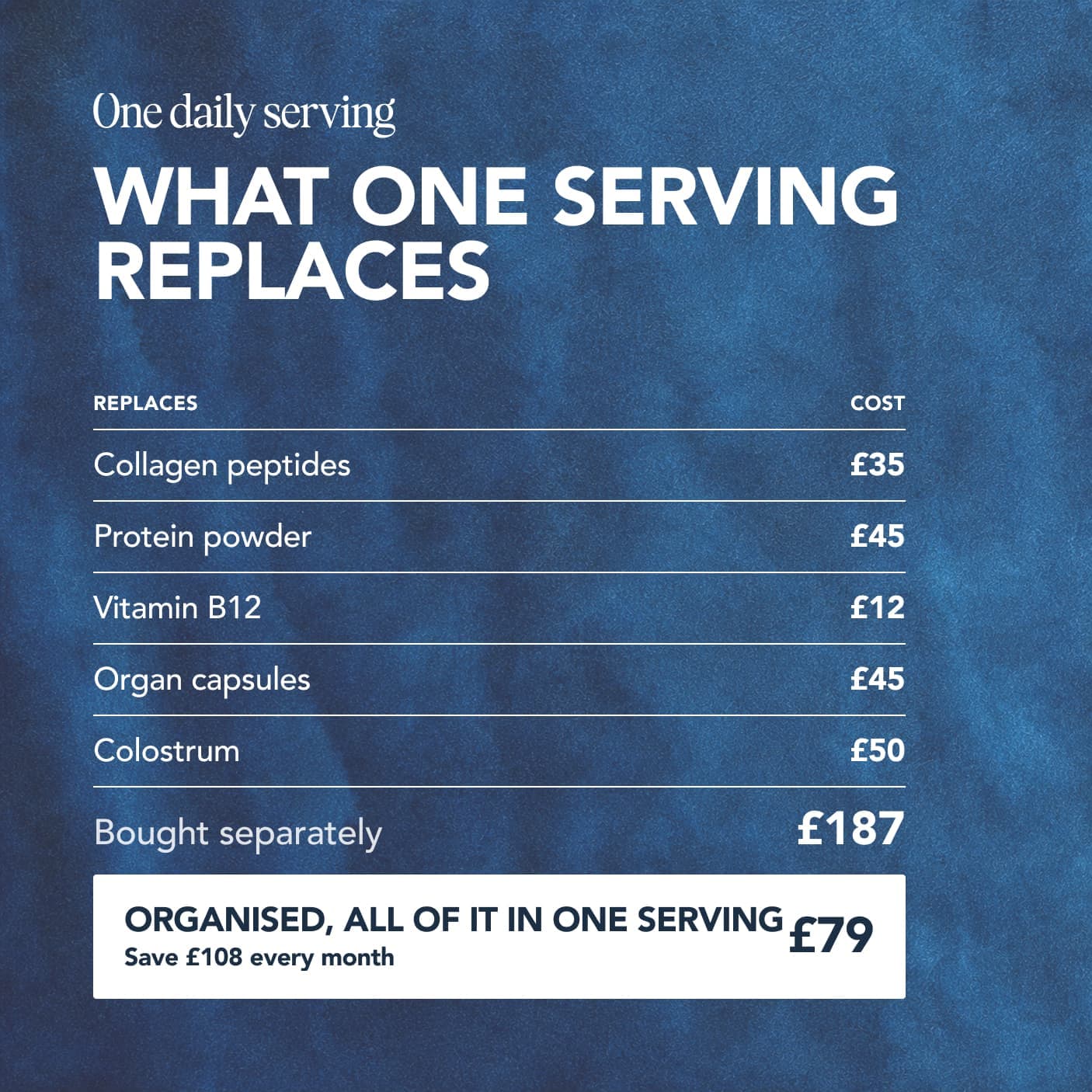
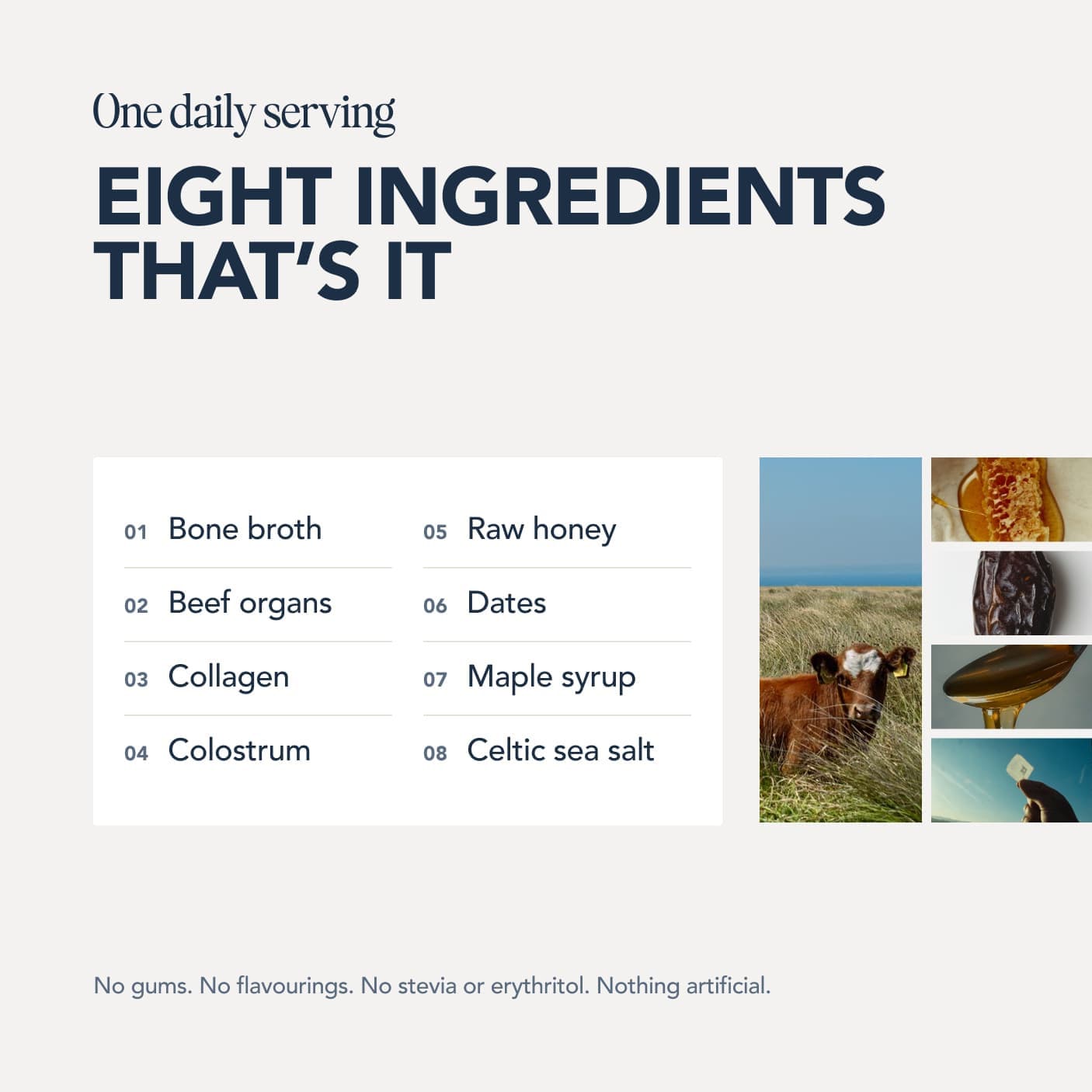
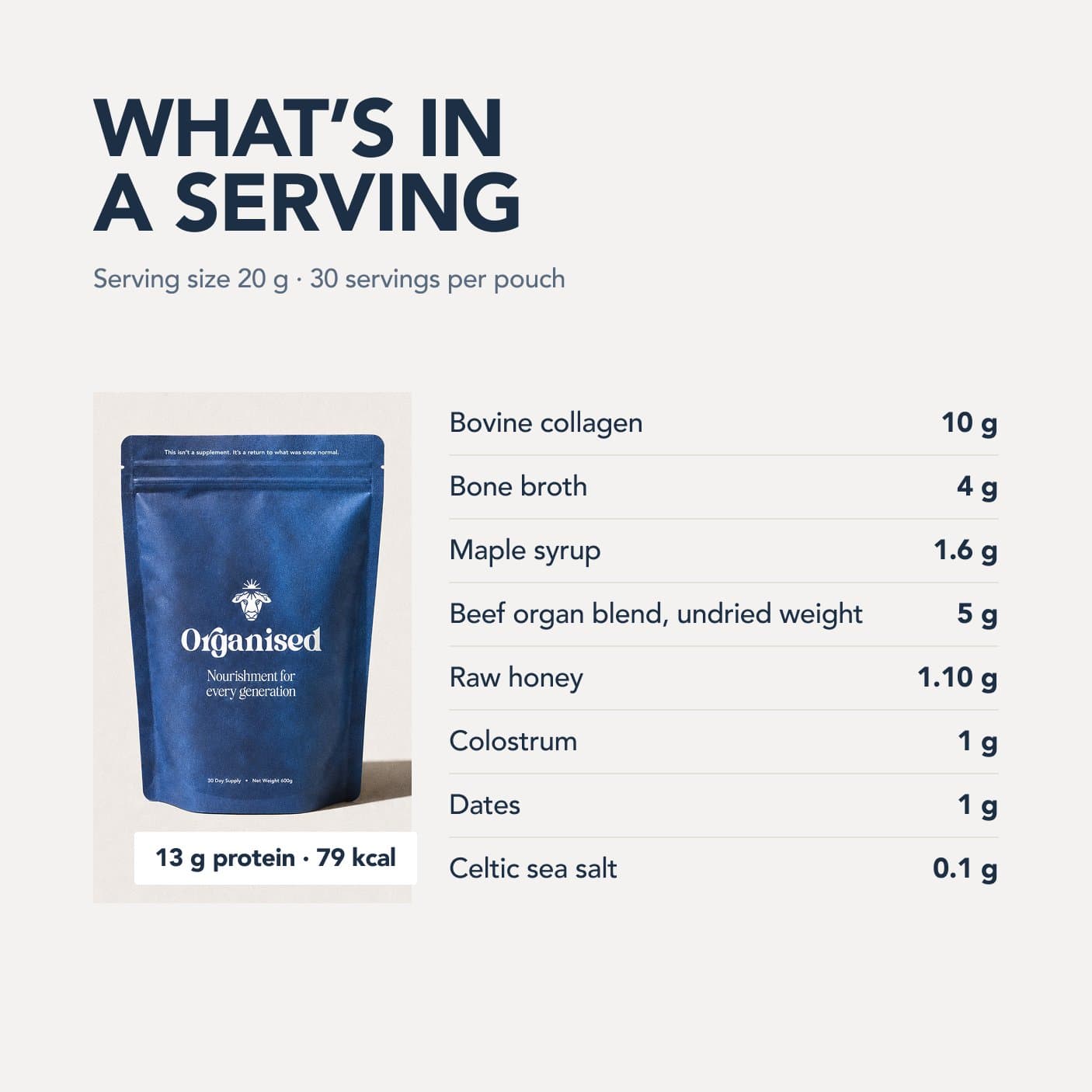
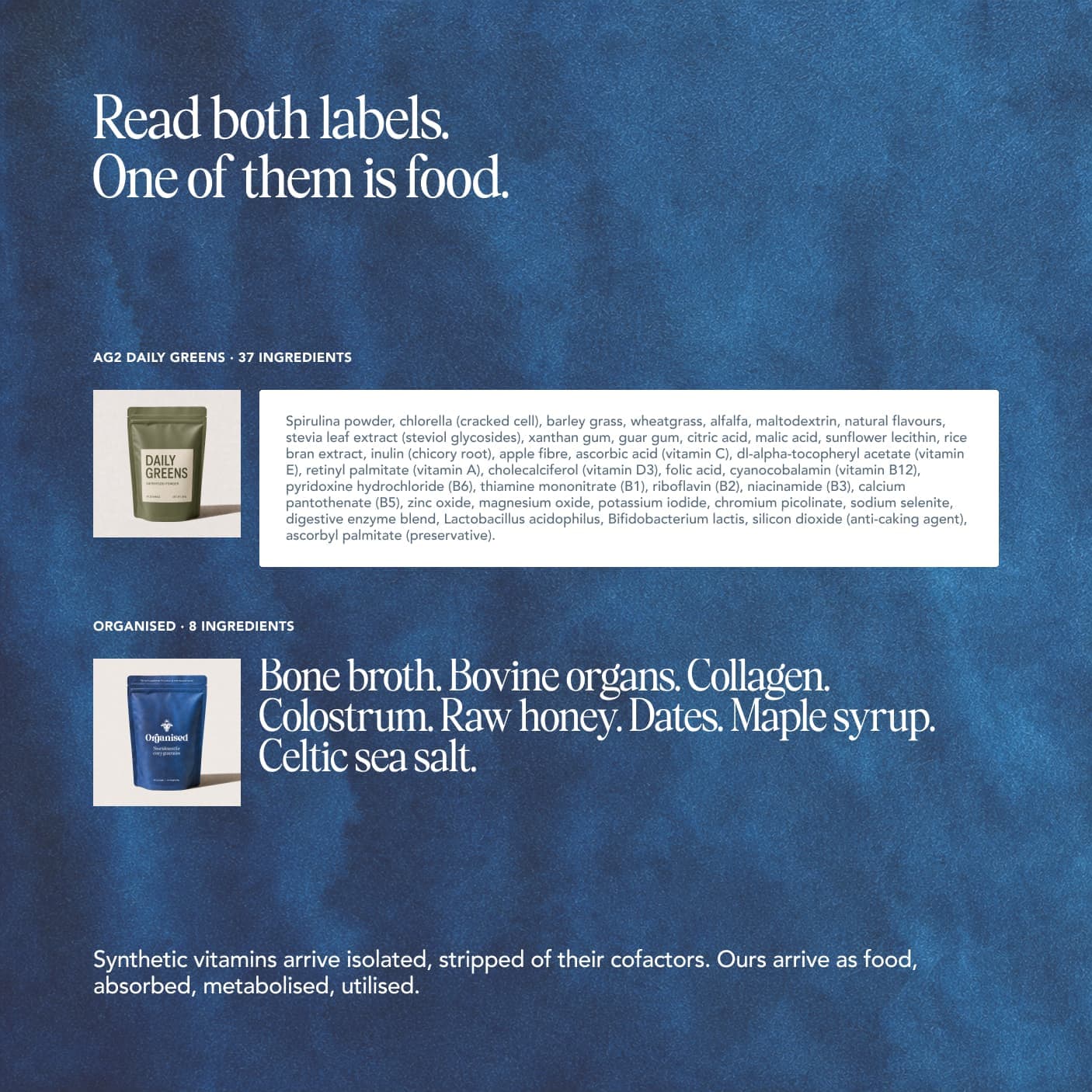
Eight real ingredients built around grass-fed beef organs, collagen and colostrum. Nothing synthetic added.
Free with your first order, worth £38. Plus £10 off the pouch with a subscription.


Free UK shipping · Made in England · 100 day money back guarantee on your first pouch · Skip, pause or cancel anytime
How to choose what fits
Start with where you are. If you're coming from a standard Western diet and you have autoimmune disease or significant dysbiosis, carnivore for three months might be appropriate. It removes everything. It lets your gut reset. Then you reintroduce gradually and you learn what works.
If you're relatively healthy but you want to optimise, start with paleo or primal. These are nutritionally complete, ancestrally informed, and sustainable long-term. Try them for three months. Notice what changes. Keep what works, release what doesn't.
If you're focused on nutrient density and you have access to good animal products, animal-based eating might be your long-term framework. It's simpler than paleo (less thinking about macros), more complete than carnivore (you keep beneficial plants), and philosophically coherent.
If you're trying to build sustainable health habits that fit your life, primal is often the sweet spot. It's flexible enough to work across social situations, strict enough to exclude the foods causing problems, and lifestyle-focused in a way that addresses the whole picture.
The wrong framework is the one you can't sustain. The right framework is the one that serves your health, that you can maintain without constant fight, and that aligns with your values and your access to food.
These frameworks are tools for different purposes at different times. You might eat paleo for a decade, shift to animal-based for a phase of intensive health recovery, then move to primal for sustainability. These aren't forever commitments. They're experiments that serve specific goals.
The framework that connects them all
What unites paleo, primal, animal-based, and carnivore is a single principle: whole foods, minimal processing, and foods chosen for their actual effect on your health, not because dietary guidelines or convenience recommend them.
Every one of these frameworks represents a rejection of standard modern nutrition and a return to eating in a way that has been tested across thousands of years and across dozens of cultures. They're all better than the standard American diet. They're all better than the average modern person eating.
The differences matter tactically, in terms of which foods are included and what results you'll see. But strategically, they're all the same: eat real food, prioritise nutrient density, and pay attention to how your body actually responds.
Your job isn't to defend one framework against the others. Your job is to understand the differences, try the approach that fits your current situation, and adjust as your needs change. That flexibility, more than ideological purity, is what creates real, lasting health improvement.
References
Every source below was checked on 27 August 2026. Each PubMed, PMC and DOI identifier was resolved against NCBI or Crossref, and what it opens is printed under the citation, so you can see the link goes where the citation says without leaving the page. Where a citation and its identifier disagreed, the citation was corrected to the record or the reference was deleted along with the sentence marker that pointed at it, and where the resolved paper turned out not to support the sentence, the sentence was cut back to what it does support. Borrowed authority is worse than none, because it looks like rigour.
- Eaton SB, Konner M. Paleolithic nutrition. A consideration of its nature and current implications. N Engl J Med. https://pubmed.ncbi.nlm.nih.gov/2981409/ [accessed May 2026].Checked 27 August 2026: PMID 2981409 opens Eaton SB, Konner M, Paleolithic nutrition. A consideration of its nature and current implications. N Engl J Med 1985;312(5):283-9. PubMed indexes it as: Historical Article, Review.
- Lennerz BS, Mey JT, Henn OH, Ludwig DS. Behavioral Characteristics and Self-Reported Health Status among 2029 Adults Consuming a "Carnivore Diet". Curr Dev Nutr. https://pmc.ncbi.nlm.nih.gov/articles/PMC8684475/ [accessed May 2026].Checked 27 August 2026: PMC8684475 opens Lennerz BS, Mey JT, Henn OH et al, Behavioral Characteristics and Self-Reported Health Status among 2029 Adults Consuming a "Carnivore Diet". Curr Dev Nutr 2021;5(12):nzab133.
Who wrote and reviewed this guide
Niall Kiddle
Author · Founder, Organised
Niall is the founder of Organised. He started the company in 2024 after fixing his own health the slow way: in 2022 he swapped a cupboard of synthetic supplements for real food, raw milk, organ meats, bone broth and honey, and felt the difference within months.
Areas of expertise: Ancestral nutrition, Organ meats, Whole-food supplementation, Gut health, Regenerative sourcing
Read Niall's full profile
Pedro Rodrigues
Reviewer · Agronomist (farming and sourcing only)
Pedro is the agronomist Organised works with on farming and sourcing. His job on the guides is to keep the science honest: he reviews what we publish about soil health, regenerative agriculture, grazing and the way food is actually produced.
Areas of expertise: Regenerative agriculture, Agronomy, Soil health, Grass-fed farming, Food sourcing
Reviewed this guide on
Read Pedro's full profileBrowse the guides library
All guidesKeep reading

Ancestral
The Weston A. Price Legacy: What He Discovered About Traditional Diets
Discover what dentist Weston A. Price learned from 14 indigenous cultures about nutrition, ancestral diets, and the fat-soluble vitamins your body needs.
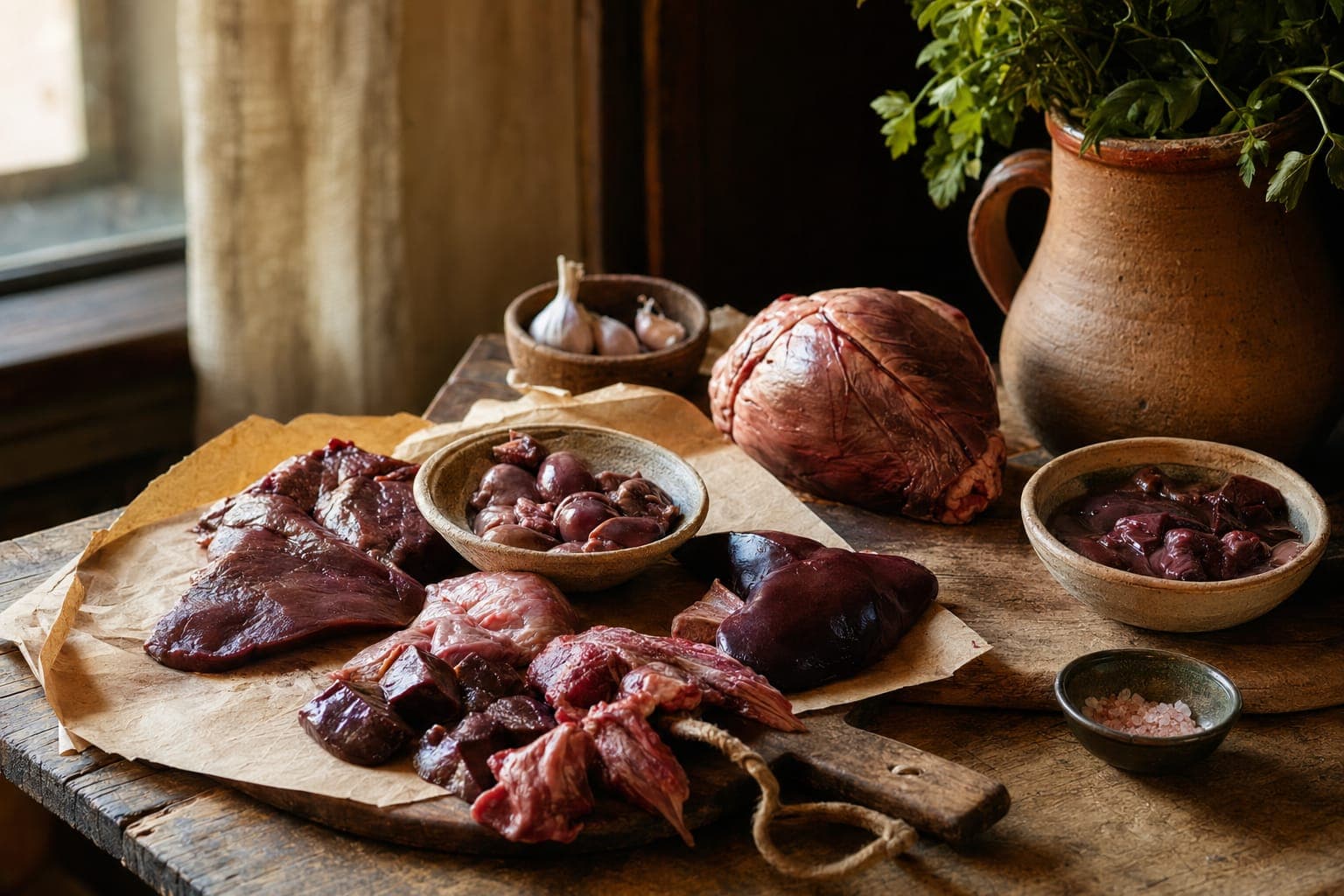
Ancestral
Why Every Traditional Culture Prised Organ Meats
Discover why Inuit, Maasai, and Native American cultures reserved organ meats for hunters and elders. The nutritional truth modern dietitians have overlooked.
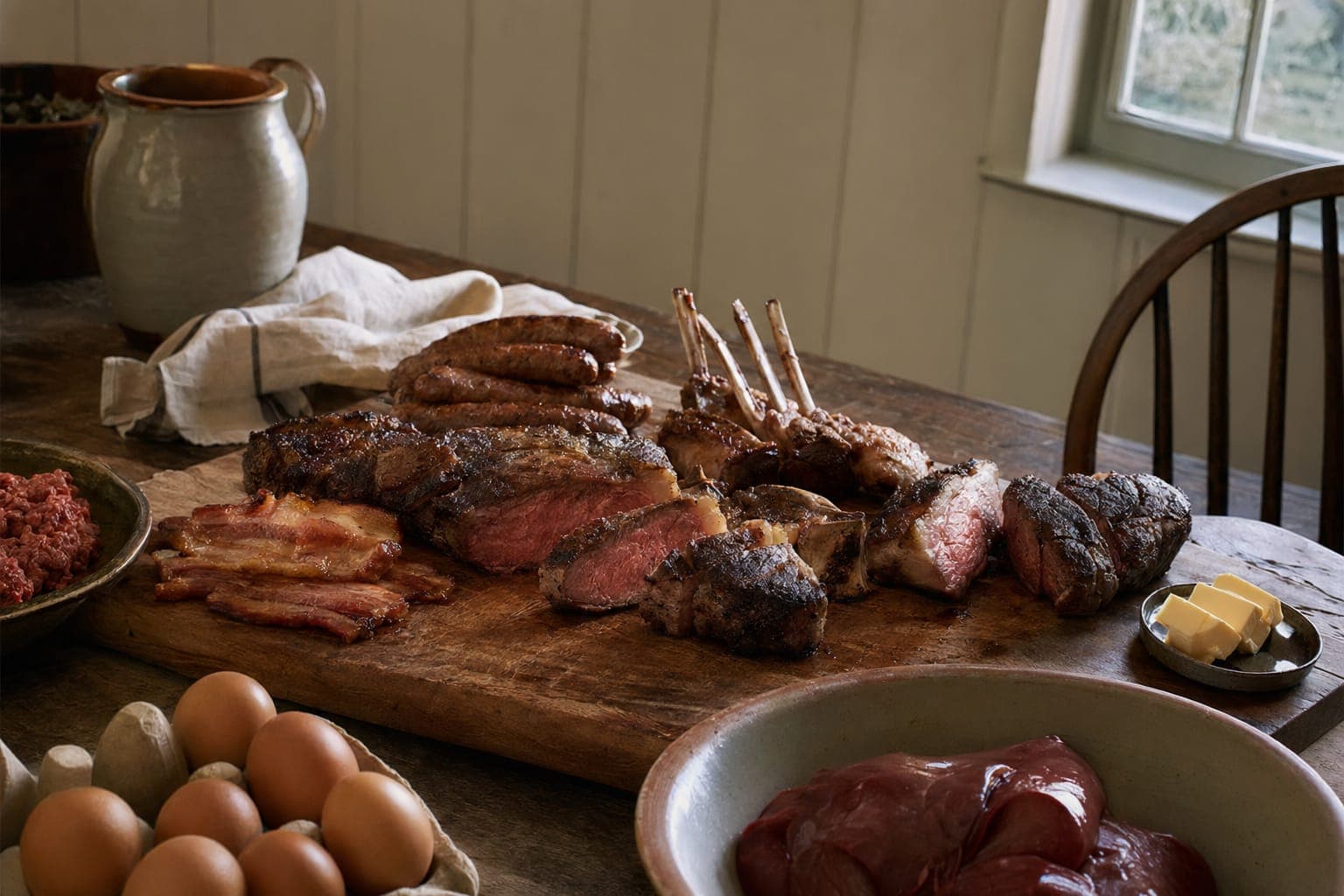
Ancestral
The Carnivore Diet: An Honest Assessment
An unbiased look at the carnivore diet. What works, what doesn't, who might benefit, and why fibre remains a conversation worth having.
Real food, made effortless
Bring it into my routineA few ways to use it
All recipes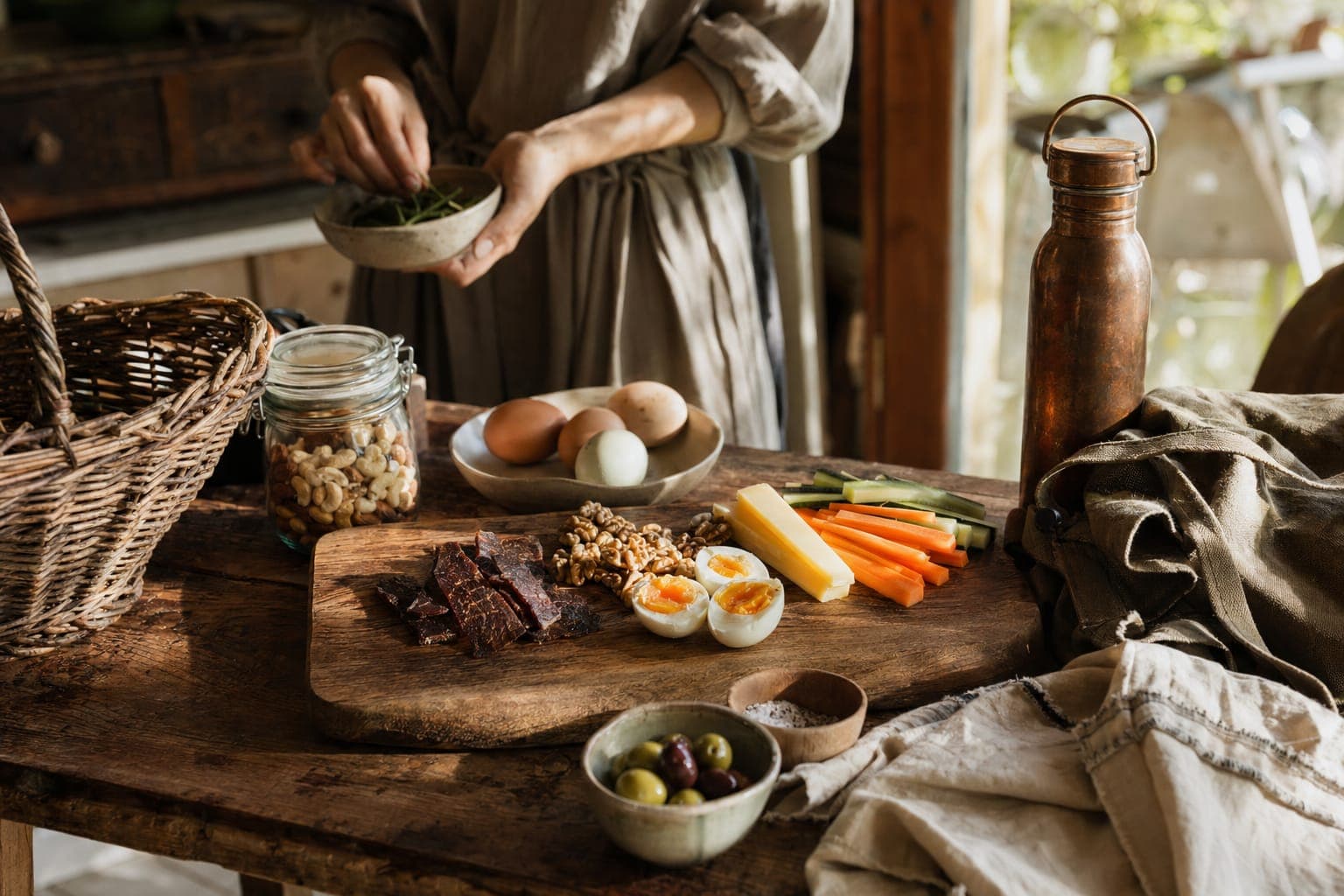
Whole Food Snacks for Busy Days
Practical whole food snacks that travel well and sustain energy. No refined carbs, no seed oils. Real food options for when you're busy.

Bone Broth from Scratch: A Step-by-Step Guide
Step-by-step guide to making bone broth at home. Stovetop, slow cooker, and Instant Pot methods. Rich in collagen and gut-healing minerals.

Matcha Latte Gummies with Collagen and Gelatine
Make visually stunning matcha latte gummies infused with collagen and gelatine. Simple recipe for gut-healing sweets you'll actually want to eat.


 Join over 100,000+ members
Build a better food system with us
The Organised community is thousands of people choosing real food and backing the farmers who grow it, all of us trying to leave the world a little better than we found it. If that is what you care about too, you belong here.