Cofactors: Why Isolated Nutrients Don't Work as Well
B vitamins don't exist in isolation. Iron needs vitamin C and copper. Calcium needs magnesium and vitamin D. Your body runs on nutrient teams, not individual players.

By Niall Kiddle, Founder, Organised

Reviewed by Pedro Rodrigues, Agronomist (farming and sourcing only) ·
7 min read · Published · Updated · 7 cited sources
Makers of the Organised Daily blend, a grass-fed beef organ supplement from regenerative UK farms

A cofactor is a molecule that works alongside a nutrient to enable a biochemical reaction. It's not the main actor. It's the essential support without which the main actor can't perform.
Understanding cofactors is understanding why isolated nutrient supplementation fails so often. You can take megadoses of a single nutrient. If you don't have the cofactors your body needs to use that nutrient, the nutrient sits in your system, largely useless. Your body compensates. But compensation isn't optimisation.
What cofactors actually are
Magnesium is a cofactor for over 300 enzymatic reactions in your body.1 It doesn't directly do anything. It enables other reactions. It's the helper, not the star.
Copper is a cofactor for iron metabolism. Your body can't properly utilise iron without adequate copper.2 You could take iron supplements all day. Without copper, your haemoglobin production remains impaired.
Vitamin C is a cofactor for collagen synthesis. It's required for the cross-linking that makes collagen strong.3 Without adequate vitamin C, you can eat all the protein and amino acids you want. Your collagen won't be properly formed.
This is how your body works. Complex biochemical systems require multiple players. Isolating one player and ignoring the others doesn't work. It's like running an orchestra with only the violin section and expecting to hear the full symphony.
A nutrient without its cofactors is like a car engine without oil. It might technically function. But it will function poorly and you'll burn out the parts.
B vitamins as a complex
B vitamins are the clearest example of how cofactors work together. There are eight B vitamins: B1 (thiamine), B2 (riboflavin), B3 (niacin), B5 (pantothenic acid), B6 (pyridoxine), B7 (biotin), B9 (folate), and B12 (cobalamin).
These vitamins are called a complex because they work together. B vitamins are cofactors in energy metabolism. Your body extracts energy from food by breaking down carbohydrates, fats, and proteins. B vitamins facilitate every step of that process.
If you take B12 supplementation without adequate B6, folate, and B2, your body can't properly utilise the B12. If you take B6 without B2 and B3, B6 metabolism is impaired. If you take any B vitamin in isolation without the others, you create an imbalance that your body has to compensate for.
This is why B vitamin supplements that contain all eight work better than B12 supplements alone or B6 supplements alone. It's not marketing. It's biochemistry. Your body needs the team.
Traditional foods like liver contain all eight B vitamins in naturally occurring ratios. Your body evolved to receive B vitamins as a complex, in food. When you take them in isolation, you're asking your system to work with incomplete information and incomplete tools.
Iron, vitamin C, and copper
Iron doesn't work in isolation. Iron metabolism is a three-way dance between iron, copper, and vitamin C.
Vitamin C is required to reduce iron from ferric (Fe3+) to ferrous (Fe2+) form so your intestines can absorb it.4 Iron sits in your digestive tract, waiting for vitamin C to make it absorbable. Without adequate vitamin C, your iron absorption plummets regardless of how much iron you eat or supplement.
Copper is required to produce ceruloplasmin, a protein that carries iron in your blood and helps iron move into cells.2 Without adequate copper, iron accumulates in your blood but can't enter your cells. You have iron deficiency with elevated serum iron, a contradiction that only makes sense when you understand cofactors.
This is why taking iron supplements without vitamin C is less effective. This is why people with copper deficiency remain anaemic despite iron supplementation. This is why anaemia is complex, not simple.
Foods that contain iron in absorbable form (like red meat and organs) also contain copper naturally. When you eat liver, you're getting iron, copper, and vitamin B6 (which is also required for haemoglobin synthesis). You're getting a system, not an isolated nutrient.
Iron supplementation without attention to copper and vitamin C status often fails not because iron supplementation doesn't work, but because you're treating one player in a three-person team.
The mineral balance problem
Minerals exist in balance. Calcium and magnesium are in balance. Zinc and copper are in balance. Sodium and potassium are in balance. Disrupt the balance in one direction and you create problems in another.
If you supplement high-dose calcium without adequate magnesium, you push yourself into magnesium deficiency. Symptoms include muscle tension, sleep disruption, and anxiety. You then start taking magnesium supplements. Now you're chasing deficiencies you created through imbalance.
If you supplement high-dose zinc without copper, you create copper deficiency. Copper is needed for iron metabolism, for connective tissue synthesis, for immune function. Zinc-copper balance matters more than either nutrient individually.
This is not unique to supplementation. This can happen with food. If you eat foods very high in one mineral without eating foods containing the counterbalancing mineral, you can create imbalance. But it's less likely because foods naturally contain minerals in more balanced ratios than supplements do.
Whole foods evolved in contexts where minerals were used in ratios that supported human health. When you isolate supplements, you lose those ratios. You have to manually recreate them or accept the imbalance.
Get ancestral nutrition guides, free
Two short reads a week on traditional ways of eating, examined with modern evidence.
By signing up you agree to receive emails from us. No spam, unsubscribe anytime.
Fat-soluble vitamins and their requirements
Vitamins A, D, E, and K are fat-soluble. They require fat for absorption. They require cofactors for utilisation. And they work together.
Vitamin D is required for calcium absorption.5 But vitamin D is only part of the story. You also need vitamin K2 to direct calcium deposition. Without K2, calcium gets deposited in soft tissue instead of bone.6 You have high serum calcium but weak bones.
Vitamin A is required for immune function, for vision, for bone health. But vitamin A is better utilised in the presence of vitamin D. The two work together. Take vitamin A in isolation without vitamin D and your body can't utilise it as efficiently.
Vitamin E protects fats from oxidation. Selenium is required for glutathione peroxidase, which works alongside vitamin E in antioxidant defence.7 Take vitamin E without selenium and you're missing half of your antioxidant system.
Fat-soluble vitamins are found together in foods. Liver contains all four in natural ratios. Egg yolks contain all four. Fatty fish contains them all. When you eat whole foods, you get them together. When you isolate them in supplementation, you lose the synergy.
Why whole foods deliver what supplements can't
Whole foods contain nutrients in naturally occurring ratios. These ratios evolved over millions of years in the context of actual nutrient absorption and utilisation. Your body has adapted to these ratios.
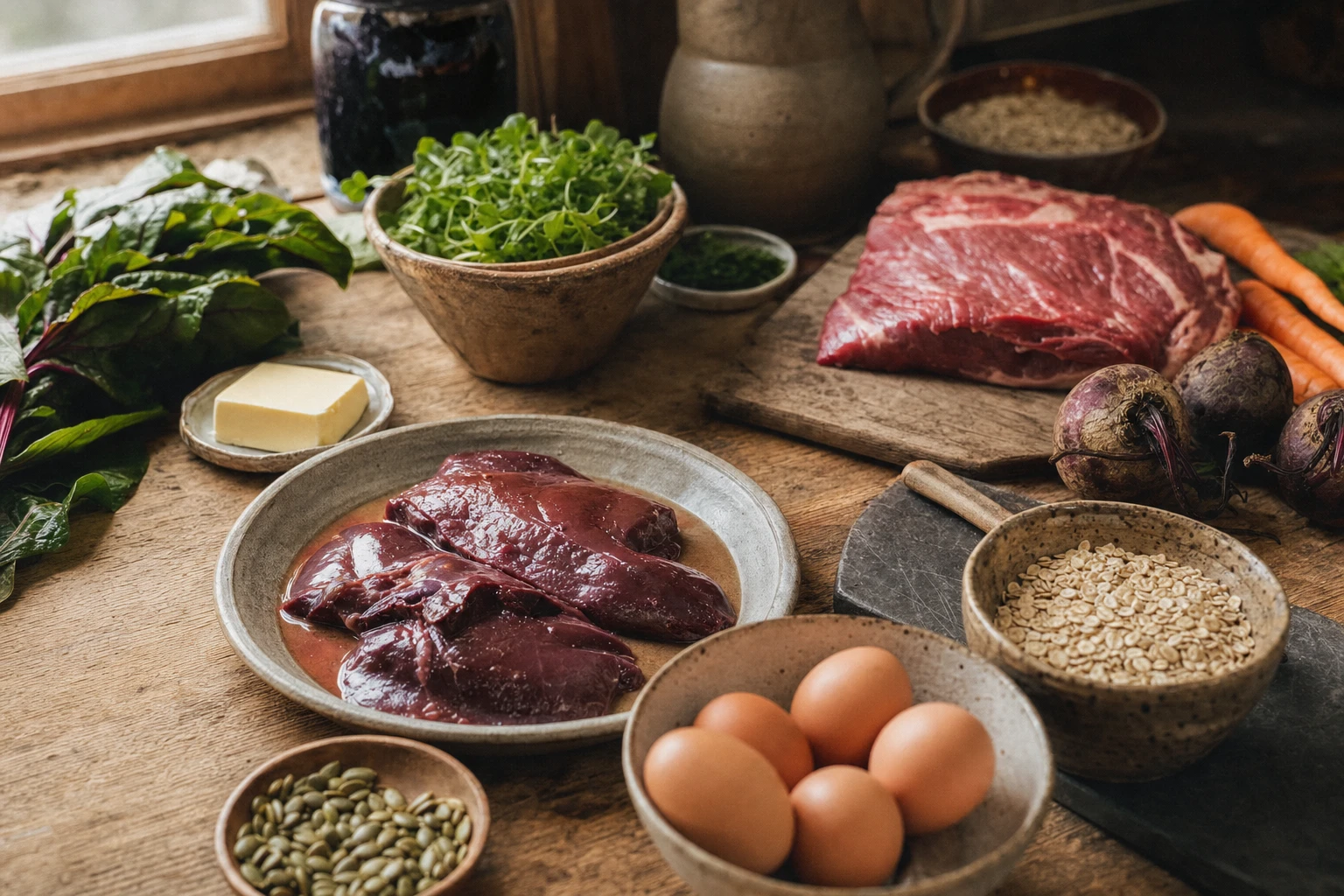
Liver contains iron and copper in a ratio that supports iron metabolism. It contains all B vitamins in ratios refined through evolutionary time. It contains all fat-soluble vitamins in ratios that support their synergistic action. It provides nutrients not as isolated molecules, but as a system.
When you eat whole foods, your body receives nutrients in their functional context. The cofactors are there. The supporting compounds are there. The ratios are appropriate. Your digestive system has evolved to process these ratios. Your metabolism expects these patterns.
When you supplement isolated nutrients, you're forcing your body to work with incomplete information and incomplete tools. Your system compensates. You might feel slightly better. But you're not optimising. You're adapting to suboptimal input.
Whole foods are orchestrated systems. Supplements are individual instruments played out of context. The orchestra will always sound better than soloists, no matter how skilled the musicians.

1 of 9
Daily blend
100,000+ thriving families4.9 on Trustpilot
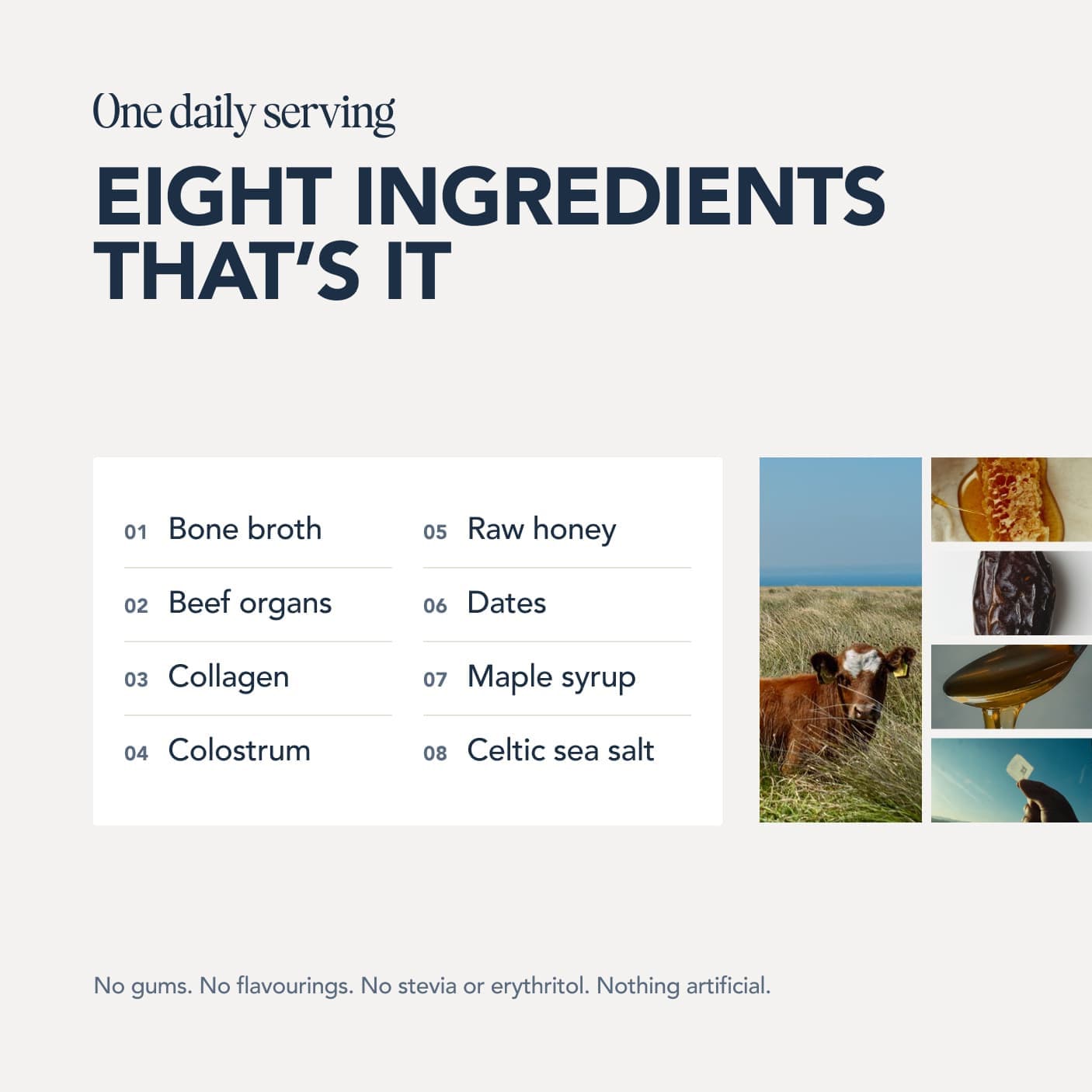
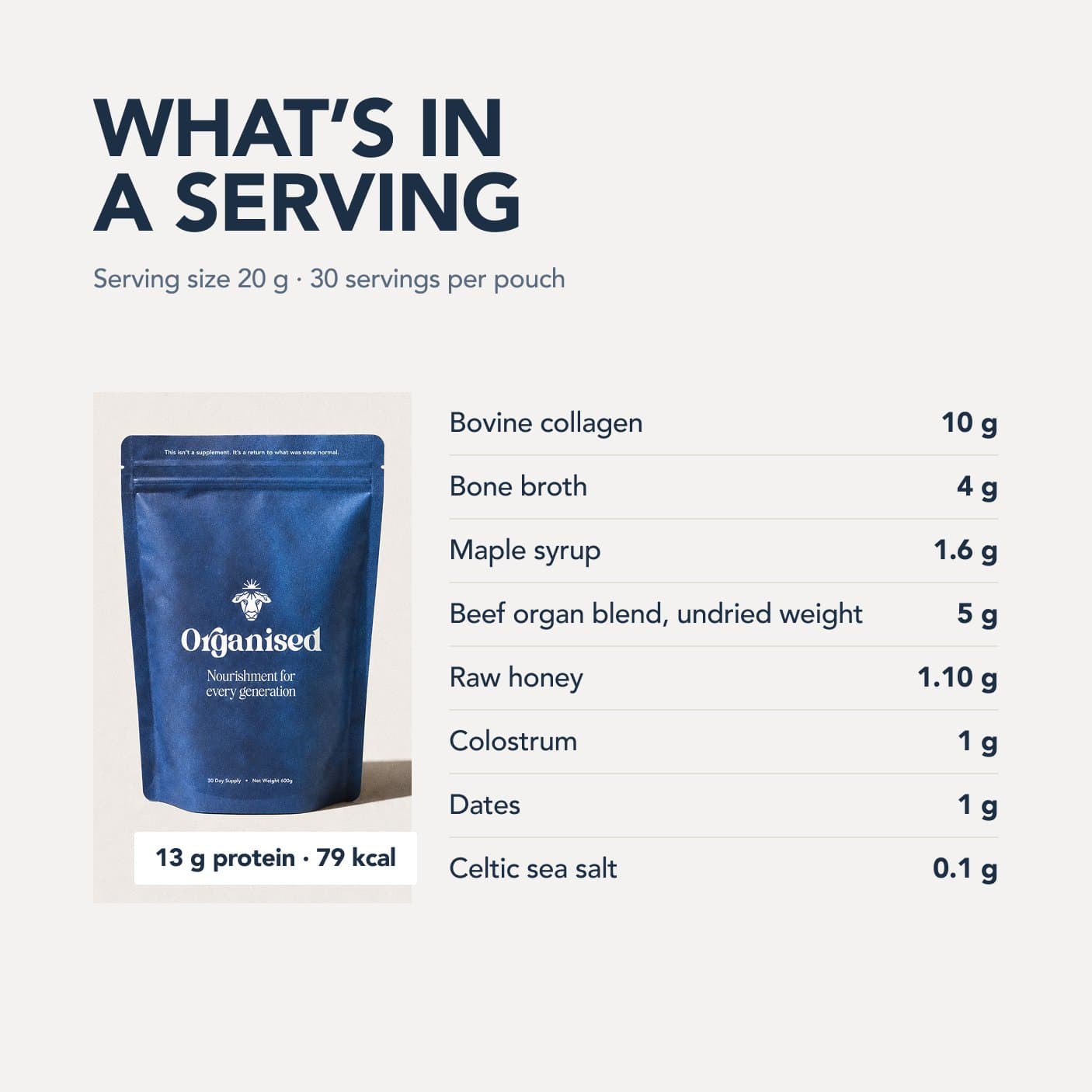
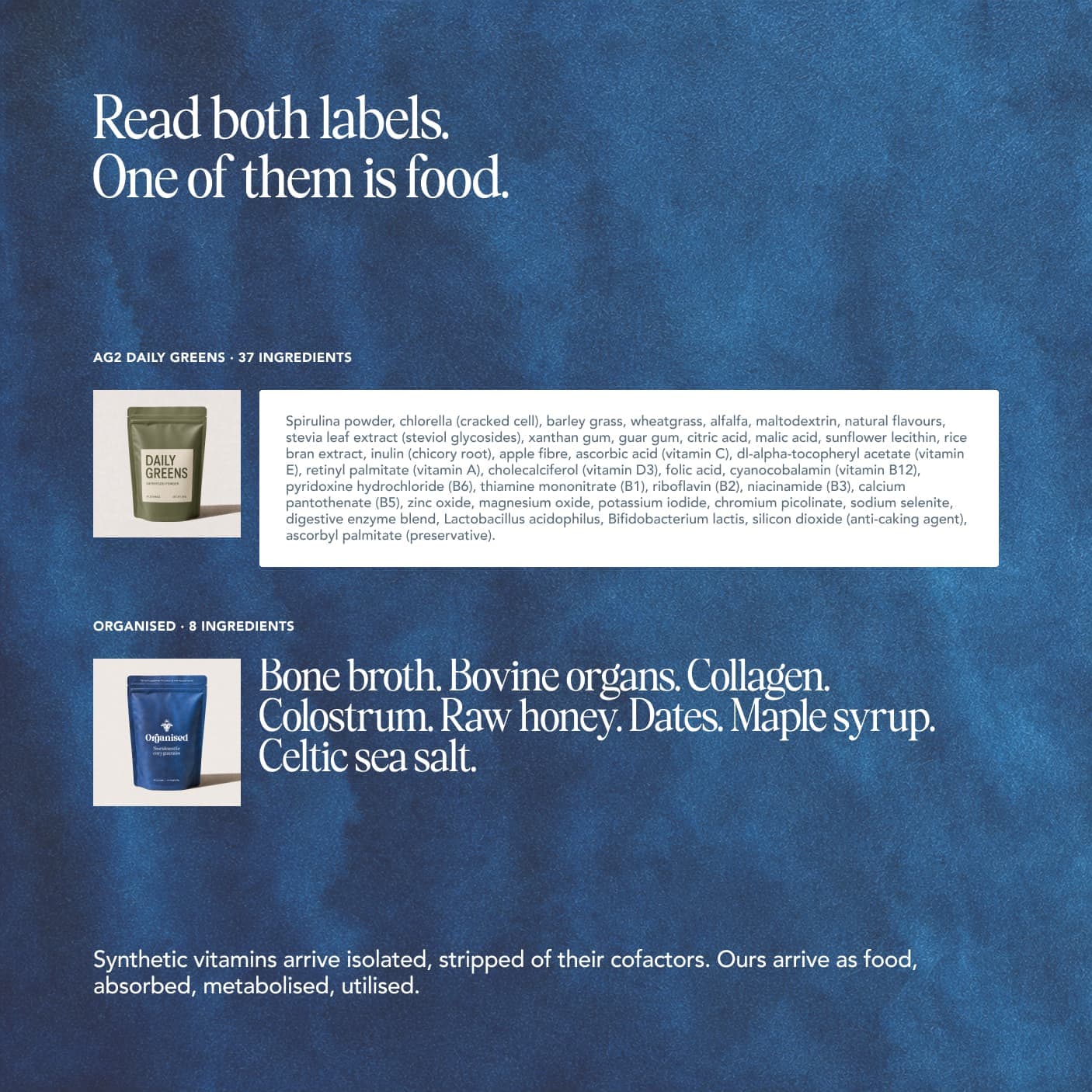
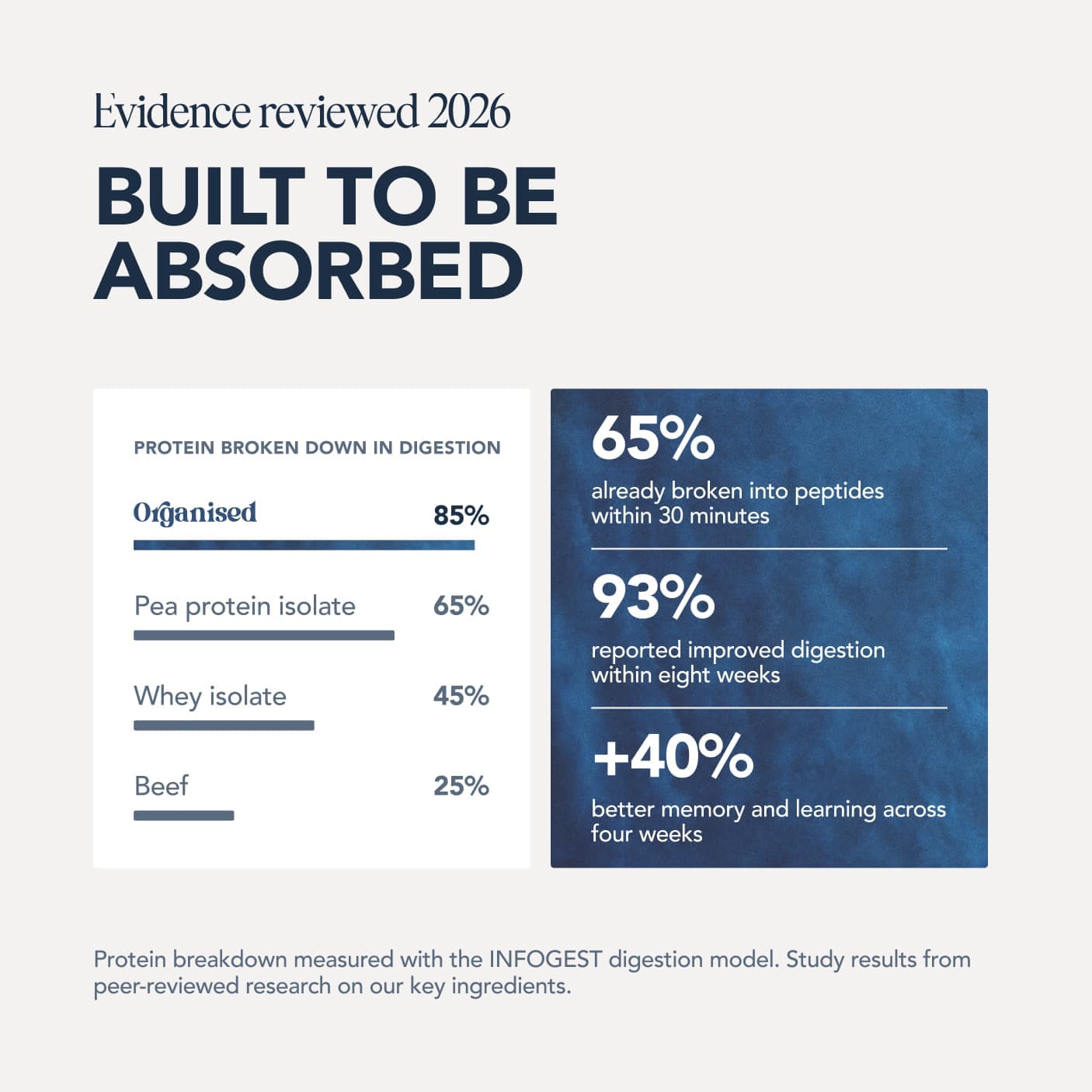
Eight real ingredients built around grass-fed beef organs, collagen and colostrum. Nothing synthetic added.
Free with your first order, worth £38. Plus £10 off the pouch with a subscription.


Free UK shipping · Made in England · 100 day money back guarantee on your first pouch · Skip, pause or cancel anytime
The practical reality
Understanding cofactors means understanding that nutrient supplementation is almost never the answer to health problems. If you're deficient in something, the answer is usually to eat more of the whole foods that contain it.
If you're anaemic, don't start with iron supplementation. Start by eating more red meat and organs. Eat them with vitamin C. Evaluate your copper status. Check your stomach acid. Look at your digestion holistically.
If you're deficient in a B vitamin, eat liver and eggs. Don't take B12 alone. Get the whole B complex in food form, complete with its cofactors.
If you have mineral imbalance, address it through whole foods that contain balanced mineral ratios, not through supplementation of the mineral you tested low in.
Supplementation has a place. When you have a diagnosed, severe deficiency that food can't practically address. When you have a condition that prevents nutrient absorption. When you have no food access to a particular nutrient. In these circumstances, supplementation is medicine.
But for general health, for building a strong foundation, for preventing deficiency, food is always superior. Not because the nutrients are chemically different. Because they arrive with their cofactors, in their natural ratios, in their evolved context. Your body knows what to do with food in ways it doesn't know what to do with isolated supplements.
References
Every source below was checked on 27 August 2026. Each PubMed, PMC and DOI identifier was resolved against NCBI or Crossref, and what it opens is printed under the citation, so you can see the link goes where the citation says without leaving the page. Where a citation and its identifier disagreed, the citation was corrected to the record or the reference was deleted along with the sentence marker that pointed at it, and where the resolved paper turned out not to support the sentence, the sentence was cut back to what it does support. Borrowed authority is worse than none, because it looks like rigour.
- National Institutes of Health, Office of Dietary Supplements. Magnesium: Fact Sheet for Health Professionals.
- National Institutes of Health, Office of Dietary Supplements. Copper: Fact Sheet for Health Professionals.
- Gelse K, Pöschl E, Aigner T. Collagens — structure, function, and biosynthesis. Adv Drug Deliv Rev. 2003;55(12):1531-46. PMID: 14623400.Checked 27 August 2026: PMID 14623400 opens Gelse K, Pöschl E, Aigner T, Collagens--structure, function, and biosynthesis. Adv Drug Deliv Rev 2003;55(12):1531-46. PubMed indexes it as: Review.
- National Institutes of Health, Office of Dietary Supplements. Iron: Fact Sheet for Health Professionals.
- National Institutes of Health, Office of Dietary Supplements. Vitamin D: Fact Sheet for Health Professionals.
- National Institutes of Health, Office of Dietary Supplements. Vitamin K: Fact Sheet for Health Professionals.
- National Institutes of Health, Office of Dietary Supplements. Selenium: Fact Sheet for Health Professionals.
Who wrote and reviewed this guide
Niall Kiddle
Author · Founder, Organised
Niall is the founder of Organised. He started the company in 2024 after fixing his own health the slow way: in 2022 he swapped a cupboard of synthetic supplements for real food, raw milk, organ meats, bone broth and honey, and felt the difference within months.
Areas of expertise: Ancestral nutrition, Organ meats, Whole-food supplementation, Gut health, Regenerative sourcing
Read Niall's full profile
Pedro Rodrigues
Reviewer · Agronomist (farming and sourcing only)
Pedro is the agronomist Organised works with on farming and sourcing. His job on the guides is to keep the science honest: he reviews what we publish about soil health, regenerative agriculture, grazing and the way food is actually produced.
Areas of expertise: Regenerative agriculture, Agronomy, Soil health, Grass-fed farming, Food sourcing
Reviewed this guide on
Read Pedro's full profileBrowse the guides library
All guidesKeep reading

Ancestral
This Is Not a Supplement. It's Whole Food Nutrition.
Why whole foods work better than supplements. Understanding food matrix, nutrient synergy, and why isolated nutrients fall short.
Ancestral
What Does 'Bioavailable' Actually Mean?
What does bioavailable really mean? How your body absorbs nutrients, what interferes with absorption, and why some foods deliver more nutrition than others.

Ancestral
What Your Irish Grandmother Knew About Nutrition
Discover the nutrient-dense wisdom of traditional Irish foodways. From raw dairy to root vegetables, what your Irish grandmother understood about real food.
Real food, made effortless
Bring it into my routineA few ways to use it
All recipes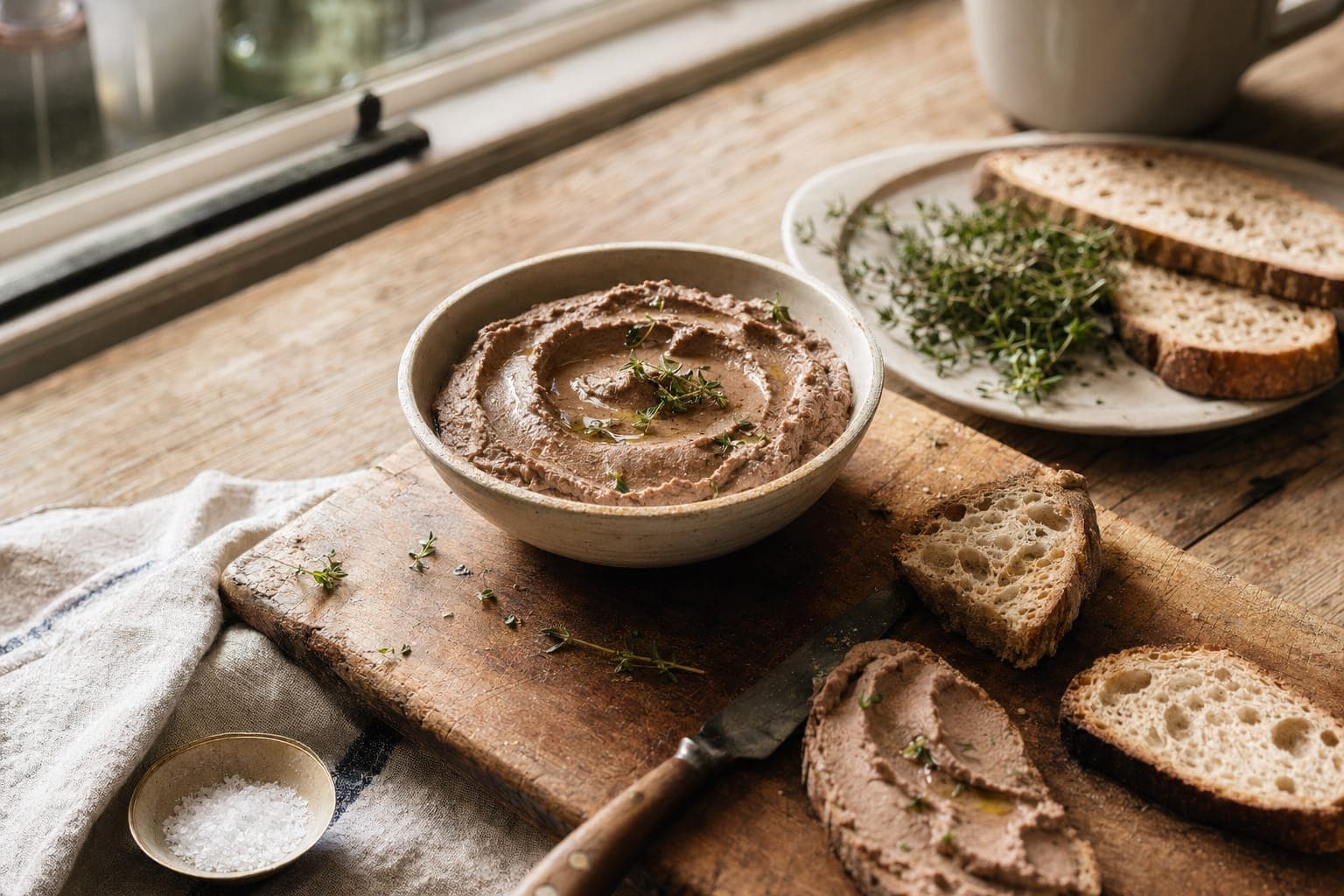
Liver Pate for Beginners: A Gentle Introduction to Organ Meats
Simple liver pate recipe to start eating organ meats. Chicken liver, butter, and herbs. Gentle introduction to nutrient-dense whole foods.
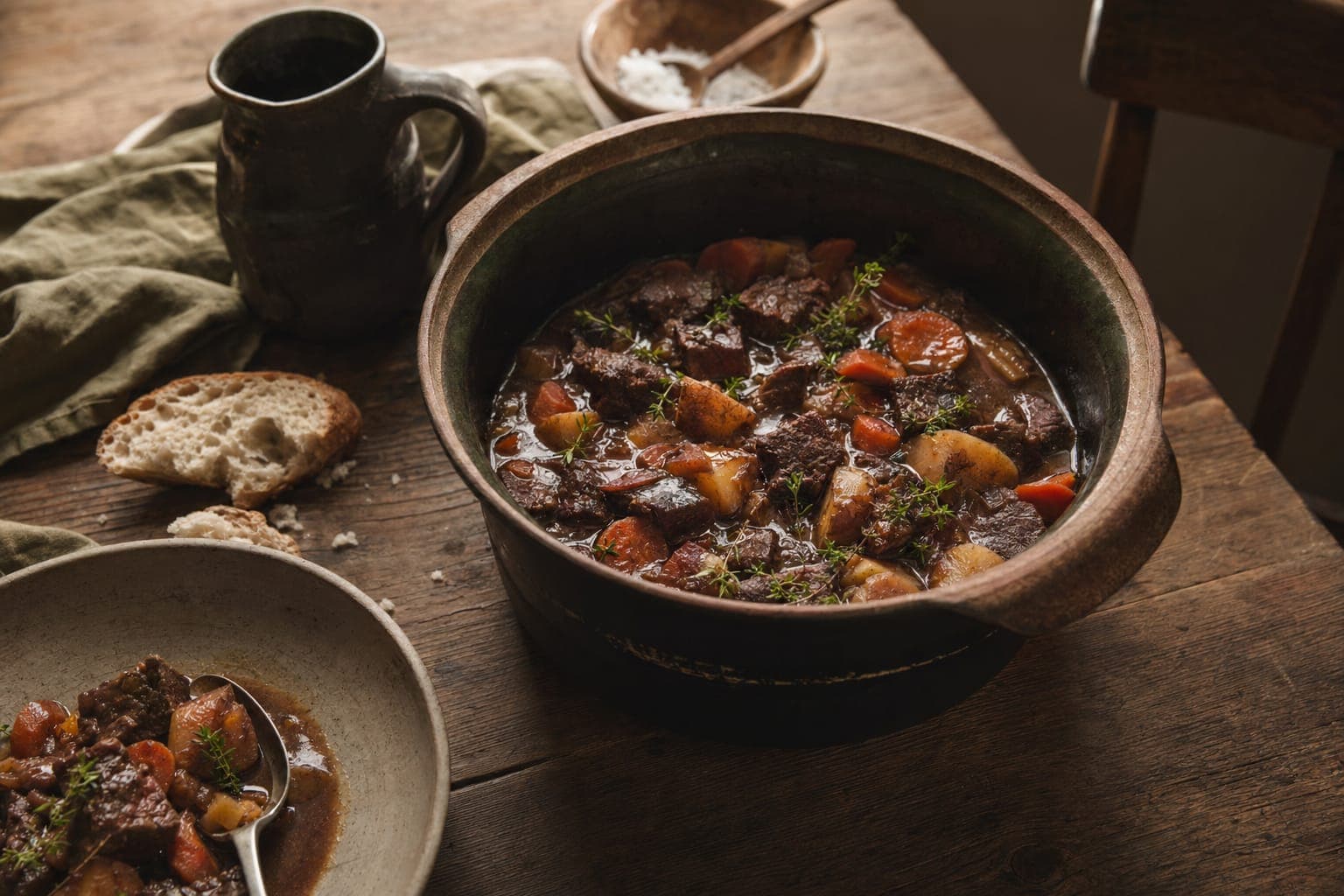
Collagen-Rich Beef Stew: Slow-Cooked Nourishment
Beef stew that delivers collagen from connective tissue and bone broth. Winter comfort food that actually nourishes. Simple slow cooker recipe.
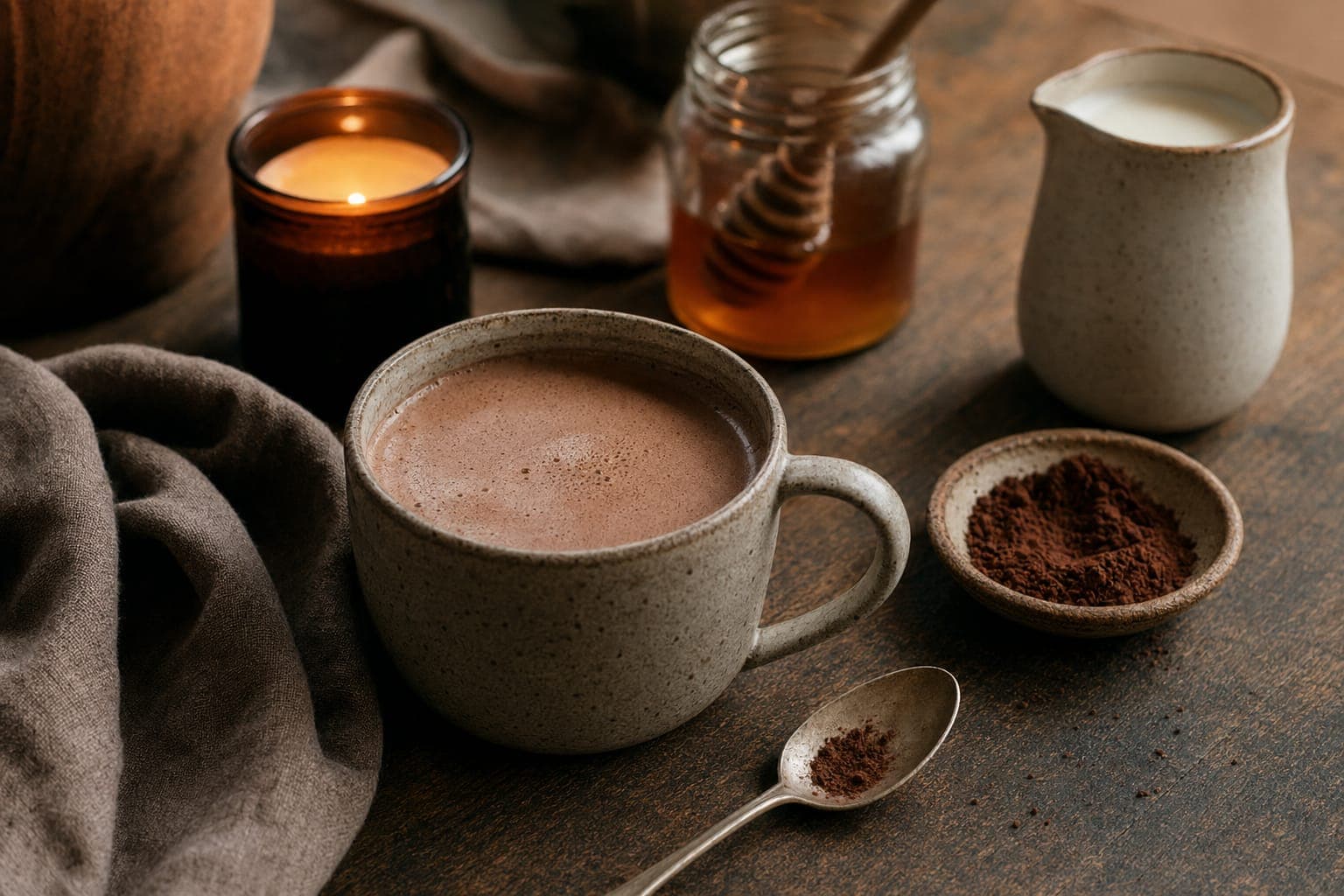
Raw Milk Hot Chocolate with Collagen
A nourishing evening hot chocolate made with raw milk, grass-fed collagen, raw cacao, and honey. A nighttime ritual that supports sleep and gut health.


 Join over 100,000+ members
Build a better food system with us
The Organised community is thousands of people choosing real food and backing the farmers who grow it, all of us trying to leave the world a little better than we found it. If that is what you care about too, you belong here.