This Is Not a Supplement. It's Whole Food Nutrition.
A capsule of isolated vitamin C and a glass of orange juice are both technically vitamin C. Your body has no idea they're the same. One is medicine. One is food.
By Niall Kiddle, Founder, Organised

Reviewed by Pedro Rodrigues, Agronomist (farming and sourcing only) ·
6 min read · Published · Updated · 3 cited sources
Makers of the Organised Daily blend, a grass-fed beef organ supplement from regenerative UK farms

The supplement industry is built on a simple idea: if a nutrient is good for you, isolate it, concentrate it, put it in a capsule, and sell it to people who are too busy for food. This logic sounds reasonable. It's wrong.
Understanding the difference between a whole food and an isolated nutrient is perhaps the most important concept in ancestral nutrition. It's the gap between feeling slightly better because you're taking vitamins and actually healing because you're eating real food.
What we mean by the food matrix
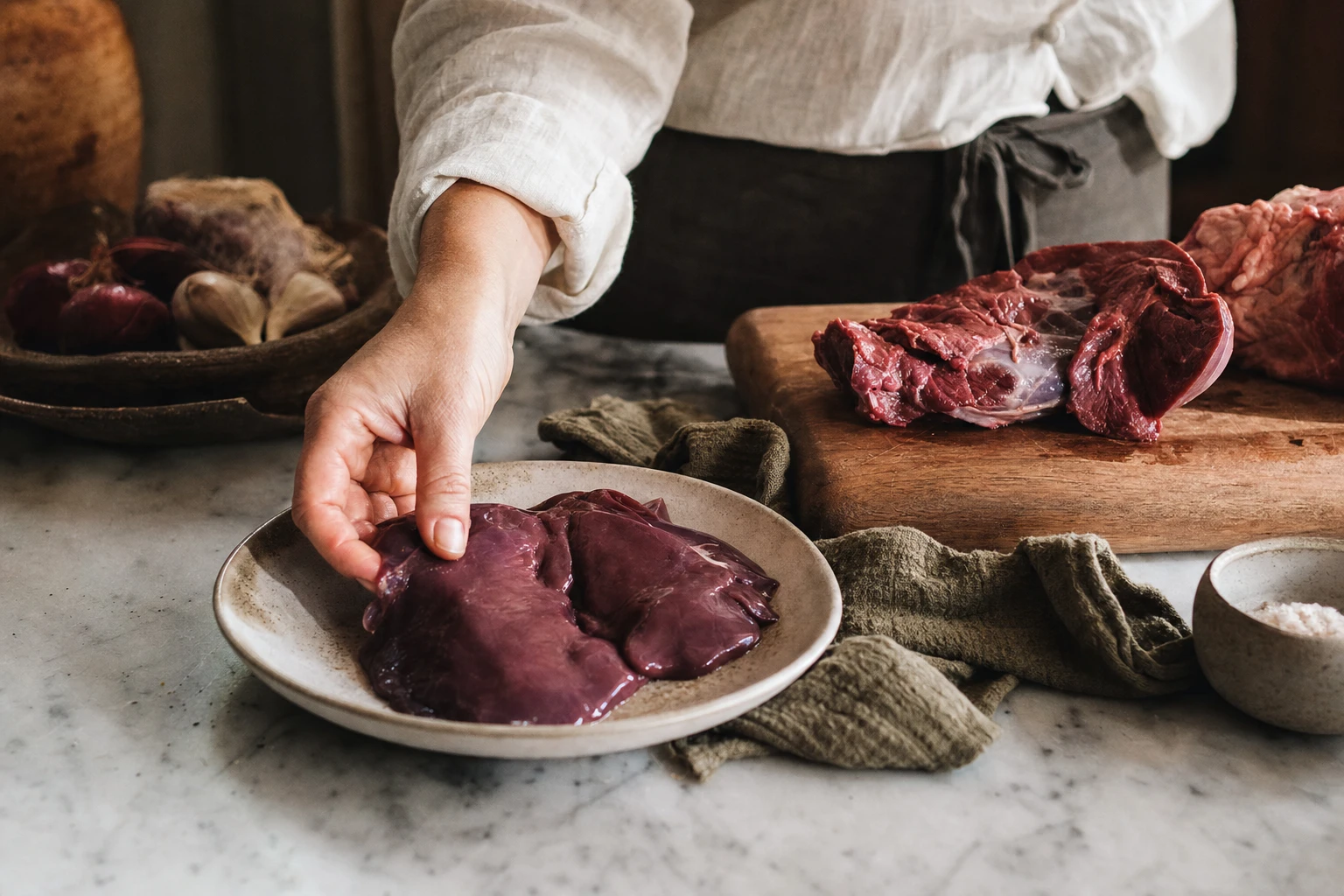
When you eat a piece of liver, you're not eating vitamin A. You're not eating iron. You're not eating copper. You're eating liver, a complete biological system that has been organised by millions of years of evolution into a structure designed to nourish another animal.
That structure is what we call the food matrix. It's the constellation of nutrients, cofactors, enzymes, phospholipids, and structural compounds that work together. The vitamin A in liver doesn't exist in isolation. It exists alongside retinol-binding proteins, fat molecules that facilitate absorption, cofactors that regulate its utilisation, and dozens of other compounds that have never been officially named but are absolutely necessary for your body to use that vitamin A effectively.
When you extract vitamin A from liver, isolate it, and put it in a capsule, you've removed everything except the vitamin. You've removed all the supporting cast. Your body can technically absorb and utilise isolated vitamin A. But it does so less efficiently, and it misses the collaborative effect of all the other compounds that were in the original food.
The food matrix isn't just the nutrient. It's the entire organised system that makes the nutrient work. When you isolate, you lose the system. You're left with a molecule, not food.
Why isolation doesn't work the way we think
The supplement industry teaches us to think reductively. If iron is good for blood health, more iron is better. If vitamin D supports immunity, megadoses should amplify immunity. This linear thinking is intuitively appealing. It's also wrong at the biological level.
Your body doesn't work on linear dose-response curves for most nutrients. It works on homeostatic feedback loops. You absorb and utilise nutrients in the context of other nutrients. Iron absorption depends on vitamin C and on copper status. Calcium absorption depends on vitamin D and magnesium. Zinc utilisation depends on copper balance.1 Vitamin E depends on selenium.
When you take an isolated nutrient supplement, you're forcing a dose of that single molecule into a system that was designed to receive nutrients as part of a balanced whole food. Your body has to deal with the mismatch. It compensates. But compensation isn't optimisation.
Studies comparing isolated supplemental nutrients to whole food sources of the same nutrients consistently show the whole food sources produce better health outcomes.2 Not because the nutrient is chemically different. Because the nutrient is delivered in a matrix that allows your body to use it properly.
How freeze-drying preserves, not isolates
Now, here's where understanding matters. Not all supplement-like products are isolation. Freeze-drying is a preservation technique, not a concentration technique. This is crucial.
When you freeze-dry an organ like liver, you're removing the water. You're leaving everything else intact: all the proteins, all the fats, all the micronutrients, all the cofactors, all the structural compounds. You're not extracting anything. You're just dehydrating it.
A freeze-dried liver capsule is still whole food. It's liver without water. Your digestive system treats it similarly to fresh liver. You're not getting the food matrix fragmented. You're getting it concentrated and shelf-stable.
This is why freeze-dried whole foods work better than isolated supplements that happen to come from the same food. A freeze-dried liver capsule contains the food matrix. An isolated vitamin A supplement contains vitamin A molecules and nothing else.
Freeze-dried food is preserved food. Isolated supplements are pharmaceutical molecules. The distinction matters profoundly.
The cofactors that supplements forget
Your body uses cofactors. These are molecules that work alongside nutrients to enable reactions. Magnesium is a cofactor for hundreds of enzymatic reactions. B vitamins are cofactors for energy metabolism. Without the cofactors, the nutrients can't actually do their job.
When you take isolated B12, you're getting the vitamin. You're not necessarily getting the folate, the B6, the methylating compounds, and the other B vitamins that your body uses in concert with B12. Your body compensates. But you're making the work harder.
A piece of liver contains B12, but it also contains all the other B vitamins, it contains folate, it contains choline, it contains the full symphony of compounds needed for methylation and energy metabolism to work properly.
Isolated supplements assume that nutrients work in isolation. They don't. Your body is an integrated system. Nutrients work as teams. When you deliver individual players without the team, efficiency drops.
Get ancestral nutrition guides, free
Two short reads a week on traditional ways of eating, examined with modern evidence.
By signing up you agree to receive emails from us. No spam, unsubscribe anytime.
Nutrient synergy in whole foods
The term synergy is sometimes overused in wellness marketing, but it's actually accurate when applied to nutrient interactions in whole foods.
Vitamin C enhances iron absorption.1 When you eat an orange (vitamin C) with red meat (iron), the vitamin C genuinely improves the amount of iron you absorb. This isn't marketing. This is measurable biochemistry.
Fat-soluble vitamins (A, D, E, K) require fat for absorption.3 Eat an isolated vitamin D pill without fat, and absorption is compromised. Eat vitamin D as part of fatty fish or as part of liver with its natural fat content, and absorption is enhanced. The food naturally supplies the cofactor.
Minerals work in balance. Too much calcium without magnesium causes problems. Too much zinc without copper causes problems. Whole foods contain minerals in ratios refined by millions of years of evolution. These ratios support optimal utilisation. Isolated supplements break the balance.
This is the entire logic of ancestral eating. Traditional foods were selected not for individual nutrients, but for balanced nutritional profiles. Organ meats were protected because they provided comprehensive nutrition, not because of any single nutrient they contained.
1 of 9
Daily blend
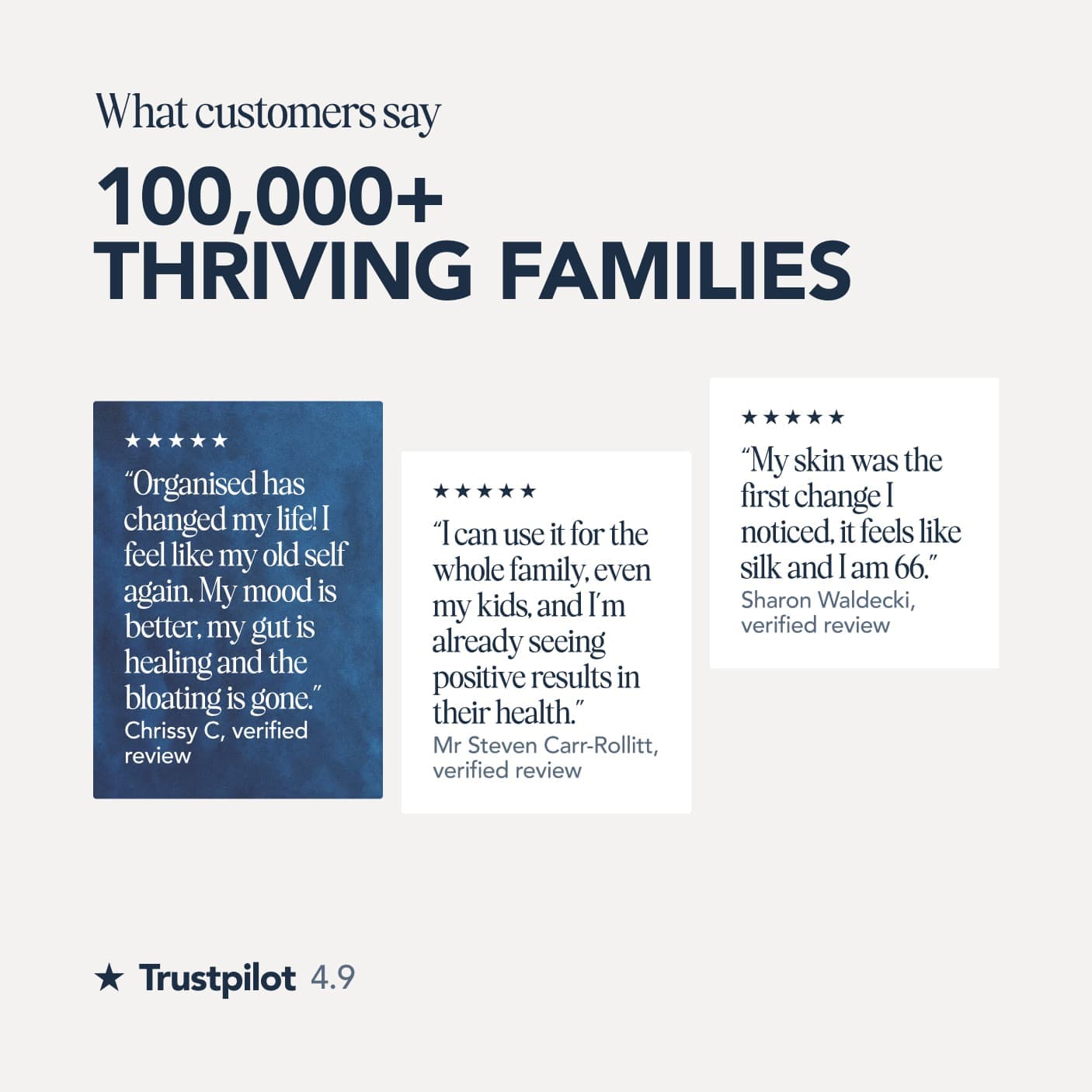
100,000+ thriving families4.9 on Trustpilot
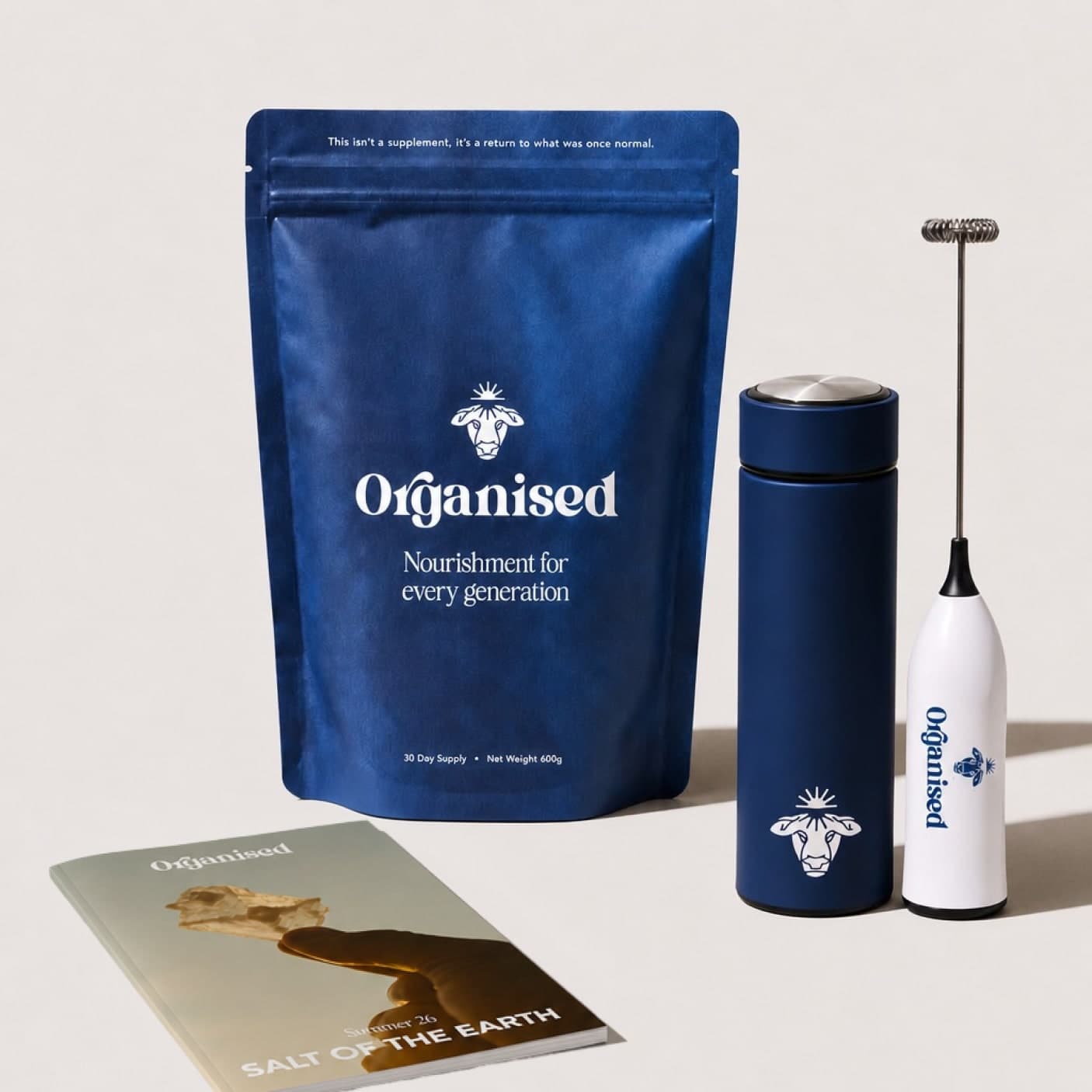
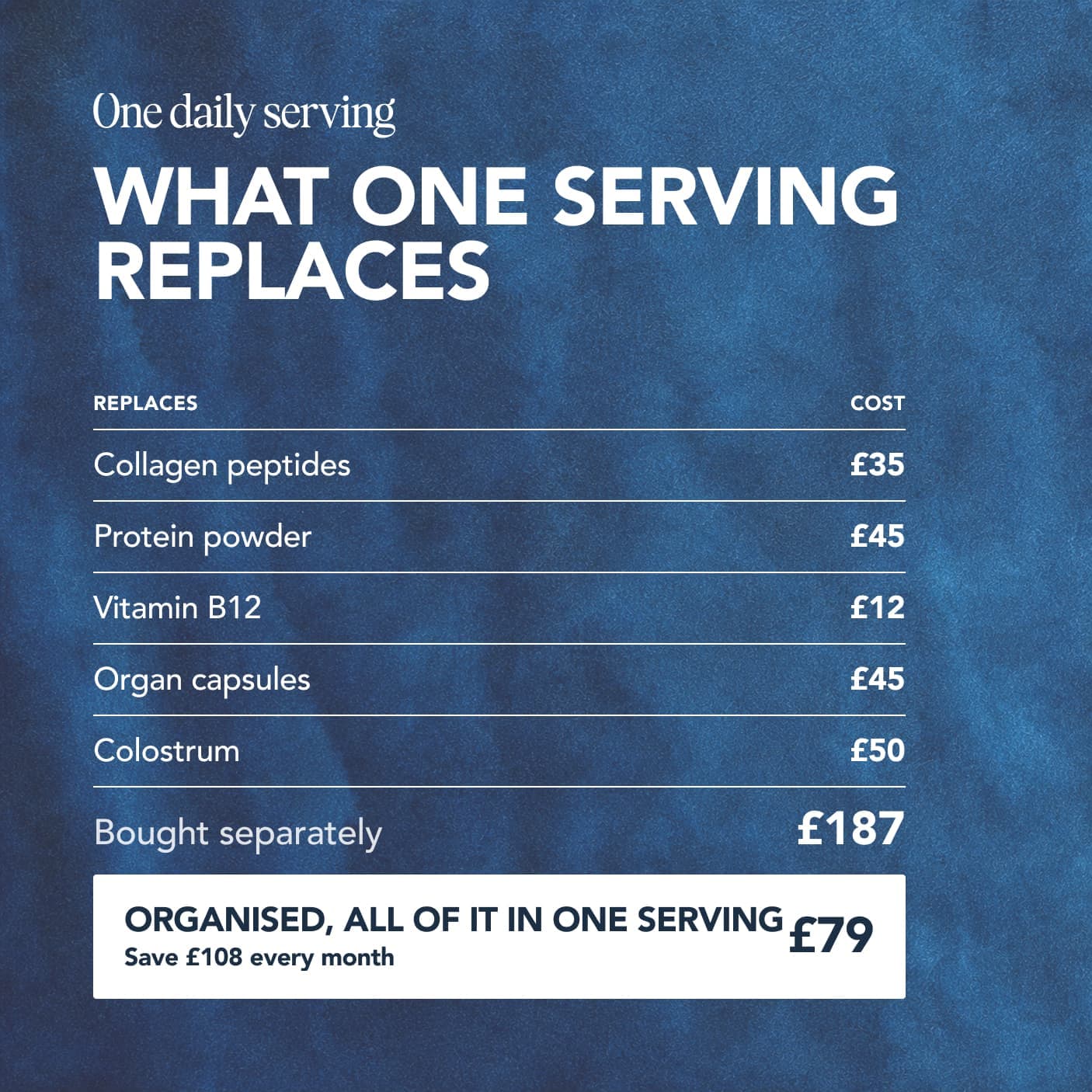
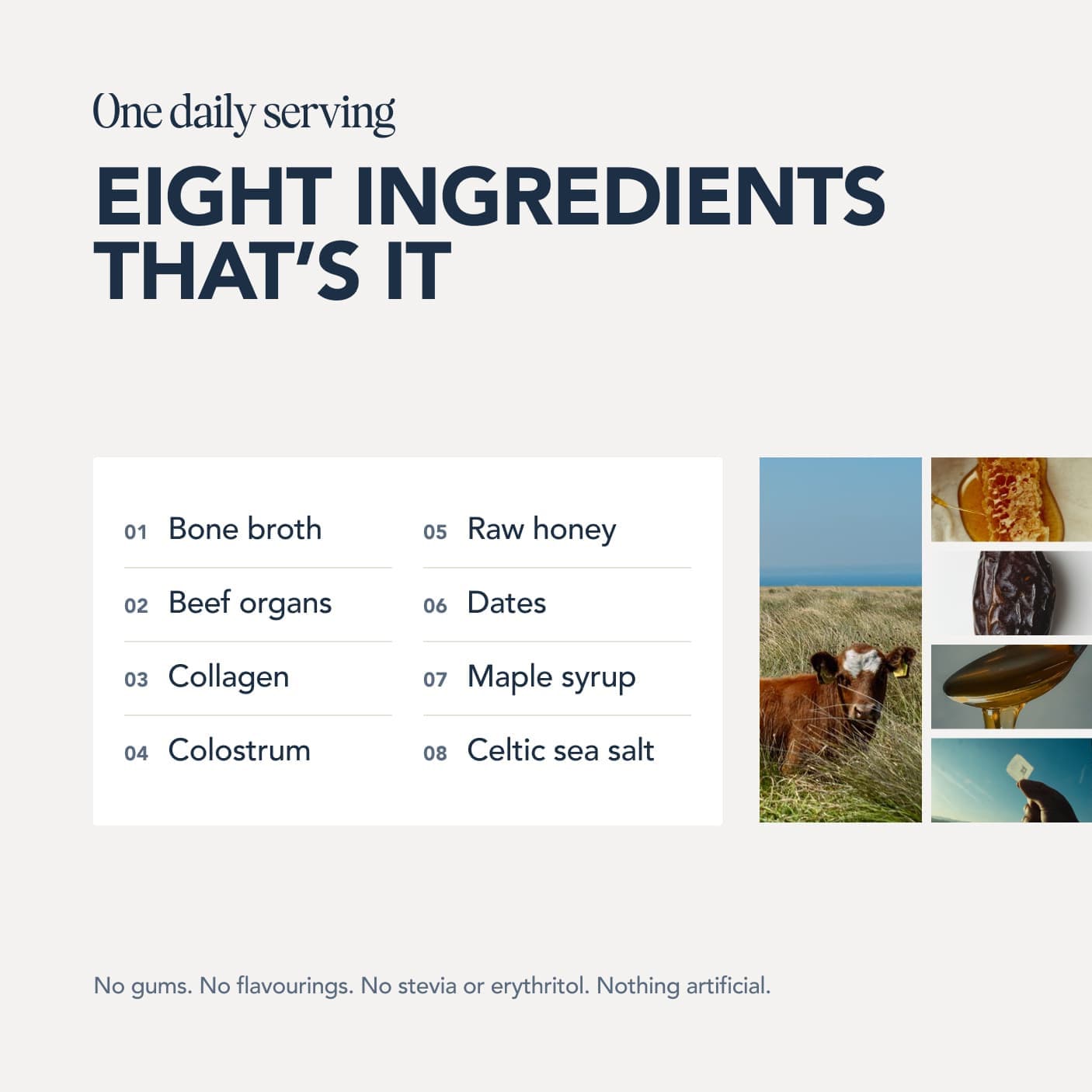
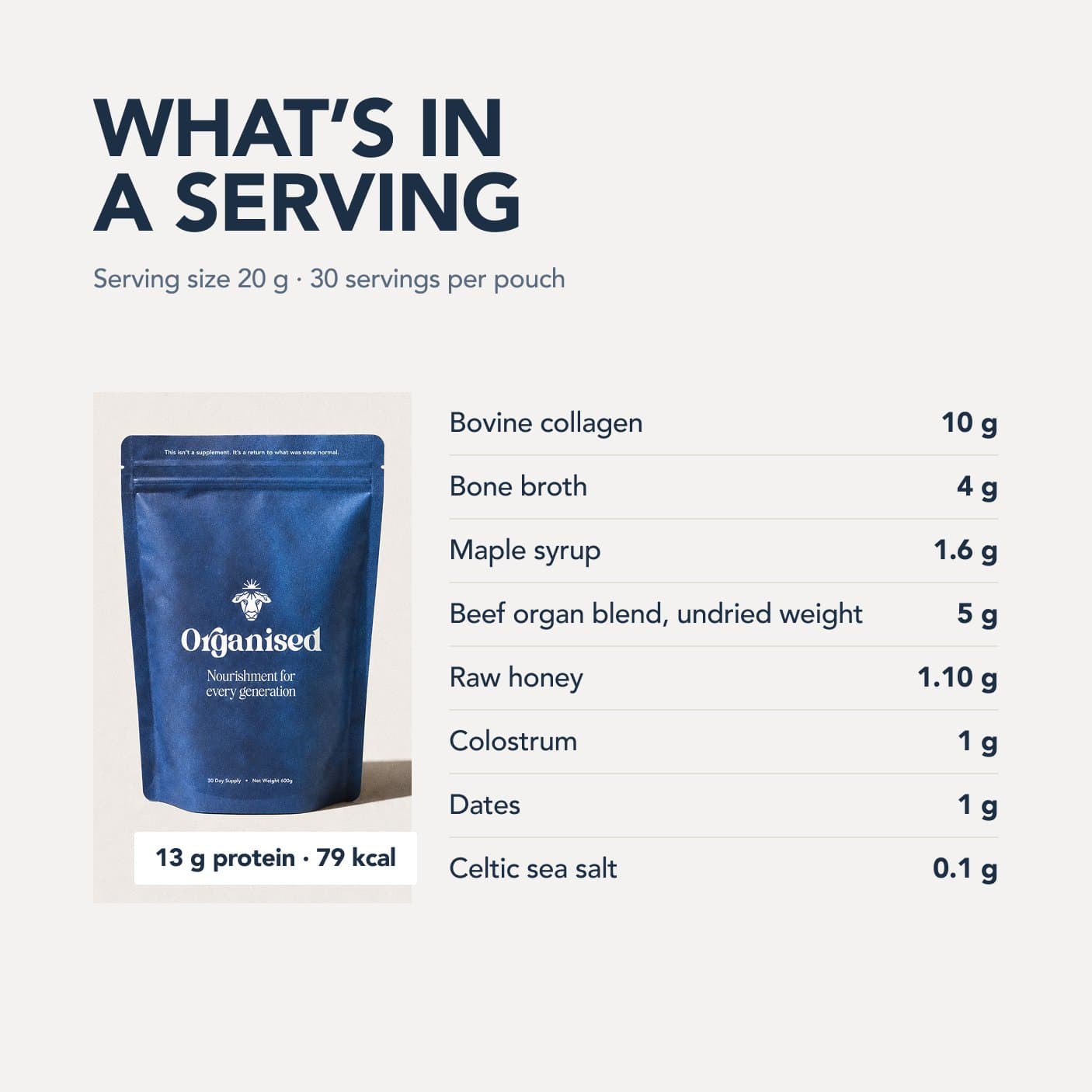
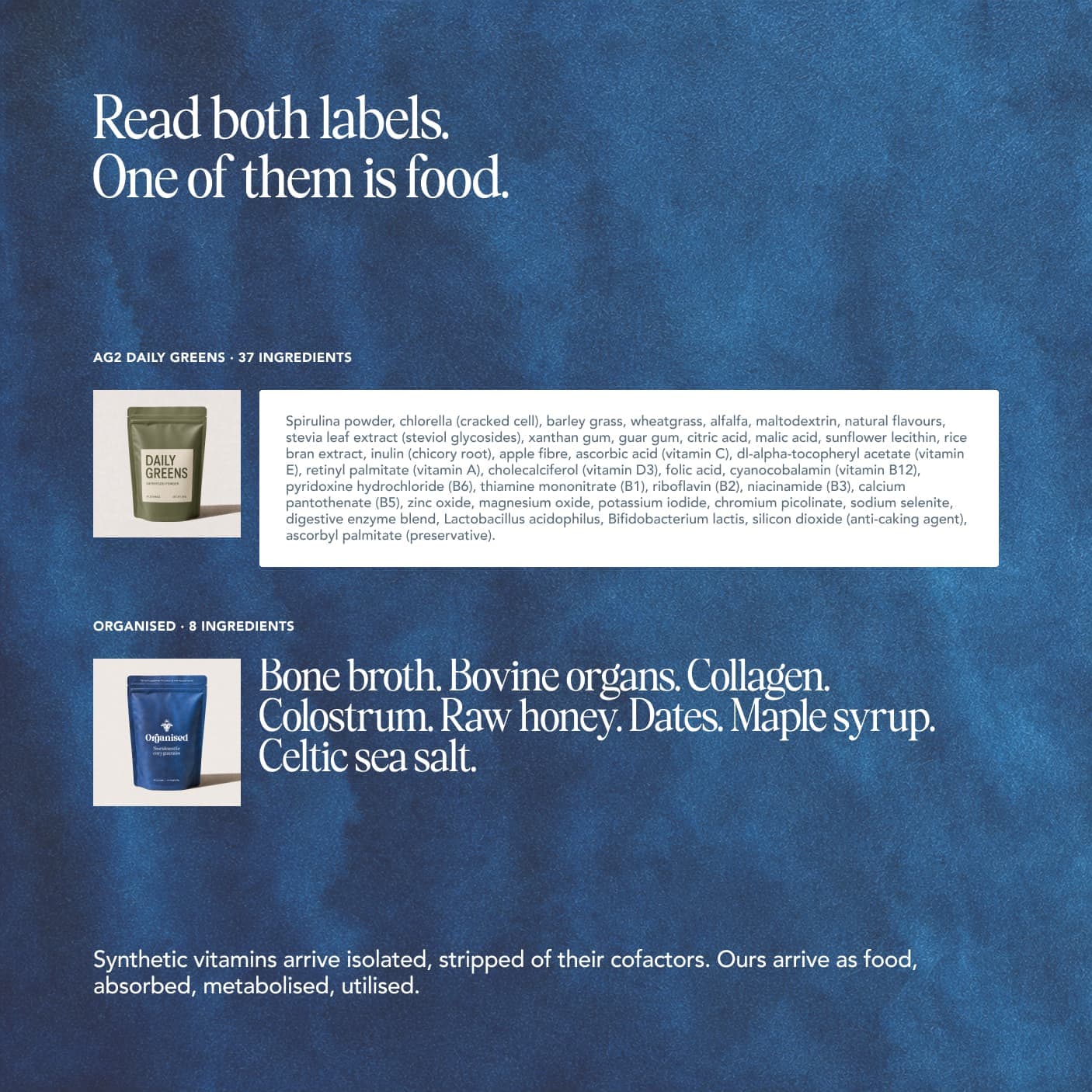
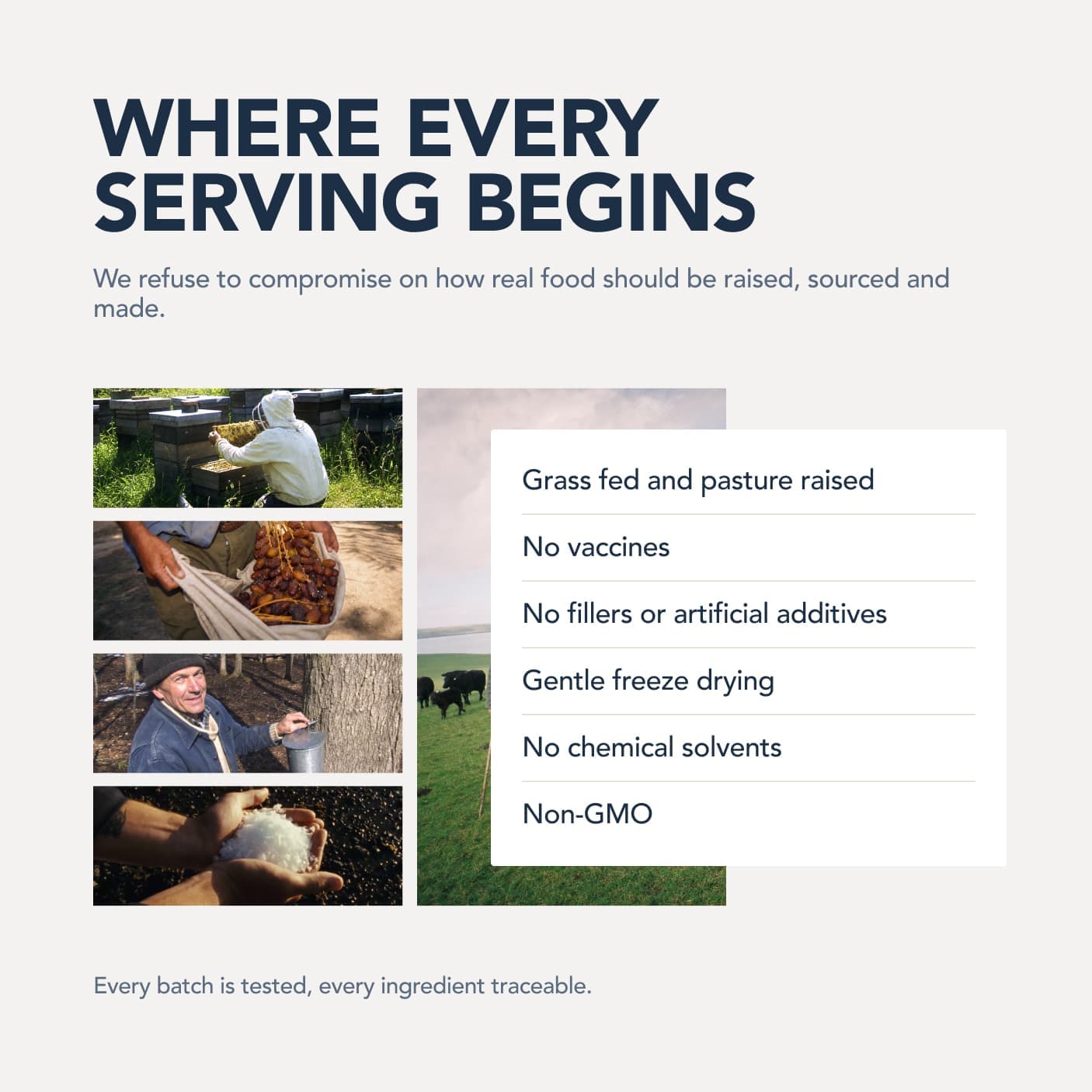
Eight real ingredients built around grass-fed beef organs, collagen and colostrum. Nothing synthetic added.
Free with your first order, worth £38. Plus £10 off the pouch with a subscription.
Free UK shipping · Made in England · 100 day money back guarantee on your first pouch · Skip, pause or cancel anytime
What supplements actually are
Supplements aren't food. They're pharmaceutical products that deliver molecules. They have a role, but their role is specific and limited.
Supplements are useful when you have a diagnosed deficiency that food can't practically address. If you're anaemic and you need iron quickly, supplemental iron makes sense. If you're severely deficient in vitamin D and you can't access sun or supplemental vitamin D isn't practical, supplementation is appropriate. These are interventions, not long-term nutrition.
Supplements are useful in specific health conditions where food sources are inaccessible. If you're vegan and you need B12 from a non-animal source, supplementation is appropriate. If you have coeliac disease and can't digest B vitamins from grains, supplementation might be necessary during healing.
What supplements are not is replacement for whole food nutrition. Taking a multivitamin isn't the same as eating vegetables and organs. Taking fish oil capsules isn't the same as eating fish. The nutrients might appear similar on a label. The effects on your body are not the same.
Supplements fill gaps. They don't build foundations. A foundation is built from whole foods. Anything else is a workaround.
Building nutrition on whole foods
The framework that actually works is simple: prioritise whole foods, choose foods for their nutrient density, eat the foods that ancestral cultures protected, and consider supplementation only when whole foods genuinely aren't accessible.
Eat organs. Organs are the most nutrient-dense foods available. A small portion of liver weekly covers more micronutrient needs than weeks of muscle meat or handfuls of supplements.
Eat animal products. Eggs, dairy, fish, meat. These are complete proteins and dense nutrient sources. Your body absorbs and utilises them efficiently because your evolutionary history is built on them.
Eat vegetables and fruit. They provide phytochemicals, fibre, and micronutrients that animal foods don't. But they're supplementary to animal foods, not replacements.
Eat fats. Butter, olive oil, fish oils, animal fats. These aren't empty calories. They're nutrient delivery vehicles and essential nutrients themselves.
And don't take supplements unless you have a specific reason. No multivitamins just in case. No supplemental oils just to match a nutrient label. Build your health from food, use supplements only when food genuinely won't work.
This isn't complicated. It's the diet humans ate for thousands of years. It works because it's built on the food matrix, on the recognition that nutrients work together, and on foods selected for their actual effect on human health.
References
Every source below was checked on 27 August 2026. Each PubMed, PMC and DOI identifier was resolved against NCBI or Crossref, and what it opens is printed under the citation, so you can see the link goes where the citation says without leaving the page. Where a citation and its identifier disagreed, the citation was corrected to the record or the reference was deleted along with the sentence marker that pointed at it, and where the resolved paper turned out not to support the sentence, the sentence was cut back to what it does support. Borrowed authority is worse than none, because it looks like rigour.
- National Institutes of Health, Office of Dietary Supplements. Iron — Health Professional Fact Sheet.
- Jacobs DR Jr, Tapsell LC. Food, not nutrients, is the fundamental unit in nutrition. Nutrition Reviews, 2007. PMID 17972438.Checked 27 August 2026: PMID 17972438 opens Jacobs DR Jr, Tapsell LC, Food, not nutrients, is the fundamental unit in nutrition. Nutr Rev 2007;65(10):439-50. PubMed indexes it as: Review.
- National Institutes of Health, Office of Dietary Supplements. Vitamin A and Carotenoids — Health Professional Fact Sheet.
Who wrote and reviewed this guide
Niall Kiddle
Author · Founder, Organised
Niall is the founder of Organised. He started the company in 2024 after fixing his own health the slow way: in 2022 he swapped a cupboard of synthetic supplements for real food, raw milk, organ meats, bone broth and honey, and felt the difference within months.
Areas of expertise: Ancestral nutrition, Organ meats, Whole-food supplementation, Gut health, Regenerative sourcing
Read Niall's full profile
Pedro Rodrigues
Reviewer · Agronomist (farming and sourcing only)
Pedro is the agronomist Organised works with on farming and sourcing. His job on the guides is to keep the science honest: he reviews what we publish about soil health, regenerative agriculture, grazing and the way food is actually produced.
Areas of expertise: Regenerative agriculture, Agronomy, Soil health, Grass-fed farming, Food sourcing
Reviewed this guide on
Read Pedro's full profileBrowse the guides library
All guidesKeep reading
Ancestral
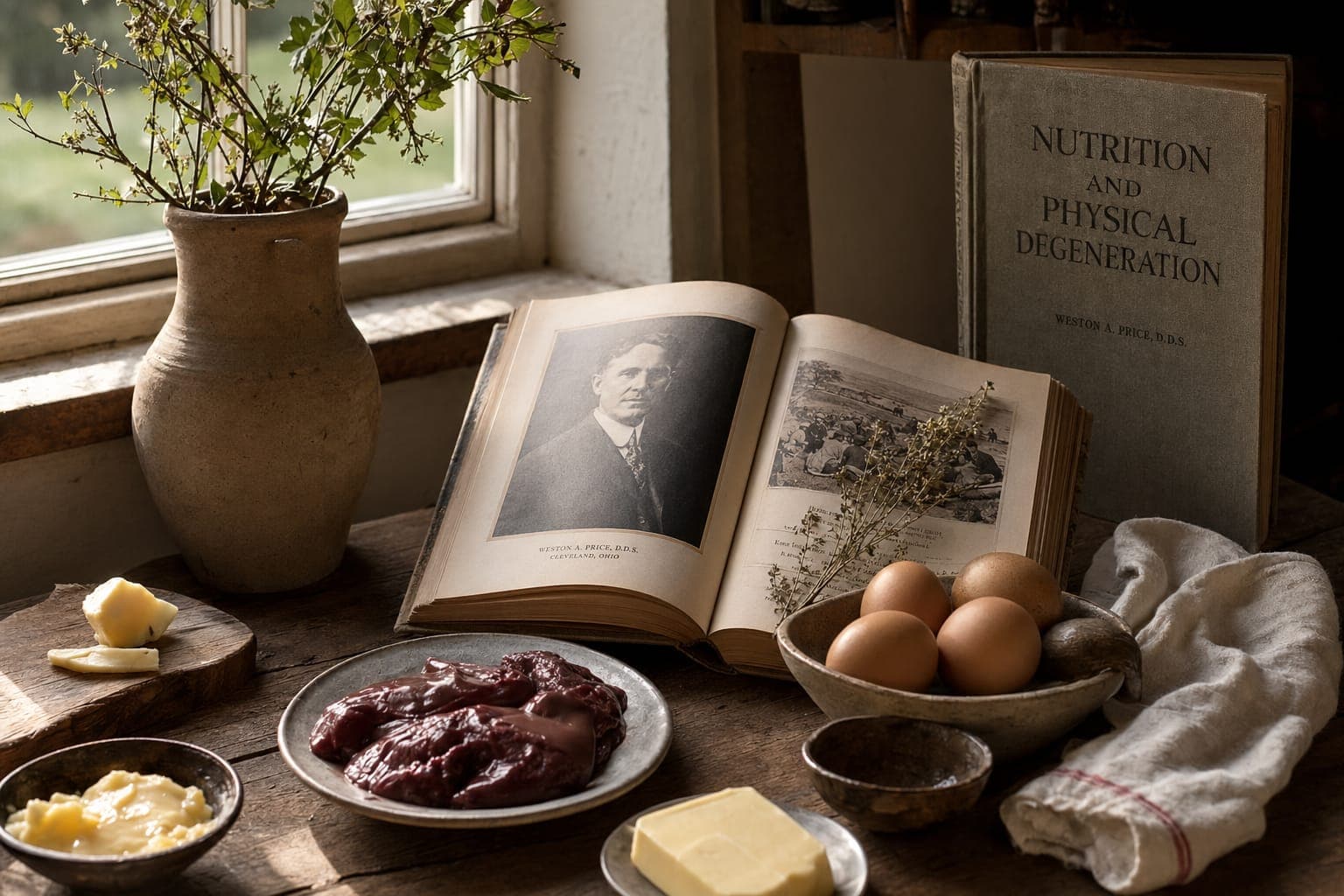
The Weston A. Price Legacy: What He Discovered About Traditional Diets
Discover what dentist Weston A. Price learned from 14 indigenous cultures about nutrition, ancestral diets, and the fat-soluble vitamins your body needs.
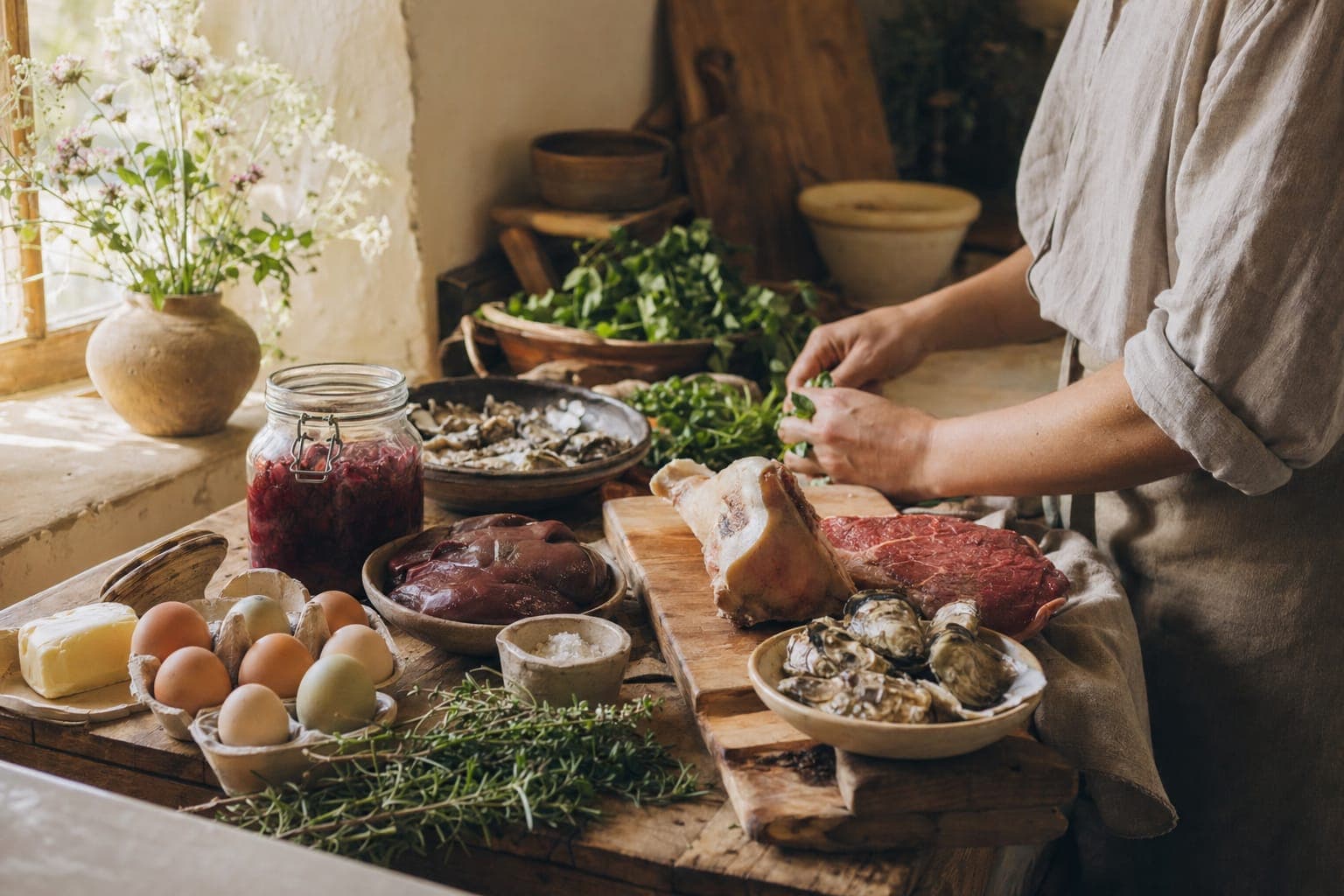
Ancestral
What Does 'Bioavailable' Actually Mean?
What does bioavailable really mean? How your body absorbs nutrients, what interferes with absorption, and why some foods deliver more nutrition than others.
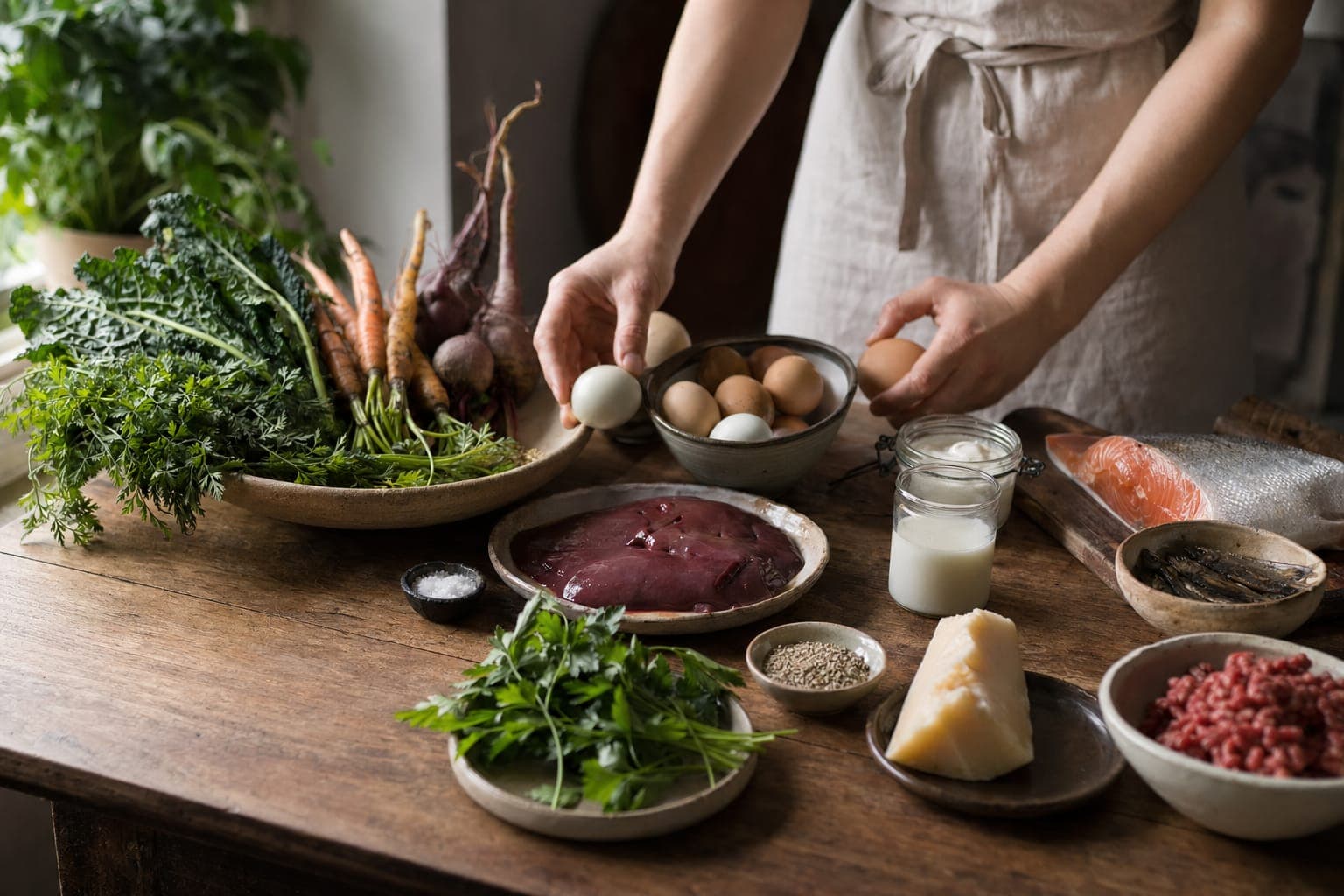
Ancestral
Cofactors: Why Isolated Nutrients Don't Work as Well
What are cofactors? How nutrients work together, why isolated supplements fail, and which foods provide the complete nutritional picture.
Real food, made effortless
Bring it into my routineA few ways to use it
All recipes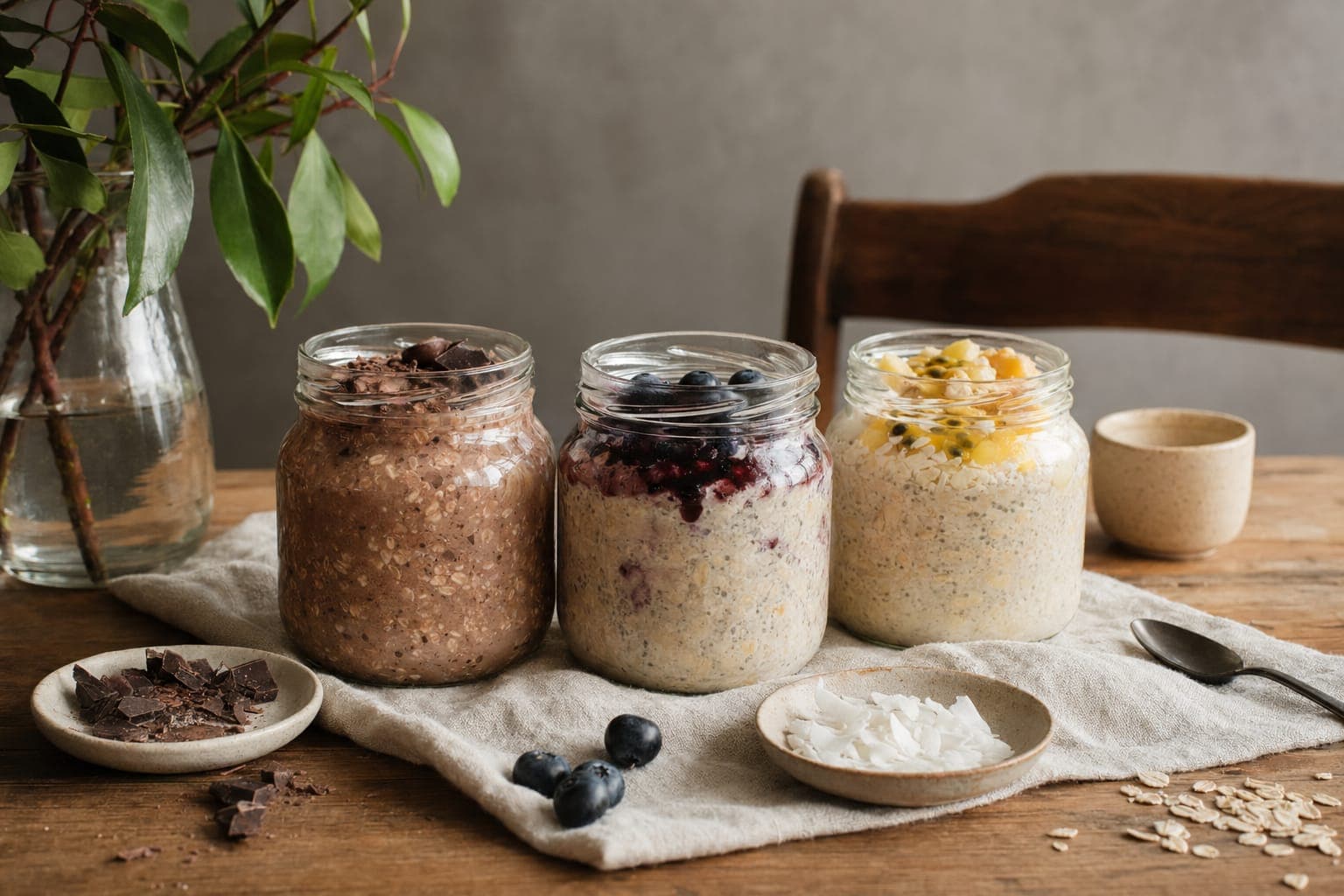
Organised Overnight Oats: 3 Variations
Three delicious overnight oats variations with Organised. Chocolate, berry, tropical flavours. Make them Sunday, eat them all week.

Organ Bolognese: The Family Dinner That Heals
Practical organ meat recipe using fresh beef liver and heart. Family-friendly bolognese that bridges supplements to whole food.
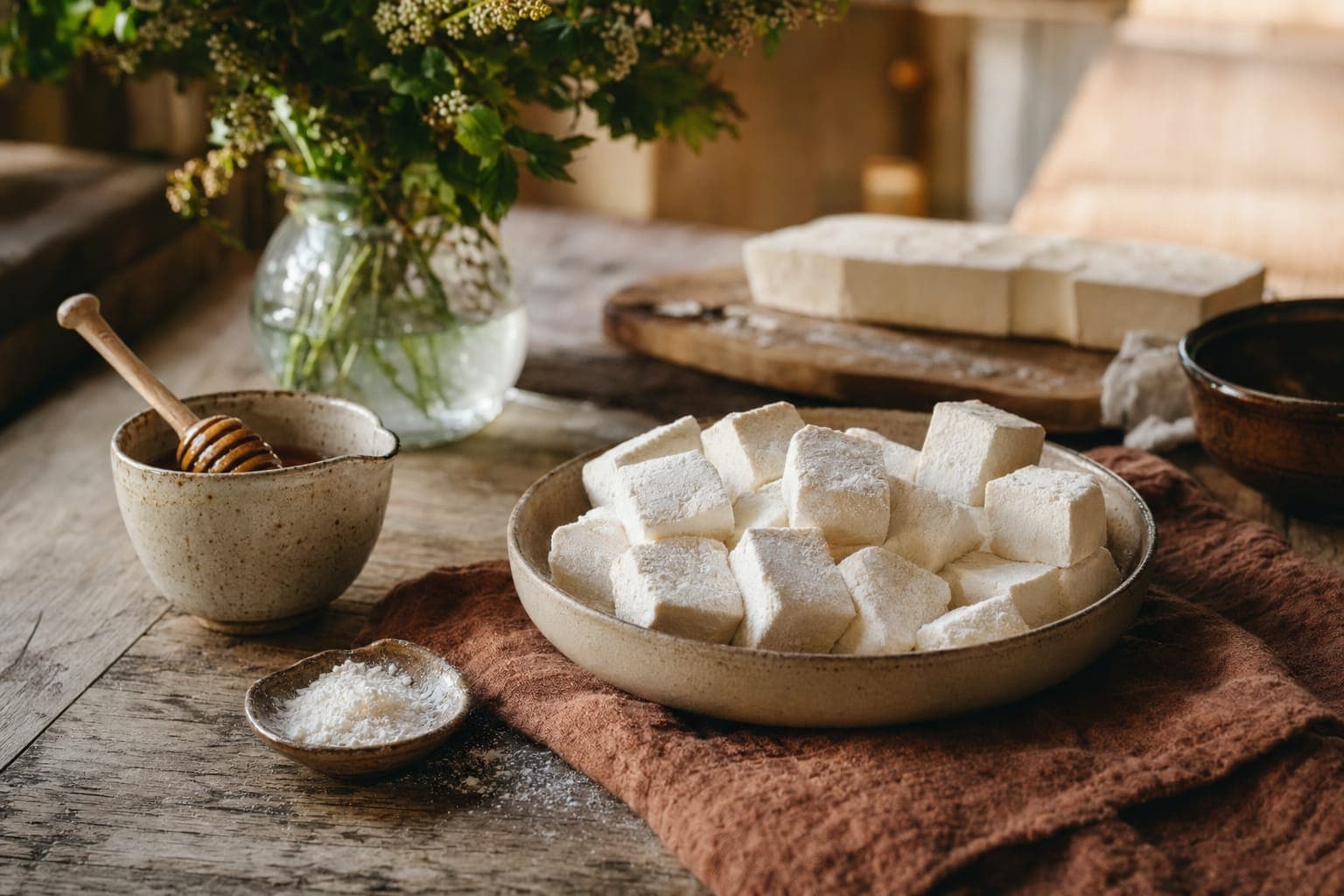
Gut-Healing Marshmallows with Collagen and Raw Honey
Learn to make gut-healing marshmallows with collagen and raw honey. A shareable treat that sneaks nutrition into every bite. Easy recipe with video tips.


 Join over 100,000+ members
Build a better food system with us
The Organised community is thousands of people choosing real food and backing the farmers who grow it, all of us trying to leave the world a little better than we found it. If that is what you care about too, you belong here.