Ghee, Tallow and Lard: The Traditional Cooking Fats Making a Comeback
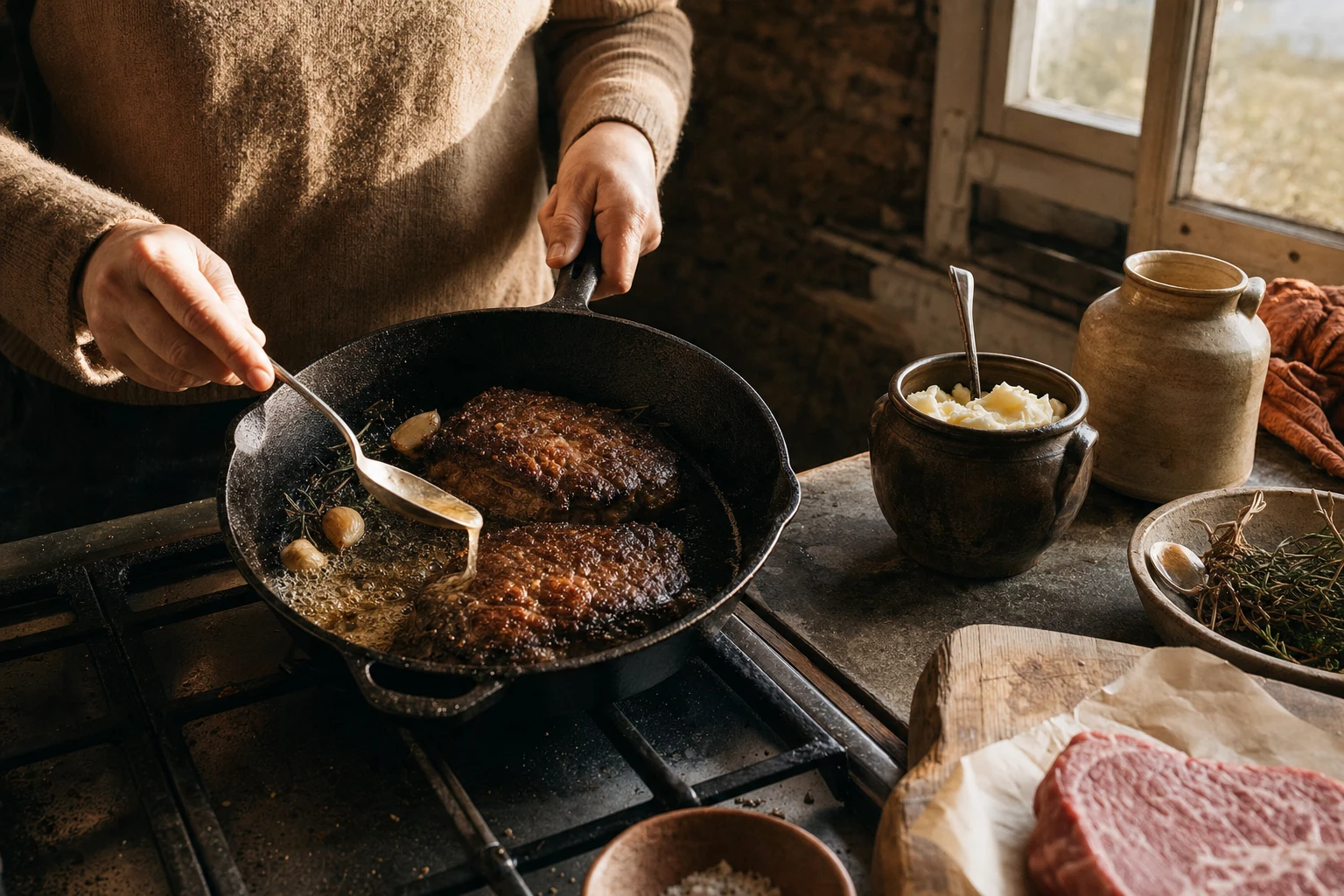
Your grandmother cooked in lard. Your great-grandmother used tallow. For thousands of years, human beings cooked in animal fats. Then, in the span of one century, we switched to seed oils. Now, the research is quietly suggesting your grandmother was right all along.
By Niall Kiddle, Founder, Organised

Reviewed by Pedro Rodrigues, Agronomist (farming and sourcing only) ·
6 min read · Published · Updated · 4 cited sources
Makers of the Organised Daily blend, a grass-fed beef organ supplement from regenerative UK farms
Why seed oils became normal (and it wasn't science)
Seed oils were never chosen because they're healthier. They were chosen because they're cheap to produce and ship. In the early 1900s, the vegetable oil industry needed a market. So they created one.
The narrative was simple: saturated fat is bad, seed oils are unsaturated, therefore seed oils are better. This narrative was repeated so often, backed by early research that was often industry-funded, that it became gospel. By the 1970s, governments were recommending seed oils over traditional fats.
But the science was never solid. The studies that condemned saturated fat were often flawed. The benefits of seed oils were overstated. And here's the thing nobody talks about: partial hydrogenation creates trans fats, which are clearly associated with cardiovascular harm.3
We replaced a fat we'd eaten for millennia with a fat that hadn't been tested for health at scale. And the replacement was driven by profit, not health.
Smoke point: the critical difference
The most important metric for cooking fat is smoke point, the temperature at which a fat breaks down and begins to smoke. When a fat is heated past its smoke point, it oxidises and creates potentially harmful compounds.
Here's where traditional fats win decisively:
- Ghee (clarified butter): approximately 250°C1
- Tallow (beef fat): 400-420°F (204-216°C)
- Lard (pork fat): 370-400°F (187-204°C)
- Extra virgin olive oil: 190°F (88°C)
- Canola oil: 400°F (204°C)
- Sunflower oil: 450°F (232°C)
- Soybean oil: 450°F (232°C)
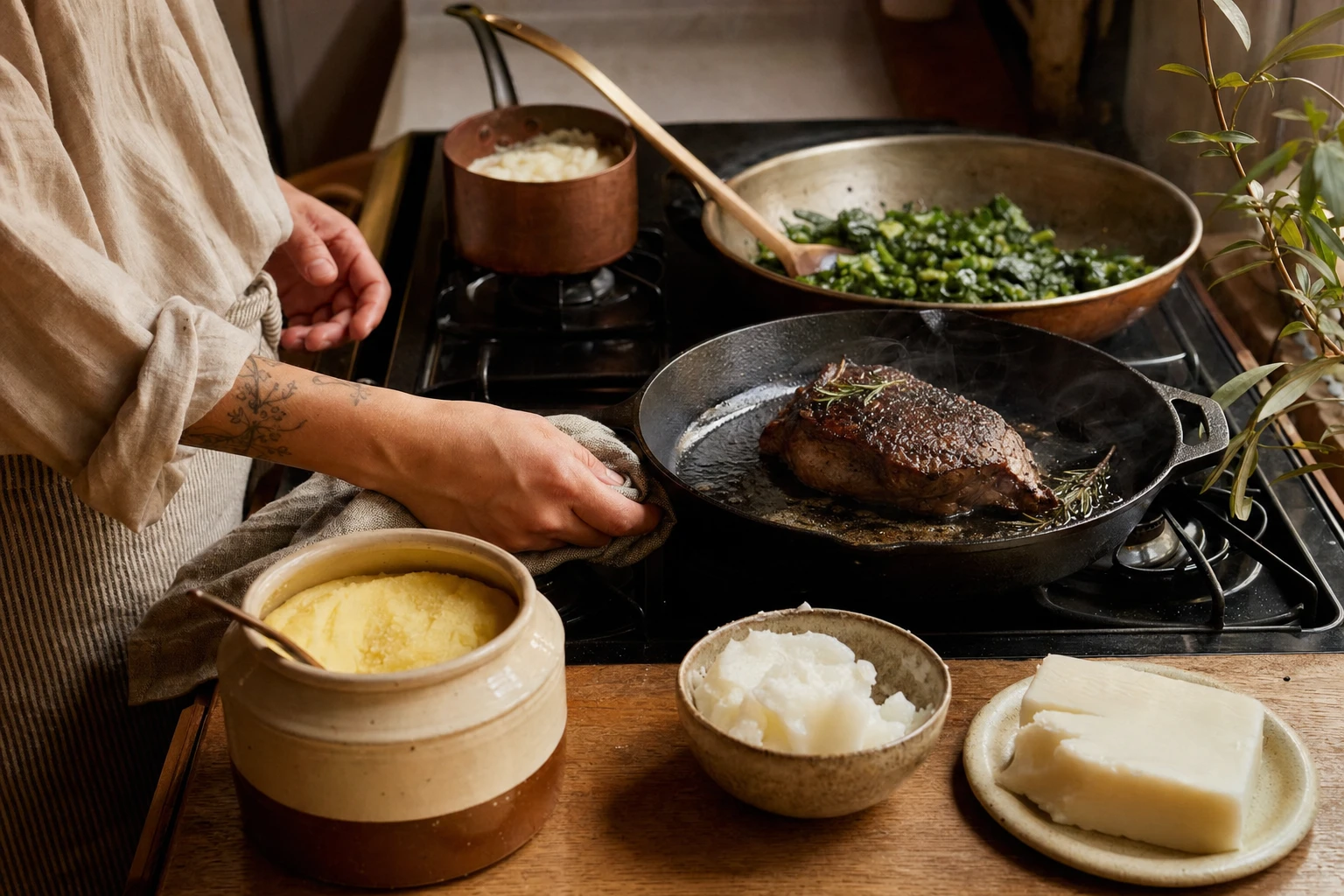
Most cooking happens between 300-400°F. Olive oil is destroyed at these temperatures. Many seed oils are borderline, and they're being reheated, which lowers the smoke point further. Ghee and tallow? They're designed for high-heat cooking. Literally.
When you cook in a fat below its smoke point, you preserve the fat and your food. When you cook in a fat above its smoke point, you create oxidised compounds that your body has to deal with.
Fatty acid stability at heat
This is where the chemistry gets interesting. Fatty acids are either saturated (which means they're stable at heat) or unsaturated (which means they're unstable at heat).
Saturated fats like those in ghee, tallow, and lard have no double bonds in their carbon chains, making them more thermally stable.2 Heat doesn't destabilise them. This is why your body and traditional cultures have used them for cooking for thousands of years.
Polyunsaturated fats like those in seed oils have many double bonds. These double bonds are vulnerable to oxidation at high heat. When oxidised, they create compounds called lipid peroxides and aldehydes, which are inflammatory and potentially harmful to your body.
The irony is spectacular: the seed oils we were told were healthy, when used for cooking (which is their primary use), create compounds that are more harmful than the saturated fats we were warned against.
Your ancestors knew this without the science. They used stable fats for cooking and unstable fats (like fish oil) sparingly.
Nutrient content: traditional fats vs seed oils
Beyond stability, traditional fats carry nutrients. Ghee and tallow contain fat-soluble vitamins and minerals that support absorption of other nutrients. Lard contains selenium and some B vitamins.
Seed oils are basically empty. You're getting calories, but almost no micronutrients. They're substrate for energy, not food in the nutritional sense.
Ghee is particularly nutrient-dense. When you clarify butter, you remove the milk solids (lactose and casein), leaving pure butterfat and the fat-soluble vitamins A, D, E, and K2. It's one of the most nutrient-dense fats available.
Tallow from grass-fed beef carries a better omega-3 to omega-6 ratio than tallow from grain-fed cattle. It also contains conjugated linoleic acid (CLA).4
Lard is relatively neutral nutritionally, but it's a traditional, stable fat that works well for cooking. Cultures that have used it for centuries didn't develop metabolic disease from it.
Inflammation: the hidden cost of seed oils
The most damaging thing about seed oils isn't what they contain. It's the imbalance they create in your omega-3 to omega-6 ratio.
Your body needs both omega-3 and omega-6 fatty acids. The ratio matters. Ancestral diets had roughly a 1:1 ratio. Modern diets, swimming in seed oils, have ratios of 1:15 or 1:20.
This imbalance drives chronic inflammation. Omega-6 fats promote inflammation. Omega-3 fats suppress it. When you're eating 20 times more omega-6 than omega-3, your default state is inflamed.
You don't need to eliminate seed oils entirely. You need to stop using them for cooking and cooking at scale, because that's what's broken the ratio.
Traditional fats, particularly from grass-fed animals, have a better ratio. Tallow from grass-fed beef actually contains some omega-3s. Ghee is essentially neutral on the ratio. By switching from seed oils to traditional fats, you're not just cooking better. You're reducing your baseline inflammation.
Get ancestral nutrition guides, free
Two short reads a week on traditional ways of eating, examined with modern evidence.
By signing up you agree to receive emails from us. No spam, unsubscribe anytime.
How to use traditional fats
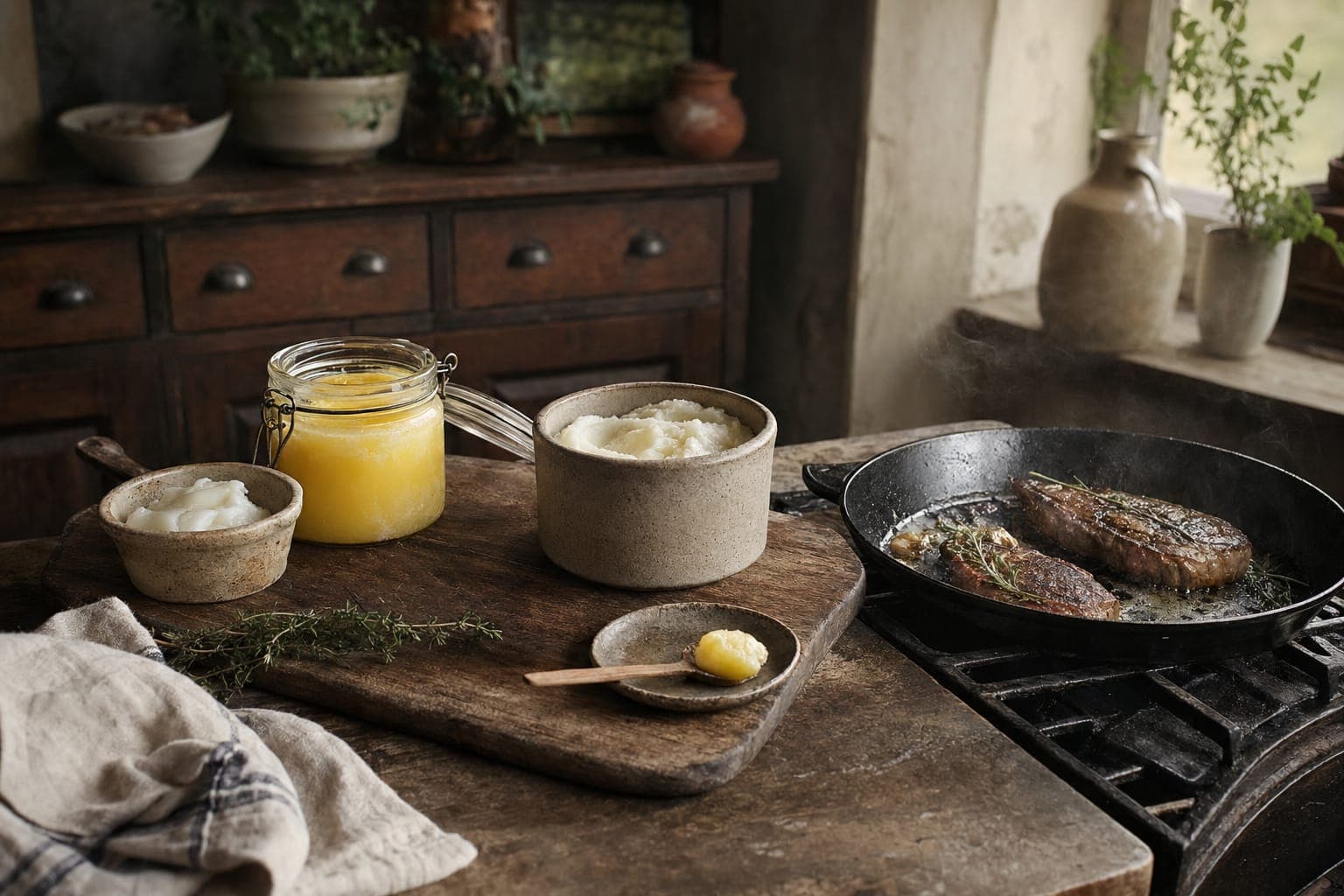
Ghee is the easiest to start with. It has a high smoke point, mild nutty flavour, and works in virtually every cooking application. You can buy it or make it by clarifying butter. It's shelf-stable without refrigeration.
Tallow is harder to find in supermarkets, but it's making a comeback. Grass-fed beef butchers often have it. It's excellent for high-heat cooking and frying. It's slightly more robust in flavour than ghee.
Lard is straightforward. You can buy it from good butchers, or render your own from pork fat (though rendering is labour-intensive). It's excellent for baking and sauteing.
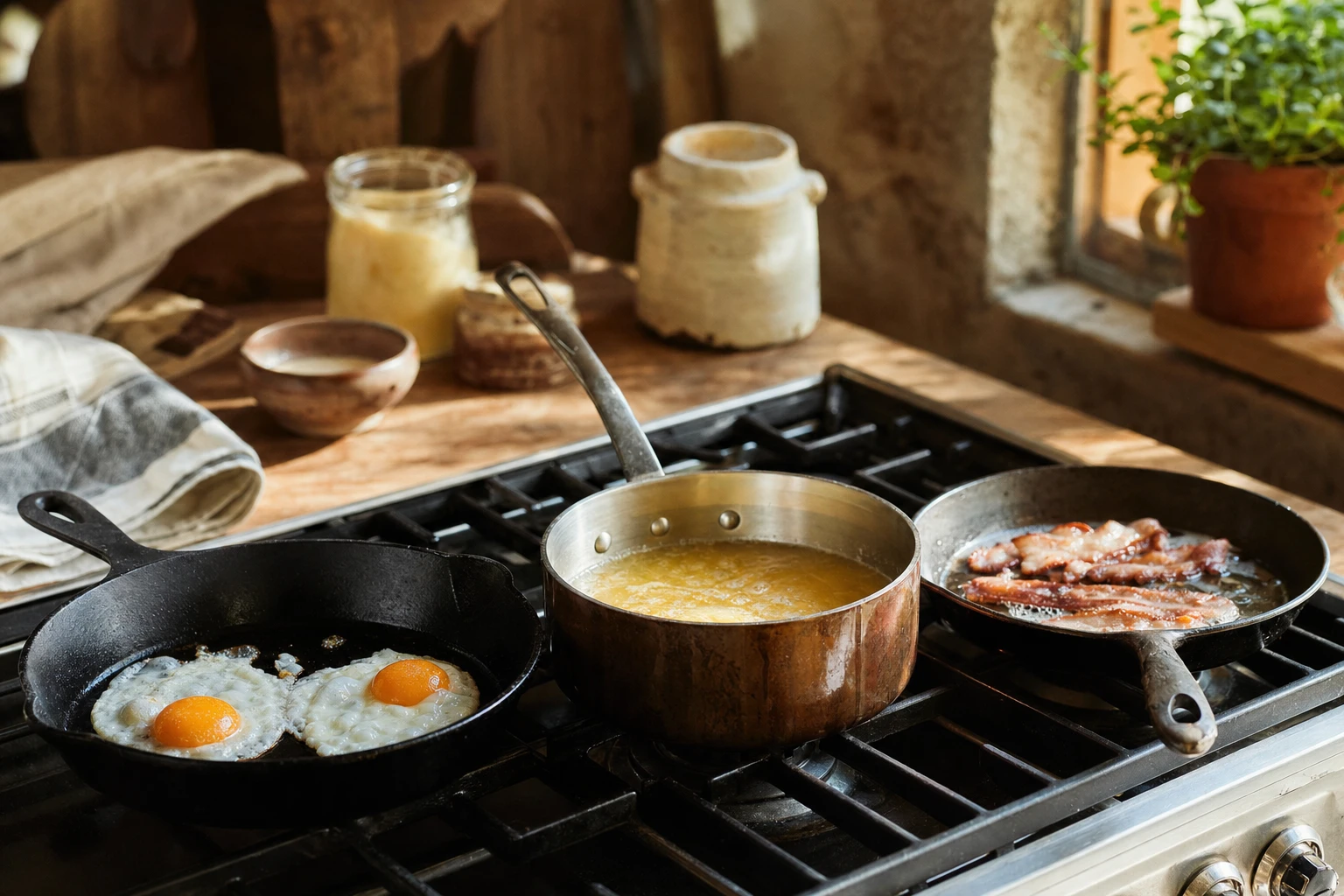
Start with ghee. Use it for sauteing vegetables, cooking eggs, frying meat. Replace your seed oil cooking with ghee, and you'll notice changes in energy, digestion, and how you feel after eating. Then, if you're curious, expand to tallow and lard.



1 of 9
Daily blend
100,000+ thriving families4.9 on Trustpilot
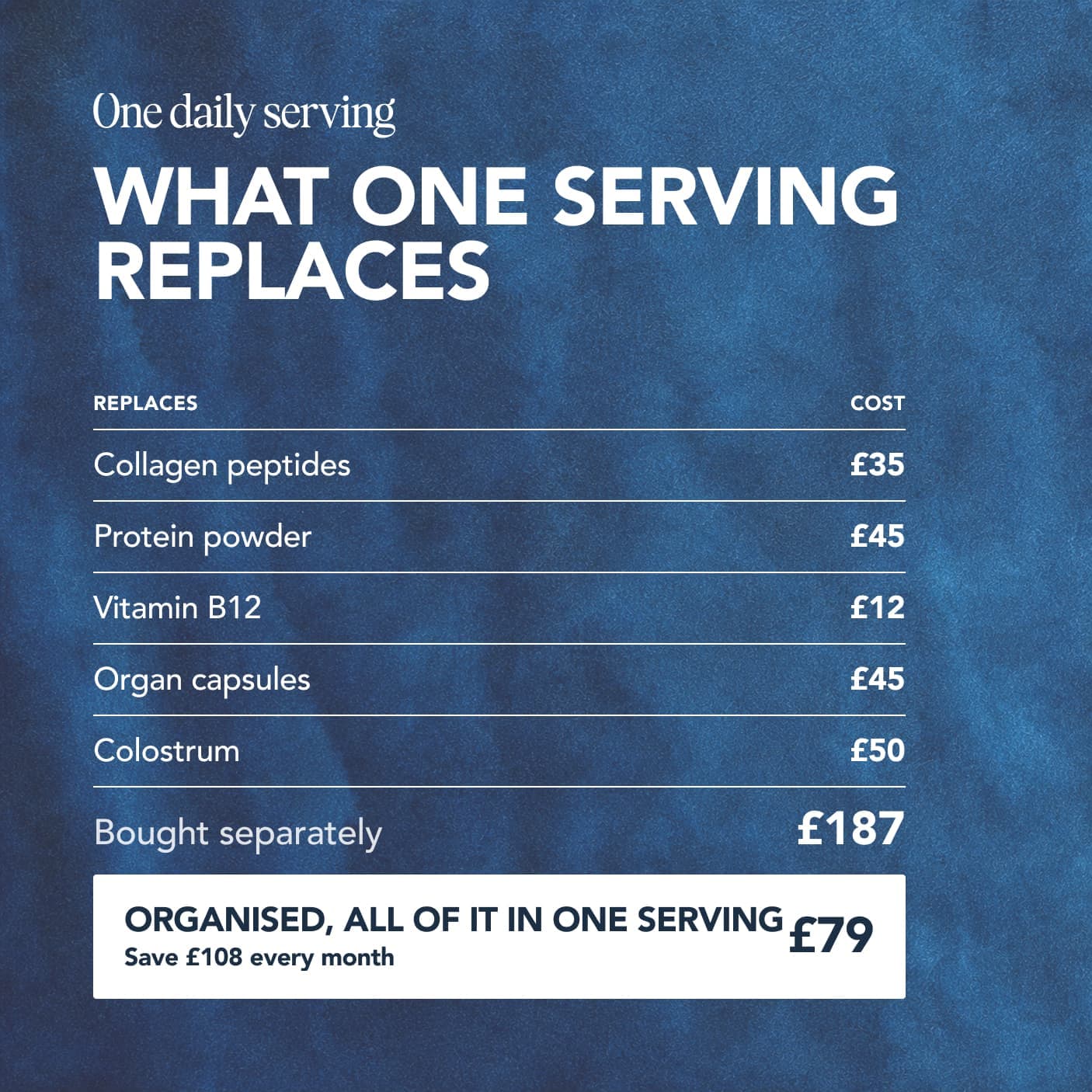
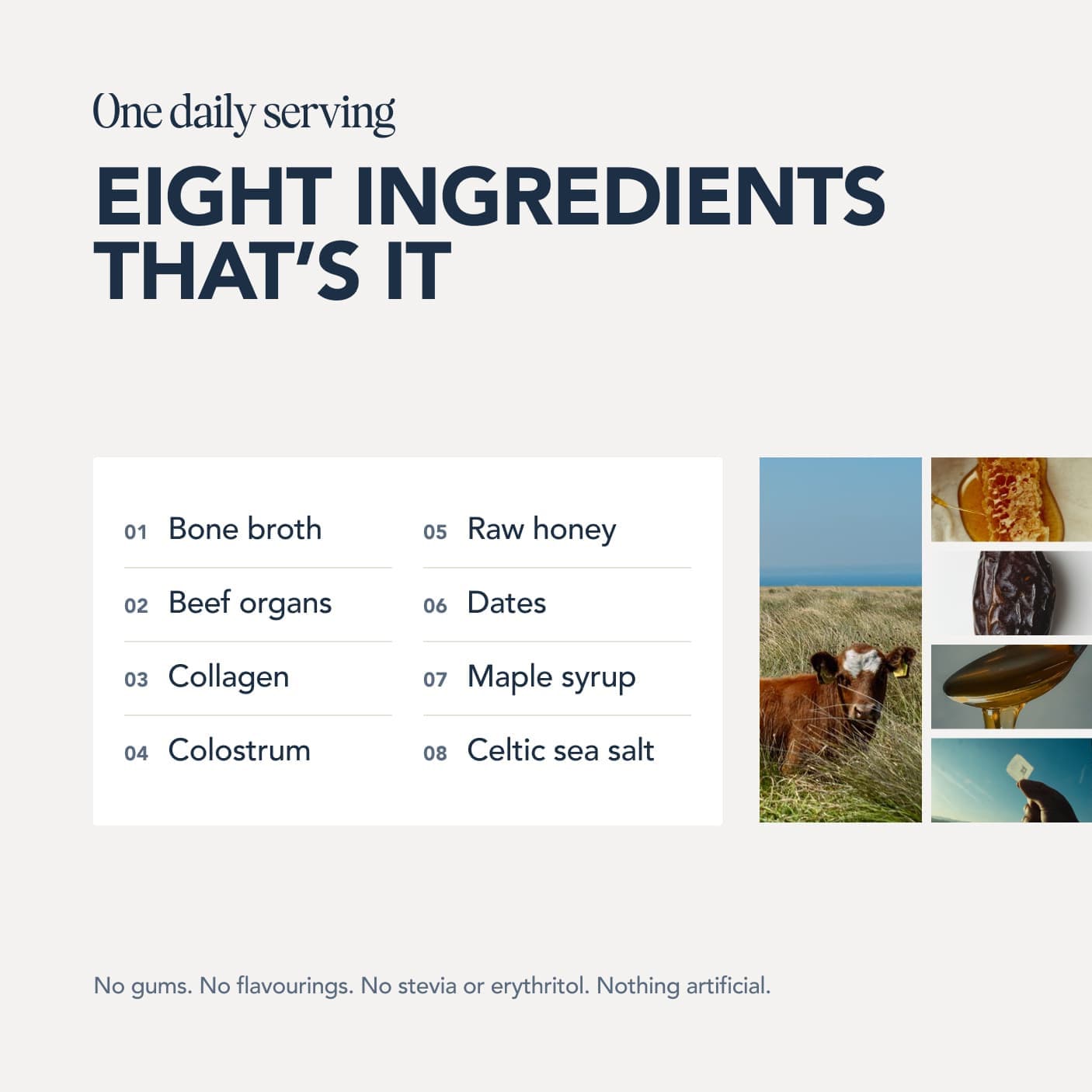
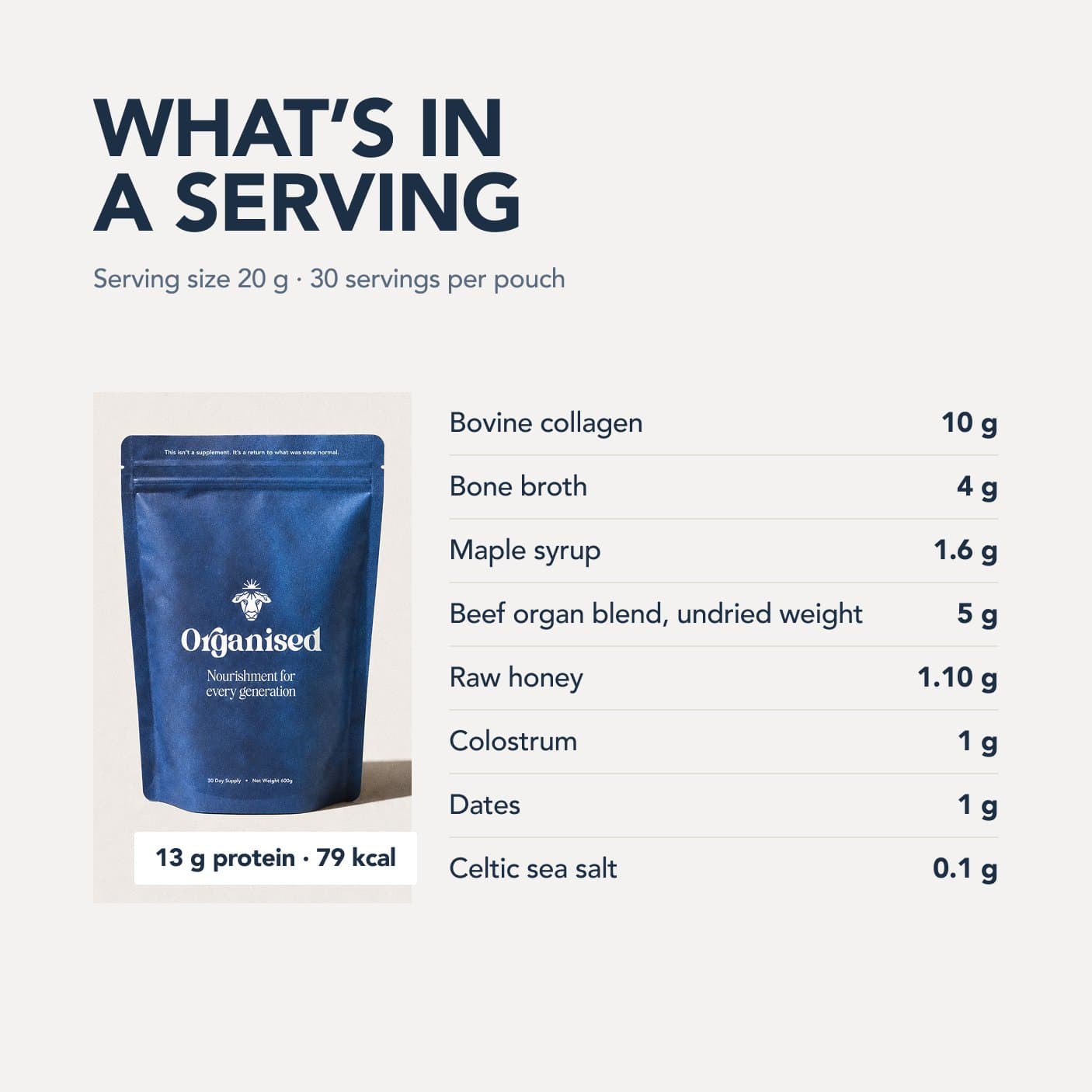
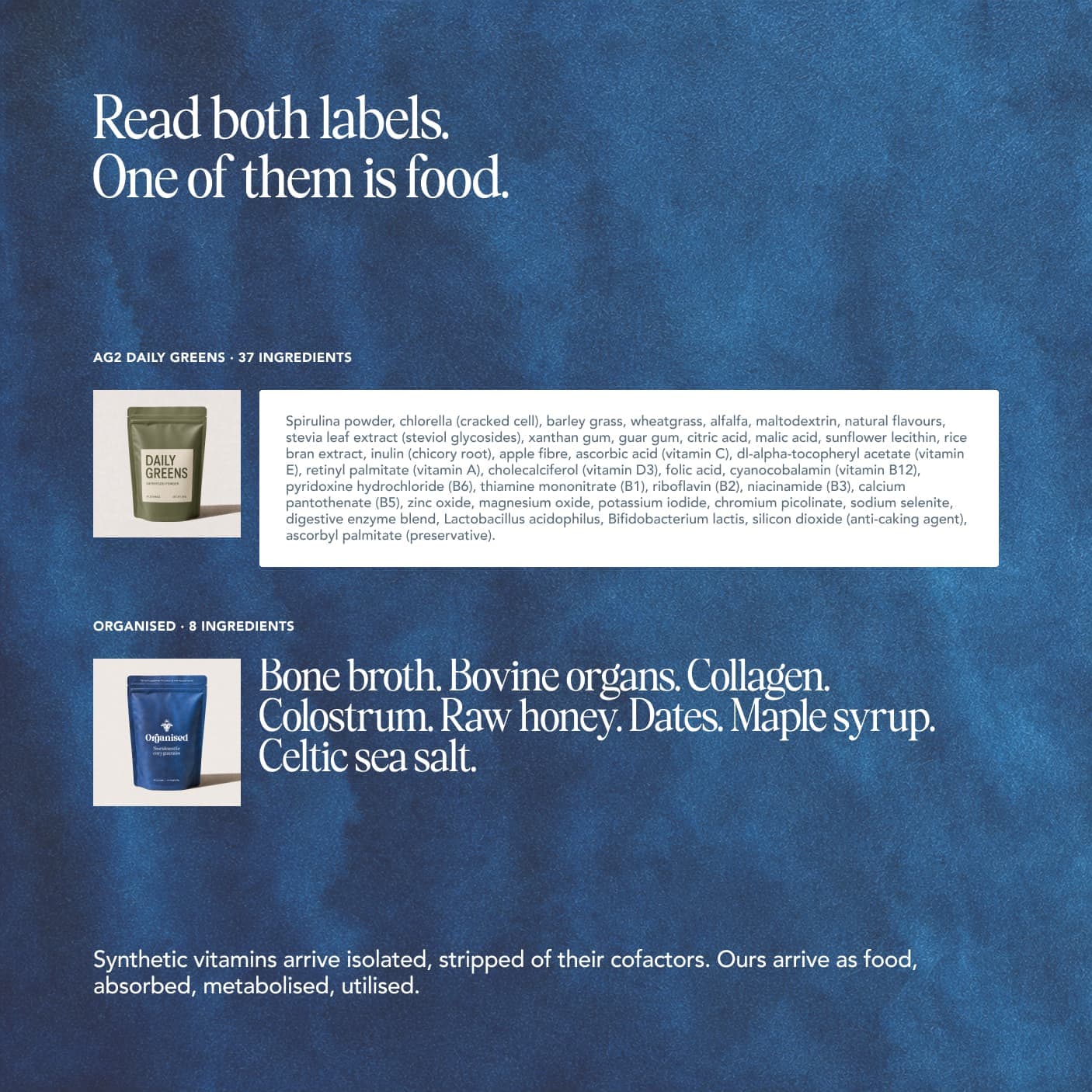
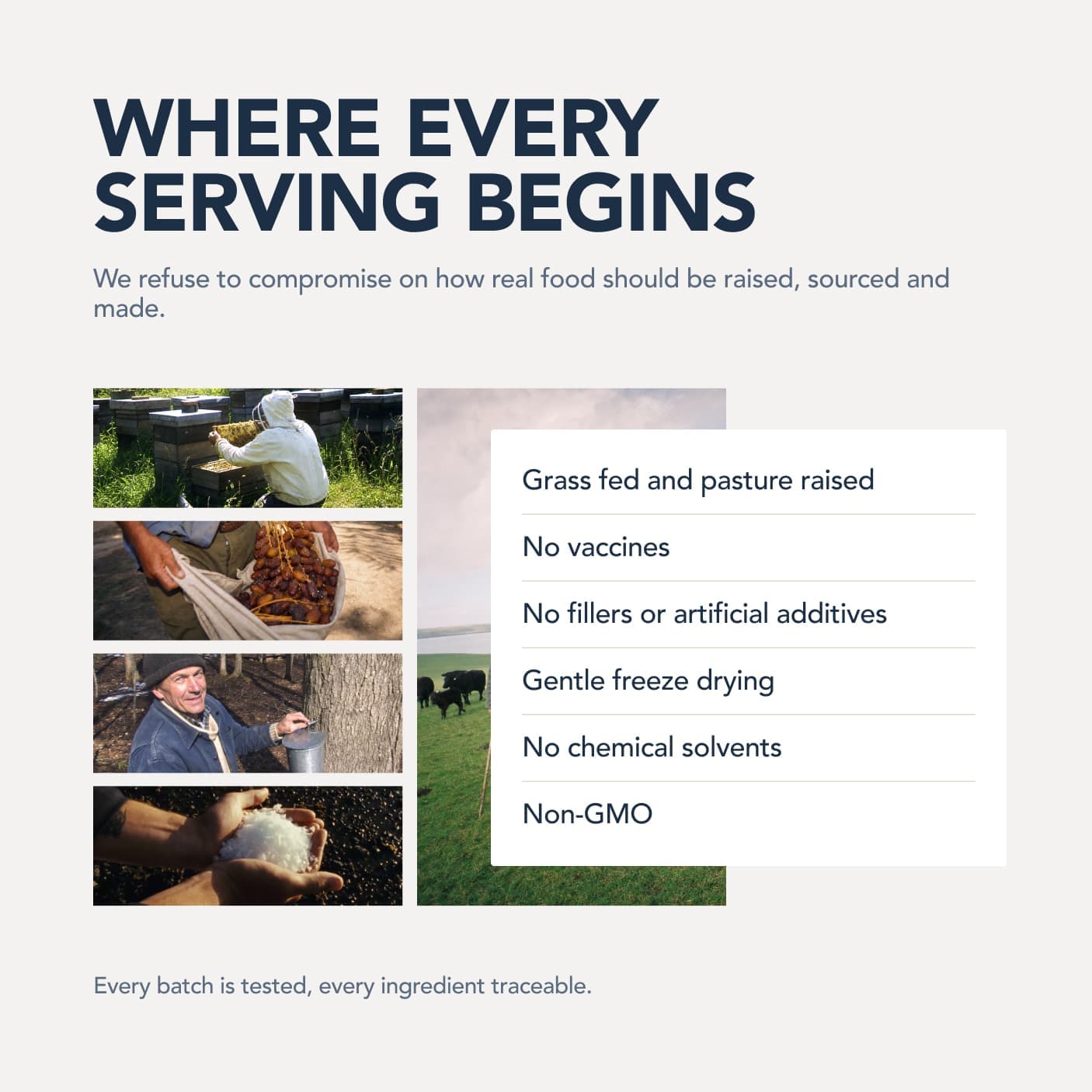
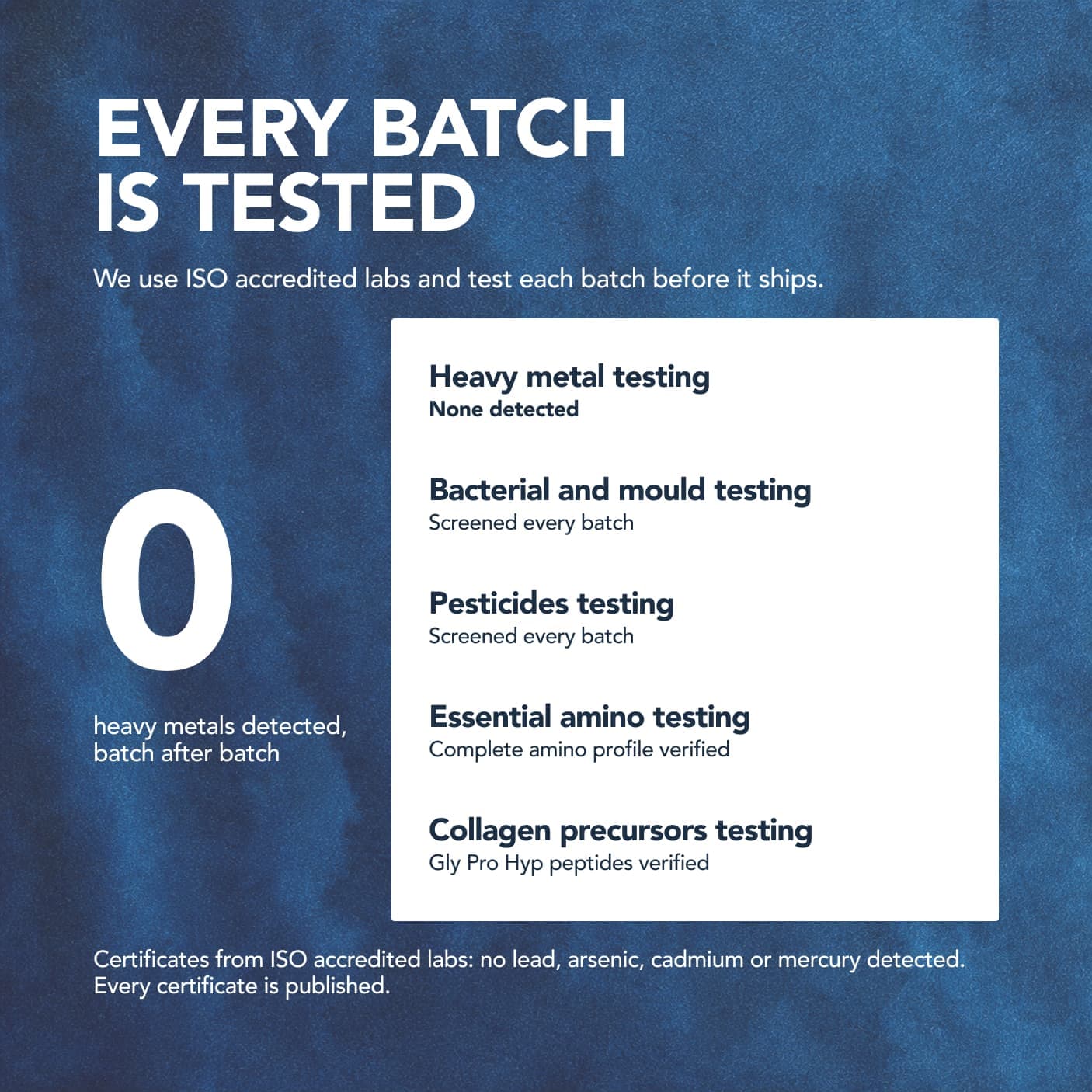
Eight real ingredients built around grass-fed beef organs, collagen and colostrum. Nothing synthetic added.
Free with your first order, worth £38. Plus £10 off the pouch with a subscription.

Free UK shipping · Made in England · 100 day money back guarantee on your first pouch · Skip, pause or cancel anytime
Rendering your own: the ancestral approach
If you have access to quality animal fat, rendering it yourself is straightforward and economical. It's also deeply satisfying to make a staple food directly from the raw material.
Rendering beef tallow: Buy beef suet (the fat around the kidneys, which has the highest fat content) from a butcher. Chop it finely, place it in a slow cooker on low heat for 6 to 8 hours, and let the fat slowly render. The solids (cracklings) sink to the bottom. Pour the liquid fat into jars, where it solidifies as it cools. Store at room temperature indefinitely.
Rendering lard: Buy pork fat from a butcher (often free or cheap). Chop finely and cook low and slow, same method as tallow. Pork fat renders faster than beef because it has a lower melting point. The resulting lard is milder in flavour than tallow.
Why this matters: Rendered fats are pure, free of water and protein residue. They're shelf-stable without refrigeration. They're cheaper than buying bottled ghee or tallow. And they're yours, from a source you can verify.
Many people find the scent and process deeply connecting. You're doing something your ancestors did for thousands of years. That's not sentimental. That's practical continuity with what works.
The quality of rendered fat depends entirely on the source animal. Tallow from grass-fed beef will be firmer and have a better omega-3 profile than tallow from grain-fed cattle. If you're investing time in rendering, invest in quality fat. Buy from a farmer or a butcher who knows where their meat comes from.
The comeback is real
For decades, traditional fats were dismissed as relics of unhealthy times. Now, the research is shifting. Studies are showing that saturated fat from whole food sources is not the demon it was made out to be. Seed oil consumption is being linked to metabolic dysfunction. Traditional cultures that cooked in animal fats for thousands of years were not doing it wrong.
Your grandmother wasn't stupid. She was cooking with the fat that was available, stable, and worked. The fact that we abandoned it for cheaper industrial products was a step backwards, not forwards.
The comeback isn't nostalgia. It's recognition that we broke something, and it's time to fix it.
References
Every source below was checked on 27 August 2026. Each PubMed, PMC and DOI identifier was resolved against NCBI or Crossref, and what it opens is printed under the citation, so you can see the link goes where the citation says without leaving the page. Where a citation and its identifier disagreed, the citation was corrected to the record or the reference was deleted along with the sentence marker that pointed at it, and where the resolved paper turned out not to support the sentence, the sentence was cut back to what it does support. Borrowed authority is worse than none, because it looks like rigour.
- Choe E, Min DB. Chemistry of deep-fat frying oils. J Food Sci. 2007;72(5):R77-86. PMID: 17995742.Checked 27 August 2026: PMID 17995742 opens Choe E, Min DB, Chemistry of deep-fat frying oils. J Food Sci 2007;72(5):R77-86. PubMed indexes it as: Review.
- Schaich KM. Lipid oxidation: theoretical aspects. In: Bailey's Industrial Oil and Fat Products. Wiley; 2005.Checked 27 August 2026: doi:10.1002/047167849x.bio067 opens Schaich KM, Lipid Oxidation: Theoretical Aspects Bailey's Industrial Oil and Fat Products 2005.
- Mozaffarian D et al. Trans fatty acids and cardiovascular disease. N Engl J Med. 2006;354(15):1601-13. PMID: 16611951.Checked 27 August 2026: PMID 16611951 opens Mozaffarian D, Katan MB, Ascherio A et al, Trans fatty acids and cardiovascular disease. N Engl J Med 2006;354(15):1601-13. PubMed indexes it as: Review.
- Daley CA et al. A review of fatty acid profiles and antioxidant content in grass-fed and grain-fed beef. Nutr J. 2010;9:10.Checked 27 August 2026: PMC2846864 opens Daley CA, Abbott A, Doyle PS et al, A review of fatty acid profiles and antioxidant content in grass-fed and grain-fed beef. Nutr J 2010;9:10. PubMed indexes it as: Review.
Who wrote and reviewed this guide
Niall Kiddle
Author · Founder, Organised
Niall is the founder of Organised. He started the company in 2024 after fixing his own health the slow way: in 2022 he swapped a cupboard of synthetic supplements for real food, raw milk, organ meats, bone broth and honey, and felt the difference within months.
Areas of expertise: Ancestral nutrition, Organ meats, Whole-food supplementation, Gut health, Regenerative sourcing
Read Niall's full profile
Pedro Rodrigues
Reviewer · Agronomist (farming and sourcing only)
Pedro is the agronomist Organised works with on farming and sourcing. His job on the guides is to keep the science honest: he reviews what we publish about soil health, regenerative agriculture, grazing and the way food is actually produced.
Areas of expertise: Regenerative agriculture, Agronomy, Soil health, Grass-fed farming, Food sourcing
Reviewed this guide on
Read Pedro's full profileMore on ancestral wisdom
View allBrowse the guides library
All guidesKeep reading
Ancestral
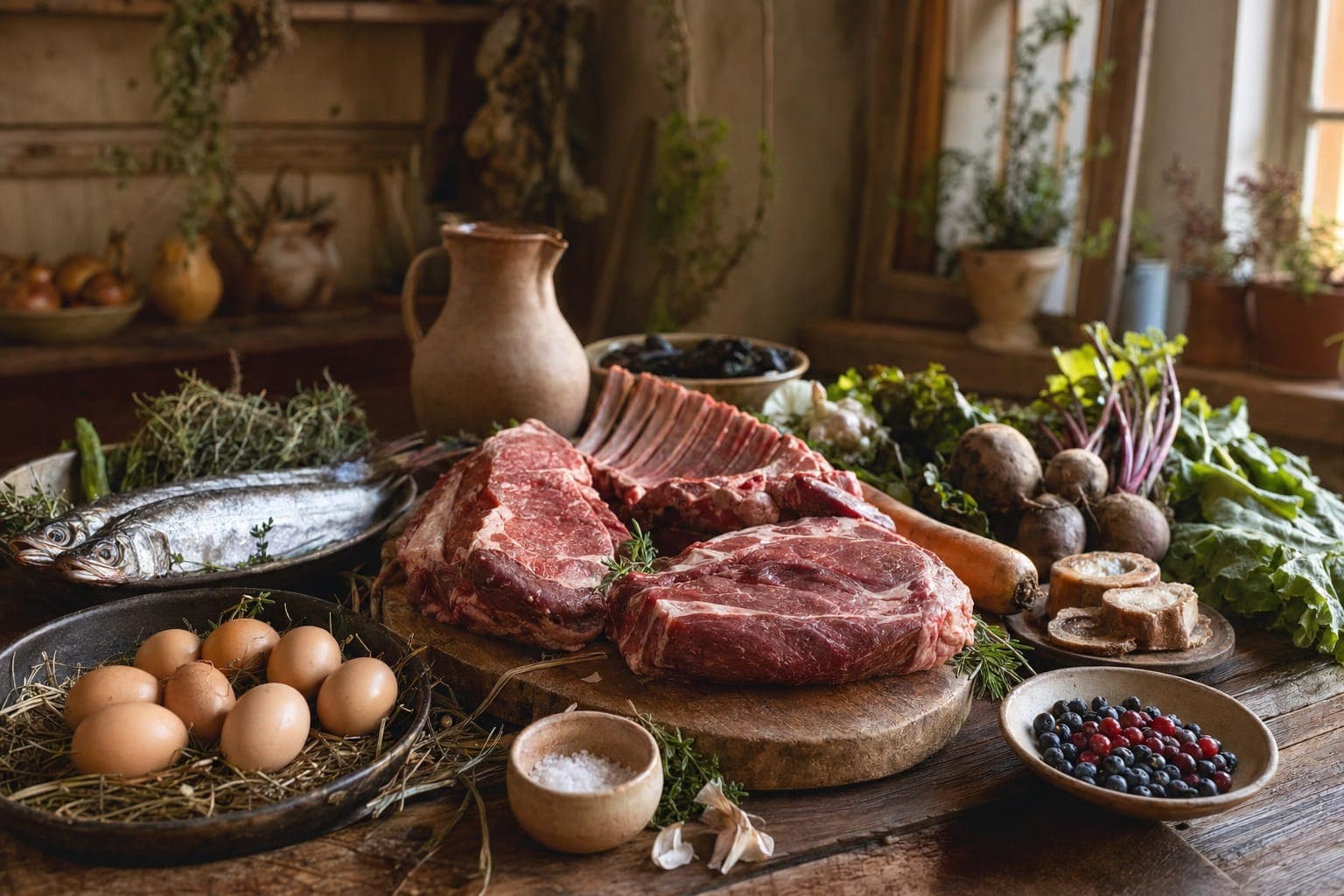
What Our Ancestors Actually Ate (And What We've Lost)
Discover what ancestral humans ate, why it worked, and what modern diets have lost. Based on archaeological and anthropological evidence.
Ancestral
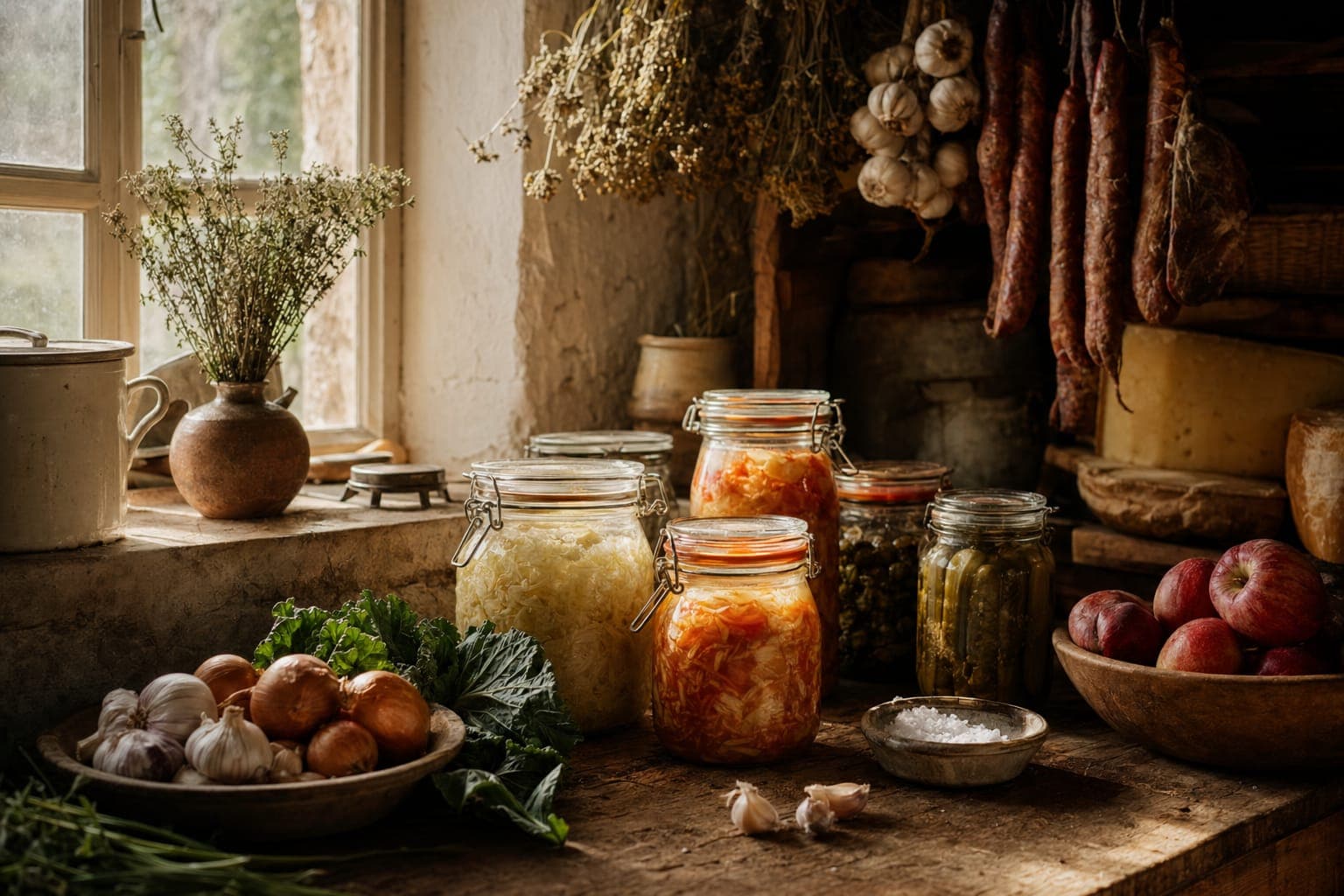
How Traditional Cultures Prepared for Winter
Discover how ancestral cultures preserved abundance through fermentation, drying, smoking, and fat storage. Winter food traditions rooted in real nutrition.
Ancestral
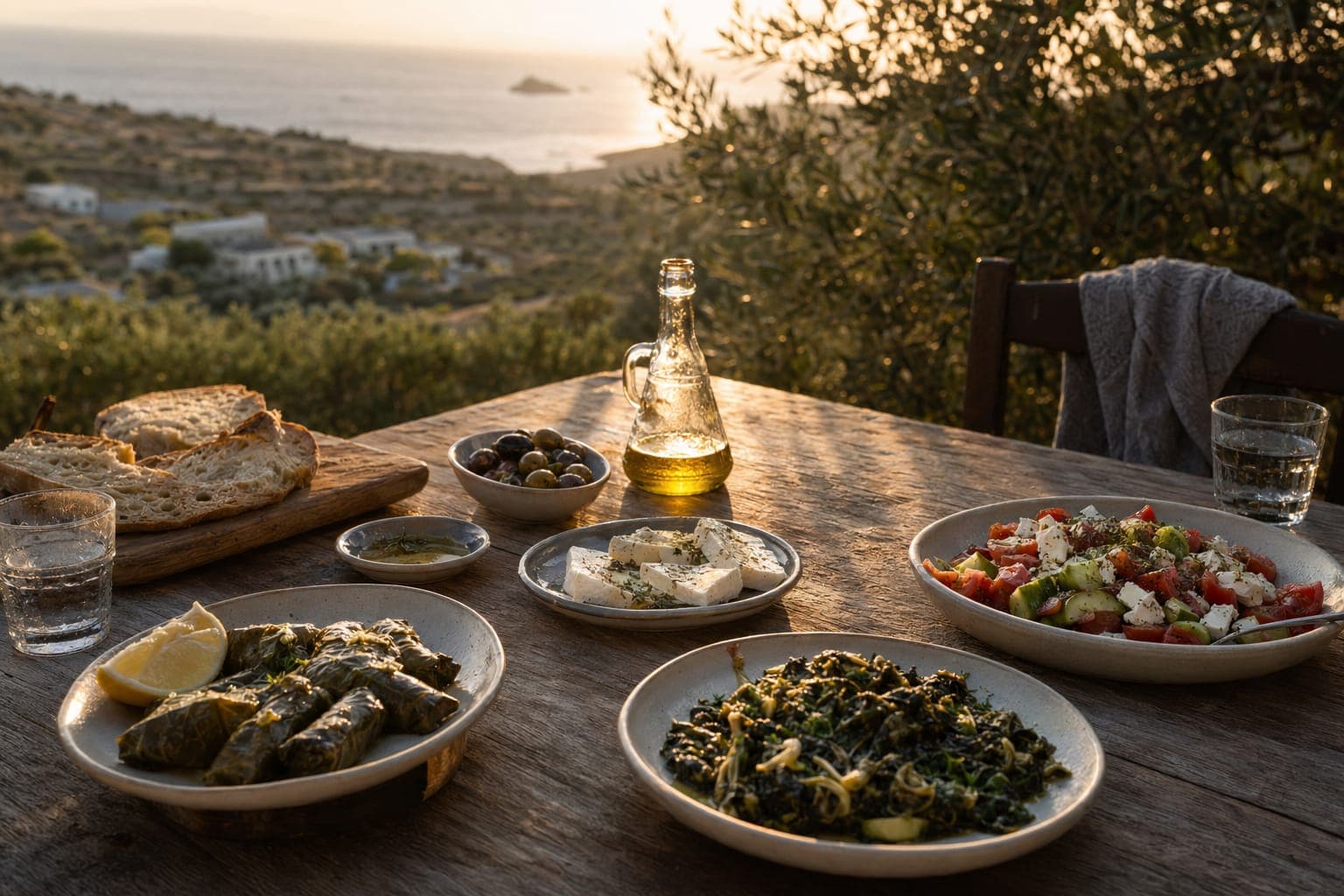
The Mediterranean Diet: Separating Myth from Fact
The Mediterranean diet myth often contradicts the 1960s Crete data. See what Ancel Keys found, what was forgotten, and what real Cretans actually ate.
Real food, made effortless
Bring it into my routineA few ways to use it
All recipes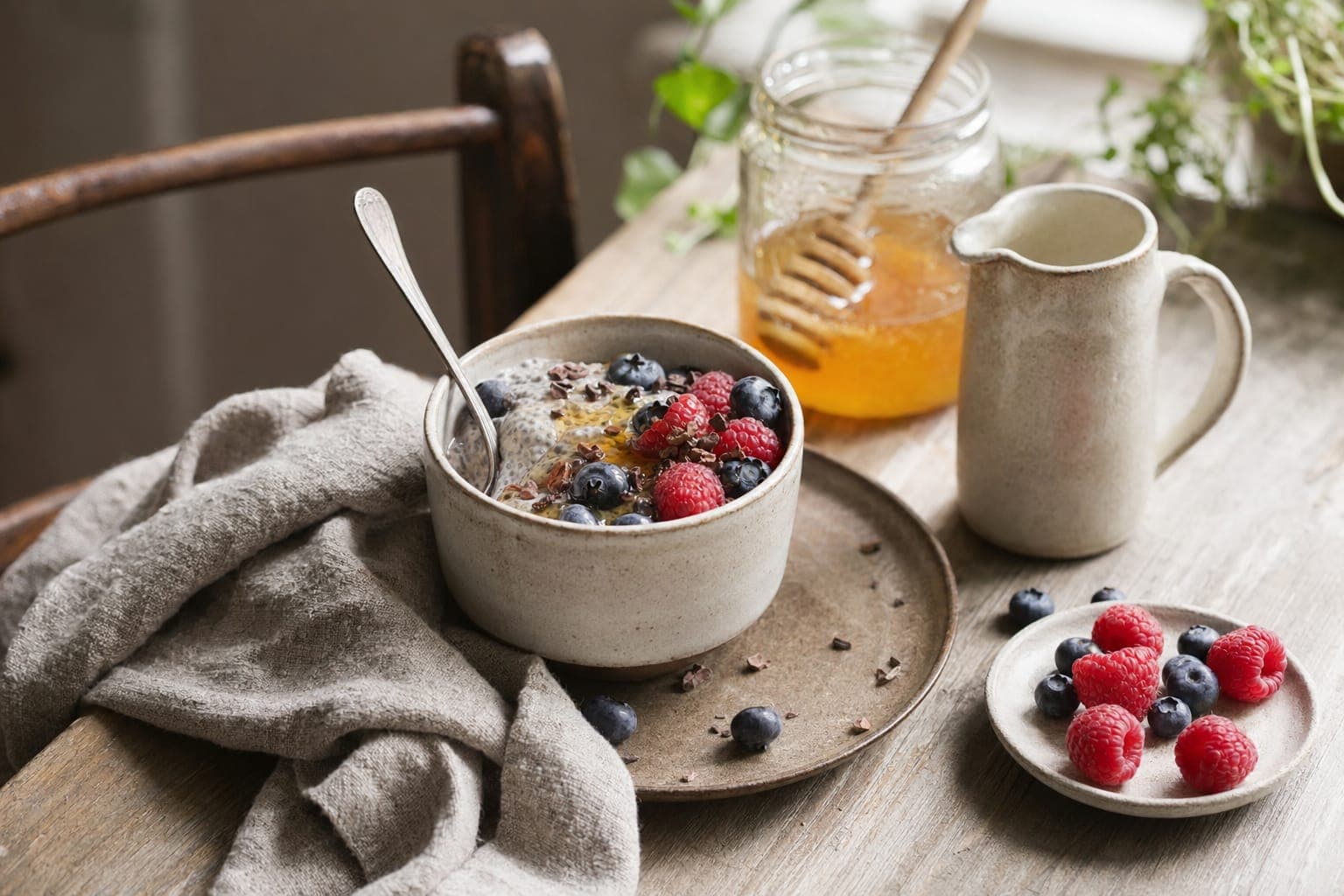
Organised Chia Pudding with Raw Honey and Berries
A no-cook chia seed pudding made with raw milk, collagen, berries, and raw honey. Prep it the night before and eat for breakfast.
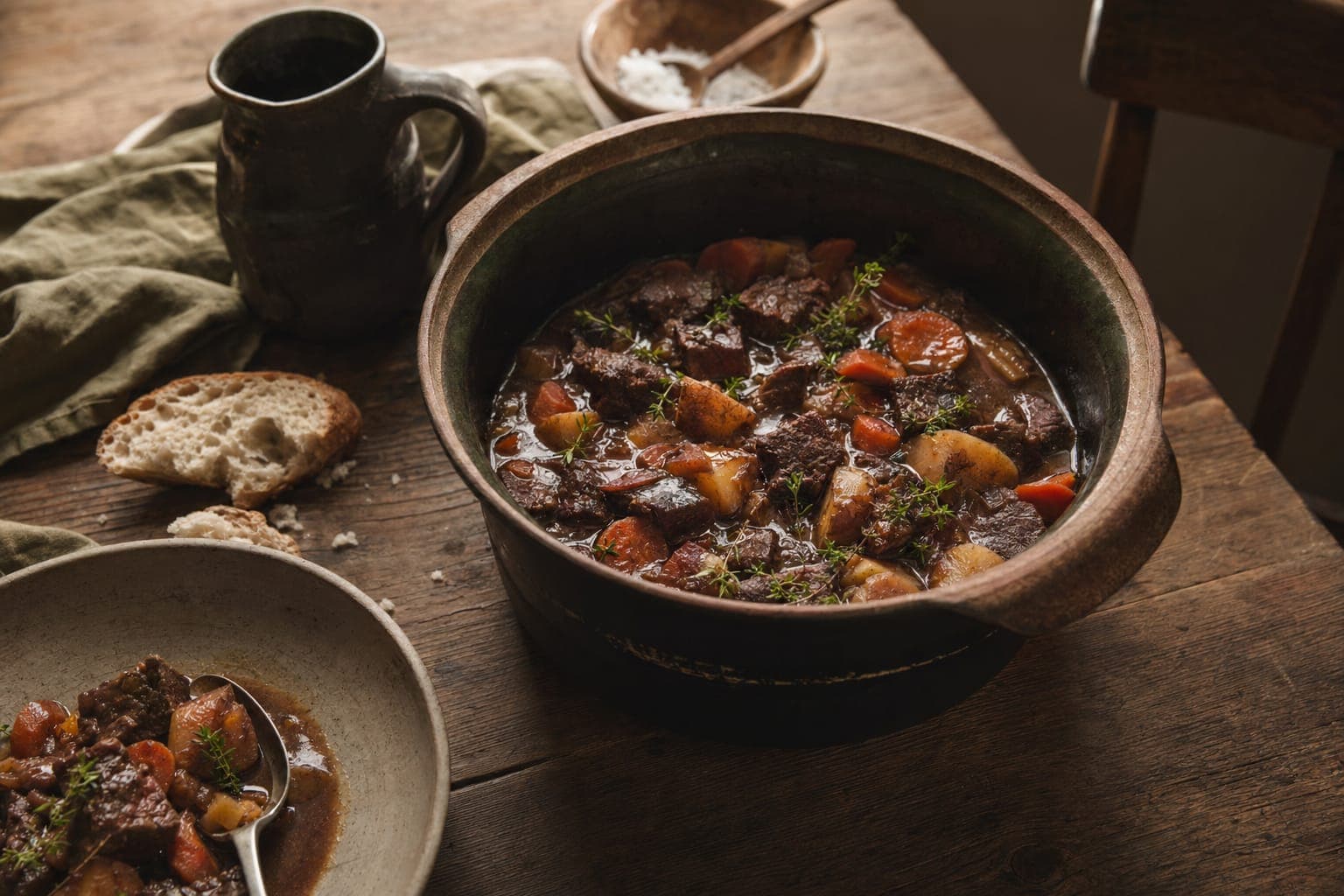
Collagen-Rich Beef Stew: Slow-Cooked Nourishment
Beef stew that delivers collagen from connective tissue and bone broth. Winter comfort food that actually nourishes. Simple slow cooker recipe.
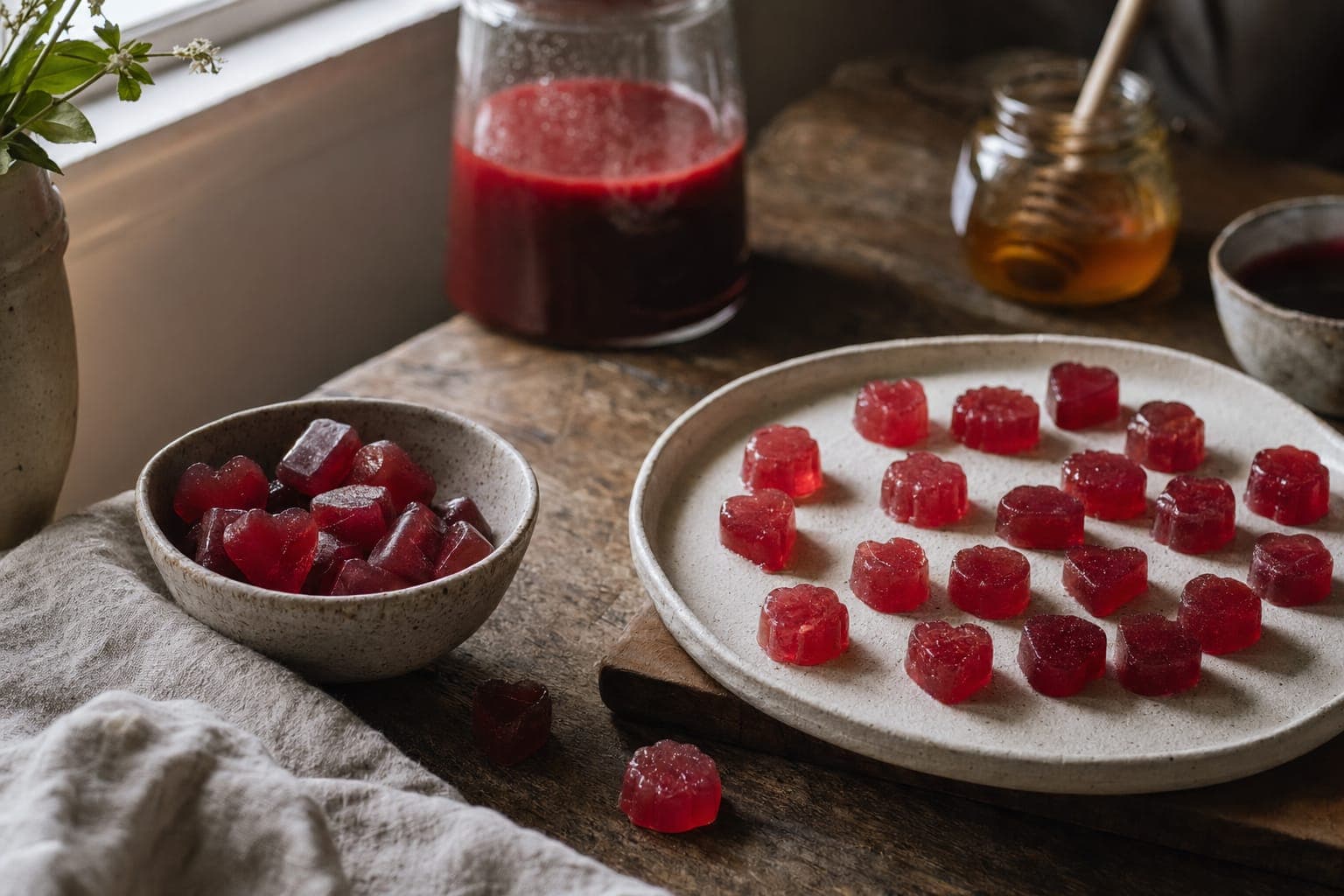
How to Make Your Own Gelatine Gummies
A simple recipe for homemade gelatine gummies using grass-fed gelatine, fresh juice, and raw honey. Better than shop-bought, kids love them.


 Join over 100,000+ members
Build a better food system with us
The Organised community is thousands of people choosing real food and backing the farmers who grow it, all of us trying to leave the world a little better than we found it. If that is what you care about too, you belong here.