The Mediterranean Diet: Separating Myth from Fact
You've heard of the Mediterranean diet. Heart-healthy olive oil, plenty of vegetables, moderate red wine, and as little red meat as possible. It's been held up as the gold standard of healthy eating for decades. But the original 1960s data from Crete tells a completely different story.
By Niall Kiddle, Founder, Organised

Reviewed by Pedro Rodrigues, Agronomist (farming and sourcing only) ·
6 min read · Published · Updated · 3 cited sources
Makers of the Organised Daily blend, a grass-fed beef organ supplement from regenerative UK farms
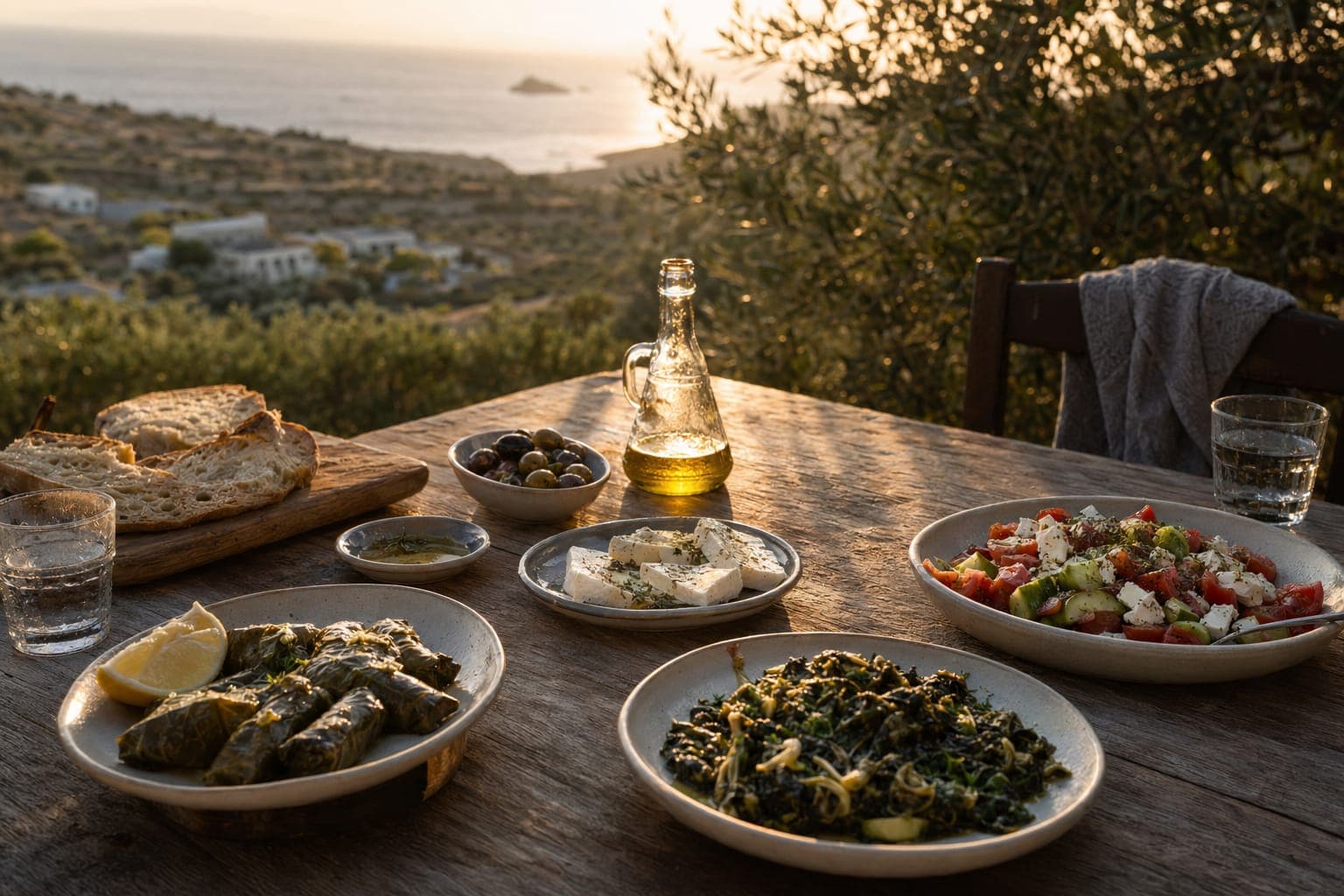
But the original 1960s data from Crete tells a completely different story. And what happened to that data in translation is one of the most important nutrition myths of the modern era.
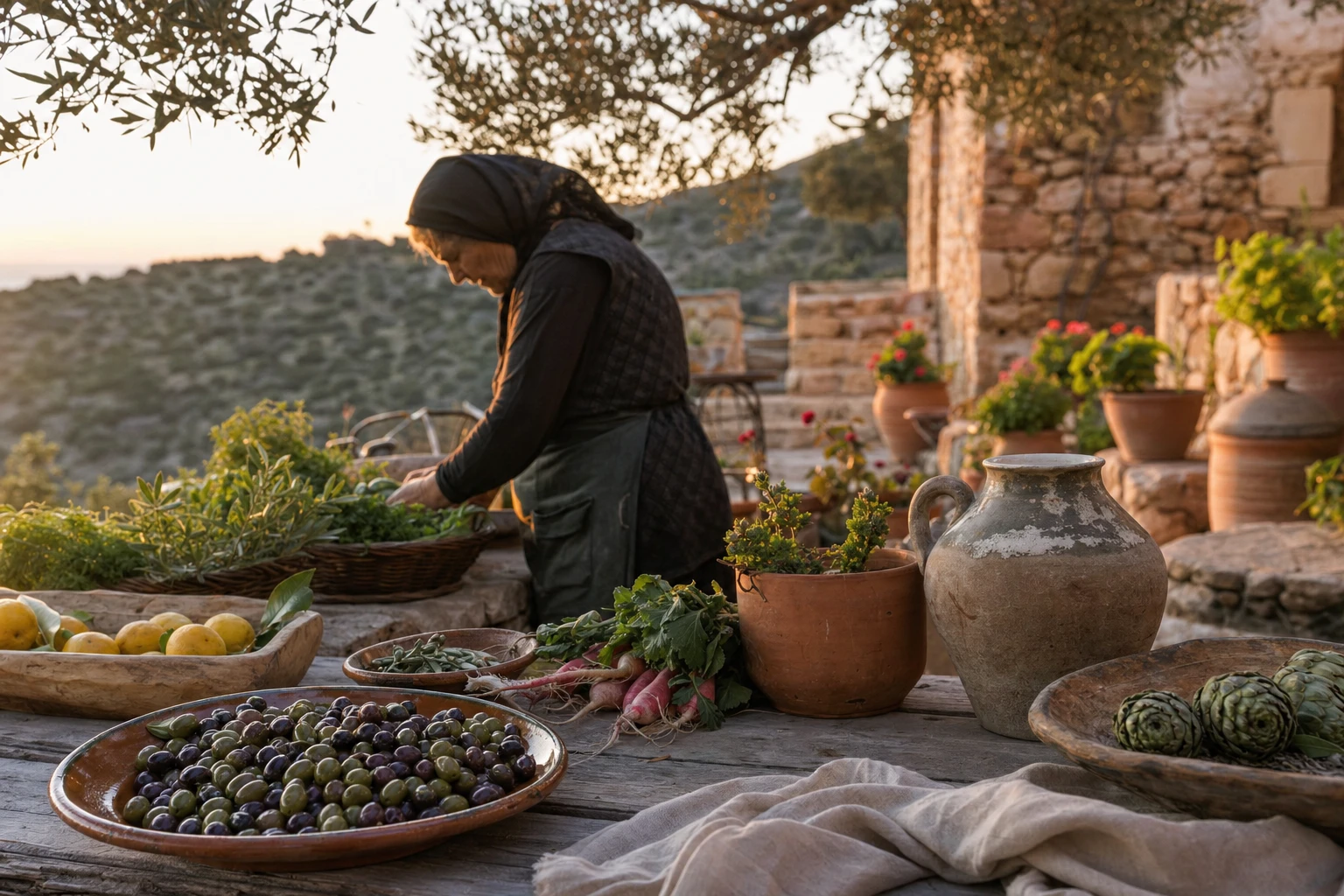
The origin story of the Mediterranean diet myth
The Mediterranean diet narrative was built on research. Specifically, the Seven Countries Study, conducted between 1958 and 1970 and led by researcher Ancel Keys.1 Keys wanted to understand why heart disease rates differed across different populations. So he studied men in Japan, Finland, the United States, the Netherlands, Italy, Greece, and Yugoslavia.
The results seemed clear: Mediterranean countries had lower rates of heart disease. Keys published his findings, and the world decided that olive oil and vegetables were the secret to longevity. That became the Mediterranean diet myth.
But here's where the story gets complicated. Keys didn't just happen to select Mediterranean countries randomly. He specifically chose which countries to study based on data he'd already seen. If countries didn't fit his emerging hypothesis about fat and heart disease, they weren't included in the final analysis. This is called cherry-picking, and it's a pretty significant methodological problem.
Ancel Keys and the Seven Countries Study
Keys believed that saturated fat caused heart disease. He went looking for data that would support that hypothesis. When he found countries with lower heart disease and lower saturated fat intake, he included them. When he found countries with high saturated fat and low heart disease, he didn't.
For example, France and Switzerland both had populations consuming substantial amounts of saturated fat (butter, cheese, meat) and yet had relatively low rates of heart disease. These countries were excluded from the published analysis. Finland and Japan fit the hypothesis better, so they were in. The result was a study that appeared to prove Keys' theory but actually just reflected his starting assumptions.
Additionally, Keys excluded data on women entirely, despite heart disease affecting women as well as men. He also didn't account for smoking rates, stress levels, or physical activity patterns. These weren't technical oversights. They were deliberate methodological choices that shaped the conclusions. Modern re-analyses of the original Seven Countries data show far more nuance than Keys' published work suggested.2 But by then, the narrative had taken hold in the popular imagination and in public health policy.
Ancel Keys didn't discover the Mediterranean diet. He selectively presented data and built a narrative around it. The narrative became more influential than the actual data.
The Mediterranean diet as a universal health prescription was born not from comprehensive research but from selective reporting.
What Cretans actually ate in the 1960s
This is where it gets really interesting. When researchers actually went to Crete in the 1960s and documented what people ate, the picture was completely different from what the Mediterranean diet mythology suggests.
Yes, Cretans ate olive oil. Lots of it. But they also ate:
- Meat regularly. Goat, lamb, and occasionally beef. Not just at feasts.
- Fish occasionally, not at every meal. Crete is an island, but fresh fish wasn't always available or affordable for everyone.
- Whole grains, mostly barley and wheat in traditional preparation (soaked, fermented, or as sourdough).
- Legumes, prepared traditionally (soaked and cooked long).
- Wild greens and foraged foods, seasonal and local.
- Raw milk and cheese, from grazing animals.
- Few processed foods. Everything was made from scratch.
- Seasonal eating. Winter meant preserved foods. Spring meant fresh greens. Summer meant abundance.
The Cretans didn't eat a low-fat diet. They ate a fat diet. The fat just came from different sources: olive oil, yes, but also from grass-fed animals, raw milk products, and whole foods prepared traditionally. And crucially, they ate nose to tail. When an animal was killed, every part was used.
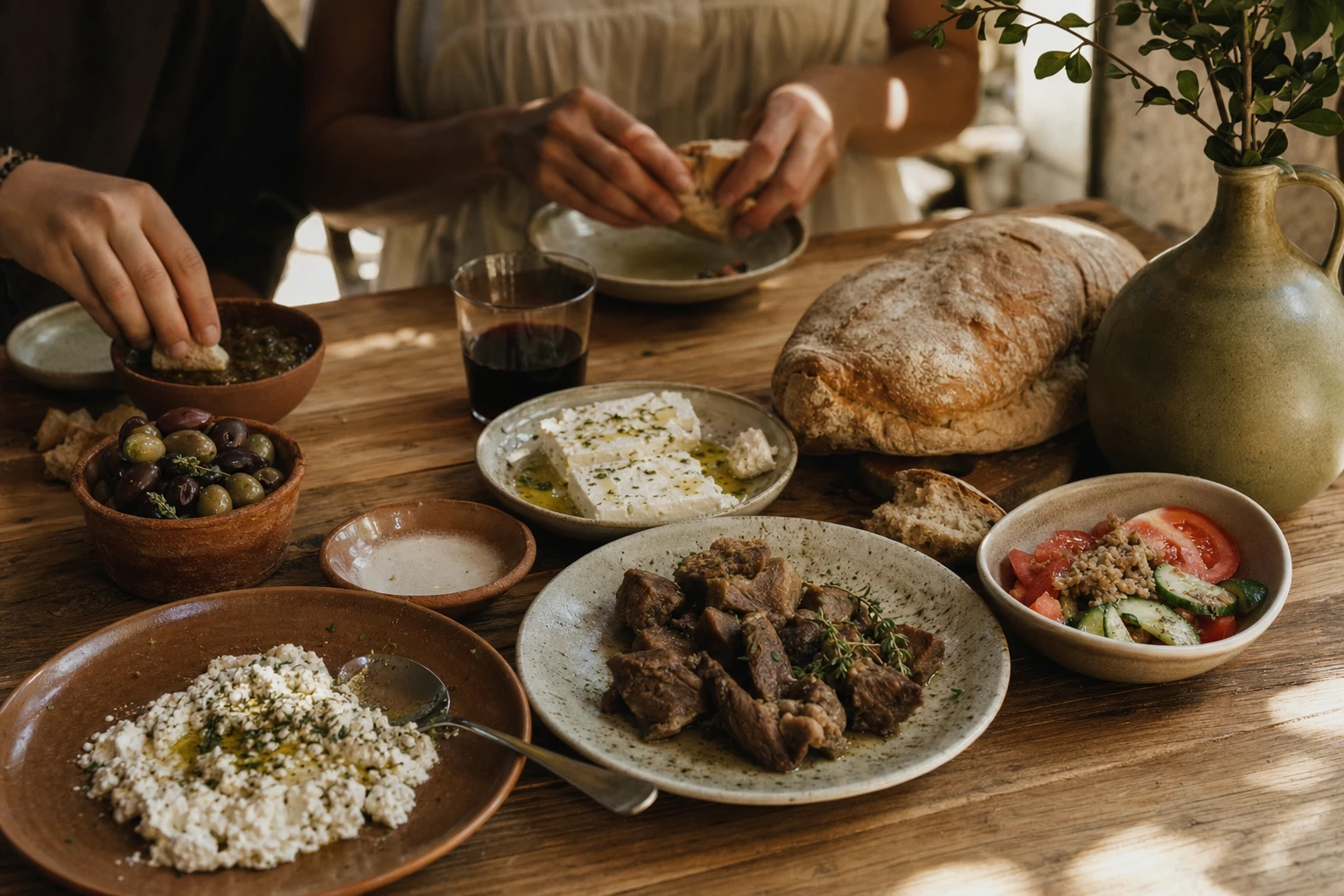
The olive oil narrative versus reality
Modern Mediterranean diet guidelines emphasize olive oil as the health hero. Use it for everything. Make it the foundation of your diet. Except there's a problem: the olive oil Cretans ate in the 1960s bore almost no resemblance to what's sold today as premium Mediterranean olive oil.
Traditional Cretan olive oil was extracted using stone mills and minimal processing. Modern extra virgin olive oil is often extracted with heat and chemicals, sometimes blended with cheaper seed oils, and frequently oxidised by the time it reaches your kitchen.
More importantly, Cretans didn't use olive oil in the quantities that modern Mediterranean diet advocates suggest. They used it, yes, but measured and purposeful. They also ate plenty of other fats: butter, lard from pigs, fat from grazing animals. These weren't considered unhealthy. They were just food.3
The modern focus on olive oil as the singular health fat completely distorts what actual Cretans ate. It's not that olive oil is bad. It's that the mythology has extracted one component of a diet and made it the entire story.
Get ancestral nutrition guides, free
Two short reads a week on traditional ways of eating, examined with modern evidence.
By signing up you agree to receive emails from us. No spam, unsubscribe anytime.
Red meat: the hidden truth
The modern Mediterranean diet narrative says eat little to no red meat. But the actual Cretans of the 1960s ate meat regularly. Goat was extremely common. Lamb appeared frequently. Beef less often, but present.
When researchers documented the actual intake, meat consumption in Crete was somewhere between 50 to 100 grams per day for most people. That's not enormous, but it's certainly not avoidance. And this was meat from grazing animals, not grain-fed industrial livestock. The nutrient profile is completely different.
The health benefits of traditional Cretan eating didn't come from avoiding meat. They came from eating meat from animals that grazed on pasture, combined with whole foods and minimal processing.
Modern Mediterranean diet instructions have essentially removed the most nutrient-dense part of the traditional diet and replaced it with carbohydrate-heavy whole grains and, ironically, more seed oils and processed foods.
Wine, celebration, and the feast economy
Traditional Cretan food culture included wine. But it was consumed in context: with meals, with others, as part of celebration. It wasn't a health recommendation. It was a normal part of eating and living.
The modern Mediterranean diet mythology has sometimes emphasised wine as a health component, specifically the resveratrol in red wine. But this misses the entire picture. The wine was part of a feast culture, a celebration economy, an entire context of movement, community, and traditional food preparation that made the whole system work.
You can't extract one component of an ancestral food system and make it the hero whilst ignoring everything else. That's how you end up with bad health advice.



1 of 9
Daily blend
100,000+ thriving families4.9 on Trustpilot
Eight real ingredients built around grass-fed beef organs, collagen and colostrum. Nothing synthetic added.
Free with your first order, worth £38. Plus £10 off the pouch with a subscription.


Free UK shipping · Made in England · 100 day money back guarantee on your first pouch · Skip, pause or cancel anytime
Modern Mediterranean dieting versus ancestral Crete
The modern Mediterranean diet as sold today bears little resemblance to what Cretans actually ate. Modern versions emphasise:
- Low red meat (the opposite of traditional)
- High olive oil as the primary fat source (a distortion)
- High whole grains (in processed modern form, not traditional fermented preparation)
- Minimal dairy or cheese (despite Crete having a dairy culture)
- Plenty of processed foods marketed as Mediterranean
None of this reflects what actually kept Cretans healthy. What kept them healthy was whole foods, nose-to-tail eating, traditional food preparation, seasonal eating, movement, community, and lack of processed foods.
The bottom line
The Mediterranean diet narrative is useful because it points toward whole foods and away from processed industrial food. But the actual story gets more complicated if you look at the original data.
Traditional Cretans didn't stay healthy because they followed a specific macronutrient ratio or avoided fat. They stayed healthy because they ate real food, moved their bodies, lived in community, and didn't consume processed products. They ate meat, cheese, whole grains prepared traditionally, seasonal vegetables, and good fat from multiple sources.
If you want to actually benefit from studying ancestral Mediterranean eating, skip the modern diet prescription. Instead, eat meat from grazing animals, prepare grains traditionally, eat seasonal local produce, use quality fats from multiple sources, and avoid processed foods. That's the Cretan story. Everything else is marketing.
References
Every source below was checked on 27 August 2026. Each PubMed, PMC and DOI identifier was resolved against NCBI or Crossref, and what it opens is printed under the citation, so you can see the link goes where the citation says without leaving the page. Where a citation and its identifier disagreed, the citation was corrected to the record or the reference was deleted along with the sentence marker that pointed at it, and where the resolved paper turned out not to support the sentence, the sentence was cut back to what it does support. Borrowed authority is worse than none, because it looks like rigour.
- Keys A. Seven Countries: A Multivariate Analysis of Death and Coronary Heart Disease. Harvard University Press, 1980. Summary at https://www.sevencountriesstudy.com/about-the-study/ [accessed May 2026].
- Pett KD, Kahn J, Willett WC, Katz DL. Ancel Keys and the Seven Countries Study: An Evidence-based Response to Revisionist Histories. White Paper, The True Health Initiative. https://www.truehealthinitiative.org/ [accessed May 2026].
- Chowdhury R, Warnakula S, Kunutsor S, et al. Association of dietary, circulating, and supplement fatty acids with coronary risk: a systematic review and meta-analysis. Ann Intern Med. https://pubmed.ncbi.nlm.nih.gov/24723079/ [accessed May 2026].Checked 27 August 2026: PMID 24723079 opens Chowdhury R, Warnakula S, Kunutsor S et al, Association of dietary, circulating, and supplement fatty acids with coronary risk: a systematic review and meta-analysis. Ann Intern Med 2014;160(6):398-406. PubMed indexes it as: Meta-Analysis, Systematic Review.
Who wrote and reviewed this guide
Niall Kiddle
Author · Founder, Organised
Niall is the founder of Organised. He started the company in 2024 after fixing his own health the slow way: in 2022 he swapped a cupboard of synthetic supplements for real food, raw milk, organ meats, bone broth and honey, and felt the difference within months.
Areas of expertise: Ancestral nutrition, Organ meats, Whole-food supplementation, Gut health, Regenerative sourcing
Read Niall's full profile
Pedro Rodrigues
Reviewer · Agronomist (farming and sourcing only)
Pedro is the agronomist Organised works with on farming and sourcing. His job on the guides is to keep the science honest: he reviews what we publish about soil health, regenerative agriculture, grazing and the way food is actually produced.
Areas of expertise: Regenerative agriculture, Agronomy, Soil health, Grass-fed farming, Food sourcing
Reviewed this guide on
Read Pedro's full profileBrowse the guides library
All guidesKeep reading
Ancestral
Why Butter Is Back (And Why It Never Should Have Left)
Butter provides fat-soluble vitamins and K2. Margarine was the real experiment. Here's why we're finally returning to what our ancestors ate.
Ancestral
Food Additives You Should Actually Worry About
Most food additives are safe, but a few are genuinely worth avoiding. Learn which food additives actually matter for your health and why. A clear-eyed guide.
Ancestral
Ghee, Tallow and Lard: The Traditional Cooking Fats Making a Comeback
Ghee, tallow, and lard are making a comeback. Here's why traditional cooking fats outperform seed oils at high temperatures and support your health.
Real food, made effortless
Bring it into my routineA few ways to use it
All recipes
Whole Food Snacks for Busy Days
Practical whole food snacks that travel well and sustain energy. No refined carbs, no seed oils. Real food options for when you're busy.

Raw Milk Hot Chocolate with Collagen
A nourishing evening hot chocolate made with raw milk, grass-fed collagen, raw cacao, and honey. A nighttime ritual that supports sleep and gut health.

Organised Smoothie Bowl Recipes for Every Season
Four seasonal smoothie bowl recipes using Organised. Berry in summer, apple-cinnamon in autumn, tropical in spring, warming chocolate in winter.


 Join over 100,000+ members
Build a better food system with us
The Organised community is thousands of people choosing real food and backing the farmers who grow it, all of us trying to leave the world a little better than we found it. If that is what you care about too, you belong here.