How Fat Became the Enemy (And Why That Was Wrong)
You've been told your entire life that fat will kill you. That butter is dangerous, that eggs will clog your arteries, that saturated fat is the enemy. You've been told this so convincingly that questioning it feels irresponsible. But the science that created this story was flawed from the beginning. And the people who funded it knew it.
By Niall Kiddle, Founder, Organised

Reviewed by Pedro Rodrigues, Agronomist (farming and sourcing only) ·
7 min read · Published · Updated · 5 cited sources
Makers of the Organised Daily blend, a grass-fed beef organ supplement from regenerative UK farms
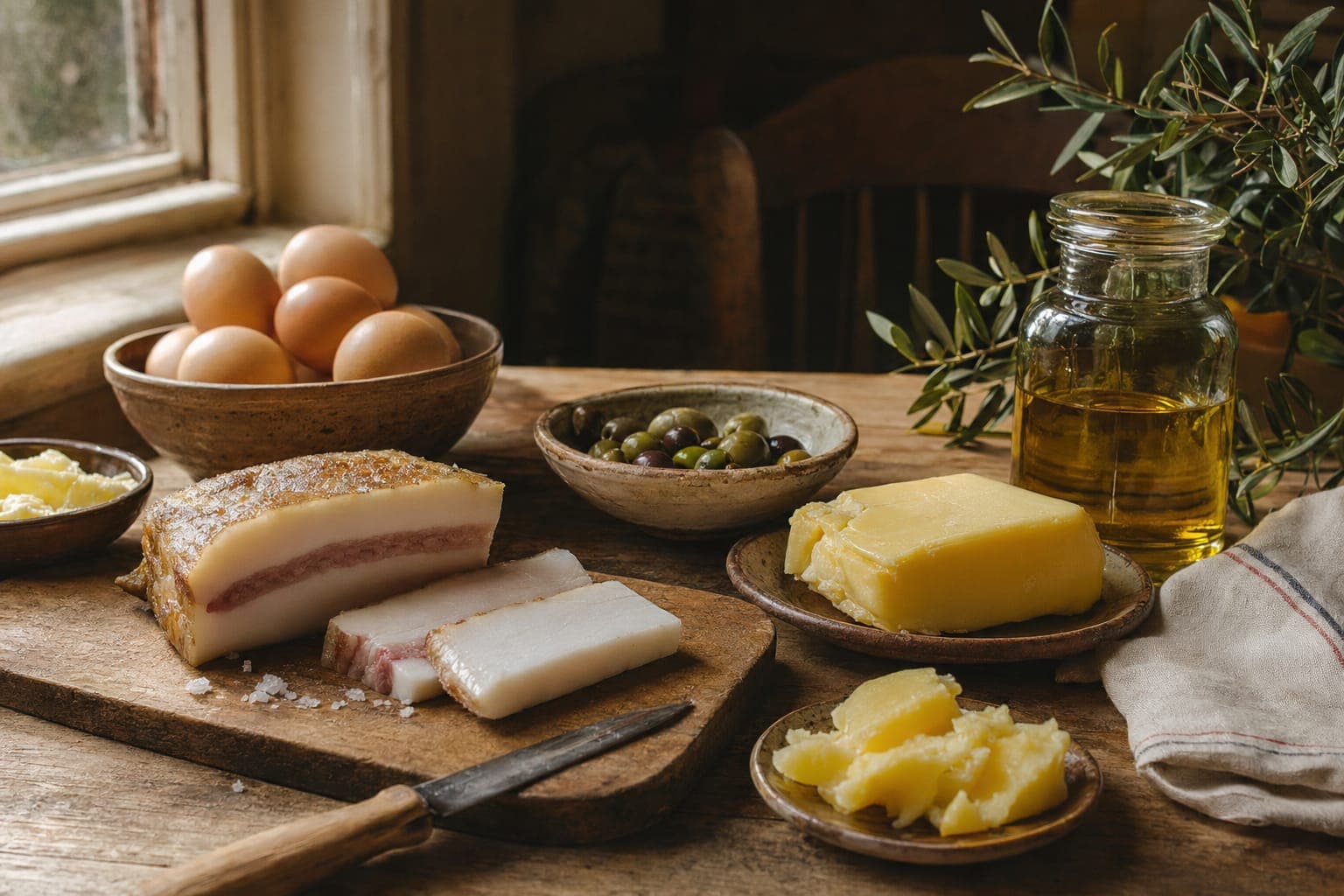
The world didn't always think this way. Your grandmother ate butter without fear. Traditional cultures thrived on diets heavy in saturated fat. And then, in the 1950s, a researcher named Ancel Keys decided that saturated fat caused heart disease. That idea, supported by flawed science and aggressive marketing, would reshape global nutrition and create an epidemic of metabolic disease.

The diet-heart hypothesis and Ancel Keys
In the early 1950s, American cardiologist Ancel Keys proposed a simple idea: saturated fat raises blood cholesterol, and high cholesterol causes heart disease.1 Therefore, he concluded, eating saturated fat causes heart disease. The hypothesis was elegant. It was also almost entirely wrong.
Keys wasn't wrong by accident. He was wrong by design. He examined data from 22 countries and selected only seven to present in what became known as the Seven Countries Study.2 The countries he excluded? The ones that didn't fit his hypothesis. Countries where populations ate enormous amounts of saturated fat but had low rates of heart disease. Countries where sugar consumption was high and heart disease was rampant. By choosing only the data that supported his conclusion, Keys created what looks like proof.
This is called cherry-picking. In science, it's a cardinal sin. But Keys did it anyway, and the world believed him.
When Ancel Keys presented the Seven Countries Study, he deliberately excluded data from countries that contradicted his hypothesis. The study became the foundation for decades of nutritional policy that has harmed billions of people.
The seven countries study that wasnt seven
The study that was supposed to prove that saturated fat causes heart disease actually showed something different if you looked at all the data. Countries with the highest saturated fat intake didn't necessarily have the highest heart disease rates. Countries with high sugar consumption did. Populations that ate traditional diets heavy in lard, butter, and organ meats had excellent cardiovascular health. It was only when processed sugar arrived that disease followed.
But Keys wasn't interested in sugar. He had a hypothesis about fat, and he wasn't going to let inconvenient data change his mind.
Within a decade, the American Heart Association had adopted Keys's hypothesis as official policy. Saturated fat became the enemy. Governments began warning against butter, eggs, and meat. Food manufacturers, seeing an opportunity, began replacing fat with sugar and refined carbohydrates, claiming they were making food healthier. The food industry was perfectly happy to demonise fat. It was cheap to replace with sugar, and sugar is infinitely more addictive.
The problem: the populations that followed this advice got sicker, not healthier.
How the sugar industry rewrote history
In 2016, researchers uncovered internal documents from the sugar industry dating back to the 1960s. The industry had funded research, selected friendly scientists, and deliberately promoted studies that blamed fat whilst burying studies that implicated sugar. They knew. And they did it anyway.
The sugar industry's influence was so complete that for decades, official dietary guidelines blamed saturated fat for heart disease whilst sugar and refined carbohydrates were treated as innocuous. People followed the guidelines. They reduced fat and increased sugar. And they got fatter, sicker, and more chronically diseased.
A conspiracy? Perhaps. But it was a conspiracy carried out in plain sight, through scientific journals, government agencies, and food manufacturer marketing, by people who knew that the alternative narrative (that sugar causes disease) threatened their profit margins.
The sugar industry funded research that blamed fat for diseases caused by sugar. It's not a theory. It's documented history. And the consequences are still playing out in epidemics of obesity, diabetes, and heart disease.
What happened to the countries that kept eating fat
Some countries ignored Keys and the diet-heart hypothesis. France continued eating butter, cream, and cheese. Italy continued eating olive oil and pork fat. Spain continued eating jamón and chorizo. These weren't health crazes. They were tradition.
What happened? Those countries maintained lower rates of cardiovascular disease than the countries that followed low-fat guidelines. The French paradox became famous: France has high saturated fat consumption and low heart disease rates.3 But it's not paradoxical at all. It's what you'd expect if the diet-heart hypothesis was wrong.
The countries that reduced fat and increased refined carbohydrates (the United States, the UK, Australia) saw skyrocketing rates of obesity, type 2 diabetes, and cardiovascular disease.4 The experiment was run. The hypothesis failed. But the nutritional establishment doubled down on the low-fat message anyway.
Your grandmother knew something that science spent 70 years forgetting: fat is not the enemy. Sugar is.
Get ancestral nutrition guides, free
Two short reads a week on traditional ways of eating, examined with modern evidence.
By signing up you agree to receive emails from us. No spam, unsubscribe anytime.
The rehabilitation of dietary fat
Over the last decade, the science has slowly, grudgingly, shifted. Large-scale studies now show that saturated fat doesn't cause heart disease. Low-fat diets don't improve health outcomes. The Mediterranean diet, heavy in olive oil, is protective. The studies that Keys buried seventy years ago are being replicated and confirmed.
But the damage is done. An entire generation was raised on low-fat processed food. Butter is still demonised in mainstream health advice. Eggs are still treated with suspicion. The message that fat is bad is so deeply embedded in the culture that even knowing it's wrong, people struggle to shake the belief.
The good news: your body doesn't care what the official guidelines say. When you start eating real fat again (butter, lard, olive oil, eggs, avocados, full-fat dairy, fatty fish), your body responds. Inflammation decreases. Energy increases. Hormones stabilise. Skin clears. Weight normalises.
Fat is not the enemy. It never was. Your ancestors knew this. Science forgot it for 70 years. But your body remembers what real nutrition looks like.
The cost of following bad science
The cost of the low-fat hypothesis has been incalculable. Generations of people have lived in fear of foods that nourish them. They've chosen margarine over butter, vegetable oil over lard, egg white omelettes over whole eggs. They've felt guilty eating the foods their bodies actually needed.
In the United States alone, which followed low-fat guidelines most rigidly, obesity rose from 13 per cent in 1960 to 42 per cent in 2020. Type 2 diabetes went from rare to endemic. Cardiovascular disease, the very disease they were trying to prevent, continued to increase. The low-fat experiment was run. It failed completely. And yet the messaging persists.
The reason? Inertia. And profit. The seed oil and processed food industries made their fortunes on low-fat positioning. The pharmaceutical industry profits from treating the diseases that low-fat diets cause. The health establishment invested its credibility in Keys's hypothesis. Nobody wants to admit they got it wrong for 70 years.
Meanwhile, you've been paying the price with your health. Your joints ache. Your energy crashes. Your skin breaks out. You gain weight despite eating less. You develop the metabolic dysfunction that's now considered normal for your age.


1 of 9
Daily blend
100,000+ thriving families4.9 on Trustpilot
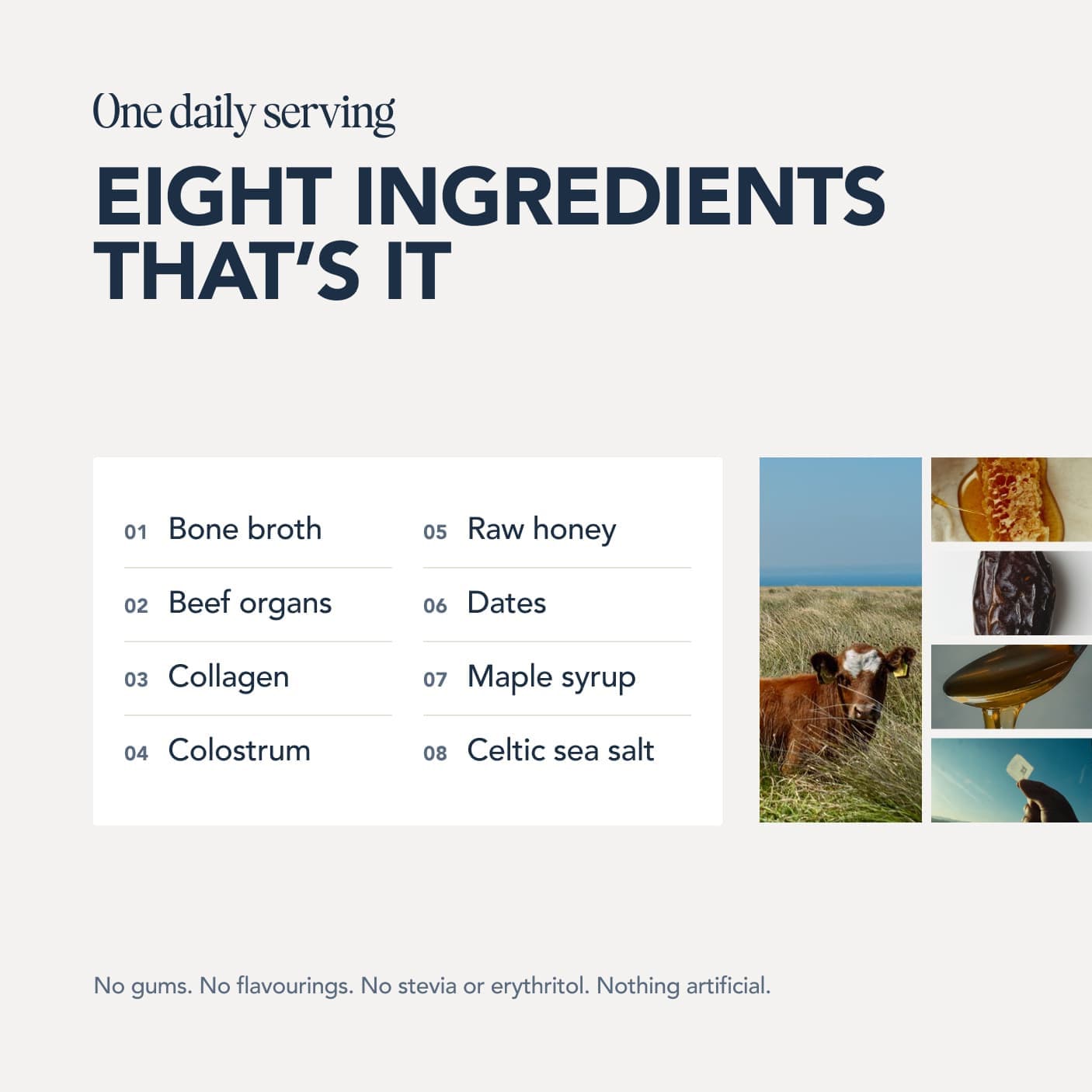
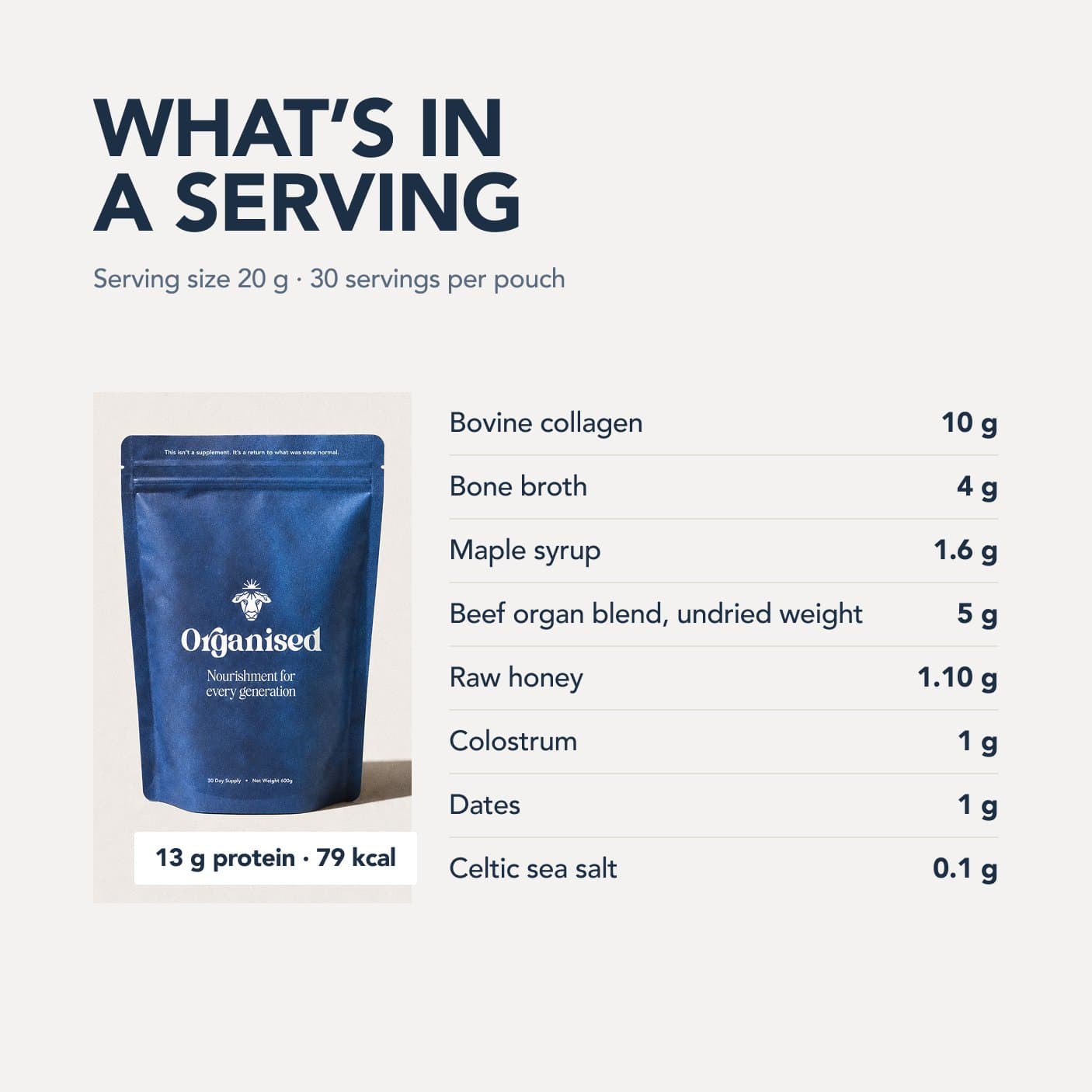
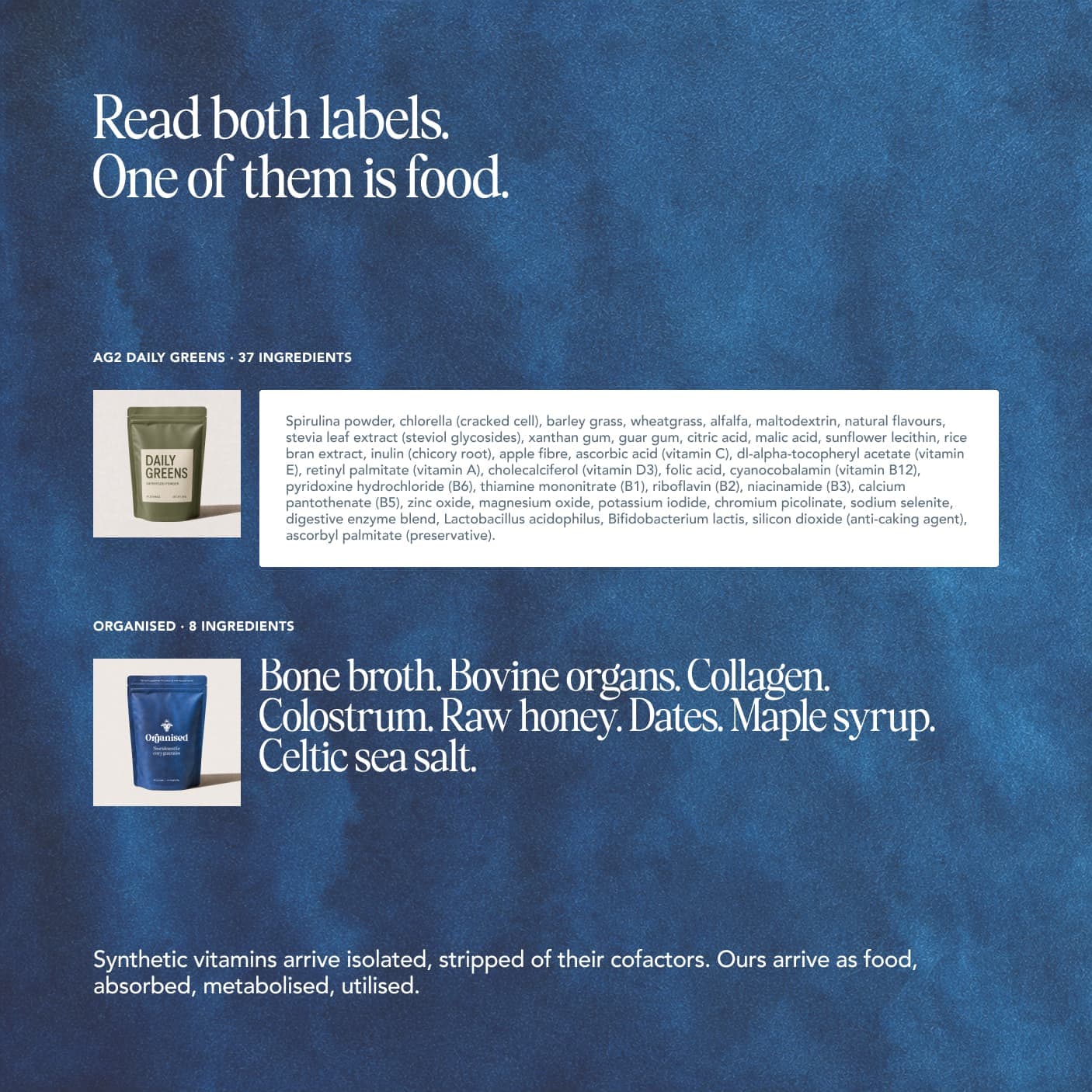
Eight real ingredients built around grass-fed beef organs, collagen and colostrum. Nothing synthetic added.
Free with your first order, worth £38. Plus £10 off the pouch with a subscription.

Free UK shipping · Made in England · 100 day money back guarantee on your first pouch · Skip, pause or cancel anytime
What you should actually know about fat
Your body needs fat. Your brain is 60 per cent fat. Your cell membranes are made of fat. Your hormones are made from fat. Fat is required for the absorption of fat-soluble vitamins A, D, E, and K. Fat is calorie-dense and satiating, which means eating it makes you feel full and satisfied, stopping the mindless snacking that ruins metabolic health.
Not all fat is equal. Highly processed seed oils (canola, sunflower, soy) are inflammatory and should be avoided. Real fats (butter, lard, tallow, olive oil, avocado oil, coconut oil) are stable, non-inflammatory, and exactly what your body evolved to use. Trans fats (partially hydrogenated oils) are toxic and should be completely eliminated.5
If you're eating real food, fat is not your enemy. The enemy is processed food, refined sugar, and seed oils. If you're eating those things and avoiding fat, you're doing the exact opposite of what your body needs.
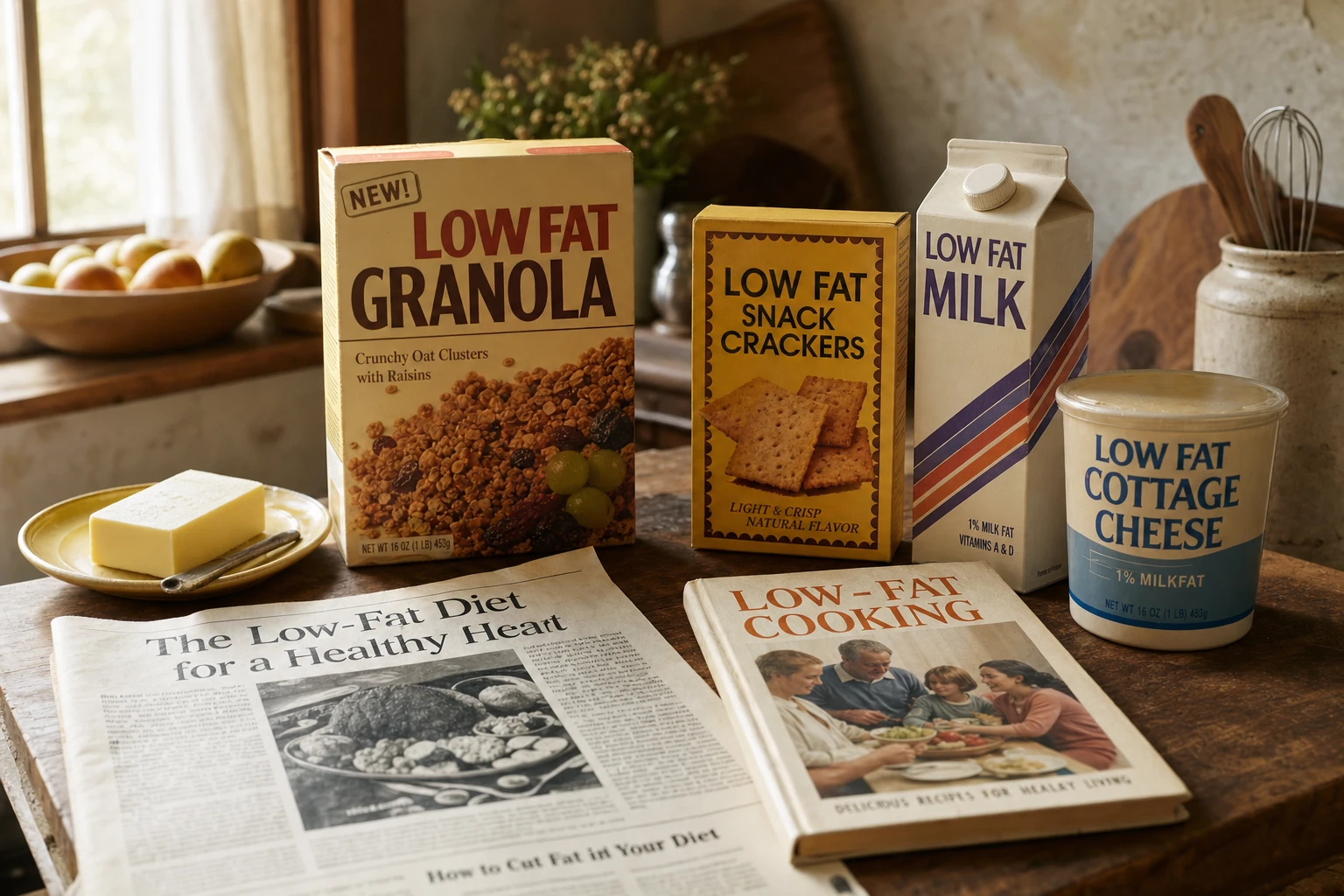
The irony: the low-fat diet created to prevent disease has become the mechanism through which disease spreads. Processed low-fat foods are loaded with sugar, refined carbohydrates, and seed oils, the exact combination that drives metabolic disease. Meanwhile, people eating real butter, real eggs, and real meat feel better, look better, and have better health markers than they did on the approved low-fat regime.
Your grandmother was right. The science was wrong. And now, finally, the science is catching up.
References
Every source below was checked on 27 August 2026. Each PubMed, PMC and DOI identifier was resolved against NCBI or Crossref, and what it opens is printed under the citation, so you can see the link goes where the citation says without leaving the page. Where a citation and its identifier disagreed, the citation was corrected to the record or the reference was deleted along with the sentence marker that pointed at it, and where the resolved paper turned out not to support the sentence, the sentence was cut back to what it does support. Borrowed authority is worse than none, because it looks like rigour.
- Keys A. Atherosclerosis: a problem in newer public health. J Mt Sinai Hosp NY. 1953.
- Keys A. Coronary heart disease in seven countries. Circulation. 1970.
- Renaud S, de Lorgeril M. Wine, alcohol, platelets, and the French paradox for coronary heart disease. Lancet. 1992. PMID 1351198.Checked 27 August 2026: PMID 1351198 opens Renaud S, de Lorgeril M, Wine, alcohol, platelets, and the French paradox for coronary heart disease. Lancet 1992;339(8808):1523-6.
- Siri-Tarino PW, et al. Meta-analysis of prospective cohort studies evaluating the association of saturated fat with cardiovascular disease. Am J Clin Nutr. 2010. PMID 20071648.Checked 27 August 2026: PMID 20071648 opens Siri-Tarino PW, Sun Q, Hu FB et al, Meta-analysis of prospective cohort studies evaluating the association of saturated fat with cardiovascular disease. Am J Clin Nutr 2010;91(3):535-46. PubMed indexes it as: Meta-Analysis.
- Mozaffarian D, et al. Trans fatty acids and cardiovascular disease. N Engl J Med. 2006. PMID 16611951.Checked 27 August 2026: PMID 16611951 opens Mozaffarian D, Katan MB, Ascherio A et al, Trans fatty acids and cardiovascular disease. N Engl J Med 2006;354(15):1601-13. PubMed indexes it as: Review.
Who wrote and reviewed this guide
Niall Kiddle
Author · Founder, Organised
Niall is the founder of Organised. He started the company in 2024 after fixing his own health the slow way: in 2022 he swapped a cupboard of synthetic supplements for real food, raw milk, organ meats, bone broth and honey, and felt the difference within months.
Areas of expertise: Ancestral nutrition, Organ meats, Whole-food supplementation, Gut health, Regenerative sourcing
Read Niall's full profile
Pedro Rodrigues
Reviewer · Agronomist (farming and sourcing only)
Pedro is the agronomist Organised works with on farming and sourcing. His job on the guides is to keep the science honest: he reviews what we publish about soil health, regenerative agriculture, grazing and the way food is actually produced.
Areas of expertise: Regenerative agriculture, Agronomy, Soil health, Grass-fed farming, Food sourcing
Reviewed this guide on
Read Pedro's full profileMore on ancestral wisdom
View allBrowse the guides library
All guidesKeep reading
Ancestral
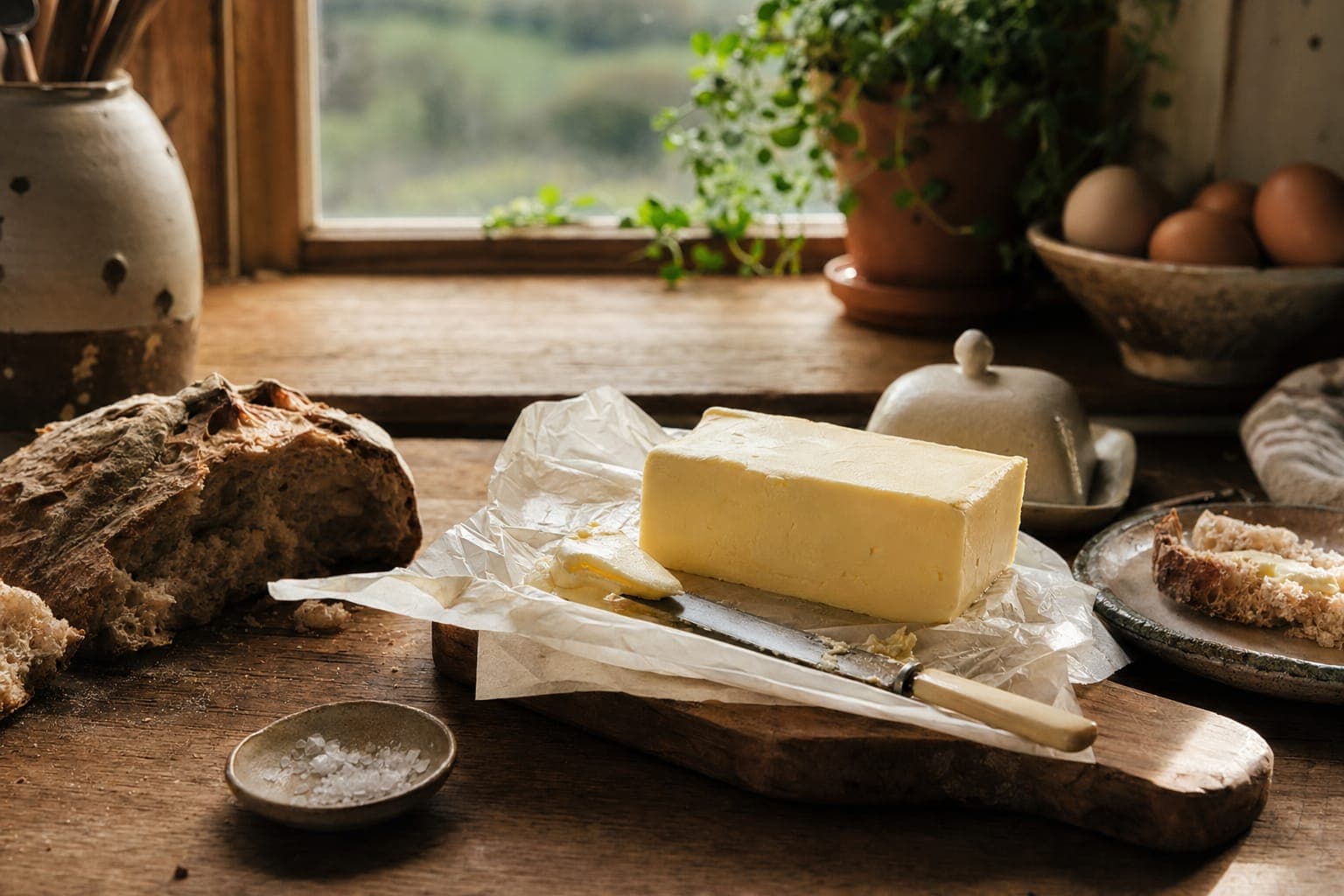
Why Butter Is Back (And Why It Never Should Have Left)
Butter provides fat-soluble vitamins and K2. Margarine was the real experiment. Here's why we're finally returning to what our ancestors ate.

Ancestral
Emulsifiers, Gums and Thickeners: The Hidden Gut Disruptors
Carrageenan, polysorbate 80, and gums hide in most processed food. See what research on emulsifiers and gut health says about your gut barrier.
Ancestral
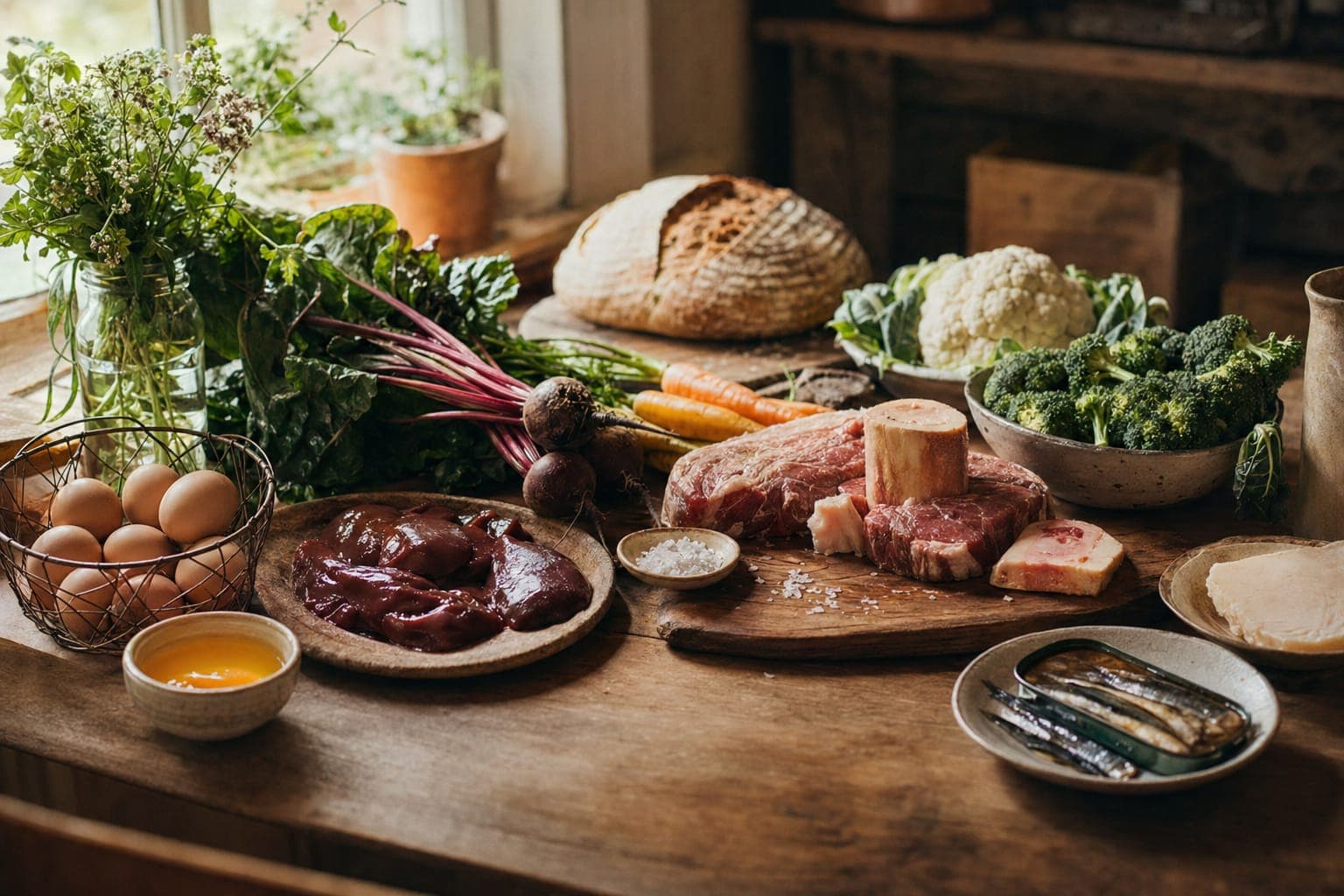
Why We Believe Whole Food Is the Future of Nutrition
Why whole food nutrition works better than supplements. Bioavailability, cofactors, and the science of nutrient synergy explained.
Real food, made effortless
Bring it into my routineA few ways to use it
All recipes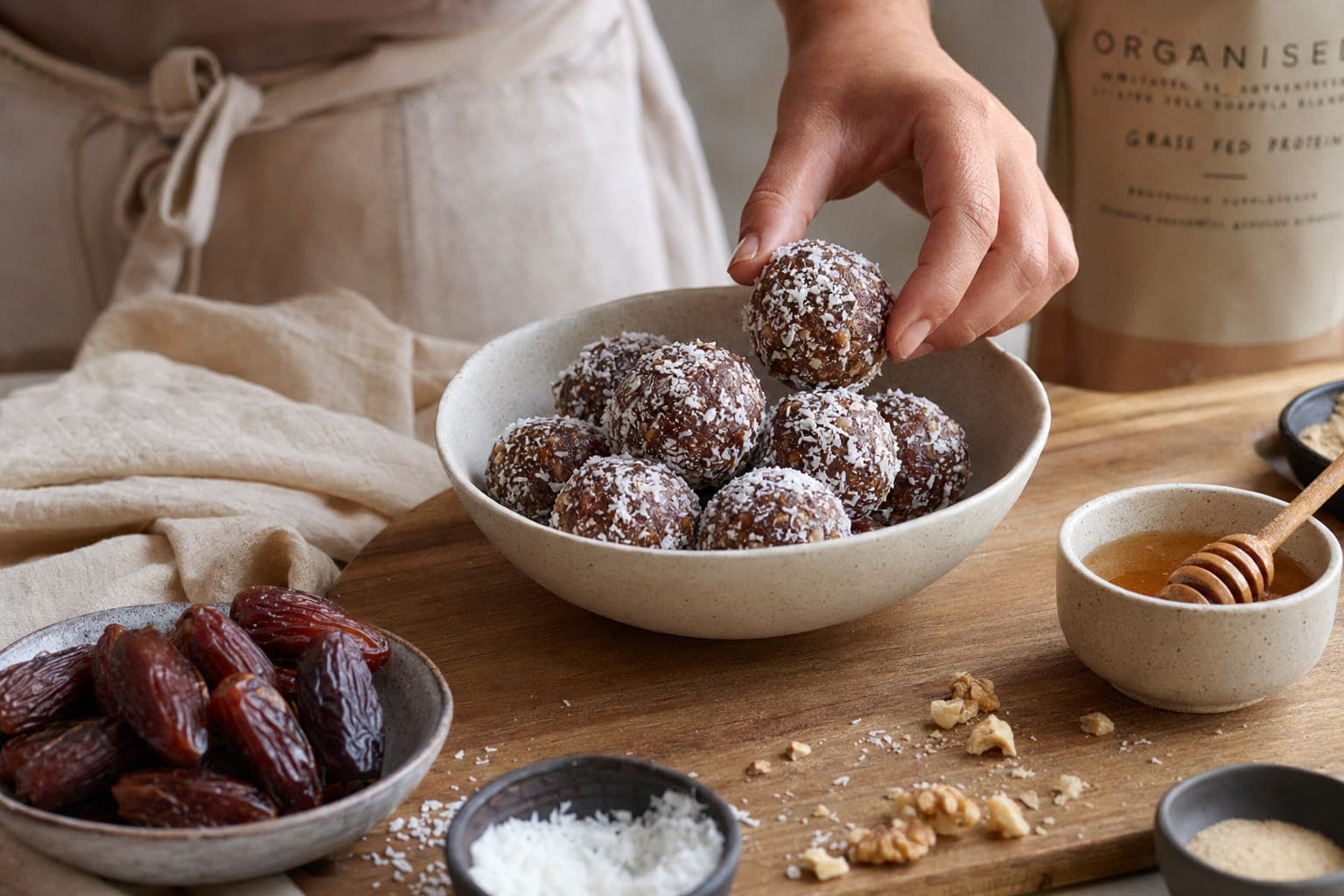
Energy Balls with Organised, Dates and Raw Honey
Make no-bake energy balls with Organised, dates, and raw honey. Perfect lunch box, pre-workout, or on-the-go snack. Simple recipe.

Organised Chia Pudding with Raw Honey and Berries
A no-cook chia seed pudding made with raw milk, collagen, berries, and raw honey. Prep it the night before and eat for breakfast.

The Organised Recovery Smoothie for After Exercise
A recovery smoothie made with beef protein, raw milk, frozen berries, collagen, and honey. Optimal nutrition in the 30-minute window after exercise.


 Join over 100,000+ members
Build a better food system with us
The Organised community is thousands of people choosing real food and backing the farmers who grow it, all of us trying to leave the world a little better than we found it. If that is what you care about too, you belong here.