The Microplastics Problem: How It Affects Your Health
There are now microplastics in your drinking water, your salt, your fish, and your vegetables. They're in your blood. They're in your organs. We don't yet know the full implications, but the early research is quietly unsettling.

By Niall Kiddle, Founder, Organised

Reviewed by Pedro Rodrigues, Agronomist (farming and sourcing only) ·
6 min read · Published · Updated · 4 cited sources
Makers of the Organised Daily blend, a grass-fed beef organ supplement from regenerative UK farms


What are microplastics and why they matter
Microplastics are plastic particles smaller than 5 millimetres. They come from the breakdown of larger plastic items, from synthetic fabrics in washing machines, from tyre wear, and from microbeads in personal care products. They're everywhere, and they're accumulating in our bodies at an accelerating rate.
Unlike larger plastic items, which pass through your digestive system, microplastics can cross the intestinal barrier and enter the bloodstream. Once there, they can lodge in organs and tissues.
Plastic additives such as phthalates and bisphenol A are known to leach from plastics into food and water under various conditions.2 These chemicals are endocrine disruptors, meaning they interfere with hormone signalling.
The concern is two-fold: the physical presence of plastic particles in your organs, and the chemical leaching that happens whether particles are consumed or not.
Where microplastics come from
Synthetic textiles are a major source. Every time you wash polyester, nylon, or acrylic clothing, the fabric sheds fibres. A single wash cycle can release thousands of microfibres. These go into wastewater treatment plants, which don't fully remove them, and they end up in rivers and oceans.
Tyre wear is another massive source. As vehicles drive, tyres wear down, releasing particles into the air and onto roads. Rainfall washes these into waterways. It's estimated that tyre wear alone contributes more plastic pollution than single-use bags.
Packaging breakdown happens constantly. Plastic bottles, containers, and bags break down into smaller pieces under UV light and mechanical stress. They don't fully biodegrade; they just fragment into smaller and smaller particles.
Personal care products contained microbeads (in exfoliating scrubs, toothpastes, and face washes) until bans in recent years. They're still lurking in some products.
Industrial processes intentionally use microplastics in everything from cosmetics to pharmaceuticals. These are released directly into the environment.
How they enter the food chain
Microplastics are consumed through multiple pathways:
Drinking water: Even treated water contains microplastics. Depending on your location, tap water can contain dozens of microplastic particles per litre. Bottled water is even worse, because the plastic bottle itself is a source of additional contamination.
Sea salt: Sea salt is now heavily contaminated with microplastics because they accumulate in the ocean. Your sea salt contains more microplastics than your tap water, probably by an order of magnitude.
Seafood: Fish and shellfish consume microplastics directly from the water. When you eat the entire animal (shell and organs), you consume their accumulated microplastics. It's estimated that regular shellfish consumption can expose you to thousands of microplastic particles per year.
Plant-based foods: Vegetables and crops grown in soil or watered with treated wastewater also accumulate microplastics. This is less studied, but emerging research shows microplastics in soil are being taken up by plants.
Food packaging: Foods stored in plastic packaging, especially those heated in plastic (microwaved meals, hot drinks in plastic cups), can have microplastics leaching directly into them.
What we know about health effects
The research is still early, but it's concerning. Microplastics have been detected in human blood, lung tissue, placentas and other organs.1 One recent study found microplastics in every human tissue sample examined.
Physical damage: Plastic particles can cause inflammation when lodged in tissues. They're foreign objects that your immune system recognises as invasive, triggering an inflammatory response.
Chemical leaching: The additives in plastics (BPA, phthalates, polystyrene) are xenoestrogens, meaning they mimic oestrogen. They interfere with hormone signalling at vanishingly small doses. This is particularly concerning during development, when hormone signalling is critical.
Gut dysbiosis: Emerging research suggests microplastics alter the composition of gut bacteria. They can be preferentially colonised by pathogenic bacteria, and the inflammatory response they trigger disrupts beneficial bacteria.
Cardiovascular effects: A 2024 NEJM study reported that the presence of microplastics in carotid plaque was associated with a higher risk of cardiovascular events over follow-up.3 The mechanism may be inflammatory (the particles trigger inflammation) or chemical (the additives interfere with endothelial function).
We're conducting a global experiment on our own bodies with a substance we've never been exposed to before. The results are coming in, and they're not reassuring.

Where your exposure is highest
Not all microplastic sources are equal. Some contribute orders of magnitude more exposure than others.
Bottled water consumption is probably your single biggest source. Studies have detected substantially higher microplastic particle counts in bottled water compared with typical tap water samples.4 If you drink bottled water regularly, you're getting exposed to thousands of particles per year from the bottle alone, plus the water inside it.
Regular seafood consumption is your second biggest source. Shellfish (mussels, clams, oysters) are particularly problematic because you eat the entire organism, including the accumulated microplastics.
Sea salt: If you use sea salt regularly, you're getting exposed to thousands of microplastics per serving. Rock salt and mineral salt have far fewer.
Clothing and synthetic textiles: If you wear a lot of synthetic fabrics, you're shedding them continuously. They accumulate in your home environment and eventually in wastewater.
Interestingly, your tap water is probably safer than your bottled water, your rock salt is probably safer than your sea salt, and your farmed fish is probably less contaminated than wild-caught (because farmed fish are fed pellets, which are less microplastic-contaminated than ocean water).
Get ancestral nutrition guides, free
Two short reads a week on traditional ways of eating, examined with modern evidence.
By signing up you agree to receive emails from us. No spam, unsubscribe anytime.
Practical reduction strategies
Switch to tap water and use a filter. A basic activated carbon filter removes some microplastics. It's not perfect, but it's better than bottled. If you're concerned, a reverse osmosis filter removes nearly all microplastics, though it's more expensive and wastes water in the process.
Switch to rock salt or mineral salt. Sea salt is convenient, but the microplastic load is unjustifiable. Himalayan salt and rock salt have been underground for millions of years, protected from modern pollution.
Reduce seafood consumption, especially shellfish. If you eat fish, prefer muscle meat (fillet) over organs or the entire organism. If you eat shellfish, limit frequency.
Avoid heating food in plastic containers. Heat accelerates leaching of plastic additives. Use glass, ceramic, or stainless steel for storage and reheating.
Wash synthetic clothing less frequently, and use a microfibre filter bag. You can buy washing machine filters that capture microfibres before they enter wastewater.
Avoid single-use plastics where practical. Yes, the problem is systemic and individual action is limited. But reducing your personal consumption matters, if only because what you don't buy doesn't eventually break down into microplastics.
You can't eliminate microplastic exposure, but you can reduce it by 50-70% with straightforward changes.
1 of 9
Daily blend
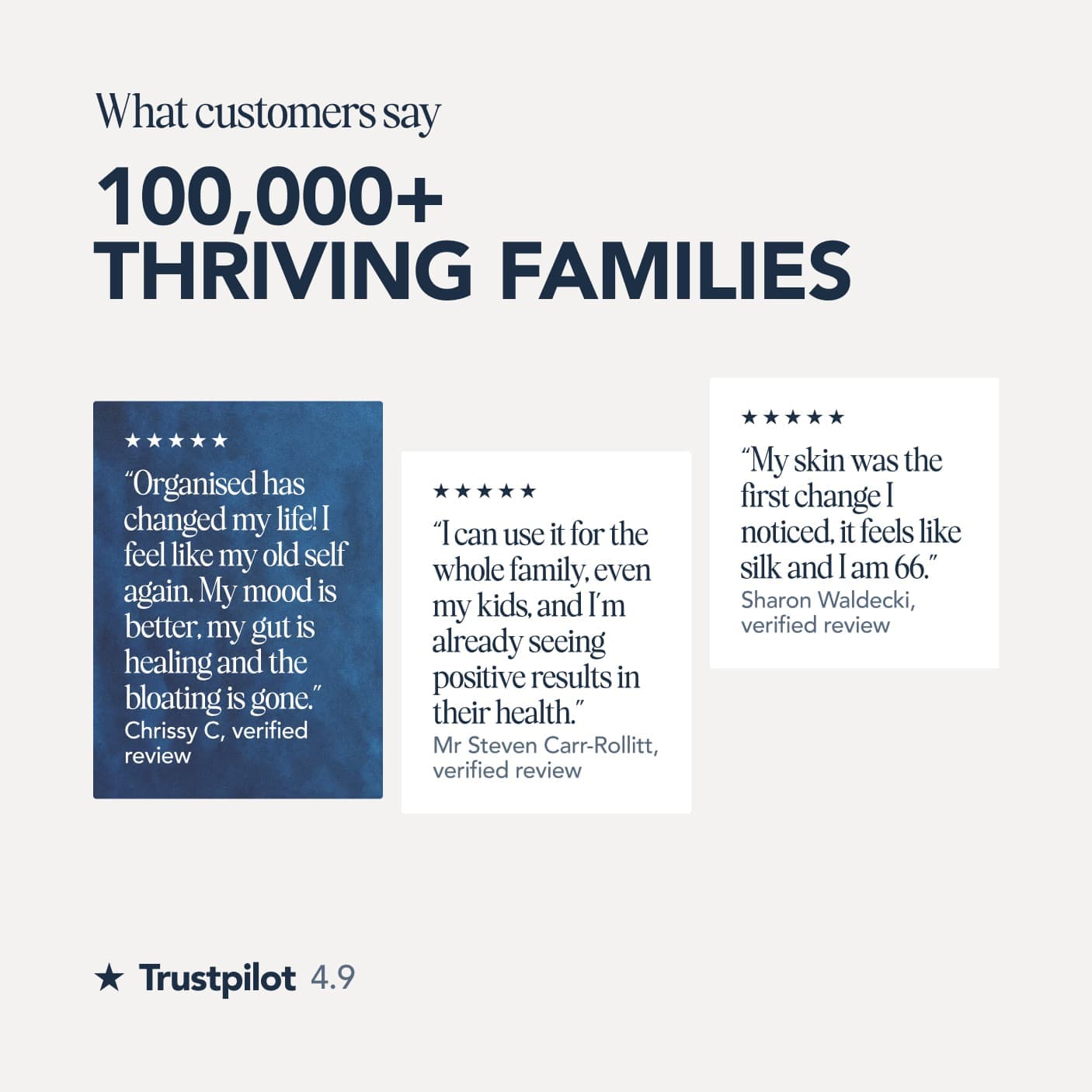
100,000+ thriving families4.9 on Trustpilot
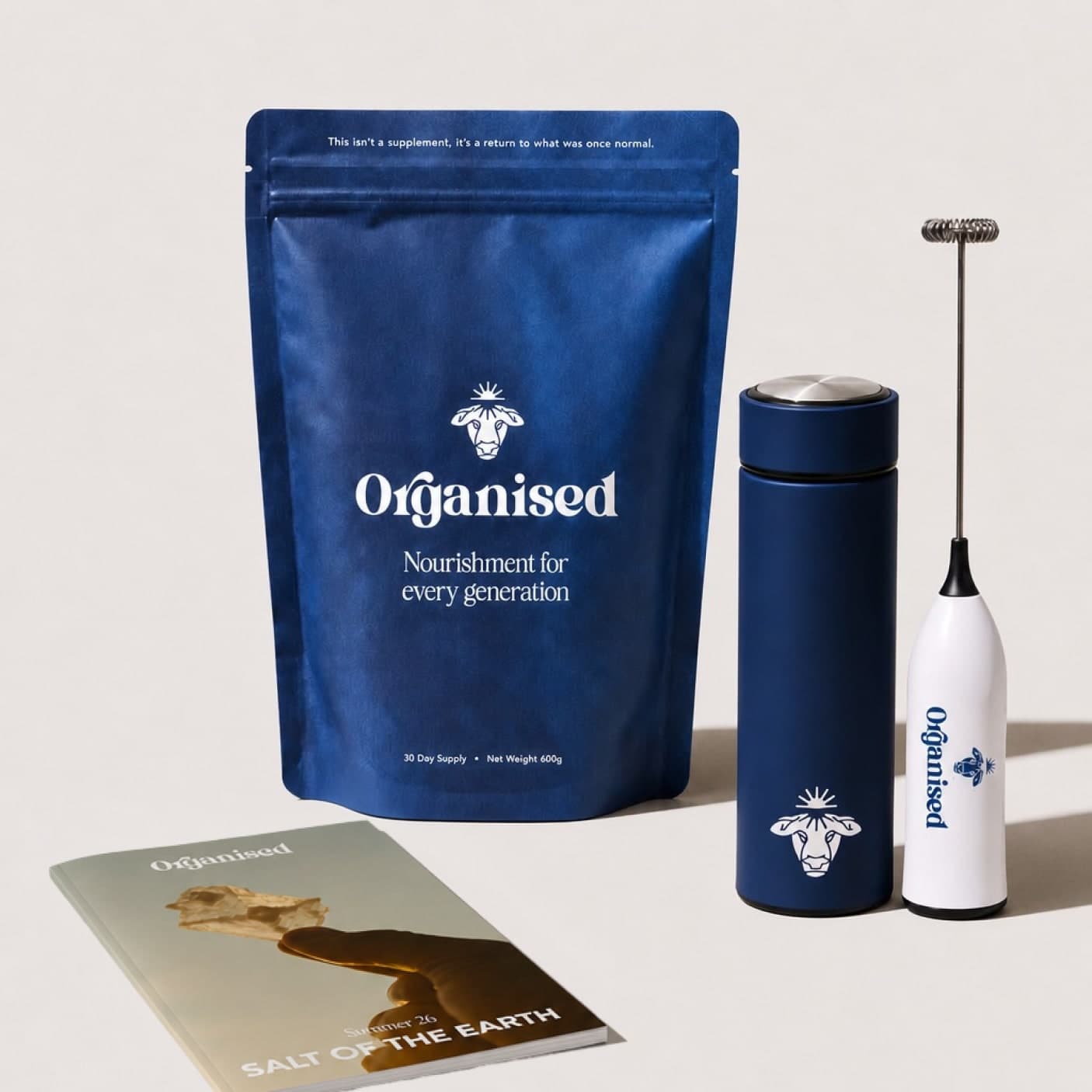
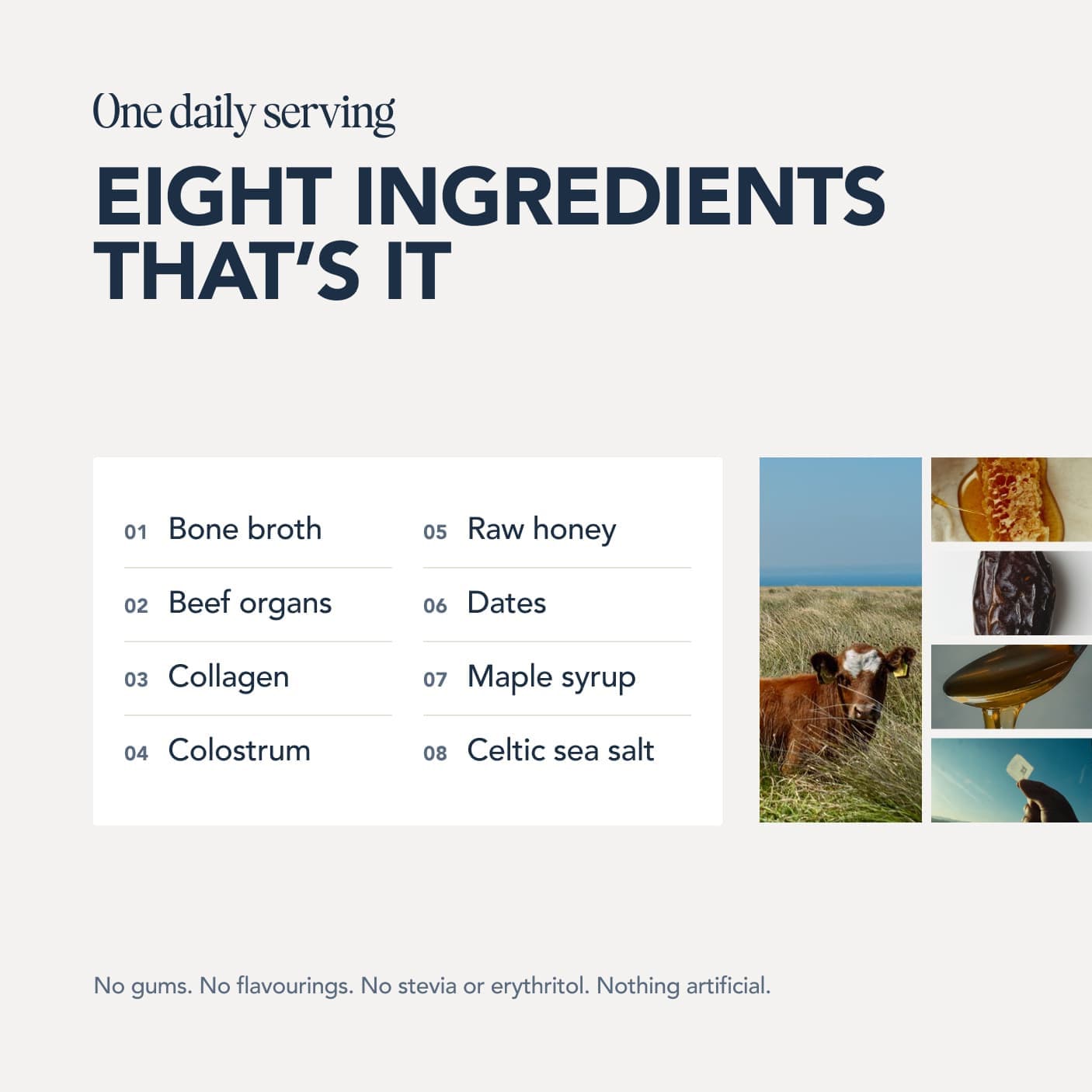
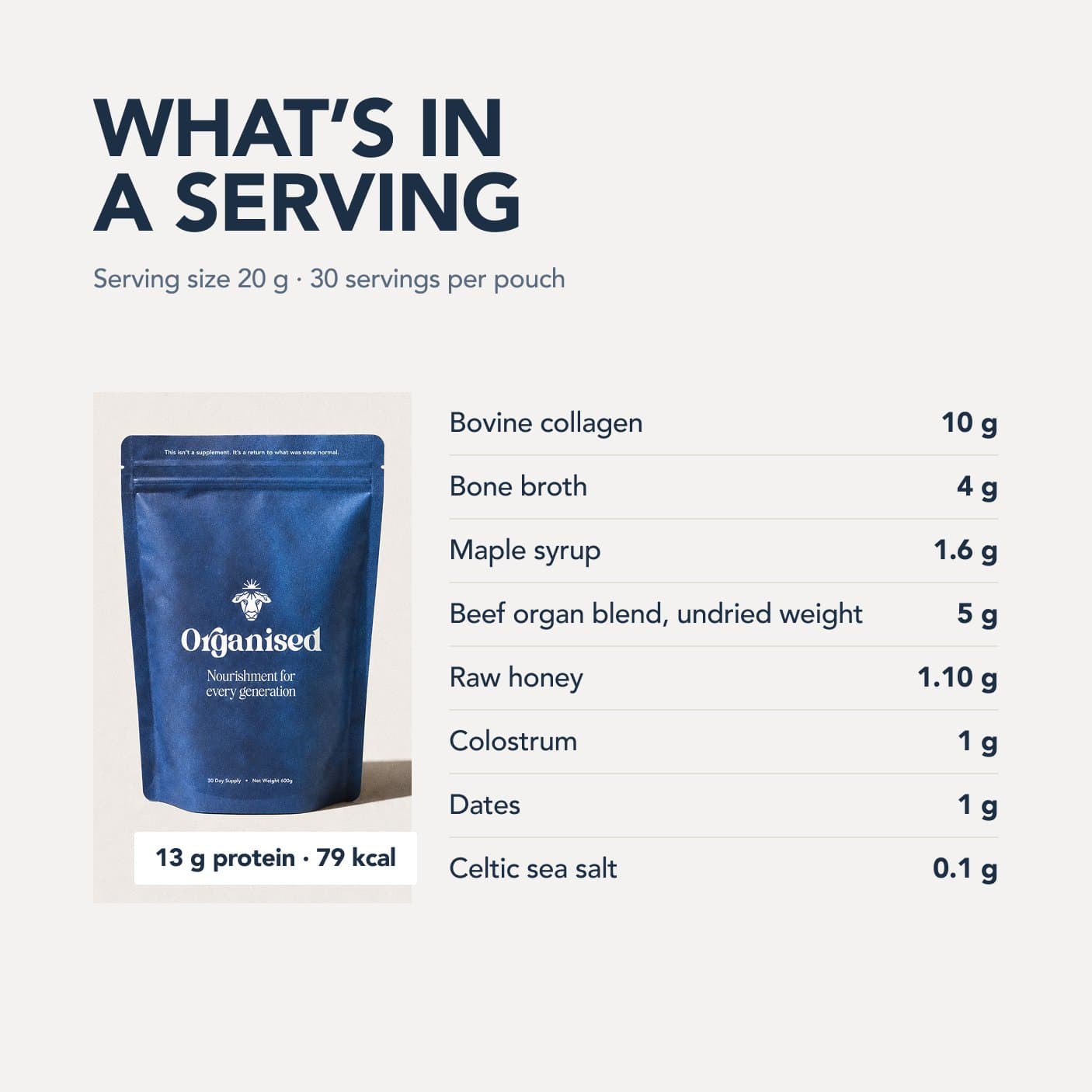
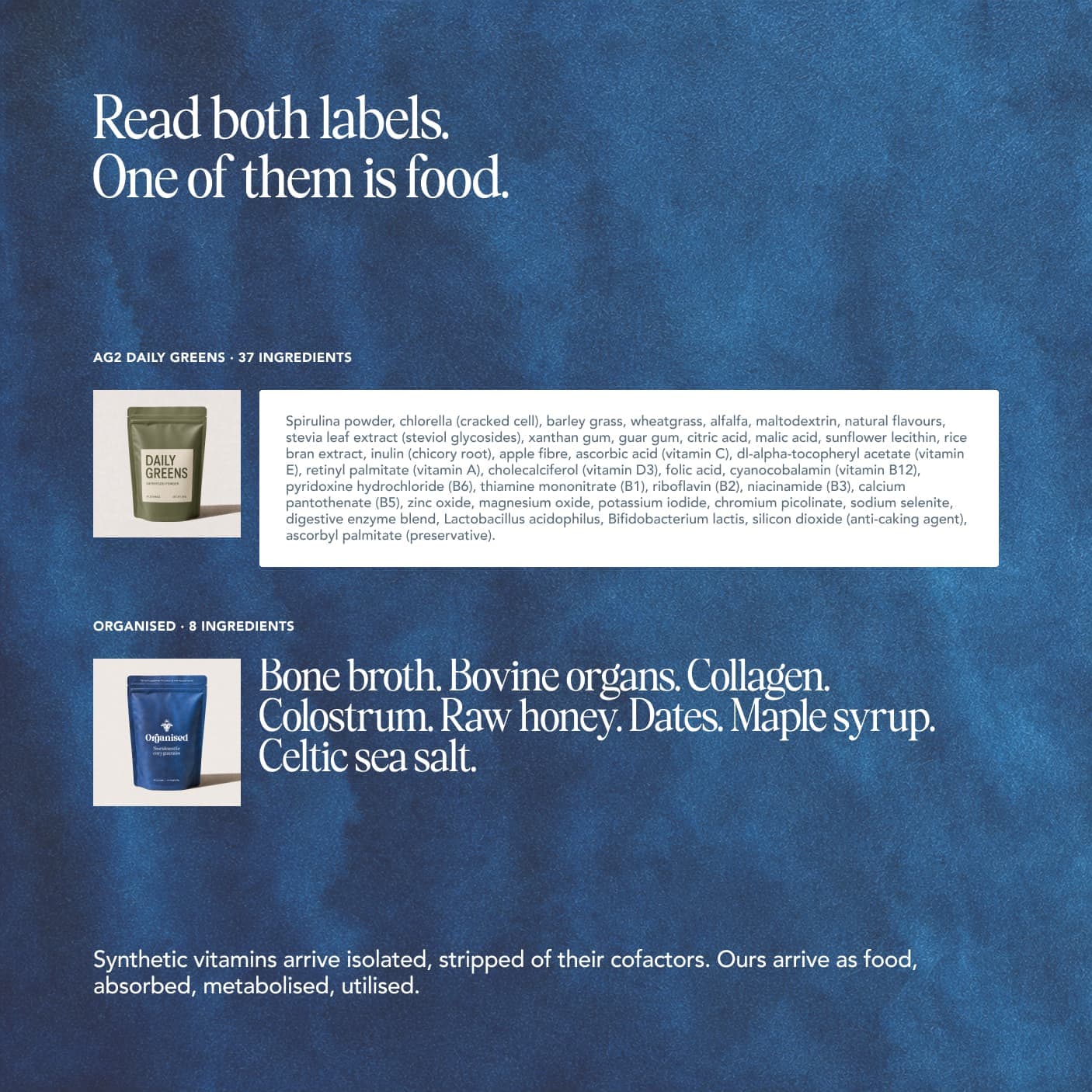
Eight real ingredients built around grass-fed beef organs, collagen and colostrum. Nothing synthetic added.
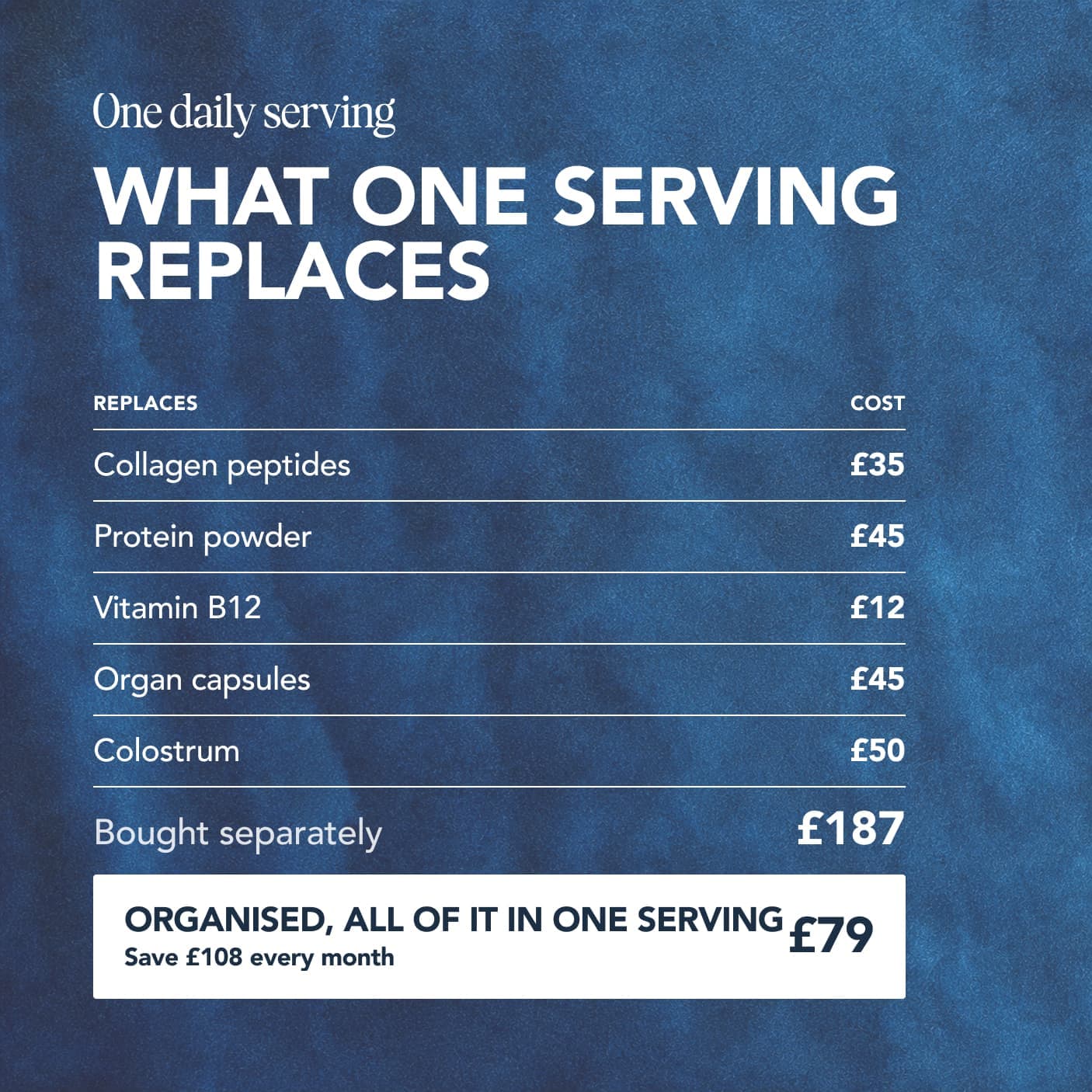
Free with your first order, worth £38. Plus £10 off the pouch with a subscription.
Free UK shipping · Made in England · 100 day money back guarantee on your first pouch · Skip, pause or cancel anytime
Microplastics and nutrient deficiency
Here's an underappreciated mechanism: microplastics interfere with nutrient absorption. They damage the intestinal lining and alter gut bacteria composition in ways that reduce your ability to absorb minerals and vitamins.
When microplastics lodge in your gut, they trigger inflammation. Inflamed gut tissue absorbs nutrients less efficiently. Your ability to absorb calcium, iron, zinc, and B vitamins all decline. You could be eating perfectly and still becoming deficient because the damage is happening at the absorption level.
Additionally, the gut dysbiosis triggered by microplastics reduces bacterial production of short-chain fatty acids (particularly butyrate), which are essential for intestinal barrier function and nutrient uptake. It's a cascade: microplastics trigger dysbiosis, dysbiosis reduces butyrate production, reduced butyrate worsens intestinal permeability, and worse permeability reduces nutrient absorption further.
This is why reducing microplastic exposure matters beyond the direct effects of the particles. Cleaner water and salt choices directly support your ability to absorb the nutrition you're eating.
The implication is clear: if you're trying to optimise your nutrition with whole foods and supplements, but you're consuming high levels of microplastics, you're working against yourself. The microplastics are reducing your ability to absorb what you're eating. Fix the exposure first, then optimise nutrition.
The bigger picture
Microplastics are a symptom of a broken system. We produce 400 million tonnes of plastic per year. Most of it ends up in the environment. Most of it will eventually become microplastics. We're all breathing and eating the consequences.
Individual actions matter, but systemic change is what actually solves the problem. That means reducing plastic production, improving manufacturing standards, enforcing accountability for pollution, and supporting research into alternatives.
Until that happens, you can reduce your personal exposure. It won't solve the problem. But it will reduce what's accumulating in your body.
References
Every source below was checked on 27 August 2026. Each PubMed, PMC and DOI identifier was resolved against NCBI or Crossref, and what it opens is printed under the citation, so you can see the link goes where the citation says without leaving the page. Where a citation and its identifier disagreed, the citation was corrected to the record or the reference was deleted along with the sentence marker that pointed at it, and where the resolved paper turned out not to support the sentence, the sentence was cut back to what it does support. Borrowed authority is worse than none, because it looks like rigour.
- Leslie HA, et al. Discovery and quantification of plastic particle pollution in human blood. Environ Int. 2022;163:107199. PMID 35367073Checked 27 August 2026: PMID 35367073 opens Leslie HA, van Velzen MJM, Brandsma SH et al, Discovery and quantification of plastic particle pollution in human blood. Environ Int 2022;163:107199.
- Vandenberg LN, et al. Hormones and endocrine-disrupting chemicals: low-dose effects and nonmonotonic dose responses. Endocr Rev. 2012;33(3):378-455. PMID 22419778Checked 27 August 2026: PMID 22419778 opens Vandenberg LN, Colborn T, Hayes TB et al, Hormones and endocrine-disrupting chemicals: low-dose effects and nonmonotonic dose responses. Endocr Rev 2012;33(3):378-455. PubMed indexes it as: Review.
- Marfella R, et al. Microplastics and Nanoplastics in Atheromas and Cardiovascular Events. N Engl J Med. 2024;390(10):900-910. PMID 38446676Checked 27 August 2026: PMID 38446676 opens Marfella R, Prattichizzo F, Sardu C et al, Microplastics and Nanoplastics in Atheromas and Cardiovascular Events. N Engl J Med 2024;390(10):900-910. PubMed indexes it as: Comparative Study, Multicenter Study, Observational Study.
- Qian N, et al. Rapid single-particle chemical imaging of nanoplastics by SRS microscopy. Proc Natl Acad Sci USA. 2024. PMID 38190543Checked 27 August 2026: PMID 38190543 opens Qian N, Gao X, Lang X et al, Rapid single-particle chemical imaging of nanoplastics by SRS microscopy. Proc Natl Acad Sci U S A 2024;121(3):e2300582121.The authors' own declaration, from the record: Competing interests statement:The authors declare no competing interest.
Who wrote and reviewed this guide
Niall Kiddle
Author · Founder, Organised
Niall is the founder of Organised. He started the company in 2024 after fixing his own health the slow way: in 2022 he swapped a cupboard of synthetic supplements for real food, raw milk, organ meats, bone broth and honey, and felt the difference within months.
Areas of expertise: Ancestral nutrition, Organ meats, Whole-food supplementation, Gut health, Regenerative sourcing
Read Niall's full profile
Pedro Rodrigues
Reviewer · Agronomist (farming and sourcing only)
Pedro is the agronomist Organised works with on farming and sourcing. His job on the guides is to keep the science honest: he reviews what we publish about soil health, regenerative agriculture, grazing and the way food is actually produced.
Areas of expertise: Regenerative agriculture, Agronomy, Soil health, Grass-fed farming, Food sourcing
Reviewed this guide on
Read Pedro's full profileMore on modern food
View allBrowse the guides library
All guidesKeep reading
Ancestral
Ultra-Processed Food: What It Does to Your Body
What ultra-processed food actually does to your body. From appetite dysregulation to inflammation, here's why it matters.

Ancestral
8 Ingredients. Nothing Else. The Organised Approach.
See why Organised is built from just 8 whole food ingredients, with no fillers, no synthetics and no compromise. A simpler approach to nutrition.
Ancestral
What 'No Added Sugar' Really Means on Food Labels
Decode the lies of food labels. 56 names for sugar, 'no added sugar' loopholes, and how to read ingredients to actually find real food.
Real food, made effortless
Bring it into my routineA few ways to use it
All recipes
Raw Milk Hot Chocolate with Collagen
A nourishing evening hot chocolate made with raw milk, grass-fed collagen, raw cacao, and honey. A nighttime ritual that supports sleep and gut health.
Liver Pate for Beginners: A Gentle Introduction to Organ Meats
Simple liver pate recipe to start eating organ meats. Chicken liver, butter, and herbs. Gentle introduction to nutrient-dense whole foods.

Energy Balls with Organised, Dates and Raw Honey
Make no-bake energy balls with Organised, dates, and raw honey. Perfect lunch box, pre-workout, or on-the-go snack. Simple recipe.


 Join over 100,000+ members
Build a better food system with us
The Organised community is thousands of people choosing real food and backing the farmers who grow it, all of us trying to leave the world a little better than we found it. If that is what you care about too, you belong here.