Ultra-Processed Food: What It Does to Your Body
You walk past the supermarket shelf. The boxes are bright, the labels promise convenience, and they sit quietly in millions of cupboards. But what happens once you eat them?

By Niall Kiddle, Founder, Organised

Reviewed by Pedro Rodrigues, Agronomist (farming and sourcing only) ·
8 min read · Published · Updated · 3 cited sources
Makers of the Organised Daily blend, a grass-fed beef organ supplement from regenerative UK farms
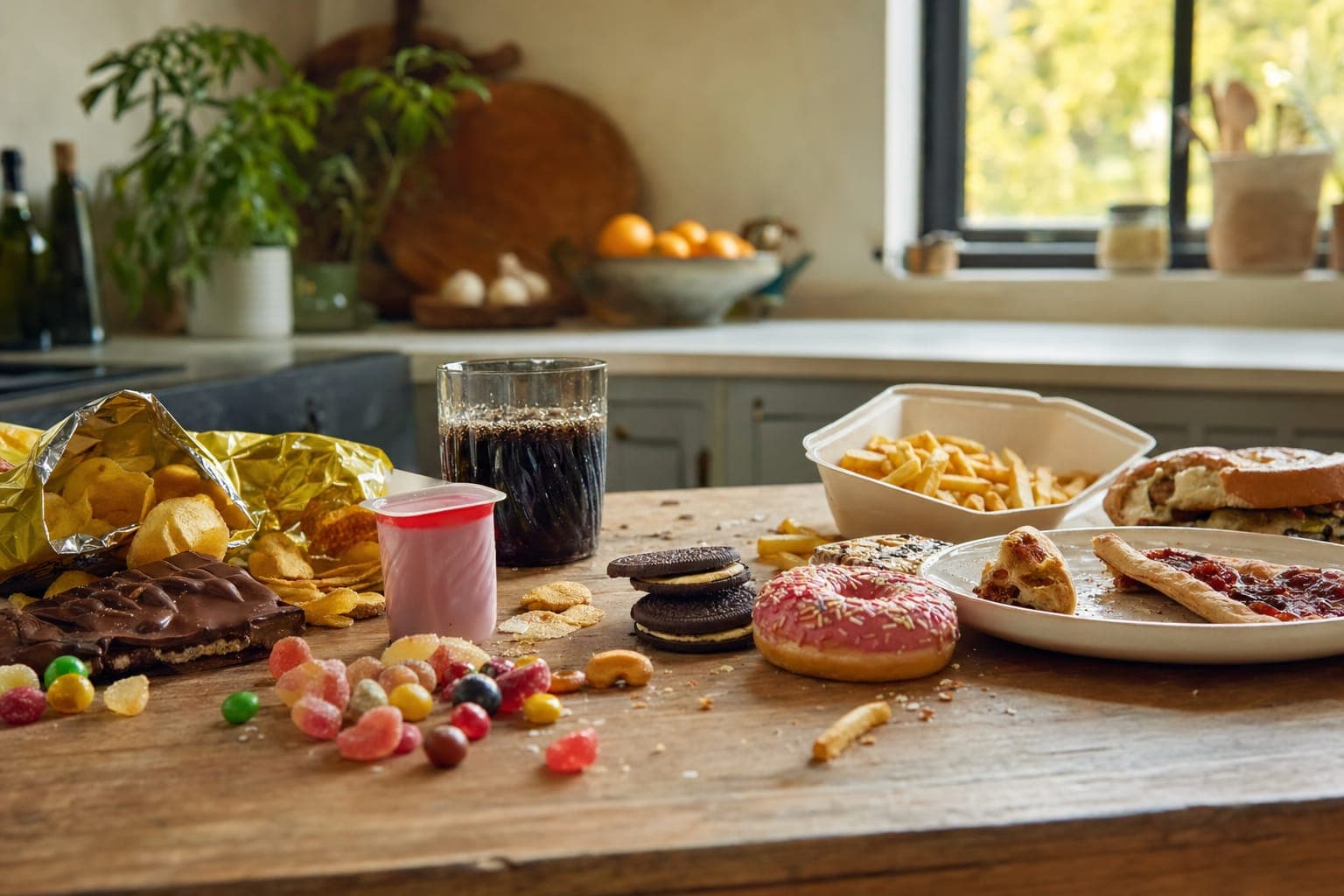
This isn't about willpower. It's about biology.
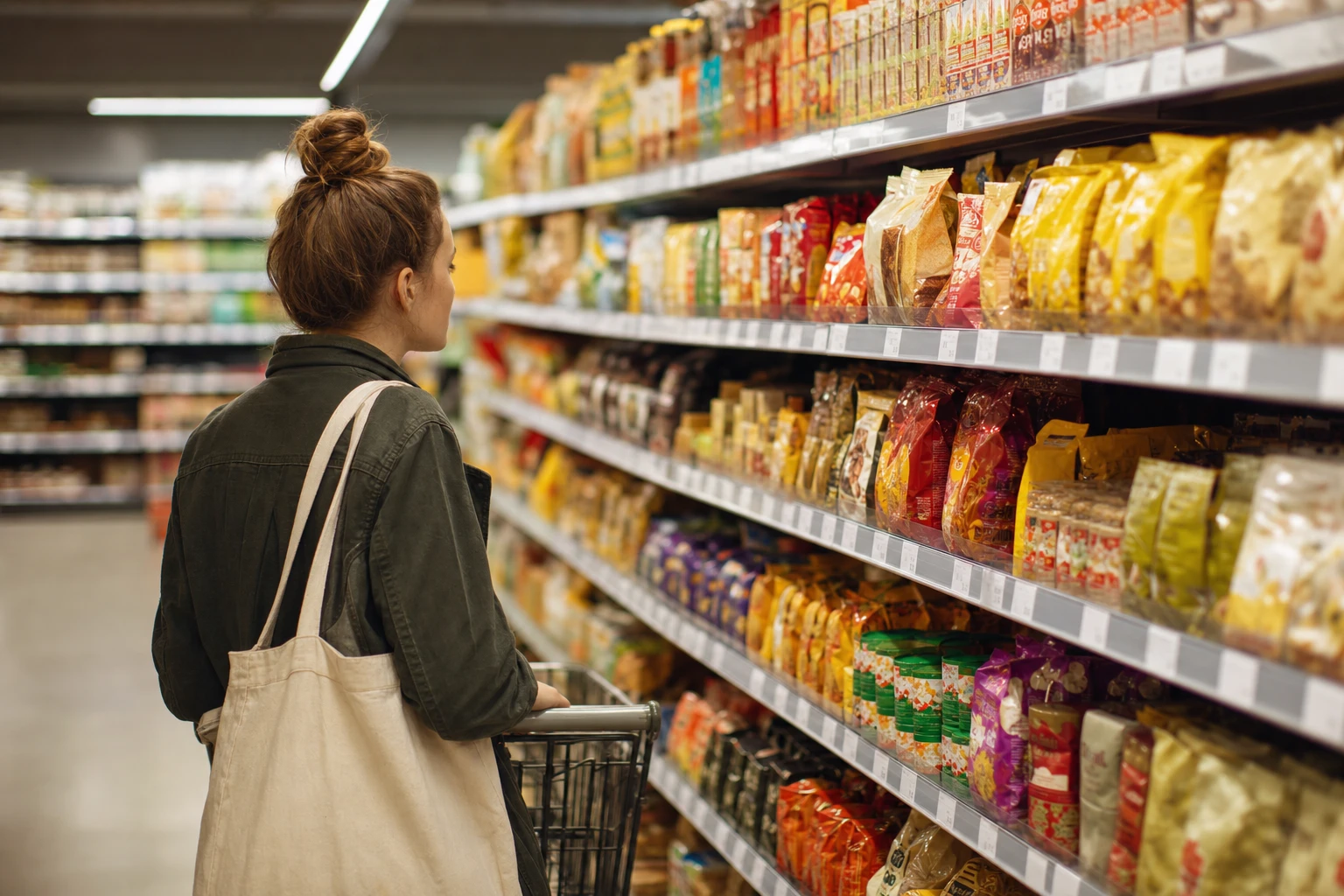
What ultra-processed food actually is
Ultra-processed food sounds vague, but it has a precise definition. It's food that's been broken down into constituent parts, then reconstructed with added sugars, oils, salt, additives, colorants, emulsifiers, and flavourings designed to maximise profit and shelf life.
Real food comes from the earth. Ultra-processed food comes from the laboratory. It contains ingredients you wouldn't recognise in a kitchen: xanthan gum, mono and diglycerides, sodium benzoate, artificial flavouring compounds. The list reads like a chemistry experiment, and for good reason. These aren't foods. They're industrial products.
A loaf of real bread has five ingredients: flour, water, salt, yeast, time. A loaf from the supermarket aisle has forty, including dough conditioners, preservatives, and emulsifiers that keep it soft for three weeks without going mouldy. Which one does your gut recognise?
Real food comes from the earth. Ultra-processed food comes from the laboratory.
The NOVA classification system
The NOVA classification was developed by researchers at the University of São Paulo and groups foods into four processing categories.1 It's become the gold standard worldwide.
Group 1 is unprocessed or minimally processed food: grains, legumes, meat, fish, milk, vegetables, fruit, nuts, seeds. Food as nature made it, or with minimal intervention like drying, crushing, pasteurisation.
Group 2 is processed culinary ingredients: oils, butter, vinegar, salt, sugar, honey. These are extracted and purified from Group 1, or from nature directly. Used to cook and prepare Group 1 foods. Nothing sinister.
Group 3 is processed foods: canned vegetables, freshly made bread, canned fish. Group 1 plus Group 2. Simple combinations designed to increase durability and make cooking easier. Still recognisable as food.
Group 4 is ultra-processed food. And this is where the trouble begins.
Ultra-processed food is engineered to be irresistible, not to nourish you.
How ultra-processed food hijacks appetite
Kevin Hall is a senior investigator at the National Institutes of Health. In 2019, Hall and colleagues published an inpatient crossover trial in Cell Metabolism in which adults were exposed to ultra-processed and unprocessed diets matched for calories, sugar, fat, fibre and macronutrients.2
On the ultra-processed diet participants ate roughly 500 kcal more per day and gained weight; on the unprocessed diet they ate less and lost weight.2 Same calories in. Different amounts eaten. Why?
Your body has exquisitely calibrated hunger and fullness signals. Leptin tells you when you're full. Ghrelin tells you when you're hungry. Peptide YY and cholecystokinin signal satiety. These systems evolved over millions of years and work with real food.
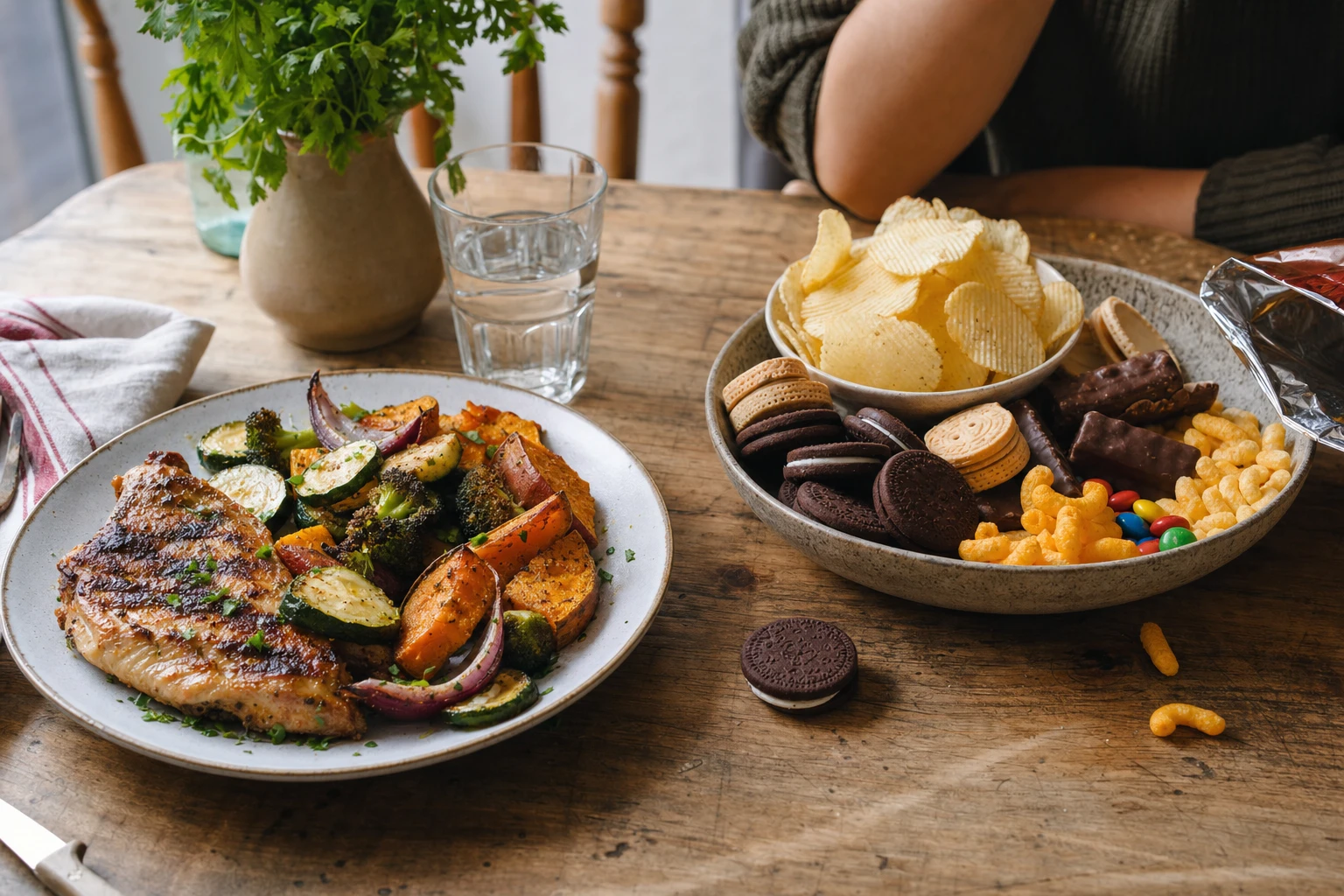
Ultra-processed food breaks them. When you eat a chicken breast and vegetables, your body registers the protein, the fibre, the vitamins. It says, "I'm satisfied. Stop eating." When you eat chicken-flavoured crisps, your mouth registers the flavour. Your brain gets a hit of dopamine. But your body doesn't register nutrition. The satiety signals stay quiet. So you eat more. And more. And more.
The hyperpalatability trap
Hyperpalatable means extraordinarily tasty. Food scientists engineer ultra-processed food to hit the perfect balance of salt, sugar, and fat. Not the balance that serves your body. The balance that keeps you coming back.
A chocolate bar contains ingredients in ratios that almost never occur in nature. Sugar, cocoa butter, emulsifiers, and lecithin combined to create a taste sensation. Your brain lights up. Dopamine floods in. You feel pleasure. But that pleasure is divorced from nutrition. Your body isn't getting what it needs.
The food industry calls this the "bliss point." The exact ratio of sweet, salty, and fatty that maximises consumption without triggering disgust. It's not accidental. Thousands of pounds go into finding this ratio. Your appetite doesn't stand a chance.
Real food doesn't need this engineering. A ripe peach is already delicious. An egg is already satisfying. An apple is already sweet. But ultra-processed food has to be engineered to be irresistible, because the base materials are often cheap industrial by-products.
The food industry calls it the bliss point. Your body calls it dysregulation.
Inflammation and metabolic disruption
Every time you eat ultra-processed food, you're not just eating calories. You're eating seed oils oxidised at high temperatures. You're eating sugar in quantities your ancestors never encountered. You're eating emulsifiers that alter your gut bacteria. You're eating additives that your liver has to process like xenobiotics.
Your body responds with inflammation. Not the acute inflammation you feel after an injury. Chronic, low-grade inflammation that runs silently in the background, ageing you from the inside out. Over months and years, this damages your arteries, inflames your gut, and disrupts insulin signalling.
The gut barrier collapse
Your gut lining is supposed to be selective. It absorbs nutrition and keeps out pathogens. Ultra-processed food damages this selectivity. Emulsifiers like polysorbate 80 and carboxymethyl cellulose alter the mucus layer that protects your intestinal wall. The barrier weakens. Lipopolysaccharides from gram-negative bacteria slip through the gaps. Your immune system recognises them as invaders. Inflammation escalates.
This isn't speculation. This is documented in peer-reviewed research. In animal models, dietary emulsifiers including polysorbate 80 and carboxymethylcellulose have been shown to alter the gut microbiota, thin the mucus layer and promote low-grade inflammation.3
Once the gut barrier is compromised, your immune system stays activated. Chronically. Everything becomes inflammatory. Your joints hurt. Your skin flares. Your energy crashes. Not because anything suddenly went wrong. Because your gut has been slowly dismantled by food additives.
Get ancestral nutrition guides, free
Two short reads a week on traditional ways of eating, examined with modern evidence.
By signing up you agree to receive emails from us. No spam, unsubscribe anytime.
Blood sugar dysregulation
Ultra-processed foods are rapidly digestible. Refined starches break down into glucose almost instantly. Added sugars need no digestion at all. Your blood sugar spikes sharply. Your pancreas releases insulin in response. The glucose is cleared from your bloodstream quickly, often dropping below baseline. You feel hungry again within an hour.
This cycle repeats throughout the day. Spike, crash, spike, crash. Over years, your cells become resistant to insulin. Your pancreas works harder to produce more insulin. Your blood sugar destabilises further. You develop metabolic dysfunction.
Whole foods have fibre, fat, and protein, which slow glucose absorption and provide stable energy. Ultra-processed foods have none of this. They're engineered for rapid absorption and rapid energy crashes, which drive repeat consumption. You're trapped in a physiological feedback loop.
The blood sugar rollercoaster isn't a side effect of ultra-processed food. It's the point. Unstable energy means you'll eat again sooner.
Your metabolism slows. Your energy crashes chronically. Your cravings intensify. And the industry responds by selling you more ultra-processed food, marketed as "healthy" or "energising."
Addictive design
Ultra-processed food is designed to be habit-forming. The combination of hyperpalatability, dopamine hits, and appetite dysregulation creates a powerful feedback loop. Your brain learns to crave the food because the experience has been engineered to trigger reward pathways.
This is different from liking food. It's addiction. Your prefrontal cortex (the part that makes conscious decisions) becomes progressively overridden by your reward system. You eat past satiety. You eat when not hungry. You choose ultra-processed food despite consciously preferring real food.
The industry knows this. Food scientists are hired specifically to create foods that maximise consumption. Entire departments exist to engineer foods that override your body's regulatory systems. This isn't paranoia. It's documented in industry literature and patents.
The cost of convenience
Ultra-processed food wins on convenience. You open a packet. You eat. No preparation. No thought. No skill required. This is attractive. Modern life is busy. Cooking feels like a luxury.
But the convenience is an illusion. The real cost isn't paid at the supermarket. It's paid later, in your health, your energy, your body's function. A meal of ultra-processed food is quick. But the consequences of eating it regularly are lengthy.
Real food takes time. Roasting a chicken takes forty-five minutes. Boiling vegetables takes ten. Chopping onions takes five. A total meal might take an hour from start to finish. Ultra-processed food takes five minutes.
But here's what people consistently report when they switch: They have more energy, so cooking feels less overwhelming. Their hunger stabilises, so they spend less time thinking about food. Their cravings fade, so shopping becomes simpler. The time investment in real food gets repaid in quality of life.
Convenience is seductive. But it comes with a cost measured in years of your life, in diseases you'll face, in the slow degradation of your body's function. Breaking the convenience trap is worth every extra minute.

1 of 9
Daily blend
100,000+ thriving families4.9 on Trustpilot
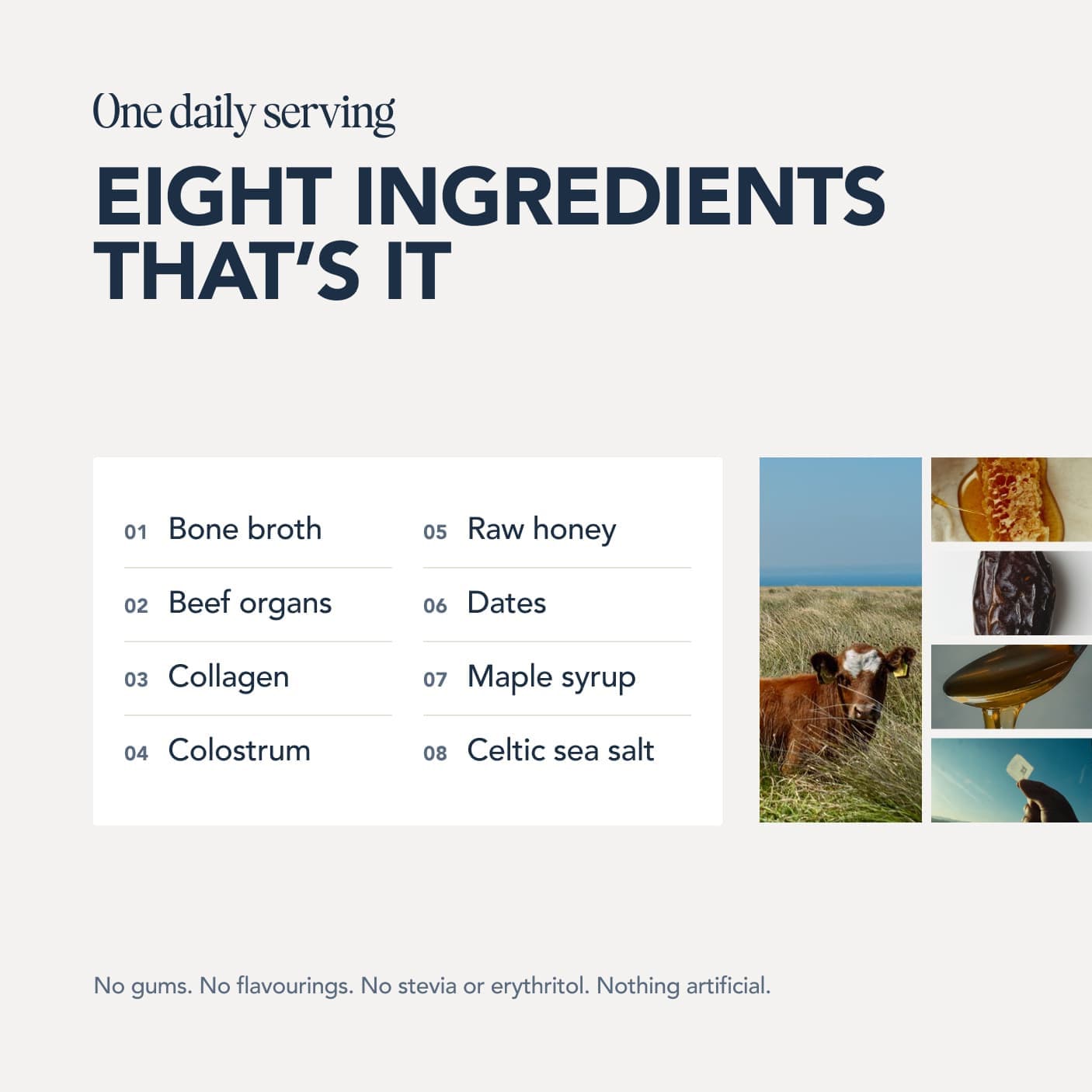
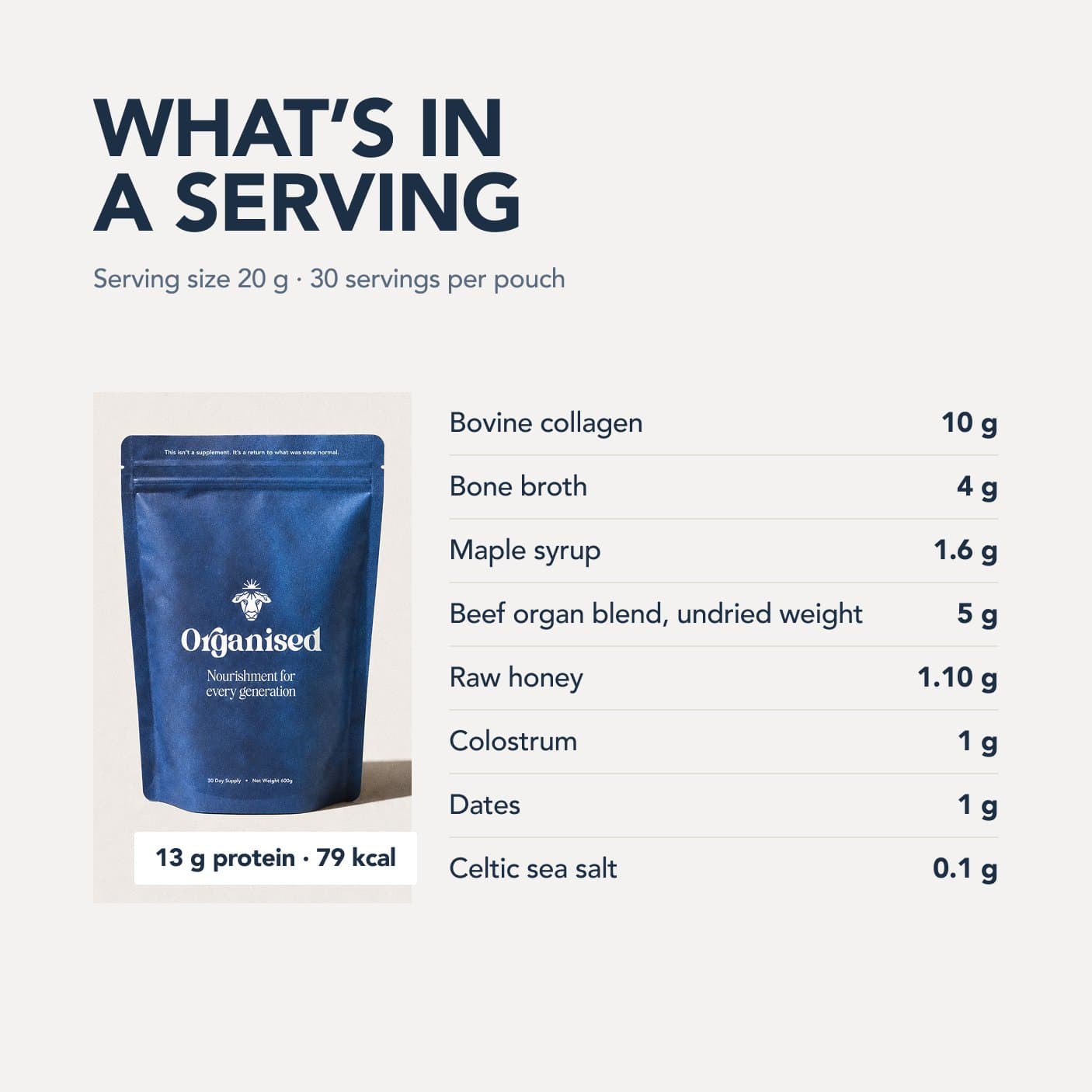
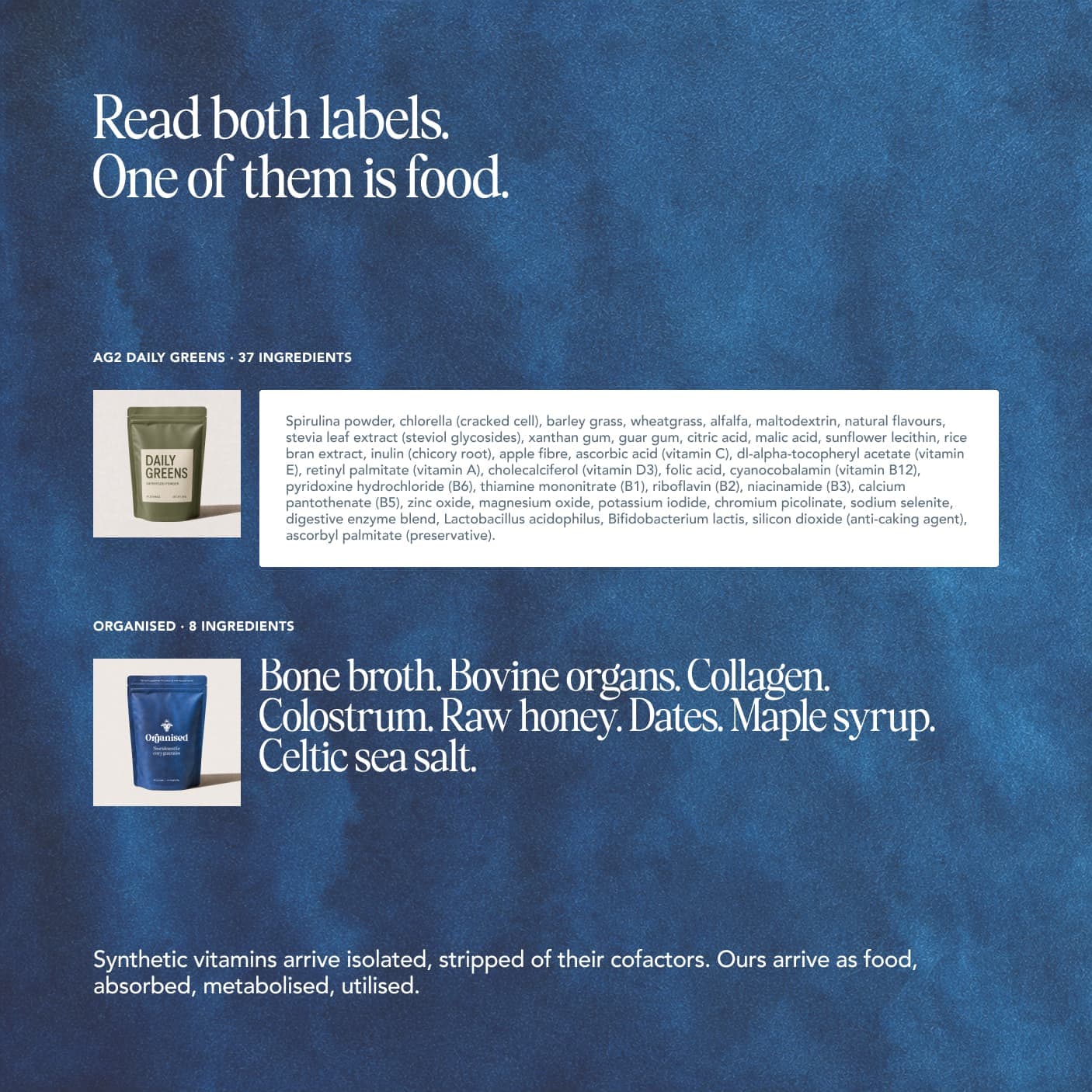
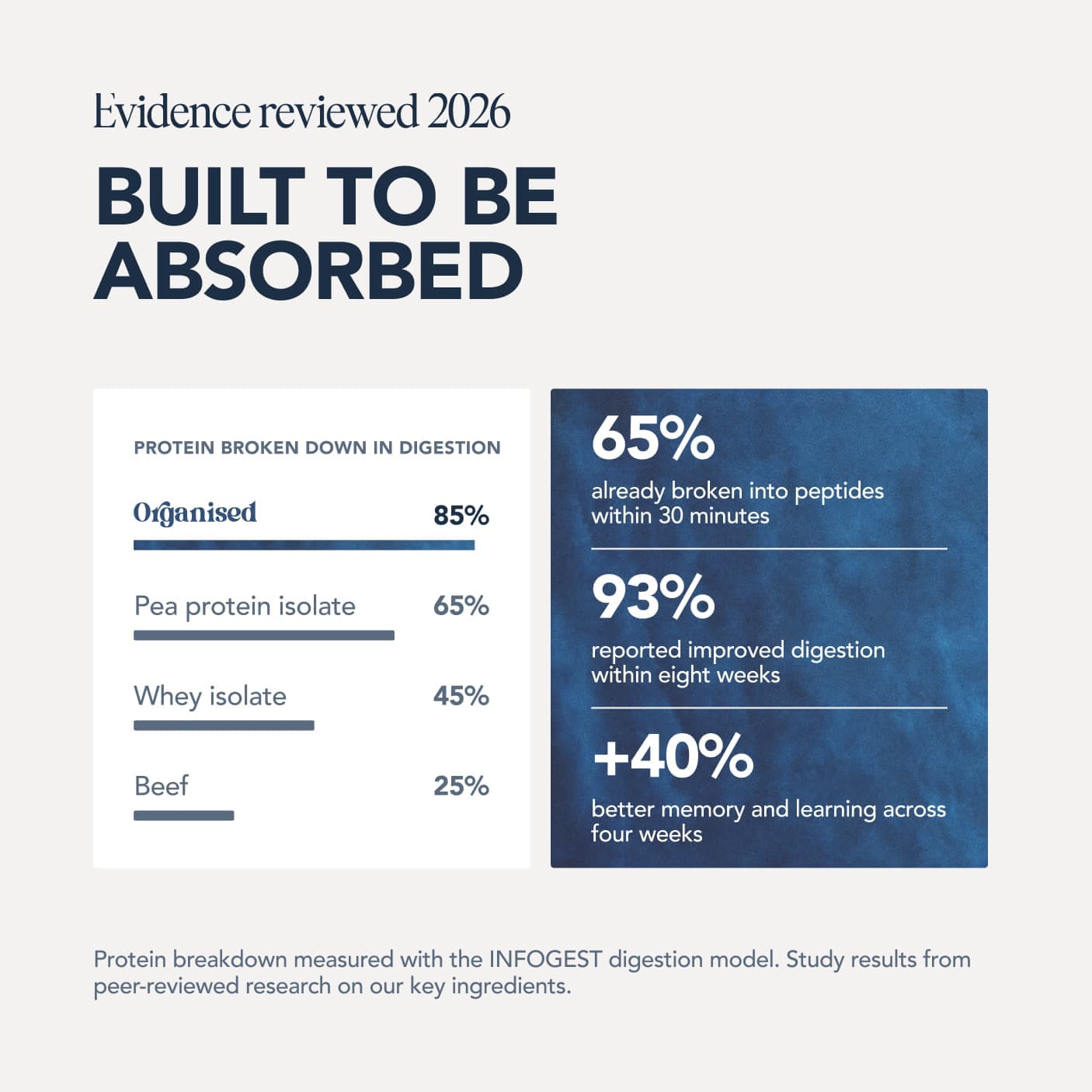
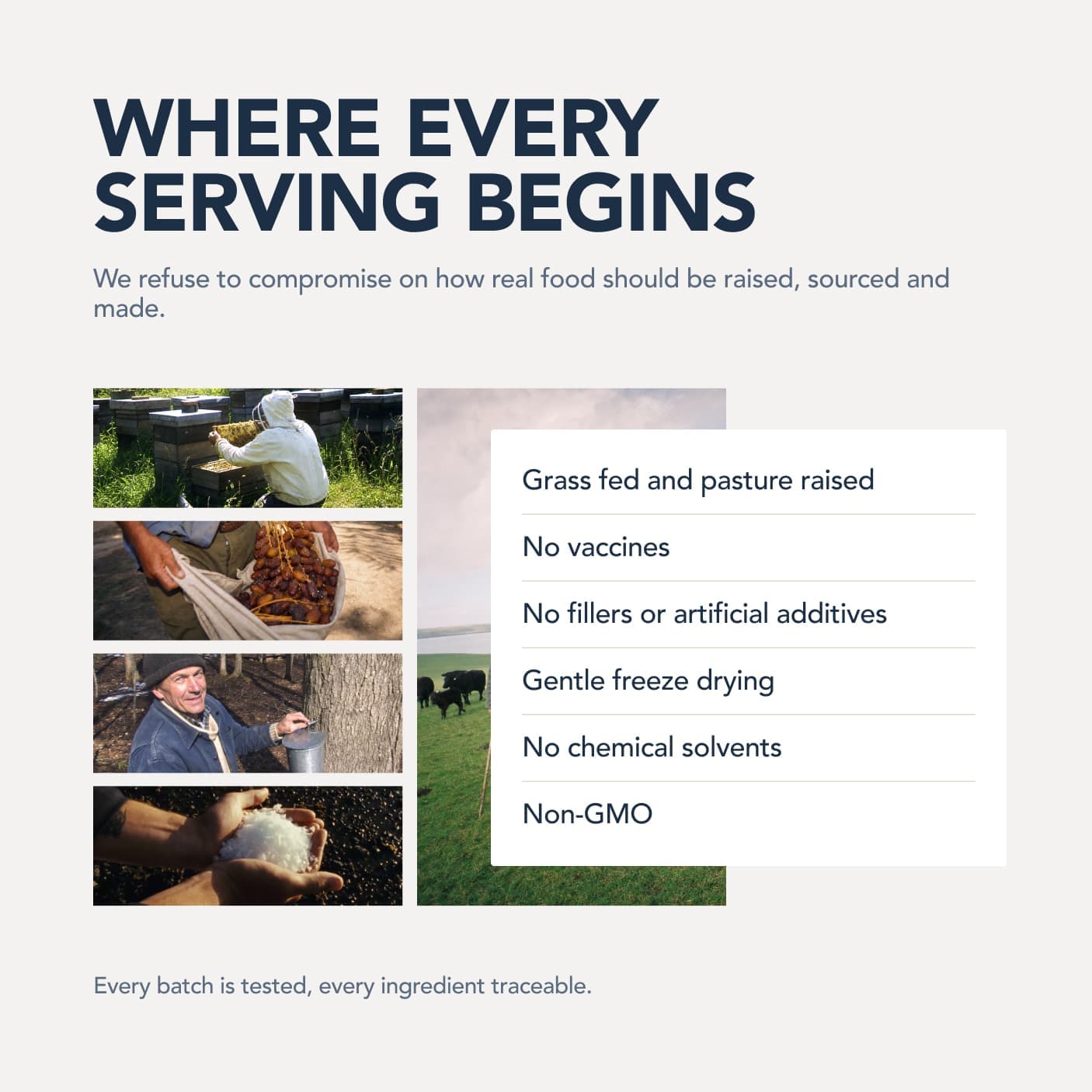
Eight real ingredients built around grass-fed beef organs, collagen and colostrum. Nothing synthetic added.
Free with your first order, worth £38. Plus £10 off the pouch with a subscription.

Free UK shipping · Made in England · 100 day money back guarantee on your first pouch · Skip, pause or cancel anytime
What to eat instead
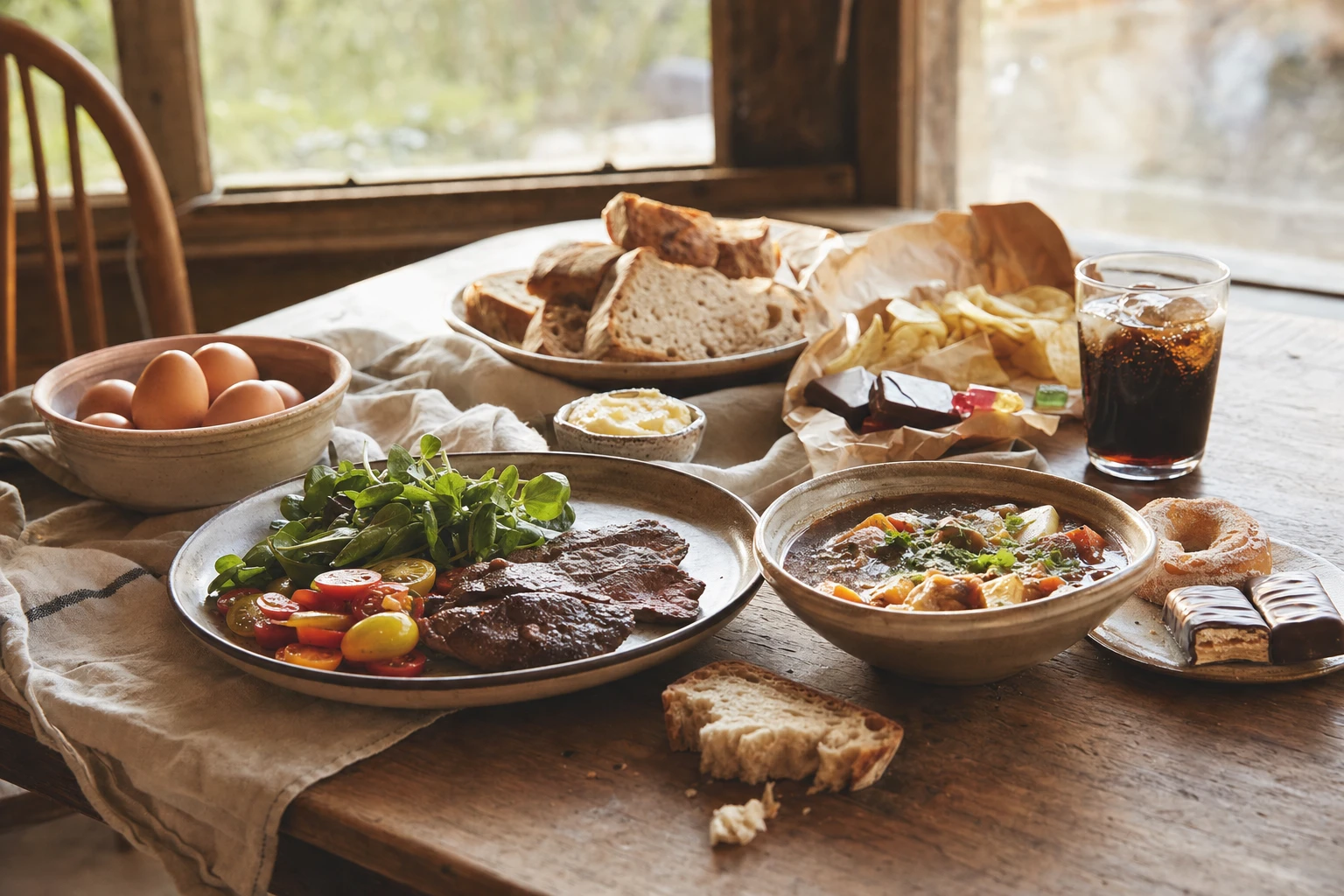
The answer isn't complicated. It's just Group 1 and Group 2 foods. Meat, fish, eggs, dairy, vegetables, fruit, nuts, seeds, legumes, grains, water, tea, coffee. If it came from the earth or an animal, and it's been minimally altered, eat it.
Start by clearing out the cupboards. Not because you have failed. But because you're removing the obstacles to your own biology working properly.
Cook at home. Roast a chicken. Boil potatoes. Fry eggs in butter. Grill salmon. Chop vegetables. Drink water. This is boring. It's also what keeps you alive and healthy.
You don't have to be perfect. But you do have to break the pattern. Ultra-processed food is designed to keep you in a cycle of craving, eating, and unsatisfaction. Real food breaks that cycle. Your hunger signals return. Your energy returns. Your body returns to what it's supposed to feel like.
The answer is simple. Real food, cooked at home, eaten until you're satisfied. That's it.
The bottom line
Ultra-processed food isn't just less nutritious than real food. It's engineered to override your appetite regulation, spike inflammation, damage your gut barrier, dysregulate your blood sugar, and create addictive feedback loops. You're not weak when you can't stop eating it. Your biology is being manipulated systematically.
The solution is to step away from the bright boxes and back toward real food. Your body will respond within days. Your energy will lift. Your cravings will fade. And you'll remember what it feels like to be genuinely satisfied by what you eat.
That feeling is worth protecting.
References
Every source below was checked on 27 August 2026. Each PubMed, PMC and DOI identifier was resolved against NCBI or Crossref, and what it opens is printed under the citation, so you can see the link goes where the citation says without leaving the page. Where a citation and its identifier disagreed, the citation was corrected to the record or the reference was deleted along with the sentence marker that pointed at it, and where the resolved paper turned out not to support the sentence, the sentence was cut back to what it does support. Borrowed authority is worse than none, because it looks like rigour.
- Monteiro CA, et al. NOVA. The star shines bright. World Nutrition. 2016. See also Monteiro CA, et al. Ultra-processed foods: what they are and how to identify them. Public Health Nutr. 2019. PMID 30744710Checked 27 August 2026: PMID 30744710 opens Monteiro CA, Cannon G, Levy RB et al, Ultra-processed foods: what they are and how to identify them. Public Health Nutr 2019;22(5):936-941.
- Hall KD, et al. Ultra-Processed Diets Cause Excess Calorie Intake and Weight Gain: An Inpatient Randomized Controlled Trial of Ad Libitum Food Intake. Cell Metab. 2019;30(1):67-77.e3. PMID 31105044Checked 27 August 2026: PMID 31105044 opens Hall KD, Ayuketah A, Brychta R et al, Ultra-Processed Diets Cause Excess Calorie Intake and Weight Gain: An Inpatient Randomized Controlled Trial of Ad Libitum Food Intake. Cell Metab 2019;30(1):67-77.e3. PubMed indexes it as: Randomized Controlled Trial.The authors' own declaration, from the record: Declaration of Interests. CG Forde has received reimbursement for speaking at conferences sponsored by companies selling nutritional products, serves on the scientific advisory council for Kerry Taste and Nutrition, and is part of an academic consortium that has received research funding from Abbott Nutrition, Nestec, and Danone. The other authors have no conflicts of interest.
- Chassaing B, et al. Dietary emulsifiers impact the mouse gut microbiota promoting colitis and metabolic syndrome. Nature. 2015;519(7541):92-6. PMID 25731162Checked 27 August 2026: PMID 25731162 opens Chassaing B, Koren O, Goodrich JK et al, Dietary emulsifiers impact the mouse gut microbiota promoting colitis and metabolic syndrome. Nature 2015;519(7541):92-6.
Who wrote and reviewed this guide
Niall Kiddle
Author · Founder, Organised
Niall is the founder of Organised. He started the company in 2024 after fixing his own health the slow way: in 2022 he swapped a cupboard of synthetic supplements for real food, raw milk, organ meats, bone broth and honey, and felt the difference within months.
Areas of expertise: Ancestral nutrition, Organ meats, Whole-food supplementation, Gut health, Regenerative sourcing
Read Niall's full profile
Pedro Rodrigues
Reviewer · Agronomist (farming and sourcing only)
Pedro is the agronomist Organised works with on farming and sourcing. His job on the guides is to keep the science honest: he reviews what we publish about soil health, regenerative agriculture, grazing and the way food is actually produced.
Areas of expertise: Regenerative agriculture, Agronomy, Soil health, Grass-fed farming, Food sourcing
Reviewed this guide on
Read Pedro's full profileBrowse the guides library
All guidesKeep reading
Ancestral
Why Modern Food Is Less Nutritious Than It Was 50 Years Ago
Soil depletion, selective breeding, and industrial agriculture have made modern produce less nutritious. Here's the evidence.
Ancestral
The Problem with Synthetic Multivitamins
Synthetic multivitamins often lack cofactors, absorb poorly, and carry fillers. See why whole food nutrients suit your body better, and what to look for.

Ancestral
Emulsifiers, Gums and Thickeners: The Hidden Gut Disruptors
Carrageenan, polysorbate 80, and gums hide in most processed food. See what research on emulsifiers and gut health says about your gut barrier.
Real food, made effortless
Bring it into my routineA few ways to use it
All recipes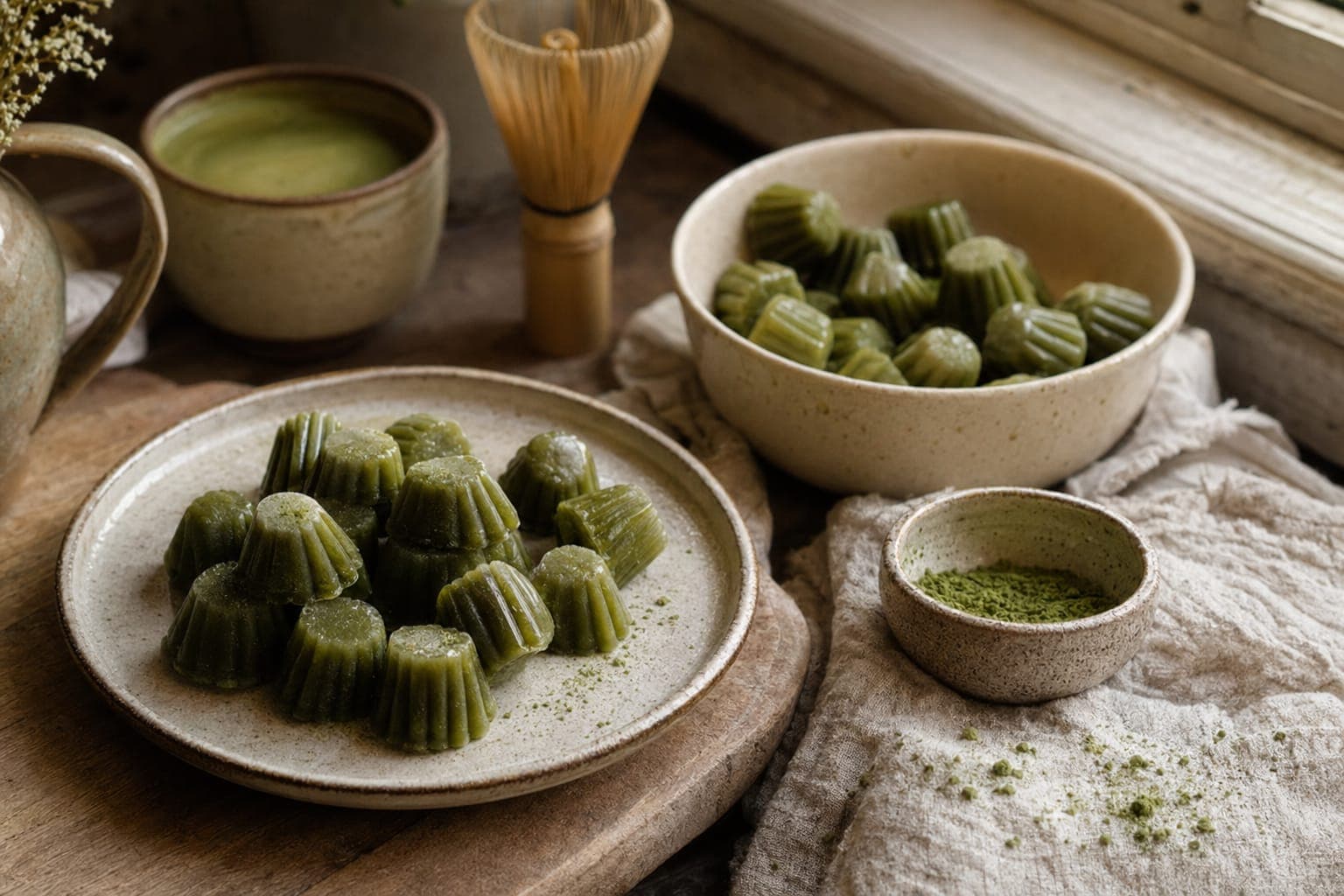
Matcha Latte Gummies with Collagen and Gelatine
Make visually stunning matcha latte gummies infused with collagen and gelatine. Simple recipe for gut-healing sweets you'll actually want to eat.
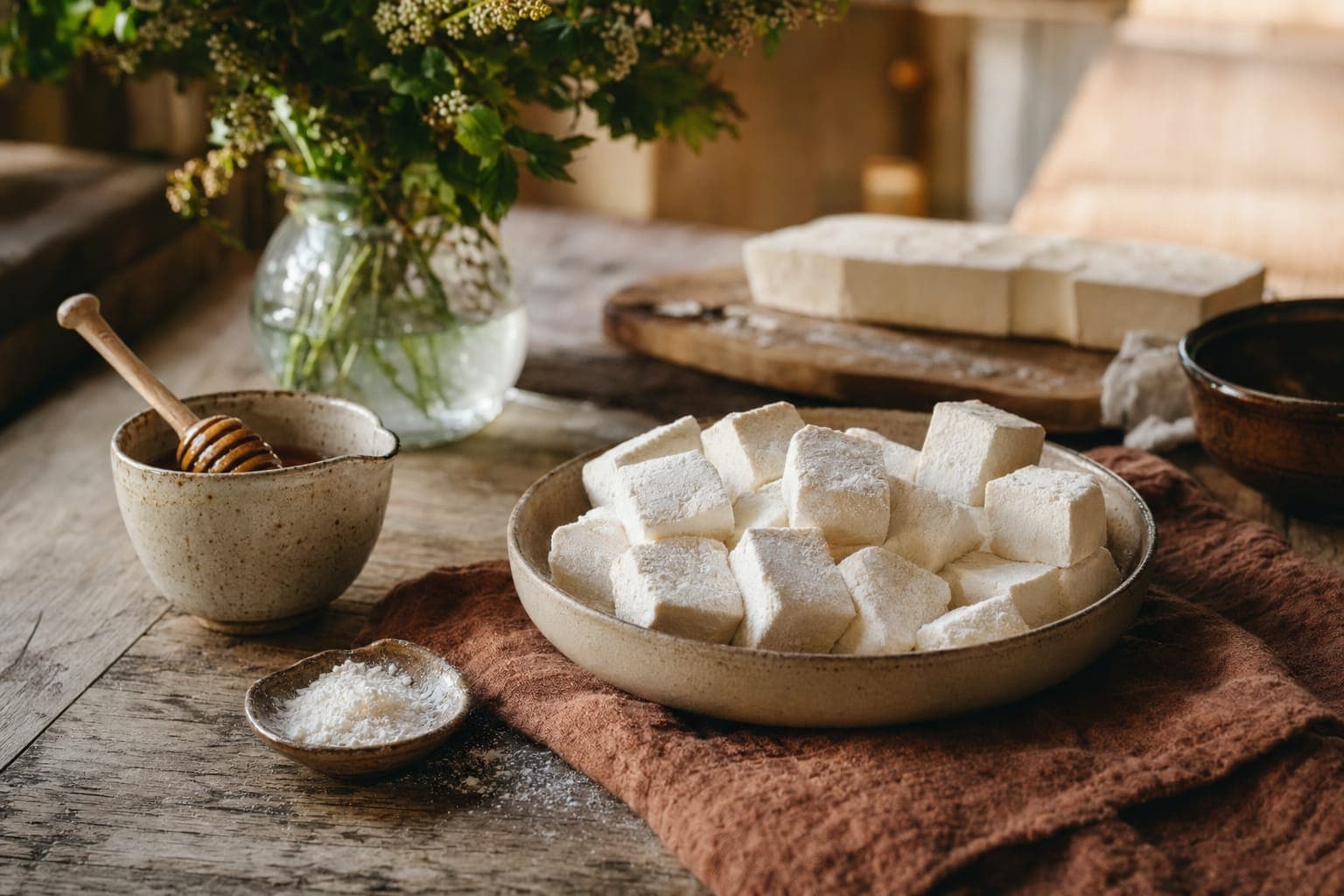
Gut-Healing Marshmallows with Collagen and Raw Honey
Learn to make gut-healing marshmallows with collagen and raw honey. A shareable treat that sneaks nutrition into every bite. Easy recipe with video tips.
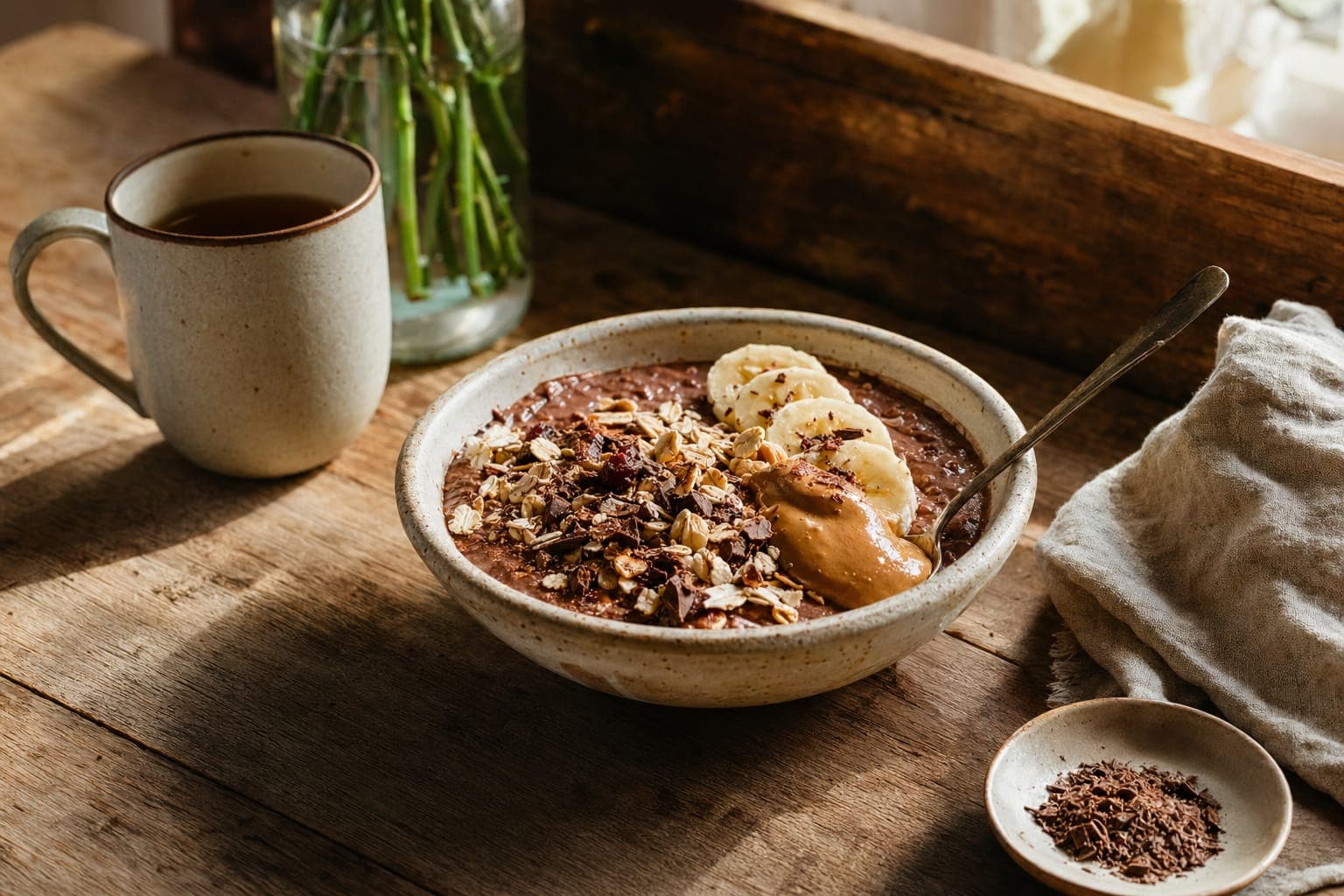
10 Ways to Use Organised That Aren't Just a Shake
Move beyond the basic shake. Discover 10 creative ways to use Organised in smoothie bowls, oats, yoghurt, baking, and more.


 Join over 100,000+ members
Build a better food system with us
The Organised community is thousands of people choosing real food and backing the farmers who grow it, all of us trying to leave the world a little better than we found it. If that is what you care about too, you belong here.