What 'No Added Sugar' Really Means on Food Labels
Pick up a jar of yoghurt that says 'no added sugar' and look at the ingredient list. You'll find a dozen ingredients you don't recognise. Agents, thickeners, sweeteners, compounds designed to taste like sugar without technically being sugar. The label is technically true. And entirely deceptive.

By Niall Kiddle, Founder, Organised

Reviewed by Pedro Rodrigues, Agronomist (farming and sourcing only) ·
5 min read · Published · Updated · 3 cited sources
Makers of the Organised Daily blend, a grass-fed beef organ supplement from regenerative UK farms
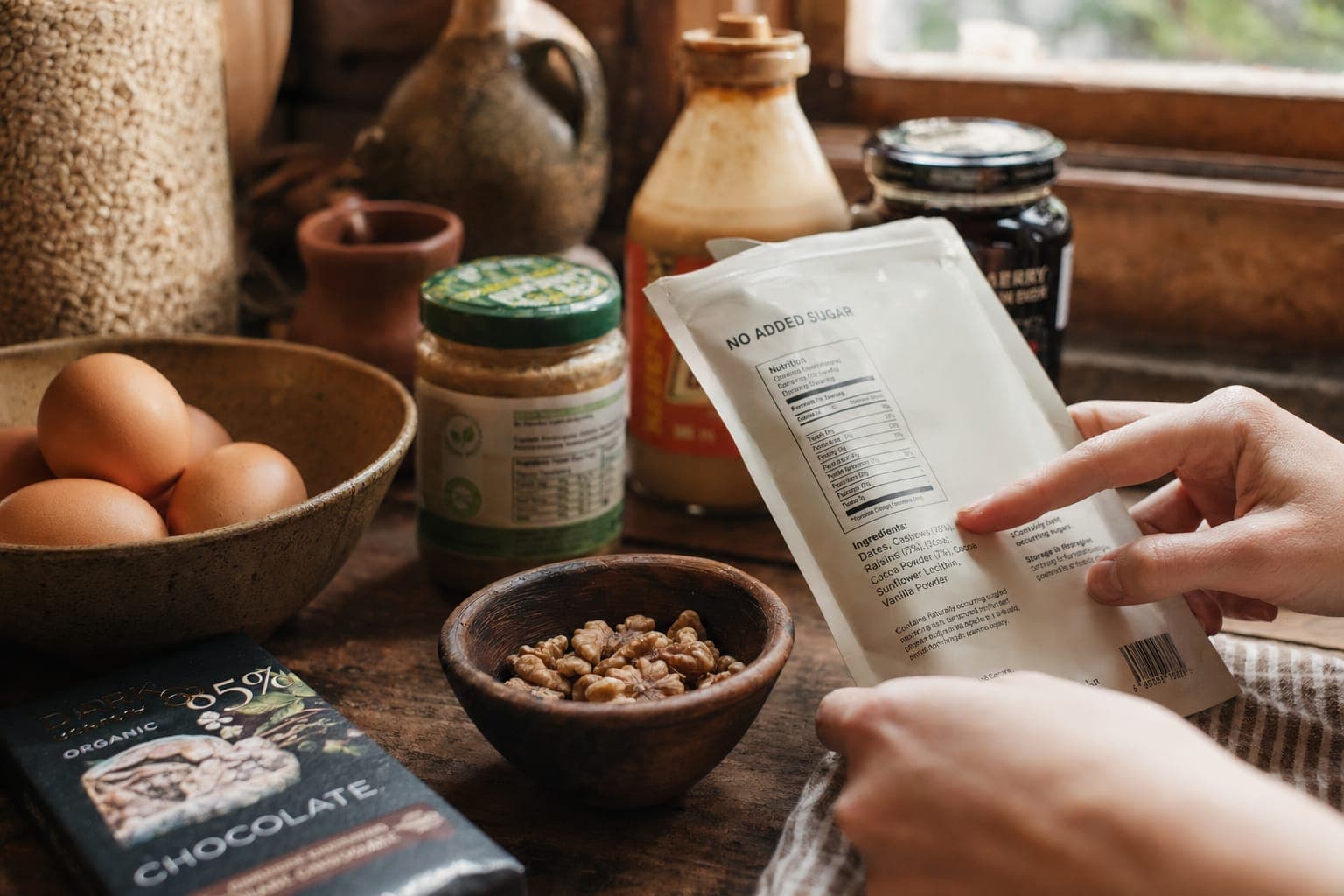
That's how food labelling works. It's designed to be read by lawyers, not by humans trying to figure out if something is nutritious.

No added sugar is not the same as no sugar
'No added sugar' means they didn't pour table sugar into the mixture. It doesn't mean there's no sugar.1 It means they used a different form of sugar. Fruit juice concentrate. Honey. Malt extract. Dried fruit paste. All of these contain sugar. The body processes them as sugar. But they don't count as 'added sugar' under labelling laws.
The reason they do this is simple: the label 'no added sugar' sells. People buy it thinking it's healthier. The food company saves money by using cheaper sweetening agents. Everyone wins except the person eating the product.
A yoghurt with 'no added sugar' can contain as much total sugar as a yoghurt with added sugar. The only difference is the marketing.
No added sugar is a marketing claim, not a health claim. It means the company avoided table sugar, not that the product is low in sugar or good for your health.
The 56 names for sugar
The food industry uses dozens of names for sugar because they know people are trying to avoid it. If you saw a product with sugar as the first ingredient, you wouldn't buy it. But if that sugar is listed as 'evaporated cane juice' or 'crystalline fructose' or 'maltose', you might not recognise it as sugar.
Here are some of the names they use: sucrose, glucose, fructose, dextrose, maltose, lactose, honey, maple syrup, agave nectar, brown rice syrup, barley malt syrup, molasses, evaporated cane juice, cane juice, fruit juice concentrate, grape juice concentrate, high fructose corn syrup, corn syrup, rice syrup, date syrup, coconut nectar, jaggery, muscovado, turbinado, demerara.
And that's not counting the artificial sweeteners: aspartame, sucralose, saccharin, sorbitol, maltitol, xylitol. These don't contain sugar, but they activate sugar receptors in your body and drive hunger signals. They're not healthier. They're just a different mechanism for the same problem.
The reason there are so many names is that labelling laws require ingredients to be listed in order of weight.1 If you put 'sugar' as a single ingredient, it might be first, which looks bad. But if you split sugar between 'honey', 'cane juice', and 'malt extract', each one appears lower in the list and the product looks less sugary. Same total sugar. Different optics.
If you can't pronounce it, and it's not a vitamin or mineral, it's probably an attempt to hide sugar or improve the shelf life of a processed product.
What thickeners and agents actually do
Look at a 'no added sugar' yoghurt and you'll see: gelatin, carrageenan, guar gum, xanthan gum, pectin, starch, or maltodextrin. These aren't food. They're agents designed to make the yoghurt taste and feel like it has sugar and fat when it actually doesn't.
Why? Because when you remove the sugar and fat that make food delicious, it becomes unappetising. A low-fat, low-sugar yoghurt would taste like sour custard. So manufacturers add thickeners to give it viscosity and mouth-feel. They add emulsifiers to make it feel creamy. They add flavour compounds to make it taste like fruit when it contains almost no actual fruit.
The result is a product that looks and tastes like food but is actually a carefully engineered mixture of agents designed to mimic the properties of real food.
Your body recognises real food. It doesn't know what to do with carrageenan or guar gum. These compounds can inflame the gut lining, disrupt the microbiota, and trigger immune responses.3 They're not banned because the food industry lobbied to have them declared 'generally recognised as safe'. But that designation means they haven't been shown to be acutely toxic, not that they're actually safe.
Get ancestral nutrition guides, free
Two short reads a week on traditional ways of eating, examined with modern evidence.
By signing up you agree to receive emails from us. No spam, unsubscribe anytime.
Why reading labels isnt enough
Even if you read every label carefully, you can't escape the problem. Some of the worst offenders are foods you wouldn't expect to contain sugar. Bread. Pasta sauce. Bacon. Salad dressing. Breakfast cereals positioned as healthy. They all contain hidden sugar because it's cheap, it improves taste, and consumers have been primed to want it.
And the legal threshold for 'sugar free' is generally anything under 0.5 grams per 100 g.2 A product can contain sugar and still be labelled sugar-free as long as the serving size is small enough.
The serving sizes themselves are often unrealistic. A package of biscuits might list a single biscuit as the serving size. Nobody eats a single biscuit. But that's how they keep the sugar per serving low on the label.
Reading labels is necessary but insufficient. You also have to understand the tricks being used against you.
1 of 9
Daily blend
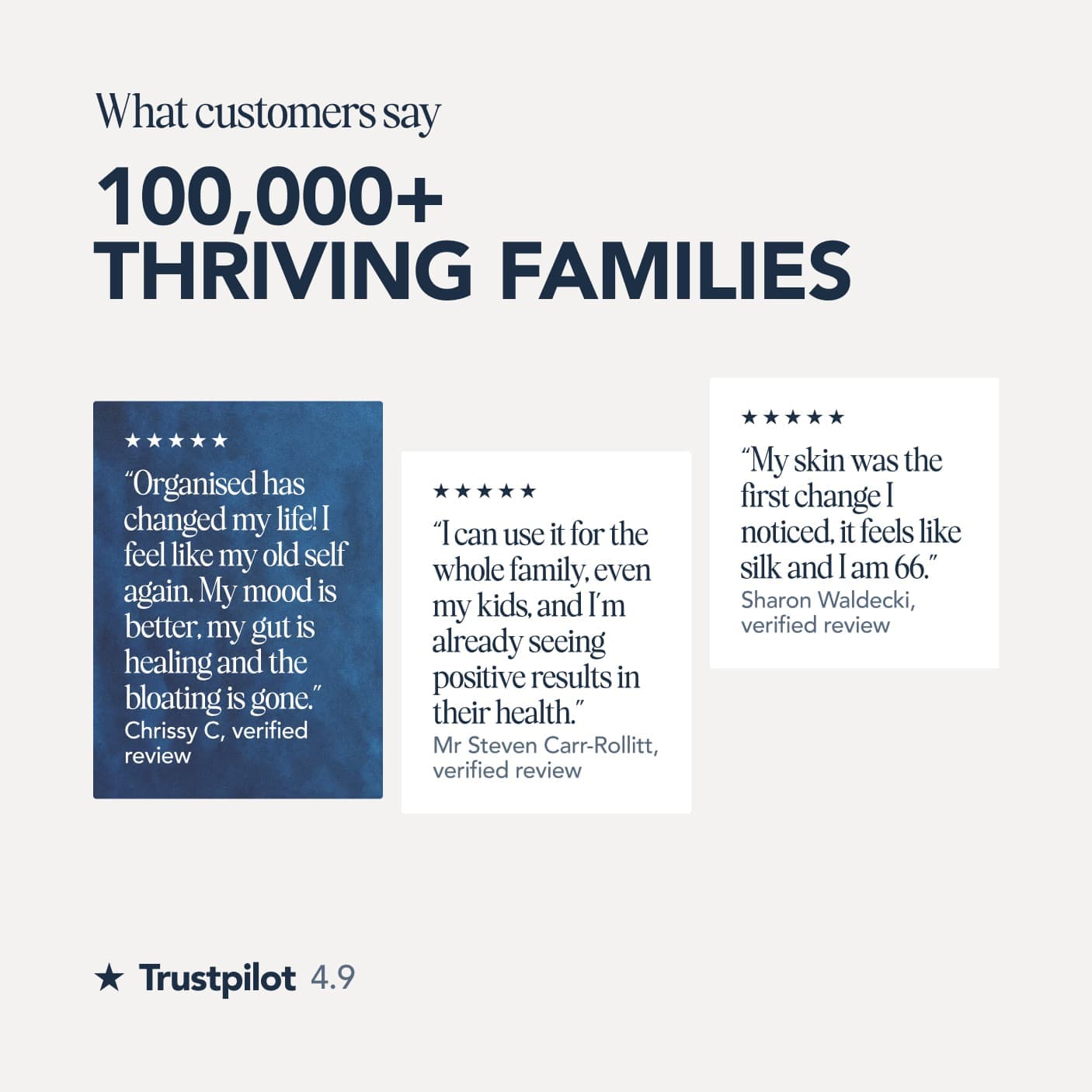
100,000+ thriving families4.9 on Trustpilot
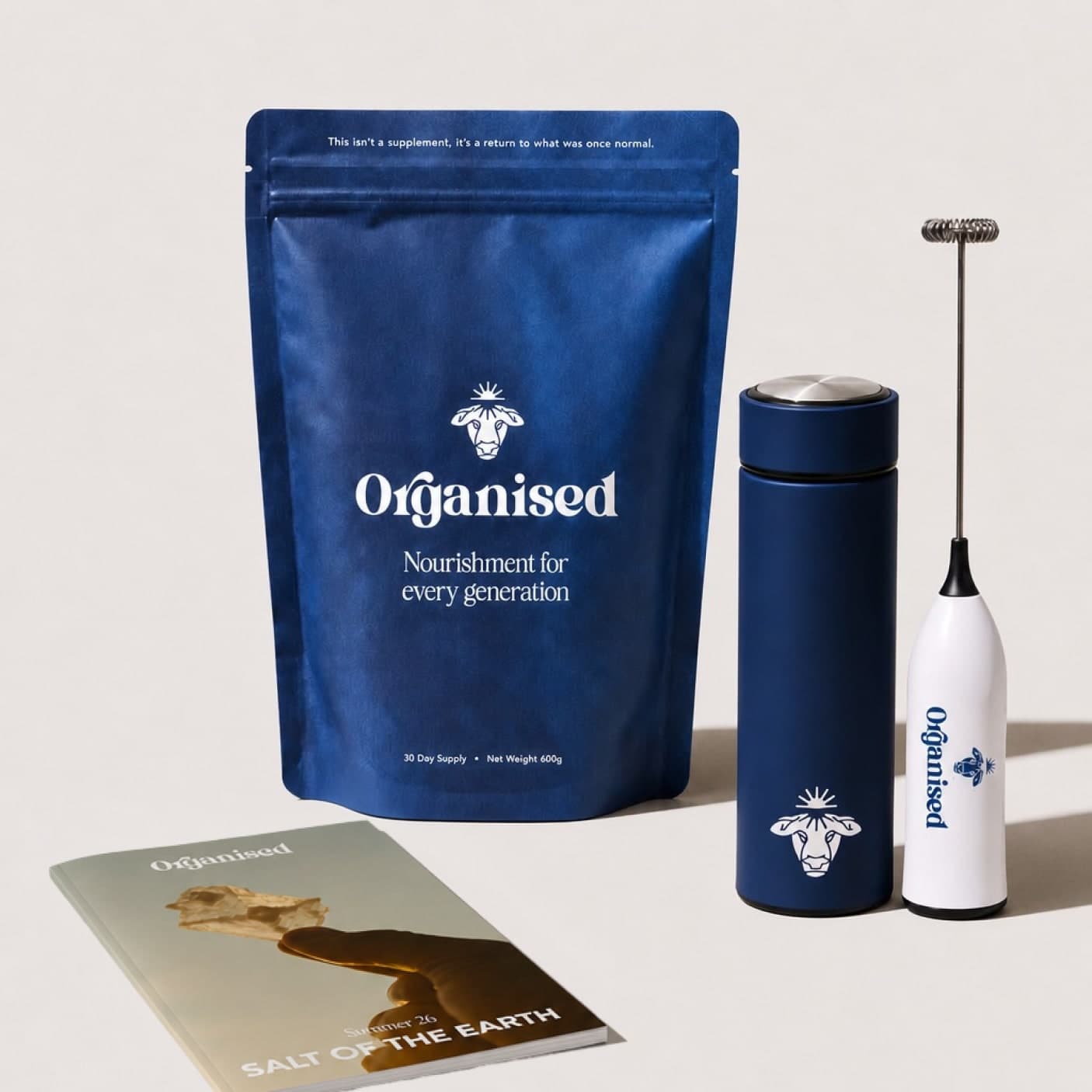
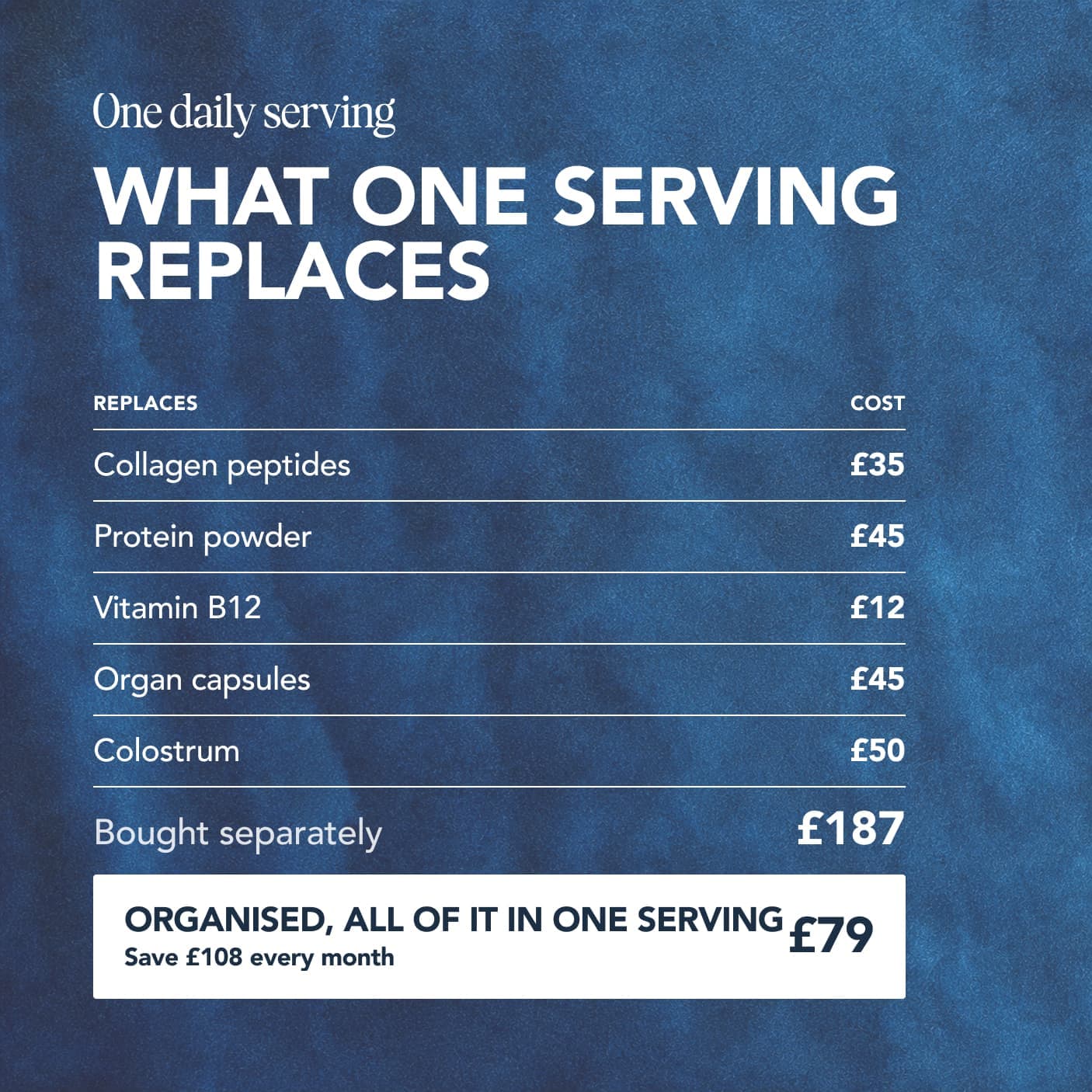
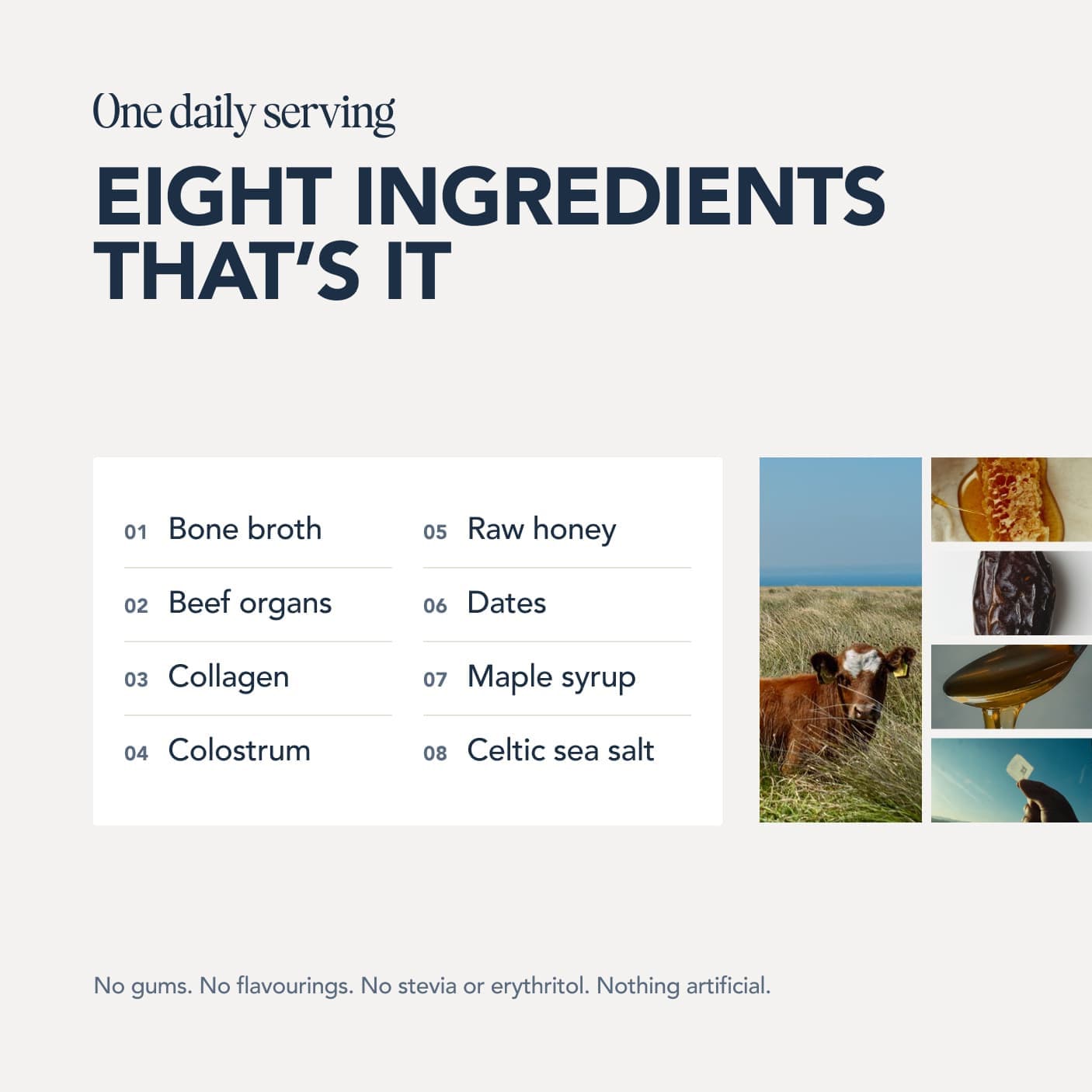
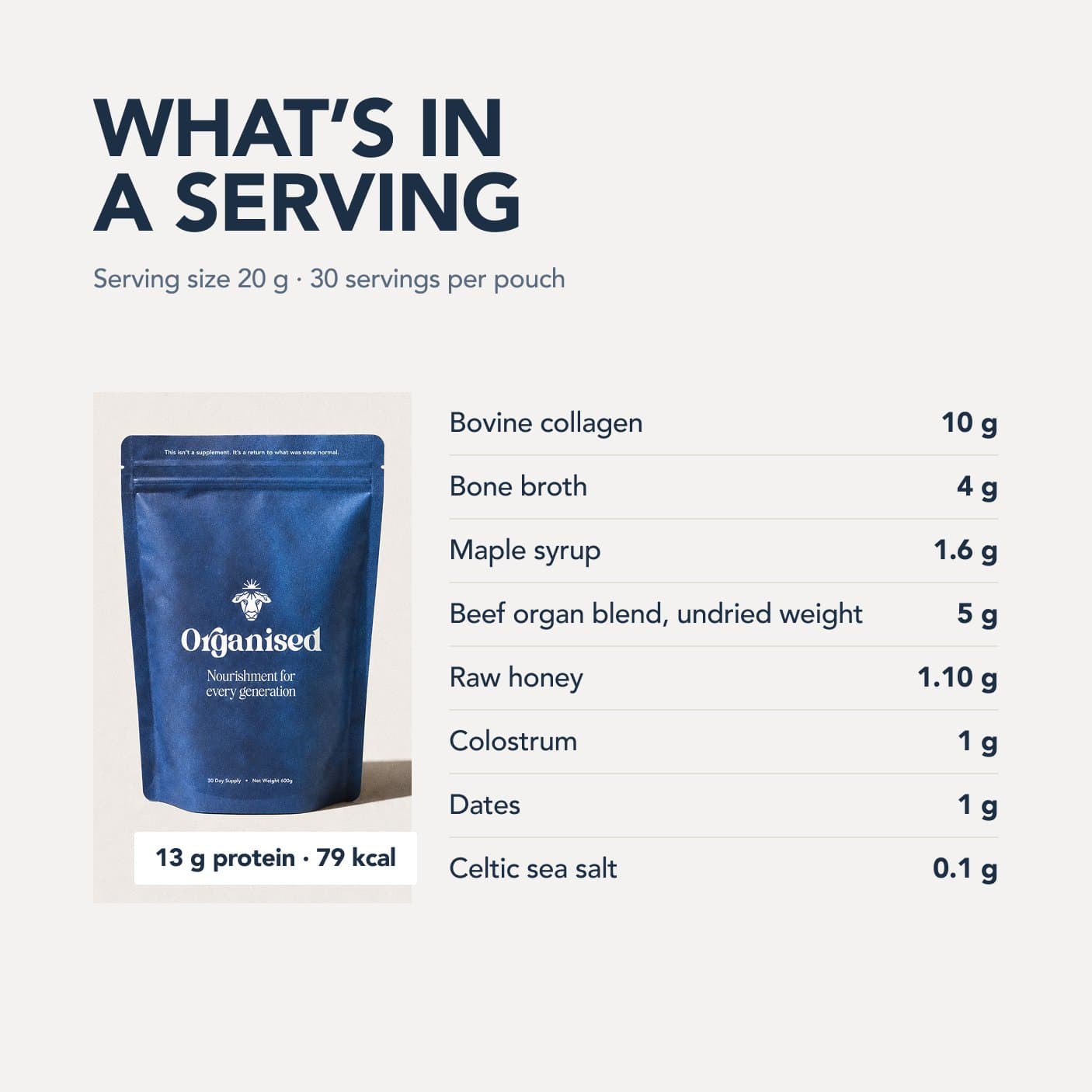
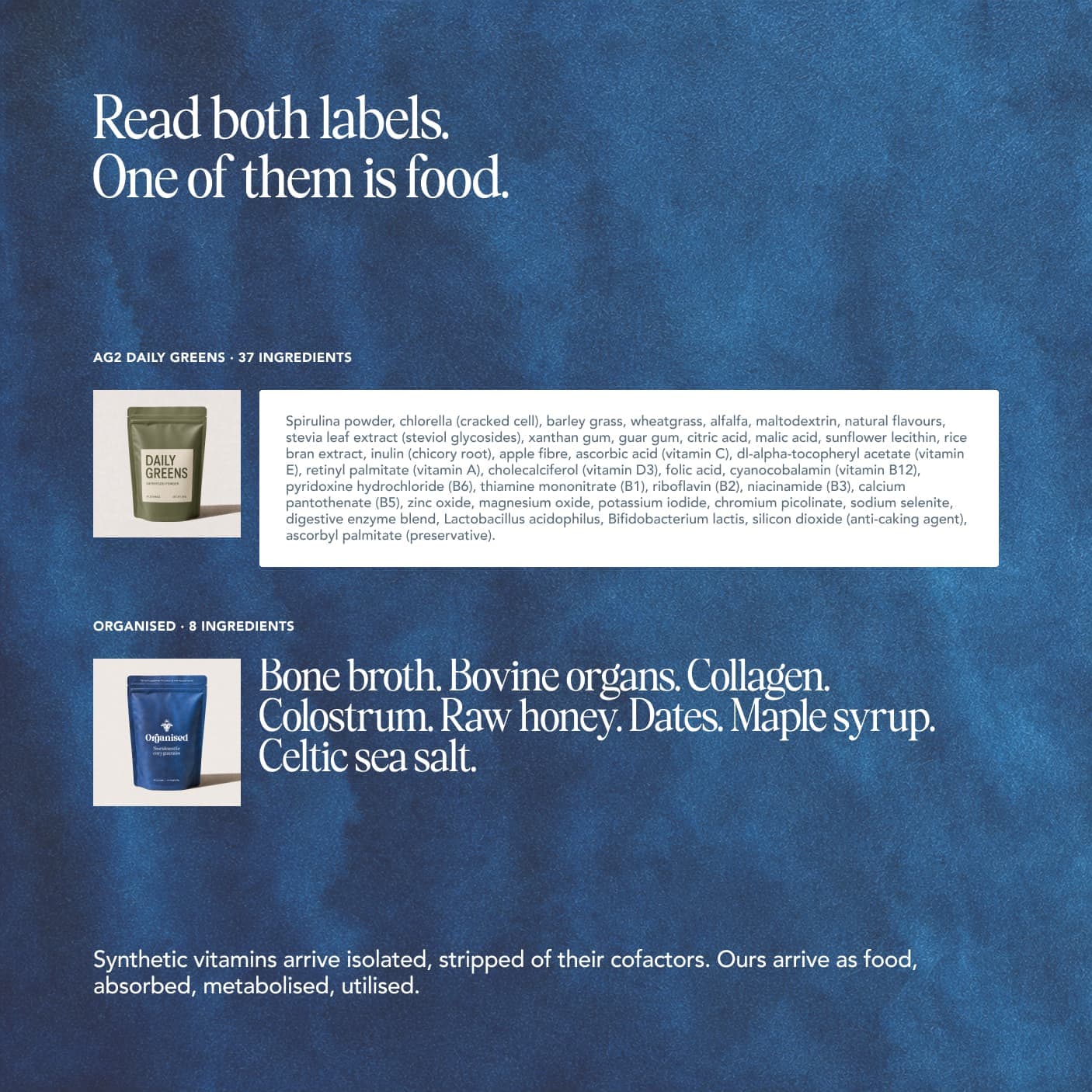
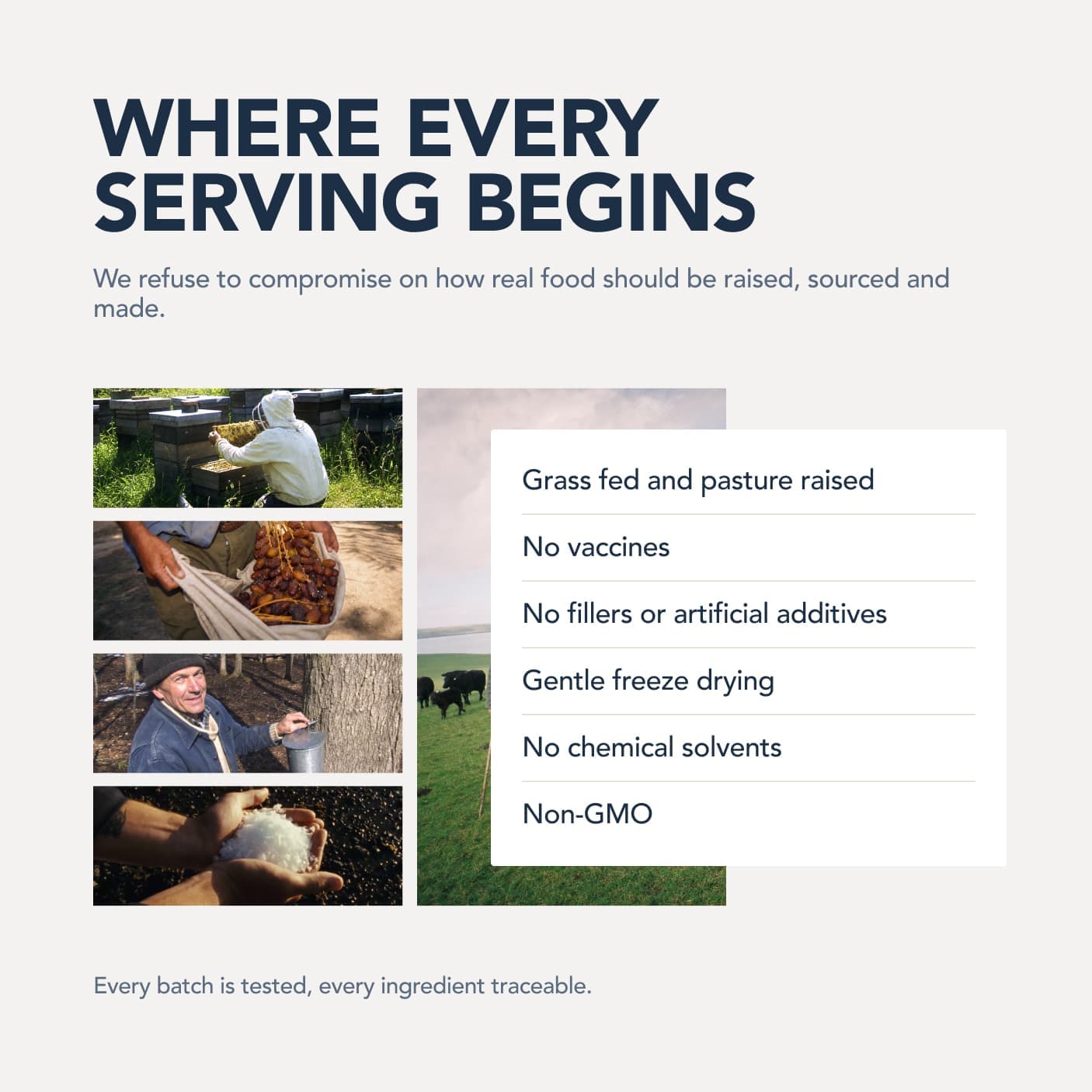
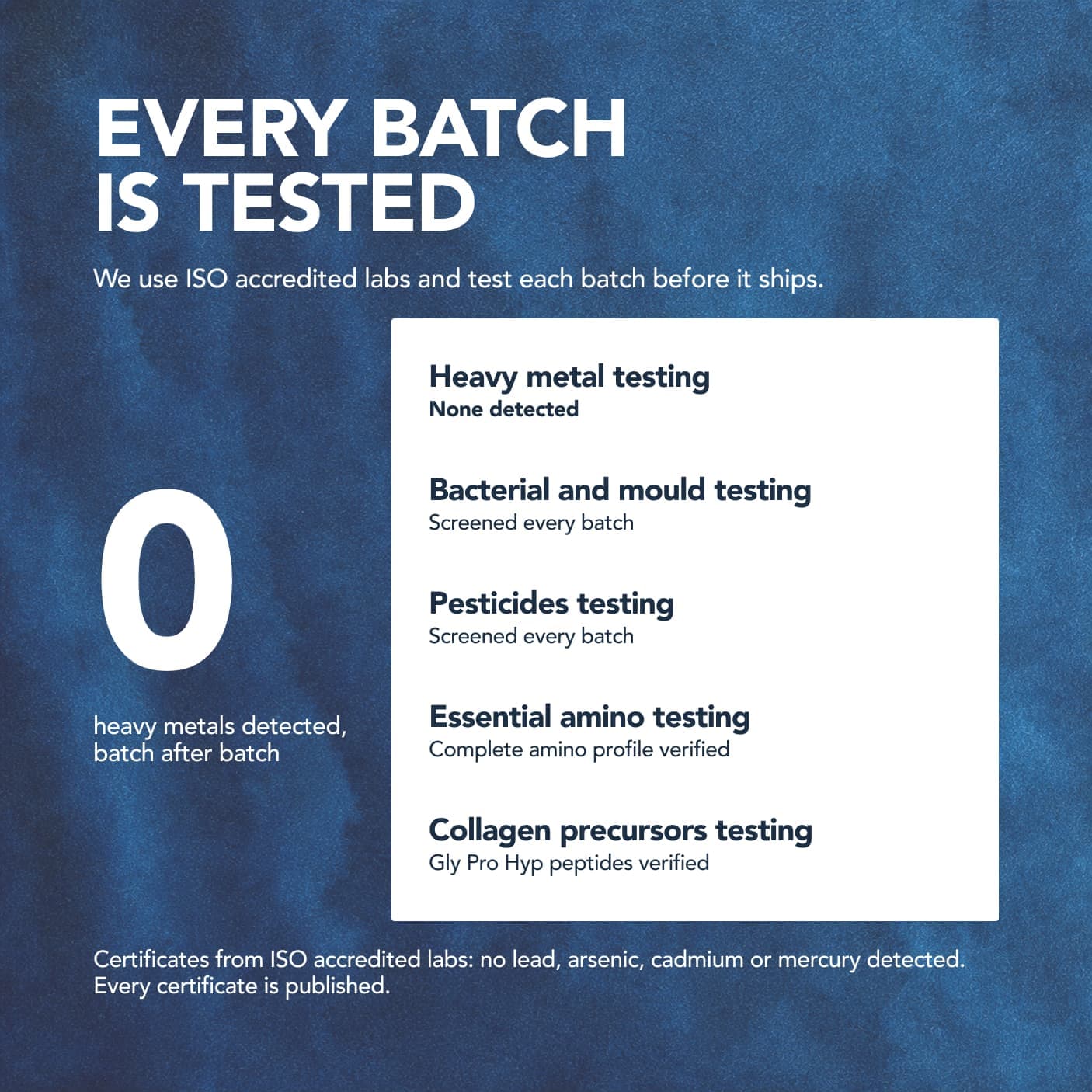
Eight real ingredients built around grass-fed beef organs, collagen and colostrum. Nothing synthetic added.
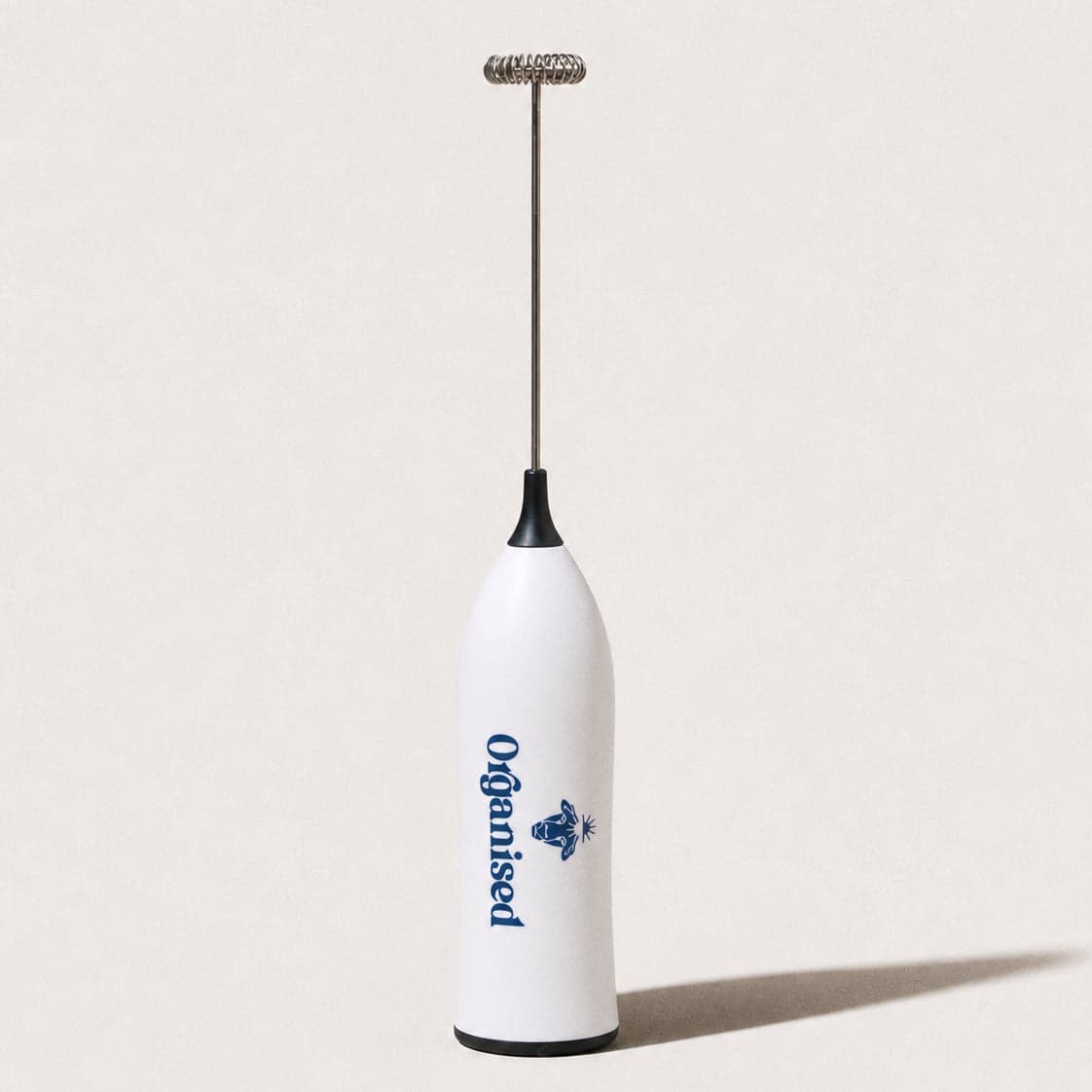
Free with your first order, worth £38. Plus £10 off the pouch with a subscription.

Free UK shipping · Made in England · 100 day money back guarantee on your first pouch · Skip, pause or cancel anytime
How to find real food on a label
Ingredient count. Real food has fewer than five ingredients. If it has more than 10, it's a product, not food. Pass.
Ingredients you recognise. Can you pronounce everything on the ingredient list? Do you have all of those ingredients in your kitchen? If you can't, it's not real food.
No sugar in any form. If the ingredient list contains any form of sugar (by any of the 56 names), put it back. It's not worth the metabolic hit.
No seed oils. If the ingredients include soybean oil, canola oil, sunflower oil, safflower oil, or cottonseed oil, put it back. These destroy your metabolic health.
No thickeners or emulsifiers. If you see carrageenan, xanthan gum, guar gum, or anything that sounds like a chemistry experiment, it's not real food.
Real food doesn't need a label that requires decoding. If you can't understand the ingredient list without a biochemistry degree, it's not food. It's a product designed to look and taste like food.
Where to shop. Buy from places where the default is real food. Farm shops. Farmers' markets. Butchers. Fish markets. Specialist grocers. The perimeter of supermarkets, where the real food lives. Avoid the middle aisles where all the products are concentrated.
When in doubt. If the product wouldn't have existed 100 years ago, it probably shouldn't exist now. Your ancestors didn't have 'no added sugar' biscuits. They ate biscuits made with flour, butter, and sugar, and they ate them rarely. That's a better model than eating 'healthy' processed substitutes constantly.
The food industry gets richer every time you have to study a label. The solution isn't reading better. It's buying fewer things that come with labels at all.
References
Every source below was checked on 27 August 2026. Each PubMed, PMC and DOI identifier was resolved against NCBI or Crossref, and what it opens is printed under the citation, so you can see the link goes where the citation says without leaving the page. Where a citation and its identifier disagreed, the citation was corrected to the record or the reference was deleted along with the sentence marker that pointed at it, and where the resolved paper turned out not to support the sentence, the sentence was cut back to what it does support. Borrowed authority is worse than none, because it looks like rigour.
- UK Food Standards Agency. Packaging and labelling guidance.
- European Commission. Regulation (EC) No 1924/2006 on nutrition and health claims made on foods. EUR-Lex.
- Chassaing B et al. Dietary emulsifiers impact the mouse gut microbiota promoting colitis and metabolic syndrome. Nature. 2015;519(7541):92-6. PMID: 25731162.Checked 27 August 2026: PMID 25731162 opens Chassaing B, Koren O, Goodrich JK et al, Dietary emulsifiers impact the mouse gut microbiota promoting colitis and metabolic syndrome. Nature 2015;519(7541):92-6.
Who wrote and reviewed this guide
Niall Kiddle
Author · Founder, Organised
Niall is the founder of Organised. He started the company in 2024 after fixing his own health the slow way: in 2022 he swapped a cupboard of synthetic supplements for real food, raw milk, organ meats, bone broth and honey, and felt the difference within months.
Areas of expertise: Ancestral nutrition, Organ meats, Whole-food supplementation, Gut health, Regenerative sourcing
Read Niall's full profile
Pedro Rodrigues
Reviewer · Agronomist (farming and sourcing only)
Pedro is the agronomist Organised works with on farming and sourcing. His job on the guides is to keep the science honest: he reviews what we publish about soil health, regenerative agriculture, grazing and the way food is actually produced.
Areas of expertise: Regenerative agriculture, Agronomy, Soil health, Grass-fed farming, Food sourcing
Reviewed this guide on
Read Pedro's full profileMore on modern food
View allBrowse the guides library
All guidesKeep reading

Ancestral
What Is an Animal Based Diet? Definition, Benefits, Food List, and How to Source Well
If you have been hearing “animal based” everywhere lately, you are not alone. It is one of the fastest-growing nutrition movements online, and it sits

Ancestral
The Carnivore Diet: An Honest Assessment
An unbiased look at the carnivore diet. What works, what doesn't, who might benefit, and why fibre remains a conversation worth having.
Ancestral
Why Every Traditional Culture Prised Organ Meats
Discover why Inuit, Maasai, and Native American cultures reserved organ meats for hunters and elders. The nutritional truth modern dietitians have overlooked.
Real food, made effortless
Bring it into my routineA few ways to use it
All recipes
Raw Milk Hot Chocolate with Collagen
A nourishing evening hot chocolate made with raw milk, grass-fed collagen, raw cacao, and honey. A nighttime ritual that supports sleep and gut health.
Ancestral Breakfast Ideas from Around the World
Traditional breakfast recipes from cultures that got nutrition right. Japanese, Turkish, Scottish, and more. Whole-food breakfast inspiration.
Collagen-Rich Beef Stew: Slow-Cooked Nourishment
Beef stew that delivers collagen from connective tissue and bone broth. Winter comfort food that actually nourishes. Simple slow cooker recipe.


 Join over 100,000+ members
Build a better food system with us
The Organised community is thousands of people choosing real food and backing the farmers who grow it, all of us trying to leave the world a little better than we found it. If that is what you care about too, you belong here.