Natural Flavourings Are Not Natural. Here's Why.
You see "natural flavouring" on the label and assume it came from a plant or fruit. It didn't. It's a regulatory loophole that lets the food industry hide a lot.

By Niall Kiddle, Founder, Organised

Reviewed by Pedro Rodrigues, Agronomist (farming and sourcing only) ·
5 min read · Published · Updated · 3 cited sources
Makers of the Organised Daily blend, a grass-fed beef organ supplement from regenerative UK farms
And honestly, once you understand what it actually means, you'll stop trusting the label entirely.
What natural flavouring actually is
In the European Union and the UK, "natural flavouring" is defined as a flavouring agent derived from natural sources like plants, meat, or microorganisms.3 That sounds straightforward. The devil is in the definition.
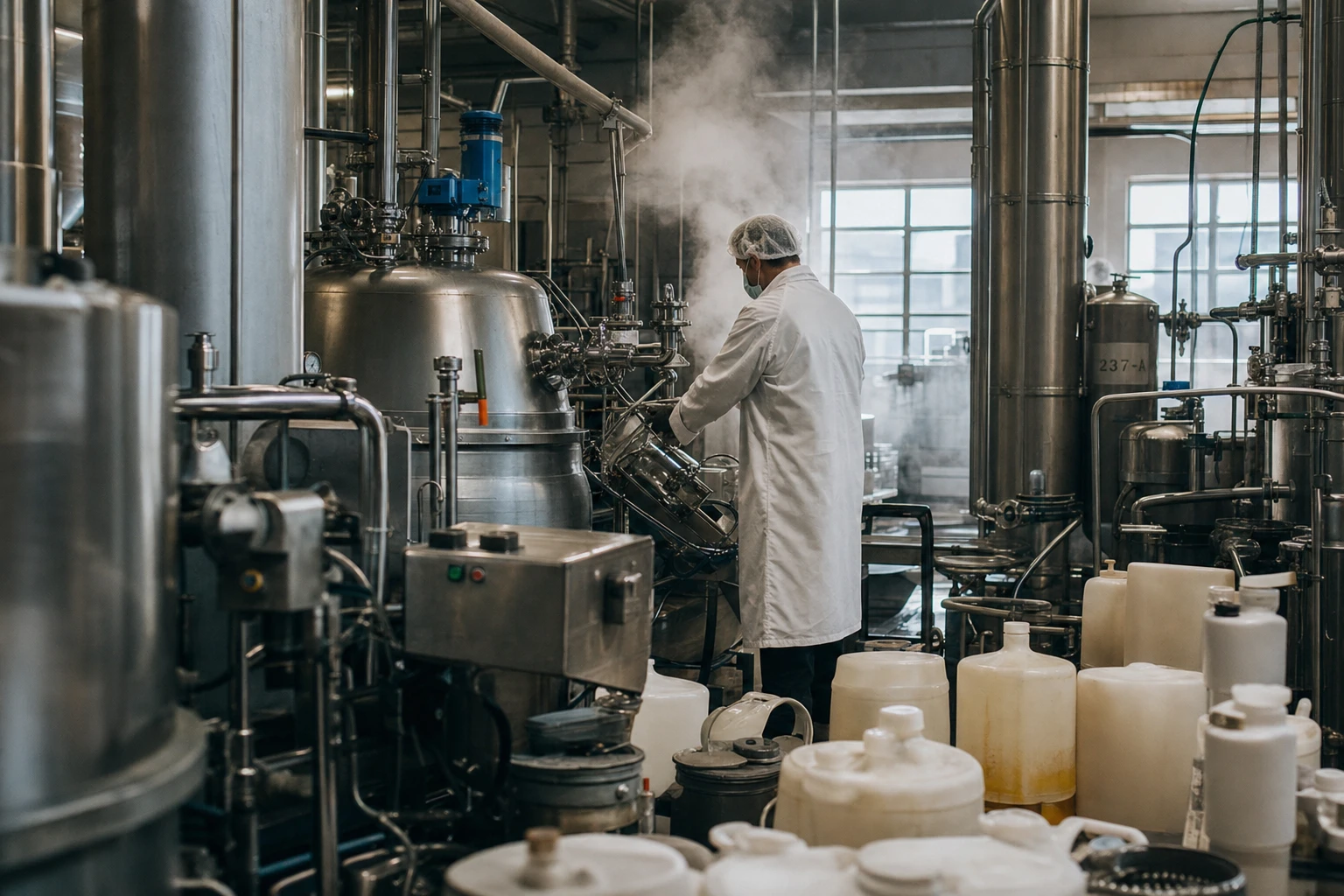
The regulation says natural flavourings must come from these sources. But it says nothing about how they're processed, extracted, or modified. A natural flavouring can be boiled down, concentrated, chemically extracted using solvents, or fermented using microorganisms. The end result is often chemically identical to artificial flavouring, yet legally classified as natural.
And that's the game. The source is natural. The process is industrial. The marketing is misleading.
"Natural" refers to where it came from. Not to what you're actually consuming or what it's been through.
The regulatory gap
The FDA in America defines natural flavour as "the essential oil, oleoresin, essence or extractive, protein hydrolysate, distillate, or any product of roasting, heating, or enzymolysis" which contains flavouring constituents derived from a spice, fruit, vegetable, meat, seafood, yeast, herb, bark, bud, root, leaf, or other plant material.1
Notice what's missing? Any requirement to tell you which plant material. Any requirement to disclose the extraction method. Any requirement to list the specific compounds in the flavouring.
A manufacturer can list "natural flavouring" on a package and legally be using something that's been chemically modified beyond recognition, as long as the original source was a plant or animal.
The FSA in the UK follows similar rules. Natural flavourings can be listed as a single ingredient, with zero transparency about what's actually in them. A competitor could walk in, smell the finished product, and have no idea what chemicals or processes were used to get that flavour.
The loopholes in FDA and FSA rules
One loophole is called the "generally recognised as safe" exemption, or GRAS. Once a flavouring is designated GRAS, manufacturers don't have to disclose it. It can appear on a label simply as "natural flavouring."2
Another loophole is that natural flavourings don't have to be individually tested or approved before use. If a company believes a substance is safe, they can use it. The burden isn't on them to prove safety. It's theoretically on regulators to prove harm. By the time harm is documented, billions of servings have already been consumed.
And perhaps the biggest loophole: "natural flavouring" is often a single ingredient category on a label, but it can contain dozens of individual chemicals. Vanillin comes from vanilla beans. But it can be extracted, chemically modified, combined with other compounds, and sold as a single ingredient called "natural vanilla flavouring."
This is legal. It's misleading. And it works because consumers see the word "natural" and stop asking questions.
The loophole isn't that natural flavourings contain a forbidden chemical. It's that no one actually knows what they contain.
Where natural flavours really come from
Some natural flavourings come from plants. Vanilla extract is actually extracted from vanilla beans. Almond flavouring can come from almond oil. But many are synthesised by fermentation or chemical modification.
Strawberry flavouring, for example, is often created by fermenting fungi or yeast. The result is chemically identical to compounds found in strawberries. But the process is industrial microbiology, not strawberry extraction.
Artificial flavourings are created the same way, using identical chemistry. The only legal difference is that artificial flavourings explicitly use synthetically created chemicals, whilst natural flavourings use synthetically created chemicals extracted from or derived from plants.
The consumer sees "natural flavouring" and "artificial flavouring" and assumes a vast difference. The reality is far more similar than different. Both are industrially processed. Both are often chemically identical to the flavour molecules found in real food. Both are used because they're profitable and shelf-stable, not because they're superior.
Get ancestral nutrition guides, free
Two short reads a week on traditional ways of eating, examined with modern evidence.
By signing up you agree to receive emails from us. No spam, unsubscribe anytime.
Why the deception matters
The word "natural" on a label influences buying decisions. Studies show that consumers will pay more for products labelled "natural," even when the actual product differs minimally from its "artificial" counterpart.
This is exploited deliberately. A brand markets its product as "naturally flavoured" to capture the health-conscious consumer who avoids "artificial" products. But you're not actually avoiding anything meaningful. You're paying more for marketing.
And the real issue isn't whether a flavouring is natural or artificial. It's that your food is being flavoured with isolated compounds in the first place. Real food doesn't need this. A strawberry tastes like a strawberry because it is one. A strawberry-flavoured yoghurt needs synthetic compounds because it's made of milk, sugar, and industrial additives, not strawberries.
The label isn't protecting you. It's persuading you to buy something that isn't as honest as it claims.
1 of 9
Daily blend
100,000+ thriving families4.9 on Trustpilot
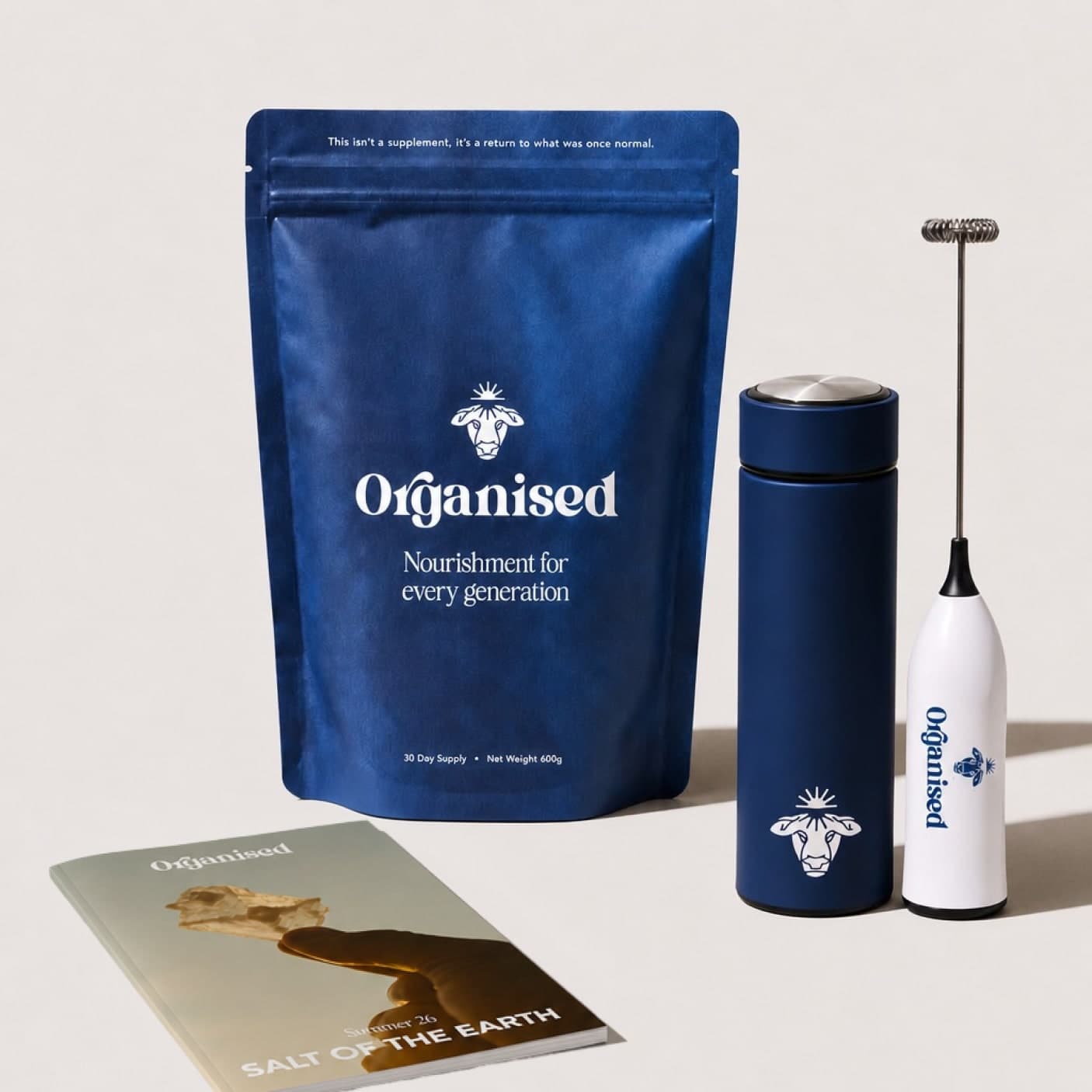
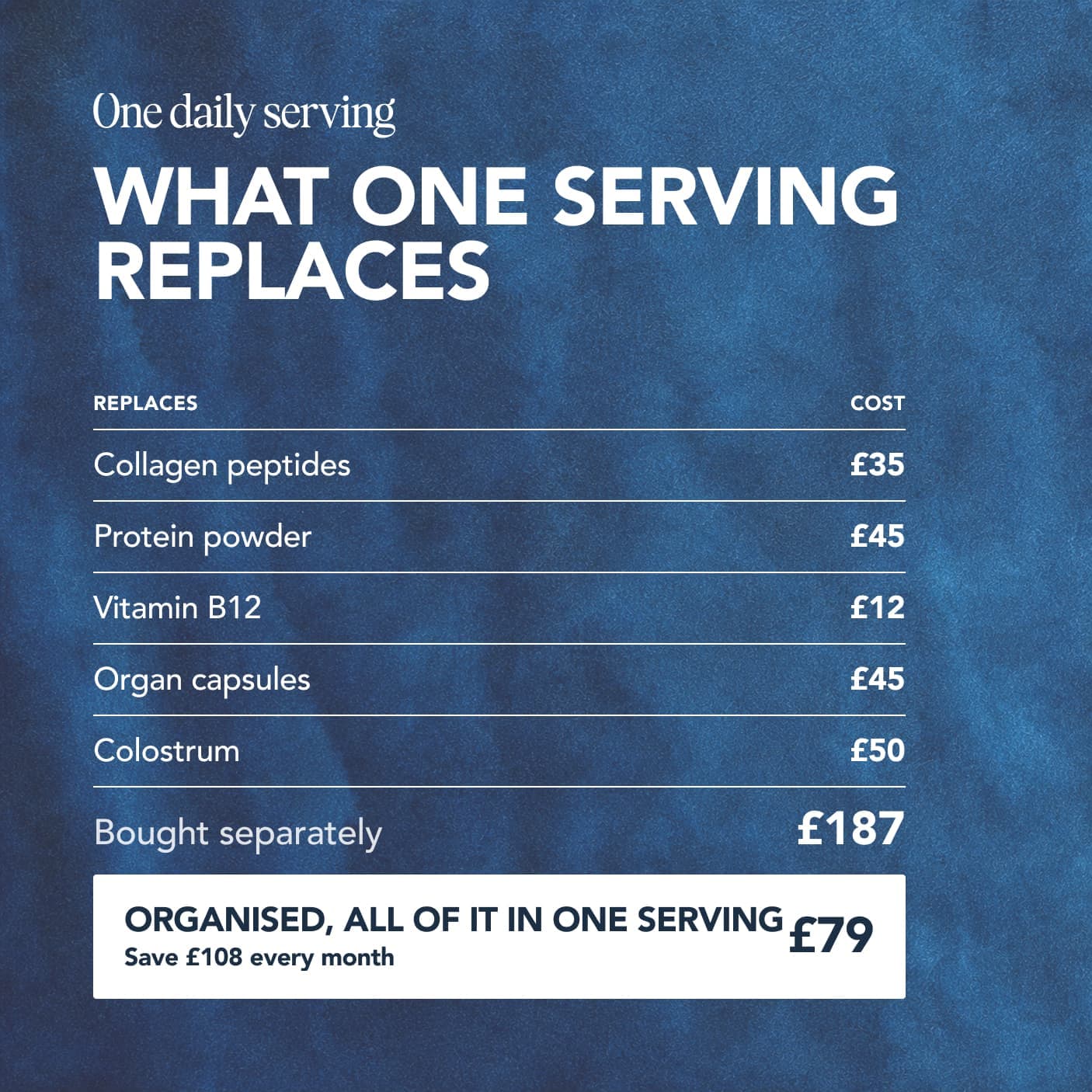
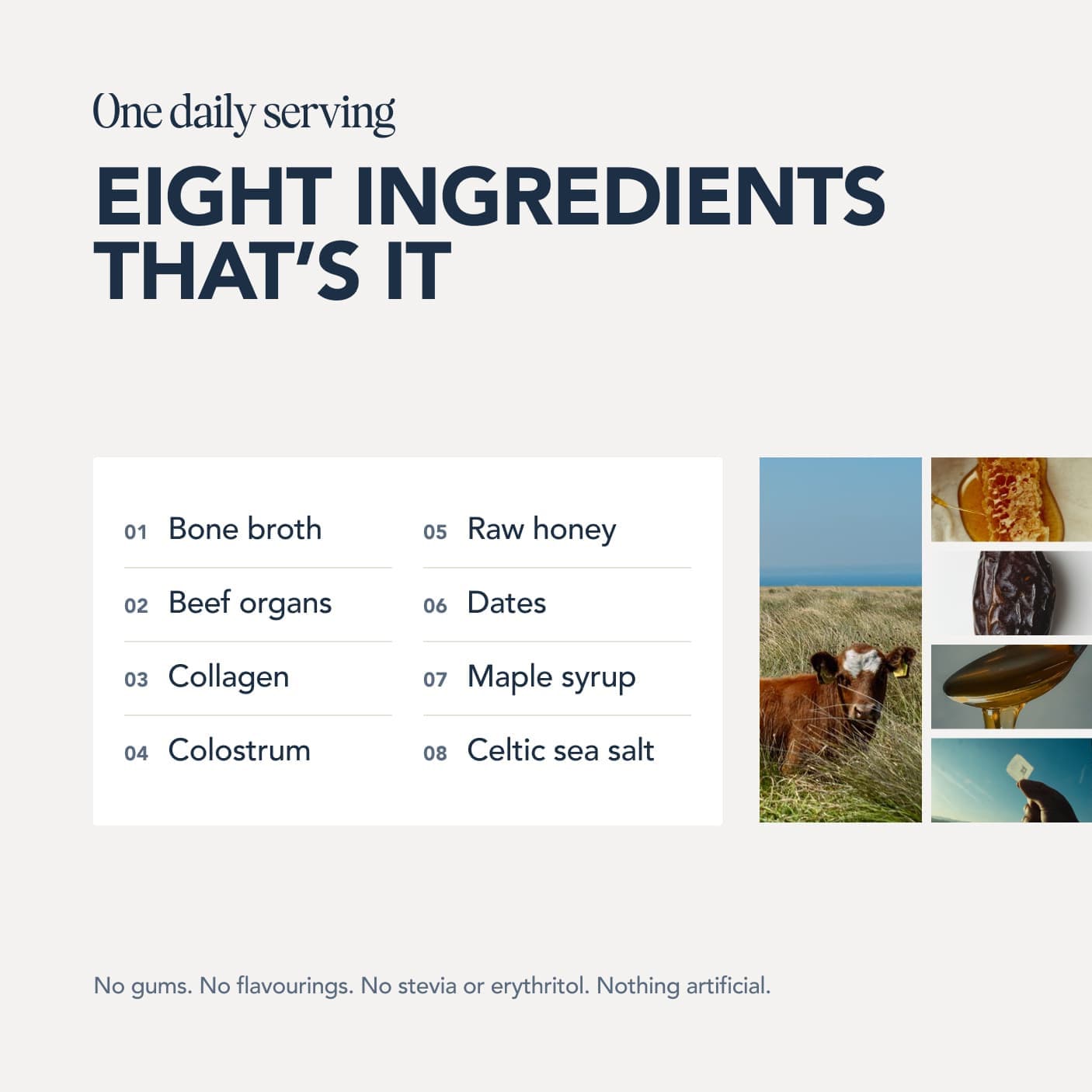
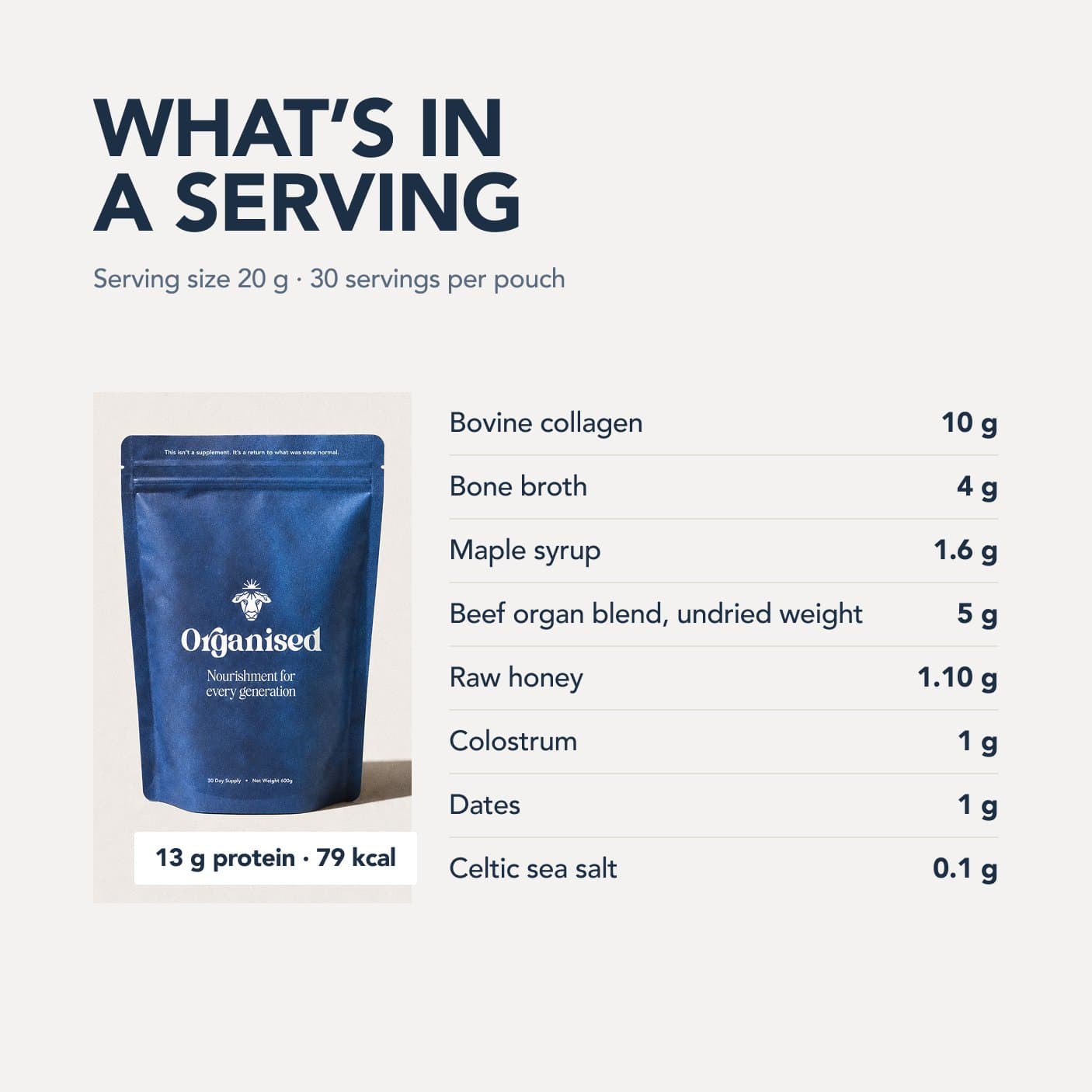
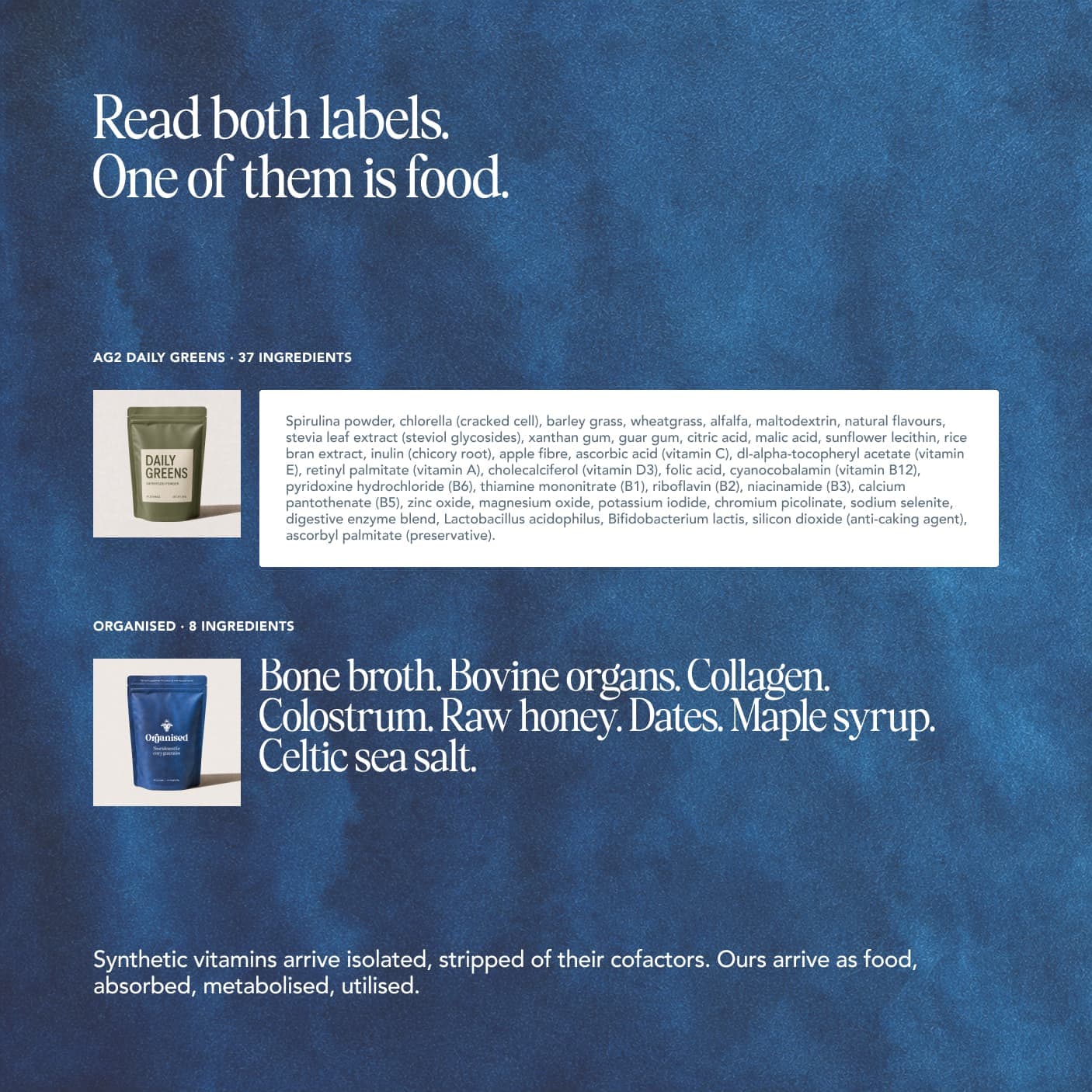
Eight real ingredients built around grass-fed beef organs, collagen and colostrum. Nothing synthetic added.
Free with your first order, worth £38. Plus £10 off the pouch with a subscription.

Free UK shipping · Made in England · 100 day money back guarantee on your first pouch · Skip, pause or cancel anytime
How to find genuinely flavoured food
Look for products that don't need a flavouring because they're actually made with the ingredient they taste like. Chocolate with cocoa. Vanilla with vanilla beans. Fruit with actual fruit.
If you see "natural flavouring" on a label, ask yourself: does this product contain the actual source of that flavour? If the answer is no, you're eating a flavouring compound, not a flavoured food.
And if the label says "natural flavourings," in plural, it's even more opaque. You have no idea which plants or processes were used to create this mix.
The safest rule is simple: buy food that doesn't require a flavouring to taste like something. Eat real strawberries. Eat real chocolate. Eat real cheese. Stop trusting labels that hide their ingredients behind a single word.
The bottom line
"Natural flavouring" is a regulatory term that protects the food industry, not you. It can mean almost anything, derived almost any way, with almost zero transparency. The word "natural" on a label is marketing, not disclosure.
If you want genuinely flavoured food, read the full ingredient list. If you can't recognise or pronounce what's in it, your body probably won't either. And if the food needs to be industrially flavoured to taste good, it probably isn't worth eating.
References
Every source below was checked on 27 August 2026. Each link was requested and read. Where a citation and its identifier disagreed, the citation was corrected to the record or the reference was deleted along with the sentence marker that pointed at it, and where the resolved paper turned out not to support the sentence, the sentence was cut back to what it does support. Borrowed authority is worse than none, because it looks like rigour.
- U.S. Food and Drug Administration. CFR - Code of Federal Regulations Title 21, Section 101.22 (a)(3): Foods; labeling of spices, flavorings, colorings and chemical preservatives. https://www.accessdata.fda.gov/scripts/cdrh/cfdocs/cfcfr/CFRSearch.cfm?fr=101.22 [accessed May 2026].
- U.S. Food and Drug Administration. Generally Recognized as Safe (GRAS). https://www.fda.gov/food/food-ingredients-packaging/generally-recognized-safe-gras [accessed May 2026].
- UK Food Standards Agency. Food additives. https://www.food.gov.uk/safety-hygiene/food-additives [accessed May 2026].
Who wrote and reviewed this guide
Niall Kiddle
Author · Founder, Organised
Niall is the founder of Organised. He started the company in 2024 after fixing his own health the slow way: in 2022 he swapped a cupboard of synthetic supplements for real food, raw milk, organ meats, bone broth and honey, and felt the difference within months.
Areas of expertise: Ancestral nutrition, Organ meats, Whole-food supplementation, Gut health, Regenerative sourcing
Read Niall's full profile
Pedro Rodrigues
Reviewer · Agronomist (farming and sourcing only)
Pedro is the agronomist Organised works with on farming and sourcing. His job on the guides is to keep the science honest: he reviews what we publish about soil health, regenerative agriculture, grazing and the way food is actually produced.
Areas of expertise: Regenerative agriculture, Agronomy, Soil health, Grass-fed farming, Food sourcing
Reviewed this guide on
Read Pedro's full profileBrowse the guides library
All guidesKeep reading
Ancestral
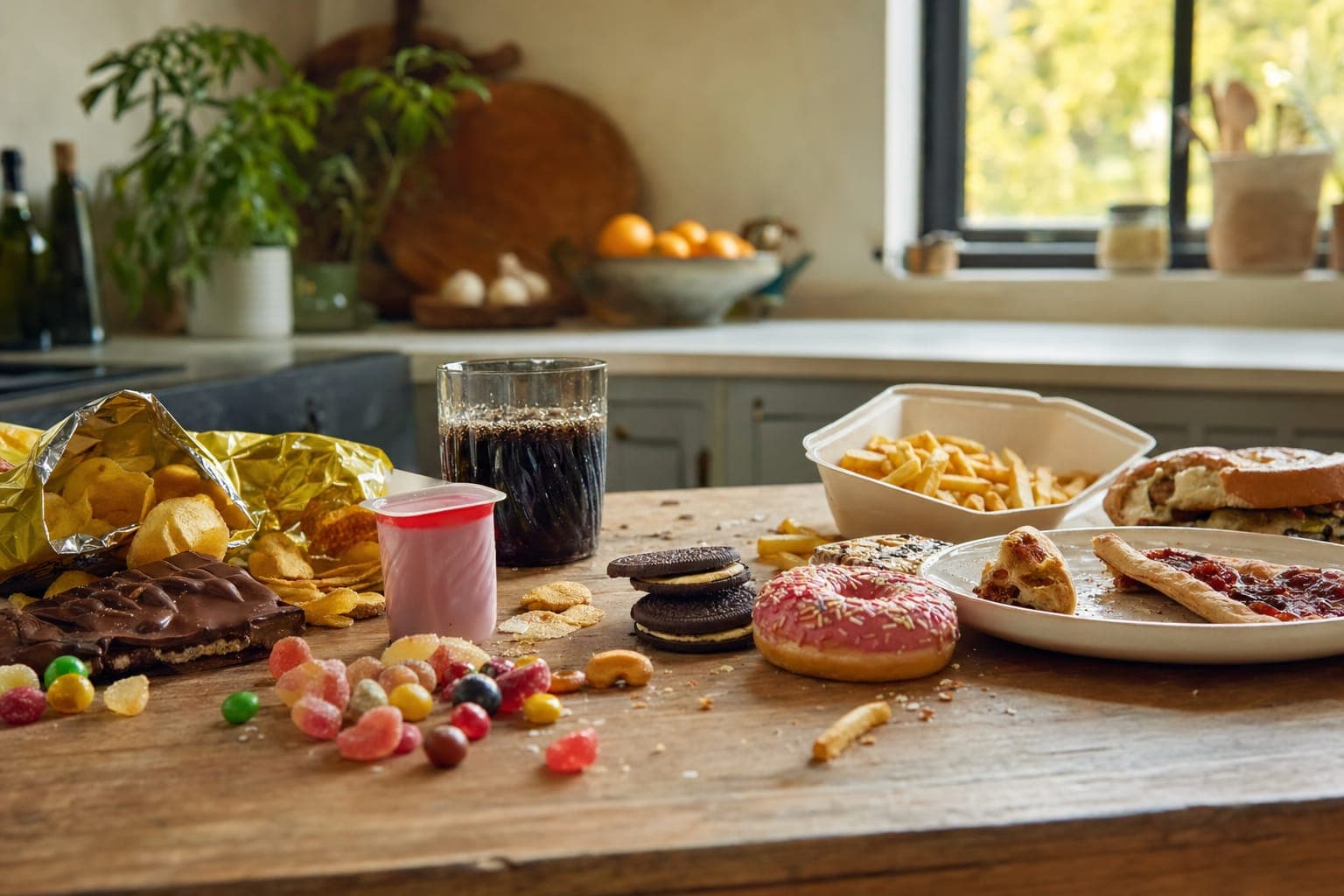
Ultra-Processed Food: What It Does to Your Body
What ultra-processed food actually does to your body. From appetite dysregulation to inflammation, here's why it matters.
Ancestral
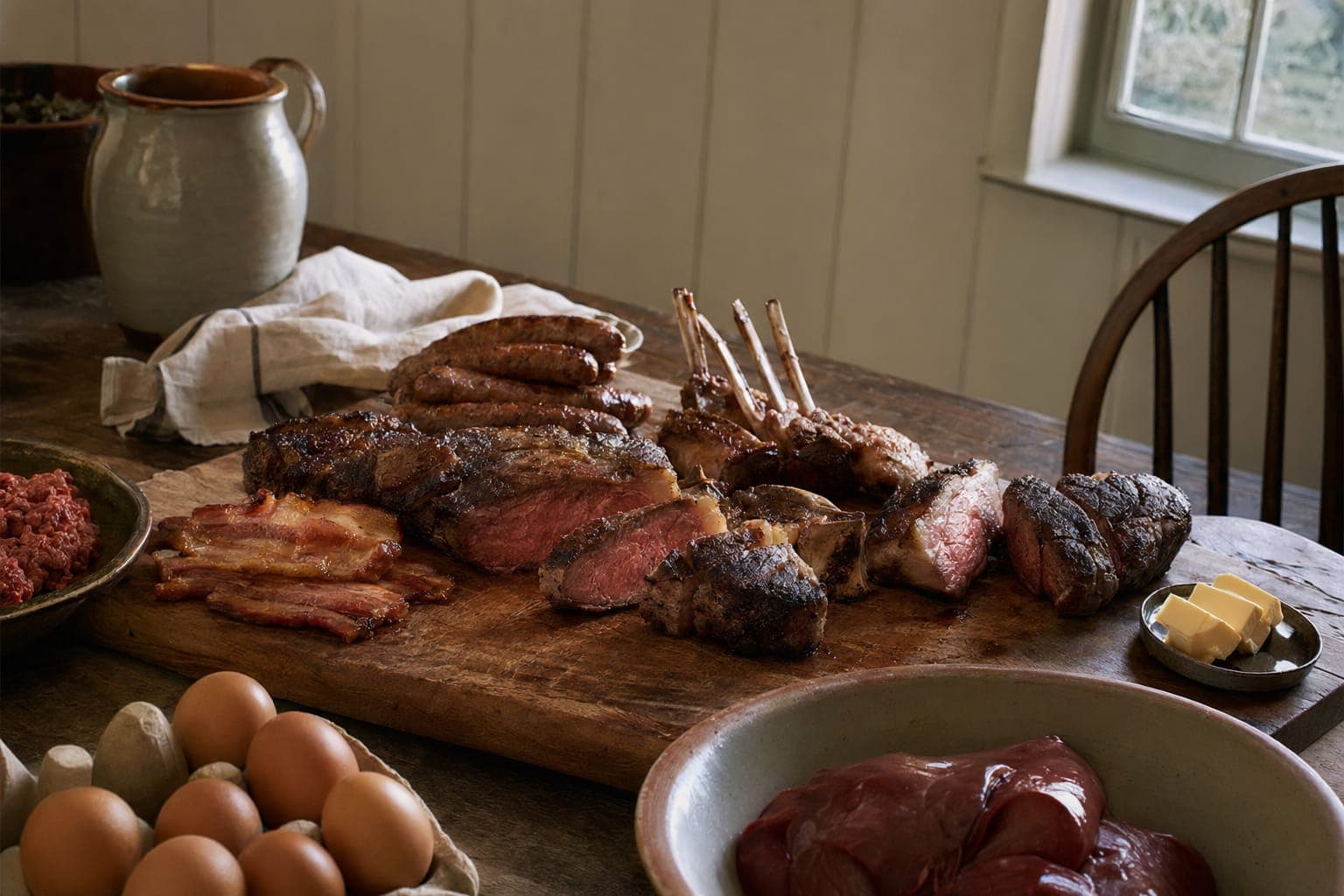
The Carnivore Diet: An Honest Assessment
An unbiased look at the carnivore diet. What works, what doesn't, who might benefit, and why fibre remains a conversation worth having.
Ancestral
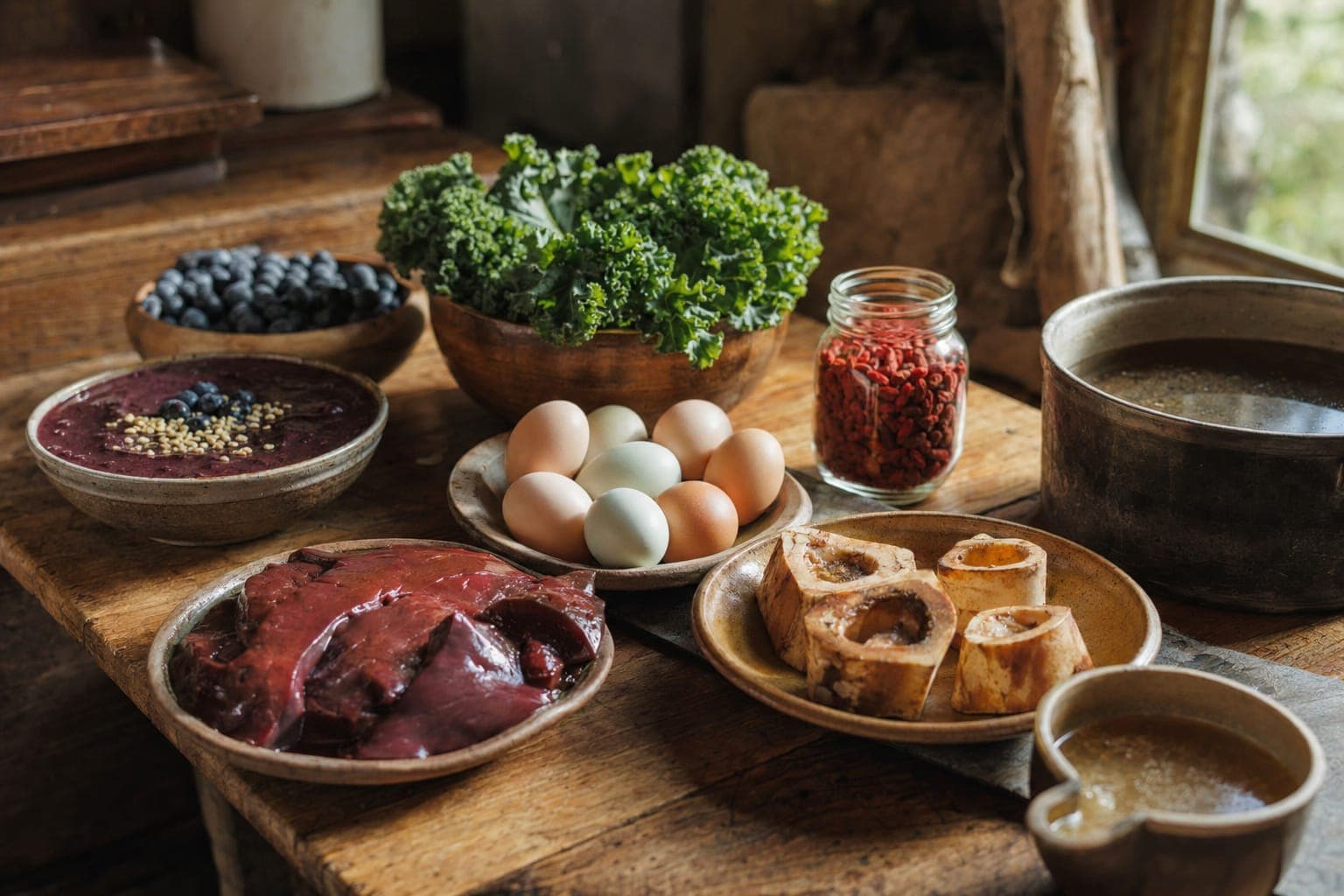
Are 'Superfoods' Just Marketing? A Nutrient Density Reality Check
Acai, goji and kale dominate wellness marketing, but how do nutrient-dense superfoods compare to liver, eggs and bone broth? See what the data shows.
Real food, made effortless
Bring it into my routineA few ways to use it
All recipes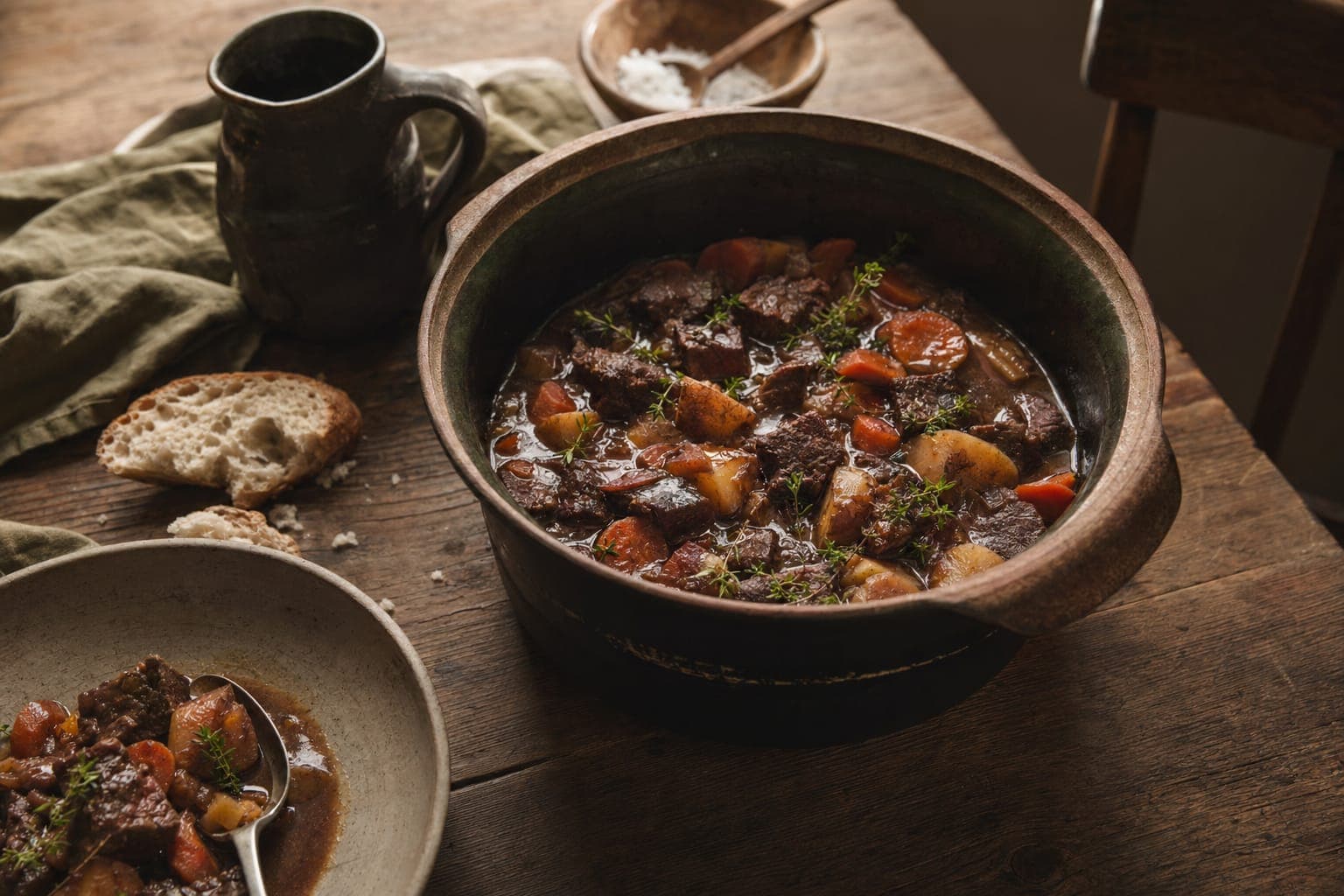
Collagen-Rich Beef Stew: Slow-Cooked Nourishment
Beef stew that delivers collagen from connective tissue and bone broth. Winter comfort food that actually nourishes. Simple slow cooker recipe.
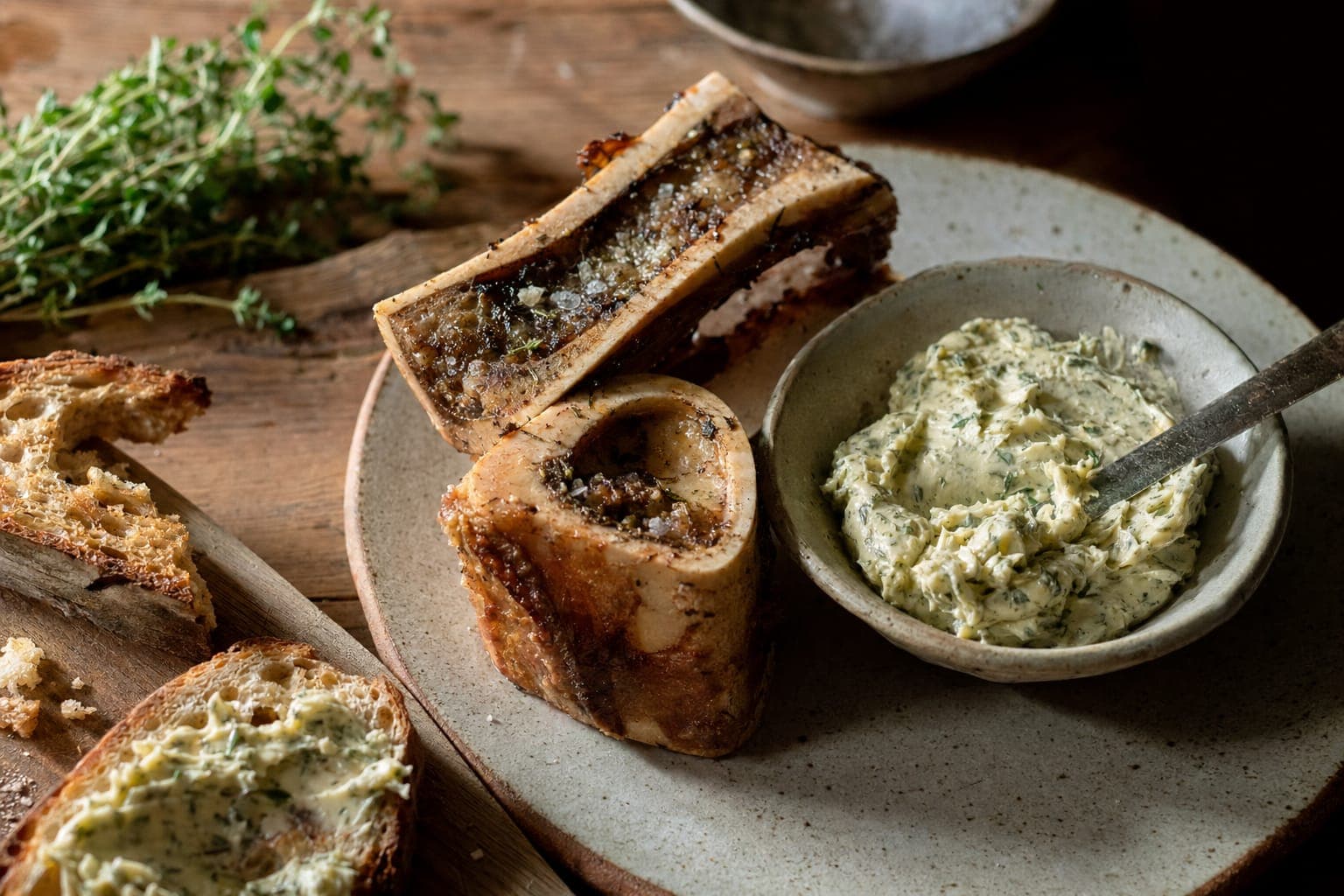
How to Make Bone Marrow Butter
Roast grass-fed marrow bones, scoop the marrow, and mix with butter and herbs. A nutrient-dense spread with fat-soluble vitamins.
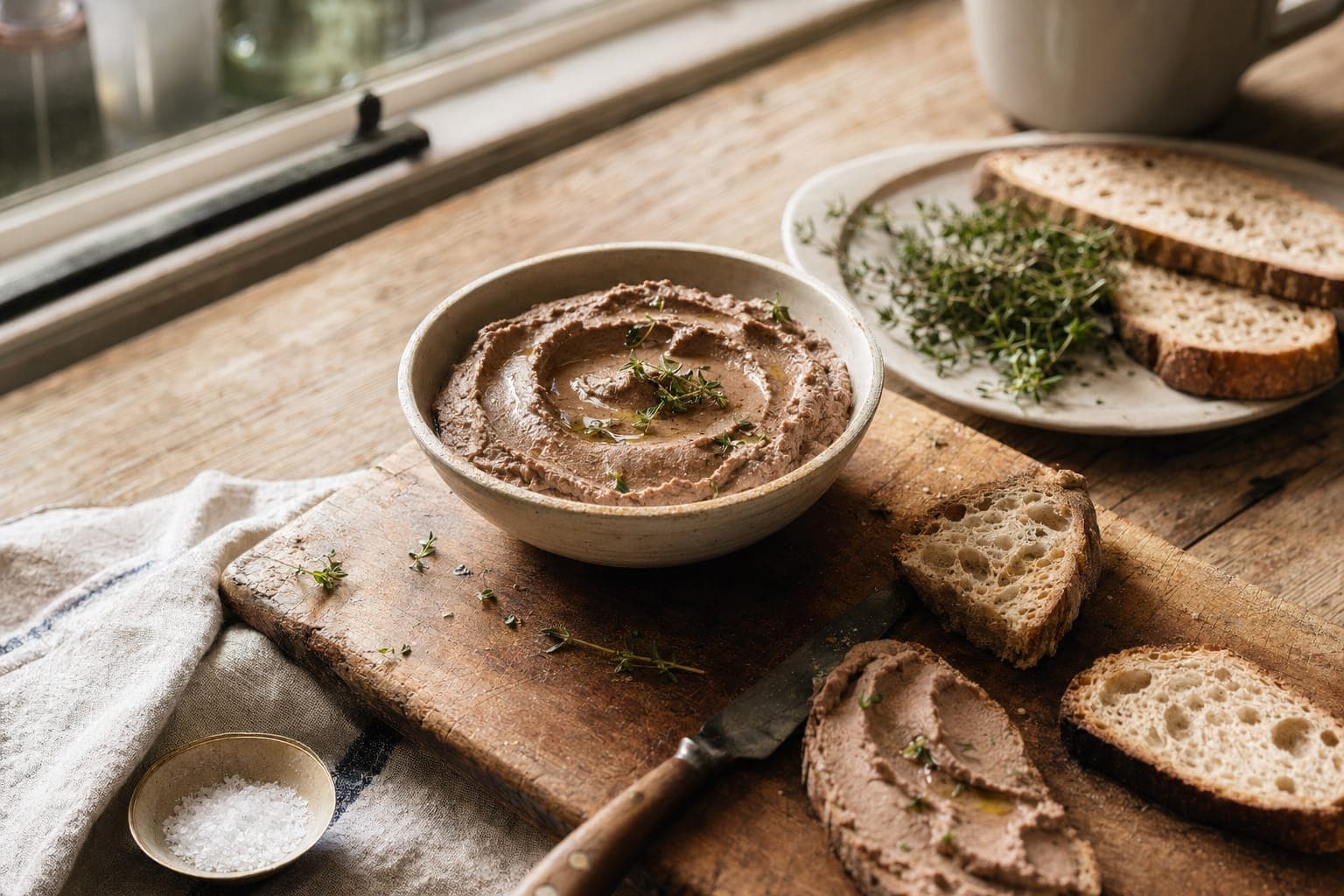
Liver Pate for Beginners: A Gentle Introduction to Organ Meats
Simple liver pate recipe to start eating organ meats. Chicken liver, butter, and herbs. Gentle introduction to nutrient-dense whole foods.


 Join over 100,000+ members
Build a better food system with us
The Organised community is thousands of people choosing real food and backing the farmers who grow it, all of us trying to leave the world a little better than we found it. If that is what you care about too, you belong here.