The Weston A. Price Legacy: What He Discovered About Traditional Diets
In the 1930s, a Swiss dentist started travelling to remote places around the world. What he found in isolated villages would challenge everything modern nutrition claimed to know.
By Niall Kiddle, Founder, Organised

Reviewed by Pedro Rodrigues, Agronomist (farming and sourcing only) ·
8 min read · Published · Updated · 4 cited sources
Makers of the Organised Daily blend, a grass-fed beef organ supplement from regenerative UK farms

In the 1930s, a Canadian-born dentist named Weston Andrew Price became obsessed with a question that modern nutrition still hasn't properly answered. He noticed something troubling in his dental practice: children born to immigrant families in the United States showed dramatically more tooth decay, gum disease, and skeletal deformities than their parents, who had grown up in their countries of origin. The shift happened in a single generation.
Price didn't accept the mainstream explanation of the time. Instead, he did something radical. He stopped his practice, packed his bags, and spent a decade travelling to some of the most isolated places on Earth, studying the teeth and health of people who had never eaten processed food.

Who was Weston A. Price?
Weston Price was not a radical. He was a respected dentist, a researcher, a Fellow of the American Dental Association. He wasn't rejecting science,he was following it rigorously. What he did was observe, document, measure, and publish his findings in peer-reviewed journals.
Between 1931 and 1948, Price and his wife travelled to fourteen distinct indigenous cultures across the world. He brought portable equipment to measure dental health, took photographs, collected blood samples, and analysed the diets of these populations with scientific precision. The data he gathered would eventually be compiled into his 1939 book, "Nutrition and Physical Degeneration", a tome so thorough that it stands as one of the most comprehensive anthropological studies of traditional food systems ever conducted.1
Price wasn't looking for ancestral secrets to validate. He was following the data where it led. What he found was uncomfortable: modern nutrition had gotten something fundamentally wrong.
The people he studied weren't living in a romantic pre-industrial paradise. They were simply eating the foods available to them. In some places, that meant mostly animal products. In others, plants dominated. The diets varied wildly. Yet the health outcomes were remarkably consistent.
The dental crisis that started everything
When Price arrived in these remote villages, he expected to find dental problems. Primitive people, he assumed, must have primitive teeth. What he found instead shook the foundations of how he understood health.
The isolated populations he studied had nearly perfect teeth. No cavities. No gum disease. No crowding or misalignment. The dental health was so consistent that Price began to suspect something profound was happening at the nutritional level.
But here's where it got interesting. In every culture he visited, as soon as modern foods arrived,white flour, refined sugar, canned goods, vegetable oils,the health collapsed. Within one generation, the children of parents who switched to modern diets had cavities, crowded teeth, and the skeletal deformities of malnutrition. The shift was visible. Rapid. Measurable.
Price photographed before-and-after comparisons within families. Siblings raised on traditional foods had perfect facial structure, wide dental arches, and no cavities. Their younger siblings, born after the family had adopted modern convenience foods, had crowded teeth, narrow faces, and dental disease.
This wasn't slow generalised decline. This was a generation-to-generation collapse in skeletal health and dental integrity, directly correlated with the abandonment of traditional foods.
What he discovered in 14 indigenous cultures
Price studied the diets of the Maori of New Zealand, the Inuit of Canada and Alaska, various Aboriginal groups in Australia, Pacific Islanders, Alpine Swiss herders, Lapp herders, African tribes, and Native American groups. The diets were astonishingly different from each other.
The Inuit ate almost exclusively meat and fish, with organ meats as dietary staples. The Alpine Swiss herders ate dairy products, full-fat milk, cheese, and limited plant foods. African pastoralist tribes ate primarily milk, blood, and meat from their animals. The Pacific Islanders ate fish, coconut, and seafood, with seasonal fruits. And yet all of them shared something crucial: exceptional health and dental integrity.
What these diets had in common wasn't the specific foods. It was the nutritional density and the absence of processed foods. They were eating whole foods. Often, they were eating the foods modern nutrition told us to avoid: fat, organ meats, full-fat dairy, and foods from animal sources.
Price collected and analysed blood samples from these populations. He found that compared to modern populations eating Western diets, these traditional cultures had significantly higher levels of fat-soluble vitamins in their blood. He measured vitamins A and D, and he found something else, something unnamed, something that seemed to protect against dental decay and support bone development.
The mysterious nutrient: Activator X
Price called this unknown substance "Activator X" because he could identify its effects but not its chemical nature. He noticed it was always present in the traditional diets of healthy populations. It was present in grass-fed butter. It was present in organ meats from grass-fed animals. It was present in the oily fish that certain populations consumed. It was absent from modern processed foods.
Modern science eventually identified Activator X as vitamin K2, a fat-soluble vitamin produced by animals eating grass and green foods.2 K2 works in concert with vitamins A and D to direct calcium to the right places in the body: into bones and teeth, not into soft tissue where it causes disease.3
Price noted that in every traditional culture, there was usually one "sacred food", a nutrient-dense food reserved for pregnant women, nursing mothers, and children. The Inuit reserved the organs of predatory fish. The Pacific Islanders held certain fish organs in high regard. The African pastoralists prioritised dairy from the cows that grazed on lush pastures. The Alpine herders ate butter from summer pastures when the cows were grazing on vitamin-rich vegetation.
Every traditional culture had intuitively discovered the same principle: certain foods, especially organ meats and fat from grass-fed animals, were nutritionally superior and worth protecting, because they held the nutrients needed for human development.
Get ancestral nutrition guides, free
Two short reads a week on traditional ways of eating, examined with modern evidence.
By signing up you agree to receive emails from us. No spam, unsubscribe anytime.
Fat-soluble vitamins and traditional foods
Price's research highlighted something modern nutrition struggled to explain: the critical importance of fat-soluble vitamins A, D, E, and K in preventing disease and supporting development.
These vitamins aren't found in plant foods in their active form. Vitamin A, the real form your body needs, is found in liver, in egg yolks from pastured hens, in full-fat dairy from grass-fed cows. Carotenoids from plants can be converted to vitamin A, but the conversion rate is poor and highly variable.4 Your body needs dietary vitamin A, the kind that doesn't require conversion.
Vitamin D comes from fatty fish, from the sunlight on exposed skin, and from organs and fat from animals that consumed foods rich in vitamin D. The farmed salmon and canned tuna at your supermarket don't compare in vitamin D content to the wild-caught fish that Price documented in the diets of healthy populations.
Vitamin K2 comes almost exclusively from animal foods, particularly the organs and fat of animals grazing on fresh green vegetation. Modern agriculture, with its grain-fed animals and pasteurised dairy, has stripped this nutrient almost entirely from the food supply.
These fat-soluble vitamins don't work independently. They work together, as a team. Vitamin K2 directs calcium. But it does this work more effectively when vitamins A and D are also present in abundance. When one is depleted, the others can't function optimally.
Why the modern world threw it away
Price's research was meticulous, published, and entirely grounded in observable dental and physical health. And yet, by the 1950s, it had been largely abandoned by mainstream nutrition.
Instead of following Price's evidence, the Western nutrition model became increasingly focused on isolated nutrients, convenience, and agricultural efficiency. Grain production was subsidised. Seed oils replaced traditional fats. Dairy was pasteurised and homogenised, destroying many of its beneficial compounds. Meat became something to consume in moderation, not a staple.
The fat-soluble vitamin story was especially troublesome to mainstream nutrition. Saturated fat became enemy number one, even though traditional cultures ate plenty of it and remained healthy. The idea that butter and organ meats were nutritional gold became unfashionable. A new narrative took hold: fat was dangerous, cholesterol was the villain, and the solution was to eat less animal products and more grain-based processed foods.
Price's work didn't disappear entirely. It was preserved by smaller communities of practitioners, naturopaths, and thoughtful nutritionists who couldn't ignore the data. But it wasn't mainstream. Mainstream nutrition took the opposite path.
Fifty years later, we're watching the same pattern Price documented in the 1930s play out again. Modern children have crowded teeth, narrow faces, and skeletal deformities at unprecedented rates. The shift toward processed food continues. The nutrients Price identified as essential are scarcer in the modern food supply.


1 of 9
Daily blend
100,000+ thriving families4.9 on Trustpilot
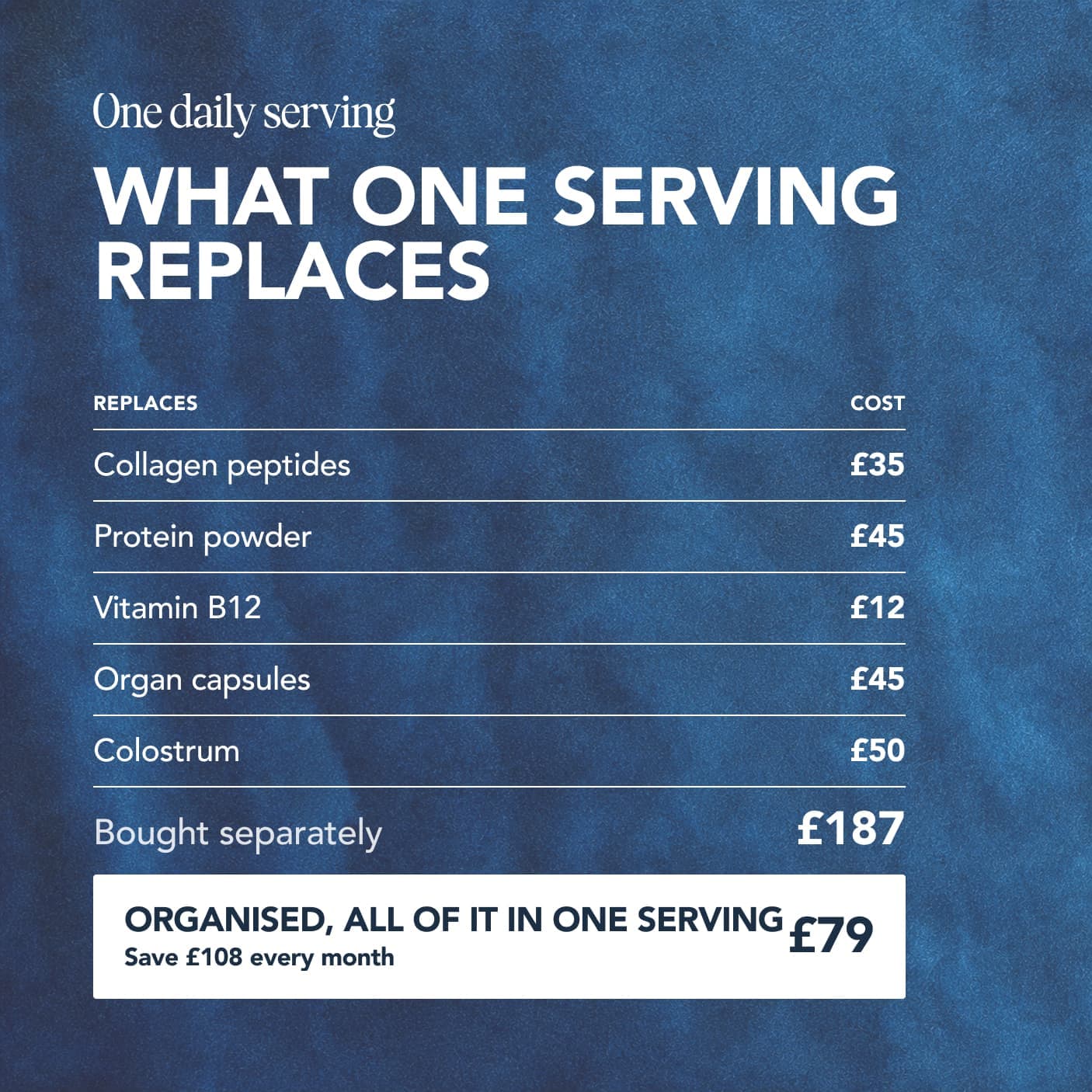
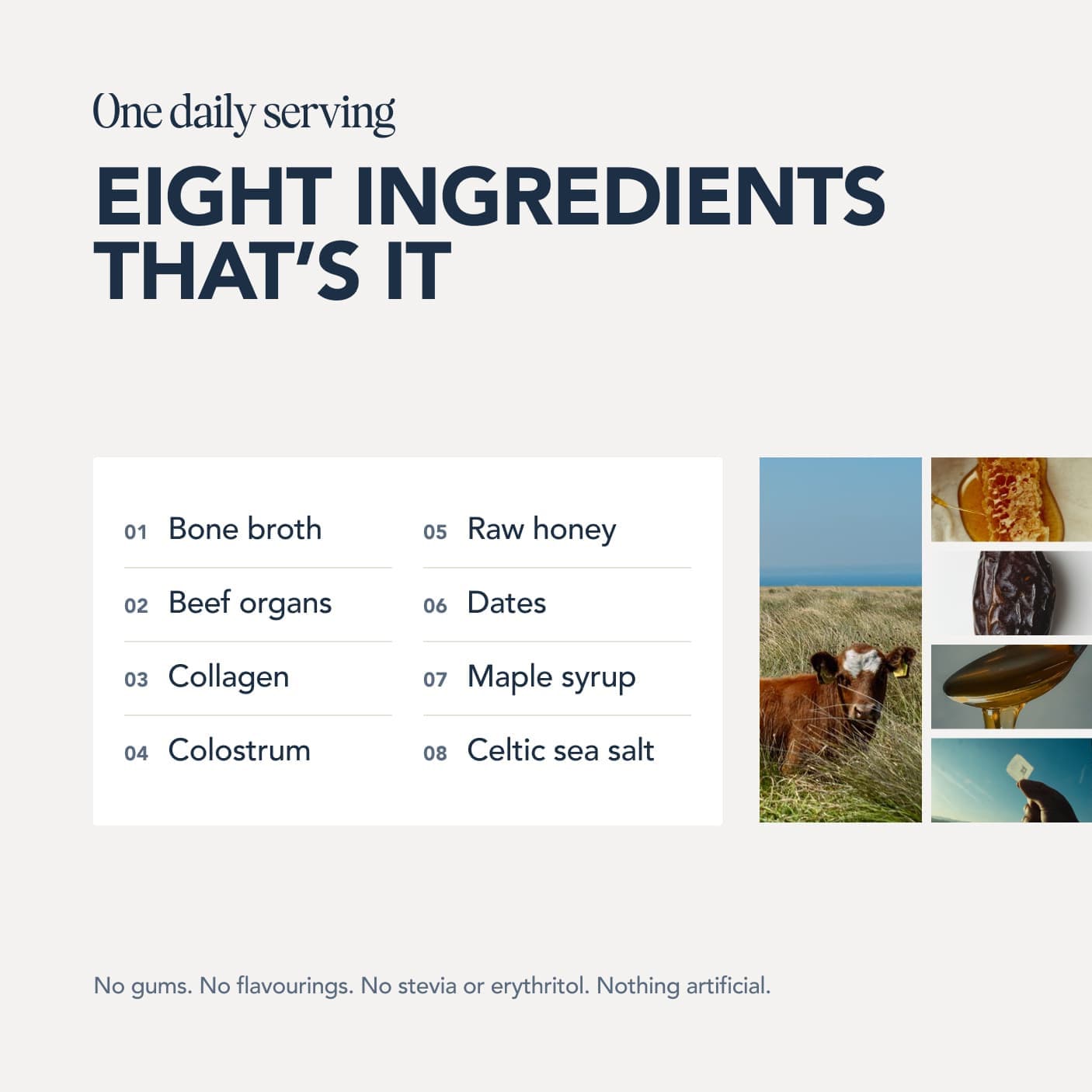
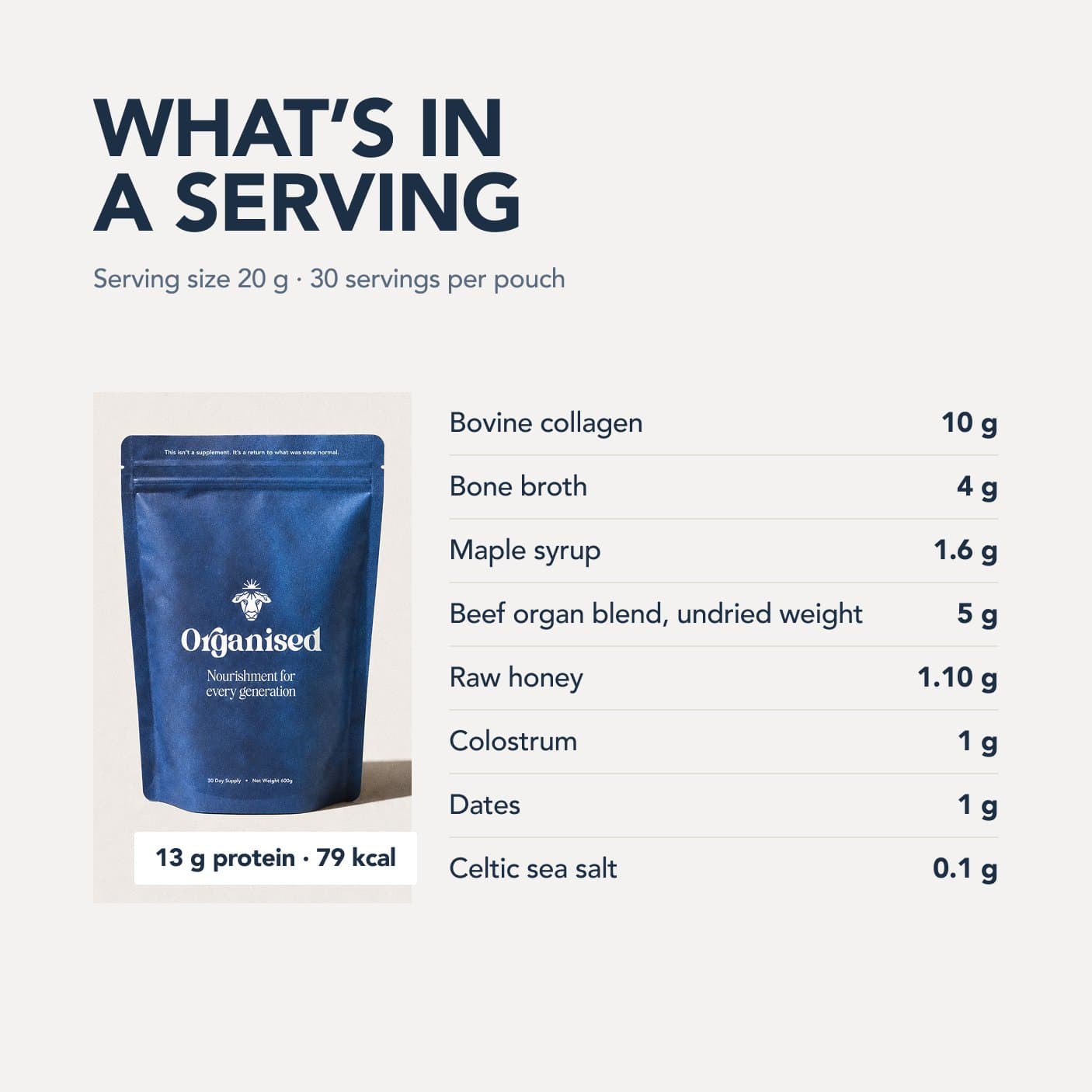
Eight real ingredients built around grass-fed beef organs, collagen and colostrum. Nothing synthetic added.
Free with your first order, worth £38. Plus £10 off the pouch with a subscription.

Free UK shipping · Made in England · 100 day money back guarantee on your first pouch · Skip, pause or cancel anytime
What Price's legacy means now
Price's research is increasingly relevant, not because it was ancient wisdom (it was rigorous science), but because the problems he identified have only intensified. He documented that whole foods from animals and plants in their natural state contained nutrients essential for human health and development. Modern nutrition has mostly moved in the opposite direction.
The dental health Price observed wasn't the result of luck or genetics. It was the direct result of nutrient density and the presence of fat-soluble vitamins in adequate amounts. Remove those foods, replace them with grain, sugar, and processed oils, and the health outcome shifts within a single generation.
You don't need to travel to remote villages to understand Price's findings. You only need to pay attention to the health of the people eating whole foods versus those eating processed foods. The pattern is unmistakable. Nutrients matter. Food quality matters. And the nutrients that traditional cultures treated as sacred,organs, fat from grass-fed animals, and whole foods in their natural state,matter more than modern nutrition has been willing to admit.
If you've noticed that despite eating according to modern nutritional guidelines, your teeth are crowding, your children's faces are narrow, or your health simply isn't what it should be, you're seeing the same problem Price identified ninety years ago. The solution, as it always was, is a return to the foods that support human flourishing: whole foods, nutrient density, and the fat-soluble vitamins that traditional cultures understood intuitively.
References
Every source below was checked on 27 August 2026. Each PubMed, PMC and DOI identifier was resolved against NCBI or Crossref, and what it opens is printed under the citation, so you can see the link goes where the citation says without leaving the page. Where a citation and its identifier disagreed, the citation was corrected to the record or the reference was deleted along with the sentence marker that pointed at it, and where the resolved paper turned out not to support the sentence, the sentence was cut back to what it does support. Borrowed authority is worse than none, because it looks like rigour.
- Price WA. Nutrition and Physical Degeneration. New York: Hoeber; 1939. (Reprinted by the Price-Pottenger Nutrition Foundation; full text via Project Gutenberg Australia: https://gutenberg.net.au/ebooks02/0200251h.html).
- Masterjohn C. On the trail of the elusive X-Factor: A sixty-two-year-old mystery finally solved. Wise Traditions. 2007. https://www.westonaprice.org/health-topics/abcs-of-nutrition/on-the-trail-of-the-elusive-x-factor-a-sixty-two-year-old-mystery-finally-solved/ The biochemical identity of vitamin K2 (specifically MK-4) and its role in animal-derived fats is well-established in the broader literature: see Schurgers LJ et al. and the matrix Gla protein literature cited at ref 3.
- van Ballegooijen AJ, Pilz S, Tomaschitz A, Grubler MR, Verheyen N. The Synergistic Interplay between Vitamins D and K for Bone and Cardiovascular Health: A Narrative Review. International Journal of Endocrinology. 2017;2017:7454376. See also Maresz K. Proper Calcium Use: Vitamin K2 as a Promoter of Bone and Cardiovascular Health. Integrative Medicine. 2015;14(1):34-39. https://pmc.ncbi.nlm.nih.gov/articles/PMC4566462/ See also El Asmar MS, Naoum JJ, Arbid EJ, on Matrix Gla Protein and vitamin K2: https://pmc.ncbi.nlm.nih.gov/articles/PMC4052396/Checked 27 August 2026: PMC4566462 opens Maresz K, Proper Calcium Use: Vitamin K2 as a Promoter of Bone and Cardiovascular Health. Integr Med (Encinitas) 2015;14(1):34-9. PubMed indexes it as: Review. PMC4052396 opens El Asmar MS, Naoum JJ, Arbid EJ, Vitamin k dependent proteins and the role of vitamin k2 in the modulation of vascular calcification: a review. Oman Med J 2014;29(3):172-7. PubMed indexes it as: Review.
- National Institutes of Health, Office of Dietary Supplements. Vitamin A and Carotenoids: Fact Sheet for Health Professionals. https://ods.od.nih.gov/factsheets/VitaminA-HealthProfessional/ [accessed May 2026]. Specifically describes individual variability in beta-carotene to retinol conversion, with provitamin A activity ratios for foods.
Corrections
What this page used to say, and why it no longer says it. Corrections are dated and are never removed, because deleting the record of an error is a second error. Every guide we have corrected is listed at our corrections log.
- 27 August 2026. Reference 3 credited a vitamin K2 link to Theuwissen et al. That record is by El Asmar, Naoum and Arbid. Corrected.
Who wrote and reviewed this guide
Niall Kiddle
Author · Founder, Organised
Niall is the founder of Organised. He started the company in 2024 after fixing his own health the slow way: in 2022 he swapped a cupboard of synthetic supplements for real food, raw milk, organ meats, bone broth and honey, and felt the difference within months.
Areas of expertise: Ancestral nutrition, Organ meats, Whole-food supplementation, Gut health, Regenerative sourcing
Read Niall's full profile
Pedro Rodrigues
Reviewer · Agronomist (farming and sourcing only)
Pedro is the agronomist Organised works with on farming and sourcing. His job on the guides is to keep the science honest: he reviews what we publish about soil health, regenerative agriculture, grazing and the way food is actually produced.
Areas of expertise: Regenerative agriculture, Agronomy, Soil health, Grass-fed farming, Food sourcing
Reviewed this guide on
Read Pedro's full profileBrowse the guides library
All guidesKeep reading
Ancestral
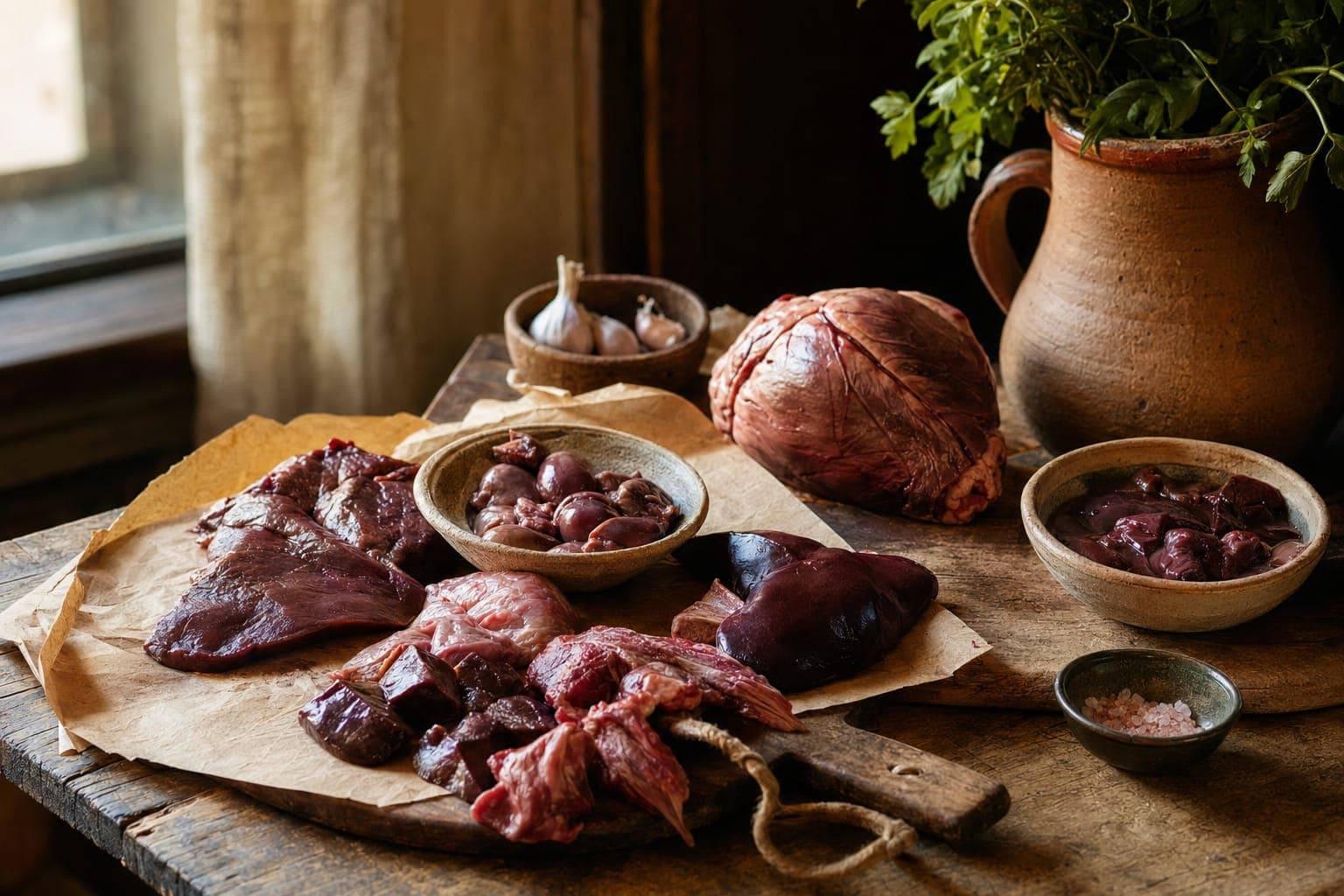
Why Every Traditional Culture Prised Organ Meats
Discover why Inuit, Maasai, and Native American cultures reserved organ meats for hunters and elders. The nutritional truth modern dietitians have overlooked.

Ancestral
This Is Not a Supplement. It's Whole Food Nutrition.
Why whole foods work better than supplements. Understanding food matrix, nutrient synergy, and why isolated nutrients fall short.
Ancestral
What Does 'Bioavailable' Actually Mean?
What does bioavailable really mean? How your body absorbs nutrients, what interferes with absorption, and why some foods deliver more nutrition than others.
Real food, made effortless
Bring it into my routineA few ways to use it
All recipes
Organ Bolognese: The Family Dinner That Heals
Practical organ meat recipe using fresh beef liver and heart. Family-friendly bolognese that bridges supplements to whole food.

The Organised Recovery Smoothie for After Exercise
A recovery smoothie made with beef protein, raw milk, frozen berries, collagen, and honey. Optimal nutrition in the 30-minute window after exercise.
Gut-Healing Marshmallows with Collagen and Raw Honey
Learn to make gut-healing marshmallows with collagen and raw honey. A shareable treat that sneaks nutrition into every bite. Easy recipe with video tips.


 Join over 100,000+ members
Build a better food system with us
The Organised community is thousands of people choosing real food and backing the farmers who grow it, all of us trying to leave the world a little better than we found it. If that is what you care about too, you belong here.