Stevia, Erythritol and the Gut Microbiome
Stevia is natural. Erythritol is natural. Neither is food. And your gut bacteria know the difference.

By Niall Kiddle, Founder, Organised

Reviewed by Pedro Rodrigues, Agronomist (farming and sourcing only) ·
6 min read · Published · Updated · 5 cited sources
Makers of the Organised Daily blend, a grass-fed beef organ supplement from regenerative UK farms
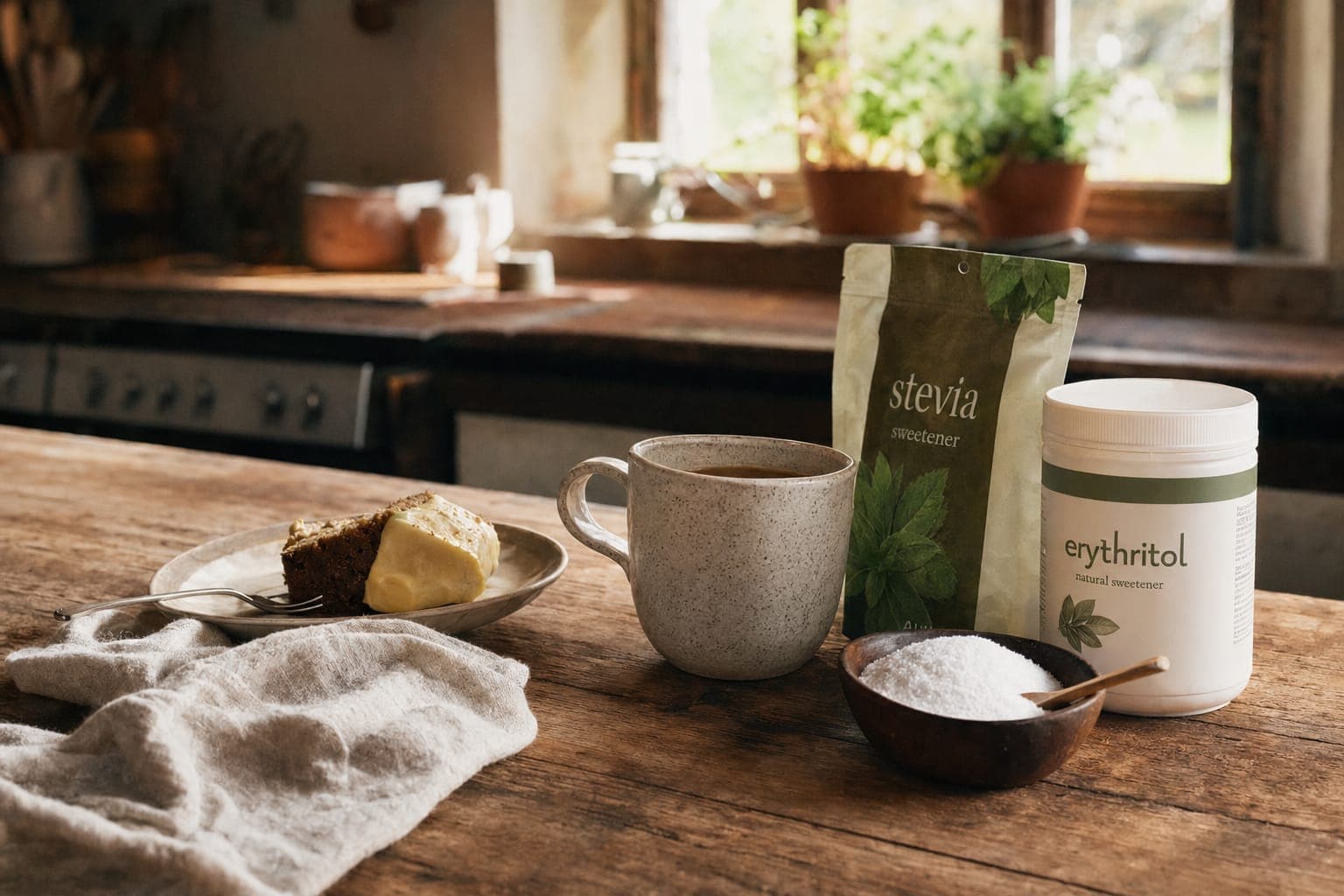
The push toward artificial sweeteners has a reasonable premise. Sugar damages health. Blood sugar spikes cause disease. So let's use something sweet that doesn't spike blood sugar. The logic is sound. The execution is broken.
Stevia and erythritol are marketed as the answer. They're not chemicals, the marketing says. They're natural plant extracts. Your body won't even absorb them, so they're safe. The promises are comforting. The reality is more complex.
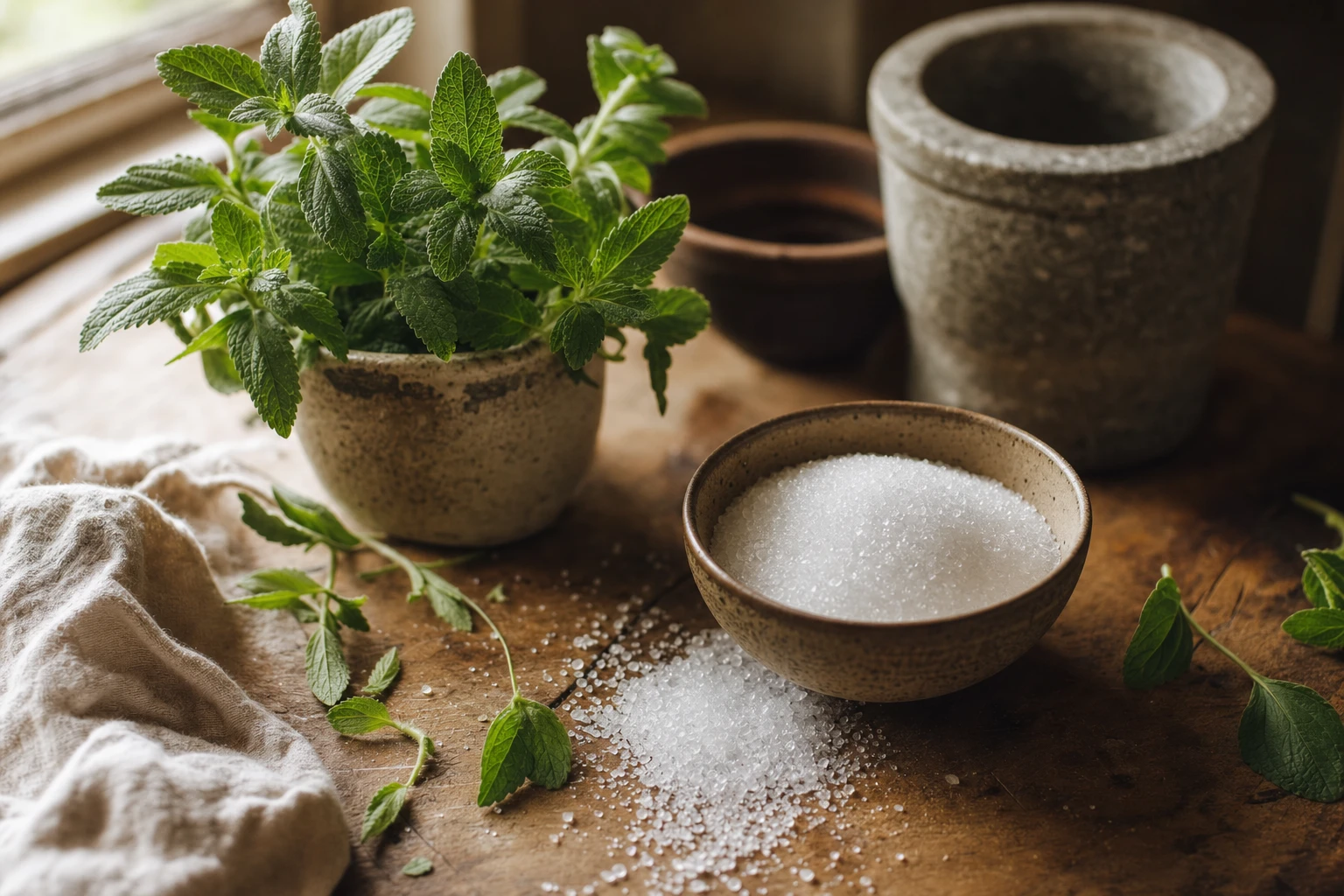
Natural does not mean your body recognises it
Stevia comes from a plant. That's true. Erythritol is made by fermenting glucose with fungi. That's also technically true. Neither is synthetic. Both are natural in the strictest sense.
But your body doesn't care whether something is natural. Your body cares whether it recognises something as food. And your body does not recognise stevia or erythritol as food.
Stevia is a glycoside compound that tastes sweet but isn't sugar. Your taste buds signal sweetness. Your digestive system doesn't know what to do with it. It's not being used for energy. It's not being metabolised normally. It's being treated as something foreign.
Erythritol is a sugar alcohol. Your small intestine doesn't absorb it well. So it passes into your large intestine undigested. Your colon has to deal with it. And your gut bacteria have to deal with it.
The fact that something is natural doesn't make it good for you. Arsenic is natural. Ricin is natural. Hemlock is natural. Nature is full of compounds that are toxic or indigestible to humans. The question is not whether something is natural. The question is whether your body recognises it as food.
Just because your body doesn't absorb stevia or erythritol doesn't mean they're safe. It means your body rejects them as foreign.

What sweeteners do to your microbiome
Your gut bacteria are part of your immune system. They produce neurotransmitters that affect mood and cognition. They produce short-chain fatty acids that support gut health. They protect against pathogens. They're not just residents in your gut. They're partners in your health.
Stevia and erythritol are not food for your gut bacteria. Your beneficial bacteria evolved eating the foods your ancestors ate: fibre, resistant starch, fermented foods, whole plants. They didn't evolve eating stevia or erythritol.
When sweeteners enter your colon undigested, your bacteria have to process them. Some bacteria thrive on the sweetener. These are often not the beneficial species. The opportunistic bacteria, the ones you don't want thriving, may actually prefer erythritol.
Research shows that erythritol can increase populations of undesirable bacteria whilst decreasing beneficial species.1 It's a selective pressure that favours dysbiosis. Your microbiome becomes less resilient. Pathogenic bacteria have more room to proliferate.
Stevia has been shown to alter the composition of the microbiome in ways that reduce beneficial bacteria.2 The mechanism isn't fully understood, but the effect is clear. Stevia changes the population of your gut bacteria in ways that are less healthy.
Over time, chronic dysbiosis leads to intestinal permeability, immune dysregulation, and metabolic dysfunction. The sweetener is cheap, calorie-free, and harmless in the moment. But it's damaging to the infrastructure that keeps you healthy.
Stevia and erythritol are not metabolised as food. They're processed as foreign compounds. Your microbiome pays the price.
The insulin response you don't see
The marketing for these sweeteners emphasises that they don't spike blood sugar. That's true. But it doesn't mean they don't affect insulin.
Insulin response is not entirely dependent on blood glucose. Your gut bacteria produce compounds that signal insulin secretion. Your taste buds trigger insulin responses. Your digestive tract anticipates what's coming and preps insulin in advance.
When you consume something that tastes sweet but isn't providing calories, your body is confused. It releases insulin in anticipation of sugar. The sugar never arrives. Now you have insulin without glucose. Your blood sugar actually drops. You feel hungry. You crave more food.
This creates a metabolic dysfunction. Your insulin response is trained to trigger at the taste of sweetness, even when no calories arrive. This is exactly the opposite of what you want. You want your insulin to respond to actual nutrition, not to phantom sweetness.
Chronic consumption of sweeteners without calories actually increases insulin resistance.4 Your body becomes less sensitive to insulin signalling because the signal (sweetness) is not matched by the normal nutritional consequence (calories and nutrients).
Some research suggests that sweeteners may actually cause weight gain because of this mechanism.3 You're triggering hunger without providing satiety. You end up eating more.
Sweeteners don't spike blood sugar, but they confuse your insulin system and trigger hunger. That's not a win.

Get ancestral nutrition guides, free
Two short reads a week on traditional ways of eating, examined with modern evidence.
By signing up you agree to receive emails from us. No spam, unsubscribe anytime.
Why whole foods are better
If you need sweetness, use honey, maple syrup, or fruit. These are foods. Your body recognises them.5 Your digestive system knows what to do with them.
Honey contains trace minerals. Maple syrup contains polyphenols and antioxidants. Fruit contains fibre and vitamins alongside the carbohydrate. You're getting nutrition, not just sweetness.
Yes, these spike blood sugar. They contain real carbohydrates that your body metabolises normally. Your pancreas responds. Your blood sugar rises and then falls. The system works as evolved.
The question is not whether you spike blood sugar. All carbohydrates spike blood sugar. The question is whether the carbohydrate comes with cofactors, nutrients, and fibre that support your body's ability to process it.
Whole-food sweeteners come with their own support system. Honey comes with enzymes. Maple syrup comes with polyphenols. Fruit comes with fibre and vitamins. Your body processes these completely differently than isolated sweetness.
The dose matters, obviously. Eating honey constantly is not better than eating sweeteners constantly. But occasional honey, maple syrup, or fruit is infinitely better than chronic sweetener consumption.
Your body evolved eating honey and fruit, not stevia and erythritol. Feed it what it evolved eating.
The taste receptor confusion
Your taste receptors evolved to identify nutrients. Sweetness signals carbohydrates. Umami signals protein. Saltiness signals minerals. Your taste system is information gathering.
When you consume something that tastes sweet but provides no carbohydrates, you're lying to your taste system. You're training your taste receptors to mistrust sweetness. Over time, this creates a confused signal.
People who use stevia or erythritol chronically often report that foods taste different. Natural sweetness becomes less satisfying. Fruit tastes bland. Honey tastes cloying. The taste receptors have been recalibrated to expect the intense sweetness of artificial compounds.
This is a form of taste dysregulation. It's similar to what happens with processed foods. The more processed foods you eat, the less satisfying whole foods become. You need more and more stimulation to feel satisfied.
Using sweeteners teaches your body to crave sweetness without providing the nutrition that sweetness normally signals. You end up craving sweets more, not less.

1 of 9
Daily blend
100,000+ thriving families4.9 on Trustpilot
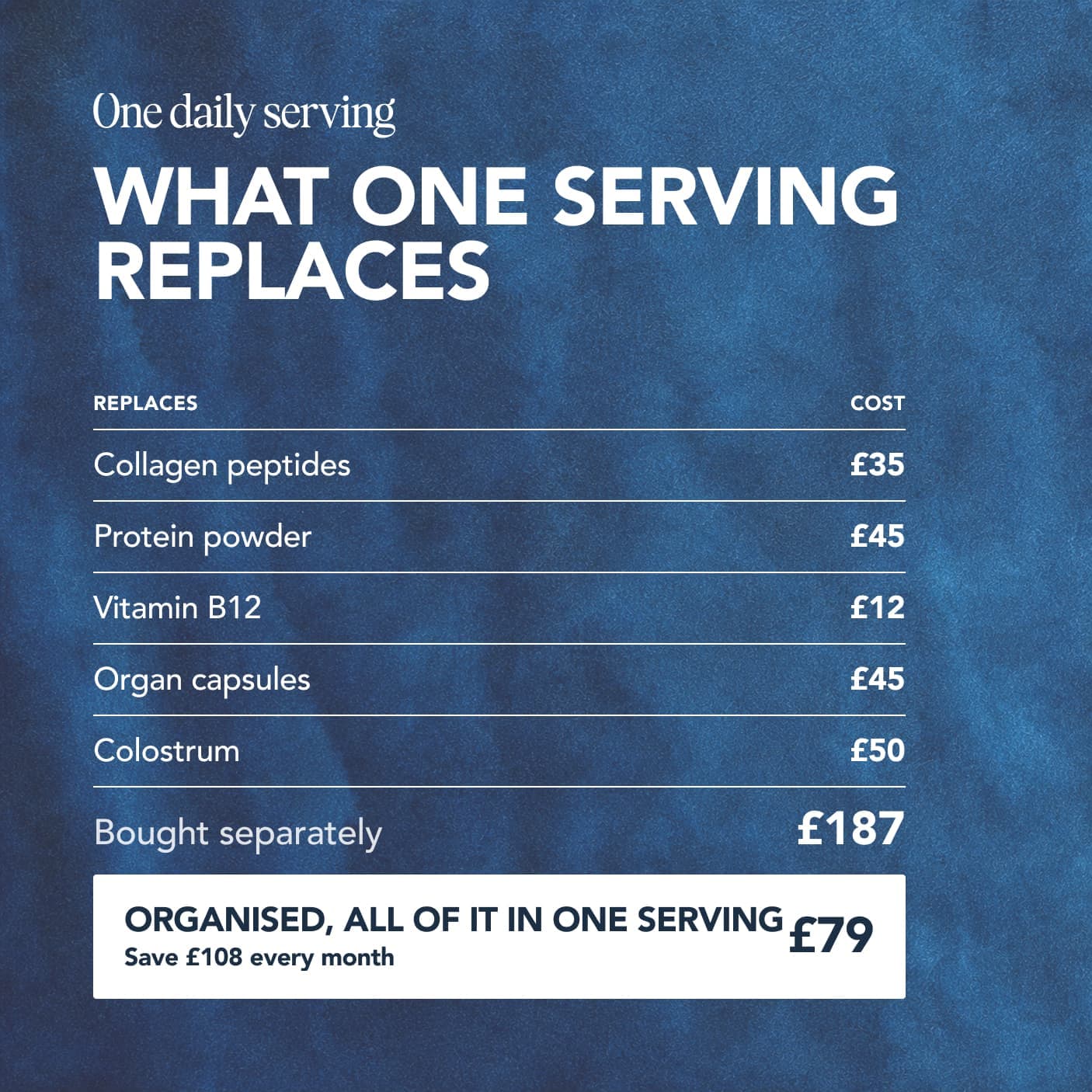
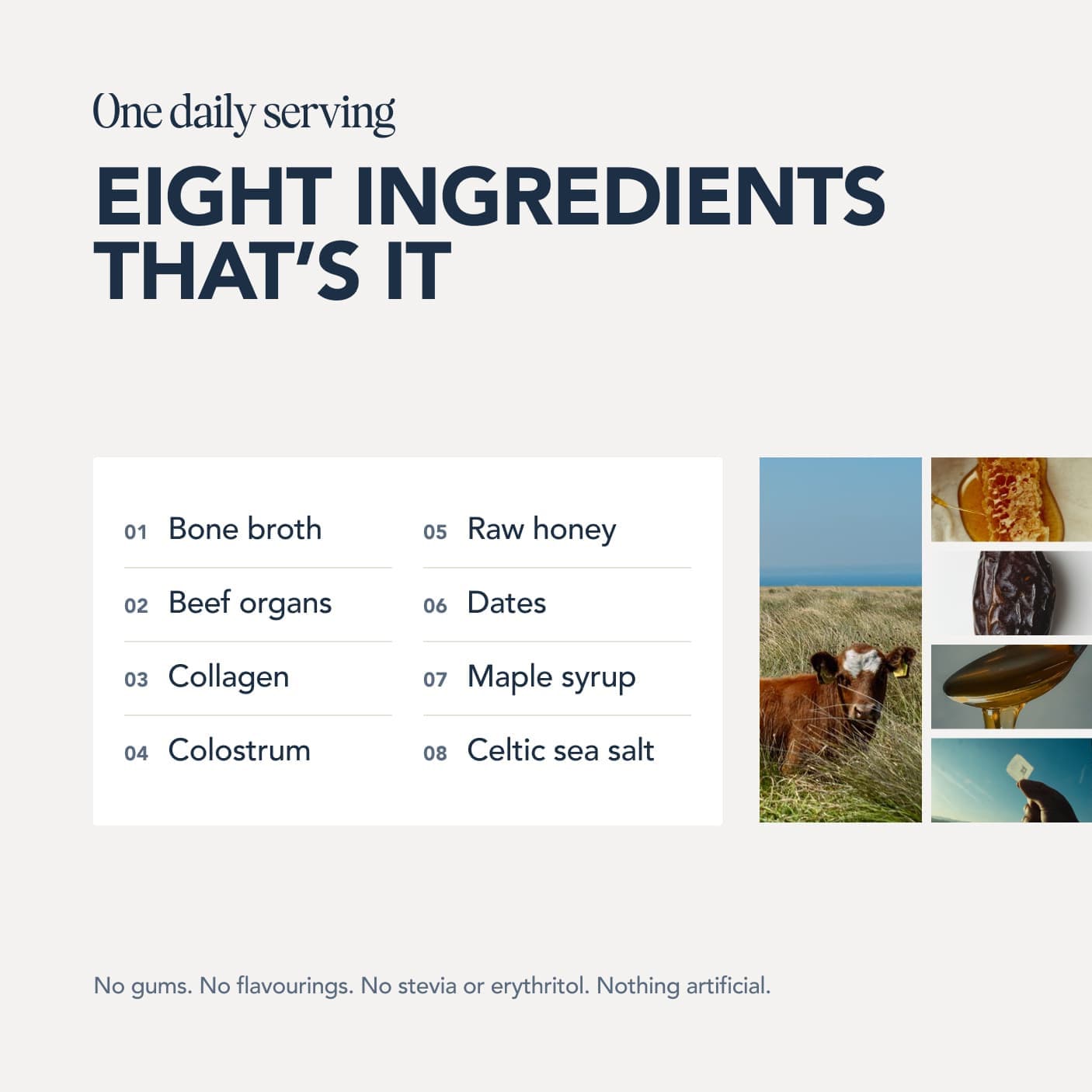
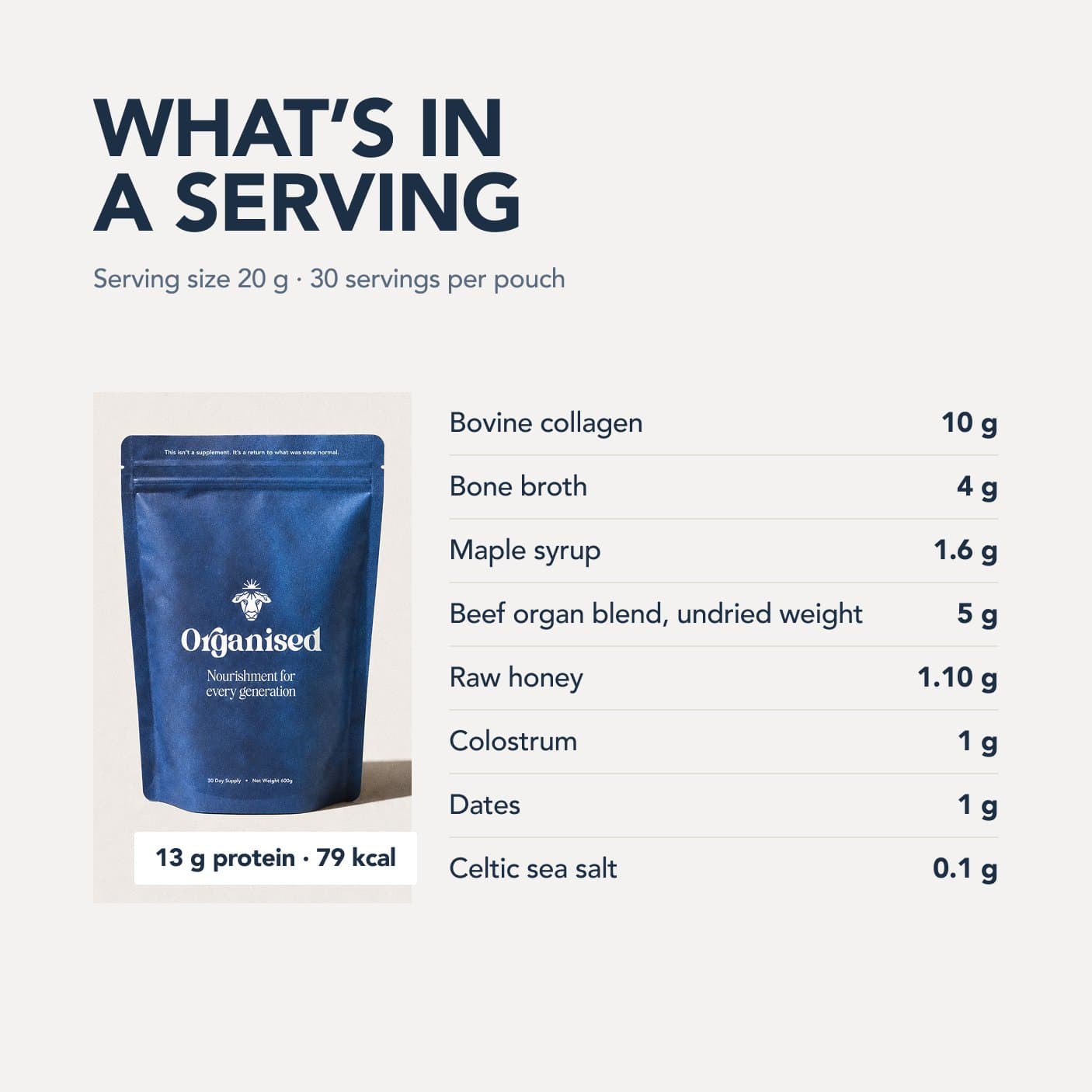
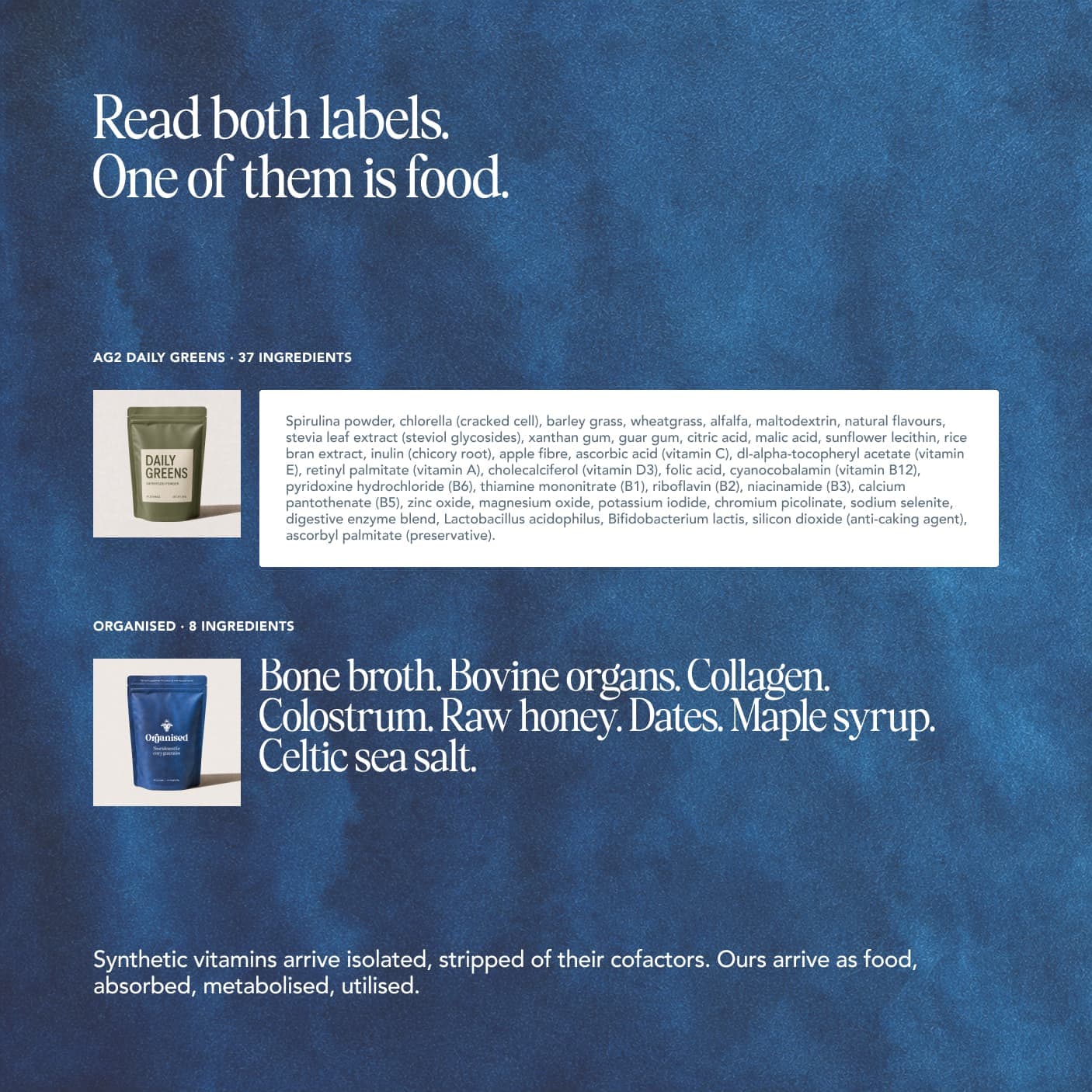
Eight real ingredients built around grass-fed beef organs, collagen and colostrum. Nothing synthetic added.
Free with your first order, worth £38. Plus £10 off the pouch with a subscription.

Free UK shipping · Made in England · 100 day money back guarantee on your first pouch · Skip, pause or cancel anytime
The bottom line
This pillar avoids stevia and erythritol not because they're toxic in the short term. They're not. They're avoided because they disrupt the microbiome, confuse insulin signalling, and dysregulate taste receptors. They're anti-nutrient in the strictest sense.
If you're using them to avoid sugar, stop. Use less honey or maple syrup instead. Your body recognises these as food. Your bacteria can process them. Your insulin system understands them.
If you need sweetness, eat whole fruit. It comes with fibre, vitamins, and minerals. Your body processes it completely. There is no clean sweetener that's sweeter than food and better for you than food.
The body is not asking for perfect optimisation. It's asking for recognition. Feed it whole foods. Everything else is pretending to be something it's not.
References
Every source below was checked on 27 August 2026. Each PubMed, PMC and DOI identifier was resolved against NCBI or Crossref, and what it opens is printed under the citation, so you can see the link goes where the citation says without leaving the page. Where a citation and its identifier disagreed, the citation was corrected to the record or the reference was deleted along with the sentence marker that pointed at it, and where the resolved paper turned out not to support the sentence, the sentence was cut back to what it does support. Borrowed authority is worse than none, because it looks like rigour.
- Witkowski M, Nemet I, Alamri H, et al. The artificial sweetener erythritol and cardiovascular event risk. Nature Medicine. 2023;29(3):710-718. https://pubmed.ncbi.nlm.nih.gov/36849732/Checked 27 August 2026: PMID 36849732 opens Witkowski M, Nemet I, Alamri H et al, The artificial sweetener erythritol and cardiovascular event risk. Nat Med 2023;29(3):710-718.The authors' own declaration, from the record: Dr. Hazen reports being named as co-inventor on pending and issued patents held by the Cleveland Clinic relating to cardiovascular diagnostics and therapeutics, being a paid consultant formerly for Procter & Gamble and currently with Zehna Therapeutics. He also reports having received research funds from Procter & Gamble, Zehna Therapeutics and Roche Diagnostics, and being eligible to receive royalty payments for … (abridged; the full declaration is on the record)
- Suez J, Korem T, Zeevi D, et al. Artificial sweeteners induce glucose intolerance by altering the gut microbiota. Nature. 2014;514(7521):181-186. https://pubmed.ncbi.nlm.nih.gov/25231862/Checked 27 August 2026: PMID 25231862 opens Suez J, Korem T, Zeevi D et al, Artificial sweeteners induce glucose intolerance by altering the gut microbiota. Nature 2014;514(7521):181-6.
- Pearlman M, Obert J, Casey L. The association between artificial sweeteners and obesity. Current Gastroenterology Reports. 2017;19(12):64. https://pubmed.ncbi.nlm.nih.gov/29159583/Checked 27 August 2026: PMID 29159583 opens Pearlman M, Obert J, Casey L, The Association Between Artificial Sweeteners and Obesity. Curr Gastroenterol Rep 2017;19(12):64. PubMed indexes it as: Review.
- Suez J, Cohen Y, Valdes-Mas R, et al. Personalized microbiome-driven effects of non-nutritive sweeteners on human glucose tolerance. Cell. 2022;185(18):3307-3328. https://pubmed.ncbi.nlm.nih.gov/35987213/Checked 27 August 2026: PMID 35987213 opens Suez J, Cohen Y, Valdés-Mas R et al, Personalized microbiome-driven effects of non-nutritive sweeteners on human glucose tolerance. Cell 2022;185(18):3307-3328.e19. PubMed indexes it as: Randomized Controlled Trial.The authors' own declaration, from the record: Declaration of interests E.S. is a scientific co-founder of DayTwo. E.E. is a scientific co-founder of DayTwo and BiomX, and a paid consultant to Hello Inside and Aposense. E.E. is a member of the Cell scientific advisory board.
- Bogdanov S, Jurendic T, Sieber R, Gallmann P. Honey for nutrition and health: a review. Journal of the American College of Nutrition. 2008;27(6):677-689. https://pubmed.ncbi.nlm.nih.gov/19155427/Checked 27 August 2026: PMID 19155427 opens Bogdanov S, Jurendic T, Sieber R et al, Honey for nutrition and health: a review. J Am Coll Nutr 2008;27(6):677-89. PubMed indexes it as: Review.
Who wrote and reviewed this guide
Niall Kiddle
Author · Founder, Organised
Niall is the founder of Organised. He started the company in 2024 after fixing his own health the slow way: in 2022 he swapped a cupboard of synthetic supplements for real food, raw milk, organ meats, bone broth and honey, and felt the difference within months.
Areas of expertise: Ancestral nutrition, Organ meats, Whole-food supplementation, Gut health, Regenerative sourcing
Read Niall's full profile
Pedro Rodrigues
Reviewer · Agronomist (farming and sourcing only)
Pedro is the agronomist Organised works with on farming and sourcing. His job on the guides is to keep the science honest: he reviews what we publish about soil health, regenerative agriculture, grazing and the way food is actually produced.
Areas of expertise: Regenerative agriculture, Agronomy, Soil health, Grass-fed farming, Food sourcing
Reviewed this guide on
Read Pedro's full profileMore on modern food
View allBrowse the guides library
All guidesKeep reading

Ancestral
Ultra-Processed Food: What It Does to Your Body
What ultra-processed food actually does to your body. From appetite dysregulation to inflammation, here's why it matters.

Ancestral
Why We Will Never Add Artificial Sweeteners to Organised
Why Organised will never contain artificial sweeteners, and what the research shows about how sweeteners disrupt your gut bacteria and metabolism.

Ancestral
Animal-Based Eating: What It Is and Why It's Growing
What is animal-based eating? A guide to nose-to-tail nutrition, why it's gaining traction, and how it differs from pure carnivore.
Real food, made effortless
Bring it into my routineA few ways to use it
All recipes
Collagen-Rich Beef Stew: Slow-Cooked Nourishment
Beef stew that delivers collagen from connective tissue and bone broth. Winter comfort food that actually nourishes. Simple slow cooker recipe.
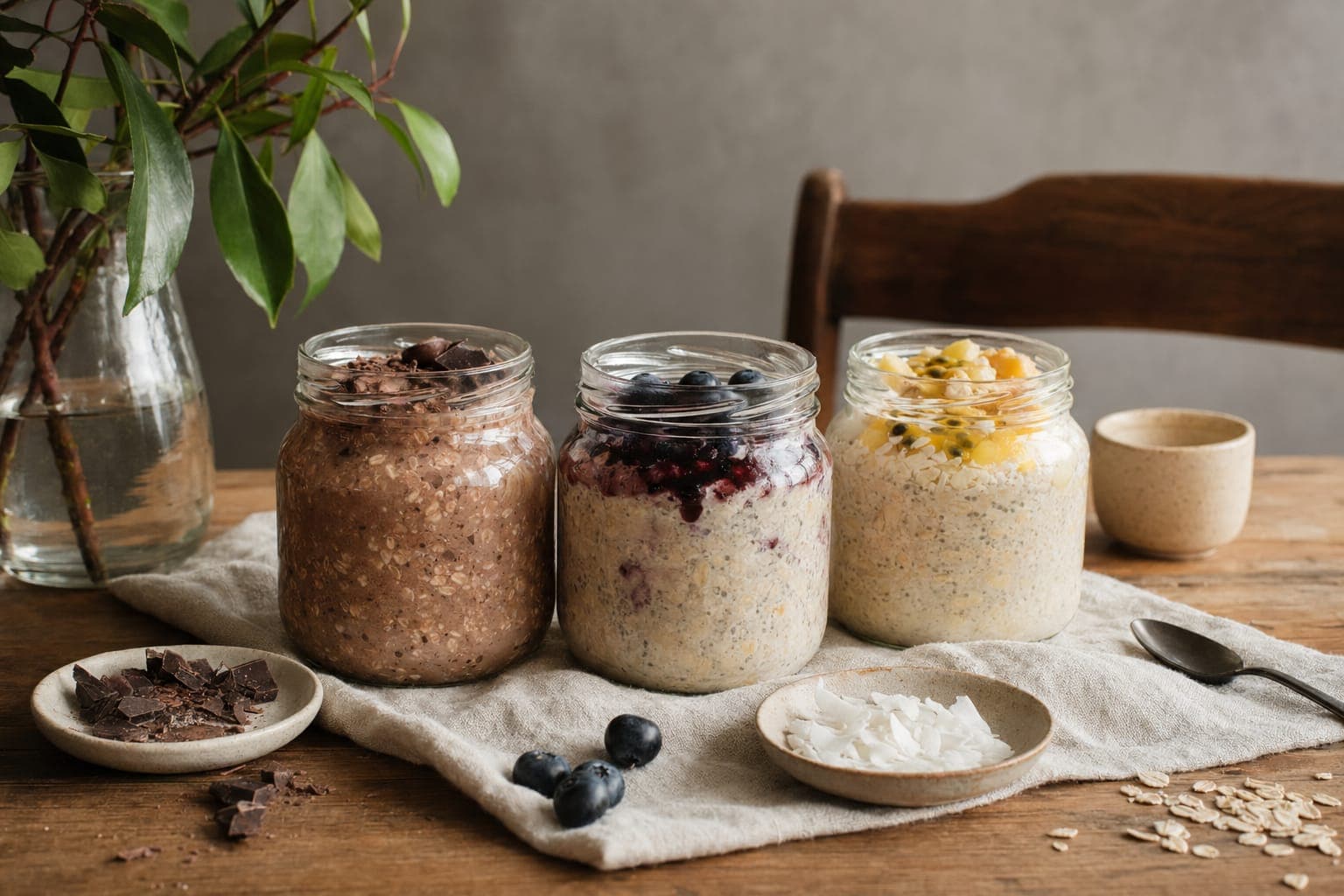
Organised Overnight Oats: 3 Variations
Three delicious overnight oats variations with Organised. Chocolate, berry, tropical flavours. Make them Sunday, eat them all week.
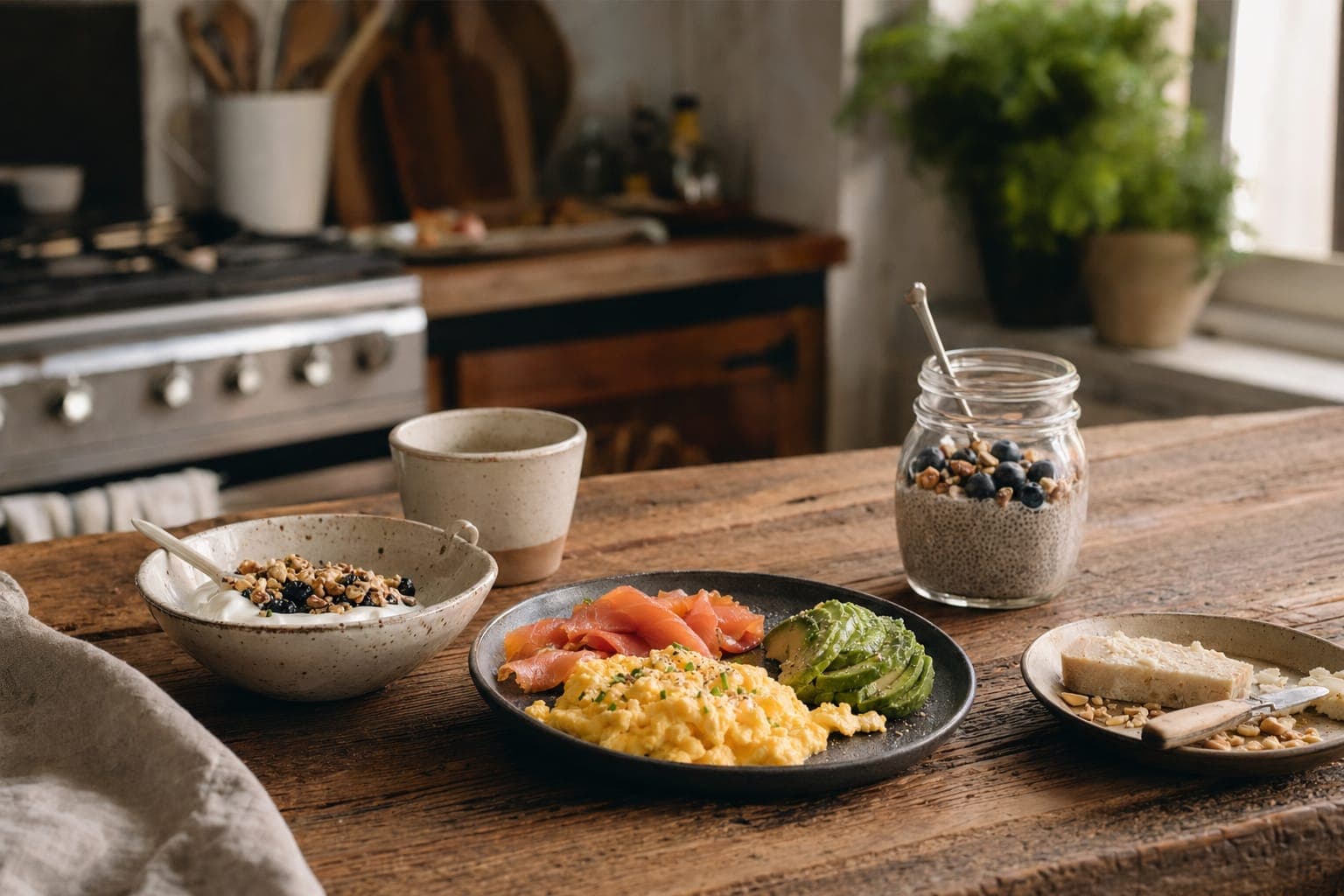
5-Minute High-Protein Breakfasts Using Organised
Quick, high-protein breakfast ideas using Organised. Five recipes you can make in minutes with real food. No fussing around.


 Join over 100,000+ members
Build a better food system with us
The Organised community is thousands of people choosing real food and backing the farmers who grow it, all of us trying to leave the world a little better than we found it. If that is what you care about too, you belong here.