What Happened When We Stopped Eating Organs
In 1950, organ meats fed half of Britain. Liver was cheap, nutritious, and on most family dinner tables. By 2020, most people had never eaten liver, and nutrient deficiency was widespread. This isn't coincidence.
By Niall Kiddle, Founder, Organised

Reviewed by Pedro Rodrigues, Agronomist (farming and sourcing only) ·
6 min read · Published · Updated · 3 cited sources
Makers of the Organised Daily blend, a grass-fed beef organ supplement from regenerative UK farms
Somewhere between then and now, we made a choice. We chose convenience and muscle meat. The cost is still being paid.
The era when organs were commonplace
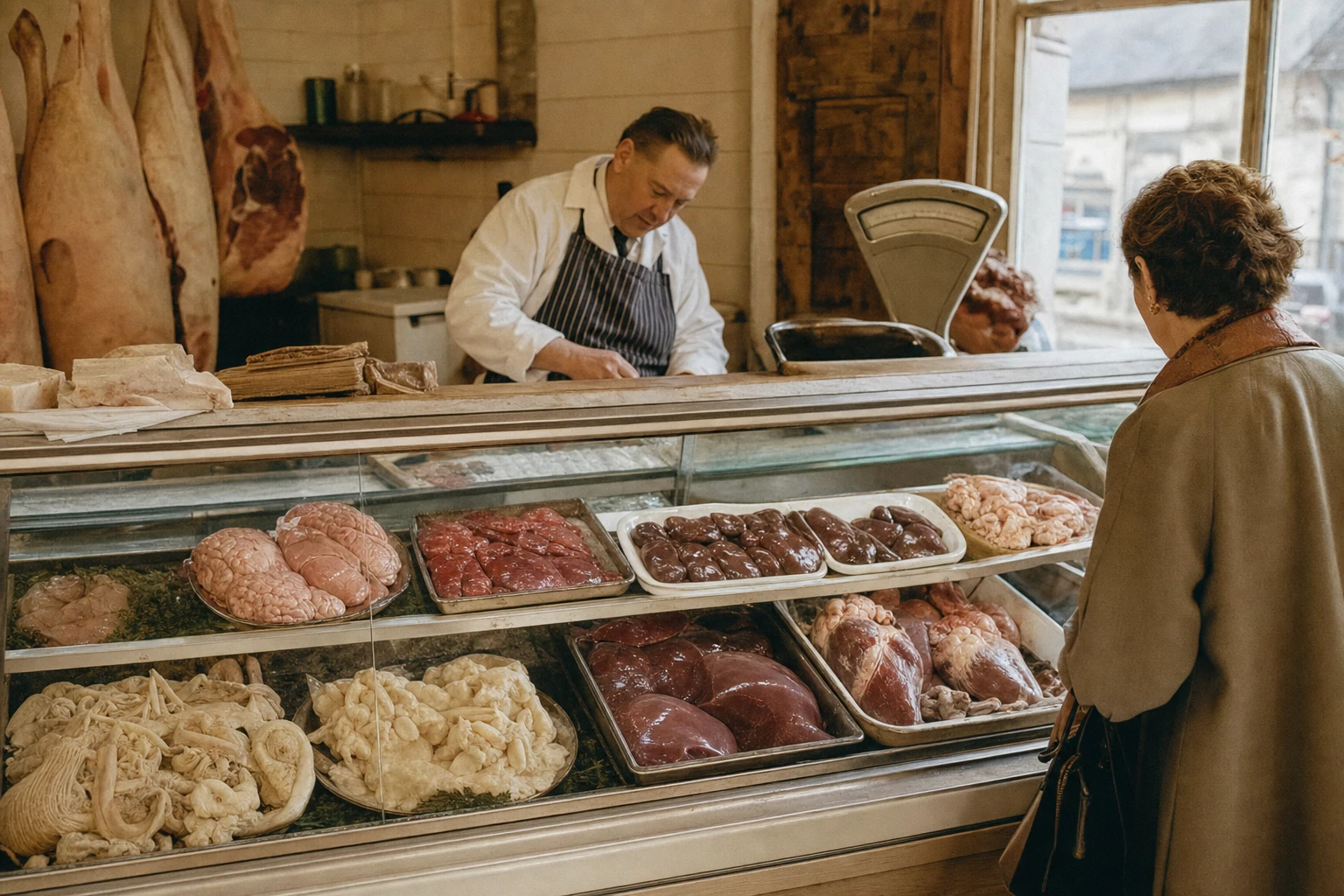
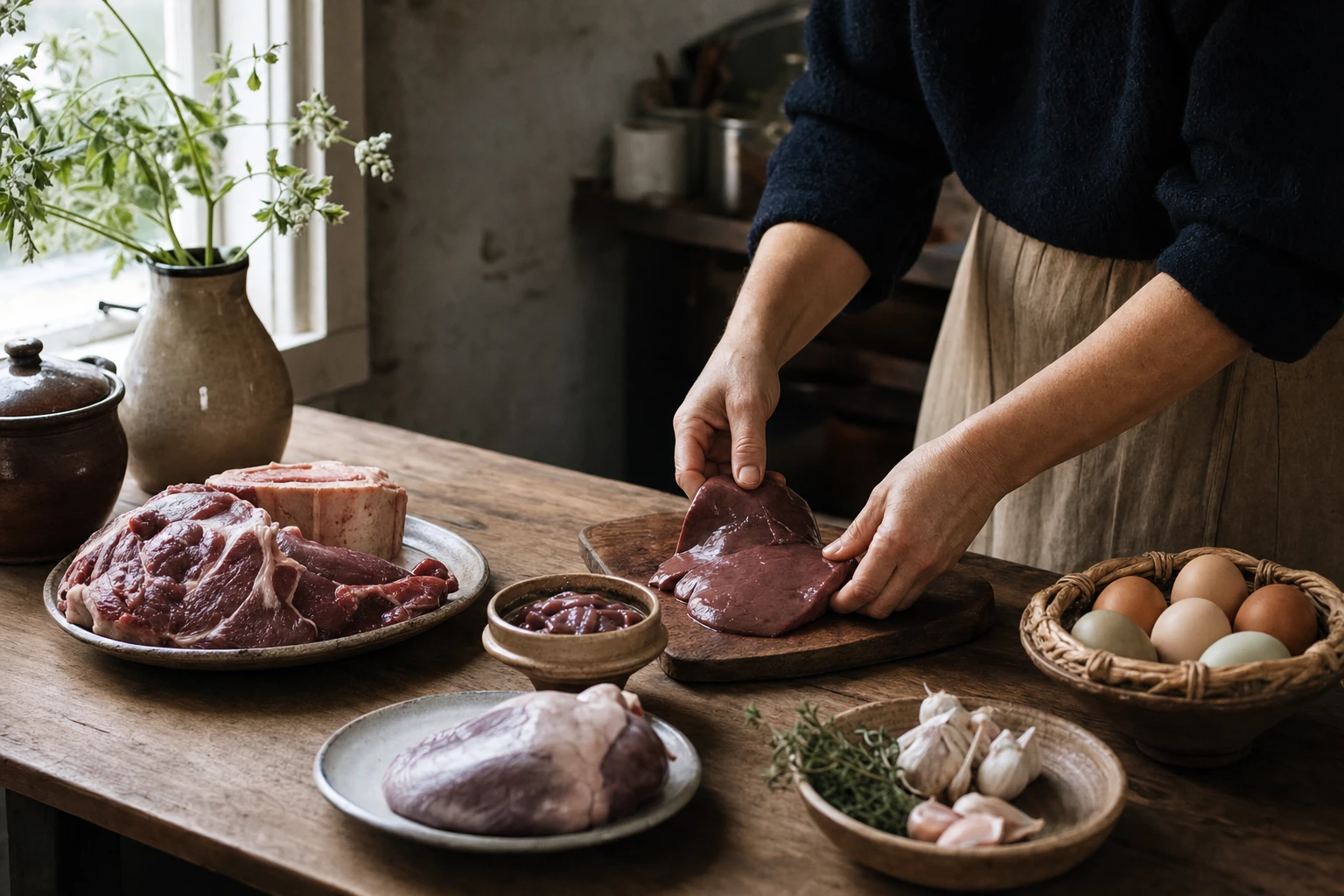
For most of human history, eating animals meant eating the whole animal. Nothing was wasted. The wealthy ate muscle meat. The poor ate organs, bones, offal, everything else. Organs were nutritional gold: liver, kidneys, heart, tongue, tripe.
This wasn't deprivation. It was good sense. Organs are the most nutrient-dense parts of an animal. A medieval peasant eating organ meats was better nourished than a modern person eating only muscle meat and supplements.
By the early 20th century in Britain, organ meats were still mainstream — rationing-era guidance kept liver, kidneys and other offal in regular use because they were largely off-ration during WWII.1
Grandmothers knew how to prepare organs. Butchers stocked them routinely. Kids grew up eating them without question. This was normal food. This was how humans ate.
Until very recently, eating organs wasn't a niche pursuit. It was normal. The question wasn't whether you ate organs. It was how you prepared them.
Post-war shift to convenience and processed foods
The Second World War ended in 1945. Rationing continued in Britain until 1954. During this period, processed foods began entering the market in earnest. Instant gravy. Tinned vegetables. Frozen dinners. Foods designed for speed and convenience.
The cultural narrative changed. Post-war Britain wanted modernity, efficiency, progress. Cooking organs took time. You had to prepare them, understand them, know what you were doing. Processing food meant you could throw something in the oven and get dinner without skill or knowledge.
Marketing followed the pattern. Modern foods were touted as convenient, hygienic, scientific. Traditional foods (including organ meats) were positioned as old-fashioned, labour-intensive, a relic of poverty and wartime rationing.
The narrative was powerful. Nobody wanted to be reminded of rationing. Nobody wanted to seem unsophisticated. If convenience foods represented progress and modernity, then traditional foods represented the past. And the past was something to escape.
This wasn't a conscious rejection of nutrition. It was a cultural shift toward convenience. But the body doesn't care about cultural narratives. The body cares about nutrients.
The rise of the muscle-meat-only diet
As processed foods became normal, organ meats became less common. Butchers stocked less. Recipes disappeared from cookbooks. Kids grew up never eating organs, so they didn't teach their own children to eat them.
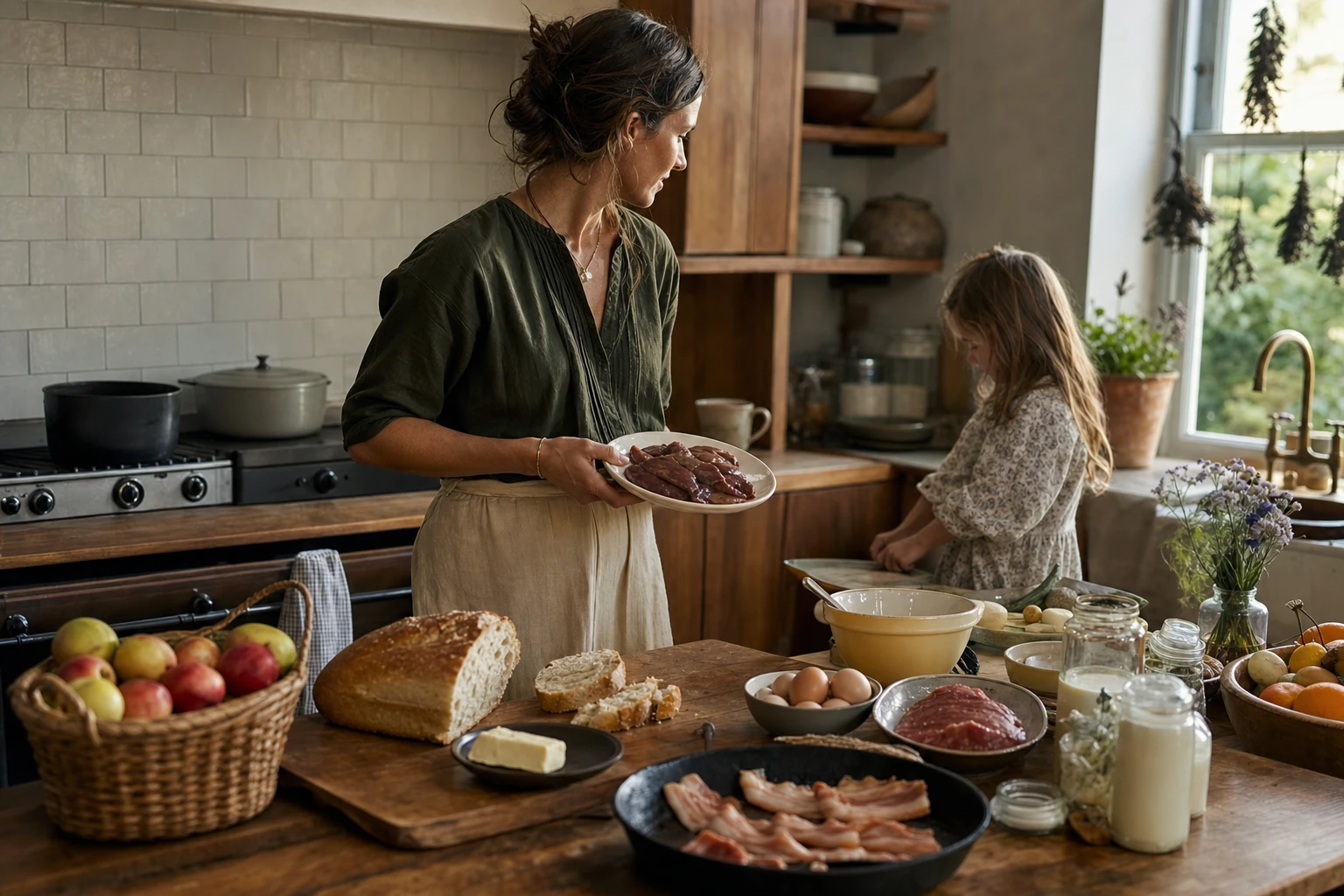
What remained was muscle meat: beef, pork, chicken, mostly the expensive cuts. Muscle meat is good protein. But it's nutritionally incomplete without organs. A diet of only muscle meat leaves you deficient in choline, in certain B vitamins, in minerals like copper and selenium.
Modern nutritional advice compensated by recommending vegetables and whole grains. Eat your vegetables. Eat brown rice. Get your B vitamins from fortified cereals. This advice isn't wrong. But it's incomplete. Vegetables are good. But a serving of vegetables contains a fraction of the nutrients in a serving of liver. The math doesn't work out.
So people ate more vegetables, more whole grains, more supplements. They compensated for the loss of organs by adding more food, more volume, more complexity. All while ignoring the most nutrient-dense foods available.
A diet of muscle meat and vegetables leaves you chronically deficient in nutrients organs would have provided.
What got lost when organs disappeared
When organs vanished from the diet, specific nutrients vanished with them. Beef liver is one of the densest dietary sources of vitamin B12, riboflavin, folate, and several other B vitamins. Vitamin B12 occurs naturally only in animal-source foods.2
Beef liver and eggs are among the densest dietary sources of choline, an essential nutrient required for synthesis of phosphatidylcholine and acetylcholine.3
Copper, selenium, iron, zinc: all highest in organs. Muscle meat contains some. But organs contain them in densities that make a measurable difference in your body's ability to function.
Fat-soluble vitamins A, D, E, K: organs from pasture-raised animals contain them in quantities that supplement pills can't match. These vitamins regulate inflammation, bone density, immune function, gene expression. When you lose organs, you lose these.
And perhaps most critically: cofactors. The minerals and vitamins that make other nutrients work. Zinc helps your immune system. But zinc works better when you also have selenium, which organs contain. Iron works better with copper, which organs contain. This synergy doesn't happen with vegetable nutrition alone.
Get ancestral nutrition guides, free
Two short reads a week on traditional ways of eating, examined with modern evidence.
By signing up you agree to receive emails from us. No spam, unsubscribe anytime.
The nutrient deficiency crisis that followed
By the 1970s and 1980s, nutrient deficiency became rampant. Anaemia was widespread, especially in women. Thyroid disease increased. Cognitive decline became a concern in older populations. Hair loss, skin problems, chronic fatigue: all symptoms of the nutrient gaps that organs would have filled.
The medical response was to diagnose deficiency diseases and recommend supplements. Low iron? Take iron tablets. Low B12? Inject it. Missing minerals? Eat fortified cereals.
But this was treating the symptom, not the cause. The cause was that we'd removed the most nutrient-dense foods from the diet. Supplements are a poor substitute for whole foods containing multiple nutrients in synergistic ratios.
Chronic disease rates climbed. Diabetes, heart disease, cancer, autoimmune conditions: all partially driven by nutrient deficiency and the inflammatory state that follows when your body isn't properly nourished.
We framed this as inevitable. Modern life, stress, genetics. We medicalised it. But it was also partly a choice. A choice to remove organs from the diet in pursuit of convenience and modernity.
1 of 9
Daily blend
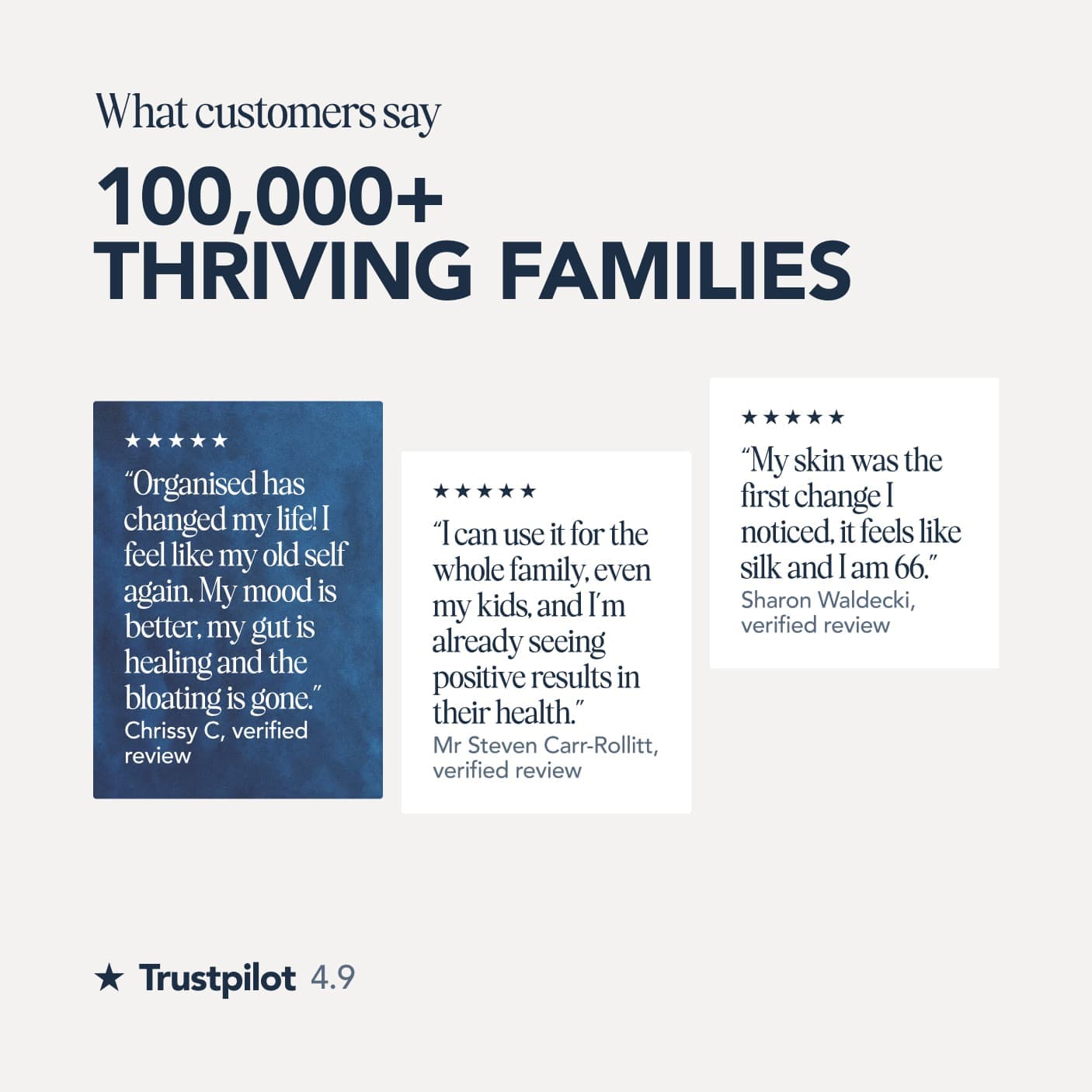
100,000+ thriving families4.9 on Trustpilot
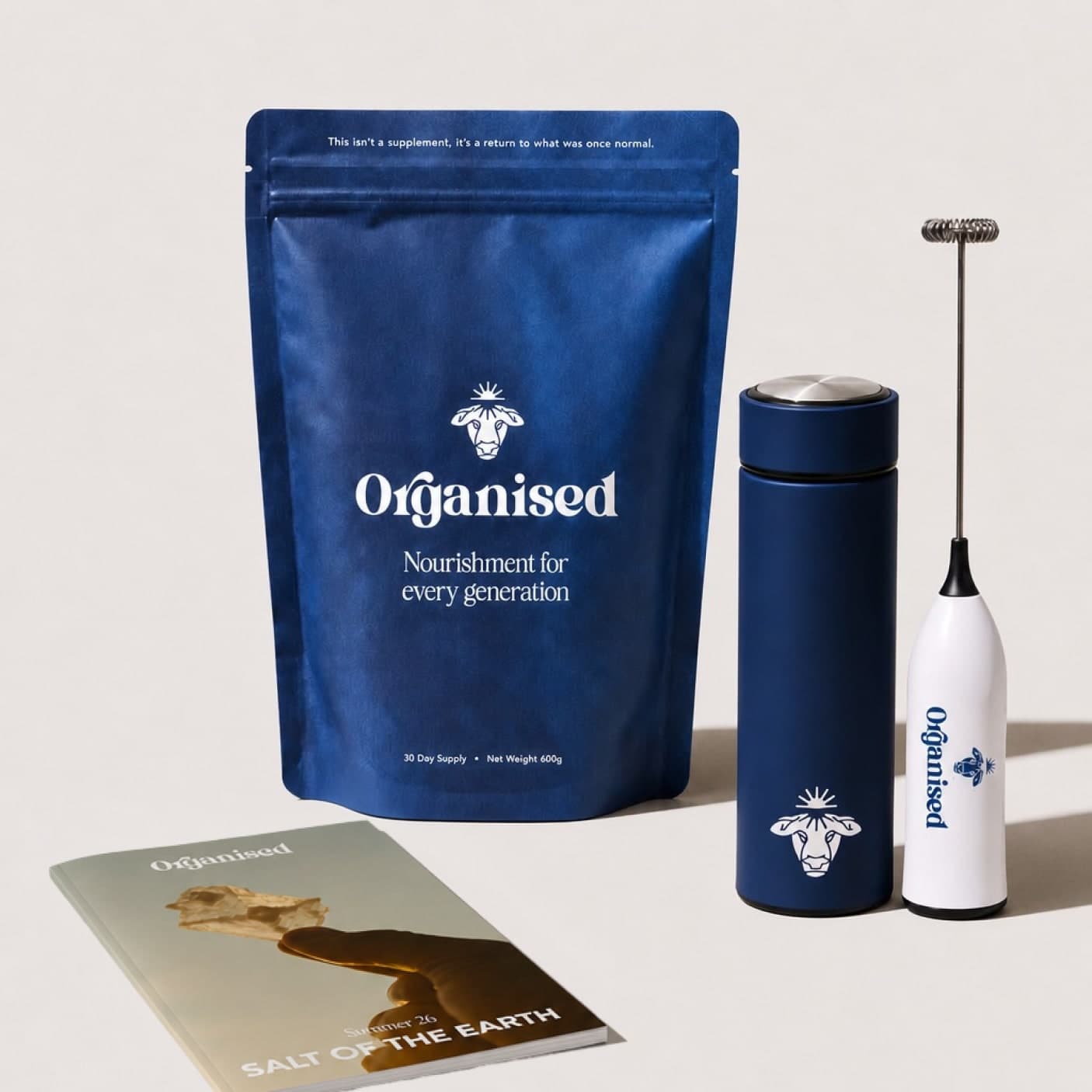
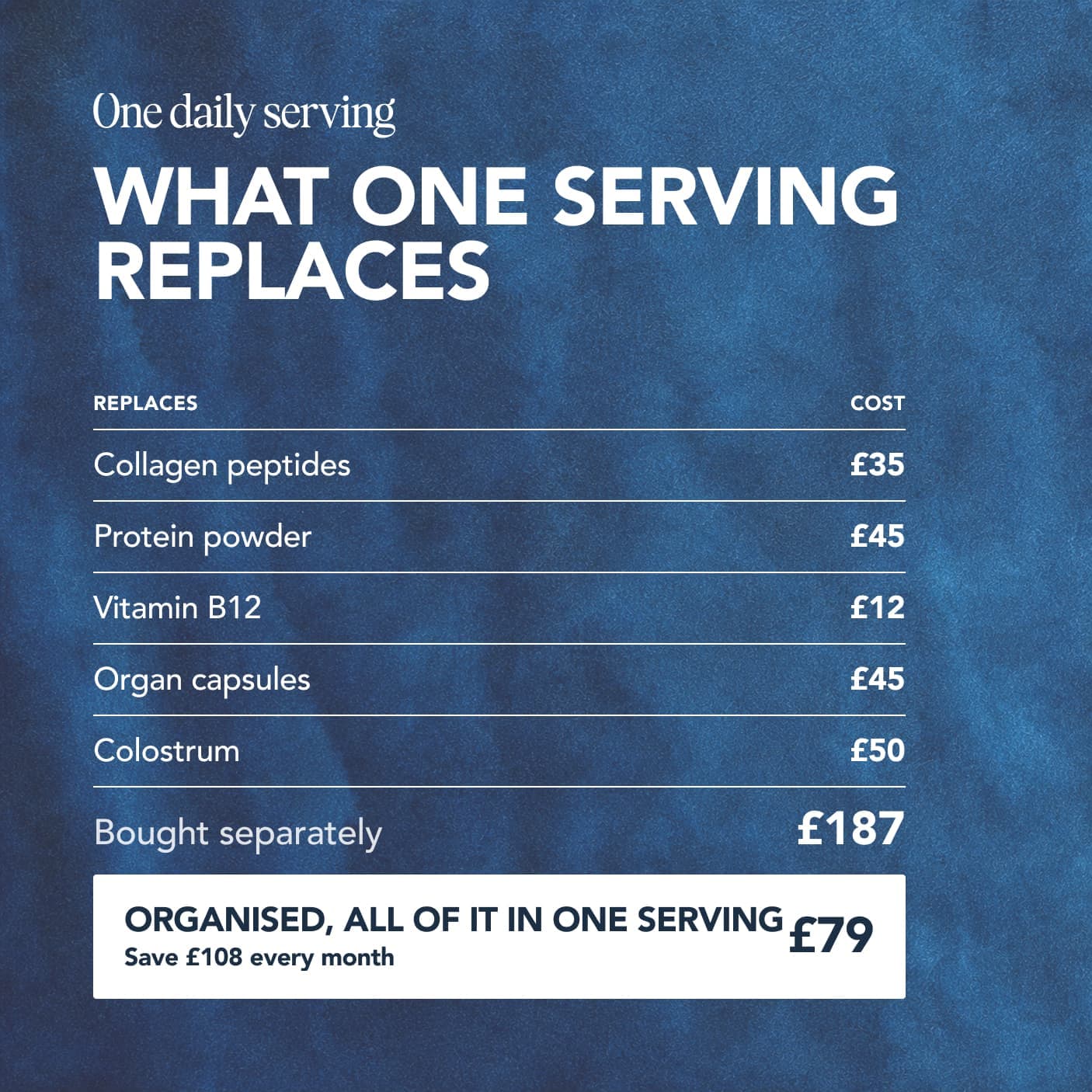
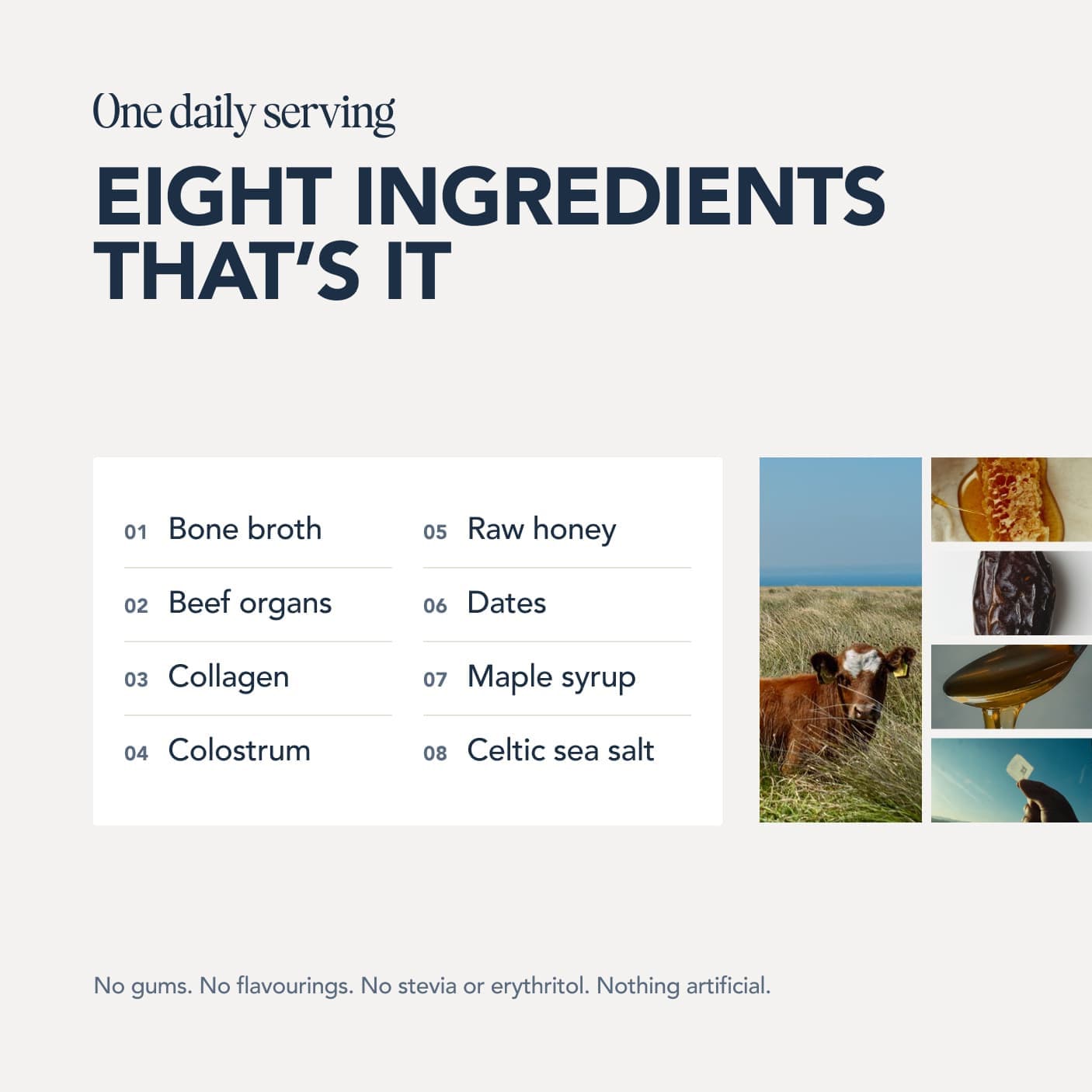
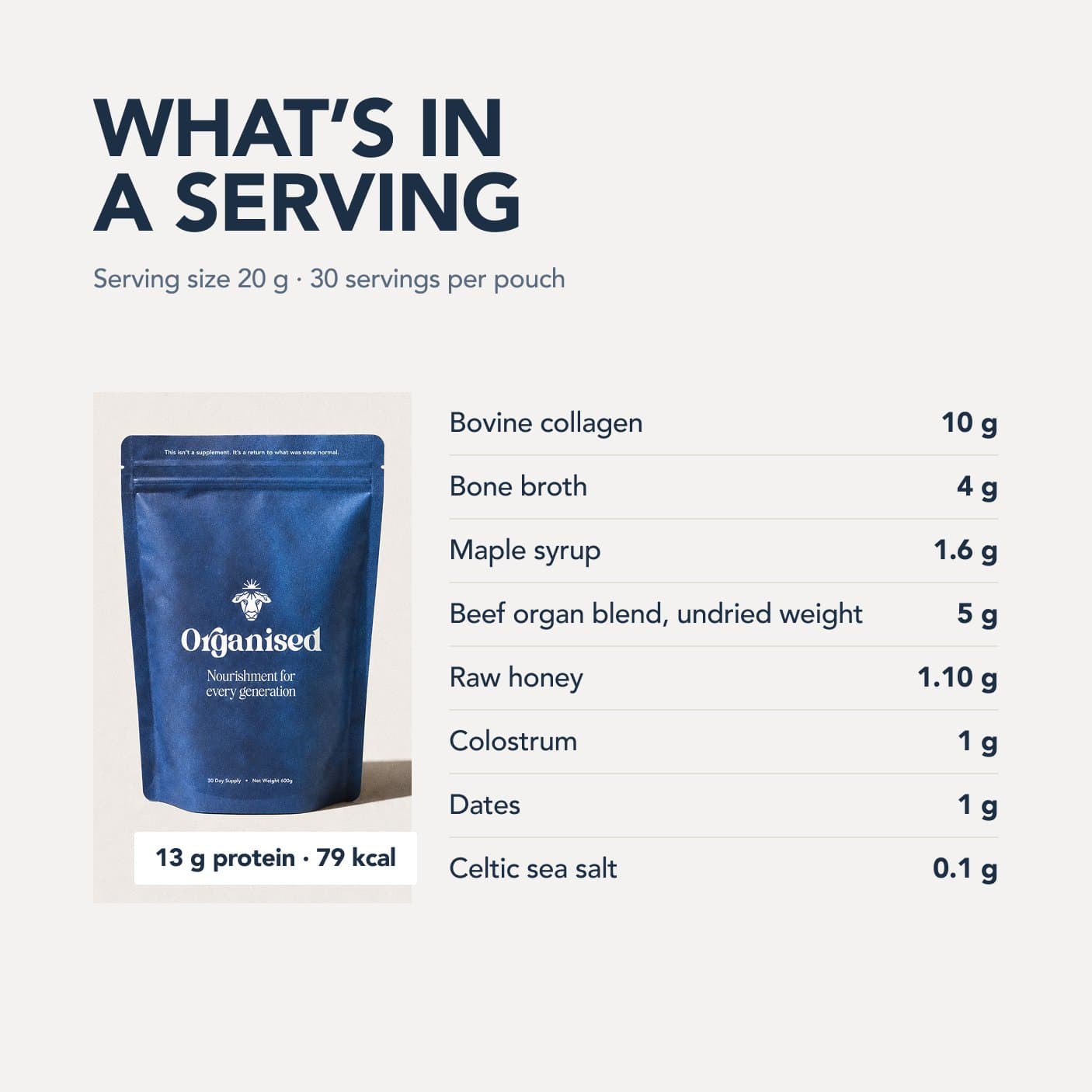
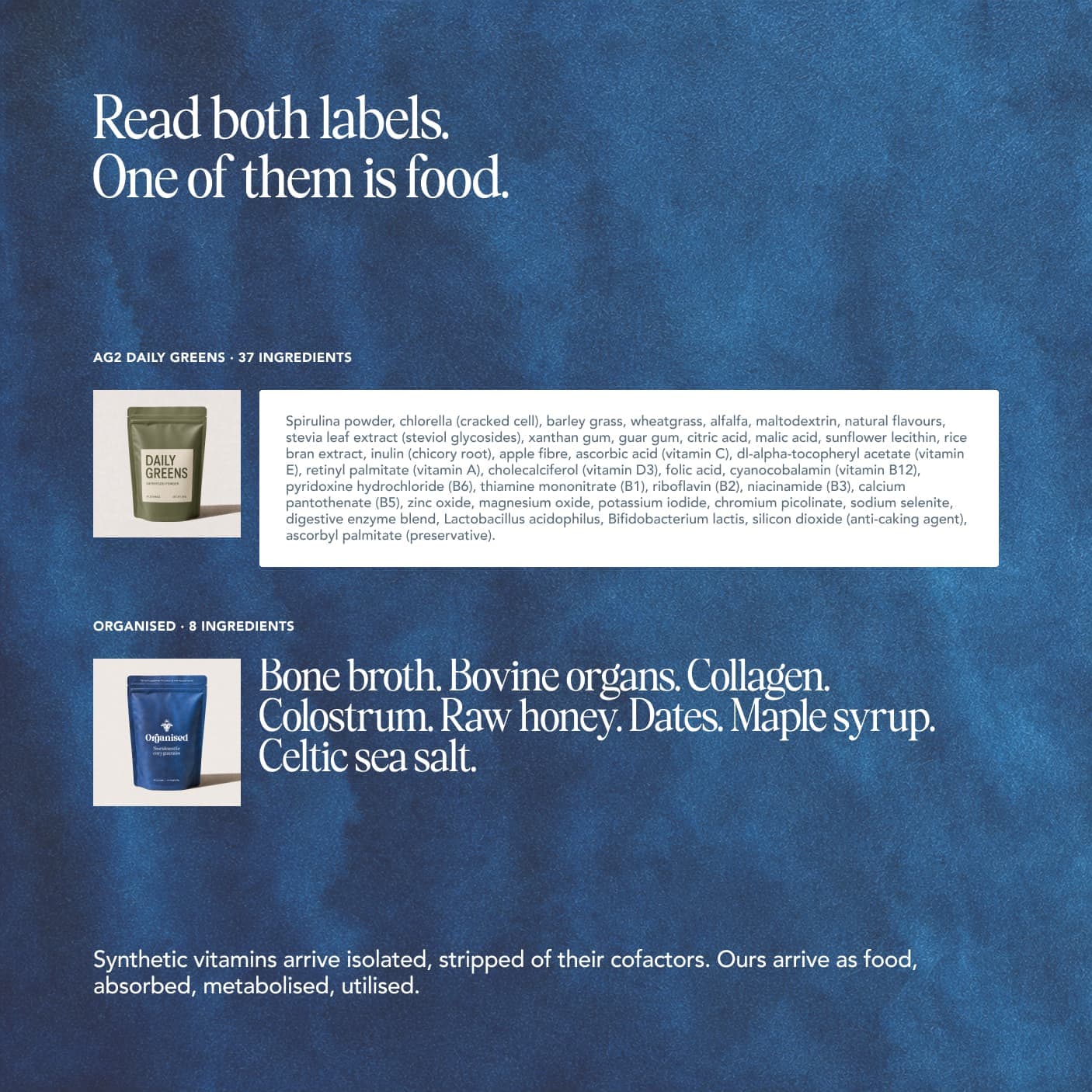
Eight real ingredients built around grass-fed beef organs, collagen and colostrum. Nothing synthetic added.
Free with your first order, worth £38. Plus £10 off the pouch with a subscription.

Free UK shipping · Made in England · 100 day money back guarantee on your first pouch · Skip, pause or cancel anytime
Why organs vanished from culture
Organs vanished for several converging reasons. Convenience foods offered speed. Processing meant you didn't have to know how to cook. Rational economic incentives: muscle meat sold for higher prices, so farming focused on maximising muscle and minimising waste (organs were that waste).
Marketing reframed organs as primitive, unsanitary, poor-person food. This worked. Cultural narratives stick. Once organs became unfashionable, they were out of fashion. No butcher stocked them. No one cooked them. Kids grew up thinking organs were disgusting.
There's also something psychologically challenging about organ meats. They're visceral reminders that you're eating an animal. Muscle meat is already several steps removed from the living creature. Organs are harder to pretend are something else. This discomfort drove the cultural shift as much as convenience did.
And honestly, once organs stopped being commonplace, knowledge disappeared. Recipes vanished. Preparation skills were lost. People stopped knowing how to cook organs. So even if they wanted to, they couldn't without research.
Organs didn't disappear because they're bad for you. They disappeared because convenience was more valuable than nutrition, and marketing convinced us that modern was better than traditional.
The cost of this change
The cost is measurable: widespread nutrient deficiency, chronic disease, reliance on supplements that don't work as well as whole foods would have. The cost is also cultural: lost knowledge, lost skills, lost connection to where food comes from and how to prepare it properly.
Your great-grandmother could make five dishes from liver. You probably can't make one. She had choline, B vitamins, minerals, and nutrient density built into her diet automatically. You have to plan for it, supplement for it, consciously work to achieve what her diet provided automatically.
This isn't a trivial loss. This is the difference between thriving and managing symptoms.
The bottom line
We stopped eating organs because convenience and modern marketing made them seem obsolete. The shift from nose-to-tail eating to muscle meat and processed foods happened remarkably fast, in about fifty years. The nutrient cost was real and substantial.
Your grandparents' nutrition was better than yours, not because they worked harder or lived better, but because they ate the whole animal and the food system required it. You can't rebuild 1950s food culture. But you can rebuild your nutrition by returning to organs, the most nutrient-dense foods available.
The question now is whether you'll reverse this change in your own kitchen. A small amount of liver weekly will do more for your nutrition than a month of vegetables and supplements. Your body hasn't changed since 1950. It still needs what organs provide.
References
Every source below was checked on 27 August 2026. Each link was requested and read. Where a citation and its identifier disagreed, the citation was corrected to the record or the reference was deleted along with the sentence marker that pointed at it, and where the resolved paper turned out not to support the sentence, the sentence was cut back to what it does support. Borrowed authority is worse than none, because it looks like rigour.
- British Geriatrics Society. As We Once Were: Wartime Rationing. https://www.bgs.org.uk/resources/as-we-once-were-wartime-rationing
- National Institutes of Health, Office of Dietary Supplements. Vitamin B12 — Health Professional Fact Sheet. https://ods.od.nih.gov/factsheets/VitaminB12-HealthProfessional/
- National Institutes of Health, Office of Dietary Supplements. Choline — Health Professional Fact Sheet. https://ods.od.nih.gov/factsheets/Choline-HealthProfessional/
Who wrote and reviewed this guide
Niall Kiddle
Author · Founder, Organised
Niall is the founder of Organised. He started the company in 2024 after fixing his own health the slow way: in 2022 he swapped a cupboard of synthetic supplements for real food, raw milk, organ meats, bone broth and honey, and felt the difference within months.
Areas of expertise: Ancestral nutrition, Organ meats, Whole-food supplementation, Gut health, Regenerative sourcing
Read Niall's full profile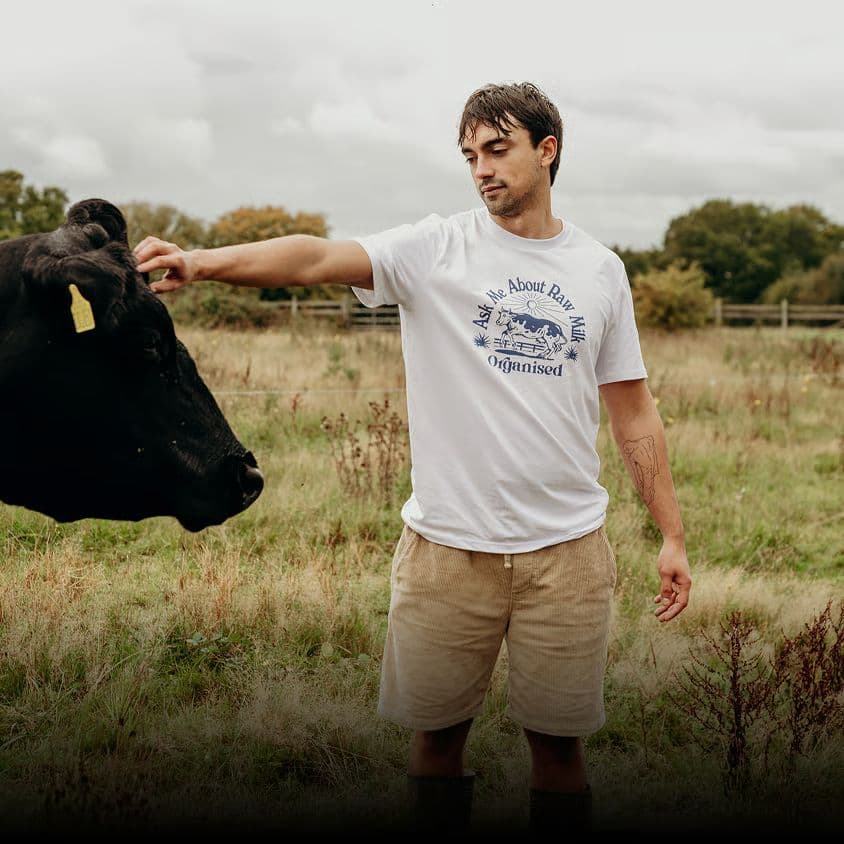
Pedro Rodrigues
Reviewer · Agronomist (farming and sourcing only)
Pedro is the agronomist Organised works with on farming and sourcing. His job on the guides is to keep the science honest: he reviews what we publish about soil health, regenerative agriculture, grazing and the way food is actually produced.
Areas of expertise: Regenerative agriculture, Agronomy, Soil health, Grass-fed farming, Food sourcing
Reviewed this guide on
Read Pedro's full profileBrowse the guides library
All guidesKeep reading
Ancestral
Why Modern Food Is Less Nutritious Than It Was 50 Years Ago
Soil depletion, selective breeding, and industrial agriculture have made modern produce less nutritious. Here's the evidence.
Ancestral
Nose-to-Tail for Beginners: Where to Start
New to nose-to-tail eating? Start with liver, then heart, in small amounts. Get simple freezing tips and easy ways to soften the taste as you build up.
Ancestral
Natural Flavourings Are Not Natural. Here's Why.
Understand what natural flavouring really means under food law, the FDA and FSA loopholes behind it, and why this common label can mislead shoppers. Read on.
Real food, made effortless
Bring it into my routineA few ways to use it
All recipes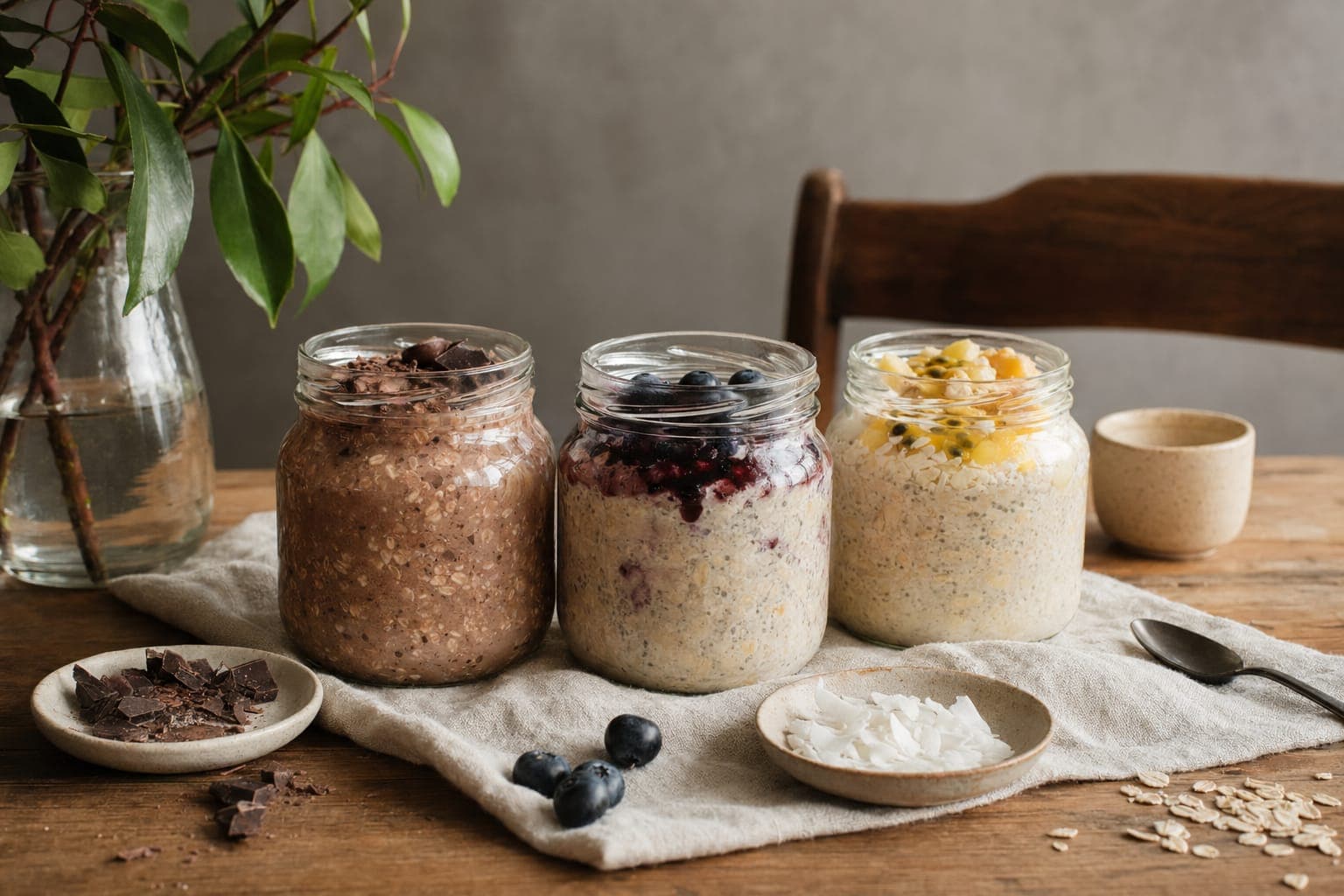
Organised Overnight Oats: 3 Variations
Three delicious overnight oats variations with Organised. Chocolate, berry, tropical flavours. Make them Sunday, eat them all week.
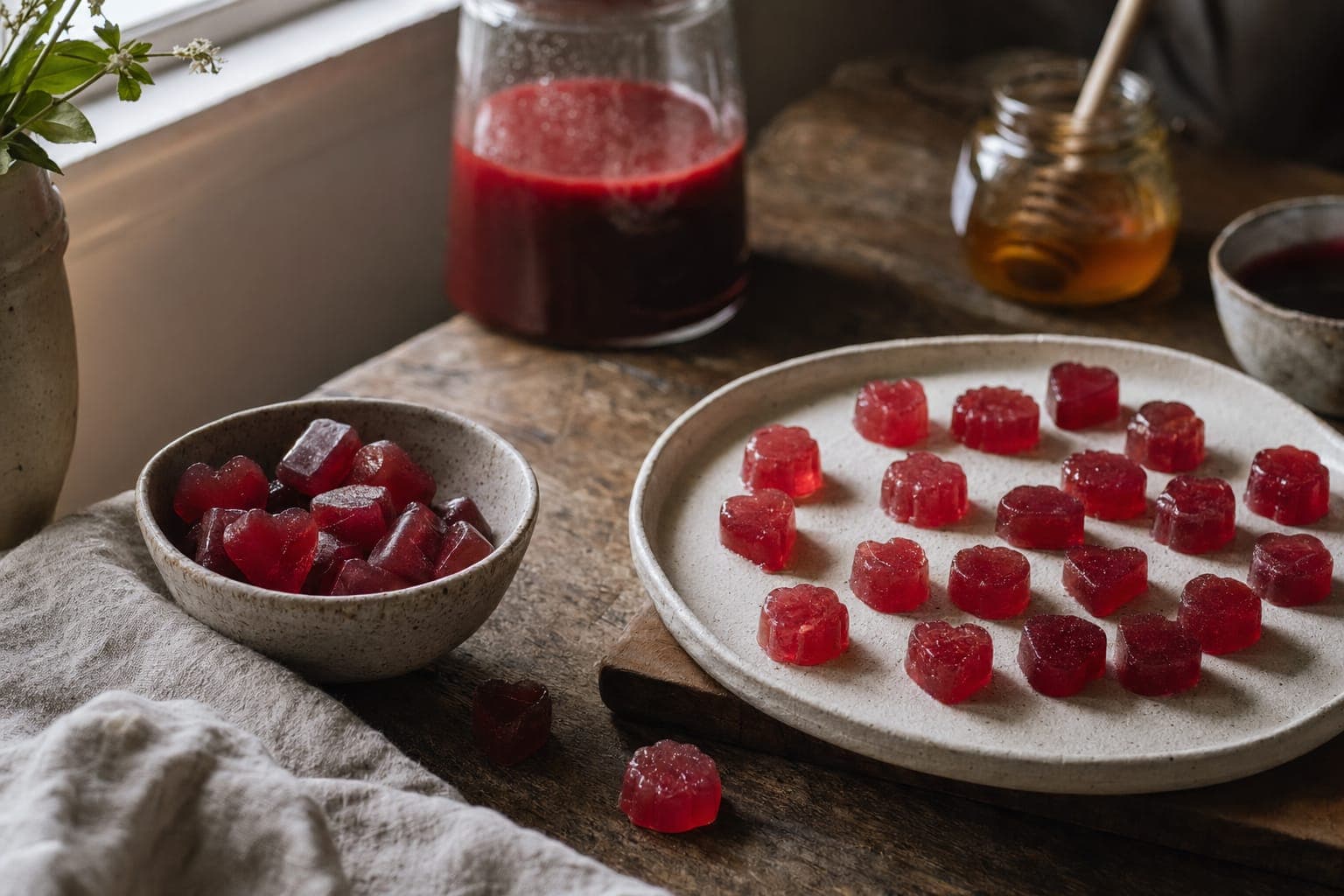
How to Make Your Own Gelatine Gummies
A simple recipe for homemade gelatine gummies using grass-fed gelatine, fresh juice, and raw honey. Better than shop-bought, kids love them.
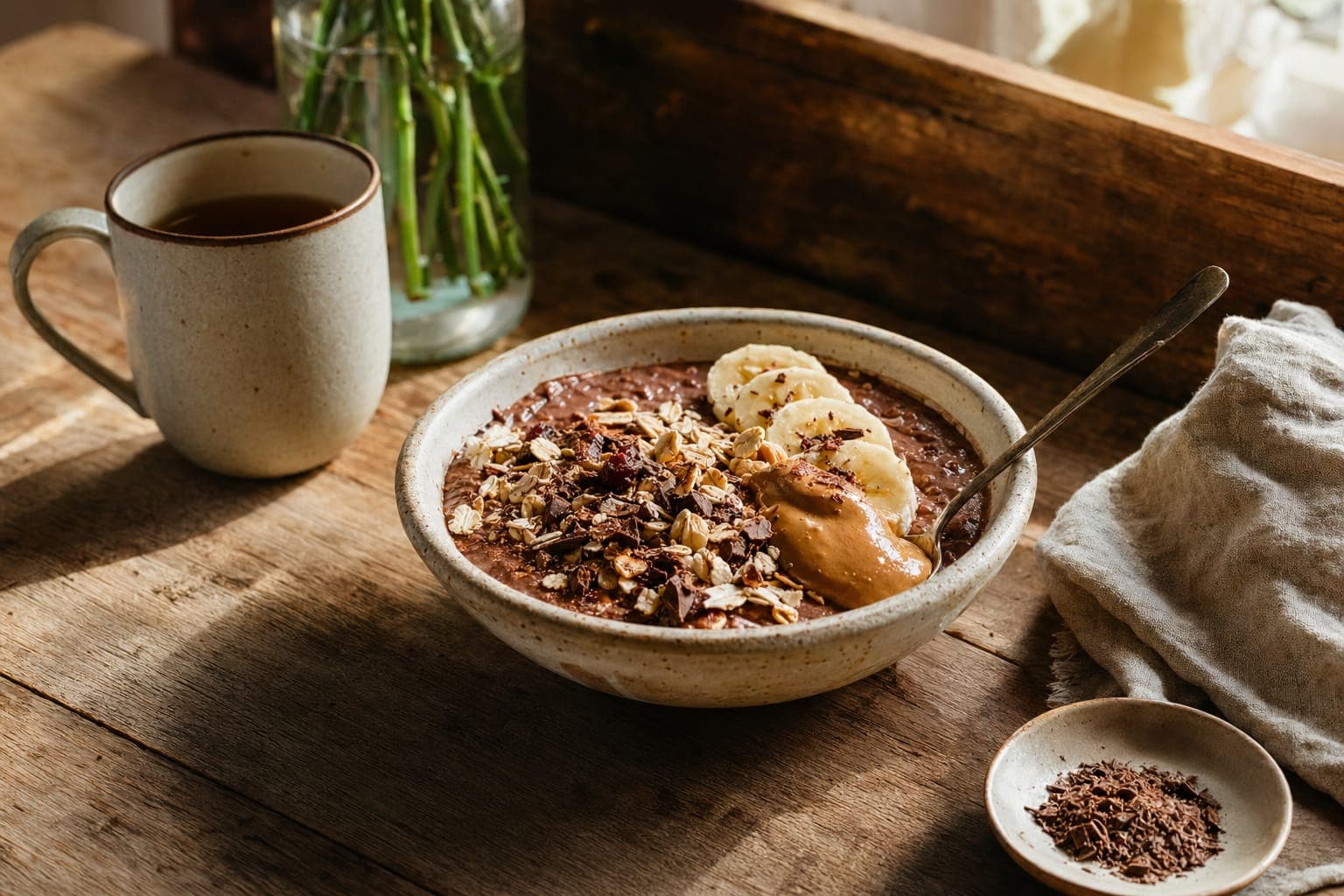
10 Ways to Use Organised That Aren't Just a Shake
Move beyond the basic shake. Discover 10 creative ways to use Organised in smoothie bowls, oats, yoghurt, baking, and more.


 Join over 100,000+ members
Build a better food system with us
The Organised community is thousands of people choosing real food and backing the farmers who grow it, all of us trying to leave the world a little better than we found it. If that is what you care about too, you belong here.