The 8 Ingredients Philosophy: Less Is More
You stand in the supermarket reading a label. Fifteen ingredients. Some you can't pronounce. Some you've never heard of. And you think: this is normal now. It isn't. A meal built on eight ingredients or fewer is not only possible. It's optimal.

By Niall Kiddle, Founder, Organised

Reviewed by Pedro Rodrigues, Agronomist (farming and sourcing only) ·
6 min read · Published · Updated · 2 cited sources
Makers of the Organised Daily blend, a grass-fed beef organ supplement from regenerative UK farms
The simplicity principle
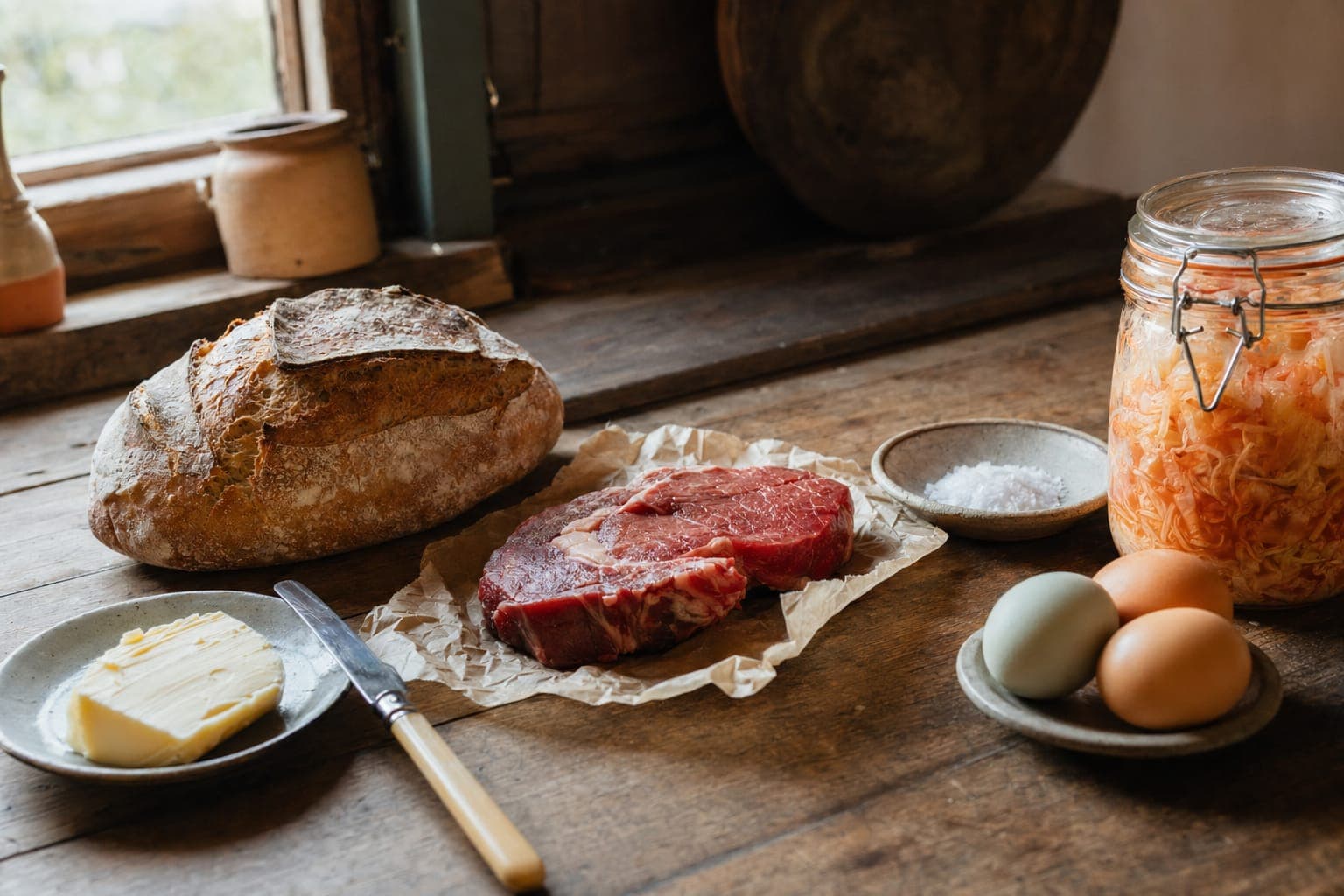
A meal is simple when every ingredient serves a purpose. No additives for texture. No stabilisers for shelf-life. No sweeteners for appeal. Just real food, in combinations that work.
When you cook this way, something shifts. You stop trying to impress and start trying to nourish. You stop cooking to the recipe and start cooking to the ingredient. You build relationships with your food instead of suspicion.
Simple food is also, invariably, affordable. A chicken, some butter, salt. Eggs, greens, a bit of fat. Real bread, proper cheese. These are not luxury items when you're not paying for fifteen ingredients and a marketing team.
Complexity is marketed as sophistication. Simplicity is actually sophistication. It just looks different.
The core eight
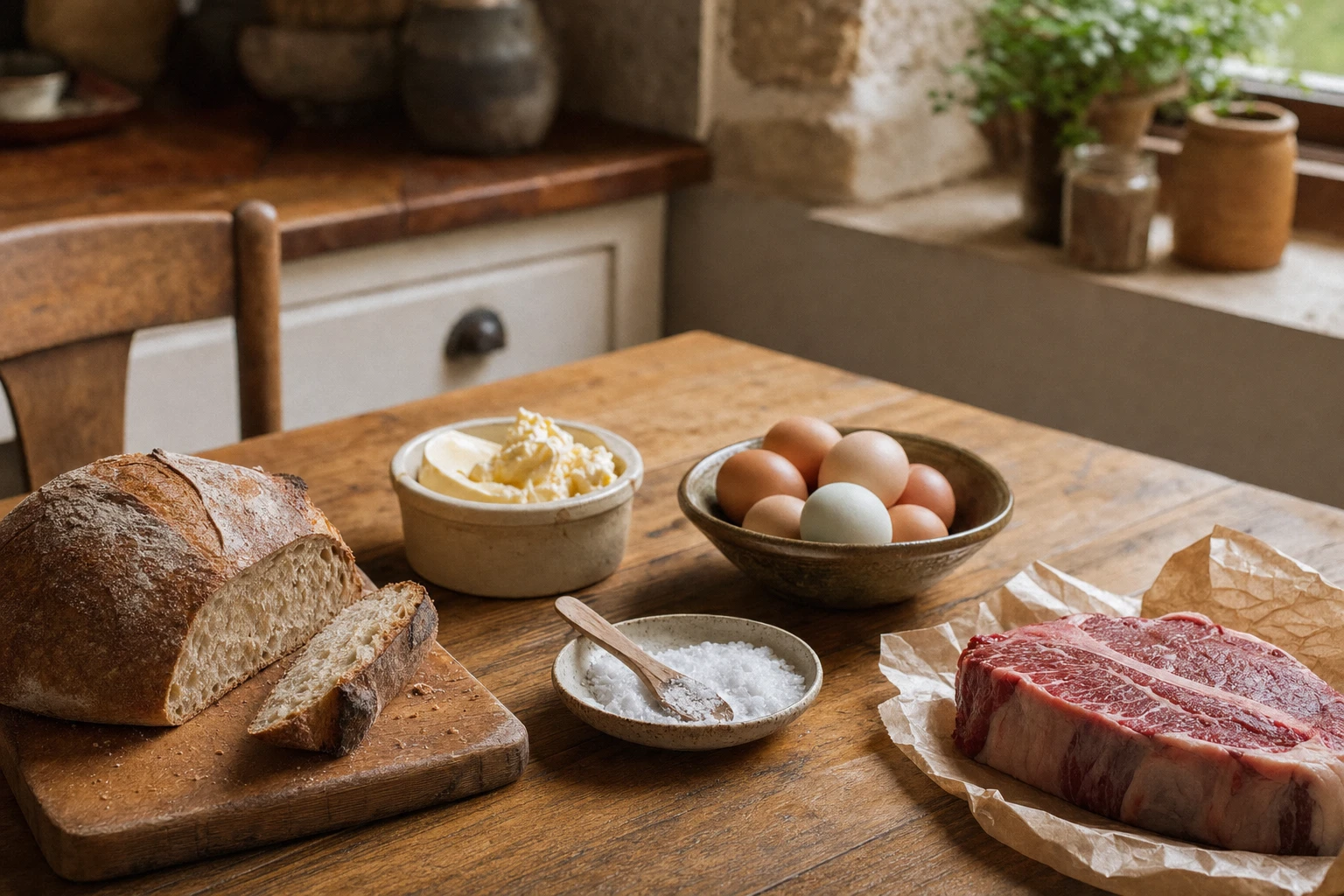
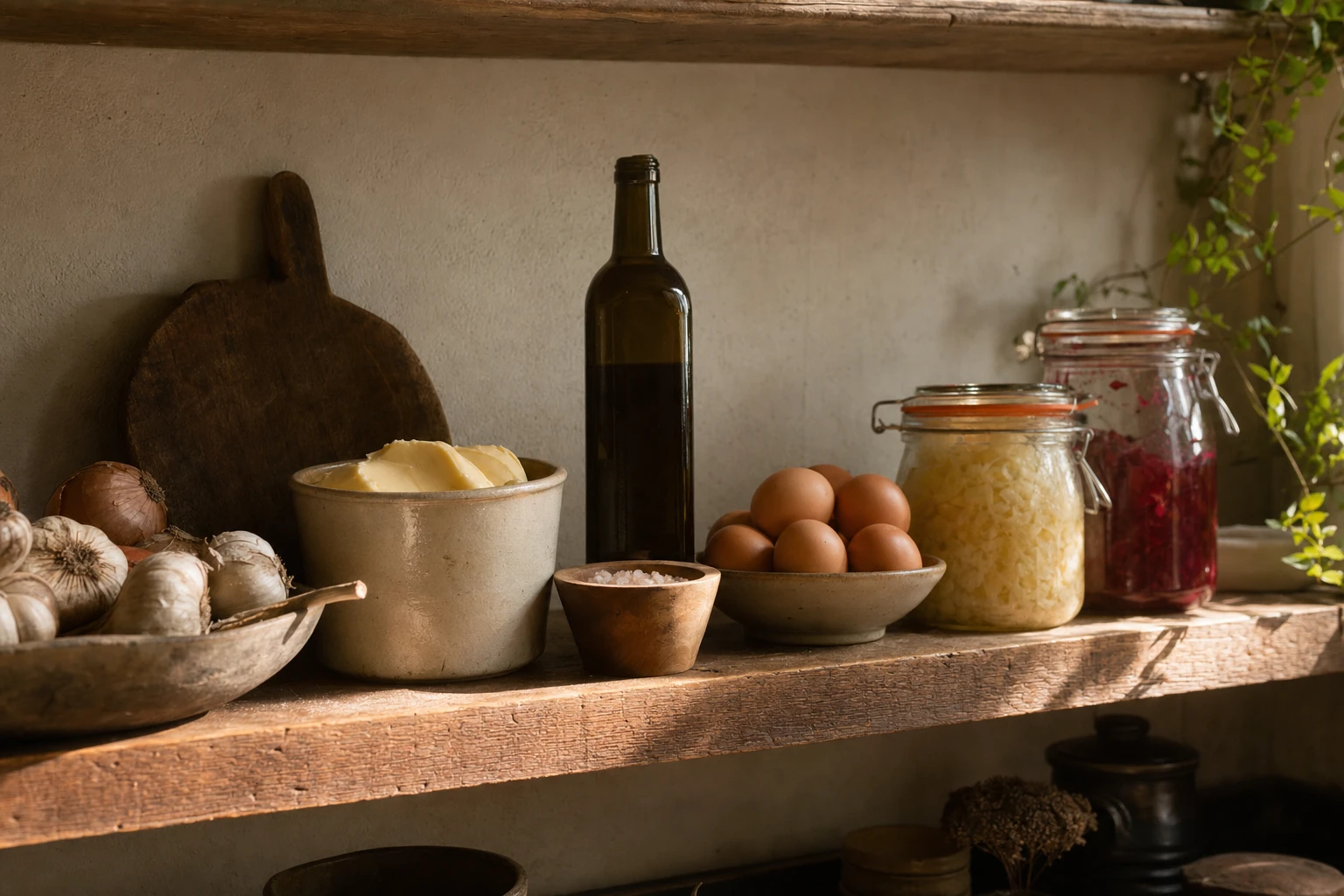
If you built your diet around eight ingredients, what would they be? For most people, it would look something like this:
- Butter: the fat for cooking and flavour. Grass-fed if possible, but any butter is better than seed oil.
- Meat: beef, lamb, pork, chicken. Whatever is available and affordable. Nose-to-tail when you can.
- Eggs: from pastured hens if possible. Breakfast, lunch, or dinner. Complete protein.
- Salt: proper salt, unrefined. Sea salt or mineral salt. Everything tastes better, and your electrolytes thank you.
- Sourdough: fermented bread. The fermentation pre-digests the carbohydrates and neutralises the antinutrients.
- Vegetables: seasonal, fresh, cooked in butter. No obsession with variety. Carrots, cabbage, greens, roots.
- Fermented foods: sauerkraut, kimchi, miso. Alive with microbes your gut needs.
- Water: clean, with salt, sometimes as bone broth. Hydration with nutrients, not empty liquid.
These eight ingredients contain everything your body needs. Build your week around them and watch how you feel.
Sourdough and fermentation
If there's one element of simple cooking that's non-negotiable, it's fermentation. Sourdough bread is fermented. Sauerkraut and kimchi are fermented. Miso and tempeh are fermented. Kefir and yoghurt are fermented.
Fermentation does something to food that cooking alone can't. It pre-digests compounds. It removes antinutrients. It populates the food with live bacteria.1 When you eat fermented food, your gut is actually receiving beneficial microbes, not just fibre.
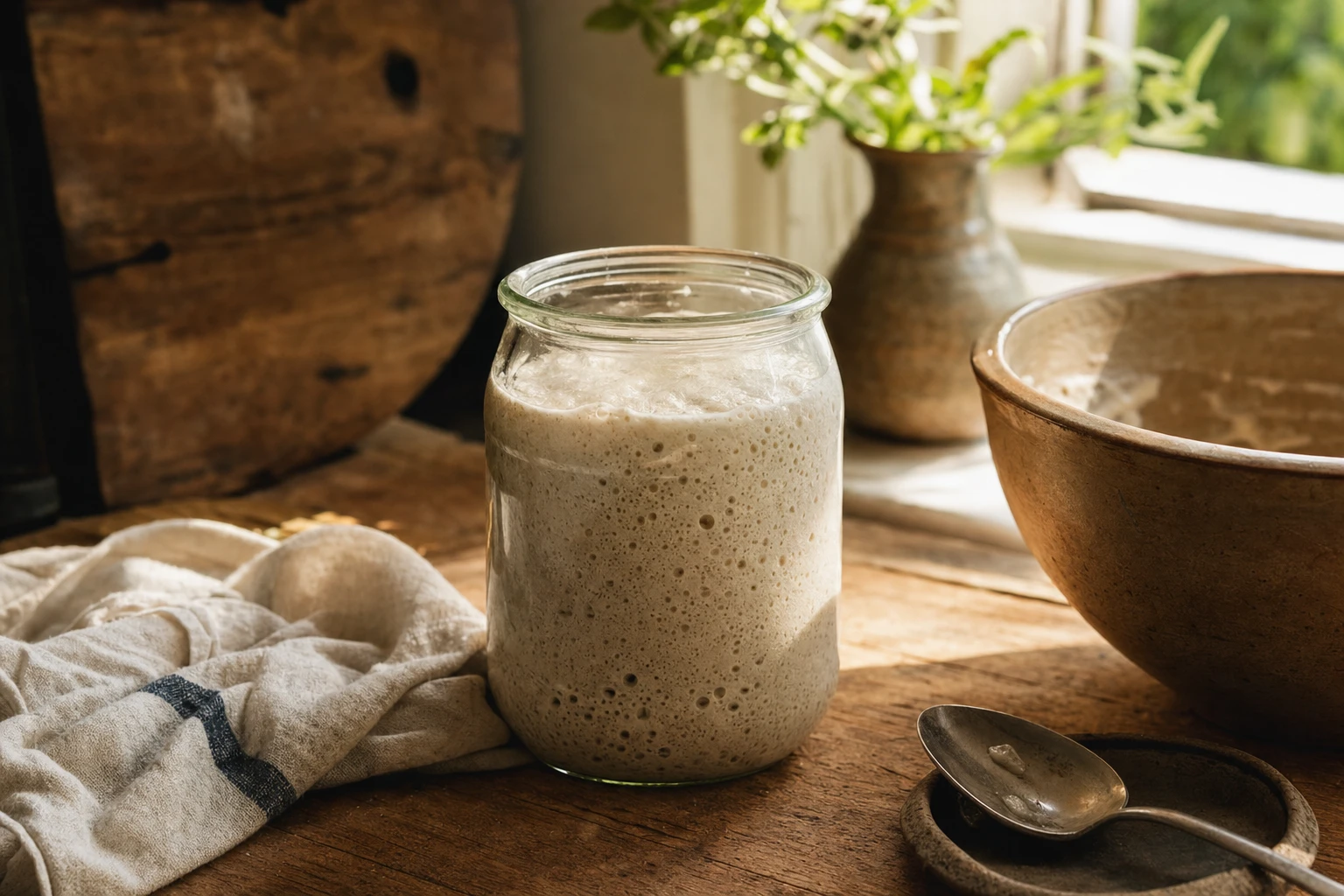
A sourdough starter is the simplest possible fermentation project. Flour, water, time. Nothing else. Within days you have a culture that can leaven bread for years. One ingredient becomes thousands of beneficial compounds.
Fermentation is where simplicity and sophistication meet. One starter, infinite meals.
Seasoning: salt and nothing else
Proper salt is the only seasoning you actually need. Not because other seasonings are harmful (they're not), but because salt unlocks the flavour already present in real food. A well-salted steak needs nothing else. Well-salted butter on good bread needs nothing else.
Herbs are fine, certainly. Pepper is fine. But the discipline of salt-first cooking teaches you to respect the ingredient itself. The cow that became the meat. The grain that became the bread. The salt that makes it all shine.
When you're not hiding behind sauce or spice, you're forced to source good ingredients. Bad meat can't be fixed with herbs. Bad bread can't be hidden. Salt amplifies what's already there.
Proteins: butter, meat, eggs
Protein is not a supplement to chase. It's woven into the simplest foods. Butter is protein. Meat is protein. Eggs are complete protein. When your diet is built around these three, you're never chasing grams or calculating macros.
These proteins also carry micronutrients. Butter carries vitamin K2 and fat-soluble vitamins. Meat carries iron, B12, carnitine, and creatine. Eggs carry choline, selenium, and lutein.2 You're not just getting protein. You're getting the full nutritional package.
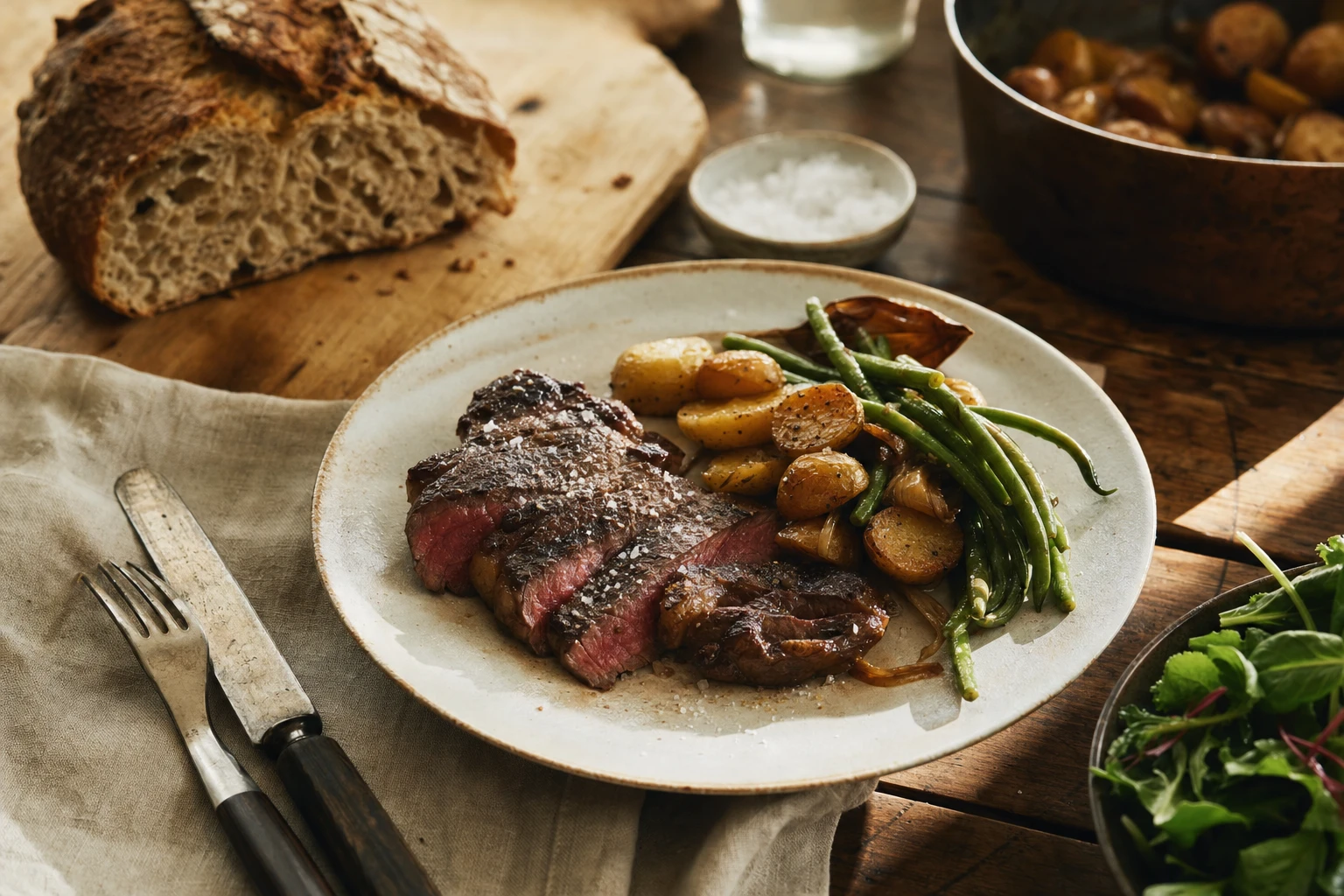
Cooking these foods simply means you preserve their nutritional integrity. A steak cooked in butter with salt is incomparably more nourishing than a protein shake with ten additives.
Fermented foods
Fermented foods are the nutritional insurance policy. Sauerkraut, kimchi, miso, kefir, yoghurt, tempeh. These are not luxury items. They're cheap, shelf-stable (when unpasteurised), and they restore the microbiota that modern food has destroyed.
A spoonful of sauerkraut with a meal isn't just probiotics. It's enzymes. It's organic acids that aid digestion. It's the bacterial diversity your gut is screaming for. The cost is pence. The benefit is measurable.
Every meal with fermented food is a meal where you're investing in long-term health instead of just eating.
Get ancestral nutrition guides, free
Two short reads a week on traditional ways of eating, examined with modern evidence.
By signing up you agree to receive emails from us. No spam, unsubscribe anytime.
The discipline of fewer choices
Simple eating requires discipline, but it's a different kind of discipline than restriction. You're not counting. You're not weighing. You're choosing a few things and eating them well.
This simplifies your life in ways that extend far beyond nutrition. Fewer choices at the supermarket means less time and money spent. Fewer ingredients at home means less complex cooking. Fewer options means more mastery. You learn how to cook that meat perfectly. You learn the rhythm of your sourdough.
The mental load of food choice drops away. You're not researching every ingredient or worrying about optimisation. You've chosen your anchor foods and you're trusting them.
How it changes everything
When you cook with eight or fewer ingredients, three things happen. First, your health improves visibly. Digestion becomes efficient. Energy becomes stable. Sleep becomes deeper. These changes happen in weeks.
Second, your relationship with food changes. You're no longer a consumer standing at a supermarket wondering what's in everything. You're a cook with a pantry of trusted foods.
Third, your time becomes yours again. Without the research, the worrying, the optimisation, cooking becomes what it should be: a simple human act that nourishes you and gives you something to do with your hands.
Simplicity is not deprivation. It's freedom.

1 of 9
Daily blend
100,000+ thriving families4.9 on Trustpilot
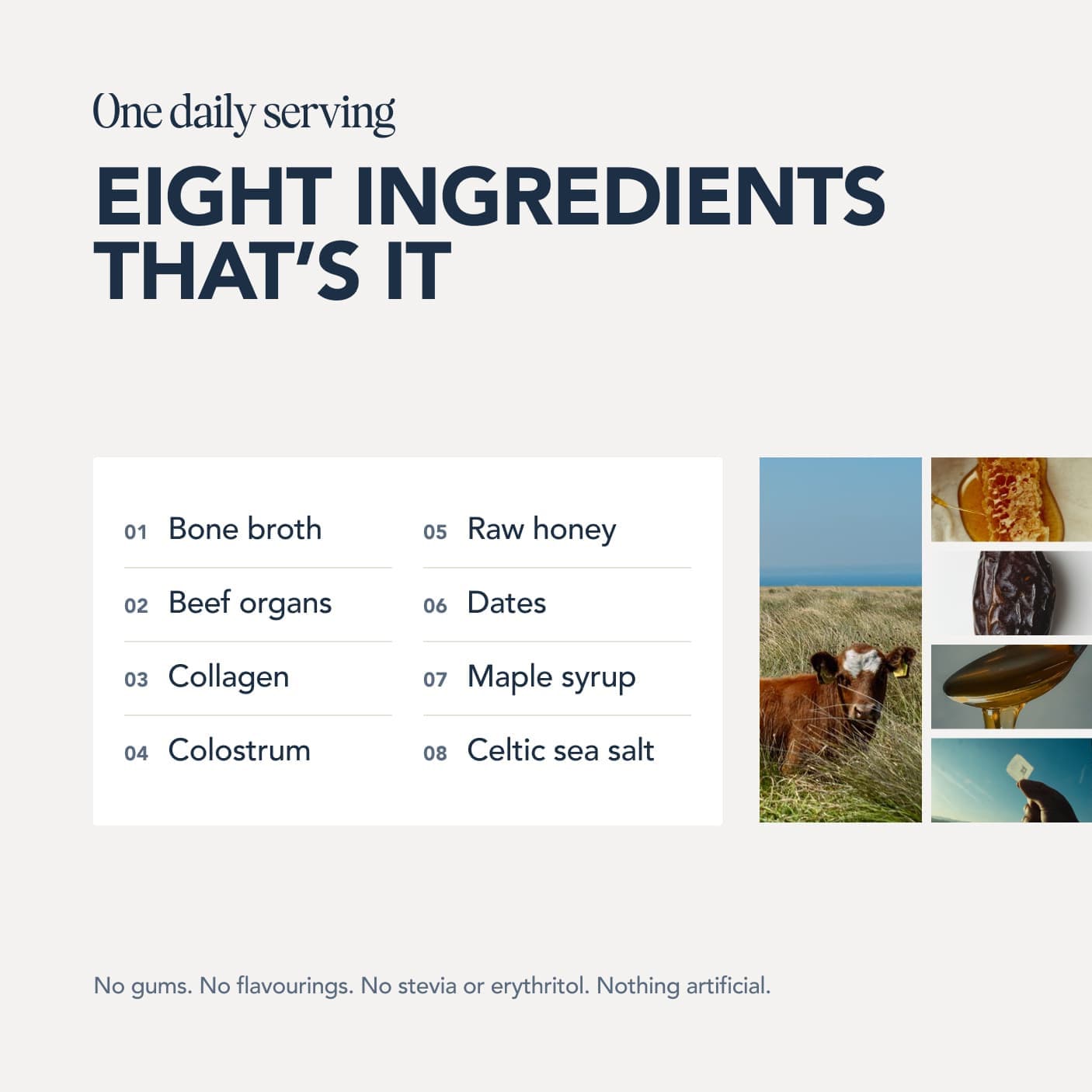
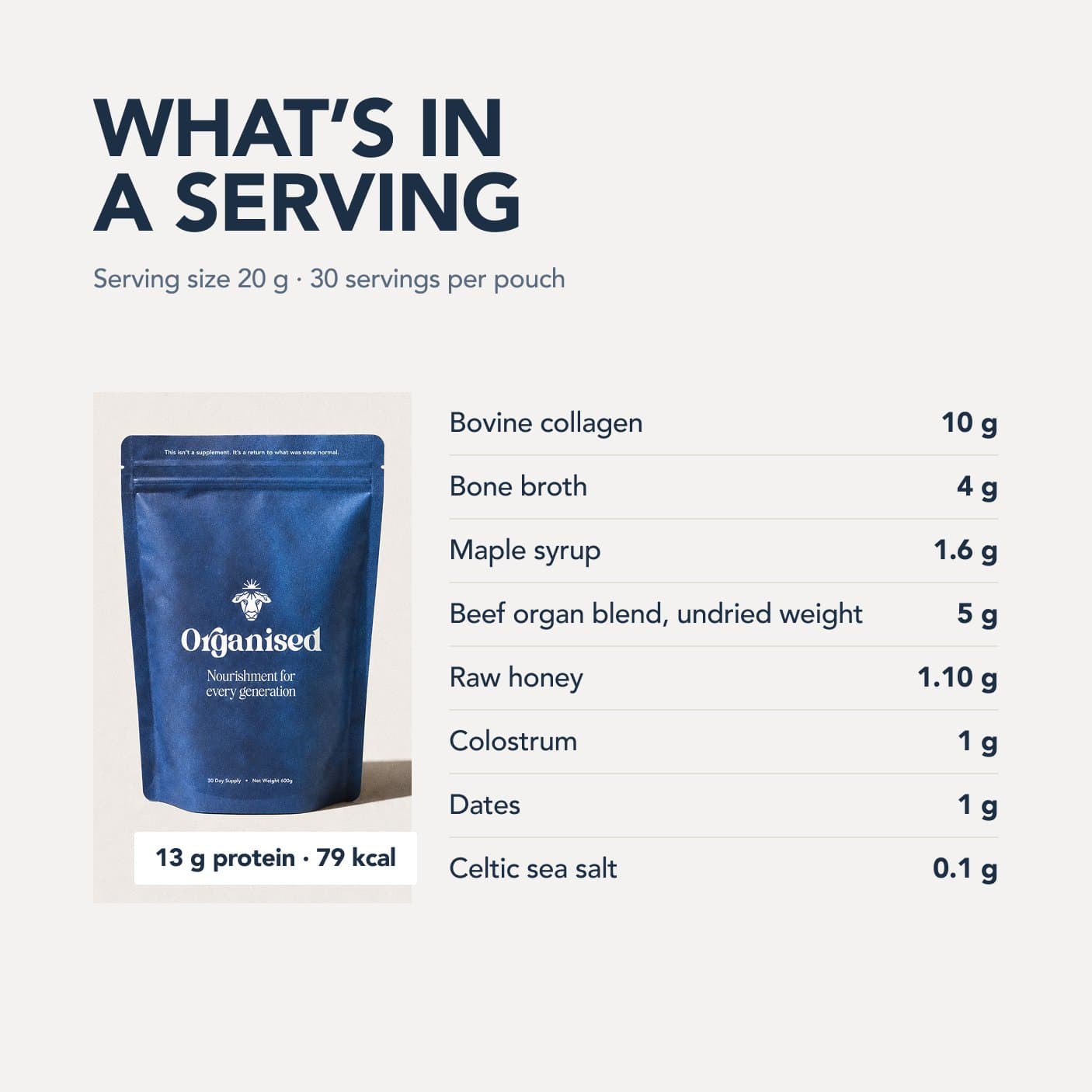
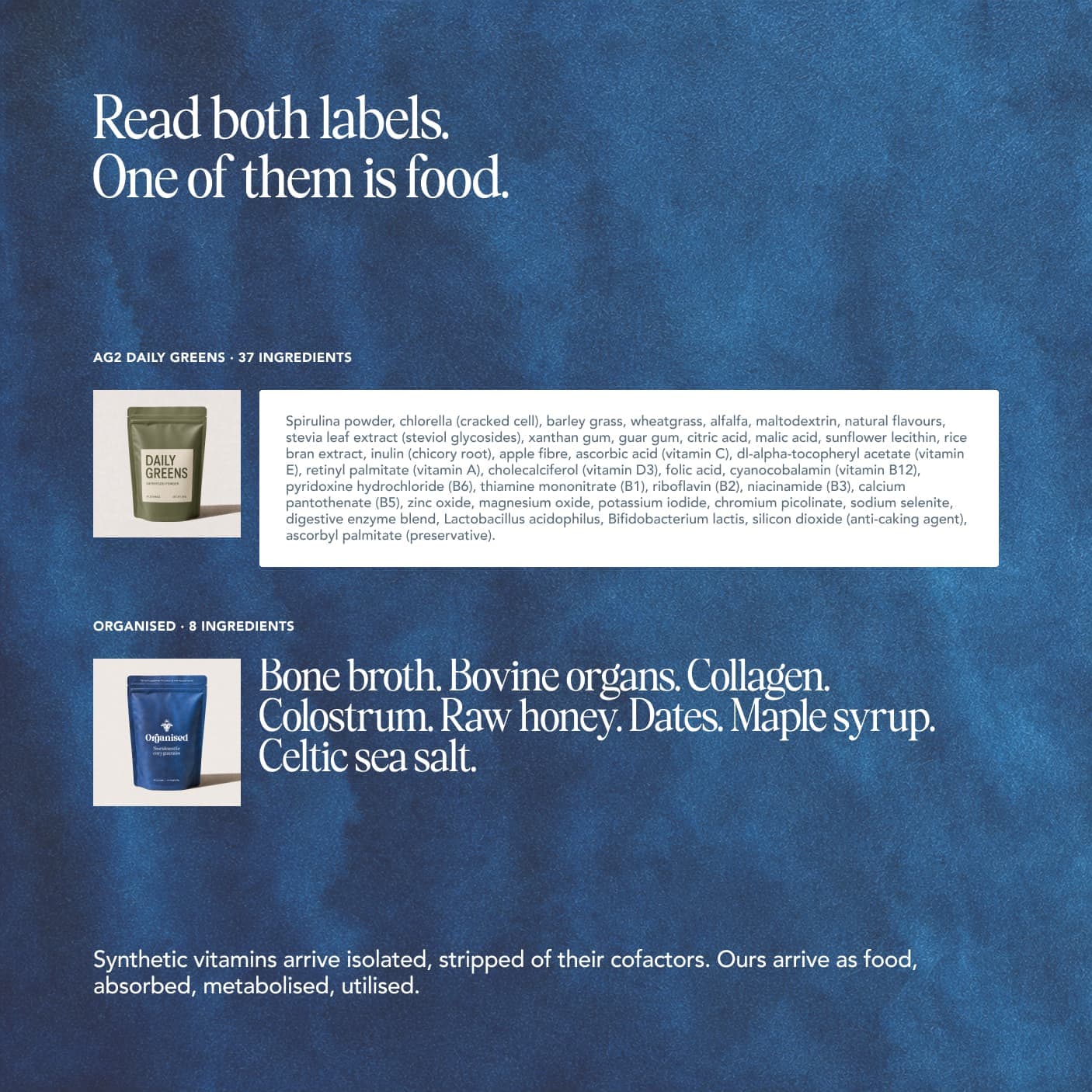
Eight real ingredients built around grass-fed beef organs, collagen and colostrum. Nothing synthetic added.
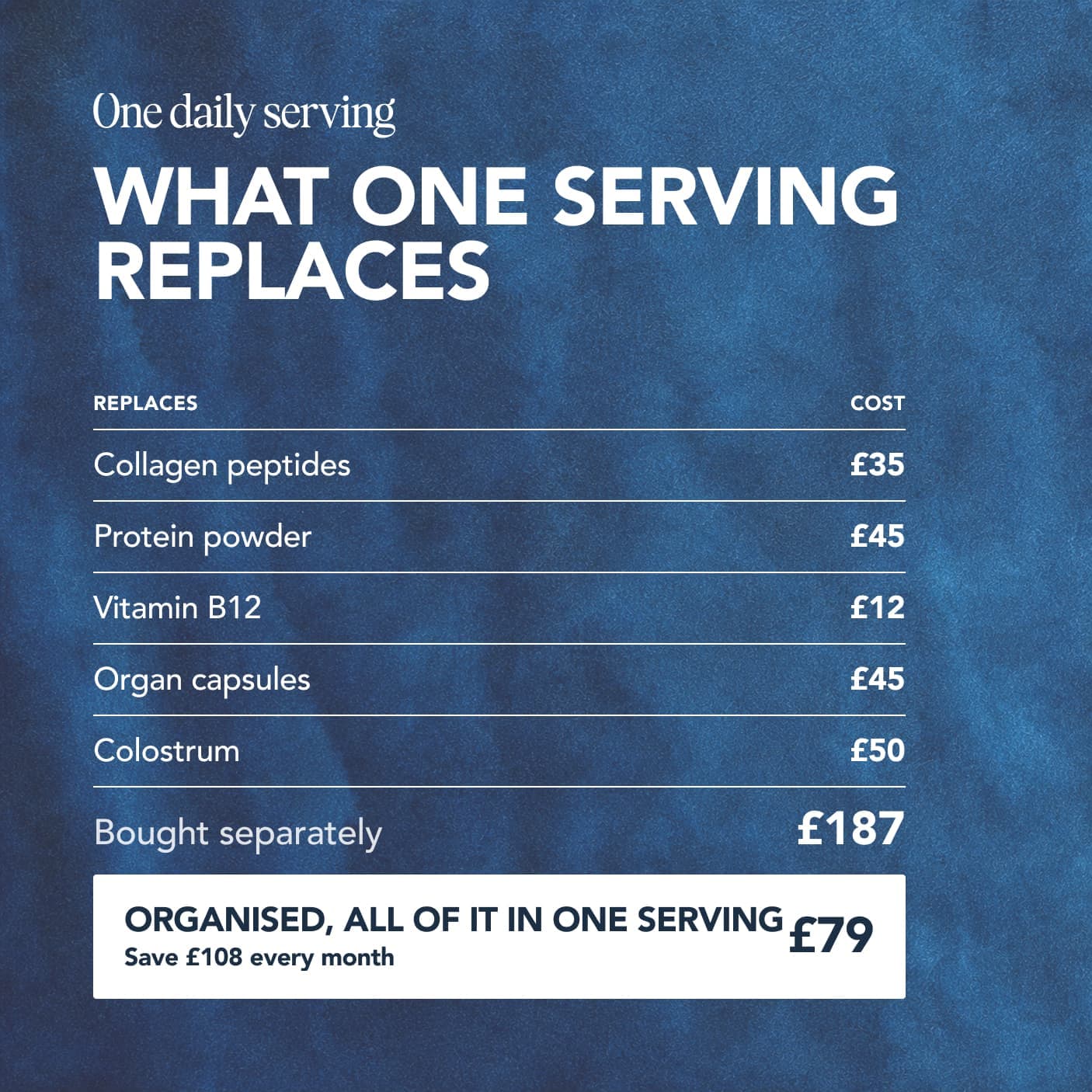
Free with your first order, worth £38. Plus £10 off the pouch with a subscription.


Free UK shipping · Made in England · 100 day money back guarantee on your first pouch · Skip, pause or cancel anytime
The bottom line
You don't need fifteen ingredients to be healthy. You don't need to research every additive or calculate every macro. You need butter, meat, eggs, salt, sourdough, vegetables, fermented foods, and water. Build your week around these and watch what happens. Simplicity is the most powerful nutritional strategy you have.
What each ingredient does
This isn't mysticism. Each of the eight ingredients has specific roles in the formula. Grass-fed beef provides amino acids, B vitamins, creatine, carnitine, and minerals. Grass-fed liver adds retinol, B12, folate, choline. Grass-fed kidney adds selenium. Each one is there because it fills a specific nutritional gap. Remove one, and you lose something essential.
The trace minerals, copper, zinc, selenium, come from the organ meats. These aren't present in high enough concentrations in muscle meat alone. The amino acid profile comes from the inclusion of multiple organs. The fat-soluble vitamins come from liver. This is why eight is enough. This is also why eight is necessary.
More ingredients wouldn't add more nutrition. It would add more complexity and dilute the concentration of what's actually working.
Why simplicity is strength
The supplement industry thrives on adding ingredients. More ingredients feels more potent. It feels more complete. In reality, it dilutes each component and often introduces things your body doesn't actually need. The complexity serves the company, not the customer.
Organised is the opposite. Fewer ingredients, but each one stronger and more purposeful. You can point to every ingredient and explain why it matters. You know exactly what you're eating. There are no filler ingredients, no "proprietary blends" hiding cheap components.
The customer benefit of simplicity
With eight ingredients, if something doesn't agree with you, you can identify what it is. If you had a 30-ingredient formula and felt bloated, you'd have no idea which component caused it. The simplicity of Organised is actually a feature. It's transparent. It's trackable. You can modify your intake confidently because you know what you're modifying.
References
Every source below was checked on 27 August 2026. Each PubMed, PMC and DOI identifier was resolved against NCBI or Crossref, and what it opens is printed under the citation, so you can see the link goes where the citation says without leaving the page. Where a citation and its identifier disagreed, the citation was corrected to the record or the reference was deleted along with the sentence marker that pointed at it, and where the resolved paper turned out not to support the sentence, the sentence was cut back to what it does support. Borrowed authority is worse than none, because it looks like rigour.
- Marco ML et al. Health benefits of fermented foods: microbiota and beyond. Current Opinion in Biotechnology, 2017. PMID 27998788.Checked 27 August 2026: PMID 27998788 opens Marco ML, Heeney D, Binda S et al, Health benefits of fermented foods: microbiota and beyond. Curr Opin Biotechnol 2017;44:94-102. PubMed indexes it as: Review.
- National Institutes of Health, Office of Dietary Supplements. Choline — Health Professional Fact Sheet.
Who wrote and reviewed this guide
Niall Kiddle
Author · Founder, Organised
Niall is the founder of Organised. He started the company in 2024 after fixing his own health the slow way: in 2022 he swapped a cupboard of synthetic supplements for real food, raw milk, organ meats, bone broth and honey, and felt the difference within months.
Areas of expertise: Ancestral nutrition, Organ meats, Whole-food supplementation, Gut health, Regenerative sourcing
Read Niall's full profile
Pedro Rodrigues
Reviewer · Agronomist (farming and sourcing only)
Pedro is the agronomist Organised works with on farming and sourcing. His job on the guides is to keep the science honest: he reviews what we publish about soil health, regenerative agriculture, grazing and the way food is actually produced.
Areas of expertise: Regenerative agriculture, Agronomy, Soil health, Grass-fed farming, Food sourcing
Reviewed this guide on
Read Pedro's full profileBrowse the guides library
All guidesKeep reading

Ancestral
What 'Clean Eating' Gets Right and Wrong
Clean eating has merit, but it can also fuel orthorexia, privilege, and dogma. Here's what actually works about the movement, and what doesn't.
Ancestral
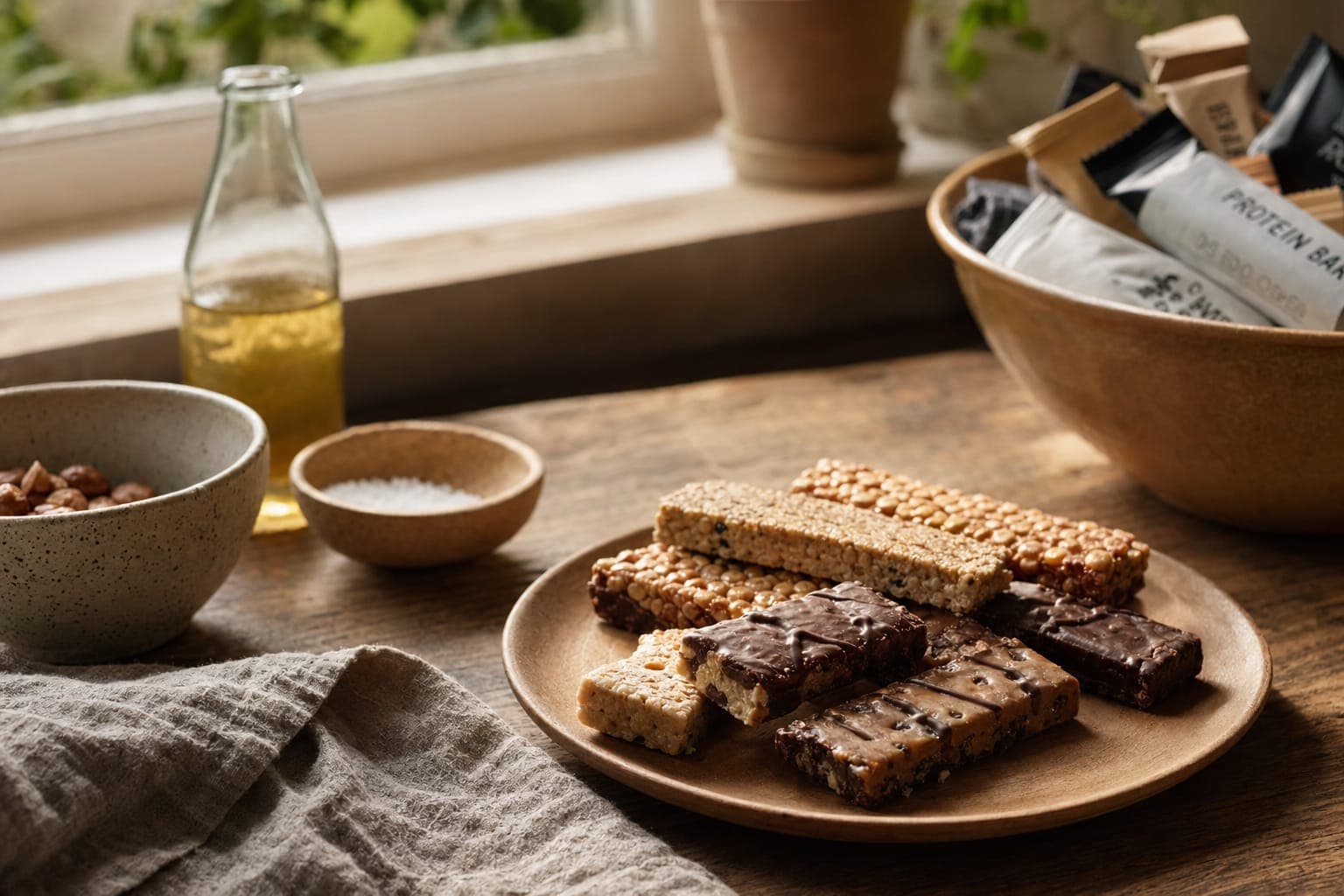
The Hidden Ingredients in Your 'Healthy' Protein Bar
Protein bars marketed as healthy hide seed oils, sugar alcohols, and processed isolates. Here's what's actually in them and why they're not real food.

Ancestral
Cod Liver Oil: What Your Great-Grandmother Got Right
Cod liver oil prevented rickets. It provided vitamin A and D when food was scarce. Modern versions miss the point. Here's what actually matters.
Real food, made effortless
Bring it into my routineA few ways to use it
All recipes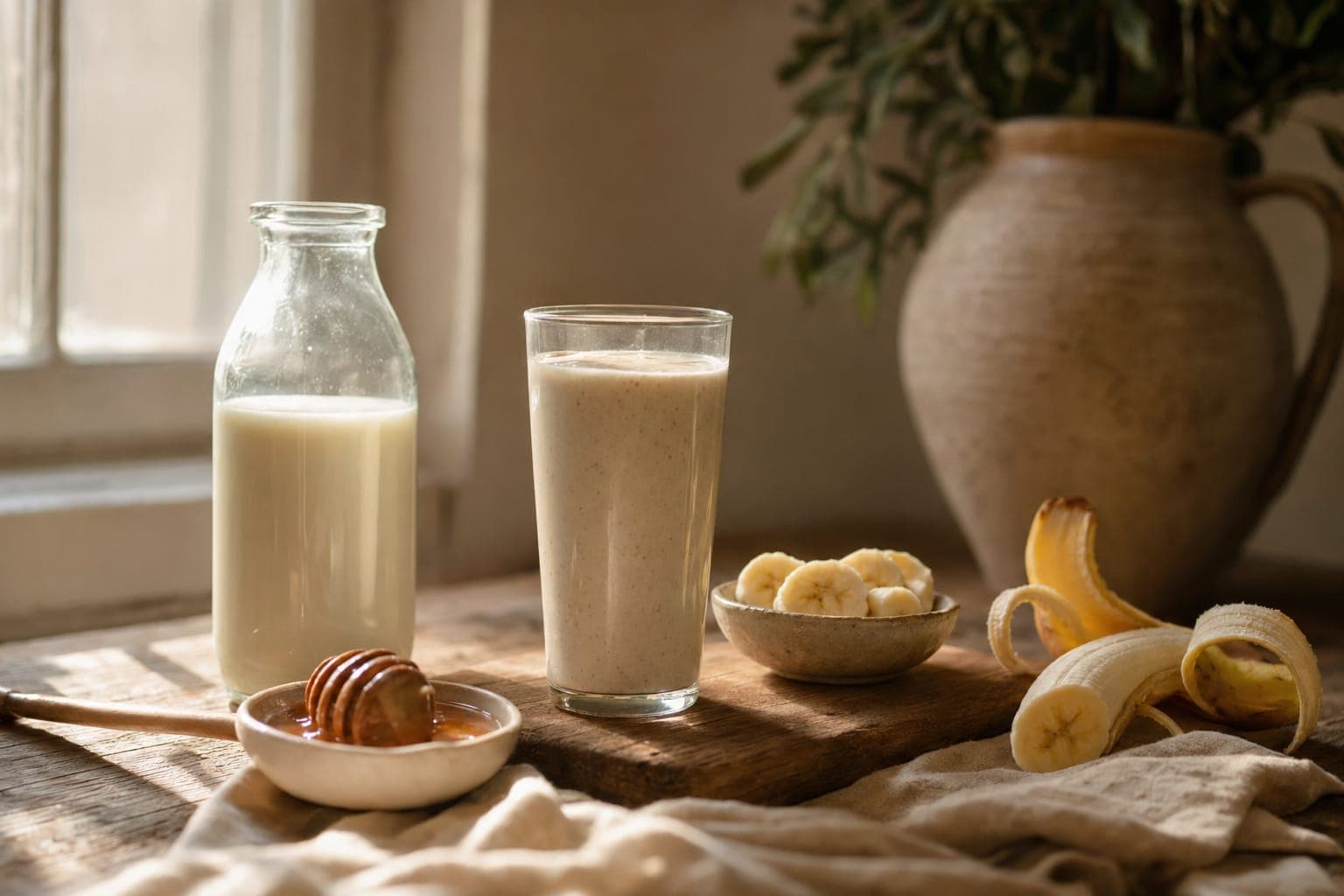
The Perfect Organised Morning Shake: Our Favourite Recipe
Our signature morning shake: Organised, raw milk, banana, honey. Simple, nourishing, and optimised for an empty stomach.

Organised Protein Pancakes: A Weekend Favourite
A high-protein pancake recipe using beef protein, eggs, and raw milk. Cooked in cast iron, naturally sweetened with banana and honey. Real food breakfast.
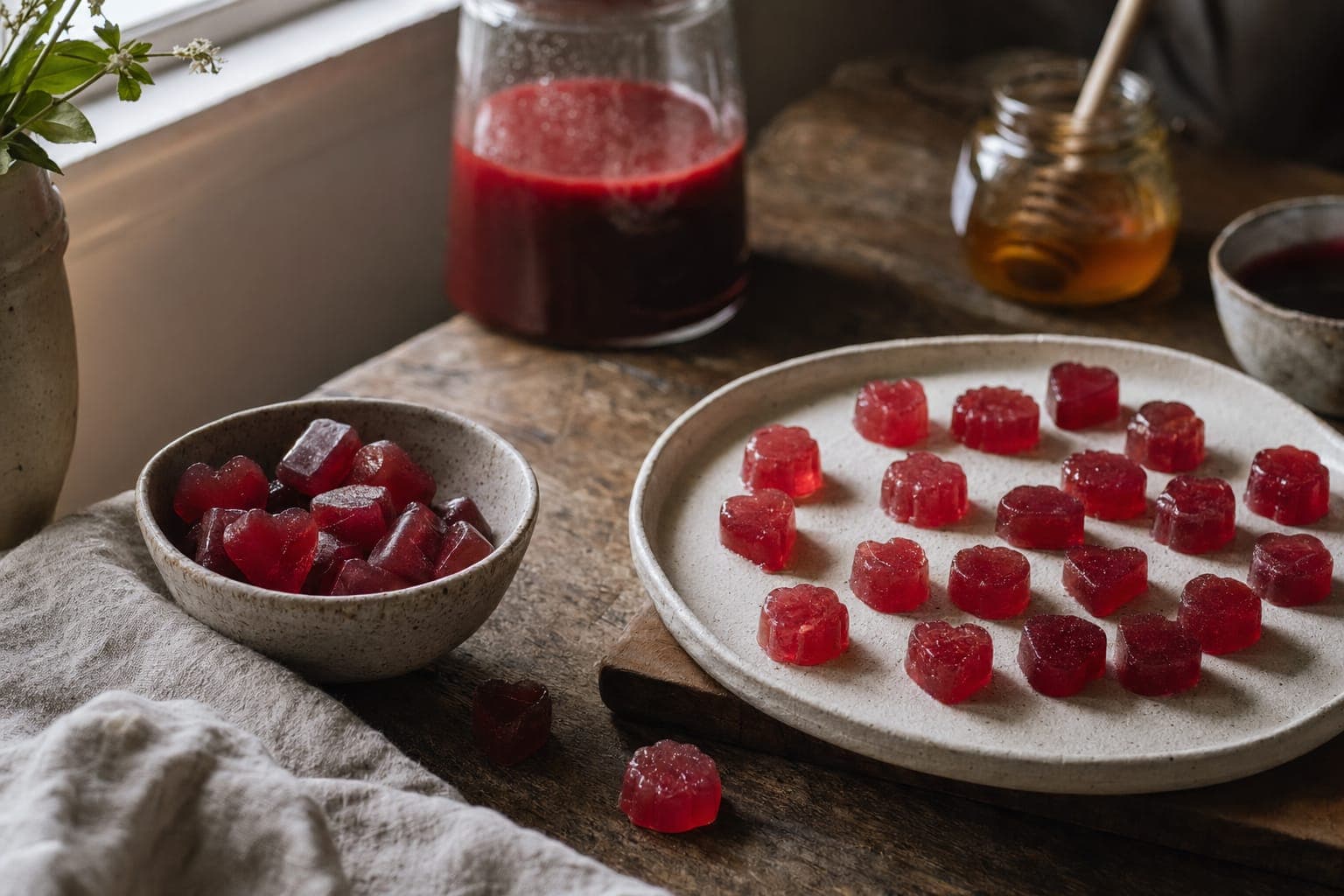
How to Make Your Own Gelatine Gummies
A simple recipe for homemade gelatine gummies using grass-fed gelatine, fresh juice, and raw honey. Better than shop-bought, kids love them.


 Join over 100,000+ members
Build a better food system with us
The Organised community is thousands of people choosing real food and backing the farmers who grow it, all of us trying to leave the world a little better than we found it. If that is what you care about too, you belong here.