What 'Clean Eating' Gets Right and Wrong
There's something quietly troubling about how 'clean eating' became the gold standard of nutrition. Real food focus is genuinely good, but the movement has also birthed a new kind of disorder, a rigidity that serves no one. Here's what clean eating gets right, and where it all goes wrong.
By Niall Kiddle, Founder, Organised

Reviewed by Pedro Rodrigues, Agronomist (farming and sourcing only) ·
6 min read · Published · Updated · 1 cited source
Makers of the Organised Daily blend, a grass-fed beef organ supplement from regenerative UK farms
What clean eating actually is
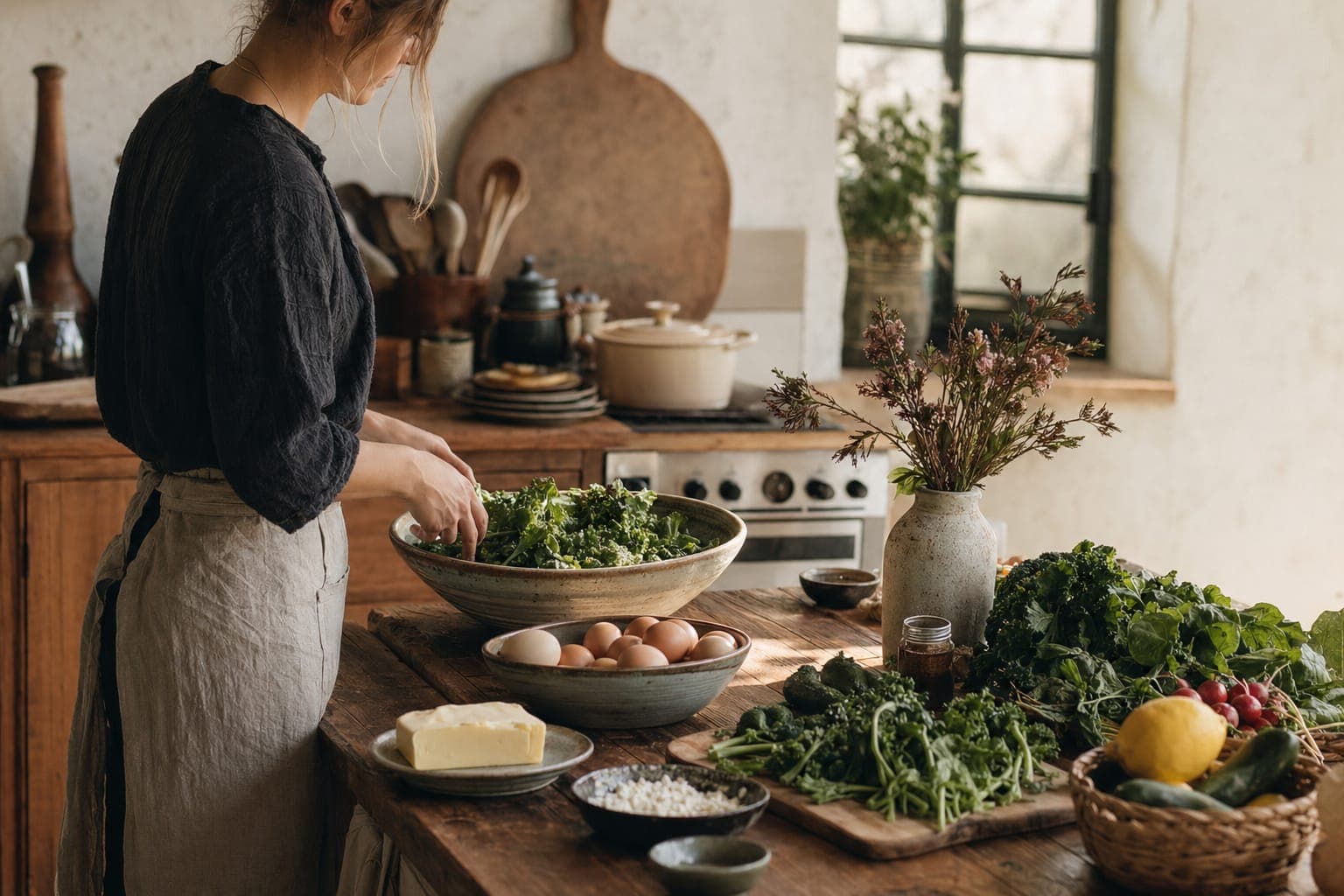
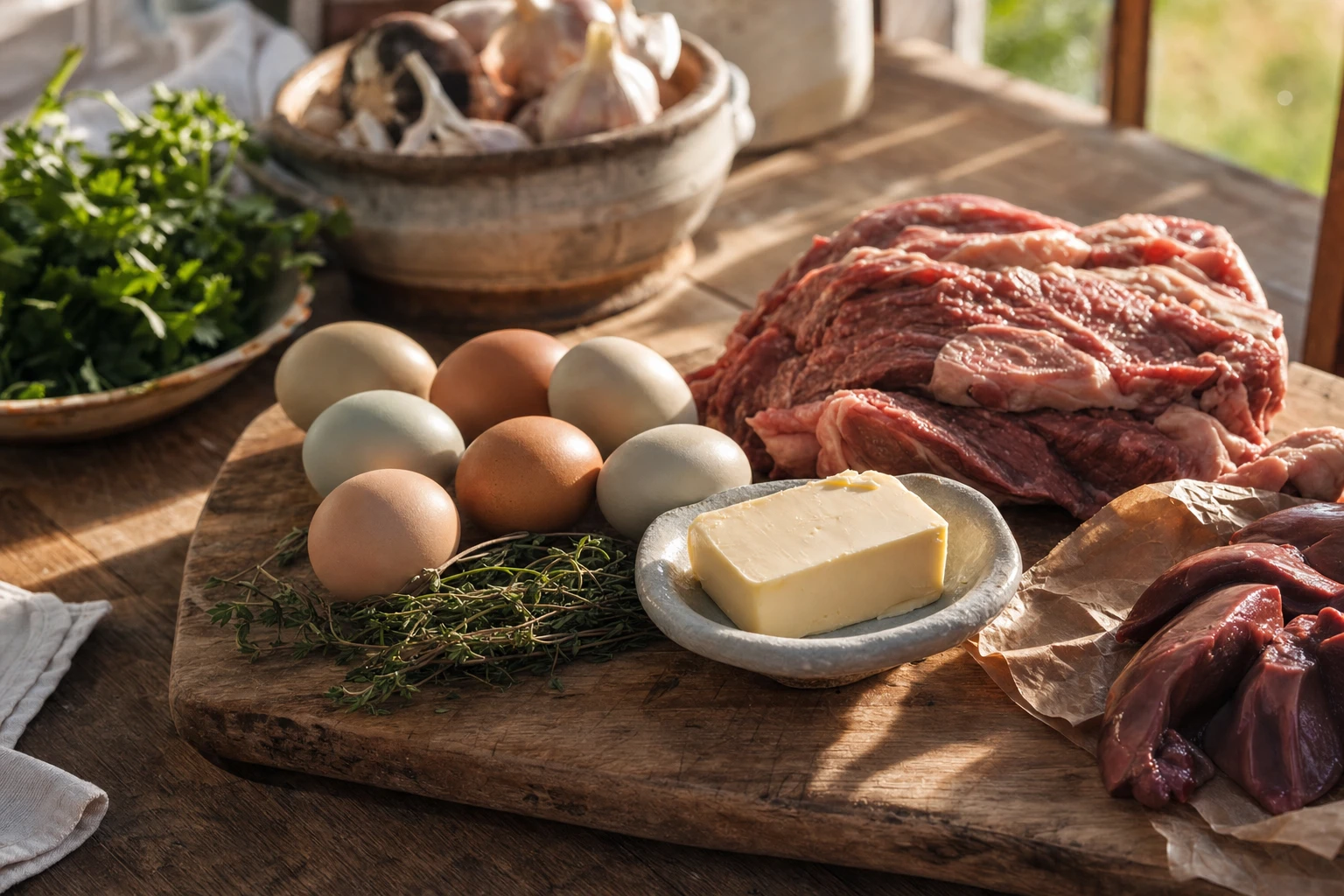
Clean eating, in its simplest form, means eating whole foods instead of processed ones. No additives, no refined sugars, no seed oils. Real butter instead of margarine. Actual eggs instead of egg substitute. Meat from animals that ate grass, not corn and antibiotics. This is the foundation, and on this foundation, clean eating stands on solid ground.
The problem isn't the premise. The problem is what happens next.
The good: focus on real food
Clean eating's core obsession with real food is the single most important thing you can do for your health. When you choose butter over vegetable oil, eggs over Egg Beaters, and bone broth over stock cubes, you're not following a trend. You're returning to what your body actually recognises as food.
The principle that real, whole foods are nutritionally superior to their processed alternatives is not wrong. It's the most non-negotiable truth of nutrition.
Your gut knows the difference. Your immune system knows the difference. Your nervous system knows the difference. The focus on ingredient quality, on knowing what's in your food and where it came from, is genuinely restorative. This isn't a fad. This is basic biology.
The problem: orthorexia and obsession
Clean eating has quietly birthed a new pattern called orthorexia. It's an obsession with food purity that can become pathological.1 The line between 'I choose real food' and 'I'm terrified of contamination' is thinner than it appears.
You see it everywhere now. The woman who spirals if she eats a banana with a pesticide residue. The man who meticulously avoids any restaurant because he can't verify the source. The parent who orthoexically restricts their child's diet to the point of malnutrition in the name of 'cleanliness.'
Perfectionism in pursuit of health is not health. It's a form of control, and control is the opposite of the relaxed nervous system you're trying to build.
Food quality matters. But your nervous system matters more. If clean eating becomes a source of chronic stress, you've missed the point entirely. A conventionally grown apple eaten with peace of mind is better for you than an organic apple eaten with anxiety.
The privilege problem
Clean eating is expensive. Grass-fed beef costs more. Organic vegetables cost more. A farmers market haul for a family of four can run to GBP 60 or GBP 80 in a single trip. The clean eating movement has, often unintentionally, sent the message that if you're not buying premium sources, you're doing it wrong.
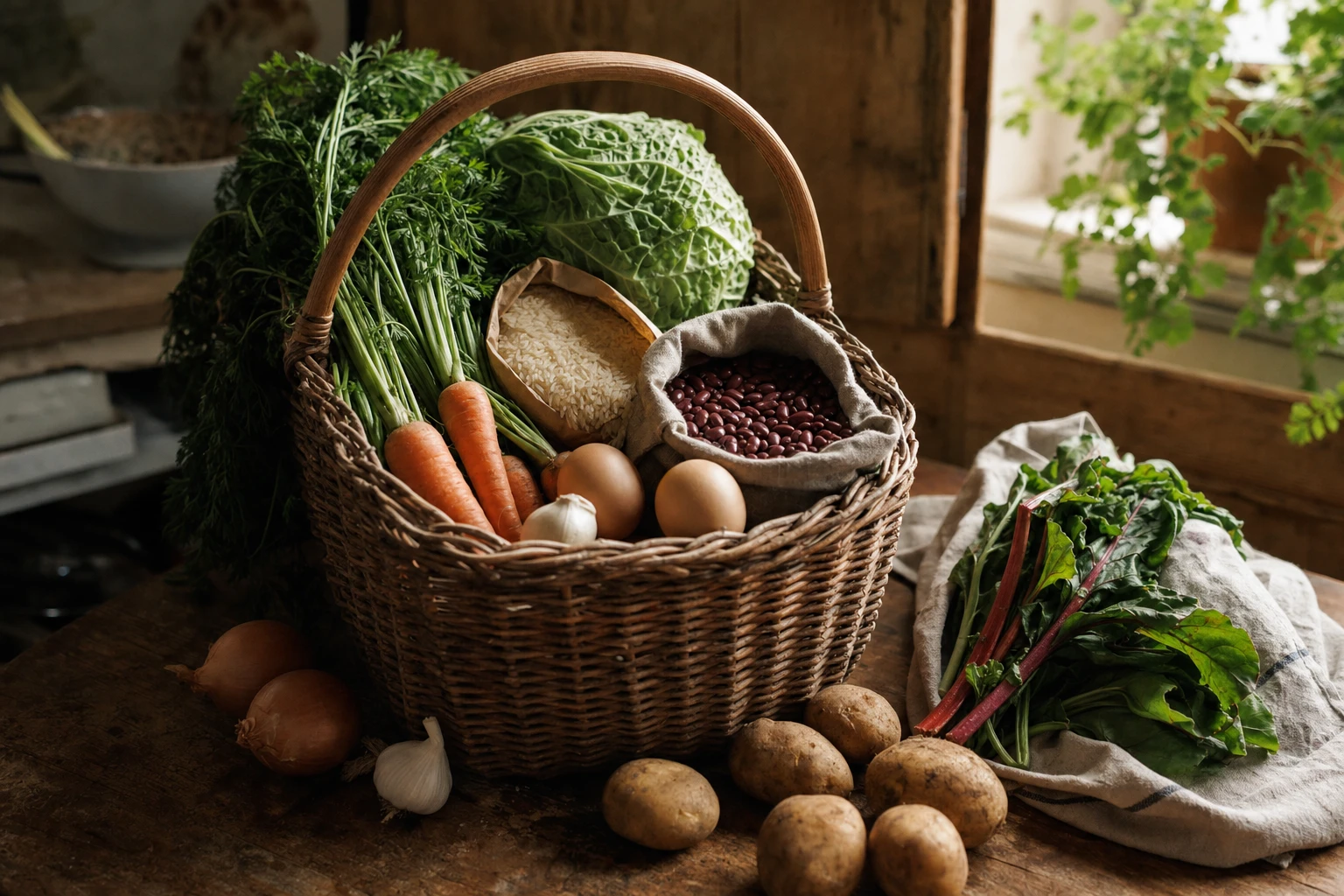
This is both false and morally bankrupt. A tin of beans and a bunch of carrots, regardless of source, beats ultra-processed food every time. Brown rice is still brown rice. A chicken that wasn't pastured is still a protein source superior to a protein bar with twenty ingredients.
Real food doesn't have to be perfect food. Good is genuinely good enough.
The clean eating movement has gaslit an entire generation into thinking they're failing if they can't access the premium tier. You're not failing. You're doing better than the alternative.
The dogma problem
Clean eating has spawned a hundred different rules, and they contradict each other. Some say no grains. Others say sourdough is fine. Some say no seed oils but coconut oil is acceptable. Others say all plant oils are poison.
The internet swarms with clean-eating advocates who've turned it into religion. If you eat differently, you're not just making a different choice. You're failing. You're toxic. You're not serious about your health.
This is not how real nutrition works. Real nutrition is flexible. Real nutrition accounts for individual variance, food availability, budget, and cultural context. A rigid system that works for one person but creates anxiety in another isn't a system worth defending.
The best diet is the one you'll actually stick to, that doesn't wreck your mental health, and that you can afford to maintain.
What actually works
Strip away the perfectionism and the dogma, and what's left is genuinely useful: eat whole foods when you can. Reduce seed oils. Prioritise meat, eggs, and dairy from higher-welfare sources if your budget allows. Skip the additives and the refined sugars. But don't obsess. Don't judge yourself. Don't judge others.
Your health will improve dramatically if you move from a standard processed diet to a diet of mostly whole foods. You don't need perfection. You need consistency, permission, and peace of mind.
Good beats perfect. Always.
Get ancestral nutrition guides, free
Two short reads a week on traditional ways of eating, examined with modern evidence.
By signing up you agree to receive emails from us. No spam, unsubscribe anytime.
A practical framework for clean eating without obsession
Clean eating doesn't require perfection. It requires direction. Here's how to apply clean eating principles without spiralling into orthorexia or privilege gatekeeping.
Start by auditing your baseline. What does a typical day of eating look like right now? Breakfa with cereal? Lunch with a sandwich from a shop? Dinner with takeaway? If you're eating processed foods at every meal, the priority is to replace one meal with whole food. Not all meals. Not immediately. One.
Swap one thing this week. Skip the cereal. Eat eggs instead. That's it. Next week, if that feels manageable, swap another meal or replace one regular processed snack with whole food. Movement matters more than magnitude.
Stop researching. This is crucial. The more you read about clean eating, the more rules you'll find, the more conflicting advice you'll encounter, and the more anxious you'll become. You don't need to know whether your broccoli was sprayed or not. You need to eat broccoli, whatever its provenance.
Accept your budget. Grass-fed meat is better than conventional meat, which is better than no meat. But a conventional chicken eaten regularly beats an aspirational grass-fed chicken you can't afford so you eat none. Play the game with the resources you have.
Get comfortable with 80-20. Eat whole foods 80 percent of the time. The other 20 percent, eat what's available, what you enjoy, what's practical. Your body is robust. It doesn't need perfection. It needs consistency and permission.
Talk less about it. The more you vocalise your dietary choices, the more you'll feel scrutinised by others and the more you'll scrutinise yourself. Eat your way, quietly, without evangelism or defensiveness. Your health will speak for itself without commentary.
1 of 9
Daily blend
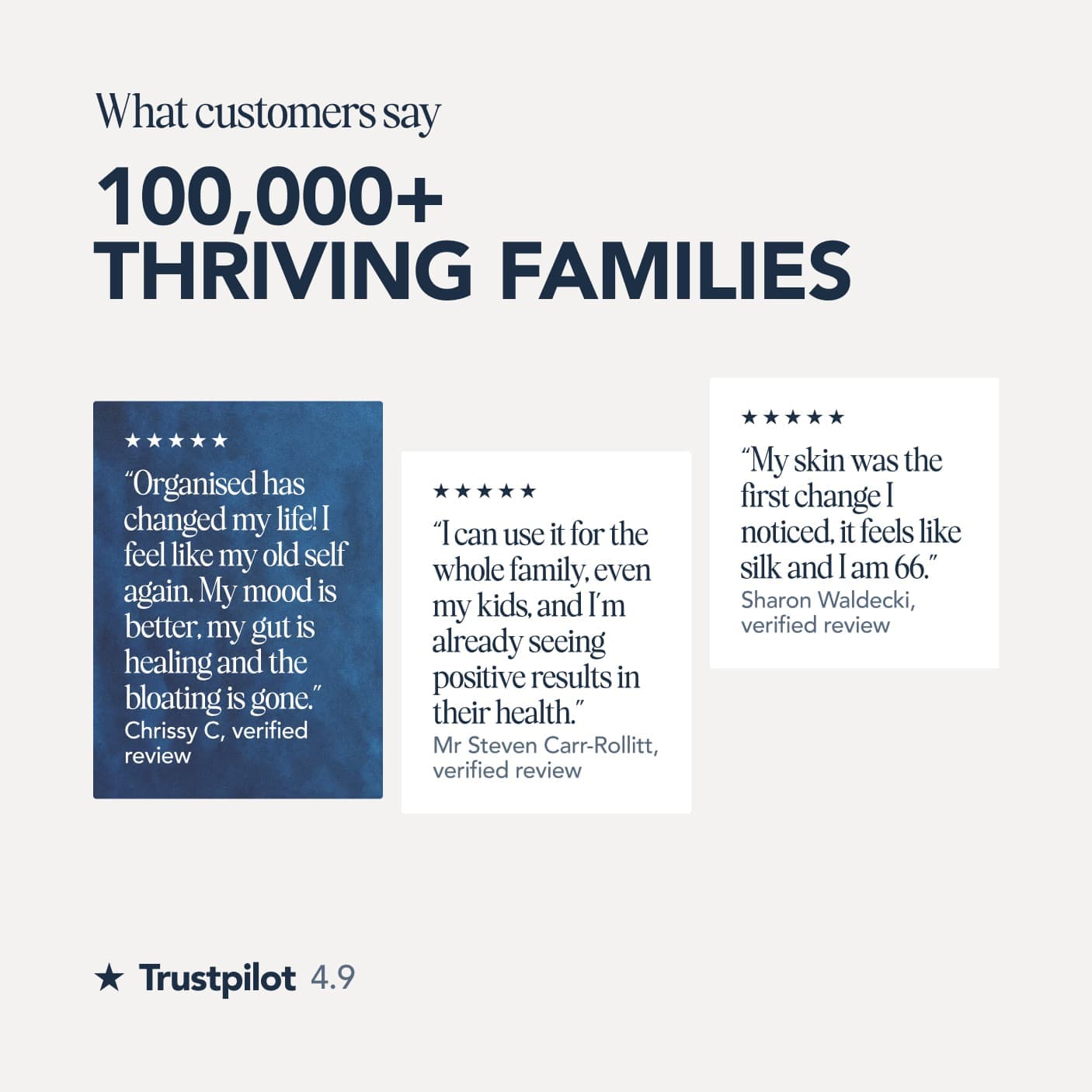
100,000+ thriving families4.9 on Trustpilot
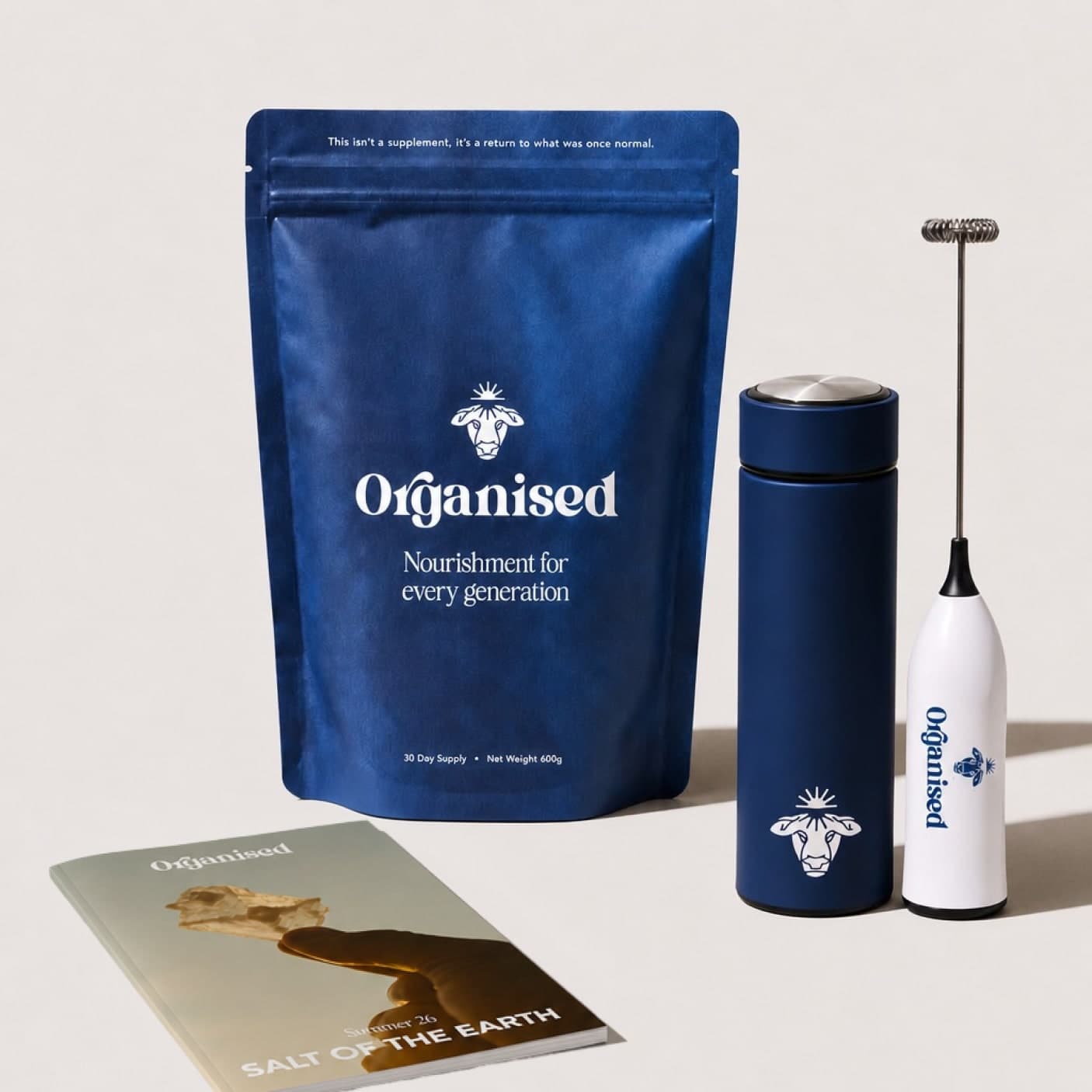
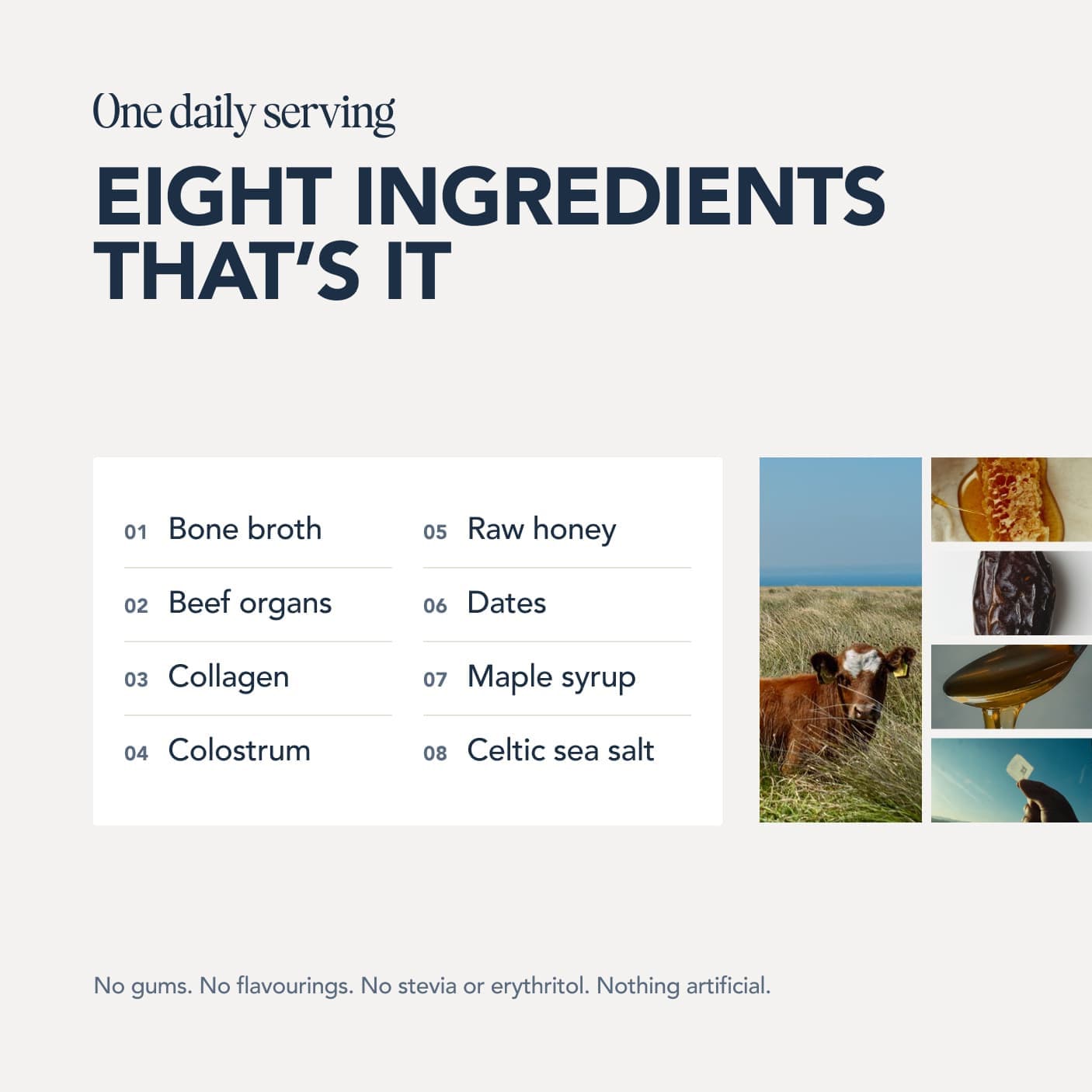
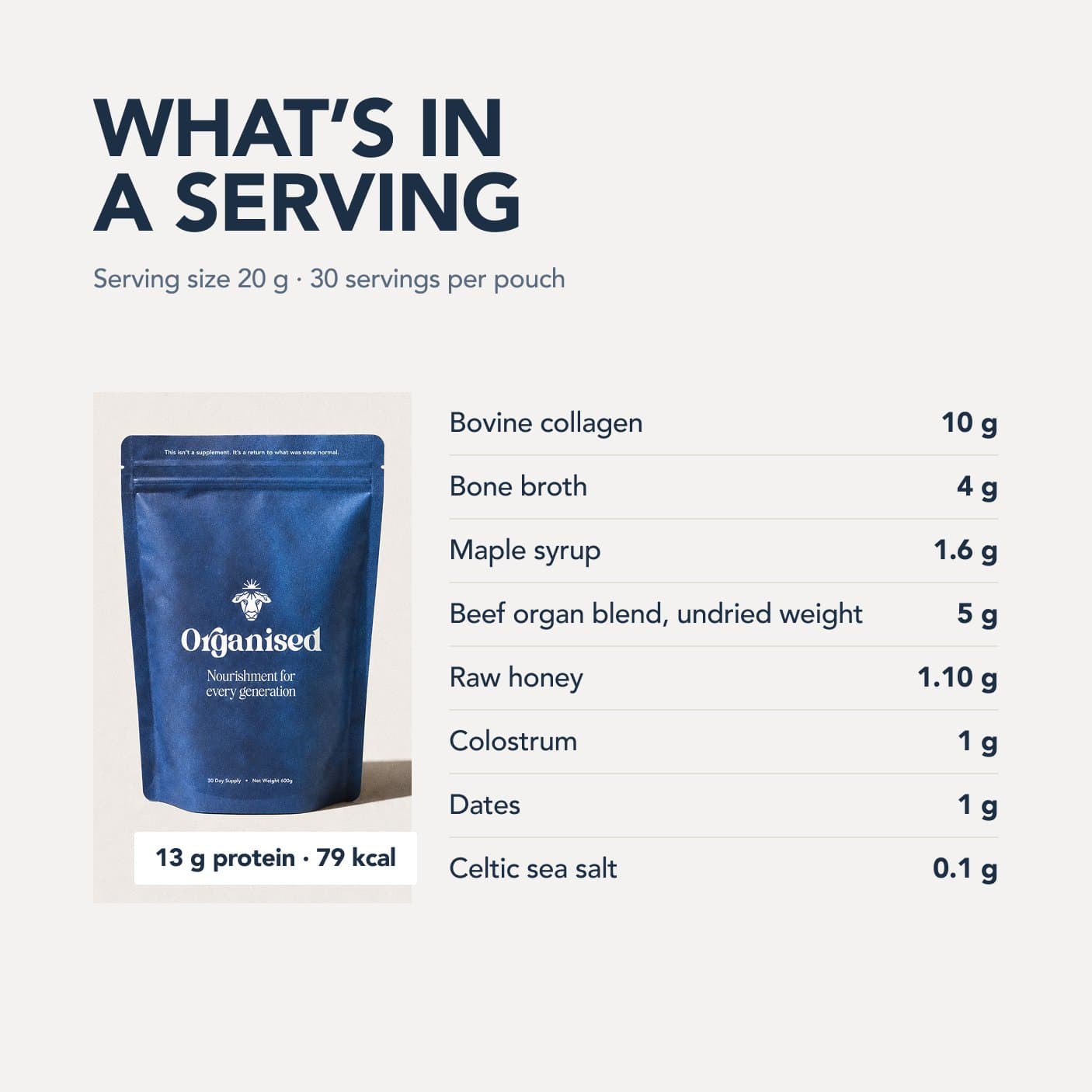
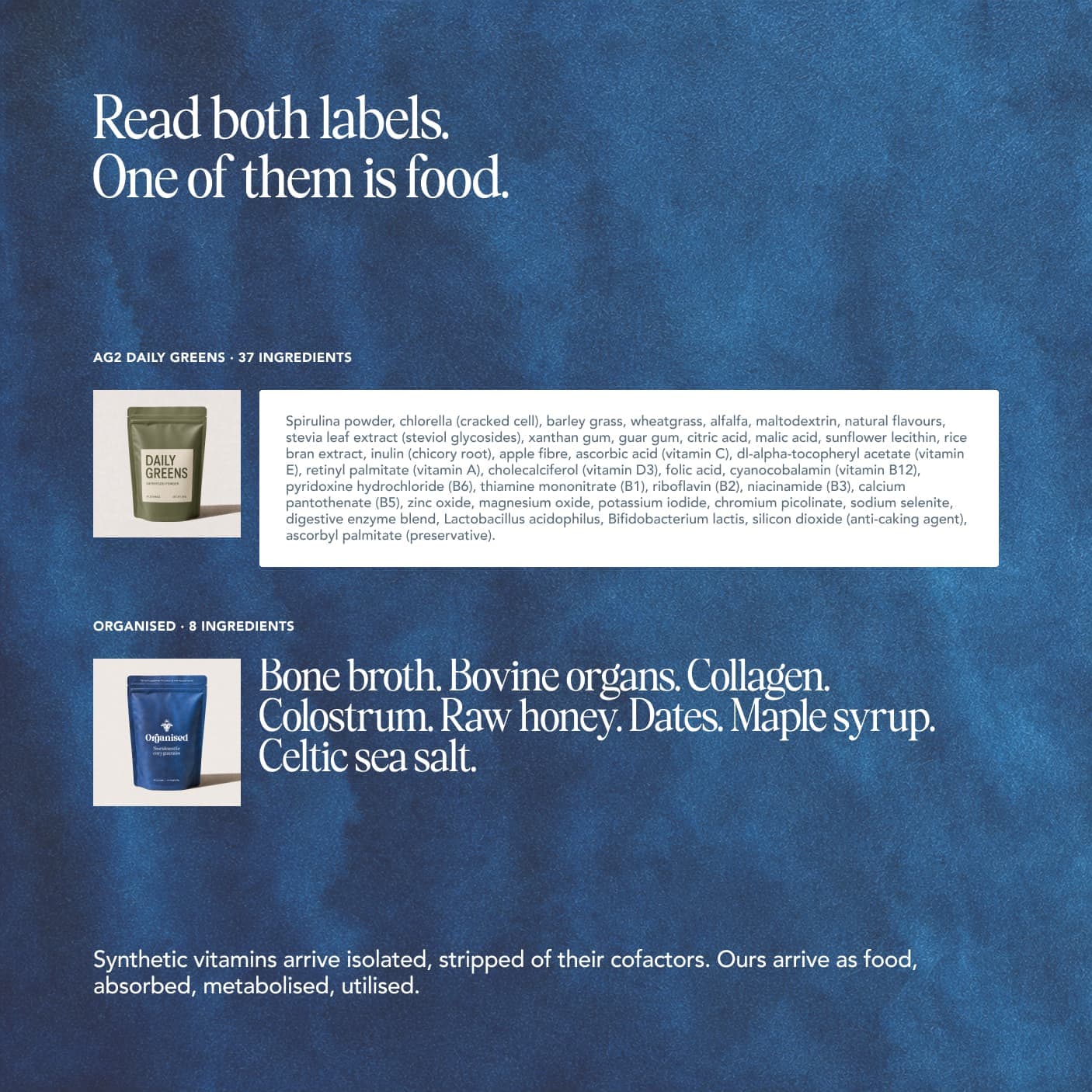
Eight real ingredients built around grass-fed beef organs, collagen and colostrum. Nothing synthetic added.
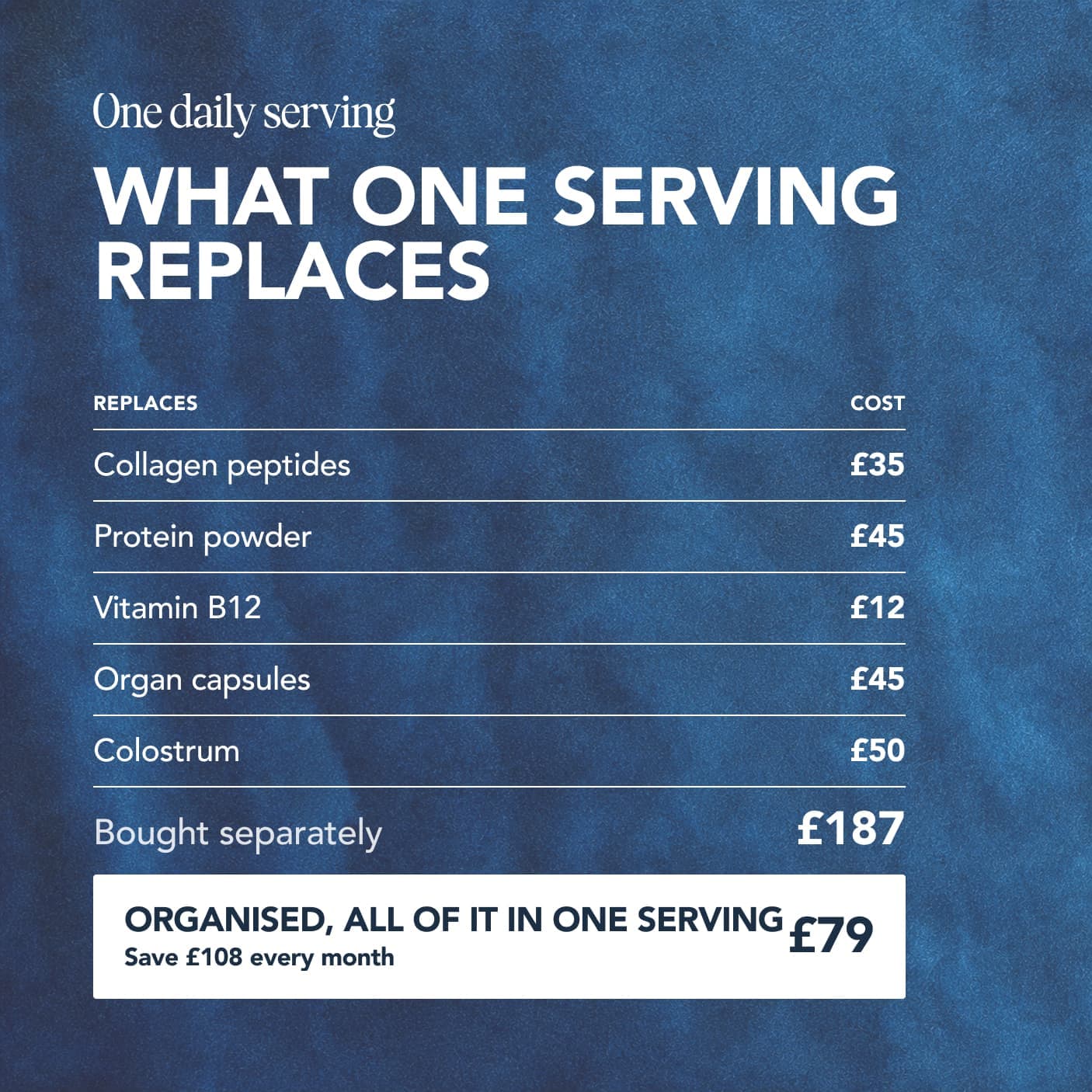
Free with your first order, worth £38. Plus £10 off the pouch with a subscription.

Free UK shipping · Made in England · 100 day money back guarantee on your first pouch · Skip, pause or cancel anytime
The tension between 'real food' and 'food accessibility'
The clean eating movement has inadvertently created a two-tier system: the people who can access premium whole foods, and everyone else. This is not accidental. Premium food marketing has actively coopted the clean eating message to create scarcity and superiority.
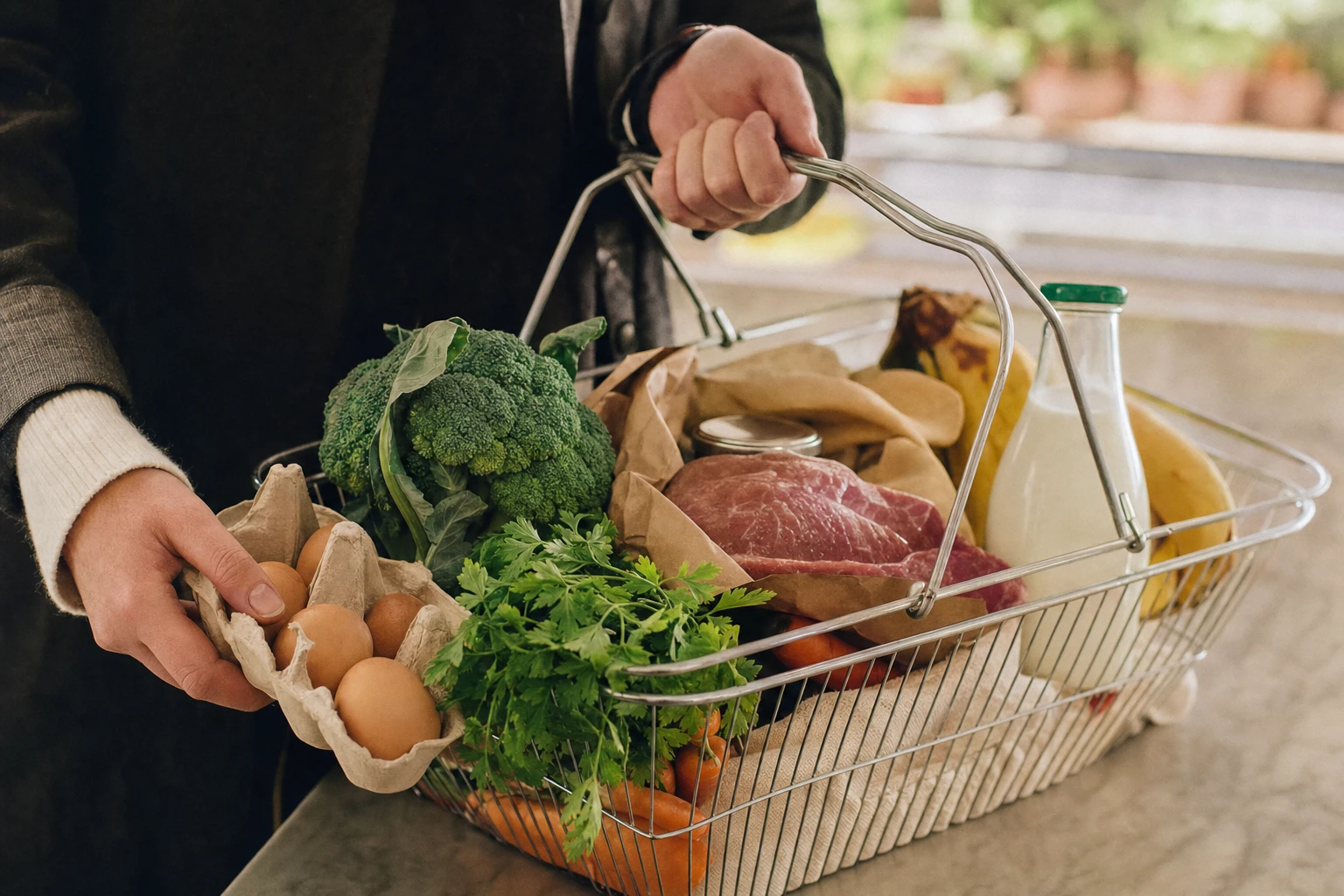
But here's the truth that nobody says: a tin of sardines beats a protein powder. A bunch of frozen vegetables beats an ultra-processed ready meal. A bag of lentils and some brown rice beats anything marketed as convenient. You don't need to shop at a farmers market or a premium whole food store. You need to shop in the basics aisle.
The real food movement doesn't belong to the wealthy. It never did. Ancestral diets were built on whatever was available locally and seasonally. For some people that was organ meats and bone broth. For others it was grains and legumes. For still others it was fish and seaweed. All of it was real food, all of it was accessible, none of it was premium.
The bottom line
The clean eating movement got the most important thing right: real food matters. But it got the delivery catastrophically wrong. Perfectionism is not a virtue in nutrition. Anxiety is not a sign of health. And the belief that clean eating is only for people with money or time is a useful fiction that needs to be demolished.
Eat real food. Make it simple. Make it yours. Stop the comparison, drop the judgment, and watch what happens.
References
Every source below was checked on 27 August 2026. Each PubMed, PMC and DOI identifier was resolved against NCBI or Crossref, and what it opens is printed under the citation, so you can see the link goes where the citation says without leaving the page. Where a citation and its identifier disagreed, the citation was corrected to the record or the reference was deleted along with the sentence marker that pointed at it, and where the resolved paper turned out not to support the sentence, the sentence was cut back to what it does support. Borrowed authority is worse than none, because it looks like rigour.
- Cena H, Barthels F, Cuzzolaro M, et al. Definition and diagnostic criteria for orthorexia nervosa: a narrative review. Eat Weight Disord. https://pubmed.ncbi.nlm.nih.gov/30414078/ [accessed May 2026].Checked 27 August 2026: PMID 30414078 opens Cena H, Barthels F, Cuzzolaro M et al, Definition and diagnostic criteria for orthorexia nervosa: a narrative review of the literature. Eat Weight Disord 2019;24(2):209-246. PubMed indexes it as: Review.
Who wrote and reviewed this guide
Niall Kiddle
Author · Founder, Organised
Niall is the founder of Organised. He started the company in 2024 after fixing his own health the slow way: in 2022 he swapped a cupboard of synthetic supplements for real food, raw milk, organ meats, bone broth and honey, and felt the difference within months.
Areas of expertise: Ancestral nutrition, Organ meats, Whole-food supplementation, Gut health, Regenerative sourcing
Read Niall's full profile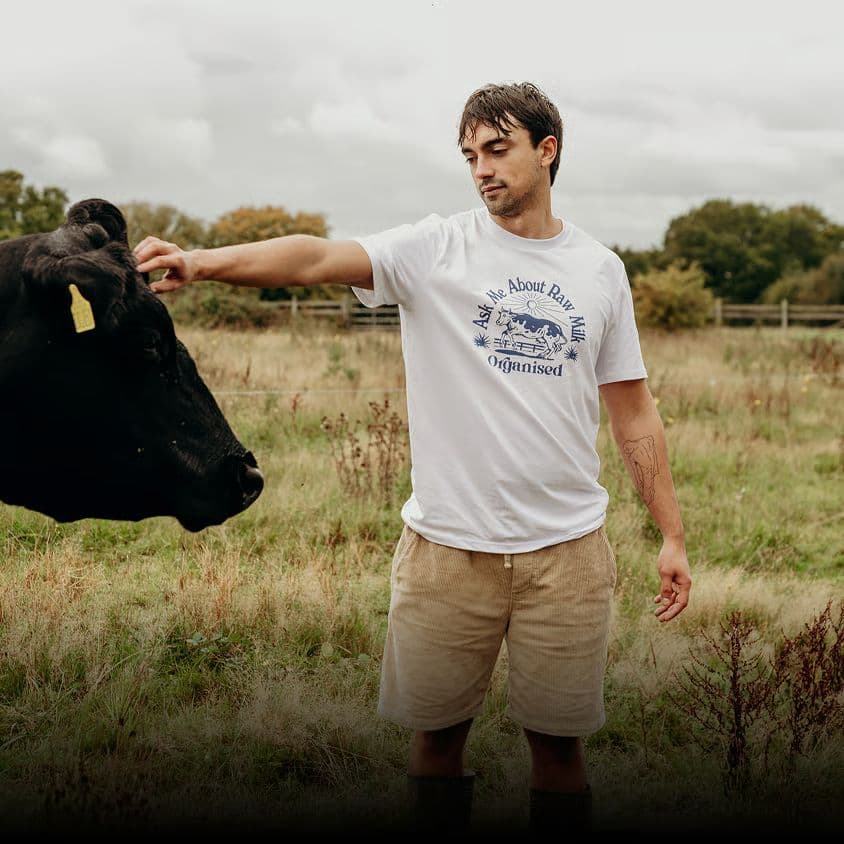
Pedro Rodrigues
Reviewer · Agronomist (farming and sourcing only)
Pedro is the agronomist Organised works with on farming and sourcing. His job on the guides is to keep the science honest: he reviews what we publish about soil health, regenerative agriculture, grazing and the way food is actually produced.
Areas of expertise: Regenerative agriculture, Agronomy, Soil health, Grass-fed farming, Food sourcing
Reviewed this guide on
Read Pedro's full profileBrowse the guides library
All guidesKeep reading
Ancestral
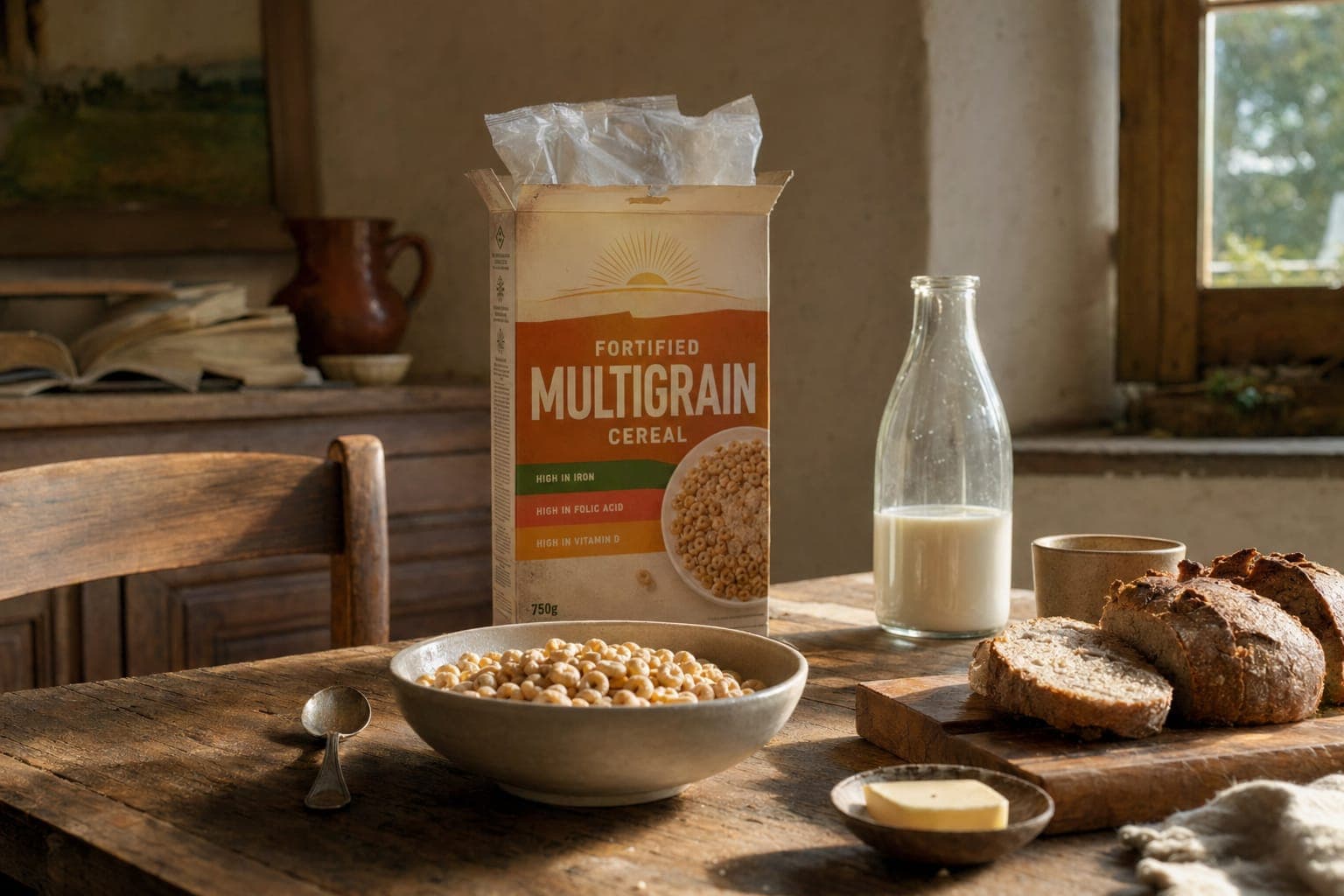
Why 'Fortified' Doesn't Mean Nutritious
Fortified foods are often low-quality cereals dosed with synthetic vitamins. Folic acid is not folate. Learn what fortification really means for you.
Ancestral
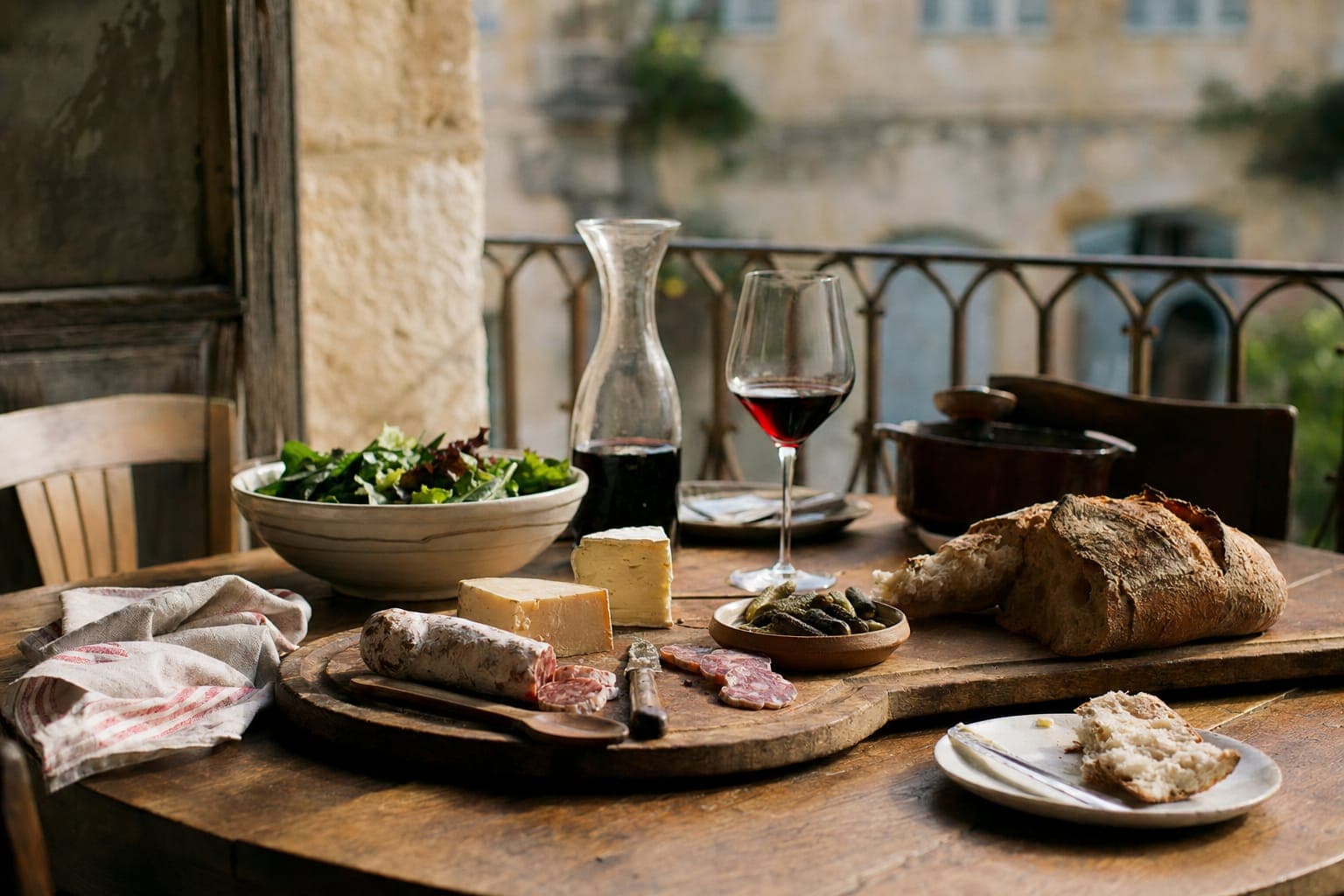
The French Paradox: Real Food, Real Health
Explore the French paradox: high saturated fat, low heart disease and long lives. It is not just the wine, but the food, the meals and the eating culture.
Ancestral
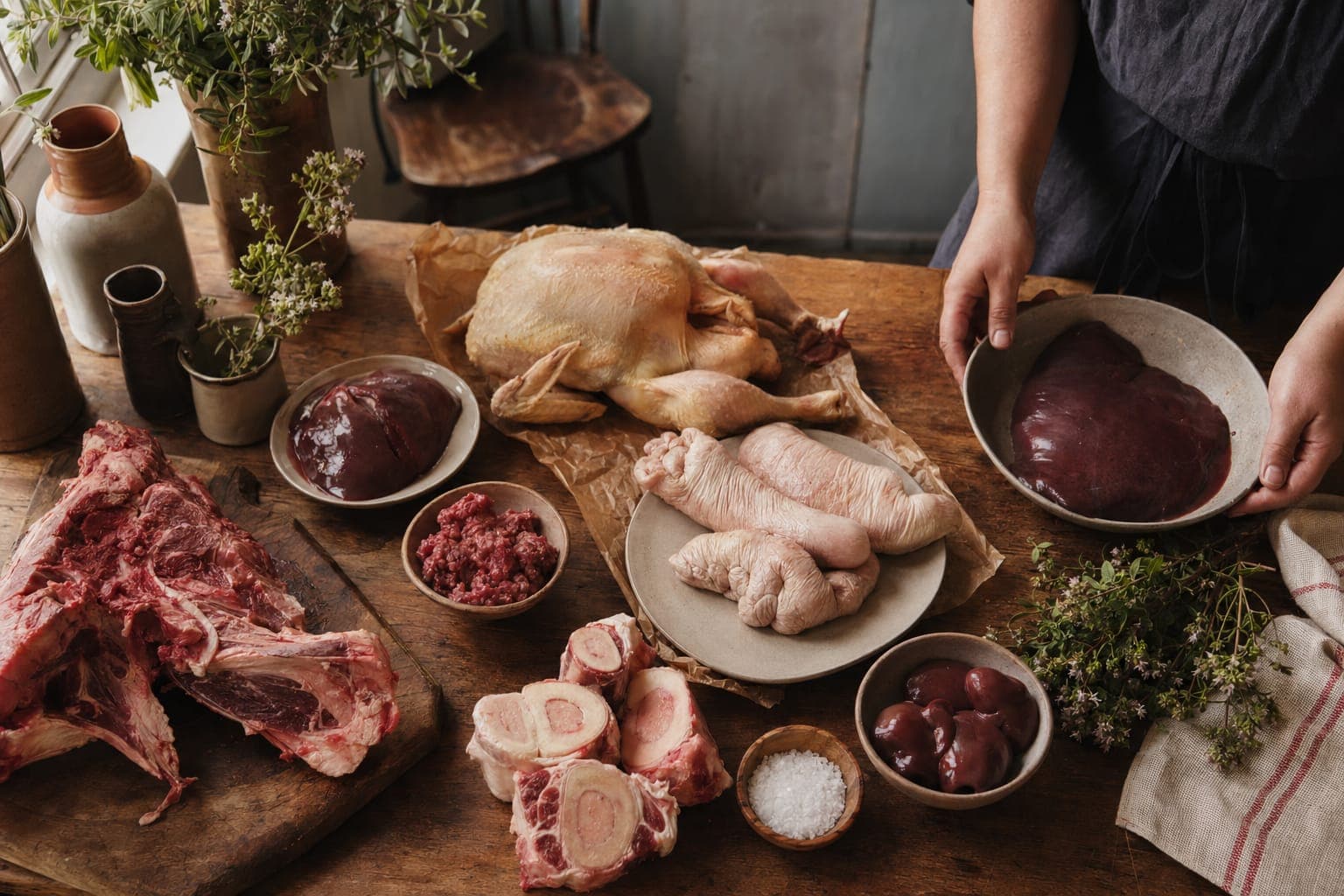
The Ethics of Nose-to-Tail: Honouring the Whole Animal
Why using every part of an animal is the most respectful, sustainable, and nutritious approach to eating meat. A philosophy for ethical eaters.
Real food, made effortless
Bring it into my routineA few ways to use it
All recipes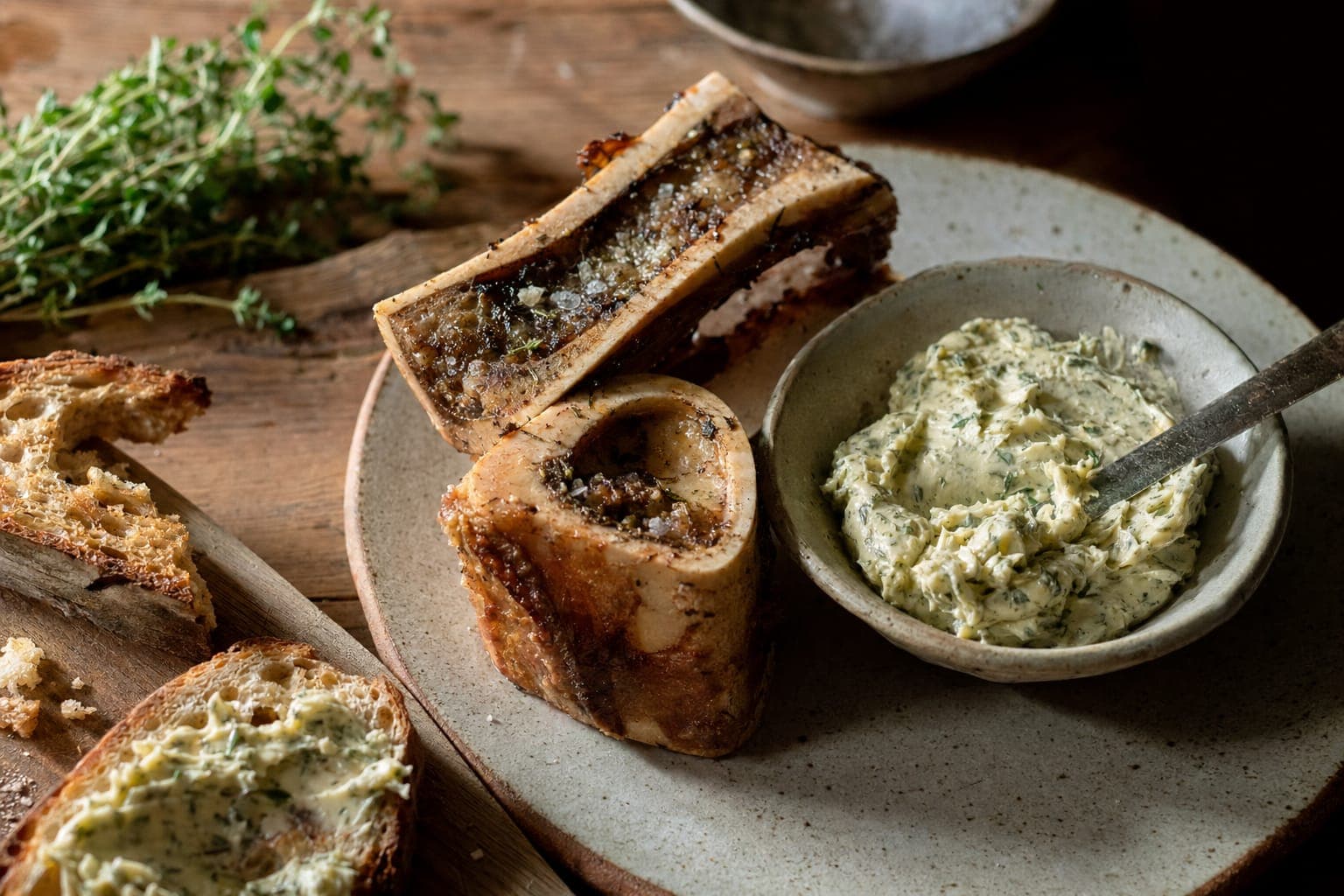
How to Make Bone Marrow Butter
Roast grass-fed marrow bones, scoop the marrow, and mix with butter and herbs. A nutrient-dense spread with fat-soluble vitamins.
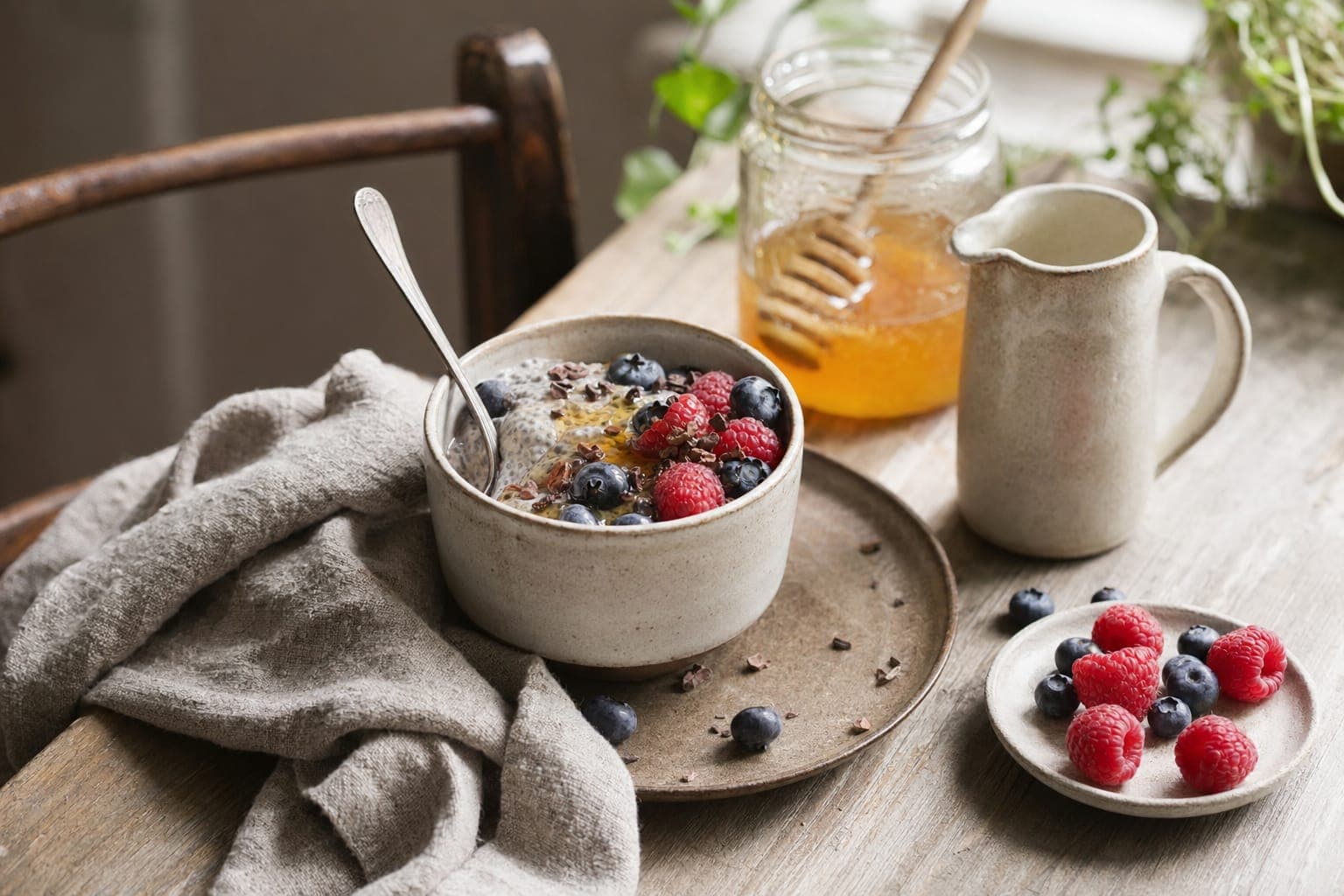
Organised Chia Pudding with Raw Honey and Berries
A no-cook chia seed pudding made with raw milk, collagen, berries, and raw honey. Prep it the night before and eat for breakfast.
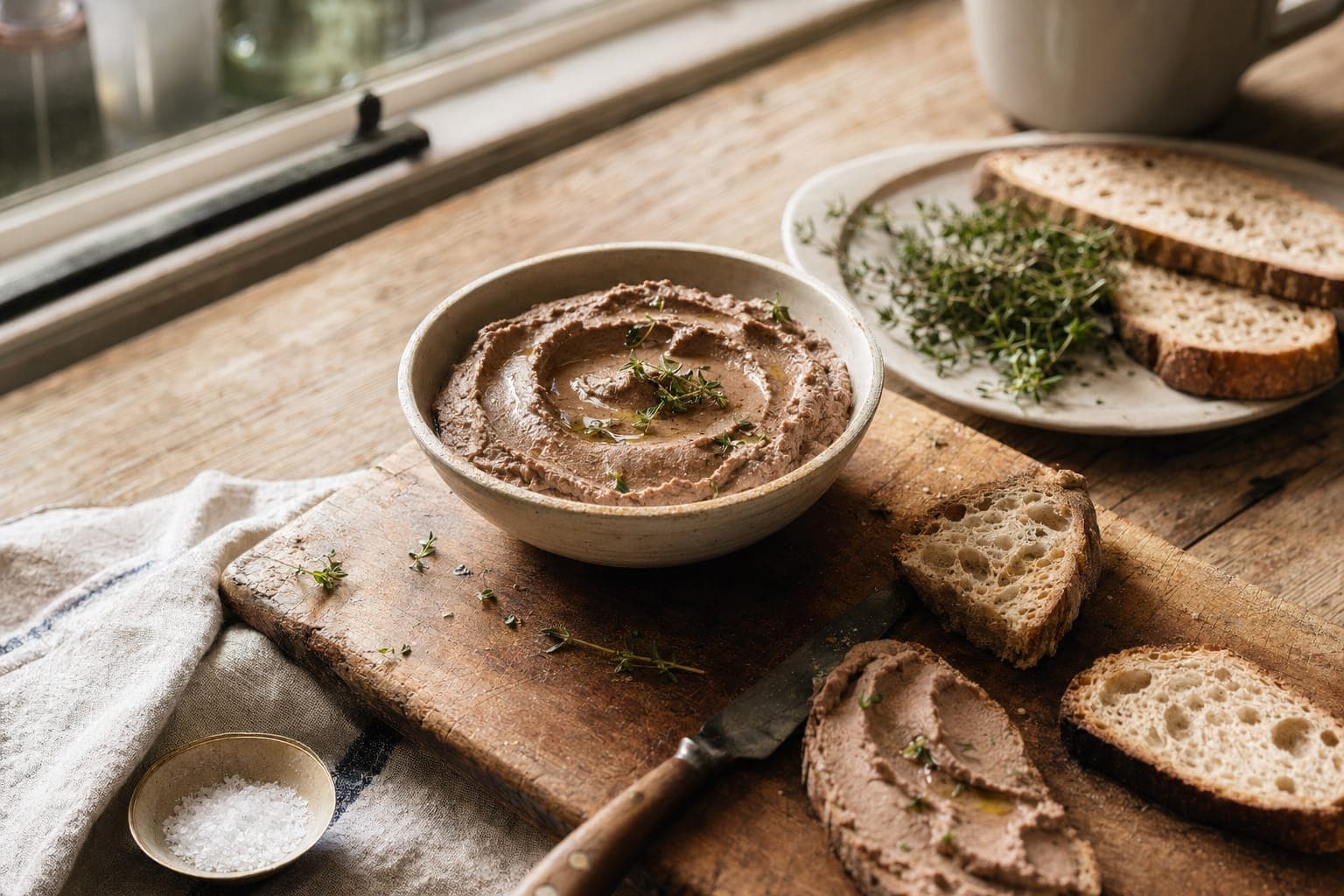
Liver Pate for Beginners: A Gentle Introduction to Organ Meats
Simple liver pate recipe to start eating organ meats. Chicken liver, butter, and herbs. Gentle introduction to nutrient-dense whole foods.


 Join over 100,000+ members
Build a better food system with us
The Organised community is thousands of people choosing real food and backing the farmers who grow it, all of us trying to leave the world a little better than we found it. If that is what you care about too, you belong here.