The Hidden Ingredients in Your 'Healthy' Protein Bar
You walk past the gym snack bar and grab what looks like nutrition. The label reads like health. High protein. Low sugar. Natural ingredients. And then you flip it over. That's where the trouble starts.

By Niall Kiddle, Founder, Organised

Reviewed by Pedro Rodrigues, Agronomist (farming and sourcing only) ·
6 min read · Published · Updated · 4 cited sources
Makers of the Organised Daily blend, a grass-fed beef organ supplement from regenerative UK farms
The marketing versus the ingredients
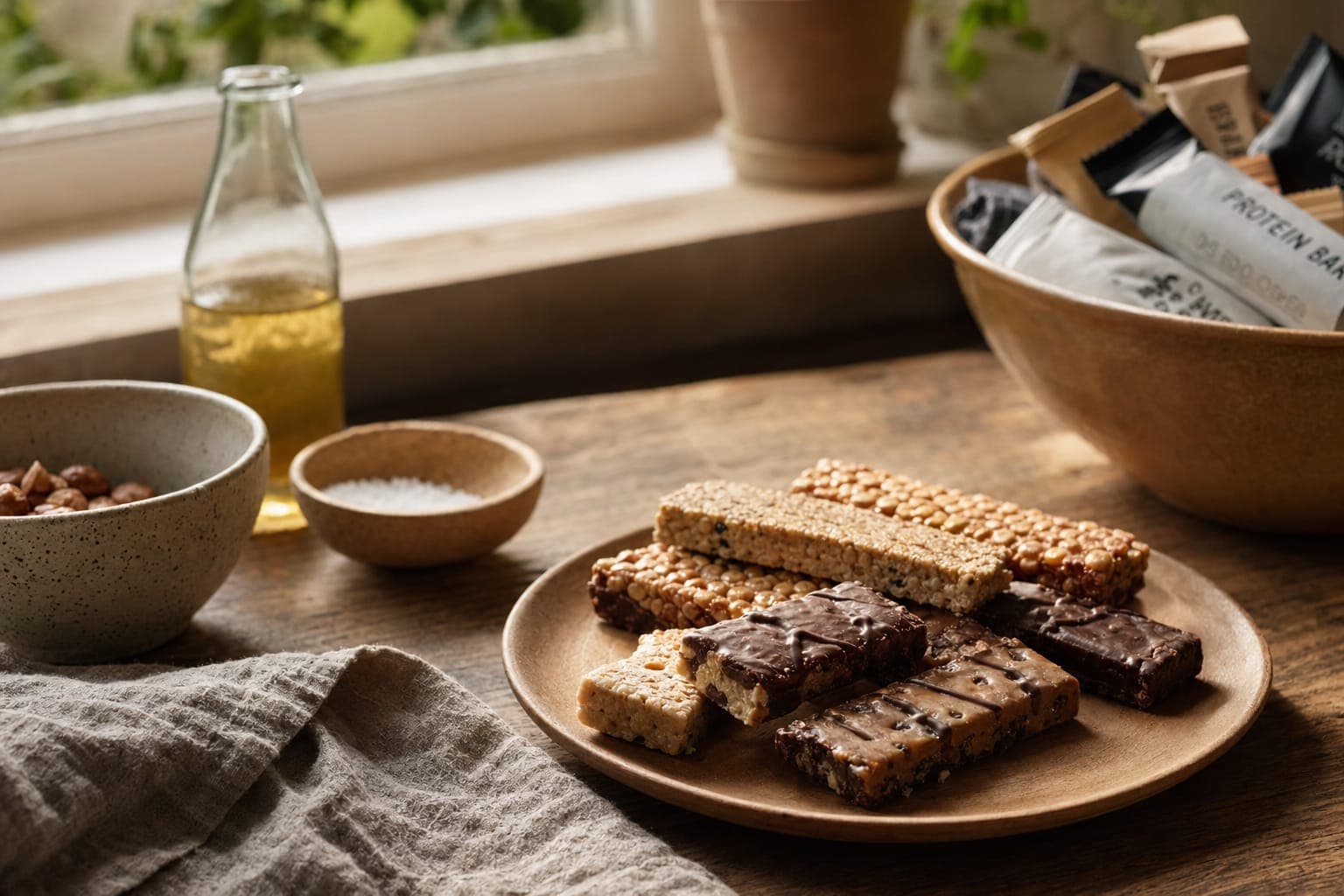
Protein bars are marketed as convenient nutrition. Forty grams of protein. No added sugar. Superfoods. Clean ingredients. What the label doesn't tell you is that the bar you're holding is closer to a candy bar than to an egg.
The average 'healthy' protein bar contains somewhere between eight and fifteen separate ingredients, most of which you'd never eat if they weren't forced into a bar format. That's a signal. Real food is simple.
If a snack needs a ten-ingredient ingredient list to taste good, it's not really a snack. It's a confection.

Seed oils: silently ruining everything
Almost every mainstream protein bar contains seed oils. Sunflower oil. Soybean oil. Canola oil. These are inflammatory lipids that spike omega-6 and create oxidative stress in your body.1 They're there because they're cheap and they help bind the bar together.
You're eating a product marketed as health that's quietly promoting inflammation. That's not accidental. That's the food industry's game. Use the word 'natural' and 'protein' enough and people stop asking what's in it.
A protein bar with seed oil is still a seed oil. Wrapping it in protein doesn't change what it does to your arteries.
If you must choose a bar, look for ones with coconut oil or butter. Better yet, don't choose a bar at all.
Sugar alcohols and inulin: the digestive minefield
The 'low sugar' claim on protein bars is built on sugar alcohols. Erythritol. Xylitol. Inulin, which is a prebiotic fibre marketed as helpful but often used to mask sweetness and bulk up the bar with something cheap.
Here's the thing: erythritol is fine in moderation. The brief said don't apologise for erythritol, and we won't. But these bars aren't eaten in moderation. You're eating 5, 10, sometimes 15 grams of sugar alcohols in a single bar. That's a dose, not a trace.
Inulin specifically causes digestive distress in many people. Bloating. Gas. Cramping.3 The prebiotic claim is true in principle, but the amount used in bars is beyond the threshold of what most people's microbiomes can handle.
Sweetness without consequences sounds good until you're dealing with the consequences. Sugar alcohols aren't free. Your digestive system will make you pay.
Soy protein isolate: not what you think
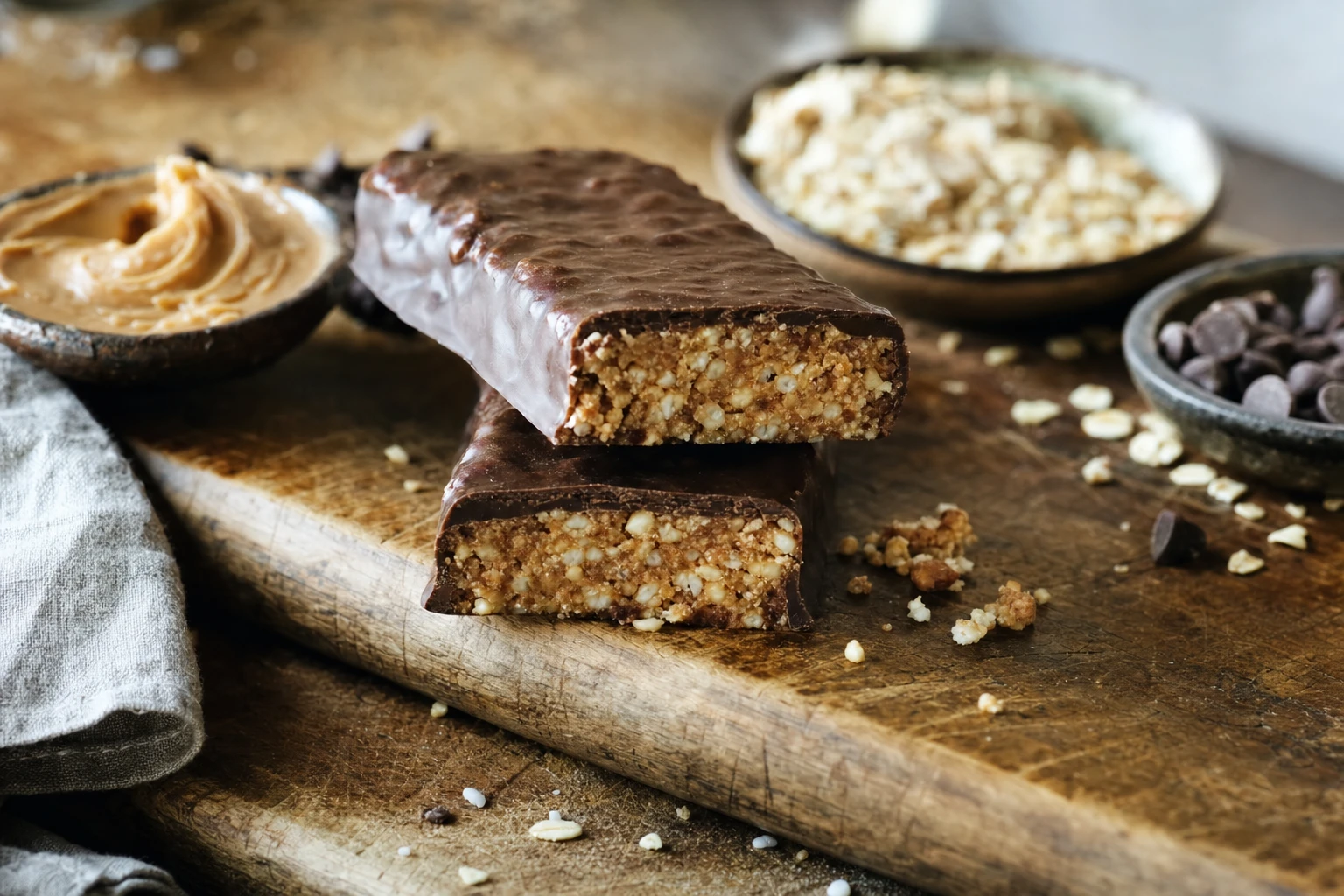
Most protein bars use whey or soy protein isolate, not whole soy or whole whey. Isolate means the protein has been processed, separated, and stripped of much of what made it food in the first place.
Soy protein isolate specifically carries isoflavones (plant oestrogens) in concentrated form.2 One bar can contain more isoflavones than you'd get from a serving of whole soy foods. For men concerned about oestrogen dominance, this is a problem. For women with oestrogen-sensitive conditions, it's worth monitoring.
Whey isolate has its own issues. The processing removes the immunoglobulins and lactoferrin that made whey useful to begin with. You're left with a protein powder that tastes sweet and does very little.
An isolate isn't food. It's a nutrient extracted and concentrated beyond anything found in nature.
What actually happens in your body
You eat the bar thinking you're getting clean protein. What you're actually getting is a hit of processed carbohydrates (masked by sugar alcohols), inflammatory seed oils, and isolated protein that your body has to work harder to recognise and metabolise.
Your blood sugar spikes slightly. Insulin responds. The seed oils accumulate in your tissues. Your gut bacteria encounter inulin and start fermenting. And you're right back where you started, needing a snack in two hours.
The real tragedy is the convenience argument. Protein bars are supposed to be quick. But they create a metabolic dependency that keeps you hungry.
Get ancestral nutrition guides, free
Two short reads a week on traditional ways of eating, examined with modern evidence.
By signing up you agree to receive emails from us. No spam, unsubscribe anytime.
The labelling game: marketing claims versus truth
'High protein' on a bar often means it contains 20 to 40 grams of protein isolate, most of which is processed beyond recognition. A real high-protein food is beef, eggs, or fish, foods where the protein comes with cofactors, minerals, and nutrients your body actually uses synergistically.
'Natural ingredients' is a claim with zero legal definition in most countries.4 It can mean almost anything. A seed oil extracted with chemicals is still 'natural.' Soy protein isolate comes from a plant, so it's 'natural.' The term is marketing, not guarantee.
'No added sugar' is technically honest if the bar uses sugar alcohols instead. But it's intellectually dishonest if you understand that sugar alcohols in large amounts are still a form of sweetening with metabolic consequences. The bar manufacturer knows this. They're counting on you reading the front, not the back.
'Superfoods' on a label is pure marketing. Acai. Goji. Chia. These are real foods, yes, but they're often present in minute quantities, added for buzzword appeal, not nutritional impact. A blueberry in a protein bar doesn't make the bar nutritious.
If a manufacturer has to use marketing language on the front of the package, it's because the actual ingredients on the back tell a different story.
How to actually read a protein bar label
First, ignore the front entirely. The back is where truth lives. Read the ingredient list from beginning to end. If you can't pronounce it or don't know what it is, flag it. If there are more than five ingredients, flag it.
Check the source of protein. Is it whey protein, whey protein isolate, soy protein, soy protein isolate, or something else? Whole protein sources like whole milk powder are preferable to isolates. Isolates are less food, more pharmaceutical.
Check for seed oils in the first five ingredients. Sunflower, soybean, canola, safflower. If you see any of these, the bar is not as healthy as its front claims.
Look specifically for the sugar alcohol and fibre content. Erythritol and xylitol in single-digit grams are fine. Ten grams or more is a dose. Inulin of more than 5 grams per bar is excessive and will cause digestive distress in many people.
Check the nutrition facts. The calorie count should align with the ingredient list. If it's over 250 calories, you're eating more like a meal replacement than a snack. If you're hungry two hours later, the bar failed the basic test of satiety.
Finally, ask yourself: would I eat these ingredients separately? Would I have a spoonful of soy isolate or seed oil? No? Then the bar is a trick, not a snack.

1 of 9
Daily blend
100,000+ thriving families4.9 on Trustpilot
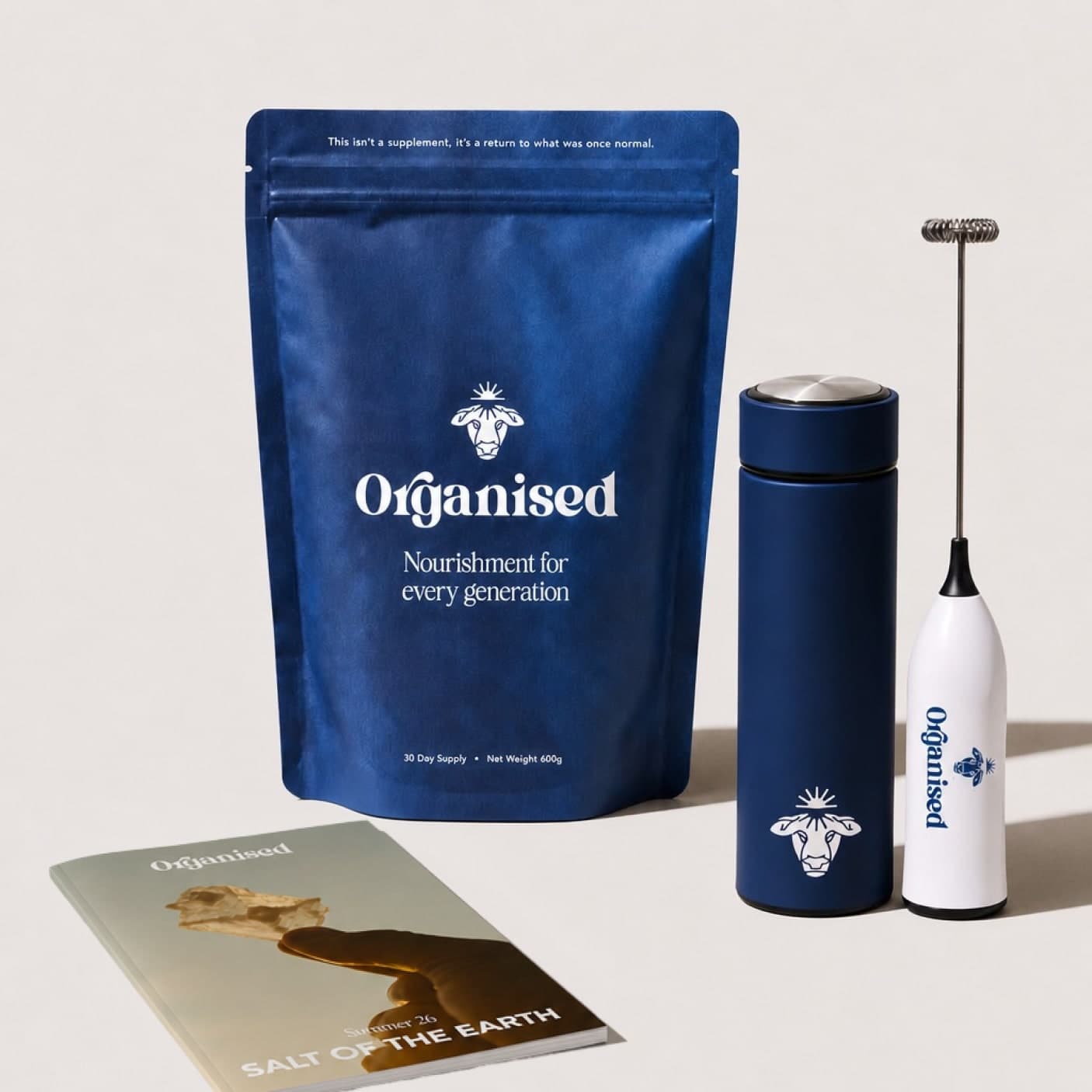
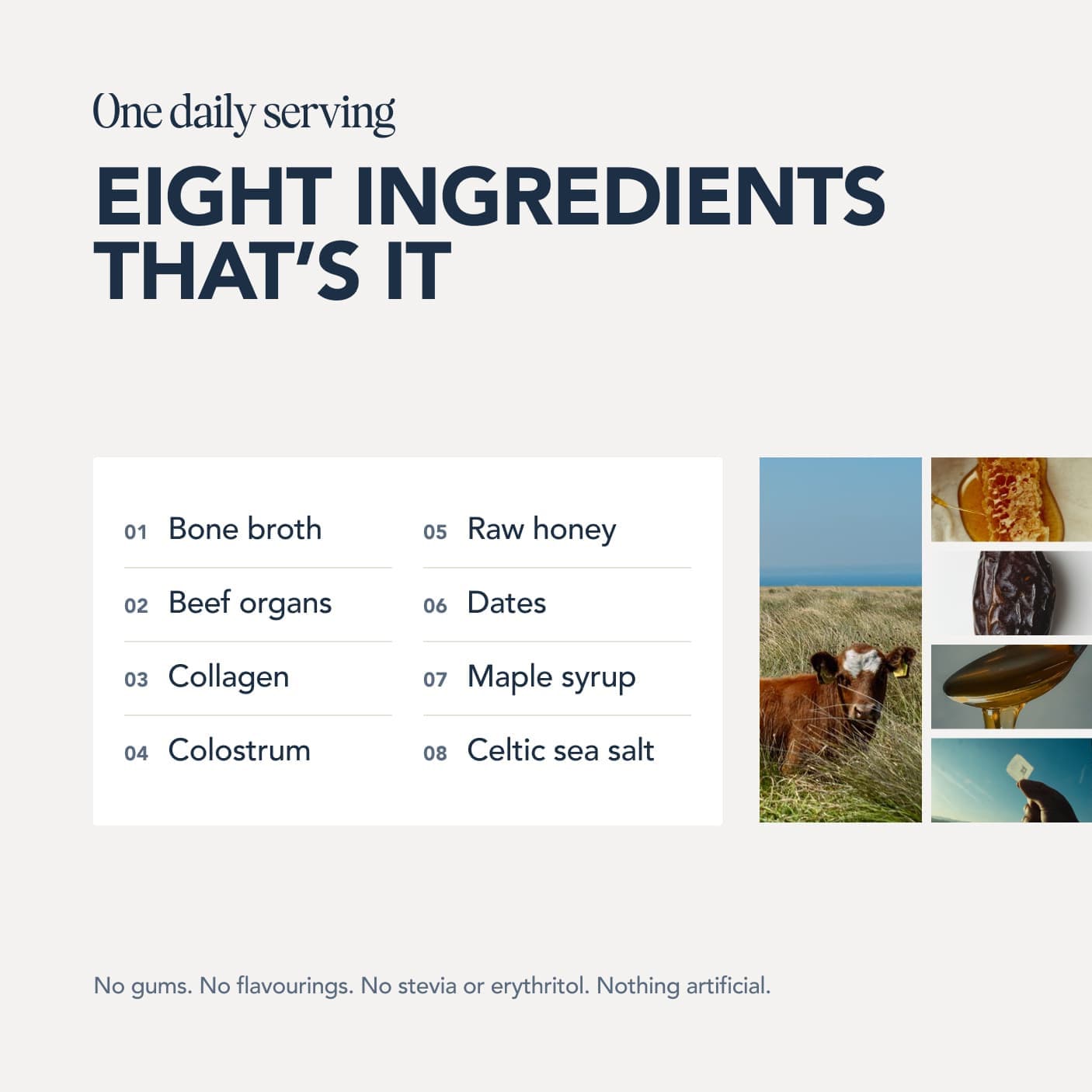
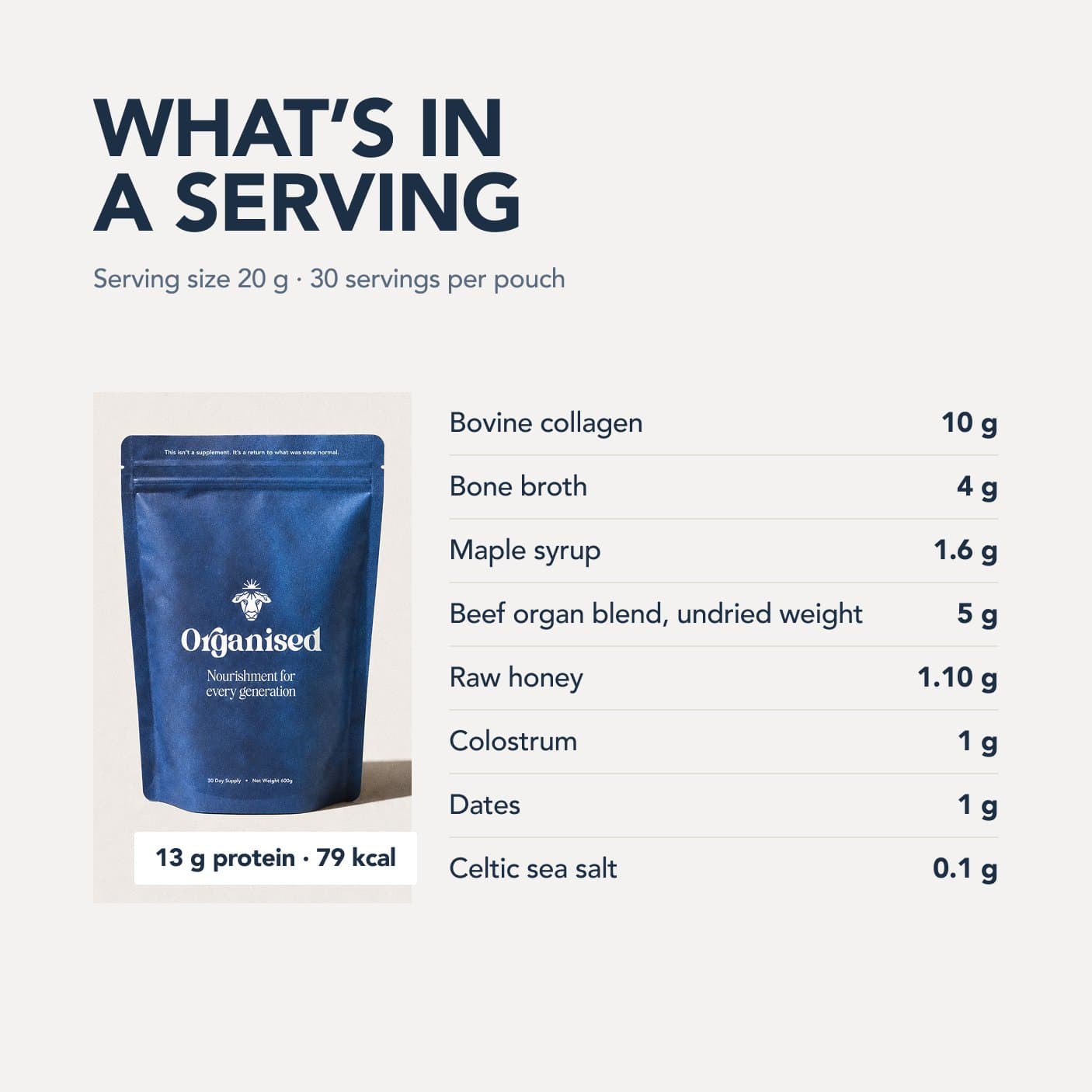
Eight real ingredients built around grass-fed beef organs, collagen and colostrum. Nothing synthetic added.
Free with your first order, worth £38. Plus £10 off the pouch with a subscription.

Free UK shipping · Made in England · 100 day money back guarantee on your first pouch · Skip, pause or cancel anytime
The real snack alternative
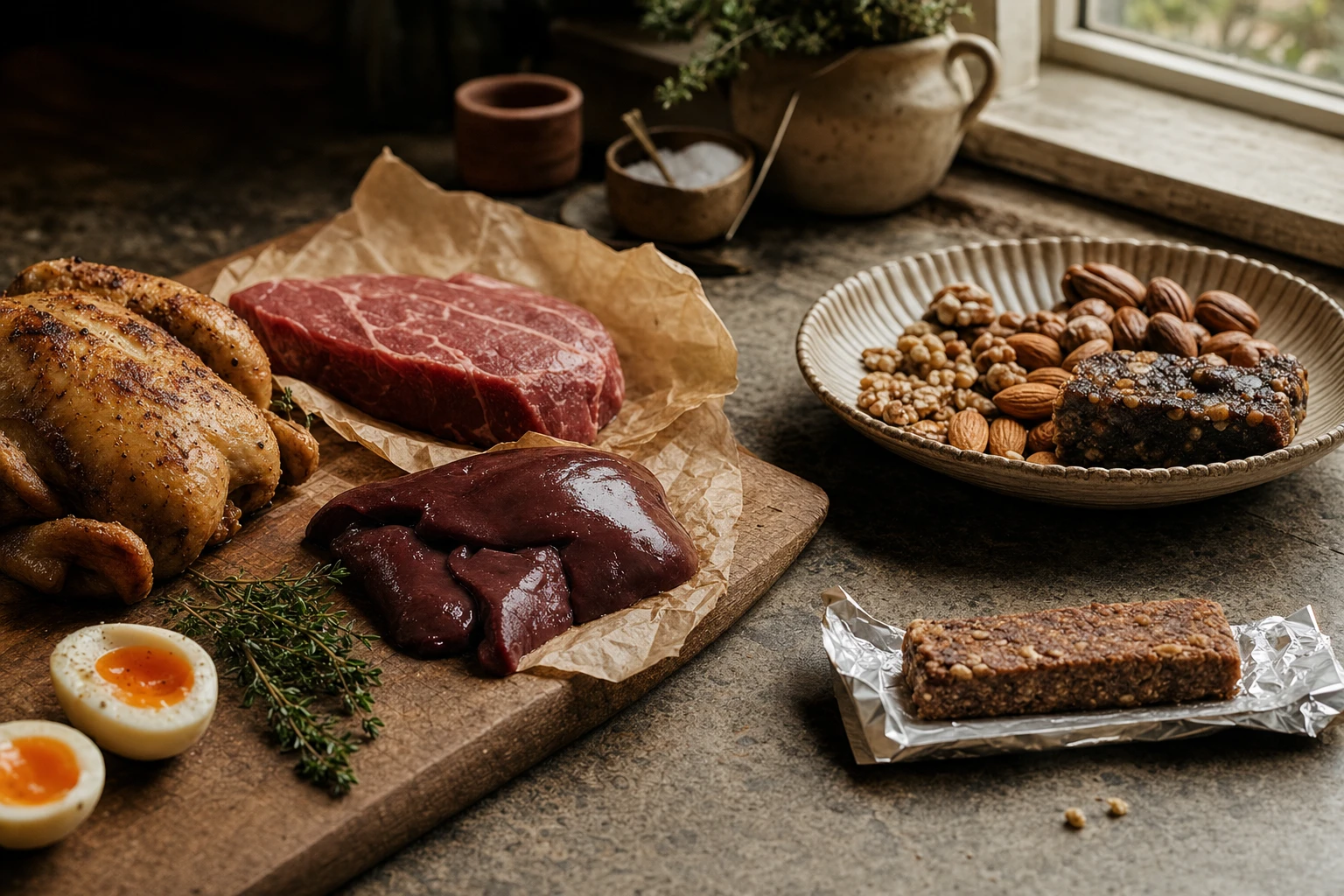
A hard-boiled egg. A small handful of almonds. A piece of cheese. A tin of sardines. A spoon of almond butter. These are convenient. They're real. They keep you full.
If you genuinely need something portable, bake your own energy bars. Dates, nuts, butter, sea salt. Five ingredients. No seed oil. No sugar alcohols. No isolation.
The best snack is the one that doesn't pretend to be anything other than what it is.
The bottom line
Protein bars are convenient, but convenience comes at a cost. The cost is metabolic. The cost is digestive. The cost is trusting a label that's designed to mislead you. You don't need them. Your body doesn't need them. And the simplicity of actual food will serve you far better than any bar ever could.
References
Every source below was checked on 27 August 2026. Each PubMed, PMC and DOI identifier was resolved against NCBI or Crossref, and what it opens is printed under the citation, so you can see the link goes where the citation says without leaving the page. Where a citation and its identifier disagreed, the citation was corrected to the record or the reference was deleted along with the sentence marker that pointed at it, and where the resolved paper turned out not to support the sentence, the sentence was cut back to what it does support. Borrowed authority is worse than none, because it looks like rigour.
- DiNicolantonio JJ, O'Keefe JH. Omega-6 vegetable oils as a driver of coronary heart disease: the oxidized linoleic acid hypothesis. Open Heart. 2018;5(2):e000898. https://pmc.ncbi.nlm.nih.gov/articles/PMC6196963/Checked 27 August 2026: PMC6196963 opens DiNicolantonio JJ, O'Keefe JH, Omega-6 vegetable oils as a driver of coronary heart disease: the oxidized linoleic acid hypothesis. Open Heart 2018;5(2):e000898.The authors' own declaration, from the record: Competing interests: JD is the author of The Salt Fix and Superfuel and operates the website thesaltfix.com. JHO has an ownership interest in CardioTabs, a nutraceutical company.
- Messina M. Soy and health update: evaluation of the clinical and epidemiologic literature. Nutrients. 2016;8(12):754. https://pmc.ncbi.nlm.nih.gov/articles/PMC5188409/Checked 27 August 2026: PMC5188409 opens Messina M, Soy and Health Update: Evaluation of the Clinical and Epidemiologic Literature. Nutrients 2016;8(12). PubMed indexes it as: Review.The authors' own declaration, from the record: The author is the executive director of the Soy Nutrition Institute, an organization funded by the United Soybean Board and its soy industry members.
- Kelly G. Inulin-type prebiotics—a review: part 1. Alternative Medicine Review. 2008;13(4):315-329. https://pubmed.ncbi.nlm.nih.gov/19152479/Checked 27 August 2026: PMID 19152479 opens Kelly G, Inulin-type prebiotics--a review: part 1. Altern Med Rev 2008;13(4):315-29. PubMed indexes it as: Review.
- U.S. Food and Drug Administration. Use of the Term "Natural" on Food Labeling. https://www.fda.gov/food/food-labeling-nutrition/use-term-natural-food-labeling [accessed May 2026].
Who wrote and reviewed this guide
Niall Kiddle
Author · Founder, Organised
Niall is the founder of Organised. He started the company in 2024 after fixing his own health the slow way: in 2022 he swapped a cupboard of synthetic supplements for real food, raw milk, organ meats, bone broth and honey, and felt the difference within months.
Areas of expertise: Ancestral nutrition, Organ meats, Whole-food supplementation, Gut health, Regenerative sourcing
Read Niall's full profile
Pedro Rodrigues
Reviewer · Agronomist (farming and sourcing only)
Pedro is the agronomist Organised works with on farming and sourcing. His job on the guides is to keep the science honest: he reviews what we publish about soil health, regenerative agriculture, grazing and the way food is actually produced.
Areas of expertise: Regenerative agriculture, Agronomy, Soil health, Grass-fed farming, Food sourcing
Reviewed this guide on
Read Pedro's full profileMore on food quality
View allBrowse the guides library
All guidesKeep reading
Ancestral
Why 'Fortified' Doesn't Mean Nutritious
Fortified foods are often low-quality cereals dosed with synthetic vitamins. Folic acid is not folate. Learn what fortification really means for you.

Ancestral
Food Additives You Should Actually Worry About
Most food additives are safe, but a few are genuinely worth avoiding. Learn which food additives actually matter for your health and why. A clear-eyed guide.

Ancestral
The French Paradox: Real Food, Real Health
Explore the French paradox: high saturated fat, low heart disease and long lives. It is not just the wine, but the food, the meals and the eating culture.
Real food, made effortless
Bring it into my routineA few ways to use it
All recipes
Organised Smoothie Bowl Recipes for Every Season
Four seasonal smoothie bowl recipes using Organised. Berry in summer, apple-cinnamon in autumn, tropical in spring, warming chocolate in winter.

Ancestral Breakfast Ideas from Around the World
Traditional breakfast recipes from cultures that got nutrition right. Japanese, Turkish, Scottish, and more. Whole-food breakfast inspiration.
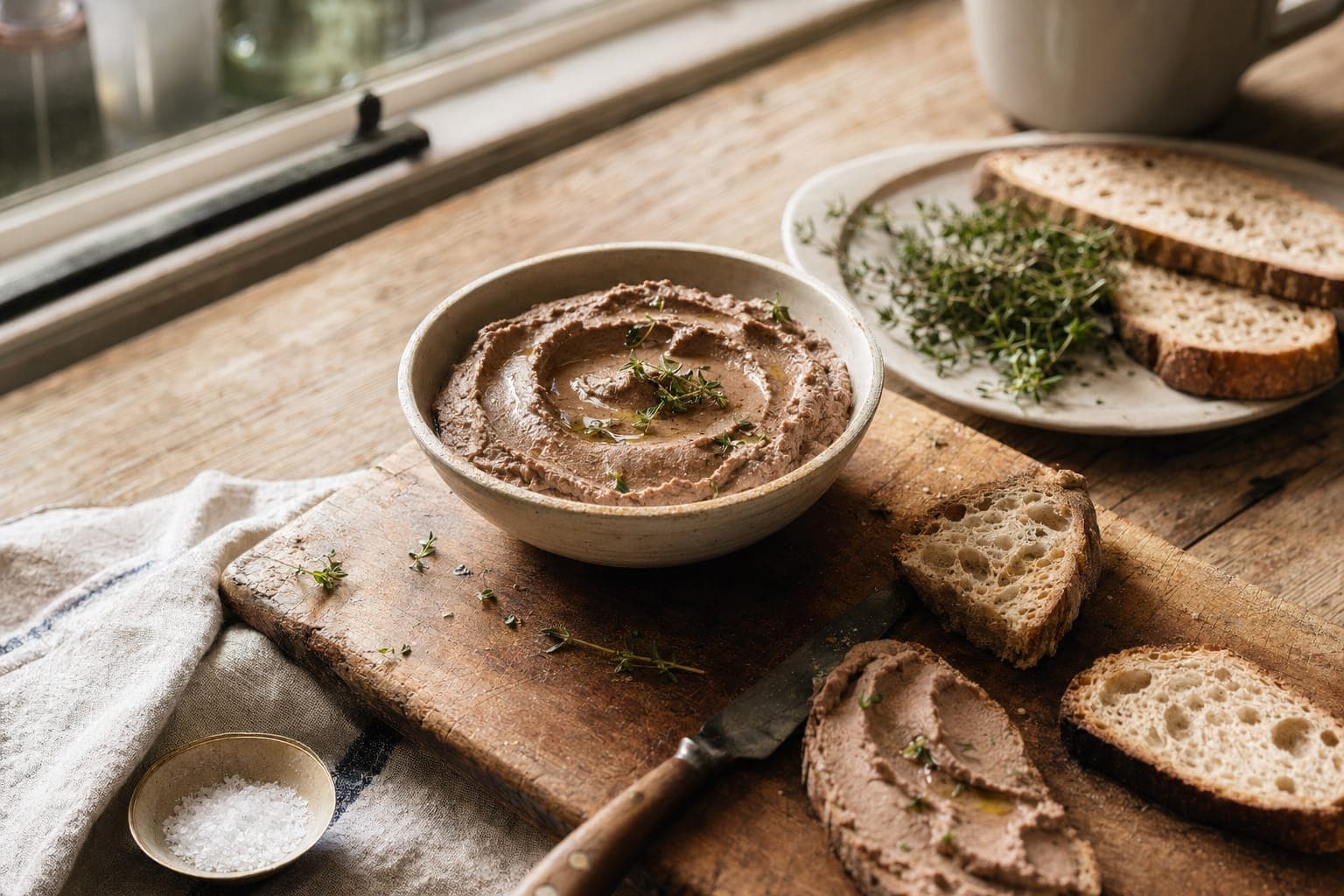
Liver Pate for Beginners: A Gentle Introduction to Organ Meats
Simple liver pate recipe to start eating organ meats. Chicken liver, butter, and herbs. Gentle introduction to nutrient-dense whole foods.


 Join over 100,000+ members
Build a better food system with us
The Organised community is thousands of people choosing real food and backing the farmers who grow it, all of us trying to leave the world a little better than we found it. If that is what you care about too, you belong here.