The Ethics of Nose-to-Tail: Honouring the Whole Animal
There's a particular kind of disrespect baked into modern food culture. You buy a steak. You cook the steak. You throw away the bones, organs, and fat. You've wasted 70 per cent of the animal's nutritional value in the name of convenience. Your ancestors would have been horrified. And they would have been right.
By Niall Kiddle, Founder, Organised

Reviewed by Pedro Rodrigues, Agronomist (farming and sourcing only) ·
6 min read · Published · Updated · 2 cited sources
Makers of the Organised Daily blend, a grass-fed beef organ supplement from regenerative UK farms
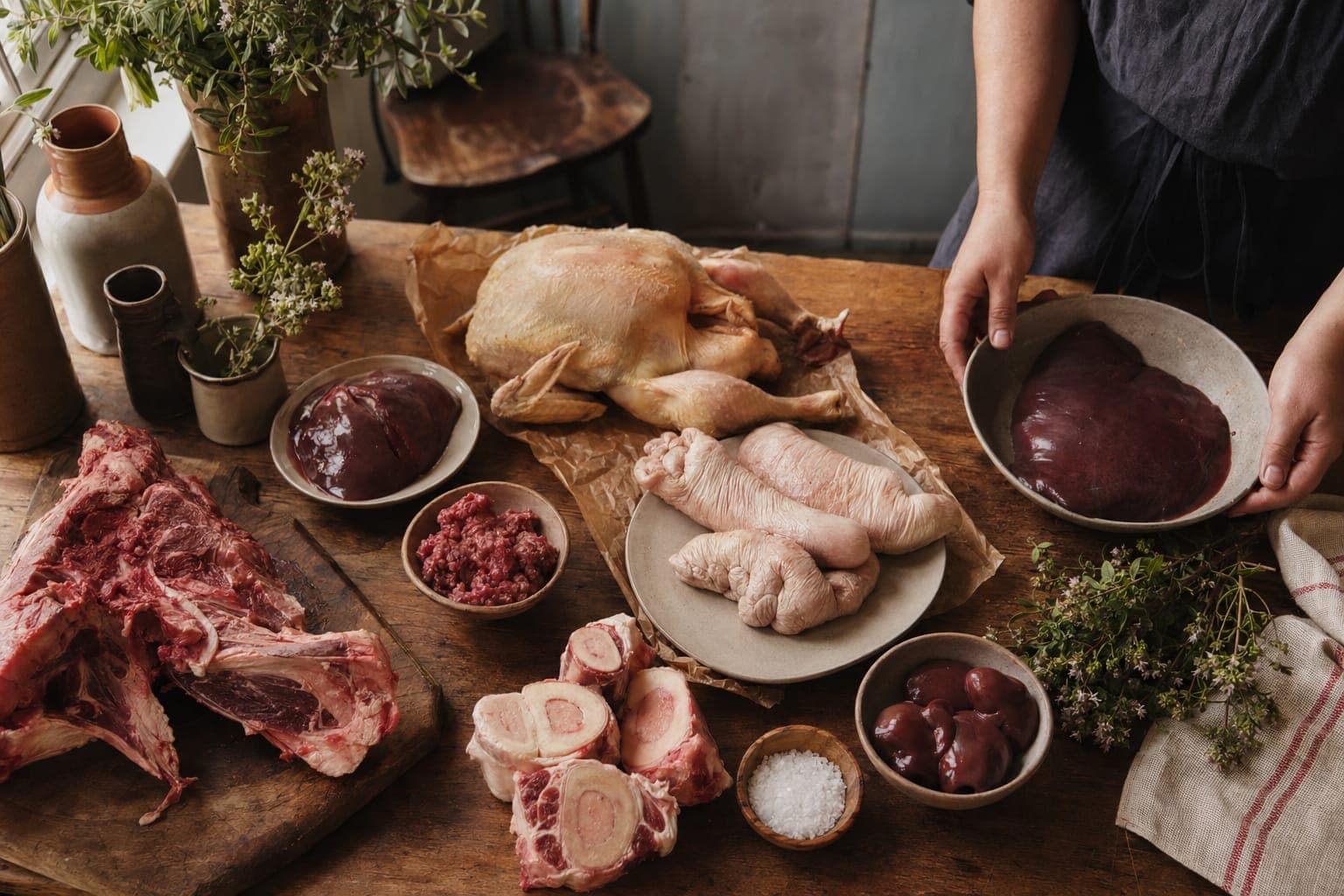
Nose-to-tail eating isn't a trendy food movement. It's the return to a basic truth: if you're going to kill an animal, you use every part. Anything less is disrespectful to the animal, wasteful of resources, and nutritionally short-sighted.
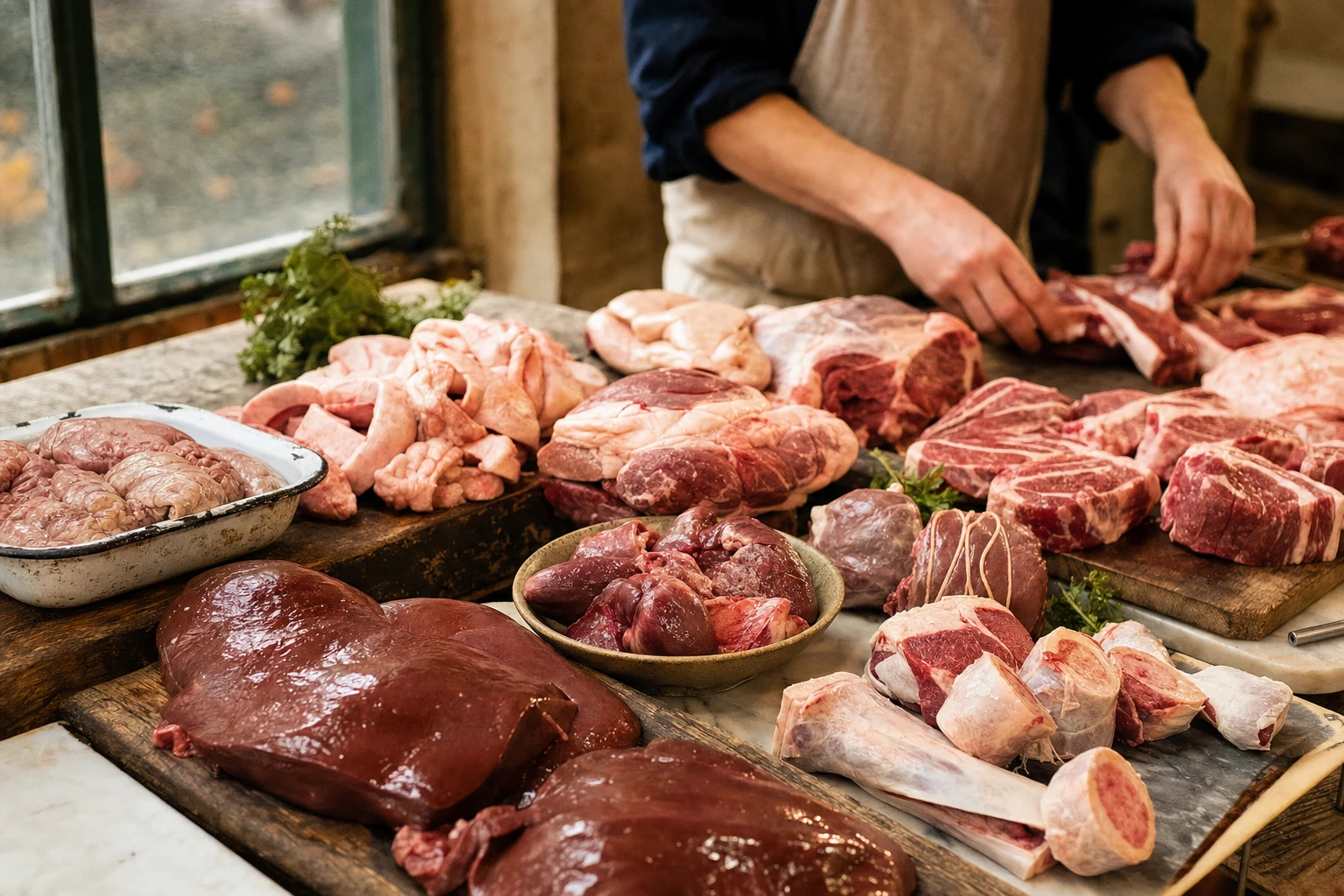
What happens when you discard the other parts
When you throw away organs, bones, and fat, you're discarding the most nutrient-dense parts of the animal. The liver is 100 times more nutrient-rich than muscle meat.1 The bones contain minerals and compounds that your body needs. The fat carries fat-soluble vitamins and flavour.
What you're left with is muscle meat. Lean, relatively nutrient-poor, and often elevated in omega-6 fatty acids if the animal wasn't raised on pasture. You're eating perhaps 20 per cent of the nutritional value that the animal had to offer.
That inefficiency isn't just wasteful. It's disrespectful. An animal died so you could eat. The least you can do is use what it provided.
Modern food culture has made this disrespect normal. Supermarkets don't even show organs. Butchers are trained to trim fat. People have become so disconnected from where their food comes from that using the whole animal feels strange, even wrong.
If an animal dies for you to eat, you use every part. Anything else is saying that its sacrifice wasn't worth your effort or your squeamishness.
The philosophy of the whole animal
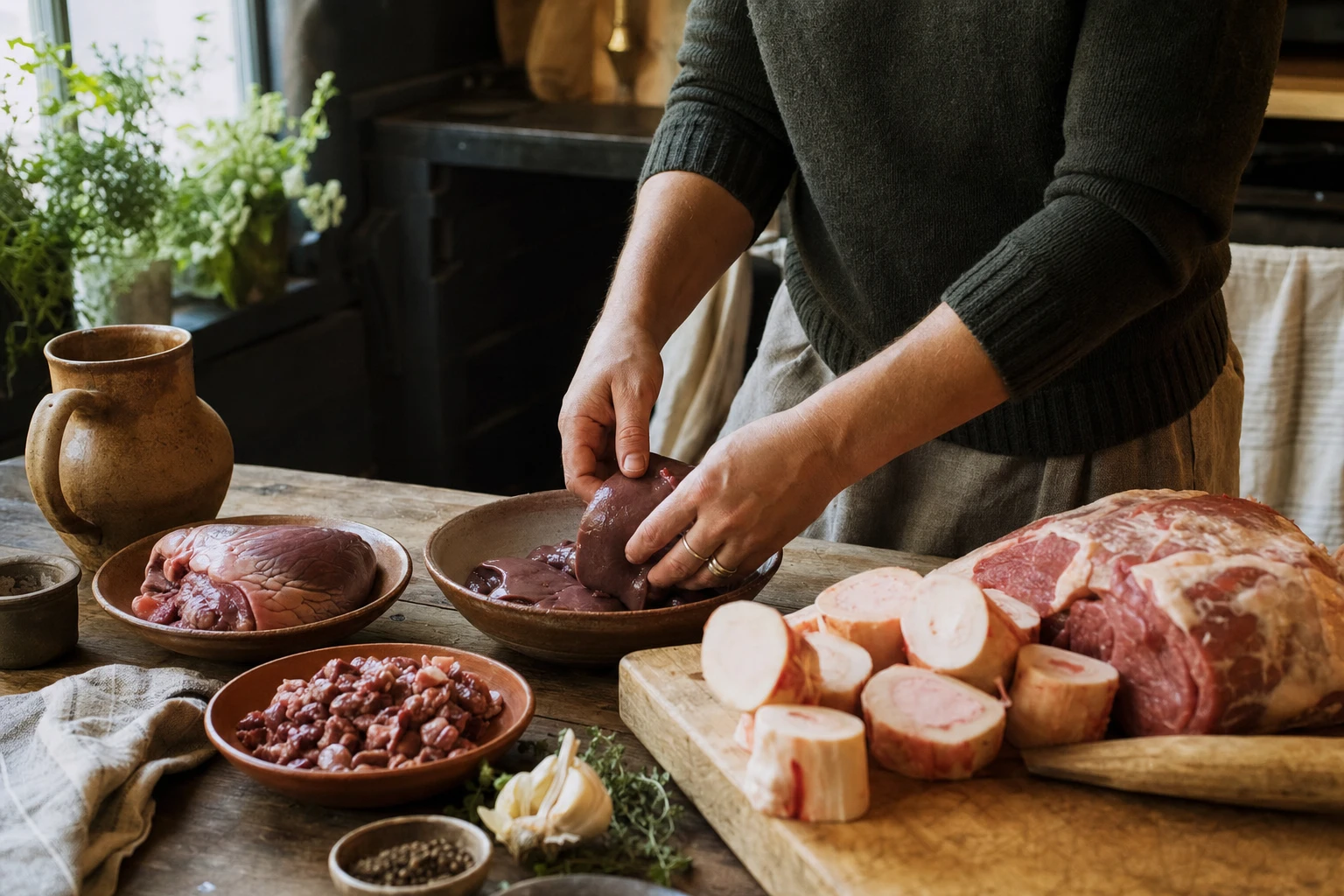
Nose-to-tail eating is built on a simple principle: respect the animal. That respect means using everything it offers. The muscle meat, yes. But also the organs that filtered its blood and processed its nutrients. The bones that supported its body. The fat that cushioned its organs and carried its nutrition. The skin, hooves, and connective tissue. Everything serves a purpose.
This philosophy is ancient. In traditional hunting cultures, no part of the animal was wasted. The practice wasn't sentimental. It was necessary and respectful. The animal had given its life. You used what it provided.
That philosophy isn't incompatible with being a thoughtful eater. You can believe that killing animals for food is justified because you use all of them. You can believe that the disrespect comes in the waste, not in the eating. This appeals to people who eat meat but want to do so ethically.
Where it becomes obviously unethical is when you kill an animal and throw away most of it. You're saying the animal's death was worth your convenience. Its sacrifice doesn't matter as long as you get the bit you wanted. That's not ethical eating. That's just waste with a moral blind spot.
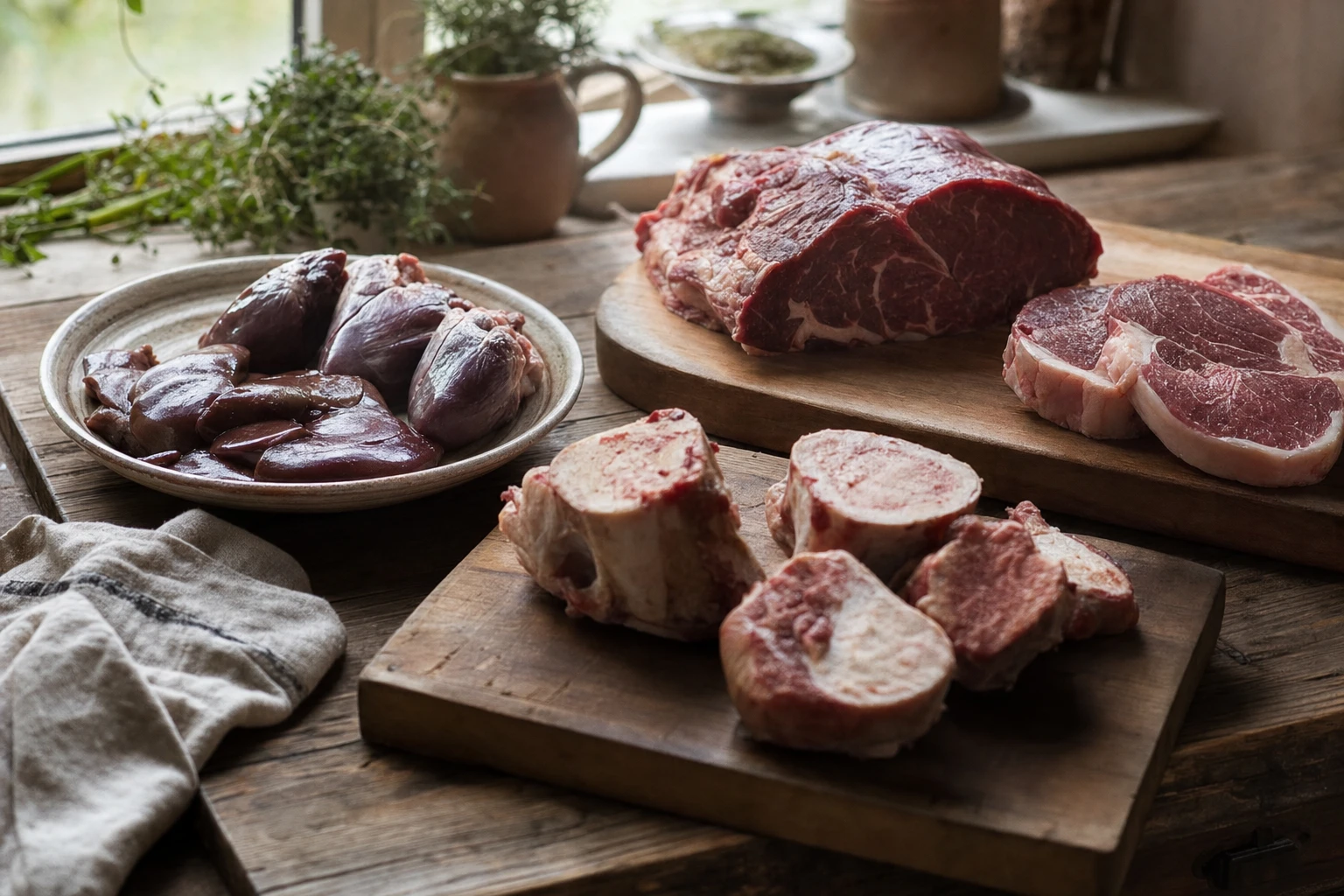
Respect through complete use
Using the whole animal is an act of respect. It's acknowledging that the animal's value didn't come from just its muscle meat. Every part served the animal while it was alive. Every part continues to serve you after it's gone.
The liver supported the animal's detoxification. Now it supports yours. The heart is the hardest-working muscle in the animal's body. Eating it carries a certain meaning. The bones that carried the animal through its life now become your broth. The fat that insulated and nourished the animal now nourishes you.
There's a ritual in that. An acknowledgment. A reciprocity. You take the animal's life, but you take it fully. You don't waste it. You honour it by using everything it was.
That's different from the emotional vegetarian argument, which says you shouldn't eat meat at all because animals are sentient. Nose-to-tail eating doesn't deny that. It just says: if you're going to eat meat, respect the animal by using all of it.
An animal that dies so you can eat should be respected through complete use. Everything else is disrespect dressed up as convenience.
The most nutritious parts are discarded
The irony of modern meat eating is that people throw away the most nutritious parts. Liver contains vitamin A in its most bioavailable form, B vitamins, choline, copper, and selenium. Heart is rich in CoQ10 and taurine. Bone marrow is nutrient-dense fat and collagen. Organs collectively contain 10 times the micronutrients of muscle meat.1
A traditional diet that included organ meats was nutritionally complete. A modern diet of only muscle meat, even if it's grass-fed and organic, is incomplete. You're missing micronutrients that your body desperately needs.
And you're throwing it away. It's not that you can't access it. It's that food culture has taught you to despise it. You've been made to feel disgusted by the most nutritious parts of the animal.
That's a marketing success by the industrial food system, which prefers to sell you supplements for deficiencies that wouldn't exist if you were eating the whole animal.
Get ancestral nutrition guides, free
Two short reads a week on traditional ways of eating, examined with modern evidence.
By signing up you agree to receive emails from us. No spam, unsubscribe anytime.
Why ethical eating means nose-to-tail
If you're going to eat meat, nose-to-tail eating is the only ethical approach. It means an animal dies, and you use everything it provides. You don't take the luxury cut and discard the rest. You take responsibility for the whole animal.
It means you eat organ meats, even if you have to overcome the cultural conditioning that tells you they're disgusting. It means you make bone broth instead of throwing the bones away. It means you render the fat and cook with it instead of letting it go to waste. It means you take the parts that are unfamiliar and learn to prepare them well.
That's the price of eating meat ethically. Not abstinence. But respect through complete use.
If you eat meat, eat the whole animal. Everything else is just waste with a clean conscience.
1 of 9
Daily blend
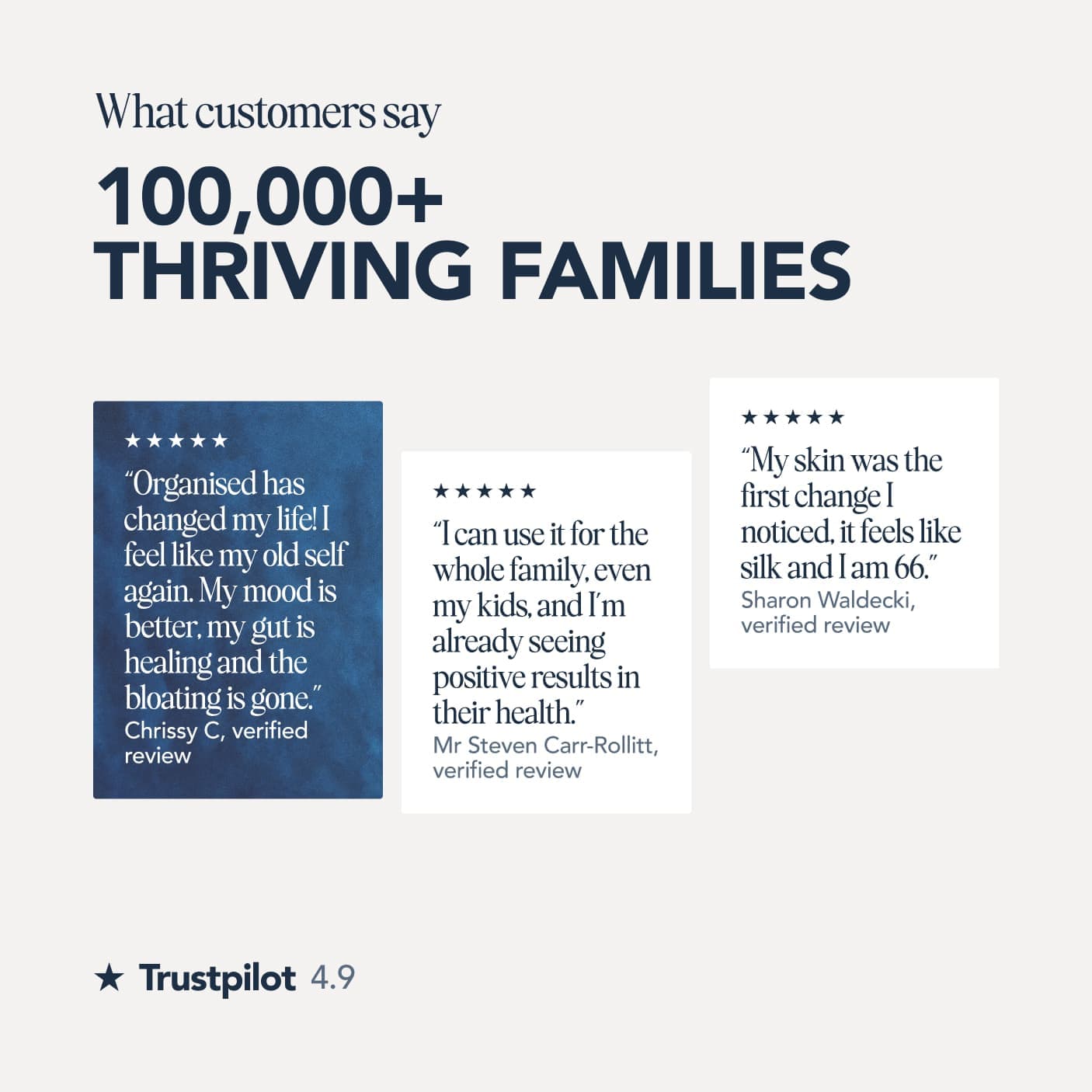
100,000+ thriving families4.9 on Trustpilot
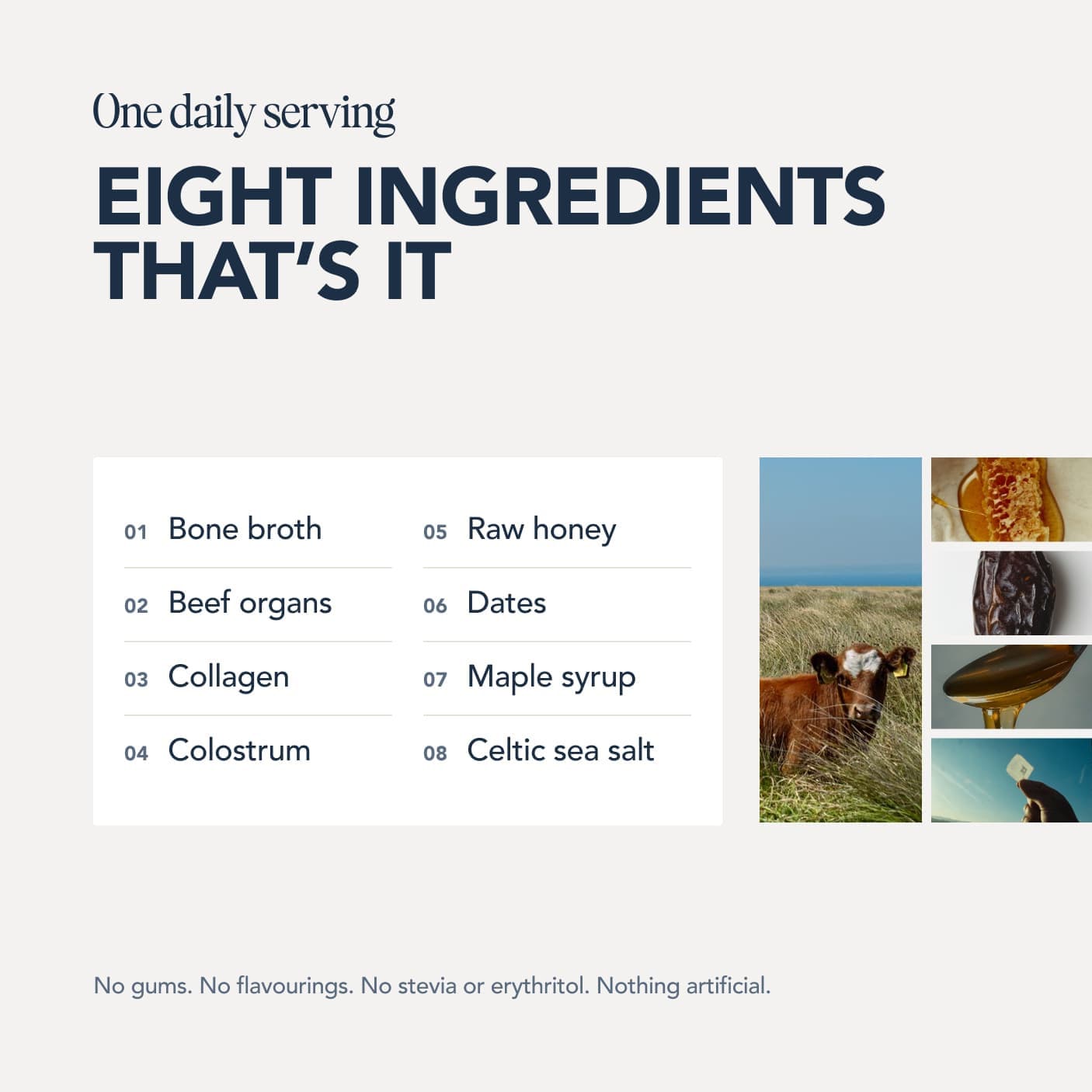
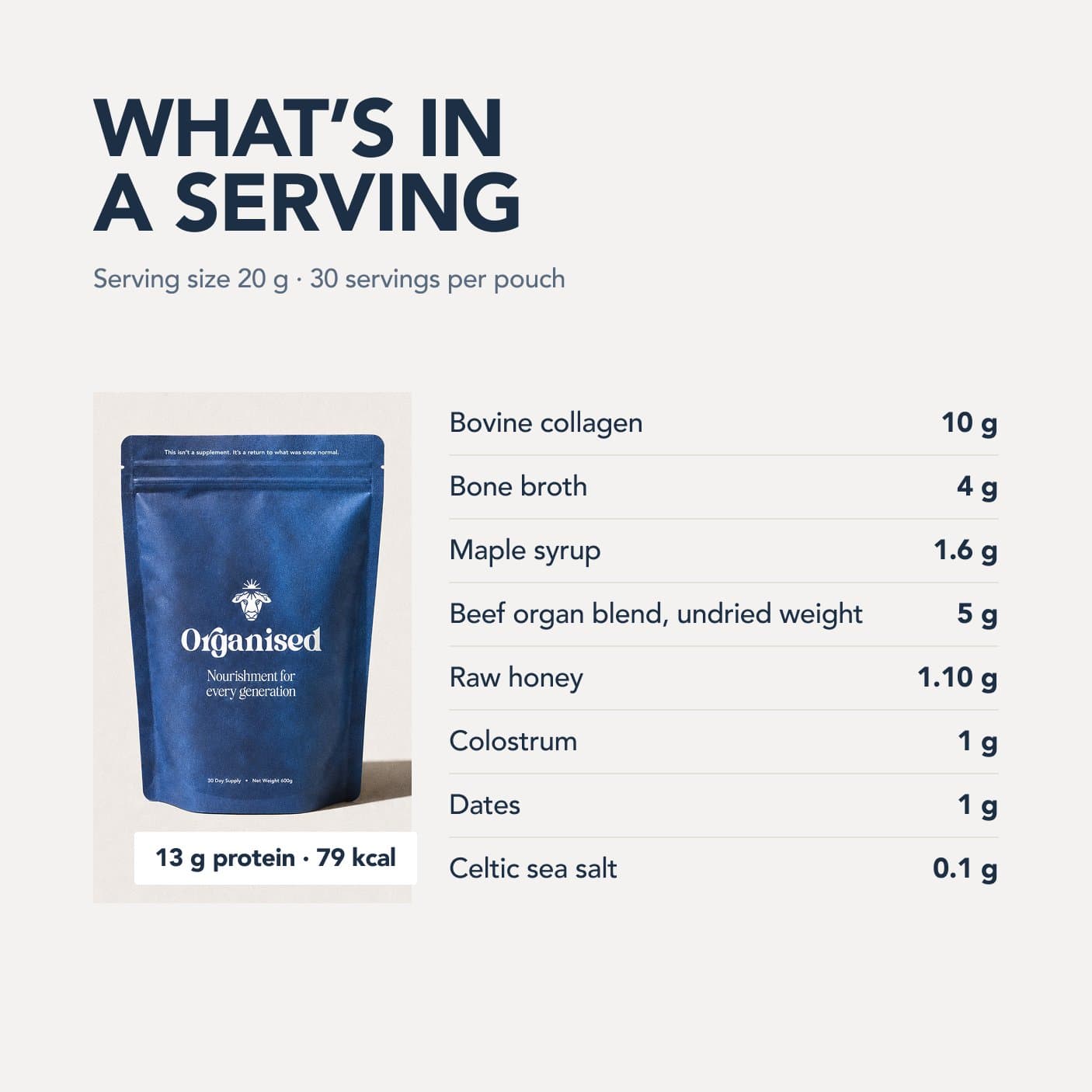
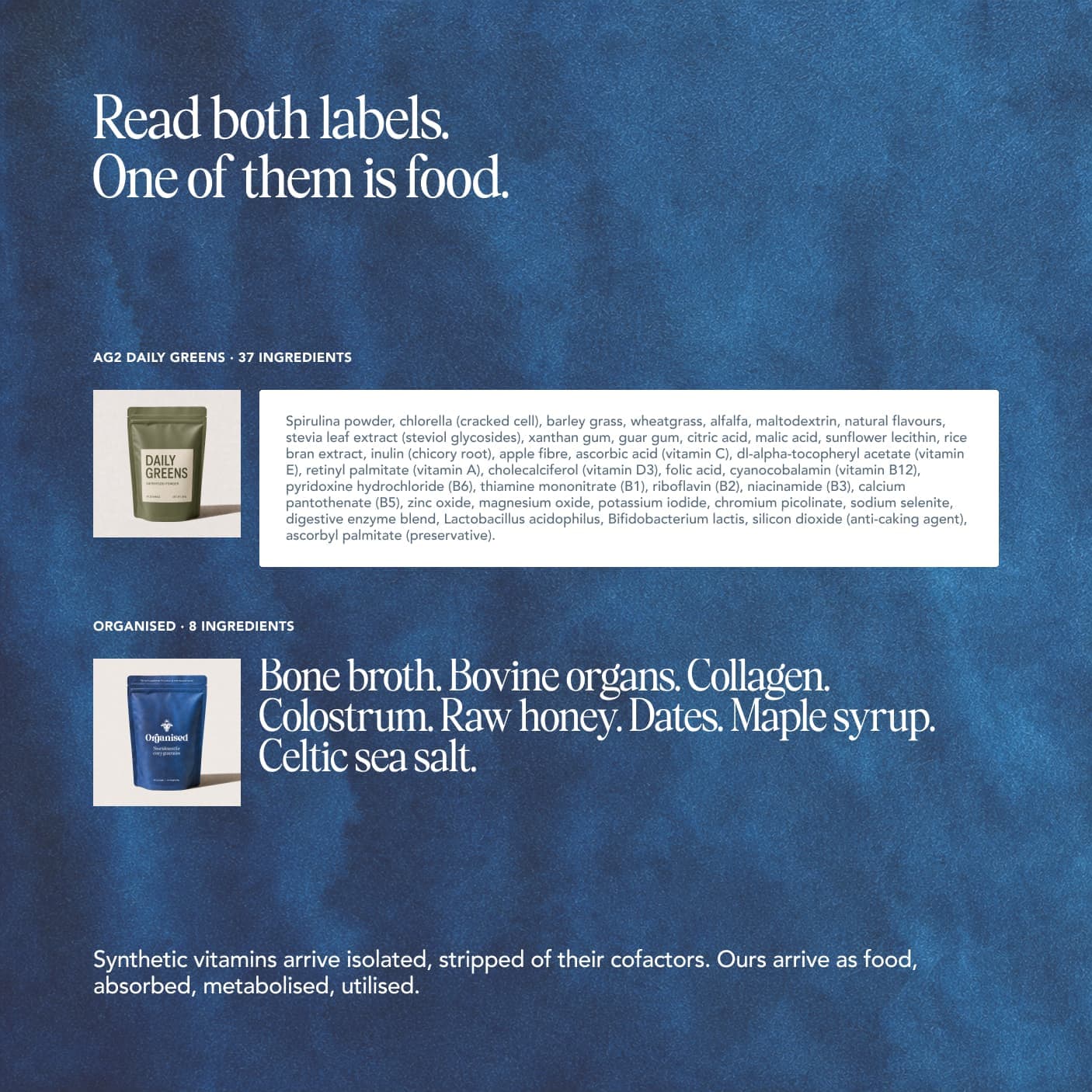
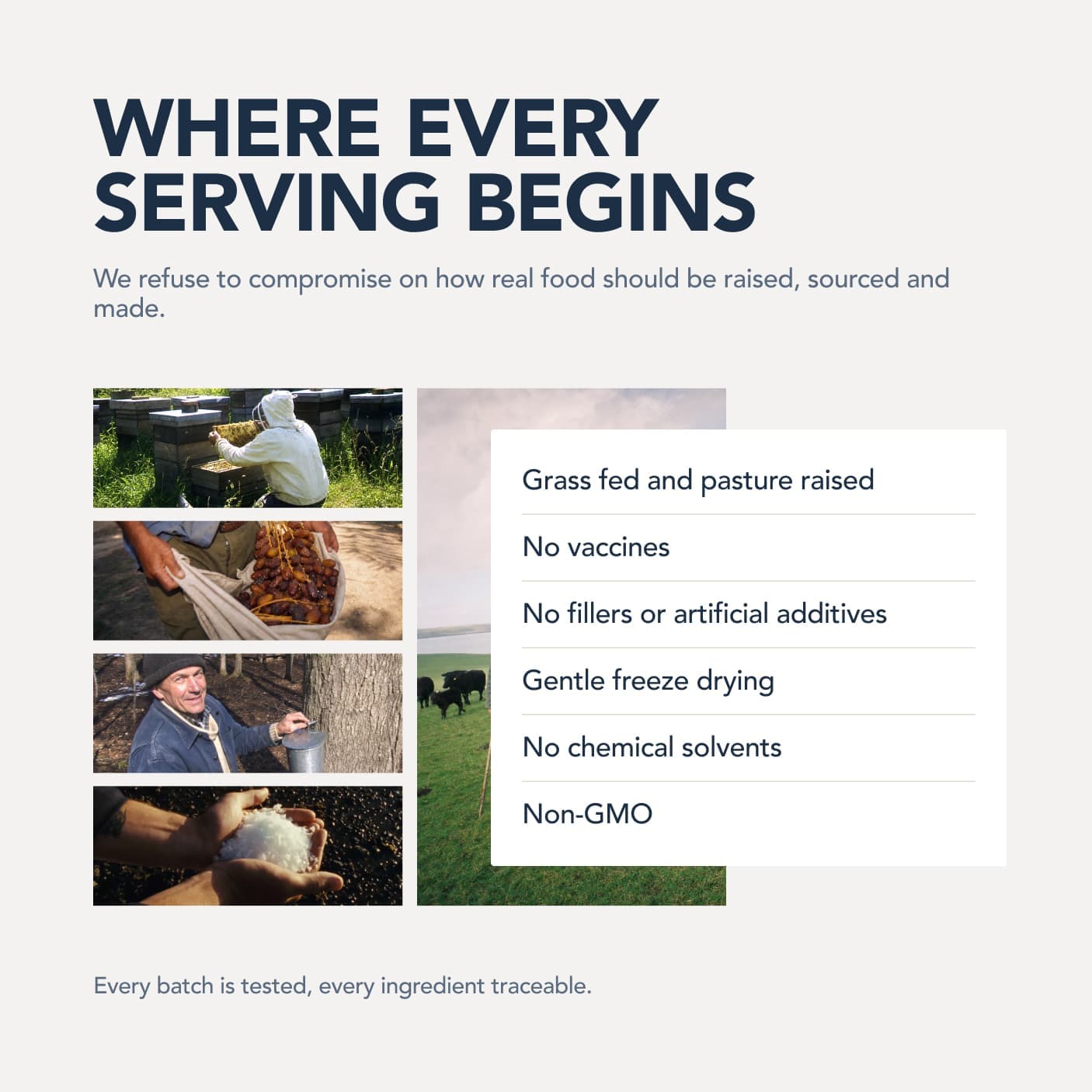
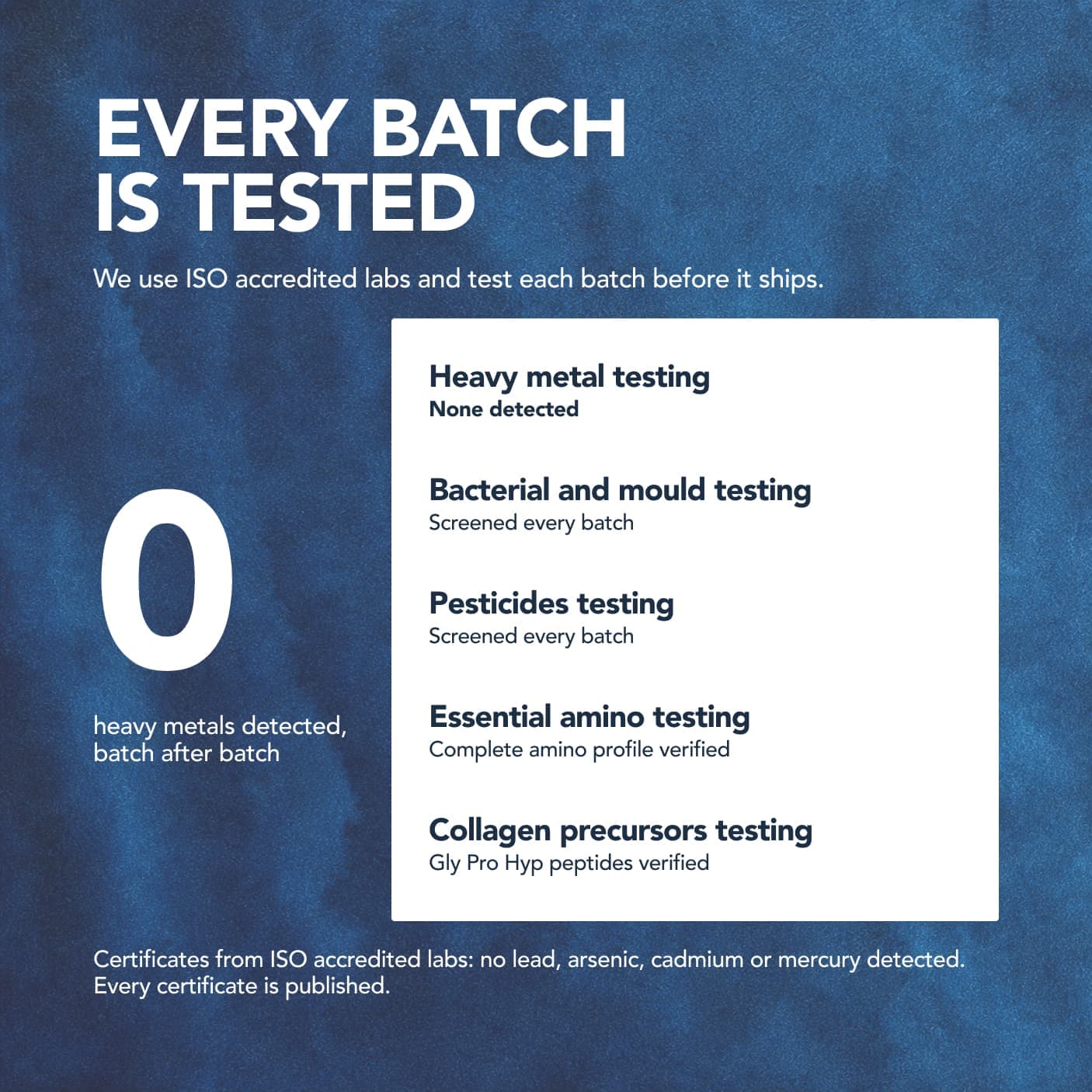
Eight real ingredients built around grass-fed beef organs, collagen and colostrum. Nothing synthetic added.
Free with your first order, worth £38. Plus £10 off the pouch with a subscription.
Free UK shipping · Made in England · 100 day money back guarantee on your first pouch · Skip, pause or cancel anytime
The flavour of respect
Organ meats taste different because they carry different compounds. Liver is rich and somewhat metallic. Heart is tender and beefier than muscle meat. Kidney carries ammonia notes. These aren't flaws. They're the taste of concentrated nutrition.
Your palate is conditioned to the bland uniformity of muscle meat. Organs taste intense because they're intense nutritionally. That intensity is worth developing a taste for. It means you're eating something real, something potent, something that's actually going to change your health.
Start small. A thin slice of liver fried in butter with onions. Heart stewed low and slow until falling apart. As you get comfortable with the flavours, you realise they're delicious. Not because they're trendy. Because they're real and they're powerful.
How to start using the whole animal
Start with liver. Liver is the most nutrient-dense, and it's often available even from standard butchers. A small portion, perhaps 100 grams, once or twice a week, will shift your micronutrient status dramatically. If the flavour is too strong, mask it with caramelised onions and a rich sauce.
Ask your butcher for bones. Most supermarket butchers throw them away. They'll often give them to you free. Use them to make broth. One batch of broth uses an enormous quantity of bones and yields weeks of nutrition.
Buy heart if you can find it. It's inexpensive and flavourful. Slow-cook it until tender. It's delicious and carries nutrients that muscle meat doesn't.
Learn to render fat. Beef tallow, lard, duck fat. These are the fats your ancestors cooked with, and they're incomparably better than any seed oil.2 Collect the fat trimmings from butchers and render them into cooking fat.
As you get comfortable, expand to other organs: kidney, tongue, sweetbread, oxtail. Each one is nutritionally complete and delicious when prepared well.
You don't have to like every part. But you should use every part. That's the deal you make when you decide to eat meat ethically.
References
Every source below was checked on 27 August 2026. Each PubMed, PMC and DOI identifier was resolved against NCBI or Crossref, and what it opens is printed under the citation, so you can see the link goes where the citation says without leaving the page. Where a citation and its identifier disagreed, the citation was corrected to the record or the reference was deleted along with the sentence marker that pointed at it, and where the resolved paper turned out not to support the sentence, the sentence was cut back to what it does support. Borrowed authority is worse than none, because it looks like rigour.
- National Institutes of Health, Office of Dietary Supplements. Vitamin A and Carotenoids: Fact Sheet for Health Professionals. https://ods.od.nih.gov/factsheets/VitaminA-HealthProfessional/ [accessed May 2026]. See also USDA FoodData Central beef liver entry for comparative micronutrient density: https://fdc.nal.usda.gov/
- Daley CA, Abbott A, Doyle PS, Nader GA, Larson S. A review of fatty acid profiles and antioxidant content in grass-fed and grain-fed beef. Nutrition Journal. 2010;9:10. https://pmc.ncbi.nlm.nih.gov/articles/PMC2846864/Checked 27 August 2026: PMC2846864 opens Daley CA, Abbott A, Doyle PS et al, A review of fatty acid profiles and antioxidant content in grass-fed and grain-fed beef. Nutr J 2010;9:10. PubMed indexes it as: Review.
Who wrote and reviewed this guide
Niall Kiddle
Author · Founder, Organised
Niall is the founder of Organised. He started the company in 2024 after fixing his own health the slow way: in 2022 he swapped a cupboard of synthetic supplements for real food, raw milk, organ meats, bone broth and honey, and felt the difference within months.
Areas of expertise: Ancestral nutrition, Organ meats, Whole-food supplementation, Gut health, Regenerative sourcing
Read Niall's full profile
Pedro Rodrigues
Reviewer · Agronomist (farming and sourcing only)
Pedro is the agronomist Organised works with on farming and sourcing. His job on the guides is to keep the science honest: he reviews what we publish about soil health, regenerative agriculture, grazing and the way food is actually produced.
Areas of expertise: Regenerative agriculture, Agronomy, Soil health, Grass-fed farming, Food sourcing
Reviewed this guide on
Read Pedro's full profileBrowse the guides library
All guidesKeep reading
Ancestral
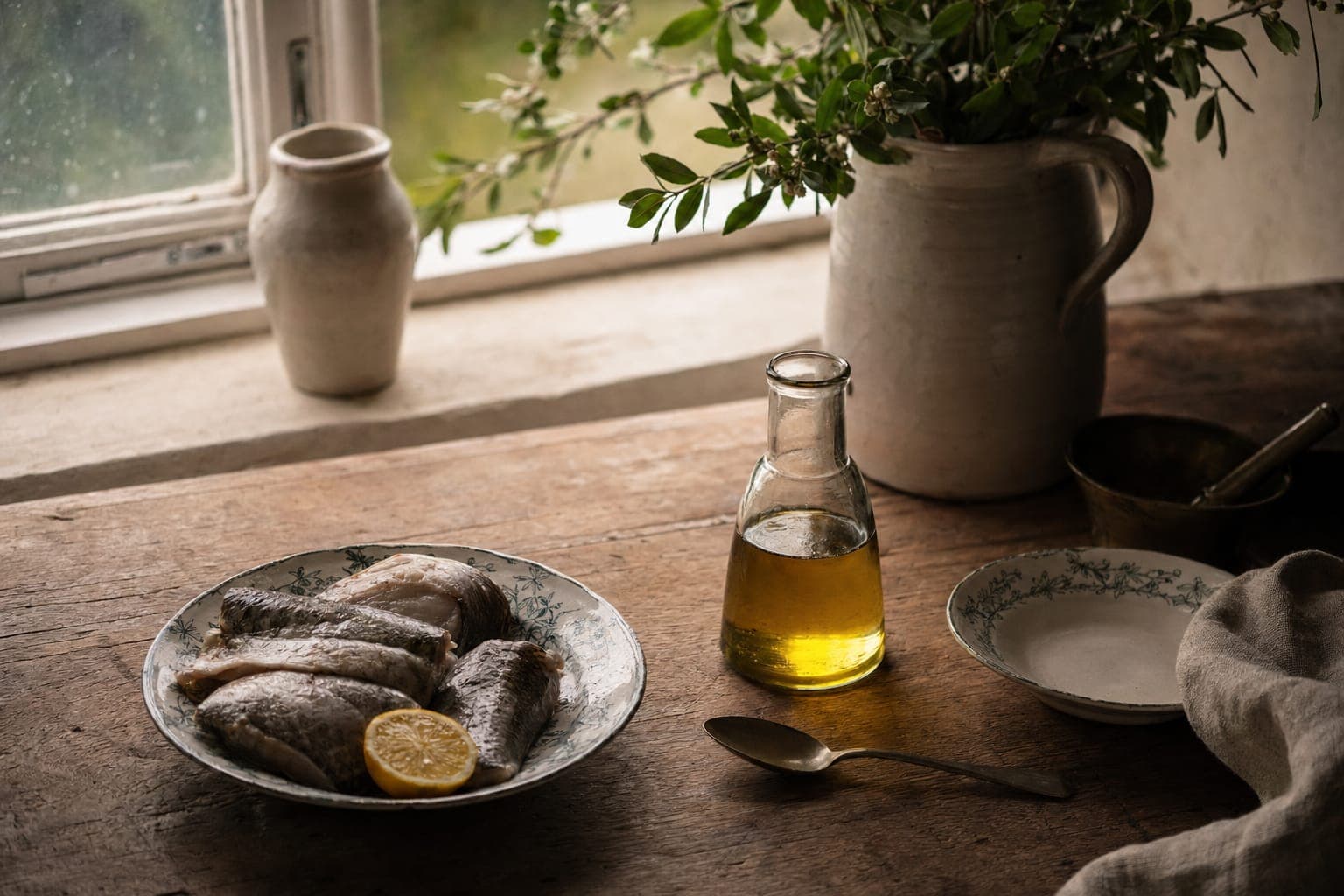
Cod Liver Oil: What Your Great-Grandmother Got Right
Cod liver oil prevented rickets. It provided vitamin A and D when food was scarce. Modern versions miss the point. Here's what actually matters.
Ancestral
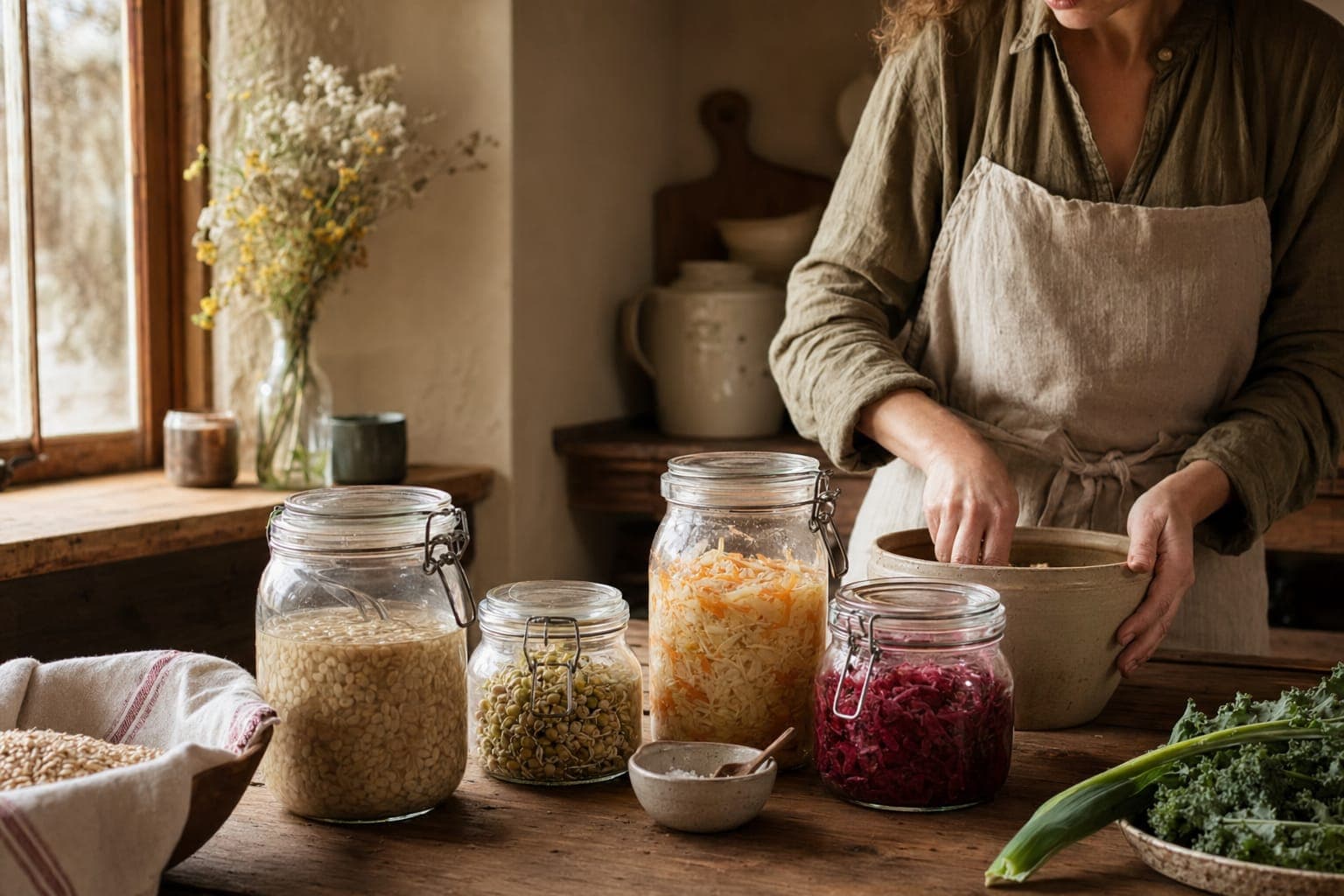
Soaking, Sprouting and Fermenting: Traditional Food Preparation
Phytic acid and lectins make grains and legumes difficult to digest. Traditional prep methods aren't outdated. They're essential for nutrient availability.
Ancestral
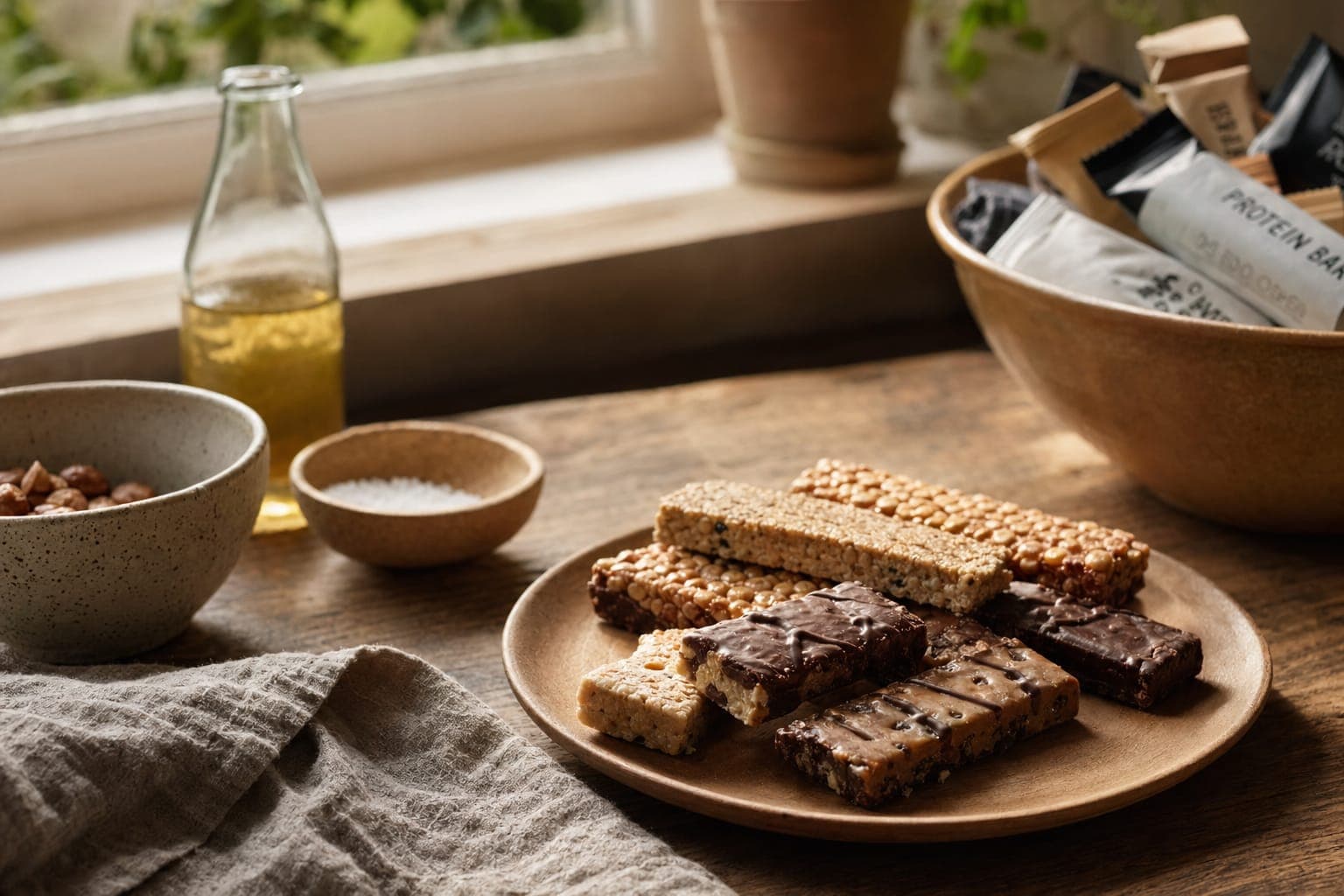
The Hidden Ingredients in Your 'Healthy' Protein Bar
Protein bars marketed as healthy hide seed oils, sugar alcohols, and processed isolates. Here's what's actually in them and why they're not real food.
Real food, made effortless
Bring it into my routineA few ways to use it
All recipes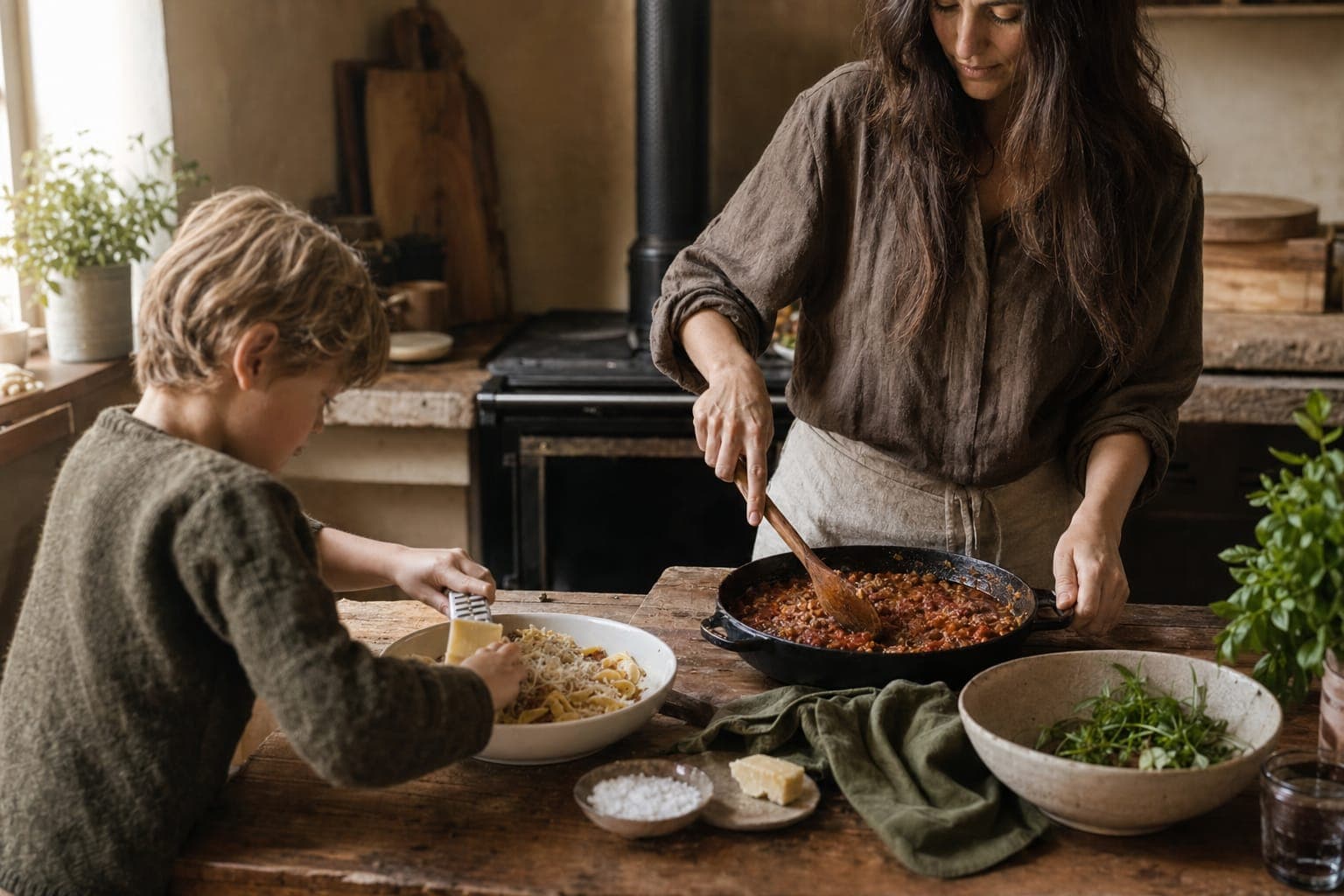
Organ Bolognese: The Family Dinner That Heals
Practical organ meat recipe using fresh beef liver and heart. Family-friendly bolognese that bridges supplements to whole food.
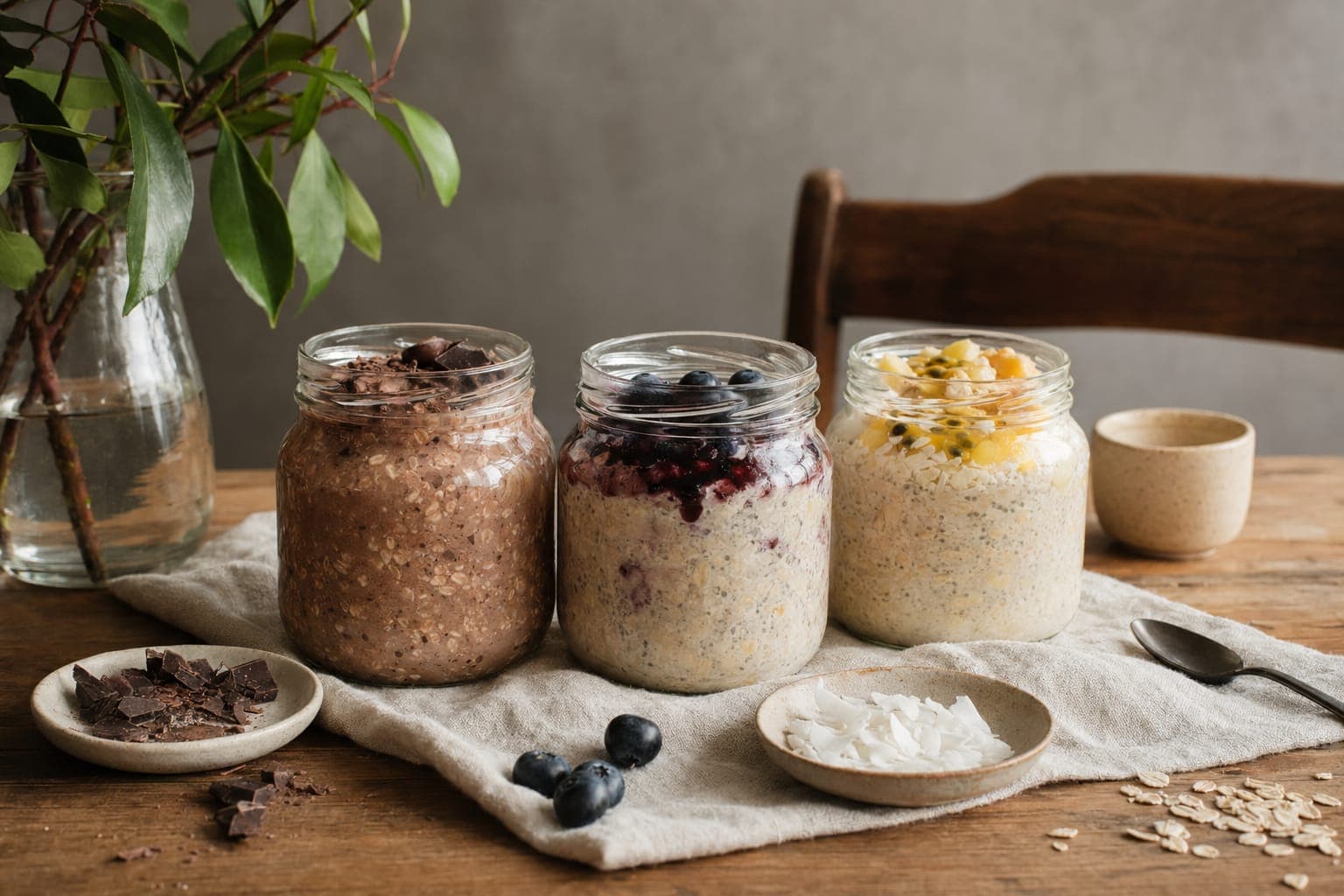
Organised Overnight Oats: 3 Variations
Three delicious overnight oats variations with Organised. Chocolate, berry, tropical flavours. Make them Sunday, eat them all week.
10 Ways to Use Organised That Aren't Just a Shake
Move beyond the basic shake. Discover 10 creative ways to use Organised in smoothie bowls, oats, yoghurt, baking, and more.


 Join over 100,000+ members
Build a better food system with us
The Organised community is thousands of people choosing real food and backing the farmers who grow it, all of us trying to leave the world a little better than we found it. If that is what you care about too, you belong here.