Why 'Fortified' Doesn't Mean Nutritious
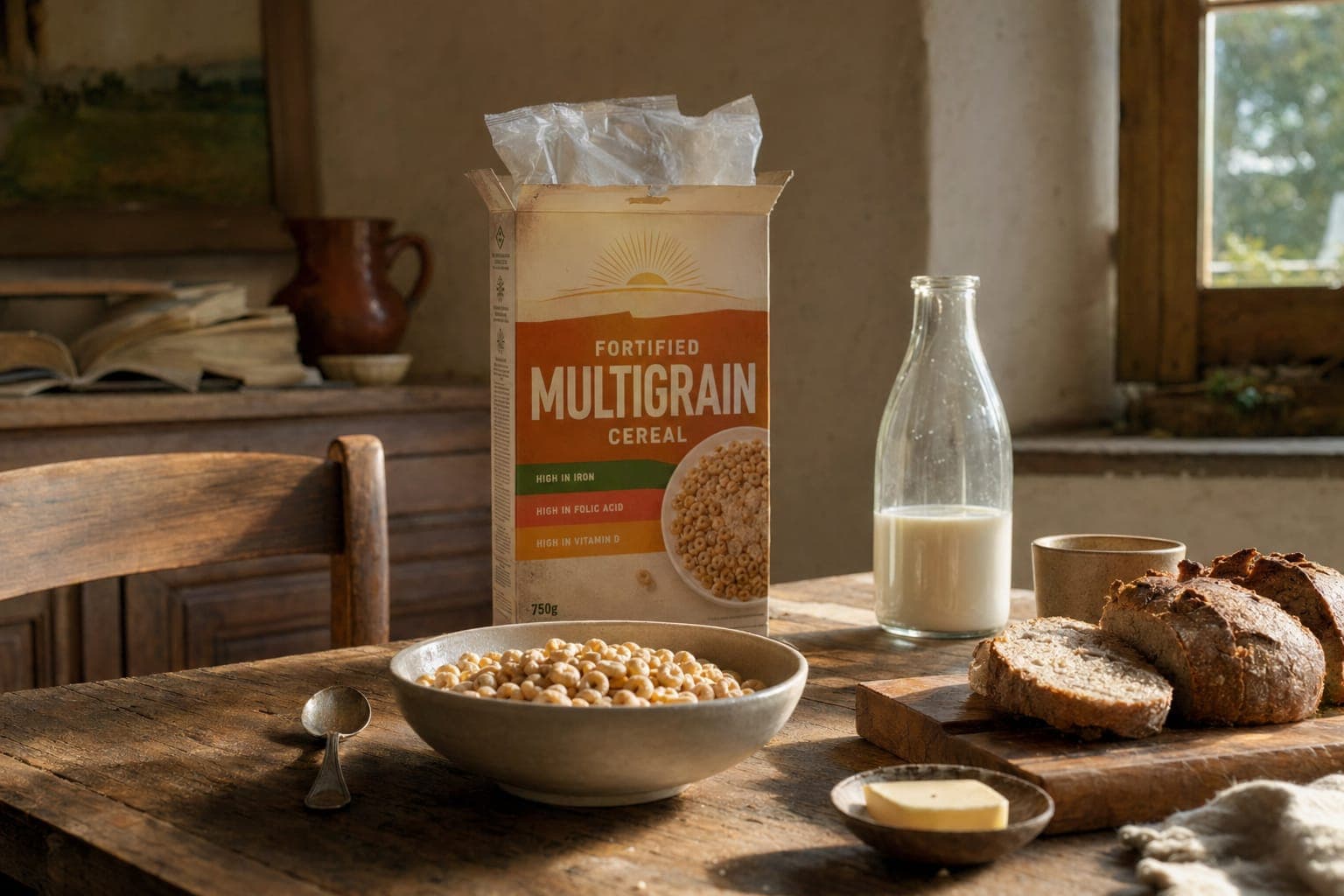
Open a box of breakfast cereal and the packaging screams health. Fortified with ten essential vitamins. Enriched with minerals. A complete breakfast. But look closer and you're reading the nutrition label of something trying to compensate for being almost nutritionally empty. Fortification is a confession dressed as a promise.

By Niall Kiddle, Founder, Organised

Reviewed by Pedro Rodrigues, Agronomist (farming and sourcing only) ·
5 min read · Published · Updated · 3 cited sources
Makers of the Organised Daily blend, a grass-fed beef organ supplement from regenerative UK farms
What fortification actually is
Fortification means adding nutrients back into a food after processing has stripped them out. A whole grain naturally contains B vitamins, minerals, and fibre. Refine that grain into white flour or corn meal, and most of it vanishes. Rather than stop the refining process, the food industry adds synthetic nutrients back in and calls it progress.
This is regulatory sleight of hand. You're not eating a whole food. You're eating a processed skeleton dressed in synthetic vitamins and marketed as nutrition.
Fortification is what happens when you remove all the good stuff and then try to convince people you've put it back.
Synthetic vitamins are not real vitamins
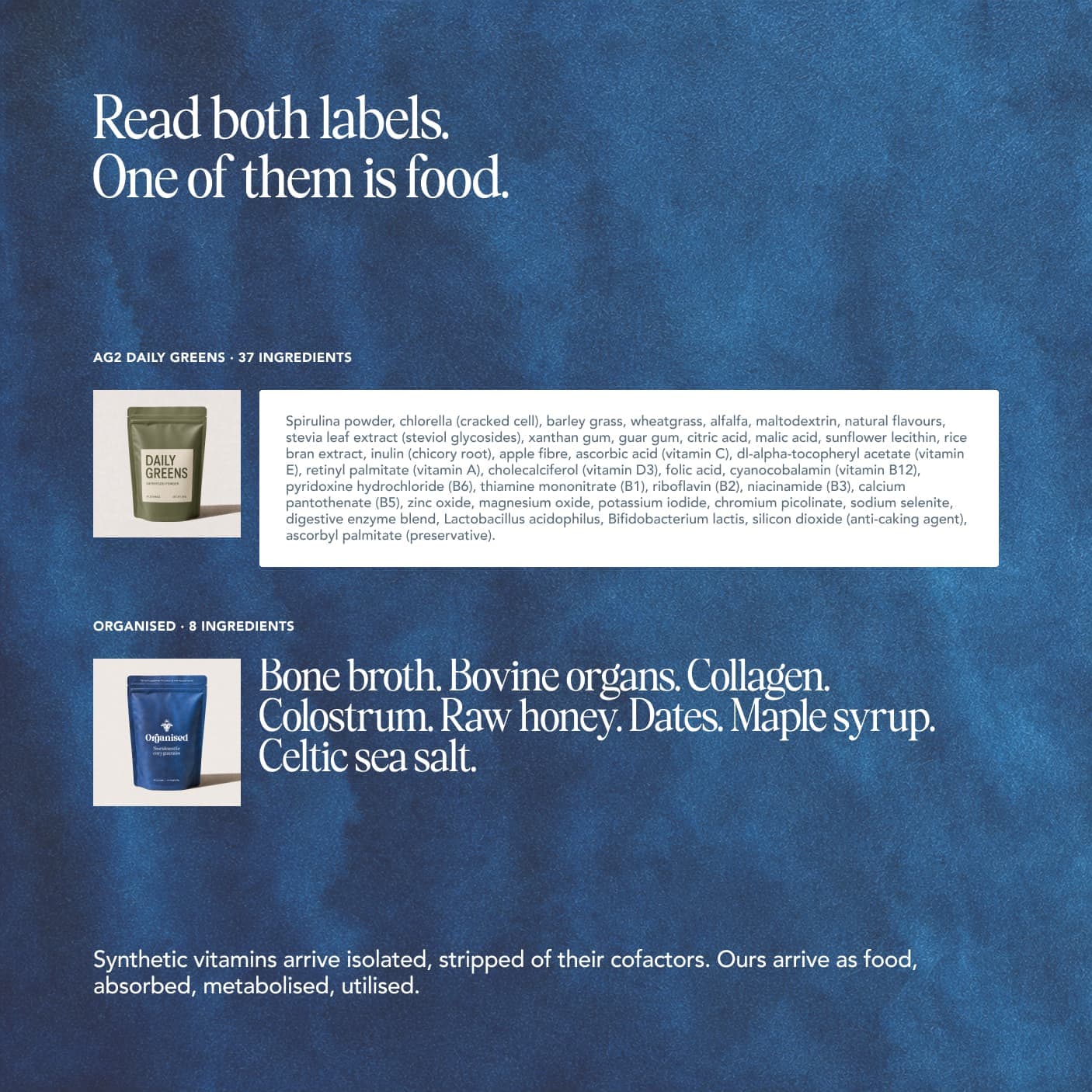
The vitamin C that's added to cereals isn't the same vitamin C that you get from an orange. It's ascorbic acid, synthesised in a lab from genetically modified corn.3 The B vitamins added to enriched bread are synthetic approximations of the B vitamins your body actually uses.
Your body can tell the difference. Synthetic vitamins have a different molecular structure and often lack the cofactors and active forms that make natural vitamins functional. You can absorb them, but your body has to work much harder to utilise them.
Worse, synthetic vitamins aren't regulated with the same rigour as pharmaceuticals, so purity varies wildly. You might be getting what's on the label, or you might be getting contaminants and by-products.
A synthetic vitamin is a nutrient in name only. It's not the same as the nutrient found in real food.
The folic acid and folate distinction
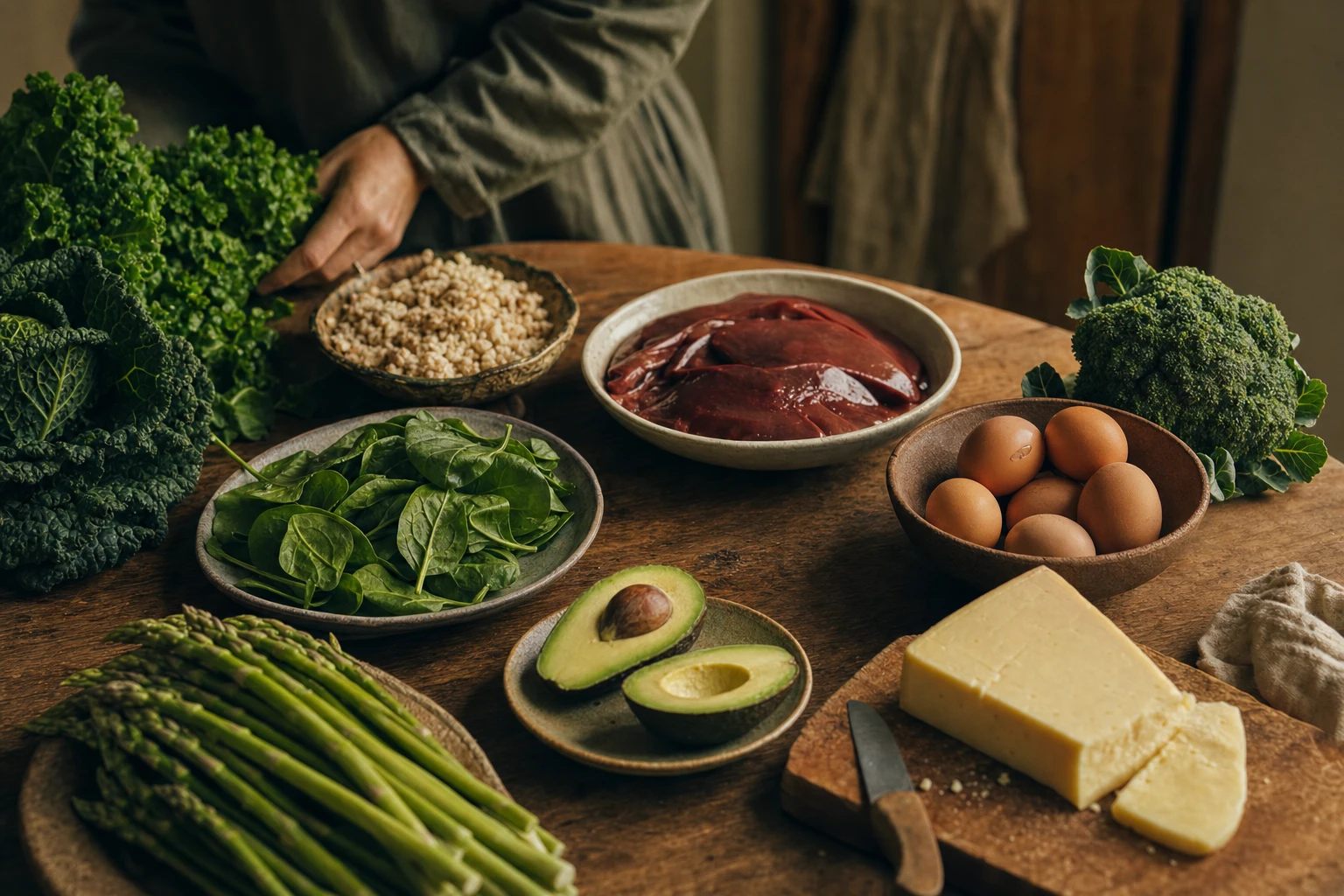
This is the most important fortification scam. Folic acid is the synthetic form of folate, which is found naturally in leafy greens, liver, and legumes.1 But they're not interchangeable.
Your body has to convert folic acid into its active form, 5-methyltetrahydrofolate, before you can use it. Not everyone can do this efficiently. If you carry the MTHFR genetic variant (which around 30 to 40 percent of people do), you can't convert folic acid at all.1 You accumulate it, unused, in your tissues.
That accumulated folic acid is linked to increased cancer risk, cognitive decline, and immune dysfunction. It's not that folate is harmful. Folic acid, in a form your body can't use, absolutely is.
Fortified foods use folic acid because it's cheaper and more stable than real folate. That's the entire reason. Your health is incidental.
If the food industry cared about your health, they'd use bioactive folate instead of folic acid. They don't.
Iron filings: literally
Some fortified cereals contain literally magnetisable iron filings.2 Not iron compounds. Not iron chelated to amino acids. Iron filings. You can run a magnet through a bowl of some breakfast cereals and pull out visible particles of metal.
This iron passes through your digestive system mostly unabsorbed. Your body is built to absorb iron from food matrices, from haem sources like meat, from fermented foods that have broken down iron into usable forms. Metallic iron doesn't fit that architecture.
The packaging says 'iron fortified' and implies that you're getting iron nutrition. You're not. You're getting iron powder that your gut can't use, passing through your system inert.
Kellogg's cereals and the illusion
Kellogg's is the gold standard of fortified breakfast cereal marketing. Their cereals are packed with vitamins, minerals, and what sounds like comprehensive nutrition. Pick any one and the label is a wall of numbers suggesting completeness.
But the base ingredient is refined corn or refined wheat. Then comes sugar (or more refined carbohydrates). Then comes the synthetic fortification. Then comes flavouring, colour, and preservatives.
You're eating a carbohydrate delivery system with synthetic vitamins bolted on. The vitamins don't change the fact that you're consuming foods that spike blood sugar, damage the gut barrier, and promote metabolic dysfunction.
Fortifying junk doesn't make it nutritious. It makes it deceptive.
Get ancestral nutrition guides, free
Two short reads a week on traditional ways of eating, examined with modern evidence.
By signing up you agree to receive emails from us. No spam, unsubscribe anytime.
How to know if you're eating a fortified food trap
Check the ingredient list before reading the nutrition label. If the first ingredients are refined flour, cornmeal, or any grain without the word 'whole' in front of it, stop there. The base is already compromised.
Look for 'enriched' or 'fortified' in the ingredient list. If you see it, the food had to be patched. That's your signal.
Check specifically for folic acid (not folate), and ferric orthophosphate or reduced iron (not iron from food sources). These are red flags that you're eating synthetic nutrients your body may not use.
Ask yourself: would this food be nutritious if it weren't fortified? If the answer is no, you've found your problem. The food isn't nutritious. It's fortified. There's a difference.
The real breakfast alternative
If you're eating breakfast cereal because it's convenient, that's honest. Convenience is real. But there are convenient whole foods that don't require fortification.
Eggs boiled in advance. A spoonful of nut butter with an apple. A small tin of sardines with whole grain bread. Greek yoghurt with berries. These take five minutes to prepare, they're portable, and they deliver actual nutrition without the synthetic patch job.
If you genuinely enjoy cereal, choose brands with minimal fortification. Granola-style cereals with oats, nuts, and minimal added vitamins. Yes, they're more expensive. But you're not paying for synthetic vitamin label claims that don't deliver the health they promise.
Better yet, make your own. Oats, nuts, dried fruit, real honey. No processing. No fortification needed.
1 of 9
Daily blend
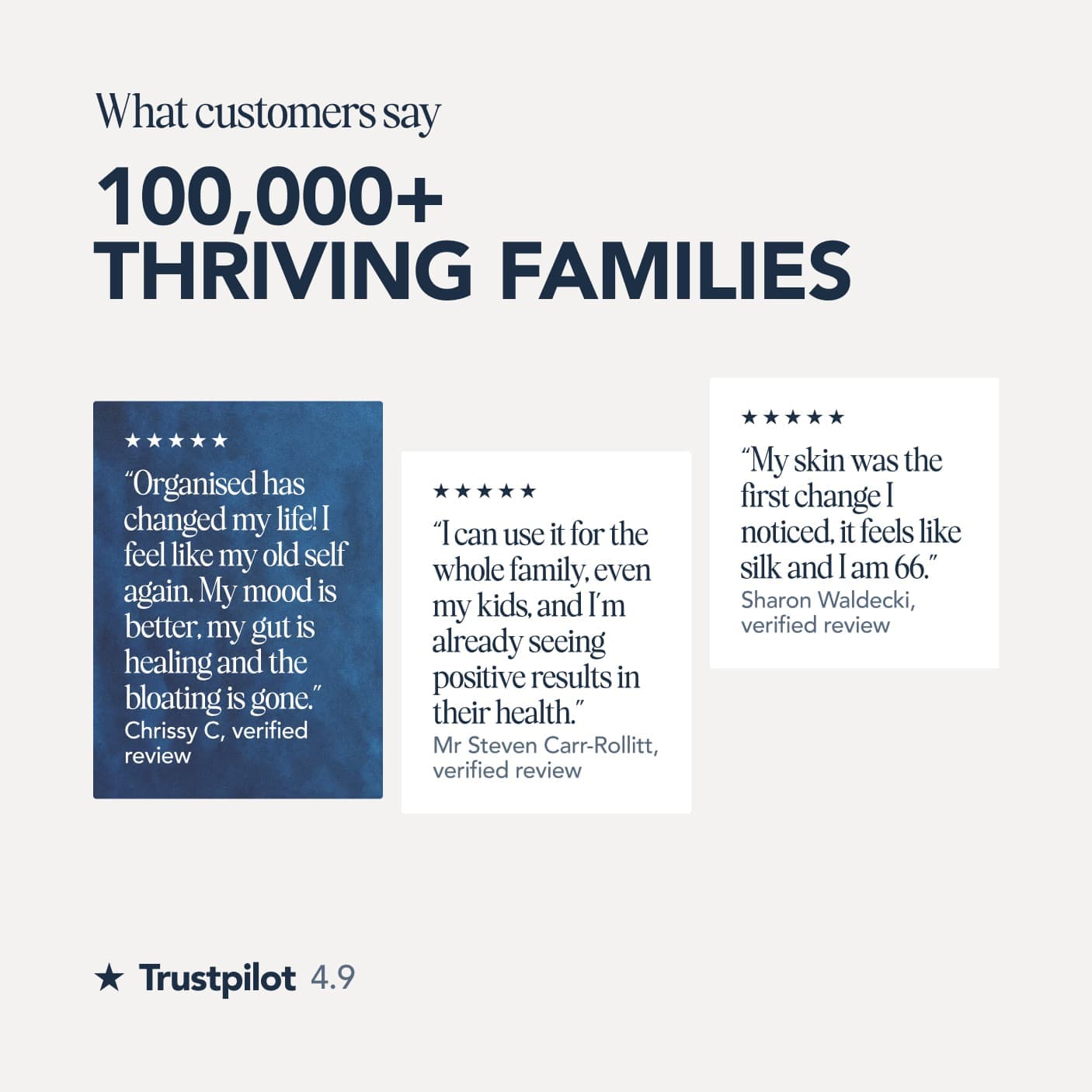
100,000+ thriving families4.9 on Trustpilot
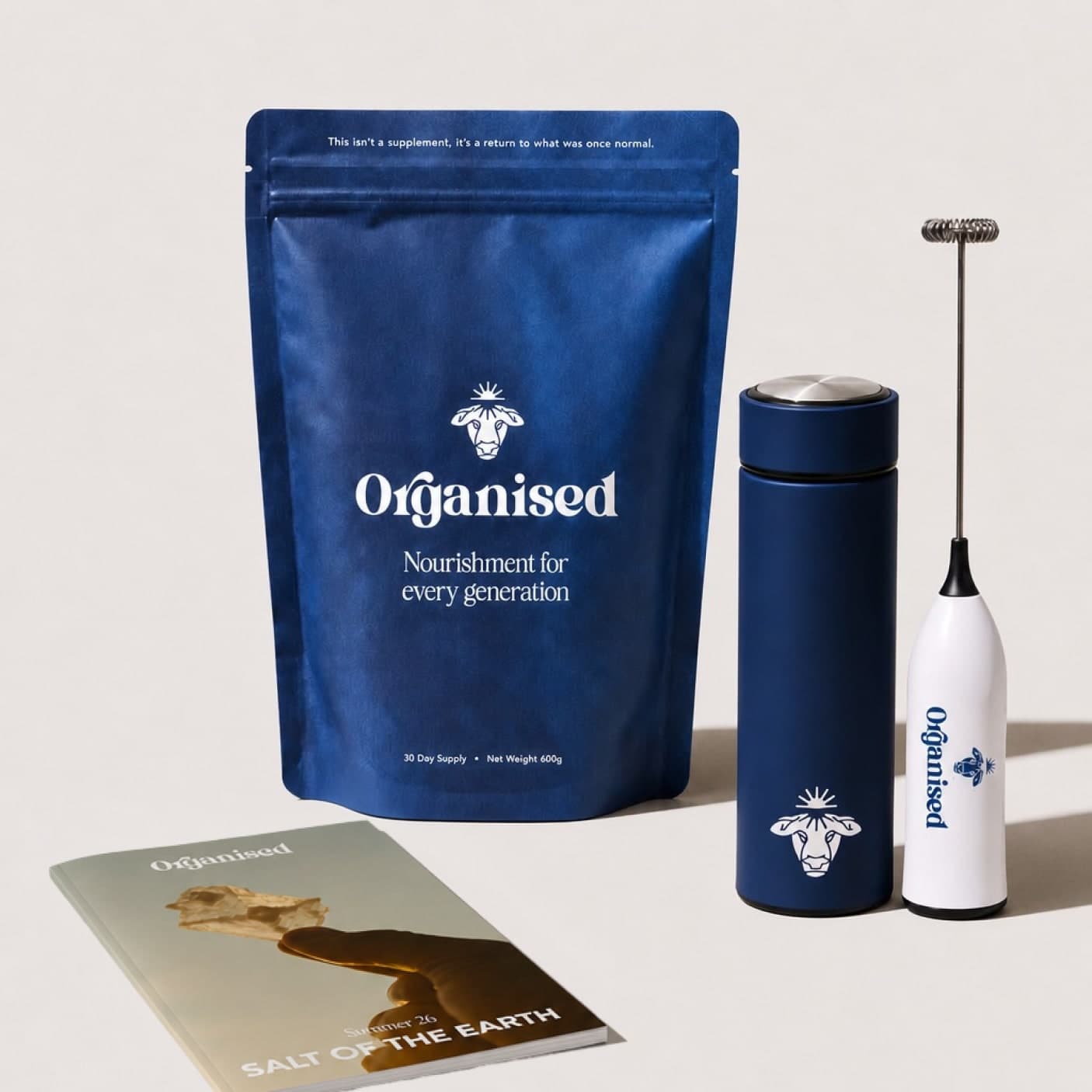
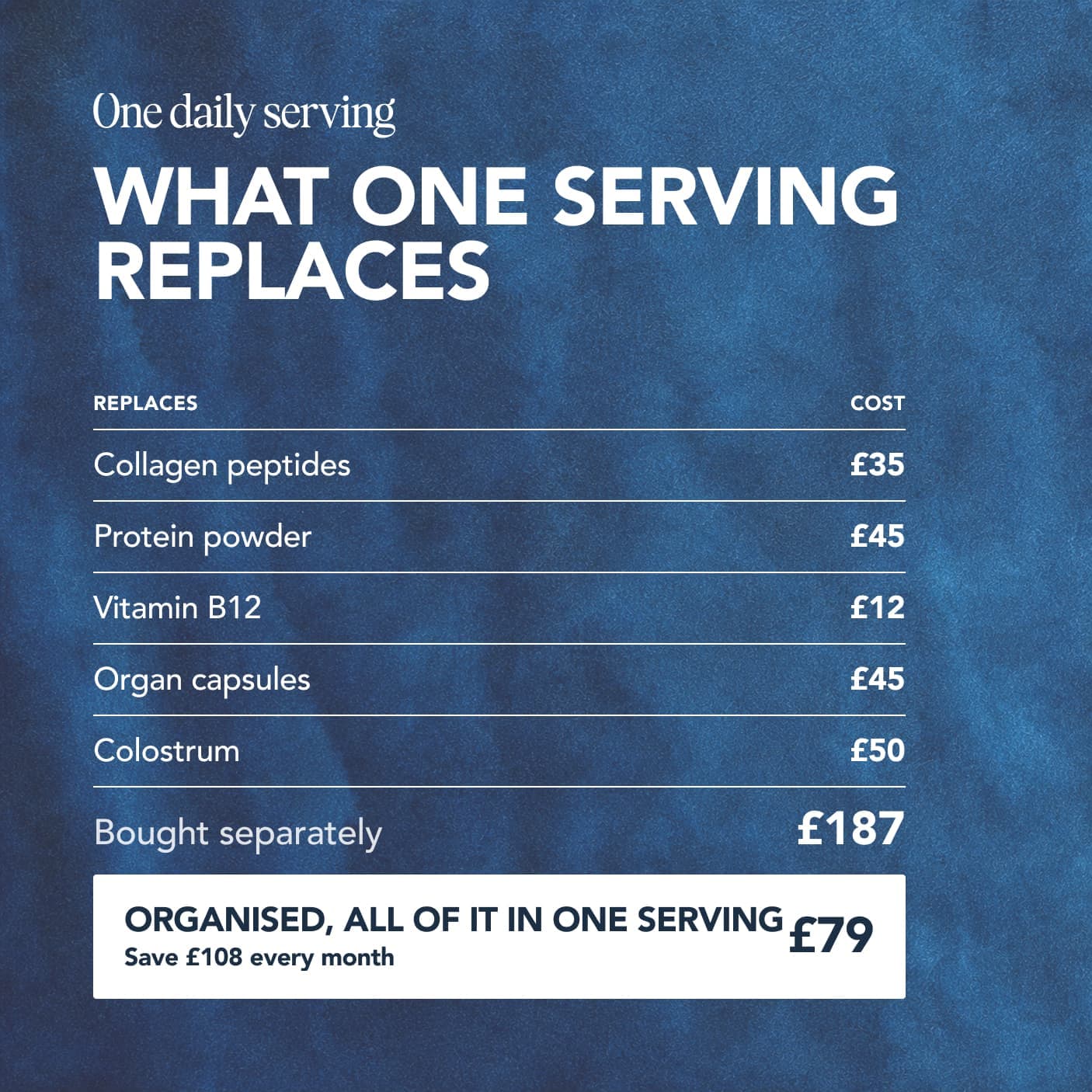
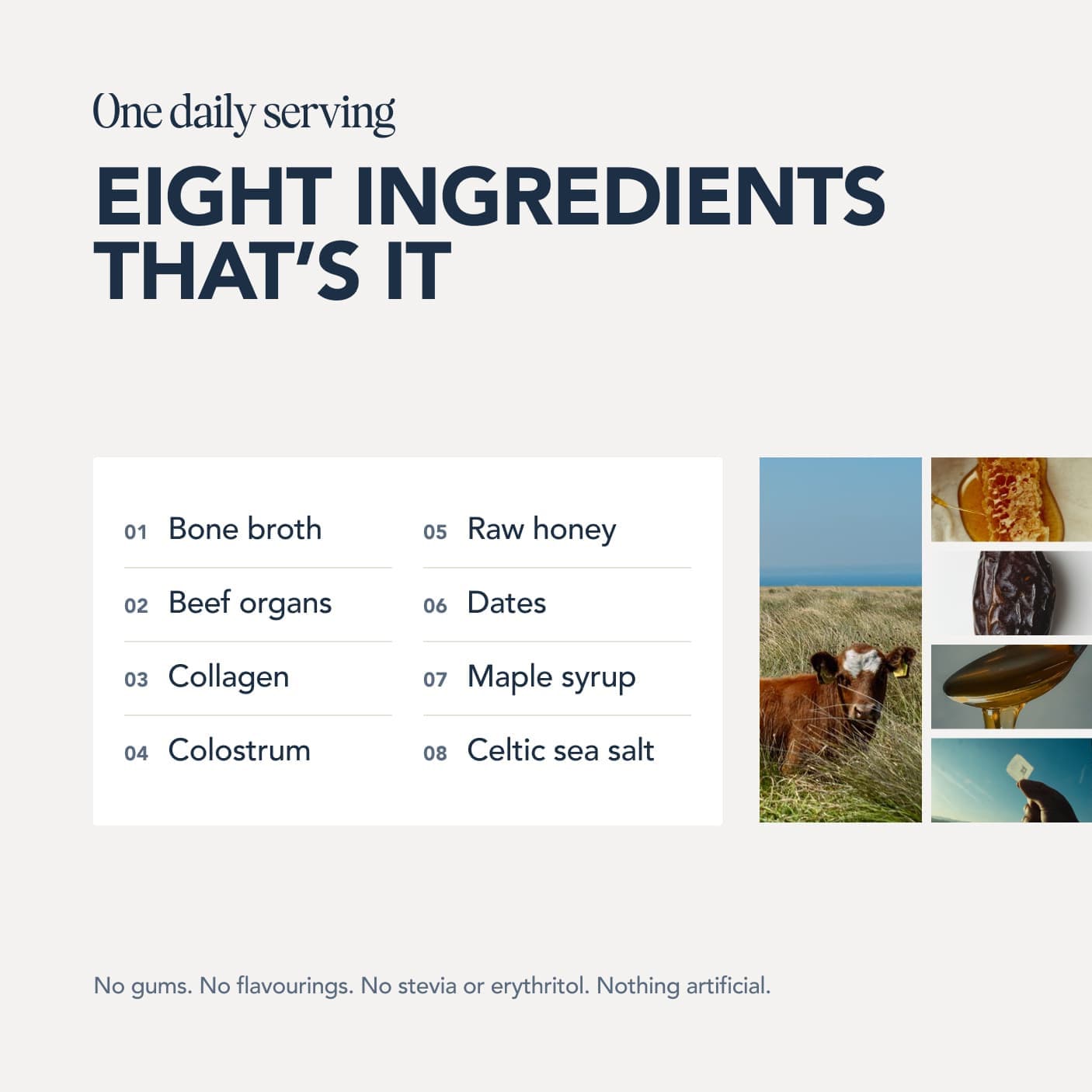
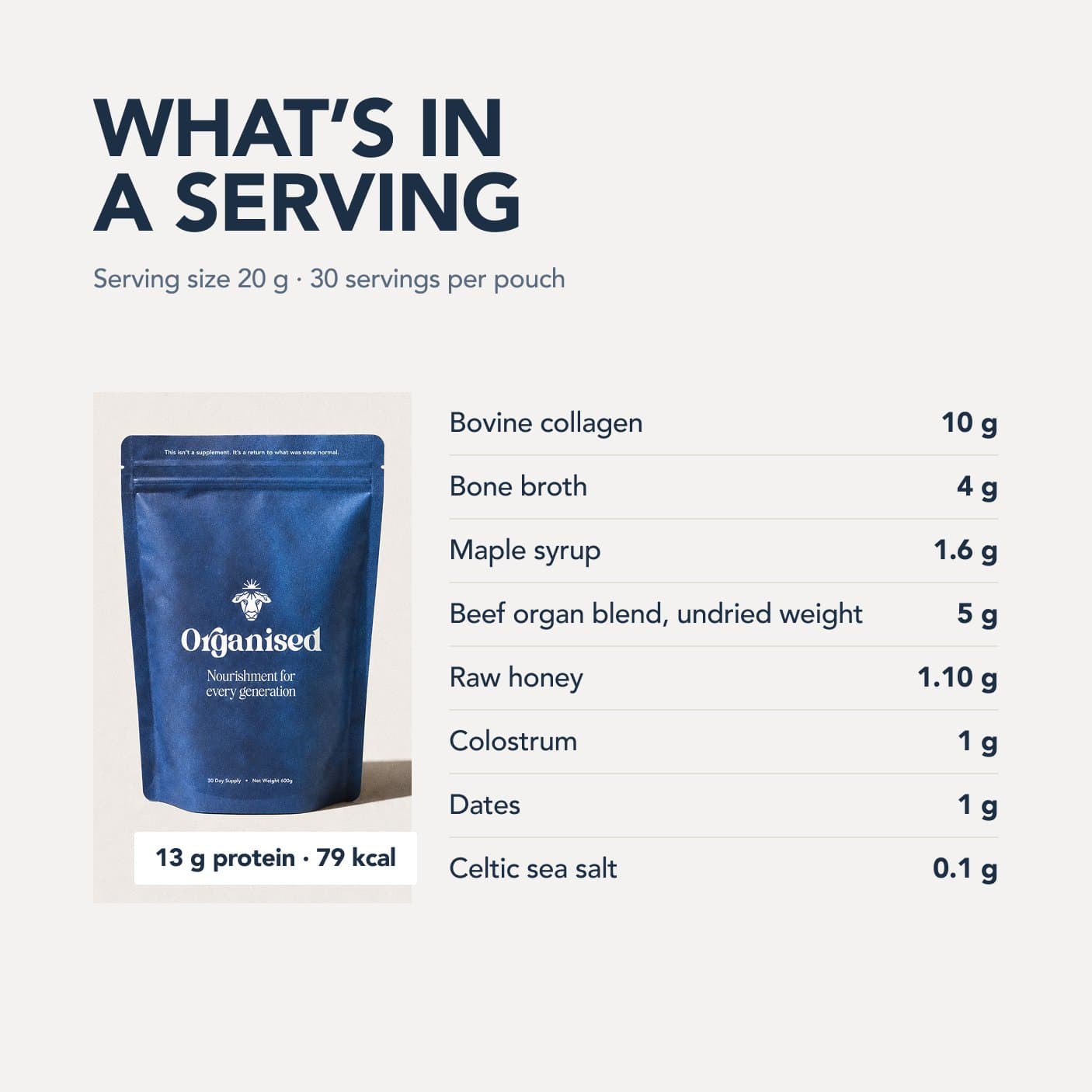
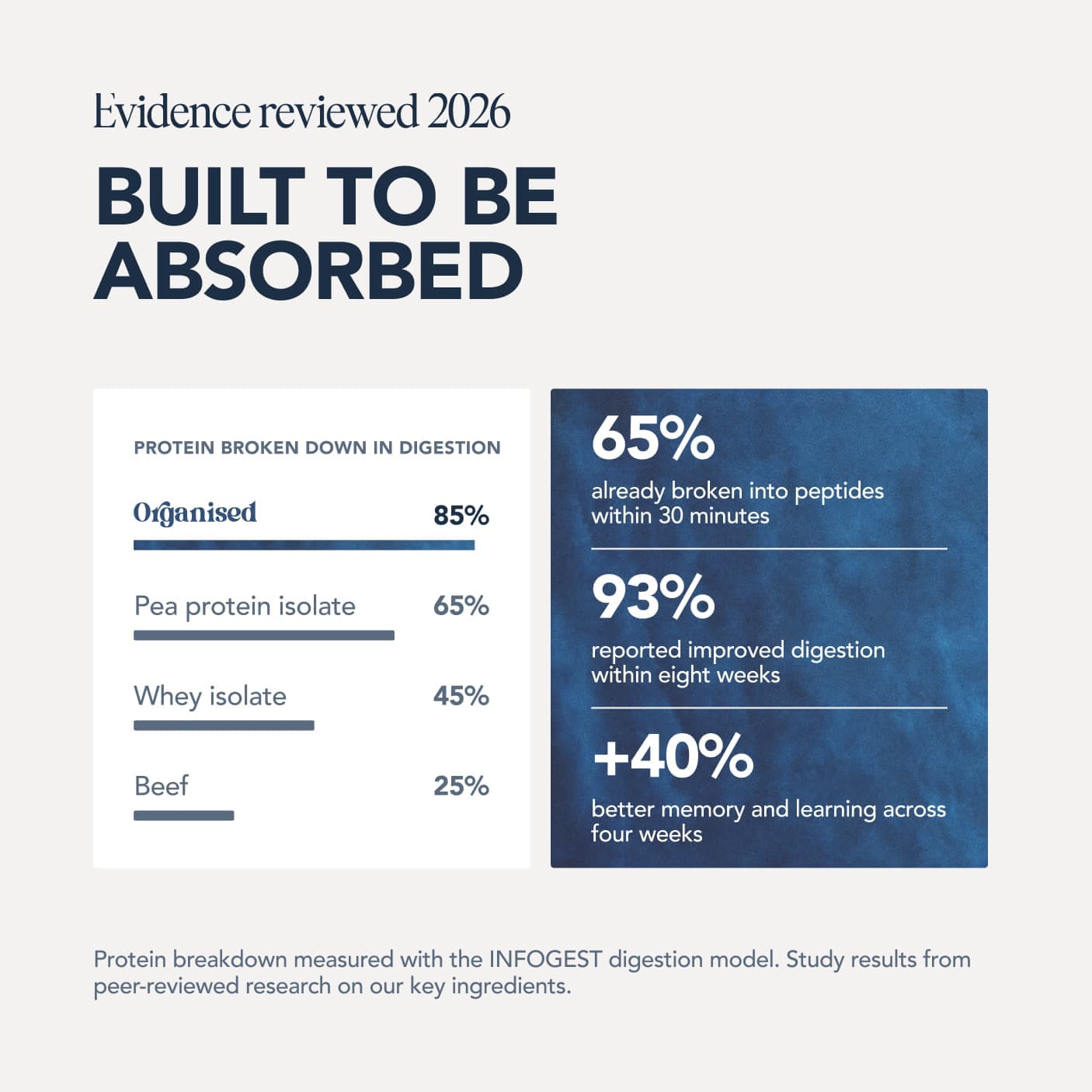
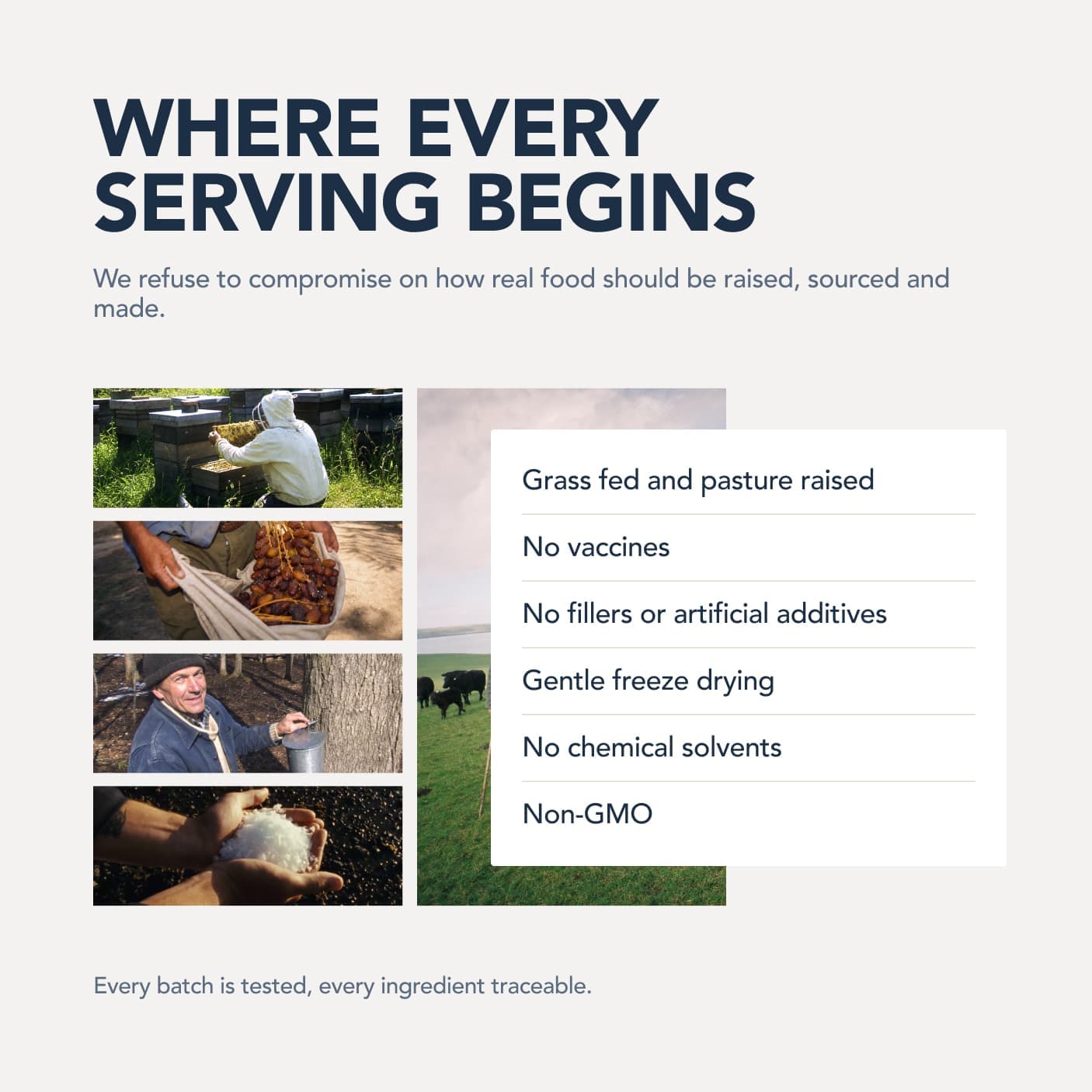
Eight real ingredients built around grass-fed beef organs, collagen and colostrum. Nothing synthetic added.
Free with your first order, worth £38. Plus £10 off the pouch with a subscription.

Free UK shipping · Made in England · 100 day money back guarantee on your first pouch · Skip, pause or cancel anytime
Why fortification fails
Fortification assumes you can reduce food to its component nutrients and that those components, when isolated and synthesised, will recreate the health benefit of the original food. This is fundamentally wrong.
A food is not just the sum of its isolated nutrients. It's a matrix. It's cofactors. It's bioavailability. It's the way nutrients interact with each other and with your digestive system. You can't synthetic your way back to that.
Fortification is a band-aid on a broken system. Instead of growing or buying whole foods, the industry refines them, strips them, and adds synthetic replacements. And we've been conditioned to see the label and think we're winning.
Real nutrition can't be reversed engineered and put back into a box.
The bottom line
Fortified doesn't mean nutritious. It means damaged and patched. When you see fortified on a label, read it as a confession. The food was processed so aggressively that the company had to add synthetic vitamins back in to make it defensible. That's not a selling point. It's a warning.
Eat real food. Food that didn't need fortifying because it was never broken in the first place.
References
Every source below was checked on 27 August 2026. Each PubMed, PMC and DOI identifier was resolved against NCBI or Crossref, and what it opens is printed under the citation, so you can see the link goes where the citation says without leaving the page. Where a citation and its identifier disagreed, the citation was corrected to the record or the reference was deleted along with the sentence marker that pointed at it, and where the resolved paper turned out not to support the sentence, the sentence was cut back to what it does support. Borrowed authority is worse than none, because it looks like rigour.
- National Institutes of Health, Office of Dietary Supplements. Folate — Health Professional Fact Sheet.
- Hurrell RF et al. Iron fortification of foods. Annual Review of Nutrition, 2010. PMID 20415585.Checked 27 August 2026: PMID 20415585 opens Burdge GC, Lillycrop KA, Nutrition, epigenetics, and developmental plasticity: implications for understanding human disease. Annu Rev Nutr 2010;30:315-39. PubMed indexes it as: Review.
- National Institutes of Health, Office of Dietary Supplements. Vitamin C — Health Professional Fact Sheet.
Who wrote and reviewed this guide
Niall Kiddle
Author · Founder, Organised
Niall is the founder of Organised. He started the company in 2024 after fixing his own health the slow way: in 2022 he swapped a cupboard of synthetic supplements for real food, raw milk, organ meats, bone broth and honey, and felt the difference within months.
Areas of expertise: Ancestral nutrition, Organ meats, Whole-food supplementation, Gut health, Regenerative sourcing
Read Niall's full profile
Pedro Rodrigues
Reviewer · Agronomist (farming and sourcing only)
Pedro is the agronomist Organised works with on farming and sourcing. His job on the guides is to keep the science honest: he reviews what we publish about soil health, regenerative agriculture, grazing and the way food is actually produced.
Areas of expertise: Regenerative agriculture, Agronomy, Soil health, Grass-fed farming, Food sourcing
Reviewed this guide on
Read Pedro's full profileMore on food quality
View allBrowse the guides library
All guidesKeep reading
Ancestral
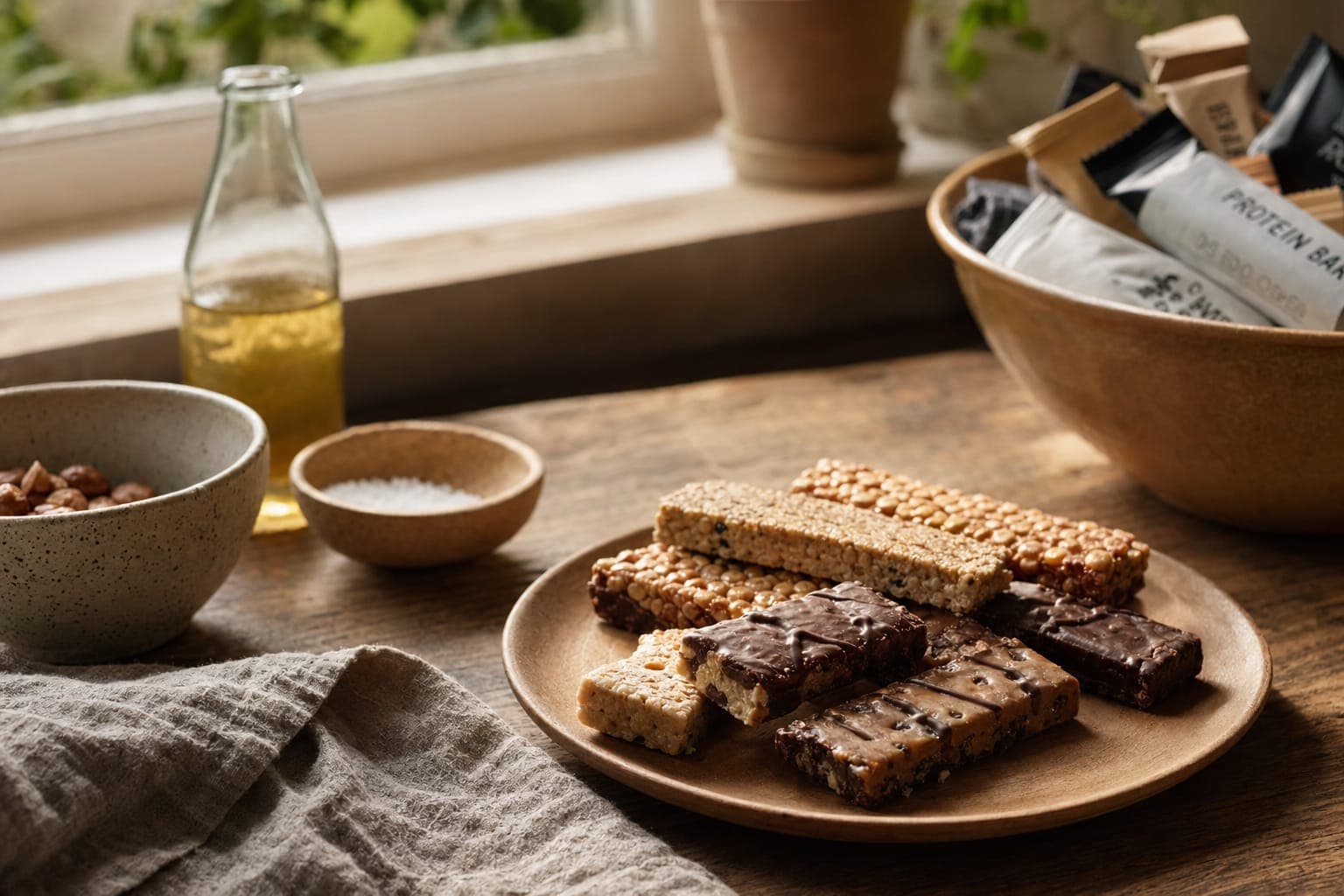
The Hidden Ingredients in Your 'Healthy' Protein Bar
Protein bars marketed as healthy hide seed oils, sugar alcohols, and processed isolates. Here's what's actually in them and why they're not real food.

Ancestral
Food Additives You Should Actually Worry About
Most food additives are safe, but a few are genuinely worth avoiding. Learn which food additives actually matter for your health and why. A clear-eyed guide.
Ancestral
Emulsifiers, Gums and Thickeners: The Hidden Gut Disruptors
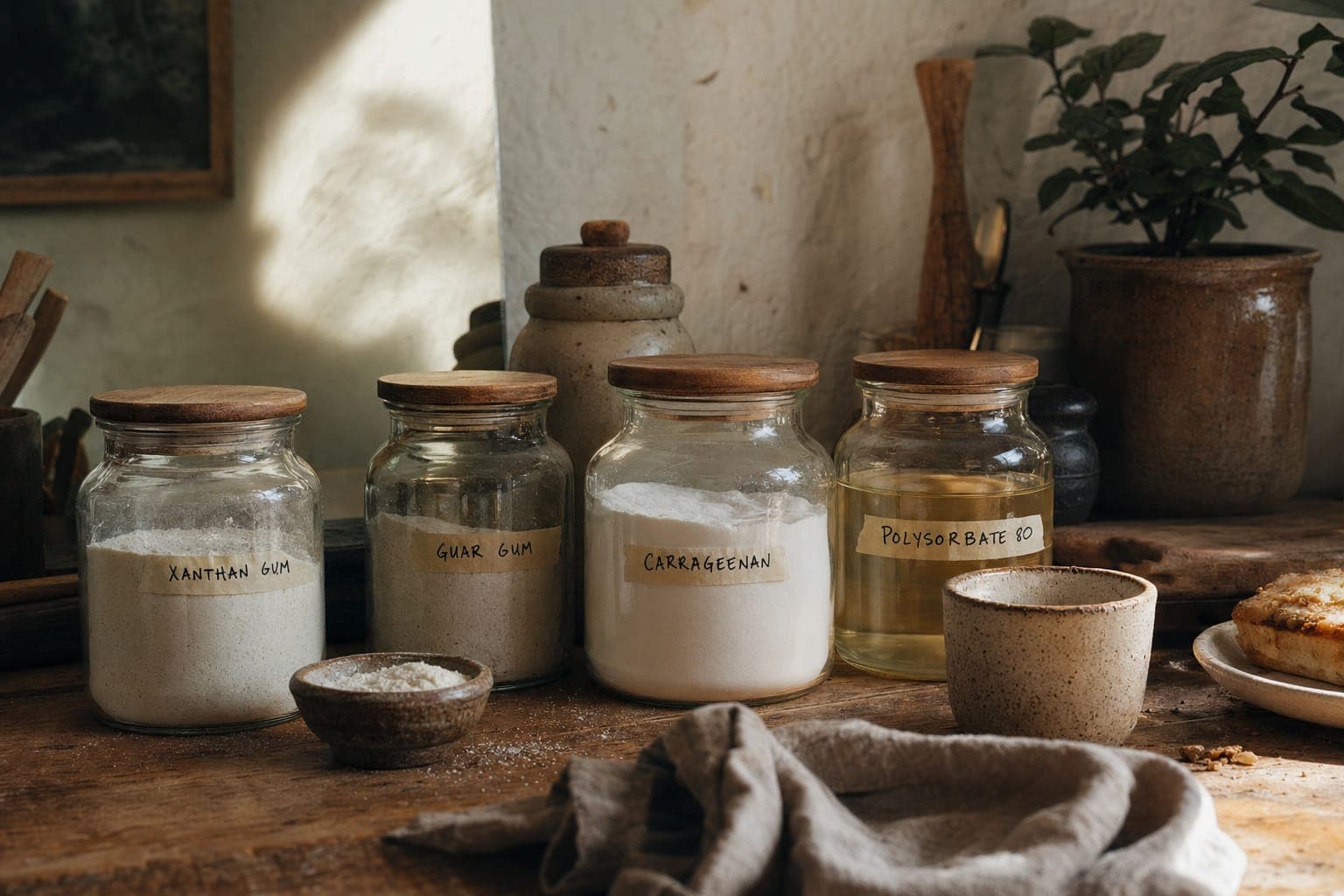
Carrageenan, polysorbate 80, and gums hide in most processed food. See what research on emulsifiers and gut health says about your gut barrier.
Real food, made effortless
Bring it into my routineA few ways to use it
All recipes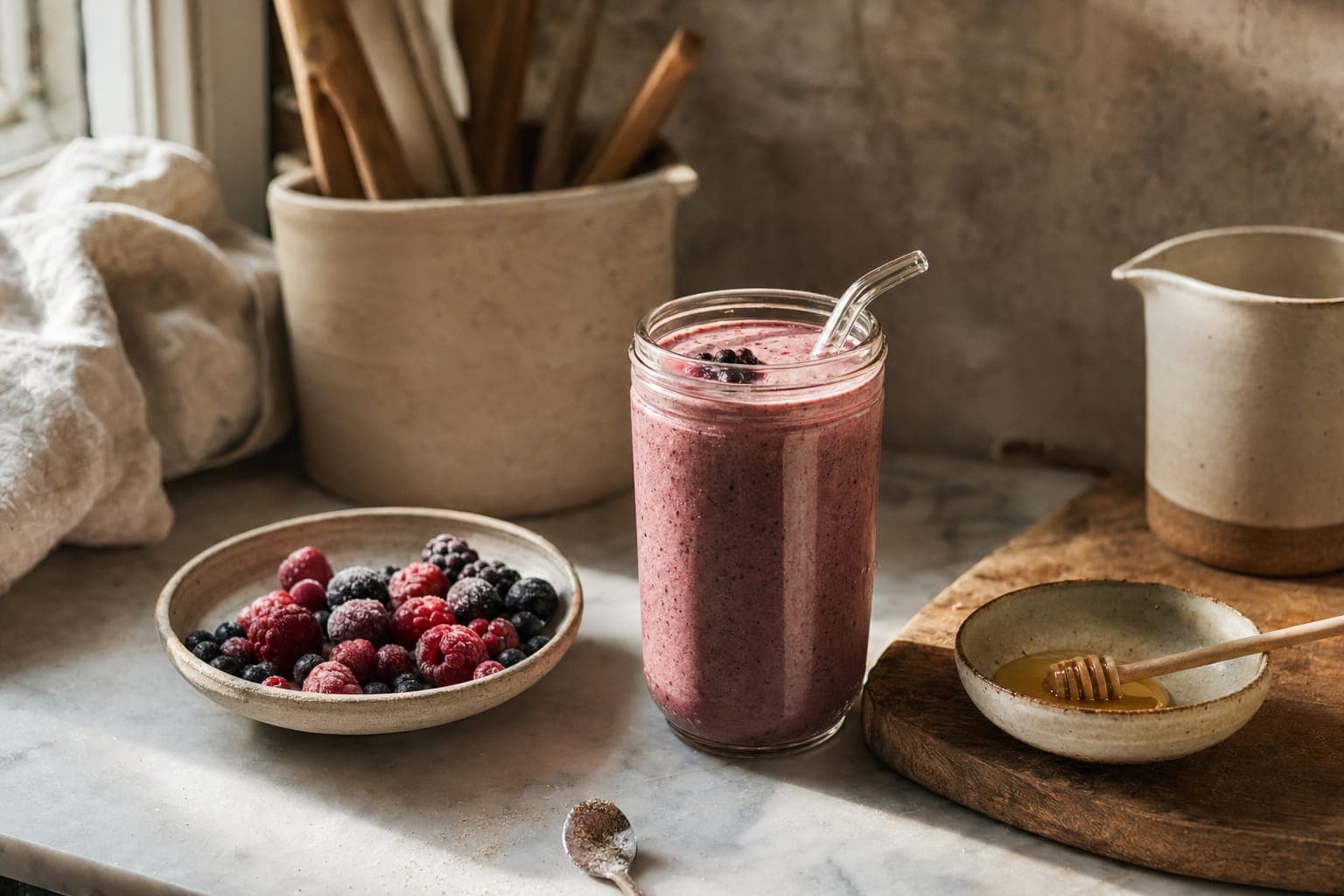
The Organised Recovery Smoothie for After Exercise
A recovery smoothie made with beef protein, raw milk, frozen berries, collagen, and honey. Optimal nutrition in the 30-minute window after exercise.

Bone Broth from Scratch: A Step-by-Step Guide
Step-by-step guide to making bone broth at home. Stovetop, slow cooker, and Instant Pot methods. Rich in collagen and gut-healing minerals.
10 Ways to Use Organised That Aren't Just a Shake
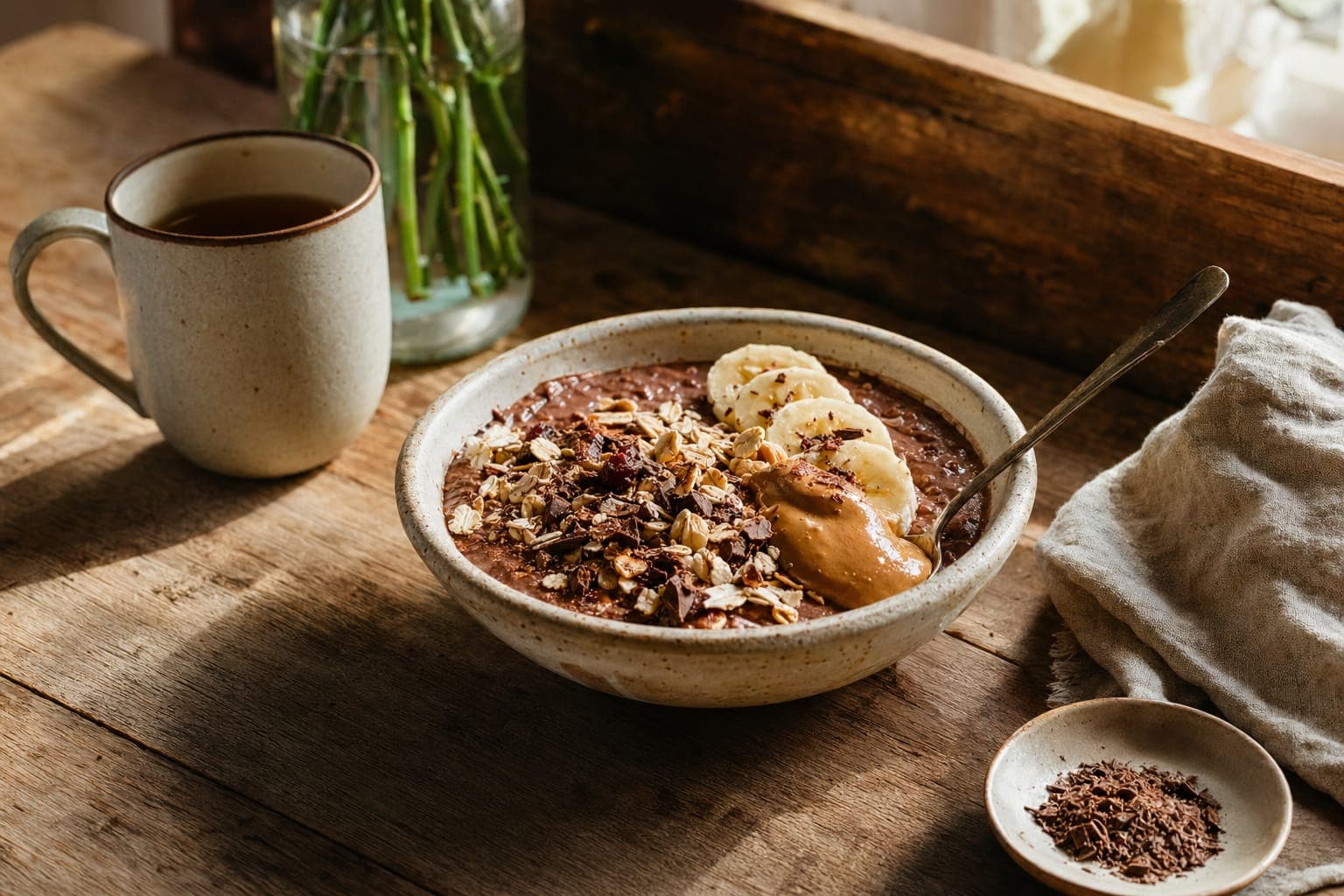
Move beyond the basic shake. Discover 10 creative ways to use Organised in smoothie bowls, oats, yoghurt, baking, and more.


 Join over 100,000+ members
Build a better food system with us
The Organised community is thousands of people choosing real food and backing the farmers who grow it, all of us trying to leave the world a little better than we found it. If that is what you care about too, you belong here.