Why Real Food Doesn't Need a Barcode
Look at the ingredient list on almost anything in a supermarket. It reads like chemistry. Modified palm oil. Emulsifiers. Flavour compounds. Preservatives. Your great-grandmother wouldn't recognise half of it as food. She'd be right. And that's the entire problem.
By Niall Kiddle, Founder, Organised

Reviewed by Pedro Rodrigues, Agronomist (farming and sourcing only) ·
5 min read · Published · Updated · 2 cited sources
Makers of the Organised Daily blend, a grass-fed beef organ supplement from regenerative UK farms
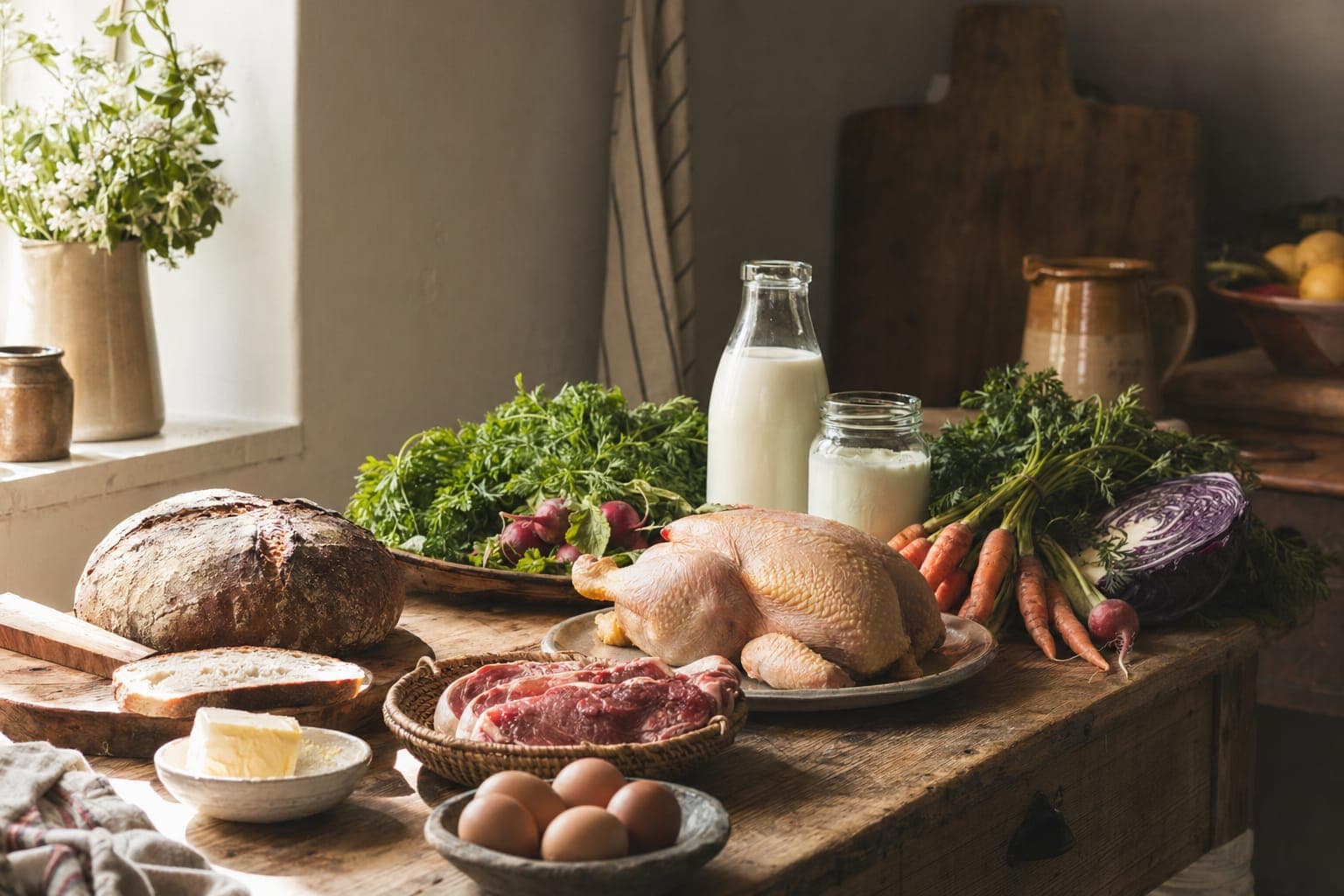
Real food doesn't need a barcode. Real food doesn't need a label that reads like a pharmaceutical ingredient list. Real food is simple.
The ingredient list test
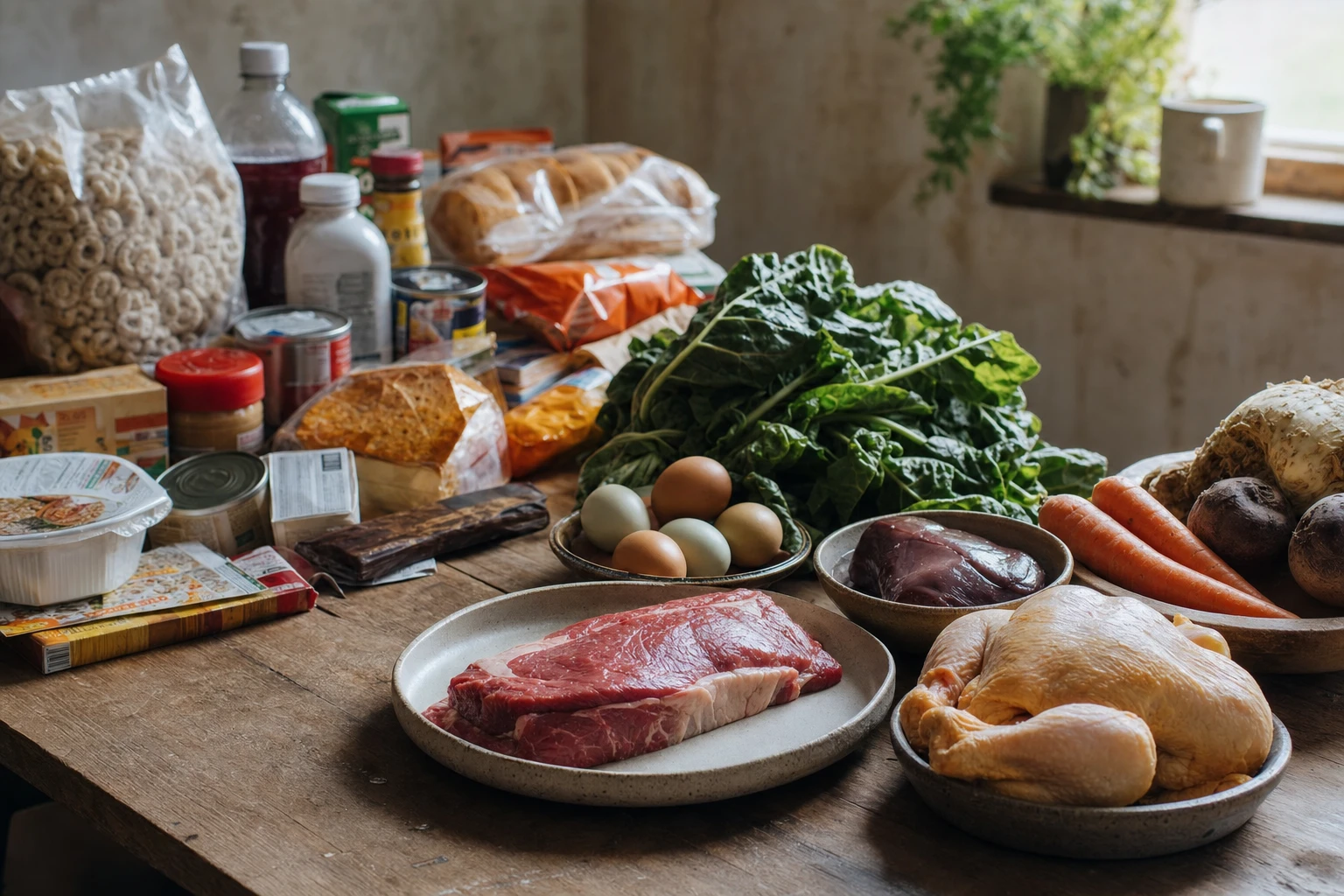
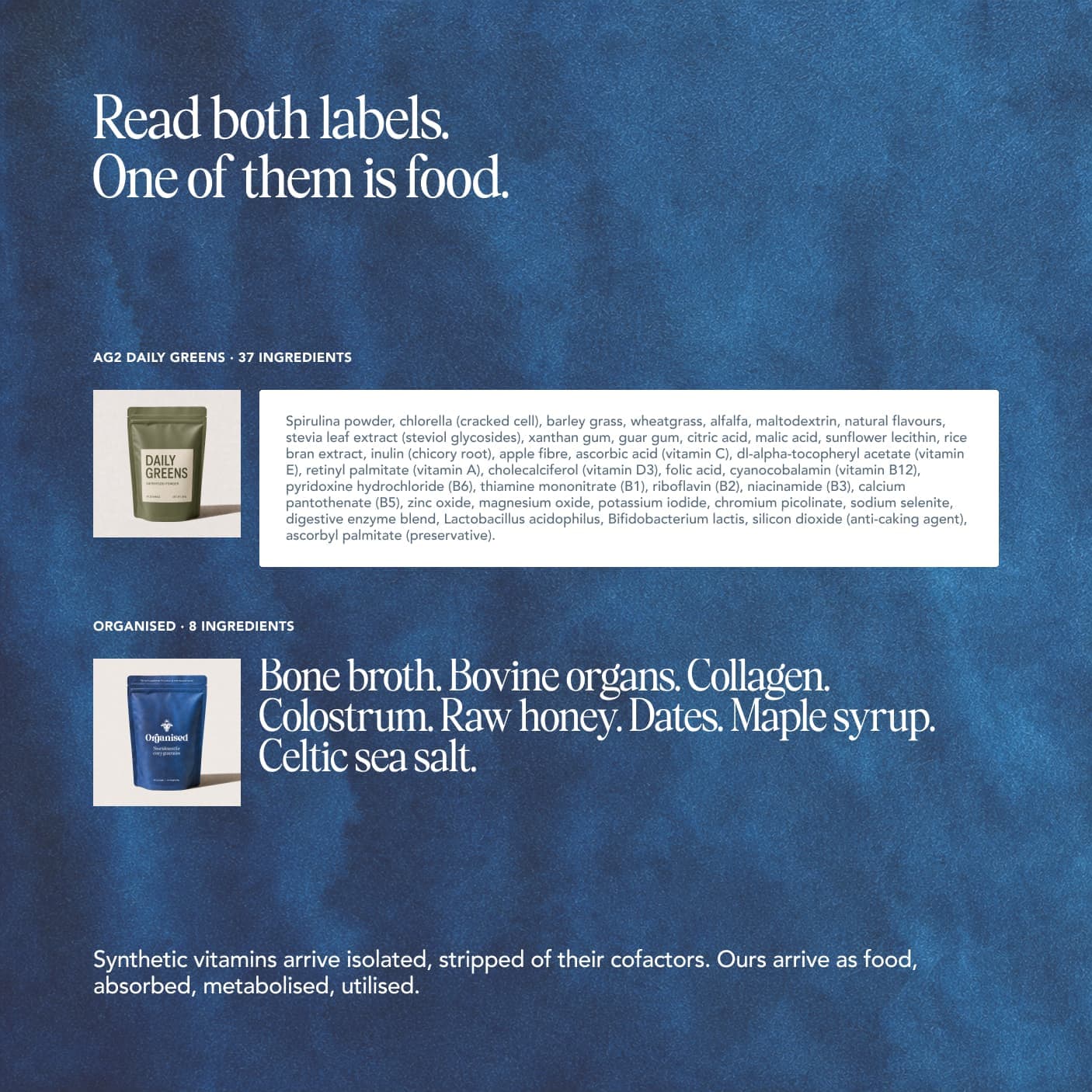
If you're holding a food item and you can't pronounce or recognise half the ingredients, it's not food. It's a product. Products are designed not to nourish you, but to sell to you. They're engineered to be shelf-stable, profitable, and addictive. Actual nutrition is almost incidental.
Real food has an ingredient list you can read. Bread: flour, water, salt, yeast. That's it. But bread in a supermarket? Flour, water, salt, yeast, dough conditioner, emulsifier, preservative, soy lecithin, enzyme, antifungal agent, colouring. Nothing in that list makes the bread more nourishing. Everything in it makes it more profitable and longer-lasting.
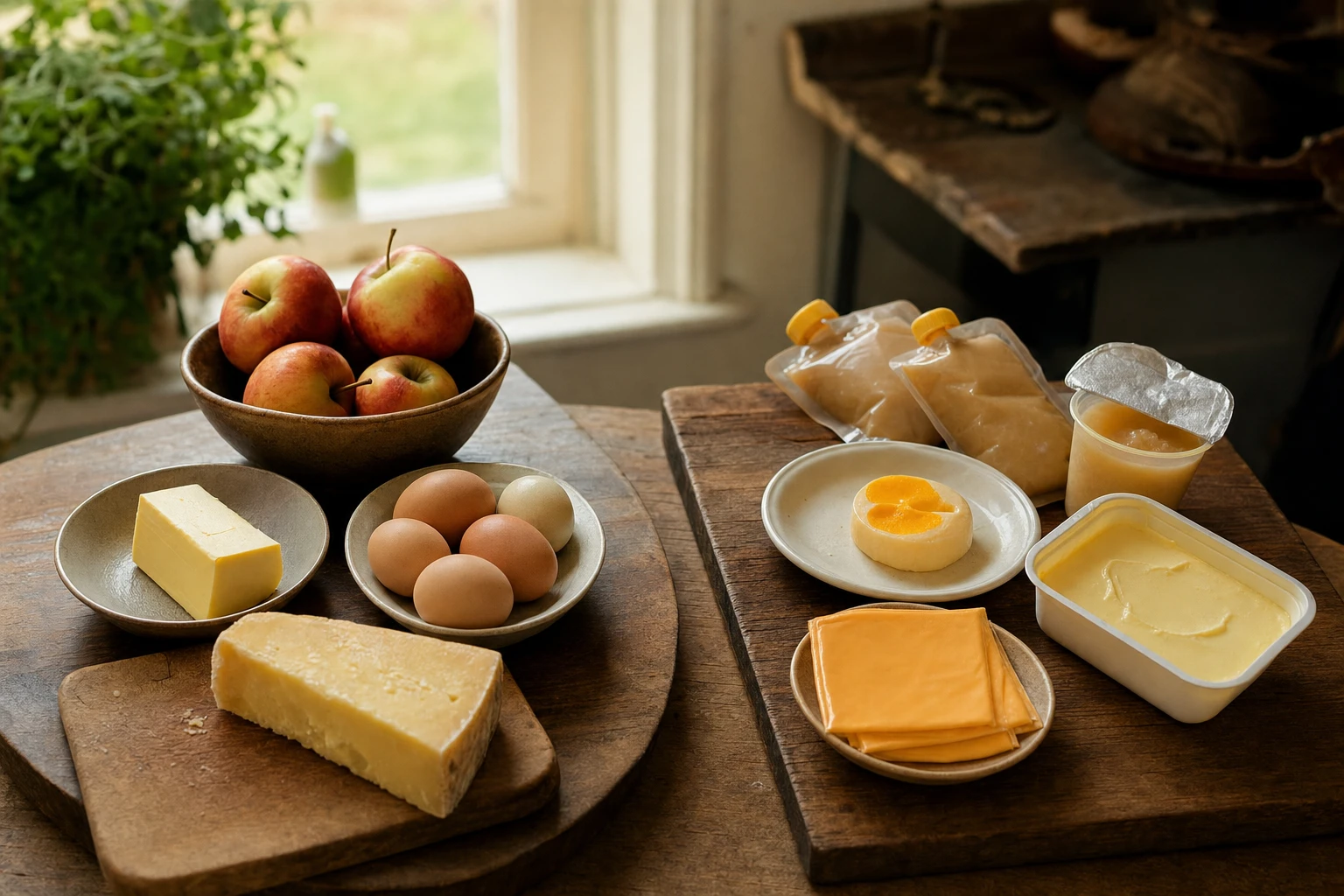
Real butter: cream, salt. That's it. Most butter spreads? Vegetable oil, water, salt, lecithin, emulsifier, artificial flavouring, colouring, preservatives. You're buying mostly seed oil disguised as butter.
Real yoghurt: milk, bacterial culture. Supermarket yoghurt: milk, sugar, thickener, gelatin, pectin, carrageenan, artificial flavour, soy lecithin, colouring, preservatives. You're buying mostly sugar disguised as yoghurt.
If the ingredient list has more than five items, or if it contains anything you wouldn't have in your own kitchen, it's not food. It's a manufactured product.
What happened to simplicity
Your great-grandmother bought whole ingredients. She bought flour, salt, yeast, water. She made bread. She bought cream. She churned butter. She bought milk. She made cheese. Everything that needed to happen, she could do herself with basic equipment and knowledge.
Then food became industrialised. And suddenly, everything arrived pre-made. You could buy bread without making it. You could buy butter without churning. You could buy cheese without skill or time. Convenience.
But that convenience came at a cost. The more you industrialise food, the more you have to modify it. You have to stabilise it against natural spoilage. You have to make it shelf-stable. You have to make it uniform so it looks good months after production. You have to make it addictive so people buy it again.
Every modification is a step away from actual nutrition and a step toward a designed product.
The food industry decoded
The food industry is not interested in your health. It's interested in your habits and your wallet. If it can make food more addictive, it will. If it can reduce costs by using cheaper ingredients, it will. If it can extend shelf life with preservatives, it will. These aren't choices made for your benefit.
The ingredient list isn't a transparency document. It's a legal requirement that the industry tries to obfuscate at every turn. They use complicated chemical names for simple things. They use vague terms like flavouring or spices to hide what's actually in there. They change ingredient orders and try different permutations to find the minimal percentage of anything objectionable.
Real food doesn't require any of this. Real food is transparent because it's simple. You know exactly what it is because it's been the same for centuries.
The marketing of fake health
Food companies have become expert at making unhealthy products sound healthy. Low-fat, no sugar added, natural, wholesome, organic. These labels are chosen carefully to trigger your desire to eat well. And yet the products themselves are often worse than the alternatives they're marketed against.
A natural muesli bar contains more sugar than a chocolate bar but feels health-conscious because of the marketing.1 A no added sugar drink is loaded with artificial sweeteners that spike hunger hormones.2 An organic product can still be ultra-processed and inflammatory.
The lesson: trust labels only if they're boring. If something is marketed to you as healthy, it's probably because it needs marketing. Real food doesn't need to be sold. It sells itself because it tastes good and makes you feel good.
Get ancestral nutrition guides, free
Two short reads a week on traditional ways of eating, examined with modern evidence.
By signing up you agree to receive emails from us. No spam, unsubscribe anytime.
Reading a label is already a bad sign
The need to read a label is already a red flag. If you can't tell what something is by looking at it, or if you need a chemistry degree to understand the ingredients, you shouldn't be eating it.
An apple. You know it's an apple. You know it's safe to eat. You know roughly what it contains. No label required. An orange. A potato. An egg from a chicken you've seen. These foods don't need labelling because they're transparent.
A low-fat fruit beverage with added vitamins and minerals. That needs a label. And it needs a label because without it, you wouldn't know it's mostly sugar with a vitamin premix and a splash of fruit juice concentrate. The label is there because the product is deceptive.
Real food is labelled because legally it has to be, not because you need the label to understand what it is.
If it has a barcode and a multi-line ingredient list, it's not food. It's a product. And your body knows the difference.
1 of 9
Daily blend
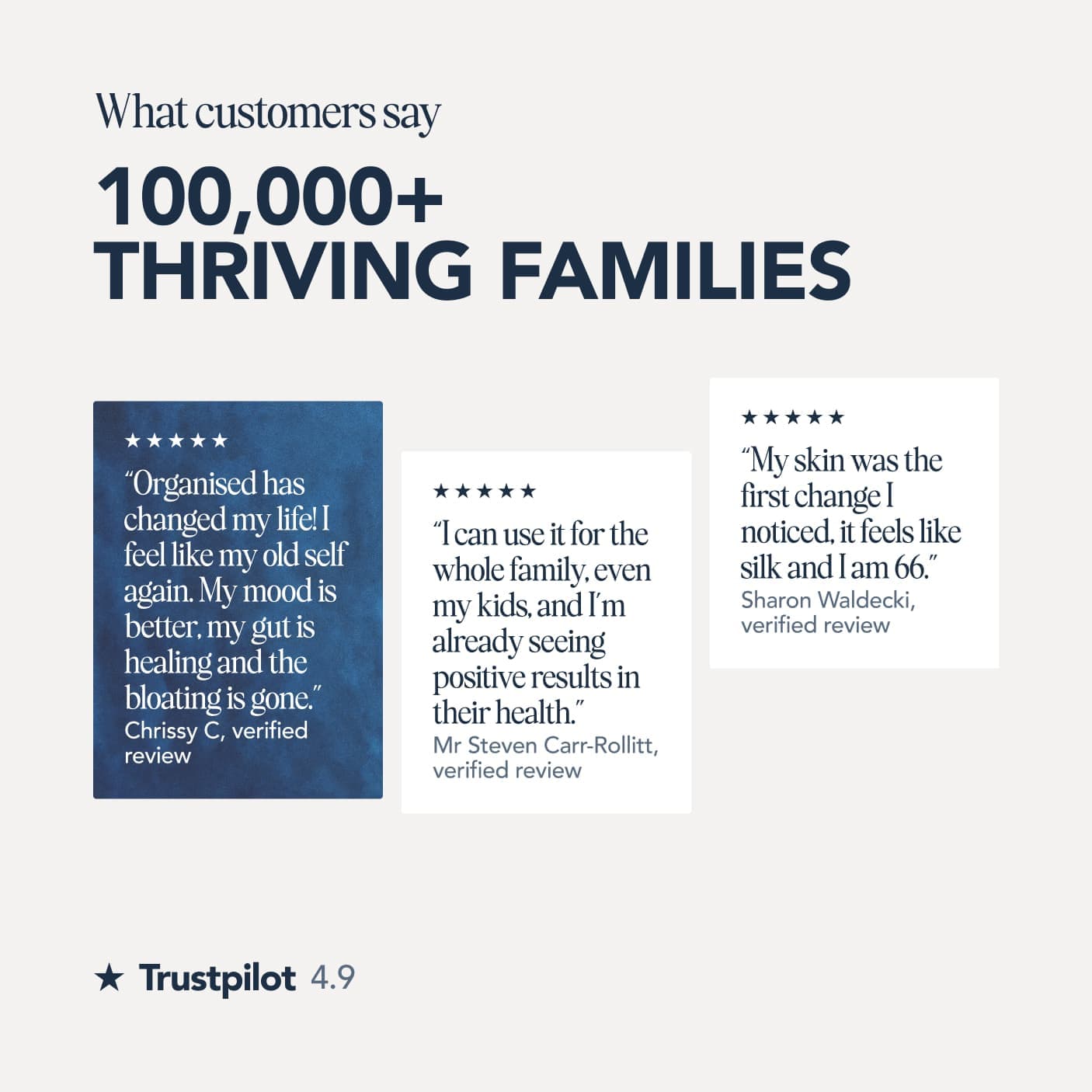
100,000+ thriving families4.9 on Trustpilot
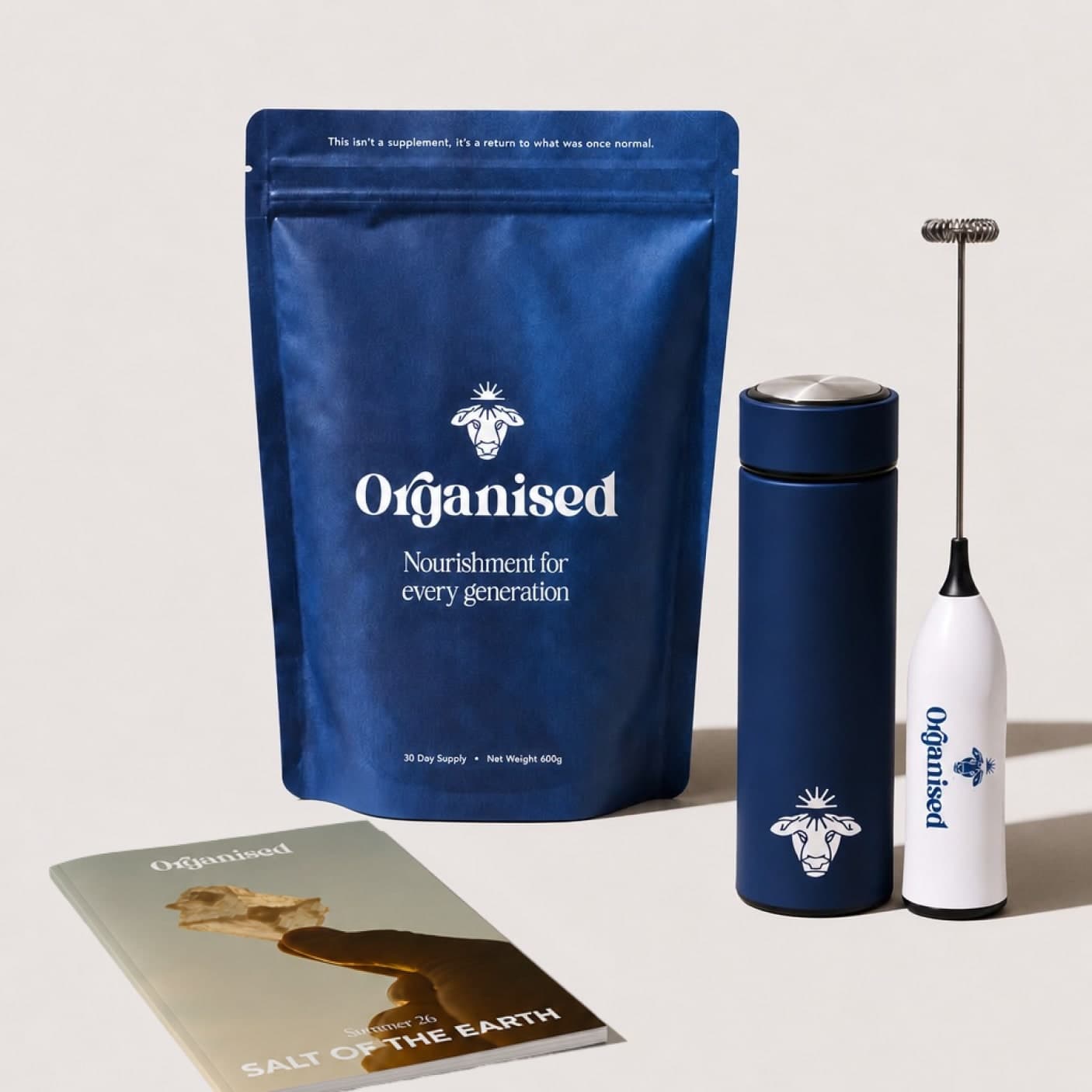
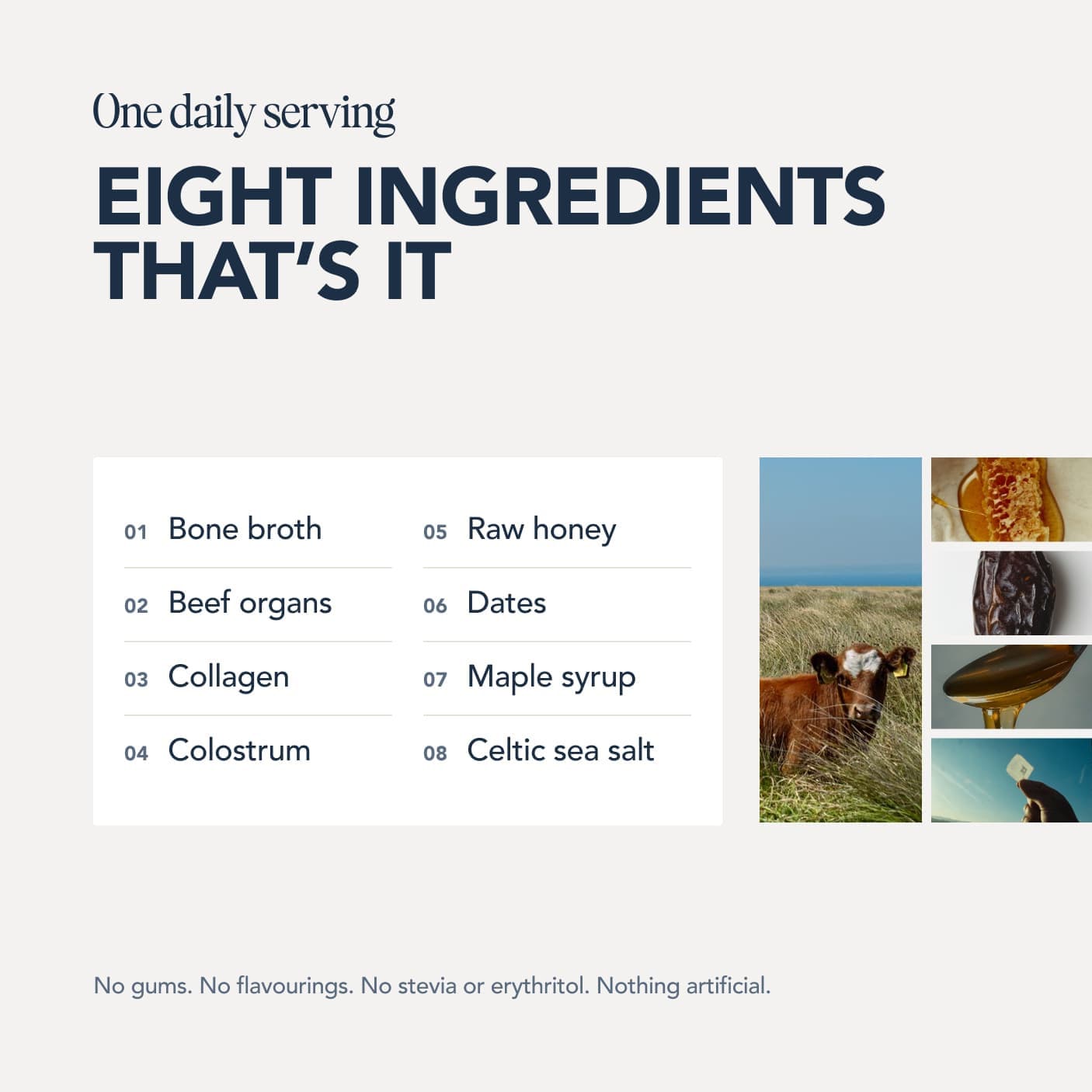
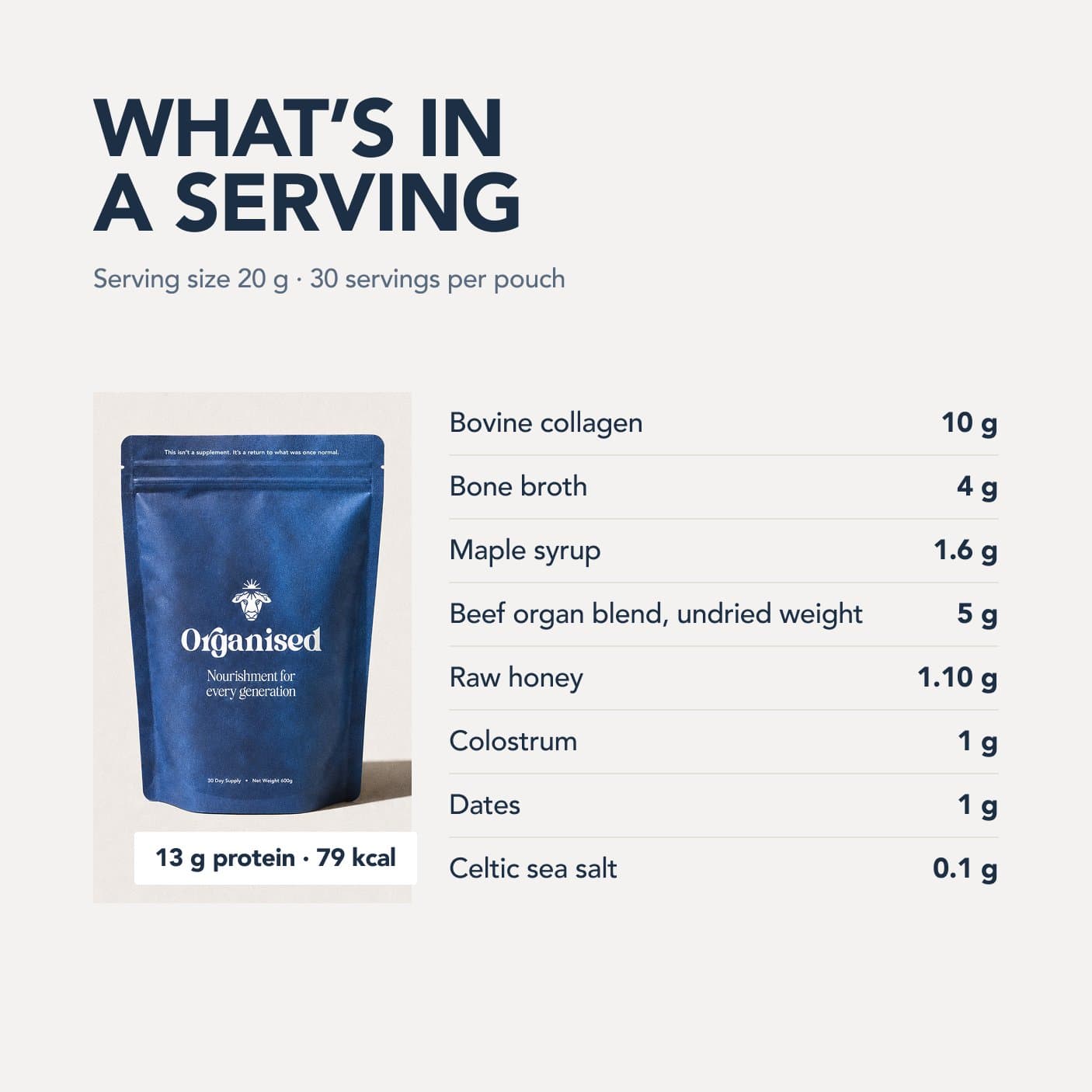
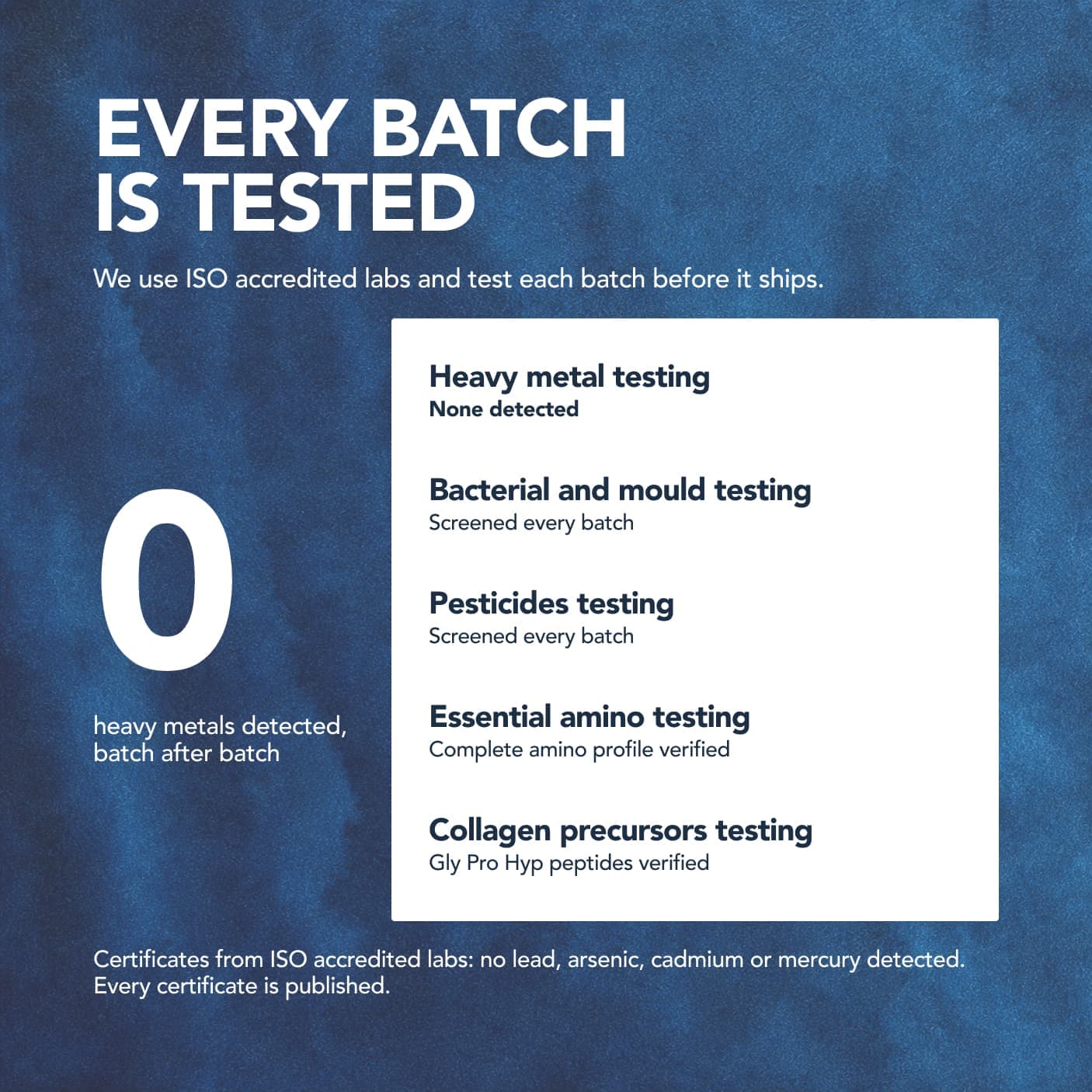
Eight real ingredients built around grass-fed beef organs, collagen and colostrum. Nothing synthetic added.
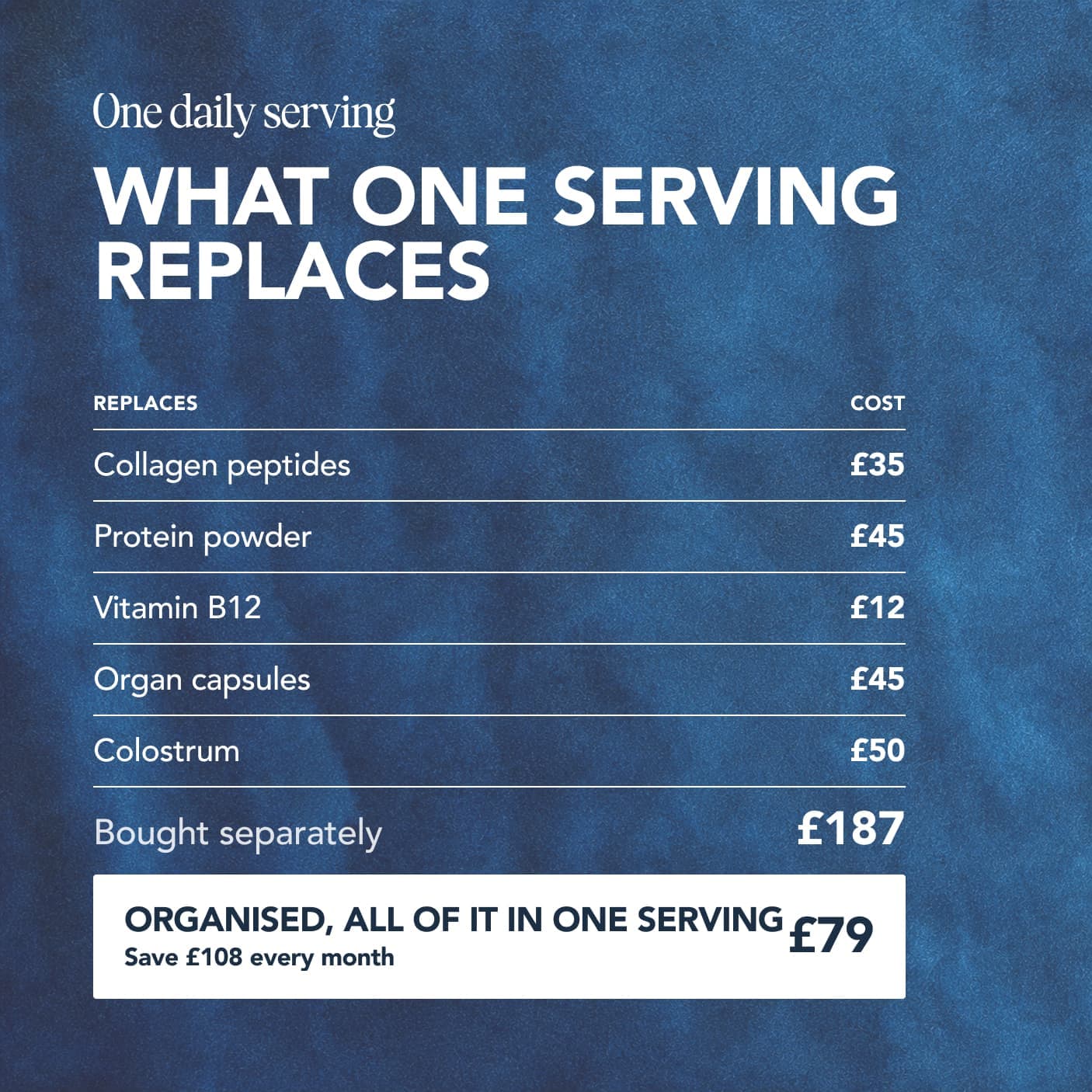
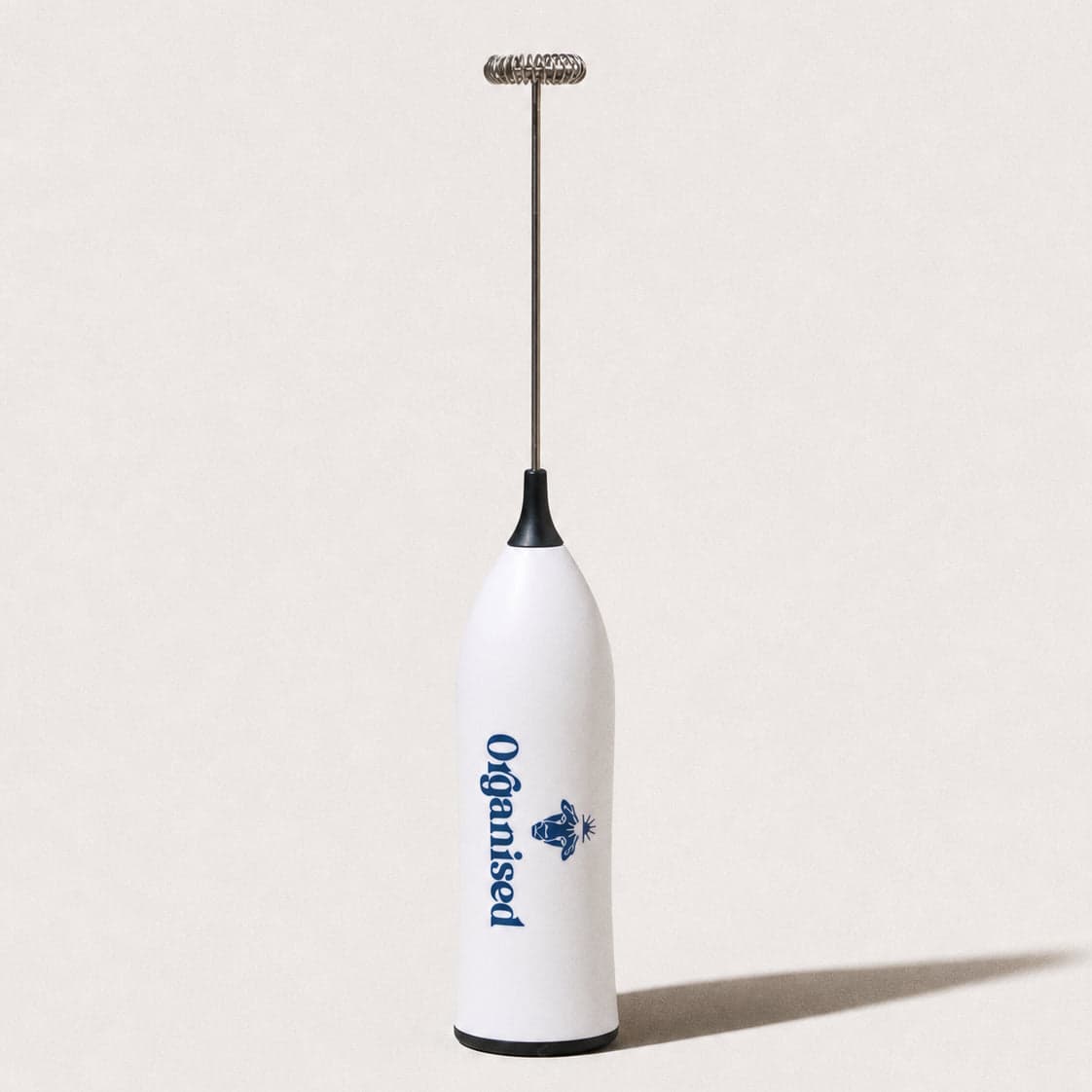
Free with your first order, worth £38. Plus £10 off the pouch with a subscription.
Free UK shipping · Made in England · 100 day money back guarantee on your first pouch · Skip, pause or cancel anytime
The organised code
We believe food should be simple. That's the entire philosophy behind what we do. Not complicated recipes. Not expensive supplements. Not obscure superfoods. Simple, real, whole ingredients that your body recognises and can use.
The Organised code is this: if it doesn't grow in soil or walk on the earth or come from an animal, and if you can't make it in your own kitchen, don't eat it. Flour, salt, butter, eggs, meat, vegetables, fruit. These are foods. Everything else is a product.
This isn't complexity disguised as simplicity. It's actually simple. It's shopping the perimeter of the supermarket where the real food is. It's buying from farmers if you can. It's learning to cook. It's understanding that food doesn't have to be convenient to be nutritious. Sometimes the inconvenience is the point.
Your great-grandmother didn't have a barcode on her food. She didn't have a label to read. She knew what she was eating because she knew where it came from. That's the standard we're returning to.
Real food is simple. Real food is recognisable. Real food doesn't need a barcode to tell you what you're eating.
Start this week. Buy something without a label. Buy flour and make bread. Buy cream and churn butter. Buy a chicken and use every part. You'll remember what food actually tastes like. And you'll feel the difference in your body almost immediately.
References
Every source below was checked on 27 August 2026. Each PubMed, PMC and DOI identifier was resolved against NCBI or Crossref, and what it opens is printed under the citation, so you can see the link goes where the citation says without leaving the page. Where a citation and its identifier disagreed, the citation was corrected to the record or the reference was deleted along with the sentence marker that pointed at it, and where the resolved paper turned out not to support the sentence, the sentence was cut back to what it does support. Borrowed authority is worse than none, because it looks like rigour.
- Monteiro CA et al. Ultra-processed foods, diet quality, and health using the NOVA classification system. FAO, 2019. FAO publication.
- Suez J et al. Personalized microbiome-driven effects of non-nutritive sweeteners on human glucose tolerance. Cell, 2022. PMID 35987213.Checked 27 August 2026: PMID 35987213 opens Suez J, Cohen Y, Valdés-Mas R et al, Personalized microbiome-driven effects of non-nutritive sweeteners on human glucose tolerance. Cell 2022;185(18):3307-3328.e19. PubMed indexes it as: Randomized Controlled Trial.The authors' own declaration, from the record: Declaration of interests E.S. is a scientific co-founder of DayTwo. E.E. is a scientific co-founder of DayTwo and BiomX, and a paid consultant to Hello Inside and Aposense. E.E. is a member of the Cell scientific advisory board.
Who wrote and reviewed this guide
Niall Kiddle
Author · Founder, Organised
Niall is the founder of Organised. He started the company in 2024 after fixing his own health the slow way: in 2022 he swapped a cupboard of synthetic supplements for real food, raw milk, organ meats, bone broth and honey, and felt the difference within months.
Areas of expertise: Ancestral nutrition, Organ meats, Whole-food supplementation, Gut health, Regenerative sourcing
Read Niall's full profile
Pedro Rodrigues
Reviewer · Agronomist (farming and sourcing only)
Pedro is the agronomist Organised works with on farming and sourcing. His job on the guides is to keep the science honest: he reviews what we publish about soil health, regenerative agriculture, grazing and the way food is actually produced.
Areas of expertise: Regenerative agriculture, Agronomy, Soil health, Grass-fed farming, Food sourcing
Reviewed this guide on
Read Pedro's full profileMore on whole food philosophy
View allBrowse the guides library
All guidesKeep reading
Ancestral
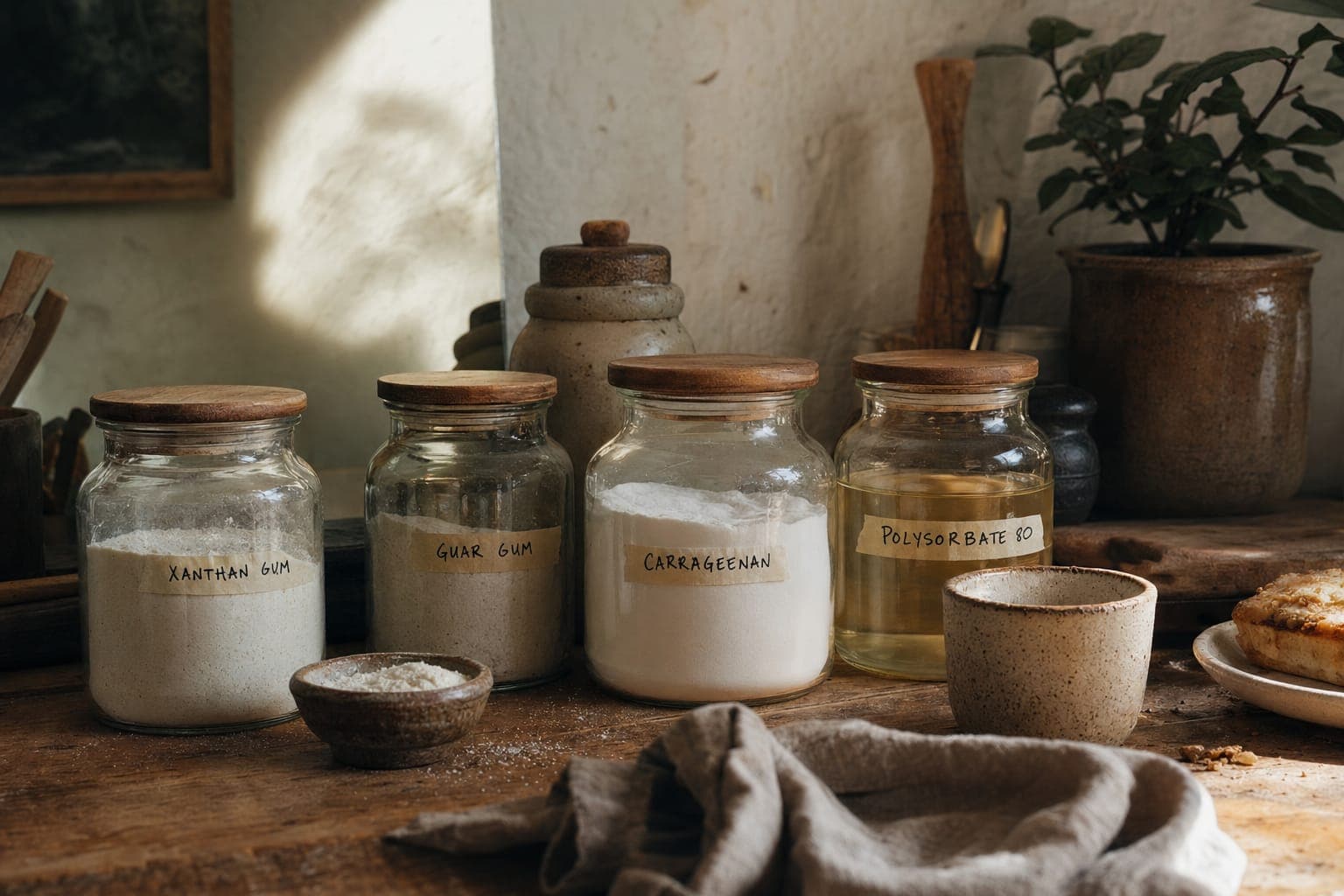
Emulsifiers, Gums and Thickeners: The Hidden Gut Disruptors
Carrageenan, polysorbate 80, and gums hide in most processed food. See what research on emulsifiers and gut health says about your gut barrier.
Ancestral
Paleo, Primal, Carnivore, Animal-Based: What's the Difference?
What's the difference between paleo, primal, carnivore, and animal-based eating? A clear breakdown of each framework and when to use them.
Ancestral
This Is Not a Supplement. It's Whole Food Nutrition.
Why whole foods work better than supplements. Understanding food matrix, nutrient synergy, and why isolated nutrients fall short.
Real food, made effortless
Bring it into my routineA few ways to use it
All recipes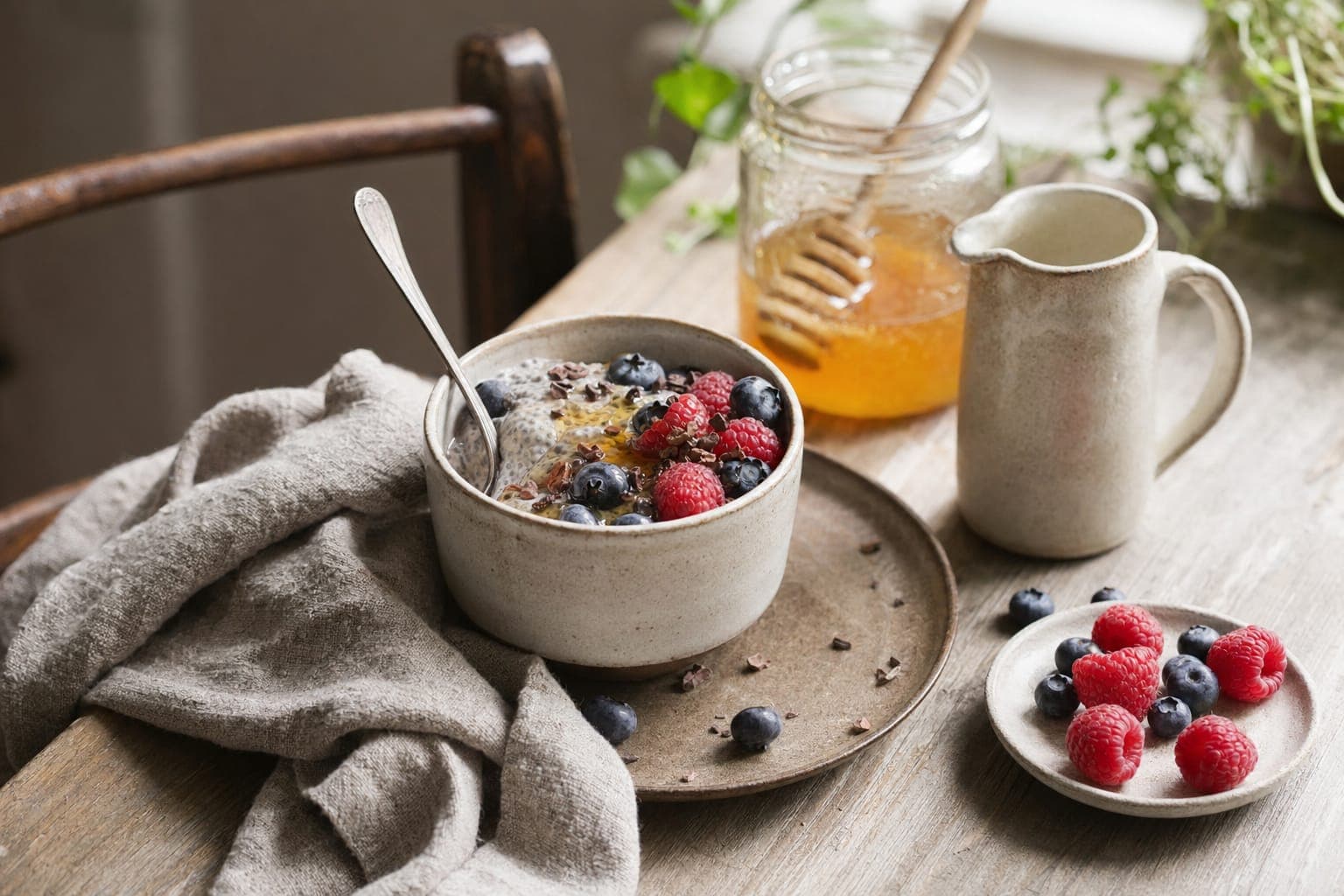
Organised Chia Pudding with Raw Honey and Berries
A no-cook chia seed pudding made with raw milk, collagen, berries, and raw honey. Prep it the night before and eat for breakfast.
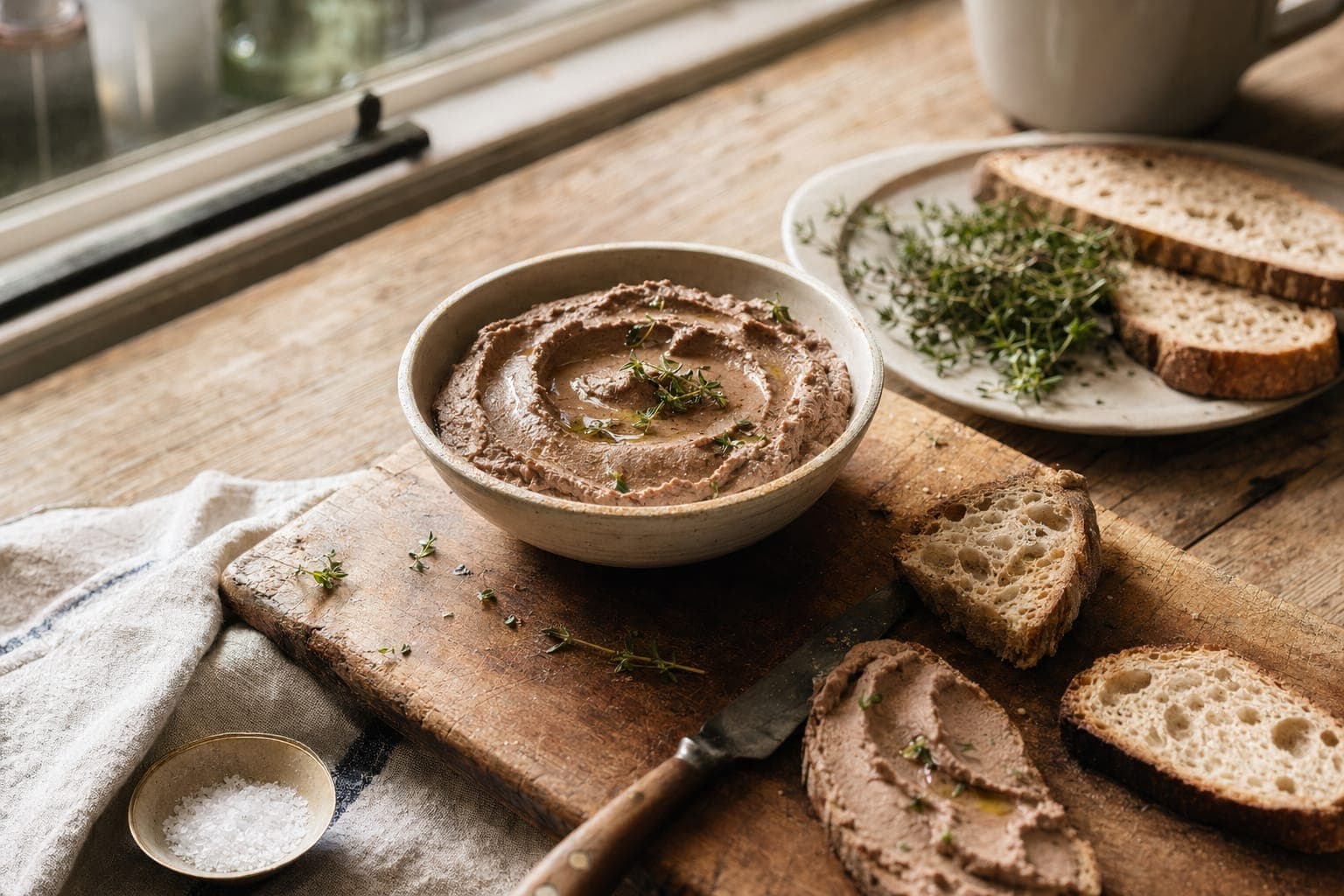
Liver Pate for Beginners: A Gentle Introduction to Organ Meats
Simple liver pate recipe to start eating organ meats. Chicken liver, butter, and herbs. Gentle introduction to nutrient-dense whole foods.
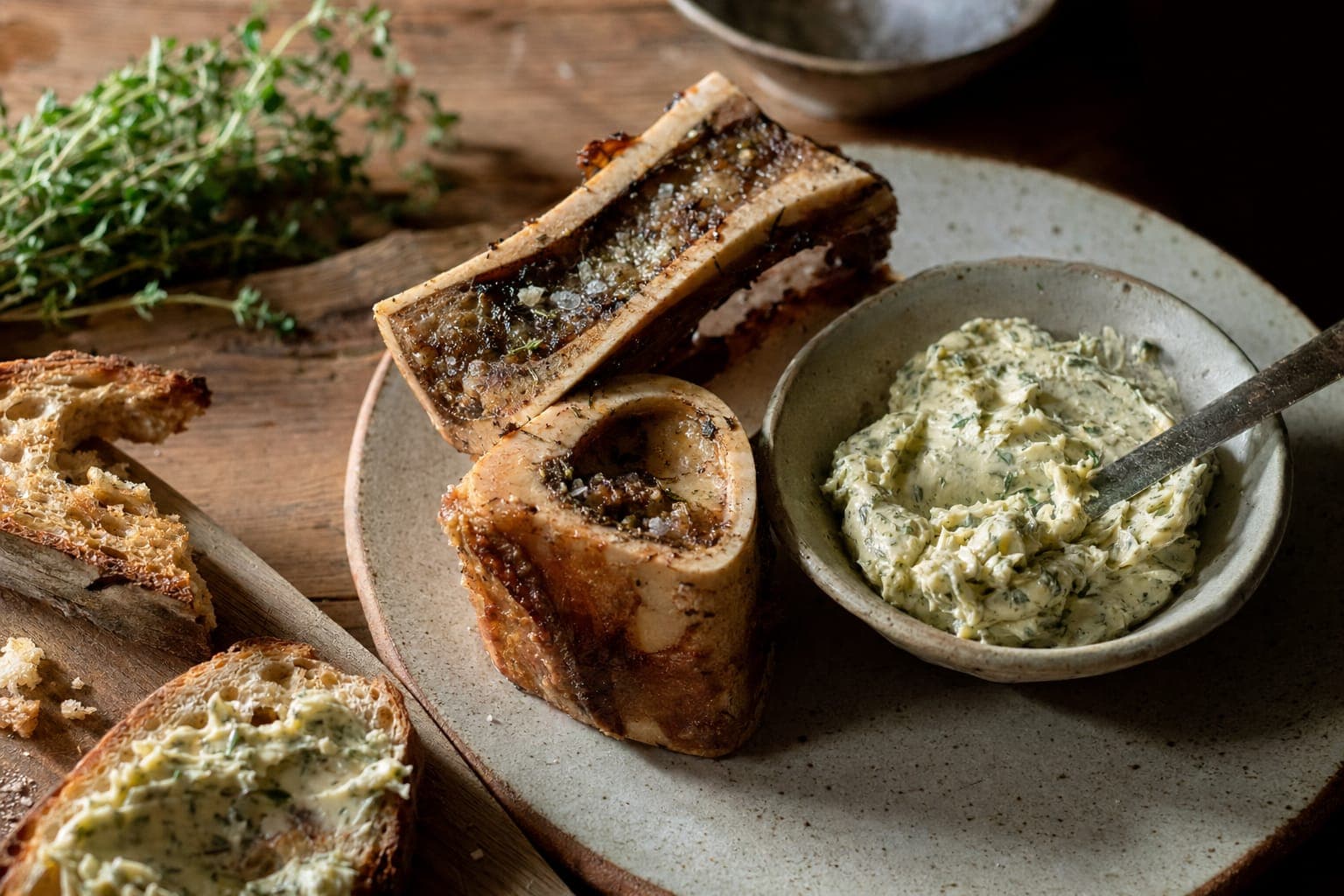
How to Make Bone Marrow Butter
Roast grass-fed marrow bones, scoop the marrow, and mix with butter and herbs. A nutrient-dense spread with fat-soluble vitamins.


 Join over 100,000+ members
Build a better food system with us
The Organised community is thousands of people choosing real food and backing the farmers who grow it, all of us trying to leave the world a little better than we found it. If that is what you care about too, you belong here.