Free Range, Organic, Pasture-Raised: A Quick Reference Guide
You're standing in front of the egg aisle. Free range. Organic. Pasture-raised. Each carton looks slightly different, costs more than the last, and promises something about how happy the chickens were. So what's actually different?
By Niall Kiddle, Founder, Organised

Reviewed by Pedro Rodrigues, Agronomist (farming and sourcing only) ·
5 min read · Published · Updated · 2 cited sources
Makers of the Organised Daily blend, a grass-fed beef organ supplement from regenerative UK farms
The honest answer is: less than you'd think. But some labels do mean something real. Here's how to decode them.
Why labels matter and mislead
Labels are important because they set minimum standards. A label isn't a promise about how good the farm is. It's a legal statement about what's guaranteed. Some labels are backed by strict certification. Others are marketing fluff.
The trick is knowing which is which. A farm can be producing exceptional food without any label. A farm with three labels might be cutting corners on everything the labels don't specifically cover.
But labels do function as a baseline check. If you're comparing two products and one has a recognised certification and the other doesn't, the certified one has been audited and meets at least a minimum standard. It's not perfect, but it's something.
Eggs: the clearest example
Eggs are the simplest food to understand through labels because the UK has legal definitions for different production systems. From worst to least-bad, here's the hierarchy.
Know the egg system. The standards translate roughly to other animal products.
Barn and cage definitions
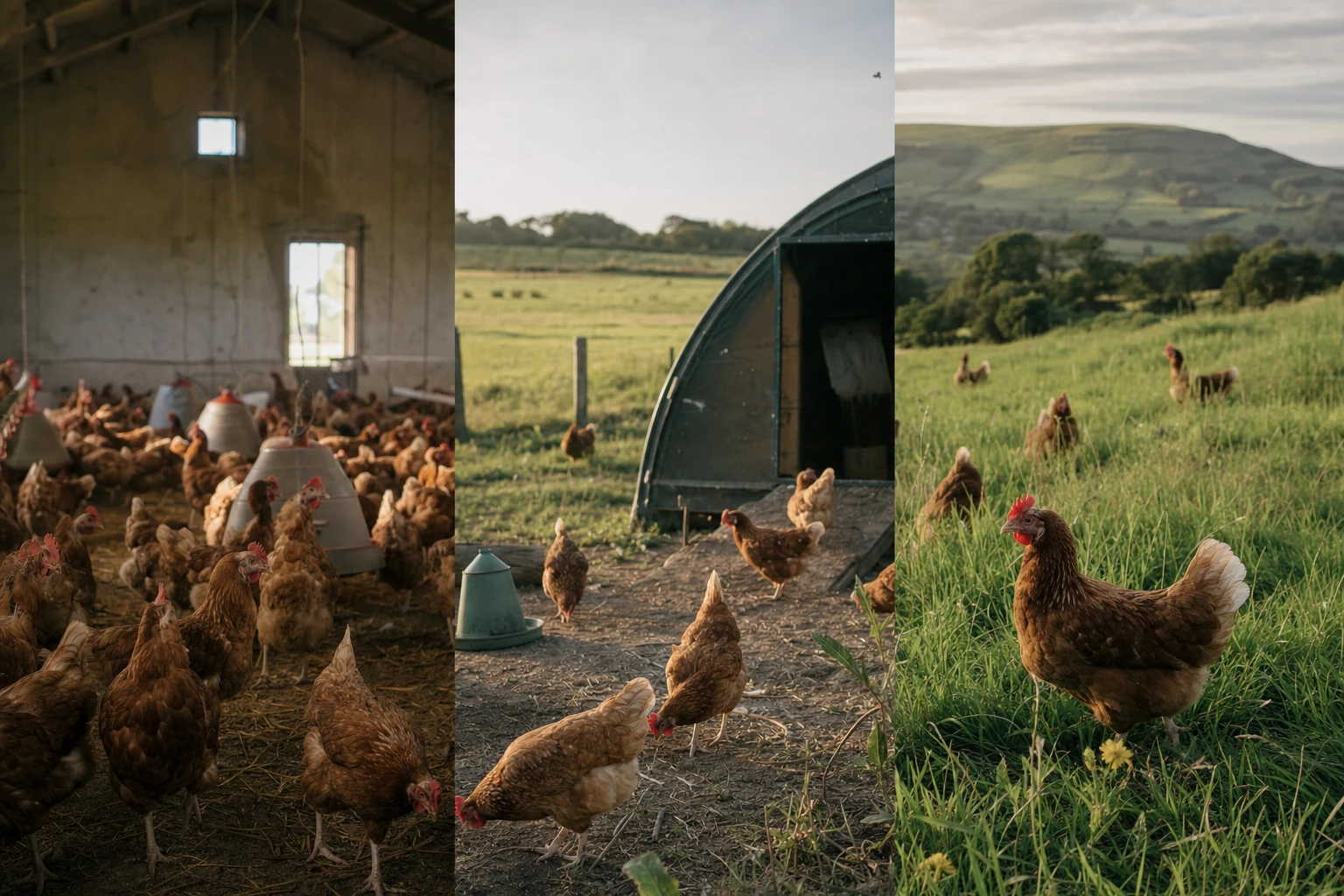
Conventional cage eggs come from battery systems where hens live in cages. Very constrained. Very poor welfare. This is increasingly banned, but not completely yet.
Barn eggs come from systems where hens are in large sheds, on the ground, with perches and nesting boxes. Not outdoors, but at least with space to move. Better than cages, but still industrial scale. Still high-stress, high-disease environments.
Free range eggs come from hens that have legal access to outdoor space. EU/UK free-range standards require a minimum of 4 m² of outdoor space per hen.1 Sounds spacious, but when you do the maths, in a large commercial flock, outdoor access becomes meaningless. The hens are raised in a shed and have a theoretical door to the outside. Many never use it.
EU/UK free-range standards permit up to 16,000 hens per house, with stocking density of up to 9 hens per square metre indoors.1 That's a lot of hens to access one outdoor area. In practice, free-range in UK commercial terms means industrial farming with outdoor space available, but often not genuinely used.
Organic certification in the UK
Organic eggs come from hens fed organic feed (no pesticides, no GM) and raised in free-range conditions with some additional space and lower stocking density than conventional free range.
Organic certification in the UK is administered by schemes like the Soil Association. They set standards for feed, for space, for outdoor access. An organic egg is better than conventional free range. The hens are fed better, stocked at lower density, and the farms are audited.
But organic eggs are still often from commercial farms with hundreds or thousands of birds. The welfare is better, the feed is better, but it's still industrial-scale production dressed up with a certification label.
Pasture-raised and what it means
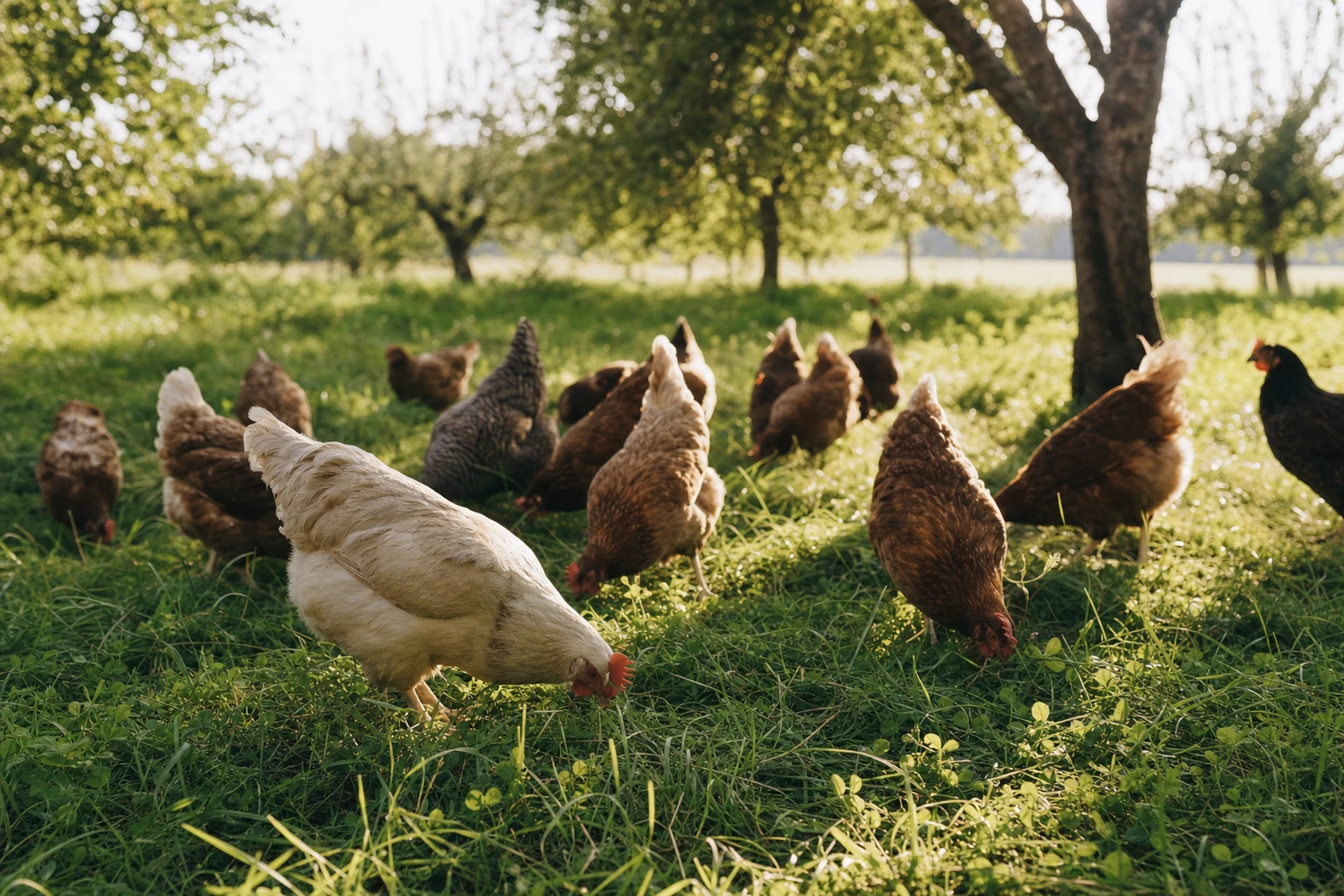
Pasture-raised is less formally defined than organic in the UK, but it generally means hens that live outdoors on grass, moved regularly to fresh pasture, in small flocks. Maybe 100 to 500 hens instead of 10,000.
A truly pasture-raised egg comes from hens that are living on grass, eating insects and plants as well as supplementary grain, moving daily or weekly to new pasture. They're genuinely outdoors. They're happy. The eggs taste noticeably different and are more nutrient-dense because the hens are eating a better diet.
The challenge is that pasture-raised is not legally defined. A farm can claim it and be mediocre. You have to ask follow-up questions. How many hens per area? How often are they moved? Can you visit the farm?
A real pasture-raised producer will be transparent. They'll have a website with photos. They'll talk openly about their methods. If a seller claims pasture-raised but gets evasive about details, it's probably not genuinely pasture-raised.
Get farming and sourcing guides, free
Two short reads a week on regenerative farming and where real food comes from.
By signing up you agree to receive emails from us. No spam, unsubscribe anytime.
Red Tractor and assurance schemes
Red Tractor is the UK farm assurance scheme. If a product carries the Red Tractor mark, it means the farm has been audited and meets baseline standards for welfare, food safety, and environmental management.
Red Tractor is a floor, not a ceiling. It means the farm is competent and meets minimum UK standards. But it doesn't mean the farm is exceptional. Many industrial farms carry Red Tractor certification.
Other UK schemes include RSPCA Assured, which sets higher welfare standards than Red Tractor, particularly around outdoor access and space. A product with RSPCA Assured is better than one with just Red Tractor.
These certifications matter because they mean the farm can be held accountable. If they break the standards, they lose certification. It's not foolproof, but it's better than no verification at all.
1 of 9
Daily blend
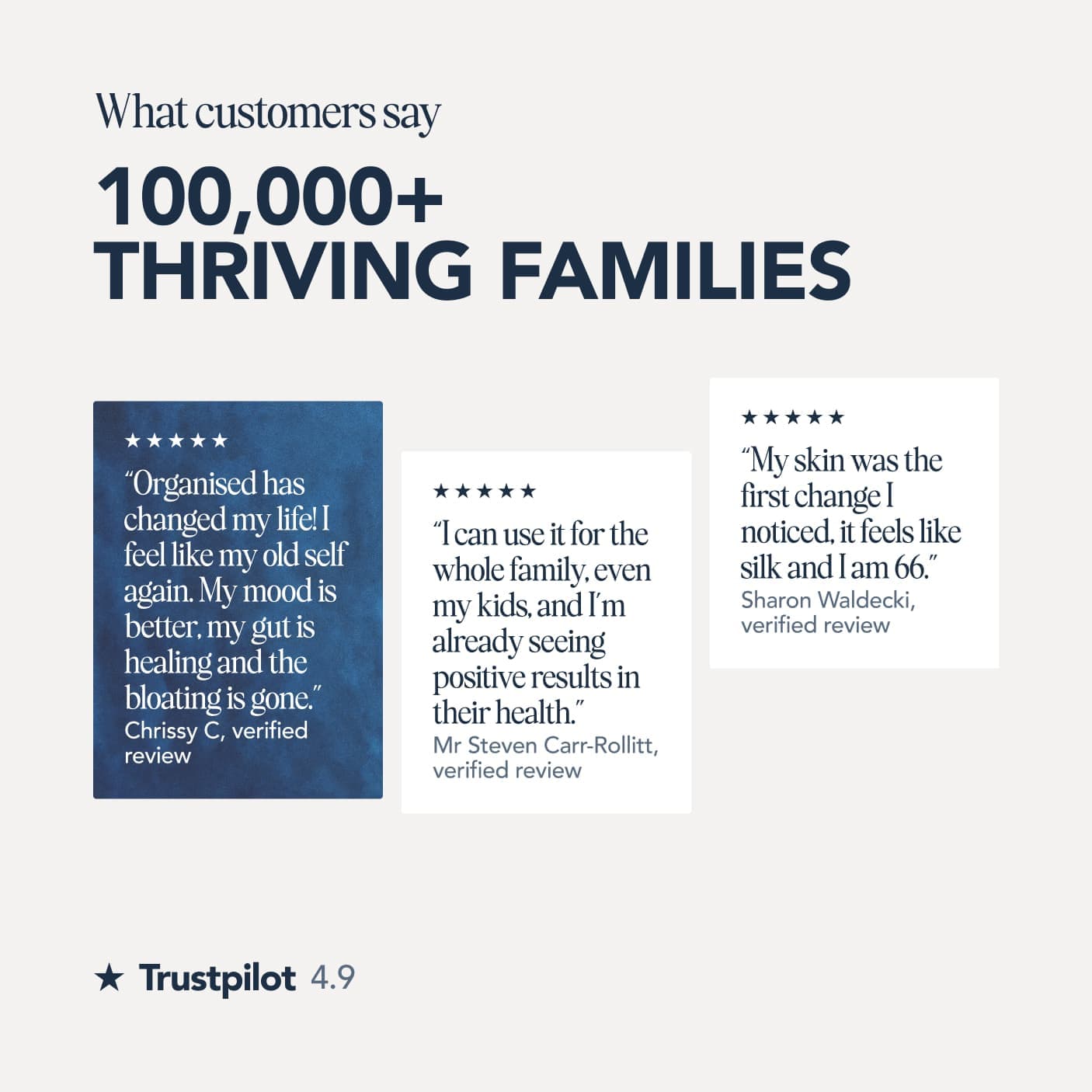
100,000+ thriving families4.9 on Trustpilot
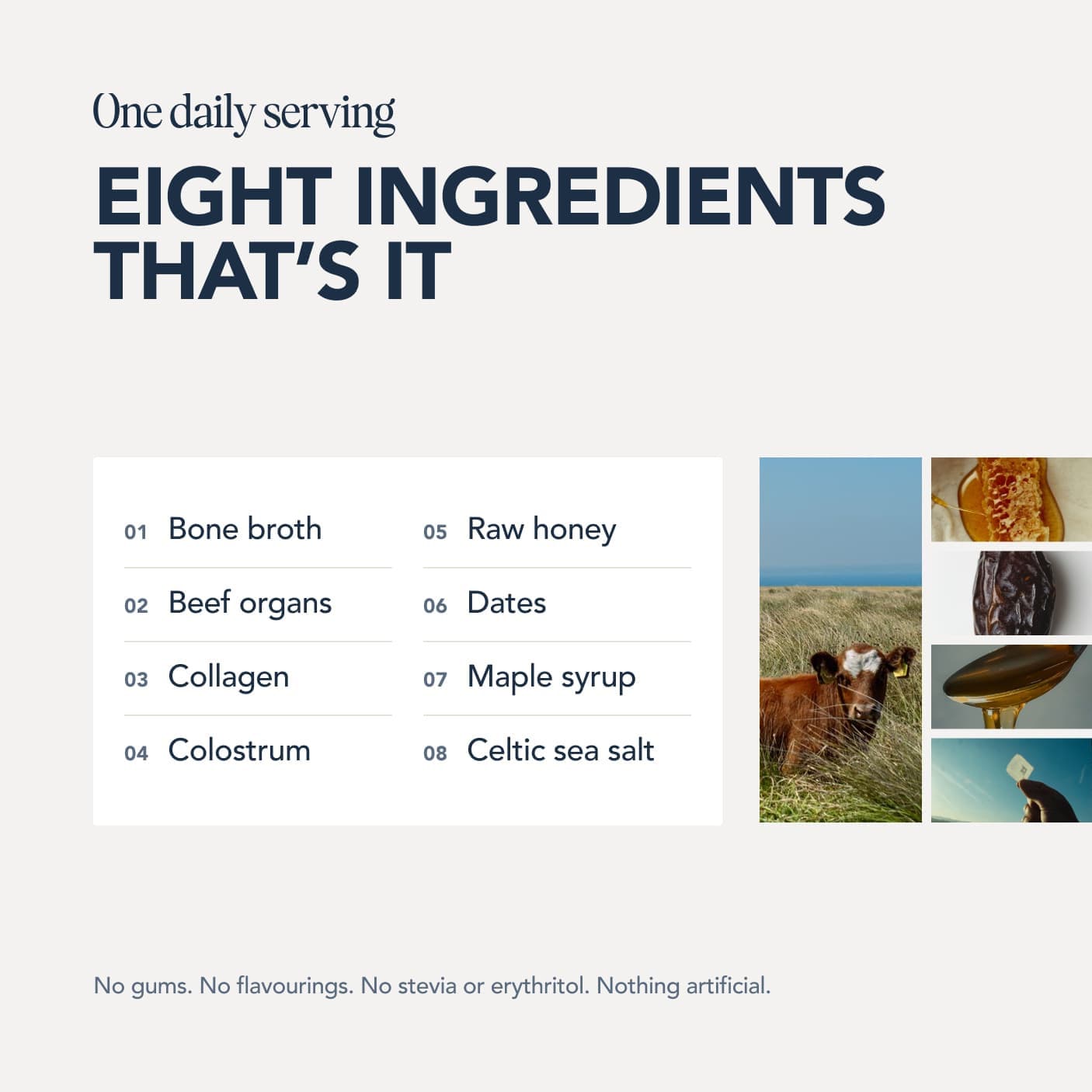
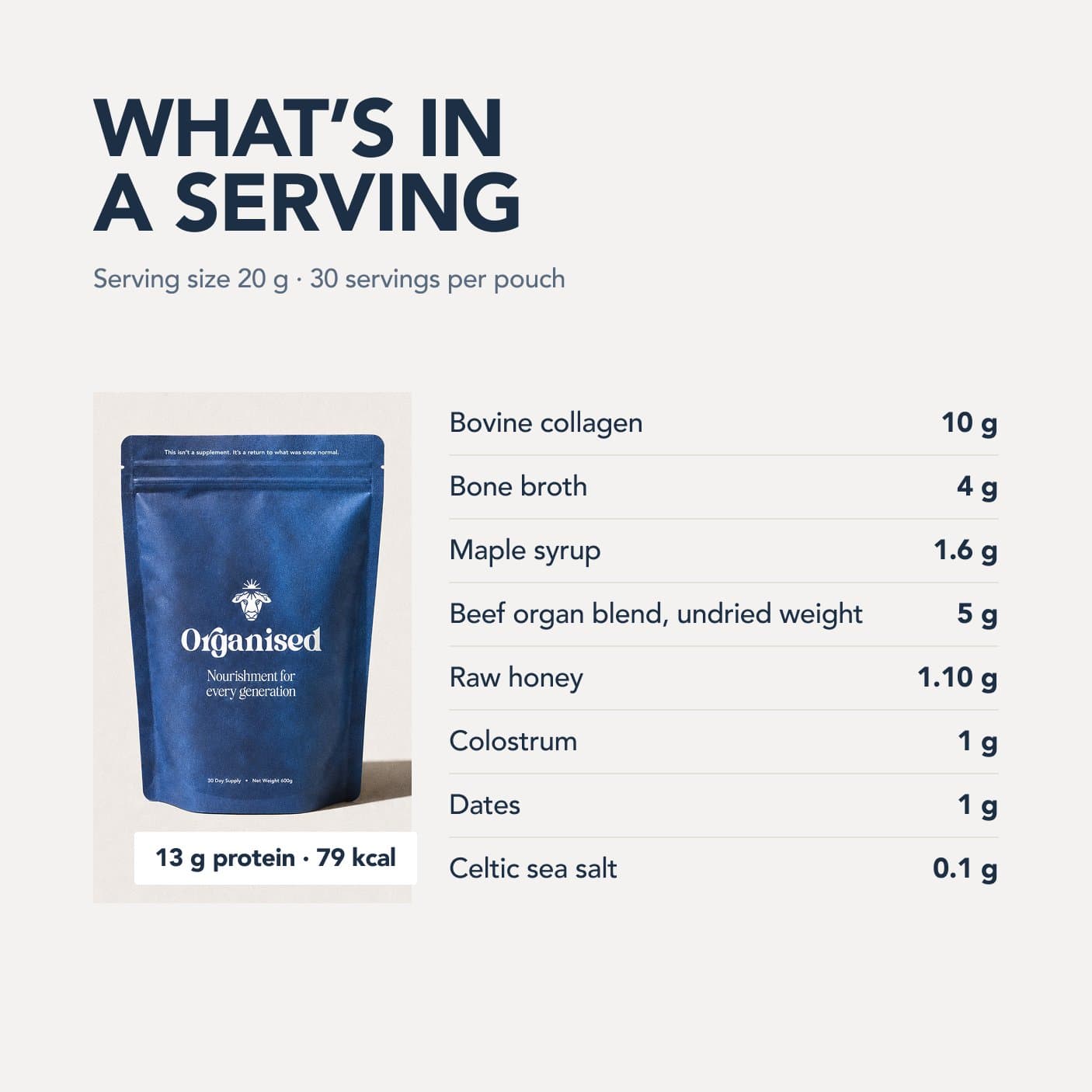
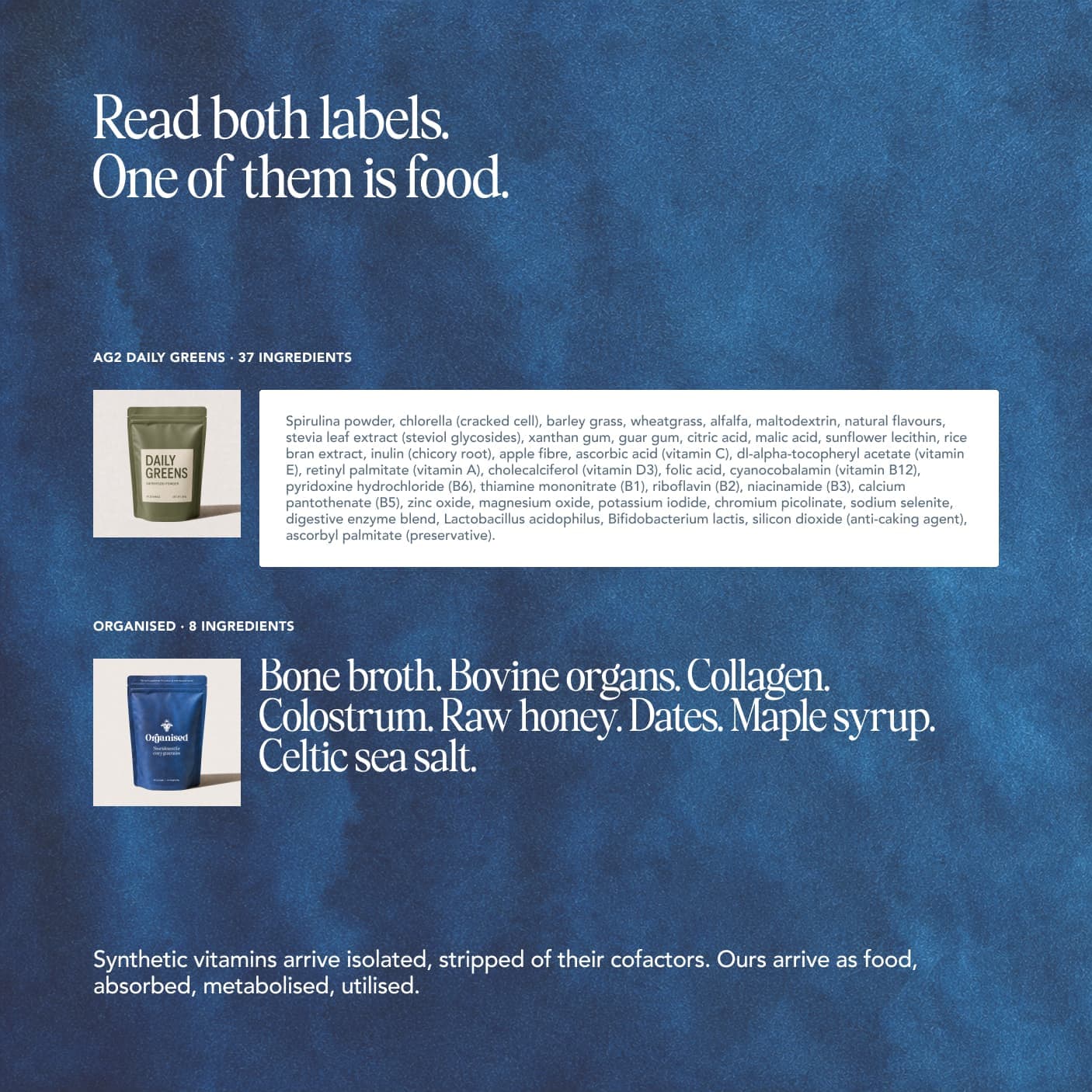
Eight real ingredients built around grass-fed beef organs, collagen and colostrum. Nothing synthetic added.
Free with your first order, worth £38. Plus £10 off the pouch with a subscription.
Free UK shipping · Made in England · 100 day money back guarantee on your first pouch · Skip, pause or cancel anytime
Pasture for Life and beyond
Pasture for Life (UK) requires certified animals to be 100% pasture-fed throughout life, with no grain at any stage.2 No grain finishing. No silage in some schemes. This is real commitment to grass-based livestock.
Products bearing Pasture for Life certification are rare but worth seeking out. The certification is rigorous and audited. If you see a carton of eggs or a pack of meat with this label, the animal truly spent its life grazing rather than being processed through an industrial system.
Beyond UK-specific schemes, individual farms sometimes publish their own standards. A producer might say their hens eat no grain, only insects and plants from the pasture. Or their cattle are moved to fresh grass daily. These farm-specific promises are sometimes more meaningful than generic certifications, but only if you can verify them independently or visit the farm yourself.
The label you should trust most
The most trustworthy label is the farmer's name and face. A small producer who sells directly to customers, who you can visit, who you can ask questions. They have reputation on the line every single day.
The second most trustworthy label is Pasture for Life, which is rigorously defined and audited. Animals must be genuinely pasture-fed year-round, with minimal grain. The certification is strict. If you see Pasture for Life, you're buying from a farm that's put in significant effort to maintain standards.
The third is RSPCA Assured or similar high-welfare schemes. Better than Red Tractor alone, though still variable quality depending on the individual farm.
The least trustworthy is simply saying a product is organic or free range without additional specification. Organic is better than conventional, free range is better than barn. But within those categories, there's enormous variation.
The best label is the one that comes with a farm you can visit or contact. Everything else is a proxy.
The bottom line
When you're buying, here's the hierarchy. Visit the farm and know the producer. Next best is Pasture for Life certification. Then RSPCA Assured. Then organic from a certified scheme. Then Red Tractor. Then conventional free range. Avoid barn and cage altogether.
But don't get too caught up in labels. The best eggs come from a farmer you know, raising small flocks on pasture, who you can visit. If you can't access that, choose the best certified product you can afford. The best label is one backed by a farmer willing to stake their reputation on their practices.
References
Every source below was checked on 27 August 2026. Each link was requested and read. Where a citation and its identifier disagreed, the citation was corrected to the record or the reference was deleted along with the sentence marker that pointed at it, and where the resolved paper turned out not to support the sentence, the sentence was cut back to what it does support. Borrowed authority is worse than none, because it looks like rigour.
- UK Government. Egg marketing standards. gov.uk
- Pasture for Life Association. Certification Standards. pastureforlife.org
Who wrote and reviewed this guide
Niall Kiddle
Author · Founder, Organised
Niall is the founder of Organised. He started the company in 2024 after fixing his own health the slow way: in 2022 he swapped a cupboard of synthetic supplements for real food, raw milk, organ meats, bone broth and honey, and felt the difference within months.
Areas of expertise: Ancestral nutrition, Organ meats, Whole-food supplementation, Gut health, Regenerative sourcing
Read Niall's full profile
Pedro Rodrigues
Reviewer · Agronomist (farming and sourcing only)
Pedro is the agronomist Organised works with on farming and sourcing. His job on the guides is to keep the science honest: he reviews what we publish about soil health, regenerative agriculture, grazing and the way food is actually produced.
Areas of expertise: Regenerative agriculture, Agronomy, Soil health, Grass-fed farming, Food sourcing
Reviewed this guide on
Read Pedro's full profileMore on farming & transparency
View all- Biodynamic Farming: What It Means and Why It Matters
- British Beef: Why Quality Matters More Than Origin Alone
- How Stress in Cattle Affects the Quality of Their Organs
- What Is Mob Grazing and How Does It Help the Soil?
- What Is Third-Party Testing and Why Should You Care?
- Why Biodiversity on Farms Matters for Your Food
- Why Ingredient Traceability Matters More Than Marketing Claims
Browse the guides library
All guidesKeep reading
Farming
Why Ingredient Traceability Matters More Than Marketing Claims
Natural claims mean nothing. Real traceability, batch numbers, and testing data prove what's in the product. Here's how to verify.
Farming
What Is Third-Party Testing and Why Should You Care?
Third-party testing verifies that supplements and foods are what companies claim. Learn why independent lab testing is your only real safeguard.
Farming
Supplement Industry Secrets: What Most Brands Don't Tell You
What the supplement industry doesn't want you to know. Proprietary blends, sourcing obscurity, testing gaps, and marketing deception.
Real food, made effortless
Shop the blendA few ways to use it
All recipes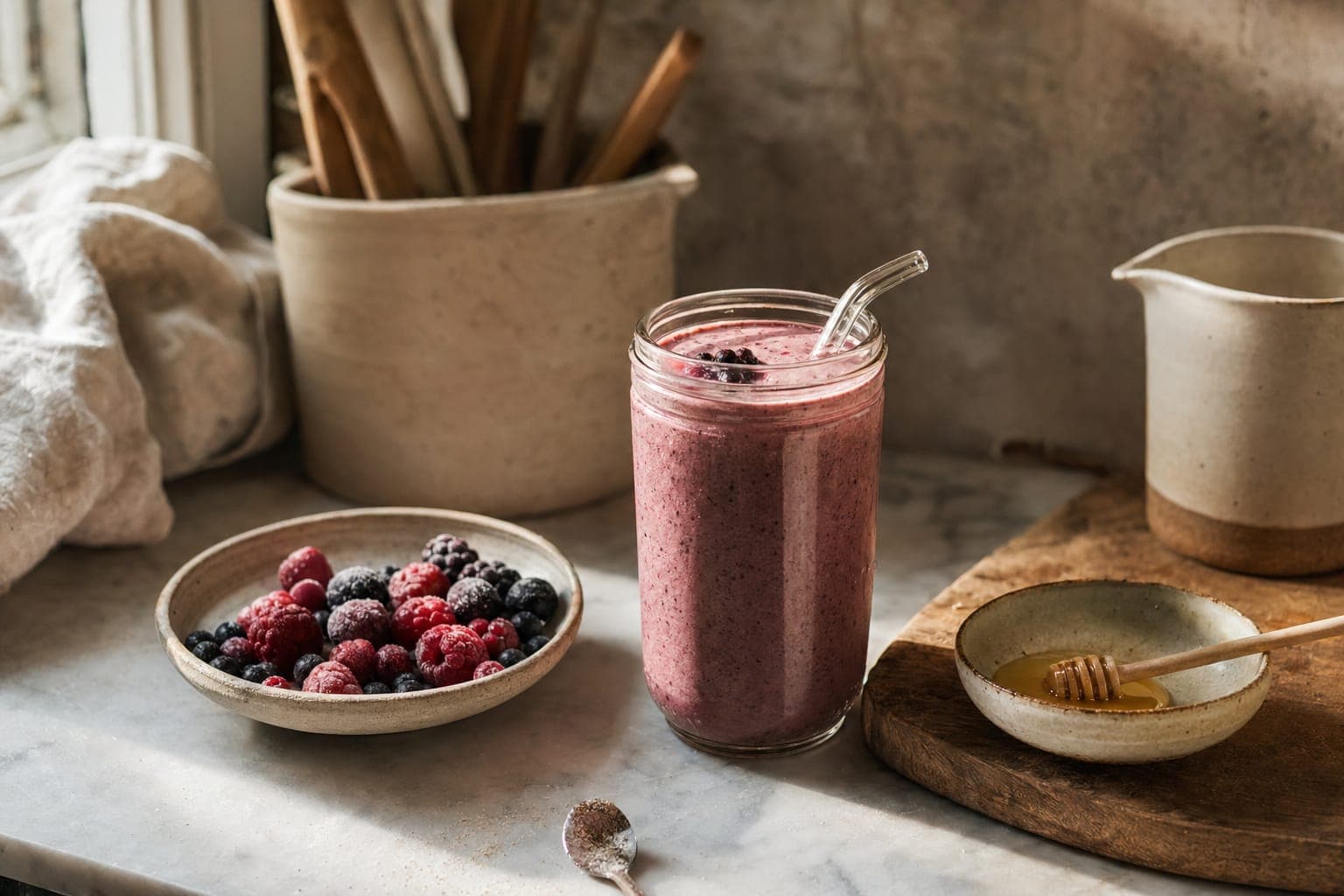
The Organised Recovery Smoothie for After Exercise
A recovery smoothie made with beef protein, raw milk, frozen berries, collagen, and honey. Optimal nutrition in the 30-minute window after exercise.
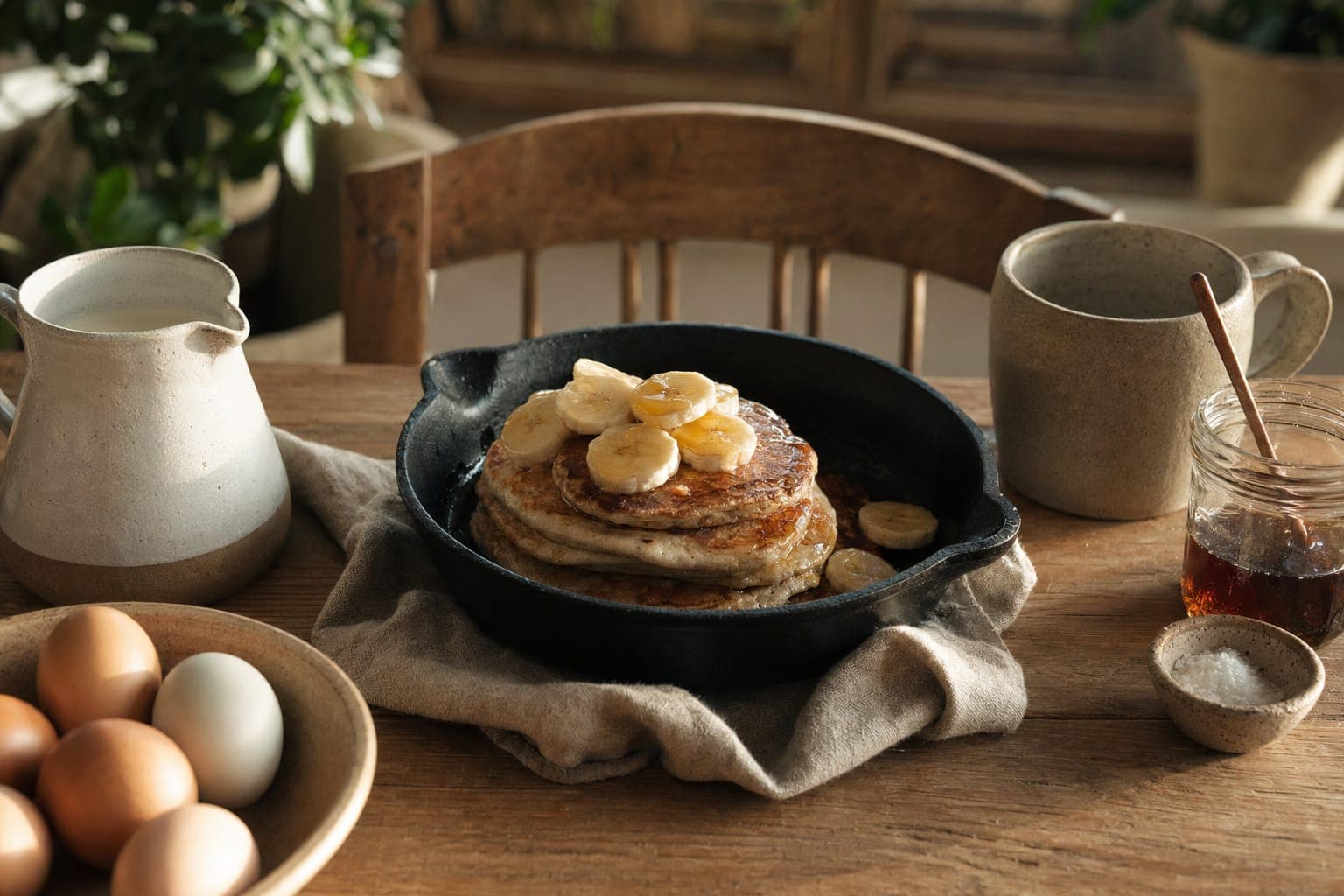
Organised Protein Pancakes: A Weekend Favourite
A high-protein pancake recipe using beef protein, eggs, and raw milk. Cooked in cast iron, naturally sweetened with banana and honey. Real food breakfast.
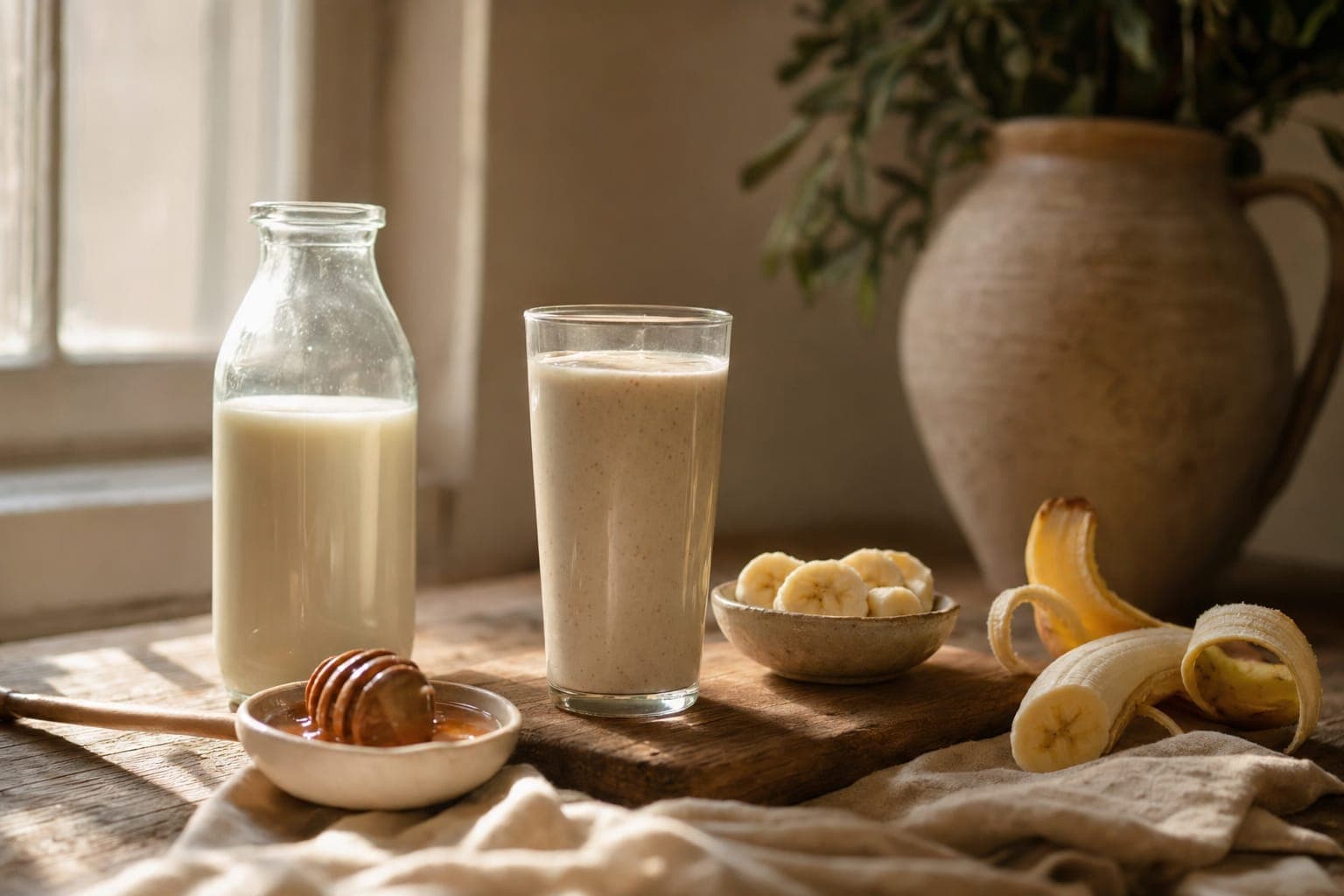
The Perfect Organised Morning Shake: Our Favourite Recipe
Our signature morning shake: Organised, raw milk, banana, honey. Simple, nourishing, and optimised for an empty stomach.


 Join over 100,000+ members
Build a better food system with us
The Organised community is thousands of people choosing real food and backing the farmers who grow it, all of us trying to leave the world a little better than we found it. If that is what you care about too, you belong here.