Why Ingredient Traceability Matters More Than Marketing Claims
Here's what the supplement marketing world doesn't want you to know: the word natural is completely meaningless. Arsenic is natural. Mercury is natural. A claim on a bottle is just ink until you can trace where every ingredient actually came from.
By Niall Kiddle, Founder, Organised

Reviewed by Pedro Rodrigues, Agronomist (farming and sourcing only) ·
5 min read · Published · Updated · 1 cited source
Makers of the Organised Daily blend, a grass-fed beef organ supplement from regenerative UK farms

Traceability is the only real guarantee. If a company can tell you exactly which farm the ingredient came from, what batch it's from, what testing was done on it, and show you the proof, that's meaningful. Everything else is marketing.

Marketing claims are not evidence
A supplement bottle will tell you it's natural, organic, third-party tested, clinically proven. These words are on the label because they sell products. But none of them guarantee anything about what's actually in the bottle.
Natural just means it comes from nature. It doesn't mean it's safe, clean, or effective. Organic means the supply chain followed organic rules, but organic food can still be contaminated with heavy metals or mycotoxins. Third-party tested could mean tested once, for one thing, months ago.
Clinically proven is the worst. A supplement can be clinically proven effective at helping digestion, and also loaded with heavy metals that will damage your liver over time. The claims are selective, not comprehensive.
A company that's genuinely confident in its product will not rely on marketing language. It will provide traceability, testing data, and verifiable information. Everything else is noise.
Marketing claims prove only that the company is good at marketing. Traceability proves something about the product.
What natural actually means
In the UK, "natural" is not a strictly defined regulated term for food and supplements; FSA labelling guidance covers some specific terms but does not give "natural" a single legal definition that excludes processing aids or additives.1
A supplement bottle that says natural ashwagandha might be 95% ashwagandha and 5% silica, cellulose, stearic acid, and artificial colours. All technically allowed. All technically part of a natural supplement.
The word natural is purely marketing. It has no mandatory definition. It's completely useless as a signal of quality or purity. Ignore it entirely. Instead, look for specific sourcing and testing information.
Traceability starts with batch numbers
A batch number is a code on the supplement bottle that identifies exactly when and where that product was manufactured. It's the beginning of traceability.
If a company can only tell you general information about their product but can't trace individual batches, that's a red flag. A legitimate company tracks every batch from raw material through manufacturing through to sale.
The batch number should allow you to request testing data specific to that batch. You should be able to ask for the Certificate of Analysis for the exact batch you bought, not just a generic promise that batches are tested.
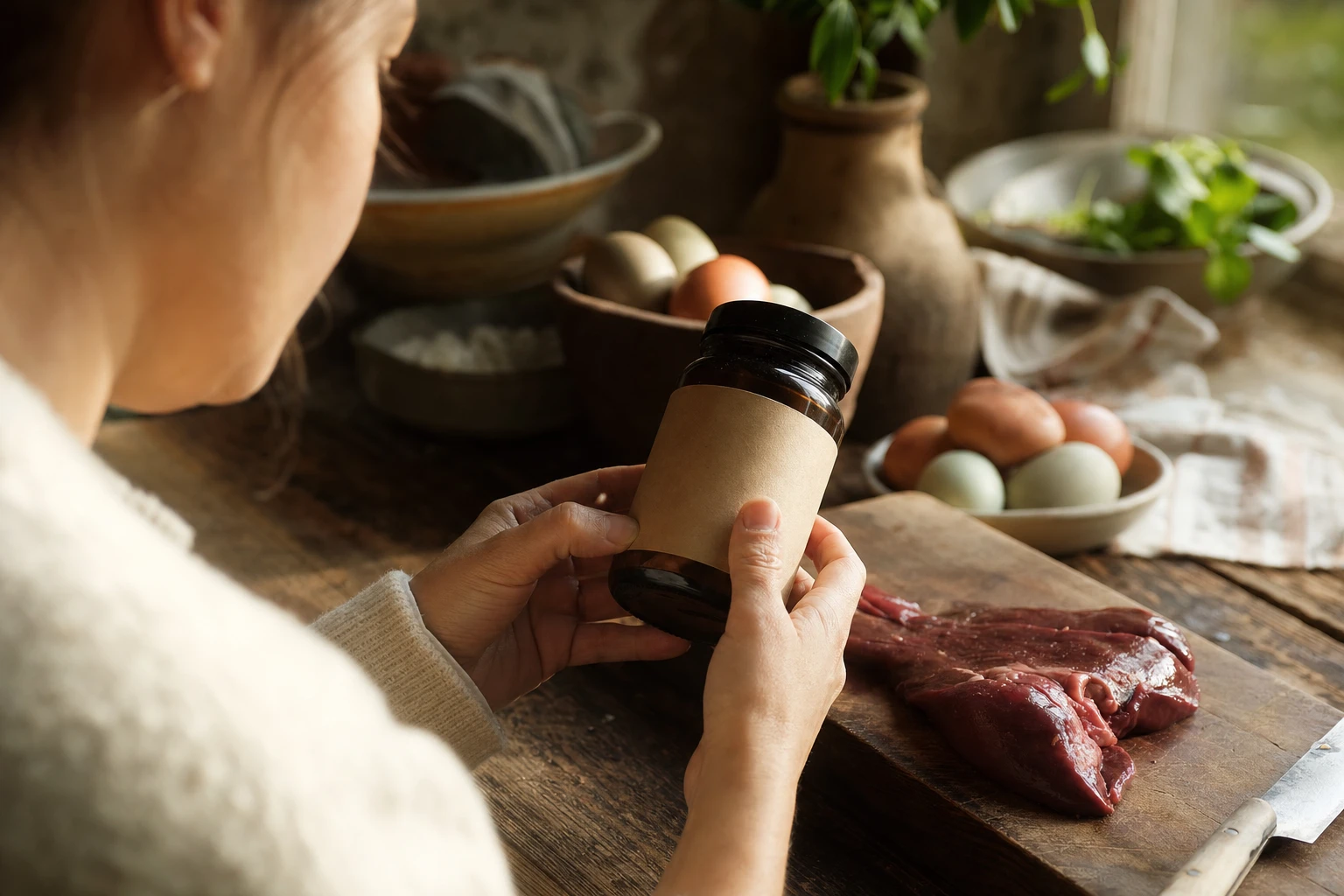
Farm to finished product
Traceability means you can follow the ingredient from the farm that grew it to the finished bottle on your shelf. This requires documentation at every step.
The ashwagandha came from a specific farm in India. That farm's name and location should be traceable. The harvest batch number should be documented. The extract was made by a specific processor. That processor's information should be available. The finished product was manufactured in a specific facility. That facility should be identifiable.
If any of these steps are vague or proprietary, the company is hiding something. Real transparency means every link in the chain is visible and verifiable.
Why ingredient sourcing matters
Different regions produce different quality of botanical ingredients. Ashwagandha from India is not all equal. Some comes from organic farms on good soil. Some comes from intensive conventional agriculture on depleted soil. Some comes from suppliers who blend batches from multiple unknown sources.
A company that sources from a specific farm is making a commitment to consistency and quality. A company that sources from generic suppliers is prioritising cost. The difference is visible in testing data and in how well the product actually works.
When you're evaluating a supplement, ask where each ingredient comes from. If the answer is vague, that's a signal. A good company has relationships with suppliers and can name them.
Get farming and sourcing guides, free
Two short reads a week on regenerative farming and where real food comes from.
By signing up you agree to receive emails from us. No spam, unsubscribe anytime.
The Certificate of Analysis is everything
A Certificate of Analysis, or COA, is the lab report that proves what's in the product. It should be specific to the batch you bought. It should list what was tested for, what the results were, and whether the product met specifications.
A real COA includes the batch number, the date of testing, the lab name and contact information, the testing methods used, and the limits for contaminants. It's a document that proves the product has been independently verified.
If a company won't provide a batch-specific COA on request, don't buy from them. A company that's done the testing will have it readily available. The fact that they won't share it is all the information you need.
A batch-specific Certificate of Analysis is the only marketing claim that actually means something.
1 of 9
Daily blend
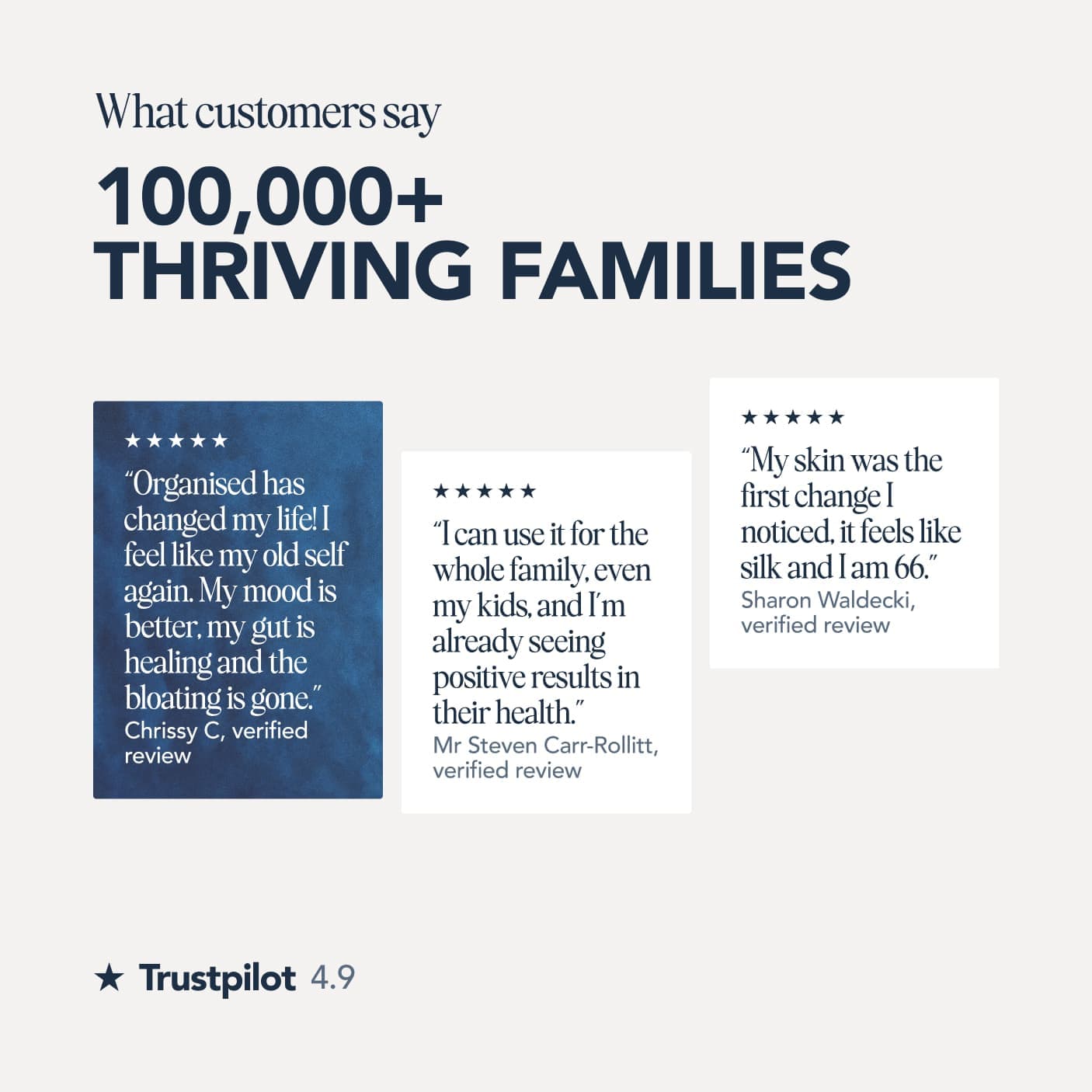
100,000+ thriving families4.9 on Trustpilot
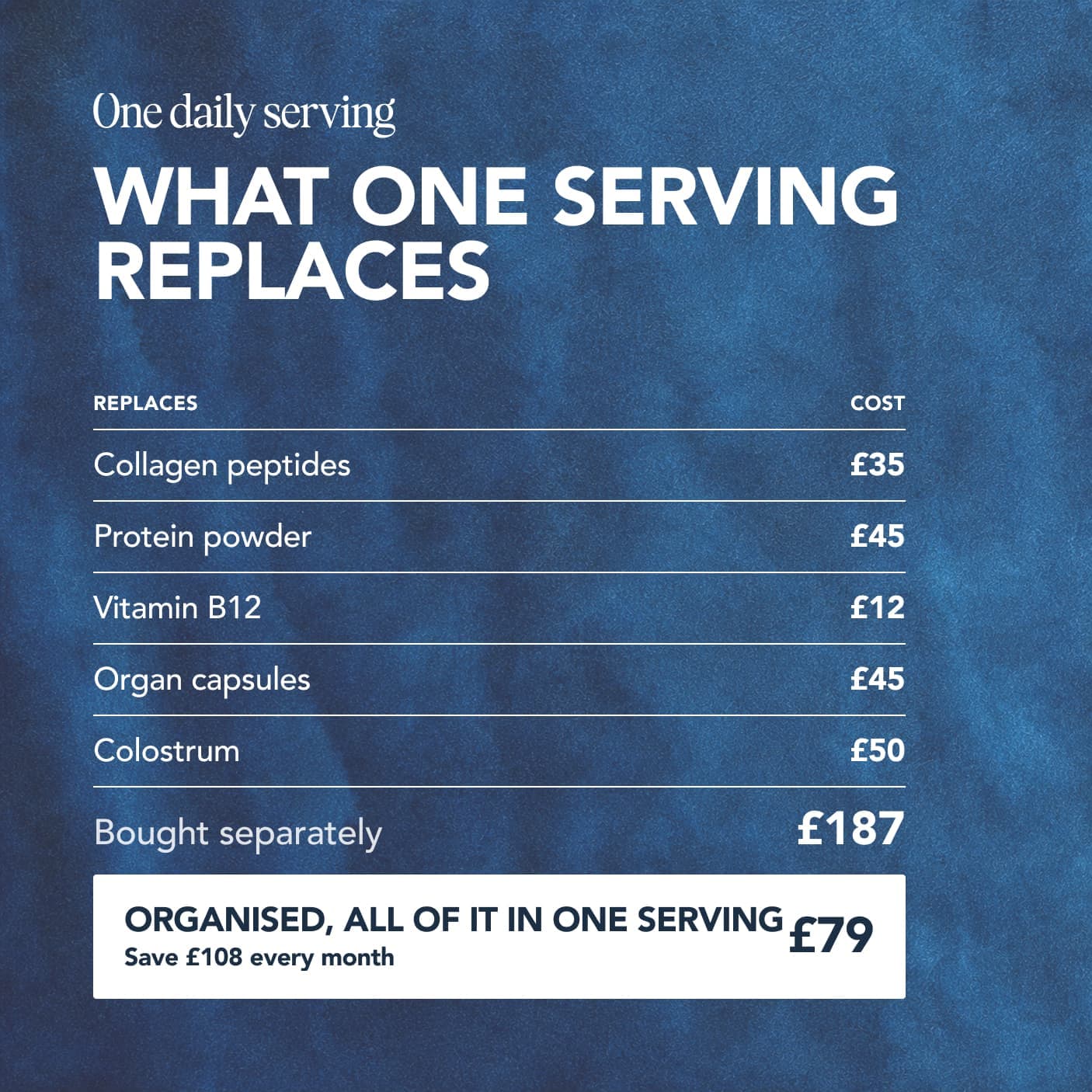
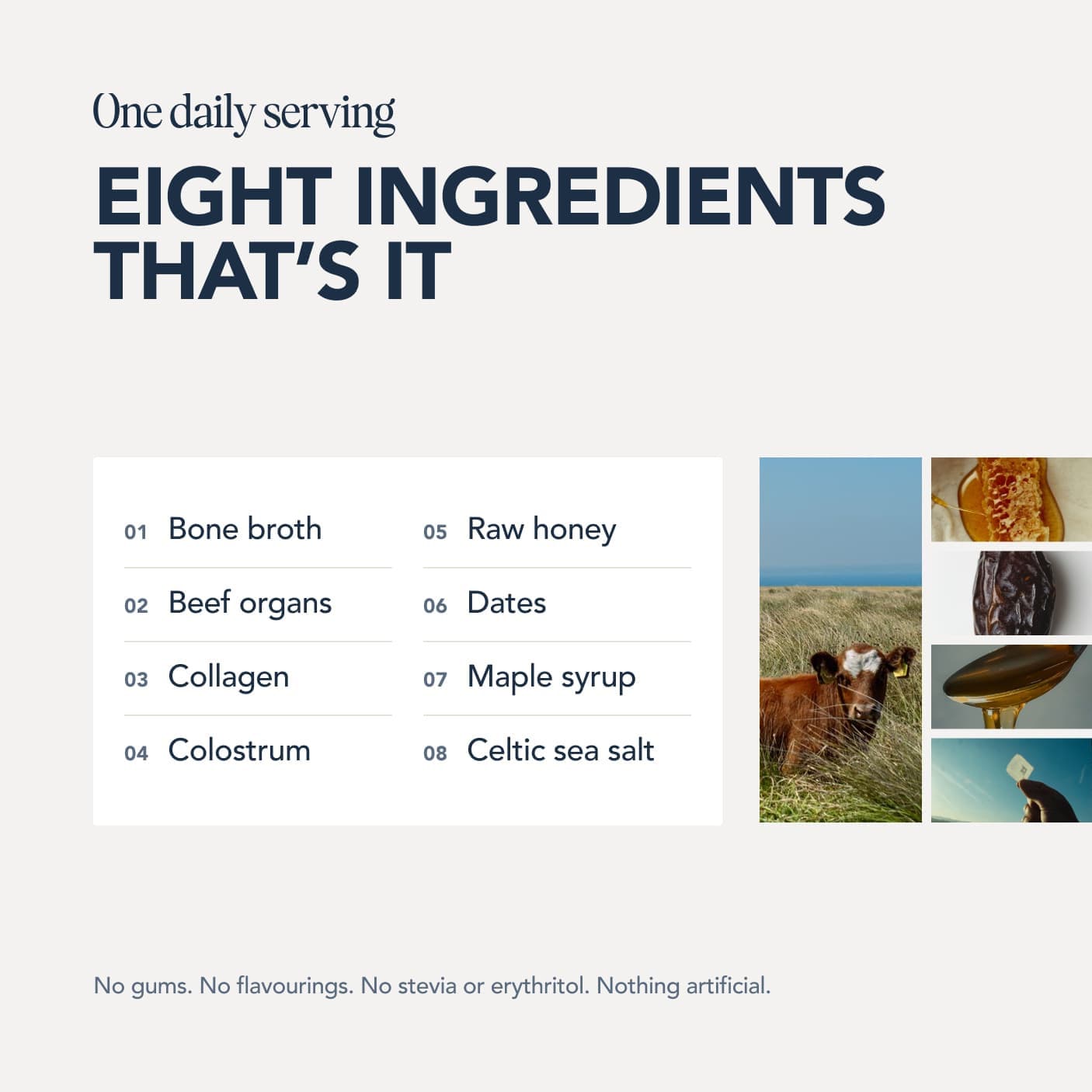
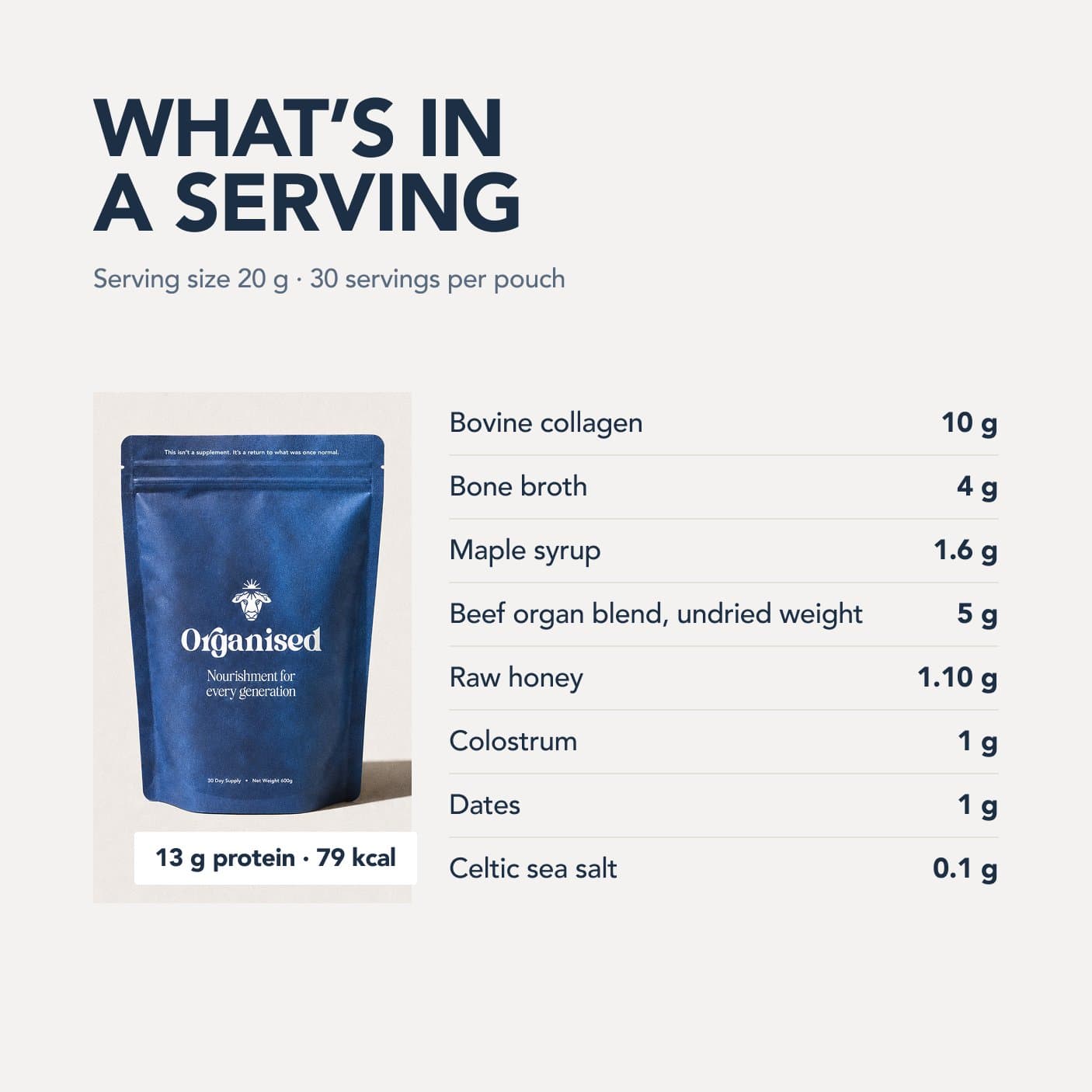
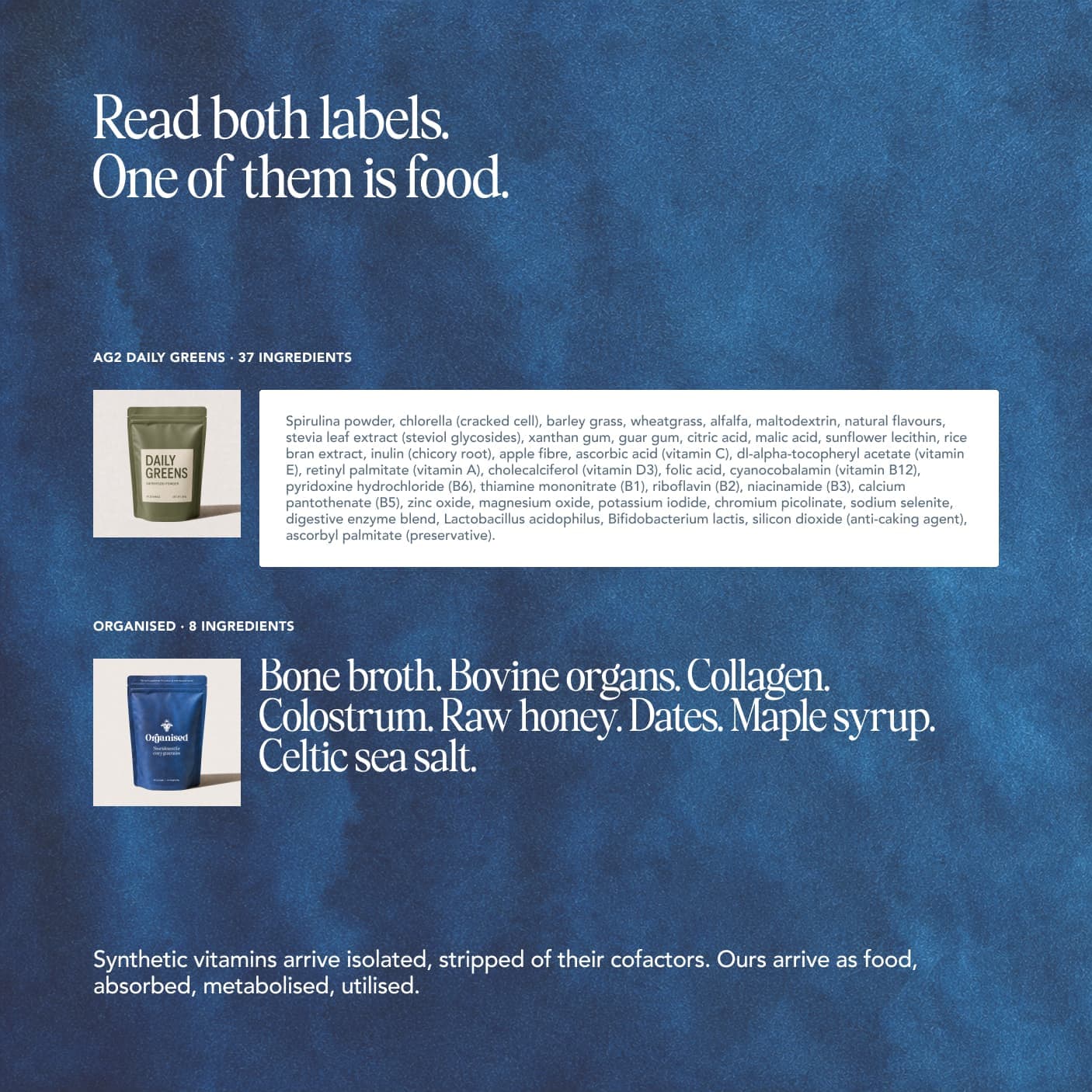
Eight real ingredients built around grass-fed beef organs, collagen and colostrum. Nothing synthetic added.
Free with your first order, worth £38. Plus £10 off the pouch with a subscription.
Free UK shipping · Made in England · 100 day money back guarantee on your first pouch · Skip, pause or cancel anytime
Following the chain backwards
You can verify traceability by starting with the product you're holding and working backwards. Look up the batch number. Request the COA for that batch. Check the COA for the raw material supplier information.
Contact the raw material supplier directly if the company won't give you their details. Ask about sourcing, farming practices, testing. Legitimate suppliers are happy to answer these questions. Evasive suppliers are hiding something.
This is labour-intensive, which is why most people don't do it. But if you're paying premium prices for a supplement, doing this verification once is worth the effort.
Red flags that indicate poor traceability
The company won't name the farm or region the ingredient came from. They use terms like proprietary blend to hide sourcing. They refuse to provide batch-specific testing data. They make health claims but won't explain the research. They use vague language like sourced from trusted suppliers instead of naming suppliers.
They won't provide contact information for you to verify anything they claim. They deflect when asked about sourcing and talk about their quality control instead. They act offended when you ask for testing data, as if you're being unreasonably suspicious.
Any of these patterns suggest the company has something to hide. Move on to a producer who will answer your questions directly and provide verifiable information.

The bottom line
You don't need to buy local, you don't need organic, you don't need the most expensive brand. You need traceability. You need to know where every ingredient comes from. You need batch-specific testing data. You need to be able to verify the claims in writing.
A good supplement company makes this easy. They provide batch numbers. They have Certificates of Analysis readily available. They can name their suppliers. They encourage you to ask questions and provide detailed answers.
A bad supplement company hides behind marketing language, refuses to provide testing data, and changes suppliers constantly based on price. They're counting on you to trust the label. Don't. Instead, demand proof. A company that can't or won't provide it is not worth your money.
References
Every source below was checked on 27 August 2026. Each link was requested and read. Where a citation and its identifier disagreed, the citation was corrected to the record or the reference was deleted along with the sentence marker that pointed at it, and where the resolved paper turned out not to support the sentence, the sentence was cut back to what it does support. Borrowed authority is worse than none, because it looks like rigour.
- UK Food Standards Agency. Food labelling and packaging. https://www.food.gov.uk/business-guidance/packaging-and-labelling
Who wrote and reviewed this guide
Niall Kiddle
Author · Founder, Organised
Niall is the founder of Organised. He started the company in 2024 after fixing his own health the slow way: in 2022 he swapped a cupboard of synthetic supplements for real food, raw milk, organ meats, bone broth and honey, and felt the difference within months.
Areas of expertise: Ancestral nutrition, Organ meats, Whole-food supplementation, Gut health, Regenerative sourcing
Read Niall's full profile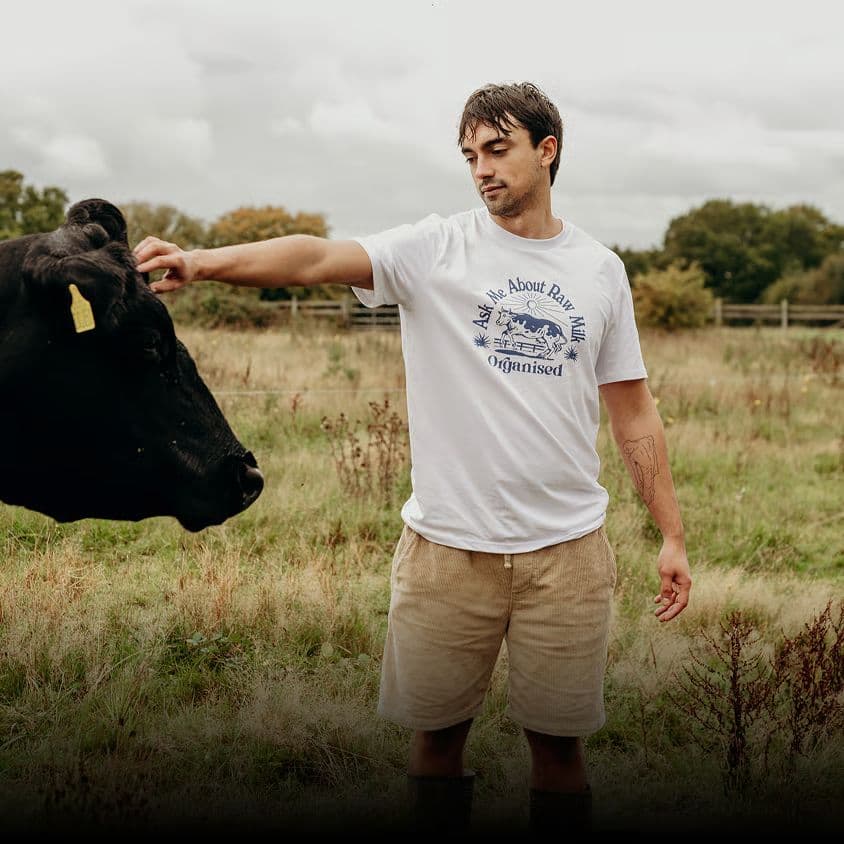
Pedro Rodrigues
Reviewer · Agronomist (farming and sourcing only)
Pedro is the agronomist Organised works with on farming and sourcing. His job on the guides is to keep the science honest: he reviews what we publish about soil health, regenerative agriculture, grazing and the way food is actually produced.
Areas of expertise: Regenerative agriculture, Agronomy, Soil health, Grass-fed farming, Food sourcing
Reviewed this guide on
Read Pedro's full profileMore on farming & transparency
View all- Biodynamic Farming: What It Means and Why It Matters
- British Beef: Why Quality Matters More Than Origin Alone
- Free Range, Organic, Pasture-Raised: A Quick Reference Guide
- How Stress in Cattle Affects the Quality of Their Organs
- What Is Mob Grazing and How Does It Help the Soil?
- What Is Third-Party Testing and Why Should You Care?
- Why Biodiversity on Farms Matters for Your Food
Browse the guides library
All guidesKeep reading

Farming
What Is Third-Party Testing and Why Should You Care?
Third-party testing verifies that supplements and foods are what companies claim. Learn why independent lab testing is your only real safeguard.
Farming
Biodynamic Farming: What It Means and Why It Matters
Biodynamic farming goes beyond organic. Learn what Demeter certification means and why closed-loop regenerative systems matter for food quality.

Farming
Why We Partner with Regenerative Farms
Our sourcing criteria explained. Why we chose regenerative farms, our selection process, and how traceability works from farm to pouch.
Real food, made effortless
Shop the blendA few ways to use it
All recipes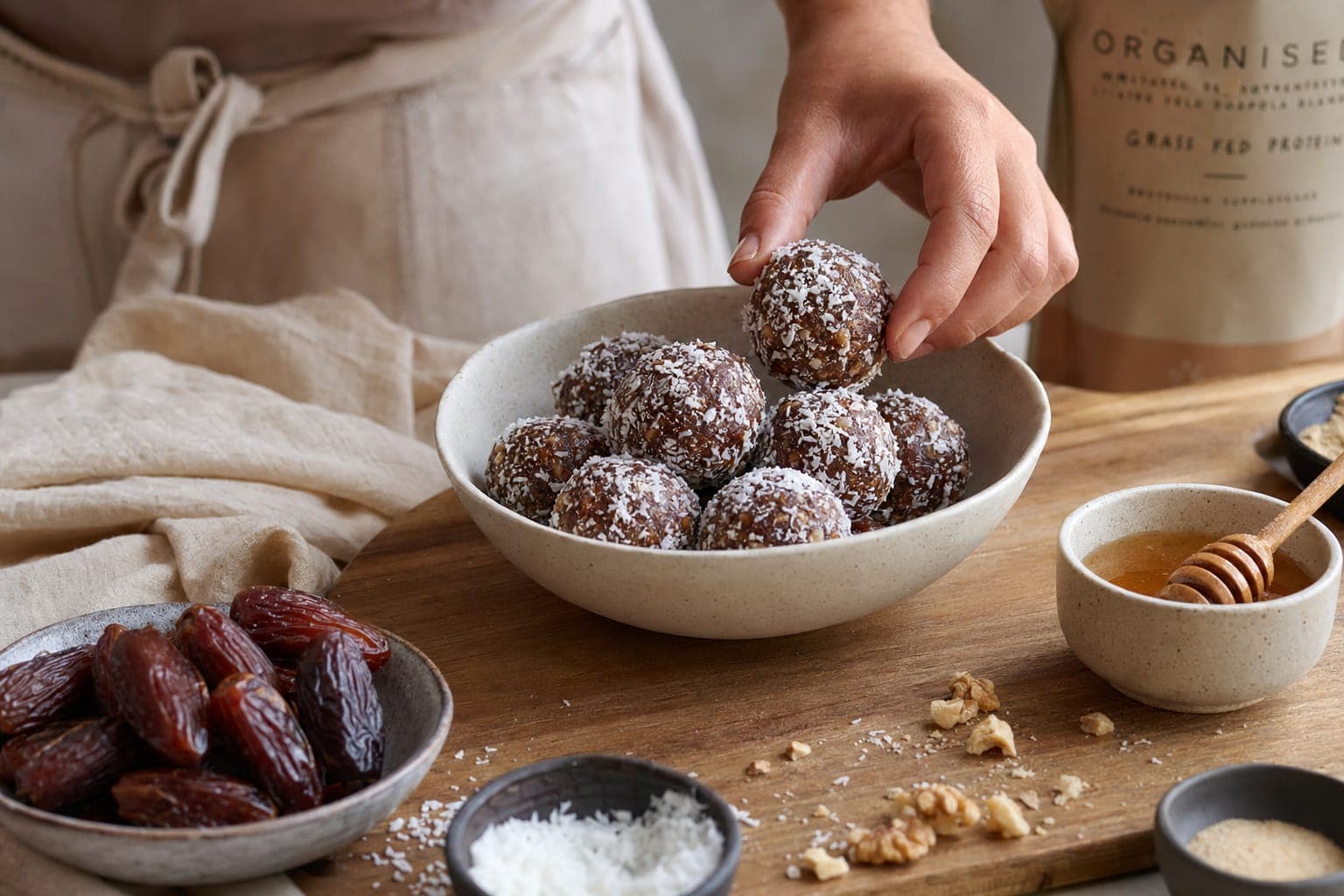
Energy Balls with Organised, Dates and Raw Honey
Make no-bake energy balls with Organised, dates, and raw honey. Perfect lunch box, pre-workout, or on-the-go snack. Simple recipe.
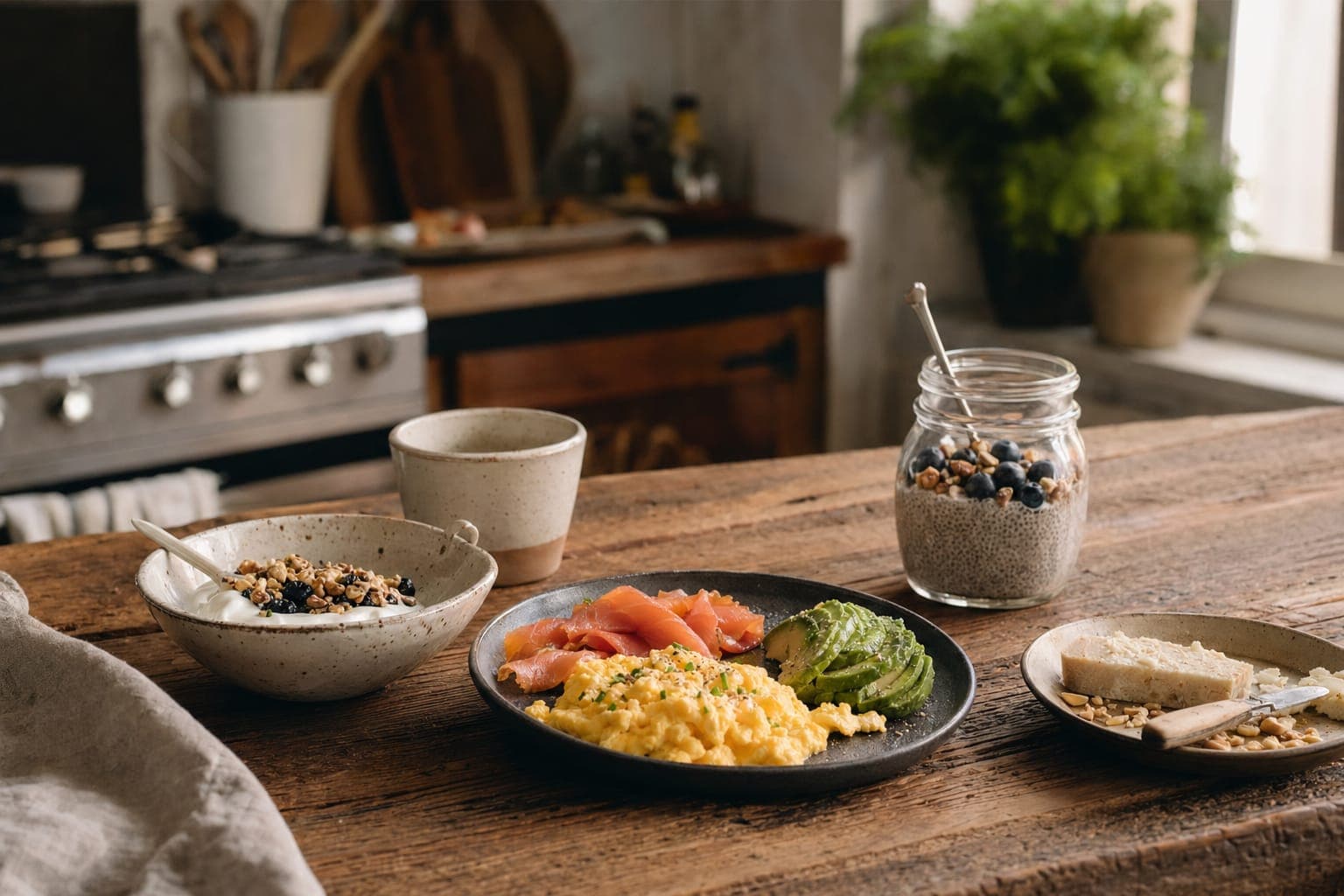
5-Minute High-Protein Breakfasts Using Organised
Quick, high-protein breakfast ideas using Organised. Five recipes you can make in minutes with real food. No fussing around.
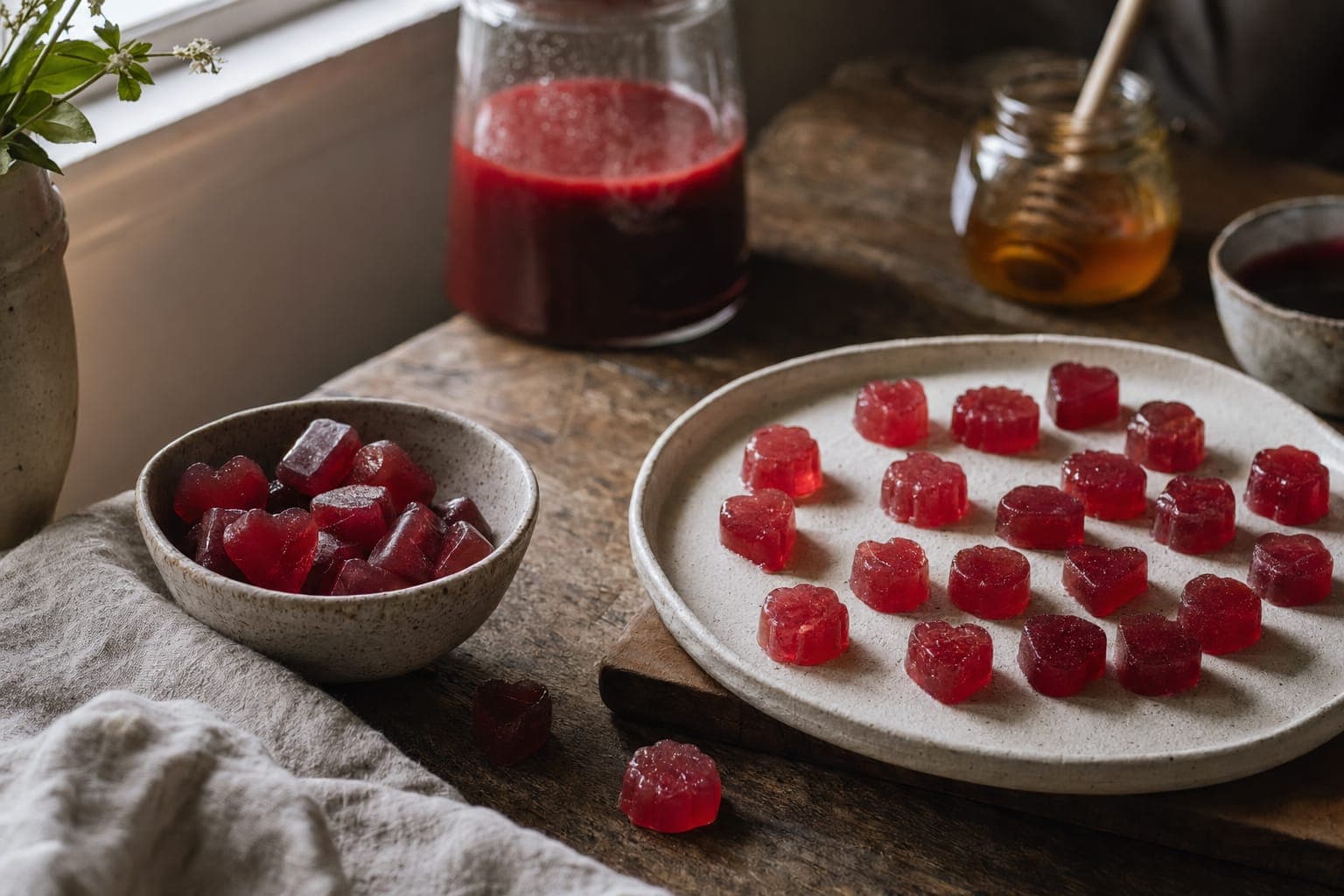
How to Make Your Own Gelatine Gummies
A simple recipe for homemade gelatine gummies using grass-fed gelatine, fresh juice, and raw honey. Better than shop-bought, kids love them.


 Join over 100,000+ members
Build a better food system with us
The Organised community is thousands of people choosing real food and backing the farmers who grow it, all of us trying to leave the world a little better than we found it. If that is what you care about too, you belong here.