Supplement Industry Secrets: What Most Brands Don't Tell You
Your supplement bottle looks professional. The label is clean. The claims are confident. Behind every one of those is an industry standard you've never heard of that lets companies hide the truth.
By Niall Kiddle, Founder, Organised

Reviewed by Pedro Rodrigues, Agronomist (farming and sourcing only) ·
6 min read · Published · Updated · 2 cited sources
Makers of the Organised Daily blend, a grass-fed beef organ supplement from regenerative UK farms
This isn't conspiracy. It's business. The supplement industry makes money on opacity. It's the business model.
The proprietary blend cover-up
A proprietary blend is legal cover for not telling you what's actually in the product. Example: "Liver Support Blend: 750mg" containing five different herbs and nutrients.
You know the total weight (750mg). You don't know that the blend is 700mg of a cheap filler herb (like inulin or acacia fibre) and 10mg each of the expensive actives. The company knows you'd see through it if they listed each ingredient separately. So they don't.
UK food information regulations require ingredients to be listed in descending weight order, but allow generic blend descriptors that obscure individual quantities. Health claims on supplements are governed by EU/UK regulations and the GB nutrition and health claims register.1
High-quality supplement companies don't use proprietary blends. They list every ingredient with its exact dose. When you see a proprietary blend, you're looking at a company choosing obfuscation over honesty.
Proprietary blends exist so companies can sell weakness as mystery.
The regulatory path forward is transparency. Some countries (Canada, for instance) are moving toward mandatory disclosure of proprietary blends. The UK and EU haven't caught up. But the direction is clear: transparency wins.
Country of origin obfuscation
Most supplement brands don't tell you where their ingredients come from. The label says made in Germany, but the ingredients might be from China, India, and five other countries. The label says grass-fed beef liver but doesn't say which country the cattle were raised in (could be Brazil, Argentina, Australia, or the US).
This matters because standards vary wildly. A beef organ from China has different regulatory oversight than one from the UK. A plant extract from a country with minimal pesticide regulation is different from one grown organically in Europe. But the label just says the ingredient name, not the source.
Companies do this because sourcing is a weakness. They buy from the cheapest supplier that meets a basic spec. If the origin was actually UK or European, they'd advertise it loudly. The fact that they don't is information. The silence reveals cost-driven sourcing.
When an ingredient sourcing is secret, you can assume it was chosen for cost, not quality.
UK regulations (FDR 1169/2011) require country of origin labelling for some products but not all. Supplements are loosely covered. Pressure is building for stricter requirements. Until then, assume sourcing is obscured for a reason.

The testing gap
Most supplement companies do no heavy metal testing. None. Zero. They rely on supplier claims that the ingredient is clean. They don't verify. Heavy metals, bacteria, pesticide residues, contamination: untested.
The ones that do test often do it sporadically. A few batches per year, or once per year. If one batch fails, they investigate that batch. The others remain untested and untrusted. It's sampling that lets them say they test while actually testing almost nothing.
There's no requirement for batch testing. No mandate for third-party verification. No inspection regime that ensures supplements are actually what the label claims. The FDA doesn't pre-approve supplements. The UK doesn't regularly inspect supplement facilities.
Studies of supplements have repeatedly found discrepancies between label claims and contents, including the absence of advertised actives and the presence of undeclared ingredients or contaminants. Examples include identification studies of botanical supplements using DNA barcoding.2
No testing means no accountability. Companies bank on this.
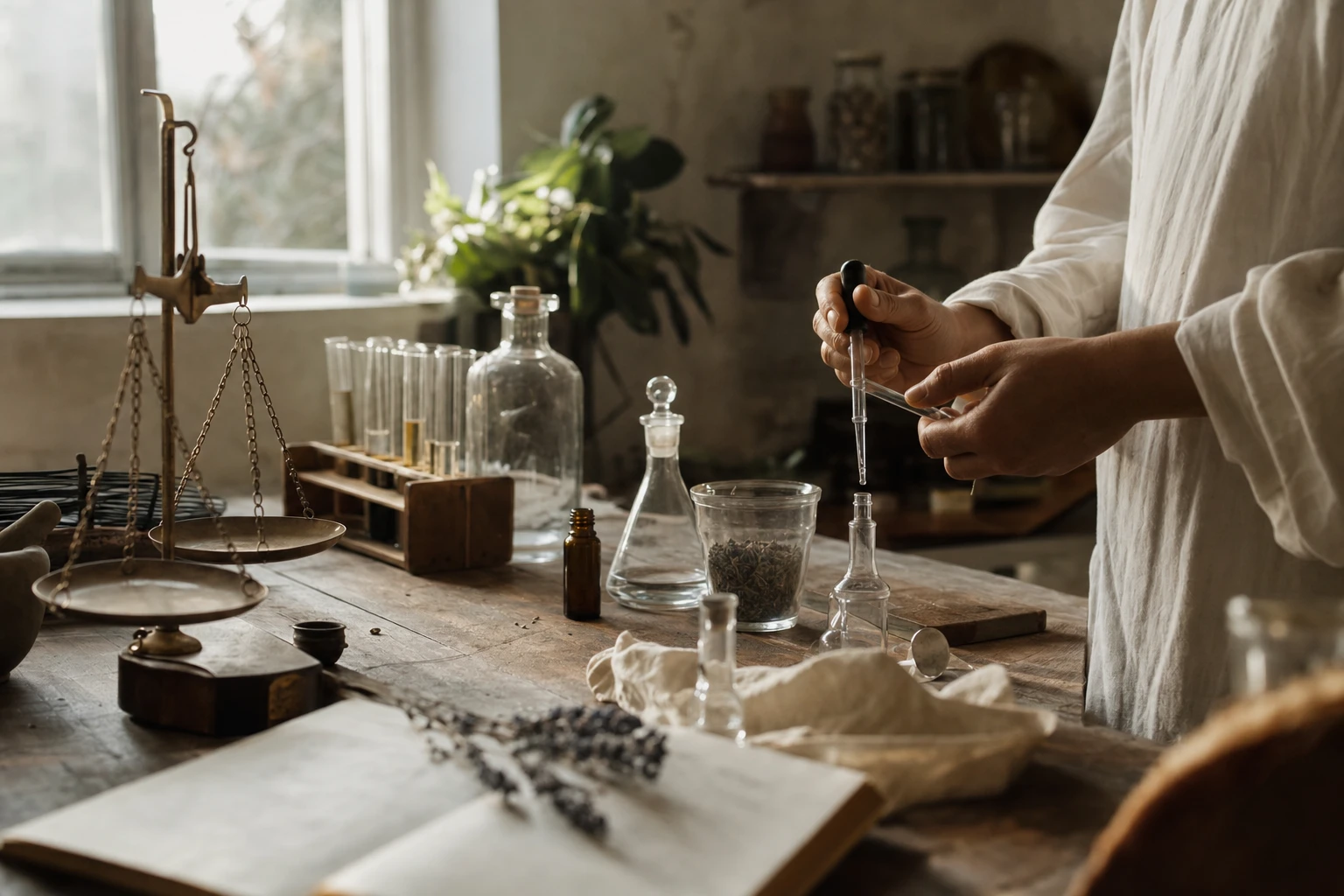
Label claims nobody can verify
"Lab tested." Which lab? What did they test? When? For what? The label doesn't say. It sounds official. It means nothing. It's marketing language without substance.
"Grass-fed beef liver." Was it grass-fed its entire life or grain-finished at the end? Grass-fed once or continuously? UK grass-fed or imported from Brazil? The label doesn't clarify, so the company can claim grass-fed regardless of the reality. Technically true but misleadingly presented.
"Third-party tested." By whom? What standard? For what contaminants? Are the results public? Most supplement companies claim third-party testing without providing evidence or allowing verification. The claim is technically defensible but meaningless.
"Premium quality ingredients." This is marketing language with no definition. One competitor's cheap ingredients are another company's premium quality ingredients. The marketing is identical.
"Supports liver health," "helps with energy," "promotes wellbeing." These claims are vague enough to be unfalsifiable. They can claim the benefit is supported by research (real or exaggerated) while the product does essentially nothing.
The art of supplement labelling is making claims that sound good, are technically defensible, and are difficult to verify. It's not lying. It's just not the full truth. It's the line between marketing and deception.
A claim on a label is only as good as the documentation behind it. Most labels have none.
Get farming and sourcing guides, free
Two short reads a week on regenerative farming and where real food comes from.
By signing up you agree to receive emails from us. No spam, unsubscribe anytime.
The supply chain mystery
Most supplement brands have no idea where their ingredients actually come from. A distributor sells them powder. The distributor bought from a processor. The processor bought from a farmer or a larger distributor. The actual source is three layers away and opaque.
If something goes wrong (contamination, wrong species, misrepresentation), the chain is opaque. Nobody can trace backwards. The brand can legitimately say they didn't know, and the responsibility disappears into the supply chain. The consumer gets hurt. The company claims ignorance and walks away.
Companies with real supply chain control (knowing the farm, the farmer, the process, the testing) are expensive to operate. It's cheaper to buy from middlemen and trust their claims. Most companies choose cheap. The savings get pocketed. The risk gets transferred to you.
If a company can't trace your ingredient back to the farm, they don't actually know what they're selling you.
1 of 9
Daily blend
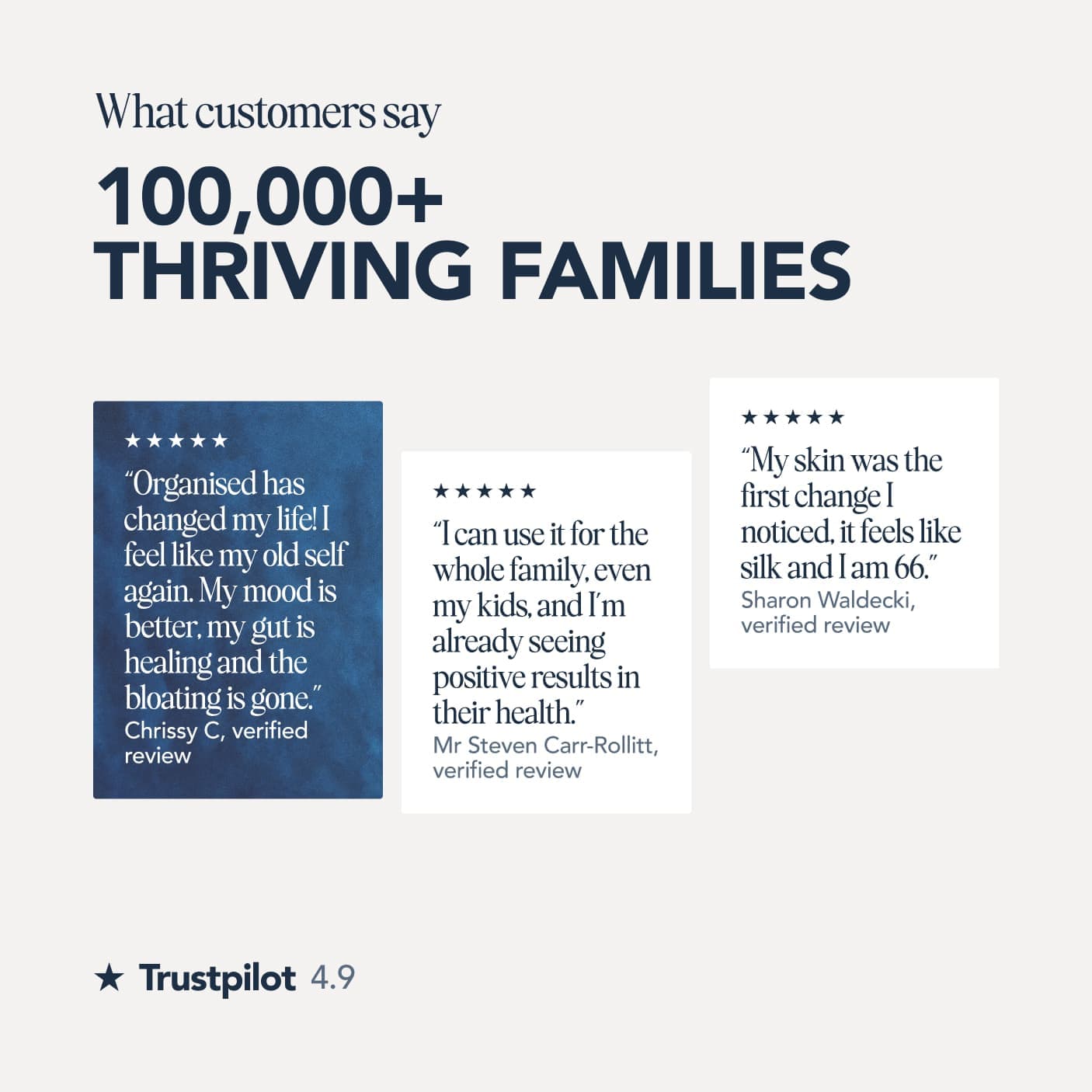
100,000+ thriving families4.9 on Trustpilot
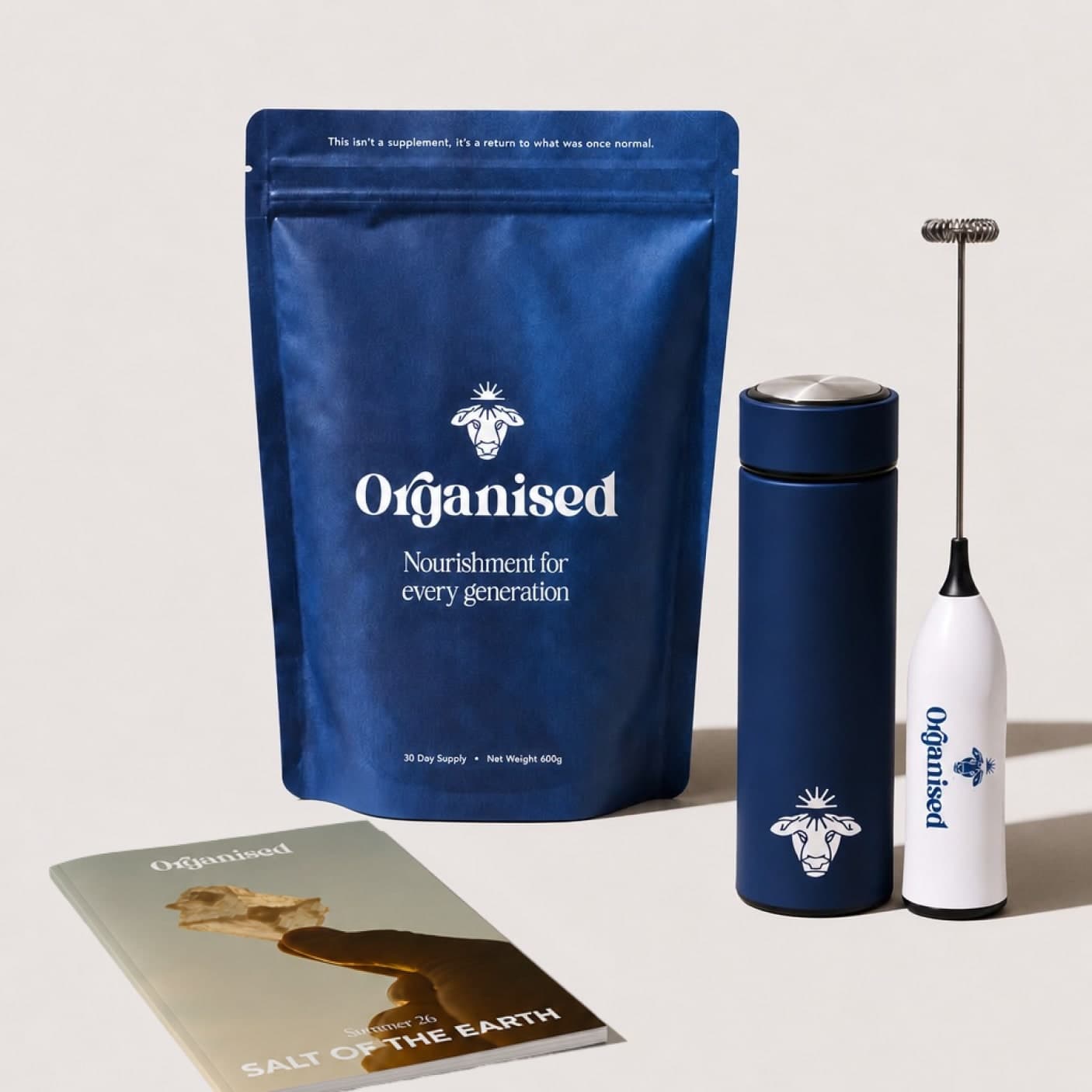
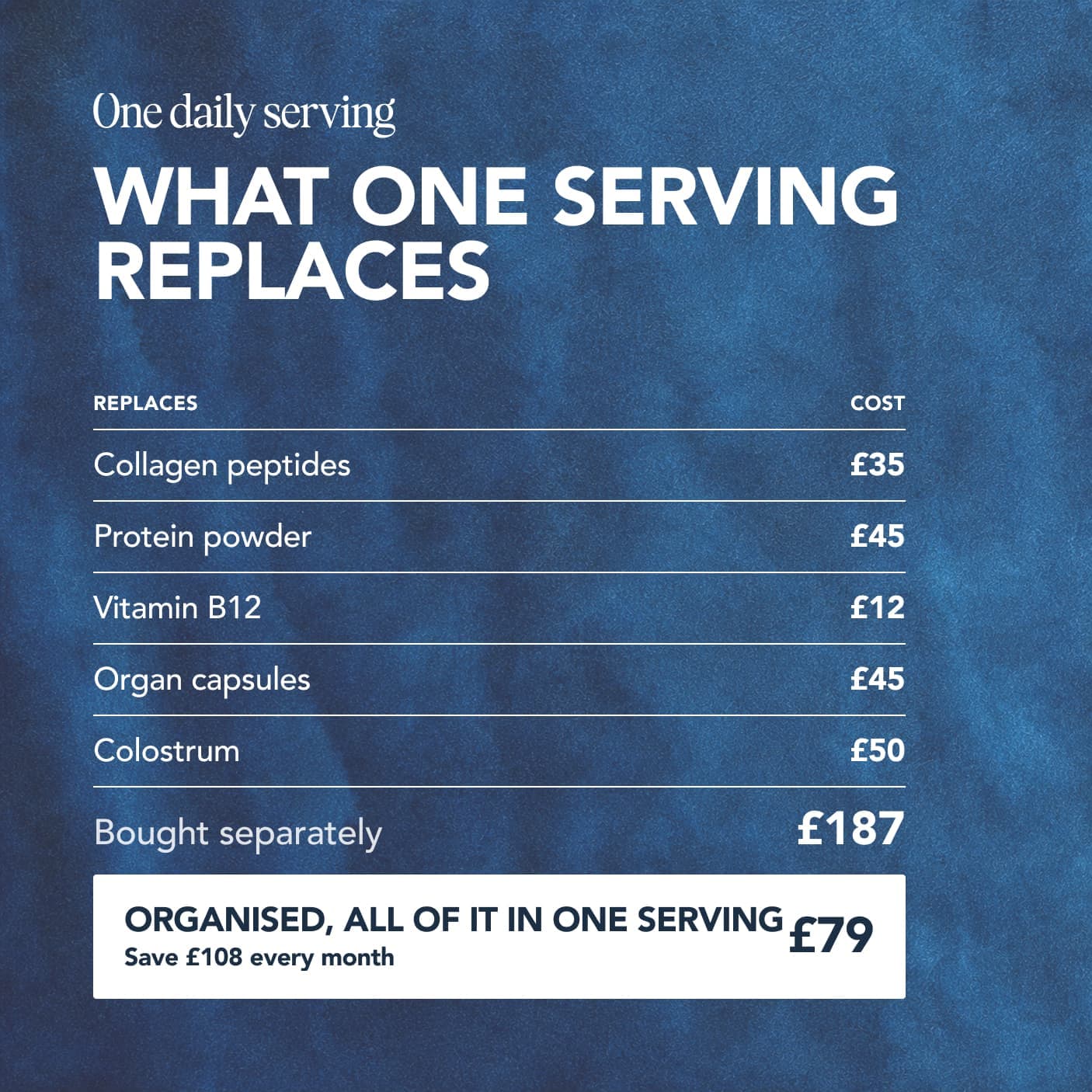
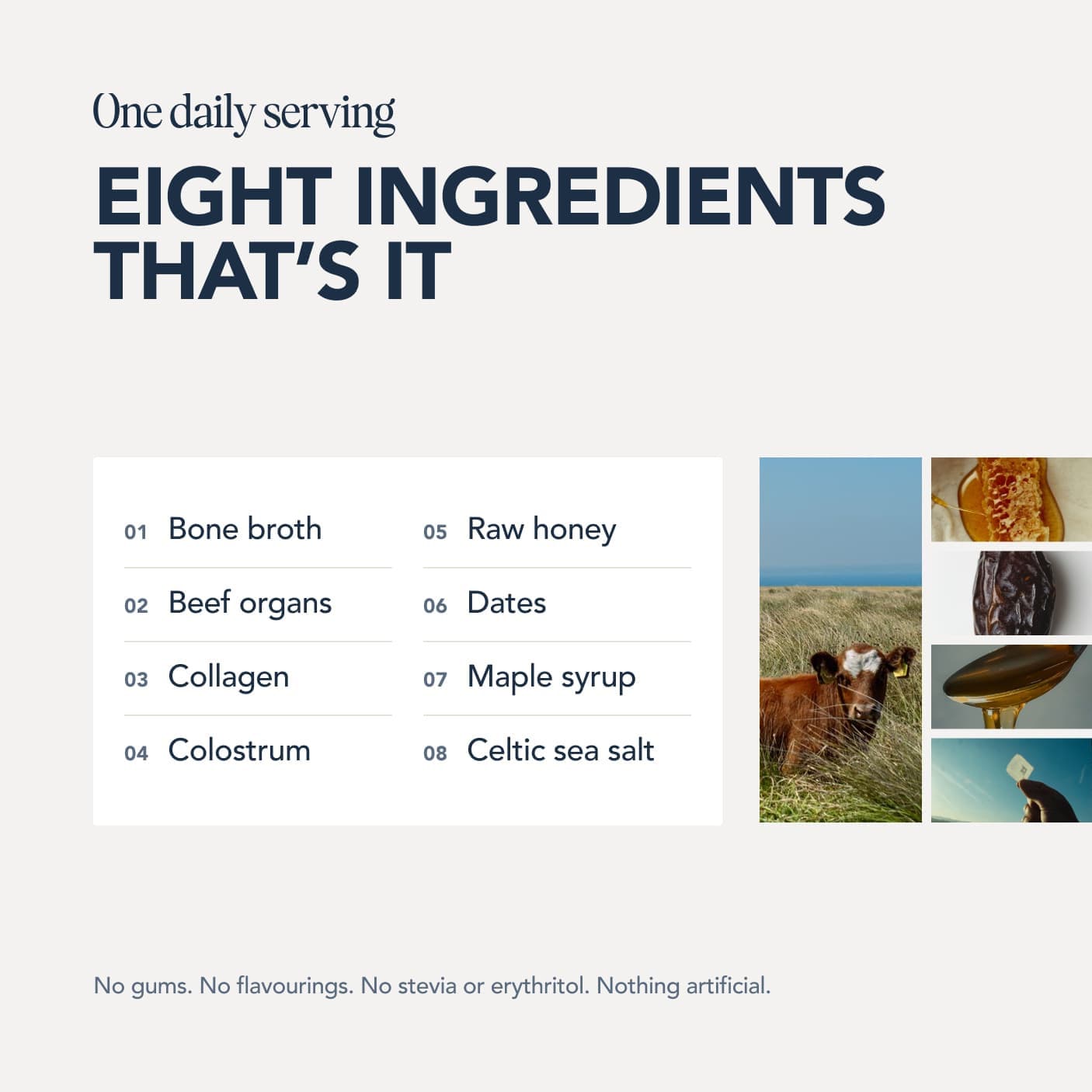
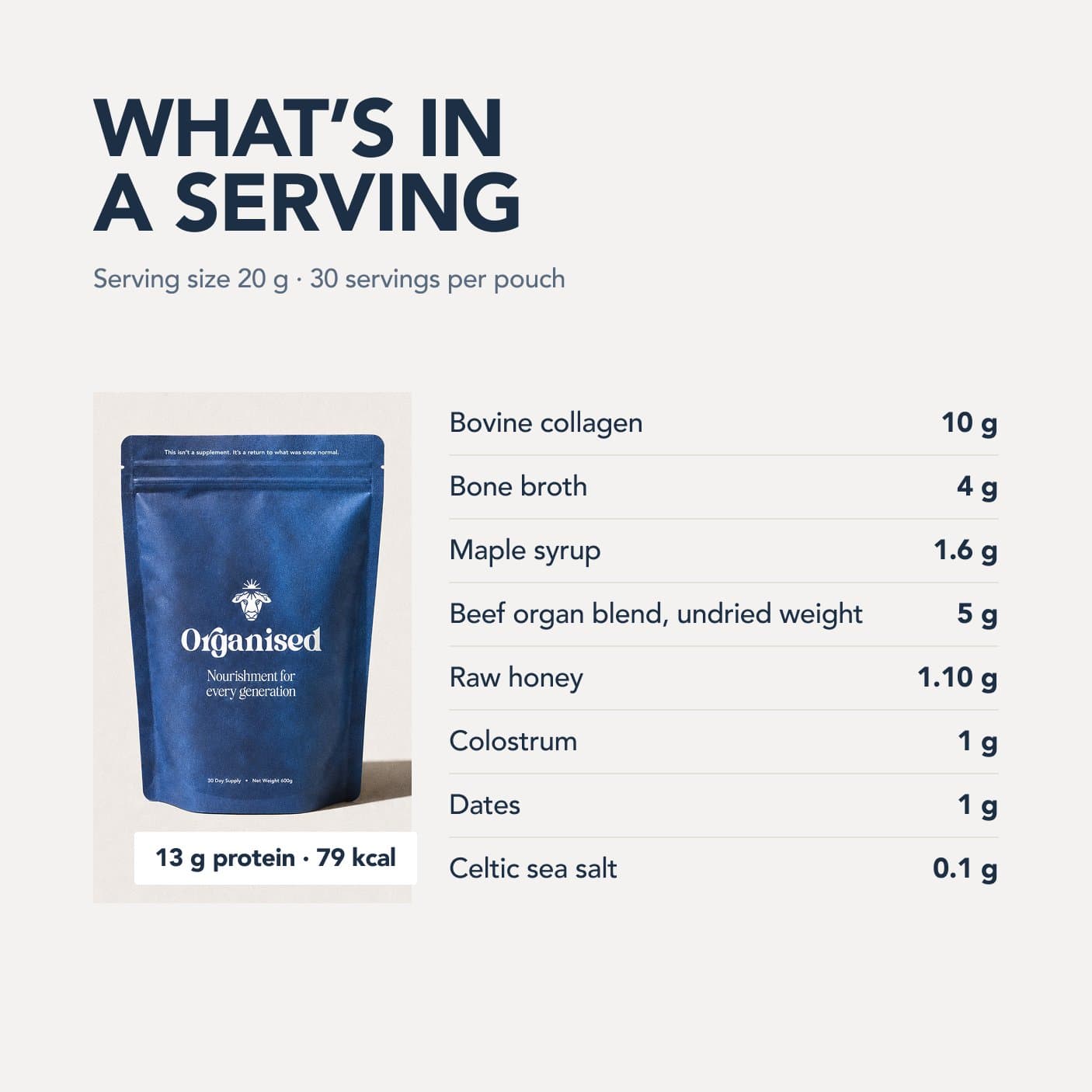
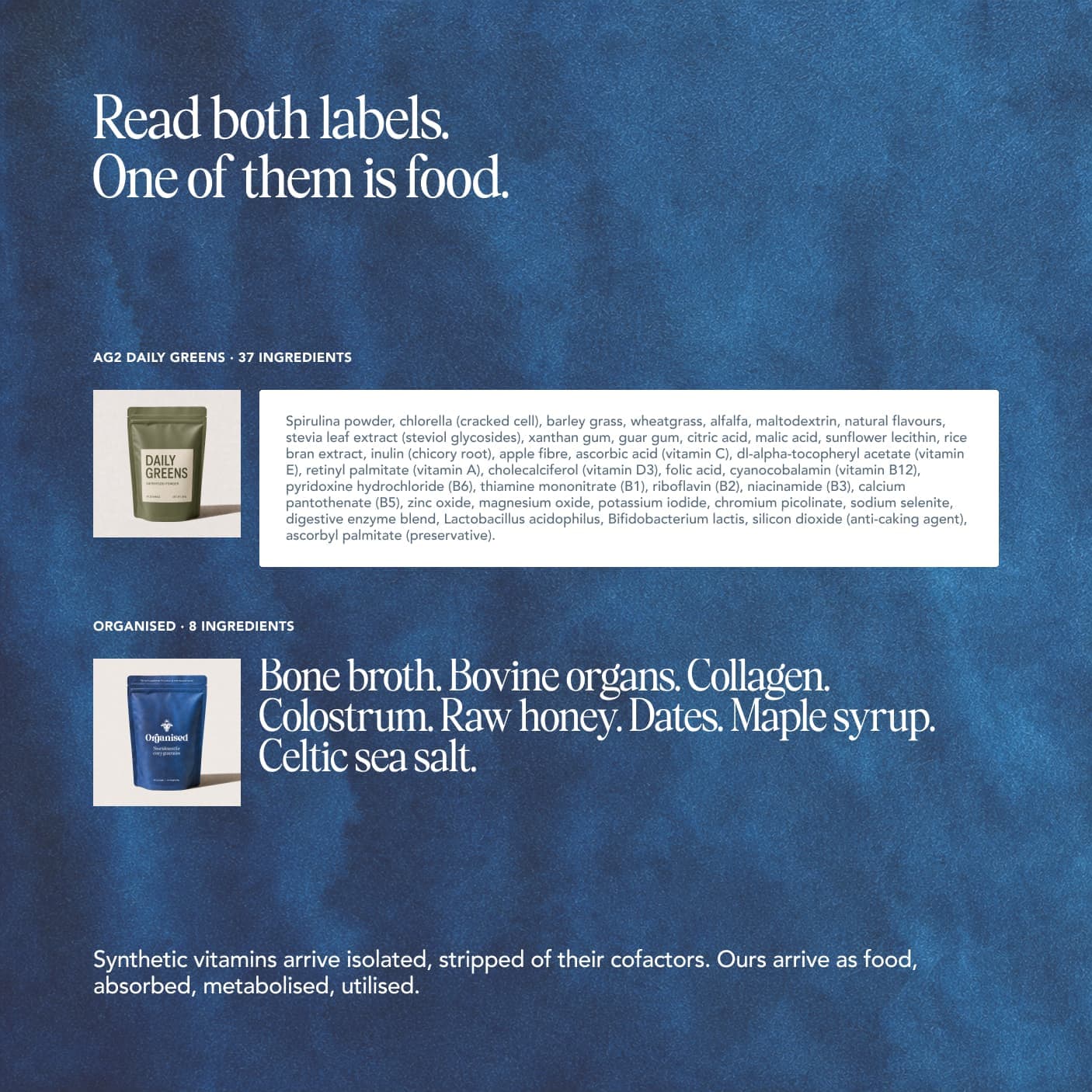
Eight real ingredients built around grass-fed beef organs, collagen and colostrum. Nothing synthetic added.
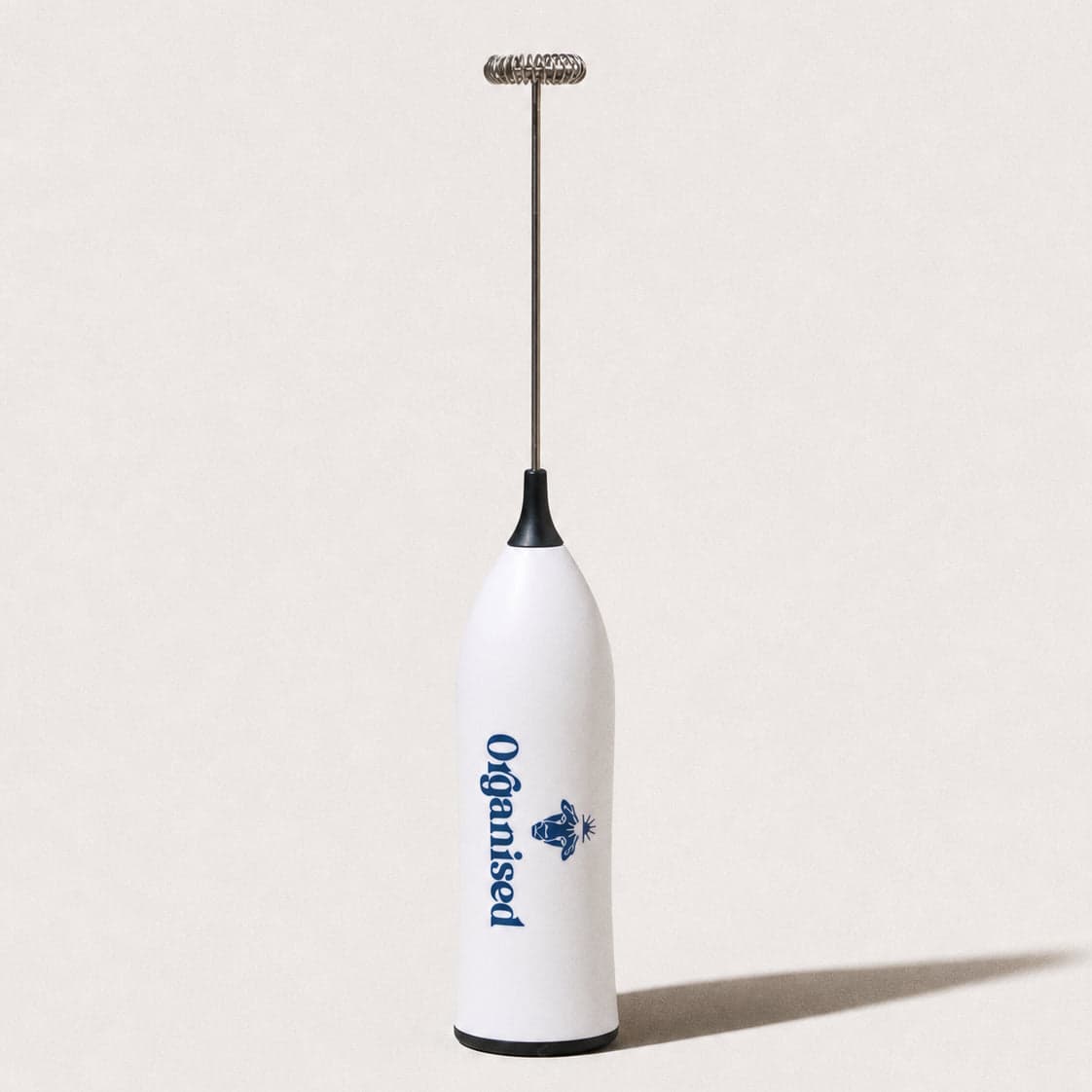
Free with your first order, worth £38. Plus £10 off the pouch with a subscription.
Free UK shipping · Made in England · 100 day money back guarantee on your first pouch · Skip, pause or cancel anytime
Why companies do this
The supplement industry is brutally competitive and has thin margins. A brand that tests every batch, sources transparently, lists every ingredient with its exact dose, and maintains full supply chain traceability costs significantly more to operate.
That cost gets passed to the customer. A bottle that costs 20 pounds to produce conscientiously might cost 50 to 60 pounds retail. A bottle produced with shortcuts costs 10 pounds to produce and sells for 25 pounds. The margin on the second one is triple.
Customers shop on price. Marketing is cheaper than quality. Opacity is cheaper than transparency. So the industry converges on opacity. It's not because companies are trying to poison you. It's economic incentives.
A company choosing honesty over profit margin is at a competitive disadvantage. Over time, the honest companies get smaller and the dishonest ones grow. The market rewards opacity.
The supplement industry doesn't hide things because they're trying to poison you. They hide things because it's profitable to do so.
What transparency actually looks like
A transparent supplement company will answer these questions: Which farm? Which testing lab? What were the results? Can I see the certificate of analysis? When was this tested? How often do you test? These are not unreasonable requests.
A company that can answer them has nothing to hide. A company that can't or won't answer should lose your business.
The bottom line
Most supplement companies use legal cover-ups to avoid transparency. Proprietary blends. Vague sourcing claims. No testing. Unverifiable marketing. Opaque supply chains. It's all standard practice in the industry. It's how most supplements are made.
The good news: you can tell the difference. Ask questions. If a company won't answer, that's an answer. If they can't trace ingredients to source, they don't know what they're selling. If they don't test for heavy metals, they're not serious about quality.
The brands doing things right are smaller, more expensive, and willing to answer questions. They're worth the money because they actually know what they're putting in your body and they're willing to prove it.
References
Every source below was checked on 27 August 2026. Each PubMed, PMC and DOI identifier was resolved against NCBI or Crossref, and what it opens is printed under the citation, so you can see the link goes where the citation says without leaving the page. Where a citation and its identifier disagreed, the citation was corrected to the record or the reference was deleted along with the sentence marker that pointed at it, and where the resolved paper turned out not to support the sentence, the sentence was cut back to what it does support. Borrowed authority is worse than none, because it looks like rigour.
- UK Food Standards Agency. Food labelling and packaging. https://www.food.gov.uk/business-guidance/packaging-and-labelling
- Ichim MC. The DNA-Based Authentication of Commercial Herbal Products Reveals Their Globally Widespread Adulteration. Front Pharmacol. 2019. https://pmc.ncbi.nlm.nih.gov/articles/PMC6822544/Checked 27 August 2026: PMC6822544 opens Ichim MC, The DNA-Based Authentication of Commercial Herbal Products Reveals Their Globally Widespread Adulteration. Front Pharmacol 2019;10:1227. PubMed indexes it as: Review.
Who wrote and reviewed this guide
Niall Kiddle
Author · Founder, Organised
Niall is the founder of Organised. He started the company in 2024 after fixing his own health the slow way: in 2022 he swapped a cupboard of synthetic supplements for real food, raw milk, organ meats, bone broth and honey, and felt the difference within months.
Areas of expertise: Ancestral nutrition, Organ meats, Whole-food supplementation, Gut health, Regenerative sourcing
Read Niall's full profile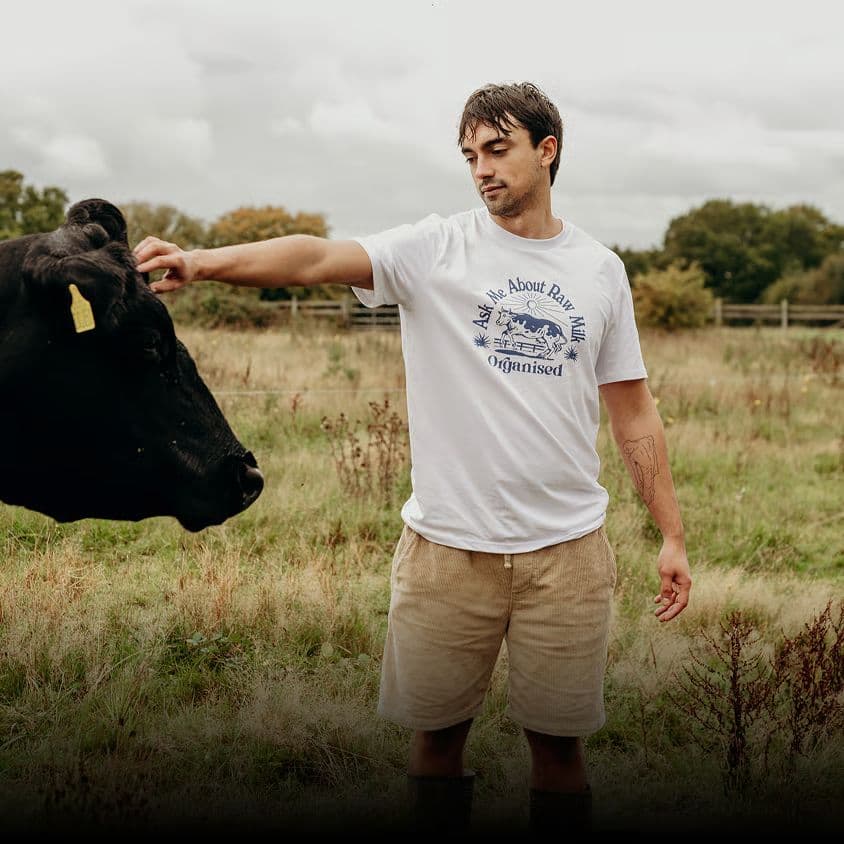
Pedro Rodrigues
Reviewer · Agronomist (farming and sourcing only)
Pedro is the agronomist Organised works with on farming and sourcing. His job on the guides is to keep the science honest: he reviews what we publish about soil health, regenerative agriculture, grazing and the way food is actually produced.
Areas of expertise: Regenerative agriculture, Agronomy, Soil health, Grass-fed farming, Food sourcing
Reviewed this guide on
Read Pedro's full profileMore on transparency
View allBrowse the guides library
All guidesKeep reading
Farming
Why Animal Welfare Matters for the Quality of Your Food
Understand the link between animal welfare and food quality, and how stress and cortisol in animals can shape the meat you eat. The connection explained.
Farming
CLA in Grass-Fed Beef: What Is It and Why Does It Matter?
Conjugated linoleic acid (CLA) is a unique fat found in grass-fed beef. Here's what it is, why it matters, and how much you need.
Farming
Free Range, Organic, Pasture-Raised: A Quick Reference Guide
UK food labels are confusing. Here's what free range, organic, and pasture-raised actually guarantee. A practical decoding guide.
Real food, made effortless
Shop the blendA few ways to use it
All recipes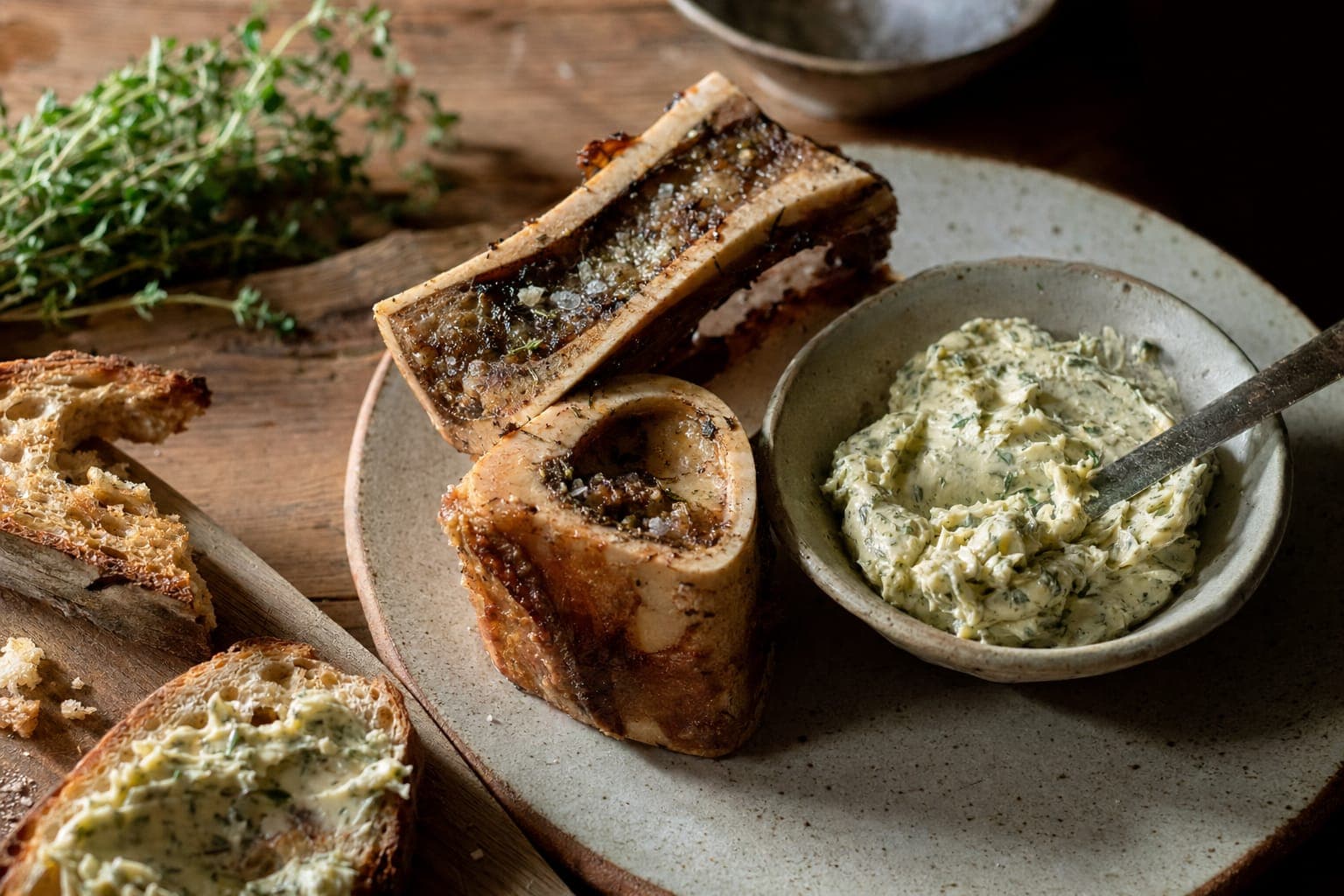
How to Make Bone Marrow Butter
Roast grass-fed marrow bones, scoop the marrow, and mix with butter and herbs. A nutrient-dense spread with fat-soluble vitamins.
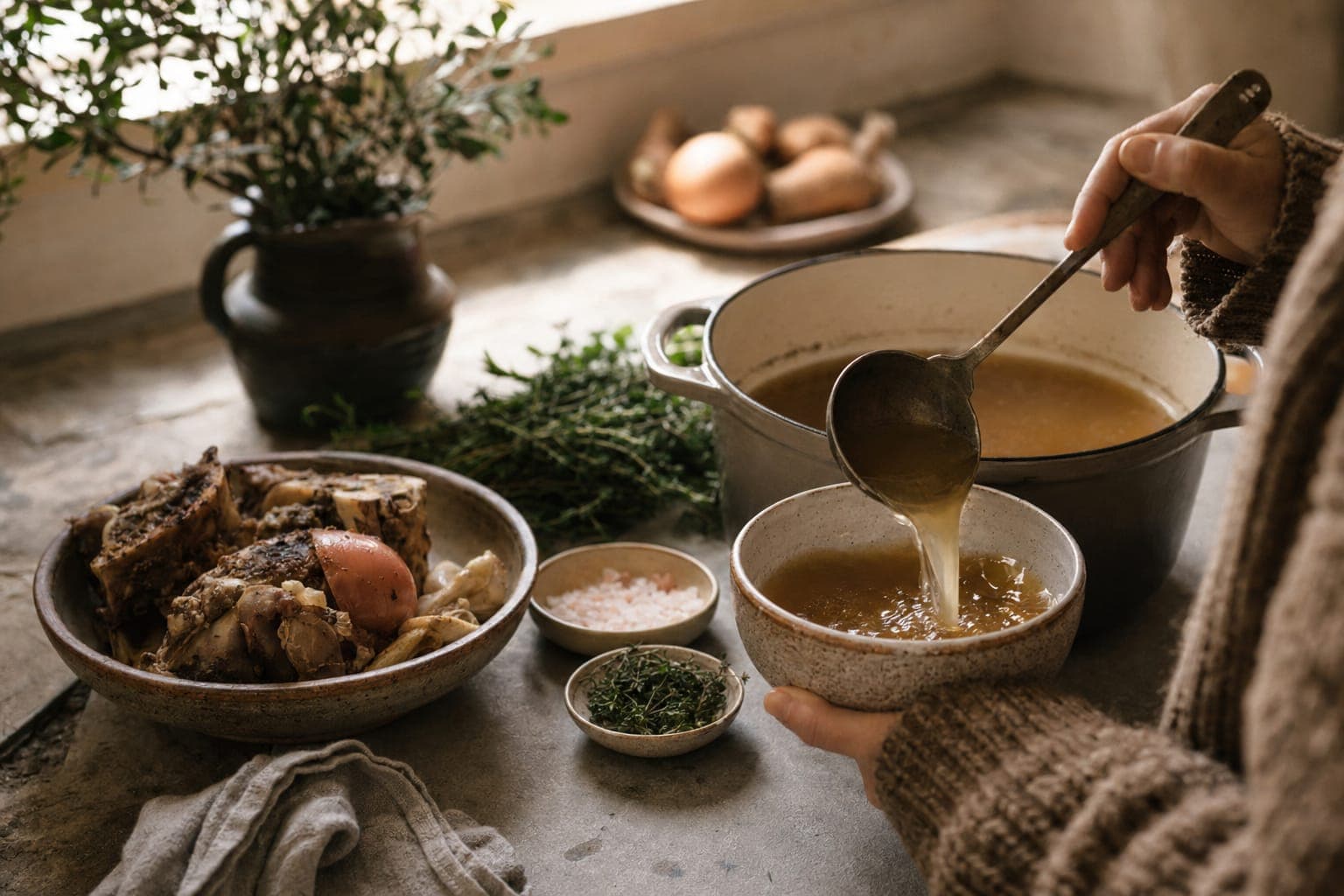
Bone Broth from Scratch: A Step-by-Step Guide
Step-by-step guide to making bone broth at home. Stovetop, slow cooker, and Instant Pot methods. Rich in collagen and gut-healing minerals.
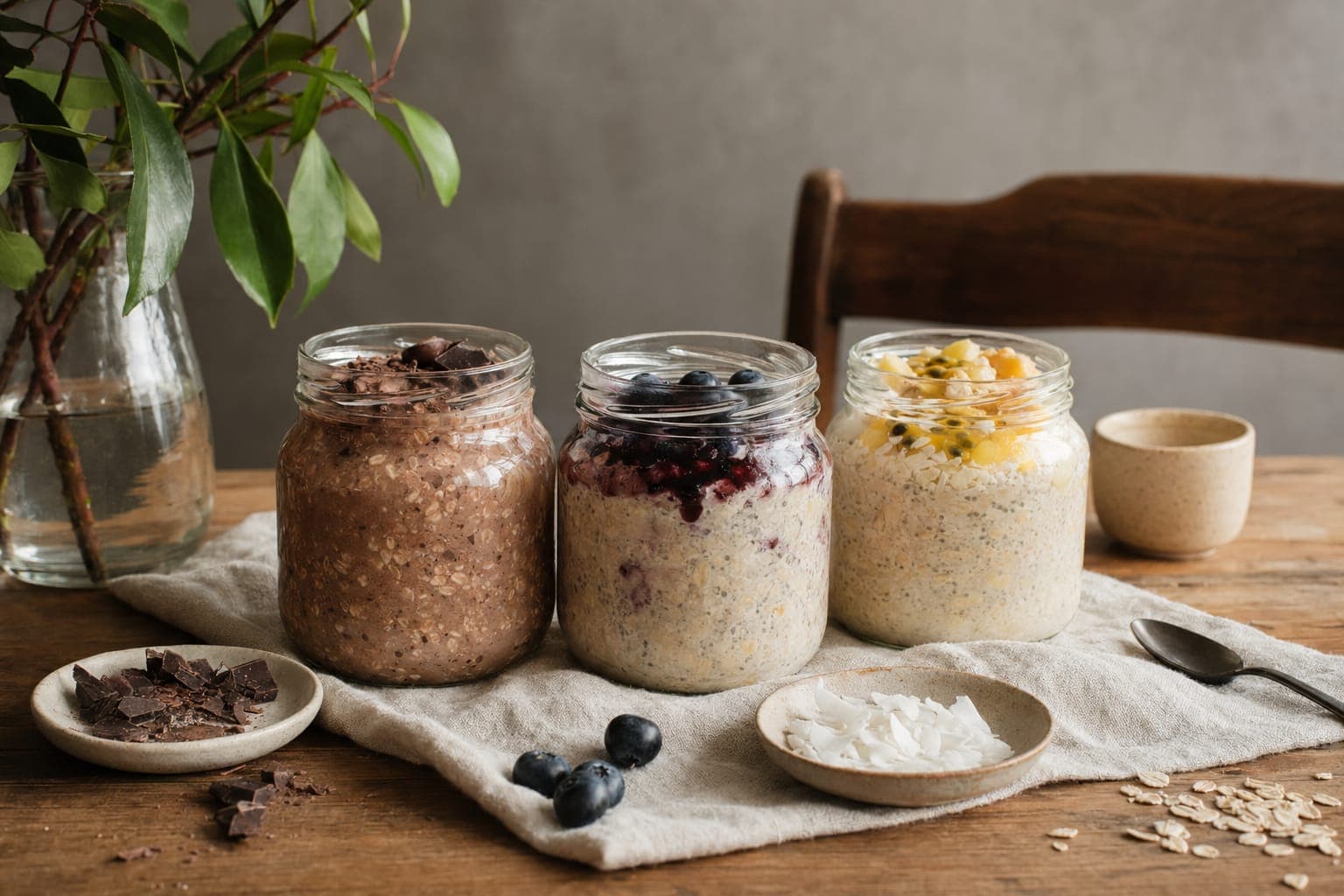
Organised Overnight Oats: 3 Variations
Three delicious overnight oats variations with Organised. Chocolate, berry, tropical flavours. Make them Sunday, eat them all week.


 Join over 100,000+ members
Build a better food system with us
The Organised community is thousands of people choosing real food and backing the farmers who grow it, all of us trying to leave the world a little better than we found it. If that is what you care about too, you belong here.