What Is Third-Party Testing and Why Should You Care?
A supplement bottle says it contains what you're paying for. The farmer claims his milk is clean. The producer insists his powder has no heavy metals. But here's what you need to know: none of those claims mean anything unless an independent lab has verified them.
By Niall Kiddle, Founder, Organised

Reviewed by Pedro Rodrigues, Agronomist (farming and sourcing only) ·
6 min read · Published · Updated · 2 cited sources
Makers of the Organised Daily blend, a grass-fed beef organ supplement from regenerative UK farms

Third-party testing is your only real safeguard. It's also almost entirely absent from the mainstream wellness industry. And that absence is not accidental.

What third-party testing actually is
Third-party testing means an independent laboratory, with no commercial interest in the product, analyzes a sample and reports what it actually contains.1 Not what the manufacturer claims. Not what the marketing material says. What the lab actually finds.
A real third-party test is unbiased. The lab is paid to test, not to deliver a particular result. They have no stake in whether the product passes or fails. If it fails, they report that. If it contains something unlisted, they report that too.
This is straightforward, and it's become standard in legitimate supplement companies, grass-fed beef producers, and quality-conscious food makers. It should be the bare minimum. But it isn't. Most products never see an independent lab.
If a company won't pay for third-party testing, you can assume one of two things: they know it would fail, or they don't care enough about their customers to verify what they're selling.
Why companies want you to believe their own tests
In-house testing is cheap. A company can test its own batches, write up the results it wants, and print them on a label. There's no accountability. The incentive is not to find problems, it's to keep the product selling.
Third-party testing costs money. Real money. A comprehensive analysis of a supplement or food product can run hundreds or thousands of pounds, depending on what you're testing for. That cuts into margin.
So most supplement companies, most food producers, most supplement brands simply don't do it. They rely on brand trust, marketing, and the fact that most customers never ask for proof. They'll cite vague phrases like "laboratory tested" or "quality assured" without specifying who tested it or what the actual results were.
When someone asks for third-party testing data, the response is usually evasion. "We test every batch internally." "Our quality control is rigorous." "We stand behind our product." None of that is evidence. It's just talk.

The three things testing reveals
Third-party labs test for three critical categories: what's listed on the label, what shouldn't be there at all, and whether the product is safe to consume.
First, they verify the claimed contents. Does the supplement actually contain the amount of the nutrient it claims? A cod liver oil that says 1000 IU of vitamin D, does it really? You'd be surprised how often it doesn't. Some products contain 30% less than claimed. Some contain 300% more, which is also a problem.
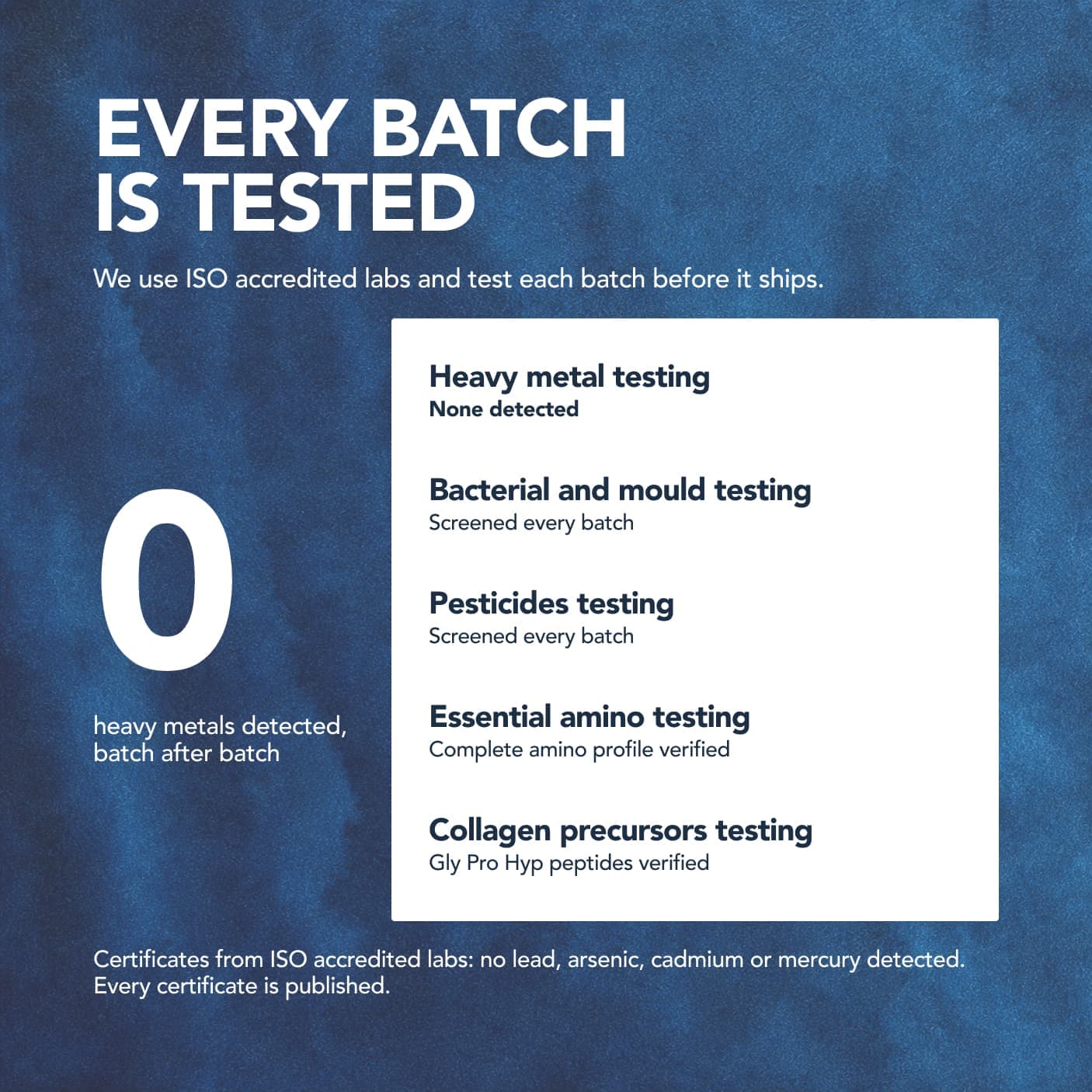
Second, they look for contaminants. Heavy metals, microbial pathogens, pesticide residues, mould toxins. Things that absolutely should not be in what you're eating.
Third, they verify purity and absence of unlisted ingredients. A powder that claims to be pure ashwagandha but actually contains fillers. A supplement that includes an undisclosed allergen. An oil that's been adulterated with a cheaper ingredient.
Heavy metals in supplements and foods
Heavy metals accumulate in the body over time. Cadmium, lead, arsenic, mercury. They damage the brain, the kidneys, the bones. They disrupt the nervous system. A single exposure isn't usually catastrophic. But regular exposure, even in small amounts, quietly poisons you.
Plant-based supplements are particular culprits. Ashwagandha, turmeric, kelp, spirulina. These are bioaccumulators, they pull minerals (including heavy metals) from soil and water. If the soil is contaminated, the plant absorbs the contamination.
An independent lab can tell you exactly how much cadmium or lead is in that turmeric powder. The manufacturer won't test for it because they might not like what they find. But a third-party lab will give you the number. You can then decide if it's acceptable or not.
The same applies to dairy, to bone broth, to any food product. Cows grazing on contaminated pasture absorb heavy metals into their bones and organs. If the dairy producer never tests, you'll never know.
Heavy metals don't have a taste or a smell. You cannot tell by looking at a product whether it's clean. Testing is the only way to know.
Microbial contamination and safety
Raw milk, raw meat, fermented foods, bone broth. These are real foods that can carry pathogens if handled or stored improperly. E. coli, listeria, salmonella. These can make you genuinely ill.
A reputable raw milk producer tests their milk regularly for pathogens. They'll have test results to show you. A bone broth company that cares will test for microbial safety. If they won't show you the results, that's a red flag.
This isn't about fear-mongering. It's about informed choice. If you're buying raw milk or raw meat or fermented foods, the producer should be transparent about safety. Testing proves they're serious about it.
Get farming and sourcing guides, free
Two short reads a week on regenerative farming and where real food comes from.
By signing up you agree to receive emails from us. No spam, unsubscribe anytime.
Glyphosate and pesticide residue
Glyphosate is sprayed on most conventional grains, legumes, and seeds. It ends up in cereal, flour, supplements made from conventional plants. An independent lab can measure how much glyphosate residue is present.
Most supplement companies do not test for glyphosate. They do not want to know. Because if they tested and found it, they'd have to disclose it or switch suppliers, both expensive options.
But an independent lab will test if you ask. They'll tell you whether that supplement contains detectable glyphosate. If you're buying organic, the test should show zero or negligible amounts. If you're buying conventional, at least you'll know what you're getting.

1 of 9
Daily blend
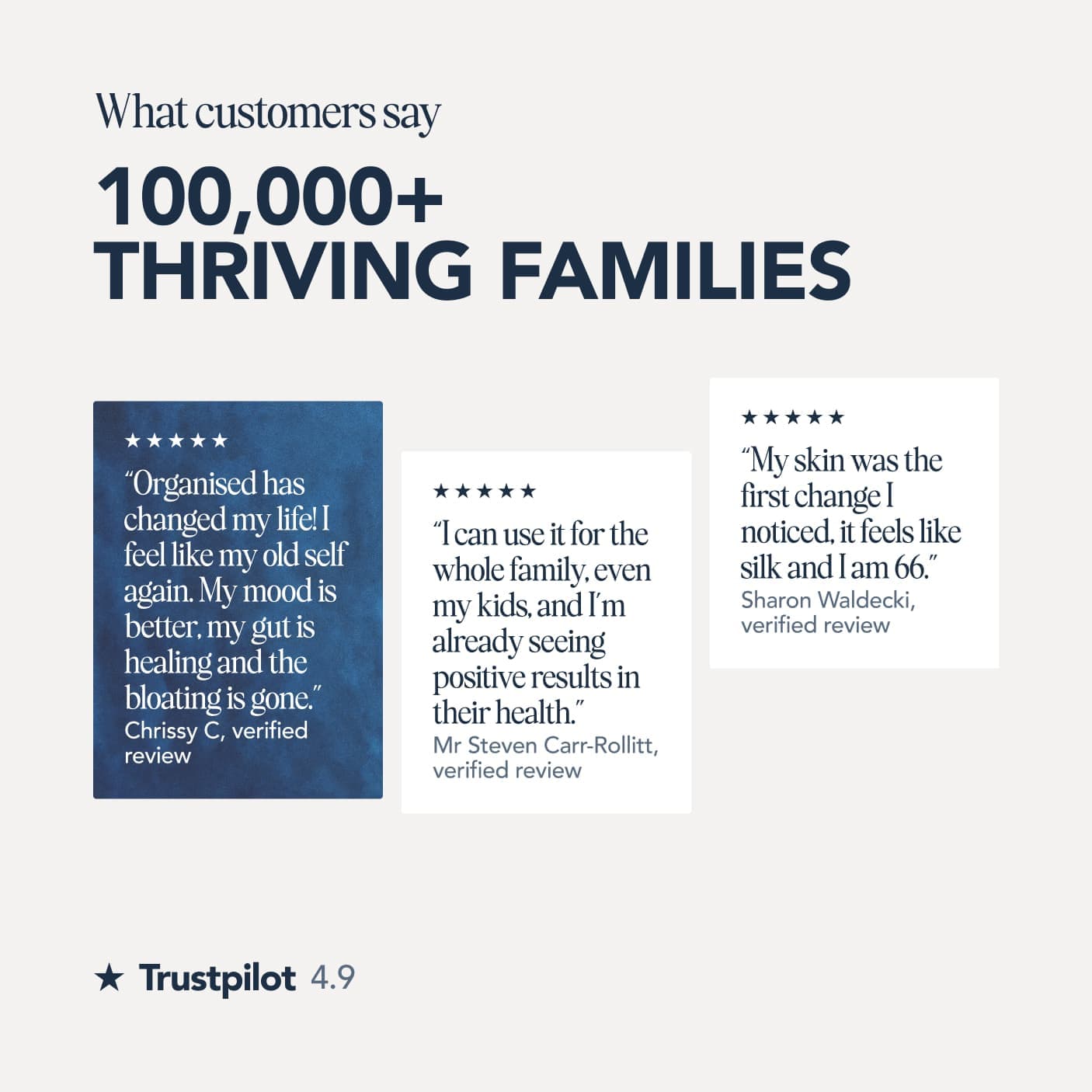
100,000+ thriving families4.9 on Trustpilot
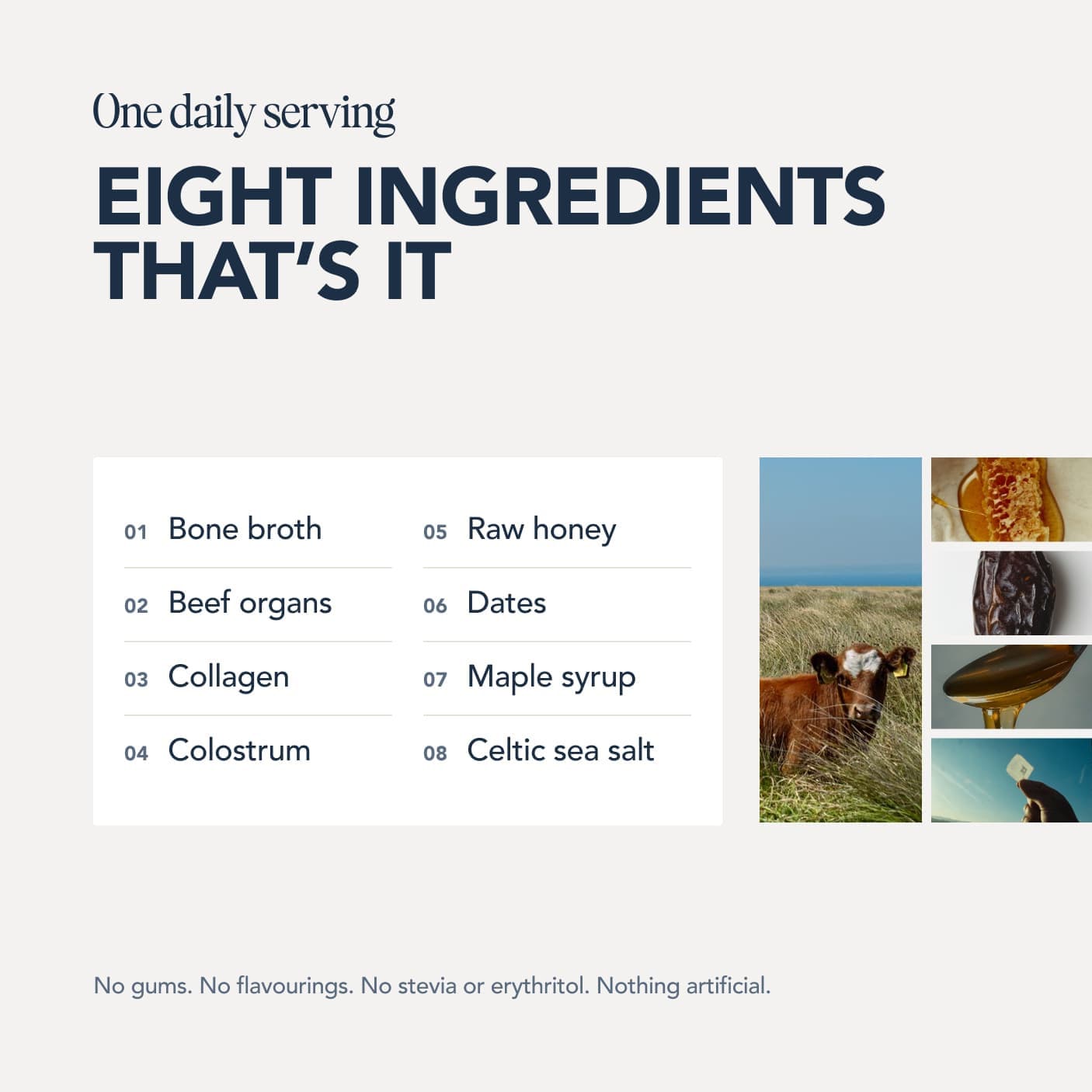
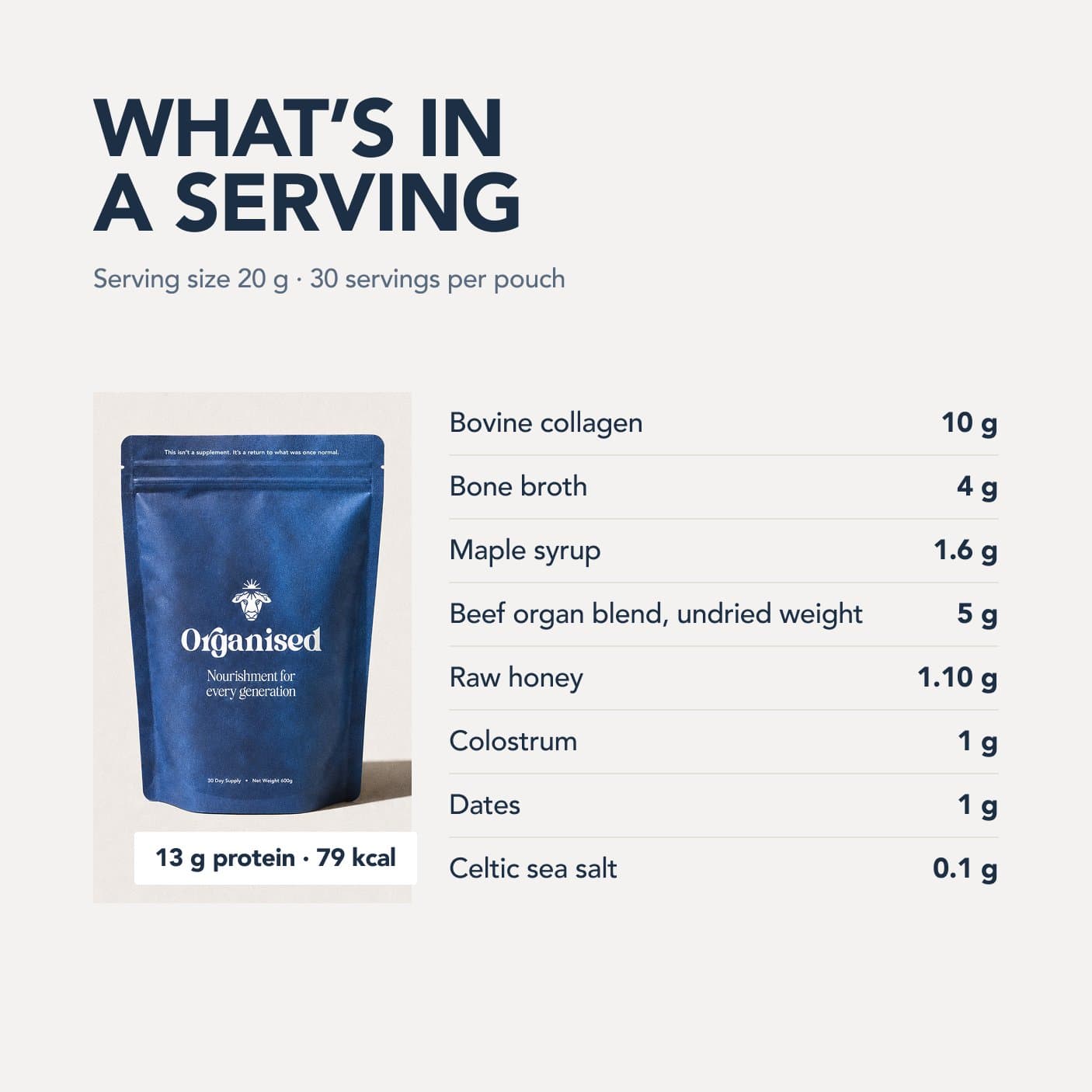
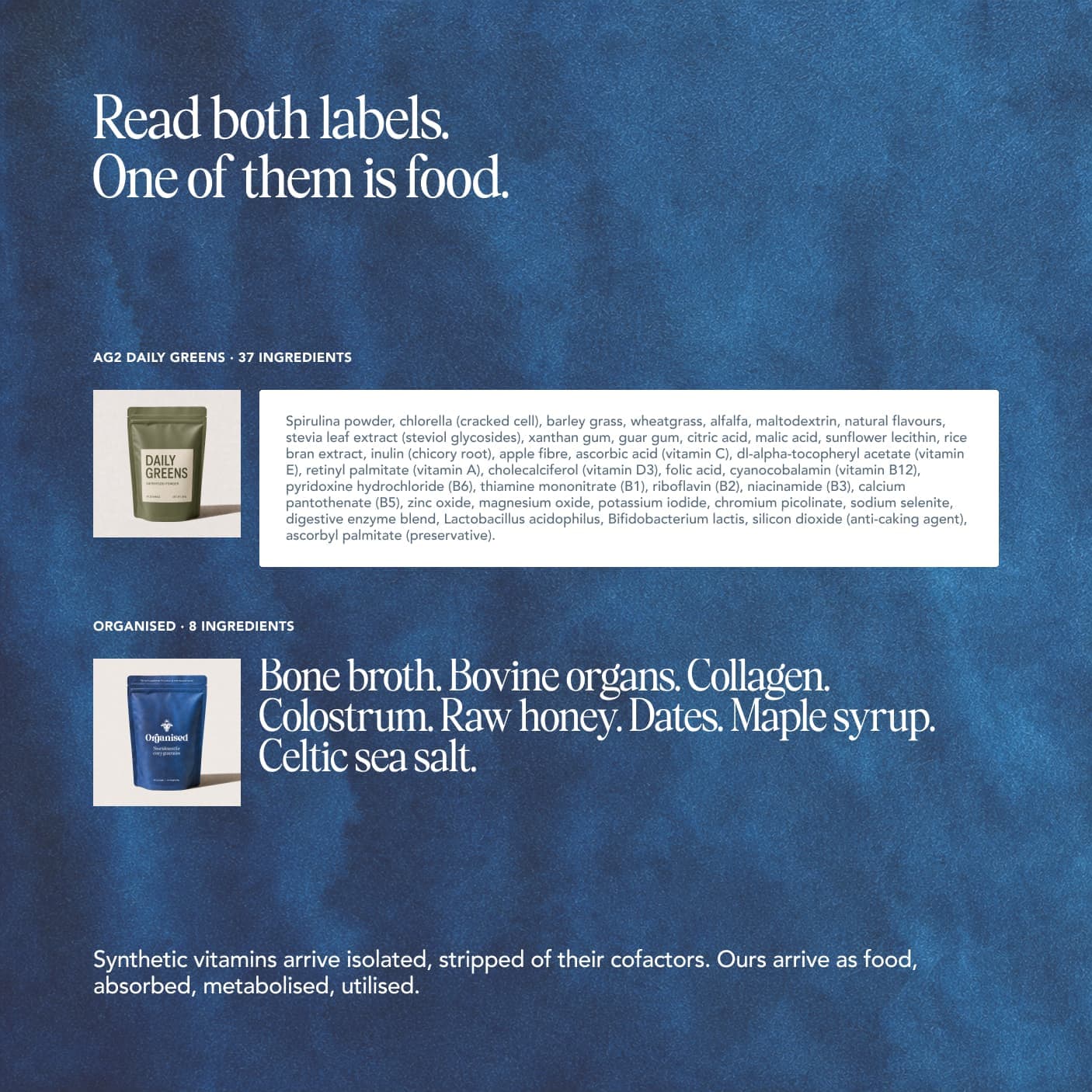
Eight real ingredients built around grass-fed beef organs, collagen and colostrum. Nothing synthetic added.
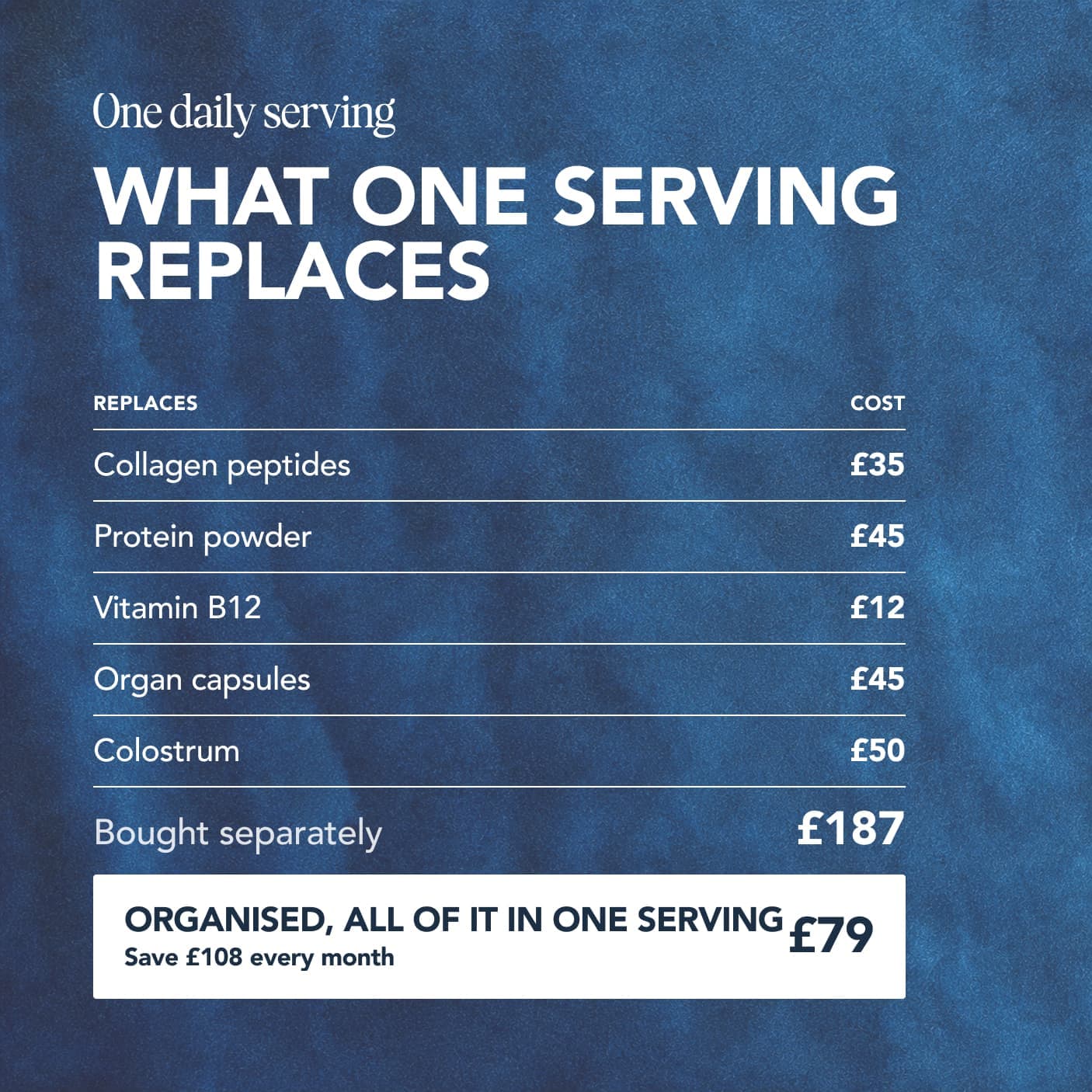
Free with your first order, worth £38. Plus £10 off the pouch with a subscription.
Free UK shipping · Made in England · 100 day money back guarantee on your first pouch · Skip, pause or cancel anytime
How to read a Certificate of Analysis
A Certificate of Analysis, or COA, is the document a third-party lab produces. It lists exactly what was tested, which lab did the testing, the date of testing, the results, and the lab's accreditation status.
A real COA includes the lab name and contact information. It includes the batch number or lot number of the product tested, so you know that specific batch was actually tested. It includes the testing method (HPLC, ICP-MS, etc.), which tells you the test was rigorous.
Most importantly, a COA specifies what contaminants were tested for and what the limits are. If it says "lead: <5 ppb (parts per billion)", that tells you the lead content is below the limit. If it says "lead: 12 ppb", that's above acceptable thresholds for regular consumption.
When you're considering a supplement or a food product, ask for the COA. If the company won't provide it, walk away. If they do, actually read it. Don't just assume it's clean because a piece of paper was shared.
Testing costs and why it matters anyway
Comprehensive third-party testing is expensive. A full COA for a supplement can cost 500 to 1500 pounds per batch. For a company making margin on a product, this is a real cost. It's tempting to skip it or do only partial testing on a few batches per year.
But here's the thing: if you're paying 30, 40, 50 pounds for a supplement, the company has room in their margin to test it properly. If they're not testing, they're either cutting corners on quality or prioritising profit over your safety. Either way, it's a red flag.
The best companies don't hide the testing cost. They view it as part of doing business responsibly. They test every batch. They maintain databases of COAs.2 They encourage customers to ask for the data. This is the behaviour worth rewarding with your money.
The bottom line
Third-party testing is the only way to verify what you're actually putting into your body. It costs companies money, so they avoid it. But for you, it's the difference between guessing and knowing.
When you're buying supplements, ask for the COA. When you're buying from a grass-fed producer, ask if they test their meat and milk. When you're buying a specialty powder or oil, request the testing data. A company that cares will have it. A company that won't provide it is making a choice not to know what they're selling.
References
Every source below was checked on 27 August 2026. Each link was requested and read. Where a citation and its identifier disagreed, the citation was corrected to the record or the reference was deleted along with the sentence marker that pointed at it, and where the resolved paper turned out not to support the sentence, the sentence was cut back to what it does support. Borrowed authority is worse than none, because it looks like rigour.
- U.S. Pharmacopeia. USP Verified Mark and supplement testing program. usp.org/verification-services.
- NSF International. Independent testing and certification. nsf.org.
Who wrote and reviewed this guide
Niall Kiddle
Author · Founder, Organised
Niall is the founder of Organised. He started the company in 2024 after fixing his own health the slow way: in 2022 he swapped a cupboard of synthetic supplements for real food, raw milk, organ meats, bone broth and honey, and felt the difference within months.
Areas of expertise: Ancestral nutrition, Organ meats, Whole-food supplementation, Gut health, Regenerative sourcing
Read Niall's full profile
Pedro Rodrigues
Reviewer · Agronomist (farming and sourcing only)
Pedro is the agronomist Organised works with on farming and sourcing. His job on the guides is to keep the science honest: he reviews what we publish about soil health, regenerative agriculture, grazing and the way food is actually produced.
Areas of expertise: Regenerative agriculture, Agronomy, Soil health, Grass-fed farming, Food sourcing
Reviewed this guide on
Read Pedro's full profileMore on farming & transparency
View all- Biodynamic Farming: What It Means and Why It Matters
- British Beef: Why Quality Matters More Than Origin Alone
- Free Range, Organic, Pasture-Raised: A Quick Reference Guide
- How Stress in Cattle Affects the Quality of Their Organs
- What Is Mob Grazing and How Does It Help the Soil?
- Why Biodiversity on Farms Matters for Your Food
- Why Ingredient Traceability Matters More Than Marketing Claims
Browse the guides library
All guidesKeep reading

Farming
Why Ingredient Traceability Matters More Than Marketing Claims
Natural claims mean nothing. Real traceability, batch numbers, and testing data prove what's in the product. Here's how to verify.

Farming
Biodynamic Farming: What It Means and Why It Matters
Biodynamic farming goes beyond organic. Learn what Demeter certification means and why closed-loop regenerative systems matter for food quality.

Farming
How We Test Every Batch: Our Quality Assurance Process
Our batch testing process explained. Heavy metals, mould, pesticides and mycotoxins, tested every batch, with the results published.
Real food, made effortless
Shop the blendA few ways to use it
All recipes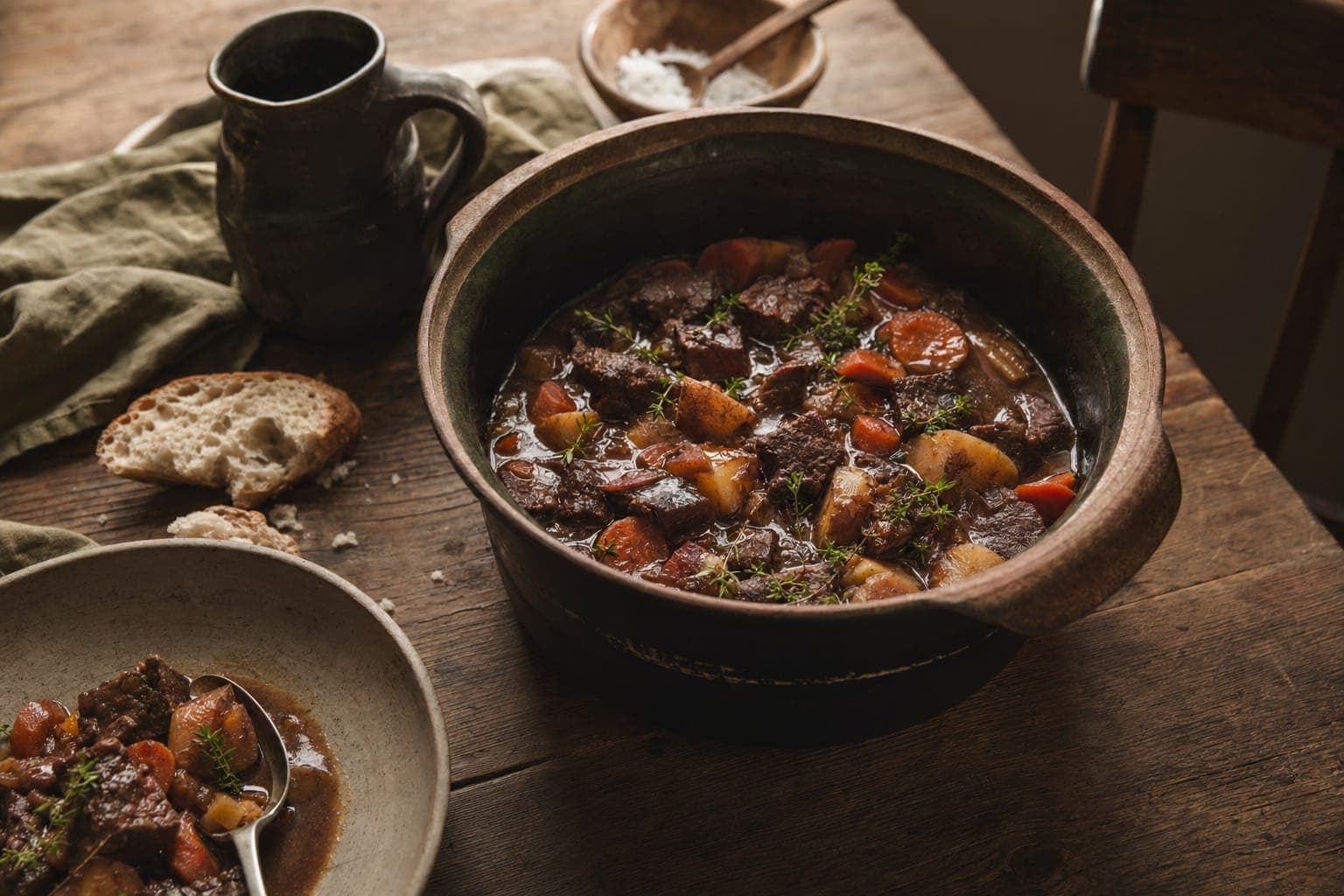
Collagen-Rich Beef Stew: Slow-Cooked Nourishment
Beef stew that delivers collagen from connective tissue and bone broth. Winter comfort food that actually nourishes. Simple slow cooker recipe.
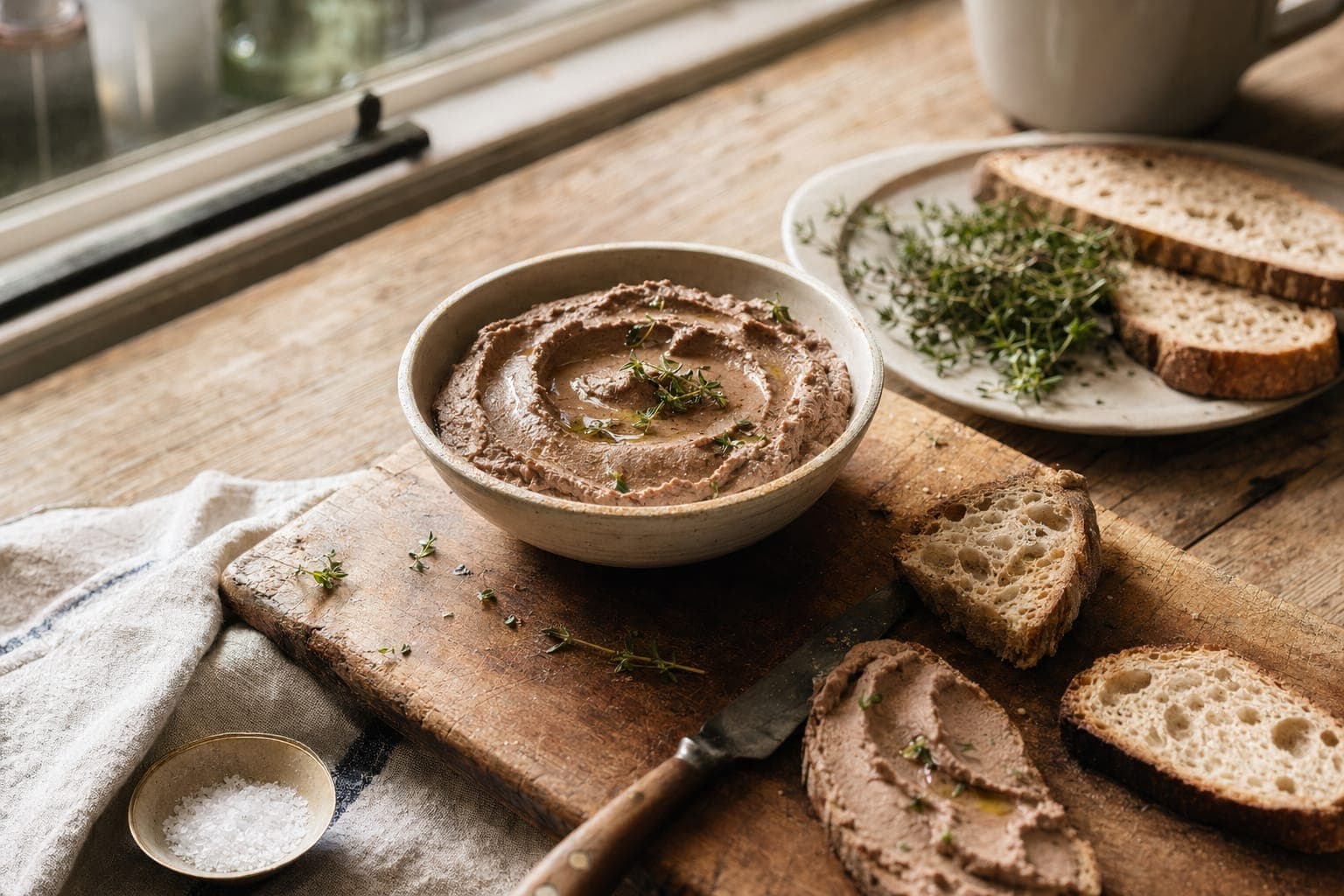
Liver Pate for Beginners: A Gentle Introduction to Organ Meats
Simple liver pate recipe to start eating organ meats. Chicken liver, butter, and herbs. Gentle introduction to nutrient-dense whole foods.
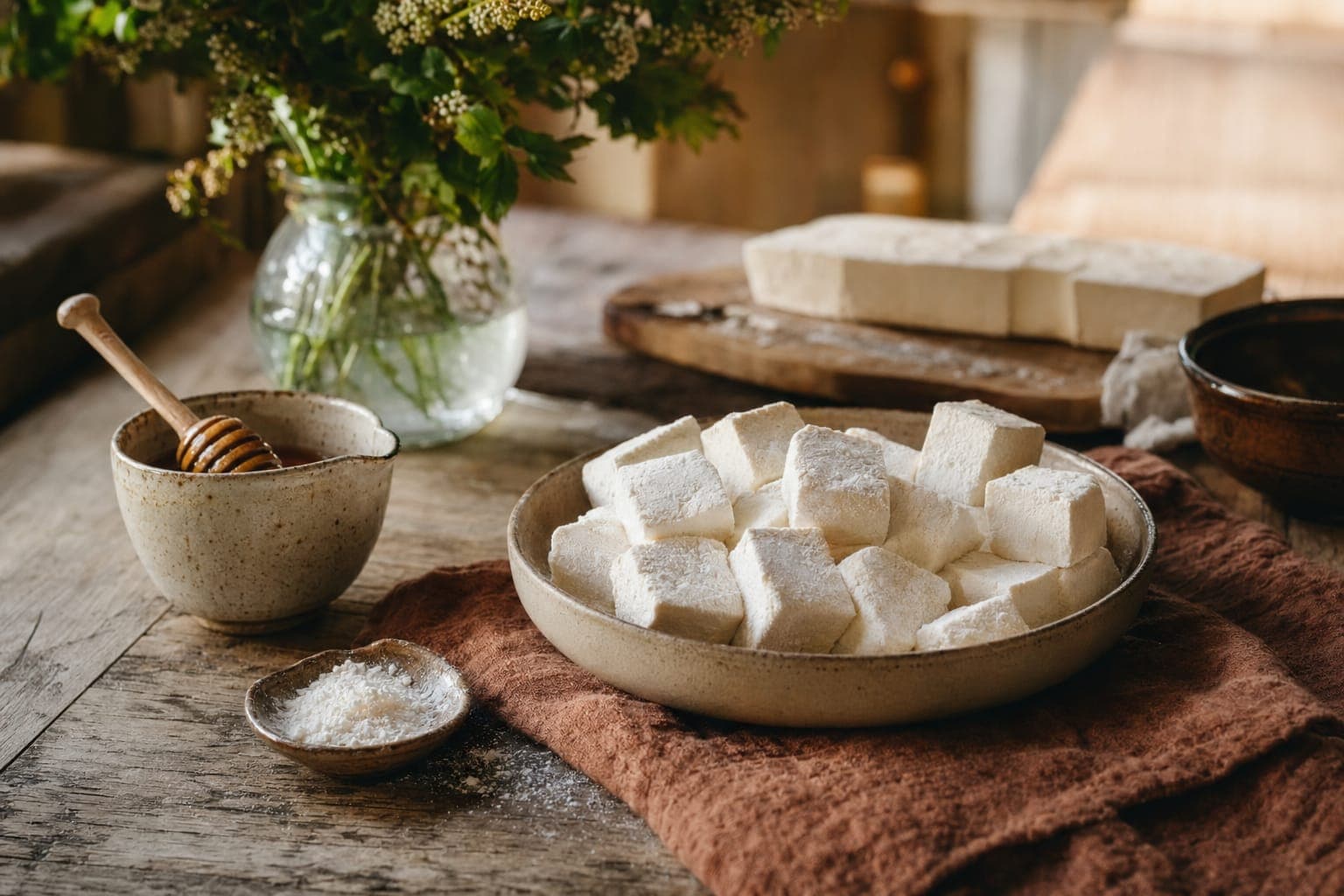
Gut-Healing Marshmallows with Collagen and Raw Honey
Learn to make gut-healing marshmallows with collagen and raw honey. A shareable treat that sneaks nutrition into every bite. Easy recipe with video tips.


 Join over 100,000+ members
Build a better food system with us
The Organised community is thousands of people choosing real food and backing the farmers who grow it, all of us trying to leave the world a little better than we found it. If that is what you care about too, you belong here.