What 'Grass-Fed' Actually Means (And What It Doesn't)
You see 'grass-fed' on the label and feel good about your choice. But grass-fed doesn't mean what you think. The animal might have eaten grass for eighteen months and grain for the last four. The label doesn't lie. It's just incomplete.
By Niall Kiddle, Founder, Organised

Reviewed by Pedro Rodrigues, Agronomist (farming and sourcing only) ·
6 min read · Published · Updated · 3 cited sources
Makers of the Organised Daily blend, a grass-fed beef organ supplement from regenerative UK farms
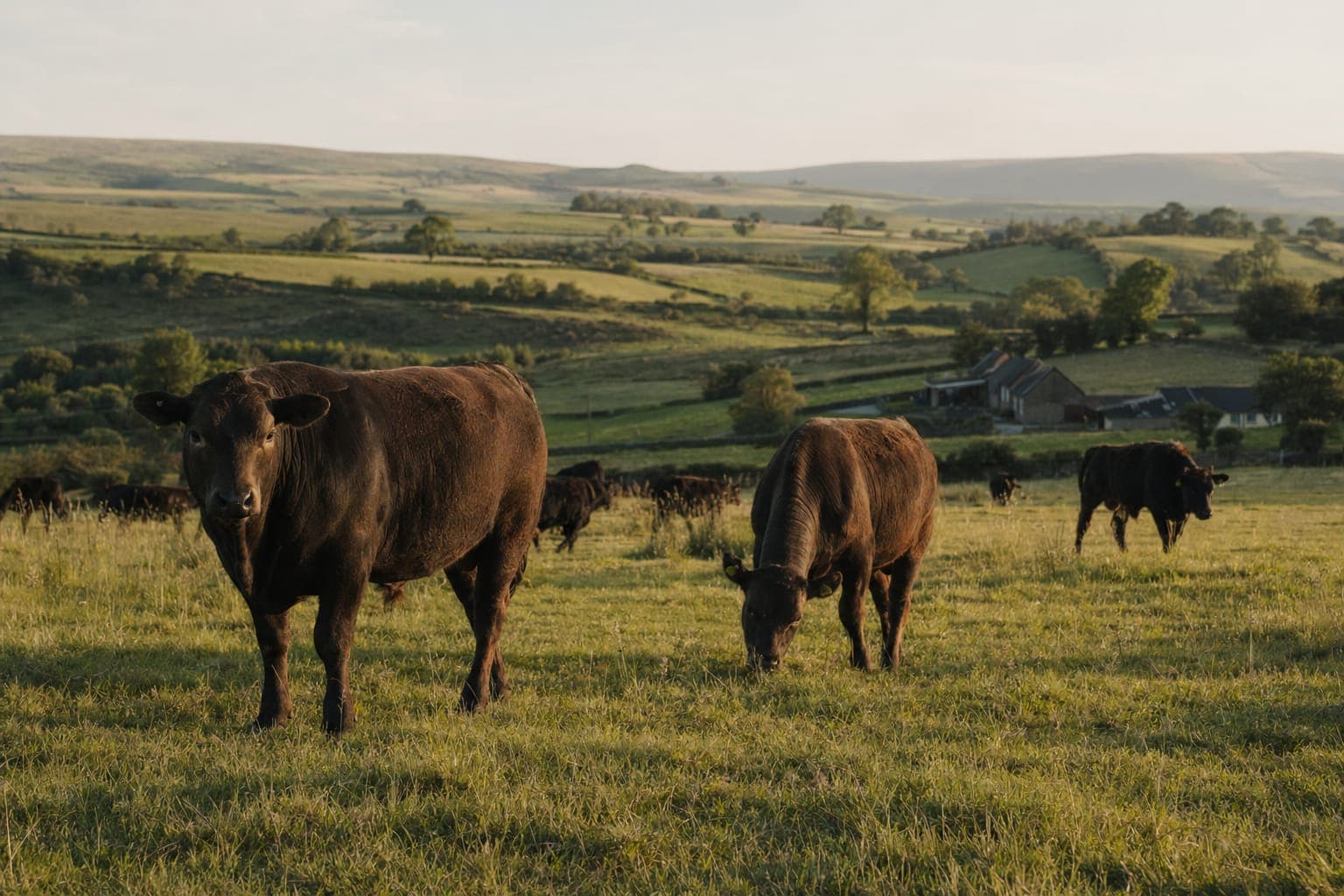
Understanding what the label actually says (and what it doesn't) is the first step toward buying beef that matches your values.
Why the label exists
The label exists because conventional beef (grain-fed from birth to slaughter) became so dominant that grass-fed needed to distinguish itself. Originally, all cattle were grass-fed. The label was a way to signal "we're not doing the industrial thing."
But because the label was successful at commanding a price premium, the definition became politically negotiated rather than biologically pure. The result: a label that means less than most consumers assume.
What grass-fed legally means
The USDA grass-fed marketing claim has had a complex regulatory history; verification programmes such as USDA Process Verified and the American Grassfed Association set stricter, auditable definitions.1 But it allows grain supplementation at any time and doesn't prohibit grain finishing.
In the UK and EU, the label is less standardised. Different retailers use different definitions. Sainsbury's grass-fed beef means one thing, Tesco grass-fed means another. There's no single legal definition the way there is for organic.
The common interpretation: the animal spent most of its life eating grass but may have been grain-finished in the last 3-6 months before slaughter.
That finishing phase matters enormously for the nutritional profile. An animal's fat composition and nutrient density depend on what it's eaten recently, especially the final months.
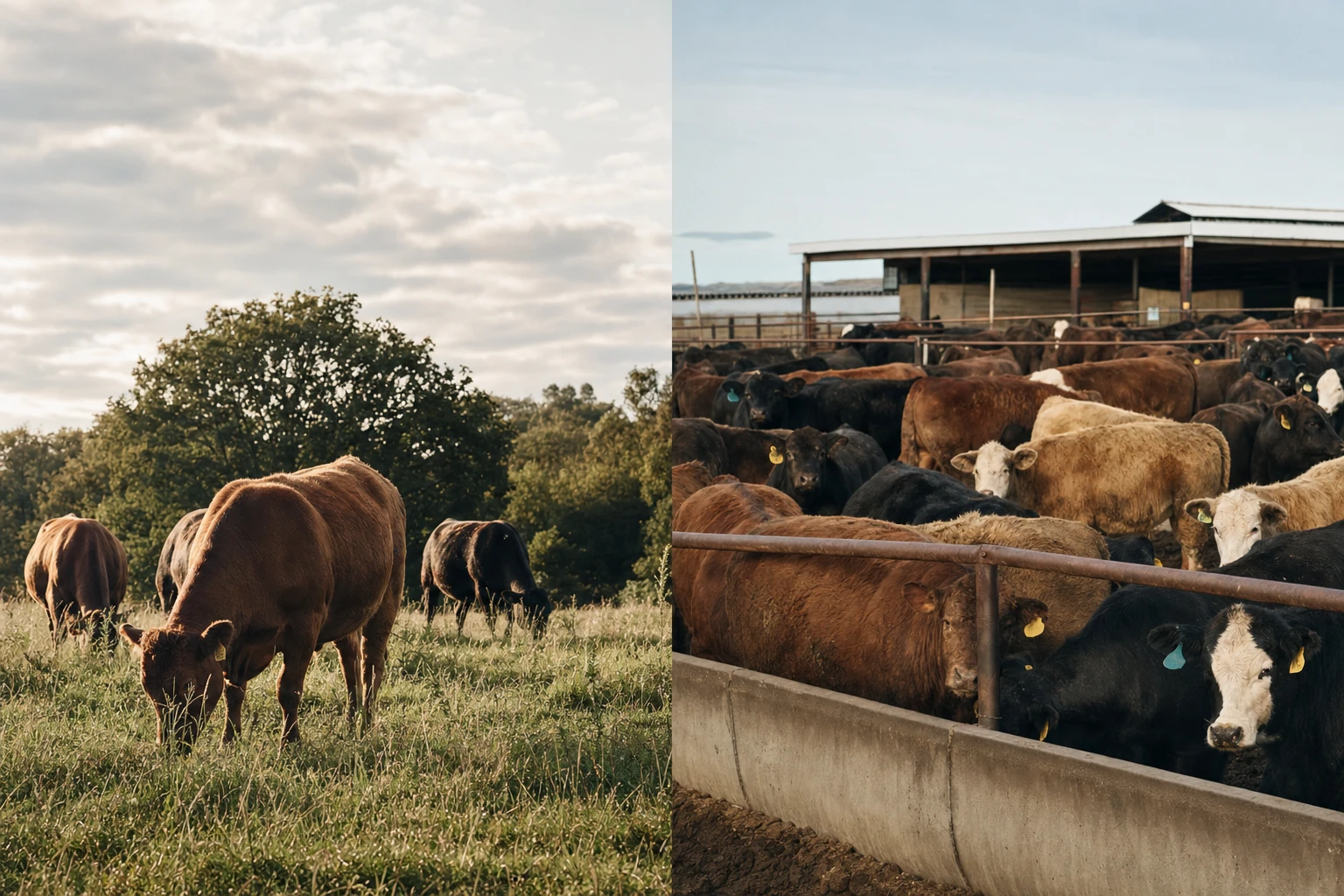
Grass-fed often means the animal was grass-fed for most of its life, then grain-finished in the feedlot at the end. The label is technically true but nutritionally misleading.
The grain-finishing loophole
Most grass-fed beef sold in supermarkets is part-grass, part-grain. The animal grazes for 18-24 months (cheaper than year-round feeding), then moves to a feedlot for 4-6 months of grain finishing to accelerate weight gain and fat marbling before slaughter.
This accelerates production (faster turnover, higher weight, more marketable fat), reduces overall cost, and still allows the 'grass-fed' label. It's brilliant branding and legally permissible.
The problem: during those final months in the feedlot, the animal's fat composition shifts. Grass-finished beef has consistently been shown to contain higher omega-3 fatty acid and conjugated linoleic acid (CLA) concentrations than grain-finished beef.2 The nutrient density of the finished product is closer to conventional grain-fed than to truly grass-finished beef.
You're buying a label that suggests health but getting beef that's nutritionally a compromise.
Is it still better than pure grain-fed? Yes. The months of grazing still improve the product. But it's not the full benefit of grass-finished beef.
US standards vs UK standards
The United States has USDA grass-fed certification. It's not rigorous (grain finishing is allowed), but it's defined, auditable, and consistent. If you see USDA grass-fed in America, you know what you're getting: grass-fed for most of life, possibly grain-finished at the end.
The UK has no single standard. What's labelled grass-fed at Sainsbury's may mean pasture access and grass diet, but details vary. Red Tractor certification (UK farm standard) requires some pasture access but allows grain supplementation. Tesco's Finest grass-fed is grass-fed to USDA standards. Waitrose uses a patchwork of suppliers with varying definitions.
The result: you can't trust the label alone in the UK. You have to ask the butcher or supplier directly.
Pasture for Life and stronger certification
Pasture for Life (UK) certifies cattle that are fed only grass and forage throughout their lives, with no grain at any point.3 No grain, ever. No grain finishing. The animal is pasture-fed from birth to slaughter.
This is true grass-fed. The beef carries the full CLA benefit, better omega-3 profile, higher K2. It costs more (usually 30-40% premium over supermarket grass-fed) but delivers the nutritional profile you thought 'grass-fed' meant.
In the US, similar certification exists under schemes like Grass-Fed Producer Verified (a layer of verification above USDA grass-fed) or American Grassfed Association, which prohibits grain finishing.
Both Pasture for Life and American Grassfed require actual grazing and forage-only diets. If you're paying for grass-fed beef, these standards are worth the premium.
Reading between the label
Here's what labels typically don't say: finishing method. A beef package will say "grass-fed" but won't say "grain-finished in the final four months." It's not lying; it's just selective truth.
Labels also don't specify stocking density or grazing management. A "grass-fed" animal might be on overgrazed, degraded pasture in a high-density herd, or on well-managed regenerative land. Both are technically grass-fed.
Labels don't specify breed or genetics, which affect flavour and nutritional profile. A grass-fed Hereford has different nutrient density than a grass-fed Holstein.
Labels don't specify how much time on pasture: the minimum might be 120 days per year (enough to tick the "grass-fed" box) or 365 days. The difference is enormous.
The label is a legal minimum, not a nutrition guarantee.
Get farming and sourcing guides, free
Two short reads a week on regenerative farming and where real food comes from.
By signing up you agree to receive emails from us. No spam, unsubscribe anytime.
How to know what you're buying
Ask the butcher or supplier directly. Three questions:
1. Was the animal grain-finished, and if so, for how long? Anything longer than four weeks is worth noting. Six months of grain finishing significantly reduces the grass-fed benefit.
2. Where did it graze? A specific farm or region you can verify? A farm you can visit or get details about? If the supplier can't answer, you're buying a commodity, not a relationship.
3. What standard is it certified to? If it's Pasture for Life, no-grain finishing, grass-only diet, you know it delivers what you think you're buying. If it's just "grass-fed" with no further qualification, dig deeper.
For supermarket beef: assume it's part-grass, part-grain unless otherwise specified. It's still better than pure grain-fed, but it's not the full grass-fed nutritional advantage. If possible, buy from a butcher or farmers market where you can ask these questions.
The best 'grass-fed' label is one that comes with a name, a farm, and a relationship. The worst is one that's just marketing.
1 of 9
Daily blend
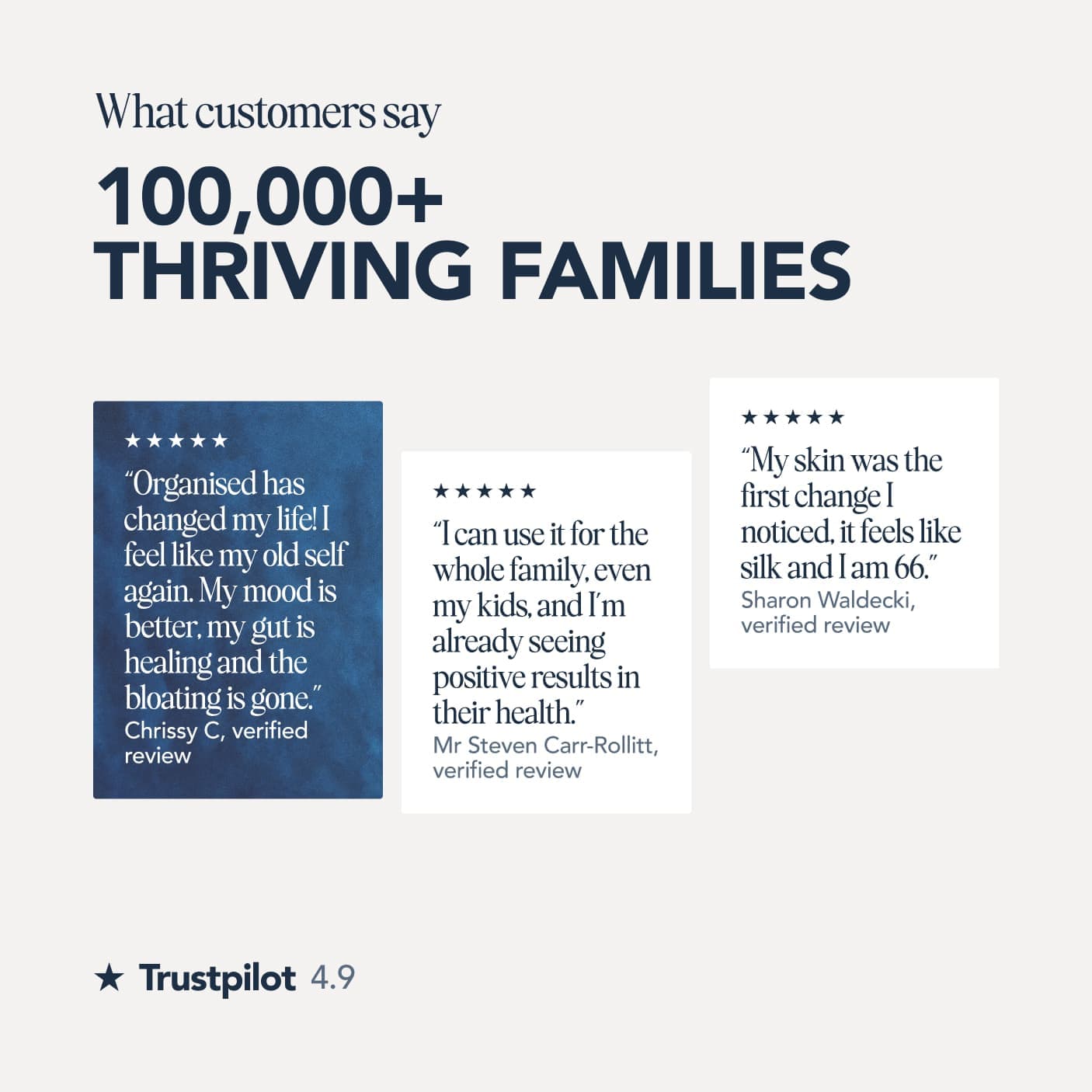
100,000+ thriving families4.9 on Trustpilot
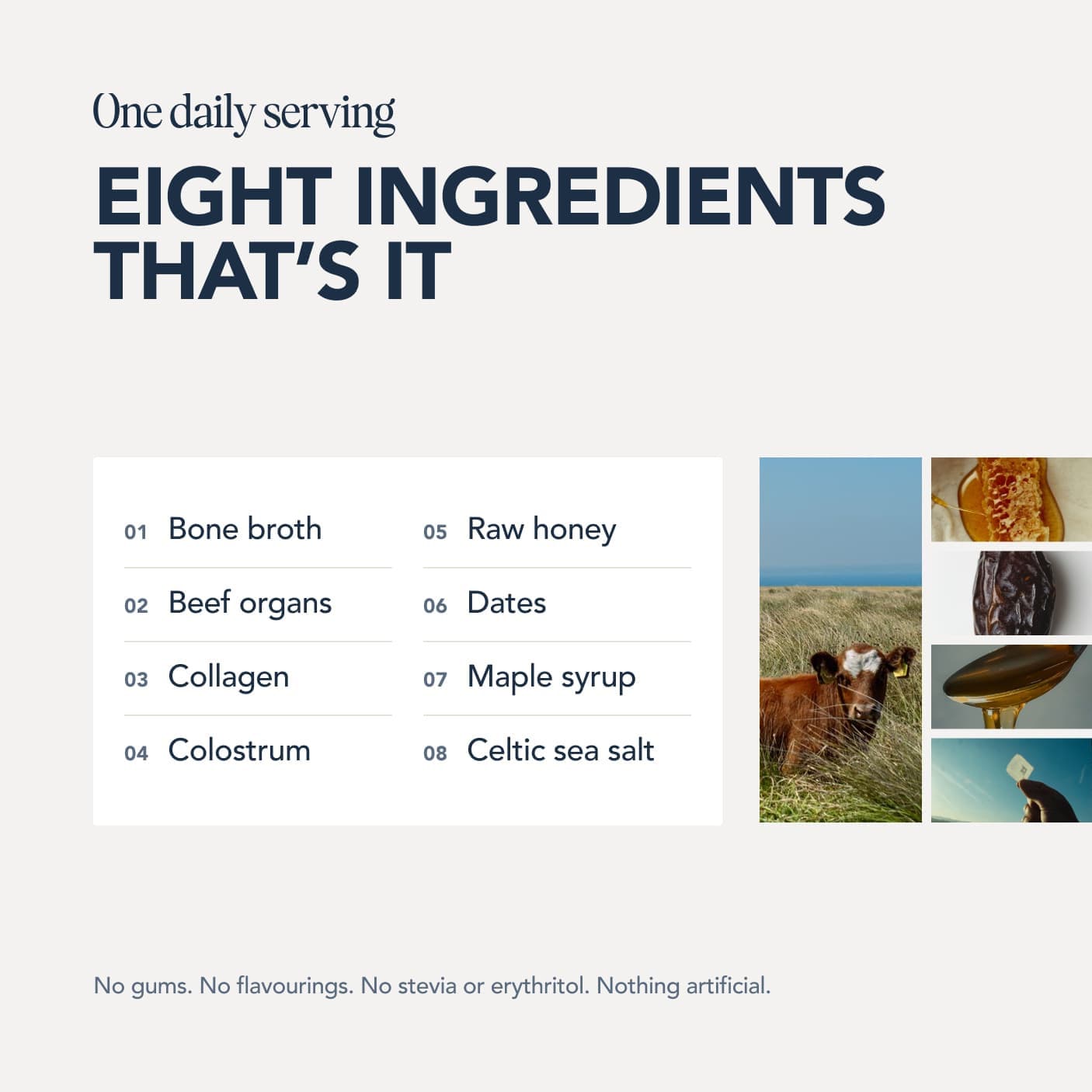
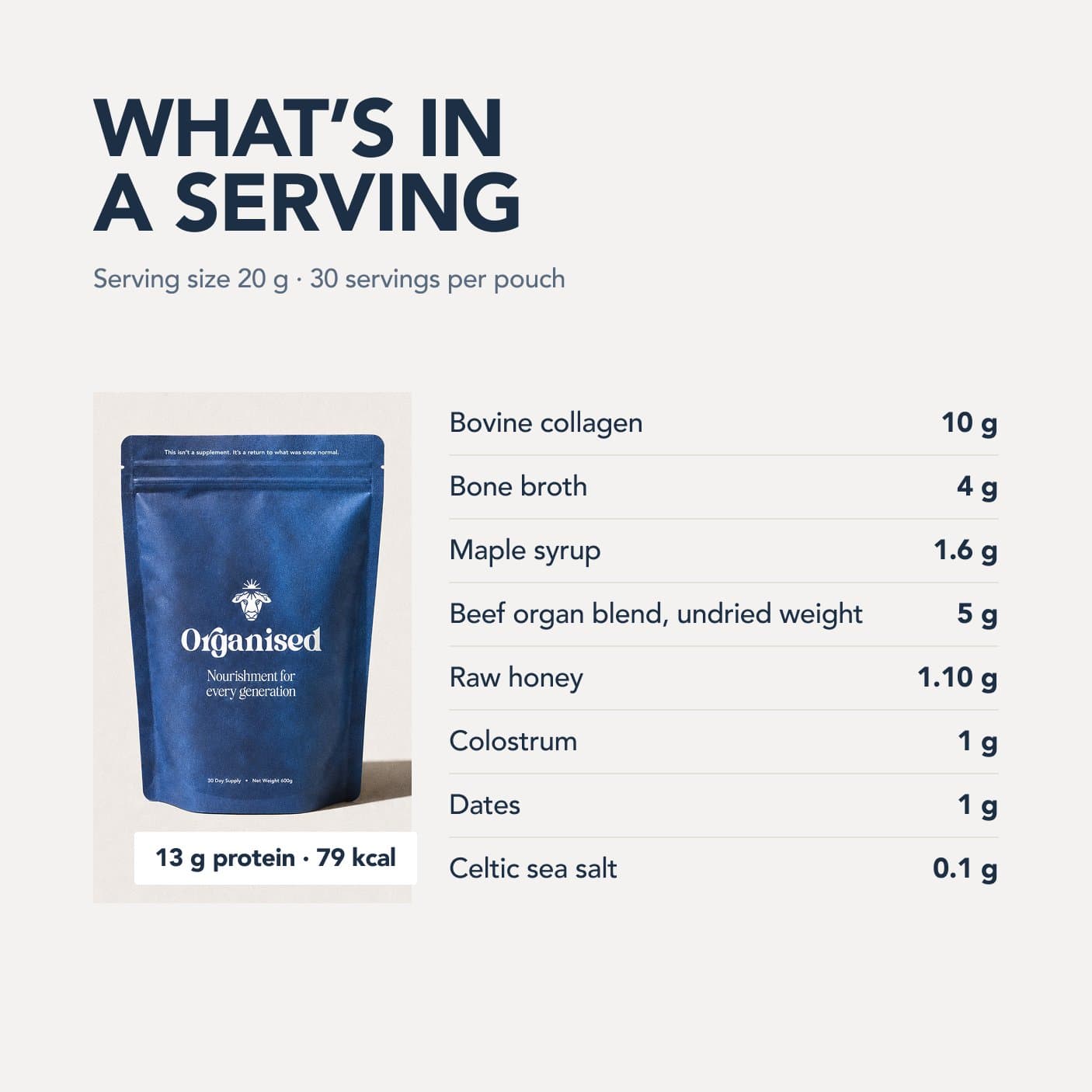
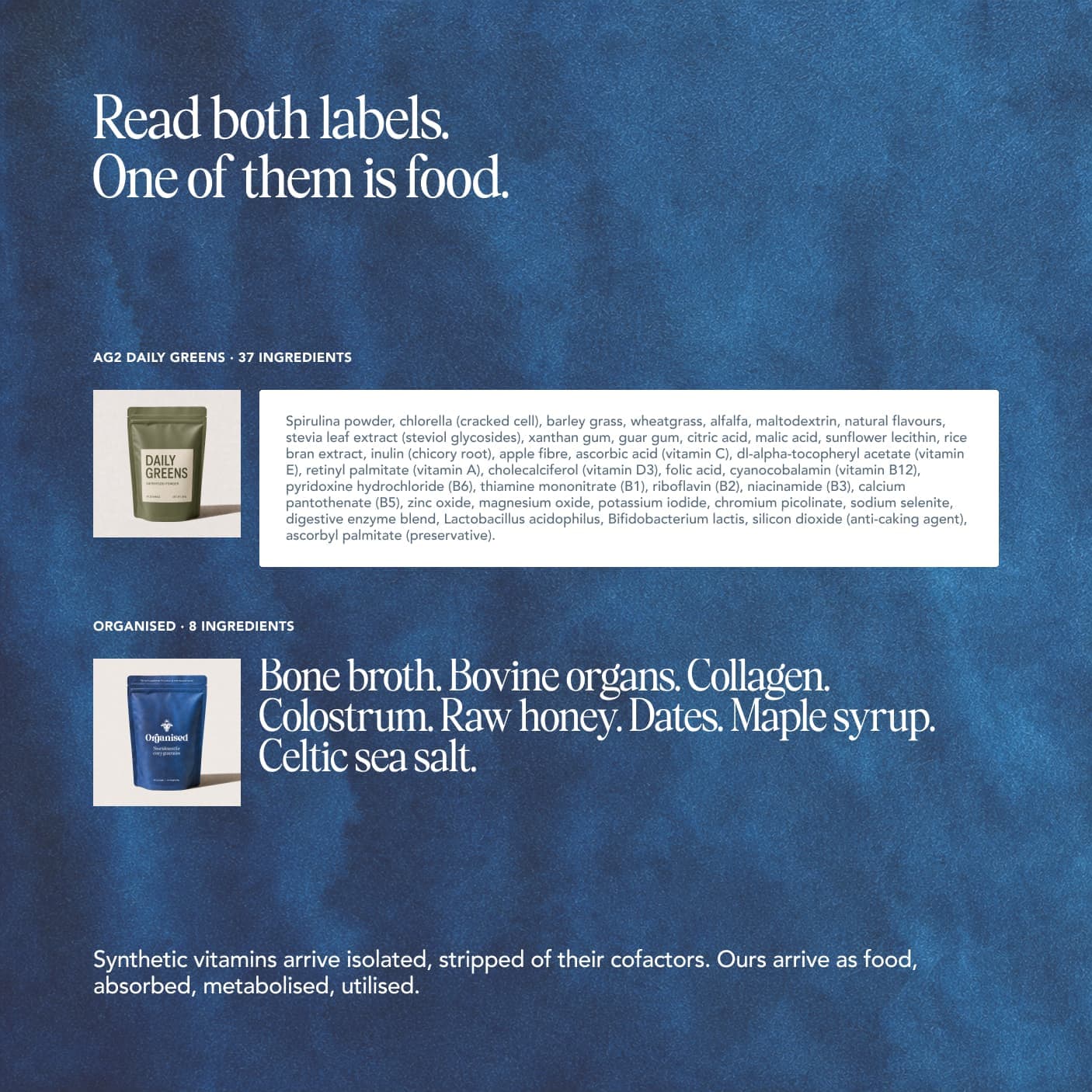
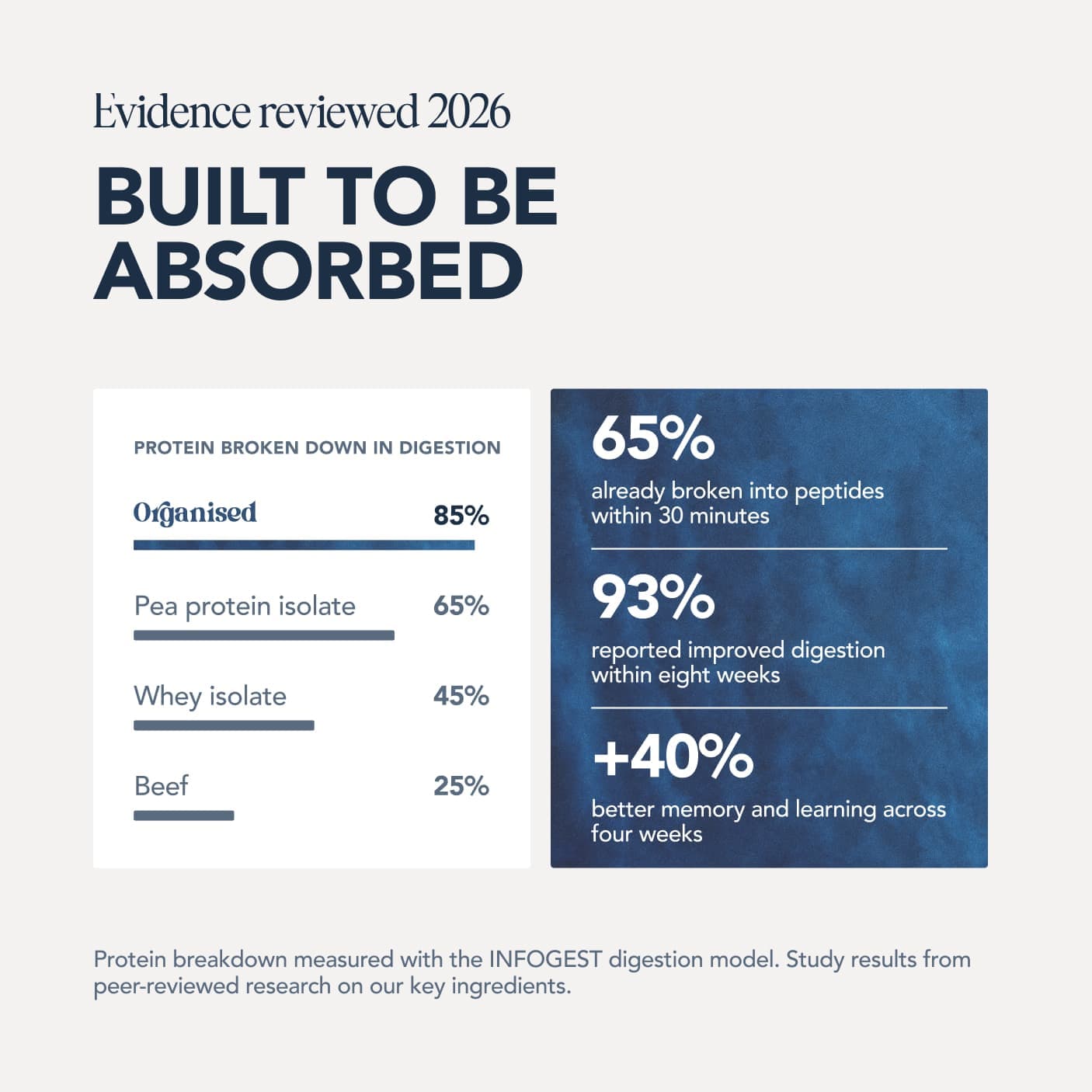
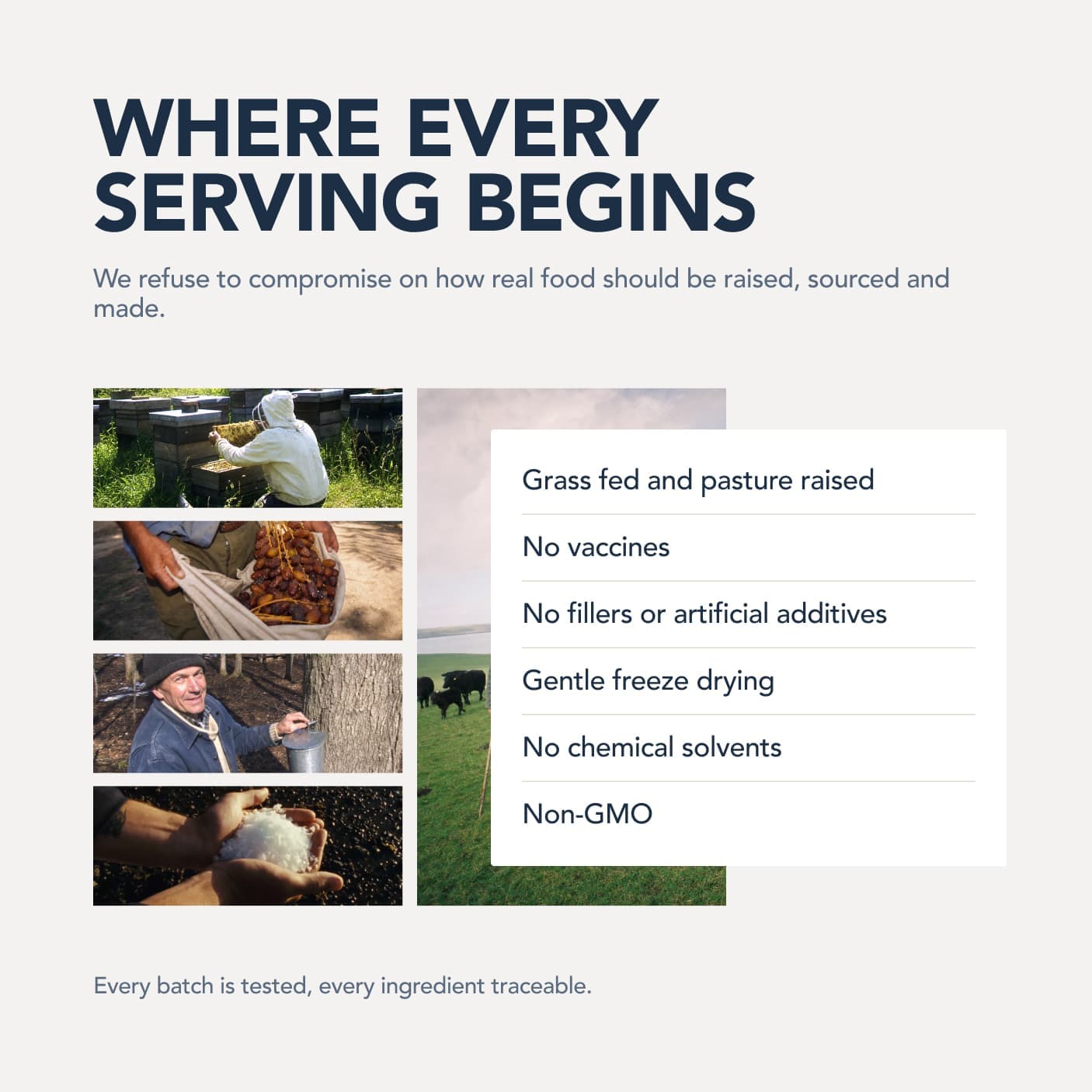
Eight real ingredients built around grass-fed beef organs, collagen and colostrum. Nothing synthetic added.
Free with your first order, worth £38. Plus £10 off the pouch with a subscription.

Free UK shipping · Made in England · 100 day money back guarantee on your first pouch · Skip, pause or cancel anytime
Why sourcing directly from the farm matters
The most reliable way to know what you're buying is to source directly from a farm or a supplier who knows the farm personally. In the UK, many regenerative farmers operate direct-to-consumer models: they sell shares (a box of meat every month) or partner with local butchers who can tell you exactly where the animal came from.
When you buy this way, you get answers to the questions that labels don't ask. Was this animal grain-finished? For how long? What breed? What's the grazing management on this farm? Are they practising rotational grazing? What's the stocking density? All of these details are available when you're buying direct.
You also support a different economic model. The farmer gets more of your money. The middleman markup is removed. You pay more than supermarket grass-fed, but less than you'd pay for equivalent quality through retail channels, and you get the actual product instead of a label-based guess.
The most trustworthy label is one that comes with a farmer's phone number and a farm you can visit.
Farmers markets are where this happens in the UK. The person selling you the meat either raised it or knows the person who did. They can answer specific questions. They're not going to sell you something they wouldn't feed their own family. This is the sourcing standard we recommend above all else.
The bottom line
Grass-fed means something, but not as much as the price premium suggests. It's better than grain-fed. But it's often not true grass-finished beef. If you're paying extra for grass-fed beef, verify that the animal was never grain-finished.
Better terminology: "grass-finished" or "pasture-fed from birth" is what you actually want. If the package doesn't say that, ask. If the supplier doesn't know, find a different supplier.
In the UK, Pasture for Life is the single most reliable label. In the US, American Grassfed Association or Grass-Fed Producer Verified is your signal of actual grass-finishing. Supermarket grass-fed (without further qualification) is an improvement over grain-fed but not a guarantee of nutritional superiority.
You can spend more on a label, or you can spend the same and get the actual product by doing two minutes of research. The difference is that single conversation with someone who knows where the meat came from.
References
Every source below was checked on 27 August 2026. Each PubMed, PMC and DOI identifier was resolved against NCBI or Crossref, and what it opens is printed under the citation, so you can see the link goes where the citation says without leaving the page. Where a citation and its identifier disagreed, the citation was corrected to the record or the reference was deleted along with the sentence marker that pointed at it, and where the resolved paper turned out not to support the sentence, the sentence was cut back to what it does support. Borrowed authority is worse than none, because it looks like rigour.
- USDA. Grass-fed Marketing Claim Standards. USDA AMS
- Daley CA, et al. A review of fatty acid profiles and antioxidant content in grass-fed and grain-fed beef. Nutr J. 2010;9:10. PMC2846864Checked 27 August 2026: PMC2846864 opens Daley CA, Abbott A, Doyle PS et al, A review of fatty acid profiles and antioxidant content in grass-fed and grain-fed beef. Nutr J 2010;9:10. PubMed indexes it as: Review.
- Pasture for Life Association. Certification Standards. pastureforlife.org
Who wrote and reviewed this guide
Niall Kiddle
Author · Founder, Organised
Niall is the founder of Organised. He started the company in 2024 after fixing his own health the slow way: in 2022 he swapped a cupboard of synthetic supplements for real food, raw milk, organ meats, bone broth and honey, and felt the difference within months.
Areas of expertise: Ancestral nutrition, Organ meats, Whole-food supplementation, Gut health, Regenerative sourcing
Read Niall's full profile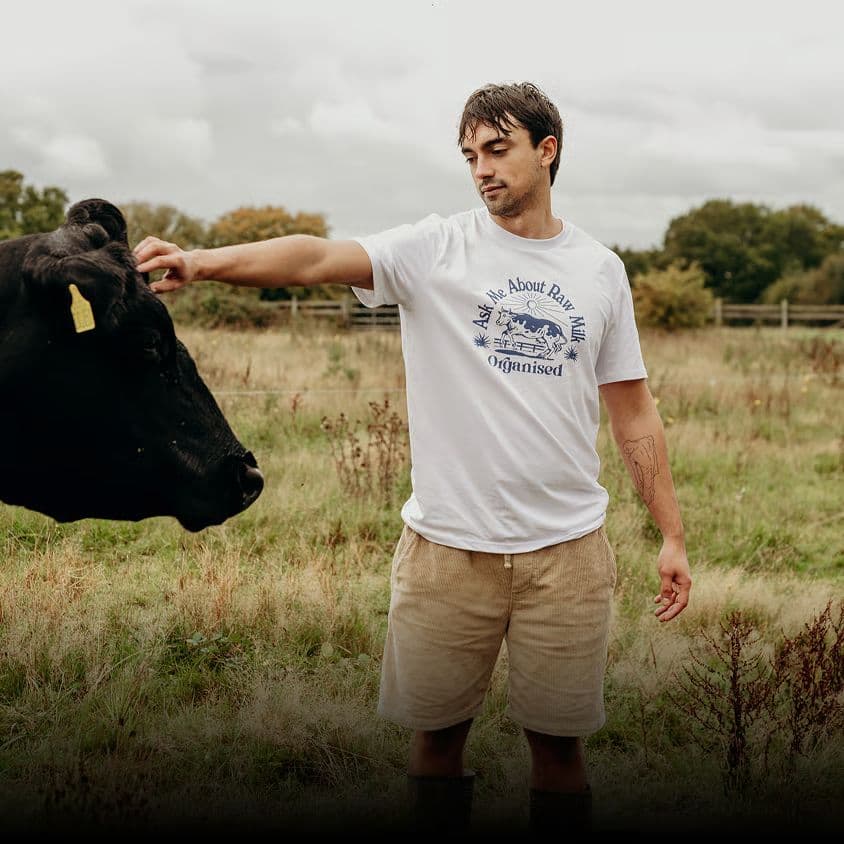
Pedro Rodrigues
Reviewer · Agronomist (farming and sourcing only)
Pedro is the agronomist Organised works with on farming and sourcing. His job on the guides is to keep the science honest: he reviews what we publish about soil health, regenerative agriculture, grazing and the way food is actually produced.
Areas of expertise: Regenerative agriculture, Agronomy, Soil health, Grass-fed farming, Food sourcing
Reviewed this guide on
Read Pedro's full profileBrowse the guides library
All guidesKeep reading
Farming
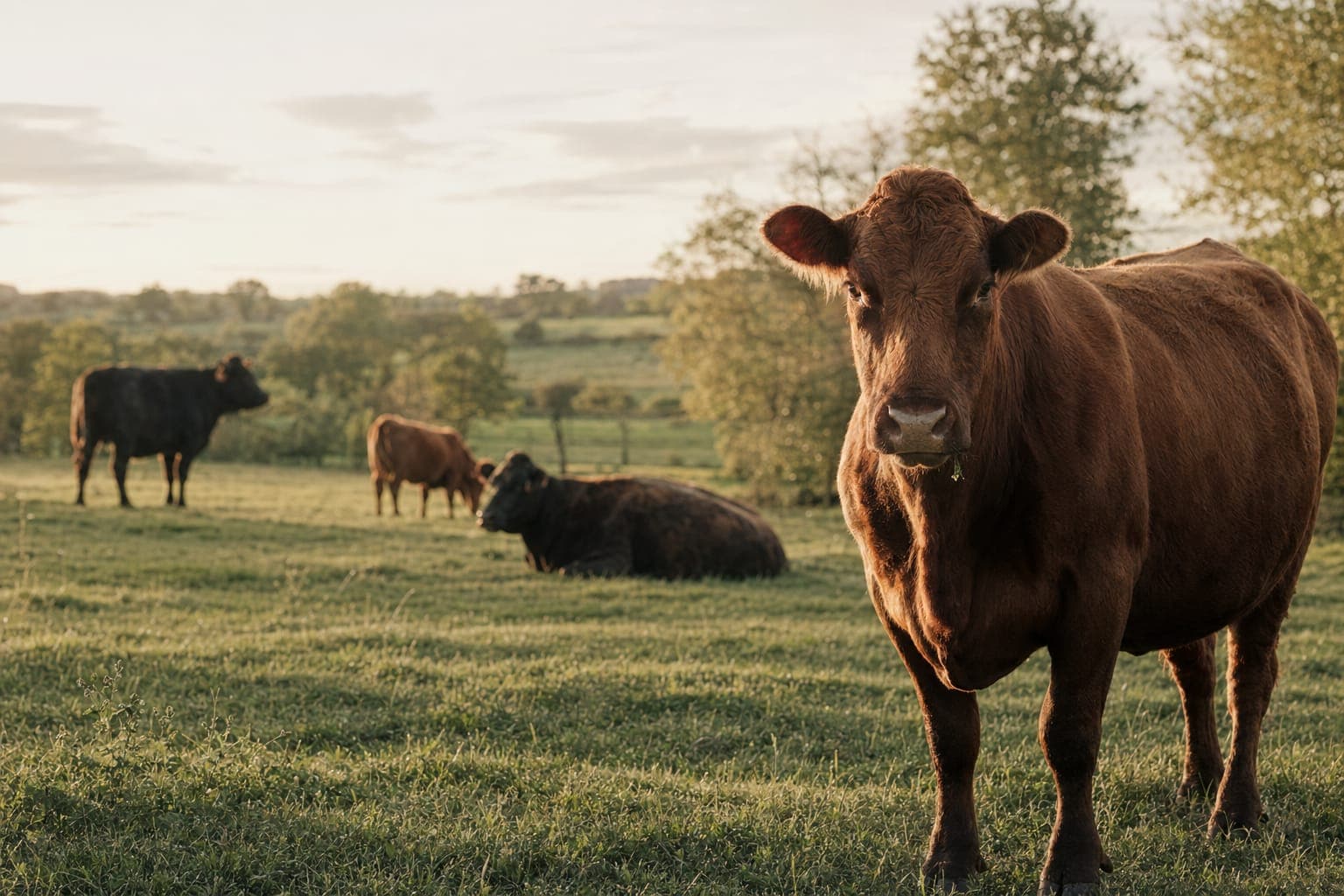
Grass-Fed vs Grass-Finished: Why the Distinction Matters
Grass-fed vs grass-finished beef is not the same. Learn what each term means, why most grass-fed cattle are grain-finished, and how it affects nutrients.
Farming
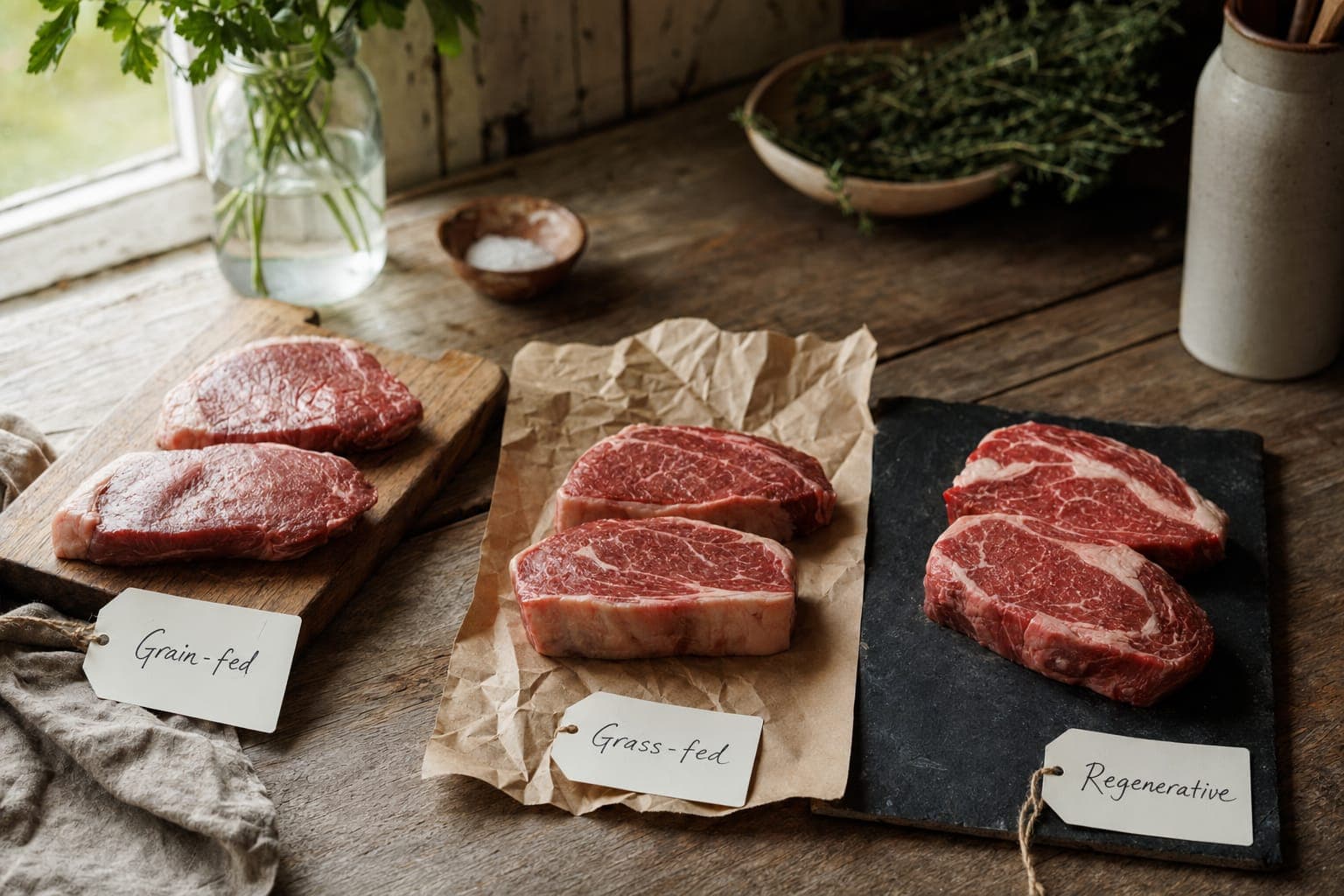
The Truth About Beef: Grain-Fed vs Grass-Fed vs Regenerative
Compare grass-fed vs grain-fed and regenerative beef on nutrition, welfare and environment. See how CLA, omega ratios and vitamins shift with how cattle live.
Farming
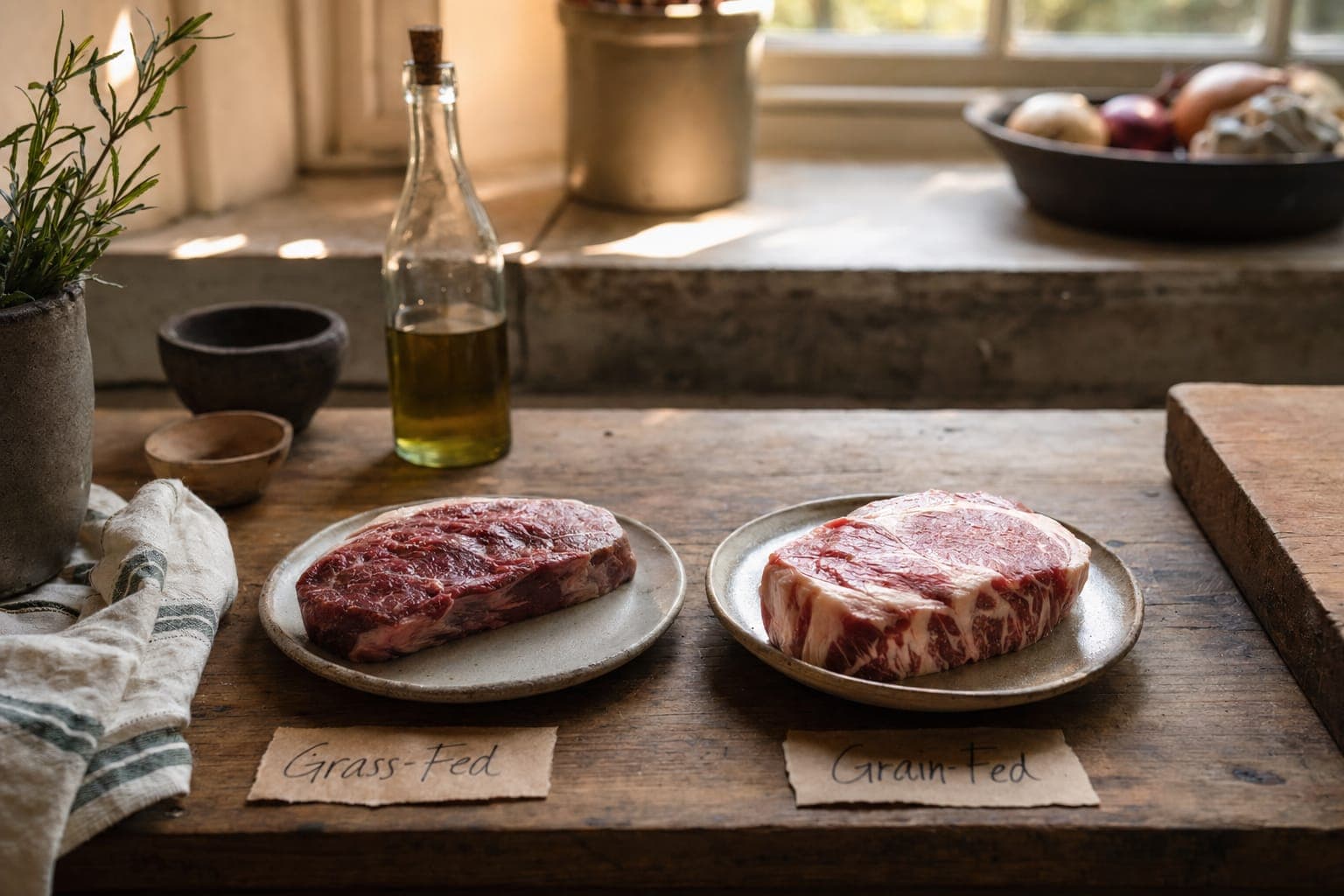
The Nutritional Difference Between Grass-Fed and Grain-Fed Beef
Grass-fed beef has 2-5x more CLA, 3x vitamin E, higher K2, and better omega-3 ratio. Here's the complete nutrient-by-nutrient comparison.
Real food, made effortless
Shop the blendA few ways to use it
All recipes
Collagen-Rich Beef Stew: Slow-Cooked Nourishment
Beef stew that delivers collagen from connective tissue and bone broth. Winter comfort food that actually nourishes. Simple slow cooker recipe.

The Organised Recovery Smoothie for After Exercise
A recovery smoothie made with beef protein, raw milk, frozen berries, collagen, and honey. Optimal nutrition in the 30-minute window after exercise.

Organised Smoothie Bowl Recipes for Every Season
Four seasonal smoothie bowl recipes using Organised. Berry in summer, apple-cinnamon in autumn, tropical in spring, warming chocolate in winter.


 Join over 100,000+ members
Build a better food system with us
The Organised community is thousands of people choosing real food and backing the farmers who grow it, all of us trying to leave the world a little better than we found it. If that is what you care about too, you belong here.